


Product Monograph - Talzenna
Recent Major Label Changes
| 1 Indications | 2025-01 |
|---|---|
| 1 Indications, 1.2 Geriatrics | 2025-10 |
| 3 Serious Warnings and Precautions Box | 2025-10 |
| 4 Dosage and Administration, 4.1 Dosing Considerations | 2025-10 |
| 4 Dosage and Administration, 4.2 Recommended Dose and Dosage Adjustment | 2025-01 |
| 7 Warnings and Precautions | 2025-01 |
| 7 Warnings and Precautions, Carcinogenesis and Mutagenesis | 2025-10 |
| 7 Warnings and Precautions, Cardiovascular | 2025-10 |
| 7 Warnings and Precautions, Hematologic | 2025-10 |
| 7 Warnings and Precautions, Monitoring and Laboratory Tests | 2025-10 |
| 7 Warnings and Precautions, 7.1.3 Pediatrics | 2026-01 |
| 7 Warnings and Precautions, 7.1.4 Geriatrics | 2025-10 |
Table of Contents
Certain sections or subsections that are not applicable at the time of the preparation of the most recent authorized product monograph are not listed.
Recent Major Label Changes ................................................................................................................ 2
Table of Contents ................................................................................................................................. 2
Part 1: Healthcare Professional Information ......................................................................................... 4
1 Indications ............................................................................................................................... 4
1.1 Pediatrics ............................................................................................................................ 4
1.2 Geriatrics ............................................................................................................................. 4
2 Contraindications .................................................................................................................... 4
3 Serious Warnings and Precautions Box .................................................................................... 5
4 Dosage and Administration ..................................................................................................... 5
4.1 Dosing Considerations ........................................................................................................ 5
4.2 Recommended Dose and Dosage Adjustment ................................................................... 5
4.4 Administration .................................................................................................................... 7
4.5 Missed Dose ........................................................................................................................ 8
5 Overdosage ............................................................................................................................. 8
6 Dosage Forms, Strengths, Composition and Packaging ............................................................. 8
7 Warnings and Precautions ....................................................................................................... 9
General ............................................................................................................................................ 9
Carcinogenesis and Mutagenesis ..................................................................................................... 9
Cardiovascular ................................................................................................................................ 10
Driving and Operating Machinery .................................................................................................. 10
Hematologic ................................................................................................................................... 10
Monitoring and Laboratory Tests .................................................................................................. 10
Reproductive Health ...................................................................................................................... 11
7.1 Special Populations ........................................................................................................... 12
7.1.1 Pregnant Women .............................................................................................................. 12
7.1.2 Breast-feeding ................................................................................................................... 12
7.1.3 Pediatrics .......................................................................................................................... 12
7.1.4 Geriatrics ........................................................................................................................... 12
8 Adverse Reactions ................................................................................................................. 12
8.1 Adverse Reaction Overview .............................................................................................. 12
8.2 Clinical Trial Adverse Reactions ........................................................................................ 13
8.2.1 Clinical Trial Adverse Reactions – Pediatrics ..................................................................... 17
8.3 Less Common Clinical Trial Adverse Reactions ................................................................. 17
8.4 Abnormal Laboratory Findings: Hematologic, Clinical Chemistry and Other Quantitative Data .......................................................................................................................................... 17
9 Drug Interactions ................................................................................................................... 19
9.2 Drug Interactions Overview .............................................................................................. 19
9.4 Drug-Drug Interactions ..................................................................................................... 19
9.5 Drug-Food Interactions ..................................................................................................... 23
9.6 Drug-Herb Interactions ..................................................................................................... 23
9.7 Drug-Laboratory Test Interactions .................................................................................... 23
10 Clinical Pharmacology ............................................................................................................ 24
10.1 Mechanism of Action ........................................................................................................ 24
10.2 Pharmacodynamics ........................................................................................................... 24
10.3 Pharmacokinetics .............................................................................................................. 24
11 Storage, Stability and Disposal ............................................................................................... 27
12 Special Handling Instructions ................................................................................................. 27
13 Pharmaceutical Information .................................................................................................. 28
14 Clinical Trials ......................................................................................................................... 29
14.1 Trial Design by Indication .................................................................................................. 29
15 Microbiology ......................................................................................................................... 39
16 Non-Clinical Toxicology .......................................................................................................... 39
Patient Medication Information ......................................................................................................... 41
Part 1: Healthcare Professional Information
1 Indications
Breast Cancer Susceptibility Gene (BRCA)mutated (gBRCAm) Human Epidermal Growth Factor Receptor 2 (HER2)-negative Locally Advanced or Metastatic Breast Cancer
TALZENNA (talazoparib) is indicated as: a monotherapy for the treatment of adult patients with a deleterious or suspected deleterious germline breast cancer susceptibility gene (BRCA)-mutated human epidermal growth factor receptor 2 (HER2)-negative locally advanced (not amenable to curative radiation or surgery) or metastatic breast cancer, who have previously been treated with chemotherapy in the neoadjuvant, adjuvant or metastatic setting, unless patients were inappropriate for these treatments.
HRR gene-mutated Metastatic Castration-Resistant Prostate Cancer (mCRPC)
TALZENNA is indicated in combination with enzalutamide for the treatment of adult patients with homologous recombination repair (HRR) gene-mutated metastatic castration-resistant prostate cancer (mCRPC).
1.1 Pediatrics
Pediatrics (<18 years of age): The safety and efficacy of TALZENNA in children and adolescents <18 years of age have not been established. Therefore, Health Canada has not authorized an indication for pediatric use.
1.2 Geriatrics
Geriatrics (≥65 years of age): Of the 494 patients who received TALZENNA 1mg daily as monotherapy, 85 (17%) patients were ≥65 years of age, and this included 19 (4%) patients who were ≥75 years old. In the TALAPRO-2 trial Cohort 2, 152 (77%) patients who received TALZENNA were ≥65 years of age, and 60 (30%) patients who were ≥75 years old. No overall differences in safety or effectiveness of TALZENNA were observed between these patients and younger patients. In TALAPRO-2, patients ≥65 years of age had lower tolerability of TALZENNA compared to patients <65 years of age. Monitor more closely in the geriatric population.
2 Contraindications
TALZENNA is contraindicated in patients who are hypersensitive to this drug or to any ingredient in the formulation, including any non-medicinal ingredient, or component of the container. For a complete listing, see 6 Dosage Forms, Strengths, Composition and Packaging.
3 Serious Warnings and Precautions Box
4 Dosage and Administration
4.1 Dosing Considerations
- Treatment with TALZENNA should be initiated and supervised by a physician experienced in the use of anticancer medicinal products.
- Detection of a deleterious or suspected deleterious mutation(s) in hereditary breast cancer-related BRCA1 and BRCA2 genes or Homologous recombination repair pathway genes should be determined by an experienced laboratory using a validated test method prior to treatment initiation (see 7 Warnings and Precautions, Monitoring and Laboratory Tests).
4.2 Recommended Dose and Dosage Adjustment
gBRCAm HER2-negative Locally Advanced or Metastatic Breast Cancer
The recommended dose of TALZENNA is 1 mg capsule taken orally once daily.
The 0.25 mg capsule is available for dose reduction.
Patients should be treated until disease progression or unacceptable toxicity occurs.
HRR gene-mutated mCRPC
The recommended dose of TALZENNA is 0.5 mg administered orally once daily in combination with enzalutamide 160 mg orally once daily, until disease progression or unacceptable toxicity occurs.
The 0.1 mg, 0.25 mg and 0.35 mg capsules are available for dose reduction.
Refer to the enzalutamide Product Monograph for recommended enzalutamide dosing information.
Patients receiving TALZENNA and enzalutamide should also receive a gonadotropin-releasing hormone (GnRH) analog concurrently or should have had bilateral orchiectomy.
Dose modifications
- Treatment with TALZENNA should be initiated and supervised by a physician experienced in the use of anti-cancer medicinal products (See 1 Indications and 7 Warnings and Precautions)
- Myelodysplastic Syndrome/Acute Myeloid Leukemia, including fatal cases, has been reported in patients exposed to TALZENNA (See 7 Warnings and Precautions, Carcinogenesis and Mutagenesis)
- TALZENNA can cause fetal harm when administered to a pregnant woman (see 7 Warnings and Precautions, Sexual Health, Reproduction)
To manage adverse reactions, consider interruption of treatment or dose reduction based on severity and clinical presentation. Recommended dose reductions are indicated in Table 1 and Table 2.
| Table 1. Dose Modification Recommendations for Toxicities – Breast Cancer | |
|---|---|
| Dose Reductions | Dose Level |
| Recommended starting dose | 1 mg once daily |
| First dose reduction | 0.75 mg once daily |
| Second dose reduction | 0.5 mg once daily |
| Third dose reduction | 0.25 mg once daily |
| Table 2. Dose Reduction Levels for Adverse Reactions—mCRPC | |
|---|---|
| Dose Reductions | Dose Level |
| Recommended starting dose | 0.5 mg once daily |
| First dose reduction | 0.35 mg once daily |
| Second dose reduction | 0.25 mg once daily |
| Third dose reduction | 0.1 mg once daily |
Refer to the enzalutamide product Monograph for dose modifications for adverse reactions associated with enzalutamide.
Table 3. Dose Modification and Management – Breast Cancer or mCRPC
Monitor complete blood counts monthly for the first 12 months of treatment and periodically thereafter and as clinically indicated (see 7 Warnings and Precautions).
| Adverse Reactions | Withhold TALZENNA until levels resolve to | Resume TALZENNA |
|---|---|---|
| Hemoglobin <8 g/dL | ≥9 g/dL | Resume TALZENNA at a reduced dose |
| Platelet count <50,000/μL | ≥50,000/μL | |
| Neutrophil count <1,000/μL | ≥1500/µL | |
| Non-hematologic Grade 3 or Grade 4 | ≤Grade 1 | Consider resuming TALZENNA at a reduced dose or discontinue |
During treatment for Breast Cancer with the 1 mg dose, switching from the 1 mg capsules to the 4 x 0.25 mg capsules is not recommended.
gBRCAm HER2-negative Locally Advanced or Metastatic Breast Cancer
Concomitant treatment with inhibitors or inducers of P-glycoprotein (P-gp)
Strong inhibitors of P-gp may lead to increased talazoparib exposure. Concomitant use of strong P-gp inhibitors during treatment with talazoparib should be avoided.
If coadministration with a strong P-gp inhibitor is unavoidable, the TALZENNA dose should be reduced to the next lower dose. When the strong P-gp inhibitor is discontinued, the TALZENNA dose should be increased (after 3 to 5 half-lives of the P-gp inhibitor) to the dose used prior to the initiation of the strong P-gp inhibitor (see Section 9.4 Drug-Drug Interactions).
Coadministration of rifampin, a strong P-gp inducer, had no significant impact on talazoparib exposure. No talazoparib dose adjustments are required when coadministered with rifampin. However, the effect of other P-gp inducers on talazoparib exposure has not been studied.
Concomitant treatment with inhibitors of Breast Cancer Resistance Protein (BCRP)
The effect of coadministration of BCRP inhibitors with TALZENNA has not been studied. Therefore, concomitant use of strong BCRP inhibitors during treatment with talazoparib should be avoided (see Section 9.4 Drug-Drug Interactions).
Special populations
Hepatic impairment
No dose adjustment is required for patients with mild hepatic impairment (total bilirubin ≤1 × upper limit of normal [ULN] and aspartate aminotransferase (AST) > ULN, or total bilirubin >1.0 to 1.5 × ULN and any AST), moderate hepatic impairment (total bilirubin >1.5 to 3.0 × ULN and any AST), or severe hepatic impairment (total bilirubin >3.0 × ULN and any AST) (see Section 10.3 Pharmacokinetics, Special Populations and Conditions, Hepatic Impairment).
Renal impairment
gBRCAm HER2-negative Locally Advanced or Metastatic Breast Cancer
No dose adjustment is required for patients with mild renal impairment (60 mL/min ≤ creatinine clearance [CrCl] < 90 mL/min). For patients with moderate renal impairment (30 mL/min ≤ CrCl < 60 mL/min), the recommended dose of TALZENNA is 0.75 mg once daily. For patients with severe renal impairment (15 mL/min ≤ CrCl < 30 mL/min), the recommended dose of TALZENNA is 0.5 mg once daily. TALZENNA has not been studied in patients requiring hemodialysis (see Section 10.3 Pharmacokinetics, Special Populations and Conditions, Renal Impairment).
HRR gene-mutated mCRPC
For patients with moderate renal impairment, (CrCl 30 - 59 mL/min) the recommended dose of TALZENNA is 0.35 mg once daily in combination with enzalutamide orally once daily. For patients with severe renal impairment (CrCl 15 - 29 mL/min), the recommended dose of TALZENNA is 0.25 mg once daily in combination with enzalutamide orally once daily (see Section 10.3 Pharmacokinetics, Special Populations and Conditions, Renal Impairment).
Geriatric (≥65 years of age)
No dose adjustment is necessary in elderly (≥65 years of age) patients (see Section 10.3 Pharmacokinetics, Special Populations and Conditions, Geriatrics).
Pediatric (<18 years)
The safety and efficacy of TALZENNA in children and adolescents <18 years of age have not been established. Health Canada has not authorized an indication for pediatric use.
4.4 Administration
The capsule(s) should be swallowed whole, and must not be opened, crushed, chewed or dissolved.
The capsules should be taken at approximately the same time every day and can be taken with or without food.
4.5 Missed Dose
If the patient vomits or misses a dose, an additional dose should not be taken. The next prescribed dose should be taken at the usual time.
5 Overdosage
There is no specific treatment in the event of TALZENNA overdose, and symptoms of overdose are not established. In the event of overdose, treatment with TALZENNA should be stopped, and physicians should consider gastric decontamination, follow general supportive measures and treat symptomatically.
For management of a suspected drug overdose, contact your regional poison control centre.
6 Dosage Forms, Strengths, Composition and Packaging
Table 4. Dosage Forms, Strengths, Composition and Packaging.
| Route of Administration | Dosage Form / Strength/Composition | Non-medicinal Ingredients |
| Oral | Capsule 0.1 mg: Each capsule contains 0.145 mg talazoparib tosylate equivalent to 0.1 mg talazoparib free base. 0.25 mg: Each capsule contains 0.363 mg talazoparib tosylate equivalent to 0.25 mg talazoparib free base. 0.35 mg: Each capsule contains 0.509 mg talazoparib tosylate equivalent to 0.35 mg talazoparib free base. 0.5 mg: Each capsule contains 0.727 mg talazoparib tosylate equivalent to 0.5 mg talazoparib free base. 1 mg: Each capsule contains 1.453 mg talazoparib tosylate | Silicified microcrystalline cellulose 0.1 mg capsule shell: hypromellose, titanium dioxide 0.25 mg capsule shell: hypromellose, titanium dioxide, yellow iron oxide. 0.35 mg capsule shell: hypromellose, titanium dioxide, yellow iron oxide 0.5 mg capsule shell: hypromellose, titanium dioxide, red iron oxide 1 mg capsule shell: hypromellose, red iron oxide, titanium dioxide, yellow iron oxide. Printing ink: ammonium hydroxide, black iron oxide, potassium hydroxide, propylene glycol, shellac. |
TALZENNA 0.1 mg capsules
Opaque, size #4 hard hypromellose (HPMC) capsule with a white cap (printed with “Pfizer” in black) and a white body (printed with “TLZ 0.1” in black)
TALZENNA 0.25 mg capsules
Opaque, size #4 hard hypromellose (HPMC) capsule with an ivory cap (printed with “Pfizer” in black) and a white body (printed with “TLZ 0.25” in black).
TALZENNA 0.35 mg capsules
Opaque, size #4 hard hypromellose (HPMC) capsule with an ivory cap (printed with “Pfizer” in black) and an ivory body (printed with “TLZ 0.35” in black)
TALZENNA 0.5 mg capsules
Opaque, size #4 hard hypromellose (HPMC) capsule with a light pink cap (printed with “Pfizer” in black) and a white body (printed with “TLZ 0.5” in black)
TALZENNA 1 mg capsules
Opaque, size #4 hard hypromellose (HPMC) capsule with a light red cap (printed with “Pfizer” in black) and a white body (printed with “TLZ 1” in black).
7 Warnings and Precautions
General
In order to receive TALZENNA for breast cancer, patients must have a deleterious or suspected deleterious germline mutation in a BRCA gene, as confirmed by an experienced laboratory using a validated BRCA assay. In the EMBRACA study, a majority of patient samples were sent to a centralized lab (Myriad Genetics) to confirm BRCA mutation status (BRACAnalysis CDx).
Risks Associated with Combination Treatment
For mCRPC, TALZENNA is indicated for use in combination with enzalutamide. Refer to the enzalutamide Product Monograph for additional risk information. In order to receive TALZENNA for prostate cancer, patients must have mutations in genes involved in HRR pathway (see Section 14 Clinical Trials), as confirmed by an experienced laboratory using a validated test method. In the TALAPRO-2 study, HRR gene mutation status was prospectively tested by next generation sequencing of tumour tissue using FoundationOne CDx or of circulating tumour DNA (ctDNA) using FoundationOne Liquid CDx.
Carcinogenesis and Mutagenesis
Secondary primary malignancies have been reported in patients that received TALZENNA.
Myelodysplastic syndrome/Acute Myeloid Leukemia (MDS/AML), including fatal cases, have been reported in patients who received TALZENNA. Overall, MDS/AML has been reported in <1% of solid tumor patients treated with TALZENNA in clinical studies. Potential contributing factors for the development of MDS/AML include previous platinum-containing chemotherapy, other DNA damaging agents or radiotherapy.
| equivalent to 1 mg talazoparib free base. |
Complete blood counts should be obtained at baseline and monitored monthly for signs of hematologic toxicity during treatment. If MDS/AML is confirmed, TALZENNA should be discontinued.
Cardiovascular
Venous Thromboembolic Events
For mCRPC, a higher incidence of venous thromboembolic events (VTE), including pulmonary embolism, has been reported in patients treated with TALZENNA in combination with enzalutamide compared with enzalutamide alone (see 8 Adverse Reactions). Monitor patients for clinical signs and symptoms of venous thrombosis and pulmonary embolism and treat as medically appropriate.
Driving and Operating Machinery
Due caution should be exercised when driving or operating a vehicle or potentially dangerous machinery. No studies have been conducted on the effects of talazoparib on the ability to drive or operate machinery. However, patients experiencing fatigue/asthenia or dizziness while taking talazoparib should exercise caution when driving or operating machinery.
Hematologic
Myelosuppression consisting of anemia, neutropenia, and/or thrombocytopenia, have been reported in patients treated with TALZENNA monotherapy. The frequency of Grade ≥ 3 for each event in patients who received TALZENNA at 1 mg daily in clinical studies was 35.2%, 17.4%, and 16.8%, respectively. The frequency of dose modifications for anemia, neutropenia, and thrombocytopenia was 33.0%, 15.8%, and 13.4%, respectively. Discontinuations due to these events were 0.6%, 0.2%, and 0.2%, respectively (see Section 8.1 Adverse Reaction Overview).
Myelosuppression consisting of anemia, leukopenia/neutropenia, and/or thrombocytopenia, have been reported in patients treated with TALZENNA in combination with enzalutamide (see Section 8 Adverse Reactions). In TALAPRO-2, Grade ≥3 anemia, neutropenia, and thrombocytopenia were reported, respectively, in 43%, 20% and 8% of patients receiving TALZENNA and enzalutamide. Overall, 43% of patients (85/198) required at least one blood cell transfusion, including 39% (78/198) who required at least one red blood transfusion and 24% (48/198) who required multiple red blood transfusions. Discontinuation due to anemia and neutropenia occurred, respectively, in 4.5% and 0.5% of patients.
Do not start TALZENNA until patients have recovered from hematological toxicity caused by previous therapy (≤ Grade 1).
Precautions should be taken to monitor monthly for the first 12 months of treatment and periodically thereafter for hematology parameters (complete blood counts) and signs and symptoms associated with anemia, leukopenia/neutropenia, and/or thrombocytopenia in patients receiving TALZENNA. If such events occur, dose modifications (reduction or interruption) are recommended (see Section 8.1 Adverse Reaction Overview).
Supportive care with or without blood and/or platelet transfusions and/or administration of colony stimulating factors may be used as appropriate.
Monitoring and Laboratory Tests
BRCA Testing
Prior to treatment initiation in patients with breast cancer, detection of a deleterious or suspected deleterious germline mutation(s) in a BRCA gene must be confirmed by an experienced laboratory using a validated test method.
HRR Gene-mutation Testing
Prior to treatment initiation in patients with prostate cancer, detection of mutations in genes involved in the HRR pathway must be confirmed by an experienced laboratory using a validated test method. HRR testing in TALAPRO-2 included tumour tissue and circulating tumour–DNA-based testing, with a pre-specified HRRm definition (See 14 Clinical Trials, TALAPRO-2).
Hematological testing
Complete blood counts should be obtained at baseline and monitored monthly for the first 12 months of treatment and periodically thereafter for signs of hematologic toxicity during treatment.
Pregnancy Testing
A pregnancy test is recommended for females of reproductive potential prior to initiating TALZENNA treatment.
Reproductive Health
Female and Male Potential
- Fertility
There is no information on fertility in patients. Based on non-clinical findings in the testes and ovary, male and female fertility may be compromised by treatment with TALZENNA (see Section 16 Non-Clinical Toxicology).
- Reproduction
Based on the mechanism of action and animal studies, talazoparib has demonstrated genotoxicity, reproductive organ toxicity, and embryofetal toxicity at subtherapeutic thresholds (see Fertility, and Section 16 Non-Clinical Toxicology). Therefore, talazoparib should not be given to pregnant patients or those who plan to become pregnant during treatment. Advise pregnant women of the potential risk to the fetus as TALZENNA can cause fetal harm when administered to a pregnant woman.
Women of childbearing potential should be advised to avoid becoming pregnant while receiving TALZENNA. A highly effective method of contraception is required for female patients of childbearing potential during treatment with TALZENNA, and for at least 7 months after completing therapy.
Advise male patients with female partners of reproductive potential and pregnant partners to use effective contraception (even after vasectomy), during treatment with TALZENNA and for at least 4 months after the final dose.
Male and female patients should not donate sperm or eggs during treatment and for 4 and 7 months after the last dose of TALZENNA, respectively.
7.1 Special Populations
7.1.1 Pregnant Women
There are no clinical data from the use of TALZENNA in pregnant women. However, studies in animals have demonstrated genotoxicity and embryo-fetal toxicity including fetal malformations, decreased fetal weight, structural variations in bones and embryo-fetal death at sub therapeutic thresholds (see Section 16 Non-Clinical Toxicology). Therefore, TALZENNA can cause fetal harm when administered to a pregnant woman. TALZENNA should not be used during pregnancy or for women of childbearing potential not using contraception.
Advise male patients with female partners of reproductive potential and pregnant partners to use effective contraception (even after vasectomy), during treatment with TALZENNA and for at least 4 months after the final dose. If a female partner of a male patient receiving TALZENNA becomes pregnant, she should be apprised of the potential hazard to the fetus and the potential loss of the pregnancy.
7.1.2 Breast-feeding
It is unknown whether TALZENNA is excreted in human breast milk. A serious risk to newborns/infants cannot be excluded. Therefore, breastfeeding is not recommended during treatment with TALZENNA and for at least 1 month after the final dose.
7.1.3 Pediatrics
Pediatrics (<18 years of age): The safety and efficacy of TALZENNA in children and adolescents <18 years of age have not been established. Therefore, Health Canada has not authorized an indication for pediatric use. Pharmacokinetics and tolerability of talazoparib and irinotecan with/without temozolomide were evaluated in a Phase I study of pediatric patients with recurrent/refractory solid malignancies.
7.1.4 Geriatrics
Geriatrics (≥65 years of age): Of the 494 patients who received TALZENNA 1mg daily as monotherapy, 85 (17%) patients were ≥65 years of age, and this included 19 (4%) patients who were ≥75 years old. In the TALAPRO-2 trial Cohort 2 152 (77%) patients who received TALZENNA were ≥65 years of age, and 60 (30%) patients who were ≥75 years old. No overall differences in safety or effectiveness of TALZENNA were observed between these patients and younger patients. In TALAPRO-2, patients ≥65 years of age had lower tolerability of TALZENNA compared to patients <65 years of age. Monitor more closely in the geriatric population.
8 Adverse Reactions
8.1 Adverse Reaction Overview
The overall safety profile of TALZENNA monotherapy is based on pooled data from 494 patients with a median duration of exposure of 5.4 months (range 0.03-61.1) who received TALZENNA at 1 mg daily in clinical studies for solid tumors, including 286 patients from a randomized Phase 3 study (EMBRACA) with germline BRCA-mutated, HER2-negative locally advanced or metastatic breast cancer and 83 patients from a nonrandomized Phase 2 study (ABRAZO) in patients with germline BRCA-mutated locally advanced or metastatic breast cancer.
Very common (≥10%) adverse reactions in patients receiving TALZENNA in these clinical studies were fatigue (57%), anemia (50%), nausea (44%), neutropenia (30%), thrombocytopenia (30%), headache (27%), diarrhea (23%), vomiting (22%), alopecia (22%), abdominal pain (21%), decreased appetite (20%), leukopenia (16%) and dizziness (14%).
The overall frequency of grade 3 and 4 AEs is 66%. The most common (≥ 10%) adverse reactions of CTCAE grade ≥ 3 are anemia (35%), neutropenia (17%), and thrombocytopenia (17%).
The overall frequency of serious adverse events (SAEs) is 32%. The most common SAEs are anemia (5%), dyspnea (2%), and pleural effusion (2%).
Dose modifications (dose reductions or dose interruptions) due to any adverse reaction occurred in 62.3% of patients receiving TALZENNA. Very common adverse reactions (≥ 10%) leading to dose modifications were anemia (33%), neutropenia (16%), and thrombocytopenia (13%).
Permanent discontinuation due to an adverse reaction occurred in 4% of patients receiving TALZENNA. The most common adverse event that led to treatment discontinuation is anemia (0.6%). Adverse events associated with death occurred in 4% of patients receiving TALZENNA. The events leading to death reported in more than 1 patient were breast cancer, dyspnea, general physical health deterioration, neoplasm progression, and ovarian cancer.
8.2 Clinical Trial Adverse Reactions
Because clinical trials are conducted under very specific conditions, the adverse reaction rates observed in the clinical trials may not reflect the rates observed in practice and should not be compared to the rates in the clinical trials of another drug. Adverse reaction information from clinical trials is useful for identifying drug-related adverse events and for approximating rates.
Treatment of gBRCAm HER2-negative Locally Advanced or Metastatic Breast Cancer
The EMBRACA study, a randomized Phase 3 study with germline BRCA-mutated, HER2-negative locally advanced or metastatic breast cancer includes 286 patients treated with TALZENNA and 126 patients treated with chemotherapy. Chemotherapy included capecitabine (55 patients), eribulin (50), gemcitabine (12), and vinorelbine (9). The median duration of study treatment was 6.1 months in patients who received TALZENNA and 3.9 months in patients who received chemotherapy.
The overall frequency of grade ≥ 3 adverse events is 68%. The most common (≥ 10%) adverse reactions of CTCAE grade ≥ 3 are anemia (39%), neutropenia (21%), and thrombocytopenia (15%).
The overall frequency of serious adverse events (SAEs) is 32%. The most common SAEs are anemia (6%), and pyrexia (2%).
Dose modifications (dose reductions or dose interruptions) due to any adverse reaction occurred in 66% of patients receiving TALZENNA. Common adverse reactions (≥ 5%) leading to dose modifications were anemia (38%), neutropenia (19%), thrombocytopenia (11%), and decreased platelet count (7%).
In the EMBRACA study, 13 (5%) patients in the TALZENNA arm and 7 (6%) patients in the chemotherapy arm had an adverse reaction that was the primary reason for permanent study drug discontinuation. Anemia was the only AE reported in more than 1 patient that led to discontinuation on the TALZENNA arm. AEs leading to death occurred in 2% of receiving TALZENNA. AEs leading to death included general physical health deterioration (2 patients), cerebral hemorrhage, liver disorder, neurological symptom, and veno-occlusive liver disease (1 patient each).
Table 5 summarizes the adverse reactions from the EMBRACA study.
| Table 5. Adverse Reactions (≥ 1%) in Patients Treated with TALZENNA or Chemotherapy in a Randomized Phase 3 Study with Germline BRCA-Mutated, HER2-Negative Locally Advanced or Metastatic Breast Cancer (EMBRACA Study). | |||||||||||||||||||
|---|---|---|---|---|---|---|---|---|---|---|---|---|---|---|---|---|---|---|---|
| System Organ Class | ADR Term | TALZENNA N=286* (%) | Chemotherapy N=126 (%) | ||||||||||||||||
| All Grades** | Grade 3 | Grade 4 | All Grades | Grade 3 | Grade 4 | ||||||||||||||
| Blood and lymphatic system disorders | Anemiaa Thrombocytopeniab Neutropeniac Leukopeniad Lymphopeniae | 53 27 35 17 7 | 39 11 18 6 3 | 1 4 3 <1 0 | 18 7 43 14 3 | 4 2 20 6 0 | 1 0 15 2 1 | ||||||||||||
| Metabolism and nutrition disorders | Decreased appetite | 21 | <1 | N/A | 22 | 1 | N/A | ||||||||||||
| Nervous system disorders | Headache Dizziness Dysgeusia | 33 17 10 | 2 <1 N/A | N/A N/A N/A | 22 10 9 | 1 2 N/A | N/A N/A N/A | ||||||||||||
| Gastrointestinal disorders | Nausea Diarrhea Vomiting Abdominal painf Dyspepsia Stomatitis | 49 22 25 19 10 8 | <1 1 2 1 0 0 | N/A 0 0 N/A N/A 0 | 47 26 23 21 7 6 | 2 6 2 3 0 0 | N/A 0 0 N/A N/A 0 | ||||||||||||
| Skin and subcutaneous tissue disorders | Alopeciag | 25 | N/A | N/A | 28 | N/A | N/A | ||||||||||||
| General disorders and administration site conditions | Fatigueh | 62 | 3 | N/A | 50 | 5 | N/A | ||||||||||||
Adverse event grades are evaluated based on NCI-CTCAE (version 4.03). Patients with multiple events for a given preferred term are counted once only for each preferred term. Abbreviations: ADR=adverse drug reaction; CTCAE=Common Terminology Criteria for Adverse Events; NCI=National Cancer Institute; N=number of patients; N/A= not applicable.
* All patients who received any dose of study drug
** There were no Grade 5 adverse drug reactions
a. Includes preferred terms of anemia, hematocrit decreased, and hemoglobin decreased.
b. Includes preferred terms of thrombocytopenia and platelet count decreased.
c. Includes preferred terms of neutropenia and neutrophil count decreased.
d. Includes preferred terms of leukopenia and white blood-cell count decreased.
e Includes preferred terms lymphocyte count decreased, lymphopenia
f. Includes preferred terms of abdominal pain, abdominal pain upper, abdominal discomfort, and abdominal pain lower.
g. For talazoparib Grade 1 is 23% and Grade 2 is 2%.
h. Includes the preferred terms of fatigue or asthenia.
Treatment of HRR Gene-mutated mCRPC
The safety of TALZENNA in combination with enzalutamide was evaluated in patients with HRR gene mutated mCRPC enrolled in TALAPRO-2. Patients were randomized to receive either TALZENNA 0.5 mg in combination with enzalutamide 160 mg once daily (N=198), or placebo with enzalutamide 160 mg once daily (N=199) until disease progression or unacceptable toxicity. Among patients receiving TALZENNA, 86% were exposed for 6 months or longer, 68% were exposed for greater than one year, and 44% were exposed for greater than two years.
Serious adverse reactions occurred in 40% of patients treated in the TALZENNA with enzalutamide arm and 24% of patients in the placebo with enzalutamide arm. Serious adverse reactions reported in ≥2% of patients included anemia (10%), fracture (3%) and pulmonary embolism (2%). Fatal adverse reactions occurred in 2.5% of patients, including pneumonia, SARS-CoV-2 test positive and sepsis (1 patient each).
Permanent discontinuation of TALZENNA or placebo due to adverse reactions occurred in 13% of patients treated in the TALZENNA with enzalutamide arm and 9.5% of patients in the placebo with enzalutamide arm. The most common adverse reaction that resulted in permanent discontinuation of TALZENNA was anemia (4%).
Dosage interruption of TALZENNA or placebo due to adverse reactions occurred in 62% of patients treated in the TALZENNA with enzalutamide arm and 21% of patients in the placebo with enzalutamide arm. The most common adverse reactions that resulted in dose interruption of TALZENNA were anemia (43%), fatigue (4%), neutropenia (15%), and thrombocytopenia (9%) and leukopenia (7%).
Dose reduction of TALZENNA or placebo due to adverse reactions occurred in 55% of patients treated in the TALZENNA with enzalutamide arm and 5% of patients in the placebo with enzalutamide arm. The most common adverse reactions that resulted in dose reduction of TALZENNA were anemia (45%), neutropenia (16%), thrombocytopenia (6%), leukopenia (3%) and fatigue (4%).
The most common adverse reactions (≥20%), in patients who received TALZENNA with enzalutamide were anemia, fatigue, neutropenia, thrombocytopenia, leukopenia, nausea and decreased appetite.
Table 6 summarizes the most common adverse reactions of TALZENNA in the TALAPRO-2 study.
Table 6. Adverse Reactionsa (≥10% and ≥2% higher incidence compared to placebo) in Patients Receiving TALZENNA in TALAPRO-2
| Adverse Reaction | TALZENNA + Enzalutamide N=198 (%) | Placebo + Enzalutamide N=199 (%) | ||||
All Grades (%) | Grade 3 (%) | Grade 4 (%) | All Grades (%) | Grade 3 (%) | Grade 4 (%) | |
| Blood and Lymphatic System Disorders | ||||||
| Anaemiaa | 67 | 41 | 2 | 19 | 5 | 0 |
| Neutropeniab | 35 | 18 | 2 | 7 | 0 | 1 |
| Thrombocytopeniac | 26 | 6 | 2 | 3 | 1 | 0 |
| Leukopeniad | 23 | 8 | 0 | 8 | 0 | 0 |
| Lymphopeniag | 10 | 6 | 0 | 6 | 3 | 0 |
| Metabolism and Nutrition Disorders | ||||||
| Decreased appetite | 23 | 1 | 0 | 16 | 1 | 0 |
| Nervous System Disorders | ||||||
| Dizzinessf | 15 | 2 | 0 | 10 | 2 | 0 |
| Dysgeusiah | 10 | 1 | 0 | 5 | 0 | 0 |
| Gastrointestinal Disorders | ||||||
| Nausea | 22 | 2 | 0 | 18 | 1 | 0 |
| General Disorders and Administration Site Conditions | ||||||
| Fatiguee | 51 | 4 | 0 | 44 | 1 | 0 |
| Pyrexia | 11 | 1 | 0 | 2 | 0 | 0 |
| Respiratory, Thoracic and Mediastinal Disorders | ||||||
| Dyspnoea | 10 | 1 | 0 | 6 | 0 | 0 |
| Respiratory infectionsi | 26 | 2 | 0 | 15 | 1 | 0 |
| Injury, Poisoning and Procedural Complications | ||||||
| Fall | 20 | 3 | 0 | 14 | 2 | 0 |
| Fracturesj | 20 | 4 | 0 | 12 | 2 | 0 |
| Vascular Disorders | ||||||
| Hypertension | 22 | 11 | 0 | 20 | 8 | 0 |
Adverse event grades are evaluated based on NCI CTCAE (version 4.03). Patients with multiple events for a given preferred term are counted once only for each preferred term.
Abbreviations: CTCAE=Common Terminology Criteria for Adverse Events; NCI=National Cancer Institute; N=number of patients; N/A=not applicable.
* There were no Grade 5 adverse reactions.
a. Includes anaemia, haematocrit decreased, and red blood cell count decreased.
b. Includes neutropenia and neutrophil count decreased.
c. Includes thrombocytopenia and platelet count decreased.
d. Includes leukopenia and white blood cell count decreased.
e. Includes fatigue and asthenia.
f. Includes dizziness, postural dizziness, vertigo and presyncope.
g. Includes lymphopenia, lymphocyte count decreased.
h. Includes dysgeusia, ageusia and anosmia.
i. Respiratory infections include multiple preferred terms indicative of respiratory infections
j. Fractures include multiple similar terms.
8.2.1 Clinical Trial Adverse Reactions – Pediatrics
In a Phase I study of talazoparib and irinotecan with/without temozolomide in paediatric patients (4.7 to 23.3 years old) with recurrent/refractory solid malignancies, 29 and 12 patients were treated on arm A (talazoparib + irinotecan) and arm B (talazoparib + irinotecan + temozolomide), respectively, for a total of 208 courses. The most common ≥ grade III haematologic toxicities in arms A and B included neutropenia (78% and 31%, respectively) and thrombocytopenia (42% and 31%, respectively). In arms A and B, febrile neutropenia (24% and 14%, respectively) and diarrhoea (21% and 7%, respectively) were the most common ≥ grade III non-hematologic toxicities.
8.3 Less Common Clinical Trial Adverse Reactions
Treatment of gBRCAm HER2-negative Locally Advanced or Metastatic Breast Cancer
All ADVERSE REACTIONS occurred at > 1% and are presented in Table 5, ADVERSE REACTIONS, Clinical Trial Adverse Reactions
Treatment of HRR Gene-mutated mCRPC
Clinically relevant adverse reactions in <10% of patients who received TALZENNA with enzalutamide included headache (7%), abdominal pain*(9.6%), vomiting (9%), alopecia (7%), dyspepsia (3%), Venous Thromboembolic Events (6%), stomatitis (2%) and AML/MDS (<1%).
* Includes abdominal pain, abdominal pain lower, abdominal pain upper, abdominal discomfort
8.4 Abnormal Laboratory Findings: Hematologic, Clinical Chemistry and Other Quantitative Data
Clinical Trial Findings
Treatment of gBRCAm HER2-negative Locally Advanced or Metastatic Breast Cancer
Tables 7 and 8 summarize the hematologic and chemistry laboratory parameters by grade in patients treated with TALZENNA or chemotherapy from the EMBRACA study.
Table 7. Summary of Postbaseline Hematology Laboratory Parameters by Toxicity Grade reported in > 10% of patients (EMBRACA Study)
| EMBRACA Study | |||||||||||
|---|---|---|---|---|---|---|---|---|---|---|---|
Talazoparib N=286* (%) | Chemotherapy N=126 (%) | ||||||||||
| Parameter | Grades 1-4 | Grade 3 or 4 | Grades 1-4 | Grade 3 or 4 | |||||||
| Decrease in hemoglobin | 90 | 39 | 77 | 6 | |||||||
| Decrease in platelets | 55 | 15 | 29 | 2 | |||||||
| Decrease in neutrophils | 68 | 21 | 70 | 38 | |||||||
| Decrease in lymphocytes | 76 | 18 | 53 | 9 | |||||||
| Decrease in leukocytes | 84 | 14 | 73 | 25 | |||||||
Abbreviation: N=number of patients. * All patients who received any dose of study drug | |||||||||||
Table 8. Summary of Postbaseline Chemistry Laboratory Parameters by Toxicity Grade reported in > 10% of patients (EMBRACA Study)
| EMBRACA Study | |||||||||||
|---|---|---|---|---|---|---|---|---|---|---|---|
Talazoparib N=286* (%) | Chemotherapy N=126 (%) | ||||||||||
| Parameter | Grades 1-4 | Grade 3 or 4 | Grades 1-4 | Grade 3 or 4 | |||||||
| Increase in glucose† | 54 | 2 | 51 | 2 | |||||||
| Increase in aspartate aminotransferase | 37 | 2 | 48 | 3 | |||||||
| Increase in alkaline phosphatase | 36 | 2 | 34 | 2 | |||||||
| Increase in alanine aminotransferase | 33 | 1 | 37 | 2 | |||||||
| Decrease in calcium | 28 | 1 | 16 | 0 | |||||||
| Decrease in glucose† | 13 | <1 | 5 | 0 | |||||||
| Increase in bilirubin | 10 | 1 | 11 | 1 | |||||||
Abbreviation: N=number of patients. * All patients who received any dose of study drug † This number represents non-fasting glucose. | |||||||||||
Treatment of HRR Gene-mutated mCRPC
Table 9 shows laboratory abnormalities that occurred in ≥10% of Patients in TALAPRO-2 in the TALZENNA and enzalutamide arm compared to the placebo and enzalutamide arm.
Table 9. Laboratory Abnormalities Reported in ≥10% of Patients in TALAPRO-2 and More Frequently in the TALZENNA in Combination with Enzalutamide Arm Compared to the Placebo and Enzalutamide Arm
TALZENNA + Enzalutamide N=198 (%)a | Placebo + Enzalutamide N=199 (%) | ||||||||||||
| Parameter | Grades 1-4 (%) | Grade 3 (%) | Grade 4 (%) | Grades 1-4 (%) | Grade 3 (%) | Grade 4 (%) | |||||||
| Anaemia | 96 | 44 | 0 | 85 | 6 | 0 | |||||||
| Blood bilirubin increased | 14 | 0 | 0 | 9 | 0 | 0 | |||||||
| Decrease in white blood cells | 78 | 9 | 0 | 35 | <1 | 1 | |||||||
| Decrease in lymphocytes | 70 | 18 | <1 | 53 | 11 | <1 | |||||||
| Decrease in neutrophils | 63 | 19 | 2 | 21 | <1 | 2 | |||||||
| Decrease in platelets | 49 | 7 | 2 | 16 | <1 | <1 | |||||||
| Hyperkalemia | 26 | 1 | 0 | 24 | 0 | <1 | |||||||
| Hypermagnesemia | 11 | <1 | 0 | 9 | 0 | 0 | |||||||
| Hypoalbuminaemia | 34 | 0 | 0 | 25 | 1 | 0 | |||||||
| Hypocalcaemia | 32 | 0 | <1 | 15 | 0 | 2 | |||||||
| Hypokalemia | 13 | 0 | <1 | 9 | 1 | 0 | |||||||
| Hypomagnesemia | 18 | 0 | 0 | 15 | 0 | 0 | |||||||
| Hyponatremia | 29 | 4 | 0 | 27 | 2 | 0 | |||||||
| Hypophosphatemia | 19 | 3 | 0 | 17 | 3 | 0 | |||||||
| Aspartate aminotransferase increased | 26 | <1 | 0 | 23 | <1 | 0 | |||||||
| Alanine aminotransferase increased | 15 | 1 | 0 | 14 | 1 | 0 | |||||||
N=number of patients.
a. This number represents the safety population. The derived values in the table are based on the total number of evaluable patients for each laboratory parameter.
9 Drug Interactions
9.2 Drug Interactions Overview
Talazoparib is a substrate for drug transporters P-gp and BCRP and mainly eliminated by renal clearance as unchanged compound.
9.4 Drug-Drug Interactions
Agents that may affect talazoparib plasma concentrations
Effect of Enzalutamide
Coadministration with enzalutamide increases talazoparib exposure approximately 2-fold. Administration of talazoparib 0.5 mg daily in combination enzalutamide achieves approximately the same steady-state trough (Ctrough) concentration as reported for talazoparib 1.0 mg daily (see 10 Clinical Pharmacology). When TALZENNA is coadministered with enzalutamide, the TALZENNA starting dose is 0.5 mg (see 4 Dosage and Administration, 10 Clinical Pharmacology).
Effect of P-gp inhibitors
Data from a drug-drug interaction study in patients with advanced solid tumors indicated that coadministration of multiple daily doses of a P-gp inhibitor, itraconazole 100 mg twice daily, with a single 0.5 mg talazoparib dose increased talazoparib total exposure (AUCinf) and peak concentration (Cmax) by approximately 56% and 40%, respectively, relative to a single 0.5 mg talazoparib dose administered alone. Population pharmacokinetic (PK) analysis has shown that concomitant use of strong P-gp inhibitors with TALZENNA increased talazoparib exposure by 44.7%, relative to TALZENNA given alone. Concomitant use of strong P-gp inhibitors should be avoided. If patients must be coadministered a strong P-gp inhibitor, those that result in ≥2-fold increase in the exposure of an in vivo probe P-gp substrate (including but not limited to amiodarone, carvedilol, clarithromycin, cobicistat, darunavir, dronedarone, erythromycin, indinavir, itraconazole, ketoconazole, lapatinib, lopinavir, propafenone, quinidine, ranolazine, ritonavir, saquinavir, telaprevir, tipranavir, valspodar, and verapamil), the TALZENNA dose should be reduced (see Section 4.2 Recommended Dose and Dosage Adjustment).
Population PK analysis has shown that coadministration with relatively weak P-gp inhibitors (including azithromycin, atorvastatin, diltiazem, felodipine, fluvoxamine, and quercetin) in clinical studies had no significant effect on talazoparib exposure.
The effect of coadministration of P-gp inhibitors on talazoparib exposure when talazoparib is given in combination with enzalutamide has not been studied. If coadministration of P-gp inhibitors cannot be avoided when TALZENNA is given with enzalutamide, monitor patients for potential increased adverse reactions.
Effect of P-gp inducers
Data from a drug-drug interaction study in patients with advanced solid tumors indicated that coadministration of single 1 mg talazoparib dose with multiple daily doses of a P-gp inducer, rifampin 600 mg, with rifampin co-administered 30 minutes before talazoparib on the day of talazoparib dosing, increased talazoparib Cmax by 37% whereas AUCinf was not affected relative to a single 1 mg talazoparib dose administered alone. This is probably the net effect of both P-gp induction and inhibition by rifampin under the tested conditions in the drug-drug interaction study. No talazoparib dose adjustments are required when coadministered with rifampin. However, the effect of other P-gp inducers on talazoparib exposure has not been studied. Other P-gp inducers (including but not limited to carbamazepine, phenytoin, and St. John’s wort) may decrease talazoparib exposure.
Effect of BCRP inhibitors
The effect of BCRP inhibitors on PK of talazoparib has not been studied. Concomitant use of strong BCRP inhibitors (including but not limited to curcumin, cyclosporine, and elacridar [GF120918]) should be avoided (see Section 4.2 Recommended Dose and Dosage Adjustment).
Effect of acid-reducing agents
Population PK analysis indicates that coadministration of acid-reducing agents including proton pump inhibitors (PPI), histamine receptor 2 antagonists (H2RA), or other acid-reducing agents had no significant impact on the absorption of talazoparib.
The drugs listed in this table are based on either drug interaction case reports or studies, or potential interactions due to the expected magnitude and seriousness of the interaction (i.e., those identified as contraindicated).
Table 10. Established or Potential Drug-Drug Interactions
| Common name | Source of Evidence | Effect | Clinical comment |
| Agents that may affect talazoparib plasma concentrations | |||
| Enzalutamide | CT/T | Coadministration with enzalutamide increases talazoparib exposure approximately 2-fold. | When coadministered with enzalutamide, the starting dose of talazoparib is 0.5 mg QD. |
| Strong P-gp inhibitor (including but not limited to amiodarone, carvedilol, clarithromycin, cobicistat, darunavir, dronedarone, erythromycin, indinavir, itraconazole, ketoconazole, lapatinib, lopinavir, propafenone, quinidine, ranolazine, ritonavir, saquinavir, telaprevir, tipranavir, valspodar, and verapamil) | CT/T | Data from a drug-drug interaction study indicated that coadministration of multiple doses of a strong P-gp inhibitor, itraconazole, with TALZENNA increased talazoparib total exposure (AUCinf) and peak concentration (Cmax) by approximately 56% and 40%, respectively, relative to TALZENNA given alone. Population pharmacokinetic (PK) analysis has shown that concomitant use of strong P-gp inhibitors with TALZENNA increased talazoparib exposure by 44.7%, relative to TALZENNA given alone | Talazoparib monotherapy: If patients must be coadministered a strong P-gp inhibitor reduce the TALZENNA dose to 0.75 mg once daily Talazoparib + Enzalutamide: No dose reduction but if coadministration cannot be avoided then monitor for potential increase in adverse reactions |
| Strong P-gp inducers (including but not limited to carbamazepine, rifampin, and St. John’s wort) | CT/T | Data from a drug-drug interaction study indicated that coadministration of multiple doses of a strong P-gp inducer, rifampin, increased talazoparib Cmax by 37% with no effect on talazoparib exposure. | Coadministration of rifampin had no significant impact on talazoparib exposure. No talazoparib dose adjustments are required when coadministered with rifampin. However, the effect of other P-gp inducers on the PK of talazoparib has not been studied. Other P-gp inducers (including but not limited to carbamazepine, phenytoin, and St. John’s wort) may decrease talazoparib exposure. |
| Strong BCRP inhibitors (including but not limited to curcumin, cyclosporine, and elacridar [GF120918]) | T | The effect of BCRP inhibitors on PK of talazoparib has not been studied. | Concomitant use of strong BCRP inhibitors should be avoided |
| Acid-reducing agents including proton pump inhibitors (PPI), histamine receptor 2 antagonists (H2RA), or other acid-reducing agents | CT | Population PK analysis indicates that coadministration of acid-reducing agents had no significant impact on the absorption of talazoparib | Coadministration of acid-reducing agents had no significant impact on the absorption of talazoparib. |
Legend: CT = Clinical Trial; T = Theoretical
9.5 Drug-Food Interactions
Food intake decreased the rate but not the extent of talazoparib absorption. Based on these results, TALZENNA can be administered with or without food (see Section 10.3 Pharmacokinetics, Absorption, the effect of food).
9.6 Drug-Herb Interactions
Interactions with herbal products have not been established.
9.7 Drug-Laboratory Test Interactions
Interactions with laboratory tests have not been established.
10 Clinical Pharmacology
10.1 Mechanism of Action
TALZENNA is an inhibitor of poly(adenosine diphosphate [ADP] ribose) polymerase (PARP) enzymes, PARP1 (IC50 = 0.7 nM), and PARP2 (IC50 = 0.3 nM). PARP enzymes are involved in cellular DNA damage response signaling pathways such as DNA repair, gene transcription, cell cycle regulation, and cell death. PARP inhibitors (PARPi) exert cytotoxic effects on cancer cells by 2 mechanisms, inhibition of PARP catalytic activity and by PARP trapping, whereby PARP protein bound to a PARPi does not readily dissociate from a DNA lesion, thus preventing DNA repair, replication, and transcription and ultimately leading to apoptosis and/or cell death. Treatment of cancer cell lines that are harboring defects in DNA repair genes with talazoparib single agent leads to double strand DNA breaks, resulting in decreased cell proliferation and increased apoptosis. The cytotoxicity observed with talazoparib against multiple tumor cell lines harboring mutations in the DNA damage response pathways, can be attributed to its inhibition of PARP catalytic activity and PARP trapping. Talazoparib anti-tumor activity was also observed in patient-derived xenograft BRCA1 or BRCA2-mutant breast cancer models, as well as in an androgen receptor positive prostate cancer xenograft model.
The combination of a PARP inhibitor and an androgen receptor pathway inhibitor (ARPI), including androgen receptor signaling inhibitor (ARSi), has been identified as a mechanism-based interaction that expands the functional state of sensitivity to broader inhibition of homologous recombination DNA repair mechanisms. AR signaling inhibition suppresses the expression of homologous recombination repair genes including BRCA1, resulting in sensitivity to PARP inhibition. PARP1 activity has been shown to be required for maximal AR function and thus inhibiting PARP may reduce AR signaling and increase sensitivity to AR signaling inhibitors. Clinical resistance to AR blockade is sometimes associated with co-deletion of RB1 and BRCA2, which is in turn associated with sensitivity to PARP inhibition.
10.2 Pharmacodynamics
Cardiac electrophysiology
The effect of talazoparib on cardiac repolarization was evaluated using time-matched electrocardiograms (ECGs) in assessing the relationship between the change of the QT interval corrected for heart rate (QTc) from baseline and the corresponding plasma talazoparib concentrations in 37 patients with advanced solid tumors. Talazoparib did not have a clinically relevant effect on QTc prolongation at the maximum clinically recommended dose of 1 mg once daily.
10.3 Pharmacokinetics
Talazoparib exposure generally increased proportionally with dose across the range of 0.025 mg to 2 mg after daily administration of multiple doses. Following repeated daily dosing of 1 mg talazoparib monotherapy to breast cancer patients, the geometric mean area under the plasma concentration-time curve (AUC) and maximum observed plasma concentration (Cmax) of talazoparib at steady-state was in the range of 126 ng•hr/mL to 208 ng•hr/mL and 11.4 ng/mL to 19.1 ng/mL, respectively. After oral administration of 0.5 mg TALZENNA once daily in combination with enzalutamide in mCRPC patients, the geometric mean (CV%) steady-state Ctrough across visits ranged from 3.29 to 3.68 ng/mL (45 to 48%), which is similar to the observed values of 3.53 (61%) ng/mL when TALZENNA monotherapy was administered at 1mg once daily in breast cancer patients. Following repeated daily dosing, talazoparib plasma concentrations reached steady-state within 2 to 3 weeks when administered alone, and within 9 weeks when co-administered with enzalutamide. The median accumulation ratio of talazoparib following repeated oral administration of 1 mg once daily was in the range of 2.33 to 5.15.
Table 11. Summary of Talazoparib Pharmacokinetic Parameters (Monotherapy) in Patients with Advanced Cancer
Cmax (ng/mL)a | Tmax (h)c | t½ (h)b | AUCinf (ng·h/mL)a | CL/F (L/h)a | Vz/F (L)a | |
| Single dose mean | 4.35 to 8.79 | 1.0 (0.5-2.0) | 62.4 to 89.8 | 116 to 196 | 5.12 to 7.71 | 447 to 847 |
Summary statistics based on pharmacokinetic parameters of talazoparib following administration of a single 1 mg dose of talazoparib from 4 studies in cancer patients.
a For Cmax, AUC, CL/F, and Vz/F geometric mean is shown
b For t ½ mean range is shown
c For tmax median (range) is shown
Absorption: Following oral administration of talazoparib, the median time to Cmax (Tmax) was generally between 1 to 2 hours after dosing under fasting conditions. An absolute bioavailability study has not been conducted in humans. However, based on urinary excretion data the absolute bioavailability is at least 54.6% with fraction absorbed of at least 68.7% (see Elimination).
The effect of food
Food intake decreased the rate but not the extent of talazoparib absorption. Following a single oral dose of talazoparib with high-fat, high-calorie food (approximately 827 calories, 57% fat), the mean Cmax of talazoparib was decreased by approximately 46%, the median Tmax was delayed from 1 to 4 hours, while the AUCinf was not affected. Based on these results, TALZENNA can be administered with or without food.
Distribution: The population mean apparent volume of distribution (Vss/F) of talazoparib was 420 L. In vitro, talazoparib is approximately 74% bound to plasma proteins with no concentration dependence over the concentration range of 0.01 µM to 1 µM. Renal or hepatic impairment does not appear to impact talazoparib protein binding as there was no obvious trend in the mean talazoparib fraction of unbound drug (fu) in human plasma in vivo with worsening renal or hepatic function.
Metabolism: Talazoparib undergoes minimal hepatic metabolism in humans. Following oral administration of a single 1 mg dose of [14C]talazoparib to humans, no major circulating metabolites were identified in plasma, and talazoparib was the only circulating drug-derived entity identified. No metabolites that individually represented more than 10% of the administered dose were recovered in the urine or feces. The identified metabolic pathways of talazoparib in humans include: 1) mono-oxidation; 2) dehydrogenation; 3) cysteine conjugation of mono-desfluoro-talazoparib; and 4) glucuronide conjugation.
In vitro, talazoparib was not an inhibitor of cytochrome (CYP)1A2, CYP2B6, CYP2C8, CYP2C9, CYP2C19, CYP2D6, or CYP3A4/5 or inducer of CYP1A2, CYP2B6, or CYP3A4 at clinically relevant concentrations.
In vitro, talazoparib did not inhibit any of the major intestinal, hepatic or renal membrane transporters (P-gp, BCRP, organic anion transporting polypeptide [OATP]1B1, OATP1B3, organic cationic transporter [OCT]1 OCT2, organic anion transporter [OAT]1, OAT3, bile salt export pump [BSEP], multidrug and toxin extrusion [MATE]1 and MATE2-K) at clinically relevant concentrations.
In vitro, talazoparib did not inhibit any of the major uridine-diphosphate glucuronosyltransferase (UGT) isoforms (1A1, 1A4, 1A6, 1A9, 2B7, and 2B15) at clinically relevant concentrations.
Elimination: The mean terminal plasma half-life of talazoparib was 89.8 hours and the population mean apparent oral clearance (CL/F) was 6.45 L/h in cancer patients. In 6 female patients with advanced solid tumors given a single oral dose of [14C]talazoparib, a mean of 68.7% and 19.7% of the total administered radioactive dose was recovered in urine and feces, respectively. Excretion of unchanged talazoparib in urine was the major route of elimination accounting for 54.6% of the administered dose, while unchanged talazoparib recovered in the feces accounted for 13.6%.
Special Populations and Conditions
Pediatrics: Pharmacokinetics of talazoparib have not been fully evaluated in patients < 18 years of age. In a Phase I study of talazoparib and irinotecan with/without temozolomide in paediatric patients with recurrent/refractory solid malignancies, pharmacokinetic data were analysed for talazoparib.
Age: A population PK analysis was conducted using data from 490 patients with cancer to evaluate the impact of age (ranging from 18 to 88 years) on the PK of talazoparib. The results have shown that age had no clinically relevant effect on the PK of talazoparib.
Sex: A population PK analysis was conducted using data from 490 patients with cancer to evaluate the impact of sex (53 males and 437 females) on the PK of talazoparib. The results have shown that sex had no clinically relevant effect on the PK of talazoparib.
Pregnancy and Breast-feeding: There are no data from the use of TALZENNA in pregnant women. Studies in animals have shown genotoxicity and embryo-fetal toxicity (see Section 16 Non-Clinical Toxicology). TALZENNA can cause fetal harm when administered to a pregnant woman. It is unknown whether TALZENNA is excreted in human breast milk. A risk to newborns/infants cannot be excluded and therefore breastfeeding is not recommended during treatment with TALZENNA and for at least 1 month after the final dose.
Ethnic Origin: A population PK analysis was conducted using data from 490 patients with cancer to evaluate the impact of race (361 White, 41 Asian, 16 Black, 9 Others, and 63 Not reported) on the PK of talazoparib. The results have shown that ethnicity had no clinically relevant effect on the PK of talazoparib.
Hepatic Insufficiency: Based on a population PK analysis that included 490 patients, where 118 patients had mild hepatic impairment (total bilirubin ≤ 1.0 × ULN and AST > ULN, or total bilirubin > 1.0 to 1.5 × ULN and any AST), mild hepatic impairment had no effect on the PK of talazoparib. The PK of talazoparib in patients with normal hepatic function, mild hepatic impairment, moderate hepatic impairment (total bilirubin >1.5 to 3.0 × ULN and any AST), or severe hepatic impairment (total bilirubin >3.0 × ULN and any AST) was studied in a PK trial. Population PK analysis using data from this PK trial indicated that mild, moderate, or severe hepatic impairment had no significant impact on the PK of talazoparib.
Renal Insufficiency:
Talazoparib Monotherapy
Data from a PK trial in advanced cancer patients with varying degrees of renal impairment indicate that talazoparib total exposure (AUC0-24) after multiple talazoparib once-daily doses did not change and increased by 85%, and 167% in patients with mild (60 mL/min ≤ CrCL <90 mL/min), moderate (30 mL/min ≤ CrCL <60 mL/min) and severe (15 mL/min ≤ CrCL < 30 mL/min) renal impairment, respectively, relative to patients with normal renal function (CrCL ≥ 90 mL/min). Talazoparib Cmax increased by 8%, 86%, and 93% in patients with mild, moderate, and severe renal impairment, respectively, relative to patients with normal renal function. Consistent with these findings, a population PK analysis that included 490 patients, where 132 patients had mild renal impairment, 33 patients had moderate renal impairment, and 1 patient had severe renal impairment, showed that talazoparib CL/F was decreased by 14.4% and 37.1% in patients with mild and moderate renal impairment, corresponding to 17% and 59% increase in AUC, respectively, when compared to patients with normal renal function. The PK of talazoparib has not been studied in patients requiring hemodialysis.
Talazoparib Coadministered with Enzalutamide
Based on a population PK analysis that included 412 mCRPC patients who received talazoparib coadministered with enzalutamide, where 152 patients had mild renal impairment (60 mL/min ≤ CcCl <90 mL/min), 72 patients had moderate renal impairment (30 mL/min ≤ CrClr <60 mL/min), and 2 patients had severe renal impairment (CrCl <30 mL/min), predicted talazoparib CL/F was decreased by 8.0%, 27.1%, and 46.7% in patients with mild, moderate, and severe renal impairment, corresponding to increases of 9%, 37%, and 88% in AUC, respectively, when compared to patients with normal renal function.
Obesity: A population PK analysis was conducted using data from 490 patients with cancer to evaluate the impact of body weight (ranging from 35.7 kg to 162 kg) on the PK of talazoparib. The results have shown that body weight had no clinically relevant effect on the PK of talazoparib.
11 Storage, Stability and Disposal
Store between 15°C to 30°C. Maintain in original bottle to protect from light.
12 Special Handling Instructions
None
Part 2: Scientific Information
13 Pharmaceutical Information
Drug Substance
Proper name/common name: Talazoparib tosylate
Chemical name: (8S,9R)-5-Fluoro-8-(4-fluorophenyl)-9-(1-methyl-1H-1,2,4-triazol-5-yl)-2,7,8,9-tetrahydro-3H-pyrido[4,3,2-de]phthalazin-3-one 4-methylbenzenesulfonate (1:1)
Molecular formula is C19H14F2N6O for the free base and C26H22F2N6O4S for the tosylate salt; molecular mass is 380.35 Daltons for the free base and 552.56 Daltons for the tosylate salt
Structural formula:
Physicochemical properties: talazoparib tosylate is a white to yellow, non-hygroscopic crystalline solid; free base aqueous solubility ranges from 0.03 mg/mL to 0.01 mg/mL across the physiological pH range.
14 Clinical Trials
14.1 Trial Design by Indication
Deleterious or Suspected Deleterious Germline BRCA-mutated (gBRCAm) HER2-negative Locally Advanced or Metastatic Breast Cancer
Table 12 - Summary of patient demographics for clinical trials in patients with germline breast cancer susceptibility gene (BRCA)-mutated human epidermal growth factor receptor 2 (HER2)-negative locally advanced or metastatic breast cancer
| Study # | Trial design | Dosage, route of administration and duration | Study subjects (n) | Mean age (Range) | Sex |
| EMBRACA | open-label, randomized, parallel, 2-arm multicenter study | 1 mg capsules taken orally once daily or chemotherapy at standard doses until progression or unacceptable toxicity | TALZENNA n= 287a, b Chemotherapy n= 144 | 45 years (27 – 84) | 98% Female |
a All patients randomized in the study
b All patients who received any dose of study drug (N=286), Section 8.2 Clinical Adverse Drug Reactions
EMBRACA Study
The efficacy and safety of TALZENNA was demonstrated in an open-label, randomized, parallel, 2-arm multicenter study of TALZENNA versus physician’s choice of chemotherapy (capecitabine, eribulin, gemcitabine, vinorelbine) in patients with germline BRCA-mutated HER2-negative locally advanced or metastatic breast cancer who received no more than 3 prior cytotoxic chemotherapy regimens for their metastatic or locally advanced disease. Patients were required to have received prior chemotherapy treatment with an anthracycline and/or a taxane (unless contraindicated) in the neoadjuvant, adjuvant and/or metastatic setting. Patients with prior platinum therapy for advanced disease were required to have no evidence of disease progression during platinum therapy and no relapse within 6 months. A majority (>90%) of patients with hormone receptor-positive (HR+) breast cancer were treated with a prior endocrine-based therapy. No prior treatment with a PARP inhibitor was permitted.
A total of 431 patients were randomized 2:1 to receive TALZENNA 1 mg capsules once daily or physician’s choice chemotherapy at standard doses until progression or unacceptable toxicity. Of the 431 patients randomized onto EMBRACA, 287 were randomized to the TALZENNA arm and 144 to the chemotherapy arm. Randomization was stratified by prior use of chemotherapy for metastatic disease (0 versus 1, 2, or 3), by triple-negative disease status (triple-negative breast cancer [TNBC] versus non-TNBC), and history of central nervous system metastasis (yes versus no). The majority of patients 408/431 (95%) were selected using the BRACAnalysis test and BRCA mutation status (breast cancer susceptibility gene 1 [BRCA1] positive or breast cancer susceptibility gene 2 [BRCA2] positive) was similar across both treatment arms.
Patient demographic and baseline characteristics were generally similar between the study treatment arms. The median age of patients treated with TALZENNA was 45 years (range 27 to 84) and 50 years (range 24 to 88) among patients treated with chemotherapy. Of note, 63% versus 47% of patients were < 50 years of age in the TALZENNA and chemotherapy arms, respectively, 27% versus 47% were 50 to < 65 years of age, and 9% versus 7% were ≥ 65 years of age. Among all randomized patients, 1% versus 2% were males, 66.9% versus 75.0% were White; 10.8% versus 11.1% were Asian, and 4.2% versus 0.7% were Black or African American in the TALZENNA and chemotherapy arms, respectively. Almost all patients (97.7%) in both arms had an Eastern Cooperative Oncology Group (ECOG) performance status of 0 or 1. Approximately 55.9% of patients had hormone receptor-positive (either estrogen receptor [ER]-positive- or progesterone receptor [PR]-positive) disease; 44.1% of patients had triple-negative disease and the proportions were balanced across treatment arms. The median time from initial diagnosis of breast cancer to diagnosis of advanced breast cancer was 1.9 years (range 0 to 22) on the TALZENNA arm and 2.7 years (range 0 to 24) on the chemotherapy arm. The reported disease-free interval (DFI) was < 12 months in 37.6% of patients on the TALZENNA arm and in 29.2% of patients on the chemotherapy arms. Among all patients enrolled, the median number of prior cytotoxic regimens for advanced breast cancer was 1 where 38.3% of patients received no prior regimens for advanced or metastatic disease, 37.4% received 1, 19.7% received 2 and 4.6% received > 3 prior regimens, respectively. Sixteen percent of patients in the TALZENNA arm and 20.8% of patients in the chemotherapy arm had received prior platinum treatment.
The primary efficacy endpoint was progression-free survival (PFS) evaluated according to Response Evaluation Criteria in Solid Tumors (RECIST) version 1.1, as assessed by blinded independent central review (BICR). The secondary objectives were objective response rate (ORR), overall survival (OS), safety, and PK. Exploratory objectives included duration of response (DOR).
The study met its primary objective of demonstrating a statistically significant improvement in PFS for TALZENNA compared with chemotherapy (hazard ratio [HR] 0.54; 95% confidence interval [CI]: 0.41, 0.71; p-value < 0.0001). A sensitivity analysis of investigator-assessed PFS was consistent with the BICR-assessed PFS results. There was no statistically significant effect on OS at the time of final OS analysis. Efficacy data for EMBRACA are summarized in Table 13 and the Kaplan-Meier curve for PFS is shown in Figure 1 and final OS in Figure 3. Consistent results for PFS were observed across pre-specified patient subgroups, upon which randomization of patients was stratified (Figure 2).
| Table 13. Summary of Efficacy Results – EMBRACA Study* | ||||||||||||
| TALZENNA | Chemotherapy | |||||||||||
| PFS by BICR | N=287 | N=144 | ||||||||||
| Events, number (%) | 186 (65%) | 83 (58%) | ||||||||||
| Median (95% CI), months | 8.6 (7.2, 9.3) | 5.6 (4.2, 6.7) | ||||||||||
| Hazard ratio** (95% CI) | 0.54 (0.41, 0.71) | |||||||||||
| 2-sided p-valuea | p< 0.0001 | |||||||||||
| Confirmed Objective Response by Investigatorc | N=219 | N=114 | ||||||||||
| ORR, % (95% CI) | 50.2 (43.4, 57.0) | 18.4 (11.8, 26.8) | ||||||||||
| Duration of Response by Investigator | N=110 | N=21 | ||||||||||
| Median (95% CI), months | 6.4 (5.4, 9.5) | 3.9 (3.0, 7.6) | ||||||||||
| OS (final analysis)b | ||||||||||||
| Events, number (%) | 216 (75.3%) | 108 (75.0%) | ||||||||||
| Median, months (95% CI) | 19.3 (16.6, 22.5) | 19.5 (17.4, 22.4) | ||||||||||
| Hazard ratio** (95% CI) | 0.85 (0.67, 1.07) | |||||||||||
| 2-sided p-valuea | p=0.1693 | |||||||||||
Abbreviations: BICR=blinded independent central review; CI=confidence interval; CMH=Cochran-Mantel-Haenszel; CR=complete response; ITT=intent-to-treat; ORR=objective response rate; OS=overall survival; PFS=progression-free survival; PR=partial response; RECIST 1.1=response Evaluation Criteria in Solid Tumors version 1.1; SD=stable disease. *PFS, ORR, and Duration of Response are based on the data cutoff date of 15 September 2017: OS is based on the data cutoff date 30 September 2019, and is based on a median follow up of 44.9 months (95% CI: 37.9, 47.0) in the talazoparib arm and 36.8 months (95% CI: 34.3, 43.0) in the chemotherapy arm ** Hazard ratio was based on stratified Cox regression model with treatment as the only covariate (stratification factors: number of prior cytotoxic chemotherapy regimens, triple-negative status, history of central nervous system metastasis) and was relative to overall chemotherapy with < 1 favouring talazoparib. a. Stratified Log-rank test. b. At the time of the final OS analysis, 46.3% versus 41.7% of patients randomized in the talazoparib and chemotherapy arms, respectively, received subsequently a platinum therapy, and 4.5% versus 32.6% received subsequently a PARP inhibitor treatment. c. Conducted in ITT with measurable disease population. The complete response rate was 5.5% for TALZENNA compared to 0% for the chemotherapy arm. | ||||||||||||
Figure 1. Kaplan-Meier Curves of PFS by BICR – EMBRACA Study
0 3 6 9 12 15 18 21 24 27 30 33 36 39 Time (Month) 0 10 20 30 40 50 60 70 80 90 100 Progr ession-Free Surv ival Proba bility (%) Talazoparib Median PFS=8.6 months 95% CI (7.2, 9.3) Chemotherapy Median PFS=5.6 months 95% CI (4.2, 6.7) Hazard Ratio=0.54 95% CI (0.41, 0.71) p<0.0001 287 229 148 91 55 42 29 23 16 12 5 3 1 Talazoparib 144 68 34 22 9 8 4 2 2 1 Chemotherapy Number of patients at risk
Primary analysis p-value was based on a stratified log-rank test. Hazard ratio was based on stratified Cox regression model with treatment as the only covariate (stratification factors: number of prior cytotoxic chemotherapy regimens, triple-negative status, history of central nervous system metastases) and was relative to overall chemotherapy with <1 favoring TALZENNA.
Abbreviations: BICR = blinded independent central review; CI=confidence interval; PFS=progression-free survival.
Figure 2. Forest Plot for PFS Analyses For Key Subgroups – EMBRACA Study
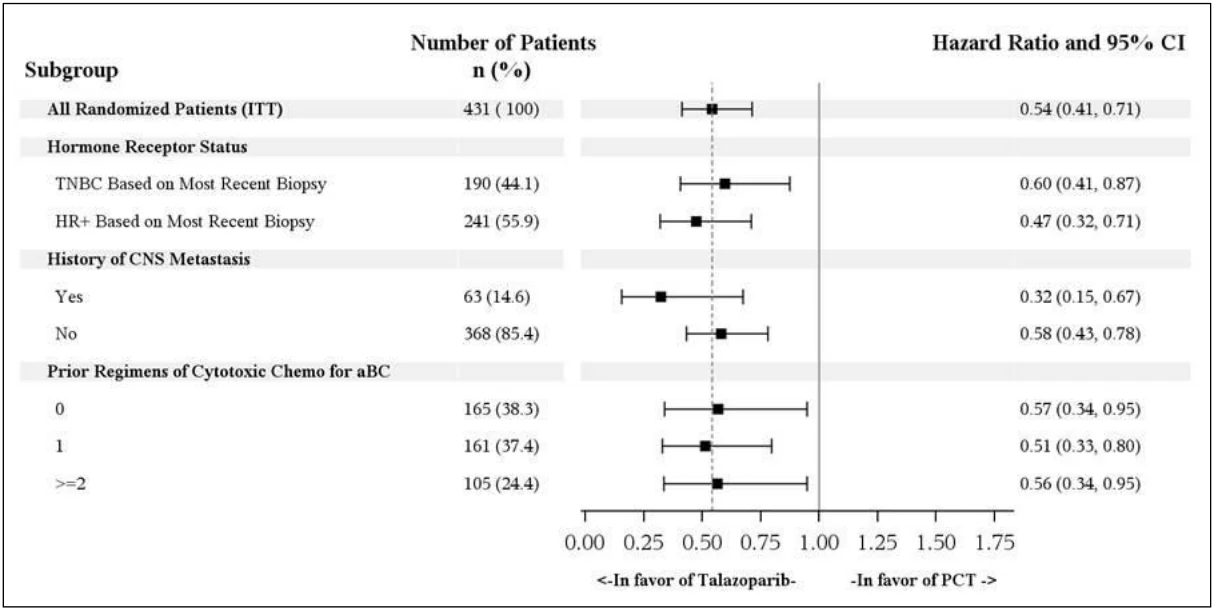
Abbreviations: aBC=advanced breast cancer; CI=confidence interval; CNS=central nervous system; HR+=hormone receptor-positive; ITT=intent-to-treat; PCT=physician’s choice treatment (chemotherapy); PFS=progression-free survival;TNBC=triple negative breast cancer.
Figure 3 Kaplan-Meier Curves of OS - EMBRACA study
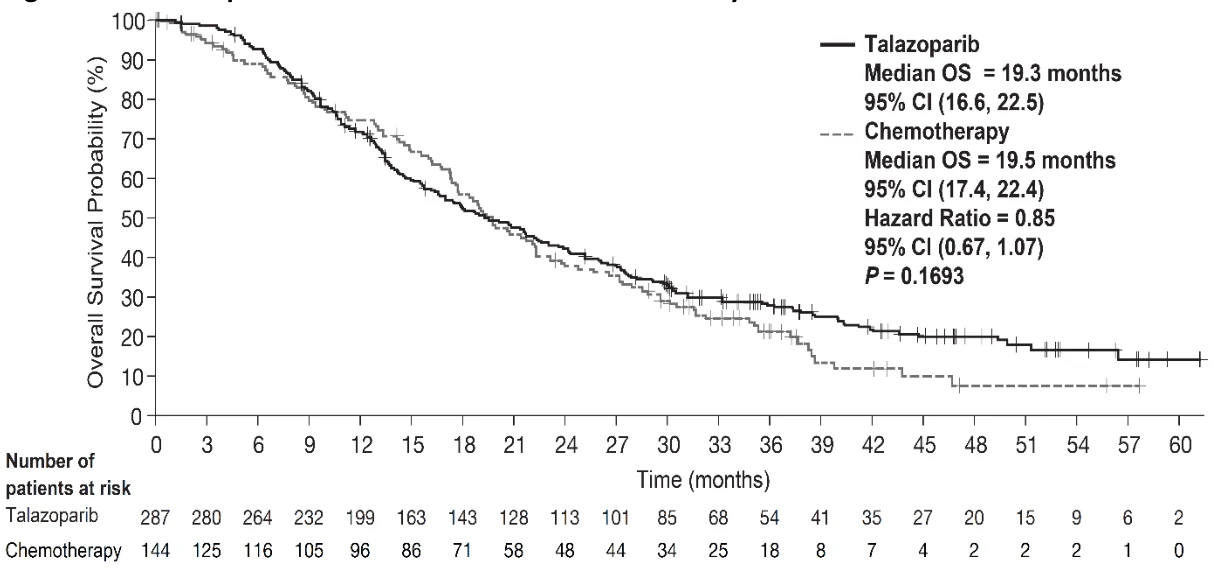
Abbreviations: CI=confidence interval; OS=overall survival.
Primary analysis p-value was based on a stratified log-rank test.
HRR gene-mutated (HRRm) Metastatic Castration-Resistant Prostate Cancer (mCRPC)
Table 13 - Summary of patient demographics for clinical trial in patients with HRRm mCRPC
| Study # | Trial design | Dosage, route of administration and duration | Study subjects (n) | Mean age (Range) | Sex |
| TALAPRO-2, Cohort 2 | Randomized, double-blind, placebo controlled study. | Enzalutamide 160 mg daily plus either TALZENNA 0.5 mg or placebo daily until unacceptable toxicity or progression | TALZENNA with Enzalutamide n= 200 Placebo with Enzalutamide n= 199 | 70 years (41 - 90) | Male |
TALAPRO-2 Study, Cohort 2
The efficacy of TALZENNA in combination with enzalutamide was evaluated in TALAPRO-2, a randomized, double-blind, placebo-controlled, multi-cohort trial in which 399 patients with HRR gene-mutated (HRRm) mCRPC were randomized 1:1 to receive enzalutamide 160 mg daily plus either TALZENNA 0.5 mg or placebo daily until unacceptable toxicity or progression. All patients received a GnRH analog or had prior bilateral orchiectomy and needed to have progressed on prior androgen deprivation therapy. Prior treatment with a CYP17 inhibitor (abiraterone) or docetaxel for metastatic castration-sensitive prostate cancer (mCSPC) was permitted. Mutation status of HRR genes was determined prospectively using FoundationOne CDx (solid tumor tissue) or FoundationOne Liquid CDx (circulating tumor DNA (ctDNA)) -based next generation sequencing tests. Patients were required to have a mutation in at least one of 12 genes involved directly or indirectly in the HRR pathway (ATM, ATR, BRCA1, BRCA2, CDK12, CHEK2, FANCA, MLH1, MRE11A, NBN, PALB2, or RAD51C). A patient was classified as HRRm if homozygous deletions (of one or more exons), putative deleterious genomic alterations, or both were detected in genes in the panel by tumour tissue or ctDNA tests. Single-copy deletions without mutations detected in the second allele, or mono-allelic gene copy number loss, were classified as non-HRRm. For the ctDNA HRRm biomarker definition based on copy number changes, only homozygous deletions of BRCA1 or BRCA2were defined as HRR gene alterations. The HRRm biomarker definitions for these tests did not include variant allele frequency thresholds.
Randomization was stratified by previous treatment with abiraterone or taxane-based chemotherapy versus no such prior treatment
The median age was 70 years (range: 41 to 90); 100% were male; 68% were White, 21% Asian, 2.8% Black, 0.8% Other, 7% unknown/not reported; 12% were Hispanic/Latino; and baseline ECOG performance status was 0 (62%) or 1 (38%). Thirty-nine percent of patients had bone-only disease; 15% had visceral disease. In the mCSPC setting, 29% of patients had received docetaxel and 9% had received a prior CYP17 inhibitor (abiraterone). The most commonly mutated HRR genes (>5%), including co-occurring mutations, were: BRCA2 (34%), ATM (22%), CDK12 (19%), CHEK2 (18%), and BRCA1 (6%).
The major efficacy outcome measure was radiographic progression-free survival (rPFS) evaluated according to RECIST, version 1.1 and Prostate Cancer Working Group (PCWG3) (bone) criteria, assessed by BICR. An additional efficacy outcome measure was OS.
TALZENNA in combination with enzalutamide demonstrated a statistically significant improvement in rPFS and OS compared to placebo in combination with enzalutamide in patients with HRRm mCRPC. Consistent rPFS results were observed in patients who had received or had not received a prior CYP17 inhibitor or docetaxel. Efficacy results are presented in Table 14 and the Kaplan-Meier curves for rPFS are shown in Figure 4 and OS in Figure 6.
| Table 14. Summary of Efficacy Results – TALAPRO-2 (HRR Gene-mutated mCRPC) | |||||||||||||||||||||||||||||
|---|---|---|---|---|---|---|---|---|---|---|---|---|---|---|---|---|---|---|---|---|---|---|---|---|---|---|---|---|---|
| ITT | Post-hoc Subgroup Analysesa*** | ||||||||||||||||||||||||||||
| BRCAm | Non-BRCAm | ||||||||||||||||||||||||||||
TALZENNA with Enzalutamide N=200 | Placebo with Enzalutamide N=199 | TALZENNA with Enzalutamide N=71 | Placebo with Enzalutamide N=84 | TALZENNA with Enzalutamide N=129 | Placebo with Enzalutamide N=115 | ||||||||||||||||||||||||
| Radiographic Progression-free Survival (rPFS) by BICR* | |||||||||||||||||||||||||||||
| Number of events, n (%) | 66 (33) | 104 (52) | 15 (21) | 54 (64) | 51 (40) | 50 (43) | |||||||||||||||||||||||
| Median months (95% CI) | NR (21.9, NR) | 13.8 (11.0, 16.7) | NR (NR, NR) | 11.0 (8.3, 11.1) | 24.7 (16.4, NR) | 16.7 (13.8, 27.7) | |||||||||||||||||||||||
Hazard ratio (95% CI)b | 0.45 (0.33, 0.61) | 0.20 (0.11, 0.36) | 0.72 (0.49, 1.07) | ||||||||||||||||||||||||||
| p-valuec | <0.0001 | N/A | N/A | ||||||||||||||||||||||||||
| Overall Survival (OS)** | |||||||||||||||||||||||||||||
| Deaths, n (%) | 93 (46.5) | 126 (63.3) | 30 (42.3) | 56 (66.7) | 63 (48.8) | 70 (60.9) | |||||||||||||||||||||||
| Median months (95% CI) | 45.1 (35.4, NR) | 31.1 (27.3, 35.4) | NR (35.4, NR) | 28.5 (24.5, 34.4) | 42.4 (34.2, NR) | 32.6 (28, 42.2) | |||||||||||||||||||||||
Hazard ratio (95% CI) | 0.62 (0.48, 0.81) | 0.50 (0.32, 0.78) | 0.73 (0.52, 1.02) | ||||||||||||||||||||||||||
| p-valuec | 0.0005 | N/A | N/A | ||||||||||||||||||||||||||
| Patients with Measurable Disease by BICR, N (%)d | 73 (36.5%) | 65 (32.7%) | - | -- | |||||||||||||||||||||||||
| ORR, % (95% CI)e | 67.1 (55.1, 77.7) | 40.0 (28.0, 52.9) | - | - | |||||||||||||||||||||||||
| CR % | 28 (38.4) | 12 (18.5) | - | - | |||||||||||||||||||||||||
| Medianf DOR months (95% CI) | 20.3 (12.2, NR) | 14.8 (6.6, 25.8) | - | - | |||||||||||||||||||||||||
Abbreviations: BICR=blinded independent central review; BRCAm=breast cancer susceptibility gene-mutated; CI=confidence interval; CSPC=castration-sensitive prostate cancer; ctDNA=circulating tumor DNA; HRRm=homologous recombination repair; ITT=intent-to-treat; mCRPC=metastatic castration-resistant prostate cancer; N=number of patients; NA=not applicable, NR=not reached. a. BRCAm status defined using prospective testing of tumor and/or ctDNA. b. Hazard ratio and CI are based on Cox Proportional hazards model stratified by previous treatment for CSPC. c. p-value (2-sided) is based on log-rank test stratified by previous treatment for CSPC. d. Conducted in ITT population with measurable disease at baseline. e. Response rate based on confirmed responses. f. Median estimated from Kaplan-Meier probabilities. * data cut-off date of 03 October 2022 ** data cut-off of 03 September 2024 *** based on prospective BRCA mutation testing | |||||||||||||||||||||||||||||
Figure 4. Kaplan-Meier Curves of rPFS by BICR - TALAPRO-2 (HRR Gene-mutated mCRPC)
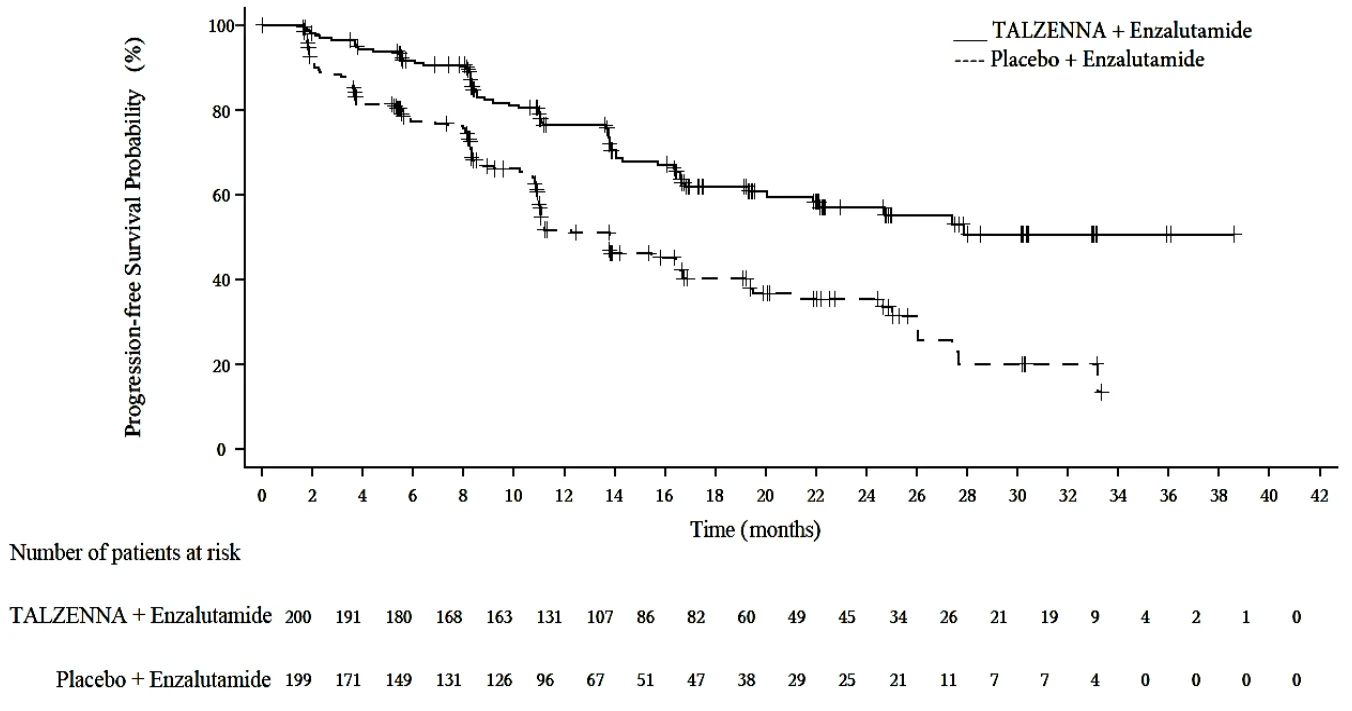
Abbreviations: HRR=homologous recombination repair; mCRPC=metastatic castration-resistant prostate cancer; rPFS=radiographic progression-free survival.
Prespecified exploratory subgroup analyses for rPFS and OS were performed based on prognostic factors and baseline characteristics to evaluate the internal consistency of the treatment effect. A reduction in the risk of disease progression or death in favor of talazoparib in combination with enzalutamide was observed in patient subgroups shown in Figures 5 and 7.
Figure 5. Overview Forest Plot of rPFS by BICR – TALAPRO-2 (HRR Gene-mutated mCRPC)
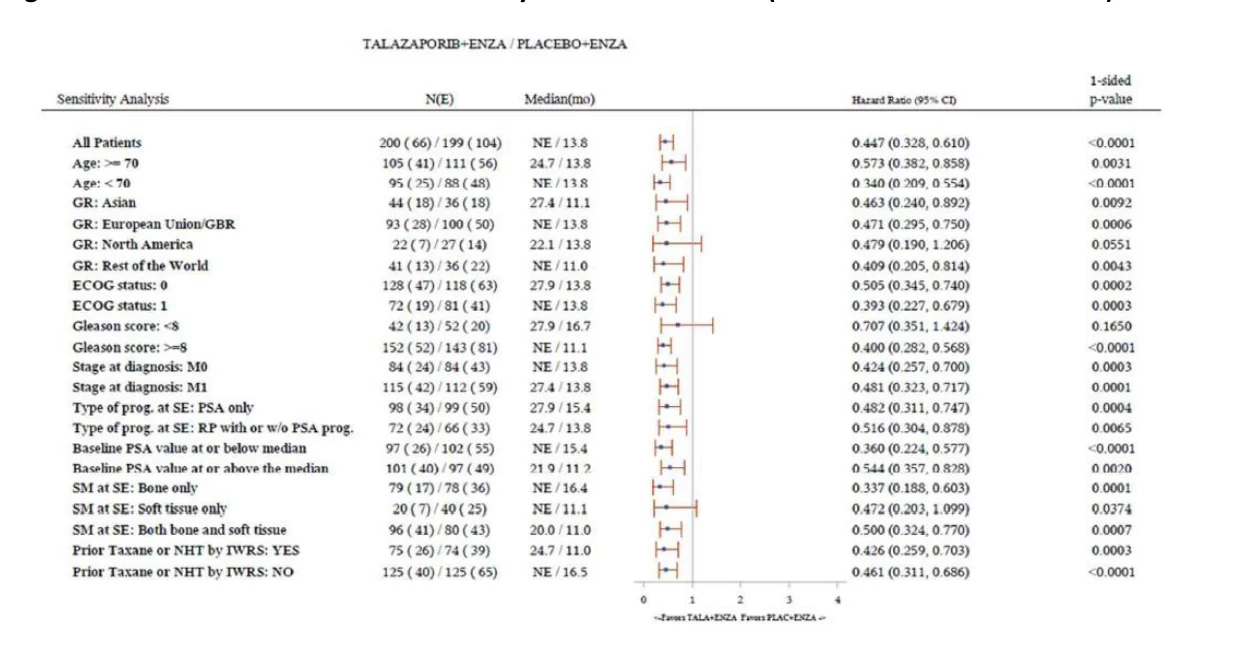
Abbreviation: rPFS=radiographic progression-free survival.
Figure 6. Kaplan-Meier Curves of OS – TALAPRO-2 (HRR Gene-mutated mCRPC)
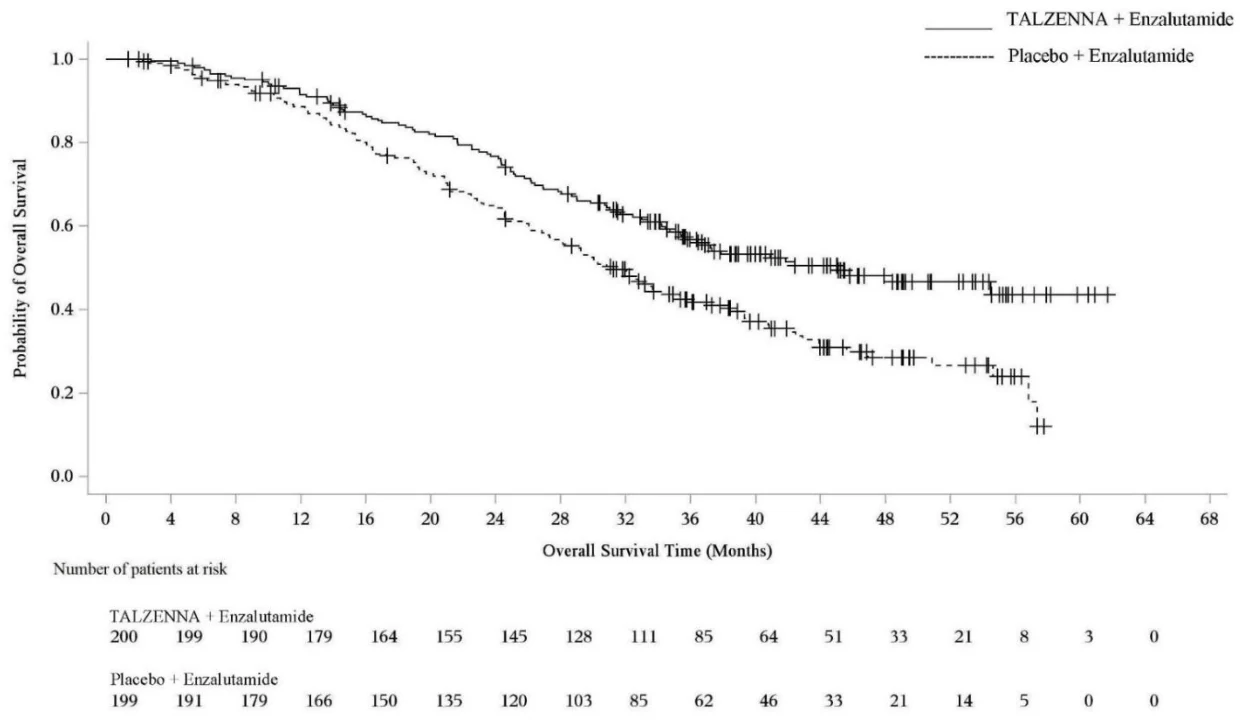
Abbreviations: HRR=homologous recombination repair; mCRPC=metastatic castration-resistant prostate cancer; OS=overall survival.
Figure 7. Overview Forest Plot of OS - TALAPRO-2 (HRR Gene-mutated mCRPC)
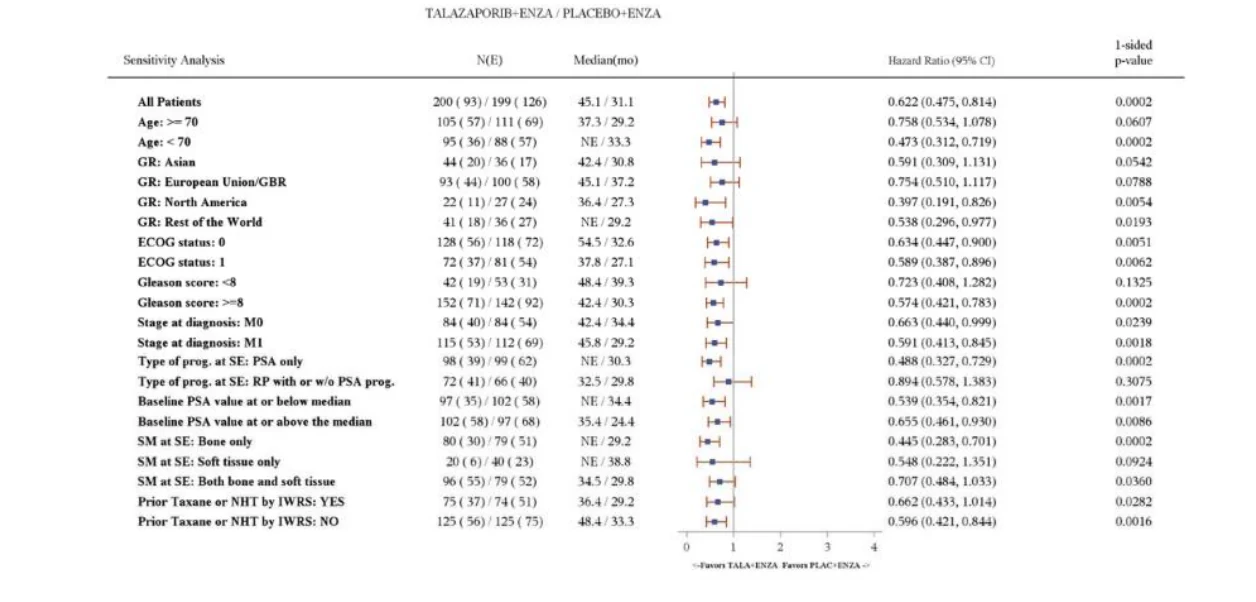
At the time of the final OS analysis, the median duration of follow-up was 44.2 months for patients who received TALZENNA in combination with enzalutamide and 44.4 months for patients who received placebo in combination with enzalutamide. At the final OS analysis, median rPFS was 30.7 months (95% CI: 24.3, 38.5) for patients who received TALZENNA in combination with enzalutamide and 12.3 months (95% CI: 11.0, 16.5) for patients who received placebo in combination with enzalutamide (hazard ratio=0.468, 95% CI: 0.359, 0.612) in the ITT population.
Post-hoc exploratory gene alteration cluster analyses based on prospective testing were performed (Table 15). Differential efficacy benefit for TALZENNA in combination with enzalutamide compared to placebo in combination with enzalutamide was most pronounced for alterations of BRCA1/2, PALB2,and CDK12, and least pronounced for alterations of ATM and the ‘Other’ gene cluster. Due to the small sample size in the subgroups, caution should be taken when interpreting the results.
Table 15. Exploratory BICR-assessed rPFS and OS by hierarchical HRR gene clusters
| TALZENNA with Enzalutamide/ Placebo with Enzalutamide | ||||
|---|---|---|---|---|
| Endpoint | Subgroup | N (E) | Median (months) | HR (95% CI) |
| rPFS | All HRRm | 198(98)/197(126) | 30.7/12.3 | 0.47 (0.36,0.62) |
| BRCAm | 71(27)/84 (56) | NE/11.0 | 0.27 (0.17,0.43) | |
| PALB2m | 7(4)/8(7) | 24.9/8.31 | 0.31 (0.08,1.22) | |
| CDK12m | 35(19)/36(23) | 19.3/13.8 | 0.37 (0.19,0.72) | |
| ATMm | 43(25)/29(15) | 30.4/27.7 | 0.82 (0.43,1.57) | |
| Other | 42(23)/40(25) | 22.1/19.5 | 0.90 (0.51,1.58) | |
| OS | All HRRm | 198(92)/197(125) | 45.1/30.8 | 0.60 (0.46,0.78) |
| BRCAm | 71(30)/84(56) | NE/28.5 | 0.48 (0.31,0.75) | |
| PALB2m | 7(3)/8(8) | NE/19.6 | 0.39 (0.10,1.47) | |
| CDK12m | 35(18)/36(29) | 36.4/22.3 | 0.41 (0.23,0.75) | |
| ATMm | 43(20)/29(13) | 45.1/42.9 | 0.98 (0.49,1.97) | |
| Other | 42(21)/40(19) | 34.2/42.2 | 1.07 (0.57,1.99) | |
Gene alteration cluster dominance hierarchy is any BRCA1/2m, then any PALB2m, then any CDK12m, then any ATMm, then any other HRR12m, with each patient counted once. Hazard ratio was based on an unstratified Cox model with treatment as the only covariate. Based on prospective HRR gene mutation testing. | ||||
N the number of patients
E rPFS event or OS event
A maintenance was observed in all functional scales as measured by EORTC QLQ C30. No clinically meaningful (10-point) change between talazoparib plus enzalutamide versus placebo plus enzalutamide in GHS/QoL, function, or symptoms scores were observed. Differences disfavoring talazoparib plus enzalutamide were observed in GHS/QoL, fatigue, nausea/vomiting, dyspnea, and appetite loss but these differences did not reach the clinically meaningful threshold of >10 points.
Although treatment differences were noted for some of the PRO scores, none of the mean differences exceeded 10-points, and are therefore assumed not to be clinically meaningful. Time to definitive deterioration in GHS/QoL was longer with talazoparib plus enzalutamide versus placebo plus enzalutamide. Time to definitive deterioration in urinary symptoms was numerically longer with talazoparib plus enzalutamide versus placebo plus enzalutamide.
15 Microbiology
This section is not applicable
16 Non-Clinical Toxicology
General Toxicology (single and repeat-dose studies)
In repeat-dose toxicity studies of up to 13-week duration, talazoparib was clinically tolerated in rats at 0.04 mg/kg/day and in dogs at 0.01 mg/kg/day and the AUC24 exposure margins at the no adverse effect level are 0.2-fold the relevant human exposure. The main findings at subtherapeutic exposures included bone marrow hypocellularity with dose-dependent decrease in hematopoietic cells, depletion of lymphoid tissue in multiple organs and atrophy and/or degenerative changes in testes, epididymis, and seminiferous tubules. Additional findings at higher exposures included dose-dependent increase in apoptosis/necrosis in the gastrointestinal (GI) tract, liver, and ovary. Most of the histopathologic findings were generally reversible while the testes findings were partially reversible after 4 weeks of dosing cessation. These toxicity findings are consistent with the pharmacology of talazoparib and its tissue distribution pattern.
Carcinogenicity
Carcinogenicity studies have not been conducted with talazoparib.
Genotoxicity
In genotoxicity studies, talazoparib did not demonstrate mutagenic potential in the bacterial reverse mutation (Ames) test but was clastogenic in an in vitro chromosomal aberration assay in human peripheral blood lymphocytes and in an in vivo micronucleus assay in rats at exposures similar to clinically relevant doses. This clastogenicity is consistent with genomic instability resulting from the primary pharmacology of talazoparib, indicating the potential for genotoxicity in humans.
Reproductive and Developmental Toxicology
In an embryo-fetal development study in rats, talazoparib administered during the period of organogenesis resulted in, decreased fetal weight, embryo-fetal death, fetal malformation (depressed eye bulge, small eye, split sternebra, fused cervical vertebral arch) and structural variations in bones (misshapen zygomatic arch, incompletely ossified, split or misshapen sternebrae, supernumerary ribs, incompletely ossified, fused and/or misshapen cervical arch) at a maternal systemic AUC24 exposure approximately 0.09-fold the relevant human exposure at the recommended dose.