


Product Monograph - Taro-Palbociclib
RECENT MAJOR LABEL CHANGES
| 1 INDICATIONS | 05/2025 |
|---|---|
| 4 DOSAGE AND ADMINISTRATION | 05/2025 |
| 7 WARNINGS AND PRECAUTIONS | 05/2025 |
TABLE OF CONTENTS
Sections or subsections that are not applicable at the time of authorization are not listed.
RECENT MAJOR LABEL CHANGES ............................................................................................2
TABLE OF CONTENTS ............................................................................................................... 2
1 INDICATIONS ........................................................................................................................ 4
1.1 Pediatrics .................................................................................................................. 4
1.2 Geriatrics ................................................................................................................... 4
2 CONTRAINDICATIONS ........................................................................................................... 4
3 SERIOUS WARNINGS AND PRECAUTIONS BOX ...................................................................... 5
4 DOSAGE AND ADMINISTRATION ........................................................................................... 5
4.1 Dosing Considerations ............................................................................................... 5
4.2 Recommended Dose and Dosage Adjustment .......................................................... 5
4.4 Administration .......................................................................................................... 7
4.5 Missed Dose .............................................................................................................. 7
5 OVERDOSAGE ....................................................................................................................... 8
6 DOSAGE FORMS, STRENGTHS, COMPOSITION AND PACKAGING .......................................... 8
7 WARNINGS AND PRECAUTIONS ............................................................................................ 9
7.1 Special Populations ................................................................................................. 12
7.1.1 Pregnant Women ................................................................................................. 12
7.1.2 Breast-feeding ...................................................................................................... 13
7.1.3 Pediatrics ............................................................................................................. 13
7.1.4 Geriatrics .............................................................................................................. 13
8 ADVERSE REACTIONS .......................................................................................................... 13
8.1 Adverse Reaction Overview .................................................................................... 13
8.2 Clinical Trial Adverse Reactions ............................................................................... 14
8.3 Less Common Clinical Trial Adverse Reactions ........................................................ 19
8.4 Abnormal Hematologic and Clinical Chemistry Findings ......................................... 19
8.5 Post-Market Adverse Reactions .............................................................................. 20
9 DRUG INTERACTIONS .......................................................................................................... 20
9.2 Drug Interactions Overview .................................................................................... 20
9.4 Drug-Drug Interactions ........................................................................................... 21
9.5 Drug-Food Interactions ........................................................................................... 23
9.6 Drug-Herb Interactions ........................................................................................... 23
9.7 Drug-Laboratory Test Interactions .......................................................................... 23
10 CLINICAL PHARMACOLOGY ............................................................................................... 24
10.1 Mechanism of Action ............................................................................................ 24
10.2 Pharmacodynamics ............................................................................................... 24
10.3 Pharmacokinetics .................................................................................................. 24
11 STORAGE, STABILITY AND DISPOSAL ................................................................................. 27
12 SPECIAL HANDLING INSTRUCTIONS................................................................................... 27
PART II: SCIENTIFIC INFORMATION ........................................................................................ 28
13 PHARMACEUTICAL INFORMATION.................................................................................... 28
14 CLINICAL TRIALS ................................................................................................................ 29
14.1 Clinical Trials by Indication .................................................................................... 29
14.2 Comparative Bioavailability Studies ...................................................................... 39
15 MICROBIOLOGY ................................................................................................................ 40
16 NON-CLINICAL TOXICOLOGY ............................................................................................. 40
17 SUPPORTING PRODUCT MONOGRAPHS ................................................................... 42
PATIENT MEDICATION INFORMATION ................................................................................... 43
PART I: HEALTH PROFESSIONAL INFORMATION
1 INDICATIONS
TARO-PALBOCICLIB (palbociclib tablets) is indicated for:
the treatment of pre/perimenopausal or postmenopausal women, or men with hormone receptor (HR)-positive, human epidermal growth factor receptor 2 (HER2)-negative locally advanced or metastatic breast cancer in combination with:
- an aromatase inhibitor as initial endocrine-based therapy; or
- fulvestrant in patients with disease progression after prior endocrine therapy.
Pre/perimenopausal women and men treated with the combination TARO-PALBOCICLIB plus aromatase inhibitor therapy, and pre/perimenopausal women treated with the combination TARO-PALBOCICLIB plus fulvestrant therapy should also be treated with a luteinizing hormone releasing hormone (LHRH) agonist.
Clinical effectiveness of palbociclib in combination with an aromatase inhibitor is based on the benefit observed in patients treated with palbociclib in combination with letrozole for the treatment of postmenopausal women with advanced breast cancer.
1.1 Pediatrics
Pediatrics (<18 years of age):Based on the limited data submitted and reviewed by Health Canada, the safety and efficacy of palbociclib in pediatric patients have not been established; Therefore, Health Canada has not authorized an indication for pediatric use (see 7.1.3 Pediatrics and 10.3 Pharmacokinetics, Special Populations and Conditions).
1.2 Geriatrics
Geriatrics (≥65 years of age): Of 444 patients who received palbociclib in PALOMA-2, 181 (41%) patients were ≥65 years of age. Of 347 patients who received palbociclib plus fulvestrant, 86 patients (25%) were ≥65 years of age. No overall differences in the safety and efficacy of palbociclib were observed between these patients and younger patients in either study. Anemia was reported more frequently in patients ≥65 than in patients <65 years of age treated with palbociclib plus letrozole, whereas similar incidences were reported in both age groups for patients treated with palbociclib plus fulvestrant (see 7.1.4 Geriatrics).
2 CONTRAINDICATIONS
- Patients who are hypersensitive to this drug or to any ingredient in the formulation, including any non-medicinal ingredient, or component of the container. For a complete listing, see 6 DOSAGE FORMS, STRENGTHS, COMPOSITION AND PACKAGING.
3 SERIOUS WARNINGS AND PRECAUTIONS BOX
Serious Warnings and Precautions
TARO-PALBOCICLIB should be prescribed and managed by a qualified physician who is experienced in the use of anti-cancer agents.
The following is a significant adverse drug reaction identified in clinical trials conducted with palbociclib:
- Neutropenia (see 7 WARNINGS AND PRECAUTIONS, Hematologic)
4 DOSAGE AND ADMINISTRATION
4.1 Dosing Considerations
Pre/perimenopausal women and men treated with the combination TARO-PALBOCICLIB plus aromatase inhibitor therapy, and pre/perimenopausal women treated with the combination TARO-PALBOCICLIB plus fulvestrant therapy should also be treated with LHRH agonists according to local clinical practice.
4.2 Recommended Dose and Dosage Adjustment
The recommended dose of TARO-PALBOCICLIB is a 125 mg tablet taken orally once daily for 21 consecutive days followed by 7 days off treatment to comprise a complete cycle of 28 days.
TARO-PALBOCICLIB is used in combination with an aromatase inhibitor or fulvestrant. For full dosing instructions of the selected aromatase inhibitor or fulvestrant, please consult the corresponding Product Monographs.
Management of some adverse reactions may require temporary dose interruptions/delays and/or dose reductions, or permanent discontinuation of TARO-PALBOCICLIB as per dose reduction schedules provided in Table 1, 2, and 3.
Table 1. TARO-PALBOCICLIB Recommended Dose Modification for Adverse Events
| Dose Level | Dose |
|---|---|
| Recommended starting dose | 125 mg/day |
| First dose reduction | 100 mg/day |
| Second dose reduction | 75 mg/day* |
*If further dose reduction below 75 mg/day is required, discontinue palbociclib treatment.
Table 2. Dose Modification and Management – Hematologic Toxicitiesa
Monitor complete blood counts prior to the start of TARO-PALBOCICLIB therapy and at the beginning of each cycle, as well as on Day 15 of the first 2 cycles, and as clinically indicated. For patients who experience a maximum of Grade 1 or 2 neutropenia in the first 6 cycles, monitor complete blood counts for subsequent cycles, prior to the beginning of every third cycle, and as clinically indicated. | |||
|---|---|---|---|
| CTCAE Grade | Dose Modifications | ||
| Grade 1 or 2 | No dose adjustment is required. | ||
| Grade 3 | Day 1 of cycle: Withhold TARO-PALBOCICLIB, repeat complete blood count monitoring within 1 week. When recovered to Grade ≤2, start the next cycle at the same dose. Day 15 of first 2 cycles: If Grade 3 on Day 15, continue TARO-PALBOCICLIB at current dose to complete cycle and repeat complete blood count on Day 22. If Grade 4 on Day 22, see Grade 4 dose modification guidelines below. Consider dose reduction in cases of prolonged (>1 week) recovery from Grade 3 neutropenia or recurrent Grade 3 neutropenia on Day 1 of subsequent cycles. | ||
| Grade 3 neutropeniab with fever ≥38.5 °C and/or infection | At any time: Withhold TARO-PALBOCICLIB until recovery to Grade ≤2. Resume at the next lower dose. | ||
| Grade 4 | At any time: Withhold TARO-PALBOCICLIB until recovery to Grade ≤2. Resume at the next lower dose. | ||
Grading according to CTCAE 4.0
CTCAE=Common Terminology Criteria for Adverse Events; LLN=lower limit of normal.
- a Table applies to all hematologic adverse reactions except lymphopenia (unless associated with clinical events, e.g., opportunistic infections).
- b Absolute neutrophil count (ANC): Grade 1: ANC < LLN - 1500/mm3; Grade 2: ANC 1000 - <1500/mm3; Grade 3: ANC 500 - <1000/mm3; Grade 4: ANC <500/mm3 .
Table 3. TARO-PALBOCICLIB Dose Modification and Management–Non-Hematologic Toxicities
| CTCAE Grade | Dose Modifications |
|---|---|
| Grade 1 or 2 | No dose adjustment is required. |
| Grade ≥3 non-hematologic toxicity (if persisting despite medical treatment) | Withhold until symptoms resolve to:
Resume at the next reduced dose level. |
Grading according to CTCAE 4.0 CTCAE=Common Terminology Criteria for Adverse Events. | |
No dose adjustments are required on the basis of age, gender, or body weight (see 10.3 Pharmacokinetics, Special Populations and Conditions).
Permanently discontinue TARO-PALBOCICLIB in patients with severe interstitial lung disease (ILD) or pneumonitis (see 7 WARNINGS AND PRECAUTIONS, Respiratory).
Special populations
Hepatic impairment: No dose adjustment is required for patients with mild or moderate hepatic impairment (Child-Pugh classes A and B). For patients with severe hepatic impairment (Child-Pugh class C), the recommended dose of TARO-PALBOCICLIB is 75 mg once daily on Schedule 3/1 (see 10.3 Pharmacokinetics).
Renal impairment: No dose adjustment is required for patients with mild, moderate or severe renal impairment (creatinine clearance [CrCl] ≥15 mL/min). There are no data available in patients requiring hemodialysis (see 10.3 Pharmacokinetics).
4.4 Administration
TARO-PALBOCICLIB tablets may be taken with or without food.
Patients should be advised to take their dose at approximately the same time each day.
Continue the treatment as long as the patient is deriving clinical benefit from therapy.
4.5 Missed Dose
If the patient vomits or misses a dose, an additional dose should not be taken that day. The next prescribed dose should be taken at the usual time. TARO-PALBOCICLIB tablets should be swallowed whole (do not chew, crush or split the tablets prior to swallowing). No tablet should be ingested if it is broken, cracked, or otherwise not intact.
5 OVERDOSAGE
There is no known antidote for palbociclib. The treatment of overdose of TARO-PALBOCICLIB should consist of general supportive measures.
For the most recent information in the management of a suspected drug overdose, contact your regional poison control centre or Health Canada’s toll-free number, 1-844 POISON-X (1-844-764-7669).
6 DOSAGE FORMS, STRENGTHS, COMPOSITION AND PACKAGING
Table 4 – Dosage Forms, Strengths, Composition and Packaging
| Route of Administration | Dosage Form / Strength/Composition | Non-medicinal Ingredients |
|---|---|---|
| Oral | Tablets / 75 mg, 100 mg, 125 mg | Anhydrous citric acid, colloidal silicon dioxide, crospovidone, magnesium stearate, microcrystalline cellulose, sodium stearyl fumarate, succinic acid. Film coating material: 75 mg and 125 mg tablets: FD&C blue #2, hypromellose, iron oxide red, titanium dioxide, and triacetin. 100 mg tablets: FD&C blue #2, hypromellose, iron oxide yellow, titanium dioxide, and triacetin. |
TARO-PALBOCICLIB is supplied in the following strengths and package configurations:
| TARO-PALBOCICLIB Tablets | ||
|---|---|---|
| TARO-PALBOCICLIB Tablets | ||
| Package Configuration | Tablet Strength (mg) | Dosage Form Description |
| Package Configuration | Tablet Strength (mg) | Dosage Form Description |
| Box containing 3 weekly blister packs of 7 tablets each (21 tablets total) | 125 | Oval, light purple, film-coated tablets debossed with “S28” on one side and plain on the other side. |
| Box containing 3 weekly blister packs of 7 tablets each (21 tablets total) | 100 | Oval, Green, film-coated tablets debossed with “S27” on one side and plain on the other side. |
| Box containing 3 weekly blister packs of 7 tablets each (21 tablets total) | 75 | Round, light purple, film-coated tablets debossed with “S26” on one side and plain on the other side. |
7 WARNINGS AND PRECAUTIONS
Please see 3 SERIOUS WARNINGS AND PRECAUTIONS BOX.
General
Drug-Drug Interactions
CYP3A inhibitors: Concomitant use of TARO-PALBOCICLIB and CYP3A inhibitors (e.g. clarithromycin, itraconazole, ritonavir, ketoconazole, grapefruit or grapefruit juice) may increase exposure to palbociclib. In patients receiving TARO-PALBOCICLIB, coadministration of a strong CYP3A inhibitor should be avoided (see 9 DRUG INTERACTIONS).
CYP3A substrates: Concomitant use of TARO-PALBOCICLIB and a CYP3A substrate may increase exposure to the CYP3A substrate. Caution is warranted when TARO-PALBOCICLIB is co-administered with CYP3A substrates of narrow therapeutic index, such as alfentanil, cyclosporine, dihydroergotamine, or ergotamine (see 9 DRUG INTERACTIONS).
CYP3A inducers: Concomitant use of TARO-PALBOCICLIB and CYP3A inducers (e.g. strong inducers such as rifampin, carbamazepine, phenytoin, St John’s Wort, and moderate inducers such as nafcillin, bosentan, modafinil) may decrease palbociclib plasma concentration. In patients receiving TARO-PALBOCICLIB coadministration of strong CYP3A inducers should be avoided (see 9 DRUG INTERACTIONS).
Carcinogenesis and Mutagenesis
An increased incidence of palbociclib-related microglial cell tumors was observed in the central nervous system of male rats; there were no neoplastic findings in female rats or in mice. The No Observed Effect Level [NOEL] for palbociclib-related carcinogenicity effects in rats was approximately 2-4 times the human clinical exposure based on AUC. The relevance of the male rat neoplastic finding to humans is unknown (see 16 NON-CLINICAL TOXICOLOGY, Carcinogenicity).
Cardiovascular
Cardiac Electrophysiology
The effect of palbociclib in combination with letrozole on the QT interval corrected for heart rate (QTc) was evaluated using time-matched electrocardiograms (ECGs) evaluating the change from baseline in 77 patients with breast cancer from an ECG substudy of PALOMA-2. This study suggested that palbociclib at 125 mg once daily (Schedule 3/1), when added to letrozole, had no large effect on QTc (i.e., >20 msec) (see 10 CLINICAL PHARMACOLOGY).
Venous Thromboembolism
Across clinical trials (PALOMA-1, PALOMA-2, PALOMA-3), venous thromboembolic events (VTEs) were reported in 3.4% of patients treated with palbociclib plus an endocrine therapy (n=872), compared with 1.9% of patients treated with the endocrine therapy alone (n=471). Venous thromboembolic events included pulmonary embolism, embolism, deep vein thrombosis, peripheral embolism, and thrombosis. Monitor patients for signs and symptoms of VTEs and treat as medically appropriate.
Driving and Operating Machinery
No studies of the effects of palbociclib on the ability to drive or operate machinery have been conducted. However, since fatigue and dizziness have been reported with the use of palbociclib, patients should exercise caution when driving or operating machinery while taking TARO-PALBOCICLIB.
Hematologic
Neutropenia
Neutropenia was the most frequently reported adverse reaction in patients treated with palbociclib plus letrozole (80%) or palbociclib plus fulvestrant (83%). Grade 3 decreased neutrophil counts were observed in approximately half of all patients, and Grade 4 decreased neutrophil counts were observed in 5% and 11% of patients treated with palbociclib in combination with letrozole or fulvestrant, respectively (see 8 ADVERSE REACTIONS).
The median time to first episode of any grade neutropenia was 15 days, and the median duration of Grade ≥3 neutropenia was 7 days.
Febrile neutropenia has been reported in 1.8% of patients across the palbociclib clinical trials. One patient treated with palbociclib plus fulvestrant died due to neutropenic sepsis. Physicians should inform patients to promptly report any episodes of fever.
Monitor complete blood count prior to the start of TARO-PALBOCICLIB therapy, at the beginning of each cycle, as well as on Day 15 of the first 2 cycles, and as clinically indicated (see 7 WARNINGS AND PRECAUTIONS, Monitoring and Laboratory Tests). Dose interruption, dose reduction or delay in starting treatment cycles is recommended for patients who develop Grade 3 or 4 neutropenia (see 4.2 Recommended Dose and Dosage Adjustment). For patients who experience Grade 3 neutropenia, consider repeating complete blood count monitoring one week later.
Other Hematologic Parameters
Decreases in leukocytes and platelets were observed in patients treated with either palbociclib plus letrozole or palbociclib plus fulvestrant. Grade 3 leukopenia was reported in 24% of palbociclib plus letrozole patients and in 30% of palbociclib plus fulvestrant patients. Decreased hemoglobin and lymphocytes were also observed in palbociclib plus letrozole-treated patients (see 8 ADVERSE REACTIONS).
In clinical trials with palbociclib, anemia and leukopenia were usually managed with temporary palbociclib discontinuation and/or dose reduction. Monitor complete blood count prior to the start of TARO-PALBOCICLIB therapy, at the beginning of each cycle, as well as on Day 15 of the first 2 cycles, and as clinically indicated (see 7 WARNINGS AND PRECAUTIONS, Monitoring and Laboratory Tests and 4.2 Recommended Dose and Dosage Adjustment).
Hepatic/Biliary/Pancreatic
Hepatic Impairment: The pharmacokinetics of palbociclib has been studied in subjects with hepatic impairment. No dose adjustment is required for patients with mild or moderate hepatic impairment (Child-Pugh classes A and B). The recommended dose of TARO-PALBOCICLIB for patients with severe hepatic impairment (Child-Pugh class C) is 75 mg once daily on Schedule 3/1 (see 4.2 Recommended Dose and Dosage Adjustment and 10.3 Pharmacokinetics). There are no efficacy and safety data available for palbociclib in breast cancer patients with hepatic impairment. Monitor patients for signs of toxicity.
Immune
Infections
TARO-PALBOCICLIB may predispose patients to infections. Infections have been more frequently reported in patients treated with palbociclib plus letrozole (60%) and in patients treated with palbociclib plus fulvestrant (47%) than those treated in the respective comparator arms (42% and 31%, respectively). Grade ≥3 infections occurred in 6% of patients treated with palbociclib plus letrozole and in 3% of patients treated with letrozole alone. Grade ≥3 infections occurred in 3% of patients treated with either palbociclib plus fulvestrant or placebo plus fulvestrant. Monitor patients for signs and symptoms of infection and treat as medically appropriate (see 7 WARNINGS AND PRECAUTIONS, Monitoring and Laboratory Tests). Physicians should be aware of the increased risk of infection with TARO-PALBOCICLIB and should inform patients to promptly report any episodes of fever.
Monitoring and Laboratory Tests
Patients treated with TARO-PALBOCICLIB should be monitored for signs and symptoms of myelosuppression and infection. Dose modification may be required (see 4.2 Recommended Dose and Dosage Adjustment).
Monitor complete blood count prior to starting TARO-PALBOCICLIB therapy and at the beginning of each cycle, as well as on Day 15 of the first two cycles, and as clinically indicated.
For patients who experience Grade 3 neutropenia, consider repeating complete blood count monitoring one week later. For patients who develop Grade 3 or 4 neutropenia, refer to the dose modification tables (see 4.2 Recommended Dose and Dosage Adjustment).
Renal
Renal Impairment: The pharmacokinetics of palbociclib has been studied in subjects with renal impairment. No dose adjustments are required for patients with mild, moderate, or severe renal impairment. The pharmacokinetics of palbociclib have not been studied in patients requiring hemodialysis (see 4.2 Recommended Dose and Dosage Adjustment and 10.3 Pharmacokinetics). There are no efficacy and safety data available for palbociclib in breast cancer patients with renal impairment.
Reproductive Health: Female and Male Potential
|
No clinical data have been obtained on fertility in humans. There were no effects on estrous cycle or mating and fertility in female rats in nonclinical studies (see 10.3 Pharmacokinetics, Special Populations and Conditions). Based on nonclinical safety findings in male reproductive tissues, male fertility may be impaired by treatment with TARO-PALBOCICLIB (see 16 NON-CLINICAL TOXICOLOGY, Reproductive and Developmental Toxicology).
Men should consider sperm preservation prior to beginning therapy with TARO-PALBOCICLIB. Because of the potential for genotoxicity, male patients with female partners of childbearing potential should use adequate contraceptive methods during therapy and for at least 97 days after completing therapy.
Respiratory
Interstitial lung disease/pneumonitis
Severe, life-threatening, or fatal interstitial lung disease (ILD)/pneumonitis can occur in patients treated with TARO-PALBOCICLIB when taken in combination with endocrine therapy.
Across clinical trials (PALOMA-1, PALOMA-2, PALOMA-3, n = 872), 1.4% of palbociclib - treated patients had ILD/pneumonitis of any grade, 0.1% had Grade 3 and no Grade 4 or fatal cases were reported. Additional cases of ILD/pneumonitis have been observed in the post- marketing setting (see 8.5 Post-Market Adverse Reactions), with fatalities reported.
Patients should be monitored for pulmonary symptoms indicative of ILD/pneumonitis (e.g. hypoxia, cough, dyspnea). In patients who have new or worsening respiratory symptoms and are suspected to have developed ILD/pneumonitis, interrupt TARO-PALBOCICLIB immediately and evaluate the patient. TARO-PALBOCICLIB should be permanently discontinued in patients diagnosed with severe drug-related ILD/pneumonitis (see 4.2 Recommended Dose and Dosage Adjustment).
7.1 Special Populations
7.1.1 Pregnant Women
There are no adequate and well-controlled studies using palbociclib in pregnant women.
TARO-PALBOCICLIB may cause fetal harm when administered to a pregnant woman. In animal studies, palbociclib was shown to be fetotoxic in pregnant rats and rabbits (see 16 NON-CLINICAL TOXICOLOGY).
TARO-PALBOCICLIB should not be used during pregnancy. If TARO-PALBOCICLIB is used in women of childbearing potential, advise the patient to avoid becoming pregnant with the use of adequate contraceptive methods during therapy and for at least 21 days after completing therapy. If the patient becomes pregnant while taking this drug, the patient should be apprised of the potential hazard to the fetus.
7.1.2 Breast-feeding
It is not known whether palbociclib is excreted in human milk. Because many drugs are excreted in human milk and because of the potential for serious adverse reactions in nursing infants from TARO-PALBOCICLIB, a decision should be made whether to discontinue nursing or to discontinue the drug, taking into account the importance of the drug to the patient.
7.1.3 Pediatrics
Pediatrics (<18 years of age): Based on the limited data submitted and reviewed by Health Canada, the safety and efficacy of palbociclib in pediatric patients have not been established; Therefore, Health Canada has not authorized an indication for pediatric use.
In a Phase 1 pediatric study the safety was evaluated in 34 patients (≥4 years and ≤21 years of age) including 30 pediatric patients (≥4 years and ˂18 years of age) with progressive or refractory brain tumors (except low grade gliomas) with intact Rb protein. The maximum tolerated dose was determined to be 75 mg/m2 administered orally once daily for 21 days of a 28-day cycle. Similar to the side effect profile in adults, the most common adverse events were related to myelosuppression with decrease in white blood cells, neutrophils, lymphocytes, and platelets being the most common. The overall safety profile was consistent with that reported from palbociclib use in adults and the diseases under study.
7.1.4 Geriatrics
Geriatrics (≥65 years of age): Population pharmacokinetic analysis was performed on data from 183 patients with cancer in an age range from 22 to 89 years. There was no clinically important difference in palbociclib exposure in patients ≥65 years of age compared with patients <65 years of age. In palbociclib plus letrozole-treated patients, anemia was reported more frequently in patients ≥65 years of age than in those <65 years of age, whereas similar incidences were reported in both age groups in patients treated with palbociclib plus fulvestrant.
8 ADVERSE REACTIONS
8.1 Adverse Reaction Overview
The safety of palbociclib has been assessed in 2 randomized studies of patients with HR-positive, HER2-negative locally advanced or metastatic breast cancer.
The most common adverse drug reactions of any grade reported in ≥10% of patients receiving palbociclib in combination with endocrine treatment were neutropenia, leukopenia, infections, fatigue, nausea, anemia, stomatitis, thrombocytopenia, diarrhea, alopecia, vomiting, decreased appetite, and rash.
Most patients treated with palbociclib experienced myelosuppressive effects with over half experiencing Grade 3 neutropenia at some point during treatment. Thrombocytopenia and anemia were less commonly observed. Myelosuppressive effects can be expected to occur from Cycle 1 forward.
8.2 Clinical Trial Adverse Reactions
Clinical trials are conducted under very specific conditions. The adverse reaction rates observed in the clinical trials; therefore, may not reflect the rates observed in practice and should not be compared to the rates in the clinical trials of another drug. Adverse reaction information from clinical trials may be useful in identifying and approximating rates of adverse drug reactions in real-world use.
The adverse reactions are listed by system organ class, frequency category and grade of severity. Frequency categories are defined as: very common (≥1/10), common (≥1/100 to <1/10), uncommon (≥1/1,000 to <1/100), rare (≥1/10,000 to <1/1,000), very rare (<1/10,000), not known (cannot be estimated from the available data).
Palbociclib plus Letrozole for the initial endocrine -based therapy of patients with ER-positive, HER2-negative locally advanced or metastatic breast cancer (PALOMA-2)
The safety of palbociclib (125 mg/day) plus letrozole (2.5 mg/day) versus placebo plus letrozole was evaluated in PALOMA-2. The data described below reflect exposure to palbociclib in 444 out of 666 patients with ER-positive, HER2-negative advanced breast cancer who received at least 1 dose of palbociclib plus letrozole in PALOMA-2. Patients were randomized 2:1 to receive the combination palbociclib plus letrozole versus placebo plus letrozole. The median duration of treatment for palbociclib plus letrozole was 19.8 months while the median duration of treatment for placebo plus letrozole arm was 13.8 months.
Dose reductions due to an adverse reaction of any grade occurred in 36% of patients receiving palbociclib plus letrozole. No dose reduction was allowed for letrozole in PALOMA-2.
Permanent treatment discontinuation associated with an adverse reaction occurred in 43 of 444 (10%) patients receiving palbociclib plus letrozole and in 13 of 222 (6%) patients receiving placebo plus letrozole. Adverse reactions leading to permanent discontinuation for patients receiving palbociclib plus letrozole included neutropenia (1%) and alanine aminotransferase increase (0.7%).
The most common adverse reactions (≥10%) of any grade reported in patients in the palbociclib plus letrozole arm by descending frequency were neutropenia, infections, leukopenia, fatigue, nausea, alopecia, stomatitis, diarrhea, anemia, rash, asthenia, thrombocytopenia, vomiting, decreased appetite, dry skin, pyrexia, and dysgeusia.
The most frequently reported serious adverse reactions (≥1%) in patients receiving palbociclib plus letrozole were Infections (20%) and Febrile neutropenia (2%).
Adverse reactions (≥5%) reported in patients who received palbociclib plus letrozole or placebo plus letrozole in PALOMA-2 are listed in Table 5.
Table 5. Adverse Reactions Reported (With a Frequency of ≥5% on the Palbociclib plus letrozole arm) in PALOMA-2
Palbociclib plus Letrozole (N=444) | Placebo plus Letrozole (N=222) | ||||||||||||||||||
|---|---|---|---|---|---|---|---|---|---|---|---|---|---|---|---|---|---|---|---|
Palbociclib plus Letrozole (N=444) | Placebo plus Letrozole (N=222) | ||||||||||||||||||
| Adverse Reaction | All Grades % | Grade 3 % | Grade 4 % | All Grades % | Grade 3 % | Grade 4 % | |||||||||||||
| Adverse Reaction | All Grades % | Grade 3 % | Grade 4 % | All Grades % | Grade 3 % | Grade 4 % | |||||||||||||
| Blood and lymphatic system disorders | |||||||||||||||||||
| Neutropeniaa | 80 | 56 | 10 | 6 | 1 | 1 | |||||||||||||
| Leukopeniab | 39 | 24 | 1 | 2 | 0 | 0 | |||||||||||||
| Anemiac | 24 | 5 | <1 | 9 | 2 | 0 | |||||||||||||
| Thrombocytopeniad | 16 | 1 | <1 | 1 | 0 | 0 | |||||||||||||
| Eye Disorders | |||||||||||||||||||
| lacrimation increased | 6 | 0 | 0 | 1 | 0 | 0 | |||||||||||||
| Gastrointestinal disorders | |||||||||||||||||||
| Stomatitise | 30 | 1 | 0 | 14 | 0 | 0 | |||||||||||||
| Nausea | 35 | <1 | 0 | 26 | 2 | 0 | |||||||||||||
| Diarrhea | 26 | 1 | 0 | 19 | 1 | 0 | |||||||||||||
| Vomiting | 16 | 1 | 0 | 17 | 1 | 0 | |||||||||||||
| General disorders and administration site conditions | |||||||||||||||||||
| Fatigue | 37 | 2 | 0 | 28 | 1 | 0 | |||||||||||||
| Asthenia | 17 | 2 | 0 | 12 | 0 | 0 | |||||||||||||
| Pyrexia | 12 | 0 | 0 | 9 | 0 | 0 | |||||||||||||
| Infections and infestations | |||||||||||||||||||
| Infectionsf,g | 60 | 6 | 1 | 42 | 3 | 0 | |||||||||||||
| Investigations | |||||||||||||||||||
Alanine aminotransferase increased | 10 | 2 | <1 | 4 | 0 | 0 | |||||||||||||
Aspartate aminotransferase increased | 10 | 3 | 0 | 5 | 1 | 0 | |||||||||||||
| Blood creatinine increased | 7.4 | <1 | <1 | 3.6 | 0 | 0 | |||||||||||||
| Metabolism and nutrition disorders | |||||||||||||||||||
| Decreased appetite | 15 | 1 | 0 | 9 | 0 | 0 | |||||||||||||
| Nervous system disorders | |||||||||||||||||||
| Dysgeusia | 10 | 0 | 0 | 5 | 0 | 0 | |||||||||||||
| Respiratory, thoracic and mediastinal disorders | |||||||||||||||||||
| Epistaxis | 9 | 0 | 0 | 6 | 0 | 0 | |||||||||||||
| Skin and subcutaneous tissue disorders | |||||||||||||||||||
| Alopecia | 33 | N/A | N/A | 16 | N/A | N/A | |||||||||||||
| Rashh | 18 | 1 | 0 | 12 | 1 | 0 | |||||||||||||
| Dry skin | 12 | 0 | 0 | 6 | 0 | 0 | |||||||||||||
Grading according to CTCAE 4.0.
CTCAE=Common Terminology Criteria for Adverse Events; N=number of patients; N/A=not applicable;
- a Neutropenia includes: Neutropenia and Neutrophil count decreased
- b Leukopenia includes: Leukopenia and White blood cell count decreased
- c Anemia includes: Anaemia, Haematocrit decreased and Haemoglobin decreased
- d Thrombocytopenia includes: Platelet count decreased and Thrombocytopenia
- e Stomatitis includes: aphthous ulcer, cheilitis, glossitis, glossodynia, mouth ulceration, mucosal inflammation, oral pain, oral discomfort, oropharyngeal pain, and stomatitis.
- f Infections includes all reported preferred terms (PTs) that are part of the System Organ Class Infections and infestations.
- g Most common infections (>1%) are: nasopharyngitis, upper respiratory tract infection, urinary tract infection, oral herpes, sinusitis, rhinitis, bronchitis, influenza, pneumonia, gastroenteritis, conjunctivitis, herpes zoster, pharyngitis, cellulitis, cystitis, lower respiratory tract infection, tooth infection, gingivitis, skin infection, gastroenteritis viral, respiratory tract infection, respiratory tract infection viral, and folliculitis.
- h Rash includes the following PTs: rash, rash maculo-papular, rash pruritic, rash erythematous, rash papular, dermatitis, dermatitis acneiform, and toxic skin eruption.
Palbociclib plus fulvestrant for the treatment of patients with HR-positive, HER2-negative locally advanced or metastatic breast cancer whose disease progressed after prior endocrine therapy (PALOMA-3)
The safety of palbociclib (125 mg/day) plus fulvestrant (500 mg) versus placebo plus fulvestrant was evaluated in a randomized, controlled, Phase 3 trial (PALOMA-3). The data described below reflect exposure to palbociclib in 345 out of 517 patients with HR-positive, HER2- negative metastatic breast cancer who received at least 1 dose of palbociclib in PALOMA-3. Patients were randomized 2:1 to receive the combination palbociclib plus fulvestrant versus placebo plus fulvestrant.
The most common adverse reactions (≥10%) of any grade reported in patients in the palbociclib plus fulvestrant arm were neutropenia, leukopenia, infections, fatigue, nausea, anemia, stomatitis, headache, diarrhea, thrombocytopenia, constipation, vomiting, alopecia, rash, decreased appetite, and pyrexia.
The most frequently reported serious adverse reactions in patients receiving palbociclib plus fulvestrant were infections (3%), pyrexia (1%), neutropenia (1%), and pulmonary embolism (1%).
Adverse reactions reported in patients who received palbociclib plus fulvestrant or placebo plus fulvestrant in PALOMA-3 are listed in Table 6.
Discontinuation and dose reduction due to AEs
Dose reductions due to an adverse reaction of any grade occurred in 36% of patients receiving palbociclib plus fulvestrant. No dose reduction was allowed for fulvestrant in PALOMA-3.
Permanent discontinuation associated with an adverse reaction occurred in 19 of 345 (6%) patients receiving palbociclib plus fulvestrant, and in 6 of 172 (3%) patients receiving placebo plus fulvestrant. Adverse reactions leading to permanent discontinuation for those patients receiving palbociclib plus fulvestrant included fatigue (0.6%), infections (0.6%), and thrombocytopenia (0.6%).
Treatment-emergent adverse events presented in Table 6 below are based on a median duration of treatment of approximately 5 months for patients on the palbociclib plus fulvestrant arm, and approximately 4 months for patients on the placebo plus fulvestrant arm.
Table 6. Adverse Events* Reported (With a Frequency of ≥5% on the Palbociclib Arm) for Patients Who Received Palbociclib Plus Fulvestrant or Placebo Plus Fulvestrant in PALOMA-3
| Adverse Reaction | Palbociclib plus Fulvestrant (N=345) | Placebo plus Fulvestrant (N=172) | ||||||||||||||||||
|---|---|---|---|---|---|---|---|---|---|---|---|---|---|---|---|---|---|---|---|---|
| Adverse Reaction | Palbociclib plus Fulvestrant (N=345) | Placebo plus Fulvestrant (N=172) | ||||||||||||||||||
| All Grades % | Grade 3 % | Grade 4 % | All Grades % | Grade 3 % | Grade 4 % | |||||||||||||||
| All Grades % | Grade 3 % | Grade 4 % | All Grades % | Grade 3 % | Grade 4 % | |||||||||||||||
| Blood and lymphatic system disorders | ||||||||||||||||||||
| Neutropeniaa | 79 | 53 | 9 | 4 | 0 | <1 | ||||||||||||||
| Leukopeniab | 46 | 25 | <1 | 4 | 0 | 1 | ||||||||||||||
| Anemiac | 26 | 3 | 0 | 10 | 2 | 0 | ||||||||||||||
| Thrombocytopeniad | 19 | 2 | <1 | 0 | 0 | 0 | ||||||||||||||
| Gastrointestinal disorders | ||||||||||||||||||||
| Nausea | 29 | 0 | 0 | 26 | <1 | 0 | ||||||||||||||
| Stomatitise | 25 | <1 | 0 | 11 | 0 | 0 | ||||||||||||||
| Diarrhea | 19 | 0 | 0 | 17 | <1 | 0 | ||||||||||||||
| Constipation | 17 | 0 | 0 | 14 | 0 | 0 | ||||||||||||||
| Vomiting | 15 | <1 | 0 | 12 | <1 | 0 | ||||||||||||||
| Abdominal Pain | 6 | <1 | 0 | 5 | 0 | 0 | ||||||||||||||
| General disorders and administration site conditions | ||||||||||||||||||||
| Fatigue | 38 | 2 | 0 | 27 | 1 | 0 | ||||||||||||||
| Asthenia | 7 | 0 | 0 | 5 | 1 | 0 | ||||||||||||||
| Pyrexia | 9 | <1 | 0 | 4 | 0 | 0 | ||||||||||||||
| Oedema peripheral | 8 | 0 | 0 | 5 | 0 | 0 | ||||||||||||||
| Infections and infestations | ||||||||||||||||||||
| Infectionsf | 34 | 1 | <1 | 24 | 2 | 0 | ||||||||||||||
| Investigations | ||||||||||||||||||||
| Blood creatinine increased | 5.8 | <1 | 0 | 1.7 | 0 | 0 | ||||||||||||||
| Metabolism and nutrition disorders | ||||||||||||||||||||
| Decreased appetite | 13 | <1 | 0 | 8 | 0 | 0 | ||||||||||||||
| Nervous system disorders | ||||||||||||||||||||
| Headache | 21 | <1 | 0 | 17 | 0 | 0 | ||||||||||||||
| Dysgeusia | 6 | 0 | 0 | 2 | 0 | 0 | ||||||||||||||
| Dizziness | 11 | <1 | 0 | 9 | 0 | 0 | ||||||||||||||
| Psychiatric disorders | ||||||||||||||||||||
| Insomnia | 11 | <1 | 0 | 7 | 0 | 0 | ||||||||||||||
| Respiratory, thoracic and mediastinal disorders | ||||||||||||||||||||
| Epistaxis | 6 | 0 | 0 | 1 | 0 | 0 | ||||||||||||||
| Cough | 13 | 0 | 0 | 11 | 0 | 0 | ||||||||||||||
| Dyspnoea | 7 | 0 | 0 | 4 | 0 | 0 | ||||||||||||||
| Skin and subcutaneous tissue disorders | ||||||||||||||||||||
| Alopecia | 15 | N/A | N/A | 6 | N/A | N/A | ||||||||||||||
| Rashg | 14 | <1 | 0 | 5 | 0 | 0 | ||||||||||||||
| SOC Investigations | ||||||||||||||||||||
| Aspartate aminotransferase increased | 6 | 2 | 0 | 5 | 1 | 0 | ||||||||||||||
*Adverse events reported with a frequency of ≥5% on the palbociclib arm and a higher frequency on the palbociclib arm compared to the placebo arm Grading according to CTCAE 4.0.
CTCAE=Common Terminology Criteria for Adverse Events; N=number of patients; N/A=not applicable.
- a Neutropenia includes: neutropenia and neutrophil count decreased
- b Leukopenia includes: leukopenia and white blood cell count decreased
- c Anemia includes: anaemia, haemoglobin decreased, and hematocrit decreased
- d Thrombocytopenia includes: thrombocytopenia and platelet count decreased
- e Stomatitis includes: aphthous ulcer, cheilitis, glossitis, glossodynia, mouth ulceration, mucosal inflammation, oral pain, oropharyngeal discomfort, oropharyngeal pain, stomatitis.
- f Infections includes any reported PTs that are part of the System Organ Class Infections and infestations.
- g Rash includes: rash, rash maculo-papular, rash pruritic, rash erythematous, rash papular, dermatitis, dermatitis acneiform, and toxic skin eruption.
8.3 Less Common Clinical Trial Adverse Reactions
Palbociclib plus Letrozole for the initial endocrine-based therapy of patients with ER-positive, HER2-negative locally advanced or metastatic breast cancer (PALOMA-2)
Additional adverse reactions occurring at an overall incidence of <5% of patients receiving palbociclib plus letrozole in PALOMA-2 included:
Blood and lymphatic system disorders- febrile neutropenia (2.5%)
Cardiovascular - venous thromboembolism* (3.4%)
Ophthalmologic-dry eye (4.1%), vision blurred (3.6%),
Skin and subcutaneous tissue disorders - erythema multiforme (0.2%)
Palbociclib plus fulvestrant for the treatment of patients with HR-positive, HER2-negative locally advanced or metastatic breast cancer whose disease progressed after prior endocrine therapy (PALOMA-3)
Additional adverse reactions occurring at an overall incidence of <5% of patients receiving palbociclib plus fulvestrant in Study PALOMA-3 included:
Blood and lymphatic system disorders – febrile neutropenia (0.6%)
Cardiovascular - venous thromboembolism* (2.3%)
Investigations - alanine aminotransferase increased (4.6%)
Ophthalmologic - vision blurred (4.9%), lacrimation increased (4.3%), dry eye (2.9%)
Skin - dry skin (4.9%)
*Venous thromboembolism includes pulmonary embolism, embolism, deep vein thrombosis, peripheral embolism, and thrombosis.
8.4 Abnormal Hematologic and Clinical Chemistry Findings
Palbociclib plus Letrozole for the initial endocrine-based therapy of patients with ER-positive, HER2-negative locally advanced or metastatic breast cancer (PALOMA-2)
Table 7. Laboratory Test Abnormalities in PALOMA-2
Palbociclib plus Letrozole (N=444) | Placebo plus Letrozole (N=222) | |||||||||||||
|---|---|---|---|---|---|---|---|---|---|---|---|---|---|---|
| Laboratory Test Abnormality | All Grades % | Grade 3 % | Grade 4 % | All Grades % | Grade 3 % | Grade 4 % | ||||||||
| WBC decreased | 97 | 35 | 1 | 25 | 1 | 0 | ||||||||
| Blood creatinine increased | 96 | 2 | <1 | 91 | 0 | 0 | ||||||||
| Neutrophils decreased | 95 | 56 | 12 | 20 | 1 | 1 | ||||||||
| Anemia | 78 | 6 | 0 | 42 | 2 | 0 | ||||||||
| Platelets decreased | 63 | 1 | 1 | 14 | 0 | 0 | ||||||||
| Aspartate aminotransferase increased | 52 | 3 | 0 | 34 | 1 | 0 | ||||||||
| Alanine aminotransferase increased | 43 | 2 | <1 | 30 | 0 | 0 | ||||||||
N=number of patients; WBC=white blood cells.
Palbociclib plus fulvestrant for the treatment of patients with HR-positive, HER2-negative locally advanced or metastatic breast cancer whose disease progressed after prior endocrine therapy (PALOMA-3)
Table 8. Incidence of Hematology Laboratory Abnormality for Patients Who Received Palbociclib Plus Fulvestrant or Placebo Plus Fulvestrant in PALOMA -3
| Laboratory Abnormality | Palbociclib + Fulvestrant (N=345) | Placebo Plus Fulvestrant (N=172) | |||||||||||||||
|---|---|---|---|---|---|---|---|---|---|---|---|---|---|---|---|---|---|
| All Grades | Grade 3 | Grade 4 | All Grades | Grade 3 | Grade 4 | ||||||||||||
| % | % | % | % | % | % | ||||||||||||
White blood cells decreased | 98 | 40 | 1 | 22 | 0 | <1 | |||||||||||
| Neutrophils decreased | 95 | 53 | 9 | 11 | 0 | 1 | |||||||||||
| Blood Creatinine Increased | 95 | 2 | 0 | 82 | 0 | 0 | |||||||||||
| Anemia | 76 | 3 | 0 | 36 | 2 | 0 | |||||||||||
| Platelets decreased | 57 | 2 | 1 | 8 | 0 | 0 | |||||||||||
N=number of subjects.
Updated safety data for patients on the palbociclib plus fulvestrant arm, based on an approximate 6-month increase in the median duration of treatment, were generally consistent with the safety table provided in Tables 6 and 8. No new safety concerns have been identified.
8.5 Post-Market Adverse Reactions
The following adverse reactions have been identified during post-approval use of palbociclib. Because these reactions are reported voluntarily from a population of uncertain size, it is not always possible to reliably estimate their frequency or establish a causal relationship to drug exposure.
Respiratory disorders: Interstitial lung disease (ILD)/non-infectious pneumonitis, including fatal cases.
Skin and subcutaneous tissue disorders: Palmar-plantar erythrodysesthesia syndrome.
9 DRUG INTERACTIONS
9.2 Drug Interactions Overview
Palbociclib is a substrate and weak inhibitor of CYP3A. It is also a moderate substrate of P - glycoprotein (P-gp) in vitro. Drug interactions were observed when palbociclib was coadministered with a strong CYP3A inhibitor and a strong CYP3A inducer. The aqueous solubility of palbociclib is pH-dependent. Coadministration of palbociclib tablets with proton pump inhibitors (PPIs) under fasted conditions had no effect on palbociclib absorption. In vitro, palbociclib is not an inhibitor of CYP1A2, 2A6, 2B6, 2C8, 2C9, 2C19, and 2D6, and is not an inducer of CYP1A2, 2B6, 2C8, and 3A4 at clinically relevant concentrations.
9.4 Drug-Drug Interactions
The drugs listed in this table are based on either drug interaction case reports or studies, or potential interactions due to the expected magnitude and seriousness of the interaction (i.e., those identified as contraindicated).
Table 9 - Established or Potential Drug-Drug Interactions
| Non-proprietary name(s) of the drug product(s) | Source of Evidence | Effect | Clinical comment |
|---|---|---|---|
| Non-proprietary name(s) of the drug product(s) | Source of Evidence | Effect | Clinical comment |
| Agents that may increase palbociclib concentrations | |||
| Strong CYP3A inhibitors including but not limited to Itraconazole, clarithromycin, indinavir, ketoconazole, lopinavir, nefazodone, nelfinavir, posaconazole, ritonavir, saquinavir, telaprevir, telithromycin, voriconazole, and grapefruit or grapefruit juice | CT | Data from a drug-drug interaction study indicated that palbociclib AUCinf and Cmax increased by approximately 87% and 34%, respectively following coadministration of multiple 200 mg daily doses of itraconazole with a single 125 mg palbociclib dose | The concomitant use of strong CYP3A inhibitors should be avoided. |
| Agents that may decrease palbociclib concentration | |||
| Strong CYP3A inducers including but not limited to rifampin, carbamazepine, enzalutamide, phenytoin, St. John’s wort | CT | Data from a drug-drug interaction study indicated that coadministration of multiple 600 mg doses of rifampin with a single 125 mg | The concomitant use of strong CYP3A inducers should be avoided. |
| palbociclib dose decreased palbociclib AUCinf and Cmax by approximately 85% and 70%, respectively | |||
| Moderate CYP3A inducers including but not limited to modafinil, bosentan, efavirenz, etravirine, modafinil, and nafcillin | CT | Data from a drug interaction study indicated that coadministration of multiple 400 mg daily doses of modafinil, with a single 125 mg palbociclib dose decreased palbociclib AUCinf and Cmax by approximately 32% and 11%, respectively | If concomitant use of TARO-PALBOCICLIB with moderate CYP3A inducers cannot be avoided, no dosing adjustments are required for TARO-PALBOCICLIB. |
| Agents that may have their plasma concentrations altered by palbociclib | |||
| Sensitive CYP3A substrates with a narrow therapeutic index, including but not limited to midazolam, alfentanil, cyclosporine, dihydroergotamine, ergotamine, everolimus, fentanyl, pimozide, quinidine, sirolimus and tacrolimus | CT | Coadministration of midazolam with multiple doses of palbociclib increased midazolam AUCinf and the Cmax values by 61% and 37% respectively | The dose of the sensitive CYP3A substrate with a narrow therapeutic index) may need to be reduced. |
Legend: CT = Clinical Trial
Gastric pH Elevating Medications:
Data from a study in healthy subjects indicated that coadministration of a single 125 mg palbociclib tablet with multiple doses of the PPI rabeprazole under fasted conditions had no effect on the rate and extent of absorption of palbociclib when compared to a single 125 mg palbociclib tablet administered alone. The effect of coadministration of a single 125 mg palbociclib tablet with multiple doses of the PPI rabeprazole under fed conditions have not been evaluated in clinical studies.
Given the reduced effect on gastric pH of H2 receptor antagonists and local antacids compared to PPIs, the effect of these classes of acid reducing agents on palbociclib exposure is expected to be minimal.
Luteinizing Hormone Releasing Hormone (LHRH) Agonists
Data from a clinical study in patients with breast cancer showed that there was no clinically relevant drug interaction between palbociclib and goserelin when the 2 drugs were coadministered. Drug-drug interaction studies between palbociclib and other LHRH agonists have not been performed.
In vitro studies with transporters
In vitro evaluations indicated that palbociclib has a low potential to inhibit the activities of drug transporters P-glycoprotein (P-gp), breast cancer resistance protein (BCRP), organic anion transporter (OAT)1, OAT3, organic cation transporter (OCT)1, OCT2, organic anion transporting polypeptide (OATP)1B1, and OATP1B3 systemically at clinically relevant concentrations. In vitro evaluations indicated that palbociclib has the potential to inhibit P-gp or BCRP in the gastrointestinal tract at the proposed dose.
In vitro studies demonstrate that palbociclib is not a substrate of OATP1B1 or OATP1B3.
Statins
Concomitant use of palbociclib with statins which are substrates of CYP3A4 and/or BCRP (e.g., atorvastatin, lovastatin, rosuvastatin, simvastatin) may increase the risk of rhabdomyolysis due to increased statin plasma concentration. Close monitoring is recommended.
9.5 Drug-Food Interactions
Grapefruit, grapefruit juice, and products containing grapefruit extract may increase palbociclib plasma concentrations and should be avoided.
The effect of food on palbociclib exposure following administration of palbociclib tablets was evaluated in healthy subjects. Compared to palbociclib tablets given under overnight fasted conditions, the AUCinf and Cmax of palbociclib increased by 22% and 26%, respectively, when palbociclib tablets were given with a high-fat, high-calorie meal, and by 9% and 10%, respectively, when palbociclib tablets were given with a moderate-fat, standard-calorie meal. Food intake had no significant impact on the variability of palbociclib exposure following administration with palbociclib tablets. Based on these results, TARO-PALBOCICLIB tablets may be taken with or without food.
9.6 Drug-Herb Interactions
Interactions with herbal products have not been established. St. John’s wort (Hypericum perforatum) is an inducer of CYP3A4/5 that may decrease palbociclib plasma concentrations and should be avoided.
9.7 Drug-Laboratory Test Interactions
Interactions between palbociclib and laboratory tests have not been studied.
10 CLINICAL PHARMACOLOGY
10.1 Mechanism of Action
Palbociclib is a selective, reversible, small molecule inhibitor of cyclin-dependent kinases (CDK) 4 and 6. Cyclin D and CDK4/6 are downstream of multiple signaling pathways which lead to cellular proliferation. Through inhibition of cyclin D-CDK4/6 complex activity, palbociclib inhibits the phosphorylation of retinoblastoma (Rb) protein, blocking cell cycle progression from G1 into S phase. In a panel of molecularly profiled breast cancer cell lines, palbociclib exhibited the greatest efficacy towards the luminal ER-positive subtype; particularly, in cell lines with increased Rb and cyclin D1 and decreased p16 gene expression. In combination with anti-estrogen agents, palbociclib demonstrated enhanced inhibition of cell proliferation and induction of cell senescence in ER-positive breast cancer models.
10.2 Pharmacodynamics
Cardiac Electrophysiology
The effect of palbociclib in combination with letrozole on the QT interval corrected for heart rate (QTc) was evaluated using time-matched electrocardiograms (ECGs) evaluating the change from baseline at 5 timepoints during the dosing interval at steady-state in 77 patients with breast cancer. The exposure/response analysis showed a slight positive linear relationship between QTcF and palbociclib concentration, with a mean QTcF increase of 4.14 msec at the mean steady-state palbociclib Cmax, and an upper bound of the 1-sided 95% CI <7 msec. No patients had a post-baseline absolute mean maximum QTcF ≥480 msec or an increase from QTcF time - matched baseline value ≥60 msec during the QTc assessment period. The proportions of patients with observed changes from baseline in QTc parameters between 30 and 60 msec were comparable between the palbociclib plus letrozole and placebo plus letrozole arms. These data suggested that palbociclib, at the recommended dosing regimen of 125 mg daily, when added to letrozole, had no large effect on QTc (>20 msec).
10.3 Pharmacokinetics
The pharmacokinetics of palbociclib were characterized in patients with solid tumors including advanced breast cancer and in healthy subjects. Pharmacokinetic parameters of palbociclib and letrozole obtained from study A5481003 are shown in Table 10.
Table 10 Summary of Plasma Pharmacokinetic Parameters of Palbociclib (125 mg QD) and Letrozole (2.5 mg QD) at Steady State When Administered Alone or in Combination to Patients with Advanced Breast Cancer in the Phase 1 Portion of A5481003
| Palbociclib PK Parameter Summary Statisticsa | ||||||
|---|---|---|---|---|---|---|
| Treatment | Cmax (ng/mL) | AUC(0-24) (ng.hr/mL) | Tmax (hr) | t½ (hr) | CL/F (L/hr) | VzF (L) |
| PLB alone (N=12) PLB + LTZ (N=12) | 116 (28) 108 (29) | 1982 (29) 1933 (31) | 7.9 (2.2-8.2) 7.9 (2.0-8.1) | 28.8 (±5.0) - | 63.1 (29) - | 2583 (26) - |
| Letrozole PK Parameter Summary Statisticsa | ||||||
| LTZ alone (N=12) LTZ + PLB (N=12) | 104 (31) 95.0 (27) | 1936 (35) 1739 (30) | 1.0 (0-4.4) 2.0 (0.8-4.1) | - - | - - | - - |
AUC (0-24) =area under the plasma concentration-time curve from time 0 to 24 hours after dosing;
CL/F=apparent oral clearance; Cmax=maximum observed plasma concentration; CSR=Clinical Study Report;
%CV=percent coefficient of variation; LTZ=letrozole; N=total number of patients in the treatment arm;
PK=pharmacokinetic; PLB=Palbociclib; QD=once daily; Std Dev=standard deviation; Tmax= time to first occurrence of Cmax;
t1/2=terminal plasma half-life; Vz/F=apparent volume of distribution.
a. Geometric mean (geometric %CV) is shown for all PK parameters except median (range) for Tmax and arithmetic mean (±Std Dev) for t1/2.
Absorption: The time to achieve Cmax (Tmax) of palbociclib is generally observed between 4 to 12 hours following oral single-dose administration of palbociclib tablets. The mean absolute bioavailability of palbociclib after an oral 125 mg dose is 46%. In the dosing range of 25 mg to 225 mg, the AUC and Cmax increased proportionally with dose in general. Steady state was achieved within 8 days following repeated once daily dosing. With repeated once daily administration, palbociclib accumulated with a median accumulation ratio of 2.4 (range 1.5-4.2).
Food effect:
The effect of food on palbociclib exposure following administration of palbociclib tablets was evaluated in healthy subjects. Compared to palbociclib tablets given under overnight fasted conditions, the AUCinf and Cmax of palbociclib increased by 22% and 26%, respectively, when palbociclib tablets were given with a high-fat, high-calorie meal, and by 9% and 10%, respectively, when palbociclib tablets were given with a moderate-fat, standard-calorie meal. Food intake had no significant impact on the variability of palbociclib exposure following administration with palbociclib tablets. Based on these results, TARO-PALBOCICLIB may be taken with or without food.
Distribution: Binding of palbociclib to human plasma proteins in vitro was ~85%, with no concentration dependence over the concentration range of 500 ng/mL to 5000 ng/mL. The mean fraction of unbound (fu) palbociclib in human plasma in vivo increased with worsening hepatic function. There was no obvious trend in the mean palbociclib fu in human plasma in vivo with worsening renal function. The geometric mean apparent volume of distribution (Vz/F) was 2583 L.
Metabolism: In vitro and in vivo studies indicated that palbociclib undergoes hepatic metabolism in humans. Following oral administration of a single 125 mg dose of [14C] palbociclib to humans, the major primary metabolic pathways for palbociclib involved oxidation and sulfonation, with acylation and glucuronidation contributing as minor pathways. Palbociclib was the major circulating drug-derived entity in plasma (23% of total radioactivity in plasma). The major circulating metabolite was a glucuronide conjugate of palbociclib (14.8% of total radioactivity in plasma), although it only represented 1.5% of the administered dose in the excreta. In feces, the sulfamic acid conjugate of palbociclib was the major drug-related component, accounting for 25.8% of the administered dose. In vitro studies with human hepatocytes, liver cytosolic and S9 fractions, and recombinant sulfotransferase (SULT) enzymes indicated that CYP3A and SULT2A1 are mainly involved in the metabolism of palbociclib.
Elimination: The geometric mean apparent oral clearance (CL/F) of palbociclib was 63.08 L/hr, and the mean plasma elimination half-life was 28.8 hours in patients with advanced breast cancer. In 6 healthy male subjects given a single oral dose of [14C] palbociclib, a median of 91.6% of the total administered radioactive dose was recovered in 15 days; feces (74.1% of dose) was the major route of excretion, with 17.5% of the dose recovered in urine. The majority of the material was excreted as metabolites. Excretion of unchanged palbociclib in feces and urine was 2.3% and 6.9% of the administered dose, respectively.
Special Populations and Conditions:
Age, Gender, and Body Weight
Based on a population pharmacokinetic analysis in 183 patients with cancer (50 male and 133 female patients, age range from 22 to 89 years, and body weight range from 37.9 to 123 kg), sex had no effect on the exposure of palbociclib, and neither age nor body weight had a clinically important effect on the exposure of palbociclib.
Pediatric (< 18 years of age): Based on the limited data submitted and reviewed by Health Canada, the safety and efficacy of palbociclib in pediatric patients have not been established. Therefore, Health Canada has not authorized an indication for pediatric use.
In a Phase 1 pediatric study in 34 patients (≥4 years and ≤21 years of age) including 30 pediatric patients (≥4 years and ˂ 18 years of age) with progressive or refractory brain tumors (except low grade gliomas) with intact Rb protein, palbociclib was administered orally as a single agent at 50, 75, and 95 mg/m2 dose levels daily for the first 21 days of a 28-day cycle. The maximum tolerated dose was determined to be 75 mg/m2 daily for 21 days of a 28-day cycle. Following single and repeated doses, mean palbociclib Cmax and AUClast in the pediatric patients increased in approximately dose proportional manner. Palbociclib was absorbed with a median Tmax of 4 to 8 hours across the 50, 75, and 95 mg/m2 dose levels. The mean palbociclib Cmax and AUC24 at steady-state at the 75 mg/m2 dose level in the pediatric patients were 109 ng/mL and 1706 ng•hr/mL, respectively. The observed palbociclib steady-state exposure (Cmax and AUC24) at the 75 mg/m2 dose level in this study were similar to that observed in adult patients following daily 125 mg palbociclib doses.
Hepatic Impairment
A pharmacokinetic trial was conducted in subjects with varying degrees of hepatic function who were administered a single 75 mg dose of palbociclib. In this study, palbociclib unbound exposure (unbound AUCinf) decreased by 17% in subjects with mild hepatic impairment (Child- Pugh class A), and increased by 34% and 77% in subjects with moderate (Child-Pugh class B) and severe (Child-Pugh class C) hepatic impairment, respectively, relative to subjects with normal hepatic function. Peak palbociclib unbound exposure (unbound Cmax) was increased by 7%, 38% and 72% for mild, moderate and severe hepatic impairment, respectively, relative to subjects with normal hepatic function. In addition, based on a population pharmacokinetic analysis that included 183 patients with advanced cancer where 40 patients had mild hepatic impairment based on National Cancer institute (NCI) classification (total bilirubin ≤Upper Limit of normal (ULN) and Aspartate Aminotransferase (AST) >ULN, or total bilirubin >1.0 to 1.5 × ULN and any AST), mild hepatic impairment had no effect on the pharmacokinetics (PK) of palbociclib.
Renal Impairment
A pharmacokinetic trial was conducted in subjects with varying degrees of renal function who were administered a single 125 mg dose of palbociclib. In this study, total palbociclib exposure (AUCinf) was increased by 39%, 42%, and 31% with mild (60 mL/min ≤CrCl<90 mL/min), moderate (30 mL/min ≤CrCl<60 mL/min), and severe (CrCl <30 mL/min) renal impairment, respectively, relative to subjects with normal (CrCl ≥90mL/min) renal function. Peak palbociclib exposure (Cmax) was increased by 17%, 12%, and 15% for mild, moderate, and severe renal impairment, respectively, relative to subjects with normal renal function. In addition, based on a population pharmacokinetic analysis that included 183 patients with advanced cancer where 73 patients had mild renal impairment and 29 patients had moderate renal impairment, mild and moderate renal impairment had no effect on the PK of palbociclib. The pharmacokinetics of palbociclib have not been studied in patients requiring hemodialysis.
Asian race
Data from a pharmacology study evaluating the effect of Japanese ethnicity on the PK of a single 125-mg oral palbociclib dose given to Japanese and non-Asian healthy volunteers indicate that palbociclib AUCinf and Cmax values were 30% and 35% higher, respectively, in Japanese subjects when compared with non-Asian subjects. However, this finding was not reproduced consistently in subsequent studies in Japanese or Asian breast cancer patients after multiple dosing. Based on an analysis of the cumulative pharmacokinetic, safety and efficacy data across Asian and non- Asian populations, no dose adjustment based on Asian race is considered necessary.
11 STORAGE, STABILITY AND DISPOSAL
Store at 15°C to 30°C in the original blister pack to protect from moisture.
12 SPECIAL HANDLING INSTRUCTIONS
Any unused product or waste material should be disposed in accordance with local requirements.
PART II: SCIENTIFIC INFORMATION
13 PHARMACEUTICAL INFORMATION
Drug Substance
Common name: Palbociclib
Chemical name: 6-acetyl-8-cyclopentyl-5-methyl-2-[[5-(1-piperazinyl)-2- pyridinyl] amino]pyrido[2, 3-d]pyrimidin-7(8H)-one
Molecular formula and molecular mass: C24H29N7O2, 447.53 g/mol
Structural formula:
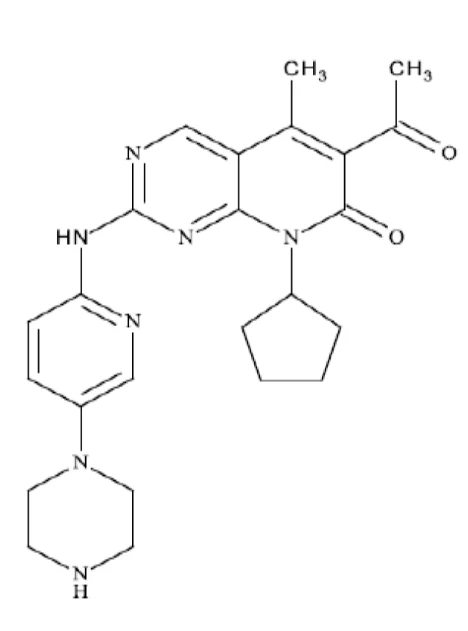
Physicochemical properties: Palbociclib is a yellow to orange powder with pKa of 7.4 (the secondary piperazine nitrogen) and 3.9 (the pyridine nitrogen). At or below pH 4, palbociclib behaves as a high-solubility compound. Above pH 4, the solubility of the drug substance reduces significantly.
14 CLINICAL TRIALS
14.1 Clinical Trials by Indication
Palbociclib plus letrozole for the initial endocrine-based therapy of patients with ER-positive, HER2-negative locally advanced or metastatic breast cancer
The efficacy of palbociclib in combination with letrozole was evaluated in an international, randomized, double-blind, parallel-group, multicenter Phase 3 study A5481008 (PALOMA-2) of palbociclib plus letrozole versus placebo plus letrozole conducted in postmenopausal women with ER-positive/HER2-negative advanced breast cancer who had not received previous systemic treatment for their advanced disease. A total of 666 patients were randomized 2:1 to palbociclib plus letrozole or placebo plus letrozole. Randomization was stratified by disease site (visceral, defined as any lung, including pleura, and/or liver involvement versus non-visceral, namely sites different from lung, pleura, and liver), disease-free interval (de novo metastatic versus ≤12 months from the end of adjuvant treatment to disease recurrence versus >12 months from the end of adjuvant treatment to disease recurrence), and nature of prior (neo)adjuvant anticancer therapies (prior hormonal therapies versus no prior hormonal therapy).
Palbociclib was given orally at a dose of 125 mg daily for 21 consecutive days followed by 7 days off treatment (Schedule 3/1). Patients received study treatment until objective disease progression, symptomatic deterioration, unacceptable toxicity, death, or withdrawal of consent, whichever occurred first. Crossover between treatment arms was not allowed.
Table 11. Summary of Demographic and Other Baseline Characteristics PALOMA-2 (Intent-to-Treat Population)
| Characteristics | Palbociclib+Letrozole (N=444) | Placebo+Letrozole (N=222) | |||||
|---|---|---|---|---|---|---|---|
| Characteristics | Palbociclib+Letrozole (N=444) | Placebo+Letrozole (N=222) | |||||
| Age (years) | |||||||
| Median (min-max) | 62 (30-89) | 61 (28-88) | |||||
| <65, n (%) | 263 (59.2) | 141 (63.5) | |||||
| ≥65, n (%) | 181 (40.8) | 81 (36.5) | |||||
| Race, n (%) | |||||||
| White | 344 (77.5) | 172 (77.5) | |||||
| 8 (1.8) | 3 (1.4) | ||||||
| Asian | 65 (14.6) | 30 (13.5) | |||||
| Other | 27 (6.1) | 17 (7.7) | |||||
| ECOG performance status, n (%) | |||||||
| 0 | 257 (57.9) | 102 (45.9) | |||||
| 1 | 178 (40.1) | 117 (52.7) | |||||
| 2 | 9 (2.0) | 2 (1.4) | |||||
| Stage of disease at initial diagnosis | |||||||
| Stage III | 72 (16.2) | 39 (17.6) | |||||
| Stage IV | 138 (31.1) | 72 (32.4) | |||||
| Disease-free interval, n (%) | |||||||
| Newly metastatic disease | 167 (37.6) | 81 (36.5) | |||||
| ≤12months | 99 (22.3) | 48 (21.6) | |||||
| >12 months | 178 (40.1) | 93 (41.9) | |||||
| Disease site,a n (%) | |||||||
| Visceral | 214 (48.2) | 110 (49.5) | |||||
| Non visceral | 230 (51.8) | 112 (50.5) | |||||
| Bone only | 103 (23.2) | 48 (21.6) | |||||
| Prior systemic therapies, n (%) | |||||||
| No | 167 (37.6) | 81 (36.5) | |||||
| Yes | 277 (62.4) | 141 (63.5) | |||||
| Number of regimens | |||||||
| 1 | 133 (30.0) | 74 (33.3) | |||||
| 2 | 95 (21.4) | 48 (21.6) | |||||
| 3 | 34 (7.7) | 17 (7.7) | |||||
| >3 | 15 (3.4) | 2 (<1.0) | |||||
| Previous chemotherapy regimen for primary diagnosis, n (%) | |||||||
| No | 231 (52.0) | 113 (50.9) | |||||
| Yes | 213 (48.0) | 109 (49.1) | |||||
| Previous hormonal regimen for primary diagnosis, n (%) | |||||||
| 1 | 158 (35.6) | 87 (39.2) | |||||
| >1 | 91 (20.5) | 39 (17.6) | |||||
ECOG=Eastern Cooperative Oncology Group; max=maximum; min=minimum; N=total number of patients in population; n=number of patients meeting prespecified criteria.
a. Based on randomization.
The primary efficacy objective of the study was investigator-assessed progression-free survival (PFS) evaluated according to Response Evaluation Criteria in Solid Tumors (RECIST) Version 1.1. Secondary endpoints included overall survival (OS) and objective response (OR). The final analysis, performed at a median follow-up time of 23.0 months in the palbociclib plus letrozole arm and 22.3 months in the placebo plus letrozole arm, indicated that patients treated with palbociclib plus letrozole had a statistically significant 42% reduction in the risk of progression compared to those treated with placebo plus letrozole. Data from an independent radiographic review was supportive of this treatment effect.
The results of the primary PFS analysis from PALOMA-2 are summarized in Table 12, and the Kaplan-Meier curve for PFS is shown in Figure 1.
Table 12. PALOMA-2 (Intent to treat population)-Progression-Free Survival Results
| Primary Analysis | |||||||
|---|---|---|---|---|---|---|---|
Palbociclib plus Letrozole (N = 444) | Placebo plus Letrozole (N = 222) | ||||||
| Number of events (%) | 194 (43.7) | 137 (61.7) | |||||
| Median PFS [months (95% CI)] | 24.8 (22.1, NE) | 14.5 (12.9, 17.1) | |||||
| Hazard ratio [(95% CI) and p-value] | 0.576 (0.463, 0.718), p<0.000001 | ||||||
N=number of patients; CI=confidence interval; NE=not estimable; PFS=progression-free-survival.
Figure 1. Kaplan-Meier Plot of Progression-Free Survival – PALOMA-2 (Investigator Assessment, Intent-to-Treat Population)
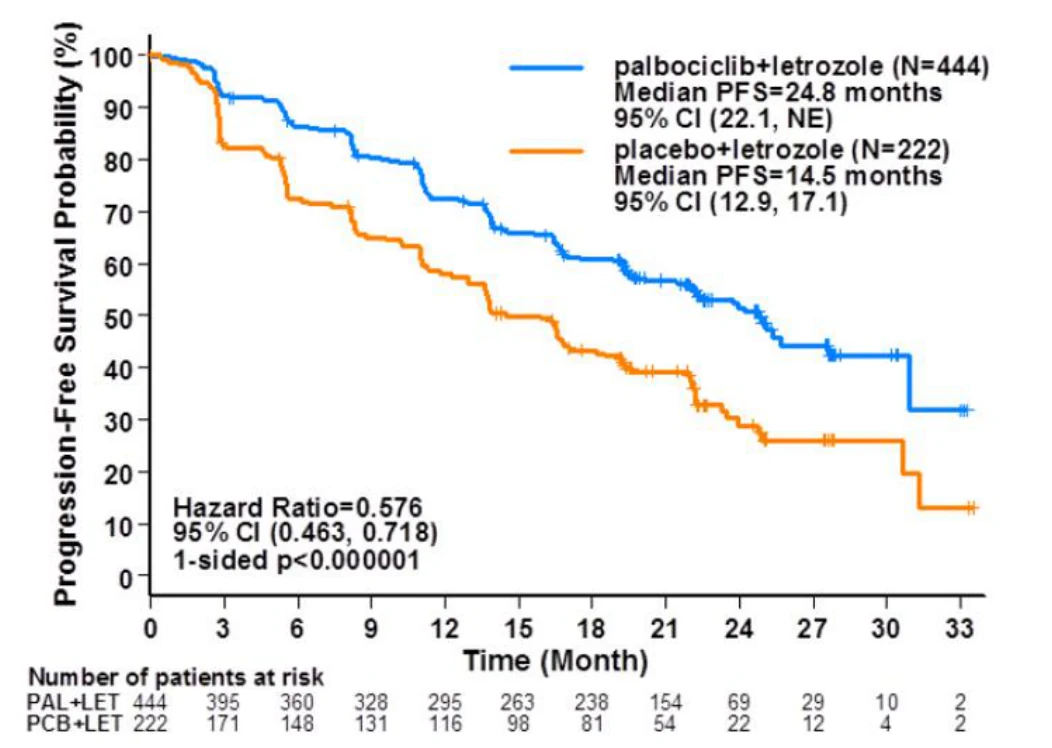
Abbreviations: CI=confidence interval; CSR=Clinical Study Report; LET =letrozole; N=number of patients; NE=not estimable; PAL=palbociclib; PCB=placebo; PFS=progression -free survival.
A series of prespecified subgroup PFS analyses was performed based on prognostic factors and baseline characteristics (see Figure 2). Consistent PFS results were observed across patient subgroups.
Figure 2. Forest Plot of Subgroup Analyses of Progression Free Survival – PALOMA-2 (Investigator Assessment, Intent-to-Treat Population)
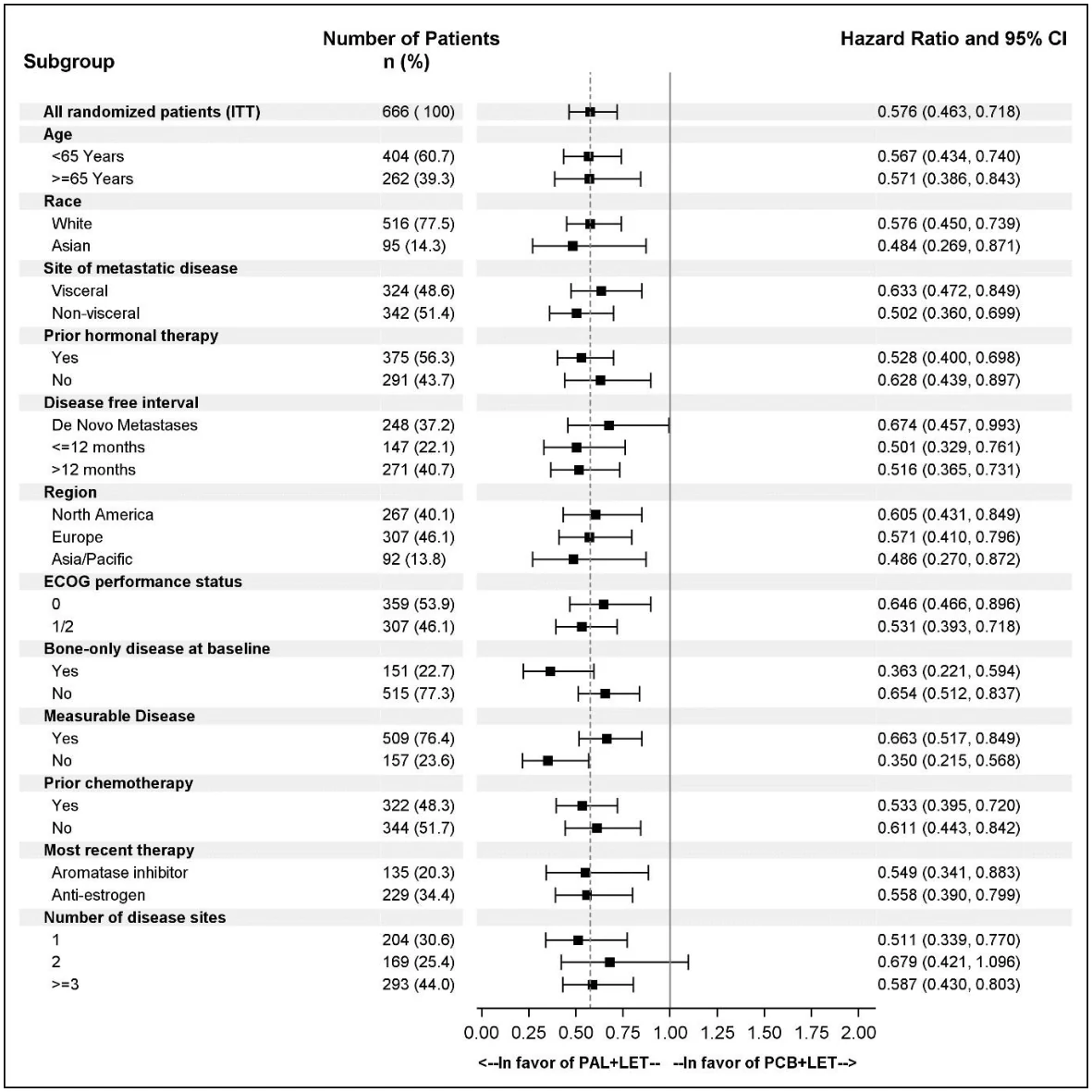
Hazard ratio: Based on the Cox proportional hazards model, assuming proportional hazards, a hazard ratio less than 1 indicates a reduction in hazard rate in favor of palbociclib plus letrozole.
“Prior chemotherapy” and “Most recent therapy” were as (neo) adjuvant therapy.
“Most recent therapy” was as follows: Aromatase inhibitors=anastrozole, letrozole or exemestane,
Anti-estrogens=tamoxifen, tamoxifen citrate, toremifene, toremifene citrate, or fulvestrant.
Abbreviations: CI=confidence interval; ECOG=Eastern Cooperative Oncology Group; LET=letrozole; ITT=intent - to-treat; n=number of patients in category; PAL=palbociclib; PCB=placebo.
Objective response rate in patients with measurable disease as assessed by the investigator was higher in the palbociclib plus letrozole arm compared to the placebo plus letrozole arm (60.7% versus 49.1%, Table 13). The overall survival (OS) data were not mature at the time of the final PFS analysis.
Table 13. Objective Response Rate–Confirmed Responses–PALOMA-2 (Investigator-Assessment–Intent-to-Treat Population)
Palbociclib + Letrozole % (95% CI) | Placebo + Letrozole % (95% CI) | |
|---|---|---|
| Patients with Measurable Disease | N=338 | N=171 |
| Objective Response Rateb | ||
| Investigator-assessmentc | 60.7 (55.2, 65.9) | 49.1 (41.4, 56.9) |
| Odds Ratio (95% Exact CI) | 1.59 (1.08, 2.35) | |
| p-valuea | 0.0090 | |
| Confirmed response | n (% ) | n (% ) |
| Complete response | 9 (2.7) | 4 (2.3) |
| Partial response | 178 (52.7) | 72 (42.1) |
| Stable/no response | 116 (34.3) | 59 (34.5) |
| Objective progression | 25 (7.4) | 28 (16.4) |
| Indeterminate | 10 (3.0) | 8 (4.7) |
According to RECIST version 1.1. Abbreviations: BICR=blinded independent central review; CI=confidence interval; CSR=Clinical Study Report; RECIST=Response Evaluation Criteria in Solid Tumors. a: 1-sided p-value from exact test. b: Objective response=complete response plus partial response. c: 338 patients in the palbociclib plus letrozole arm and 171 patients in the placebo plus letrozole arm had measurable disease at baseline. | ||
An updated analysis of the primary and secondary endpoints was performed after an additional 15 months of follow up (approx. 38 months in total). A total of 405 PFS events were observed; 245 events (55.2%) in the palbociclib plus letrozole arm and 160 (72.1%) in the comparator arm respectively. The median PFS in the palbociclib plus letrozole arm was 27.6 (95% CI 22.4, 30.3) months vs 14.5 (95% CI 12.3, 17.1) months in the comparator arm with an HR of 0.563 (95% CI 0.461, 0.687, p<0.000001). At the time of this updated analysis, ORR for the ITT population with measurable disease was higher in the palbociclib plus letrozole arm (62.4%; 95% CI: 57.0, 67.6) compared with the placebo plus letrozole arm (49.7%; 95% CI: 42.0, 57.4).
After a median follow-up time of 90 months, the final OS analysis was performed based on 435 events (65.3% of randomized patients). Median OS in the palbociclib plus letrozole arm was 53.8 months compared to 49.8 months in the placebo plus letrozole arm (Hazard Ratio 0.921 [95% CI 0.755, 1.124], not statistically significant).
Palbociclib plus fulvestrant for the treatment of patients with HR-positive, HER2-negative locally advanced or metastatic breast cancer whose disease progressed after prior endocrine therapy
The efficacy of palbociclib plus fulvestrant versus placebo plus fulvestrant was evaluated in an international, randomized, double-blind, parallel-group, multicenter study (PALOMA-3) conducted in women with HR-positive/HER2-negative locally advanced or metastatic breast cancer, regardless of their menopausal status, whose disease progressed after prior endocrine therapy.
A total of 521 pre and postmenopausal women were randomized 2:1 to palbociclib plus fulvestrant or placebo plus fulvestrant and stratified by documented sensitivity to prior hormonal therapy, menopausal status at study entry (pre/peri versus postmenopausal), and presence of visceral metastases.
Palbociclib was given orally at a dose of 125 mg daily for 21 consecutive days followed by 7 days off treatment. Fulvestrant 500 mg was administered to all patients as described in its Product Monograph. Pre/perimenopausal women were enrolled in the study and received the LHRH agonist goserelin for at least 4 weeks prior to and for the duration of PALOMA-3. Patients continued to receive assigned treatment until objective disease progression, symptomatic deterioration, unacceptable toxicity, death, or withdrawal of consent, whichever occurred first. Crossover between treatment arms was not allowed.
Baseline demographics and prognostic characteristics of the study population are shown in Table 14 below.
Table 14. Summary of Demographic and Other Baseline Characteristics PALOMA-3 (Intent-to- Treat Population)
| Characteristics | Palbociclib + Fulvestrant (N=347) | Placebo + Fulvestrant (N=174) |
|---|---|---|
| Characteristics | Palbociclib + Fulvestrant (N=347) | Placebo + Fulvestrant (N=174) |
| Characteristics | Palbociclib + Fulvestrant (N=347) | Placebo + Fulvestrant (N=174) |
| Age (years) | ||
| Median (min-max) | 57 (30-88) | 56 (29-80) |
| <65, n (%) | 261 (75.2) | 131 (75.3) |
| ≥65, n (%) | 86 (24.8) | 43 (24.7) |
| Race, n (%) | ||
| White | 252 (72.6) | 133 (76.4) |
| 12 (3.5) | 8 (4.6) | |
| Asian | 74 (21.3) | 31 (17.8) |
| Other | 8 (2.3) | 1 (0.6) |
| Unspecified | 1 (0.3) | 1 (0.6) |
| ECOG performance status, n (%) | ||
| 0 | 206 (59.4) | 116 (66.7) |
| 1 | 141 (40.6) | 58 (33.3) |
| Documented sensitivity to prior hormonal therapy, a n (%) | ||
| Yes | 274 (79.0) | 136 (78.2) |
| No | 73 (21.0) | 38 (21.8) |
| Visceral metastases,a n (%) | ||
| Yes | 206 (59.4) | 105 (60.3) |
| No | 141 (40.6) | 69 (39.7) |
| Menopausal status,a,b n (%) | ||
| Pre-/peri- | 72 (20.7) | 36 (20.7) |
| Post- | 275 (79.3) | 138 (79.3) |
| Extent of Disease | ||
| Locally advanced | 69 (19.9) | 47 (27.0) |
| Metastatic | 86 (24.8) | 36 (20.7) |
| Prior systemic therapies, n (%) | ||
| No | 0 (0) | 0 (0) |
| Yes | 347 (100) | 174 (100) |
| Number of regimens | ||
| 1 | 71 (20.5) | 39 (22.4) |
| 2 | 106 (30.5) | 56 (32.2) |
| 3 | 98 (28.2) | 35 (20.1) |
| >3 | 72 (20.7) | 44 (25.3) |
| Prior lines of therapy in the metastatic setting: | ||
| 0 | 84 (24.2) | 45 (25.9) |
| 1 | 132 (38.0) | 70 (40.2) |
| 2 | 90 (25.9) | 43 (24.7) |
| ≥3 | 41 (11.8) | 16 (9.2) |
| Previous chemotherapy regimen for primary diagnosis, n (%) | ||
| No | 95 (27.4) | 37 (21.3) |
| Yes | 252 (72.6) | 137 (78.7) |
| Previous hormonal regimen for primary diagnosis, n (%) | ||
| 1 | 134 (38.6) | 77 (44.3) |
| >1 | 213 (61.4) | 97 (55.7) |
ECOG=Eastern Cooperative Oncology Group; max=maximum; min=minimum; N=total number of patients in population; n=number of patients meeting prespecified criteria.
| ||
The primary endpoint of the study was investigator-assessed PFS, defined as the interval from randomization to the earlier of the first documentation of progressive disease or death from any cause, evaluated according to RECIST 1.1. Secondary endpoints included OS and objective response (OR). The primary analysis, performed at a median follow-up of 5.6 months, indicated that patients treated with palbociclib plus fulvestrant had a statistically significant 57% reduction in the risk of progression compared to those treated with placebo plus fulvestrant. Efficacy results for PALOMA-3 are shown below in Table 15, and the Kaplan-Meier curve for PFS is shown in Figure 3.
Table 15– Primary Efficacy Results–PALOMA-3 (Investigator Assessment, Intent-to-Treat Population)
Palbociclib plus Fulvestrant (N=347) | Placebo plus Fulvestrant (N=174) | ||||||
|---|---|---|---|---|---|---|---|
| Progression-Free Survival | |||||||
| Number of PFS Events (%) | 102 (29.4%) | 93 (53.4%) | |||||
| Median PFS [months] (95% CI) at Interim Analysis | 9.2 (7.5, NE) | 3.8 (3.5, 5.5) | |||||
| Hazard ratio (95% CI) and p- value | 0.422 (0.318, 0.560), p<0.000001 | ||||||
N=number of patients; CI=confidence interval; NE=not estimable; PFS = Progression-Free Survival;
Figure 3. Kaplan-Meier Plot of Progression-Free Survival (Investigator Assessment, Intent-to-Treat Population) – PALOMA-3
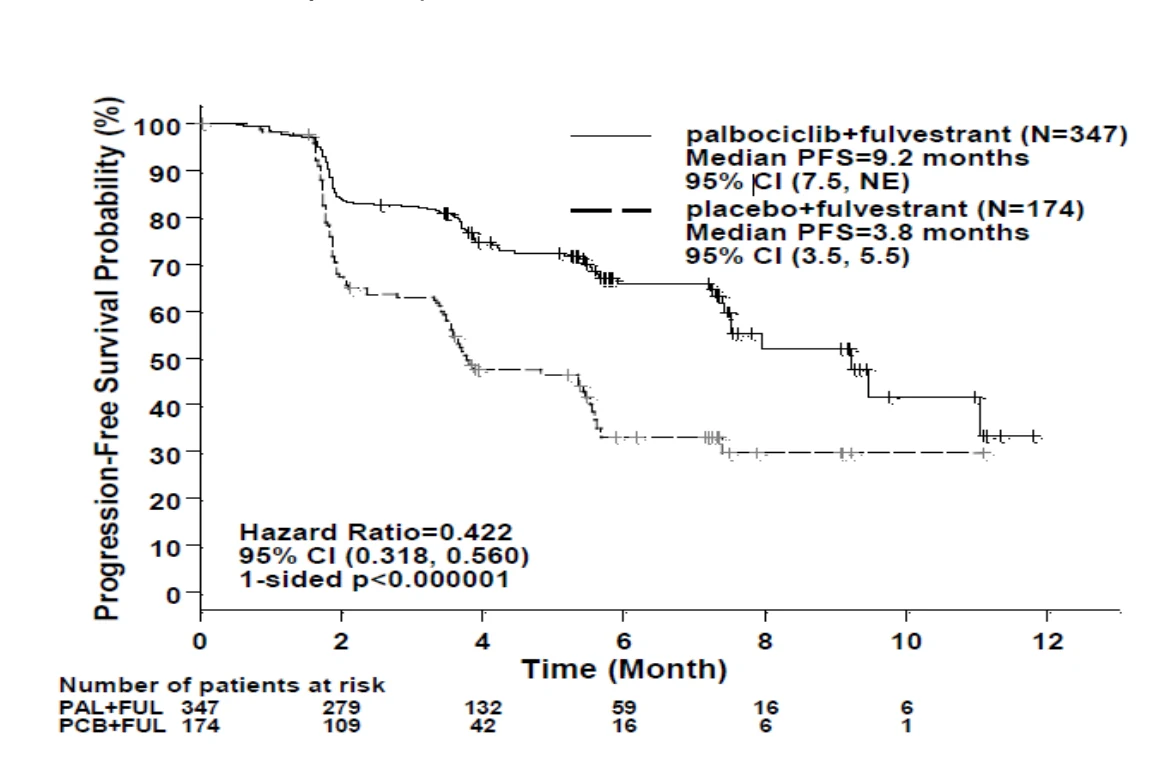
Abbreviations: CI: confidence interval, FUL: fulvestrant, N: number of patients, PAL: palbociclib, PCB: placebo, PFS: progression-free survival, NE: not estimable
Consistent PFS results were observed across patient subgroups (see Figure 4).
Figure 4 Forest Plot of Subgroup Analyses of Progression-Free Survival (Investigator Assessment, Intent-to-Treat Population)–PALOMA-3
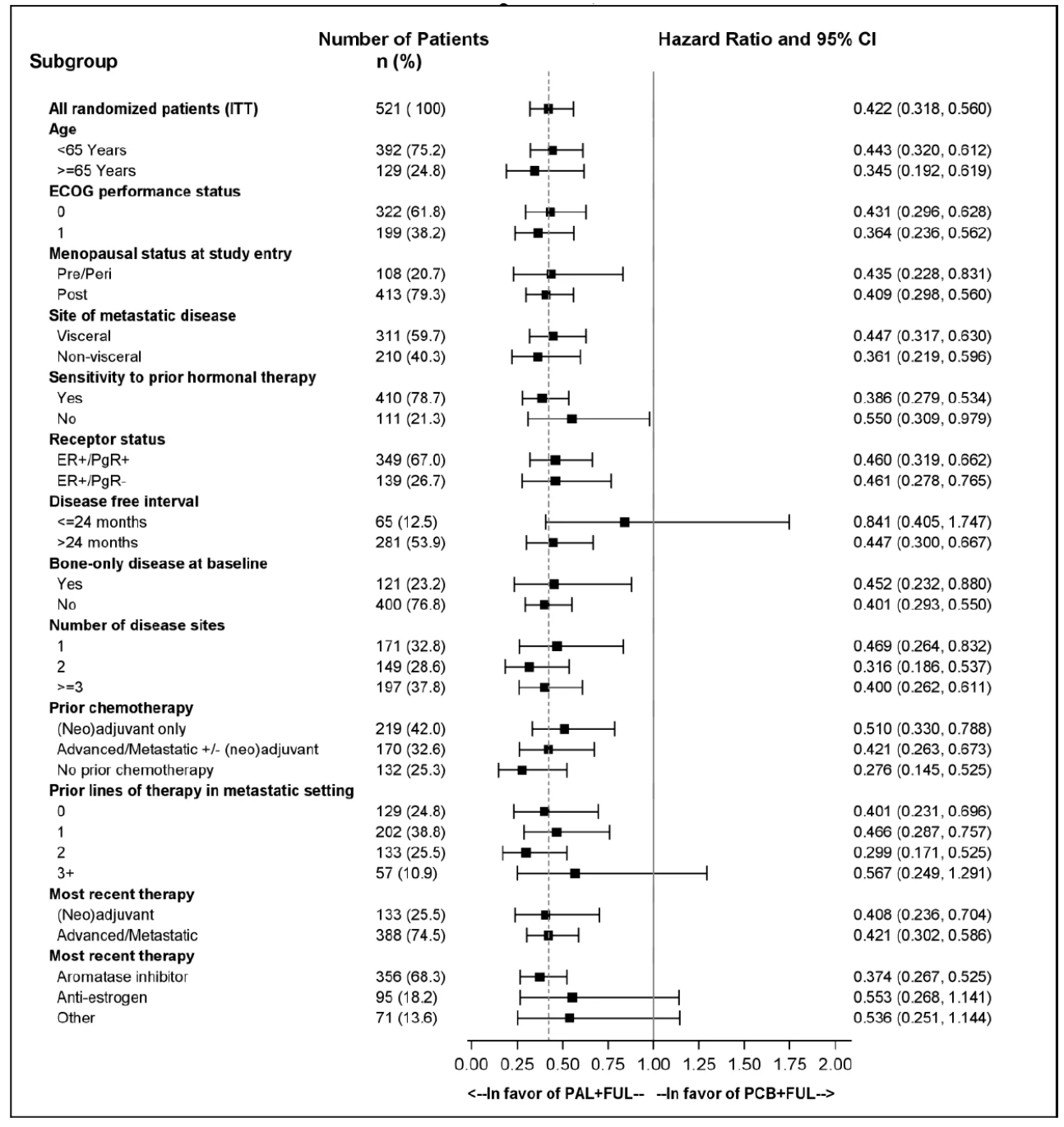
Abbreviations: CI: confidence interval, CRF: case report form, ECOG: Eastern Cooperative Oncology Group, ER+: estrogen receptor positive, ITT: intent-to-treat, FUL: fulvestrant, n: number of patients, PAL: palbociclib, PCB: placebo, PgR+/-: progesterone receptor positive/negative. Note: The HR (95% CI) provided for all randomized patients (ITT) is based on the stratified analysis
An updated PFS analysis, performed at median duration of follow-up of 15.8 months for patients treated with palbociclib plus fulvestrant, and 15.3 months for patients treated with placebo plus fulvestrant, was consistent with the primary analysis results, and indicated a 50% reduction in the risk of progression in favor of palbociclib plus fulvestrant treatment over placebo plus fulvestrant (HR=0.497, 95% CI: 0.398, 0.620), with a median PFS of 11.2 months (95% CI: 9.5, 12.9) compared to 4.6 months (95% CI: 3.5, 5.6), respectively. At the time of this updated analysis, ORR for the ITT population with measurable disease was higher in the palbociclib plus fulvestrant arm (27.3%; 95% CI: 22.1, 33.1) compared with the placebo plus fulvestrant arm (10.9%; 95% CI: 6.2, 17.3).
At the time of final analysis of PFS, overall survival (OS) data were not mature. No survival benefit has been demonstrated.
The OS data were not mature at the time of the final PFS analysis (11% of patients had died). After a median follow-up time of 45 months, the final OS analysis was performed based on 310 events (59.5% of randomized patients). Median OS in the palbociclib plus fulvestrant arm was 34.9 months compared to 28 months in the placebo plus fulvestrant arm [Hazard Ratio 0.814 (95% CI 0.644, 1.029), not statistically significant].
14.2 Comparative Bioavailability Studies
A randomized, two treatment, two period, two way cross-over, single oral dose (1 x 125 mg) comparative bioavailability study of PrTARO-PALBOCICLIB tablets and PrIbrance® tablets was conducted in healthy, adult, subjects under fasting conditions. Data from the 31 subjects included in the statistical analysis are summarized below:
SUMMARY TABLE OF THE COMPARATIVE BIOAVAILABILITY DATA
Palbociclib (1 x 125 mg) Geometric Mean5 Arithmetic Mean (CV %) | ||||
| Parameter | Test1 | Reference2 | % Ratio of Geometric Means5 | 90% Confidence Interval |
AUCT (ng•h/mL) | 2052.66 2076.05 (22.41) | 2067.70 2124.52 (23.79) | 99.3 | 95.7 - 103.1 |
AUC0-72h (ng•h/mL) | 1837.74 1880.86 (21.19) | 1881.28 1927.55 (22.29) | 97.7 | 93.4 - 102.2 |
AUCI (ng•h/mL) | 2087.80 2144.64 (23.15) | 2130.12 2191.96 (24.68) | 98.0 | 93.8 - 102.4 |
Cmax (ng/mL) | 71.46 71.86 (24.39) | 69.71 71.75 (23.30) | 102.5 | 96.9 - 108.5 |
Tmax3 (h) | 6.00 (3.00 - 10.00) | 6.50 (3.00 - 10.00) | ||
T½4 (h) | 24.28 (13.27) | 23.48 (13.95) | ||
1 Taro-Palbociclib (palbociclib) tablets, 125 mg (Taro Pharmaceuticals Inc.)
2PrIbrance® (palbociclib) tablets, 125 mg (Pfizer Canada ULC)
3 Expressed as median (range)
4 Expressed as the arithmetic mean (CV%)
5 Least square mean
A randomized, two treatment, two period, two way cross-over, single oral dose (1 x 125 mg) comparative bioavailability study of PrTARO-PALBOCICLIB tablets and PrIbrance® tablets was conducted with pre-treatment of Sandoz Rabeprazole [Rabeprazole Sodium Enteric-Coated Tablets 40 mg (20 mg x 2)] of Sandoz Canada Inc. in healthy, adult, subjects under fasting conditions. Data from the 54 subjects included in the statistical analysis are summarized below:
SUMMARY TABLE OF THE COMPARATIVE BIOAVAILABILITY DATA
Palbociclib (1 x 125 mg) Geometric Mean5 Arithmetic Mean (CV %) | ||||
| Parameter | Test1 | Reference2 | % Ratio of Geometric Means5 | 90% Confidence Interval |
AUCT (ng•h/mL) | 1862.65 1940.40 (27.46) | 2203.85 2243.78 (18.84) | 84.5 | 81.0 – 88.2 |
AUC0-72h (ng•h/mL) | 1666.13 1737.32 (27.76) | 1973.22 2008.78 (18.78) | 84.4 | 80.9 - 88.8 |
AUCI (ng•h/mL) | 1937.24 2017.03 (27.27) | 2289.60 2330.53(18.70) | 84.6 | 81.1 - 88.2 |
Cmax (ng/mL) | 55.40 58.95 (33.33) | 66.53 68.17 (22.21) | 83.3 | 78.4 - 88.5 |
Tmax3 (h) | 7.50 (3.00 - 11.00) | 7.50 (2.00 - 11.00) | ||
T½4 (h) | 25.19 (12.42) | 24.98 (13.11) | ||
1 Taro-Palbociclib tablets, 125 mg (Taro Pharmaceuticals Inc.)
2 PrIbrance® (palbociclib) tablets, 125 mg (Pfizer Canada ULC)
3 Expressed as median (range)
4 Expressed as the arithmetic mean (CV%)
5 Least square mean
15 MICROBIOLOGY
No microbiological information is required for this drug product.
16 NON-CLINICAL TOXICOLOGY
General Toxicology: The primary target organ findings of potential relevance to humans included haematolymphopoietic and male reproductive organ effects in rats and dogs in studies up to 39 weeks duration. Effects on glucose metabolism were associated with findings in the pancreas and secondary effects on eye, kidney, and adipose tissue in studies ≥15 weeks duration in rats only and bone and teeth changes were observed in rats only following 27 weeks of dosing. These systemic toxicities were generally observed at clinically relevant exposures based on AUC. The reversibility of the effects on glucose homeostasis, pancreas, eye, kidney, and bone was not established following a 12-week nondosing period, whereas partial to full reversal of effects on the haematolymphopoietic and male reproductive systems, teeth, and adipose tissue was observed.
Carcinogenicity: Palbociclib was assessed for carcinogenicity in a 6-month transgenic mouse study and in a 2-year rat study. Palbociclib was negative for carcinogenicity in transgenic mice at doses up to 60 mg/kg/day (No Observed Effect Level [NOEL] approximately 11 times human clinical exposure based on AUC). Palbociclib-related neoplastic finding in rats included an increased incidence of microglial cell tumors in the central nervous system of males at 30 mg/kg/day; there were no neoplastic findings in female rats at any dose up to 200 mg/kg/day. The NOEL for palbociclib-related carcinogenicity effects was 10 mg/kg/day (approximately 2 times the human clinical exposure based on AUC) and 200 mg/kg/day (approximately 4 times the human clinical exposure based on AUC) in males and females, respectively. The relevance of the male rat neoplastic finding to humans is unknown.
Genotoxicity: Palbociclib was not mutagenic in a bacterial reverse mutation (Ames) assay and did not induce structural chromosomal aberrations in the in vitro human lymphocyte chromosome aberration assay. Palbociclib induced micronuclei via an aneugenic mechanism in Chinese hamster ovary cells in vitro and in the bone marrow of male rats at doses ≥100 mg/kg/day. The no observed effect level for aneugenicity was approximately 7 times human clinical exposure based on AUC.
Reproductive and Developmental Toxicology: In a fertility study in female rats, palbociclib did not affect mating or fertility at any dose tested up to 300 mg/kg/day (approximately 3 times human clinical exposure based on AUC) and no adverse effects were observed in the female reproductive tissues in repeat-dose toxicity studies up to 300 mg/kg/day in the rat and 3 mg/kg/day in the dog (approximately 5 and 3 times human clinical exposure based on AUC, respectively). Palbociclib is considered to have the potential to impair reproductive function and fertility in male humans based on nonclinical findings in rats and dogs. Palbociclib-related findings in the testis, epididymis, prostate, and seminal vesicle included decreased organ weight, atrophy or degeneration, hypospermia, intratubular cellular debris, lower sperm motility and density, and decreased secretion. These findings were observed in rats and/or dogs at exposures ≥9 times or subtherapeutic compared to human clinical exposure based on AUC, respectively. Partial reversibility of male reproductive organ effects was observed in the rat and dog following a 4- and 12-week nondosing period, respectively. Despite these male reproductive organ findings, there were no effects on mating or fertility in male rats at projected exposure levels 13 times the human clinical exposure based on AUC; however, the females that mated with males in this group had lower pregnancy rates (88.9%) compared to the females that successfully mated with males from the lower dose and control groups (100%).
Palbociclib was fetotoxic in pregnant animals. An increased incidence of a skeletal variation (increased incidence of a rib present at the seventh cervical vertebra) at ≥100 mg/kg/day was observed in rats. Reduced fetal body weights were observed at a maternally toxic dose of 300 mg/kg/day in rats (3 times human clinical exposure based on AUC), and an increased incidence of skeletal variations, including small phalanges in the forelimb was observed at a maternally toxic dose of 20 mg/kg/day in rabbits (4 times human clinical exposure based on AUC). Actual fetal exposure and cross-placenta transfer have not been examined.
17 SUPPORTING PRODUCT MONOGRAPHS
- 1. IBRANCE® (palbociclib tablets, 75 mg, 100 mg and 125 mg), submission control 293492, Product Monograph, Pfizer Canada ULC. (July 04, 2025)