


Product Monograph - Tetracycline
Recent Major Label Changes
| None at time of the most recent authorization |
|---|
Table of Contents
Certain sections or subsections that are not applicable at the time of the preparation of the most recent authorized product monograph are not listed.
Recent Major Label Changes ................................................................................................................... 2
Table of Contents .................................................................................................................................... 2
Part 1: Healthcare Professional Information ........................................................................................... 4
- 1.
Indications ...................................................................................................................................... 4
1.1. Pediatrics............................................................................................................................ 5
1.2. Geriatrics ............................................................................................................................ 5
- 2. Contraindications ............................................................................................................................ 5
- 4.
Dosage and Administration ............................................................................................................. 5
4.2. Recommended Dose and Dosage Adjustment ..................................................................... 5
4.4. Administration.................................................................................................................... 5
4.5. Missed Dose ....................................................................................................................... 6
- 5. Overdose......................................................................................................................................... 6
- 6. Dosage Forms, Strengths, Composition, and Packaging .................................................................. 6
- 7.
Warnings and Precautions .............................................................................................................. 6
General ........................................................................................................................................... 6
Genitourinary .................................................................................................................................. 7
Immune ........................................................................................................................................... 7
Monitoring and Laboratory Tests ..................................................................................................... 7
Musculoskeletal............................................................................................................................... 7
Renal ........................................................................................................................................... 7
Sensitivity /Resistance ..................................................................................................................... 8
Skin ........................................................................................................................................... 8
7.1. Special Populations ............................................................................................................. 8
7.1.1. Pregnancy .................................................................................................................. 8
7.1.2. Breastfeeding ............................................................................................................. 8
7.1.3. Pediatrics ................................................................................................................... 8
7.1.4. Geriatrics ................................................................................................................... 8
- 8.
Adverse Reactions ........................................................................................................................... 8
8.5. Post-Market Adverse Reactions ........................................................................................ 11
- 9.
Drug Interactions ............................................................................................................................ 9
9.3. Drug-Behaviour Interactions ............................................................................................... 9
9.4. Drug-Drug Interactions ....................................................................................................... 9
9.5. Drug-Food Interactions ..................................................................................................... 10
9.6. Drug-Herb Interactions ..................................................................................................... 11
9.7. Drug-Laboratory Test Interactions .................................................................................... 11
- 10. Clinical Pharmacology ................................................................................................................... 11
- 11. Storage, Stability, and Disposal ..................................................................................................... 11
Part 2: Scientific Information ................................................................................................................ 12
- 13. Pharmaceutical Information ......................................................................................................... 12
- 14. Clinical Trials ................................................................................................................................. 12
- 15. Microbiology ................................................................................................................................... 16
- 16. Non-Clinical Toxicology ................................................................................................................. 12
Patient Medication Information ........................................................................................................... 13
Part 1: Healthcare Professional Information
1. Indications
TETRACYCLINE (tetracycline hydrochloride capsules) is indicated for infections caused by the following microorganisms:
- Rickettsiae (Rocky Mountain spotted fever, typhus fever and the typhus group, Q fever, rickettsialpox, tick fevers), M. pneumoniae (PPLO, Eaton agent), agents of psittacosis and ornithosis, agents of L. venereum and G. inguinale, and the spirochetal agent of relapsing fever (B. recurrentis).
- The following gram-negative organisms: H. ducreyi (chancroid), P. pestis and P. tularensis, B. bacilliformis. Bacteroides, V. comma and K. fetus, and Brucella organisms (in conjunction with streptomycin).
- The following gram-negative organisms, when bacteriologic testing indicates appropriate susceptibility to the drug: E. coli, A. aerogenes, Shigella, Mima, Herellea, H. influenzae (respiratory infections), and Klebsiella infections (respiratory and urinary).
The following gram-positive organisms when bacteriologic testing indicates appropriate susceptibility to the drug: anaerobic streptococci, S. pyogenes (for upper respiratory infections due to Group A beta-hemolytic streptococci, penicillin is the drug of choice including prophylaxis of rheumatic fever), S. pneumoniae, and S. aureus.
The frequency of resistance to tetracyclines in hemolytic streptococci is highest in strains from infections of the ear, wounds and skin. Tetracyclines should not be prescribed for acute throat infections; also, they are not the drugs of choice in any staphylococcal infection.
When penicillin is contraindicated, tetracyclines are alternative drugs in the treatment of infections due to: N. gonorrhoeae, T. pallidum and T. pertenue (syphilis and yaws), L. monocytogenes, Clostridia, B. anthracis, Fusobacterium (Vincent's infection), and Actinomyces.
- In acute intestinal amebiasis, the tetracyclines may be a useful adjunct to amebicides. In severe acne, the tetracyclines may be useful adjunctive therapy.
- Tetracyclines are indicated in the treatment of trachoma, although the infectious agent is not always eliminated, as judged by immunofluorescence.
- Inclusion conjunctivitis may be treated with oral tetracyclines or with a combination of oral and topical agents.
- Because tetracycline tends to accumulate in certain neoplastic cells and to exhibit a brilliant, yellow gold fluorescence when exposed to ultraviolet light, it may be useful in experienced hands for the diagnosis of malignancy.
Many strains of bacteria have been shown to be resistant to the tetracyclines. These include certain strains of streptococci, staphylococci, pneumococci, gonococci, and many other gram negative organisms. Therefore, culture and sensitivity testing are advised to determine the susceptibility of the infecting organisms to tetracyclines.
Chemotherapy should not be initiated until all the necessary bacteriological investigations have been started.
Microorganisms that have become insensitive to one tetracycline invariably exhibit cross resistance to other tetracyclines.
Some cross resistance between the tetracyclines and chloramphenicol for gram-negative organisms but not for gram-positive ones has been reported. Tetracycline resistant organisms are most likely to be acquired from other individuals in a population where tetracyclines have been widely used.
To reduce the development of drug-resistant bacteria and maintain the effectiveness of TETRACYCLINE and other antibacterial drugs, TETRACYCLINE should be used only to treat infections that are proven or strongly suspected to be caused by susceptible bacteria. When culture and susceptibility information are available, they should be considered in selecting or modifying antibacterial therapy. In the absence of such data, local epidemiology and susceptibility patterns may contribute to the empiric selection of therapy.
1.1. Pediatrics
Pediatrics (< 12 years of age): Based on the data submitted and reviewed by Health Canada, the safety and efficacy of tetracycline hydrochloride capsules in pediatric patients has not been established; therefore, Health Canada has not authorized an indication for pediatric use. See 2. Contraindications.
1.2. Geriatrics
Geriatrics (≥ 65 years of age): No data are available to Health Canada; Use in the geriatric population may be associated with differences in safety or effectiveness. See 7.1.4. Geriatrics.
2. Contraindications
TETRACYCLINE (tetracycline hydrochloride capsules) is contraindicated in:
- patients who are hypersensitive to this drug or to any ingredient in the formulation, including any non-medicinal ingredient, or component of the container. For a complete listing, see 6. Dosage Forms, Strengths, Composition, and Packaging.
- patients with severe renal or hepatic disease.
Pregnancy and Lactation
TETRACYCLINE is not recommended for use in pregnant or breastfeeding women unless the potential benefit to the patient outweighs the risk to the fetus or child.
Children
TETRACYCLINE is contraindicated in children under 12 years of age for therapy of common infections or for any condition in which a bactericidal effect is essential (bacterial endocarditis).
- Avoid prophylactic administration to surgical cases, if possible.
4. Dosage and Administration
4.2. Recommended Dose and Dosage Adjustment
Adults should receive an average daily dose of 250 mg 4 times a day. Higher dosages, such as 500 mg 4 times a day may be required for severe infections. In general, the pediatric dosage should supply 22 to 44 mg of tetracycline/kg/day, in divided doses, depending on the type and severity of the infection.
4.4. Administration
Antacids, containing aluminum, calcium, or magnesium and iron salts impair absorption and should not be given to patients taking oral tetracyclines. Foods and some dairy products also interfere with absorption. Oral forms of tetracycline should be given 1 hour before or 2 hours after meals.
4.5. Missed Dose
If a dose is missed, the patient should take it as soon as it is recognized. If it is almost time for the next dose, skip the missed dose and continue with the next scheduled dose. The patient should be instructed not take 2 doses at the same time.
5. Overdose
Treatment
If ingested, gastric lavage when necessary.
For the most recent information in the management of a suspected drug overdose, contact your regional poison control centre or Health Canada’s toll-free number, 1-844 POISON-X (1-844-764-7669).
- 6. Dosage Forms, Strengths, Composition, and Packaging
Table 1 – Dosage Forms, Strengths, and Composition
Description
TETRACYCLINE 250 mg: Yellow opaque body, orange opaque cap, hard gelatin capsule. Imprinted 250. Yellow powder fill, contains tetracycline HCI 250 mg. Available in bottles of 100.
7. Warnings and Precautions
General
The use of TETRACYCLINE during tooth development (last half of pregnancy, infancy and childhood to the age of 8 years) may cause permanent tooth discoloration (yellow gray brown). This reaction is more common during long-term use of the tetracyclines, but has been observed following short-term courses. Enamel hypoplasia has also been reported.
Tetracycline drugs, therefore, should not be used in this age group unless other drugs are not likely to be effective or are contraindicated.
TETRACYCLINE administration may result in overgrowth of non-susceptible organisms.
Superinfections due to staphylococci and other organisms may occur during oral but rarely during parenteral administration.
| Route of Administration | Dosage Form/ Strength/Composition | Non-Medicinal Ingredients |
| Oral | Capsule 250 mg of Tetracycline Hydrochloride | D&C YELLOW #10, D&C Yellow 10 Aluminum Lake, FD&C BLUE #1, FD&C BLUE #2 Indigo Carmine Aluminum Lake, FD&C RED #40, FD&C Yellow#6, gelatin, iron oxide black, propylene glycol, stearic acid, talc and titanium dioxide. |
C. albicans can produce effects at three levels: proliferation in the mouth can cause disturbances ranging from simple soreness to frank and extensive thrush, which may spread to the pharynx and possibly the bronchi; in the bowel, it can be manifested by diarrhea; also, pruritus ani occurs frequently.
Proteus and Pseudomonas species resistant to tetracyclines may become predominant in the bowel and diarrhea is common. Periodic microbiologic examination of materials, such as stool and sputum, during tetracycline therapy may alert one to changes in flora indicating bacteriologic superinfection in time to avert progression to clinical disease.
If superinfections are encountered, tetracyclines should be discontinued and appropriate therapy started. Superinfection of the bowel by staphylococci may be life threatening.
Adhere closely to expiration dates; ingestion of deteriorated tetracyclines has produced kidney damage corresponding clinically to the acute Fanconi syndrome (nausea, vomiting, albuminuria, glycosuria, aminoaciduria, hypophosphatemia, hypokalemia, and acidosis). Such damage is usually reversed slowly after withdrawal of the deteriorated tetracycline, although fatal reactions have been reported.
All infections due to Group A beta-hemolytic streptococci should be treated for at least 10 days.
Genitourinary
Before treating gonorrhea, a darkfield examination should be made from any lesion suggesting concurrent syphilis. Serological tests for syphilis should be made for at least 4 months afterwards.
Immune
Since sensitivity reactions are more likely to occur in persons with a history of allergy, asthma, hay fever, or urticaria, the preparations should be used with caution in such individuals. Cross sensitization among the various tetracyclines is extremely common.
Monitoring and Laboratory Tests
If renal impairment exists, even usual oral or parenteral doses may lead to excessive systemic accumulation of the drug and possible liver toxicity. Under such conditions, lower than usual doses are indicated and, if therapy is prolonged, serum level determinations of the drug may be advisable.
During long-term therapy, periodic laboratory evaluation of organ systems, including hematopoietic, renal and hepatic studies should be performed.
Musculoskeletal
Tetracyclines form a stable calcium complex in any bone forming tissue. A decrease in the fibula growth rate has been observed in prematures given oral tetracycline in doses of 25 mg/kg every 6 hours. This reaction was shown to be reversible when the drug was discontinued.
Renal
The antianabolic action of tetracycline may cause an increase in BUN. While this is not a problem in those with normal renal function, in patients with significantly impaired function, higher serum levels of tetracycline may lead to azotemia, hyperphosphatemia, and acidosis. Consequently, increasing levels of BUN may not accurately reflect changes in renal function; the serum creatinine will provide a more reliable index.
Sensitivity/Resistance
Development of Drug Resistant Bacteria
Prescribing TETRACYCLINE in the absence of a proven or strongly suspected bacterial infection is unlikely to provide benefit to the patient and risks the development of resistant organisms.
Skin
Photosensitivity manifested by an exaggerated sunburn reaction has been observed in some individuals taking tetracyclines. Patients should be warned to avoid exposure to direct sunlight and/or ultraviolet light while under treatment with tetracycline drugs, and treatment should be discontinued at the first evidence of skin discomfort.
7.1. Special Populations
7.1.1. Pregnancy
TETRACYCLINE is not recommended for use in pregnant women unless the potential benefit to the patient outweighs the risk to the fetus.
7.1.2. Breastfeeding
TETRACYCLINE is not recommended for use in breastfeeding women unless the potential benefit to the patient outweighs the risk to the child.
7.1.3. Pediatrics
Pediatrics (< 12 years of age): Based on the data submitted and reviewed by Health Canada, the safety and efficacy of tetracycline hydrochloride capsules in pediatric patients has not been established; therefore, Health Canada has not authorized an indication for pediatric use. See 2. Contraindications.
7.1.4. Geriatrics
Geriatrics (≥ 65 years of age): No data are available to Health Canada. There are no known specific precautions for the use of TETRACYCLINE in geriatric populations. However, as renal insufficiency is more frequently seen in geriatric patients, when treating geriatric patients, consideration should be given to the adverse effects of TETRACYCLINE on renal function (see section 7. Warnings and Precautions, Renal).
8. Adverse Reactions
8.5. Post-Market Adverse Reactions
Blood and lymphatic system disorders: Anemia, hemolytic anemia, thrombocytopenia, thrombocytopenic purpura, neutropenia and eosinophilia have been reported.
Cardiac disorders: Pericarditis
Endocrine and Metabolism: When given over prolonged periods, tetracyclines have been reported to produce brown black microscopic discolouration of thyroid glands. No abnormalities of thyroid function studies are known to occur.
Gastrointestinal disorders: Dyspepsia, nausea, vomiting, diarrhea, stomatitis, sore throat, glossitis, black hairy tongue, dysphagia, enterocolitis, and inflammatory lesions (with candidal overgrowth) in the anogenital region, including proctitis and pruritus ani. These reactions have been caused by both the oral and parenteral administration of tetracyclines but are less frequent after parenteral use.
Hepatobiliary disorders: Hepatic cholestasis has been reported rarely, and is usually associated with high dosage levels of tetracycline. Hepatotoxicity, associated with pancreatitis in some cases, has been attributed to the long-term use of doses larger than those recommended in patients with renal insufficiency or to the concomitant administration of other potentially hepatotoxic drugs. This serious reaction has occurred most often in pregnant or postpartum patients with pyelonephritis.
Immune system disorders: Urticaria, angioneurotic edema, anaphylaxis, anaphylactoid purpura, exacerbation of serum sickness like reactions, as fever, rash.
Metabolism and nutrition disorders: Anorexia.
Monitoring and Laboratory Tests: Rise in BUN has been reported and is apparently dose-related. See 7. Warnings and Precautions, Renal.
Musculoskeletal and connective tissue disorders: Exacerbation of systemic lupus erythematosus, arthralgia.
Pregnancy, puerperium and perinatal conditions: Bulging fontanels have been reported in young infants following full therapeutic dosage. This sign disappeared rapidly when the drug was discontinued.
Respiratory, thoracic and mediastinal disorders: Dysphonia
Skin and subcutaneous tissue disorders: Maculopapular and erythematous rashes. Exfoliative dermatitis has been reported but is uncommon. Onycholysis and nail discolouration have been reported rarely.
Photosensitivity has occurred. See 7. Warnings and Precautions, Skin.
9. Drug Interactions
9.3. Drug-Behaviour Interactions
The interaction of TETRACYCLINE with individual behavioural risks (e.g. cigarette smoking, cannabis use, and/or alcohol consumption) has not been studied.
9.4. Drug-Drug Interactions
The drugs listed in this table are based on either drug interaction case reports or studies, or potential interactions due to the expected magnitude and seriousness of the interaction (i.e., those identified as contraindicated).
Table 2 – Established or Potential Drug-Drug Interactions
| Non-proprietary name of the drug product | Source of evidence | Effect | Clinical comment |
| Anticoagulants | T | Tetracyclines have been shown to depress plasma prothrombin activity. Interference with vitamin K synthesis by microorganisms in the gut has been reported. | Patients who are on anticoagulant therapy may require downward adjustment of their anticoagulant dosage. |
| Hepatotoxic drugs | T | When it is essential to administer any of the tetracyclines i.v., the blood concentration should not be permitted to exceed 15 mcg/mL and, if possible, other potentially hepatotoxic drugs should be avoided. Presumably, large doses may be expected to have comparable toxicity by either the i.m. or oral route if renal or hepatic insufficiency is present. | |
| Methoxyflurane | T | Concurrent use of methoxyflurane and tetracyclines has been reported to impair renal function seriously, leading in some cases to death. | Concurrent use of methoxyflurane and TETRACYCLINE is not recommended unless the benefits outweigh the risks. |
| Penicillin | T | Bacteriostatic drugs may interfere with the bactericidal action of penicillin. | It is advisable to avoid giving TETRACYCLINE in conjunction with penicillin. |
| Antacids, containing aluminum, calcium, or magnesium and iron salts | T | Antacids impair tetracycline absorption. | Antacids should not be given to patients taking oral tetracyclines. |
Legend: T = Theoretical
9.5. Drug-Food Interactions
Foods and some dairy products interfere with TETRACYCLINE absorption. Oral forms of tetracycline should be given 1 hour before or 2 hours after meals.
9.6. Drug-Herb Interactions
Interactions with herbal products have not been established.
9.7. Drug-Laboratory Test Interactions
The antianabolic action of tetracycline may cause an increase in blood urea nitrogen (BUN). While this is not a problem in those with normal renal function, in patients with significantly impaired function, higher serum levels of tetracycline may lead to azotemia, hyperphosphatemia, and acidosis. Consequently, increasing levels of BUN may not accurately reflect changes in renal function; the serum creatinine will provide a more reliable index.
If renal impairment exists, even usual oral or parenteral doses may lead to excessive systemic accumulation of the drug and possible liver toxicity. Under such conditions, lower than usual doses are indicated and, if therapy is prolonged, serum level determinations of the drug may be advisable.
During long-term therapy, periodic laboratory evaluation of organ systems, including hematopoietic, renal and hepatic studies should be performed (see 7. Warnings and Precautions, Monitoring and Laboratory Tests).
Interactions with other laboratory tests have not been established.
10. Clinical Pharmacology
This information is not available for this drug product.
- 11. Storage, Stability, and Disposal
Store at room temperature 15°C to 30°C, preserve in tight, light-resistant containers.
Keep out of reach and sight of children.
Part 2: Scientific Information
13. Pharmaceutical Information
Drug Substance
Non-proprietary name of the drug substance: Tetracycline Hydrochloride
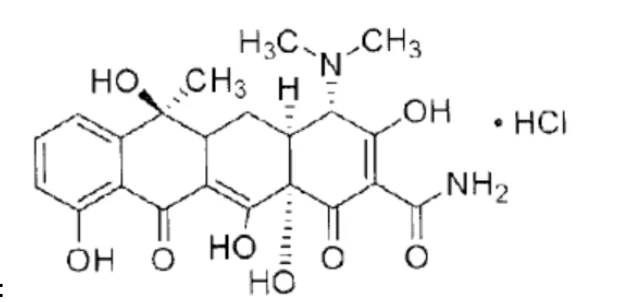
Chemical name: (4S,4aS,5aS,6S,12aS)-4-(dimethylamino)-3,6,10,12,12a-pentahydroxy-6-methyl-1,11-dioxo-1,4,4a,5,5a,6,11,12a-octahydrotetracene-2-carboxamide hydrochloride.
Molecular formula and molecular mass: C22H24N2O8·HCl; 480.9 g/mol
Structural formula:
:
Physicochemical properties: Tetracycline hydrochloride is yellow crystalline powder. Soluble in water, slightly soluble in ethanol (96%), practically insoluble in acetone. It dissolves in solutions of alkali hydroxides and carbonates. Solutions in water become turbid on standing, owing to the precipitation of tetracycline. Its pH range is 1.8 to 2.8
Pharmaceutical standard: USP
14. Clinical Trials
The clinical trial data on which the original indication was authorized is not available.
15. Microbiology
The microbiology data on which the original indication was authorized is not available.
16. Non-Clinical Toxicology
Genotoxicity No studies have been performed to evaluate the genotoxic potential of tetracycline hydrochloride capsules.
Carcinogenicity No long-term animal studies have been performed to evaluate the carcinogenic potential of tetracycline hydrochloride capsules.
Reproductive and developmental toxicology No dedicated animal fertility studies have been performed for tetracycline hydrochloride capsules.