


Patient Medication Information: uses, side effects, how to take - Teva-Icatibant
What is Teva-Icatibant used for?
Teva-Icatibant is used to treat acute attacks of hereditary angioedema (HAE) in:
- adults,
- adolescents, and
- children aged 2 years and older
with a deficiency of a protein called C1-esterase inhibitor.
How does Teva-Icatibant work?
In HAE, levels of a substance in your bloodstream called bradykinin are increased. This can cause swelling, pain, nausea, and diarrhea. Teva-Icatibant blocks the activity of bradykinin. This stops the symptoms of an HAE attack from getting worse.
What are the ingredients in Teva-Icatibant?
Medicinal ingredient: icatibant, as icatibant acetate
Non-medicinal ingredients: acetic acid glacial, sodium chloride, sodium hydroxide and water for injection
Teva-Icatibant comes in the following dosage forms:
Solution for injection, 30 mg / 3 mL (10 mg / mL)
Do not use Teva-Icatibant if:
- you or your child are allergic to icatibant acetate or to any ingredient in this medicine.
To help avoid side effects and ensure proper use, talk to your healthcare professional before you take Teva-Icatibant. Talk about any health conditions or problems you may have, including if you:
- have heart problems such as unstable angina (reduced blood flow to the heart muscle)
- have recently suffered a stroke
- are pregnant or plan to become pregnant
- are breastfeeding or plan to breastfeed
Other warnings you should know about:
- Only a doctor who has experience treating patients with HAE is recommended to treat you or your child with Teva-Icatibant.
Caregivers/Self-administration:
- You or your child’s first injection of Teva-Icatibant should be given under the guidance of a healthcare professional. Your healthcare professional will tell you when it is safe to go home.
- You or your caregiver may inject Teva-Icatibant only after receiving training on how to use it. A healthcare professional will teach you and your caregiver how to use it.
- Self-injection for children is not recommended. Teva-Icatibant should only be given to children by a healthcare professional or caregiver.
- Adolescents may only self-inject if their doctor and caregiver agree that it is appropriate for them to do so.
Laryngeal HAE attacks:
- A laryngeal HAE attack, or an attack of the throat, can become life threatening. This is because increased swelling of the throat can create a blockage of the upper airway. This in turn makes breathing difficult.
- If you or your child have a laryngeal HAE attack:
- inject Teva-Icatibant, and
- go to the nearest hospital emergency room for medical help right away.
- A blockage of the airway may occur faster in children and adolescents than in adults. This is because the airway passage is smaller in these patients.
Adolescents and Children:
- Teva-Icatibant is not recommended for use in children under 2 years of age or those who weigh less than 12 kg
- There is limited experience with the use of icatibant injection in the treatment of:
- children under 6 years of age
- laryngeal HAE attacks in adolescents and children
Effects on Reproductive Organs in Adolescents and Children aged 2 years and above
- The effects of long-term icatibant injection use are not known.
- Early studies have shown that when icatibant injection is used often, it may cause damage to the reproductive system or may affect how it develops.
- Your healthcare professional may do blood tests to check how your or your child’s reproductive organs are working.
Pregnancy and Breastfeeding:
- It is not known if Teva-Icatibant will harm your unborn baby. If you are pregnant or planning to become pregnant, speak to your doctor before using Teva-Icatibant. You and your doctor will decide if Teva-Icatibant is right for you.
- It is not known if Teva-Icatibant passes into breast milk. If you are breast-feeding or planning to breast-feed, speak to your doctor before using Teva-Icatibant about the best way to feed your baby.
Driving and Using Machinery
- Teva-Icatibant may cause tiredness, dizziness or sleepiness. DO NOT drive or operate machinery after using Teva-Icatibant if you feel tired or dizzy.
Tell your healthcare professional about all the medicines you take, including any drugs, vitamins, minerals, natural supplements or alternative medicines.
The following may interact with Teva-Icatibant:
- Angiotensin converting enzyme (ACE) inhibitor (used to lower blood pressure)
How to take Teva-Icatibant:
- You or your caregiver may inject Teva-Icatibant only after receiving training on how to use it.
- Always use Teva-Icatibant exactly as your healthcare professional has shown you.
- Be sure to use each Teva-Icatibant prefilled syringe only once, even if there is still medicine in it.
Teva-Icatibant is given as a single injection under the skin on the stomach. This is called a subcutaneous injection.
In adults and adolescents who weigh more than 65 kg:
- The Teva-Icatibant prefilled syringe will be used to give the injection.
In adolescents who weigh 65 kg or less and children aged 2 years and above:
- Some Teva-Icatibant will need to be transferred from the prefilled syringe into an empty graduated syringe. This graduated syringe will then be used to inject Teva-Icatibant.
Read and follow the below STEP-BY-STEP INSTRUCTIONS FOR INJECTION. It will take you through the process to give a Teva-Icatibant injection.
Usual dose:
All Patients:
- Take Teva-Icatibant as soon as you or your child have symptoms of an HAE attack. Symptoms can include swelling, pain, nausea, and diarrhea.
- If you or your child have a laryngeal HAE attack, inject Teva-Icatibant and then go to the nearest hospital emergency room for medical help right away.
Adults:
- The recommended dose is 3 mL. Use the full contents of the Teva-Icatibant prefilled syringe.
- If the symptoms continue, worsen, or come back, and it has been at least 6 hours from the first injection: give another injection.
- Do not use more than 3 injections in 24 hours. Talk with your doctor before using more than 8 doses per month.
Adolescents (weighing more than 65 kg):
- The recommended dose is 3 mL. Use the full contents of the Teva-Icatibant prefilled syringe.
- If the symptoms continue, worsen, or come back, seek immediate medical advice. Do not use more than 1 injection for a single HAE attack.
Adolescents (weighing 65 kg or less) and Children (aged 2 and above):
- The recommended dose is between 1 mL to 2.5 mL. The dose is based on body weight.
- You will need to use only some of the Teva-Icatibant prefilled syringe.
- See the below STEP-BY-STEP INSTRUCTIONS FOR INJECTION for the dose to inject. If you are not sure speak to your healthcare professional.
- The dose may change from one injection to the next with changes in body weight.
- If the symptoms continue, worsen, or come back seek immediate medical advice. Do not use more than 1 injection for a single HAE attack.
STEP-BY-STEP INSTRUCTIONS FOR INJECTION:
This section contains information on how to give an injection of Teva-Icatibant.
Read these instructions before using Teva-Icatibant and each time you or your child gets a repeat prescription. There may be new information.
These instructions are not meant to take the place of training by a healthcare professional. A healthcare professional will teach you and your caregiver how to give Teva-Icatibant. Ask your healthcare professional any questions you may have. Do not attempt to inject Teva-Icatibant until you are sure how to and your doctor has determined that it is appropriate for you to do so.
Teva’s Patient Support Program has been set up to provide guidance and additional training on how to use Teva-Icatibant. It will give you information and answer any questions you may have. Teva-Icatibant and supplies needed to give it are provided through this Program. Information including training can be obtained through the Program by calling Teva Canada Limited at 1-800-268-4127 ext. 3.
| Step 1 – Gather supplies | ALL PATIENTS Adults, Adolescents and Children (Aged 2 years and above) |
Collect the following listed items to prepare and give the injection: Items provided to you with your Teva-Icatibant prescription:
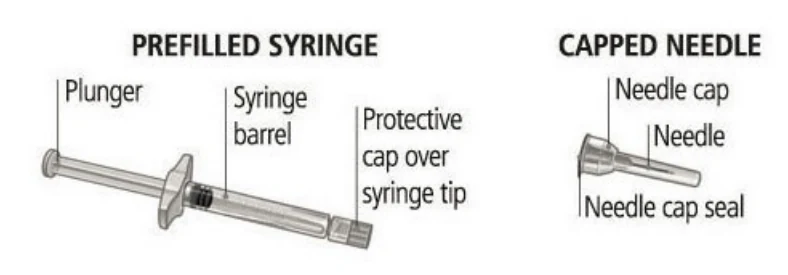

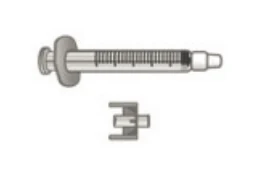 Not provided with Teva-Icatibant:
If you do not have a sharps disposal container, you may use a household container that is:
| |
| Step 2 – Getting started with Teva-Icatibant | ALL PATIENTS Adults, Adolescents and Children (Aged 2 years and above) |
If any of the above are not met:
| |
Adults and Adolescents (weighing more than 65 kg):
Adolescents (weighing 65 kg or less) and Children (Aged 2 years and above):
|
Step 3 – Preparing the Graduated Syringe – Measuring out and transferring the dose from the Teva-Icatibant prefilled syringe | ADOLESCENTS (weighing 65 kg or less) and CHILDREN (Aged 2 years and above) |
Avoid touching the ends of the connector and syringe tips to prevent contamination.
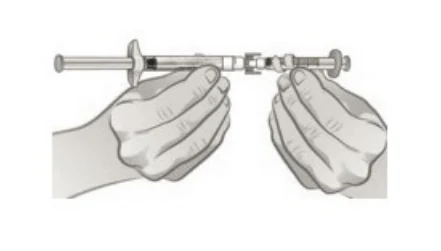
| |
| Dosing for Adolescents and Children: | |
| Body Weight | Volume (Dose) to Measure Out and Transfer |
| 12 kg to 25 kg | 1 mL |
| 26 kg to 40 kg | 1.5 mL |
| 41 kg to 50 kg | 2 mL |
| 51 kg to 65 kg | 2.5 mL |
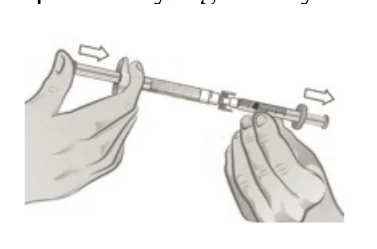
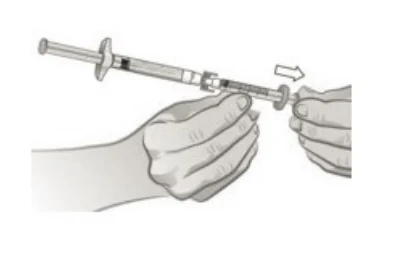
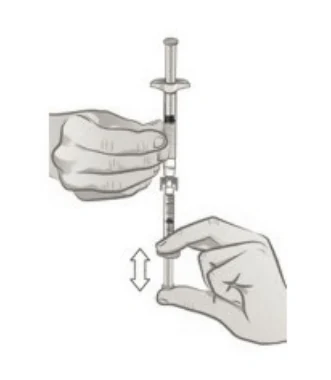
|
| Step 4 – Preparing the syringe and needle for injection | ALL PATIENTS Adults, Adolescents and Children (Aged 2 years and above) |
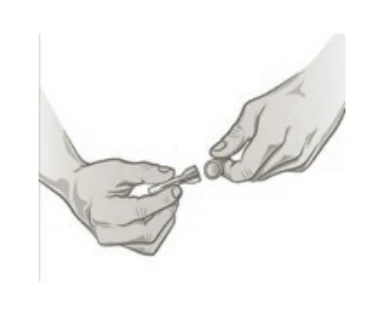
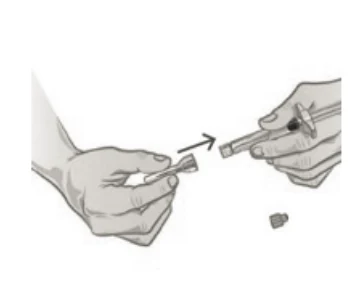 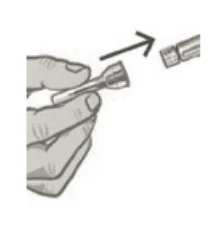
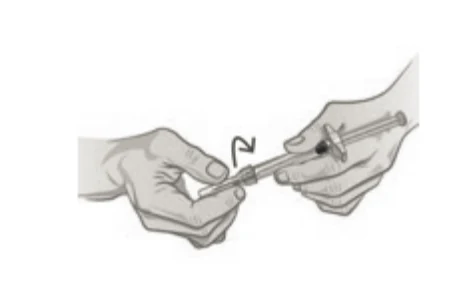 | |
| Step 5 – Preparing the injection site | ALL PATIENTS Adults, Adolescents and Children (Aged 2 years and above) |
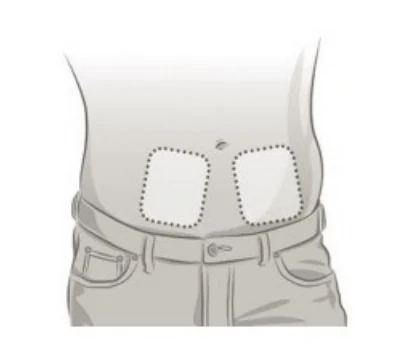
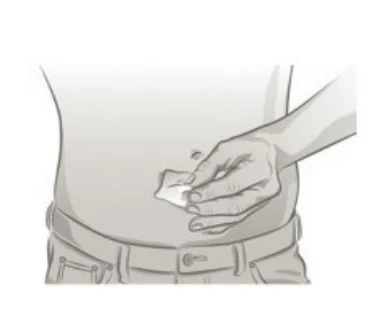 | |
| Step 6 – Injecting Teva-Icatibant | ALL PATIENTS Adults, Adolescents and Children (Aged 2 years and above) |
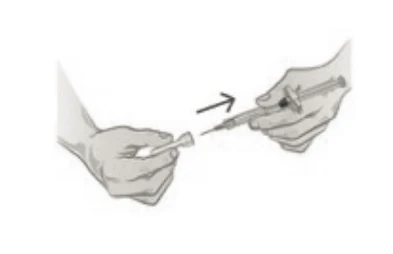
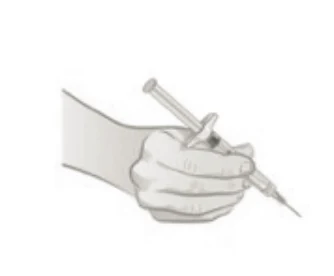
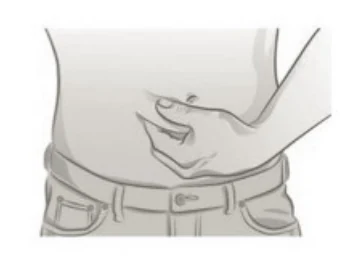
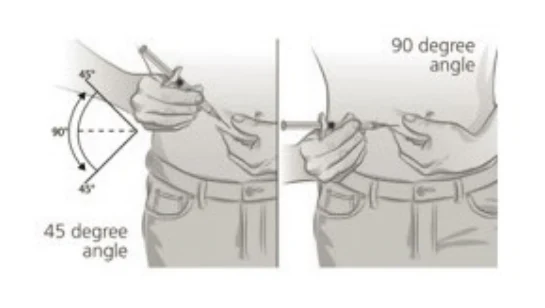 | |
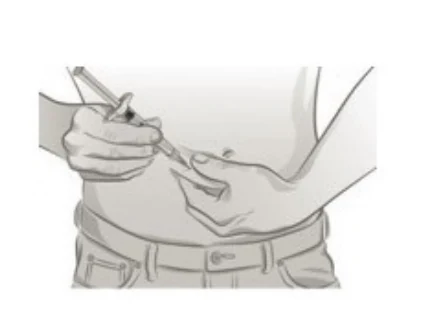
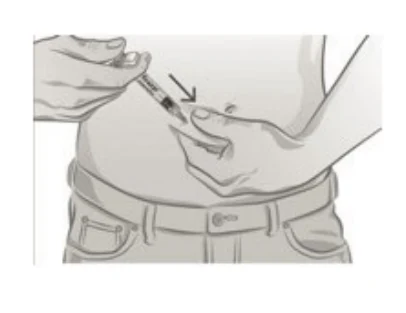
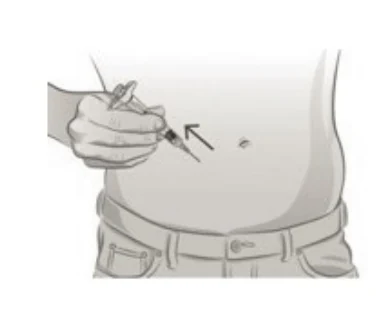 |
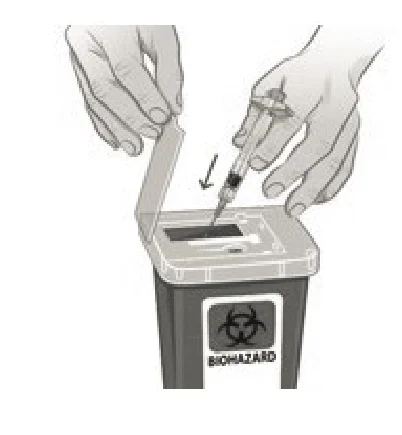
| Step 7 – Disposing of your used syringe. | ALL PATIENTS Adults, Adolescents and Children (Aged 2 years and above) |
| |
Overdose:
| If you think you have taken too much Teva-Icatibant, contact your healthcare professional, hospital emergency department or regional poison control centre immediately, even if there are no symptoms. |
What are possible side effects from using Teva-Icatibant?
These are not all the possible side effects you may feel when taking Teva-Icatibant. If you experience any side effects not listed here, contact your healthcare professional.
Side effects may include:
- burning, redness, swelling, pain, itching, or warmth at the injection site
- abdominal pain or distension
- diarrhea
- nausea
- fever
- upper respiratory tract infection (common cold)
- inflammation of the sinuses
- nasal congestion
- dizziness
- headache
- worsening or recurrence of HAE
 |
- rash
- hives
- dry mouth
- fatigue
Teva-Icatibant may affect certain liver enzyme levels in your blood. Your doctor will decide when to perform blood tests and will interpret the results.
Serious side effects and what to do about them
| Symptom / effect | Talk to your healthcare professional | Stop taking drug and get immediate medical help | |
|---|---|---|---|
| Only if severe | In all cases | ||
| UNCOMMON | |||
| Arrhythmia (abnormal heart rhythms): rapid, slow or irregular heartbeat | X | ||
| Urinary Tract Infection (UTI) (infection in urinary system including kidneys, ureters, bladder and urethra): Pain or burning sensation while urinating, frequent urination, blood in urine, pain in the pelvis, strong smelling urine, cloudy urine | X | ||
| UNKNOWN | |||
| Heart and non-heart related chest pain | X | ||
| Myocardial infarction (heart attack): pressure or squeezing pain between the shoulder blades, in the chest, jaw, left arm or upper abdomen, shortness of breath, dizziness, fatigue, light-headedness, clammy skin, sweating, indigestion, anxiety, feeling faint and possible irregular heartbeat | X | ||
| Increased levels of liver enzymes (ALT, AST) in the blood: dark urine, fatigue, loss of appetite, yellowing of the skin or eyes | X | ||
If you have a troublesome symptom or side effect that is not listed here or becomes bad enough to interfere with your daily activities, talk to your healthcare professional.
Reporting Side Effects
You can report any suspected side effects associated with the use of health products to Health Canada by:
NOTE: Contact your health professional if you need information about how to manage your side effects. The Canada Vigilance Program does not provide medical advice. |
Storage:
- Store at 2 to 25°C.
- Do not freeze.
- Store Teva-Icatibant in the original carton until you are ready to use it.
- Keep out of reach and sight of children.
If you want more information about Teva-Icatibant:
- Talk to your healthcare professional
- Find the full product monograph that is prepared for healthcare professionals and includes this Patient Medication Information by visiting the Health Canada website ((https://health-products.canada.ca/dpd-bdpp/index-eng.jsp); the manufacturer’s website http://www.tevacanada.com; or by calling 1-800-268-4127 ext. 3; or email druginfo@tevacanada.com.
- For information about Teva’s Patient Support Program, contact Teva Canada Limited at 1-800-268-4127 ext. 3.