


Product Monograph - Timolol Maleate Ophthalmic Solution
RECENT MAJOR LABEL CHANGES
Not applicable.
TABLE OF CONTENTS
Sections or subsections that are not applicable at the time of authorization are not listed.
RECENT MAJOR LABEL CHANGES ............................................................................................. 2
TABLE OF CONTENTS ................................................................................................................ 2
PART I: HEALTH PROFESSIONAL INFORMATION ....................................................................... 4
1 INDICATIONS ..................................................................................................... 4
1.1 Pediatrics .................................................................................................... 4
1.2 Geriatrics .................................................................................................... 4
2 CONTRAINDICATIONS ....................................................................................... 4
4 DOSAGE AND ADMINISTRATION ....................................................................... 4
4.1 Dosing Considerations ................................................................................ 4
4.2 Recommended Dose and Dosage Adjustment ............................................ 5
4.5 Missed Dose ............................................................................................... 5
5 OVERDOSAGE .................................................................................................... 6
6 DOSAGE FORMS, STRENGTHS, COMPOSITION AND PACKAGING ....................... 6
7 WARNINGS AND PRECAUTIONS ........................................................................ 7
7.1 Special Populations ................................................................................... 10
7.1.1 Pregnant Women ..................................................................................... 10
7.1.2 Breast-feeding .......................................................................................... 10
7.1.3 Pediatrics .................................................................................................. 10
7.1.4 Geriatrics .................................................................................................. 10
8 ADVERSE REACTIONS ...................................................................................... 10
8.1 Adverse Reaction Overview ...................................................................... 11
8.2 Clinical Trial Adverse Reactions ................................................................ 11
9 DRUG INTERACTIONS ...................................................................................... 12
9.2 Drug Interactions Overview ...................................................................... 13
9.4 Drug-Drug Interactions ............................................................................. 13
9.5 Drug-Food Interactions ............................................................................. 14
9.6 Drug-Herb Interactions ............................................................................. 14
9.7 Drug-Laboratory Test Interactions ............................................................ 14
10 CLINICAL PHARMACOLOGY ............................................................................. 14
10.1 Mechanism of Action ................................................................................ 14
10.2 Pharmacodynamics .................................................................................. 14
10.3 Pharmacokinetics ..................................................................................... 15
11 STORAGE, STABILITY AND DISPOSAL ............................................................... 15
12 SPECIAL HANDLING INSTRUCTIONS ................................................................. 16
PART II: SCIENTIFIC INFORMATION ........................................................................................ 17
13 PHARMACEUTICAL INFORMATION .................................................................. 17
14 CLINICAL TRIALS .............................................................................................. 17
14.1 Clinical Trials by Indication ....................................................................... 17
15 MICROBIOLOGY .............................................................................................. 18
16 NON-CLINICAL TOXICOLOGY ........................................................................... 18
17 SUPPORTING PRODUCT MONOGRAPHS .......................................................... 20
PATIENT MEDICATION INFORMATION ................................................................................... 21
PART I: HEALTH PROFESSIONAL INFORMATION
1 INDICATIONS
TIMOLOL MALEATE OPHTHALMIC SOLUTION (timolol maleate ophthalmic solution) is indicated for:
- the reduction of elevated intraocular pressure
1.1 Pediatrics
Pediatrics (<18 years of age): No data are available to Health Canada, therefore, an indication for pediatric use has not been authorized.
1.2 Geriatrics
Geriatrics (>65 years of age): Evidence from experience in geriatric populations does not suggests significant differences in safety and effectiveness.
2 CONTRAINDICATIONS
Timolol maleate is contraindicated in patients who are hypersensitive to this drug or to any ingredient in the formulation, including any non-medicinal ingredient, or component of the container. For a complete listing, see 6 DOSAGE FORMS, STRENGTHS, COMPOSITION AND PACKAGING.
- Reactive airway disease including bronchial asthma or a history of bronchial asthma, severe chronic obstructive pulmonary disease
- Sinus bradycardia; sick sinus syndrome;
- Sino-atrial block; second-and third-degree atrioventricular block; overt cardiac failure; cardiogenic shock
4 DOSAGE AND ADMINISTRATION
4.1 Dosing Considerations
- If needed, concomitant therapy with other agent(s) for lowering intraocular pressure may be given with TIMOLOL MALEATE OPHTHALMIC SOLUTION. The use of two topical beta-adrenergic blocking agents is not recommended (see 7 WARNINGS AND PRECAUTIONS).
- Since in some patients the pressure-lowering response to timolol maleate ophthalmic solution may require a few weeks to stabilize, evaluation should include a determination of intraocular pressure after approximately 4 weeks of treatment with TIMOLOL MALEATE OPHTHALMIC SOLUTION.
4.2 Recommended Dose and Dosage Adjustment
Adults (>18 years of age): The dosage is one drop of TIMOLOL MALEATE OPHTHALMIC SOLUTION in the affected eye(s) twice a day.
If the intraocular pressure is maintained at satisfactory levels, many patients can be placed on once-a-day therapy. Because of naturally occurring diurnal variations in intraocular pressure, satisfactory response is best determined by measuring the intraocular pressure at different times during the day.
When using nasolacrimal occlusion or closing the eyelids for 2 minutes, the systemic absorption is reduced. This may result in an increase in local activity.
How to Transfer Patients from Other Therapy
When a patient is transferred from another topical ophthalmic beta-adrenergic blocking agent, that agent should be discontinued after proper dosing on one day and treatment with TIMOLOL MALEATE OPHTHALMIC SOLUTION started on the following day with one drop of TIMOLOL MALEATE OPHTHALMIC SOLUTION in the affected eye(s) twice a day.
When a patient is transferred from a single antiglaucoma agent, other than a topical ophthalmic beta-adrenergic blocking agent, continue the agent already being used and add one drop of TIMOLOL MALEATE OPHTHALMIC SOLUTION in each affected eye twice a day. On the following day, discontinue the previously used antiglaucoma agent completely and continue with TIMOLOL MALEATE OPHTHALMIC SOLUTION.
When a patient is transferred from several concomitantly administered antiglaucoma agents, individualization is required. The physician may be able to discontinue some or all of the other antiglaucoma agents. Adjustments should involve one agent at a time.
Clinical trials have shown the addition of timolol maleate ophthalmic solution to be useful in patients who respond inadequately to the maximum tolerable antiglaucoma drug therapy.
- Pediatrics (<18 years of age): Health Canada has not authorized an indication for pediatric use (see 1.1 Pediatrics).
4.5 Missed Dose
If a dose is missed, it should be applied as soon as possible. However, if it is almost time for the next dose, the missed dose should be skipped and the next dose should be taken as usual.
5 OVERDOSAGE
There have been reports of inadvertent overdosage with timolol maleate ophthalmic solution resulting in systemic effects similar to those seen with systemic beta-adrenergic blocking agents such as dizziness, headache, shortness of breath, bradycardia, bronchospasm, and cardiac arrest (see also 8 ADVERSE REACTIONS).
The following additional therapeutic measures should be considered:
Gastric lavage: If ingested. Studies have shown that timolol does not dialyze readily.
Symptomatic bradycardia: Use atropine sulfate intravenously in a dosage of 0.25 to 2 mg to induce vagal blockade. If bradycardia persists, intravenous isoproterenol hydrochloride should be administered cautiously. In refractory cases the use of a transvenous cardiac pacemaker may be considered.
Hypotension: Use sympathomimetic pressor drug therapy, such as dopamine, dobutamine or levarterenol. In refractory cases the use of glucagon hydrochloride has been reported to be useful.
Bronchospasm: Use isoproterenol hydrochloride. Additional therapy with aminophylline may be considered.
Acute cardiac failure: Conventional therapy with digitalis, diuretics and oxygen should be instituted immediately. In refractory cases the use of intravenous aminophylline is suggested. This may be followed if necessary by glucagon hydrochloride which has been reported to be useful.
Heart block (second- or third-degree): Use isoproterenol hydrochloride or a transvenous cardiac pacemaker.
For management of a suspected drug overdose, contact your regional poison control centre.
6 DOSAGE FORMS, STRENGTHS, COMPOSITION AND PACKAGING
Table 1 – Dosage Forms, Strengths, Composition and Packaging
| Route of Administration | Dosage Form / Strength / Composition | Non-medicinal Ingredients |
|---|---|---|
| Ophthalmic | Sterile solution / 0.5% w/v timolol | Benzalkonium chloride, sodium hydroxide, monobasic and dibasic sodium phosphate, and water for injection. |
| Benzalkonium chloride 0.01% is added as preservative. |
TIMOLOL MALEATE OPHTHALMIC SOLUTION is a clear, colourless to light yellow, sterile, isotonic, buffered, aqueous solution. Each mL contains 5 mg of timolol (6.8 mg of timolol maleate).
TIMOLOL MALEATE OPHTHALMIC SOLUTION is supplied as 5 mL and 10 mL in white low-density polyethylene 5 mL and 10 mL bottles with dark blue high-density polyethylene caps and white low density polyethylene dropper tips.
7 WARNINGS AND PRECAUTIONS
General
As with other topically applied ophthalmic drugs, this drug may be absorbed systemically. The same types of cardiovascular, pulmonary and other adverse reactions reported with systemic beta-adrenergic blocking agents may occur with topical administration.
Carcinogenesis and Mutagenesis
See Carcinogenicity section in 16 NON-CLINICAL TOXICOLOGY.
Cardiovascular
In patients with cardiovascular diseases (e.g. coronary heart disease, Prinzmetal’s angina and cardiac failure) and hypotension, therapy with beta-blockers should be critically assessed and the therapy with other active substances should be considered.
Cardiac failure should be adequately controlled before beginning therapy with TIMOLOL MALEATE OPHTHALMIC SOLUTION. Patients with a history of cardiovascular disease, including cardiac failure, should be watched for signs of deterioration of these diseases, and pulse rates should be checked.
Due to its negative effect on conduction time, beta blockers should only be given with caution to patients with first degree heart block.
Respiratory reactions and cardiac reactions, including death due to bronchospasm in patients with asthma and rarely death in association with cardiac failure, have been reported following administration of timolol maleate ophthalmic solutions.
Because of the potential effects of beta-adrenergic blocking agents on blood pressure and pulse, these agents should be used with caution in patient with cerebrovascular insufficiency. If signs or symptoms suggesting reduced cerebral blood flow develop following initiation of therapy with TIMOLOL MALEATE OPHTHALMIC SOLUTION, alternative therapy should be considered.
Patients with severe peripheral circulatory disturbance/disorders (e.g. severe forms of Raynaud’s disease or Raynaud’s syndrome) should be treated with caution.
Driving and Operating Machinery
Temporary blurred vision or other visual disturbances may occur which can affect the ability to drive or use machines. If blurred vision occurs at instillation, the patient must wait until the vision clears before driving or using machinery.
Endocrine and Metabolism
Masking of Hypoglycemic Symptoms in Patients with Diabetes Mellitus
TIMOLOL MALEATE OPHTHALMIC SOLUTION should be used with caution in patients subject to spontaneous hypoglycemia or in diabetic patients (especially those with labile diabetes) who are receiving insulin or oral hypoglycemic agents. Beta-adrenergic blocking agents may mask the signs and symptoms of acute hypoglycemia.
Masking of Thyrotoxicosis
β-adrenergic blocking agents may mask certain clinical signs of hyperthyroidism (e.g., tachycardia). Patients suspected of developing thyrotoxicosis should be managed carefully to avoid abrupt withdrawal of β-adrenergic blocking agents which might precipitate a thyroid storm.
Immune
Risk from Anaphylactic Reaction
While taking beta blockers, patients with a history of atopy or a history of severe anaphylactic reaction to a variety of allergens may be more reactive to repeated challenge with such allergens, either accidental, diagnostic, or therapeutic. These patients may be unresponsive to treatment of anaphylactic reactions with the usual doses of epinephrine since timolol may blunt the beta agonist effect of epinephrine. In such cases, alternatives to epinephrine should be considered.
Neurologic
Muscle Weakness
β-adrenergic blockade has been reported to increase muscle weakness consistent with certain myasthenic symptoms (e.g., diplopia, ptosis, and generalized weakness). Timolol has been reported rarely to increase muscle weakness in some patients with myasthenic symptoms.
Ophthalmologic
In patients with angle-closure glaucoma, the immediate objective of treatment is to reopen the angle. This requires constricting the pupil with a miotic. Timolol maleate has little or no effect on the pupil. When TIMOLOL MALEATE OPHTHALMIC SOLUTION is used to reduce elevated intraocular pressure in angle-closure glaucoma they should be used with a miotic and not alone.
Choroidal Detachment
Choroidal detachment has been reported with administration of aqueous suppressant therapy (e.g., timolol, acetazolamide or combination) after filtration procedures. Management of eyes with chronic or recurrent choroidal detachment should include stopping all forms of aqueous suppressant therapy and treating endogenous inflammation vigorously.
As with the use of other antiglaucoma drugs, diminished responsiveness to timolol maleate ophthalmic solution after prolonged therapy has been reported in some patients. However, in clinical studies in which 164 patients have been followed for at least 3 years, no significant difference in mean intra ocular pressure has been observed after initial stabilization.
Contact Lenses
The preservative in TIMOLOL MALEATE OPHTHALMIC SOLUTION is benzalkonium chloride. This preservative is a quaternary ammonium compound that may be absorbed by soft contact lenses. Therefore, TIMOLOL MALEATE OPHTHALMIC SOLUTION should not be administered while wearing soft contact lenses. The contact lenses should be removed before application of the drops and not be reinserted earlier than 15 minutes after use.
Peri-Operative Considerations
Major Surgery
The necessity or desirability of withdrawal of β-adrenergic blocking agents prior to major surgery is controversial. Beta-adrenergic receptor blockade impairs the ability of the heart to respond to beta-adrenergically mediated reflex stimuli. This may augment the risk of general anesthesia in surgical procedures.
β-blocking ophthalmological preparations may block systemic β-agonist effects e.g. of adrenaline. The anaesthesiologist should be informed when the patient is receiving TIMOLOL MALEATE OPHTHALMIC SOLUTION. Some patients receiving beta-adrenergic blocking agents have experienced protracted severe hypotension during anesthesia. Difficulty in restarting and maintaining the heartbeat has also been reported. For these reasons, in patients undergoing elective surgery, some authorities recommend gradual withdrawal of beta-adrenergic blocking agents. If necessary during surgery, the effects of β-adrenergic blocking agents may be reversed by sufficient doses of such agonists as isoproterenol, dopamine, dobutamine or levarterenol.
Respiratory
In patients with mild/moderate chronic obstructive pulmonary disease (COPD), TIMOLOL MALEATE OPHTHALMIC SOLUTION should be used with caution, and only if the potential benefit outweighs the potential risk.
7.1 Special Populations
7.1.1 Pregnant Women
Timolol maleate ophthalmic solution has not been studied in human pregnancy. The use of TIMOLOL MALEATE OPHTHALMIC SOLUTION requires that the anticipated benefit be weighed against possible hazards.
Teratogenic studies in the mouse and rabbit at dose levels of 2 to 50 mg/kg/day did not reveal evidence of teratogenicity but did suggest embryotoxicity at the highest dose.
Epidemiological studies have not revealed malformative effects, but show a risk of intrauterine growth retardation when beta-blockers are administered by the oral route.
In addition, signs and symptoms of betablockade (e.g., bradycardia, hypotension, respiratory distress and hypoglycemia) have been observed in the neonate when beta-blockers have been administered until delivery. TIMOLOL MALEATE OPHTHALMIC SOLUTION should not be used during pregnancy unless clearly necessary. If TIMOLOL MALEATE OPHTHALMIC SOLUTION is administered until delivery, the neonate should be carefully monitored during the first days of life.
7.1.2 Breast-feeding
Timolol is detectable in human milk. Because of the potential for serious adverse reactions from timolol in nursing infants, a decision should be made whether to discontinue nursing or to discontinue the drug, taking into account the importance of the drug to the mother.
7.1.3 Pediatrics
Pediatrics (<18 years of age): No data are available to Health Canada; therefore, Health Canada has not authorized an indication for pediatric use.
7.1.4 Geriatrics
Geriatrics (>65 years of age): Not applicable.
8 ADVERSE REACTIONS
8.1 Adverse Reaction Overview
Like other topically applied ophthalmic drugs, timolol maleate ophthalmic solution is absorbed into the systemic circulation. This may cause similar undesirable effects as seen with systemic beta blocking agents. Listed adverse reactions include reactions seen within the class of ophthalmic beta-blockers. Adverse reactions reported in clinical experience with systemic timolol maleate may be considered potential side effects of ophthalmic timolol maleate.
The most frequent reported adverse reactions with timolol eye drops are usually ocular (See Ophthalmologic).
8.2 Clinical Trial Adverse Reactions
Clinical trials are conducted under very specific conditions. The adverse reaction rates observed in the clinical trials; therefore, may not reflect the rates observed in practice and should not be compared to the rates in the clinical trials of another drug. Adverse reaction information from clinical trials may be useful in identifying and approximating rates of adverse drug reactions in real-world use.
The following adverse reactions have been reported with ocular administration of this or other timolol maleate formulations, either in clinical trials or since the drug has been marketed.
Body as a Whole
Headache, asthenia, fatigue.
Cardiovascular
Aggravation or precipitation of certain cardiovascular pulmonary and other disorders presumably related to effects of systemic beta blockade has been reported (see 2 CONTRAINDICATIONS and 7 WARNINGS AND PRECAUTIONS). These include bradycardia, chest pain, arrhythmia, hypotension, syncope, heart block, cerebrovascular accident, cerebral ischemia, palpitation, atrioventricular block, cardiac arrest, cardiac failure, congestive heart failure, edema, claudication, Raynaud’s phenomenon, cold hands and feet and in insulin-dependent diabetics masked symptoms of hypoglycemia have been reported rarely.
Digestive
Dysgeusia, nausea, diarrhea, dyspepsia, dry mouth, abdominal pain, vomiting.
Ear and labyrinth disorders
Tinnitus.
Hypersensitivity
Signs and symptoms of allergic reactions including anaphylaxis, angioedema, pruritus, urticaria, localized and generalized rash.
Immunologic
Systemic lupus erythematosus.
Integumentary
Alopecia, psoriasiform rash or exacerbation of psoriasis.
Metabolism and Nutrition Disorders
Hypoglycemia.
Musculoskeletal
Myalgia.
Nervous System/Psychiatric
Depression, insomnia, nightmares, memory loss, increases in signs and symptoms of myasthenia gravis, dizziness, paresthesia.
Respiratory
Bronchospasm (predominantly in patients with pre-existing bronchospastic disease), respiratory failure, dyspnea, cough.
Ophthalmologic
Signs and symptoms of ocular irritation: including burning and stinging, itching, tearing, redness, conjunctivitis, conjunctival injection, blepharitis, keratitis, blurred vision, decreased corneal sensitivity, and dry eyes. Visual disturbances: including refractive changes (due to withdrawal of miotic therapy in some cases), diplopia, corneal erosion ptosis, and choroidal detachment following filtration surgery (see 7 WARNINGS AND PRECAUTIONS).
Urogenital
Decreased libido, Peyronie’s disease, sexual dysfunction.
Various adverse reactions with unclear causal relationship
The following adverse reactions have been reported but a causal relationship to therapy with timolol maleate ophthalmic solution has not been established: aphakic cystoid macular edema, nasal congestion, anorexia, CNS effects (e.g., behavioral changes including confusion, hallucinations, anxiety, disorientation, nervousness, somnolence, and other psychic disturbances), hypertension, retroperitoneal fibrosis and pseudo pemphigoid.
9 DRUG INTERACTIONS
9.2 Drug Interactions Overview
The concomitant use of two topical beta-adrenergic blocking agents is not recommended due to potential additive effects.
The concomitant use of oral calcium channel blocker or beta-adrenergic blocking agents, catecholamine-depleting drugs, antiarrhythmics, digitalis glycosides, parasympathomimetics, guanethidine, or CYP2D6 inhibitors may lead to potentiation of adverse systemic effects.
Due to exacerbation of the rebound hypertension, caution is recommended when clonidine is used concomitantly with TIMOLOL MALEATE OPHTHALMIC SOLUTION and when it is withdrawn.
Standard laboratory parameters may be affected rarely by the administration of TIMOLOL MALEATE OPHTHALMIC SOLUTION.
No specific drug interaction studies have been performed with timolol maleate ophthalmic solution.
9.4 Drug-Drug Interactions
Beta-Adrenergic Blockers: Patients who are already receiving a beta blocker systemically and who are given TIMOLOL MALEATE OPHTHALMIC SOLUTION should be observed for a potential additive effect on the intraocular pressure or on the known systemic effects of beta blockers (hypotension and/or bradycardia). The concomitant use of two topical beta-adrenergic blocking agents is not recommended.
Calcium Channel Blockers or Catecholamine-Depleting Drugs: The potential exists for additive effects and production of hypotension and/or marked bradycardia when TIMOLOL MALEATE OPHTHALMIC SOLUTION is administered together with an oral calcium channel blocker or beta-adrenergic blocking agents, catecholamine-depleting drugs such as reserpine, antiarrhythmics, digitalis glycosides, parasympathomimetics or guanethidine.
Clonidine: Oral β-adrenergic blocking agents may exacerbate the rebound hypertension which can follow the withdrawal of clonidine. If the two drugs are coadministered, the β-adrenergic blocking agent should be withdrawn several days before the gradual withdrawal of clonidine. If replacing clonidine by β-blocker therapy, the introduction of β-adrenergic blocking agents should be delayed for several days after clonidine administration has stopped.
Epinephrine: Although timolol maleate ophthalmic solution used alone has little or no effect on pupil size, mydriasis resulting from concomitant therapy with timolol maleate ophthalmic solutions and epinephrine has been reported occasionally.
Quinidine: Potentiated systemic beta blockade (e.g., decreased heart rate, depression) has been reported during combined treatment with CYP2D6 inhibitors (e.g. quinidine, SSRIs) and timolol.
9.5 Drug-Food Interactions
No specific drug-food studies have been performed with timolol maleate ophthalmic solution.
9.6 Drug-Herb Interactions
Interactions with herbal products have not been established.
9.7 Drug-Laboratory Test Interactions
Clinically important changes in standard laboratory parameters were rarely associated with the administration of systemic timolol maleate. Slight increases in blood urea nitrogen, serum potassium, serum uric acid and triglycerides and slight decreases in hemoglobin, hematocrit, and HDL-cholesterol occurred, but were not progressive or associated with clinical manifestations.
10 CLINICAL PHARMACOLOGY
10.1 Mechanism of Action
Timolol maleate is a general beta-adrenergic receptor blocking agent that does not have significant intrinsic sympathomimetic, direct myocardial depressant, or local anesthetic (membrane-stabilizing) activity. Timolol maleate combines reversibly with a part of the cell membrane, the beta-adrenergic receptor, and thus inhibits the usual biologic response that would occur with stimulation of that receptor. This specific competitive antagonism blocks stimulation of the beta-adrenergic receptors by catecholamines having beta-adrenergic stimulating (agonist) activity, whether these originate from an endogenous or exogenous source. Reversal of this blockade can be accomplished by increasing the concentration of the agonist, which will restore the usual biologic response.
10.2 Pharmacodynamics
Timolol maleate ophthalmic solution reduces elevated and normal intraocular pressure whether or not associated with glaucoma. Elevated intraocular pressure is a major risk factor in the pathogenesis of glaucomatous visual field loss. The higher the level of intraocular pressure, the greater the likelihood of glaucomatous visual field loss and optic nerve damage.
Onset of action of timolol maleate is usually rapid, occurring approximately 20 minutes after topical application on the eye. Maximum reduction of intraocular pressure occurs in one to two hours. Significant lowering of intraocular pressure has been maintained for as long as 24 hours with 0.5% timolol maleate ophthalmic solution twice a day. Repeated observations over a period of three years indicate that the intraocular pressure-lowering effect of timolol maleate ophthalmic solution is well maintained.
Timolol maleate is a non-selective beta-adrenergic receptor blocking agent that does not have significant intrinsic sympathomimetic, direct myocardial depressant, or local anesthetic (membrane-stabilizing) activity.
The precise mechanism of action of timolol maleate in lowering intraocular pressure is not clearly established at this time, although a fluorescein study and tonography studies indicate that its predominant action may be related to reduced aqueous formation. However, in some studies a slight increase in outflow facility was also observed. Unlike miotics, timolol maleate reduces intraocular pressure with little or no effect on accommodation or pupil size. Thus, changes in visual acuity due to increased accommodation are uncommon, and dim or blurred vision and night blindness produced by miotics are not evident. In addition, in patients with cataracts the inability to see around lenticular opacities when the pupil is constricted by miotics is avoided. When changing patients from miotics to TIMOLOL MALEATE OPHTHALMIC SOLUTION a refraction might be necessary when these effects of the miotic have passed.
10.3 Pharmacokinetics
Absorption: Timolol maleate (S(-) enantiomer) is significantly metabolized after oral and ophthalmic administration.
Distribution: Timolol is moderately (<60%) bound to plasma proteins.
Metabolism: Based on correlation with debrisoquine metabolism, timolol metabolism is mediated primarily by cytochrome P-450 2D6.
Elimination: The drug and the metabolites (hydroxyethylamino, hydroxyethylglycolamino derivatives and a third minor metabolite that results from the hydroxylation of a terminal methyl group on the tertiary butylamino moiety) are excreted primarily via the kidney.
In a study of plasma drug concentration in six subjects, the systemic exposure to timolol was determined following twice-daily topical administration of timolol maleate ophthalmic solution 0.5% for 8 days. The mean peak plasma concentration following morning dosing was 0.46 ng/mL and following afternoon dosing was 0.35 ng/mL.
By comparison to plasma concentrations (10 to 20 ng/mL) following oral 5 mg dose, it was estimated that timolol was approximately 50% bio-available systemically following intraocular administration.
11 STORAGE, STABILITY AND DISPOSAL
Store at room temperature (15° to 25°C).
Protect from light.
Once opened, the 5 mL and 10 mL container can be stored at room temperature 15° to 25°C for 28 days. Discard after 28 days from the date the container is first opened.
12 SPECIAL HANDLING INSTRUCTIONS
There are no special handling instructions.
PART II: SCIENTIFIC INFORMATION
13 PHARMACEUTICAL INFORMATION
Drug Substance
| Proper name: | Timolol maleate |
|---|---|
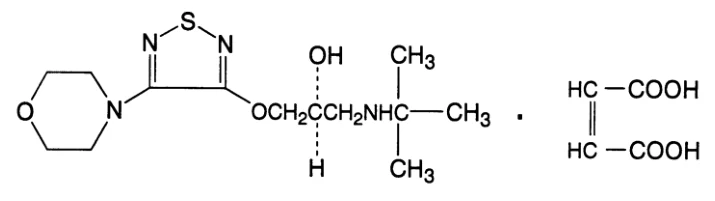
| Chemical name: | (S)-1-[(1,1-dimethylethyl)amino]-3-[[4-(4- morpholinyl)-1,2,5-thiadiazol-3-yl]oxy]-2-propanol (Z)-2-butenedioate(1:1) (salt) |
| Molecular formula and molecular mass: | C13H24N4O3S • C4H4O4, 432.49 |
| Structural formula: | |
| Physicochemical properties: | Timolol maleate is a beta-adrenergic receptor blocking agent. It possesses an asymmetric carbon atom in its structure and is provided as the levo isomer. It is a white odourless, crystalline powder which is soluble in water, methanol and alcohol. |
14 CLINICAL TRIALS
14.1 Clinical Trials by Indication
Reduction of intraocular pressure
Timolol maleate ophthalmic solution generally produced fewer and less severe side effects than either pilocarpine or epinephrine. Bradycardia was reported with timolol maleate (see 7 WARNINGS AND PRECAUTIONS). At trough (12 hours post-dose), the mean reduction was 3.6 beats/minute. At two hours post-dose, the mean reduction in heart rate was 5 beats/minute.
Timolol maleate ophthalmic solution has also been used in patients with glaucoma wearing conventional hard contact lenses. Timolol maleate ophthalmic solution has not been studied in patients wearing lenses made with materials other than polymethylmethacrylate.
In clinical trials timolol maleate ophthalmic solution has been shown to reduce intraocular pressure in:
- Patients with chronic open-angle glaucoma
 |
- Patients with ocular hypertension
- Aphakic patients having glaucoma, including those wearing contact lenses
- Patients with narrow angles and a history of spontaneous or iatrogenically-induced narrow-angle closure in the opposite eye in whom reduction of intraocular pressure is necessary (see 7 WARNINGS AND PRECAUTIONS).
15 MICROBIOLOGY
TIMOLOL MALEATE OPHTHALMIC SOLUTION contains the preservative benzalkonium chloride as an antimicrobial preservative.
16 NON-CLINICAL TOXICOLOGY
General Toxicology:
Ocular Effects
No adverse ocular effects were observed in rabbits and dogs administered timolol maleate ophthalmic solution topically in studies lasting one and two years respectively.
Table 2 - Acute Toxicity (LD50)
| Species and Age | Sex | Route of Administration | LD50 mg/kg |
|---|---|---|---|
| Mouse (A) | F | Oral | 1190 |
| F | Intravenous | 222 | |
| F | Subcutaneous | 1040 | |
| Rat (YA) | M | Oral | 947 |
| F | Oral | 900 | |
| M | Oral (Fed) | 1800 | |
| M | Intraperitoneal | 390 | |
| F | Intraperitoneal | 383 | |
| Rat (W) | M | Oral | 1040 |
| F | Oral | 969 | |
| M/F | Intraperitoneal | 409 | |
| Rat (I) | M/F | Oral | 241 |
| M/F | Subcutaneous | 143 | |
| Rabbit (A) | M/F | Oral | 485 |
| M/F | Subcutaneous | 34 |
| (A)=Adult; (YA)=Young Adult; (W)=Weanling; (I)=Infant | ||
|---|---|---|
Signs of toxicity occurred immediately after intravenous administration and from 10 to 30 minutes following oral, intraperitoneal or subcutaneous administration. The signs observed included lacrimation, ataxia, tremors and bradypnea. Clonic convulsions usually preceded death.
Oral Interactions Studies
Oral acute interaction studies in mice in which timolol maleate was administered with probenecid, methyldopa, hydralazine, hydrochlorothiazide, or tolbutamide, showed that these drugs had no influence on the toxicity of timolol maleate. Timolol maleate had no effect on the hypoprothrombinemia induced by bishydroxycoumarin in the dog.
Subacute Toxicity
In rats treated with 100 to 400 mg/kg/day for seven weeks, excessive salivation seen 5 to 10 minutes after dosing had a dose related incidence in the first week of the study. At necropsy, organ weight studies revealed a significant increase in the kidneys, spleen and liver of some treated animals. Except for splenic congestion, there were no morphological changes to account for the increase in organ weights. Rats treated with 1 gram per day for eight weeks exhibited ptyalism, muscle tremors and transient pale extremities.
In dogs, doses of 200 mg/kg/day or higher, were lethal to some animals. Low grade tubular nephrosis and trace amounts of hyaline casts in the collecting and convoluted tubules occurred in one of two dogs administered 100 mg/kg/day and in both dogs receiving 400 mg/kg/day. Small foci of tubular degeneration and regeneration occurred in the nephrotic areas. Similar slight multi focal degeneration of the collecting tubules in the medulla of both kidneys was evident in one of four dogs in a 15-day intravenous toxicity study.
Chronic Toxicity
Rats
Timolol was administered orally to rats at dose levels of 5, 10 and 25 mg/kg/day for up to 67 weeks. No physical signs, ocular signs or deaths which could be attributed to the drug were evident.
Dogs
In a 54-week oral study timolol was administered at doses of 5, 10 and 25 mg/kg/day. Body weight and food consumption were normal and no physical signs attributable to treatment were evident. Slight focal hyperplasia of the transitional epithelium was seen in the renal pelvis of one dog receiving 25 mg/kg/day.
Carcinogenicity:
Lifetime studies with timolol have been completed in rats at oral doses of 25, 100 and 300 mg/kg/day and in mice at oral doses of 5, 50 and 500 mg/kg/day. In male and female rats and male mice at all dose levels, and in female mice at dose levels of 5 and 50 mg/kg/day, timolol demonstrated no carcinogenic effect. There was a slight increase in the incidence of mammary adenocarcinomas in female mice that received 500 mg/kg/day (about 500 times the maximum recommended human oral dose, on a mg/kg basis). Timolol caused dose-related elevations of serum prolactin in female mice at doses of 100 mg/kg/day or more, but only very slight transient elevations were found in male mice at doses of 500 mg/kg/day. Since numerous studies have demonstrated that drugs which cause elevations of serum prolactin are associated with mammary tumors in rodents, the mammary tumors in the female mice in the highest dosage group of this study were considered to have resulted from an increased serum prolactin. In humans, no such association between serum prolactin and mammary carcinoma has been established.
Furthermore, in adult human female subjects who received oral dosages of up to 60 mg of timolol, the maximum recommended human oral dosage, there were no clinically meaningful changes in serum prolactin.
Reproductive and Developmental Toxicology:
Reproductive Studies
Teratogenic studies in the mouse and rabbit at dose levels of 2 to 50 mg/kg/day did not reveal evidence of teratogenicity but did suggest embryotoxicity at the highest dose. Oral administration of timolol maleate to rats at dose levels of 4 to 100 mg/kg/day did not adversely affect the fertility of male or female rats, their reproductive performance, or the development of their offspring.
17 SUPPORTING PRODUCT MONOGRAPHS
- 1. TIMOPTIC® (ophthalmic solution, 0.5% w/v timolol), submission control 264123, Product Monograph, Elvium Life Sciences. (OCT 25, 2022)