


Product Monograph - Tlando
Recent Major Label Changes
| None at the time of the most recent authorization. |
|---|
Table of Contents
Certain sections or subsections that are not applicable at the time of the preparation of the most recent authorized product monograph are not listed.
Recent Major Label Changes ............................................................................................................... 2
Table of Contents ................................................................................................................................ 2
Part 1: Healthcare Professional Information ........................................................................................ 4
- 1.
Indications .................................................................................................................................. 4
1.1. Pediatrics ..................................................................................................................................4
1.2. Geriatrics ..................................................................................................................................4
- 2. Contraindications ........................................................................................................................ 4
- 4.
Dosage and Administration ......................................................................................................... 4
4.2. Recommended Dose and Dosage Adjustment ........................................................................4
4.3. Missed Dose .............................................................................................................................5
- 5. Overdose ..................................................................................................................................... 5
- 6. Dosage Forms, Strengths, Composition, and Packaging ................................................................ 5
- 7.
Warnings and Precautions ........................................................................................................... 5
General ................................................................................................................................................5
Carcinogenesis and Genotoxicity .........................................................................................................6
Cardiovascular .....................................................................................................................................6
Dependence, Tolerance and/or Abuse Liability ...................................................................................7
Endocrine and Metabolism ..................................................................................................................8
Hematologic .........................................................................................................................................9
Monitoring and Laboratory Tests ........................................................................................................9
Reproductive Health ............................................................................................................................9
Respiratory ........................................................................................................................................ 10
7.1. Special Populations ............................................................................................................... 10
7.1.1. Pregnancy ................................................................................................................... 10
7.1.2. Breastfeeding ............................................................................................................. 10
7.1.3. Pediatrics .................................................................................................................... 10
7.1.4. Geriatrics .................................................................................................................... 10
- 8.
Adverse Reactions ..................................................................................................................... 11
8.1. Adverse Reaction Overview .................................................................................................. 11
8.2. Clinical Trial Adverse Reactions ............................................................................................ 11
8.3. Less Common Clinical Trial Adverse Reactions ..................................................................... 13
8.5. Post-Market Adverse Reactions ............................................................................................ 13
- 9.
Drug Interactions ....................................................................................................................... 14
9.4. Drug-Drug Interactions ......................................................................................................... 14
9.5. Drug-Food Interactions ......................................................................................................... 14
9.6. Drug-Herb Interactions ......................................................................................................... 14
9.7. Drug-Laboratory Test Interactions ........................................................................................ 15
- 10.
Clinical Pharmacology ............................................................................................................... 15
10.1. Mechanism of Action ............................................................................................................ 15
10.2. Pharmacodynamics ............................................................................................................... 15
10.3. Pharmacokinetics .................................................................................................................. 15
- 11. Storage, Stability, and Disposal .................................................................................................. 17
Part 2: Scientific Information ............................................................................................................ 18
- 13. Pharmaceutical Information ...................................................................................................... 18
- 14.
Clinical Trials ............................................................................................................................. 18
14.1. Clinical Trials by Indication .................................................................................................... 18
14.2. Study Results ......................................................................................................................... 19
- 16. Non-Clinical Toxicology .............................................................................................................. 19
Patient Medication Information ........................................................................................................ 21
Part 1: Healthcare Professional Information
1. Indications
TLANDO (testosterone undecanoate) capsules is indicated for testosterone replacement therapy in adult males for conditions associated with a deficiency or absence of endogenous testosterone (male hypogonadism).
TLANDO should not be used to treat non-specific symptoms suggestive of hypogonadism if testosterone deficiency has not been demonstrated and if other etiologies responsible for the symptoms have not been excluded. Testosterone deficiency should be clearly demonstrated by clinical features and confirmed by two separate validated biochemical assays (morning testosterone) before initiating therapy with any testosterone replacement, including TLANDO treatment.
1.1. Pediatrics
Pediatrics (males < 18 years old): No data are available to Health Canada; therefore, Health Canada has not authorized an indication for pediatric use.
1.2. Geriatrics
Geriatrics (males ≥ 65 years): There have not been sufficient numbers of geriatric patients in controlled clinical studies with TLANDO to determine whether use in the geriatric population is associated with differences in safety or effectiveness. Therefore, safety and efficacy of TLANDO in men with age-related hypogonadism has not been established.
2. Contraindications
TLANDO (testosterone undecanoate capsules) is contraindicated in:
- Patients with known hypersensitivity to this drug or to any of its ingredients. For a complete listing of ingredients see 6 Dosage Forms, Composition and Packaging.
- Men with known or suspected carcinoma of the breast or prostate r (See 7 Warnings and Precautions).
- Women and women who are pregnant. Testosterone is teratogenic and may cause fetal harm (see 16 Non-clinical Toxicology) . Testosterone can cause virilization of the female fetus when administered to a pregnant woman (see 7.1.1. Warnings and precautions, Special Populations, Pregnancy).
4. Dosage and Administration
4.1 Dosing considerations
Prior to initiating TLANDO, confirm the diagnosis of hypogonadism by ensuring that serum testosterone concentrations have been measured in the morning on at least two separate days and that these serum testosterone concentrations are below the normal range. TLANDO must be taken with food to ensure adequate absorption.
4.2. Recommended Dose and Dosage Adjustment
The recommended dose of TLANDO is 225 mg testosterone undecanoate (equivalent to 142.4 mg testosterone) taken as two 112.5 mg capsules. TLANDO should be taken twice daily, with food, once in the morning and once in the evening.
Monitoring for Continued Use or Discontinuation
Monitor serum testosterone (8 to 9 hours after the morning dose) 3 to 4 weeks after initiating TLANDO, and periodically thereafter. Based on serum testosterone measurements, determine if TLANDO should be continued or discontinued:
- Serum testosterone 300 -1080 ng/dL: continue TLANDO
- Serum testosterone < 300 ng/dL: discontinue TLANDO
Serum testosterone > 1080 ng/dL: discontinue TLANDO
4.3. Missed Dose
If a dose is missed for any reason, a double dose should not be taken. Resume taking the medication at the next scheduled time.
5. Overdose
If you think that you or a person you are caring for have taken too much TLANDO, contact your healthcare professional, hospital emergency department, regional poison control centre or Health Canada’s toll-free number, 1-844 POISON-X (1-844-764-7669) immediately, even if there are no signs or symptoms. |
|---|
- 6. Dosage Forms, Strengths, Composition, and Packaging
Table 1 – Dosage Forms, Strengths, and Composition
TLANDO is supplied in HDPE bottles with a foil liner and a child resistant cap. The bottles contain 120 capsules.
7. Warnings and Precautions
General
If testosterone deficiency has not been established, testosterone replacement therapy should not be used for the treatment of sexual dysfunction. With large doses of exogenous androgens, including TLANDO, spermatogenesis may be suppressed through feedback inhibition of pituitary follicle-
| Route of Administration | Dosage Form/ Strength/Composition | Non-Medicinal Ingredients |
| oral | Capsules, 112.5 mg testosterone undecanoate (equivalent to 71.2 mg testosterone). The capsules are white opaque body, grey opaque cap with “112” printed in black ink on the body, with a clear colourless band. | Ammonium hydroxide 28%, ascorbyl palmitate, black iron oxide, dehydrated ethanol, ferrosoferric oxide/black iron oxide, gelatin, glyceryl monolinoleate, isopropyl alcohol, n-butyl alcohol, polyethylene glycol 8000, polyoxyl 40 hydrogenated castor oil, propylene glycol, shellac glaze in ethanol, titanium dioxide. |
stimulating hormone (FSH) possible leading to adverse effects on semen parameters including sperm count.
TLANDO should not be used to attempt to improve body composition, bone and muscle mass, increase lean body mass and decrease total fat mass. Efficacy and safety have not been established. Serious long term deleterious health issues may arise. TLANDO has not been shown to be safe and effective for the enhancement of athletic performance. Because of the potential risk of serious adverse health effects, this drug should not be used for such purpose.
Clinical studies have not established testosterone replacement therapy as a treatment for male infertility.
Carcinogenesis and Genotoxicity
Prostate
Androgens may accelerate the progression of sub-clinical prostatic cancer and benign prostatic hyperplasia (BPH). Patients receiving testosterone replacement therapy should undergo careful and regular monitoring of the prostate gland consistent with current practices for eugonadal men. Prior to testosterone initiation, at risk patients (those with clinical and familial factors) should be identified and all patients must undergo a detailed examination, including the monitoring of the prostate specific antigen (PSA), in order to detect preexisting prostatic cancer (see Monitoring and Laboratory Tests).
Geriatric patients treated with testosterone products may be at an increased risk for the development of prostatic hyperplasia and prostatic carcinoma.
Breast
Patients using long-term parenteral testosterone replacement therapy may be at an increased risk for the development of breast cancer. In men receiving testosterone replacement therapy, careful and regular monitoring of the breast should be conducted.
Skeletal
Patients with skeletal metastases are at risk of exacerbating hypercalcemia/ hypercalciuria with concomitant testosterone replacement therapy. Regular monitoring of serum calcium concentrations is recommended in these patients.
Cardiovascular
Before starting testosterone therapy, patients should be assessed for any cardiovascular risk factors (e.g., existing ischaemic heart disease) or prior history of cardiovascular events (e.g., myocardial infarction, stroke, or heart failure); ensure that blood pressure is adequately controlled. Check blood pressure approximately 6 weeks after initiating TLANDO and periodically thereafter. Treat new-onset hypertension or exacerbations of pre-existing hypertension and re-evaluate whether the benefits of continued treatment with TLANDO outweigh its risks in patients who develop cardiovascular risk factors or cardiovascular disease.
Cardiovascular risk
The results of TRAVERSE, a randomized, double-blind, placebo-controlled phase 4 clinical trial study, indicated that testosterone-replacement therapy did not influence the incidence of major adverse cardiac events in middle-aged and older patients with hypogonadism and with pre-existing or an increased risk of cardiovascular diseases (topical testosterone gel 7.0% vs. placebo 7.3%). However, additional adverse reactions reported in TRAVERSE at an incidence rate >2% in either treatment group and greater in topical testosterone gel versus placebo included: nonfatal arrythmias warranting intervention (5.2% vs 3.3%), atrial fibrillation (3.5% vs 2.4%), acute kidney injury (2.3% vs 1.5%) and bone fracture (3.5% vs 2.5%). For the adverse reaction of bone fracture, each event was adjudicated by clinical review. In the TRAVERSE Study, topical testosterone gel was associated with a higher risk of VTE (1.7% vs 1.2%) which included deep vein thrombosis (0.6% vs 0.5%) and pulmonary embolism (0.9% vs 0.5%)
Edema
Androgens, including TLANDO, may promote retention of sodium and water. Edema, with or without congestive heart failure, may be a serious complication in patients with pre-existing cardiac, renal, or hepatic disease. Diuretic therapy may be required, in addition to discontinuation of the drug.
Increase in blood pressure
Testosterone may increase blood pressure and is not recommended in patients with uncontrolled hypertension. Based on ambulatory blood pressure monitoring (ABPM) in Study 18-001, TLANDO increased mean systolic/diastolic BP by 4.3/1.4 mm Hg from baseline after 4 months of treatment. In patients with hypertension on antihypertensive therapy, TLANDO increased the mean systolic/diastolic BP by 4.8/1.6 mm Hg from baseline (see 8 Adverse Reactions). Blood pressure increases can increase cardiovascular (CV) risk over time. There have been post-marketing reports of venous thromboembolic events, including deep vein thrombosis (DVT) and pulmonary embolism (PE), in patients using testosterone products. Evaluate patients who report symptoms of pain, edema, warmth and erythema in the lower extremity for DVT and those who present with acute shortness of breath for PE. If a venous thromboembolic event is suspected, discontinue treatment with TLANDO and initiate appropriate management.
Dependence, Tolerance and/or Abuse Liability
TLANDO contains testosterone undecanoate, which is a Schedule G controlled substance as defined by the Food and Drugs Act.
Testosterone has been subject to abuse, typically at doses higher than recommended for the approved indication(s) and in combination with other anabolic androgenic steroids. Counsel patients concerning the serious adverse reactions associated with abuse of testosterone and anabolic androgenic steroids. Conversely, consider the possibility of testosterone and anabolic androgenic steroid abuse in suspected patients presenting with serious cardiovascular or psychiatric adverse events.
Abuse
Abuse and misuse of testosterone are seen in male and female adults and adolescents. Testosterone, often in combination with other anabolic androgenic steroids (AAS), and not obtained by prescription through a pharmacy, may be abused by athletes and bodybuilders. There have been reports of misuse by men taking higher doses of legally obtained testosterone than prescribed and continuing testosterone despite adverse events or against medical advice.
Abuse-Related Adverse Reactions
Serious adverse reactions have been reported in individuals who abuse anabolic androgenic steroids (with fatal outcomes in some cases) and include cardiac arrest, myocardial infarction, hypertrophic cardiomyopathy, congestive heart failure, cerebrovascular accident, hepatotoxicity, and serious psychiatric manifestations, including major depression, mania, paranoia, psychosis, delusions, hallucinations, hostility and aggression.
The following adverse reactions have also been reported in men: transient ischemic attacks, convulsions, hypomania, irritability, dyslipidemias, testicular atrophy, subfertility, and infertility.
The following additional adverse reactions have been reported in women: hirsutism, virilization, deepening of voice, clitoral enlargement, breast atrophy, male-pattern baldness, and menstrual irregularities.
The following adverse reactions have been reported in male and female adolescents: premature closure of bony epiphyses with termination of growth, and precocious puberty.
Because these reactions are reported voluntarily from a population of uncertain size and may include abuse of other agents, it is not always possible to reliably estimate their frequency or establish a causal relationship to drug exposure.
Dependence
Continued abuse of testosterone and other anabolic steroids, leading to addiction is characterized by the following behaviors:
- Taking greater dosages than prescribed
- Continued drug use despite medical and social problems due to drug use
- Spending significant time to obtain the drug when supplies of the drug are interrupted
- Giving a higher priority to drug use than other obligations
- Having difficulty in discontinuing the drug despite desires and attempts to do so
- Experiencing withdrawal symptoms upon abrupt discontinuation of use
Physical dependence is characterized by withdrawal symptoms after abrupt drug discontinuation or a significant dose reduction of a drug. Individuals taking supratherapeutic doses of testosterone may experience withdrawal symptoms lasting for weeks or months which include depressed mood, major depression, fatigue, craving, restlessness, irritability, anorexia, insomnia, decreased libido and hypogonadotropic hypogonadism.
Drug dependence in individuals using approved doses of testosterone for approved indications has not been documented.
Endocrine and Metabolism
Androgens, including TLANDO, should be used with caution in cancer patients at risk of hypercalcemia (and associated hypercalciuria). Regular monitoring of serum calcium concentrations is recommended in these patients.
Testosterone products have been shown to alter glucose tolerance tests. Diabetics should be followed carefully and the insulin or oral hypoglycemic dosage adjusted accordingly.
In addition, decreases in concentrations of thyroxin-binding globulins may occur, resulting in decreased total T4 serum concentrations and increased resin uptake of triiodothyronine (T3) and thyroxine (T4). Free thyroid hormone concentrations remain unchanged, however, and there is no clinical evidence of thyroid dysfunction.
Changes in serum lipid profile may require dose adjustment of lipid lowering drugs or discontinuation of testosterone therapy.
Genitourinary
Patients with benign prostatic hyperplasia (BPH) may develop acute urethral obstruction. Patients should be monitored for worsening of signs and symptoms of BPH.
Hematologic
Increases in hematocrit levels, reflective of increases in red blood cell mass, may require lowering of dose or discontinuation of therapy. Check hematocrit prior to initiating treatment. It would also be appropriate to re-evaluate hematocrit 3 to 6 months after starting treatment, and then annually. If hematocrit becomes elevated, stop therapy until hematocrit decreases to an acceptable level. If TLANDO is restarted and again causes hematocrit to become elevated, stop TLANDO permanently. An increase in red blood cell mass may increase the risk of thromboembolic events.
Hepatic/Biliary/Pancreatic
Prolonged use of high doses of orally active 17-alpha-alkyl androgens (e.g., methyltestosterone) has been associated with serious hepatic adverse effects (peliosis hepatis, hepatic neoplasms, cholestatic hepatitis, and jaundice). Peliosis hepatis can be a life-threatening or fatal complication. Long-term therapy with intramuscular testosterone enanthate has produced multiple hepatic adenomas. TLANDO is not a 17 alpha-alkyl androgen and is not known to produce hepatic adverse effects associated with 17-alpha-alkyl androgens. Nonetheless, patients should be instructed to report any signs or symptoms of hepatic dysfunction (e.g., jaundice). If these occur, promptly discontinue TLANDO while the cause is evaluated.
Monitoring and Laboratory Tests
The patient should be monitored (including serum testosterone levels) at baseline and on a regular basis to ensure adequate response to treatment. The following laboratory tests, performed routinely, are recommended to ensure that adverse experience possibly caused by or related to testosterone replacement therapy is detected and addressed:
- hemoglobin and hematocrit levels should be checked periodically (to detect polycythemia);
- liver function tests;
- prostate specific antigen (PSA), digital rectal examination (DRE), especially if the patient presents with progressive difficulty with urination or a change in voiding habits;
- lipid profile, total cholesterol, LDL, HDL, and triglycerides; serum cholesterol levels may increase and/or decrease during androgen therapy; serum prolactin levels may increase, monitor prior and following initiation of treatment;
- diabetics should be followed carefully and the insulin or oral hypoglycemic dosage adjusted accordingly (see 9.4 Drug-Drug Interactions).
Reproductive Health
Fertility
Oligospermia may occur after prolonged administration or excessive dosage. With large doses of exogenous androgens, including TLANDO, spermatogenesis may be suppressed through feedback inhibition of pituitary follicle-stimulating hormone (FSH) possibly leading to adverse effects on semen parameters including sperm count. Patients should be informed of this possible risk when deciding whether to use or to continue to use TLANDO.
Reduced fertility is observed in some men taking testosterone replacement therapy. Testicular atrophy, subfertility, and infertility have also been reported in men who abuse anabolic androgenic steroids. With either type of use, the impact on fertility may be irreversible.
Function
Gynecomastia may develop and persist in patients being treated for hypogonadism. Priapism or excessive sexual stimulation may develop.
If testosterone deficiency has not been established, testosterone replacement therapy should not be used for the treatment of sexual dysfunction.
Respiratory
The treatment of hypogonadal men with testosterone products may potentiate sleep apnea in some patients, particularly for those with risk factors such as obesity or chronic lung diseases.
7.1. Special Populations
7.1.1. Pregnancy
TLANDO is contraindicated in pregnant women and not indicated for use in females. TLANDO may cause fetal harm when administered to a pregnant woman based on data from animal studies and its mechanism of action (see 2 Contraindications, 10 Clinical Pharmacology and 16 Nonclinical Toxicology). Testosterone exposure during pregnancy has been reported to be associated with fetal abnormalities. Testosterone is known to cause virilization of the external genitalia of the female fetus when administrated to pregnant women. In animal developmental studies, exposure to testosterone in utero resulted in hormonal and behavioral changes in offspring and structural impairments of reproductive tissues in female and male offspring. These studies did not meet current standards for nonclinical development toxicity studies. If a pregnant woman is exposed to testosterone, she should be apprised of the potential hazard to the fetus (see 16 Non-Clinical Toxicology).
7.1.2. Breastfeeding
TLANDO should not be used in nursing women. TLANDO may cause serious adverse reactions in nursing infants. It is unknown if testosterone undecanoate is excreted in human milk.
7.1.3. Pediatrics
No data are available to Health Canada; therefore, Health Canada has not authorized an indication for pediatric use.
7.1.4. Geriatrics
There have not been sufficient numbers of geriatric patients in controlled clinical studies with TLANDO to determine whether efficacy or safety in those over 65 years of age differs from younger subjects. Therefore, safety and efficacy of TLANDO in men with age-related hypogonadism has not been established.
8. Adverse Reactions
8.1. Adverse Reaction Overview
Safety of TLANDO was evaluated in Phase 1, 2, and 3 trials with treatment duration between 1 day and 52 weeks at doses of 50 to 225 mg (for single dose studies) and between 75 and 300 mg BID (for multiple dose studies). Among the 654 patients that received TLANDO, the following Treatment-Related Treatment Emergent Adverse Events were reported in at least 1.0% of the patients: headache (1.5%), increased hematocrit (1.2%).
In addition, testosterone has been subject to abuse, typically at doses higher than recommended for the approved indication and in combination with other anabolic androgenic steroids. Anabolic androgenic steroid abuse can lead to serious cardiovascular and psychiatric adverse reactions (see 7 Warnings and Precautions, Dependence, Tolerance and/or Abuse Liability).
8.2. Clinical Trial Adverse Reactions
Clinical trials are conducted under very specific conditions. The adverse reaction rates observed in the clinical trials, therefore, may not reflect the rates observed in practice and should not be compared to the rates in the clinical trials of another drug. Adverse reaction information from clinical trials may be useful in identifying and approximating rates of adverse drug reactions in real-world use.
TLANDO was evaluated in multiple clinical trials conducted in hypogonadal men, a total of 654 subjects were exposed to TLANDO, including 210 subjects who participated in a 52-week pivotal safety study, 95 subjects who participated in a pivotal efficacy study and 138 subjects who participated in the ambulatory blood pressure monitoring (ABPM) study.
The 52-week pivotal safety study (Study 13-001) was an active controlled randomized study with dose titration in hypogonadal men, including 210 subjects receiving TLANDO and 104 receiving Health Canada approved topical gel product AndroGel 1.62% (active control arm). All subjects started at the dose of 225 mg BID that could be increased to 300 mg BID or decreased to 150 mg BID (based on testosterone levels) after approximately 3 and 7 weeks of treatment. Throughout the study (after week 3), between 52% and 58% of the subjects were dosed at 225 mg BID. Subject’s mean age at baseline was 53.1 years. Mean weight and BMI of subjects at baseline were 97.8 kg and 30.9 kg/m2, respectively. Most of the subjects enrolled were white (83.8%), followed by black or African American (13.3%), while subjects of other races comprised less than 3%.
Table 2 Treatment Emergent Adverse Events (TEAE) reported in >2% of the subjects in either treatment arm in Study 13-001 - Safety set
| System organ class/preferred term | TLANDO n = 210 subjects (%) | Androgel 1.62% n = 104 subjects (%) | ||
|---|---|---|---|---|
| System organ class/preferred term | TLANDO n = 210 subjects (%) | Androgel 1.62% n = 104 subjects (%) | ||
| Gastrointestinal disorders | ||||
| Diarrhoea | 6 (2.9) | 1 (1.0) | ||
| General disorders and administration site conditions | ||||
| Fatigue | 5 (2.4) | 7 (6.7) | ||
| Infections and infestation | ||||
| Upper respiratory tract infection | 11 (5.2) | 6 (5.8) | ||
| Nasopharyngitis | 8 (3.8%) | 5 (4.8%) | ||
| Bronchitis | 3 (1.4) | 3 (2.9) | ||
| Sinusitis | 5 (2.4) | 1 (1.0) | ||
| Investigations | ||||
| Weight increased | 10 (4.8) | 1 (1.0) | ||
| Musculoskeletal and connective tissue disorders | ||||
| Back pain | 6 (2.9 ) | 3 (2.9) | ||
| Arthralgia | 3 (1.4) | 4 (3.8) | ||
| Nervous system disorders | ||||
| Headache | 10 (4.8) | 5 (4.8) | ||
| Skin and subcutaneous disorders | ||||
| Acne | 7 (3.3) | 3 (2.9) | ||
| Vascular disorders | ||||
| Hypertension | 6 (2.9) | 5 (4.8) | ||
Of the 210 subjects randomized to TLANDO in the 52-week study, 11 subjects (5.2%) discontinued treatment because of adverse reactions.
No treatment-related serious adverse reactions to TLANDO or active control were reported during the 52-week study or in any clinical trial conducted with TLANDO. No serious adverse reactions (including hepatic, renal, gastrointestinal or cardiac related) were reported during 52 weeks of treatment with TLANDO or active control.
Change in blood pressure were assessed in the 4-month, 24-hour ABPM clinical study, conducted in 138 patients, 126 of whom completed the study. ABPM was conducted at 2 distinct 24-hour time periods: at Baseline and following about 16 weeks of treatment with TLANDO. A total of 123 patients had acceptable 24-hour ABPM recordings at both time periods. In that group, the mean change in systolic BP from Baseline to End of Study was + 4.3 mmHg (95% CI 2.1 – 6.5) and the mean change in diastolic BP was 1.4 mmHg (95% CI 0.5 – 2.3).
In the 4-month ABPM clinical study, hypertension was reported in 7 patients (5.1%), increases in hematocrit to ≥54% were reported for 6 patients (4.3%) and upper respiratory tract infection was reported in 5 patients (3.6%)who received TLANDO. While the study did not pre-define clinical adverse events related to increased hematocrit, polycythemia was reported as a medically significant adverse event in the investigator’s clinical judgment in 1.4% of treated patients. TLANDO dosing resulted in mean ± SD hemoglobin increases of 0.87 ± 1.05 g/dL and mean ± SD hematocrit increases of 3.2 ± 3.6% at about 16 weeks.
In Study 16-002, 95 hypogonadal males were treated with TLANDO 225 mg twice daily with morning and evening meals for approximately 24 days. The dose of TLANDO was not titrated. Patients had a median age of 56 years (range 29-74), 81% were White, 16% were Black, 2% were mixed race, and 1% were Asian; 26% were Hispanic. In 95 hypogonadal male patients, 70% (n=66) were obese (BMI ≥ 30 kg/m2), 23% (n=22) reported a history of type 2 diabetes, and 50% (n=47) reported a history of hypertension. Adverse Reactions reported in >2% of patients included: Blood prolactin increased in 6 (6.3%), weight increased in 2 (2.1%), Headache in 2 (2.1%) and Musculoskeletal pain in 2 (2.1%) of the patients. One of the 95 patients (1.1%) reported an adverse reaction (gastric ulcer hemorrhage) that led to premature discontinuation from the study. The mean increase from baseline in serum prolactin was 7.0 ng/mL (n=93).
8.3. Less Common Clinical Trial Adverse Reactions
Blood and Lymphatic System: anaemia, blood triglyceride increased, hemoblobin increased, high density lipoprotein decreased, hypercholesterolaemia, hyperlipidaemia, lipids Increased, polycythaemia, red blood cell count increased
Cardiovascular Disorders: atrial fibrillation, blood pressure increased, cardiac flutter, electrocardiogram change/abnormal, electrocardiogram T wave inversion, enzyme level increased, heart rate increased, mitral valve incompetence, palpitations, tachycardia, tricuspid valve incompetence, ventricular hypertrophy
Endocrine investigations: blood prolactin increased
Gastrointestinal disorders: constipation
General disorders: oedema peripheral
Hepatic System: alanine aminotransferase increased
Nervous System: dizziness, sleep apnea syndrome, tension headache, transient ischaemic attack
Psychiatric System: abnormal dreams, agitation, anxiety, insomnia, irritability, libido decreased, mood altered, panic attack, restlessness
Renal and Reproductive System: prostatic specific antigen increased, prostatitis, prostatomegaly, urinary retention
Other Potential Androgen Effects: gynaecosmastia, hirsutism, oedema
8.5. Post-Market Adverse Reactions
- -approval use of testosterone replacement products. Because these reactions are reported voluntarily from a population of uncertain size, it is not always possible to reliably estimate their frequency or establish a causal relationship to drug exposure.
- : myocardial infarction, stroke
Vascular Disorders: venous thromboembolism
9. Drug Interactions
9.4. Drug-Drug Interactions
Table 3 – Established or Potential Drug-Drug Interactions
| [Non-proprietary name(s) of the drug product(s)] | Source of evidence | Effect | Clinical comment |
| Analgesic and cold medications | T | Some prescription drugs, nonprescription analgesic and cold medications can increase blood pressure. | Concomitant administration of these medications with TLANDO™ may lead to additional increases in blood pressure (see 7 Warnings and Precautions). |
| Corticosteroids | CT | The concurrent use of testosterone with ACTH or corticosteroids may result in increased fluid retention | Co-medication should be monitored cautiously, particularly in patients with cardiac, renal or hepatic disease. |
| Insulin | CT | Changes in insulin sensitivity or glycemic control may occur in patients treated with androgens. | In diabetic patients, the metabolic effects of androgens may decrease blood glucose and, therefore, insulin requirements. |
| Oral anticoagulants | CT | Changes in anticoagulant activity may be seen with androgens. | More frequent monitoring of INR and prothrombin time is recommended in patients taking anticoagulants, especially at the initiation and termination of androgen therapy. |
Legend: C = Case Study; CT = Clinical Trial; T = Theoretical; PBPK = Physiologically based pharmacokinetic modeling; popPK = Population pharmacokinetic modeling
9.5. Drug-Food Interactions
When TLANDO was given with breakfast containing approximately 15% (low-fat meal), 20-35% (standard-fat meal) or 50% (high-fat meal) of fat, the exposure (AUC0-24h) to testosterone was increased by about 40%, 40%, 61% and Cmax by 170%, 177%, 183% respectively, compared to when taken under fasted conditions.
TLANDO should be taken with food as food enhances absorption of TLANDO (see 4 Dosage and Administration and 10 Clinical Pharmacology).
9.6. Drug-Herb Interactions
It was found that some herbal products (e.g. St. John’s Wort) which are available as over-the-counter (OTC) products might interfere with steroid metabolism and therefore may decrease plasma testosterone levels.
9.7. Drug-Laboratory Test Interactions
Testosterone products may decrease levels of thyroxine-binding globulin, resulting in decreased total T4 serum levels and increased resin uptake of T3 and T4. Free thyroid hormone levels remain unchanged, however, and there is no clinical evidence of thyroid dysfunction. Testosterone products may decrease levels of thyroxine-binding globulin, resulting in decreased total T4 serum levels and increased resin uptake of T3 and T4. Free thyroid hormone levels remain unchanged, however, and there is no clinical evidence of thyroid dysfunction.
10. Clinical Pharmacology
10.1. Mechanism of Action
Testosterone undecanoate, an orally active testosterone preparation, is a fatty acid ester of the natural androgen testosterone. TLANDO delivers physiologic amounts of testosterone, producing circulating testosterone levels that approximate normal levels (e.g. 10.4-37.48 nmol/L [300-1080 ng/dL]) seen in young healthy men.
10.2. Pharmacodynamics
There is insufficient data to characterize an exposure-response relationship or time course of pharmacodynamic response.
10.3. Pharmacokinetics
Pharmacokinetics of TLANDO were evaluated in Study M12-778, a randomized, placebo controlled, dose-escalating study in hypogonadal men. Patients had a median age of 44.6 years, mean weight was 83.4 kg, 85% were White and 15% were Black. A total of 16 hypogonadal men received 225 mg of TLANDO twice a day for 15 days.
Table 4– Summary of 225 mg of Testosterone Pharmacokinetic Parameters in Hypogonadal Man (n=16)
| PK Parameter (units)* | Day 1 | Day 8** | Day 15** |
| Tmax (h) | 5.8 ± 1.4 | 5.5 ± 0.9 | 8.67 ± 4.7 |
| Cmax (ng/dL) | 1422 ± 555 | 1566 ± 674 | 1169 ± 356 |
| AUC0-τ (ng•h/dL) | 11875 ± 2542 | 12440 ± 3858 | 10693 ± 3872 |
| Cavg0-t (ng/dL) | 495 ± 106 | 518 ± 161 | 445 ± 161 |
* Tmax, Cmax, AUC0-t and Cavg0-t are for Hour 0-24 after AM dose;
** On Days 8 and 15, Group 3 (225 mg), N = 15.
Absorption
Testosterone undecanoate is a lipophilic molecule that is primarily absorbed into the lymphatic system after oral administration and then released into the general blood circulation by the thoracic duct, avoiding absorption into the portal vein thereby circumventing first-pass metabolism in the liver. Testosterone undecanoate is converted to testosterone following absorption.
Following administration of 225 mg of TLANDO in ninety-five hypogonadal males, maximum serum testosterone concentrations were observed at a median (Tmax) of about 5 hours. The mean maximum (Cmax) serum testosterone concentrations observed were 979 ng/dL and 989 ng/dL following the morning and evening TLANDO doses, respectively. The average serum testosterone concentrations over 24 hours (Cavg0-24h) observed following TLANDO™ administration was 476 ng/dL.
Figure 1 shows the mean serum total testosterone concentration-time profile for hypogonadal men (N=90) administered TLANDO™.
Figure 1: Mean (±SEM) Serum Total Testosterone Concentrations (ng/dL)
Following TLANDO administration, the mean serum dihydrotestosterone (DHT) Cavg0-24h was 108 ng/dL, the mean serum testosterone undecanoate Cavg0-24h was 11,100 ng/dL and the mean serum dihydrotestosterone undecanoate Cavg0-24h was 4,700 ng/dL. No significant differences in food effect on testosterone exposure was observed when TLANDO was dosed with a low-fat meal (15% of fat) or with a high-fat meal (50% of fat) as compared to a standard-fat meal (20-35% of fat). However, when TLANDO was administered with different breakfasts containing approximately 15%, 20-35%, and 50% of fat, the exposure (AUC0-24h) of testosterone was increased by about 40%, 40% and 61% respectively, compared to when given under fasted conditions.
Distribution
Circulating testosterone is primarily bound in serum to sex hormone-binding globulin (SHBG) and albumin. Approximately 40% of testosterone in plasma is bound to SHBG, 2% remains unbound (free) and the rest is bound to albumin and other proteins.
Metabolism
Testosterone undecanoate is metabolized to testosterone via ester cleavage of the undecanoate group and reduced to DHTU by 5α-reductase. Testosterone is metabolized to various 17-keto steroids. The major active metabolites of testosterone are DHT and estradiol. Cytochrome P450 3A4 metabolizes testosterone primarily in the liver by conversion to various hydroxy steroids.
Elimination
The elimination half-life of testosterone undecanoate is approximately 2 hours. Once testosterone is formed from testosterone undecanoate, there is considerable variation in the half-life of testosterone as reported in the literature, ranging from 10 to 100 minutes. About 90% of a dose of testosterone given intramuscularly is excreted in the urine as glucuronic and sulfuric acid conjugates of testosterone and its metabolites. About 6% of a dose is excreted in the feces, mostly in the unconjugated form.
- 11. Storage, Stability, and Disposal
Store at 15°C to 25°C. Protect from light and moisture. Keep out of reach of children.
Dispose of unused TLANDO by returning it to your pharmacy where possible.
Part 2: Scientific Information
13. Pharmaceutical Information
Drug Substance
Non-proprietary name of the drug substance(s): Testosterone undecanoate
Chemical name: 17β-undecanoyloxy-4-androsten-3-one
Molecular formula and molecular mass: C30H48O3 / 456.7
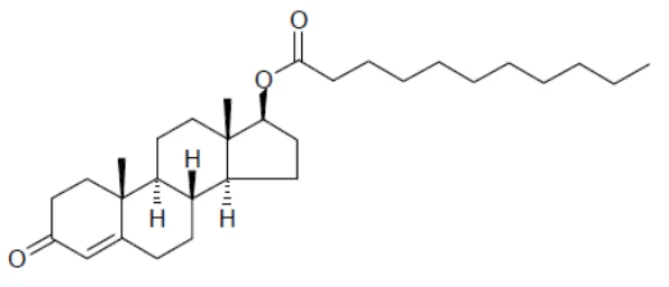
Structural formula:
Physicochemical properties: Melting point 63°C; solubility: insoluble in water; testosterone undecanoate is a white to off-white crystalline substance
14. Clinical Trials
14.1. Clinical Trials by Indication
The efficacy and safety of TLANDO was evaluated in Study 16-002 a multicenter, open-label, single-arm study in adult hypogonadal male patients (NCT03242590). Patients received TLANDO 225 mg, orally twice daily with food for approximately 24 days; no titration was performed to adjust the dosage.
Table 5 - Summary of Patient Demographics for Clinical Trials in Adult Males with Deficiency or Absence of Endogenous Testosterone
| Study # | Study design | Dosage, route of administration and duration | Study subjects (n) | Age (range) | Sex |
| 16-002 | Multicenter, open-label, single-arm study in adult hypogonadal male patients | 225 mg twice daily Oral 24 days | 95 | 56 years (29-74 years) | Males |
A total of 95 hypogonadal men received a dose of TLANDO and were included in the efficacy evaluation. Patients had a median age of 56 years (range 29-74 years), 81% were White, 16% were Black, 2% were mixed race, and 1% were Asian; 26% were Hispanic.
14.2. Study Results
The primary endpoint in the efficacy study (16-002) was the percentage of patients who achieved a 24-hour average serum testosterone concentration (Cavg0-24h) within the normal range of 300-1080 ng/dL on the final visit of the study.
Table 6 - Results of study 16-002 in Adult Males with Deficiency or Adults Males with absence of Endogenous Testosterone
| Primary Endpoints | Associated value and statistical significance for Drug at specific dosages |
| % subjects with testosterone, Cavg0-24h 300 to 1080 ng/dL at day 24 | 80% 95% confidence interval (72%, 88%) |
Secondary endpoints were the percentage of patients with maximum total testosterone concentration (Cmax) meeting three predetermined limits: less than or equal to 1.5 times the upper limit of the normal range (ULN) (1620 ng/dL) in at least 85%, between 1.8 and 2.5 times ULN (1944 - 2700 ng/dL) in less than 5%, and greater than 2.5 times ULN (2700 ng/dL) in none of the patients.
The percentage of patients who received TLANDO and had T Cmax threshold less than or equal to 1620 ng/dL, between 1944 ng/dL and 2700 ng/dL, and greater than 2700 ng/dL at the PK visit were 82%, 5%, and 0%, respectively.
16. Non-Clinical Toxicology
General Toxicology
TLANDO has been evaluated in 26-week repeat-dose oral (gavage) toxicity studies in male rats at 20, 50 and 150 mg/kg, and 90-day repeat-dose oral (capsule) toxicity studies in male beagle dogs at 80, 240 and 1,000 mg/kg; at these doses, the multiple of exposure were roughly 0,7, 2.6 and 7.5 for the rat and 6, 25 and 35 times the clinical exposure, based on AUC levels of 12,440 ng•h/dL.
TLANDO caused expected pharmacological effects on androgen-responsive tissues, including testes, epididymides, prostate, and seminal vesicles, at exposures to testosterone undecanoate. In the rat study, interstitial cell atrophy, germ cell degeneration/depletion, and spermatid depletion were observed, and a No Observed Adverse Effect Level (NOAEL) could not be determined due to these testicular microscopic findings and semenology data at all dose levels (>=20 mg/kg/day). In the dog study, histopathologic changes in the reproductive organs, including hypospermatogenesis, depletion of germ cells, and reduced sperm content, were present at doses >= 80 mg/kg/day, correlating with reduced testicular size and weight. Consequently, a NOAEL for the male reproductive system in dogs was not determined.
In adrenal glands, thinning of the zona fasciculata and zona reticularis was observed in dogs at doses >= 80 mg/kg/day, correlating with decreased adrenal weights. Additionally, thymic atrophy/lymphocyte depletion was noted in both species. Regarding non-reproductive effects in dogs, a NOAEL was considered to be 240 mg/kg/day, based on evidence of hepatotoxicity at the 1000 mg/kg/day dose level. The clinical significance of the adrenal, thymic, and other findings is uncertain.
Genotoxicity
Mutagenic effects of testosterone undecanoate were not detected in a battery of in vitro tests including bacterial mutation assays (Ames test) and chromosomal aberration tests in human lymphocytes. Testosterone undecanoate was also negative in an in vivo bone marrow micronucleus assay in rats. Testosterone was negative in the in vitro Ames and in the in vivo mouse micronucleus assays.
Carcinogenicity
Testosterone has been tested by subcutaneous injection and implantation in mice and rats. In mice, the implant induced cervical-uterine tumors, which metastasized in some cases. There is suggestive evidence that injection of testosterone into some strains of female mice increases their susceptibility to hepatoma. In male rats, subcutaneous implantation of testosterone propionate has produced prostatic adenocarcinomas. Testosterone is also known to increase the number of tumors and decrease the degree of differentiation of chemically induced carcinomas of the liver in rats.
Reproductive and developmental toxicology
The administration of exogenous testosterone has been reported to suppress spermatogenesis in the rat, dog and non-human primates, which was reversible on cessation of the treatment.
In developmental studies conducted in rats, rabbits, pigs, sheep and rhesus monkeys, pregnant animals received intramuscular injection of testosterone during the period of organogenesis. Testosterone treatment at doses that were comparable to those used for testosterone replacement therapy resulted in structural impairments in both female and male offspring. Structural impairments observed in females included increased anogenital distance, phallus development, empty scrotum, no external vagina, intrauterine growth retardation, reduced ovarian reserve, and increased ovarian follicular recruitment. Structural impairments seen in male offspring included increased testicular weight, larger seminal tubular lumen diameter, and higher frequency of occluded tubule lumen. Increased pituitary weight was seen in both sexes.
Testosterone exposure in utero also resulted in hormonal and behavioral changes in offspring. Hypertension was observed in pregnant females and offspring in rats exposed to doses approximately twice those used for testosterone replacement therapy.