


Product Monograph - Kyzatrex
Recent Major Label Changes
| Not applicable | Not applicable |
|---|
TABLE OF CONTENTS
Sections or subsections that are not applicable at the time of authorization are not listed.
Recent Major Label Changes ................................................................................................... 2
TABLE OF CONTENTS .............................................................................................................. 2
Part 1: Health Professional Information .................................................................................. 4
1 Indications .................................................................................................................. 4
1.1 Pediatrics .............................................................................................................. 4
1.2 Geriatrics .............................................................................................................. 4
2 Contraindications ........................................................................................................ 4
4 Dosage And Administration ........................................................................................ 4
4.1 Dosing Considerations .......................................................................................... 4
4.2 Recommended Dose and Dosage Adjustment ..................................................... 5
4.4 Administration ...................................................................................................... 6
4.5 Missed Dose ......................................................................................................... 6
5 Overdose..................................................................................................................... 7
6 Dosage Forms, Strengths, Composition, and Packaging ............................................... 7
7 Warnings and Precautions ........................................................................................... 7
7.1 Special Populations ............................................................................................. 12
7.1.1 Pregnant Women ........................................................................................... 12
7.1.2 Breastfeeding ................................................................................................. 12
7.1.3 Pediatrics ........................................................................................................ 12
7.1.4 Geriatrics ........................................................................................................ 12
8 Adverse Reactions ..................................................................................................... 13
8.1 Adverse Reaction Overview ................................................................................ 13
8.2 Clinical Trial Adverse Reactions .......................................................................... 13
8.3 Less Common Clinical Trial Adverse Reactions ................................................... 15
8.5 Post-Market Adverse Reactions ......................................................................... 16
9 Drug Interactions ...................................................................................................... 17
9.2 Drug Interactions Overview .................................................................................. 17
9.4 Drug-Drug Interactions ......................................................................................... 17
9.5 Drug-Food Interactions .......................................................................................... 19
9.6 Drug-Herb Interactions .......................................................................................... 19
9.7 Drug-Laboratory Test Interactions ......................................................................... 19
10 Clinical Pharmacology ............................................................................................... 19
10.1 Mechanism of Action .......................................................................................... 19
10.2 Pharmacodynamics ............................................................................................ 19
10.3 Pharmacokinetics ............................................................................................... 20
11 Storage, Stability, and Disposal ................................................................................. 26
Part 2: Scientific Information ................................................................................................ 27
13 Pharmaceutical Information ...................................................................................... 27
14 Clinical Trials ............................................................................................................. 27
14.1 Clinical Trials by Indication ................................................................................. 27
14.2 Study Results ...................................................................................................... 28
15 Microbiology ............................................................................................................. 28
16 Non-Clinical Toxicology ............................................................................................. 28
PATIENT MEDICATION INFORMATION .................................................................................. 32
Part 1: Health Professional Information
1 Indications
- KYZATREX® (testosterone undecanoate) is indicated for testosterone replacement therapy in adult males for conditions associated with a deficiency or absence of endogenous testosterone (male hypogonadism).
KYZATREX® should not be used to treat non-specific symptoms suggestive of hypogonadism if testosterone deficiency has not been demonstrated and if other etiologies responsible for the symptoms have not been excluded. Testosterone deficiency should be clearly demonstrated by clinical features and confirmed by two separate validated biochemical assays (morning testosterone) before initiating therapy with any testosterone replacement, including KYZATREX® treatment. Due to variability in laboratory values, all measures of testosterone should be carried out in the same laboratory.
1.1 Pediatrics
No data are available to Health Canada; therefore, Health Canada has not authorized an indication for pediatric use.
1.2 Geriatrics
No data are available to Health Canada; therefore, Health Canada has not authorized an indication for geriatric use.
2 Contraindications
- KYZATREX® is not indicated for use in women.
- KYZATREX® is contraindicated in men with known or suspected carcinoma of the prostate or breast.
- KYZATREX® is contraindicated in patients who are hypersensitive to this drug or to any ingredient in the formulation, including any non-medicinal ingredient, or component of the container. For a complete listing, see 6 Dosage Forms, Strengths, Composition And Packaging.
4 Dosage And Administration
4.1 Dosing Considerations
Prior to initiating KYZATREX®, hypogonadism should be confirmed by ensuring that serum testosterone concentrations have been measured in the morning on at least two separate days and that these testosterone concentrations are below the normal range.
KYZATREX® can increase blood pressure that can increase the risk of major adverse cardiovascular events and it is not recommended for use in patients with uncontrolled hypertension. [see 7 Warning And Precautions].
Individualize the dosage of KYZATREX® based on the patient's serum testosterone concentration response to the drug.
KYZATREX® is recommended with a starting dose of 200 mg twice daily (400 mg total) with minimum and maximum doses of 100 and 800 mg daily. A lower starting dose, minimizes exposure to a higher dose of T than is needed. On Day 90, the majority of patients were increased to a total daily dose of 600 mg (43.8%); however, 8.3% of patients were reduced to 200 or 100 mg total daily doses, providing a mechanism by which patients can reach normal T concentrations with lower dose levels.
4.2 Recommended Dose and Dosage Adjustment
- The recommended starting dose is 200 mg orally twice daily, once in the morning and once in the evening. Take KYZATREX®with food.
Dosage Adjustment
Check serum testosterone concentrations 7 days after starting treatment or after dosage adjustment, 3 to 5 hours after the morning dose. Adjust the KYZATREX® dose as necessary as shown in Table 1. Thereafter, periodically monitor serum testosterone concentrations.
The minimum recommended dose is 100 mg once daily in the morning. The maximum recommended dose is 400 mg twice daily. For total daily doses greater than 100 mg, administer the same dose in the morning and evening.
Table 1: KYZATREX® Dosage Adjustment Scheme
Serum Testosterone Concentration | Current KYZATRX dosage | New KYZATEX Dosage | |||
| Less than 460 ng/dL | 100 mg with breakfast only | 100 mg twice daily with meals | |||
| 100 mg twice daily with meals | 200 mg twice daily with meals | ||||
| 200 mg twice daily with meals | 300 mg twice daily with meals | ||||
| 300 mg twice daily with meals | 400 mg twice daily with meals | ||||
460 to 971 ng/dL | No Dosage Change | ||||
| More than 971 ng/dL | 400 mg twice daily with meals | 300 mg twice daily with meals | |||
| 300 mg twice daily with meals | 200 mg twice daily with meals | ||||
| 200 mg twice daily with meals | 100 mg twice daily with meals | ||||
| 100 mg twice daily with meals | 100 mg with breakfast only | ||||
| 100 mg with breakfast only | Discontinue treatment | ||||
Pediatrics
No data are available to Health Canada; therefore, Health Canada has not authorized an indication for pediatric use.
4.4 Administration
To ensure adequate absorption, KYZATREX® (testosterone undecanoate capsules) must be taken with a meal and swallowed without chewing.
4.5 Missed Dose
Should you forget a dose, take your dose at the next scheduled time. Do not take a double dose of this medicine.
5 Overdose
There is one report of acute overdosage with use of an approved injectable testosterone product: this subject had serum testosterone levels of up to 11,400 ng/dL with a cerebrovascular accident.
Treatment of overdosage consists of discontinuation of KYZATREX® and appropriate symptomatic and supportive care.
For management of a suspected drug overdose, contact your regional poison control centre.
6 Dosage Forms, Strengths, Composition, and Packaging
Table 2: Dosage Forms, Strengths, Composition and Packaging
Description
The capsules for KYZATREX® are opaque, white to slightly yellow colour soft gelatin . The contents consist of a clear to slightly opalescent solution. The capsules vary in shape and size as per below:
200 mg: oblong shape capsule, about 26 mm in length, imprinted with MP200 in red ink
150 mg: oblong shape capsule, about 22 mm in length, imprinted with MP150 in red ink
100 mg: oval shape capsule, about 14.5 mm in length, imprinted with MP100 in red ink
KYZATREX® is preservative free and is supplied in a bottle with 120 capsules for all strengths. The 200 mg strength is also supplied in a bottle with 60 capsules. The patient medication information is attached to the top of the lid.
| Route of Administration | Dosage Form / Strength/Composition | Non-medicinal Ingredients |
| oral | capsule 100 mg, 150 mg, 200 mg | DL-alphatocopheryl acetate (Vitamin E), FD&C red 40 lake, gelatin, glycerin, lecithin, Medium Chain Triglycerides, phytosterol esters, polyoxyl 40 hydrogenated castor oil, propylene glycol, propylene glycol monolaurate, Shellac Glaze, sorbitol, titanium dioxide, water |
7 Warnings and Precautions
General
Androgens should be used with caution in patients with pre-existing cardiovascular (e.g., congestive heart failure, ischemic heart disease), renal, or hepatic disease (see Cardiovascular). The careful screening and monitoring of men with BMI ≥30 before and during TRT, especially for cardiovascular and thromboembolic complications is recommended.
There is no data from clinical trials with KYZATREX® (testosterone undecanoate capsules) in the geriatric male (>65 years of age) to support the efficacy and safety of prolonged use. Impacts to prostate and cardiovascular event rates and patient important outcomes are unknown.
Patients with clinical or demographic characteristics that are recognized to be associated with an increased risk of prostate cancer should be evaluated for the presence of prostate cancer prior to initiation of testosterone replacement therapy. (see Carcinogenesis and Genotoxicity)
KYZATREX® should not be used to attempt to improve body composition, bone and muscle mass, increase lean body mass and decrease total fat mass. Efficacy and safety have not been established. Serious long term deleterious health issues may arise. KYZATREX®has not been shown to be safe and effective for the enhancement of athletic performance. Because of the potential risk of serious adverse health effects, this drug should not be used for such purpose.
If testosterone deficiency has not been established, testosterone replacement therapy should not be used for the treatment of sexual dysfunction.
Clinical studies have not established testosterone replacement therapy as a treatment for male infertility.
Carcinogenesis and Genotoxicity
Prostatic
Androgens may accelerate the progression of sub-clinical prostatic cancer and benign prostatic hyperplasia (BPH). In men receiving testosterone replacement therapy, careful and regular monitoring of the prostate gland should be consistent with current practices for eugonadal men. Prior to testosterone initiation, at risk patients (those with clinical and familial factors) should be identified and all patients must undergo a detailed examination, including the monitoring of the prostate specific antigen (PSA), in order to detect preexisting prostatic cancer. (see Monitoring and Laboratory Tests).
Geriatric patients treated with testosterone products may be at an increased risk for the development of prostatic hyperplasia and prostatic carcinoma but their role in the initiation of either disease is unknown.
Breast
Patients using long-term parenteral testosterone replacement therapy may be at an increased risk for the development of breast cancer. In men receiving testosterone replacement therapy, careful and regular monitoring of the breast should be conducted.
Hepatic
KYZATREX® is not a 17-alpha-alkyl androgens and is not known to produce these adverse effects.
Prolonged use of high doses of orally active 17-alpha-alkyl androgens (e.g., methyltestosterone) has been associated with serious hepatic adverse effects (peliosis hepatis, hepatic neoplasms, cholestatic hepatitis, and jaundice). Peliosis hepatis can be a life-threatening or fatal complication. Long-term therapy with testosterone enanthate, which elevates blood levels for prolonged periods, has produced multiple hepatic adenomas.
Skeletal
Patients with skeletal metastases are at a risk of exacerbating hypercalcemia/ hypercalciuria with concomitant testosterone replacement therapy. Regular monitoring of serum calcium concentrations is recommended in these patients.
Cardiovascular
KYZATREX® can increase blood pressure (2.6% of participants in Study MRS-TU- 2019EXT), and should be used with caution in patients with hypertension. Based on ambulatory blood monitoring in Study MRS-TU- 2019EXT, KYZATREX® increased mean systolic/diastolic blood pressure by 1.7/0.6 mm Hg from baseline after 4 months of treatment and 1.8/0.6 mm Hg from baseline after 6 months of treatment. In patients with hypertension on antihypertensive therapy, KYZATREX® increased the mean systolic/diastolic blood pressure by 3.4/0.7 mm Hg from baseline after 4 months of treatment and 3.1/1.0 mm Hg from baseline after 6 months of treatment. Blood pressure increases can increase cardiovascular risk over time. KYZATREX® increased mean (95%CI) 24-hour ambulatory heart rate by an average of 0.7 (-0.5 to 1.9) beats per minute (bpm) at 4 months and 1.9 (0.6 to 3.1) bpm at 6 months in Study MRSTU-2019EXT. KYZATREX® is not recommended for use in patients with uncontrolled hypertension.
Androgens may promote retention of sodium and water. Edema, with or without congestive heart failure, may be a serious complication in patients with pre-existing cardiac, renal, or hepatic disease. Diuretic therapy may be required, in addition to discontinuation of the drug.
Testosterone Replacement therapy for Assessment of long-term Vascular Events and efficacy response in hypogonadal men (TRAVERSE), randomized, double-blind, placebo-controlled phase 4 clinical trial study was conducted in men with hypogonadism and preexisting or high-risk cardiovascular disease, to assess the cardiovascular safety of testosterone-replacement therapy for a mean duration of 22 months. The primary outcome was the incidence of the composite endpoint of major adverse cardiovascular events (MACE), consisting of CV death, non-fatal myocardial infarction (MI), and non-fatal stroke.
This trial enrolled a total of 5,246 men (mean patient age (± SD) 63.3 (±7.9) with hypogonadism and with preexisting or increased risk of cardiovascular diseases. The mean duration of follow-up was 33 months and approximately 61% of all patients discontinued topical testosterone gel or placebo therapy. Approximately 80% of patients were White, 17% were Black, and 3% were of other races or ethnic groups. Approximately 69%, 84%, and 93% had diabetes mellitus, hyperlipidemia, and hypertension, respectively. Approximately 55% had preexisting cardiovascular disease. The mean serum testosterone concentration at baseline in patients receiving topical testosterone gel was 220.4 ng/dL (n=2129). The mean serum testosterone concentrations at 12 months, 24 months, 36 months, and 48 months in patients receiving topical testosterone gel were 440.5 ng/dL (n=1683), 420.9 ng/dl (n=1125), 428.7 ng/dL (n=731), and 365.2 ng/dL (n=220), respectively.
The results of this trial indicated that testosterone-replacement therapy did not influence the incidence of major adverse cardiac events in middle-aged and older patients with hypogonadism and with pre-existing or an increased risk of cardiovascular diseases (topical testosterone gel 7.0% vs. placebo 7.3%). However, additional adverse reactions reported in TRAVERSE at an incidence rate >2% in either treatment group and greater in topical testosterone gel versus placebo included: nonfatal arrythmias warranting intervention (5.2% vs 3.3%), atrial fibrillation (3.5% vs 2.4%), acute kidney injury (2.3% vs
1.5%) and bone fracture (3.5% vs 2.5%). For the adverse reaction of bone fracture, each event was adjudicated by clinical review.
Post-market studies suggest increased risk of serious cardiovascular events such as myocardial infarction stroke and venous thromboembolic events including deep vein thrombosis and pulmonary embolism associated with testosterone therapy. Before starting testosterone therapy, patients should be assessed for any cardiovascular risk factors (e.g., existing ischaemic heart disease) or prior history of cardiovascular events (e.g., myocardial infarction, stroke, or heart failure). Patients should also be closely monitored for possible serious cardiovascular events while on testosterone therapy. If any of these serious adverse events are suspected, treatment with KYZATREX® should be discontinued and appropriate assessment and management initiated.
Testosterone should be used with caution in patients with thrombophilia or risk factors for venous thromboembolism (VTE), as there have been post-marketing reports of thrombotic events (e.g. deep-vein thrombosis, pulmonary embolism, ocular thrombosis) in these patients during testosterone therapy. In TRAVERSE Study, topical testosterone gel was associated with a higher risk of VTE (1.7% vs 1.2%) which included deep vein thrombosis (0.6% vs 0.5%) and pulmonary embolism (0.9% vs 0.5%). In thrombophilic patients, VTE cases have been reported even under anticoagulation treatment, therefore continuing testosterone treatment after first thrombotic event should be carefully evaluated. In case of treatment continuation, further measures should be taken to minimise the individual VTE risk.
Dependence, Tolerance and/or Abuse Liability
KYZATREX® contains testosterone, a Schedule G controlled substance as defined by the Food and Drugs Act.
Testosterone has been subject to abuse, typically at doses higher than recommended for the approved indication(s) and in combination with other anabolic androgenic steroids. Abuse of testosterone and other anabolic androgenic steroids can lead to serious adverse reactions including: cardiovascular (with fatal outcomes in some cases), hepatic and/or psychiatric events.
Testosterone abuse may result in dependence and withdrawal symptoms upon significant dose reduction or abrupt discontinuation of use. Testosterone and other anabolic androgenic steroids carries serious health risks and is to be discouraged. Counsel patients concerning the serious adverse reactions associated with abuse of testosterone and anabolic androgenic steroids.
If testosterone abuse is suspected, check testosterone concentrations to ensure they are within therapeutic range. Testosterone levels may remain in the normal or subnormal range in individuals abusing synthetic testosterone derivatives. Also consider the possibility of testosterone and anabolic androgenic steroid abuse in suspected patients who present with serious cardiovascular or psychiatric adverse events.
Endocrine and Metabolism
Testosterone products have been shown to alter glucose tolerance tests. Diabetics should be followed carefully and the insulin or oral hypoglycemic dosage adjusted accordingly. (see 9.4 Drug-Drug Interactions).
Hypercalciuria/hypercalcemia (caused by malignant tumors) may be exacerbated by androgen treatment. Androgens should be used with caution in cancer patients at risk of hypercalcemia (and associated hypercalciuria). Regular monitoring of serum calcium concentrations is recommended in patients at risk of hypercalciuria/ hypercalcemia. Hypercalcemia may occur in immobilized patients. If any hypercalcemia occurs, the drug should be discontinued.
In clinical trials, patients receiving KYZATREX® experienced reductions in lipid parameters, including total cholesterol, LDL cholesterol, HDL cholesterol, and triglycerides. Changes in the serum lipid profile may require dose adjustment of lipid lowering drugs or discontinuation of testosterone therapy. The lipid profile should be monitored periodically, particularly after starting testosterone therapy. (see Monitoring and Laboratory Tests)
Testosterone products, including KYZATREX® , may decrease levels of thyroxine-binding globulin, resulting in decreased total T4 serum levels and increased resin uptake of T3 and T4. Free thyroid hormone levels remain unchanged, however, and there is no clinical evidence of thyroid dysfunction. (see 9.4 Drug-Drug Interactions)
Genitourinary
Patients with benign prostatic hyperplasia (BPH) may develop acute urethral obstruction. Patients should be monitored for worsening of signs and symptoms of BPH.
Hematologic
Hemoglobin and hematocrit levels should be checked periodically (to detect polycythemia) in patients on long-term testosterone replacement therapy (see Monitoring and Laboratory Tests).
KYZATREX® is not an alkylated derivative of testosterone and is not known to cause hematologic adverse effects. Oral alkylated derivatives of testosterone such as methandrostenolone, have been reported to decrease the anticoagulant requirement of patients receiving oral anticoagulants (e.g. warfarin). Patients receiving oral anticoagulants therapy require close monitoring of international normalized ratio (INR) and prothrombin time, especially when androgens are started or stopped (see 9.4 Drug-Drug Interactions).
Monitoring and Laboratory Tests
The patient should be monitored (including serum testosterone levels) at baseline and on a regular basis to ensure adequate response to treatment. Clinicians should adjust the dosage individually to ensure maintenance of eugonadal testosterone levels.
Adjust the dosage to a minimum of 100 mg once in the morning and a maximum of 400 mg twice daily based on serum testosterone drawn 3 to 5 hours after the morning dose at least 7 days after starting treatment or following dose adjustment and periodically thereafter in non-fasted patient.
Currently there is no consensus about age specific testosterone levels. The normal serum testosterone level for young eugonadal men is generally accepted to be approximately 10.4-34.6 nmol/L (300-1000 ng/dL). It should be taken into account that physiological testosterone levels (mean and range) decrease with increasing age.
The following laboratory tests, performed routinely, are recommended to ensure that adverse experience possibly caused by or related to testosterone replacement therapy is detected and addressed:
hemoglobin and hematocrit levels should be checked periodically (to detect
polycythemia);
- liver function tests, to detect hepatotoxicity associated with the use of androgens;
- prostate specific antigen (PSA), digital rectal examination (DRE), especially if the patient presents with progressive difficulty with urination or a change in voiding habits;
- lipid profile, total cholesterol, LDL, HDL, and triglycerides; serum cholesterol levels may increase and/or decrease during androgen therapy.
- diabetics should be followed carefully and the insulin or oral hypoglycemic dosage adjusted accordingly (see 9.4 Drug-Drug Interactions).
Reproductive Health
See 2 Contraindications, 7.1.1 Pregnant Women
Gynecomastia may develop and persist in patients being treated for hypogonadism.
- Fertility
Oligospermia may occur after prolonged administration or excessive dosage. With large doses of exogenous androgens, spermatogenesis may be suppressed (see 10 Clinical Pharmacology). Testicular atrophy, subfertility, and infertility have been reported in men who abuse anabolic androgenic steroids.
- Function
Priapism or excessive sexual stimulation may develop.
- Teratogenic Risk
KYZATREX® is not indicated for use in women. Testosterone may cause fetal harm. Testosterone exposure during pregnancy has been reported to be associated with fetal abnormalities. Testosterone is known to cause virilization of the external genitalia of the female fetus when administrated to pregnant women.
Respiratory
The treatment of hypogonadal men with testosterone products may potentiate sleep apnea, particularly for those with risk factors such as obesity or chronic lung diseases.
7.1 Special Populations
7.1.1 Pregnant Women
KYZATREX® is not indicated for use in women. KYZATREX® should not be used in pregnant women. Testosterone may cause fetal harm. Testosterone exposure during pregnancy has been reported to be associated with fetal abnormalities. Testosterone is known to cause virilization of the external genitalia of the female fetus when administrated to pregnant women.
7.1.2 Breastfeeding
KYZATREX® is not indicated for use in women and therefore, should not be used in nursing women.
7.1.3 Pediatrics
No data are available to Health Canada; therefore, Health Canada has not authorized an indication for pediatric use.
7.1.4 Geriatrics
No data are available to Health Canada; therefore, Health Canada has not authorized an indication for geriatric use.
8 Adverse Reactions
8.1 Adverse Reaction Overview
In the Pooled Phase 3 studies, overall, TEAEs occurred most frequently (≥10%) in the SOCs of infections and infestations (24.3%), investigations (12.5%), gastrointestinal disorders (10.8%), musculoskeletal and connective tissue disorders (11.8%). For those who received SOV2012-F1 in both studies, the incidence of TEAEs by SOC was similar to those in the All Subjects (OSS) group
8.2 Clinical Trial Adverse Reactions
Clinical trials are conducted under very specific conditions. Therefore, the frequencies of adverse reactions observed in the clinical trials may not reflect frequencies observed in clinical practice and should not be compared to frequencies reported in clinical trials of another drug. In the Pooled phase 3 studies, a total of 296 subjects received KYZATREX® for a mean (SD) of 333 (195) days. The median age was 50 years (range: 22 to 66 years); 79.7 % were White, 16.2 % were Black, 1.4 % were Asian, and 2.7 % were American Indian, Alaskan Native and Other.
Table 3: SOV2012-F1 Treatment-related Treatment-emergent Adverse Events in at Least 1% of All Subjects by System Organ Class and Preferred Term (SOV2012-F1 Group of MRS-TU-2019, EXTS, and OSS)
| System organ class/preferred term | MRS-TU-2019, SOV2012-F1 Group n = 214 n (%) E | MRS-TU- 2019EXT n = 155 n (%) E | Subjects Who Took SOV2012-F1 in Both Studies n = 72 n (%) E | All Subjects (OSS) Who Took SOV2012-F1 n = 296 n (%) E | ||||||||||
| Subjects with at Least One Treatment Related TEAE | 53 (24.8) 97 | 13 (8.4) | 17 | 23 (31.9) | 42 | 66 (22.3) 114 | ||||||||
| Investigations | 18 (8.4) 25 | 4 (2.6) | 5 | 10 (13.9) | 15 | 22 (7.4) | 30 | |||||||
| Hemoglobin increased | 4 (1.9) 4 | 3 (1.9) | 3 | 2 (2.8) | 2 | 7 (2.4) | 7 | |||||||
| Prostatic specific antigen increased | 4 (1.9) 4 | 1 (0.6) | 1 | 2 (2.8) | 2 | 5 (1.7) | 5 | |||||||
| Blood cholesterol increased | 2 (0.9) 2 | 0 | 2 (2.8) | 2 | 2 (0.7) | 2 | ||||||||
| Blood creatinine increased | 3 (1.4) 3 | 0 | 2 (2.8) | 2 | 3 (1.0) | 3 | ||||||||
| Weight increased | 2 (0.9) 2 | 1 (0.6) | 1 | 1 (1.4) | 1 | 3 (1.0) | 3 | |||||||
| Gastrointestinal disorders | 10 (4.7) 11 | 1 (0.6) | 1 | 3 (4.2) | 3 | 11 (3.7) | 12 | |||||||
| Diarrhoea | 3 (1.4) 3 | 0 | 1 (1.4) | 1 | 3 (1.0) | 3 | ||||||||
| Vascular disorders | 8 (3.7) 9 | 2 (1.3) | 2 | 1 (1.4) | 1 | 10 (3.4) | 11 | |||||||
| Hypertension | 6 (2.8) 7 | 2 (1.3) | 2 | 1 (1.4) | 1 | 8 (2.7) | 9 | |||||||
| Psychiatric disorders | 8 (3.7) 11 | 1 (0.6) | 1 | 4 (5.6) | 4 | 9 (3.0) | 12 | |||||||
| Reproductive system and breast disorders | 7 (3.3) 8 | 1 (0.6) | 2 | 3 (4.2) | 4 | 8 (2.7) | 10 | |||||
| Skin and subcutaneous tissue disorders | 5 (2.3) 5 | 3 (1.9) | 3 | 6 (8.3) | 6 | 8 (2.7) | 8 | |||||
| Acne | 1 (0.5) 1 | 2 (1.3) | 2 | 2 (2.8) | 2 | 3 (1.0) | 3 | |||||
| Nervous system disorders | 6 (2.8) 7 | 0 | 2 (2.8) | 2 | 6 (2.0) | 7 | ||||||
| Headache | 4 (1.9) 5 | 0 | 0 | 4 (1.4) | 5 | |||||||
| Renal and urinary disorders | 6 (2.8) 6 | 0 | 3 (4.2) | 3 | 6 (2.0) | 6 | ||||||
| Metabolism and nutrition disorders | 3 (1.4) 3 | 2 (1.3) 2 | 1 (1.4) 1 | 5 (1.7) | 5 | |||||||
| General disorders and administration site conditions | 3 (1.4) 4 | 0 | 1 (1.4) 1 | 3 (1.0) | 4 | |||||||
In MRS-TU-2019 (KYZATREX® subjects) and MRS-TU-2019EXT, 53 (24.8%) and 13 (8.4%) subjects, respectively, had TEAEs that were determined by the Investigator to be possibly, probably, or definitely related to study drug. In the Pooled Phase 3 studies, 66 (22.3%) subjects reported TEAEs that were considered by the Investigator to be possibly, probably, or definitely related to study drug (Table 3). The most frequently reported treatment-related TEAEs (occurring in ≥3 subjects) in MRS-TU- 2019 were hypertension (6 [2.8%] subjects), prostatic specific antigen increased, hemoglobin increased, headache (each reported in 4 [1.9%] subjects), blood creatinine increased (3 [1.4%] subjects), and diarrhea (3 [1.4%] subjects). In MRS-TU-2019EXT, the only treatment-related TEAE occurring in ≥3 subjects was hemoglobin increased (3 [1.9%] subjects). Common treatment-related TEAEs in the OSS were hypertension (8 [2.7%] subjects), hemoglobin increased (7 [2.4%] subjects]), prostatic specific antigen increased (5 [1.7%] subjects), headache (4 [1.4%] subjects) and blood creatinine increased, weight increased, diarrhoea, and acne, all reported by 3 (1.0%) subjects each. All other treatment-related TEAEs were reported in 2 or fewer subjects. For subjects who received SOV2012-F1 in both studies, 23 (31.9%) reported a TEAE judged by the investigator to be possibly, probably or definitely related to study drug. The types and incidences of treatment-related TEAEs were similar between All Subjects (OSS) and those who received SOV2012-F1 in both studies. Subjects with higher body weight (>93 kg) and higher BMI (>30 kg/m2) reported higher rates of Treatment-related TEAEs, specifically, cardiovascular and nervous system TEAEs. Of note, higher body weight and higher BMI were positively correlated with the co-morbidities of diabetes and hypertension.
The results of TRAVERSE, randomized, double-blind, placebo-controlled phase 4 clinical trial study, indicated that testosterone-replacement therapy did not influence the incidence of major adverse cardiac events in middle-aged and older patients with hypogonadism and with pre-existing or an increased risk of cardiovascular diseases (topical testosterone gel 7.0% vs. placebo 7.3%). However, additional adverse reactions reported in TRAVERSE at an incidence rate >2% in either treatment group and greater in topical testosterone gel versus placebo included: nonfatal arrythmias warranting intervention (5.2% vs 3.3%), atrial fibrillation (3.5% vs 2.4%), acute kidney injury (2.3% vs 1.5%) and bone fracture (3.5% vs 2.5%). For the adverse reaction of bone fracture, each event was adjudicated by clinical review. In TRAVERSE Study, topical testosterone gel was associated with a higher risk of VTE (1.7% vs 1.2%) which included deep vein thrombosis (0.6% vs 0.5%) and pulmonary embolism (0.9% vs 0.5%) (see 7 Warnings and Precautions Cardiovascular).
8.3 Less Common Clinical Trial Adverse Reactions
The following adverse reactions were reported in <2% of subjects in the Pooled Phase 3 studies
(OSS) while subjects received Kyzatrex®:
- Investigations: blood triglycerides increased, blood cholesterol increased, hepatic enzyme increased, weight increased, alanine aminotransferase increased, aspartate aminotransferase increased, blood pressure systolic increased, hematocrit increased, high density lipoprotein decreased
- Vascular disorders: essential hypertension, prehypertension
- Gastrointestinal disorders: abdominal discomfort, abdominal distension, abdominal pain, abdominal pain upper, gastroesophageal reflux disease, nausea, vomiting
- Metabolism and nutrition disorders: hypertriglyceridemia, hypercholesterolemia, hyperlipidemia
- General disorders and administration site conditions: oedema peripheral, peripheral swelling
- Psychiatric disorders: irritability, insomnia, agitation, aggression, anger, depression, mood swings
- Skin and subcutaneous tissue disorders: acne, alopecia, hair growth abnormal
- Reproductive system and breast disorders: prostatitis, prostatomegaly, breast enlargement, gynecomastia, nipple pain, oligospermia, prostate tenderness, testicular atrophy
- Cardiac disorders: acute myocardial infarction, myocardial infarction
8.5 Post-Market Adverse Reactions
Table 4: Adverse Drug Reactions from Other Testosterone Preparations
| MedDRA System Organ Class (SOC) | Adverse Drug Reaction |
|---|---|
| Blood and the lymphatic system disorders: | Erythropoiesis abnormal |
| General disorders and administration site conditions: | Application site burning, application site induration, application site rash, application site dermatitis, application site blister, application site erythema |
| Hepatobiliary disorders | Peliosis hepatis |
| Metabolism and nutrition disorders: | Urine calcium decrease |
| Renal and urinary disorders: | Dysuria, hematuria, incontinence, bladder irritability |
| Reproductive system and breast disorders: | mastodynia |
| Respiratory, thoracic and mediastinal disorders: | Dyspnea, sleep apnea |
| Skin and subcutaneous tissue disorders: | Seborrhea, male pattern baldness, hirsutism |
| Drug abuse and dependence: | Testosterone, often in combination with other anabolic androgenic steroids (AAS), has been subject to abuse at doses higher than recommended for the approved indication (see WARNINGS AND PRECAUTIONS). The following additional adverse reactions have been reported in the context of testosterone/AAS abuse |
| Endocrine disorders: | Secondary hypogonadism |
| Psychiatric disorders: | Hostility, Aggression, Psychotic disorder, Mania, Paranoia and Delusion |
| Cardiovascular disorders: | Cardiac failure, Cardiac failure chronic1 , Cardiac arrest, Sudden cardiac death1, Cardiac hypertrophy1, Cardiomyopathy, Ventricular arrhythmia, Ventricular tachycardia, Venous/arterial thrombotic and embolic events (including Deep Venous Thrombosis, Pulmonary Embolism, Coronary artery thrombosis, Carotid artery occlusion1, Intracranial venous sinus thrombosis1), Cerebrovascular accident, Ischaemic stroke |
| Hepatobiliary disorders: | Peliosis hepatis, Cholestasis, Liver injury, Jaundice, Hepatic failure |
| Reproductive system and breast disorders: | Azoospermia Infertility (in males), Enlarged clitoris and Breast atrophy (in females) |
- 1 With fatal outcomes in some cases
9 Drug Interactions
9.2 Drug Interactions Overview
Potential drug interactions have been observed with other TRTs. Changes in insulin sensitivity or glycemic control may occur in patients treated with androgens. In diabetic patients, the metabolic effects of androgens may decrease blood glucose and therefore necessitate a decrease in the dose of anti-diabetic medication.
Changes in anticoagulant activity may be seen with androgens; therefore, more frequent monitoring of international normalized ratio and prothrombin time are recommended in patients taking warfarin, especially at the initiation and termination of androgen therapy.
The concurrent use of T with corticosteroids may result in increased fluid retention and requires careful monitoring particularly in patients with cardiac, renal, or hepatic disease.
Some prescription medications and nonprescription analgesic and cold medications contain drugs known to increase blood pressure. Concomitant administration of these medications with KYZATREX® may lead to additional increases in blood pressure(see 7 Warnings and Precautions Cardiovascular).
9.4 Drug-Drug Interactions
The drugs listed in this table are based on either drug interaction case reports or studies, or potential interactions due to the expected magnitude and seriousness of the interaction (i.e., those identified as contraindicated).
Table 5: Established or Potential Drug-Drug Interactions
| [Non-proprietary name(s) of the drug product(s)] | Source of evidence | Effect | Clinical comment |
| [Non-proprietary name(s) of the drug product(s)] | Source of evidence | Effect | Clinical comment |
| Anticoagulants | T | Androgens may increase sensitivity to oral anticoagulants. | Dosage of the anticoagulant may require reduction in order to maintain satisfactory therapeutic hypoprothrombinemia |
| Corticosteroids | T | The concurrent administration of testosterone with ACTH or corticosteroids may enhance edema formation. | These drugs should be administered cautiously particularly in patients with cardiac, renal or hepatic disease. |
| Cyclosporine | T | Testosterone replacement therapy may potentiate cyclosporine and increase risk of nephrotoxicity. | Dose adjustment and monitoring may be required. |
| Insulin | T | In diabetic patients, the metabolic effects of Androgens may decrease blood glucose and, therefore, insulin requirements. | Dose adjustment and monitoring may be required. |
| Propranolol | CT | In a published pharmacokinetic study of an injectable testosterone product, administration of testosterone cypionate led to an increased clearance of propranolol in the majority of men tested. It is unknown if this would apply to KYZATREX® (testosterone undecanoate capsules). |
Legend: C = Case Study; CT = Clinical Trial; T = Theoretical
9.5 Drug-Food Interactions
When KYZATREX® was given with breakfast containing 16%, 33%, and 45% fat, the exposure (AUC 0-24 hr) of testosterone was increased by 37%, 87%, and 94%, respectively, compared to when given under fasted conditions. KYZATREX® must be taken with meal since fat enhances its absorption(see 4 Dosage And Administration).
9.6 Drug-Herb Interactions
It was found that some herbal products (e.g. St. John’s Wort) which are available as over-the counter (OTC) products might interfere with steroid metabolism and therefore may decrease plasma testosterone levels
9.7 Drug-Laboratory Test Interactions
Testosterone products may decrease levels of thyroxine-binding globulin, resulting in decreased total T4 serum levels and increased resin uptake of T3 and T4. Free thyroid hormone levels remain unchanged, however, and there is no clinical evidence of thyroid dysfunction.
10 Clinical Pharmacology
10.1 Mechanism of Action
Testosterone undecanoate, an orally active testosterone preparation, is a fatty acid ester of the natural androgen testosterone. Unlike other oral testosterone preparations, testosterone undecanoate is able to by-pass the liver via the lymphatic system and is therefore orally bioavailable.
Therapy with testosterone undecanoate increases plasma levels of testosterone and its active metabolites, leading to a regular therapeutic effect.
KYZATREX® delivers physiologic amounts of testosterone, producing circulating testosterone levels that approximate normal levels (e.g. 10.4-34.6 nmol/L [300-1000 ng/dL]) seen in young healthy men.
10.2 Pharmacodynamics
Testosterone and Hypogonadism: Testosterone and dihydrotestosterone (DHT), endogenous androgens, are responsible for normal growth and development of the male sex organs and for maintenance of secondary sex characteristics. These effects include the growth and maturation of the prostate, seminal vesicles, penis, and scrotum; the development of male hair distribution, such as facial, pubic, chest, and axillary hair; laryngeal enlargement; vocal cord thickening; alterations in body musculature; and fat distribution.
Male hypogonadism results from insufficient secretion of testosterone and is characterized by low serum testosterone concentrations. Symptoms associated with male hypogonadism include decreased sexual desire with or without impotence, fatigue and loss of energy, mood depression, regression of secondary sexual characteristics, and osteoporosis. Hypogonadism is a risk factor for osteoporosis in men.
General Androgen Effects: Drugs in the androgen class also promote retention of nitrogen, sodium, potassium, phosphorus, and decreased urinary excretion of calcium.
Androgens have been reported to increase protein anabolism and decrease protein catabolism. Nitrogen balance is improved only when there is sufficient intake of calories and protein. Androgens have been reported to stimulate the production of red blood cells by enhancing erythropoietin production.
Androgens are responsible for the growth spurt of adolescence and for the eventual termination of linear growth brought about by fusion of the epiphyseal growth centers. In children, exogenous androgens accelerate linear growth rates but may cause a disproportionate advancement in bone maturation. Use over long periods may result in fusion of the epiphyseal growth centers and termination of the growth process.
During exogenous administration of androgens, endogenous testosterone release may be inhibited through feedback inhibition of pituitary luteinizing hormone (LH). At large doses of exogenous androgens, spermatogenesis may also be suppressed through feedback inhibition of pituitary follicle-stimulating hormone (FSH).
In hypogonadal men treatment with testosterone results in improvement of testosterone deficiency symptoms. Testosterone treatment has been reported to increase bone mineral density and lean body mass and decrease body fat with no clinical relevance. Serum cholesterol, LDL, HDL, and triglycerides levels may increase and/or decrease during androgen therapy. Hemoglobin and hematocrit increase during testosterone therapy in a dose dependant manner. In small clinical studies reported in the literature testosterone has not been associated with increases in serum liver enzyme activities5. In short term (up to 2 years) studies involving small numbers of patients testosterone has not been shown to be associated with significant increases in PSA levels. In other trials testosterone therapy has a variable effect on PSA measurements. Clinical studies report that testosterone treatment may result in an increase in prostate size but this has not been associated with symptoms of prostatism. In hypogonadal diabetic patients the metabolic effects of Androgens may decrease blood glucose, and therefore insulin requirements.
10.3 Pharmacokinetics
Table 6: Summary of PK Parameters for Clinical Pharmacology Studies Conducted with KYZATREX®
| Study No. (Country) | Study Design | Subjects Enrolled/ Complete | SOV2012-F1 Treatment | Baseline-Corrected Testosterone Plasma PK Parametersa | ||||||||||
| Study No. (Country) | Study Design | Subjects Enrolled/ Complete | SOV2012-F1 Treatment | Baseline-Corrected Testosterone Plasma PK Parametersa | ||||||||||
| Study No. (Country) | Study Design | Subjects Enrolled/ Complete | SOV2012-F1 Treatment | Baseline-Corrected Testosterone Plasma PK Parametersa | ||||||||||
| Study No. (Country) | Study Design | Subjects Enrolled/ Complete | SOV2012-F1 Treatment | Baseline-Corrected Testosterone Plasma PK Parametersa | ||||||||||
| Cmax (ng/dL ) | Cmin (ng/ dL) | Cavg (ng/ dL) | Tmax (h) | AUC0-t (ng*h/m L) | AUCinf (ng*h/m L) | T1/2 (h) | ||||||||
| Cmax (ng/dL ) | Cmin (ng/ dL) | Cavg (ng/ dL) | Tmax (h) | AUC0-t (ng*h/m L) | AUCinf (ng*h/m L) | T1/2 (h) | ||||||||
| Cmax (ng/dL ) | Cmin (ng/ dL) | Cavg (ng/ dL) | Tmax (h) | AUC0-t (ng*h/m L) | AUCinf (ng*h/m L) | T1/2 (h) | ||||||||
| Cmax (ng/dL ) | Cmin (ng/ dL) | Cavg (ng/ dL) | Tmax (h) | AUC0-t (ng*h/m L) | AUCinf (ng*h/m L) | T1/2 (h) | ||||||||
| SOV-TU-PK2017 (Canada ) | Single center, open-label, rando-mized, 3-period, 6-sequen ce cross-over Phase 1 compa -rative BA study | 13 M/ 13 M | 400 mg single dose prior to high-fat meal | 384.7 (54.4 %) | NR | NR | 4.0 (1.5, 8.0) | 1752.5b (77.4%) | 1835.8 (80.9%) | 1.27 (44.7%) | ||||
| 400 mg single dose, 30 min after start of high-fat meal | 1001. 7 (34.0 %) | NR | NR | 4.0 (3.0, 6.0) | 4995.0b (28.2%) | 5108.7 (28.9%) | 1.42 (20.2%) | |||||||
| 400 mg single dose, 60 min after start of high-fat meal | 1293. 0 (36.3 %) | NR | NR | 4.0 (3.0, 6.1) | 5913.6b (28.7%) | 6087.2 (30.0%) | 1.54 (23.2%) | |||||||
| SOV-TU-PK2018 (Canada ) | Single center, open-label, 5-period, | 17 M/ 16i M | 400 mg single dose, fasted (Treatme-nt A) | 81.9 (61.8 %) | NR | 14.2d (73.8 %) | 4.0 (3.0, 6.0) | 339.7d (73.8%) | 655.3 (52.2%) | 18.0 (95.1%) | ||||
| 5-sequen -ce cross-over Phase 1 compa -rative BA study | 400 mg single dose, 30 min after start of low-fat meal (Treatme-nt B) | 389.0 (56.1 %) | NR | 75.9d (46.4 %) | 4.0 (3.0, 12.1) | 1821.7d (46.4%) | 2169.0 (43.1%) | 2.2 (78.4%) | ||||||
| 400 mg single dose, 30 min after start of moderate -fat meal (Treatme-nt C) | 847.0 (47.3 %) | NR | 187. 0d (39.7 %) | 6.0 (4.0, 6.0) | 4487.6d (39.7%) | 4843.6 (36.8%) | 1.94 (51.3%) | |||||||
| 400 mg single dose, 30 min after start of high-fat, high-calorie meal (Treatme-nt D) | 903.1 (36.2 %) | NR | 201. 5d (30.9 %) | 4.0 (3.0, 8.0) | 4835.9d (30.9%) | 5172.4 (27.2%) | 2.53 (36.5%) | |||||||
| 400 mg single dose, 30 min after start of high-fat, high-calorie meal with 20% alcohol in water (Treatme-nt E) | 976.5 (31.2 %) | NR | 184. 6d (32.1 %) | 4.0 (3.0, 6.0) | 4430.3d (32.1%) | 4550.5 (32.0%) | 1.78 (53.0%) | |||||||
| MRS-TU-2019 (USA) | Phase 3, rando-mized, multi-center, open-label, active-control led, efficac y-y and safety study | 214 M/ 187 M at Day 90/ 162 M at Day 365 (SOV 2012-F1 group) | 400 mg AM/ 200 mg PM with meals × 90 to 365 days, titrated on Days 28 and 56 according to plasma T concentra tions on Days 14 and 42 | 859.0 g,h (46.5 %) | NR | 353. 7g,h (37.5 %) | 4.07g ,h (1.5, 24.0) | 8585.0d, g,h (36.4%) | NC | NC | ||||
MRS-TU-2019EX T (USA) | Pivotal Phase 3, multi-center, efficac-y and safety extensi -on study | 155 M/ 135 M | 200 mg BID with meals × 90 to 180 days, titrated on Days 28 and 56 according to plasma T concentra tions on Days 14 and 42 | 798.1 g,h (38.4 %) | NR | 377. 7g,h (29.4 %) | 15.0g ,h (1.5, 20.0) | 9077.1d, g,h (29.5%) | NC | NC | ||||
| NC = not calculated; NR = not reported a All parameters are presented as geometric mean (CV%) with the exception of Tmax, which is presented as median (min, max). For MRS-TU-2019 and MRS-TU-2019EXT, parameters are presented as geometric mean (geometric CV%). b 0-12 hour profile c AUCtau d 0-24 hour profile e Due to the randomized crossover in Part 1, data from Day 7 and Day 14 were combined for equivalent doses. Data is shown for combined Cohorts 1 and 2. f 0-8 hour profile g Testosterone parameters are not baseline corrected for this study. h Parameter calculated after 90 days of dosing. i One subject missed one dosing period due to physician decision, but rejoined the study and completed subsequent dosing periods. | ||||||||||||||
Due to the solubilizers for TU used in the formulation the PK profiles have a profile that allows for increases in AUC without exceeding limits on Cmax.
Absorption
The KYZATREX® self-emulsifying drug delivery system is well absorbed from the gastrointestinal tract. Both testosterone undecanoate and the newly formed 5-alpha-dihydrotestosterone undecanoate are absorbed via the lymphatic system, circumventing first passage through the liver.
Following oral administration an important part of the active substance testosterone undecanoate is co-absorbed with the lipophilic solvent from the intestine into the lymphatic system, thus partially circumventing the first-pass inactivation by the liver. KYZATREX® must be taken with a normal meal or breakfast to ensure absorption.
KYZATREX® is expected to produce testosterone concentrations that approximate normal concentrations seen in healthy men.
When KYZATREX® was given with breakfast containing 16%, 33%, and 45% fat, the exposure (AUC 0-24 hr) of testosterone was increased by 37%, 87%, and 94%, respectively, compared to when given under fasted conditions. The primary efficacy and safety study was conducted under fed conditions regardless of the type of meals and the primary efficacy endpoint of achieving testosterone C avg in normal testosterone range was met.
There was no effect on testosterone PK when KYZATREX® was administered with 20% alcohol along with a high-fat meal versus a high-fat meal alone.
Figure 1: Mean (±SEM) Concentration-Time Profile for NaF-EDTA Plasma Total Testosterone in KYZATREX® -Treated Patients at Day 90 Visit
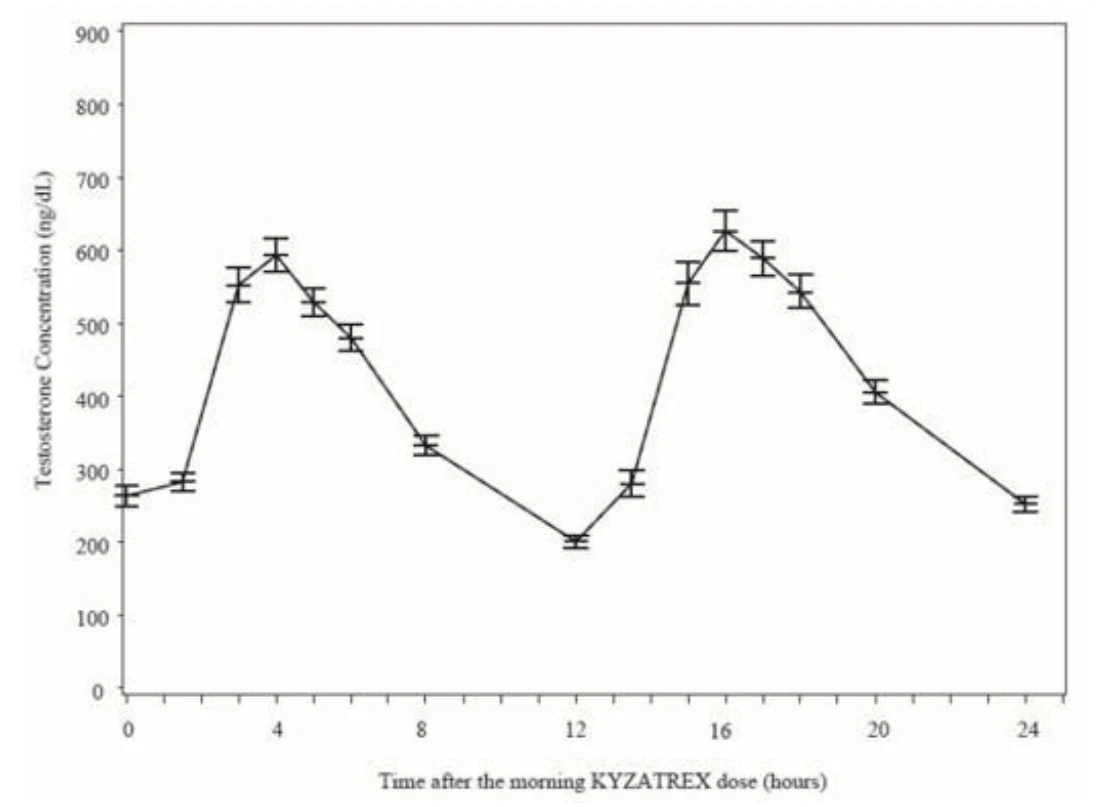
SEM = standard error of the mean Testosterone normal ranges: plasma = 222-800 ng/dL
Distribution:
Administration of radioactively labelled testosterone undecanoate (3H-TU) to men resulted in radioactivity in the lymph associated with unmetabolized testosterone undecanoate and 5-alpha-dihydrotestosterone undecanoate. Peak levels of radioactivity appeared in the lymph and plasma 2.5-5 hours after administration. Circulating testosterone is primarily (around 40%) bound in serum to sex hormone-binding globulin, 2% remains unbound (free), and the rest is loosely bound to albumin and other proteins.
Metabolism:
It is metabolized partly in the intestinal wall into 5-alpha-dihydrotestosterone undecanoate (DHTU) and in plasma and tissues TU is hydrolyzed to free testosterone and DHTU to DHT. Free testosterone is rapidly converted to 5-alpha-dihydrotestosterone, androstenedione and estradiol.
Elimination:
The highest concentration of radioactivity in urine was found 2 hours later. During the first 24 hours approximately 40% of the administered dose was found in urine and the total recovery of the dose in urine during the first week was 45-48%.
11 Storage, Stability, and Disposal
Store at 20°C to 25°C. Store the capsules in original bottle. Protect from light and moisture. Keep out of reach and sight of children.
Part 2: Scientific Information
13 Pharmaceutical Information
Drug Substance
Proper name: Testosterone undecanoate
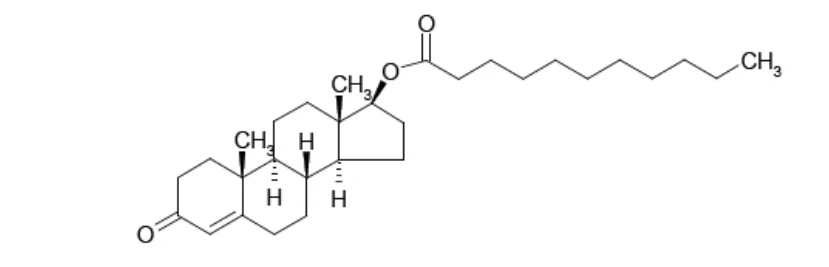
Chemical name: 17 beta-undecanoyloxy-androst-4-en-3-one
Molecular formula and molecular mass: C30H48O3 456.7
Structural formula:
Physicochemical properties: Melting point 60 - 63°C; solubility: insoluble in water; testosterone undecanoate is a white to off-white yellow powder.
14 Clinical Trials
14.1 Clinical Trials by Indication
- Male Hypogonadism:
Table 7: Summary of patient demographics for clinical trials in hypogonadal males
| Study # | Study design | Dosage, route of administration and duration | Study subjects (n) | Age (Range) | Sex |
| MRS-TU-2019EXT | Pivotal Phase 3, multicenter, efficacy and safety extension study | starting dose of 200 mg twice daily adjusted Days 28 & 56 between 100 mg to 800 mg 6 months Oral | 139 | 51.2 (22-66) | Male |
The efficacy population consisted of 139 hypogonadal, males consisting of 79% White, 16% Black 3%
Asian, and 2% were American Indian, Alaskan Native or Other.
14.2 Study Results
Table 8: Results of study MRS-TU-2019EXT in adult males for conditions associated with a deficiency or absence of endogenous testosterone
| Primary Endpoints | Associated value and statistical significance for Drug at specific dosages | Associated value and statistical significance for Placebo or active control |
| Percentage of KYZATREX® treated patients with mean plasma total testosterone concentration (C avg) over 24-hours within the normal range of 222-800 ng/dL on the final PK visit of the study at Day 90. | 122 (88%) CI 82-93% mean Cavg was 393.3 ng/dL | NA |
The results demonstrate that KYZATREX® could normalize 24-hr average T levels in close to 90% of hypogonadal subjects. Of note, for those subjects in the who completed Day 90, 96.1% had Cavg within the normal range.
Secondary endpoints were the percentage of patients with a maximum total testosterone concentration (C ) meeting three predetermined limits: less than or equal to 1.5 times the upper limit of normal range (ULN) (1200 ng/dL), between 1.8 and 2.5 times ULN (1440-2000 ng/dL), and greater than 2.5 times ULN (2000 ng/dL). The percentage of patients who received KYZATREX® and had testosterone Cmax threshold less than or equal to 1200 ng/dL, between 1440 and 2000 ng/dL, and greater than 2000 ng/dL at the final PK visit were 88%, 4%, and 0%, respectively.
15 Microbiology
No microbiological information is required for this drug product.
16 Non-Clinical Toxicology
General Toxicology:
In vitro and in vivo studies in rats indicated that testosterone undecanoate is not metabolized by gastric juices and is only slightly metabolized in the intestinal lumen. Studies also showed that testosterone undecanoate is metabolized to a lesser extent in the wall of the intestines during absorption than testosterone. Polar metabolites without the undecanoate side chain are absorbed via the portal vein and unchanged testosterone undecanoate and the main metabolite, 5-alphadihydrotestosterone undecanoate are absorbed by way of the intestinal lymphatic system. It was found that testosterone undecanoate and 5-alpha-dihydrotestosterone undecanoate were present in plasma chylomicrons, absorbed by the lymphatic system and transported to the peripheral circulation. In this way, testosterone undecanoate does not undergo first-pass inactivation by the liver.
A thoracic lymph duct-cannulated dog model using stable isotope methodology has provided further proof for the lymphatic transport of TU after postprandial administration. When administered orally, lymphatically transported TU accounted for between 91.5% and 99.7% of the systemically available ester. Model-independent pharmacokinetic analysis indicated that 84.1±8.2% of the systemically available testosterone, resulting from testosterone undecanoate, was derived from systemic hydrolysis of lymphatically transported TU. These data demonstrate that intestinal lymphatic transport of TU results in increased systemic exposure of testosterone by avoiding the extensive first-pass effect. This also explains why the bioavailability is much less when TU is given in the absence of food than when given in the presence of food.
Acute Toxicity
LD50 mg/kg
oral
subcutaneous
mice 4000
2880
rat 4000
2880
Repeated-dose studies
In rats given orally up to 80 mg/kg/day, of testosterone undecanoate capsulesdissolved in oleic acid for 52 weeks, only systemic effects were seen that were attributable, directly or indirectly, to the known normal profile of androgens. These included:
- increased food consumption and body weight gain in females
- increased values relating to the red blood cell parameters in females
- increased kidney and prostate weights
- decreased pituitary, adrenal, testicular, epididymal and ovarian weights
- inhibition of spermatogenesis and ovarian activity
- increased uterine activity
- increased alkaline phosphatase values and increased hepatic weight in females
In dogs administered up to 80mg/kg/day orally for 52 weeks, similar reversible hormonal changes occurred, except for increases in kidney and testicular weights. Kidney weight remained high during an 11-week period of withdrawal and spermatogenesis remained reduced in this group of dogs.
Although not observed at 26 weeks, a reversible increase in prostatic weight occurred by 52 weeks of drug administration.
A 3-month repeat-dose oral toxicity study in male eugonadal dogs was conducted to evaluate whether phytosterol esters present in the KYZATREX® formulation influenced target organ toxicity due to their structural similarities to sex steroids like testosterone. KYZATRE ®doses 2 times the MRHDD (based on mean AUC exposure to testosterone) produced similar effects on androgen-responsive tissues as testosterone undecanoate without phytosterol esters. These included mild to marked effects on the testes (decreased size, germ cell depletion,
Leydig cell atrophy), epididymides (aspermia), adrenal glands (vacuolation in the zona fasciculata) and prostate (increased size and glandular hypertrophy/hyperplasia). Following a 4-week treatment-free period, findings in the testes, epididymides, and adrenal glands were not fully reversible at doses of 2 times the MRHDD of KYZATREX®as compared to treatment with the excipients alone, including phytosterol esters. Reversibility was not assessed in testosterone undecanoate groups without phytosterol esters.
Genotoxicity:
Testosterone undecanoate was found to have no mutagenic activity in either the Ames Salmonella or rat micronuclease tests.
Carcinogenicity:
Carcinogenicity testing of testosterone propionate in mice and rats by subcutaneous implantation has produced cervical-uterine tumours in female mice and prostatic adenocarcinomas in male rats. Hyperplastic epithelial lesions of the genital tract and an increased incidence of mammary tumours have resulted from neonatal treatment of female mice by subcutaneous injection of testosterone. 5-beta-dihydrotestosterone also increased the incidence of mammary tumours in mice when given neonatally by s.c. injection.
Reproductive and developmental toxicology:
Sexually mature male rats were given 5, 20 or 80 mg/kg/day of testosterone undecanoate or placebo orally for 9 weeks prior to and for 2 weeks during mating with untreated females. The first generation (F0) males were subjected to further matings 3, 10 and 14 weeks after cessation of treatment. Half the females were examined after 20 days of gestation while the remainder continued to term and reared their young to 28 days of age. Second generation (F1) males and females were selected and mating performance and fertility evaluated.
At a dose of 80 mg/kg/day impaired fertility occurred and increased pre-implantation loss (reduced litter size) in females mated with treated rats was recorded. This effect appeared to be reversible. With the exception of a reduced post-weaning body weight of male progeny derived from the final mating, growth, development and fertility of offspring were similar in all groups. Autopsy of F0 males 18 weeks after cessation of 80 mg/kg/day test of testosterone undecanoate revealed a significant reduction in both absolute and relative testicular weights.
A reproductive toxicology study was conducted in rats to evaluate functional effects of KYZATREX® on male fertility. Males given 3 times the maximum recommended human daily dose (MRHDD) of KYZATREX® showed reduced body weight, small testes in 33% of animals, and significant changes in reproductive organ weights, lower testes and epididymides weights and increased prostate weight. Females mated with 3X Testosterone Undecanoate-treated males had lower fertility indices, more non-gravid females, reduced uterine weights, smaller litter sizes, and increased pre-implantation loss compared to the control group. There was no impairment of fertility in males receiving an equivalent dose of KYZATREX® to the MRHDD.
Special toxicology:
Rabbit Liver Function
Rabbits were administered either placebo, testosterone undecanoate or methyltestosterone at a dose of 10 mg/day for 10 days and liver function assessed by evaluating sulphobromophthalein
(BSP) clearance and plasma SGOT and SGPT activity. Testosterone undecanoate did not adversely affect liver function (Table 9).
Table 9: Effects of orally Administered Testosterone Undecanoate (TU) and methyltestosterone (Met) (10 mg/kg/day for 10 days) in Liver Function Test in Rabbits (mean + SE)
| BSP (10 mcg/mL plasma) | |||||||||||||
|---|---|---|---|---|---|---|---|---|---|---|---|---|---|
| 5 Minutes+ | 10 Minutes+ | 20 Minutes+ | SGOT (Karmen Units/mL) | SGPT (Karmen Units/mL) | |||||||||
| Control (placebo tablets) | 81 + 12 | 33 + 5 | 9 + 1 | 10 + 1 | 24 + 2 | ||||||||
| TU | 106 + 9 | 35 + 5 | 7 + 1 | 11 + 1 | 25 + 3 | ||||||||
| Met | 161 + 25* | 76 + 13* | 19 + 4* | 52 + 9* | 60 + 13* | ||||||||
BSP: Sulphobromophthalein
SGOT: serum glutamic oxaloacetic transaminase
SGPT: serum glutamic pyruvic transaminase
+: after administration of BSP (15 mg/kg)
*: statistically significant