


Product Monograph - Tobi
Recent Major Label Changes
| 7 Warnings and Precautions, Renal: Nephrotoxicity | 2026-11 |
|---|
Table of Contents
Certain sections or subsections that are not applicable at the time of the preparation of the most recent authorized product monograph are not listed.
Recent Major Label Changes ............................................................................................................... 2
Table of Contents ................................................................................................................................ 2
Part 1: Health Professional Information .............................................................................................. 4
1 Indications .............................................................................................................................. 4
1.1 Pediatrics ...........................................................................................................................4
1.2 Geriatrics ............................................................................................................................4
2 Contraindications ................................................................................................................... 4
4 Dosage and Administration .................................................................................................... 5
4.1 Dosing Considerations .......................................................................................................5
4.2 Recommended Dose and Dosage Adjustment ..................................................................5
4.4 Administration ...................................................................................................................5
4.5 Missed Dose .......................................................................................................................6
5 Overdose ................................................................................................................................ 6
6 Dosage Forms, Strengths, Composition, and Packaging ........................................................... 6
7 Warnings and Precautions ...................................................................................................... 7
General ............................................................................................................................................7
Driving and Operating Machinery ...................................................................................................7
Ear/Nose/Throat .............................................................................................................................7
Gastrointestinal ...............................................................................................................................8
Immune ...........................................................................................................................................8
Monitoring and Laboratory Tests ...................................................................................................8
Neurologic .......................................................................................................................................9
Renal ...............................................................................................................................................9
Respiratory ................................................................................................................................... 10
Sensitivity/Resistance .................................................................................................................. 10
7.1 Special Populations ......................................................................................................... 10
7.1.1 Pregnancy ................................................................................................................... 10
7.1.2 Breastfeeding ............................................................................................................. 11
7.1.3 Pediatrics .................................................................................................................... 11
7.1.4 Geriatrics .................................................................................................................... 11
8 Adverse Reactions ................................................................................................................ 11
8.2 Clinical Trial Adverse Reactions ...................................................................................... 11
8.5 Post-Market Adverse Reactions ...................................................................................... 17
9 Drug Interactions .................................................................................................................. 17
9.4 Drug-Drug Interactions ................................................................................................... 17
9.5 Drug-Food Interactions ................................................................................................... 18
9.6 Drug-Herb Interactions ................................................................................................... 18
9.7 Drug-Laboratory Test Interactions .................................................................................. 18
10 Clinical Pharmacology ........................................................................................................... 18
10.1 Mechanism of Action ...................................................................................................... 18
10.2 Pharmacodynamics ......................................................................................................... 18
10.3 Pharmacokinetics ............................................................................................................ 18
11 Storage, Stability, and Disposal ............................................................................................. 21
Part 2: Scientific Information ............................................................................................................ 22
13 Pharmaceutical Information ................................................................................................. 22
14 Clinical Trials ........................................................................................................................ 22
14.1 Clinical Trials by Indication.............................................................................................. 22
15 Microbiology ........................................................................................................................ 24
16 Non-Clinical Toxicology ......................................................................................................... 26
Patient Medication Information ........................................................................................................ 28
Part 1: Health Professional Information
1 Indications
TOBI (Tobramycin Inhalation Solution, USP) is indicated for:
- the management of cystic fibrosis patients with chronic pulmonary Pseudomonas aeruginosa (P. aeruginosa) infections.
Demonstration of safety and efficacy of TOBI is limited to clinical trial data obtained over 3 cycles (6 months) of therapy for efficacy and up to 6 cycles (12 months) of therapy for safety.
Safety and efficacy have not been demonstrated in patients under the age of 6 years, patients with Forced Expiratory Volume in 1 second (FEV1) < 25% or > 75% predicted, or patients colonized with Burkholderia cepacia.
To reduce the development of drug-resistant bacteria and maintain the effectiveness of TOBI and other antibacterial drugs, TOBI should be used only to treat infections that are proven or strongly suspected to be caused by bacteria.
Culture and sensitivity testing performed periodically will provide information on changing microbial flora and the possible emergence of bacterial resistance (see 14.1 Clinical Trials by Indication and 15 Microbiology).
1.1 Pediatrics
Pediatrics (≥ 6 years to < 18 years of age): Based on the data submitted and reviewed by Health Canada, the safety and efficacy of TOBI in pediatric patients 6 years of age and older has been established. Therefore, Health Canada has authorized an indication for this patient population.
Pediatrics (< 6 years of age): The safety and efficacy of TOBI has not been studied in pediatric patients under 6 years of age. Therefore, Health Canada has not authorized an indication for this patient population.
1.2 Geriatrics
Geriatrics (≥ 65 years of age): No data are available to Health Canada; therefore, Health Canada has not authorized an indication for geriatric use.
2 Contraindications
TOBI is contraindicated in:
- patients with a known hypersensitivity to any aminoglycoside or who are hypersensitive to this drug or to any ingredient in the formulation, including any non-medicinal ingredient, or component of the container. For a complete listing see 6 Dosage Forms, Strengths, Composition, and Packaging.
4 Dosage and Administration
4.1 Dosing Considerations
- TOBI (Tobramycin Inhalation Solution) should be administered by oral inhalation and using a hand-held PARI LC PLUSTM reusable nebulizer with a DeVilbiss Pulmo-Aide® compressor. TOBI is not for subcutaneous, intravenous or intrathecal administration.
- The dose of TOBI is the same for all patients within the approved age range regardless of age or weight.
- Safety and efficacy have not been demonstrated in patients with Forced Expiratory Volume in 1 second (FEV1) < 25% or > 75% predicted, or patients colonized with Burkholderia cepacia.
4.2 Recommended Dose and Dosage Adjustment
The recommended dosage for both adults and pediatric patients 6 years of age and older is one single-use ampoule (300 mg) administered twice a day (BID) for 28 days. The doses should be taken as close to 12 hours apart as possible; they should not be taken less than six hours apart.
TOBI is administered BID in alternating periods of 28 days. After 28 days of therapy, patients should stop TOBI therapy for the next 28 days, and then resume therapy for the next 28 day on / 28 day off cycle.
Dosage is not adjusted by weight. All patients should be administered 300 mg BID.
Dosing in special populations
Pediatrics (< 6 years of age)
TOBI is not indicated for use in this age group. Safety, efficacy and pharmacokinetic studies have not been conducted in patients under the age of 6 years.
Geriatrics (≥ 65 years of age)
Use of TOBI has not been studied in geriatric patients.
Patients with renal impairment
Tobramycin is primarily excreted unchanged in the urine and renal function is expected to affect the exposure to tobramycin. A dosing recommendation cannot be supported (see 7 Warnings and Precautions, Renal: Nephrotoxicity).
Patients with hepatic impairment
Use of TOBI has not been studied in patients with hepatic impairment.
Patients after organ transplantation
Use of TOBI has not been studied in patients after organ transplantation.
4.4 Administration
TOBI is supplied as a single-use ampoule and is administered by inhalation. TOBI is not for subcutaneous, intravenous or intrathecal administration.
TOBI is administered using a hand-held PARI LC PLUSTM reusable nebulizer with a DeVilbiss Pulmo-Aide® compressor over a 15 minute period on average. TOBI is inhaled while the patient is sitting or standing upright and breathing normally through the mouthpiece of the nebulizer. Nose clips may help the patient breathe through the mouth.
TOBI should not be diluted or mixed with dornase alfa (PULMOZYME®) in the nebulizer.
TOBI must be kept out of the sight and reach of children other than when administered therapeutically under appropriate adult supervision.
During clinical studies, patients on multiple therapies were instructed to take them first, followed by TOBI.
4.5 Missed Dose
In case of a missed dose with at least 6 hours until the next dose, the patient should take the dose as soon as possible. Otherwise, the patient should wait for the next dose and not inhale more to make up for the missed dose.
5 Overdose
Signs and symptoms of acute toxicity from overdosage of intravenous (IV) tobramycin might include dizziness, tinnitus, vertigo, loss of high-tone hearing acuity, respiratory failure, neuromuscular blockade and renal impairment. Administration by inhalation results in low systemic bioavailability of tobramycin. Tobramycin is not significantly absorbed following oral administration. Tobramycin serum concentrations may be helpful in monitoring overdose.
Acute toxicity should be treated with immediate withdrawal of TOBI, and baseline tests of renal function should be undertaken.
In all cases of suspected overdosage, physicians should contact the regional poison control center for information about effective treatment. In the case of any overdosage, the possibility of drug interactions with alterations in drug disposition should be considered.
Hemodialysis may be helpful in removing tobramycin from the body.
| For the most recent information in the management of a suspected drug overdose, contact your regional poison control centre or Health Canada’s toll-free number, 1-844 POISON-X (1-844-764-7669). |
|---|
6 Dosage Forms, Strengths, Composition, and Packaging
Table 1 – Dosage Forms, Strengths, Composition and Packaging
Composition
TOBI is a tobramycin solution for inhalation. It is a sterile, clear, slightly yellow, non-pyrogenic, aqueous solution with the pH and salinity adjusted specifically for administration by a compressed air
| Route of Administration | Dosage Form / Strength/Composition | Non-medicinal Ingredients |
| Oral Inhalation | Solution 300 mg / 5 mL tobramycin (as sulfate) | nitrogen, sodium chloride, sodium hydroxide, sulfuric acid and water for injection |
driven reusable nebulizer. Each single-use 5 mL ampoule contains 300 mg tobramycin and 11.25 mg sodium chloride in sterile water for injection. Sulfuric acid and sodium hydroxide are added to adjust the pH to 6.0, forming the sulfate salt of tobramycin in solution. Nitrogen is used for sparging. All ingredients meet USP requirements. The formulation contains no preservatives.
Availability of Dosage Forms
TOBI is supplied in single-use, low-density polyethylene plastic 5 mL ampoules. TOBI is packaged in boxes of 56 ampoules (14 flexible, laminated foil over-pouches, each containing 4 ampoules or 4 flexible, laminated foil over-pouches, each containing 14 ampoules).
7 Warnings and Precautions
General
Caution should be exercised when prescribing TOBI to patients with known or suspected renal, auditory, vestibular, or neuromuscular dysfunction.
Patients receiving concomitant parenteral aminoglycoside therapy should be monitored as clinically appropriate (see 7 Warnings and Precautions, Monitoring and Laboratory Tests).
Concurrent and/or sequential use of TOBI with other drugs with neurotoxic, nephrotoxic, or ototoxic potential should be avoided (see 9 Drug Interactions).
Aminoglycosides can cause fetal harm when administered to a pregnant woman. Aminoglycosides cross the placenta, and streptomycin has been associated with several reports of total, irreversible, bilateral congenital deafness in pediatric patients exposed in utero. Patients who use TOBI during pregnancy, or become pregnant while taking TOBI should be apprised of the potential hazard to the fetus (see 7.1.1 Pregnant Women).
Driving and Operating Machinery
Exercise caution when driving or operating a vehicle or potentially dangerous machinery.
Ear/Nose/Throat
- Ototoxicity
Caution should be exercised when TOBI is prescribed to patients with known or suspected auditory or vestibular dysfunction. In these patients and those who are at increased risk for auditory dysfunction, it may be necessary to consider audiological assessment before initiating TOBI therapy.
Ototoxicity, manifested as both auditory and vestibular toxicity, has been reported with aminoglycosides. Vestibular toxicity may be manifested by vertigo, ataxia or dizziness. Tinnitus is a sentinel symptom of ototoxicity, and therefore the onset of this symptom warrants caution.
In clinical studies, transient tinnitus occurred in eight TOBI treated patients versus no placebo patients.
In post marketing experience, severe hearing loss has been reported in some patients who received TOBI therapy in association with either previous or concomitant parenteral aminoglycoside use (see 8 Adverse Reactions).
If a patient reports tinnitus or hearing loss during TOBI therapy, the physician should refer them for audiological assessment. If ototoxicity occurs in a patient receiving TOBI, tobramycin therapy should be discontinued until serum concentrations fall below 2 µg/mL (see 7 Warnings and Precautions, Monitoring and Laboratory Tests: Serum Concentrations).
- Risk of Ototoxicity Due to Mitochondrial DNA Variants
Cases of ototoxicity with aminoglycosides have been observed in patients with certain variants in the mitochondrially encoded 12S rRNA gene (MT-RNR1), particularly the m.1555A>G variant. These patients may be at increased risk for ototoxicity. Ototoxicity occurred in some patients even when their aminoglycoside serum levels were within the recommended range. In case of known maternal history of ototoxicity due to aminoglycoside use or a known mitochondrial DNA variant in the patient, consider alternative treatments other than aminoglycosides unless the increased risk of permanent hearing loss is outweighed by the severity of infection and lack of safe and effective alternative therapies.
Gastrointestinal
- Clostridium difficile-Associated Disease
Clostridium difficile-associated disease (CDAD) has been reported with use of many antibacterial agents, including tobramycin. CDAD may range in severity from mild diarrhea to fatal colitis. It is important to consider this diagnosis in patients who present with diarrhea, or symptoms of colitis, pseudomembranous colitis, toxic megacolon, or perforation of colon subsequent to the administration of any antibacterial agent. CDAD has been reported to occur over 2 months after the administration of antibacterial agents.
Treatment with antibacterial agents may alter the normal flora of the colon and may permit overgrowth of Clostridium difficile. Clostridium difficile produces toxins A and B, which contribute to the development of CDAD. CDAD may cause significant morbidity and mortality. CDAD can be refractory to antimicrobial therapy.
If the diagnosis of CDAD is suspected or confirmed, appropriate therapeutic measures should be initiated. Mild cases of CDAD usually respond to discontinuation of antibacterial agents not directed against Clostridium difficile. In moderate to severe cases, consideration should be given to management with fluids and electrolytes, protein supplementation, and treatment with an antibacterial agent clinically effective against Clostridium difficile. Surgical evaluation should be instituted as clinically indicated, as surgical intervention may be required in certain severe cases.
Immune
- Allergic Reactions
Severe hypersensitivity (allergic) reactions have been reported following administration of tobramycin for injection to patients.
TOBI is contraindicated in patients with a known history of hypersensitivity to any aminoglycoside. If an allergic reaction to TOBI does occur, stop administration of the drug and initiate treatment as appropriate (see 2 Contraindications).
Monitoring and Laboratory Tests
- Audiograms
For patients with known or suspected auditory or vestibular dysfunction and those who are at increased risk for auditory dysfunction, it may be necessary to consider audiological assessment before initiating TOBI therapy. Tinnitus may be a sentinel symptom of ototoxicity and therefore the onset of this symptom warrants caution. If a patient reports tinnitus or hearing loss during TOBI therapy, the physician should refer them for audiological assessment.
Clinical studies of 4-6 cycles duration of TOBI therapy did not identify hearing loss using audiometric tests which used as criteria a bilateral, high frequency decrease of ≥ 15 dB at two consecutive frequencies, evaluating frequencies up to 8000 Hz. However, tinnitus was documented in a small number of TOBI patients, and there have been occasional reports of severe hearing loss in post marketing experience where patients received TOBI in association with previous or concomitant parenteral aminoglycoside use (see 7 Warnings and Precautions and 8 Adverse Reactions).
- Serum Concentrations
Serum tobramycin concentrations should be monitored in patients with known or suspected auditory or renal dysfunction. Serum concentrations of tobramycin should be monitored in patients receiving concomitant parenteral aminoglycoside therapy. These patients should be monitored as clinically appropriate, taking into account the risk of cumulative toxicity.
If oto- or nephrotoxicity occurs in a patient receiving TOBI, tobramycin therapy should be discontinued until trough serum concentration falls below 2 µg/mL.
In patients with normal renal function treated with TOBI, serum tobramycin concentrations are approximately 1 µg/mL one hour after dose administration. Peak serum concentrations greater than 12 µg/mL and trough serum concentrations > 2 µg/mL are associated with tobramycin toxicity. All tobramycin treatment should be discontinued if concentrations exceed these levels.
The serum concentration of tobramycin should only be monitored through venipuncture and not finger prick blood sampling. Contamination of the skin of the fingers with tobramycin may lead to falsely increased measurements of serum levels of the drug. This contamination cannot be completely avoided by hand washing before testing.
- Renal Function
Laboratory tests of urine and renal function should be conducted at the discretion of the treating physician.
The clinical studies of TOBI did not reveal any imbalance in the percentage of patients in the TOBI and placebo groups who experienced at least a 50% rise in serum creatinine from baseline through 3 cycles of therapy (see 8 Adverse Reactions).
Neurologic
- Neuromuscular Disorders
Caution should be exercised when TOBI is prescribed to patients with known or suspected neuromuscular disorders such as myasthenia gravis or Parkinson’s disease. Aminoglycosides may aggravate muscle weakness because of a potential curare-like effect on neuromuscular function.
Renal
- Nephrotoxicity
Caution should be exercised when TOBI is prescribed to patients with known or suspected renal dysfunction and serum concentrations of tobramycin should be monitored (see 7 Warnings and Precautions, Monitoring and Laboratory Tests).
Acute kidney injury (AKI) has been reported post-marketing with the use of inhaled tobramycin, including in patients without prior renal dysfunction. The majority of these patients showed increased systemic accumulation of tobramycin after inhaled administration (see 8.5 Post-Market Adverse Reactions). Nephrotoxicity was not seen during 4-6 cycles of TOBI therapy in clinical studies but has been associated with aminoglycosides as a class. If nephrotoxicity occurs in a patient receiving TOBI, tobramycin therapy should be discontinued until serum concentrations fall below 2 µg/mL.
Respiratory
- Bronchospasm
Bronchospasm can occur with inhalation of TOBI. In clinical studies of 3 cycles of TOBI therapy, acute changes in FEV1 % predicted, measured 30 minutes after the inhaled dose, documented decreases of ≥ 20% FEV1 % predicted in 12 TOBI patients (4.7%) and 2 placebo patients (0.8%). Bronchospasm should be treated as medically appropriate (see 8 Adverse Reactions).
If there is evidence of therapy-induced bronchospasm, the physician should carefully evaluate whether the benefits of continued use of TOBI outweigh the risks to the patient. If an allergic response is suspected, TOBI should be discontinued.
Sensitivity/Resistance
- Development of Drug-Resistant Bacteria
Prescribing TOBI in the absence of a proven or strongly suspected bacterial infection is unlikely to provide benefit to the patient and risks the development of drug-resistant bacteria.
- Potential for Microbial Overgrowth
The prevalence of Aspergillus sp. and C. albicans increased in a clinical trial over three cycles of therapy with TOBI.
The use of TOBI may promote the selection of non-susceptible organisms. Should superinfection occur during therapy, appropriate measures should be taken.
7.1 Special Populations
7.1.1 Pregnancy
The use of tobramycin administered by inhalation in pregnant women has not been evaluated.
Aminoglycosides can cause fetal harm (e.g., congenital deafness) when administered to a pregnant woman. When administered to humans intravenously, tobramycin has been shown to cross the placenta and to distribute to fetal circulation and amniotic fluid.
No reproduction toxicology studies have been conducted with TOBI. However, subcutaneous administration of tobramycin at doses of 100 or 20 mg/kg/day during organogenesis was not teratogenic in rats or rabbits, respectively. Doses of tobramycin ≥ 40 mg/kg/day were severely maternally toxic to rabbits and precluded the evaluation of teratogenicity. Ototoxicity was not evaluated in offspring during nonclinical reproduction toxicity studies with tobramycin.
Treatment with TOBI during pregnancy should be undertaken only if the benefits to the mother outweigh the risks to the fetus or baby. If TOBI is used during pregnancy, or if the patient becomes pregnant while taking TOBI, the patient should be apprised of the potential hazard to the fetus.
7.1.2 Breastfeeding
It is not known if TOBI will reach sufficient concentrations after administration by inhalation to be excreted in human breast milk. Because of the potential for ototoxicity and nephrotoxicity in infants, a decision should be made whether to terminate nursing or discontinue TOBI.
7.1.3 Pediatrics
Pediatrics (< 6 years of age): The safety and efficacy of TOBI has not been studied in pediatric patients under 6 years of age. Therefore, Health Canada has not authorized an indication for this patient population.
7.1.4 Geriatrics
Geriatrics (≥ 65 years of age): Use of TOBI has not been studied in geriatric patients.
8 Adverse Reactions
8.2 Clinical Trial Adverse Reactions
Clinical trials are conducted under very specific conditions. Therefore, the frequencies of adverse reactions observed in the clinical trials may not reflect frequencies observed in clinical practice and should not be compared to frequencies reported in clinical trials of another drug.
TOBI (Tobramycin Inhalation Solution, USP) was generally well tolerated during two clinical studies in 258 cystic fibrosis patients ranging in age from 6 to 48 years. Patients received TOBI in alternating periods of 28 days on and 28 days off drug in addition to their standard cystic fibrosis therapy for a total of 24 weeks.
Voice alteration and tinnitus were the only adverse experiences reported by significantly more TOBI-treated patients. Thirty-three patients (13%) treated with TOBI complained of voice alteration (dysphonia) compared to 17 (7%) placebo patients. Voice alteration (dysphonia) was more common in the on-drug periods. Episodes were transient and resolved during the off-drug period.
Eight patients from the TOBI group (3%) reported tinnitus compared to no placebo patients. All episodes were transient, resolved without discontinuation of the TOBI treatment regimen, and were not associated with loss of hearing in scheduled audiograms. (The audiogram schedule did not necessarily coincide with the tinnitus episode.) Tinnitus is one of the sentinel symptoms of cochlear toxicity, and patients with this symptom should be carefully monitored for high frequency hearing loss (see 7 Warnings and Precautions). The numbers of patients reporting vestibular adverse experiences such as dizziness were similar in the TOBI and placebo groups.
Nine (3%) patients in the TOBI group and nine (3%) patients in the placebo group had increases in serum creatinine of at least 50% over baseline. In all nine patients in the TOBI group, creatinine decreased at the next visit.
Tabulated summary of adverse drug reactions from clinical trials
Table 2 compares the incidence of treatment-emergent adverse drug reactions reported with an incidence of > 1% in patients receiving TOBI.
Table 2 - Incidence of Treatment-emergent Adverse Drug Reactions Reported With an Incidence of >1% in Patients Receiving TOBI *
| System organ class / preferred term | TOBI Placebo-controlled parallel group studies (PC-TNDS-002 / PC-TNDS-003) | |||
|---|---|---|---|---|
| System organ class / preferred term | TOBI Placebo-controlled parallel group studies (PC-TNDS-002 / PC-TNDS-003) | |||
TOBI n = 258 (%) | Placebo n = 262 (%) | |||
TOBI n = 258 (%) | Placebo n = 262 (%) | |||
Respiratory, thoracic, and mediastinal disorders Cough Pharyngitis Rhinitis Hemoptysis Productive cough Dysphonia Lung Disorder Asthma Dyspnea Sputum discolored Bronchospasm Laryngitis | 23.6% 12.0% 10.5% 6.6% 6.6% 5.8% 5.0% 4.7% 4.3% 1.9% 1.6% 1.2% | 21.0% 12.2% 6.5% 7.6% 8.8% 3.1% 4.6% 6.9% 8.8% 0.8% 1.9% 0.0% | ||
Gastrointestinal disorders Abdominal pain Vomiting Nausea | 3.5% 2.7% 1.6% | 3.4% 2.7% 2.7% | ||
General disorders and administration site conditions Chest pain Asthenia Pyrexia Malaise Pain | 7.0% 5.0% 2.3% 1.6% 1.2% | 6.9% 5.0% 2.7% 0.8% 1.9% | ||
Metabolism and nutrition disorders Anorexia | 1.6% | 3.1% | ||
Musculoskeletal and connective tissue disorders Back pain Myalgia | 1.2% 1.2% | 0.0% 0.0% | ||
Nervous system disorders Dysgeusia Headache Dizziness | 6.2% 4.3% 1.6% | 6.1% 5.7% 1.5% | ||
Ear and labyrinth disorders Tinnitus | 1.2% | 0.0% | ||
Investigations Pulmonary function test decreased | 6.2% | 5.0% | ||
* Adverse drug reactions from clinical trials are listed according to Medical Dictionary for Regulatory Activities (MedDRA).
Table 3 lists the percent of patients with treatment-emergent adverse experiences (spontaneously reported and solicited) that occurred in > 5% of TOBI patients during the two Phase III studies, where patients received up to 3 cycles of therapy (see 14.1 Clinical Trials by Indication).
Table 3 - Percent of Patients With Treatment Emergent Adverse Experiences Occurring in > 5% of TOBI Patients During Phase III Studies (Up to 6 Months of Therapy)*
| System organ class / preferred term | TOBI n = 258 (%) | Placebo n = 262 (%) |
|---|---|---|
| System organ class / preferred term | TOBI n = 258 (%) | Placebo n = 262 (%) |
Body as a Whole Asthenia Fever1 Headache Chest pain Abdominal pain Pain Back pain Malaise | 35.7 32.9 26.7 26.0 12.8 8.1 7.0 6.2 | 39.3 43.5 32.1 29.8 23.7 12.6 8.0 5.3 |
Digestive System Anorexia Vomiting Nausea Diarrhea | 18.6 14.0 11.2 6.2 | 27.9 22.1 16.0 10.3 |
Metabolic and Nutritional Disorders Weight loss | 10.1 | 15.3 |
Nervous System Dizziness | 5.8 | 7.6 |
Respiratory System Cough increased Pharyngitis Sputum increased Rhinitis Dyspnea Lung disorder Sputum discoloration Hemoptysis Lung Function decreased2 Asthma Voice alteration Sinusitis | 46.1 38.0 37.6 34.5 33.7 31.4 21.3 19.4 16.3 15.9 12.8 8.1 7.0 | 47.3 39.3 39.7 33.6 38.5 31.3 19.8 23.7 15.3 20.2 6.5 9.2 6.5 |
Epistaxis Lower Resp. Tract Infection Hyperventilation | 5.8 5.4 | 8.0 9.9 |
Special Senses Ear pain Taste perversion | 7.4 6.6 | 8.8 6.9 |
Skin and Appendages Rash | 5.4 | 6.1 |
1 Includes subjective complaints of fever.
2 Includes reported decreases in pulmonary function tests or decreased lung volume on chest radiograph associated with intercurrent illness or study drug administration.
* Adverse drug reactions from clinical trials are listed according to Coding Symbols for a Thesaurus of Adverse Reaction Terms (COSTART).
In a follow-on study of TOBI, the following adverse experiences were observed at a higher frequency in patients who received 4 to 6 cycles (over 6 to 12 months) of TOBI therapy than that seen in patients who received ≤ 3 cycles (up to 6 months) (see Table 4). The role of chronic progression of disease on the increasing frequency of adverse experiences should be considered in the interpretation of these data.
Table 4 - Treatment Emergent Adverse Experiences1 Occurring at Higher Frequency During 6 to 12 Months of TOBI Therapy*
| Adverse Event | 4-6 Cycles n = 192 (%) | ≤ 3 Cycles n = 204 (%) |
|---|---|---|
| Adverse Event | 4-6 Cycles n = 192 (%) | ≤ 3 Cycles n = 204 (%) |
Body as a Whole Asthenia Chest pain Back Pain Lymphadenopathy Chills Sweating | 44.3 36.5 10.4 8.3 6.8 5.7 | 38.2 35.3 5.9 6.9 5.9 4.9 |
Digestive System Anorexia Diarrhea Oral monoliasis Dyspepsia | 29.2 16.7 6.3 5.2 | 27.5 12.7 2.5 4.9 |
Musculoskeletal System Myalgia | 5.7 | 5.4 |
Respiratory System Cough increased Pharyngitis Sputum increased Dyspnea Rhinitis Hemoptysis Lung function decreased Asthma Sputum discoloration Upper respiratory infection Voice alteration Hyperventilation Laryngitis | 49.5 47.9 43.8 41.7 37.5 31.3 28.6 28.1 24.5 13.5 12.0 8.9 5.2 | 48.0 43.6 38.2 33.8 33.3 27.0 23.0 23.5 19.1 9.8 6.4 5.4 3.4 |
Special Senses Otitis media | 5.2 | 2.0 |
1Includes Adverse Experiences that were observed in > 5% of patients in the 4-6 Cycles group and at a higher frequency than in the ≤ 3 Cycles group. (The ≤ 3 Cycles group received placebo during
Phase III studies.)
* Adverse drug reactions from clinical trials are listed according to Coding Symbols for a Thesaurus of Adverse Reaction Terms (COSTART).
In open label follow-on clinical trials, the following additional adverse events have been reported infrequently in patients receiving TOBI concurrently with other medications: Fungal infection, hypoxia, mouth ulcerations and photosensitivity reaction.
8.5 Post-Market Adverse Reactions
The following adverse drug reactions have been derived from post marketing experience with TOBI via spontaneous case reports and literature cases. Because these reactions are reported voluntarily from a population of uncertain size, it is not possible to reliably estimate their frequency which is therefore categorized as not known.
Decreased appetite
9 Drug Interactions
9.4 Drug-Drug Interactions
No clinical drug interaction studies have been performed with TOBI. In clinical studies of TOBI, patients taking TOBI concomitantly with dornase alfa (PULMOZYME®), β-agonists, inhaled corticosteroids, other anti-pseudomonal antibiotics, or parenteral aminoglycosides demonstrated adverse experience profiles similar to the study population as a whole. In post marketing experience, some patients receiving TOBI with previous or concomitant parenteral aminoglycosides have reported severe hearing loss.
Concurrent and/or sequential use of TOBI with other drugs with neurotoxic, nephrotoxic or ototoxic potential should be avoided.
Some diuretics can enhance aminoglycoside toxicity by altering antibiotic concentrations in serum and tissue. TOBI should not be administered concomitantly with ethacrynic acid, furosemide, urea, or intravenous mannitol.
Other medicinal products that have been reported to increase the potential toxicity of parenterally administered aminoglycosides include:
Amphotericin B, cefalotin, cyclosporine, tacrolimus, polymyxins (risk of increased nephrotoxicity);
Platinum compounds (risk of increased nephrotoxicity and ototoxicity); and,
Anticholinesterases, botulinum toxin (neuromuscular effects).
9.5 Drug-Food Interactions
Interactions with food have not been established.
9.6 Drug-Herb Interactions
Interactions with herbal products have not been established.
9.7 Drug-Laboratory Test Interactions
The serum concentration of tobramycin should only be monitored through venipuncture and not finger prick blood sampling. Contamination of the skin of the fingers with tobramycin may lead to falsely increased measurements of serum levels of the drug. This contamination cannot be completely avoided by hand washing before testing (see 7 Warnings and Precautions, Monitoring and Laboratory Tests).
10 Clinical Pharmacology
10.1 Mechanism of Action
TOBI (Tobramycin Inhalation Solution, USP) is a formulation of tobramycin designed specifically for administration by inhalation. When TOBI is inhaled, tobramycin can be detected at high concentration in the sputum of cystic fibrosis patients. The drug substance, tobramycin, is an aminoglycoside antibiotic derived from Streptomyces tenebrarius. Tobramycin, a cationic polar molecule that does not readily cross epithelial membranes, is chemically and pharmacologically related to the aminoglycoside class of antibiotics. The primary mode of action is bactericidal resulting from disruption of protein synthesis in susceptible bacteria.
10.2 Pharmacodynamics
See 15 Microbiology.
10.3 Pharmacokinetics
Absorption
Concentrations of tobramycin in the sputum vary widely. This variation may be explained by individual differences in nebulizer performance and airway pathology. Following administration of TOBI, tobramycin remains concentrated primarily in sputum in the airways.
- Sputum Concentrations
Ten minutes after inhalation of the first 300 mg dose of TOBI by cystic fibrosis patients, the mean (median) concentration of tobramycin in the sputum was 1237 µg/g (959 µg/g) with the range from 35 to 7417 µg/g. Tobramycin does not accumulate in sputum; after 20 weeks of therapy with the TOBI regimen, the mean (median) concentration of tobramycin at ten minutes after inhalation was 1154 µg/g (818 µg/g), ranging from below quantifiable limits to 8085 µg/g. High intra- and inter-subject variability of tobramycin concentrations in the sputum was observed. Two hours after inhalation, sputum tobramycin concentrations declined to approximately 14% of sputum tobramycin concentrations at ten minutes after inhalation.
- Serum Concentrations
The mean (median) serum concentration of tobramycin one hour after inhalation of a single 300 mg dose of TOBI by cystic fibrosis patients was 0.95 µg/mL (0.91 µg/mL), ranging from below quantifiable limits to 3.62 µg/mL. After 20 weeks of therapy on the TOBI regimen, the mean (median) serum tobramycin concentration one hour after dosing was 1.05 µg/mL (0.94 µg/mL), ranging from below quantifiable limits to 3.41 µg/mL.
- Systemic Pharmacokinetics Following Aerosolized Administration
The pharmacokinetics of tobramycin were examined in two Phase III studies and analyzed using a population modeling approach. Data from this analysis was compared to literature. These findings are summarized in Table 5.
Table 5 - Summary of Tobramycin Serum Pharmacokinetics Following Aerosol Administration
| Patient Type1 | N | Dose | Nebulizer | Ka (hr-1) | T 1/2α (hr) | T ½ β (hr) | Vdss (L) | Cl (L/h) | Analytical Method2 | Reference |
|---|---|---|---|---|---|---|---|---|---|---|
| CF | 247 | 300 mg | Pari LC PlusTM | 57.33,4 | 5.794 | FPIA | BGP | |||
HV MV | 5 5 | 300 mg | Pneumatic Nebulizer | 8.96 ± 0.47 11.23 ± 2.26 | HPLC/ EMIT | Le Conte (1993); 147(5):12 79-82 | ||||
| CF | 6 | 600 mg | Ultrasonic Nebulizer | 1.98 ± 1.405 | 1.54 ± 0.97 | 13.0 ± 5.2 | 96.9 ± 49.6 | 6.98 ± 2.89 | FPIA | Touw (1997); 41(1):184-7 |
1 CF = cystic fibrosis; HV = healthy volunteer; MV = mechanically ventilated patients.
2 HPLC = high performance liquid chromatography; FPIA = fluorescent polarization immunoassay; EMIT= enzyme immunoassay.
3 Parameter was corrected by absolute bioavailability estimate.
4 Parameter obtained from population pharmacokinetic analysis (Harris labs).
5 Mean ± SD.
The systemic pharmacokinetics of tobramycin when administered by inhalation or parenterally are comparable both in terms of clearance and volume of distribution. Estimates of the terminal elimination half-life for tobramycin in serum following aerosol administration are quite variable, ranging from 1.3 to 13 hours. The systemic pharmacokinetics of tobramycin following aerosol administration are best described by a two-compartment model with biexponential elimination.
- Serum and Sputum Concentrations Following Aerosolized Tobramycin
In a Phase II study and two Phase III studies, serum and sputum concentrations were measured following tobramycin administration. Serum and sputum concentrations following aerosolized administration in clinical studies as well as from the literature are presented in Table 6.
Table 6 - Summary of the Serum and Bronchial Secretions/Sputum Concentrations of Tobramycin Following Aerosolized Administration
| Patient Type1 | N | Dose/ Regimen | Nebulizer | Serum (S) | Bronchial Secretion (BS)/ Sputum (SP) | Ratio S/SP4 | Ref -erence | |||||||||||||||
|---|---|---|---|---|---|---|---|---|---|---|---|---|---|---|---|---|---|---|---|---|---|---|
Sampling (hr. Post) | Conc. (µg/mL)2 | Sampling (hr. Post) | BS Conc. (µg/mL) | SP Conc. (µg/g) | (%) | |||||||||||||||||
| CF | 61 61 61 | 300 mg/BID 300 mg/BID 600-1200 mg/BID | Pari LC Jet Sidestream Jet UltraNeb | 1.0 1.0 1.0 | 0.57±0.38 0.74±0.43 0.79±0.76 | 1.0 1.0 1.0 | 139±56 116±183 388±451 | 1.2±1.3 1.9±1.9 0.70±1.3 | BGP | |||||||||||||
| CF | 247 | 300 mg/BID 3 cycles of 28 days | Pari LC Plus Jet | 1.0 | 1.01±0.57 | 0.167 | 1199.2± 1115.8 | 0.191 | BGP | |||||||||||||
| CF | 6 | 10.2 mg/kg | Wisto Senior | 1.0 | 1.27±1.07 | NR | Touw (1997); 41(1):18 4-7 | |||||||||||||||
| RD | 20 | 80 mg/one dose | Unspecified Jet | 1 | <0.1-0.2 | 0.5 | 2.0± 2.26 | NR | Baran (1990); 84(3):20 3-4 | |||||||||||||
| CF w/ RD | 14 | 80 mg/BID | Unspecified Jet | 1.0 | <0.1-0.4 | Gappa (1988); Suppl 143:74-6 | ||||||||||||||||
HV MV LC/TS LC/TS | 5 5 5 5 | 300 mg/ one dose | Atomeca Pneumatic | 0.25-24 0.25-24 0.5 0.5 | 0.27±0.15 <0.1 0.43 0.55 | 4 12 | 5.57± 5.523 3.61± 4.343 | NR | Le Conte (1993); 147(5): 1279-82 | |||||||||||||
| CF w/ RD | 27 | 120 mg/ one dose | Medix World Traveler-Intersurgical | 0.25-1 | 401 | Mukhop adhyay (1994); 88(3):20 3-11 | ||||||||||||||||
| CF w/ RD | 22 | 666±195 mg/ TID | UltraNeb 100 | NR | <0.1-1.5 | immediate post aerosol | 2300± 1900 | NR | Smith (1989) & Weber (1989); 7(4):265-71 | |||||||||||||
| CF w/ RD | 9 9 9 9 | 40 mg/ once for each device | Pulmo-Aide UltraNeb UltraNeb UltraNeb | 0.05 | 0-629 16-1343 35-1980 94-3385 | Weber (1994) : 17(5):33 1-9 | ||||||||||||||||
1 CF = cystic fibrosis; HV = healthy volunteer; MV = mechanically ventilated patients; LC/TS = lung cancer patient with thoracic surgery; RD = respiratory disease.
2 Mean ± SD.
3 Lung Tissue concentrations following biopsy.
4 Mean ratio of individual serum/sputum results with N = 56, 59, 57 for the Pari LC, Sidestream, and UltraNeb, respectively.
BID = twice daily; TID = three times daily; NR = not reported.
Serum concentrations from the clinical studies are comparable to those reported in the literature for cystic fibrosis patients following aerosolized administration of tobramycin, and less than those reported following therapeutic doses (1.7-4.0 mg/kg) administered parenterally. Using the Pari LC PlusTM nebulizer, the mean sputum concentration at ten minutes after dosing in the clinical studies was approximately 1200 µg/g (median = 959 µg/g; range = 35 to 7417 µg/g). Ninety-seven percent (97%) of patients had sputum concentrations in excess of the target 128 µg/g of sputum.
Elimination
The apparent terminal half-life of tobramycin in serum after inhalation of a 300 mg single dose of TOBI was 3 hours in cystic fibrosis patients. Assuming tobramycin absorbed following inhalation behaves similarly to tobramycin following IV administration, systemically absorbed tobramycin is eliminated principally by glomerular filtration. Unabsorbed tobramycin, following TOBI administration, may be eliminated in expectorated sputum or via the gastrointestinal tract.
Special Populations and Conditions
- Age: There was a trend of increased sputum concentrations with increased age (range 6 to 48 years). However, due to the large variability within each of the stratified age groups, 6-<13 years, 13-<18 years and ≥ 18 years, these differences were not considered clinically significant.
- Sex: No significant differences were noted between males and females for either the sputum or serum concentrations.
11 Storage, Stability, and Disposal
TOBI should be stored under refrigeration at 2-8°C. Upon removal from the refrigerator, or if refrigeration is unavailable, TOBI pouches (opened or unopened) may be stored at room temperature (up to 25°C) for up to 28 days. TOBI should not be used beyond the expiration date stamped on the ampoule when stored under refrigeration (2-8°C) or beyond 28 days when stored at room temperature (25°C).
TOBI ampoules should not be exposed to intense light. The solution in the ampoule is slightly yellow, but may darken with age if not stored in the refrigerator; however, the color change does not indicate any change in the quality of the product as long as it is stored within the recommended storage conditions.
Part 2: Scientific Information
13 Pharmaceutical Information
Drug Substance
Non-proprietary name of the drug substance:
tobramycin
Chemical name:
O-3-amino-3-deoxy-α-D-glucopyranosyl-(1→4)-O-[2,6-diamino-2,3,6-trideoxy-α-D-ribo-hexopyranosyl-(1→6)]-2-deoxy-L-streptamine
Molecular formula and molecular mass:
C18H37N5O9
467.52
Structural formula:
Physicochemical properties:
Tobramycin is a white to off-white crystalline powder, soluble in 1.5 parts water, very slightly soluble in 95% ethanol, and practically insoluble in chloroform and ether. The pH of a 1 in 10 solution is 9-11. The melting point of tobramycin is 217°C.
14 Clinical Trials
14.1 Clinical Trials by Indication
Management of Cystic Fibrosis Patients with Pseudomonas aeruginosa
Two identically designed, double-blind, randomized, placebo-controlled, parallel group, 24-week clinical studies (Study 1 and Study 2) at a total of 69 cystic fibrosis centers in the United States were conducted in cystic fibrosis patients with Pseudomonas aeruginosa (P. aeruginosa). Subjects who were less than six years of age, had a baseline creatinine of > 2 mg/dL, or had Burkholderia cepacia isolated from sputum were excluded. All subjects had baseline FEV1 % predicted between 25% and 75%. In these clinical studies, 258 patients received TOBI therapy on an outpatient basis (see Table 8) using a hand-held PARI LC PLUSTM reusable nebulizer with a DeVilbiss Pulmo-Aide® compressor.
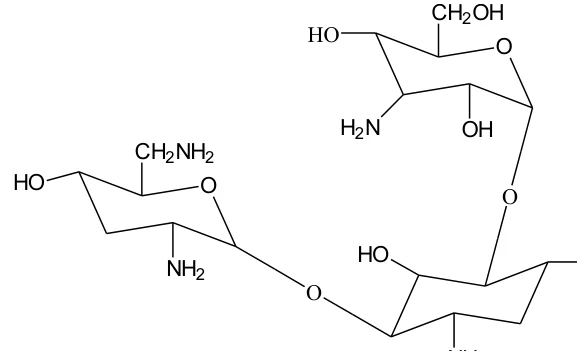
Table 8 - Dosing Regimens in Clinical Studies
| Cycle 1 | Cycle 2 | Cycle 3 | ||||||||||
| 28 Days | 28 Days | 28 Days | 28 Days | 28 Days | 28 Days | |||||||
TOBI regimen n = 258 | TOBI 300 mg BID | no drug | TOBI 300 mg BID | no drug | TOBI 300 mg BID | no drug | ||||||
Placebo regimen n = 262 | placebo BID | no drug | Placebo BID | no drug | placebo BID | no drug | ||||||
BID = twice daily.
All patients received either TOBI or placebo (saline with 1.25 mg quinine for flavoring) in addition to standard treatment recommended for cystic fibrosis patients, which included oral and parenteral anti-pseudomonal therapy, β2-agonists, cromolyn, inhaled steroids, and airway clearance techniques. In addition, approximately 77% of patients were concurrently treated with dornase alfa (PULMOZYME®).
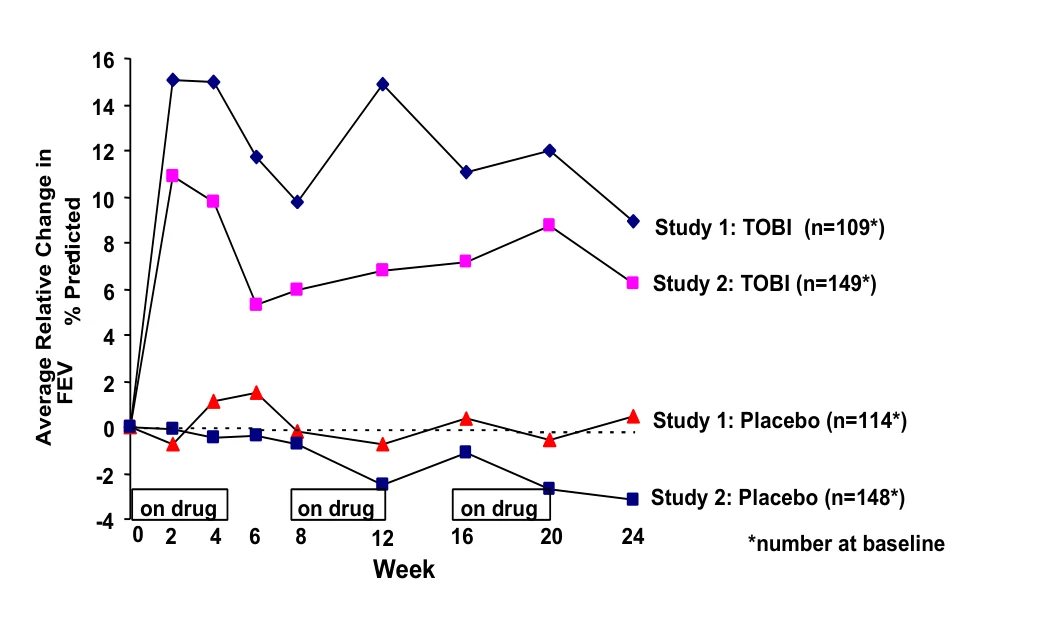
In each study, TOBI-treated patients experienced significant improvement in pulmonary function. Improvement was demonstrated in the TOBI group in Study 1 by an average increase in FEV1 % predicted of about 11% relative to baseline (Week 0) during 24 weeks compared to no average change in placebo patients. In Study 2, TOBI treated patients had an average increase of about 7% compared to an average decrease of about 1% in placebo patients. Figure 1 shows the average relative change in FEV1 % predicted over 24 weeks for both studies.
Figure 1 - Mean Relative Change From Baseline in FEV1 % Predicted
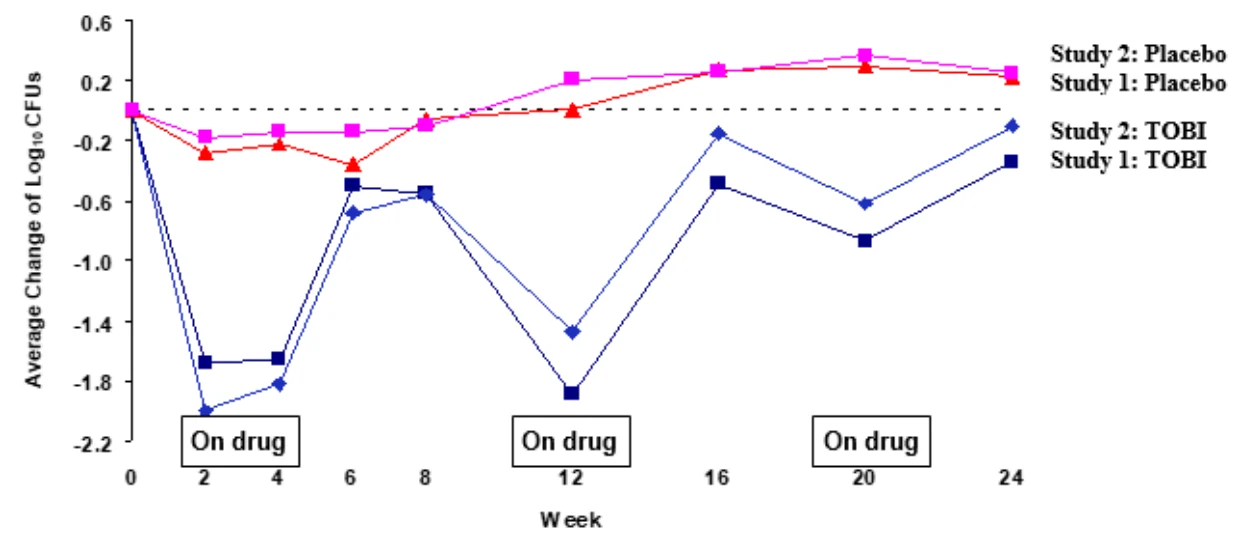
In each study, TOBI therapy resulted in a significant reduction of approximately 1 log in the number of P. aeruginosa colony forming units (CFUs) in sputum during the on-drug periods. Sputum bacterial density returned to baseline during the off-drug periods. Reductions in sputum bacterial density were smaller in each successive cycle (see Figure 2).
Figure 2 - Mean Absolute Change From Baseline in Log10 CFUs
Patients treated with TOBI were hospitalized for an average 5.1 days compared to 8.1 days for placebo patients. Patients treated with TOBI required an average of 9.6 days of parenteral anti-pseudomonal antibiotic treatment compared to 14.1 days for placebo patients. During the six months of treatment, 40% of TOBI patients and 53% of placebo patients were treated with parenteral anti-pseudomonal antibiotics.
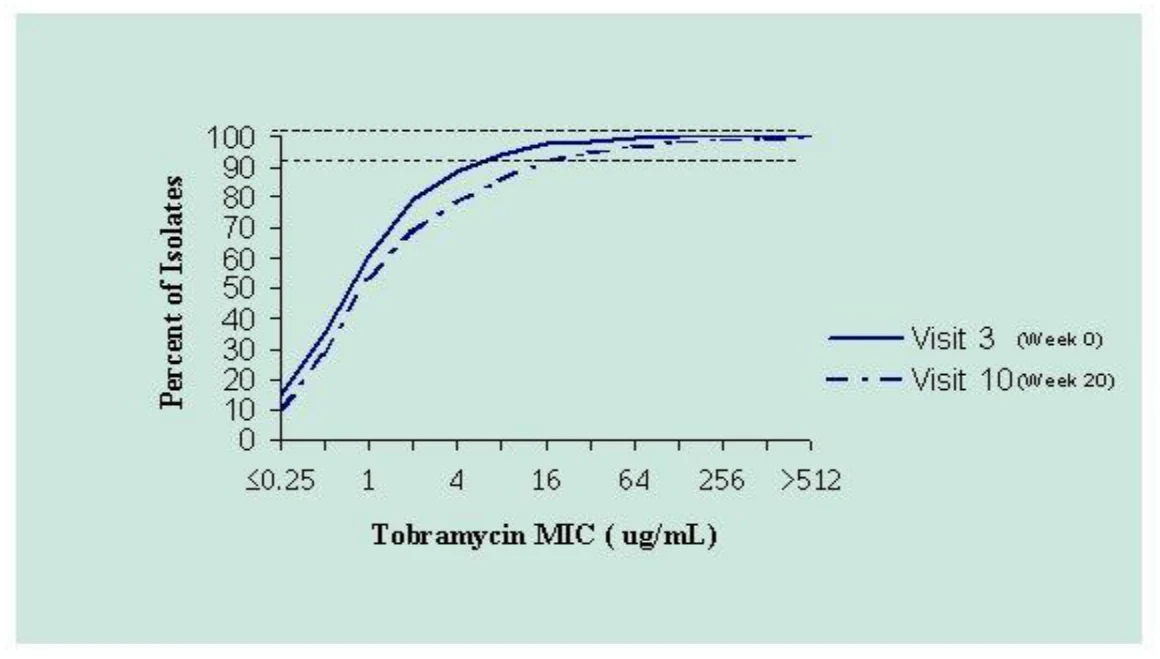
Treatment with TOBI for three cycles was associated with a decline in the in vitro susceptibility of P. aeruginosa isolates to tobramycin compared to placebo. The percentage of patients with P. aeruginosa isolates with tobramycin MICs ≥ 16 µg/mL was 13% at the beginning, and 23% at the end of six months of the TOBI regimen, compared to 10% and 8% in the placebo group.
The relationship between in vitro susceptibility test results and clinical outcome with TOBI therapy is not clear. However, four TOBI patients who began the clinical study with P. aeruginosa isolates having MIC values ≥ 128 µg/mL did not experience an improvement in FEV1 or a decrease in sputum bacterial density.
Over three cycles of therapy with TOBI, the prevalence of S. aureus in sputum tended to decline while that of Aspergillus sp. and C. albicans increased.
15 Microbiology
Tobramycin has in vitro activity against a wide range of gram-negative organisms including P. aeruginosa. It is bactericidal at concentrations equal to or slightly greater than inhibitory concentrations.
- Susceptibility Testing
A single sputum sample from a cystic fibrosis patient may contain multiple morphotypes of P. aeruginosa, and each morphotype may have a different level of in vitro susceptibility to tobramycin.
The in vitro antimicrobial susceptibility test methods used for parenteral tobramycin therapy can be used to monitor the susceptibility of P. aeruginosa isolated from cystic fibrosis patients.
Susceptibility breakpoints established for parenteral administration of tobramycin do not apply to aerosolized administration of TOBI. The relationship between in vitro susceptibility test results and clinical outcome with TOBI therapy is not clear (see 14.1 Clinical Trials by Indication).
As noted in Figure 3, treatment for six months (3 cycles) with TOBI in two clinical studies demonstrated a trend to decreasing in vitro susceptibility of P. aeruginosa isolates which was not observed in the placebo group. The clinical significance of this information has not been clearly established in the treatment of P. aeruginosa in cystic fibrosis patients (see 14.1 Clinical Trials by Indication). Similar decreases in amikacin susceptibility were noted in patients treated with TOBI for three cycles.
Figure 3 - Cumulative Frequency Distribution of Tobramycin MIC Values for All P. aeruginosa Isolates (3 Cycles of TOBI)
- Effects on Respiratory Flora Testing
There was no indication that treatment with TOBI for up to three cycles was associated with increased superinfection with B. cepacia or A. xylosoxidans (see Table 9). From Visit 3 to Visit 10 (Weeks 0 and 20), the number of TOBI patients infected with H. influenzae and S. aureus decreased. There was no apparent change in the number of patients infected with S. pneumoniae. The number of patients in the TOBI group infected with either Aspergillus sp. or C. albicans increased from Visit 3 to Visit 10 (Weeks 0 and 20). The clinical relevance of this finding is not clear (see Table 10).
Table 9 - Number of Patients with Treatment Emergent Infections with Intrinsically Tobramycin Resistant Organisms in Placebo-Controlled Studies
| Pathogen | TOBI | Placebo |
|---|---|---|
| N = 258 (%) | N = 262 (%) | |
| B. cepacia | 0 (0.0) | 1 (0.4) |
| S. maltophilia | 6 (2.3) | 10 (3.8) |
| A. xylosoxidans | 1(0.4) | 3 (1.1) |
Table 10 - Number of Patients From Whom Gram-Positive and Fungal Pathogens Were Recovered (Visits 3 and 10, Weeks 0 and 20) in Placebo-Controlled Studies
| Pathogen | TOBI | Placebo | ||||||||||||
|---|---|---|---|---|---|---|---|---|---|---|---|---|---|---|
Visit 3 N = 258 (%) | Visit 10 N = 234 (%) | Visit 3 N = 262 (%) | Visit 10 N = 234 (%) | |||||||||||
| H. influenzae | 11 (4.3) | 0 (0.0) | 12 (4.6) | 7 (3.0) | ||||||||||
| S. aureus | 109 (42.2) | 78 (33.3) | 91 (34.7) | 93 (39.7) | ||||||||||
| S. pneumoniae | 6 (2.3) | 3 (1.3) | 10 (3.8) | 7 (3.0) | ||||||||||
| Aspergillus sp. | 52 (20.2) | 70 (29.9) | 62 (23.7) | 47 (20.1) | ||||||||||
| C. albicans | 110 (42.6) | 134 (57.3) | 109 (41.6) | 110 (47.0) | ||||||||||
| Other fungal pathogens | 14 (5.4) | 12 (5.1) | 8 (3.0) | 5 (2.1) | ||||||||||
16 Non-Clinical Toxicology
General Toxicology:
- Inhalation Toxicity Studies
To support administration of aerosolized tobramycin to humans, three inhalation studies were conducted: a 14-day rat and guinea pig study, a 14-day rat only study, and a 6-month rat study. Exposure conditions were designed to mimic as closely as possible the clinical setting with respect to daily dosing and aerosol characteristics. It was not possible to determine a classical maximum tolerated dose for TOBI, because guinea pigs and rats could not be held in the exposure system for greater than 3 or 6 hours, respectively, without risking death due to non drug-related phenomena such as dehydration or hypothermia.
Tobramycin aerosols were well tolerated by both rats and guinea pigs, with no overt clinical signs of toxicity nor lethality resulting from treatments up to the highest doses tested.
Carcinogenicity:
A two-year inhalation study in rats to assess the carcinogenic potential of TOBI has been completed. Rats were exposed to TOBI for up to 1.5 hours per day for 95 weeks. Serum levels of tobramycin of up to 35 μg/mL were measured in rats, in contrast to the maximum 3.62 μg/mL level observed in cystic fibrosis patients in clinical trials. There was no drug-related increase in the incidence of any variety of tumor.
Genotoxicity:
No mutagenicity studies have been conducted with TOBI. Tobramycin has been evaluated for genotoxicity in a battery of in vitro and in vivo tests. The Ames bacterial reversion test, conducted with five tester strains, failed to show a significant increase in revertants with or without metabolic activation in all strains. Tobramycin was negative in the mouse lymphoma forward mutation assay, both with or without S9 metabolic activation, at doses up to 5000 μg/mL. Tobramycin did not induce chromosomal aberrations in Chinese hamster ovary cells, with or without metabolic activation, and was negative in the in vivo mouse micronucleus test.
Reproductive and Developmental Toxicology:
No reproduction studies have been conducted with TOBI. However, subcutaneous administration of up to 100 mg/kg tobramycin did not adversely affect mating behavior or cause impairment of fertility in male or female rats.