


Product Monograph - Tryptan
RECENT MAJOR LABEL CHANGES
| NONE |
TABLE OF CONTENTS
Sections or subsections that are not applicable at the time of authorization are not listed.
RECENT MAJOR LABEL CHANGES .................................................................................... 2
TABLE OF CONTENTS ......................................................................................................... 2
PART I: HEALTH PROFESSIONAL INFORMATION.............................................................. 4
1 INDICATIONS............................................................................................................. 4
2 CONTRAINDICATIONS .............................................................................................. 4
4 DOSAGE AND ADMINISTRATION ............................................................................. 4
4.2 Recommended Dose and Dosage Adjustment ................................................... 4
4.4 Administration.................................................................................................... 4
5 OVERDOSAGE .......................................................................................................... 5
6 DOSAGE FORMS, STRENGTHS, COMPOSITION AND PACKAGING ....................... 5
7 WARNINGS AND PRECAUTIONS ............................................................................. 6
8 ADVERSE REACTIONS ............................................................................................. 7
8.1 Adverse Reaction Overview ............................................................................... 7
9 DRUG INTERACTIONS .............................................................................................. 8
9.4 Drug-Drug Interactions....................................................................................... 8
9.5 Drug-Food Interactions ...................................................................................... 8
10 CLINICAL PHARMACOLOGY .................................................................................... 8
10.1 Mechanism of Action .................................................................................... 8
10.3 Pharmacokinetics......................................................................................... 8
11 STORAGE, STABILITY AND DISPOSAL ................................................................... 9
12 SPECIAL HANDLING INSTRUCTIONS ...................................................................... 9
PART II: SCIENTIFIC INFORMATION ................................................................................. 10
13 PHARMACEUTICAL INFORMATION ....................................................................... 10
14 CLINICAL TRIALS ................................................................................................... 11
15 MICROBIOLOGY...................................................................................................... 11
16 NON-CLINICAL TOXICOLOGY ................................................................................ 11
PATIENT MEDICATION INFORMATION ............................................................................. 12
PART I: HEALTH PROFESSIONAL INFORMATION
1 INDICATIONS
TRYPTAN is indicated:
as a valuable adjunct to antidepressant drug treatment in the management of patients suffering from depressive disorders (bipolar affective disorders).
2 CONTRAINDICATIONS
TRYPTAN is contraindicated in patients with known sensitivity to L-tryptophan or any other compound in the formulation (see 7 WARNINGS AND PRECAUTIONS, Sensitivity/Resistance).
4 DOSAGE AND ADMINISTRATION
4.2 Recommended Dose and Dosage Adjustment
Clinical reports on the use of TRYPTAN as an adjunct in the management of affective disorders have indicated the dose of 8-12 g/day to be the most effective one. Lower doses have been reported to be effective in combination with other antidepressants. Some patients may not tolerate 12 g/day but might still benefit from doses reduced to 8 g/day.
The treatment might be initiated with 12 g per day of TRYPTAN, given in 3-4 equally divided doses.
Special Populations and Conditions
A small number of bipolar patients are particularly sensitive to TRYPTAN and will not tolerate higher doses than 1 or 2 g/day. Patients on concomitant medication should be monitored for possible reduction of the concomitant medication since TRYPTAN may enhance their efficacy.
If TRYPTAN is used in the acute treatment of mania in conjunction with lithium it will potentiate some of the side effects associated with lithium such as nausea and vomiting. Thus, often it will be necessary to decrease the lithium dosage especially when it is given in doses above 900-1200 mg/day. In manic-depressive illness chronically treated with lithium, the lithium dose may need to be decreased when TRYPTAN is added because of increased side effects. In these patients TRYPTAN tends to produce an increase in lithium concentrations, thus it is important to monitor the lithium concentration closely for at least two weeks after the addition of TRYPTAN (see 8.1 Adverse Reaction Overview; 9.4 Drug-Drug interactions).
With some of the more sedative neuroleptics and antidepressants, if TRYPTAN is added, an increased incidence of sedation may occur (see 9.4 Drug-Drug interactions).
4.4 Administration
Administration with meals or snacks is recommended to reduce the incidence of nausea. The dose and frequency of administration may have to be adjusted to the patients’ need and tolerance (see 9.5 Drug-Food Interactions).
5 OVERDOSAGE
Symptoms of overdosage would include vomiting and might include serotonin syndrome symptoms. Treatment of overdosage would be symptomatic with close monitoring and support of vital systems as necessary (see 7 WARNINGS AND PRECAUTIONS, General, Serotonin syndrome).
| For management of a suspected drug overdose, contact your regional poison control centre. |
6 DOSAGE FORMS, STRENGTHS, COMPOSITION AND PACKAGING
Table 1 – Dosage Forms, Strengths, Composition and Packaging
- TRYPTAN 500 mg capsules: each opaque white capsule, size No. 00 imprinted with ICN T17, contains 500 mg of L-tryptophan, USP. Bottles of 100 capsules.
- TRYPTAN 250 mg tablets: each white, oval-shaped film coated tablet, embossed 'TRYPTAN' on one side, and “250 mg” on the other side, contains 250 mg of L-tryptophan, USP. Bottles of 100 tablets.
- TRYPTAN 500 mg tablets: each white, oval-shaped, biconvex film coated tablet embossed 'TRYPTAN' on one side, and “500 mg” on the other, contains 500 mg of L-tryptophan, USP. Bottles of 100 tablets.
- TRYPTAN 750 mg tablets: each white, oval-shaped film coated tablet, embossed 'TRYPTAN' on one side and “750 mg” on the other side, contains 750 mg of L-tryptophan, USP. Bottles of 100 tablets.
- TRYPTAN 1 g tablets: each white, oval-shaped film coated tablet, embossed 'TRYPTAN' 1 g’ on one side, contains 1 g of L-tryptophan, USP. Bottles of 100 tablets.
| Route of Administration | Dosage Form / Strength/Composition | Non-medicinal Ingredients |
| Oral | 500 mg Capsules | Magnesium Stearate and Talc |
| Oral | 250 mg, 500 mg, 750 mg and 1g Tablets | Calcium Phosphate, Croscarmellose Sodium, Magnesium Stearate, Methylcellulose, Opadry II White, Film Coating Base Solution (includes: Polyvinyl Alcohol, Macrogol/PEG, Titanium Dioxide, and Talc) |
7 WARNINGS AND PRECAUTIONS
General
- Monoamine Oxidase Inhibitors (MAOIs)
TRYPTAN is not recommended in patients taking monoamine oxidase inhibitors (MAOIs including linezolid, methylene blue) or within 14 days of such therapy. The combination of MAOIs and tryptophan has been reported to cause behaviour and neurologic syndromes including disorientation, confusion, amnesia, delirium, agitation, hypomanic signs, ataxia, myoclonus, hyperreflexia, shivering, ocular oscillations and Babinski signs (see 9.4 Drug-Drug Interactions).
- Serotonin Syndrome
There have been rare reports of serotonin syndrome with the concomitant use of TRYPTAN and serotonergic drugs. Serotonin toxicity also known as serotonin syndrome is a potentially life-threatening condition and has been reported during the use of TRYPTAN. Serotonin toxicity is characterised by neuromuscular excitation, autonomic stimulation (e.g. tachycardia, flushing) and altered mental state (e.g. anxiety, agitation, hypomania). In accordance with the Hunter Criteria, serotonin toxicity diagnosis is likely when, in the presence of at least one serotonergic agent, one of the following is observed:
- Spontaneous clonus
- Inducible clonus or ocular clonus with agitation or diaphoresis
- Tremor and hyperreflexia
- Hypertonia and body temperature >38°C and ocular clonus or inducible clonus
If concomitant treatment with TRYPTAN and other serotonergic agents is clinically warranted, careful observation of the patient is advised, particularly during treatment initiation and dose increases (see 9.4 Drug-Drug Interactions). If serotonin toxicity is suspected, discontinuation of the serotonergic agents should be considered.
Carcinogenesis and Mutagenesis
To minimize the risk of bladder cancer, it may be recommended to give vitamin B6 supplements if the TRYPTAN doses are many times in excess of those consumed normally in dietary protein. An increased incidence rate of bladder cancer has been observed in experimental animals after implantation of pellets containing any of the seven tryptophan metabolites formed by tryptophan pyrrolase. Active metabolites included kynurenine,3-hydroxykynurenine, 3-hydroxyanthranillic acid, and xanthurenic acid, but not tryptophan itself. Vitamin B6 has been reported to correct the metabolism of TRYPTAN and to reduce the metabolites to normal levels. A large study carried out by the National Cancer Institute did not find TRYPTAN to produce cancer in either rats or mice. Elevated levels of TRYPTAN metabolites in the urine have been reported in bladder cancer patients relative to controls, in patients who had a recurrence of cancer relative to those who did not and in patients taking oral contraceptives or hormones (see 16 NON CLINICAL TOXICOLOGY, Carcinogenicity).
Driving and Operating Machinery
Exercise caution when driving or operating a vehicle or potentially dangerous machinery.
Endocrine and Metabolism
Xanthurenic acid, which is increased on TRYPTAN loading, has a diabetogenic action in animals, possibly due to its ability to bind insulin, suggesting caution in the use of tryptophan in patients with a family history of diabetes (see 16 NON CLINICAL TOXICOLOGY, General).
Gastrointestinal
In ruminants, oral TRYPTAN caused pulmonary edema and emphysema, mediated by bacterial conversion of TRYPTAN to skatole (3-methylindole). This is not normally of concern in humans except where bacteria exist high in the gastrointestinal tract due to conditions such as achlorhydria, or where TRYPTAN reaches the bacterial populations lower in the gastrointestinal tract due to malabsorption.
Ophthalmologic
Animal data suggest that photooxidation of TRYPTAN and some of its metabolites, such as kynurenine, may be involved in cataract formation. Although there is no evidence that this occurs in humans, TRYPTAN administration is likely to raise lenticular tryptophan and kynurenine concentrations, and this might make subjects more susceptible to cataract formation, particularly if exposed to ultraviolet light.
Sensitivity/Resistance
There have been reports of hypersensitivity reactions (myalgia, oedema, pruritus, rash, urticaria and wheezing) with the use of TRYPTAN. Patients should be instructed to see their doctor if they develop any of these signs or symptoms.
TRYPTAN should not be given to patients suffering from the above conditions or should be prescribed only under close supervision (see 2 CONTRAINDICATIONS).
8 ADVERSE REACTIONS
8.1 Adverse Reaction Overview
- TRYPTAN, in doses below 5 g/day may cause dry mouth and drowsiness. In higher doses (9-12 g/day) nausea, anorexia, dizziness and headache have been reported (see 4.4 Administration).
- Side effects disappear when medication is continued and, in most cases, only a light dizziness may persist.
- Sexual disinhibition has been reported in some patients with emotional disorders.
TRYPTAN, when given with lithium, might increase some side effects associated with
- lithium therapy by potentiating the lithium effect (nausea, vomiting, dermatological eruptions, psoriasis, alopecia) (see 9.4 Drug-Drug Interactions).
9 DRUG INTERACTIONS
9.4 Drug-Drug Interactions
Drug interactions between tryptophan and other central nervous system (CNS) affecting drugs have been reported. A higher occurrence of side effects was reported when tryptophan was given in combination with mono-amino-oxidase inhibitors (MAOI). The most common side effects caused by this drug combination were dizziness, nausea and headache. At a dosage of 20-50 mg/kg tryptophan in addition to MAOI, the following side effects have been reported: ethanol-like intoxication, drowsiness, hyperreflexia and clonus. Single case reports of adverse reactions to the drug combination include hypomanic behavior, ocular oscillation, ataxia, and myoclonus. Some of these reactions resemble the "serotonin syndrome" seen in experimental animals, which consists of tremor, hypertonus, myoclonus, and hyperreactivity. These symptoms disappear soon after cessation of tryptophan, and no detrimental long-term effects have been reported (see 7 WARNINGS AND PRECAUTIONS, General, Serotonin Syndrome and 16 NON CLINICAL TOXICOLOGY, General).
When tryptophan was given in combination with fluoxetine, the following side-effects have been reported, but disappeared as soon as the medication was discontinued. Neither drug alone caused similar side-effects: agitation, restlessness, poor concentration, nausea, diarrhea, and worsening of obsessive-compulsive disorder.
An adjunctive effect has been observed in some case when TRYPTAN is given in combination with lithium in bipolar patients with mania or depression for whom lithium alone or in combination with neuroleptics or tricyclics has shown little or no effect. Clinical observations suggest the possibility that the combination of lithium and TRYPTAN may reduce the need for the higher, more toxic doses of lithium necessary to control acute mania.
9.5 Drug-Food Interactions
Patients taking high doses of TRYPTAN should not be protein deprived since an amino acid imbalance can ensue (see 4.4 Administration).
10 CLINICAL PHARMACOLOGY
10.1 Mechanism of Action
The rationale for the use of L-tryptophan in affective disorders is based on clinical findings more than 20 years ago, that L-tryptophan increases 5-HT (serotonin) synthesis in the central nervous system of humans. It has been demonstrated in clinical trials that oral ingestion of L-tryptophan in humans caused a significant increase in the level of the serotonin metabolite, 5-hydroxyindoleacetic acid (5-HIAA), in the lumbar cerebrospinal fluid, indicating an increased turnover of serotonin in the CNS.
10.3 Pharmacokinetics
L-Tryptophan is one of the eight essential amino acids. The minimum daily requirements are said to be 0.25 g for males and 0.15 g for females. It is present in the hydrolysates of most proteins, the average western diet containing between 1 and 3 grams per day. There are two major metabolic pathways for L-tryptophan, the first to serotonin, the second to nicotinic acid. Approximately 98 % of dietary L-tryptophan is metabolized into nicotinic acid and only a very small amount is being metabolized to serotonin via the intermediary stage of 5-hydroxy-tryptophan (5-HTP). Tryptophan hydroxylase, the enzyme responsible for this step, is the rate-limiting enzyme for serotonin production and is normally only about half-saturated. Central nervous system serotonin is metabolized by monoamine oxidase to 5-HIAA.
11 STORAGE, STABILITY AND DISPOSAL
Store at controlled room temperature (15 - 30ºC). Protect from heat and light
12 SPECIAL HANDLING INSTRUCTIONS
No special handling instructions are required for this product.
PART II: SCIENTIFIC INFORMATION
13 PHARMACEUTICAL INFORMATION
Drug Substance
Proper name: L-tryptophan, USP
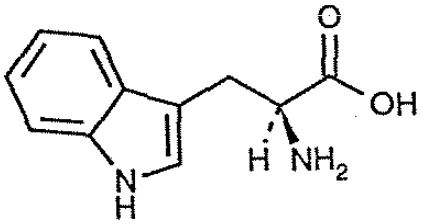
Chemical name: L-2-Amino-3-(indol-3-yl) propionic acid
Molecular formula and molecular mass: C11H12N2O2, 204.23 g/mol
Structural formula:
Physicochemical properties:
Description: White to slightly yellowish-white crystals or crystalline powder with a slightly bitter taste.
Solubility: It is soluble in 11.4 g in 1 L of water, slightly soluble in alcohol; practically insoluble in chloroform and ether; soluble in hot alcohol and solutions of dilute acids and alkali hydroxides.
pH: A 1 % solution in water has a pH of 5.5 to 7.0.
14 CLINICAL TRIALS
The clinical trial data based on which the original indication was initially authorized are not available.
15 MICROBIOLOGY
No microbiological information is required for this drug product.
16 NON-CLINICAL TOXICOLOGY
General Toxicology
In animals the toxicity of parenterally administered tryptophan and other amino acids is attributed to ammonia poisoning. In rabbits, it causes histopathological changes in the kidney tubules, and large amounts given in conjunction with a low-protein diet cause death within a few days. It provokes a severe hyperglycemia which in the case of the l-isomer is not sustained since the animals die in a hypoglycemic state. L-tryptophan in toxic doses also causes marked glycosuria and loss of glycogen from skeletal muscle and liver. Some L-tryptophan metabolites cause experimental lymphomas or leukemias. The LD50 for L-tryptophan in the rat is 1.6 g/kg.
L-tryptophan has been shown to cause hyperglycemia in rat and man, to inhibit gluconeogenesis in rat and man and to promote lipogenesis both in the fasted rat and the fed animal. Patients with scleroderma may exhibit abnormal L-tryptophan metabolism and studies have been carried out in an attempt to reveal a possible relationship between tryptophan and scleroderma. A high dose of serotonin administered subcutaneously for 30 days or more to rats was found to result in a scleroderma-like lesion. It is conceivable that the appearance of a sclerodermatous lesion can be initiated by different factors, among them a high level of kynurenine or metabolites of L-tryptophan, or of serotonin.
Carcinogenicity
Carcinogenicity of L-tryptophan has been reviewed based on early findings relating bladder tumors in rats to aromatic amines and L-tryptophan. Experiments designed to provoke urinary bladder tumors by oral or subcutaneous administration of L-tryptophan or its metabolites, have generally given negative results. Tests performed on behalf of the National Cancer Institute (Bethesda, MD), using male and female rats and mice given large supplements of L-tryptophan for prolonged periods did not show a statistically significant occurrence of neoplasms as compared to controls. Under the bioassay, L-tryptophan was not carcinogenic for the strains of animals used. L-tryptophan and its tested metabolites have not exhibited intrinsic carcinogenic action. L-tryptophan has, however, been reported to promote or inhibit the carcinogenic action of a variety of known carcinogens.