


Product Monograph - Vyvgart SC
Recent Major Label Changes
None at time of the most recent authorization.
Table of Contents
Certain sections or subsections that are not applicable at the time of the preparation of the most recent authorized product monograph are not listed.
Recent Major Label Changes ................................................................................................... 2
Table of Contents ................................................................................................................... 2
Part 1: Healthcare Professional Information ........................................................................... 4
1 Indications .................................................................................................................. 4
1.1 Pediatrics .............................................................................................................. 4
1.2 Geriatrics .............................................................................................................. 4
2 Contraindications ........................................................................................................ 4
4 Dosage and Administration ......................................................................................... 4
4.1 Dosing Considerations .......................................................................................... 4
4.2 Recommended Dose and Dosage Adjustment ..................................................... 4
4.3 Reconstitution ...................................................................................................... 5
4.4 Administration ...................................................................................................... 5
4.5 Missed Dose ......................................................................................................... 6
5 Overdose..................................................................................................................... 6
6 Dosage Forms, Strengths, Composition, and Packaging ............................................... 6
7 Warnings and Precautions ........................................................................................... 7
Immune ............................................................................................................................ 7
Reproductive Health ........................................................................................................ 7
Sensitivity/Resistance ....................................................................................................... 7
7.1 Special Populations ............................................................................................... 7
7.1.1 Pregnancy ......................................................................................................... 7
7.1.2 Breastfeeding ................................................................................................... 8
7.1.3 Pediatrics .......................................................................................................... 8
7.1.4 Geriatrics .......................................................................................................... 8
8 Adverse Reactions ....................................................................................................... 8
8.1 Adverse Reaction Overview .................................................................................. 8
8.2 Clinical Trial Adverse Reactions ............................................................................ 9
8.3 Less Common Clinical Trial Adverse Reactions ................................................... 11
8.5 Post-Market Adverse Reactions ......................................................................... 11
9 Drug Interactions ...................................................................................................... 11
9.2 Drug Interactions Overview ................................................................................ 11
9.3 Drug-Behaviour Interactions .............................................................................. 11
9.4 Drug-Drug Interactions ....................................................................................... 12
9.5 Drug-Food Interactions ....................................................................................... 12
9.6 Drug-Herb Interactions ....................................................................................... 12
9.7 Drug-Laboratory Test Interactions ...................................................................... 12
10 Clinical Pharmacology ............................................................................................... 12
10.1 Mechanism of Action .......................................................................................... 12
10.2 Pharmacodynamics ............................................................................................ 12
10.3 Pharmacokinetics ............................................................................................... 13
10.4 Immunogenicity .................................................................................................. 14
11 Storage, Stability, and Disposal ................................................................................. 14
Part 2: Scientific Information ................................................................................................ 15
13 Pharmaceutical Information ...................................................................................... 15
14 Clinical Trials ............................................................................................................. 15
14.1 Clinical Trials by Indication ................................................................................. 15
Generalized Myasthenia Gravis (gMG) ........................................................................... 15
Chronic Inflammatory Demyelinating Polyneuropathy (CIDP) ....................................... 20
16 Non-clinical Toxicology .............................................................................................. 22
17 Supporting Product Monographs .............................................................................. 24
Patient Medication Information ........................................................................................... 25
Instructions for Use (Prefilled Syringe) ................................................................................. 29
Part 1: Healthcare Professional Information
1 Indications
VYVGART® SC (efgartigimod alfa injection) is indicated:
- for the treatment of adult patients with generalized myasthenia gravis (gMG) who are anti-acetylcholine receptor (AChR) antibody positive.
- as a monotherapy for adult patients with active chronic inflammatory demyelinating polyneuropathy (CIDP).
1.1 Pediatrics
Pediatrics (˂ 18 years of age): The safety and efficacy of VYVGART SC in children and adolescents below the age of 18 years has not been established. VYVGART SC is not indicated for use in pediatric patients.
1.2 Geriatrics
Geriatrics (≥ 65 years of age): Twenty two percent of patients (12/55 patients with gMG and 25/111 patients with CIDP) aged 65 and over were treated with VYVGART SC in randomized controlled studies. Although no apparent age-related differences were observed in efficacy and safety, the number of patients aged 65 and over is insufficient to determine whether they respond differently from younger adult patients.
2 Contraindications
VYVGART SC is contraindicated in patients who are hypersensitive to this drug or to any ingredient in the formulation (efgartigimod alfa, hyaluronidase), including any non-medicinal ingredient, or component of the container. For a complete listing, see 6 Dosage Forms, Strengths, Composition, and Packaging.
4 Dosage and Administration
4.1 Dosing Considerations
VYVGART SC is a ready to use solution for injection in a single-use prefilled syringe which does not need to be diluted. VYVGART SC is for subcutaneous use only. Do not administer VYVGART SC intravenously.
4.2 Recommended Dose and Dosage Adjustment
Generalized Myasthenia Gravis
The recommended dose of VYVGART SC is 1000 mg efgartigimod alfa administered subcutaneously in cycles of once weekly injections for 4 weeks.
Administer subsequent treatment cycles according to clinical evaluation. The frequency of VYVGART SC treatment cycles may vary by patient.
For patients currently receiving efgartigimod alfa intravenously, the solution for subcutaneous injection may be used as an alternative. It is recommended to switch between formulations at the start of a new treatment cycle. No safety and efficacy data in patients switching formulations during the same cycle is available.
Chronic Inflammatory Demyelinating Polyneuropathy
The recommended dose of VYVGART SC is 1000 mg efgartigimod alfa administered subcutaneously as once-weekly injections.
For patients transitioning from other CIDP therapies, VYVGART SC treatment should preferably be initiated before the clinical effect of these prior therapies starts to decrease.
Clinical response is usually achieved within 3 months of initiation of treatment with VYVGART SC. Clinical evaluation should be considered 3-6 months after treatment initiation to assess the treatment effect and at regular intervals thereafter.
Pediatrics (˂ 18 years of age): The safety and efficacy of VYVGART SC in children and adolescents below the age of 18 years has not been established. VYVGART SC is not indicated for use in pediatric patients.
Geriatrics (≥ 65 years of age): Clinical studies of VYVGART SC did not include sufficient numbers of patients aged 65 and older to determine whether they respond differently from younger adult patients (see 1.2 Geriatrics).
Renal Impairment: No dose adjustment of VYVGART SC is needed for patients with mild renal impairment. There are insufficient data to evaluate the impact of moderate renal impairment (eGFR 30-59 mL/min/1.73 m²) and severe renal impairment (eGFR <30 mL/min/1.73 m²) on pharmacokinetic parameters of VYVGART SC (see 10 Clinical Pharmacology).
4.3 Reconstitution
Parenteral Products:
No reconstitution is required for VYVGART SC.
4.4 Administration
Initially, VYVGART SC must be administered by a healthcare professional. After proper instruction in subcutaneous injection technique, a patient may self-inject VYVGART SC using the prefilled syringe or the patient's caregiver may administer VYVGART SC if a healthcare professional determines that it is appropriate (see Instructions for Use).
During the administration of efgartigimod alfa, appropriate treatment for injection and hypersensitivity-related reactions should be readily available.
- Take the VYVGART SC prefilled syringe out of the refrigerator at least 30 minutes before injecting to allow it to reach room temperature. Do not use external heat sources.
- Visually inspect that the prefilled syringe solution is yellowish, clear to opalescent and devoid of particulate matter. If visible particles are observed, the prefilled syringe must not be used.
- Use aseptic technique when preparing for and during administering VYVGART SC. Do not shake the prefilled syringe. Each prefilled syringe is for single-use only.
- To administer VYVGART SC prefilled syringe, use a safety needle 25G, 5/8 inches (16mm) length thin wall which is not included in the pack.
- Connect the syringe to the needle.
Choose an injection site on the abdomen (at least 2 inches (5 cm) away from the navel).
- Do not inject into areas where the skin is red, bruised, tender, hard, or into areas where there are moles or scars.
- Rotate injection sites for subsequent administrations.
Inject VYVGART SC prefilled syringe subcutaneously into a pinched skin area at an angle of 45
- to 90 degrees for approximately 20 to 30 seconds.
- VYVGART SC does not contain preservatives. Administer immediately after preparation. Discard any unused portions of medicine remaining in the syringe.
- Hypersensitivity-related reactions, including anaphylaxis and localized injection site reactions may occur after VYVGART SC is administered. Monitor patients/self-monitor for clinical signs and symptoms of these reactions, see 7 Warnings and Precautions, Sensitivity, Resistance.
4.5 Missed Dose
An interval of at least 3 days should be observed between two consecutive administrations. When administrations cannot be done at the scheduled time point, they should be performed as soon as possible and at least 3 days ahead of the following administration. If there are less than 3 days to the next administration, the missed dose should be skipped and the next dose should be administered at the scheduled time point.
5 Overdose
There are no known specific signs and symptoms of overdose with VYVGART SC. In the event of an overdose the adverse events are not expected to be different from those observed at the recommended dose. Patients should be monitored for adverse reactions and appropriate symptomatic and supportive treatment initiated. There is no specific antidote for overdose with VYVGART SC.
| For the most recent information in the management of a suspected drug overdose, contact your regional poison control centre or Health Canada’s toll-free number, 1-844 POISON-X (1-844-764-7669). |
|---|
6 Dosage Forms, Strengths, Composition, and Packaging
To help ensure the traceability of biologic products, healthcare professionals should record both the brand name and the non-proprietary (active ingredient) name as well as other product-specific identifiers such as the Drug Identification Number (DIN) and the batch/lot number of the product supplied.
Table 1: Dosage Forms, Strengths, and Composition
| Route of Administration | Dosage Form / Strength/Composition | Non-medicinal Ingredients |
| Subcutaneous | Solution, 200 mg/mL efgartigimod alfa | Hyaluronidase (rHuPH20), L-arginine hydrochloride, L-histidine, L-histidine hydrochloride monohydrate, L-methionine, polysorbate 80, sodium chloride, sucrose, water for injection |
Description
VYVGART SC (efgartigimod alfa injection) is a sterile, preservative-free, yellowish, clear to opalescent solution for subcutaneous injection. VYVGART SC is supplied as 1000 mg efgartigimod alfa per 5 mL (200 mg/ml) in a single-use prefilled syringe.
Hyaluronidase (human recombinant) is an endoglycosidase used to increase the dispersion and absorption of co-administered drugs when administered subcutaneously.
7 Warnings and Precautions
Immune
Infections
As VYVGART SC causes a reduction in IgG levels, the risk of infections may increase. The most common infections observed in clinical trials were upper respiratory tract infections and urinary tract infections. While the majority of infections were mild to moderate in severity, serious infections were reported. See 8.2 Clinical Trial Adverse Reactions. Monitor for clinical signs and symptoms of infections during treatment with VYVGART SC. Delay VYVGART SC administration in patients with an active infection until the infection is resolved. If a serious infection occurs, administer appropriate treatment and consider withholding VYVGART SC until the infection has resolved.
Immunization
Administer all vaccines according to immunization guidelines at least 4 weeks before initiation of treatment with VYVGART SC.
The safety of immunization with live vaccines and the immune response to vaccination during treatment with VYVGART SC are unknown. Because VYVGART SC causes a reduction in IgG levels, vaccination with live vaccines is not recommended during treatment with VYVGART SC.
For all other vaccines, vaccination should take place at least 2 weeks after the last injection of a treatment cycle and 4 weeks before initiating the next cycle.
Reproductive Health
Fertility
There is no clinical experience with VYVGART SC use and its potential effect on fertility.
Sensitivity/Resistance
Injection-related reactions and hypersensitivity, including anaphylaxis
Hypersensitivity reactions such as rash, pruritus or anaphylactic reactions may occur. In clinical trials, these were mild to moderate. (Self-) monitor for clinical signs and symptoms of hypersensitivity reactions for 30 minutes after administration. Cases of anaphylaxis were reported in the post-market setting. Should a reaction occur, institute appropriate supportive measures. Subsequent injections may be cautiously administered, based on clinical evaluation. If an anaphylactic reaction is suspected, administration of VYVGART SC should be immediately discontinued and appropriate medical treatment initiated.
Patients should be informed of the signs and symptoms of hypersensitivity reactions and advised to contact their healthcare provider immediately should they occur.
7.1 Special Populations
7.1.1 Pregnancy
There are no available clinical data on the use of VYVGART SC during pregnancy.
Treatment of pregnant women with VYVGART SC should only be considered if the clinical benefit outweighs the risks.
No reproductive and developmental toxicity studies have been conducted with subcutaneously administered efgartigimod co-formulated with hyaluronidase (rHuPH20). Reproductive and developmental toxicity studies were conducted in rats and rabbits administered efgartigimod by IV injection. Reproductive and developmental toxicity studies were conducted in mice administered rHuPH20 by SC injection. See 16 Non-clinical Toxicology.
Monoclonal antibodies are increasingly transported across the placenta as pregnancy progresses, with the largest amount transferred during the third trimester. Therefore, VYVGART SC may be transmitted from the mother to the developing fetus. As VYVGART SC is expected to reduce maternal IgG antibody levels and to inhibit the transfer of maternal antibodies to the fetus, reduction in passive protection to the newborn is anticipated. Risk and benefits should be considered prior to administering live or live-attenuated vaccines to infants exposed to VYVGART SC in utero.
7.1.2 Breastfeeding
There is no information regarding the presence of efgartigimod alfa in human milk, the effects on the breastfed infant, or the effects on milk production. Maternal IgG is known to be present in human milk. A risk to the breastfed newborn/infant cannot be excluded.
The developmental and health benefits of breastfeeding and the mother's clinical need for VYVGART SC should be considered, as well as any potential adverse effects on the breastfed infant from VYVGART SC or from the underlying maternal condition.
7.1.3 Pediatrics
Pediatrics (˂18 years): The safety and efficacy of VYVGART SC in children and adolescents below the age of 18 years has not been established. VYVGART SC is not indicated for use in pediatric patients.
7.1.4 Geriatrics
Geriatrics (≥ 65 years of age): Twelve (12/55 patients with gMG) and twenty-five (25/111 patients with CIDP) aged 65 and over were treated with VYVGART SC in a randomized controlled parallel group study and a randomized placebo-controlled study. Although no apparent age-related differences were observed in efficacy and safety, the number of patients aged 65 and over is not sufficient to determine whether they respond differently from younger adult patients.
8 Adverse Reactions
8.1 Adverse Reaction Overview
Generalized Myasthenia Gravis (gMG)
The safety of efgartigimod alfa in patients with gMG was established in a double blinded placebo-controlled study (ARGX-113-1704, VYVGART) and its open-label extension, and in an active-controlled study (ARGX-113-2001, VYVGART and VYVGART SC) and its open label extension.
In the placebo-controlled Phase 3 Study ARGX-113-1704, as reported in the Product Monograph for VYVGART (IV formulation), the most common adverse reactions (≥ 10%) seen in patients who received at least one dose of VYVGART (IV formulation) included headache (reported by 32% of VYVGART-treated patients and 29% of placebo-treated patients), upper respiratory tract infection (reported by 11% of VYVGART-treated patients and 5% of placebo-treated patients), and urinary tract infection (reported by 10% of VYVGART-treated patients and 5% of placebo-treated patients) (Table 2). Adverse reactions of severity Grade ≥3 (according to the Common Terminology Criteria for Adverse Events) were reported by 11% (9/84) of VYVGART-treated patients and 10% (8/83) of placebo-treated patients. The proportion of patients treated with VYVGART who discontinued treatment due to adverse reactions was 4% (3/84).
In study ARGX-113-2001, 110 patients were randomized and received one cycle of once weekly administrations for 4 weeks, of either VYVGART SC (n=55) or VYVGART (IV formulation) (n=55) at recommended doses. Injection site reactions (ISRs) occurred in 33% of patients receiving VYVGART SC. These were injection site rash, injection site erythema, injection site pruritus and injection site pain. All ISRs were mild to moderate in severity and did not lead to treatment discontinuation. The majority occurred within 24 hours after administration and resolved spontaneously. Most ISRs occurred during the first treatment cycle. The incidence of ISRs decreased with each subsequent cycle.
The most frequently observed adverse reactions in patients treated with VYVGART IV (≥ 10%) were upper respiratory tract infections and urinary tract infections. The most frequently observed adverse reactions in patients treated with VYVGART SC (≥ 10%) were injection site reactions.
Chronic Inflammatory Demyelinating Polyneuropathy (CIDP)
In a placebo-controlled study in patients with CIDP (ARGX-113-1802, stage B), 221 patients were randomized and received once-weekly administration of either VYVGART SC at 1000 mg subcutaneously (n=111) or placebo (n=110). The mean (SD) duration of treatment with VYVGART SC in stage B was 25.1 (17.17) weeks. The overall safety profile observed in patients with CIDP treated with VYVGART SC was generally consistent with the overall safety profile of VYVGART SC and of VYVGART (IV formulation). In Part A, the most common adverse reactions were injection site erythema (10.2%). None of these events led to discontinuation of study treatment. In Part B, the most common adverse reactions were COVID-19 (17.1%). None of these events led to discontinuation of study treatment. The overall safety profile of continuous weekly administrations of VYVGART SC in CIDP was generally consistent with the known safety profile of cyclic administration of the intravenous formulation in gMG.
8.2 Clinical Trial Adverse Reactions
Clinical trials are conducted under very specific conditions. Therefore, the frequencies of adverse reactions observed in the clinical trials may not reflect frequencies observed in clinical practice and should not be compared to the frequencies reported in clinical trials of another drug.
Generalized Myasthenia Gravis (gMG)
Information in this section from study ARGX-113-1704 reports data from a separate Product Monograph for VYVGART (IV formulation)
Study ARGX-113-1704
In the placebo-controlled Phase 3 study (ARGX-113-1704) in patients with gMG, 84 patients received VYVGART 10 mg/kg. See 14 Clinical Trials. The frequency of VYVGART treatment cycles at the recommended dose regimen varied by patient. The safety of initiating subsequent cycles sooner than 4 weeks from the last infusion of the previous treatment cycle has not been established.
A total of 21/84 (25%) patients on VYVGART received a single treatment cycle, 56/84 (67%) patients received 2 treatment cycles, and 7/84 (8%) patients received 3 treatment cycles. The mean and median times to the second treatment cycle were 94 days and 72 days from the initial infusion of the first treatment cycle, respectively.
Adverse reactions reported in at least 5% of patients treated with VYVGART and more frequently than placebo (≥ 3 patients) are summarized in Table 2.
Table 2: Adverse Reactions Reported in ≥ 5% of Patients with Myasthenia Gravis Treated With VYVGART and More Frequently Than in Placebo-Treated Patients (≥ 3 patients) in Study ARGX-113-1704
| Adverse Reaction | VYVGART (N=84) n (%) | Placebo (N=83) n (%) | |||
|---|---|---|---|---|---|
| Infections And Infestations | |||||
| Bronchitis | 5 (6) | 2 (2) | |||
| Upper Respiratory Tract Infection | 9 (11) | 4 (5) | |||
| Urinary Tract Infection | 8 (10) | 4 (5) | |||
| Injury, Poisoning and Procedural Complications | |||||
| Headache* | 27 (32) | 24 (29) | |||
| Musculoskeletal and Connective Tissue Disorders | |||||
| Myalgia | 5 (6) | 1 (1) | |||
*Headache includes migraine and procedural headache (for IV formulation only)
Infections
The most frequently reported adverse reactions were infections. Overall, treatment emergent infections were reported in 46% (n=39) of patients treated with VYVGART and 37% (n=31) of patients treated with placebo. The most reported infections were upper respiratory tract infections and urinary tract infections. A higher frequency of patients who received VYVGART compared to placebo were observed to have below normal levels for white blood cell counts (12% versus 5%, respectively), lymphocyte counts (28% versus 19%, respectively), and neutrophil counts (13% versus 6%, respectively). The majority of infections and hematology abnormalities were mild to moderate in severity. Serious infections have been reported in patients treated with VYVGART.
Procedural headache
Procedural headache was reported in 4.8% of the patients treated with VYVGART and 1.2% of patients treated with placebo. Procedural headache was reported when a headache was judged to be temporally related to the intravenous infusion of VYVGART. All were mild or moderate except one event which was reported as severe (Grade 3).
Study ARGX-113-2001
In study ARGX-113-2001, the most common adverse reactions (reported in at least 10% of VYVGART SC-treated patients) were injection site reactions. See 8.1 Adverse Reaction Overview. The overall safety profile for VYVGART SC was generally consistent with the safety profile of VYVGART (IV formulation).
Chronic Inflammatory Demyelinating Polyneuropathy (CIDP)
In a placebo-controlled study in patients with CIDP (ARGX-113-1802, stage B), 221 patients were randomized and received once-weekly administration of either EFG SC at 1,000 mg / 11,200 Units subcutaneously (n=111) or placebo (n=110). The mean (SD) duration of treatment with VYVGART SC in stage B was 25.1 (17.17) weeks.
The overall safety profile observed in patients with CIDP treated with VYVGART SC was generally consistent with the known safety profile of VYVGART. The most common adverse reactions were injection site reactions, which occurred in 15% of VYVGART SC-treated patients compared to 6% of patients who received placebo. The most common of these injection site reactions were injection site bruising and injection site erythema. All injection site reactions were mild to moderate in severity. Most injection site reactions occurred during the first 3 months of treatment.
8.3 Less Common Clinical Trial Adverse Reactions
Generalized Myasthenia Gravis (gMG)
Information in this section reports data from a separate Product Monograph for VYVGART (IV formulation).
Less common clinical trial adverse reactions occurring in ˂5% of patients with gMG treated with VYVGART and more frequently than in placebo-treated patients (≥ 2 patients) in Study ARGX-113-1704 are as follows:
Eye Disorders: visual impairment
General Disorders and Administration Site Conditions: pain
Immune System Disorders: seasonal allergy
Infections and Infestations: ear infection, sinusitis
Injury, Poisoning and Procedural Complications: skin abrasion
Nervous System Disorders: migraine, hypoesthesia
Chronic Inflammatory Demyelinating Polyneuropathy (CIDP)
Less common clinical trial adverse reactions occurring in <5% of patients with CIDP treated with VYVGART SC and more frequently than in placebo-treated patients (≥ 3 patients) in Study ARGX-113-1802 Stage B is as follows:
General Disorders and Administration Site Conditions: Influenza like illness
8.5 Post-Market Adverse Reactions
Immune System Disorders: Hypersensitivity reactions including anaphylaxis and hypotension, and injection-related reactions.
9 Drug Interactions
9.2 Drug Interactions Overview
Clinical drug interactions studies have not been performed with VYVGART SC.
9.3 Drug-Behaviour Interactions
The interaction of VYVGART with individual behavioural risks (e.g. cigarette smoking, cannabis use, and/or alcohol consumption) has not been studied.
9.4 Drug-Drug Interactions
VYVGART SC may decrease concentrations of compounds that bind to the human FcRn, such as, immunoglobulin products, monoclonal antibodies, or antibody derivates containing the human Fc domain of the IgG subclass.
Myasthenia Gravis
gMG patients receiving VYVGART SC while concomitantly on treatment with these products should be closely monitored for the altered efficacy response to these products. If possible, it is recommended to postpone initiation of treatment with these products to two weeks after the last dose of any given treatment cycle of VYVGART SC.
CIDP
Interactions with other drugs have not been established in CIDP patients.
9.5 Drug-Food Interactions
Interactions with food have not been established.
9.6 Drug-Herb Interactions
Interactions with herbal products have not been established.
9.7 Drug-Laboratory Test Interactions
Interactions with laboratory tests have not been established.
10 Clinical Pharmacology
10.1 Mechanism of Action
Efgartigimod alfa is a human IgG1 antibody fragment that binds to neonatal Fc receptor (FcRn) and inhibits its interaction with IgG. This results in increased degradation of IgG and reduction of circulating IgG and pathological IgG autoantibodies.
10.2 Pharmacodynamics
In the double-blind- placebo-controlled study ARGX-113-1704 in gMG patients using VYVGART (IV formulation), the pharmacological effect of efgartigimod alfa was assessed by measuring the decrease in serum total IgG levels and AChR autoantibody (AChR-Ab) levels. In patients who were tested positive for AChR-ab and treated with efgartigimod alfa at the recommended dose and schedule, the mean percentage decrease in total IgG levels compared to baseline reached 61% one week after the last infusion of the initial treatment cycle and returned to baseline levels 9 weeks after the last infusion. Decrease in AChR-ab levels followed a similar time course.
In study ARGX-113-2001, the pharmacological effect of the subcutaneous formulation of VYVGART SC at 1000 mg was compared to VYVGART (IV formulation) at 10 mg/kg in gMG patients. Maximum mean percentage decreases in AChR-Ab levels of 62.2% and 59.6% were observed, one week after the last administration, in the VYVGART SC and VYVGART (IV formulation) groups, respectively.
In ARGX-113-1802, in patients with CIDP receiving continuous once-weekly administration of VYVGART SC at 1000 mg, the mean percent change from baseline in total IgG levels was sustained from week 4 (Day 29) throughout the treatment period (mean percentage reduction from baseline in total IgG levels ranging between 66.8 to 71.6%).
10.3 Pharmacokinetics
The pharmacokinetics profile of efgartigimod alfa is linear, independent of dose or time, with minimal accumulation. Pharmacokinetic parameters in healthy subjects, patients with gMG and with CIDP were comparable.
In healthy subjects receiving subcutaneously 1000 mg efgartigimod alfa (EFG SC) once weekly for 4 weeks, mean maximum concentrations (Cmax) and mean trough concentrations (Ctrough) were 50.1 mcg/mL and 19.3 mcg/mL after the fourth administration. The AUC0-168h following one cycle of subcutaneous and intravenous administrations at the recommended doses was comparable.
In patients with CIDP receiving continuous administration of EFG SC once weekly, mean Ctrough ranged from 14.9 to 20.1 mcg/mL.
Distribution
The volume of distribution is 15 to 20L. This exceeds the blood volume, indicating distribution to well perfused organs and tissue water, consistent with that of an antibody fragment.
Metabolism
Efgartigimod alfa is expected to be degraded by proteolytic enzymes into small peptides and amino acids.
Elimination
After a single intravenous dose of 10 mg/kg efgartigimod alfa in healthy subjects, less than 0.1% of the administered dose was recovered in urine.
The terminal half-life is 80 to 120 hours (3 to 5 days).
Special Populations and Conditions
- Age, gender, race and body weight: Based on a population PK analyses, the pharmacokinetics of efgartigimod were not affected by age (19 – 84 years) and race. The effect of gender and body weight on the pharmacokinetics of efgartigimod was not clinically relevant.
- Hepatic Insufficiency: No dedicated pharmacokinetic study has been performed in patients with hepatic impairment. Hepatic impairment is not expected to affect the pharmacokinetics of efgartigimod alfa.
- Renal Insufficiency: No dedicated pharmacokinetic study has been performed in patients with renal impairment. Based on a population PK analysis of data from the VYVGART clinical studies, patients with mild renal impairment (eGFR 60-89 mL/min/1.73 m²) had 11% to 21% increase in exposure relative to the exposure in patients with normal renal function (eGFR ≥90 mL/min/1.73 m²). Clinical data shows that mild renal impairment does not impact the safety profile of efgartigimod alfa. There is insufficient data on the impact of moderate renal impairment (eGFR 30-59 mL/min/1.73 m²) and severe renal impairment (eGFR <30 mL/min/1.73 m²) on pharmacokinetic parameters of efgartigimod alfa.
10.4 Immunogenicity
As with all therapeutic proteins, there is a potential for immunogenicity. The detection of antibody formation is highly dependent on the sensitivity and specificity of the assay.
gMG Studies
In Study ARGX-113-1704, which used the IV formulation (VYVGART) as reported in the VYVGART Product Monograph, antibodies to efgartigimod alfa were detected in 17/83 (21%) of patients. Neutralizing antibodies were detected in 6/83 (7%) of patients treated with VYVGART.
In study ARGX-113-2001, pre-existing antibodies that bind to efgartigimod alfa were detected in 12/110 (11%) of patients with gMG. Antibodies to efgartigimod alfa were detected in 19/55 (35%) of patients in the VYVGART SC treatment group compared to 11/55 (20%) of patients in the VYVGART (IV formulation) treatment group. Neutralizing antibodies to efgartigimod alfa were detected in 2/55 (4%) of patients in both the VYVGART SC and VYVGART (IV formulation) treatment groups. Data was not sufficient to conclude whether there is clinically meaningful impact of antibodies to VYVGART on the efficacy, safety, pharmacokinetics and pharmacodynamic of VYVGART.
CIDP Studies
In study ARGX-113-1802, antibodies to efgartigimod alfa were detected in 20/317 (6.3%) of patients treated with VYVGART SC in Stage A, and in 2/111 (1.8%) of patients treated with VYVGART SC in Stage B. Neutralizing antibodies to efgartigimod alfa were detected in 1/317 (0.3%) of patients in Stage A only.
There was no apparent impact of antibodies to VYVGART SC on clinical efficacy or safety, nor on pharmacokinetics and pharmacodynamic parameters.
11 Storage, Stability, and Disposal
VYVGART SC (efgartigimod alfa injection) is a sterile, preservative-free, yellowish, clear to opalescent solution for subcutaneous injection and is supplied as 200 mg/mL in one single-use prefilled syringe.
Store VYVGART SC unopened prefilled syringes refrigerated at 2°C to 8°C in the original carton to protect from light until time of use.
Unopened prefilled syringes may be stored at room temperature up to 30°C in the original carton for a single period of up to 1 month after removing them from the refrigerator or until the expiration date on the carton, whichever occurs first. Do not shake the syringe. Do not freeze.
Discard any unused portion of VYVGART SC remaining in the syringe in accordance with local requirements.
Part 2: Scientific Information
13 Pharmaceutical Information
Drug Substance
Proper name: efgartigimod alfa
Chemical name: efgartigimod; human recombinant immunoglobulin G1 AbdegTM Fc fragment
Molecular formula and molecular mass: The theoretical mass for efgartigimod is 53,915 Da based on the lysine clipped amino acid sequence with 2 x G0F glycans at 100% occupancy and has been confirmed by peptide mapping experiments.
Structural formula: The efgartigimod Fc fragment is a homodimer consisting of two identical peptide chains each consisting of 227 amino acids. The peptide chains are linked together by two interchain disulfide bonds at positions Cys226 and Cys229. Every peptide chain includes two intrachain disulfide bonds at positions Cys261-Cys321 and Cys367-Cys425. Efgartigimod contains an N-glycosylation site at position Asn297 with the predominant glycan being of the G0F format. The C-terminal lysine is predominantly clipped.
Physicochemical properties: Efgartigimod is a clear to slightly opalescent, colourless to slightly yellow solution that has an extinction coefficient (280 nm) that is theoretically 1.33 mg/mL-1cm-1 and was experimentally seen as 1.44 mg/mL-1cm-1. The pI (isoelectric point) of the main isoform is approximately 7.2.
Product Characteristics: Efgartigimod alfa is a human immunoglobulin G1 (IgG1)-derived Fc fragment engineered to have increased affinity for the neonatal Fc receptor (FcRn). Efgartigimod alfa is produced in Chinese hamster ovary (CHO) cells by recombinant DNA technology.
14 Clinical Trials
14.1 Clinical Trials by Indication
Generalized Myasthenia Gravis (gMG)
Information in this section pertaining to study ARGX-113-1704 conducted with the IV formulation reports data from a separate Product Monograph for VYVGART (IV formulation).
The efficacy of VYVGART for the treatment of gMG in adults who are AChR antibody positive was established in a 26-week, multicenter, randomized, double-blind, placebo-controlled trial (ARGX-113-1704).
The efficacy of VYVGART SC in patients with gMG is based on bridging from VYVGART (IV formulation) to VYVGART SC using pharmacodynamic endpoints (study ARGX-113-2001). ARGX-113-2001 was a 10 week, multicenter, randomized, open-label, parallel-group study conducted in adult patients with gMG to evaluate the non-inferiority of the pharmacodynamic effect of VYVGART SC compared to VYVGART (IV formulation).
Table 3: Summary of Patient Demographics for Clinical Trials in Generalized Myasthenia Gravis
| Study # | Study Design | Dosage, Route of Administration and Duration | Study Subjects (n) | Mean Age (Range) | Sex |
| ARGX-113-1704 | Phase 3 randomized double-blinded placebo-controlled | VYVGART (IV solution) Cycles of 10 mg/kg EFG or PBO every week x 3 weeks (4 infusions total) for up to 28 weeks | 167 patients randomized AChR-Ab seropositive: 129 AChR-Ab seronegative: 38 EFG arm: 84 PBO arm: 83 | EFG arm: 45.9 years (19 – 78 years) PBO arm: 48.2 years (19 – 81 years) | EFG arm: 63 females / 21 males PBO arm: 55 females / 28 males |
| ARGX-113-2001 | Phase 3, randomized, open-label, parallel-group | VYVGART SC 1000 mg VYVGART (IV formulation) 10 mg/kg 1 cycle of 4 once-weekly administrations and a 7-week follow-up | 110 patients randomized AChR-Ab seropositive: 91 AChR-Ab seronegative: 19 VYVGART SC: 55 VYVGART: 55 | 53.4 years (19 – 84 years) | 65 females/ 45 males |
AChR-Ab = acetylcholine receptor antibody; EFG = efgartigimod alfa; IV = intravenous; PBO = placebo; SC = subcutaneous
Study ARGX-113-1704
The information pertaining to Study ARGX-113-1704 is reported from the VYVGART (IV formulation) Product Monograph.
Study ARGX-113-1704 enrolled patients who met the following criteria at screening:
- Myasthenia Gravis Foundation of America (MGFA) clinical classification class II to IV
- Myasthenia Gravis-Activities of Daily Living (MG-ADL) total score of ≥ 5
- On stable dose of MG therapy prior to screening, that included acetylcholinesterase (AChE) inhibitors, steroids, or non-steroidal immunosuppressive therapies (NSISTs), either in combination or alone
- IgG levels of at least 6 g/L
A total of 167 patients were enrolled in Study 1704 and were randomized to receive either VYVGART 10 mg/kg (1200 mg for those weighing 120 kg or more) (n=84) or placebo (n=83). Baseline characteristics were similar between treatment groups. Patients had a median age of 46 years at screening (range: 19 to 81 years) and a median time since diagnosis of 9 years. Seventy-one percent were female, and 84% were White. Median MG-ADL total score was 9, and median Quantitative Myasthenia Gravis (QMG) total score was 16. The majority of patients (77% in each group) tested positive for antibodies to AChR (AChR-Ab). Of the 38 (23%) patients that tested negative for AChR-Ab, 3 patients in each treatment group tested positive for MuSK autoantibodies.
During the study, over 80% of patients in each group received AChE inhibitors, over 70% in each treatment group received steroids, and approximately 60% in each treatment group received NSISTs, at stable doses. At study entry, approximately 30% of patients in each treatment group had no previous exposure to NSISTs.
Patients were treated with VYVGART at the recommended dosage regimen and received a maximum of 3 treatment cycles. See 4.2 Recommended Dose and Dosage Adjustment.
Study Results
The efficacy of VYVGART was measured using the Myasthenia Gravis-Specific Activities of Daily Living scale (MG-ADL) which assesses the impact of gMG on daily functions of 8 signs or symptoms that are typically affected in gMG. Each item is assessed on a 4-point scale where a score of 0 represents normal function and score of 3 represents loss of ability to perform that function. A total score ranges from 0 to 24, with the higher scores indicating more impairment. In this study, an MG-ADL responder was defined as a patient with a 2-point or greater reduction in the total MG-ADL score compared to the treatment cycle baseline, for at least 4 consecutive weeks with the first reduction occurring no later than 1 week after the last infusion of the cycle.
The efficacy of VYVGART was also measured using the Quantitative Myasthenia Gravis (QMG) total score which is a 13-item categorical grading system that assesses muscle weakness. Each item is assessed on a 4-point scale where a score of 0 represents no weakness and a score of 3 represents severe weakness. A total possible score ranges from 0 to 39, where higher scores indicate more severe impairment. In this study, a QMG responder was defined as a patient who had a 3-point or greater reduction in the total QMG score compared to the treatment cycle baseline for at least 4 consecutive weeks, with the first reduction occurring no later than 1 week after last infusion of the cycle.
The primary efficacy endpoint was the comparison of the percentage of MG-ADL responders during the first treatment cycle between treatment groups in the AChR-Ab seropositive population. A key secondary endpoint was the comparison of the percentage of QMG responders during the first treatment cycle between both treatment groups in the AChR-Ab positive population. This was also assessed in the overall population. Results are shown in Table 4.
Table 4: Results of Key Endpoints in Cycle 1 of Study ARGX-113-1704 in AChR-Ab positive patients with Myasthenia Gravis (mITT analysis set)
| Primary & Key Secondary Endpoints | Population | VYVGART (n/N) (%) | Placebo (n/N) (%) | P-valuea | Difference VYVGART-Placebo (95% CI)a |
| MG-ADL Responders | AChR-Ab seropositive | 44/65 (67.7) | 19/64 (29.7) | < 0.0001 | 38.0 (22.1; 54.0) |
| QMG Responders | AChR-Ab seropositive | 41/65 (63.1) | 9/64 (14.1) | < 0.0001 | 49.0 (34.5; 63.5) |
MG-ADL=Myasthenia Gravis Activities of Daily Living; AChR-Ab=acetylcholine receptor-antibody QMG=Quantitative Myasthenia Gravis; n=number of patients for whom the observation was reported; N=number of patients in the analysis set; CI=confidence interval; mITT=modified Intention to Treat
a Based on the difference in proportions
Figure 1 shows the mean change from baseline on the MG-ADL during cycle 1.
Figure 1: Mean Change from Baseline in Total MG-ADL Over Time During Cycle 1 in AChR-Ab Seropositive Patients (mITT Analysis Set)
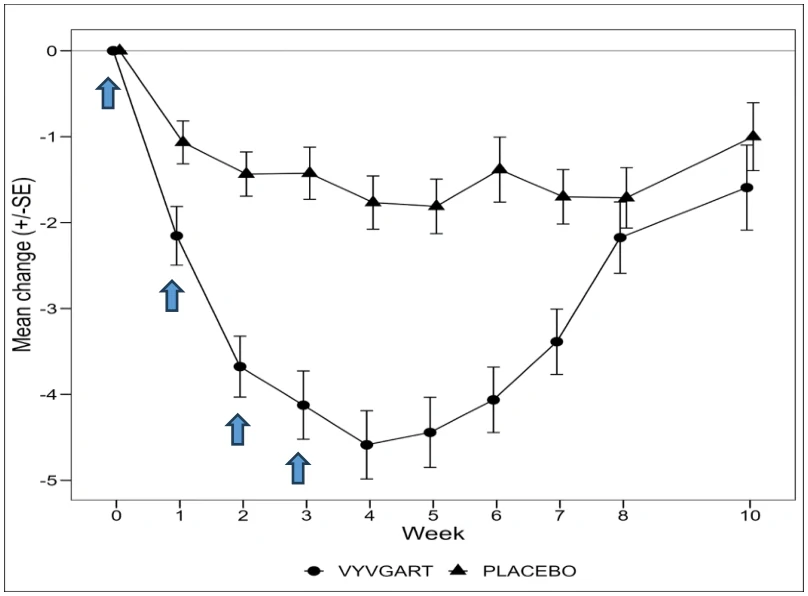
Note: the arrows indicate the visits where VYVGART or placebo were administered
In patients who responded to treatment, the duration of responder status was 5 weeks in 5/44 (11%) patients, 6 to 7 weeks in 14/44 (32%) of patients, 8 to 11 weeks in 10/44 (23%) patients and 12 weeks or more in 15/44 (34%) patients, in the AChR-Ab seropositive MG-ADL responders.
Study ARGX-113-2001
Study ARGX-113-2001 enrolled patients who met the same criteria at screening as study ARGX-113-1704.
A total of 110 patients were randomized and received one cycle of once weekly administrations for 4 weeks, of either VYVGART SC 1000 mg (1000 mg efgartigimod alfa) (n=55) or VYVGART (IV formulation) at 10 mg/kg (n=55). All patients were on stable doses of myasthenia gravis therapy prior to screening, that included AChE inhibitors, steroids or non-steroidal immunosuppressive therapy (NSISTs), either in combination or alone.
Baseline characteristics were similar between treatment groups and to those of study ARGX-113-1704, including median age at diagnosis (53 years in VYVGART SC group and 59 years in VYVGART group), gender [most were female - 56% (VYVGART SC) versus 62% (VYVGART)], race [most patients were white - 91% (VYVGART SC) and 93% (VYVGART)] and median time since diagnosis [4.4 years VYVGART SC and 4.6 years (VYVGART)]. Median MG-ADL total score was 8.0 in both treatment groups, and median QMG total score was 15 and 16 in the VYVGART SC and VYVGART groups, respectively.
The majority of patients were positive for antibodies to AChR (AChR-Ab): 82% in VYVGART SC group and 84% in VYVGART group.
During the study, over 80% of patients in each group received AChE inhibitors, over 60% of patients in each group received steroids and over 40% in each treatment group received NSISTs, at stable doses.
At study entry, approximately 56% of patients in each treatment group had no previous exposure to NSISTs.
The primary endpoint was the comparison of the percent reduction from baseline in total IgG levels at week 4 (day 29) between both treatment groups in the overall gMG population. Non-inferiority evaluation was based on a percent reduction from baseline in total IgG levels at week 4 (day 29) using a margin of 10%. The results for the primary endpoint demonstrated non-inferiority of VYVGART SC to VYVGART, as presented in Table 5.
Table 5: ANCOVA Analysis of Percent Change From Baseline in Total IgG Level at Day 29
| VYVGART SC | VYVGART | VYVGART SC versus VYVGART | ||||||
|---|---|---|---|---|---|---|---|---|
| N | LS Mean | 95% CI | N | LS Mean | 95% CI | LS of Mean Difference | 95% CI | p-value |
| Overall population (mITT) | ||||||||
| 55 | -64.4 | -68.09, -60.61 | 55 | -60.7 | -64.49, -57.00 | -3.6 | -8.91, 1.69 | <0.0001 |
AChR-Ab=acetylcholine receptor – antibody; ANCOVA=analysis of covariance; CI = confidence interval; EFG SC: efgartigimod alfa subcutaneous; EFG IV: efgartigimod alfa intravenous; LS=least squares; mITT=modified intent-to-treatment analysis set; N= number of patients per group that were included in the ANCOVA analysis; p<0.0001 for non-inferiority.
Figure 2 shows the percent change from baseline in total IgG for the VYVGART SC and VYVGART groups in the mITT population.
Figure 2: Mean (SE) Percent Change From Baseline in Total IgG (mITT Analysis Set) – (Study ARGX-113-2001)
TOTAL IgG
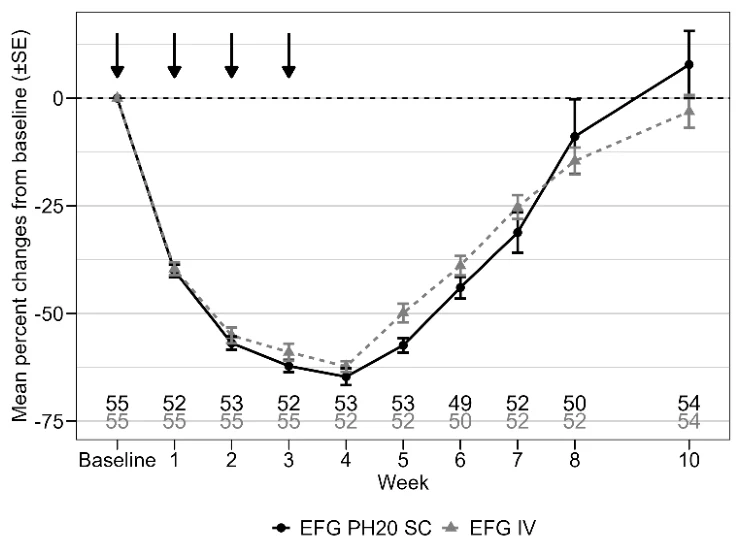
The arrow shows the administrations; the upper row of numbers shows the number of patients in EFG SC vial group, the lower row of numbers shows the number of patients in EFG IV group.
Chronic Inflammatory Demyelinating Polyneuropathy (CIDP)
Study ARGX-113-1802
The efficacy of VYVGART SC for the treatment of adults with CIDP was demonstrated in a prospective, multicenter study (ARGX-113-1802) conducted in 2 treatment stages: an open-label period to identify VYVGART SC responders (stage A) who then entered a randomized, double-blind, placebo-controlled, withdrawal period (stage B).
Table 6: Summary of Patient Demographics for VYVGART SC Clinical Trial in Chronic Inflammatory Demyelinating Polyneuropathy (CIDP)
| Study # | Study Design | Dosage, Route of Administration and Duration | Study Subjects (n) | Mean Age (Range) | Sex |
| ARGX-113-1802 | Phase 2 study in 2 stages Stage A: open-label Stage B: randomized-withdrawal, double-blinded, placebo-controlled | VYVGART SC and placebo; Stage A: VYVGART SC 1000 mg once weekly; 4-12 weeks with an optional one additional week Stage B: VYVGART SC 1000 mg or placebo once weekly; up to 48 weeks | Stage A: 322 enrolled and received VYVGART SC Stage B: 221 randomized
| Stage A: 54 years (20 – 82 years) Stage B: 52.9 years (20 – 82 years) | Stage A: 114 females 208 males Stage B: 79 females 142 males |
Eligible patients had been either on or off CIDP treatment during the 6 months prior to study entry; some patients were true treatment-naïve and had never received any CIDP medications. Those on prior CIDP treatment as well as those off CIDP treatment with no documented evidence of recent
CIDP deterioration, entered a treatment-free run-in period, and patients who demonstrated evidence of clinically meaningful deterioration then entered Stage A of the study. Those off CIDP treatment who had recent documented evidence of CIDP deterioration, skipped the run-in period and entered straight into Stage A.
A total of 322 patients enrolled in stage A received up to 12 once weekly injections of VYVGART SC at 1000 mg (1000 mg efgartigimod alfa) until evidence of clinical improvement (ECI) occurred at 2 consecutive study visits. Subsequently, the patients with confirmed ECI entered Stage B of the study and were randomised to receive weekly administrations of either VYVGART SC (111 patients) or placebo (110 patients). ECI was defined as clinical improvement on adjusted Inflammatory Neuropathy Cause and Treatment (aINCAT) or improvement on Inflammatory Rasch-built Overall Disability Scale (I- RODS) / Grip Strength in patients who deteriorated on these scales only prior to Stage A. The INCAT is a scale used to assess the impact of CIDP on daily upper and lower limb function, and is composed of the arm score and leg score (0 to 5 points for each). A total score on the INCAT ranges from 0 to 10 points with a higher number representing more disability. The aINCAT disability score, identical to the INCAT disability score but with changes in the upper limb function from 0 (normal) to 1 (minor symptoms) excluded, was used to assess efficacy for VYVGART SC for the treatment of CIDP.
Stage A included 228 patients currently receiving standard-of-care therapy and 94 patients who were classified as follows: 31 as strictly treatment naive, 56 as off corticosteroids, IVIg or SCIg for at least 6 months prior to screening, and 7 participants were off CIDP therapy other than corticosteroids, IVIg or SCIg for at least 6 months. Reasons that participants did not roll over to Stage B included lack of efficacy (11.2%), Stage B events required for primary analysis achieved (6.8%), adverse event (6.2%) and participant withdrawal (3.4%). A total of 221 patients were randomized in stage B, with 111 receiving VYVGART SC at 1000 mg and 110 receiving placebo once weekly. Stage B included:
- 146 patients currently receiving standard-of-care therapy, and
- 75 patients who had either not received prior treatment for CIDP (28 patients) or were not treated with standard-of-care therapy for at least 6 months before study entry (47 patients).
Baseline characteristics of stage B were similar between treatment groups. Patients had a median age of 55 years (56.0 years in VYVGART SC group and 54.5 years in placebo group), a median time since CIDP diagnosis of 2.2 years and a median INCAT score of 3.0. Sixty-four percent were male (66% in VYVGART SC group and 63% in placebo group) and 65% were White (66% in VYVGART SC group and 65% in placebo group).
Study Results
In stage A, the primary endpoint was the percentage of responders with the time to the first ECI as secondary endpoint. The results are presented in Table 7.
Table 7: Evidence of Clinical Improvement In Patients With CIDP In ARGX-113-1802 Stage A – ECI Responders And Time To Initial Confirmed ECI
| Stage A | |||
|---|---|---|---|
| VYVGART SC (N=322) | |||
| ECI Responders (patients with confirmed clinical improvement) n/N (%) (95% CI) | 214/322 (66.5%) (61.0; 71.6) | ||
| Time to initial confirmed ECI in days median (95% CI) | 43.0 (31.0; 51.0) | ||
n=number of patients for whom the observation was reported; N=number of patients in the analysis set
In stage B, the primary endpoint was defined as the time to the occurrence of the first evidence of clinical deterioration (≥ 1-point increase in aINCAT compared to stage B baseline, which was confirmed at a consecutive visit after the first 1-point increase in aINCAT or not confirmed for patients with ≥ 2-point increase in aINCAT compared to stage B baseline). Patients who had clinical deterioration or completed week 48 in Stage B without clinical deterioration were withdrawn from the placebo-controlled portion of the study. The study stopped when 88 events of clinical deterioration occurred for the primary endpoint analysis.
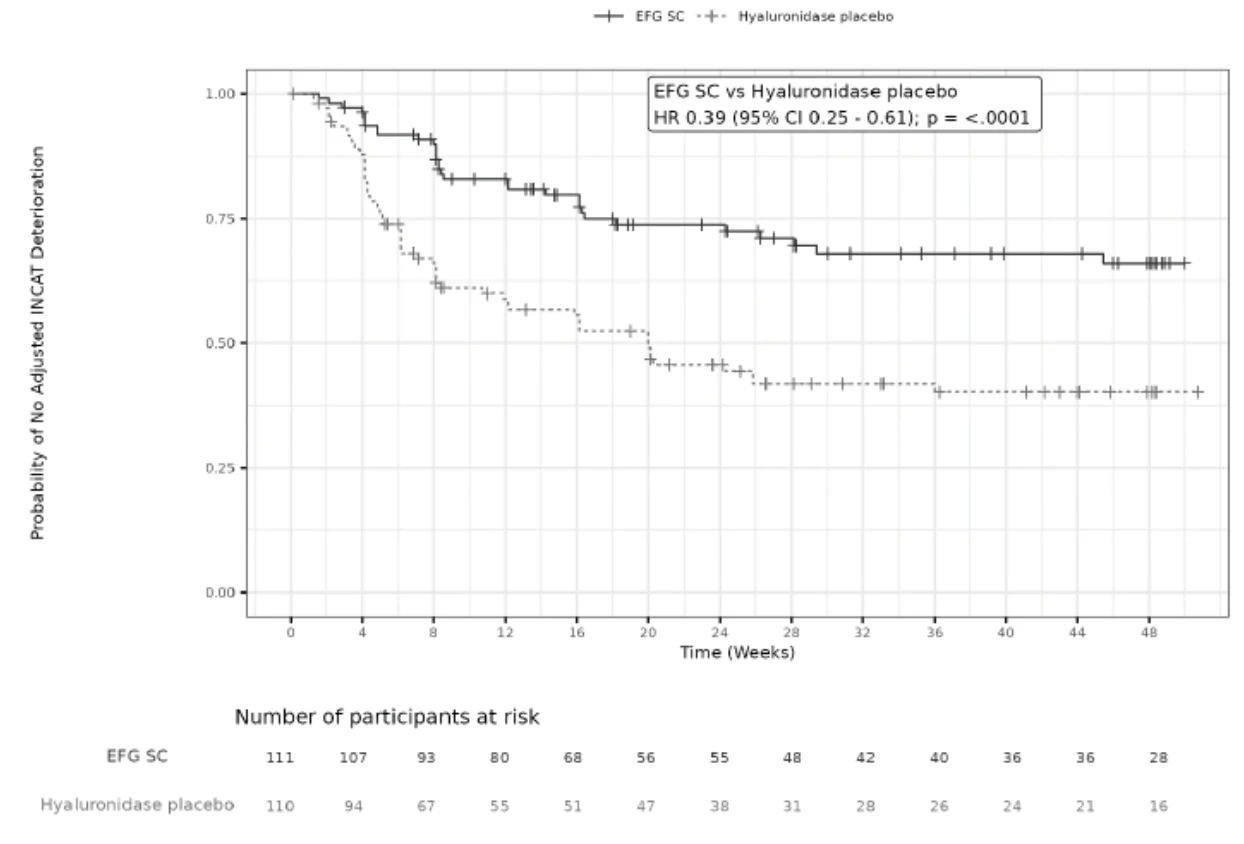
Patients who received VYVGART SC remained relapse-free (i.e., no clinical deterioration) significantly longer compared to patients who received placebo, as demonstrated by a hazard ratio of 0.394 [95% CI (0.253; 0.614) p=0.000039] which represents a 61% risk reduction for deterioration in patients treated with VYVGART SC. The results are presented in Table 8 and Figure 3.
Table 8: First Evidence of Clinical Deterioration In Patients With CIDP In ARGX-113-1802 Stage B - Time To 1st aINCAT Increase
| Stage B | |||||
|---|---|---|---|---|---|
| VYVGART SC (N=111) | Placebo (N=110) | ||||
Time to 1st aINCAT increase (clinical deterioration) in days Hazard ratio (95% CI) | 0.394 (0.253; 0.614) p-value < 0.0001 | ||||
| Median time (95% CI) | NC (NC; NC) | 140.0 (75.0; NC) | |||
NC: not calculated; N=number of patients in the analysis set; Cox Proportional Hazards Regression Model stratified for prior CIDP medication and change of adjust INCAT Score during Stage A
Figure 3: Time to the First aINCAT Deterioration (Kaplan-Meier Curve) In Patients With CIDP In Study ARGX-113-1802 stage B
16 Non-clinical Toxicology
General toxicology:
In a 4-week repeat-dose toxicity study rats were treated with efgartigimod alfa at doses of 0 (0.9% sodium chloride solution), 10, 30, or 100 mg/kg administered by IV injection once every 2 days (total of 15 IV doses). Findings of Kupffer cell hypertrophy/hyperplasia was seen in male and female rat liver at
100 mg/kg that were considered of uncertain relationship to treatment. The no-observed-adverse effect-level (NOAEL) was established at 30 mg/kg, approximately 3 times the recommended human IV dose of 10 mg/kg, on a body weight (mg/kg) basis.
In the pivotal 26-week toxicity study of efgartigimod alfa, cynomolgus monkeys received IV infusions at doses of 0 (vehicle), 10, 30, and 100 mg/kg once per week (total of 27 infusions). Enterocolitis was reported in 2 low-dose monkeys and 1 high-dose monkey, with greater severity observed at the high dose. The diarrhea observed in the high-dose monkey was accompanied by myeloid hyperplasia in the bone marrow of the sternum. Findings have uncertain relationship to treatment. The NOAEL was established at 100 mg/kg, approximately 10-times the recommended human IV dose of 10 mg/kg, on a body weight (mg/kg) basis.
In a 12-week repeat-dose bridging study, cynomolgus monkeys were administered 30 or 100 mg/kg efgartigimod by SC injection (yielding exposures approximately 2- or 5-times the recommended human SC dose of 1000 mg, on a body weight [mg/kg] basis, respectively) with or without hyaluronidase (± rHuPH20) once weekly (total of 13 injections). Some monkeys were observed for an additional 12-week recovery period. Enlarged spleens and lymph nodes were observed in animals administered efgartigimod SC ± rHuPH20 with no relation to dose or severity of microscopic findings. Lymphoid hyperplasia was noted in animals from both test and control groups in various lymph organs (bone marrow, spleen, lymph nodes) with a higher incidence and severity in animals treated with efgartigimod SC ± rHuPH20, without apparent dose-response. At the end of the recovery period, enlarged lymph nodes were observed in 3 of the 12 animals administered efgartigimod SC ± rHuPH20. Most animals receiving efgartigimod SC ± rHuPH20 were positive for anti-drug antibodies. Local signs of inflammation at the SC injection sites were reported at all doses of efgartigimod ± rHuPH20 and included accumulation of subcutaneous proteinaceous material, edema, hematoma, and lymphocytic perivascular infiltration which were partially resolved at the end of the recovery period. A NOAEL could not be established for this study.
In a local tolerance study the rabbits received a single injection of 1 mL SC and also 0.25 mL intramuscular (IM) of efgartigimod SC, formulated at a concentration of 180 mg/mL efgartigimod co-formulated with hyaluronidase. This study did not reveal any test-item-related changes following macroscopic and histopathological examination of the injection sites, and did not result in erythema, eschar, or edema as evaluated by Draize scoring.
Genotoxicity: No studies have been conducted to assess the genotoxic potential of efgartigimod alfa.
Carcinogenicity: No studies have been conducted to assess the carcinogenic potential of efgartigimod alfa.
Reproductive and Developmental Toxicology:
No reproductive and developmental toxicity studies have been conducted with subcutaneously administered efgartigimod co-formulated with hyaluronidase (rHuPH20).
Reproductive and development toxicity studies were conducted for efgartigimod alfa administered by IV bolus injection once per day at doses of 0 (vehicle), 30, or 100 mg/kg in rats and rabbits. For all studies, the NOAEL was established at 100 mg/kg, approximately 10-times the recommended human IV dose of 10 mg/kg, on a body weight (mg/kg) basis. Efgartigimod alfa concentrations in maternal milk and sera of fetuses or F1 offspring were not assessed. The potential effect of efgartigimod alfa on FcRn-mediated transfer of maternal antibodies to the fetus was not assessed.
A fertility study was conducted in male and female rats. Males were dosed from 4 weeks before mating and up to day 43 of the study, and females were dosed 2 weeks before mating and up to day 7 of gestation. Efgartigimod alfa did not adversely affect male and female fertility. The doses (30 or 100 mg/kg/day IV injection) tested are 3- and 10-times the recommended human IV dose of 10 mg/kg, on a body weight (mg/kg) basis, respectively.
An embryo-fetal development study was conducted in female rats and rabbits. Efgartigimod alfa was administered at a dose of 30 or 100 mg/kg/day by IV injection from gestation day 6 through 17 in rats and gestation day 6 through 28 in rabbits. There is no evidence of adverse developmental outcomes following the administration of efgartigimod alfa in rats and rabbits. In rabbits only, abortions were reported (2 in the low dose group, 1 in the high dose group) at an incidence that was comparable to historical control data of the test facility. These abortions were considered to be spontaneous occurrences. One low-dose rabbit presented with a contained liver lesion where an infectious cause could not be excluded. The doses tested are 3- and 10-times the recommended human IV dose of 10 mg/kg, on a body weight (mg/kg) basis, respectively.
Female rats received efgartigimod alfa at a dose of 30 or 100 mg/kg/day by IV injection from day 6 of gestation to day 21 of lactation. Ataxia was observed in 4 F1 pups of 1 high-dose F0 female, with uncertain relationship to treatment. Overall, the results show that efgartigimod alfa had no effect on the pregnancy of the female rats, or on the development of both the pre- and postnatal F1 and F2 generation pups. The doses tested are 3- and 10-times the recommended human IV dose of 10 mg/kg, on a body weight (mg/kg) basis, respectively.
In an embryofetal development study conducted with pregnant mice, hyaluronidase (rHuPH20) administered at doses of 3, 9, or 18 mg/kg by SC injection once per day from GD 6 to 15 resulted in reduced fetal weight and increased resorptions. Embryofoetal toxicity leading to fetal loss may be due to rHuPH20 interference with fetal heart development. The NOAEL was determined to be 3 mg/kg, approximately 1800-times the recommended SC dose of hyaluronidase in VYVGART SC on a U/kg basis.
17 Supporting Product Monographs
VYVGART (efgartigimod alfa for injection, 20 mg/mL solution), Submission Control Number 282197, Product Monograph, argenx BV. (2025-07-17)