


Product Monograph - Ziihera
Recent Major Label Changes
| 4 Dosage and Administration, 4.3 Reconstitution | YYYY-MM |
|---|
Table of Contents
Certain sections or subsections that are not applicable at the time of the preparation of the most recent authorized product monograph are not listed.
Recent Major Label Changes ................................................................................................... 2
Table of Contents ................................................................................................................... 2
Part 1: Healthcare Professional Information ........................................................................... 5
- 1.
Indications ....................................................................................................................... 5
1.1. Pediatrics .................................................................................................................... 5
1.2. Geriatrics .................................................................................................................... 5
- 2. Contraindications ............................................................................................................ 5
- 3. Serious Warnings and Precautions Box ............................................................................ 5
- 4.
Dosage and Administration ............................................................................................. 5
4.1. Dosing Considerations ................................................................................................ 5
4.2. Recommended Dose and Dosage Adjustment ........................................................... 6
4.3. Reconstitution ............................................................................................................ 7
4.4. Administration ............................................................................................................ 9
4.5. Missed Dose ............................................................................................................... 9
- 5. Overdose ......................................................................................................................... 9
- 6. Dosage Forms, Strengths, Composition, and Packaging ................................................... 9
- 7.
Warnings and Precautions ............................................................................................. 10
General ............................................................................................................................... 10
Cardiovascular .................................................................................................................... 10
Driving and Operating Machinery ....................................................................................... 10
Immune .............................................................................................................................. 10
Reproductive Health ........................................................................................................... 11
Respiratory ......................................................................................................................... 11
7.1. Special Populations .................................................................................................. 11
7.1.1. Pregnancy ...................................................................................................... 11
7.1.2. Breastfeeding ................................................................................................ 11
7.1.3. Pediatrics ....................................................................................................... 12
7.1.4. Geriatrics ....................................................................................................... 12
- 8.
Adverse Reactions ......................................................................................................... 12
8.1. Adverse Reaction Overview ...................................................................................... 12
8.2. Clinical Trial Adverse Reactions ................................................................................ 12
8.3. Less Common Clinical Trial Adverse Reactions ......................................................... 15
8.4. Abnormal Laboratory Findings: Hematologic, Clinical Chemistry, and Other Quantitative Data ..................................................................................................... 15
8.5. Post-Market Adverse Reactions ............................................................................... 17
- 9.
Drug Interactions ........................................................................................................... 17
9.2. Drug Interactions Overview ...................................................................................... 17
9.3. Drug-Behaviour Interactions .................................................................................... 17
9.4. Drug-Drug Interactions ............................................................................................. 17
9.5. Drug-Food Interactions ............................................................................................ 17
9.6. Drug-Herb Interactions ............................................................................................. 17
9.7. Drug-Laboratory Test Interactions ........................................................................... 17
- 10.
Clinical Pharmacology ................................................................................................... 17
10.1. Mechanism of Action................................................................................................ 17
10.2. Pharmacodynamics .................................................................................................. 17
10.3. Pharmacokinetics ..................................................................................................... 18
10.4. Immunogenicity ....................................................................................................... 19
- 11. Storage, Stability, and Disposal ...................................................................................... 19
- 12. Special Handling Instructions ......................................................................................... 19
Part 2: Scientific Information ................................................................................................ 20
- 13. Pharmaceutical Information .......................................................................................... 20
- 14.
Clinical Trials .................................................................................................................. 20
14.1. Clinical Trials by Indication ....................................................................................... 20
Previously-treated Unresectable Locally Advanced or Metastatic HER2-positive (IHC 3+) Biliary Tract Cancer ............................................................................................................. 20
- 16. Non-Clinical Toxicology .................................................................................................. 21
Patient Medication Information ........................................................................................... 23
Part 1: Healthcare Professional Information
1. Indications
ZIIHERA (zanidatamab for injection) is indicated for:
the treatment of adults with previously treated, unresectable locally advanced or metastatic HER2-positive (IHC 3+) biliary tract cancer (BTC), as monotherapy (see 4.1 Dosing Considerations).
The marketing authorisation with conditions is based on objective response rate and durability of response. An improvement in survival has not yet been established (see 14 Clinical Trials).
1.1. Pediatrics
Pediatrics (<18 years of age): No data are available to Health Canada; therefore, Health Canada has not authorized an indication for pediatric use.
1.2. Geriatrics
Geriatrics (≥65 years of age): Evidence from clinical studies suggests that use in the geriatric population is not associated with differences in safety or effectiveness. No dose adjustment is required in this population (see 7.1.4 Geriatrics).
2. Contraindications
ZIIHERA is contraindicated in patients who are hypersensitive to this drug or to any ingredient in the formulation, including any non-medicinal ingredient, or component of the container. For a complete listing, see 6 Dosage Forms, Strengths, Composition, and Packaging.
3. Serious Warnings and Precautions Box
|
|---|
4. Dosage and Administration
4.1. Dosing Considerations
Patient Selection
Select patients for the treatment of unresectable locally advanced or metastatic HER2-positive BTC based on HER2 protein overexpression defined as a score of 3+ by immunohistochemistry (IHC) in tumour specimens.
Premedication
Administer premedication to all patients 30 to 60 minutes prior to each ZIIHERA infusion to reduce the risk of infusion-related reactions. Premedication is recommended to include a corticosteroid, antihistamine, and antipyretic (see 7 Warnings and Precautions, Infusion-Related Reactions).
4.2. Recommended Dose and Dosage Adjustment
Recommended Dose
The recommended dose of ZIIHERA is 20 mg/kg, administered as an intravenous infusion once every 2 weeks (every 14 days) until disease progression or unacceptable toxicity. For infusion durations, see Table 5.
Dosage Adjustment
Dose modifications for left ventricular dysfunction
Assess left ventricular function at baseline and at regular intervals during treatment. The recommendations on dose modifications in the event of LVEF dysfunction are indicated in Table 1.
Table 1 – Dose Modifications for Left Ventricular Dysfunction
Left Ventricular Dysfunction (see 7 Warnings and Precautions) | Severity | Treatment Modification | ||
|---|---|---|---|---|
Absolute decrease of ≥16% points in LVEF from pre-treatment baseline or LVEF value below 50% and absolute decrease of ≥10% points below pre-treatment baseline |
| |||
| Confirmed symptomatic congestive heart failure |
| |||
Dose modifications for infusion-related reactions
Management of IRRs may require reduced infusion rate, dose interruption, or treatment discontinuation of ZIIHERA as described in Table 2 (see 7 Warnings and Precautions, Infusion-Related Reactions).
Table 2 – Dosage and Infusion Duration Modifications for Infusion-Related Reactions
Infusion related reactions (see 7 Warnings and Precautions) | Severity | Treatment Modification | ||
|---|---|---|---|---|
| Mild (Grade 1) |
| |||
| Moderate (Grade 2) |
| |||
| Severe (Grade 3) |
| |||
| Life threatening (Grade 4) |
| |||
Dose modifications for pneumonitis
Management of pneumonitis may require treatment discontinuation as described in Table 3.
Table 3 – Dose Modifications for Pneumonitis
| Pneumonitis | Severity | Treatment Modification | ||
|---|---|---|---|---|
| Confirmed Grade ≥2 |
| |||
4.3. Reconstitution
Parenteral Products:
ZIIHERA vials are for single dose use only.
ZIIHERA must be reconstituted with sterile water for injection and subsequently diluted with
0.9% sodium chloride or 5% dextrose for infusion.
Aseptic technique must be used for reconstitution and dilution of ZIIHERA.
- Calculate the recommended dose of ZIIHERA based on the patient’s weight to determine the number of vials needed.
- Remove the vial(s) from the refrigerator and allow to reach room temperature.
- Reconstitute each vial with 5.7 mL of sterile water for injection to obtain a concentration of 50 mg/mL in an extractable volume of 6.0 mL (see Table 4).
- Swirl the vial gently until completely dissolved. Do not shake. Reconstitution should take no more than 10 minutes.
- Allow the reconstituted vial to settle to allow bubbles to dissipate.
- Visually inspect the reconstituted solution for particulate matter and discolouration. The reconstituted product should be colourless to light yellow, clear to slightly opalescent solution that is essentially free of particles. Discard the reconstituted vial if any discolouration or particulate matter is observed.
- The product does not contain a preservative. Use the reconstituted ZIIHERA solution immediately or store the reconstituted ZIIHERA solution for up to 4 hours, either at room temperature or in a refrigerator (2°C to 8°C) (see 11 Storage, Stability, and Disposal).
Table 4 – Reconstitution
| Vial Size | Volume of Diluent To Be Added to Vial | Approximate Available Volume | Concentration Per mL |
| 20 mL | 5.7 mL | 6.0 mL | 50 mg/mL |
Instructions for Dilution
- Withdraw the necessary volume for the calculated dose from each vial.
- Slowly add the necessary dose volume to an appropriate size infusion bag containing 0.9% sodium chloride or 5% dextrose. The final concentration of the diluted solution should be between 0.4 mg/mL and 20 mg/mL.
- Gently invert the infusion bag to mix. Do not shake.
- The solution for infusion must be a clear, colourless solution with no visible particles. If particulate matter or discolouration is identified, the solution must be discarded.
- Discard any unused portion left in the vial(s).
- Use the infusion solution immediately upon dilution or store the infusion solution at room temperature for up to 12 hours or in the refrigerator (2°C to 8°C) for up to 24 hours. These storage times start from the time of reconstitution (see 11 Storage, Stability, and Disposal).
Compatibility with intravenous administration materials and the diluted ZIIHERA solution has been demonstrated in the following materials:
Intravenous (IV) Bag: Polyvinyl chloride (PVC), polyolefin (PO), ethyl vinyl acetate (EVA),
- polypropylene (PP) and ethylene-propylene copolymer.
- Infusion sets: Polyvinyl chloride/ bis (2-ethylhexyl) phthalate (PVC/DEHP), polyurethane (PUR), polyethylene-lined (PE-lined) acrylonitrile-butadiene-styrene (ABS).
- Inline filters: Polyethersulfone solution filter (PES), polyvinylidene fluoride air filter (PVDF).
- Closed System Transfer devices: acrylonitrile-butadiene-styrene (ABS), acrylic c-polymer, polycarbonate (PC), polyisoprene (PI), polyester, polypropylene (PP), polytetrafluoroethylene (PTFE), silicone and stainless steel (SS).
4.4. Administration
- Administer ZIIHERA as an intravenous infusion with a 0.2 or 0.22 micron filter.
- Do not administer by intravenous push or as a rapid single bolus injection.
- Do not co-administer ZIIHERA and other intravenous drugs concurrently within the same intravenous line.
Table 5 – Recommended ZIIHERA Infusion Durations
| Dose | Infusion Duration |
|---|---|
| First and Second | 120 to 150 minutes |
| Third and Fourth | 90 minutes, if previous infusions were well-tolerated |
| Subsequent | 60 minutes, if previous infusions were well-tolerated |
4.5. Missed Dose
If a patient misses a dose of ZIIHERA, administer the scheduled dose as soon as possible. Adjust the administration schedule to maintain a 2-week interval between doses.
5. Overdose
In clinical studies, the maximum tested dose has been 30 mg/kg. In case of overdose, patients must be closely monitored for signs or symptoms of adverse reactions and appropriate symptomatic treatment initiated if required.
| For the most recent information in the management of a suspected drug overdose, contact your regional poison control centre or Health Canada’s toll-free number, 1-844 POISON-X (1-844-764-7669). |
|---|
- 6. Dosage Forms, Strengths, Composition, and Packaging
To help ensure the traceability of biologic products, healthcare professionals should record both the brand name and the non-proprietary (active ingredient) name as well as other product-specific identifiers such as the Drug Identification Number (DIN) and the batch/lot number of the product supplied.
Table 6 – Dosage Forms, Strengths, and Composition
Contains less than 1 mmol sodium (23 mg) per dose, essentially ‘sodium-free’.
Description
Each carton of ZIIHERA contains two single-dose 20 mL Type I glass vials with a chlorobutyl stopper and a flip-off cap.
7. Warnings and Precautions
See 3 Serious Warnings and Precautions Box.
General
Therapy with ZIIHERA should be initiated under supervision of a physician experienced in the treatment of cancer patients.
Cardiovascular
Left Ventricular Dysfunction
Decreases in LVEF have been reported with drugs that block HER2 activity, including ZIIHERA (see 8 Adverse Reactions). Assess LVEF prior to initiation of ZIIHERA and at regular intervals during treatment. Withhold or permanently discontinue ZIIHERA based on the severity of the adverse reaction (see Table 1 Dose Modifications for Left Ventricular Dysfunction).
The safety of ZIIHERA has not been established in patients with a baseline ejection fraction that is below 50% or a history of clinically significant cardiac disease.
Driving and Operating Machinery
ZIIHERA may have minor influence on the ability to drive and use machines. Fatigue has been reported with the use of ZIIHERA. Therefore, caution is recommended when driving or operating machines. Patients experiencing infusion-related symptoms should be advised not to drive or use machines until symptoms resolve completely.
Immune
Infusion-Related Reactions
ZIIHERA can cause infusion-related reactions (IRRs) (see 8 Adverse Reactions). Prior to each dose of ZIIHERA, administer pre-medications to reduce the risk of IRRs (see 4.1 Dosing Considerations).
Monitor patients for signs and symptoms of IRRs during administration and as clinically indicated after completion of infusion. Have appropriate emergency medicine and equipment to treat IRRs available for immediate use, and manage IRRs based on severity (see Table 2 Dosage and Infusion Duration Modifications for Infusion-Related Reactions).
| Route of Administration | Dosage Form/ Strength/Composition | Non-Medicinal Ingredients |
| Intravenous infusion | Powder for Solution 300 mg zanidatamab | Polysorbate 20, sodium succinate anhydrous (disodium succinate), succinic acid, sucrose, water for injection |
Reproductive Health
Pregnancy Testing
A pregnancy test should be performed before initiating treatment with ZIIHERA in female patients of childbearing potential to exclude pregnancy (see 7.1.1 Pregnancy).
Contraception
Advise patients to avoid becoming pregnant while receiving ZIIHERA. Female patients of childbearing potential must use an effective method of contraception while receiving ZIIHERA and for 4 months following the last dose of ZIIHERA (see 7.1.1 Pregnancy).
Fertility
Fertility studies have not been performed with ZIIHERA.
Respiratory
Pneumonitis
Pneumonitis has been reported with medicinal products that block HER2 activity, including ZIIHERA (see 8 Adverse Reactions). Patients should be monitored for signs and symptoms of pneumonitis. In the event of confirmed Grade ≥2 pneumonitis, treatment should be permanently discontinued (see Table 3 Dose Modifications for Pneumonitis).
7.1. Special Populations
7.1.1. Pregnancy
Based on mechanism of action, ZIIHERA can cause fetal harm when administered to a pregnant woman. There are no human or animal data on the use of ZIIHERA in pregnancy. In post-marketing reports of another HER2-directed antibody, use during pregnancy resulted in cases of oligohydramnios and oligohydramnios sequence manifesting as pulmonary hypoplasia, skeletal abnormalities, and neonatal death. ZIIHERA is not recommended for use during pregnancy.
Verify the pregnancy status of females of reproductive potential prior to the initiation of ZIIHERA. Advise pregnant women and females of reproductive potential that exposure to ZIIHERA during pregnancy or within 4 months prior to conception can result in fetal harm. Advise females of reproductive potential to use effective contraception while receiving ZIIHERA and for 4 months following the last dose of ZIIHERA (see 7 Warnings and Precautions, Reproductive Health).
Monitor women who received ZIIHERA during pregnancy or within 4 months prior to conception for oligohydramnios. If oligohydramnios occurs, perform fetal testing that is appropriate for gestational age and consistent with local standards of care.
7.1.2. Breastfeeding
It is not known whether ZIIHERA is secreted in human milk, or what effect it has on a breastfed child or milk production.
A decision should be made whether to discontinue breast-feeding or to discontinue treatment, taking into account the benefit of breast-feeding for the child, any potential adverse effects on the breastfed child and the benefit of ZIIHERA therapy for the woman. This consideration should also take into account the ZIIHERA washout period of 4 months (see 10.3 Pharmacokinetics).
7.1.3. Pediatrics
Pediatrics (<18 years of age): No data are available to Health Canada; therefore, Health Canada has not authorized an indication for pediatric use.
7.1.4. Geriatrics
Geriatrics (≥ 65 years of age): Of the 87 patients with BTC, treated with ZIIHERA 20 mg/kg, 48.3% were 65 years or older and 4.6% were 75 years or older. Evidence from clinical studies suggests that use in the geriatric population is not associated with differences in overall safety and effectiveness, therefore no dose adjustment is required (see 1.2 Geriatrics).
8. Adverse Reactions
8.1. Adverse Reaction Overview
The following clinically significant adverse reactions are described in greater detail in other sections of the Product Monograph:
- Embryo-Fetal Toxicity (see 3 Serious Warnings and Precautions Box and 7 Warnings and Precautions)
- Left Ventricular Dysfunction (see 7 Warnings and Precautions)
- Infusion-Related Reactions (see 7 Warnings and Precautions)
- Pneumonitis (see 7 Warnings and Precautions)
8.2. Clinical Trial Adverse Reactions
Clinical trials are conducted under very specific conditions. Therefore, the frequencies of adverse reactions observed in the clinical trials may not reflect frequencies observed in clinical practice and should not be compared to frequencies reported in clinical trials of another drug.
Previously treated, unresectable, locally advanced or metastatic HER2-positive biliary tract cancer (BTC)
The safety of ZIIHERA was evaluated in the HERIZON-BTC-01 study, which included 87 patients (Cohorts 1 and 2) with previously treated, unresectable, locally advanced or metastatic HER2-positive BTC. All patients had received at least one prior gemcitabine-containing chemotherapy regimen (see 14 Clinical Trials). Patients received ZIIHERA at 20 mg/kg administered intravenously once every 2 week cycle until disease progression or unacceptable toxicity. Among the 87 patients who received ZIIHERA, 43.7% were exposed for 6 months or longer and 23% were exposed for greater than one year.
The most commonly reported adverse reactions (≥20% of patients) were diarrhea (46%), infusion-related reaction (33.3%), abdominal pain (26.4%), anemia (25.3%), fatigue (24.1%), alanine aminotransferase increased (19.5%) and aspartate aminotransferase increased (19.5%).
Serious adverse reactions occurred in 52.9% of patients. The most frequent serious adverse reactions (≥2% of patients) were jaundice cholestatic, pneumonia, cholangitis, biliary obstruction, sepsis, obstruction gastric, diarrhea, alanine aminotransferase increased, fatigue, bacteremia and jaundice. There were 3 patients with fatal adverse reactions including hepatic failure, hematemesis and multiple organ dysfunction syndrome (one patient for each event).
Permanent discontinuation due to an adverse reaction occurred in 2.3% of patients. Adverse reactions which resulted in permanent discontinuation included ejection fraction decreased (1.1%) and pneumonitis (1.1%).
Dosage interruptions due to an adverse reaction occurred in 25.3% of patients. Adverse reactions requiring dosage interruption were infusion-related reaction (25.3%) and extravasation (1.1%). Dose reductions due to an adverse reaction occurred in 3.4% of patients. The adverse reactions which led to a dose reduction included diarrhea (2.3%), nausea (1.1%) and weight decreased (1.1%). Dose hold/delay due to an adverse reaction occurred in 42.5% of patients. The most common adverse reactions (≥5% of patients) which led to a dose hold/delay included diarrhea (5.7%), alanine aminotransferase increased (5.7%) and aspartate aminotransferase increased (5.7%).
Table 7 lists adverse events which were reported in ≥10% of patients. The adverse events, frequencies derived from all treatment-emergent adverse events, irrespective of the investigator’s assessment of causality, reported in this patient population.
Table 7 – Adverse Events (≥10% Incidence) in Patients with Previously-treated, Unresectable Locally Advanced or Metastatic HER2-Positive BTC who Received ZIIHERA as Monotherapy in HERIZON-BTC-01
| System Organ Class /Adverse Event Preferred Term * | ZIIHERA N=87 | ||||||
|---|---|---|---|---|---|---|---|
| System Organ Class /Adverse Event Preferred Term * | ZIIHERA N=87 | ||||||
All Grades n (%) | Grades ≥3 n (%) | ||||||
All Grades n (%) | Grades ≥3 n (%) | ||||||
| Blood and lymphatic system disorders | |||||||
| Anemia | 22 (25.3) | 11 (12.6) | |||||
| Cardiac Disorder | |||||||
| Ejection fraction decreased | 11 (12.6) | 3 (3.4) | |||||
| Gastrointestinal disorders | |||||||
| Diarrhea | 40 (46) | 7 (8) | |||||
| Abdominal paina | 23 (26.4) | 1 (1.1) | |||||
| Nausea | 14 (16.1) | 1 (1.1) | |||||
| Vomiting | 14 (16.1) | 1 (1.1) | |||||
| General disorders and administration site conditions | |||||||
| Fatigueb | 21 (24.1) | 3(3.4) | |||||
| Pyrexia | 14 (16.1) | 0 (0) | |||||
| Injury, poisoning and procedural complications | |||||||
| Infusion-related reaction | 29 (33.3) | 1 (1.1) | |||||
| Investigations | |||||||
| Alanine aminotransferase increased | 17 (19.5) | 5 (5.7) | |||||
| Aspartate aminotransferase increased | 17 (19.5) | 4 (4.6) | |||||
| Weight decreased | 12 (13.8) | 0 (0) | |||||
| Blood bilirubin increased | 10 (11.5) | 2 (2.3) | |||||
| Blood alkaline phosphatase increased | 9 (10.3) | 4 (4.6) | |||||
| Metabolism and nutrition disorders | |||||||
| Decreased appetite | 13 (14.9) | 0 (0) | |||||
| Hypokalemia | 11 (12.6) | 5 (5.7) | |||||
| Skin and subcutaneous tissue disorders | |||||||
| Rashc | 16 (18.4) | 0 (0) | |||||
| Pruritus | 11 (12.6) | 0 (0) | |||||
| Vascular Disorders | |||||||
| Hypertension | 10 (11.5) | 6 (6.9) | |||||
*Graded per CTCAE version 5
a Abdominal pain includes Abdominal pain and Abdominal pain upper
b Fatigue includes Asthenia and Fatigue
c Rash includes Acne, Dermatitis, Dermatitis acneiform, Rash, Rash erythematous, Rash macular, Rash maculo-papular, Rash pruritic, Rash pustular, and Urticaria
Additional Information on Selected Adverse Reactions in the pooled safety population (N=233)
The selected adverse reactions described below are based on the pooled safety population that reflects exposure in 233 patients administered ZIIHERA 20 mg/kg intravenously once every 2 weeks as a single agent in two single-arm, open-label studies (ZWI-ZW25-101 and HERIZON-BTC-01), which enrolled 109 patients with biliary tract cancer, and 124 patients with other cancers. Among the 233 patients who received ZIIHERA, 39% were exposed for 6 months or longer, and 18% were exposed for greater than one year.
Diarrhea
Diarrhea was reported in 48.5% of patients who received ZIIHERA. The Grade 3 reported event incidence in patients was 5.2%, Grade 4 and Grade 5 events were not observed. Median time to first onset was 10 days and median time to resolution was 3 days. The dose of ZIIHERA was reduced due to diarrhea in 1.3% of patients and was held or delayed in 1.3% of patients. There were no discontinuations of treatment due to diarrhea.
Infusion-related reactions
Infusion related reaction (IRR) was reported in 30.5% of patients who received ZIIHERA. A Grade 3 event was reported in one patient (0.4%). No Grade 4 or 5 events were reported. The median time to the onset of the event from the first dose was 1 day. All events resolved. No event led to dose reduction of ZIIHERA. Infusion was interrupted due to the event in 25.3% of patients and discontinued in 1 patient (0.4%) (see 7 Warnings and Precautions, Infusion-Related Reactions).
Left ventricular dysfunction
Thirteen events of LVEF decreased were observed in 10 (4.3%) patients; two of these events were considered serious. The Grade 3 reported event incidence in patients was 1.3%; no Grade 4 or Grade 5 events were observed. Median time to first onset was 170.5 days and median time to resolution was 27 days. The dose of ZIIHERA was reduced in 1 (0.4%) patient, delayed in 5 (2.1%) patients and ZIIHERA was discontinued in 2 (0.9%) patients (see 7 Warnings and Precautions, Left Ventricular Dysfunction).
Pneumonitis
One event of Grade 3 pneumonitis was reported in 1 (0.4%) patient who received ZIIHERA. Grade 4 and Grade 5 events were not observed. Time to first onset was 223 days. The dose of ZIIHERA was held and discontinued in 1 (0.4%) patient (see 7 Warnings and Precautions, Pneumonitis).
8.3 Less Common Clinical Trial Adverse Reactions
The following clinically important adverse events were reported in less than 10% of patients with locally advanced unresectable or metastatic BTC who received ZIIHERA as monotherapy in HERIZON-BTC-01:
Cardiac disorders: atrial fibrillation
Gastrointestinal disorders: obstruction gastric, stomatitis, enteritis, hematochezia, melena, ascites, hematemesis
Immune system disorders: drug hypersensitivity
Infections and infestations: sepsis, bacteremia, pneumonia
Investigations: blood lactate dehydrogenase increased, platelet count decreased, neutrophil count decreased, blood creatinine increased
Metabolism and nutrition disorders: hyperglycemia, hypoalbuminemia
Nervous system disorders: peripheral motor neuropathy, peripheral sensory neuropathy
Respiratory, thoracic and mediastinal disorders: dyspnea, pleural effusion
Skin and subcutaneous tissue disorders: palmar-plantar erythrodysesthesia syndrome
Vascular disorders: hypotension
8.4. Abnormal Laboratory Findings: Hematologic, Clinical Chemistry, and Other Quantitative Data
Clinical Trial Findings
Table 8 summarizes the laboratory abnormalities in study HERIZON-BTC-01.
Table 8 –Laboratory Abnormalities (≥20%) that worsened from Baseline in patients with Unresectable Locally Advanced or Metastatic HER2-Positive BTC who Received ZIIHERA in HERIZON-BTC-01
| Laboratory Abnormalities* | ZIIHERA N=87 | ||||||
|---|---|---|---|---|---|---|---|
All Grades (%) | Grades 3-4 (%) | ||||||
| Hematology | |||||||
| Hemoglobin decreased | 88.5 | 14.9 | |||||
| Lymphocyte count decreased | 46.5 | 7.0 | |||||
| Platelet count decreased | 29.1 | 1.2 | |||||
| White blood cell count decreased | 24.4 | 1.2 | |||||
| Neutrophil count decreased | 22.1 | 2.3 | |||||
| Chemistry | |||||||
| Blood lactate dehydrogenase increased | 54.1 | 0 | |||||
| Blood albumin decreased | 55.8 | 0 | |||||
| Aspartate aminotransferase increased | 46.5 | 9.3 | |||||
| Alanine aminotransferase increased | 45.3 | 8.1 | |||||
| Blood alkaline phosphatase increased | 43.0 | 5.8 | |||||
| Blood sodium decreased | 38.4 | 14.0 | |||||
| Blood potassium decreased | 34.9 | 5.8 | |||||
| Blood calcium decreased | 26.7 | 1.3 | |||||
| Blood bilirubin increased | 25.6 | 8.1 | |||||
| Blood uric acid increased | 22.4 | 0 | |||||
| Blood creatinine increased | 22.1 | 1.2 | |||||
Each test incidence is based on the number of patients who had both baseline and at least one on-study laboratory measurement available (range: 75 – 87).
*Graded per CTCAE version 5.
8.5. Post-Market Adverse Reactions
Not available.
9. Drug Interactions
9.2. Drug Interactions Overview
No dedicated clinical studies evaluating the drug interaction potential of zanidatamab have been conducted. Zanidatamab is an antibody that is not expected to impact the cytochrome P450 enzymes. Also, zanidatamab is not known to target mechanisms related to proinflammatory cytokines or any mechanism related to proinflammatory cytokines that may impact the pharmacokinetics of concomitant medicines.
9.3. Drug-Behaviour Interactions
The interaction of ZIIHERA with individual behavioural risks (e.g. cigarette smoking, cannabis use, and/or alcohol consumption) has not been studied.
9.4. Drug-Drug Interactions
Interactions with other drugs have not been established.
9.5. Drug-Food Interactions
Interactions with food have not been established.
9.6. Drug-Herb Interactions
Interactions with herbal products have not been established.
9.7. Drug-Laboratory Test Interactions
Interactions with laboratory tests have not been established.
10. Clinical Pharmacology
10.1. Mechanism of Action
ZIIHERA is a HER2-targeted bispecific antibody that binds to two extracellular sites on HER2. Binding of zanidatamab to HER2 results in internalization leading to a reduction of the receptor on the tumour cell surface. Zanidatamab induces complement-dependent cytotoxicity (CDC), antibody-dependent cellular cytotoxicity (ADCC) and antibody-dependent cellular phagocytosis (ADCP). These mechanisms result in tumour growth inhibition and cell death in vitro and in vivo.
10.2. Pharmacodynamics
Cardiac Electrophysiology:
Zanidatamab does not have a clinically relevant prolongation effect on QTc interval at 20 mg/kg once every 2 weeks (Q2W) in participants with locally advanced (unresectable) and/or metastatic HER2-expressing cancers.
Exposure-Response Analyses:
The exposure-response relationships are unknown.
10.3. Pharmacokinetics
Zanidatamab pharmacokinetics (PK) exhibited nonlinear kinetics with more rapid clearance (CL) at low doses ranging from 5 to 30 mg/kg. Following the first dose, the geometric mean zanidatamab Cmax was dose proportional with increasing doses, while total systemic exposure (AUC0-∞) was greater than dose proportional with increasing doses.
The PK of zanidatamab following intravenous infusion in participants with HER2 expressing cancers was evaluated in a population pharmacokinetic (popPK) model analysis from 279 participants. Based on the estimated half-life (t1/2) of 21 days using popPK, it would take approximately 3.5 months (i.e., 5 half-lives) to reach steady state following multiple dose administration of zanidatamab. The mean (SD) Ctrough accumulation ratio of zanidatamab 20 mg/kg Q2W in BTC patients at steady state was 3.35 (1.25).
The observed zanidatamab PK parameters following single and multiple dose administration in HERIZON-BTC-01 are described in Table 9.
Table 9 – Summary of pharmacokinetic parameters of zanidatamab following single and multiple administration at 20 mg/kg Q2W in BTC patients.
| Cycle | Cmax (mcg/mL) | Ctrough (mcg/mL) | AUC0-tau (days*mcg/mL) | Linear CL (L/h) | Vd (L) |
Single Dose N=87 | 414.256 (86.404) | 72.987 (30.839) | 2058.029 (554.546) | 0.0110 (0.00370) | 8.16 (3.23) |
| Steady-State N=87 | 638.651 (151.067) | 224.733 (89.905) | 4680.317 (1476.033) | ||
Data based on popPK analysis presented as mean (SD).
Abbreviations: AUC0-tau = area under the curve during the dosing interval; CL = clearance; SD= standard deviation; Vd= Volume of Distribution; Cmax = maximum concentration; Ctrough = trough concentration; Q2W = once every 2 weeks.
Note: PPK model includes linear CL as well as nonlinear elimination with Km = 8.92 µg/mL and Vmax = 4.37 µg/mL/day.
Absorption
Zanidatamab is administered via the intravenous route and therefore is expected to be immediately and completely bioavailable.
Distribution
Following intravenous dosing, zanidatamab undergoes biphasic elimination from the circulation. The mean (SD) volume of distribution of zanidatamab is approximately 8.16 (3.23) L based on the popPK analysis.
Metabolism
Zanidatamab is expected to be metabolized into small peptides by catabolic pathways.
Elimination
Based on popPK analysis, participants with BTC were predicted to have a typical CL of 0.0110 L/h (0.00370) and an estimated t1/2 of approximately 21 days for zanidatamab administered at 20 mg/kg every 2 weeks at steady-state.
Special populations and conditions
Based on popPK analysis, no clinically significant differences in the PK of zanidatamab were observed based on age (24 to 88 years), sex, race (White, Black, Asian), tumour size (12-313 mm), HER2 expression (0 to 3+ by IHC), soluble HER2 extracellular domain (ECD) concentration, and body weight (35.4 kg to 128 kg).
- Hepatic Insufficiency: Based on popPK analysis, no clinically significant differences in the PK of zanidatamab were observed based on mild hepatic impairment (total bilirubin ≤ upper limit of normal (ULN) and AST > ULN or total bilirubin between 1 and 1.5 times ULN and any AST). The PK of zanidatamab in patients with moderate (total bilirubin >1.5 to ≤ 3 ULN and any AST) or severe hepatic (total bilirubin > 3 ULN and any AST) is unknown.
- Renal Insufficiency: Based on popPK analysis, no clinically significant differences in the PK of zanidatamab were observed based on mild and moderate renal impairment (eGFR 30 to 89 mL/min estimated using the CKD-EPI). The PK of zanidatamab in patients with severe renal impairment and end-stage renal disease with or without hemodialysis is unknown.
10.4. Immunogenicity
All therapeutic proteins have the potential for immunogenicity.
The detection of antibody formation is highly dependent on the sensitivity and specificity of the assay. Additionally, the observed incidence of antibody (including neutralizing antibody) positivity in an assay may be influenced by several factors including assay methodology, sample handling, timing of sample collection, concomitant medications, and underlying disease. For these reasons, comparison of incidence of antibodies in the studies described below with the incidences of antibodies in other studies or to other products may be misleading.
There is insufficient information to characterize the anti-drug antibody response to zanidatamab and the effects of anti-drug antibodies on pharmacokinetics, pharmacodynamics, safety or efficacy.
- 11. Storage, Stability, and Disposal
Store unopened vials in the original carton at 2°C to 8°C. Do not freeze.
Reconstituted solution
From a microbiological point of view, the reconstituted solution should be used immediately. If not used immediately, in-use storage times should not exceed 4 hours at room temperature or in the refrigerator (2°C to 8°C).
Diluted solution
From a microbial point of view, the product should be used immediately. If not used immediately, in-use storage time should not exceed 12 hours at room temperature or 24 hours in the refrigerator at 2°C to 8°C. These storage times start from the time of reconstitution.
Discard any portion of the reconstituted solution that remains unused.
12. Special Handling Instructions
Aseptic technique must be used for reconstitution and dilution of ZIIHERA.
Do not freeze the product (see 11 Storage, Stability, and Disposal).
Part 2: Scientific Information
13. Pharmaceutical Information
Drug Substance
Non-proprietary name of the drug substance(s): zanidatamab
Chemical name: recombinant bispecific antibody recognizing HER2
Molecular formula and relative molecular mass: C5553H8545N1482O1726S36 (aglycosylated; all cysteines disulfide bonded); 127,718.4 Da (for the predominant G0F/G0F glycoform)
Structure:
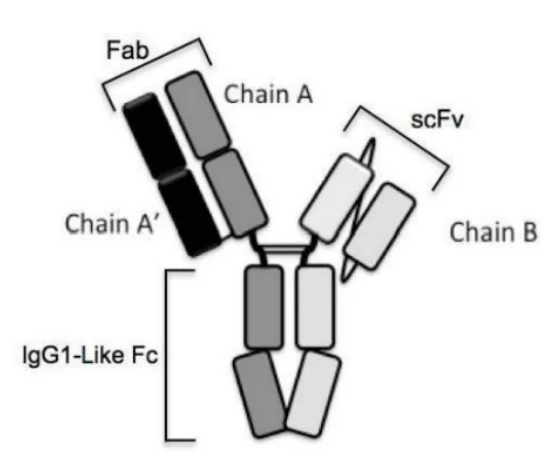
Abbreviations: Fab = Fragment antigen-binding; Fc = Fragment crystallizable; IgG1 = immunoglobulin G antibody isotype 1; scFv = Single-chain variable fragment
Physicochemical properties: ZIIHERA is a lyophilized white powder.
14. Clinical Trials
14.1. Clinical Trials by Indication
Previously-treated Unresectable Locally Advanced or Metastatic HER2-positive (IHC 3+) Biliary Tract Cancer
Table 10 – Summary of Patient Demographics for Clinical Trials in Biliary Tract Cancer
| Study # | Study design | Dosage, route of administration and duration | Study subjects (n) | Median age (range) | Sex |
| HERIZON-BTC-01 | Phase 2, multicentre, open-label, single-arm | 20 mg/kg, intravenously, every 2 weeks | N = 62 | 64 years (38 to 79 years) | 55% female |
The efficacy of ZIIHERA was evaluated in Cohort 1 (n=62) of HERIZON-BTC-01, a multicentre open-label single arm trial of patients with locally advanced unresectable or metastatic biliary tract cancer who received at least one prior gemcitabine-containing systemic chemotherapy regimen for advanced disease, and whose tumour tested HER2-positive (IHC 3+) at a central laboratory. Patients were required to have adequate cardiac function (defined as LVEF ≥ 50%).
Patients received ZIIHERA once every 2 weeks at a dosage of 20 mg/kg intravenously. ZIIHERA was administered until disease progression or unacceptable toxicity. The major efficacy outcome measures were confirmed objective response rate (cORR) and duration of response (DoR) as determined by an independent central review (ICR) according to Response Evaluation Criteria in Solid Tumours (RECIST) v1.1.
The median age was 64 years (range: 38 to 79 years), 47% of patients were age 65 or older; 55% were female; 61% were Asian, 31% were White. All patients had a baseline Eastern Cooperative Oncology Group (ECOG) performance status of 0 (32%) or 1 (68%). Fifty-three percent of patients had gallbladder cancer, 27% had intrahepatic cholangiocarcinoma, and 19% had extrahepatic cholangiocarcinoma. Forty percent of patients had received more than one prior line of therapy for metastatic or locally advanced disease. The most commonly received prior treatments, other than gemcitabine, included: cisplatin (76%), fluoropyrimidine-based (32%), PD-1 or PD-L1 inhibitor (26%), and oxaliplatin (16%).
The efficacy results are summarized in Table 11.
Table 11 – Efficacy Results in HERIZON-BTC-01
| Efficacy Parameter* | ZIIHERA N=62 |
| Confirmed Objective Response Rate (cORR) | |
n % (95%, CI) | 32 51.6 (38.6, 64.5) |
| Complete response, n (%) | 2 (3.2) |
| Partial response, n (%) | 30 (48.4) |
| Duration of Response (DOR)ⱡ | N=32 |
| Median, months (95% CI) | 14.9 (7.4, NE) |
*Assessed by independent central review
ⱡBased on Kaplan-Meier estimate
NE = not estimable
Data cut off 28 July 2023
16. Non-Clinical Toxicology
General toxicology: In a 13-week repeat-dose toxicity study of cynomolgus monkeys, ZIIHERA induced non-severe and transient treatment-related soft or watery feces at intravenous doses of up to 150 mg/kg weekly.
Genotoxicity: Studies have not been conducted to evaluate mutagenic potential of ZIIHERA.
Carcinogenicity: Studies have not been conducted to evaluate the carcinogenic potential of ZIIHERA.
Reproductive and developmental toxicology: Reproductive and developmental toxicity studies have not been conducted with ZIIHERA. Fertility studies have not been performed with ZIIHERA. In a repeat-dose toxicity study of cynomolgus monkeys, ZIIHERA had no effect on male and female reproductive organs through 13 weeks of treatment with doses of up to 150 mg/kg weekly.