


Product Monograph - Zydelig
SUMMARY PRODUCT INFORMATION
| Route of Administration | Dosage Form/Strength | Clinically Relevant Nonmedicinal Ingredients |
| Oral | Tablet Idelalisib 150 mg Idelalisib 100 mg | microcrystalline cellulose, hydroxypropyl cellulose, croscarmellose sodium, sodium starch glycolate, and magnesium stearate. For a complete listing, see the DOSAGE FORMS, COMPOSITION, AND PACKAGING section. |
INDICATIONS AND CLINICAL USE
Chronic Lymphocytic Leukemia
ZYDELIG (idelalisib) is indicated in combination with rituximab for the treatment of patients with relapsed chronic lymphocytic leukemia (CLL).
Effectiveness of ZYDELIG in combination with rituximab is based on progression free survival benefit with limited follow up in a study of patients who were not fit to receive cytotoxic therapy.
Refer to the Rituxan Product Monograph for rituximab product information.
Follicular Lymphoma
ZYDELIG (idelalisib) is indicated as a monotherapy for the treatment of patients with follicular lymphoma who have received at least two prior systemic regimens and are refractory to both rituximab and an alkylating agent.
Geriatrics (≥65 years of age):
In clinical studies of ZYDELIG in patients with follicular lymphoma or CLL, no major differences in effectiveness were observed in patients 65 years of age or older compared with younger patients. Adverse events were more common and led more commonly to negative outcomes in patients over the age of 65 years (see WARNINGS and PRECAUTIONS).
Pediatrics (<18 years of age):
Safety and effectiveness in children less than 18 years of age have not been established.
CONTRAINDICATIONS
ZYDELIG is contraindicated in first-line CLL and early-line indolent non-Hodgkin lymphoma (iNHL) outside a clinical trial. See WARNINGS AND PRECAUTIONS, Serious Infections section below.
ZYDELIG is contraindicated in patients with known hypersensitivity to any of the components of the product. For a complete listing, see the DOSAGE FORMS, COMPOSITION AND PACKAGING section of the Product Monograph.
WARNINGS AND PRECAUTIONS
Carcinogenesis and Mutagenesis
The carcinogenicity potential of idelalisib was evaluated in a 26-week transgenic RasH2 mouse study and a 2-year rat study. A small increase in pancreatic islet cell tumors was noted in male rats (see TOXICOLOGY, Carcinogenesis). ZYDELIG demonstrated no significant mutagenicity or genotoxicity in vitro, but demonstrated genotoxicity in vivo at a high dose (see TOXICOLOGY, Mutagenesis).
Drug Interactions
Cytochrome P450 (CYP) interactions
ZYDELIG is a strong CYP3A inhibitor. Coadministration of ZYDELIG with CYP3A substrates may increase their systemic exposures. Caution is recommended if ZYDELIG is coadministered with narrow therapeutic index CYP3A substrates (see DRUG INTERACTIONS).
Gastrointestinal
Diarrhea/Colitis:
Cases of severe diarrhea/colitis were reported commonly and occurred relatively late (months) after the start of therapy with ZYDELIG. Severe diarrhea due to ZYDELIG responds poorly to antimotility agents. Most cases resolved within a few weeks with drug interruption and additional symptomatic treatment (e.g., anti-inflammatory corticosteroid
Serious Warnings and Precautions
ZYDELIG® should only be prescribed by a qualified physician who is experienced in the use of anti-cancer agents.
Prophylaxis for Pneumocystis carinii/jirovecii pneumonia (PCP/PJP) and monitoring for cytomegalovirus (CMV) are required during treatment with ZYDELIG.
The following are clinically significant adverse events:
- Serious infections, including fatal cases (see Serious Infections below)
- Hepatotoxicity (see Hepatic below)
- Severe diarrhea/colitis, including fatal cases (see Gastrointestinal below)
- Pneumonitis, including fatal cases (see Respiratory below)
- Severe cutaneous reactions, including drug reaction with eosinophilia and systemic symptoms (DRESS), and fatal cases of Stevens-Johnson Syndrome and Toxic Epidermal Necrolysis (see Skin below)
agents such as enteric budesonide) but some had a fatal outcome (see DOSAGE AND ADMINISTRATION, Dose Modification). Severe diarrhea/colitis occurring with administration of ZYDELIG has been associated with dehydration which has responded to intravenous fluid and electrolyte replacement. Causes of diarrhea related to gastrointestinal infection should be ruled out.
For CTCAE Grade 1 diarrhea/colitis, provide anti-diarrheal (e.g., loperamide) and maintain ZYDELIG dose. For Grade 2 diarrhea/colitis, withhold ZYDELIG and monitor at least weekly until resolved to Grade ≤1.
For CTCAE Grade 3 or 4 diarrhea/colitis, withhold ZYDELIG. Consider addition of anti-inflammatory agent (e.g., sulfasalazine, budesonide). Monitor at least weekly until resolved to Grade ≤1, then may resume ZYDELIG at 100 mg BID.
Treatment of patients with ongoing inflammatory bowel disease is not recommended.
Hematologic
Neutropenia:
Treatment-emergent Grade 3 or 4 neutropenia and cases of febrile neutropenia, some which have been fatal, have occurred in patients treated with ZYDELIG. Monitor blood counts in all patients at least every 2 weeks for the first 6 months of therapy with ZYDELIG, and at least weekly in patients while absolute neutrophil counts are less than 1.0 x 10⁹/L (see DOSAGE AND ADMINISTRATION, Dose Modification).
Hepatic
Hepatotoxicity:
Elevations in ALT and AST Grade 3 or 4 (greater than 5 times the upper limit of normal) have been observed in clinical trials of ZYDELIG. These laboratory findings were generally observed within the first 12 weeks of treatment, asymptomatic, and reversible within 3-4 weeks with dose interruption. While most patients resumed treatment at a lower dose, recurrence of ALT and AST elevations were common (see DOSAGE AND ADMINISTRATION, Dose Modification). Monitor ALT, AST, and total bilirubin in all patients every 2 weeks for the first 3 months of treatment, then every 1 to 3 months thereafter, and as clinically indicated.
For CTCAE Grade 1 (ALT/AST ≤3 x ULN) or Grade 2 (ALT/AST > 3-5 x ULN), maintain ZYDELIG dose. Monitor at least weekly until ALT/AST are ≤1 x ULN.
For CTCAE Grade 3 (ALT/AST >5-20 x ULN) or Grade 4 (ALT/AST >20 x ULN), withhold ZYDELIG. Monitor at least weekly until ALT/AST are ≤1 x ULN, then may resume ZYDELIG at 100 mg BID.
Discontinue ZYDELIG for recurrent hepatotoxicity.
Treatment of patients with active hepatitis or liver disease is not recommended.
Immune
Anaphylaxis:
Serious allergic reactions, including anaphylaxis, have been reported in patients on ZYDELIG. In patients who develop serious allergic reactions, discontinue ZYDELIG permanently and institute appropriate supportive measures.
Serious Infections:
Treatment with ZYDELIG should not be initiated in patients with any evidence of ongoing systemic bacterial, fungal or viral infection.
Serious and fatal infections have occurred with ZYDELIG, including opportunistic infections such as Pneumocystis carinii/jirovecii pneumonia (PCP/PJP) and cytomegalovirus (CMV).
An increase in serious adverse events and deaths, primarily due to infections, was observed in patients receiving ZYDELIG compared with the control arms in a first-line study of CLL and two studies of relapsed early-line iNHL. Based on these findings, and the unfavourable benefit/risk assessment at interim analysis, these studies and all first-line studies in patients with CLL or iNHL were terminated. ZYDELIG is contraindicated in first-line CLL and early-line iNHL outside a clinical trial.
Administer prophylaxis for PCP/PJP to all patients throughout ZYDELIG treatment and for a period of 2 to 6 months after discontinuation. The duration of post-treatment prophylaxis should be based on clinical judgment and may take into account a patient’s risk factors such as concomitant corticosteroid treatment and prolonged neutropenia.
Regular clinical and laboratory monitoring for CMV infection should be conducted. Treatment with ZYDELIG should be permanently discontinued if there is evidence of CMV infection or viremia (positive polymerase chain reaction (PCR) or antigen test).
Cases of progressive multifocal leukoencephalopathy (PML) have been reported following the use of ZYDELIG within the context of prior- or concomitant immunosuppressive therapies that have been associated with PML. Physicians should consider PML in the differential diagnosis in patients with new or worsening neurological, cognitive or behavioral signs or symptoms. If PML is suspected then appropriate diagnostic evaluations should be undertaken and treatment suspended until PML is excluded. If any doubt exists, referral to a neurologist and appropriate diagnostic measures for PML including MRI scan preferably with contrast, cerebrospinal fluid (CSF) testing for JC viral DNA and repeat neurological assessments should be considered. Discontinue ZYDELIG permanently in patients with confirmed PML.
Neurologic
Effects on Ability to Drive and Use Machines
No studies of the effects of ZYDELIG on the ability to drive or use machines have been performed. A detrimental effect on such activities is not expected based on the known pharmacology and safety profile of ZYDELIG.
Respiratory
Pneumonitis:
Cases of pneumonitis, including organizing pneumonia, some with fatal outcome, have occurred with ZYDELIG. Time to occurrence of pneumonitis after the start of therapy with ZYDELIG was highly variable, ranging from a few weeks to over one year. Patients should be monitored for respiratory signs and symptoms throughout treatment and should be advised to report new respiratory symptoms promptly. In patients presenting with serious lung adverse events, ZYDELIG should be interrupted and the patient assessed for an explanatory etiology. In patients with drug-related pneumonitis or organizing pneumonia, ZYDELIG should be permanently discontinued and appropriate treatment with systemic corticosteroids should be initiated (see DOSAGE AND ADMINISTRATION, Dose Modification).
Skin
Severe Cutaneous Reactions:
Stevens-Johnson syndrome (SJS), toxic epidermal necrolysis (TEN), and drug reaction with eosinophilia and systemic symptoms (DRESS) have occurred with ZYDELIG. Cases of SJS and TEN with fatal outcomes have been reported when ZYDELIG was administered concomitantly with other medications associated with these syndromes. If SJS, TEN, or DRESS is suspected, ZYDELIG should be interrupted and the patient treated accordingly. If SJS, TEN, or DRESS is confirmed, permanently discontinue ZYDELIG.
Other severe or life-threatening (Grade ≥3) cutaneous reactions, including dermatitis exfoliative, rash, rash erythematous, rash generalized, rash macular, rash maculo-papular, rash papular, rash pruritic, exfoliative rash, and skin disorder, have been reported in
ZYDELIG-treated patients. If patients develop severe cutaneous reactions, discontinue ZYDELIG (see DOSAGE AND ADMINISTRATION, Dose Modification).
For CTCAE Grade 1 rash, maintain ZYDELIG dose. For Grade 2 rash, withhold ZYDELIG until Grade ≤1.
For CTCAE Grade 3 or 4 rash, withhold ZYDELIG. Monitor at least weekly until resolved to Grade ≤1, then may resume ZYDELIG at 100 mg BID.
Photosensitivity:
In vitro studies have shown that idelalisib has phototoxic potential (see TOXICOLOGY).
Patients should be advised to avoid sun exposure or wear sufficient sun protection.
Special Populations
Pregnant Women:
There are no adequate and well-controlled studies of ZYDELIG in pregnant women.
Based on findings in animals (see TOXICOLOGY), idelalisib may cause fetal harm when administered to a pregnant woman. In studies of pregnant rats, idelalisib treatment was associated with increased post-implantation loss, decreased fetal weights, and skeletal malformations.
ZYDELIG should not be used during pregnancy. If this drug is used during pregnancy, or if the patient becomes pregnant while receiving this drug, the patient should be apprised of the potential hazard to the fetus. Women of childbearing potential should be advised to avoid becoming pregnant while receiving ZYDELIG. Women of child bearing potential should use highly effective contraceptive measures while taking ZYDELIG and for 1 month after stopping treatment. Idelalisib may reduce the effectiveness of hormonal contraceptives (see DRUG INTERACTIONS). Women who use hormonal methods of birth control should add a barrier method.
Nursing Women:
It is not known whether idelalisib or its metabolites are excreted in human milk. Because many drugs are excreted in human milk and because of the potential for serious adverse reactions in nursing infants from ZYDELIG, discontinue nursing when taking ZYDELIG.
Hepatic Impairment:
Intensified monitoring of adverse events is recommended in patients with impaired hepatic function as exposure is expected to be increased in this population. The AUC of idelalisib increased up to 1.7-fold in subjects with ALT or AST or bilirubin greater than the upper limit of normal (ULN) compared to healthy subjects with normal ALT or AST or bilirubin values. Safety and efficacy data are not available in patients with baseline ALT or AST values greater than 2.5 x ULN or bilirubin values greater than 1.5 x ULN, as these patients were excluded from pivotal trials.
Geriatrics:
The incidence of ≥ Grade 3 AEs was higher among subjects ≥65 years of age compared with subjects < 65 years of age (79.0% vs 63.2%). Subjects ≥65 years of age had a higher incidence of idelalisib discontinuation due to an AE compared with subjects < 65 years of age (24.6% vs 15.7%). A higher incidence of SAEs was observed in subjects ≥65 years of age compared with subjects < 65 years of age (59.9% vs 40.0% for all subjects).
Monitoring and Laboratory Tests
Hepatic function tests (ALT, AST, and total bilirubin) should be measured every 2 weeks for the first 3 months of treatment, then every 1 to 3 months thereafter, and as clinically indicated (see Hepatic section above).
Monitor blood counts at least every 2 weeks for the first 6 months of therapy, and at least weekly in patients while absolute neutrophil counts are less than 1.0 x 10⁹/L. Monitor all patients for CMV infection during treatment with ZYDELIG.
ADVERSE REACTIONS
Adverse Drug Reaction Overview
ZYDELIG is associated with infections. Higher frequencies of infections overall, including Grade 3 and 4 infections, were observed in the ZYDELIG arms compared to the control arms of ZYDELIG clinical studies. Most frequently observed were infections in the respiratory system and septic events. In many instances the pathogen was not identified; however, both conventional and opportunistic pathogens, including PCP/PJP and CMV, were among those identified. Nearly all PCP/PJP infections, including fatal cases, occurred in the absence of PCP/PJP prophylaxis. There have been cases of PCP/PJP after stopping idelalisib treatment.
Chronic Lymphocytic Leukemia
In the Phase 3 study in CLL, 220 previously treated patients were randomised to receive ZYDELIG (150 mg BID) + rituximab or placebo + rituximab. Serious adverse reactions were reported in 54 (49%) patients treated with ZYDELIG + rituximab. The most frequent (≥2%) serious adverse reactions reported for patients treated with ZYDELIG were pneumonia (17%), pyrexia (9%), sepsis (8%), febrile neutropenia (5%), and diarrhea (5%). Adverse reactions that led to discontinuation of ZYDELIG occurred in 11 (10%) patients. The most common adverse reactions that led to treatment discontinuations were hepatotoxicity and diarrhea/colitis. A total of 39 patients (35%) had dose interruptions, 16 patients (15%) had dose reductions, and 11 patients (10%) had drug discontinuation due to adverse reactions. Patients may have had more than 1 type of dose modification. The most common reasons for dose reductions were elevated transaminases, diarrhea, and neutropenia.
Indolent Non-Hodgkin Lymphoma
In the Phase 1 and 2 studies in previously treated iNHL, 146 patients were treated with ZYDELIG monotherapy at a dose of 150 mg BID. Serious adverse reactions were reported in 73 (50%) patients treated with ZYDELIG. The most frequent serious adverse reactions were pneumonia (15%), diarrhea (11%), and pyrexia (9%). Among the 146 iNHL patients who received ZYDELIG 150 mg BID as a single agent, sixty-two (43%) had dose interruptions, thirty-four (23%) had dose reductions, and thirty-six (25%) had drug discontinuation due to adverse reactions. Patients may have had more than 1 type of dose modification. The most common reasons for dose modifications were diarrhea, elevated transaminases, and neutropenia.
Clinical Trial Adverse Drug Reactions
Because clinical trials are conducted under very specific conditions the adverse reaction rates observed in the clinical trials may not reflect the rates observed in practice and should not be compared to the rates in the clinical trials of another drug. Adverse drug reaction information from clinical trials is useful for identifying drug-related adverse events and for approximating rates.
Table 1 summarizes adverse events reported for ZYDELIG + rituximab and placebo + rituximab arms in 218 patients with CLL. Adverse events reflect exposure to ZYDELIG with a median duration of 5.0 months and exposure to placebo with a median duration of
3.7 months. Adverse events occurring at 5% incidence and 2% greater in the ZYDELIG arm when compared to the placebo arm are provided in Table 1.
Table 1 Adverse Events Reported in ≥5% of Patients with CLL and Occurred at ≥2% Higher Incidence in Patients Treated with ZYDELIG
ZYDELIG + R N=110 (%) | Placebo + R N=108 (%) | |||
|---|---|---|---|---|
| Adverse Event | Any Grade | Grade ≥3 | Any Grade | Grade ≥3 |
| Gastrointestinal disorders | ||||
ZYDELIG + R N=110 (%) | Placebo + R N=108 (%) |
|---|
| Adverse Event | Any Grade | Grade ≥3 | Any Grade | Grade ≥3 | |
|---|---|---|---|---|---|
| nausea | 28 (25) | 0 | 23 (21) | 0 | |
| vomiting | 14 (13) | 0 | 9 (8) | 0 | |
| diarrhea (a) | 23 (21) | 6 (5) | 17 (16) | 0 | |
| gastroesophageal reflux disease | 7 (6) | 0 | 1 (1) | 0 | |
| stomatitis | 7 (6) | 2 (2) | 2 (2) | 0 | |
| Nervous system disorders | |||||
| headache | 11 (10) | 1 (1) | 5 (5) | 0 | |
| General disorders and administration site conditions | |||||
| pyrexia | 38 (35) | 3 (3) | 18 (17) | 1 (1) | |
| chills | 23 (21) | 2 (2) | 17 (16) | 0 | |
| pain | 8 (7) | 0 | 2 (2) | 0 | |
| Skin and subcutaneous tissue disorders | |||||
| rash (b) | 20 (18) | 4 (4) | 7 (6) | 1 (1) | |
| Respiratory, thoracic, and mediastinal disorders | |||||
| pneumonia (c) | 25 (23) | 18 (16) | 19 (18) | 14 (13) | |
| nasal congestion | 6 (5) | 0 | 2 (2) | 0 | |
| Infections and infestations | |||||
| sepsis (d) | 9 (8) | 8 (7) | 4 (4) | 4 (4) | |
| bronchitis | 7 (6) | 1 (1) | 3 (3) | 1 (1) | |
| sinusitis | 9 (8) | 0 | 4 (4) | 0 | |
| urinary tract infection | 6 (5) | 0 | 3 (3) | 2 (2) | |
| Musculoskeletal and connective tissue disorders | |||||
| arthralgia | 8 (7) | 1 (1) | 4 (4) | 1 (1) | |
(a) Diarrhea includes the following preferred terms: diarrhea, colitis.
(b) Rash includes the following preferred terms: dermatitis exfoliative, rash, rash macular, rash maculo-papular, rash papular, rash pruritic, and skin disorder.
(c) Pneumonia includes the terms: pneumonia, pneumonitis, lung infection, lung infiltration, pneumocystis jiroveci pneumonia, pneumonia legionella, lung infection pseudomonal, pneumonia fungal, respiratory tract infection, lower respiratory tract infection, and lower respiratory tract infection bacterial.
(d) Sepsis includes the terms: sepsis, septic shock, neutropenic sepsis, and sepsis syndrome.
R: rituximab
Table 2 summarizes adverse events in 146 patients with iNHL treated with ZYDELIG 150 mg BID. ZYDELIG is indicated for use in patients with follicular lymphoma. Adverse events reflect exposure to ZYDELIG with a median duration of 6.1 months.
Table 2 Adverse Events Reported in ≥ 10% Patients with Indolent Non-Hodgkin Lymphoma Treated with ZYDELIG 150 mg BID
ZYDELIG Monotherapy N=146 (%) | ||||||||
| Adverse Event | Any Grade | Grade ≥3 | ||||||
| Gastrointestinal disorders | ||||||||
| diarrhea (a) | 68 (47) | 20 (14) | ||||||
| nausea | 42 (29) | 2 (1) | ||||||
| abdominal pain (b) | 38 (26) | 3 (2) | ||||||
| vomiting | 22 (15) | 2 (1) | ||||||
| General disorders and administration site conditions | ||||||||
| fatigue | 44 (30) | 2 (1) | ||||||
| pyrexia | 41 (28) | 3 (2) | ||||||
| asthenia | 17 (12) | 3 (2) | ||||||
| peripheral edema | 15 (10) | 3 (2) | ||||||
| Infections and infestations | ||||||||
| upper respiratory tract infection | 18 (12) | 0 | ||||||
| Respiratory, thoracic, and mediastinal disorders | ||||||||
| pneumonia (c) | 37 (25) | 23 (16) | ||||||
| cough | 42 (29) | 1 (1) | ||||||
| dyspnea | 25 (17) | 6 (4) | ||||||
| Skin and subcutaneous disorders | ||||||||
| rash (d) | 31 (21) | 4 (3) | ||||||
| night sweats | 18 (12) | 0 | ||||||
| Nervous system disorders | ||||||||
| headache | 16 (11) | 1 (1) | ||||||
| Metabolism and nutrition disorders | ||||||||
| decreased appetite | 24 (16) | 1 (1) | ||||||
| Psychiatric disorders | ||||||||
| insomnia | 17 (12) | 0 | ||||||
(a) Diarrhea includes the following preferred terms: diarrhea, colitis, enterocolitis, and gastrointestinal inflammation.
(b) Abdominal pain includes the following preferred terms: abdominal pain, abdominal pain upper, abdominal pain lower, and abdominal discomfort.
(c) Pneumonia includes the terms: pneumonia, pneumonitis, interstitial lung disease, lung infiltration, pneumonia aspiration, respiratory tract infection, atypical pneumonia, lung infection, pneumocystis jiroveci pneumonia, bronchopneumonia, pneumonia necrotizing, lower respiratory tract infection, pneumonia pneumococcal, pneumonia staphylococcal, pneumonia streptococcal, pneumonia cytomegaloviral, and respiratory syncytial virus infection.
(d) Rash includes the following preferred terms: dermatitis exfoliative, rash, rash erythematous, rash macular, rash maculo-papular, rash pruritic, and exfoliative rash.
Abnormal Hematologic and Clinical Chemistry Findings
Laboratory Abnormalities
Table 3 summarizes the treatment-emergent laboratory abnormalities reported for ZYDELIG + rituximab and placebo + rituximab arms in patients with CLL.
Table 3 Treatment-emergent Laboratory Abnormalities Reported in ≥10% of Patients with CLL Occurring at a ≥5% Higher Incidence in Patients Receiving ZYDELIG
ZYDELIG + R N=110 (%) | Placebo + R N=108 (%) | ||||
|---|---|---|---|---|---|
| Laboratory Parameter | Any Grade | Grade 3–4 | Any Grade | Grade 3–4 | |
| Hematology abnormalities | |||||
| neutrophil count decreased | 66 (60) | 41 (37) | 55 (51) | 29 (27) | |
| lymphocyte count decreased | 22 (20) | 10 (9) | 13 (12) | 4 (4) | |
| lymphocyte count increased | 27 (25) | 20 (18) | 10 (9) | 5 (5) | |
| Serum chemistry abnormalities | |||||
| ALT increased | 38 (35) | 9 (8) | 11 (10) | 1 (1) | |
| AST increased | 27 (25) | 6 (5) | 15 (14) | 0 | |
| GGT increased | 29 (26) | 2 (2) | 15 (14) | 3 (3) | |
| triglycerides (hypertriglyceridemia) | 62 (56) | 3 (3) | 37 (34) | 0 | |
| hyperglycemia | 59 (54) | 8 (7) | 50 (46) | 2 (2) | |
| hypoglycemia | 12 (11) | 0 | 5 (5) | 0 | |
| hyponatremia | 22 (20) | 2 (2) | 16 (15) | 7 (6) | |
Grades were obtained per CTCAE version 4.03.
R: rituximab
Table 4 summarizes the treatment-emergent laboratory abnormalities in patients with iNHL treated with ZYDELIG 150 mg BID.
Table 4 Treatment-emergent Laboratory Abnormalities in Patients with Indolent Non-Hodgkin Lymphoma Treated with ZYDELIG 150 mg BID
ZYDELIG Monotherapy N=146 (%) | ||||||||
| Laboratory Abnormality | Any Grade | Grade 3-4 | ||||||
| Serum chemistry abnormalities | ||||||||
| ALT increased | 73 (50) | 27 (18) | ||||||
| AST increased | 60 (41) | 18 (12) | ||||||
| neutrophils decreased | 78 (53) | 36 (25) | ||||||
| hemoglobin decreased | 41 (28) | 3 (2) | ||||||
| platelets decreased | 38 (26) | 9 (6) | ||||||
Grades were obtained per CTCAE version 4.03.
Post-Market Adverse Drug Reactions
In addition to adverse reactions from clinical studies, the following adverse reactions have been identified during post-approval use of ZYDELIG. Because these reactions were reported voluntarily from a population of unknown size, estimates of frequency cannot be made.
Skin and subcutaneous tissue disorders: Respiratory, Thoracic and Mediastinal disorders: | Stevens-Johnson Syndrome (SJS), Toxic Epidermal Necrolysis (TEN), and drug reaction with eosinophilia and systemic symptoms (DRESS) (see WARNINGS and PRECAUTIONS, Skin) Organizing pneumonia (see WARNINGS and PRECAUTIONS, Respiratory) |
Infections and infestations: Progressive multifocal leukoencephalopathy (see WARNINGS and PRECAUTIONS, Serious infections)
DRUG INTERACTIONS
Drug-Drug Interactions
Idelalisib is metabolized primarily via aldehyde oxidase, and to a lesser extent via CYP3A and glucuronidation (UGT1A4). The primary circulating metabolite (GS-563117) exceeds idelalisib human plasma levels at steady-state. GS-563117 is inactive against PI3Kδ.
Effects of Other Drugs on ZYDELIG
CYP3A Inducers
A clinical drug interaction study found that coadministration of ZYDELIG with rifampin (a strong CYP3A inducer) resulted in a ~75% reduction in idelalisib plasma AUCinf. Coadministration of ZYDELIG with strong CYP3A inducers such as rifampin, phenytoin, St. John’s Wort, or carbamazepine should be avoided.
CYP3A Inhibitors
A clinical drug interaction study found that coadministration of ZYDELIG with ketoconazole (a strong CYP3A inhibitor) resulted in a 26% increase in ZYDELIG Cmax and a 79% increase in AUCinf, indicating that ZYDELIG is not a sensitive CYP3A substrate. If patients are taking concomitant strong CYP3A inhibitors, monitor for signs of toxicity.
Other
Co-administration of drugs which are aldehyde oxidase inhibitors (e.g. raloxifene) could increase idelalisib plasma concentrations. A clinical drug interaction study has not been conducted.
Effects of ZYDELIG on Other Drugs
CYP3A Substrates
In vitro, the major circulating metabolite was shown to be an irreversible inhibitor of CYP3A. Return to normal CYP3A enzyme activity is therefore expected to take several days after stopping idelalisib administration. A clinical drug interaction study found that coadministration of ZYDELIG with midazolam (a sensitive CYP3A substrate) resulted in a ~140% increase in Cmax and a ~440% increase in AUCinf of midazolam. Accordingly, ZYDELIG is considered to be a strong CYP3A inhibitor. Coadministration of ZYDELIG with CYP3A substrates (e.g., certain antiarrhythmics, calcium channel blockers, benzodiazepines, HMG-CoA reductase inhibitors, phosphodiesterase-5 (PDE5) inhibitors, and warfarin) may increase their systemic exposures.
Caution is recommended if ZYDELIG is coadministered with narrow therapeutic index CYP3A substrates (e.g., alfentanil, cyclosporine, sirolimus, tacrolimus, pimozide, fentanyl, quinidine, ergotamine, dihydroergotamine).
CYP2C8 Substrates
In vitro, idelalisib inhibited CYP2C8. In vivo studies to investigate the clinical relevance have not been conducted. Caution is advised when co-administering idelalisib with narrow therapeutic index CYP2C8 substrates (e.g. repaglinide).
Substrates of CYP2B6, CYP2C9 and CYP2C19
In vitro, idelalisib demonstrated the potential to induce CYP2B6, CYP2C8 and CYP2C9, and based on these findings, is likely to induce CYP2C19. Clinical drug interaction studies have not been conducted. Caution is advised upon co-administration of idelalisib with substrates of these enzymes with narrow therapeutic indices (warfarin, phenytoin, S-mephenytoin).
Hormonal Contraceptives
In vitro, idelalisib induces CYP3A4, CYP2C9 and UGT1A1. All of these enzymes are involved in the first-pass metabolism of ethinyl estradiol in the gut wall and liver. A clinical drug interaction study has not been conducted, however idelalisib may decrease the oral bioavailability of ethinyl estradiol, decreasing the effectiveness of hormonal contraceptives.
Drug-Food Interactions
There were no clinically relevant differences in absorption when ZYDELIG was administered either with food or in a fasting state. Idelalisib can be administered without regard to food.
Drug-Herb Interactions
Coadministration with strong CYP3A inducers such as St. John’s Wort should be avoided.
Drug-Laboratory Interactions
Interactions of ZYDELIG with laboratory tests have not been studied.
DOSAGE AND ADMINISTRATION
Dosing Considerations
ZYDELIG can be taken with or without food.
Continue treatment until disease progression or unacceptable toxicity.
Recommended Dose and Dosage Adjustment
Chronic Lymphocytic Leukemia
The recommended dose of ZYDELIG is 150 mg administered orally twice daily in combination with rituximab (8 cycles of rituximab, first cycle at 375 mg/m2, subsequent cycles at 500 mg/m2). See the RITUXAN Product Monograph for information on administration and dose adjustment. See Table 5 for ZYDELIG dose modifications.
Follicular Lymphoma
The recommended dose of ZYDELIG is 150 mg administered orally twice daily. See Table 5 for ZYDELIG dose modifications.
Table 5 Dose Modifications for Toxicities Due to ZYDELIG
| Event | Grade 1-2 | Grade 3 | Grade 4 |
|---|---|---|---|
| Gastrointestinal | |||
| Diarrhea/Colitis | For Grade 1, provide anti-diarrheal (e.g., loperamide) and maintain ZYDELIG dose. For Grade 2, withhold ZYDELIG and monitor at least weekly until resolved to Grade ≤1. | Withhold ZYDELIG. Consider addition of anti-inflammatory agent (e.g., sulfasalazine, budesonide). Monitor at least weekly until resolved to Grade <1, then may resume ZYDELIG at 100 mg BID. | |
| Hematologic | |||
| Neutropenia | Maintain ZYDELIG dose. | Maintain ZYDELIG dose. Monitor ANC at least weekly. | Interrupt ZYDELIG. Monitor ANC at least weekly until ANC ≥ 0.5 G/L, then may resume ZYDELIG at 100 mg BID. |
| Hepatic | |||
| ALT/AST Elevation | Maintain ZYDELIG dose. Monitor at least weekly until ALT/AST are <1 x ULN. | Withhold ZYDELIG. Monitor at least weekly until ALT/AST are <1 x ULN, then may resume ZYDELIG at 100 mg BID. | |
| Infections | |||
| Evidence of CMV infection or viremia | Discontinue ZYDELIG in patients with evidence of CMV infection or viremia (positive PCR or antigen test). | ||
| Event | Grade 1-2 |
|---|---|
| Grade 3 | |
| Grade 4 | |
| Evidence of PML | Withhold ZYDELIG at the first sign or symptom suggestive of PML. Discontinue ZYDELIG permanently in patients with confirmed PML. |
| Evidence of PCP/PJP Infection | Discontinue ZYDELIG in patients with evidence of PCP/PJP infection. |
| Respiratory | |
| Pneumonitis | Interrupt ZYDELIG and evaluate for respiratory symptoms:
|
| Skin | |
| Rash | For Grade 1, maintain ZYDELIG dose. For Grade 2, withhold ZYDELIG until Grade <1. |
Withhold ZYDELIG. Monitor at least weekly until resolved to Grade <1, then may resume ZYDELIG at 100 mg BID. | |
| Abbreviations: ALT, alanine aminotransferase; AST, aspartate aminotransferase; BID, twice daily; CMV, cytomegalovirus; PCP/PJP, Pneumocystis carinii/jirovecii pneumonia; PCR, polymerase chain reaction; ULN, upper limit of normal | |
Special Patient Populations
Geriatrics (≥65 years of age)
No specific dose adjustment is required for elderly patients (aged ≥ 65 years) (see ACTION AND CLINICAL PHARMACOLOGY).
Pediatrics (<18 years of age)
ZYDELIG is not indicated for use in pediatric patients < 18 years of age.
Renal Impairment
No dose adjustment is required for patients with mild, moderate, or severe renal impairment (see ACTION AND CLINICAL PHARMACOLOGY).
Hepatic Impairment
No dose adjustment is necessary when initiating treatment with ZYDELIG in patients with mild or moderate hepatic impairment (see ACTION AND CLINICAL PHARMACOLOGY). Patients with baseline ALT or AST values greater than 2.5 x ULN or bilirubin values greater than 1.5 x ULN were excluded from pivotal trials. There are insufficient data to make dose recommendations for patients with severe hepatic impairment.
Missed Dose
If a patient misses a dose of ZYDELIG within 6 hours of the time it is usually taken, the patient should take ZYDELIG as soon as possible, and then take the next dose of ZYDELIG at the regularly scheduled time.
If a patient misses a dose of ZYDELIG by more than 6 hours, the patient should not take the missed dose, but resume the usual dosing schedule.
OVERDOSAGE
If overdose occurs, the patient must be monitored for evidence of toxicity. Treatment of overdose with ZYDELIG consists of general supportive measures including monitoring of vital signs as well as observation of the clinical status of the patient.
ACTION AND CLINICAL PHARMACOLOGY
Mechanism of Action
Idelalisib selectively inhibits PI3Kδ kinase, which is hyperactive in B-cell malignancies and is central to multiple signaling pathways that drive proliferation, survival, homing, and retention of malignant cells in lymphoid tissues and bone marrow. Idelalisib is a selective inhibitor of adenosine-5’-triphosphate (ATP) binding to the catalytic domain of PI3Kδ, resulting in inhibition of the phosphorylation of the key lipid second messenger phosphatidylinositol (PIP) and prevention of Akt phosphorylation.
Idelalisib induces apoptosis and inhibits proliferation in cell lines derived from malignant B-cells and in primary tumor cells. Idelalisib inhibits homing and retention of malignant B-cells in the tumor microenvironment including lymphoid tissues and the bone marrow.
Pharmacodynamics
Effects on Electrocardiogram:
For management of a suspected drug overdose, please contact your regional Poison Control Centre.
The effect of idelalisib at therapeutic (150 mg) and supratherapeutic (400 mg) doses on the QTc interval was evaluated in a placebo- and positive-controlled (moxifloxacin 400 mg) crossover study in 40 healthy subjects. No significant changes in the baseline-corrected QTc based on Fridericia’s correction method (QTcF) (i.e., ≥10 ms) were observed.
Lymphocytosis:
Upon initiation of ZYDELIG, a temporary increase in lymphocyte counts (i.e., ≥ 50% increase from baseline and above absolute lymphocyte count of 5,000/mcL) has been observed. The onset of isolated lymphocytosis typically occurs during the first two weeks of ZYDELIG therapy. This observed lymphocytosis is a pharmacodynamic effect and should not be considered progressive disease in the absence of other clinical findings.
Pharmacokinetics
Absorption:
Following oral administration of a single 400 mg dose of idelalisib, peak plasma concentrations were observed 2 to 4 hours post-dose under fed conditions and 0.5 to 1.5 hours under fasted conditions.
The Cmax and AUC of idelalisib increased in a less than dose proportional manner.
Distribution:
Idelalisib is 93% to 94% bound to human plasma proteins at concentrations observed clinically. The mean blood-to-plasma ratio was approximately 0.5.
Metabolism and Elimination:
The metabolism of idelalisib is primarily via aldehyde oxidase, and to a lesser extent via CYP3A and UGT1A4. The primary and only circulating metabolite, GS-563117, is inactive against PI3Kδ, but is a strong inhibitor of CYP3A.
The terminal elimination half-life of idelalisib is 8.2 hours following idelalisib 150 mg twice daily oral administration. Following a single 150 mg oral dose of [14C]-labeled idelalisib, approximately 78% and 15% was excreted in feces and urine, respectively.
Drug-drug Interactions
In vitro, idelalisib inhibited the transport activities of BCRP, OATP1B1 and OATP1B3.
A clinical drug interaction study was conducted with rosuvastatin, a sensitive substrate of these transporters. Co-administration of ZYDELIG at 150 mg BID with a single dose of rosuvastatin resulted in comparable rosuvastatin plasma exposures (AUC 90% CI: 87, 121) as observed without ZYDELIG, demonstrating that in vitro inhibition of BCRP or OATP1B1/1B3 is not clinically relevant.
Idelalisib inhibited the transport activity of P-gp in vitro. In a clinical drug interaction study, digoxin plasma exposures (AUC and Cmax) were comparable when a single dose of digoxin was administered alone or in combination with ZYDELIG at 150 mg BID, suggesting no clinically relevant inhibition of P-gp or impact on digoxin pharmacokinetics (AUC 90% CI: 98, 111) by ZYDELIG. A risk for P-gp inhibition in the gastrointestinal tract, which could result in increased exposure of sensitive substrates for intestinal P-gp such as dabigatran etexilate, cannot be excluded.
Idelalisib is not an inhibitor of the metabolizing enzymes CYP1A2, CYP2B6, CYP2C, CYP2D6, CYP3A, or UGT1A1, or of the transporters P-gp, BCRP, OATP1B1, OATP1B3, OAT1, OAT3, or OCT2.
GS-563117 is an irreversible (mechanism-based) inhibitor of CYP3A (KI = 0.18 µM, kinact = 0.033 min-1). GS-563117 is not an inhibitor of the metabolizing enzymes CYP1A2, CYP2B6, CYP2C, CYP2D6 or UGT1A1, or of the transporters P-gp, BCRP, OATP1B1, OATP1B3, OAT1, OAT3, or OCT2.
Special Populations and Conditions
Pediatrics:
The pharmacokinetics of idelalisib has not been studied in pediatric patients.
Geriatrics:
Population pharmacokinetic analyses indicated that age had no clinically relevant effect on the exposures of idelalisib or its primary metabolite GS-563117, including geriatric (65 years of age and older) compared to younger subjects.
Race:
Population pharmacokinetic analyses indicated that race had no clinically relevant effect on the exposures of idelalisib or its primary metabolite GS-563117.
Gender:
Population pharmacokinetic analyses indicated that gender had no clinically relevant effect on the exposures of idelalisib or its primary metabolite GS-563117.
Hepatic Impairment:
A study of pharmacokinetics and safety of idelalisib was performed in healthy volunteers and volunteers with moderate (Child-Pugh Class B) or severe (Child-Pugh Class C) hepatic impairment. Following a single 150 mg dose, no clinically relevant changes in plasma exposure to idelalisib or its primary metabolite, GS-563117, were observed compared to healthy control volunteers.
Renal Impairment:
A study of pharmacokinetics and safety of idelalisib was performed in healthy volunteers and volunteers with severe renal impairment (estimated creatinine clearance 15 to 29 mL per min). Following a single 150 mg dose, no clinically relevant changes in exposures to idelalisib or its primary metabolite, GS-563117, were observed in subjects with severe renal impairment compared to healthy volunteers.
STORAGE AND STABILITY
Store below 30 °C (86 °F).
- Dispense only in original container.
- Do not use if seal over bottle opening is broken or missing.
SPECIAL HANDLING INSTRUCTIONS
There are no special handling instructions.
DOSAGE FORMS, COMPOSITION AND PACKAGING
ZYDELIG is available as tablets. Each tablet contains 100 or 150 mg of idelalisib. The tablets also include the following inactive ingredients: microcrystalline cellulose, hydroxypropyl cellulose, croscarmellose sodium, sodium starch glycolate and magnesium stearate.
The 150 mg tablets are coated with a material containing red iron oxide, polyethylene glycol, talc, polyvinyl alcohol, and titanium dioxide. ZYDELIG 150 mg tablets are pink, oval-shaped film-coated tablet debossed with “GSI” on one side and the number “150” on the other side. Each bottle contains 60 film-coated tablets and a polyester coil and is closed with a child-resistant closure.
The 100 mg tablets are coated with a material containing Sunset Yellow FCF Aluminum Lake (FD&C Yellow #6), polyethylene glycol, talc, polyvinyl alcohol, and titanium dioxide. ZYDELIG 100 mg tablets are orange, oval-shaped and film-coated, debossed with “GSI” on one side and the number “100” on the other side. Each bottle contains 60 film-coated tablets and a polyester coil and is closed with a child-resistant closure.
PART II. SCIENTIFIC INFORMATION
PHARMACEUTICAL INFORMATION
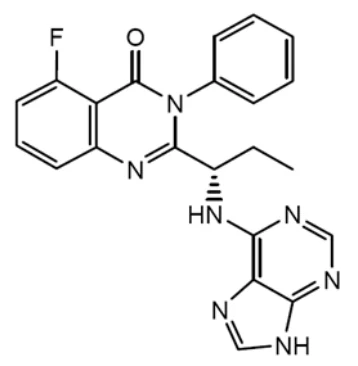
ZYDELIG is the brand name for idelalisib, an isoform-selective, small-molecule inhibitor of phosphatidylinositol 3-kinase p110δ (PI3Kδ).
ZYDELIG tablets are for oral administration. Each tablet contains 150 mg of idelalisib or 100 mg of idelalisib. The tablets also include the following inactive ingredients: microcrystalline cellulose, hydroxypropyl cellulose, croscarmellose sodium, sodium starch glycolate, and magnesium stearate. The 150 mg tablets are film-coated with a material containing polyvinyl alcohol, polyethylene glycol, titanium dioxide, talc, and iron oxide red. The 100 mg tablets are film-coated with a material containing polyvinyl alcohol, polyethylene glycol, titanium dioxide, talc and sunset yellow FCF.
Drug Substance
Common Name: idelalisib
Chemical Name: 5-fluoro-3-phenyl-2-[(1S)-1-(9H-purin-6-ylamino)propyl]quinazolin-4(3H)-one
Empirical Formula: C22H18FN7O
Molecular Weight: 415.42
Structural Formula:
Physicochemical Properties:
Description: white to off-white solid
Solubility: <0.1 mg/mL at pH 5-7 to over 1 mg/mL at pH 2 under ambient conditions
 |
CLINICAL TRIALS
Chronic Lymphocytic Leukemia
The pivotal CLL study was a randomized, double-blind, placebo-controlled study in 220 patients with relapsed CLL who required treatment but were not considered suitable for cytotoxic chemotherapy based on one of the following criteria: Cumulative Illness Rating Score (CIRS)* >6; estimated CrCl <60 mL/min; Grade ≥3 neutropenia or Grade ≥3 thrombocytopenia resulting from myelotoxic effects of prior therapy with cytotoxic agents. Subjects were randomized 1:1 to receive 8 cycles of rituximab (first cycle at 375 mg/m2, subsequent cycles at 500 mg/m2) in combination with either an oral placebo twice daily or with ZYDELIG 150 mg taken twice daily until disease progression or unacceptable toxicity.
The median age was 71 (range 47, 92) with 78.2% of subjects over 65, 65.5% were male, 90.0% were white, 64.5% had a Rai stage of III or IV, and 55.9% had Binet Stage C. Subjects had a median CIRS score of 8; 81 (36.8%) had cardiac, 114 (51.8%) had respiratory, 87 (39.5%) had renal, and 93 (42.3%) had endocrine/metabolic comorbidities. Two hundred and six subjects (93.6%) had 3 or more organs with comorbidities and 82 (37.3%) had severe (score of 3 or higher in any system) comorbidities. The median number of prior therapies was 3.0 (range 1-12). Nearly all (95.9%) subjects had received prior anti-CD20 monoclonal antibodies. The most common (>15%) prior regimens were: bendamustine + rituximab (98 subjects, 44.5%), fludarabine + cyclophosphamide + rituximab (75 subjects, 34.1%), single-agent rituximab (67 subjects, 30.5%), fludarabine + rituximab (37 subjects, 16.8%), and chlorambucil (36 subjects, 16.4%). Most subjects had adverse cytogenetic prognostic factors: 43.2% had a 17p deletion and/or TP53 mutation, and 83.6% had an unmutated IGHV.
The primary endpoint was progression free survival (PFS), defined as the interval from randomization to the earlier of the first documentation of definitive progressive disease (PD) or death from any cause; definitive disease progression was based on standard criteria other than lymphocytosis alone. Other efficacy outcomes included the overall response rate (ORR) and overall survival (OS). The primary analyses of PFS and ORR and were based on evaluation by an independent review committee (IRC).
* The CIRS (Refs) is an index to assess the medical burden of comorbid conditions with total scores ranging from 0 to a theoretical maximum of 56 with higher scores indicating more (or more severe) co-morbidities. Individual comorbidities are assessed in 14 organ systems; each comorbidity is rated with a score from 1-4. If there is >1 comorbidity in an organ system, only the comorbidity with the highest score counts towards the total CIRS score. Conditions that are commonly found to be related to CLL (ie, cytopenia or hypogammglobulinemia) should not be counted.
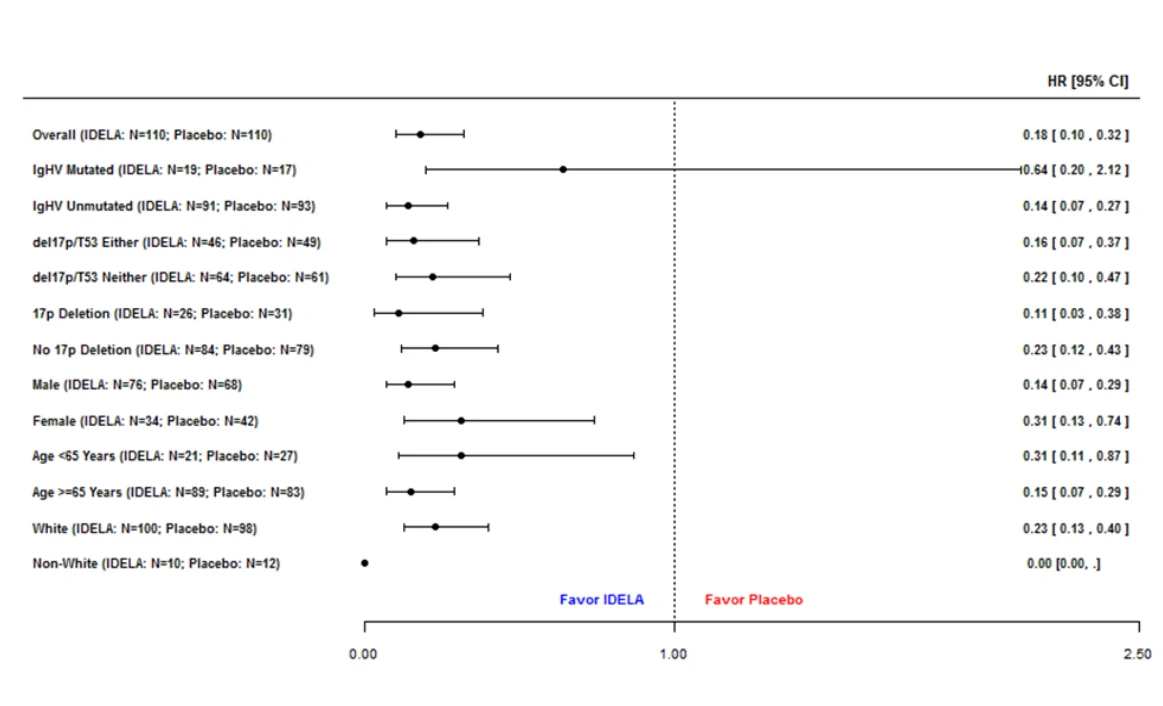
The trial was stopped for efficacy following the first pre-specified interim analysis. Results of the second interim analysis continued to show a statistically significant improvement for ZYDELIG + rituximab over placebo + rituximab for the primary endpoint of PFS (HR: 0.18, p < 0.0001; see Table 6). This improvement was consistently demonstrated across all pre-specified subgroups (see Figure 2). Nineteen patients died through the cut-off date for the interim analysis; 6 in the ZYDELIG + rituximab group and 13 in the placebo + rituximab group. A statistically significant improvement in ORR was also observed. The Kaplan-Meier plot for PFS is provided in Figure 1.
Table 6. Efficacy Results from Study 312-0116
| ZYDELIG + R n=110 | Placebo + R n=110 | ||||
| PFS Median (months) (95% CI) | NR (10.7, NR) | 5.5 (3.8, 7.1) | |||
| Hazard ratio (95% CI) | 0.18 (0.10, 0.32) | ||||
| P-value | < 0.0001 † | ||||
| ORR*, n(%) | 82 (74.5%) | 16 (14.5%) | |||
| Odds ratio (95% CI) | 17.28 (8.66, 34.46) | ||||
| P-value | < 0.0001 † | ||||
R: rituximab; PFS: progression-free survival; NR: not reached
* ORR defined as the proportion of subjects who achieved a CR or PR based on criteria described by Hallek (2008) as modified by Cheson.
† Actual p-values: for PFS, p= 6 x 10-11; for ORR, p=6.3 x 10⁻¹⁹
Figure 1. Kaplan-Meier Plot of IRC Assessed PFS
0 2 4 6 8 10 12 14 16 18 0 20 40 60 80 100 P r o g r e s s i o n -f r e e S u r v i v a l ( % ) Id e lalisib + R (N = 1 1 0 ) P la c e b o + R (N = 1 1 0 ) Idelalisib + R 110 (0) 87 (3) 54 (7) 35 (8) 30 (10) 17 (14) 7 (15) 2 (16) 1 (16) 0 (16) Placebo + R 110 (0) 69 (21) 37 (37) 19 (44) 14 (49) 6 (54) 3 (56) 1 (58) 0 (59) 0 (59) T im e (M o n th s) N at risk (E vents) H R = 0 .1 8 , 9 5 % C I (0 .1 0 , 0 .3 2 ), P < 0 .0 0 0 1 Id e la lisib + R : m e d ia n P F S = N R P la c eb o + R : m e d ia n P F S = 5 .5 m o n th s
Figure 2. Forest Plot of PFS Across Subgroups Favors ZYDELIG + Rituximab
 |
Follicular Lymphoma
The safety and efficacy of ZYDELIG was assessed in a single-arm, multicenter clinical trial that included 72 patients with follicular lymphoma who failed to respond or who had relapsed within 6 months of both rituximab therapy and an alkylating agent (separately or in combination). Subjects received ZYDELIG 150 mg taken orally twice daily until evidence of disease progression or unacceptable toxicity. Tumor response was assessed according to the revised International Working Group response criteria for malignant lymphoma. The primary endpoint was IRC-assessed overall response rate (ORR) summarized in Table 7.
The median age was 62 years (range 33 to 84), 54.2% were male, and 88.9% were Caucasian. At enrollment, 91.7% of patients had a baseline ECOG performance status of 0 or 1. The median time since diagnosis was 4.7 years and the median number of prior treatments was 4 (range 2 to 12). The most common prior combination regimens were R-CHOP (48.6%), BR (48.6%), R (40.3%) and R-CVP (27.8%). At baseline, 33% of patients had extranodal involvement and 26% had bone marrow involvement. Twenty-one patients (29.2%) had disease classified as Grade 1, 39 (54.2%) had disease classified as Grade 2, and 12 (16.7%) had disease classified as Grade 3a.
Table 7. Overall Response Rate (ORR) in Subjects with Follicular Lymphoma
| Number of Subjects (%) N=72 | |
Overall Response (ORR)* 95% CI | 40 (55.6) (43.4, 67.3) |
Response Category* CR PR | 12 (16.7) 28 (38.9) |
* Response as determined by an independent review committee (IRC) where ORR = complete response (CR) + partial response (PR)
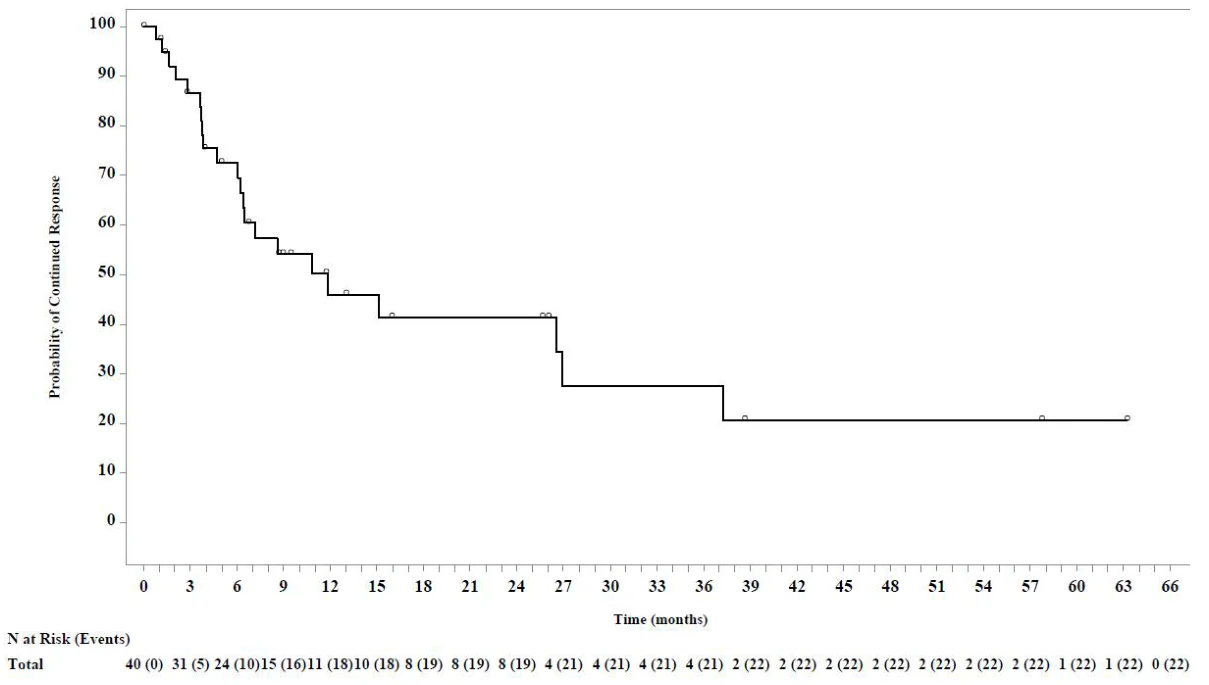
The median DOR was 11.8 months (see Figure 3). Of the subjects who did not respond, 23 (31.9%) had stable disease, 8 (11.1%) had progressive disease, and 1 (1.4%) was not evaluable.
Figure 3. Kaplan-Meier Plot of IRC Assessed Duration of Response
 |
DETAILED PHARMACOLOGY
Mechanism of Action
Idelalisib selectively inhibits PI3Kδ kinase, which is hyperactive in B-cell malignancies and is central to multiple signaling pathways that drive proliferation, survival, homing, and retention of malignant cells in lymphoid tissues and bone marrow. Idelalisib is a selective inhibitor of adenosine-5’-triphosphate (ATP) binding to the catalytic domain of PI3Kδ, resulting in inhibition of the phosphorylation of the key lipid second messenger phosphatidylinositol (PIP) and prevention of Akt phosphorylation.
Idelalisib induces apoptosis and inhibits proliferation in cell lines derived from malignant B-cells and in primary tumor cells. Idelalisib inhibits homing and retention of malignant B-cells in the tumor microenvironment including lymphoid tissues and the bone marrow.
SAFETY PHARMACOLOGY
TOXICOLOGY
Carcinogenesis
The carcinogenicity potential of idelalisib was evaluated in a 26-week transgenic RasH2 mouse study and a 2-year rat study. Idelalisib was not carcinogenic at exposures up to 1.4 and 7.9-fold (by AUC) in male and female mice, respectively compared to the exposure in patients with hematologic malignancies administered the recommended dose of 150 mg twice daily. A dose-dependent increase in pancreatic islet cell tumors was observed at low incidence in male rats at exposures up to 0.4-fold by AUC compared to the human exposure at the recommended dose; a similar finding was not observed in female rats at a 0.62-fold exposure margin.
Mutagenesis
Idelalisib did not induce mutations in the microbial mutagenesis (Ames) assay, was not clastogenic in the in vitro chromosome aberration assay using human peripheral blood lymphocytes. Idelalisib was genotoxic in male rats in the in vivo micronucleus assay at the highest dose of 2000 mg/kg.
Chronic Toxicity
In rats and dogs, the liver (hepatocellular necrosis), lymphoid tissues (lymphoid depletion) and the male reproductive system (hypospermatogenesis) were identified as target organs/tissues of toxicity in studies conducted up to 26 weeks in rats and 39 weeks in dogs. In dogs, serum transaminase elevations correlated with hepatic necrosis in studies up to 4 weeks; changes appeared to be transient and were not observed following chronic administration. Changes to lymphoid tissues (spleen, thymus, Peyer’s patches) resulted from exaggerated pharmacologic activity of idelalisib.
In rats and dogs, changes in target organs/tissues were either completely or partially reversible following the non-dosing recovery period. In rats, these changes occurred at dose levels where plasma exposure to idelalisib was higher than that observed clinically in patients taking 150 mg idelalisib BID (≥ 2.5 times based on AUC). In dogs, these changes were noted at plasma levels below that observed in humans (≥ 0.25 times based on AUC).
Idelalisib’s primary metabolite, GS-563117, has not been qualified in nonclinical repeat dose toxicology studies. Exposure to GS-563117 in rats and dogs in chronic toxicity studies were below that observed clinically in patients taking 150 mg BID.
Safety Pharmacology
There were no idelalisib-related acute effects on CNS function in rats at doses up to 150 mg/kg (approximately 9.2 times human exposure based on Cmax).
Idelalisib did not produce any acute adverse effects on cardiovascular or respiratory function in dogs up to idelalisib doses of 20 mg/kg (approximately 4.1 times human exposure based on Cmax). There was no treatment-related prolongation of QTc interval observed at any dose level.
Reproductive Toxicology
In pregnant rats treated with idelalisib at 25, 75, or 150 mg/kg/day for 12 days (gestation day 6 to 17), postimplantation loss, lower mean fetal weights and skeletal development variations were observed at 75 and 150 mg/kg/day were observed (≥ 12 times human exposure based on AUC) .
Idelalisib was embryotoxic and teratogenic at dose levels inducing maternal toxicity in rats. Maternal toxicity was demonstrated by dose-dependent decreases in the body weight gains of the dams. Dose-dependent developmental findings included higher incidence of postimplantation loss, decrease in viable fetuses, and decreased mean fetal body weights. Dose-dependent external malformations included those of skeletal origin consistent with vertebral agenesis and short tails. Additional external malformations were single instances of hydrocephaly and microphthalmia, occurring in separate fetuses from different litters.
Fertility
The male reproductive system was a target organ of idelalisib toxicity in both rats and dogs. Idelalisib may impair fertility in humans. In male rats treated with idelalisib at 25, 50, or 100 mg/kg/day for 10 weeks, decreases in epididymides and testes weight were observed but with no adverse effects on mating or fertility parameters, and no degeneration or loss in spermatogenesis (≤ 7.8 times human exposure based on AUC).
Phototoxicity
Results in the in vitro 3T3 NRU phototoxicity assay were inconclusive for idelalisib due to cytotoxicity in the assay. GS-563117 may induce phototoxicity in the presence of UVA exposure.
REFERENCES
- 1. Furman R, et al. Idelalisib and Rituximab in Relapsed Chronic Lymphocytic Leukemia. N Engl J Med 2014; DOI: 10.1056/NEJMoa1315226.
- 2. Gopal A, et. al. PI3Kδ Inhibition by Idelalisib in Patients with Relapsed Indolent Lymphoma. N Engl J Med 2014; DOI: 10.1056/NEJMoa1314583.
- 3. Extermann M. Measuring Comorbidity in Older Cancer Patients. Eur J of Cancer 2000, 36, 453-471.
- 4. Parmelee P, et al. Validation of the Cumulative Illness Rating Scale in a Geriatric Residential Population. J Amer Geriat Soc 1995, 43:130-137.