


Product Monograph - Aggrastat (Correvio (UK))
ACTIONS AND CLINICAL PHARMACOLOGY
Mechanism of Action
AGGRASTAT® (tirofiban hydrochloride) is a reversible non-peptide antagonist of fibrinogen binding to the GP IIb/IIIa receptor, the major platelet surface receptor involved in platelet aggregation. When administered intravenously, tirofiban inhibits ex vivo platelet aggregation in a dose and concentration dependent manner.
Pharmacodynamics
Tirofiban causes potent inhibition of platelet function as demonstrated by its ability to inhibit ex vivo adenosine phosphate (ADP) induced platelet aggregation and prolong bleeding time (BT) in healthy subjects and patients with coronary artery disease.
The time course of inhibition parallels the plasma concentration profile of the drug.
Following discontinuation of an infusion of tirofiban, 0.1 μg/kg/min, ex vivo-platelet aggregation returns to near baseline in approximately 90% of patients with coronary artery disease in 4 to 8 hours. The addition of heparin to this regimen does not significantly alter the percentage of subjects with >70% inhibition of platelet aggregation (IPA), but does increase the average bleeding time, as well as the number of patients with bleeding times prolonged to >30 minutes.
AGGRASTAT® Product Monograph
In patients with unstable angina, a two-staged intravenous infusion regimen of tirofiban (loading infusion of 0.4 μg/kg/min for 30 minutes followed by 0.1 μg/kg/min for up to 48 hours in the presence of heparin and ASA), produces approximately
90% inhibition of ex vivo ADP-induced platelet aggregation with a 2.9 fold prolongation of bleeding time during the infusion. Inhibition was achieved rapidly with the 30 minute loading infusion and was maintained over the duration of the infusion.
Pharmacokinetics
In healthy subjects, tirofiban is cleared from the plasma largely by renal excretion, with about 66% of a 14C labeled tirofiban dose appearing in the urine and about 23% in the feces, mainly as unchanged tirofiban. The metabolism of tirofiban appears to be limited.
Tirofiban is not highly bound to plasma proteins and protein binding is concentration independent over the range of 0.01 to 25 μg/mL. Unbound fraction in human plasma is 35%. The steady state volume of distribution of tirofiban ranges from 22 to 42 liters.
In healthy subjects, the plasma clearance of tirofiban ranges from 213 to
314 mL/min. Renal clearance accounts for 39 to 69% of plasma clearance. Half-life ranges from 1.4 to 1.8 hours.
In patients with coronary artery disease, the plasma clearance of tirofiban ranges from 152 to 267 mL/min. Renal clearance accounts for 39% of plasma clearance.
Half-life ranges from 1.9 to 2.2 hours.
AGGRASTAT® Product Monograph
Special Populations
Gender
Plasma clearance of tirofiban in patients with coronary artery disease is similar in males and females.
Elderly
Plasma clearance of tirofiban is about 19 to 26% lower in elderly (>65 years)
patients with coronary artery disease compared to younger (≤65 years) patients.
Race
No difference in plasma clearance was detected in patients of different races.
Renal Insufficiency
Plasma clearance of tirofiban is lower to a clinically significant extent (>50%) in patients with creatinine clearance <30 mL/min, including patients requiring hemodialysis (see DOSAGE AND ADMINISTRATION, Patients with Severe Renal
Insufficiency). Tirofiban is removed by hemodialysis.
Clinical Trials
Unstable Angina/Non-Q-Wave Myocardial Infarction
In the multicenter, randomized, parallel, double-blind PRISM-PLUS trial (Platelet
Receptor Inhibition in Ischemic Syndrome Management in Patients Limited by
Unstable Signs and Symptoms), the use of AGGRASTAT® (tirofiban hydrochloride)
in combination with heparin (n=773) versus heparin alone (n=797) was compared in patients with documented unstable angina/non-Q-wave myocardial infarction within
12 hours of the last episode of chest pain before randomization. All patients with unstable angina/non-Q-wave myocardial infarction had cardiac ischemia documented by ECG or had elevated cardiac enzymes. The mean age of the population was 63 years; 32% of patients were female and approximately half of the
AGGRASTAT® Product Monograph
population presented with non-Q-wave myocardial infarction. Patients were randomized to either AGGRASTAT® (30 minute loading infusion of 0.4 μg/kg/min followed by a maintenance infusion of 0.10 μg/kg/min) and heparin (bolus of 5,000 units (U) followed by an infusion of 1,000 U/hr titrated to maintain an activated partial thromboplastin time (aPTT) of approximately 2 times control), or heparin alone (bolus of 5,000 U followed by an infusion of 1,000 U/hr titrated to maintain an aPTT of approximately 2 times control). All patients received concomitant acetylsalicylic acid (ASA) unless contraindicated.
Comprehensive Management: Patients underwent 48 hours of medical stabilization on study drug therapy, after which they could undergo angiography and angioplasty (if indicated), while continuing on AGGRASTAT®. AGGRASTAT® was generally administered for a minimum of 48 hours and was continued up to 108 hours; patients received AGGRASTAT® for 71.3 hours (average for all patients).
The primary endpoint of the study was a composite of refractory ischemia, new myocardial infarction and death at 7 days following initiation of AGGRASTAT®. At the primary endpoint, there was a 31.6% risk reduction in the overall composite, a
46.6% risk reduction in myocardial infarction, and a 42.8% risk reduction in the
composite of myocardial infarction and death. The results are shown in Table 1: 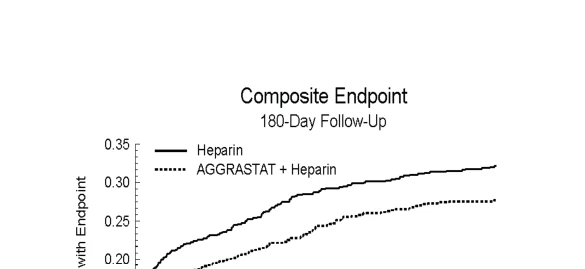
AGGRASTAT® Product Monograph
| Table 1 | ||||
| Cardiac Ischemic Events (7 Days) | ||||
| Endpoint | AGGRASTAT® + Heparin (n=773) | Heparin (n=797) | Risk Reduction | p-value |
| Composite Endpoint | 12.9% | 17.9% | 31.6% | 0.004 |
| Components | ||||
| Myocardial Infarction and Death | 4.9% | 8.3% | 42.8% | 0.006 |
| Myocardial Infarction | 3.9% | 7.0% | 46.6% | 0.006 |
| Death | 1.9% | 1.9% | - | - |
| Refractory Ischemia | 9.3% | 12.7% | 29.6% | 0.023 |
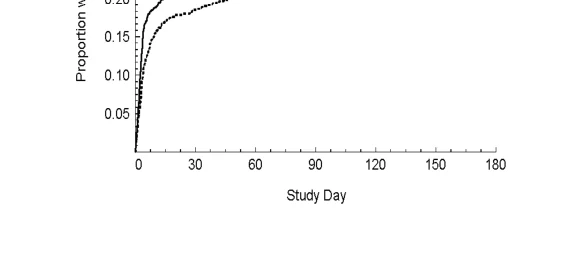
The early clinical benefit seen at 7 days was maintained over time. At 30 days, the risk of the composite endpoint was reduced by 21.8% (p=0.029) and there was a
29.8% (p=0.027) reduction in the composite of myocardial infarction and death. At
6 months, the risk of the composite endpoint was reduced by 18.9% (p=0.024). In addition, there was a 22.5% (p=0.063) risk reduction in the composite of myocardial infarction and death. The risk reduction in the composite endpoint at 7 days, 30 days and 6 months is shown in the Kaplan-Meier curve below.
AGGRASTAT® Product Monograph
In the PRISM-PLUS study, 90% of patients underwent coronary angiography and
30% underwent angioplasty. The majority of these patients continued on study drug throughout these procedures. AGGRASTAT® was continued for 12 - 24 hours
(average 15 hours) after angioplasty.
Although the benefit of adding tirofiban to heparin was observed in all interventional subgroups used in the management of these patients [Percutaneous Transluminal
Coronary Angioplasty (PTCA), Coronary Artery Bypass Graft (CABG) or medical management alone], a pre-specified analysis suggested that there was some amplification of the benefit in patients undergoing PTCA.
A sub-study in PRISM-PLUS of angiograms up to 96 hours found that there was a statistically significant decrease in the extent of angiographically apparent thrombus and increase in the blood flow in patients treated with AGGRASTAT® in combination with heparin compared to heparin alone.
In the PRISM-PLUS study, the benefit of AGGRASTAT® was consistent regardless of age or gender.
INDICATIONS AND CLINICAL USE
AGGRASTAT® (tirofiban hydrochloride), in combination with heparin and ASA is indicated in the management of patients with unstable angina or non-Q-wave myocardial infarction, including patients who may subsequently undergo PTCA, to decrease the rate of refractory ischemic conditions, new myocardial infarction and death.
CONTRAINDICATIONS
AGGRASTAT® (tirofiban hydrochloride) is contraindicated in patients with:
- known hypersensitivity to any component of the product
AGGRASTAT® Product Monograph
- active internal bleeding or a history of bleeding diathesis
- a history of intracranial hemorrhage or neoplasm, arteriovenous malformation, or aneurysm
- who developed thrombocytopenia following prior exposure to AGGRASTAT®
- known coagulopathy, platelet disorder or history of thrombocytopenia
- stroke within 30 days prior to hospitalization or any history of hemorrhagic stroke
- major surgical procedure or severe physical trauma within the previous month
- history, symptoms or findings suggestive of aortic dissection
- severe uncontrolled hypertension (systolic blood pressure >180 mmHg and/or diastolic blood pressure of >110 mmHg)
- concomitant use of another GP IIb/IIIa inhibitor
- acute pericarditis
- cirrhosis or clinically significant liver disease
- angina precipitated by obvious provoking factors (e.g., arrhythmia, severe anemia, hyperthyroidism or hypotension)
- recent epidural procedure
AGGRASTAT® Product Monograph
WARNINGS
AGGRASTAT® (tirofiban hydrochloride) inhibits platelet aggregation and therefore caution should be employed when used with other drugs affecting hemostasis (see Laboratory Monitoring, Adverse Reactions and Post
Marketing Experience).
AGGRASTAT® should be used with caution in the following patients:
- recent (<1 year) bleeding, including a history of gastrointestinal bleeding, or genitourinary bleeding of clinical significance
- platelet count <150,000 cells/mm3
- history of cerebrovascular disease within 1 year
- hemorrhagic retinopathy
- chronic hemodialysis (see Dosage and Administration)
Use in Pregnancy
Tirofiban has been shown to cross the placenta in pregnant rats and rabbits.
However, there are no adequate and well controlled studies in pregnant women.
Tirofiban should be used during pregnancy only if clearly needed.
Nursing Mothers
It is not known whether AGGRASTAT® is excreted in human milk. However, significant levels of tirofiban are excreted in rat milk. Therefore, nursing should be discontinued during the period of drug administration and the milk discarded.
Nursing may resume 24 hours after cessation of treatment with tirofiban.
Pediatric Use
Safety and effectiveness in children have not been established.
AGGRASTAT® Product Monograph
PRECAUTIONS
Bleeding Precautions
AGGRASTAT® (tirofiban hydrochloride) inhibits platelet aggregation and therefore caution should be employed when it is used with other drugs that affect hemostasis
(e.g., warfarin). The safety of AGGRASTAT® when used in combination with thrombolytic agents has not been established.
During therapy with AGGRASTAT®, patients should be monitored for potential bleeding. When bleeding cannot be controlled with pressure, infusion of
AGGRASTAT® and heparin should be discontinued. Transfusions may be given if required.
Fatal bleedings have been reported (see ADVERSE REACTIONS).
Femoral Artery Access Site
AGGRASTAT® is associated with minor increases in bleeding rates particularly at the site of arterial access for femoral sheath placement. Care should be taken when attempting vascular access that only the anterior wall of the femoral artery is punctured [a Seldinger (through and through) technique for obtaining sheath access should be avoided]. Arterial sheaths should be removed when the patient’s activated clotting time is < 180 sec or 2 - 6 hours following cessation of heparin.
Laboratory Monitoring
- Baseline evaluation: Should be performed on platelet count, hematocrit, hemoglobin and activated partial thromboplastin time (aPTT) prior to treatment.
- Following the loading infusion: Monitor platelet count within 6 hours following the loading infusion and at least daily thereafter (or more frequently if there is evidence of significant decline). Acute decrease in platelet count to
AGGRASTAT® Product Monograph
<20,000 cells/mm3 within one day after start of therapy with AGGRASTAT® have been reported post-marketing (see Post-Marketing Experience &
Thrombocytopenia).
In patients previously exposed to GP IIb/IIIa receptor antagonists: Monitor platelet count earlier and more often. Platelet decreases have been observed in patients with no prior history of thrombocytopenia upon re-administration of GP
IIb/IIIa receptor antagonists (see Post-Marketing Experience).
If the platelet count decreases to <90,000 cells/mm3: Evaluate to exclude pseudothrombocytopenia. If thrombocytopenia is confirmed discontinue
AGGRASTAT® and heparin and treat appropriately.
Monitor aPTT: Monitor aPTT frequently and adjust the dose of heparin accordingly. Potentially life-threatening bleeding may occur especially when heparin is administered with other products affecting hemostasis, such as GP
IIb/IIIa receptor antagonists (see DOSAGE AND ADMINISTRATION).
Renal Insufficiency
Patients with moderate (creatinine clearance < 60 mL/min) and severe (creatinine clearance < 30 mL/min) renal insufficiency should be monitored for bleeding complications. Since clinical studies showed a decreased plasma clearance of tirofiban in patients with severe renal insufficiency, the dosage should be reduced in these patients (see DOSAGE AND ADMINISTRATION).
Use in the Elderly
In clinical studies the efficacy of AGGRASTAT® in the elderly (≥65 years) was comparable to that seen in younger patients (<65 years). Elderly patients receiving
AGGRASTAT® with heparin or heparin alone had a higher incidence of bleeding complications than younger patients.
AGGRASTAT® Product Monograph
Drug Interactions
AGGRASTAT® has been studied on a background of ASA and heparin.
The use of AGGRASTAT®, in combination with heparin and ASA, has been associated with an increase in bleeding compared to heparin and ASA alone (see
ADVERSE REACTIONS). Caution should be employed when AGGRASTAT® is used with other drugs that affect hemostasis (e.g., warfarin, ticlopidine) (see
WARNINGS and PRECAUTIONS, Bleeding Precautions).
AGGRASTAT® has been used concomitantly in clinical studies with beta-blockers, calcium-channel blockers, non-steroidal anti-inflammatory agents (NSAIDs) and nitrate preparations without evidence of clinically significant adverse interactions.
Pharmacokinetics of AGGRASTAT® were not affected by a wide variety of drugs commonly administered to this patient population (e.g., antihypertensives, calcium-channel blockers, beta-blockers, diuretics, antidiabetics, lipid-lowering agents, digitalis preparations, and agents for the control of gastric acidity).
ADVERSE REACTIONS
The most common drug-related adverse event reported during therapy with
AGGRASTAT® (tirofiban hydrochloride) when used concomitantly with heparin and
ASA, was bleeding (usually reported by the investigators as oozing or mild). The incidences of major and minor bleeding using the TIMI** Criteria in the PRISM-PLUS
(Platelet Receptor Inhibition in Ischemic Syndrome Management in Patients Limited by Unstable Signs and Symptoms) study is shown below:
** Bovill EG, Terrin ML, Stump DC, Berke AD, Frederick M, Collen D, Feit F, Gore JM, Hillis
LD, Lambrew CT. Hemorrhagic Events during Therapy with Recombinant Tissue-Type Plasminogen Activator, Heparin, and Aspirin for Acute Myocardial Infarction, Results of the Thrombolysis in Myocardial Infarction (TIMI), Phase II Trial. Ann Intern Med 1991;115 (4):256-65.
AGGRASTAT® Product Monograph
PRISM-PLUS† [Unstable Angina Pectoris (UAP)/ Non-Q-Wave Myocardial Infarction (MI) Study] | ||
| Bleeding | AGGRASTAT® + Heparin (n=773) % | Heparin (n=797) % |
| Major Bleeding (TIMI Criteria)‡ | 1.4 | 0.8 |
| Minor Bleeding (TIMI Criteria)§ | 10.5 | 8.0 |
| Transfusions | 4.0 | 2.8 |
† Patients received ASA unless contraindicated. ‡ Hemoglobin drop of >50 g/L with or without an identified site, intracranial hemorrhage, or § Hemoglobin drop of >30 g/L with bleeding from a known site, spontaneous gross hematuria, hematemesis or hemoptysis. | ||
There were no reports of intracranial bleeding in the PRISM-PLUS study for
AGGRASTAT® in combination with heparin or in the heparin only control group. The incidences of retroperitoneal bleeding reported for AGGRASTAT® in combination with heparin, and for the heparin control group were 0.0% and 0.1%, respectively.
Female patients receiving AGGRASTAT® with heparin or heparin alone had a higher incidence of bleeding complications than male patients.
The overall incidence of non-bleeding adverse events was higher in female patients (compared to male patients) and older patients (compared to younger patients).
However, the incidences of non-bleeding adverse events in these patients were comparable between the AGGRASTAT® with heparin and the heparin alone groups
(see above for bleeding adverse events).
The most frequent drug-related non-bleeding side effects reported with
AGGRASTAT® Product Monograph
AGGRASTAT®, administered concomitantly with heparin, occurring at an incidence of >1% were nausea (1.7%), fever (1.5%), and headache (1.1%). The incidence of these side effects was similar in the heparin control group.
The incidences of adverse events were generally similar among different races, patients with or without hypertension, patients with or without diabetes mellitus, and patients with or without hypercholesterolemia.
Thrombocytopenia
Patients treated with AGGRASTAT® and heparin, experienced decreases in platelet counts (<90,000 cells/mm3) more often (1.5%) than the heparin control group
(0.8%). The percentage of patients with a decrease of platelets to <50,000 cells/mm3 was 0.3%. There were 0.1% of patients who had platelet counts < 20,000 cells/mm3. These decreases were reversible within 4 - 6 days after discontinuation of AGGRASTAT®.
AGGRASTAT® Product Monograph
Laboratory Test Findings
The most frequently observed laboratory adverse events in patients receiving
AGGRASTAT® concomitantly with heparin were related to bleeding. Decreases in hemoglobin and hematocrit, and platelet count were observed. Increases in the presence of urine and fecal occult blood were also observed.
POST-MARKETING EXPERIENCE
The following additional adverse reactions have been reported in post-marketing experience:
Bleeding: Intracranial bleeding, retroperitoneal bleeding and hemopericardium, pulmonary (alveolar) hemorrhage and spinal-epidural hematoma. Fatal bleedings have been reported.
Body as a Whole: Acute and/or severe decreases in platelet counts which may be associated with chills, low-grade fever, or bleeding complications (see above).
Hypersensitivity: Severe allergic reactions including anaphylactic reactions. The reported cases have occurred during the first day of tirofiban infusion, during initial treatment, and during readministration of tirofiban. Some cases have been associated with severe thrombocytopenia (platelet counts < 10,000 cells/mm3).
Thrombocytopenia: Acute decreases in platelet counts to less than
20,000 cells/mm3 within one day after start of therapy with AGGRASTAT® have been reported (see PRECAUTIONS, Laboratory Monitoring and ADVERSE
REACTIONS, Body as a Whole and Laboratory Test Findings).
SYMPTOMS AND TREATMENT OF OVERDOSAGE
In clinical trials, inadvertent overdosage with AGGRASTAT® (tirofiban hydrochloride)
occurred in doses up to 5 times and 2 times the recommended dose for bolus administration and loading infusion, respectively. Inadvertent overdosage occurred in doses up to 9.8 times of the 0.15 μg/kg/min maintenance infusion rate.
AGGRASTAT® Product Monograph
The most frequently reported manifestation of overdosage was bleeding; primarily minor mucocutaneous bleeding events and minor bleeding at the sites of cardiac catheterization (see PRECAUTIONS, Bleeding Precautions).
Overdosage of AGGRASTAT® should be treated by assessment of the patient’s clinical condition and cessation or adjustment of the drug infusion as appropriate.
AGGRASTAT® is dialyzable.
DOSAGE AND ADMINISTRATION
DOSAGE
Unstable Angina Pectoris or Non-Q-Wave Myocardial Infarction:
AGGRASTAT® (tirofiban hydrochloride) should be administered intravenously, in combination with heparin, at the initial infusion rate of 0.4 μg/kg/min for 30 minutes.
Upon completion of the initial infusion, AGGRASTAT® should be continued at a maintenance infusion rate of 0.1 μg/kg/min.
Recommended Length of Infusion:
For patients who do not exhibit any signs of refractory ischemic symptoms and do not proceed into angiography and angioplasty: at least 48 hours.
For patients proceeding into angiography and angioplasty the infusion should continue throughout both procedures and for at least 12 hours, and not more than
24 hours after angioplasty. Once a patient is clinically stable and no further coronary intervention is planned by the treating physician, the infusion should be discontinued. There are no safety data for total infusion time extended beyond 108 hours.
AGGRASTAT® Product Monograph
| Patient Weight | Most Patients | Severe Renal Impairment | |||||
| 30-Minute Loading Infusion | Maintenance Infusion | 30-Minute Loading Infusion | Maintenance Infusion | ||||
| RATE* | VOLUME to infuse over 30 minutes | RATE* | RATE* | VOLUME to infuse over 30 minutes | RATE* | ||
| (lb) | (kg) | (mL/hr) | (mL) | (mL/hr) | (mL/hr) | (mL) | (mL/hr) |
| 66-82 | 30-37 | 16 | 8 mL | 4 | 8 | 4 mL | 2 |
| 83-100 | 38-45 | 20 | 10 mL | 5 | 10 | 5 mL | 3 |
| 101-119 | 46-54 | 24 | 12 mL | 6 | 12 | 6 mL | 3 |
| 120-137 | 55-62 | 28 | 14 mL | 7 | 14 | 7 mL | 4 |
| 138-155 | 63-70 | 32 | 16 mL | 8 | 16 | 8 mL | 4 |
| 156-174 | 71-79 | 36 | 18 mL | 9 | 18 | 9 mL | 5 |
| 175-192 | 80-87 | 40 | 20 mL | 10 | 20 | 10 mL | 5 |
| 193-210 | 88-95 | 44 | 22 mL | 11 | 22 | 11 mL | 6 |
| 211-229 | 96-104 | 48 | 24 mL | 12 | 24 | 12 mL | 6 |
| 230-247 | 105-112 | 52 | 26 mL | 13 | 26 | 13 mL | 7 |
| 248-265 | 113-120 | 56 | 28 mL | 14 | 28 | 14 mL | 7 |
| 266-283 | 121-128 | 60 | 30 mL | 15 | 30 | 15 mL | 8 |
| 284-302 | 129-137 | 64 | 32 mL | 16 | 32 | 16 mL | 8 |
| 303-319 | 138-145 | 68 | 34 mL | 17 | 34 | 17 mL | 9 |
| 320-337 | 146-153 | 72 | 36 mL | 18 | 36 | 18 mL | 9 |
* Infusion rate based on a final concentration of 50 μg/mL.
Patients With Severe Renal Insufficiency
As specified in the above dosing tables, the dosage of AGGRASTAT® should be decreased by 50% in patients with severe renal insufficiency (creatinine clearance
<30 mL/min) (see PRECAUTIONS, Renal Insufficiency and PHARMACOLOGY,
Pharmacokinetics, Special Populations, Renal Insufficiency).
Other Patient Populations
AGGRASTAT® Product Monograph
No dosage adjustment is recommended for elderly patients or female patients.
ADMINISTRATION
AGGRASTAT® is for intravenous use only using sterile equipment. AGGRASTAT® may be co-administered with heparin through the same line.
AGGRASTAT® is recommended for use with a calibrated infusion device. Care should be taken to avoid a prolonged loading infusion.
In clinical studies, patients received ASA unless contraindicated.
AGGRASTAT® may be administered in the same intravenous line as atropine sulfate, dobutamine, dopamine, epinephrine HCI, furosemide, lidocaine, midazolam
HCI, morphine sulfate, nitroglycerin, famotidine, potassium chloride and propranolol
HCI injection.
AGGRASTAT® should not be administered in the same intravenous line as diazepam.
SOLUTION FOR INFUSION
Directions for Use of AGGRASTAT® − Solution for Infusion
AGGRASTAT® − Solution for Infusion, supplied in IntraVia* containers (PL 2408 plastic), is available as a 250 mL iso-osmotic solution premixed with 0.9% sodium chloride and is stable through the labeled expiration date when stored under the recommended conditions.
Directions for Use of IntraVia* Containers
AGGRASTAT® Product Monograph
CAUTION:
Do not withdraw solution directly from the IntraVia* container with a syringe.
Do not use plastic containers in series connections. Such use could result in air embolism due to residual air being drawn from the primary container before administration of the fluid from the secondary container is completed.
To Open: Tear foil overpouch (250 mL Solution for Infusion) down side at slit and remove IntraVia* container. Some opacity of the plastic due to moisture absorption during the sterilization process may be observed. This is normal and does not affect the solution quality or safety. The opacity will diminish gradually. Check for minute leaks by squeezing inner bag firmly. If leaks are found, discard solution as sterility may be impaired. Do not use unless solution is clear and seal is intact. Do not add supplementary medication or withdraw solution directly from the bag with a syringe.
Preparation for administration
- 1. Suspend container from eyelet support.
- 2. Remove plastic protector from outlet port at bottom of container.
- 3. Attach administration set. Refer to complete directions accompanying set.
- 4. Any unused solution should be discarded.
* Trademark of Baxter International Inc.
AGGRASTAT® Product Monograph
PHARMACEUTICAL INFORMATION
I. DRUG SUBSTANCE
Proper Name: Tirofiban hydrochloride (USAN)
Chemical Name: N-(butylsulfonyl)-O[4-(4-piperidinyl)butyl]-L-tyrosine monohydrochloride monohydrate.
Structural Formula:
HN CH2CH2CH2CH2O
C
COOH
NHSO 2CH2CH2CH2CH3
H
CH2 . HCl H2O.
Molecular Formula: C22H36N2O5S_HCl_H2O
Molecular Weight: 495.08
Physical Form: Tirofiban hydrochloride is a white to off-white non-hygroscopic free-flowing powder. It is very slightly soluble in water.
pH: The pH of a 0.2% solution of tirofiban hydrochloride is approximately 2.9.
Melting Point: Tirofiban hydrochloride melts with decomposition at
115°C (DSC curve).
AGGRASTAT® Product Monograph
II. COMPOSITION
AGGRASTAT® − Solution for Infusion
Each 250 mL of AGGRASTAT® − Solution for Infusion contains 12.5 mg tirofiban as tirofiban hydrochloride. Inactive ingredients: 8 mg citric acid anhydrous,
135 mg sodium citrate dihydrate and 2.25 g sodium chloride. The pH ranges from 5.5 to 6.5 and may have been adjusted with hydrochloric acid and/or sodium hydroxide.
III. STABILITY AND STORAGE RECOMMENDATIONS
AGGRASTAT® − Solution for Infusion
Store between 15-25°C.
Do not freeze.
Protect from light during storage.
AVAILABILITY OF DOSAGE FORMS
AGGRASTAT® − Solution for Infusion (premixed, iso-osmotic solution) is supplied in
250 mL non-polyvinylchloride infusion bags (50 μg/mL, tirofiban free base).
AGGRASTAT® Product Monograph
TOXICOLOGY
Acute Toxicity
The approximate LD50 of tirofiban given as a single intravenous dose to mice or rats was >5 mg/kg. The maximum dose of 5 mg/kg (22 times the maximum recommended daily human dose) was limited by compound solubility and maximum acceptable dosing volume. The approximate LD50 of tirofiban given as a single oral dose to mice was >500 mg/kg. No mortality, physical signs, or compound-related effects on body weight were observed in either the intravenous or oral studies.
Chronic Toxicity
The toxic potential of tirofiban hydrochloride was evaluated for up to five weeks in a series of continuous infusion intravenous toxicity studies in rats and dogs. There were no findings that would preclude administration at the therapeutic dosage level for up to 108 hours.
Carcinogenesis
The carcinogenic potential of tirofiban hydrochloride has not been evaluated.
Mutagenesis
Tirofiban hydrochloride was negative in the microbial mutagenesis and V-79 mammalian cell mutagenesis assays. In addition, there was no evidence of direct genotoxicity in the in vitro alkaline elution and in vitro chromosomal aberration assays. Tirofiban was tested in these in vitro assays at concentrations up to 3 mM,
(approximately 20,000 times greater than the mean plasma level achieved in man at the recommended therapeutic dosage level). There was no induction of chromosomal aberrations in bone marrow cells of male mice after the administration of intravenous doses up to 5 mg/kg (22 times the maximum recommended daily human dose).
AGGRASTAT® Product Monograph
Reproduction
Fertility and reproductive performance were not affected in studies with male and female rats given intravenous doses of tirofiban hydrochloride up to 5 mg/kg/day.
These dosages are approximately 22-fold higher than the maximum recommended daily dose in humans. Tirofiban crosses the placenta in rats and rabbits. Tirofiban is excreted in rat milk.
Development
Studies of developmental toxicity in rats and rabbits showed no evidence of maternal or fetal toxicity. In addition, a study of the potential developmental toxicity through sexual maturity of rats exposed in utero and during lactation showed no drug-related effects on mortality, growth, development, and sexual maturation of the
F1 generation. In the developmental toxicity studies, dams were given tirofiban hydrochloride intravenously at doses up to 5 mg/kg/day.
AGGRASTAT® Product Monograph
SELECTED BIBLIOGRAPHY
- 1. Barrett JS, Murphy G, Peerlinck K, et al. Pharmacokinetics and pharmacodynamics of MK-383, a selective non-peptide platelet glycoprotein-IIb/IIIa receptor antagonist, in healthy men. Clin Pharmacol Ther 1994;56(4):377-88.
- 2. Deckelbaum LI, Sax FL, Grossman W. Tirofiban, a nonpeptide inhibitor of the platelet glycoprotein IIb/IIIa receptor. In: Sasahara AA, Loscalzo J, eds. New therapeutic agents in thrombosis and thrombolysis. Marcel Dekker, Inc. 1997:355-65.
- 3. Kereiakes DJ, Kleiman NS, Ambrose J, et al. Randomized, double-blind, placebo-controlled dose-ranging study of tirofiban (MK-383) platelet IIb/IIIa blockade in high risk patients undergoing coronary angioplasty. J Am Coll Cardiol 1996;27(3):536-42.
- 4.
Platelet Receptor Inhibition in Ischemic Syndrome Management in Patients
Limited by Unstable Signs and Symptoms (PRISM-PLUS) Study Investigators. Inhibition of the platelet glycoprotein IIb/IIIa receptor with tirofiban in unstable angina and non-Q-wave myocardial infarction. N Engl J Med 1998; 338(21):1488-97.
- 5. Sutton J, Topol E, Rossen JD, et al. Inhibition of platelet aggregation with an infusion of MK-383 in stable coronary artery disease. Clin Res 1993;41(2):118A.
- 6. Théroux P, White H, David D, et al. A heparin-controlled study of MK-383 in unstable angina [Abstract]. Circulation 1994;90(4, Part 2):I231.
- 7.
Bergquist PA, Hunke WA, Reed RA, Manas D, Forsyth RJ, Kenney RR et al., .
Compatibility of tirofiban HCl with dopamine HCl, famotidine, sodium heparin, lidocaine HCl and potassium chloride during simulated Y-site administration. J Clin Pharm Ther 1999;24:125-32.