


Product Monograph - Alecensaro
Recent Major Label Changes
| 4 Dosage and Administration, 4.2 Recommended Dose and Dosage Adjustment | 2026-07 |
|---|---|
| 7 Warnings and Precautions, Endocrine and Metabolism | 2026-07 |
| 7 Warnings and Precautions, Reproductive Health | 2025-03 |
| 7 Warnings and Precautions, 7.1.1 Pregnant Women | 2025-03 |
Table of Contents
Certain sections or subsections that are not applicable at the time of the preparation of the most recent authorized product monograph are not listed.
Recent Major Label Changes ................................................................................................... 2
Table of Contents ................................................................................................................... 2
Part 1: Healthcare Professional Information ........................................................................... 5
- 1.
Indications ....................................................................................................................... 5
1.1. Pediatrics .................................................................................................................. 5
1.2. Geriatrics .................................................................................................................. 5
- 2. Contraindications ............................................................................................................ 5
- 3. Serious Warnings and Precautions Box ............................................................................ 5
- 4.
Dosage and Administration ............................................................................................. 6
4.1. Dosing Considerations .............................................................................................. 6
4.2. Recommended Dose and Dosage Adjustment ......................................................... 6
4.3. Reconstitution .......................................................................................................... 8
4.4. Administration .......................................................................................................... 9
4.5. Missed Dose ............................................................................................................. 9
- 5. Overdose ......................................................................................................................... 9
- 6. Dosage Forms, Strengths, Composition, and Packaging ................................................... 9
- 7.
Warnings and Precautions ............................................................................................... 9
General ................................................................................................................................. 9
Carcinogenesis and Genotoxicity ........................................................................................ 10
Cardiovascular .................................................................................................................... 10
Endocrine and Metabolism ................................................................................................. 11
Gastrointestinal .................................................................................................................. 11
Hematologic ....................................................................................................................... 11
Hepatic/Biliary/Pancreatic .................................................................................................. 12
Monitoring and Laboratory Tests ....................................................................................... 12
Musculoskeletal .................................................................................................................. 13
Renal ................................................................................................................................... 13
Reproductive Health ........................................................................................................... 13
Respiratory ......................................................................................................................... 14
Skin ..................................................................................................................................... 14
7.1. Special Populations ................................................................................................ 14
7.1.1. Pregnancy ...................................................................................................... 14
7.1.2. Breastfeeding ................................................................................................ 14
7.1.3. Pediatrics ....................................................................................................... 15
7.1.4. Geriatrics ....................................................................................................... 15
- 8.
Adverse Reactions ......................................................................................................... 15
8.1. Adverse Reaction Overview .................................................................................... 15
8.2. Clinical Trial Adverse Reactions .............................................................................. 16
8.3. Less Common Clinical Trial Adverse Reactions ....................................................... 25
8.4. Abnormal Laboratory Findings: Hematologic, Clinical Chemistry, and Other Quantitative Data ............................................................................................................... 25
8.5. Post-Market Adverse Reactions ............................................................................. 28
- 9.
Drug Interactions ........................................................................................................... 28
9.2. Drug Interactions Overview .................................................................................... 28
9.3. Drug-Behaviour Interactions .................................................................................. 28
9.4. Drug-Drug Interactions ........................................................................................... 28
9.5. Drug-Food Interactions........................................................................................... 30
9.6. Drug-Herb Interactions ........................................................................................... 30
9.7. Drug-Laboratory Test Interactions ......................................................................... 30
- 10.
Clinical Pharmacology ................................................................................................... 30
10.1. Mechanism of Action .............................................................................................. 30
10.2. Pharmacodynamics ................................................................................................ 30
10.3. Pharmacokinetics ................................................................................................... 31
- 11. Storage, Stability, and Disposal ...................................................................................... 33
- 12. Special Handling Instructions ......................................................................................... 33
Part 2: Scientific Information ................................................................................................ 34
- 13. Pharmaceutical Information .......................................................................................... 34
- 14.
Clinical Trials .................................................................................................................. 34
14.1. Clinical Trials by Indication ..................................................................................... 34
Locally Advanced or Metastatic ALK-Positive Non-Small Cell Lung Cancer ......................... 34
Adjuvant Treatment of Resected ALK-Positive Non-Small Cell Lung Cancer ....................... 41
- 16. Non-Clinical Toxicology .................................................................................................. 44
Patient Medication Information ........................................................................................... 46
Part 1: Healthcare Professional Information
1. Indications
ALECENSARO (alectinib) is indicated for:
- for the first-line treatment of patients with anaplastic lymphoma kinase (ALK)-positive, locally advanced (not amenable to curative therapy) or metastatic non-small cell lung cancer (NSCLC).
as monotherapy for the treatment of patients with ALK-positive, locally advanced (not amenable to curative therapy) or metastatic NSCLC who have progressed on or are intolerant to crizotinib.
Marketing authorization of ALENCENSARO for this indication is primarily based on tumour objective response rate and duration of response; no overall survival benefit has been demonstrated (see 14 Clinical Trials).
for adjuvant treatment following tumour resection for patients with stage IB (tumours ≥ 4 cm) to IIIA* ALK-positive NSCLC.
*According to American Joint Committee on Cancer [7th edition]
1.1. Pediatrics
Pediatrics (< 18 years of age): Based on the data submitted and reviewed by Health Canada, the safety and efficacy of ALECENSARO in pediatric patients has not been established; therefore, Health Canada has not authorized an indication for pediatric use.
1.2. Geriatrics
Geriatrics (≥ 65 years of age): Efficacy appears to be consistent between older (≥65 years of ages) and younger patients in locally advanced or metastatic and resected ALK-positive NSCLC patients. In studies with locally advanced or metastatic NSCLC patients, a greater percentage of older patients treated with ALECENSARO compared with younger patients experienced adverse events with fatal outcomes or leading to treatment withdrawal. In ALINA study with resected NSCLC patients treated with ALECENSARO as adjuvant therapy, higher incidence of serious adverse events, grade ≥3 events and more frequent adverse events leading to treatment discontinuations in patients 65 years or older treated with ALECENSARO as compared to those younger than 65 years (see 7.1.4 Geriatrics).
2. Contraindications
- ALECENSARO is contraindicated in patients who are hypersensitive to this drug or to any ingredient in the formulation, including any non-medicinal ingredient, or component of the container. For a complete listing, see 6 Dosage Forms, Strengths, Composition, and Packaging.
3. Serious Warnings and Precautions Box
|
|---|
|
4. Dosage and Administration
4.1. Dosing Considerations
- Geriatrics: No dose adjustment of ALECENSARO is required in patients ≥ 65 years of age.
- Renal Impairment: No dose adjustment is required in patients with mild or moderate renal impairment. ALECENSARO has not been studied in patients with severe renal impairment (see 10.3 Clinical Pharmacology, Pharmacokinetics, Special Populations and Conditions).
- Hepatic Impairment: Patients with underlying severe hepatic impairment should receive a dose of 450 mg given orally twice daily (total daily dose of 900 mg). For all patients with hepatic impairment, appropriate monitoring (e.g. markers of liver function) is advised (see 7 Warnings and Precautions, Hepatic/Biliary/Pancreatic). No dose adjustment is required in patients with underlying mild or moderate hepatic impairment (see 10.3 Clinical Pharmacology, Pharmacokinetics, Special Populations and Conditions).
4.2. Recommended Dose and Dosage Adjustment
Standard Dosage
The recommended dose of ALECENSARO is 600 mg (four 150 mg capsules) given orally, twice daily with food (total daily dose of 1200 mg).
Duration of treatment
Locally advanced or metastatic ALK-positive NSCLC: It is recommended that patients with locally advanced or metastatic NSCLC are treated with ALECENSARO until disease progression or unmanageable toxicity.
Adjuvant treatment of resected ALK-positive NSCLC: It is recommended that patients with resected NSCLC are treated with ALECENSARO as adjuvant therapy until disease recurrence, unacceptable toxicity or for 2 years.
Dosage Adjustment
Management of adverse events may require temporary interruption, dose reduction, or discontinuation of treatment with ALECENSARO. The dose of ALECENSARO should be reduced in steps of 150 mg twice daily based on tolerability. ALECENSARO treatment should be permanently discontinued if patients are unable to tolerate the 300 mg twice daily dose.
Table 1 below presents general dose modification recommendation for ALECENSARO.
Table 1 Dose Reduction Schedule
| Dose reduction schedule | Dose level |
|---|---|
| Starting dose | 600 mg twice daily |
| First dose reduction | 450 mg twice daily |
| Second dose reduction | 300 mg twice daily |
Recommendations for dose modifications of ALECENSARO in case of adverse reactions are provided in Table 2.
Table 2 Dose Modifications for Specific Adverse Drug Reactions
| Criteria | ALECENSARO Dosing |
|---|---|
| Criteria | ALECENSARO Dosing |
| Gastrointestinal perforation | Permanently discontinue ALECENSARO. |
| Interstitial lung disease (ILD)/pneumonitis of any severity grade | Immediately interrupt ALECENSARO treatment and permanently discontinue if no other potential causes of ILD/pneumonitis have been identified. |
| Renal impairment Grade 3 | Temporarily withhold until serum creatinine recovers to baseline or ≤ Grade 1, then resume at reduced dose. |
| Renal impairment Grade 4 | Permanently discontinue ALECENSARO. |
| ALT or AST elevation of > 5 times ULN with total bilirubin ≤ 2 times ULN | Temporarily withhold until recovery to baseline or ≤ 3 times ULN, then resume at reduced dose (see Table 1). |
| ALT or AST elevation of > 3 times ULN with total bilirubin elevation > 2 times ULN in the absence of cholestasis or hemolysis | Permanently discontinue ALECENSARO. |
| Bradycardiaa Grade 2 or Grade 3 (symptomatic, may be severe and medically significant, medical intervention indicated) | Temporarily withhold until recovery to ≤ Grade 1 (asymptomatic) bradycardia or to a heart rate of ≥ 60 beats per minute (bpm). Evaluate concomitant medications known to cause bradycardia, as well as anti-hypertensive medications. If contributing concomitant medication is identified and discontinued, or its dose is adjusted, resume ALECENSARO at previous dose upon recovery to ≤ Grade 1 (asymptomatic) bradycardia or to a heart rate of ≥ 60 bpm. If no contributing concomitant medication is identified, or if contributing concomitant medications are not discontinued or dose modified, resume at reduced dose (see Table 1) upon recovery to ≤ Grade 1 (asymptomatic) bradycardia or to a heart rate of ≥ 60 bpm. |
| Bradycardiaa Grade 4 (life-threatening consequences, urgent intervention indicated) | Permanently discontinue ALECENSARO treatment if no contributing concomitant medication is identified. If contributing concomitant medication is identified and discontinued, or its dose is adjusted, resume at reduced dose (see Table 1) upon recovery to ≤ Grade 1 (asymptomatic) bradycardia or to a heart rate of ≥ 60 bpm, with frequent monitoring as clinically indicated. Permanently discontinue in case of recurrence. |
| CPK elevation > 5 times ULN | Temporarily withhold until recovery to baseline or to ≤ 2.5 times ULN, then resume at same dose. |
| CPK elevation >10 times ULN or second occurrence of CPK elevation of > 5 times ULN | Temporarily withhold until recovery to baseline or to ≤ 2.5 times ULN, then resume at reduced dose as per Table 1. |
| Hemolytic anemia with hemoglobin of < 10 g/dL (Grade ≥ 2) | Temporarily withhold until resolution, then resume at reduced dose (see Table 1) or permanently discontinue. |
Severe hypertriglyceridemia (blood triglycerides from 501 to 1,000 mg/dL or from 5.71 to 11.4 mmol/L) OR Life-threatening hypertriglyceridemia (blood triglycerides over 1,000 mg/dL or over 11.4 mmol/L) | Temporarily withhold until recovery to at least moderate hypertriglyceridemia (i.e., until blood triglycerides are ≤ 500 mg/dL or ≤ 5.7 mmol/L). Risk factors for pancreatitis are to be evaluated, and treatable risk factors are to be addressed before resuming treatment with ALECENSARO. If an acute episode of pancreatitis occurs, temporarily withhold until full recovery before resuming treatment with ALECENSARO. ALECENSARO may be resumed at the same dose, with blood triglyceride levels monitored regularly in such patients. |
ALT = alanine transaminase; AST = aspartate transaminase, ULN = upper limit of normal
a Heart rate less than 60 beats per minute (bpm).
Special Populations:
Renal Impairment: No dose adjustment is required in patients with mild or moderate renal impairment (CrCl 30 to less than 90 mL/min). ALECENSARO has not been studied in patients with severe renal impairment (CrCl less than 30 mL/min) (see 10.3 Clinical Pharmacology, Pharmacokinetics, Special Populations and Conditions).
Hepatic Impairment: No dose adjustment is required in patients with underlying mild or moderate hepatic impairment. Patients with underlying severe hepatic impairment should receive a dose of 450 mg given orally twice daily (total daily dose of 900 mg) (see 4.2 Dosage and Administration, Recommended Dose and Dose Adjustment). For all patients with hepatic impairment, appropriate monitoring (e.g. markers of liver function) is advised (see 7 Warnings and Precautions, Hepatic/Biliary/Pancreatic). In the alectinib trials, only patients with adequate hepatic function have been included (ALT and AST ≤2.5x ULN or ≤5x ULN for patients with liver metastases at baseline, and bilirubin ≤2mg/dL) (see 8.2 Adverse Reactions, Clinical Trial Adverse Reactions).
4.3. Reconstitution
Not applicable.
4.4. Administration
ALECENSARO is for oral use. The hard capsules should be swallowed whole, and must not be opened or dissolved. They must be taken with food.
4.5. Missed Dose
If a dose of ALECENSARO is missed, take the next dose at the next scheduled time.
Vomiting
If vomiting occurs after taking a dose of ALECENSARO, patients should take the next dose at the scheduled time.
5. Overdose
There is no experience with overdosage across clinical trials. Patients who experience overdose should be closely supervised and supportive care instituted. There is no specific antidote for overdose with ALECENSARO.
| For the most recent information in the management of a suspected drug overdose, contact your regional poison control centre or Health Canada’s toll-free number, 1-844 POISON-X (1-844-764-7669). |
|---|
- 6. Dosage Forms, Strengths, Composition, and Packaging
Table 3 – Dosage Forms, Strengths, and Composition
Non-medicinal ingredients (alphabetical order) of capsule shell include: carnauba wax, carrageenan, corn starch, hypromellose, potassium chloride, titanium dioxide, and trace of printing ink.
Packaging
ALECENSARO is supplied as hard capsules, white, with “ALE” printed in black ink on the cap and “150 mg” printed in black ink on the body. ALECENSARO is available in bottles of 240 capsules.
7. Warnings and Precautions
See 3 Serious Warnings and Precautions Box.
General
Patients treated with ALECENSARO must have a documented ALK-positive status based on a validated
ALK assay. Assessment for ALK-positive NSCLC should be performed by laboratories with demonstrated proficiency in the specific technology being utilized. Improper assay performance can lead to unreliable test results.
| Route of Administration | Dosage Form/ Strength/Composition | Non-Medicinal Ingredients |
| Oral | Capsule/150 mg | Carboxymethylcellulose calcium, Hydroxypropylcellulose, Lactose monohydrate, Magnesium stearate, Sodium lauryl sulfate |
Carcinogenesis and Genotoxicity
No carcinogenicity studies have been conducted with ALECENSARO. In vitro, alectinib is aneugenic, but not mutagenic or clastogenic (see 16 Non-Clinical Toxicology).
Cardiovascular
Bradycardia
Symptomatic bradycardia can occur with ALECENSARO. In patients with locally advanced or metastatic NSCLC, cases of bradycardia and sinus bradycardia have been reported in patients treated with ALECENSARO. Two patients experienced bradycardia/sinus bradycardia which led to dose reduction. Treatment was interrupted due to bradycardia and sinus bradycardia in two patients (see 8 Adverse Reactions and 10.2 Pharmacodynamics).
In patients with resected NSCLC, cases of bradycardia and sinus bradycardia have also been reported in patients treated with ALECENSARO as adjuvant therapy. Three patients (2.3%) experienced bradycardia/sinus bradycardia which led to dose reduction or interruption (see 8 Adverse Reactions and 10.2 Pharmacodynamics).
ALECENSARO treatment resulted in a decrease in heart rate (HR) of approximately 11 to 13 beats per minute (bpm) at Week 2 in the Phase I/II studies with crizotinib pre-treated patients, which was maintained throughout the treatment period. The decrease in HR was reversible upon discontinuation. In the Phase III BO28984 (ALEX) study with treatment-naïve patients, the median decrease in HR reached a plateau of approximately 17 bpm at Week 4. A decrease in median HR values was also observed in the Phase III BO40336 (ALINA) study. In the alectinib arm, a post-baseline decrease in median heart rate values was observed, with values decreasing from a median of 73 bpm at baseline, plateauing between Week 3 (median of 66 bpm) and Week 24 (median of 62 bpm; heart rate not assessed between these two visits), to 60 bpm at Week 60. Twenty percent of patients in the Phase I/II studies, as well as 15% of patients in the Phase III BO28984 (ALEX) and Phase III BO40336 (ALINA) studies, for whom serial electrocardiograms (ECGs) were available, had post-dose HRs below 50 bpm.
The reduction on HR appears to be correlated to alectinib plasma concentration. Patients presenting with baseline symptomatic bradycardia were not studied across clinical trials.
Co-administration of medicines that lower HR should be avoided to the extent possible (see 9 Drug Interactions). If avoidance is not possible, patients should be closely monitored. Heart rate and blood pressure should be monitored at baseline and regularly during treatment (see 7 Warnings and Precautions, Monitoring and Laboratory Tests). Dose modification is not required in case of asymptomatic bradycardia (see 4 Dosage and Administration). If patients experience symptomatic bradycardia or life-threatening events, ALECENSARO treatment should be withheld, then reinstituted at a reduced dose or permanently discontinued (see 4.2 Dosage and Administration, Recommended Dose and Dose Adjustment).
Caution should be exercised in patients with a low heart rate at baseline (< 60 bpm), a history of syncope or arrhythmia, sick sinus syndrome, sinoatrial block, atrioventricular (AV) block, ischemic heart disease, or congestive heart failure. Cardiology consultation may be required.
Patients should be informed that symptoms of bradycardia including dizziness, lightheadedness, and syncope can occur while taking ALECENSARO. Advise patients to contact their healthcare provider to report these symptoms and to inform their healthcare provider about the use of any heart or blood pressure medications.
Endocrine and Metabolism
Severe Hypertriglyceridemia
Hypertriglyceridemia, including severe cases associated with life-threatening acute pancreatitis, has been reported in patients treated with ALECENSARO in the postmarketing setting (see 8.5. Post-Market Adverse Reactions).
Across the pivotal studies NP28761, NP28673, BO28984 (ALEX), and BO40336 (ALINA), the majority of the hypertriglyceridemia events were Grade 1 or 2; all Grade events were reported in 4.3% of patients, and Grade ≥ 3 events were reported in 1.5% of patients (see 8 Adverse Reactions). The median time to onset to Grade ≥ 3 hypertriglyceridemia events was 263 days (range: 106 to 1001 days). Dose modifications due to hypertriglyceridemia occurred in 0.9% of patients, and in 0.2% of patients, hypertriglyceridemia led to discontinuation of ALECENSARO treatment.
Blood triglycerides are to be monitored before initiation and periodically during treatment. Patients are to be monitored for symptoms indicative of acute pancreatitis, especially patients at increased risk for pancreatitis.
If an acute episode of pancreatitis occurs, temporarily withhold until full recovery before resuming treatment with ALECENSARO. If patients experience severe or life-threatening hypertriglyceridemia, withhold ALECENSARO and evaluate risk factors for pancreatitis before resuming ALECENSARO, as described in Table 2 (see 4.2 Dosage and Administration, Recommended Dose and Dose Adjustment).
Gastrointestinal
Gastrointestinal perforation
Across NP28761, NP28673 and BO28984 (ALEX) studies, one case of gastrointestinal perforation (0.2%) occurred and had a fatal outcome. In the post-market setting cases of gastrointestinal perforation were also reported with ALECENSARO.
In patients at risk for gastrointestinal perforation (e.g. concomitant use of medications with a risk of gastrointestinal perforation, history of diverticulitis, metastases to the gastrointestinal tract) ALECENSARO should be used with caution. Patients should be informed of potential signs of gastrointestinal perforations and seek consultation rapidly in case of occurrence. Discontinue ALECENSARO permanently in patients who develop gastrointestinal perforation (see 4 Dosage and Administration).
Hematologic
Hemolytic anemia
Hemolytic anemia has been reported with ALECENSARO (see 8 Adverse Reactions), including cases associated with a negative direct antiglobulin test (DAT) result. Hematological laboratory parameters should be monitored periodically. If hemoglobin concentration is below 10 g/dL and hemolytic anemia is suspected, withhold ALECENSARO and initiate appropriate laboratory testing. Upon resolution, resume treatment at a reduced dose or permanently discontinue ALECENSARO (see 4.2 Dosage and Administration, Recommended Dose and Dose Adjustment).
Hepatic/Biliary/Pancreatic
Hepatotoxicity
Elevations in alanine aminotransferase (ALT) and aspartate aminotransferase (AST) greater than 5 times the upper limit of normal (ULN) as well as bilirubin elevations of more than 3 times the ULN occurred in patients in clinical trials with ALECENSARO.
The majority of these events occurred during the first 3 months of treatment (69% of patients with hepatic transaminase elevations and 64% of patients with bilirubin elevations in the NP28761, NP28673 and BO28984 [ALEX] studies. In the Phase III BO40336 (ALINA) study, 79% of patients with hepatic transaminase elevations and 80% of patients with bilirubin elevations had hepatic transaminase and bilirubin elevations that occurred during the first 3 months. In the NP28761, NP28673 and BO28984 (ALEX) clinical trials, three patients with Grade 3-4 AST/ALT elevations had documented drug induced liver injury (two by liver biopsy). In addition, one patient experienced Grade 4 hepatotoxicity.
Concurrent elevations in ALT or AST greater than or equal to three times the ULN and total bilirubin greater than or equal to two times the ULN, with normal alkaline phosphatase, occurred in less than 1% of patients treated in clinical trials (see 8 Adverse Reactions).
Liver function, including ALT, AST, and total bilirubin should be monitored at baseline and then every 2 weeks during the first 3 months of treatment, and then periodically during treatment, since events may occur later than 3 months, with more frequent testing in patients who develop transaminase and bilirubin elevations. Based on the severity of the adverse drug reaction, ALECENSARO may need to be withheld, resumed at a reduced dose, or permanently discontinued (see 4.2 Dosage and Administration, Recommended Dose and Dose Adjustment).
Monitoring and Laboratory Tests
ALK testing
Patients treated with ALECENSARO must have a documented ALK-positive status based on a validated
ALK assay. Assessment for ALK-positive NSCLC should be performed by laboratories with demonstrated proficiency in the specific technology being utilized. Improper assay performance can lead to unreliable test results.
Cardiac Safety Monitoring
Heart rate and blood pressure should be monitored at baseline and regularly during treatment. Serum calcium and potassium should be monitored periodically during treatment. Patients should be informed that symptoms of bradycardia including dizziness, light-headedness, and syncope can occur while taking ALECENSARO. Advise patients to contact their healthcare provider to report these symptoms and to inform their healthcare provider about the use of any heart or blood pressure medications. Dose modification is not required in case of asymptomatic bradycardia (see 4.2 Dosage and Administration, Recommended Dose and Dose Adjustment). If patients experience symptomatic bradycardia or life-threatening events, ALECENSARO treatment should be withheld, then reinstituted at a reduced dose or permanently discontinued. ALECENSARO should be permanently discontinued in case of recurrence of severe, life-threatening bradycardia or in case of life-threatening bradycardia if no contributing medication is identified (see 4.2 Dosage and Administration, Recommended Dose and Dose Adjustment).
Liver Function Monitoring
Liver function, including ALT, AST, and total bilirubin should be monitored at baseline and then every 2 weeks during the first 3 months of treatment, and then periodically, since events may occur later than 3 months, with more frequent testing in patients who develop transaminase and bilirubin elevations. Based on the severity of the adverse drug reaction, withhold ALECENSARO and resume at a reduced dose, or permanently discontinue ALECENSARO (see 4.2 Dosage and Administration, Recommended Dose and Dose Adjustment).
Blood CPK Monitoring
Patients should be advised to report any unexplained muscle pain, tenderness, or weakness. CPK levels should be assessed every two weeks for the first month of treatment and as clinically indicated in patients reporting symptoms. Based on the severity of the CPK elevation, ALECENSARO should be withheld, then resumed or dose should be reduced (see 4.2 Dosage and Administration, Recommended Dose and Dose Adjustment).
Musculoskeletal
Severe Myalgia and Creatine Phosphokinase (CPK) elevation
Myalgia and musculoskeletal pain have been reported in patients in clinical trials with ALECENSARO, including events of Grade 3 intensity (see 8 Adverse Reactions).
Elevations of CPK occurred in clinical trials with ALECENSARO, including events of Grade 3 intensity. Median time to Grade ≥ 3 CPK elevation was 15 days across clinical trials (see 8 Adverse Reactions). Patients should be advised to report any unexplained muscle pain, tenderness, or weakness. CPK levels should be assessed every two weeks for the first month of treatment and as clinically indicated in patients reporting symptoms. Based on the severity of the CPK elevation, ALECENSARO may need to be withheld or resumed at a reduced dose (see 4.2 Dosage and Administration, Recommended Dose and Dose Adjustment).
Renal
Renal Impairment
Renal impairment was reported in the clinical trials with ALECENSARO (see 8 Adverse Reactions) with grades above or equal to 3. Based on the severity of the renal impairment, ALECENSARO may need to be withheld, resumed at a reduced dose, or permanently discontinued (see 4.2 Dosage and Administration, Recommended Dose and Dose Adjustment).
Reproductive Health
Fertility
The effect of ALECENSARO on fertility is unknown (see 16 Non-Clinical Toxicology).
Embryo-fetal Toxicity
ALECENSARO may cause fetal harm when administered to a pregnant woman. When administrated to pregnant rats and rabbits, alectinib caused embryo-fetal toxicity and abortion.
Female patients of child-bearing potential must use highly effective contraceptive methods during treatment and for at least 5 weeks following the last dose of ALECENSARO. Women of child-bearing potential who are partners of male patients receiving ALECENSARO, must use highly effective contraceptive methods during treatment and for at least 3 months following the last dose of ALECENSARO (see 7.1 Warnings and Precautions, Special Populations).
Respiratory
Interstitial Lung Disease (ILD) / Pneumonitis
Cases of ILD/pneumonitis have been reported in clinical trials with ALECENSARO (see 8 Adverse Reactions). Patients should be monitored for pulmonary symptoms indicative of pneumonitis. ALECENSARO should be immediately interrupted in patients diagnosed with ILD/pneumonitis and should be permanently discontinued if no other potential causes of ILD/pneumonitis have been identified (see 4 Dosage and Administration).
Skin
Photosensitivity
Photosensitivity to sunlight has been reported with ALECENSARO administration (see 8 Adverse Reactions). Patients should be advised to avoid prolonged sun exposure while taking ALECENSARO and for at least 7 days after discontinuation of treatment. Patients should also be advised to use a broad-spectrum Ultraviolet A (UVA)/Ultraviolet B (UVB) sun screen and lip balm (SPF ≥50) to help protect against potential sunburn.
7.1. Special Populations
7.1.1. Pregnancy
No clinical studies of ALECENSARO in pregnant women have been performed. Based on its mechanism of action, ALECENSARO may cause fetal harm when administered to pregnant women. In animal studies, alectinib caused embryo-fetal toxicity and abortion.
Women of child-bearing potential must be advised to avoid pregnancy while on ALECENSARO.
Female patients of child-bearing potential must use highly effective contraceptive methods during treatment and for at least 5 weeks following the last dose of ALECENSARO. Female patients who become pregnant while taking ALECENSARO or during the 5 weeks following the last dose of
ALECENSARO must contact their doctor and should be advised of the potential harm to the fetus.
Males: Adequate contraceptive methods should be used by male patients during therapy, and for at least 3 months after completing therapy. If the patient’s partner becomes pregnant while receiving ALECENSARO, then the patient and his partner should be advised of the potential harm to the fetus.
7.1.2. Breastfeeding
It is not known whether ALECENSARO is excreted in human breast milk. No studies have been conducted to assess the impact of ALECENSARO on milk production or its presence in breast milk. As many drugs are excreted in human milk and because of the potential harm to the infant, mothers should be advised against breastfeeding while receiving ALECENSARO.
7.1.3. Pediatrics
Pediatrics (<18 years): Based on the data submitted and reviewed by Health Canada, the safety and efficacy of ALECENSARO in pediatric patients has not been established; therefore, Health Canada has not authorized an indication for pediatric use. Decreased bone formation and lesions in the continuously growing incisor teeth were observed in young rats given 27 mg/kg/day following once daily dosing for 13 weeks at which systemic exposure to alectinib was 2.4 and 2.8 times that at the adult human dose, in male and female rats, respectively. These findings may indicate a potential risk to growing bones and teeth in pediatric patients.
7.1.4. Geriatrics
Locally advanced or metastatic NSCLC: Of the 405 patients in ALECENSARO NP28761, NP28673 and BO28984 (ALEX) clinical trials treated at a dose of 600 mg twice daily, 59 (14.6%) were of age 65 to 74 years and 14 (3.5%) were of age > 75 years. Safety of ALECENSARO are generally consistent between older (65 to 74 years of age and ≥ 75 years of age) and younger patients (< 65 years of age), although a greater percentage of older patients compared with younger patients experienced adverse events with fatal outcomes, including 6.8% (4/59) for 65 to 74 years of age and 14.3% (2/14) for ≥ 75 years of age vs. 1.8% (6/332) for < 65 years of age, or leading to treatment withdrawal (10.2% for 65 to 74 years of age and 28.6% for ≥ 75 years of age vs. 6.6% for < 65 years of age).
As adjuvant therapy of resected NSCLC: Of the 128 patients in Study BO40336 (ALINA) treated with a dose of 600 mg twice daily, 101 (79%) patients were < 65 years of age and 27 patients (21%) were ≥ 65 years of age. Higher incidence of serious adverse events (19% vs 12%), grade ≥3 events (37% vs 28%) and more frequent adverse events leading to treatment discontinuations (19% vs 2%) in patients 65 years or older as compared to those younger than 65 years.
8. Adverse Reactions
8.1. Adverse Reaction Overview
Crizotinib pre-treated patients (Studies NP28761 and NP28673)
The most common adverse drug reactions (≥10%) in clinical trials were: fatigue, constipation, edema, myalgia, nausea, headache, rash, diarrhea, increased bilirubin, aspartate aminotransferase increased, anemia, alanine aminotransferase increased, vomiting, blood creatine phosphokinase increased, weight increased, vision disorders, dizziness, photosensitivity reaction and arthralgia.
In the Phase I/II clinical trials, serious adverse reactions were reported in 22% of patients and the most frequently reported serious adverse reactions were pulmonary embolisms, dyspnea and hyperbilirubinemia (1.2% each). Fatal adverse reactions in patients treated with ALECENSARO occurred in 2.8% of patients, consisting of hemorrhage (2 patients, 0.8%), intestinal perforation, dyspnea, pulmonary embolism, endocarditis and death (unspecified) (1 patient each, 0.4%).
In the Phase I/II clinical trials, permanent discontinuation of therapy due to adverse reactions occurred in 6% of patients treated with ALECENSARO. The most frequent adverse reactions that led to permanent discontinuation were increased bilirubin (1.6%, including blood bilirubin increased, hyperbilirubinemia and bilirubin conjugated increased), increased ALT levels (1.6%) and increased AST levels (1.2%). Dose reductions due to adverse reactions occurred in 13% of patients treated with ALECENSARO and dose interruptions occurred in 29%. The most frequent adverse reactions that led to dose reductions or interruptions were elevations in bilirubin (6%), elevations in ALT and creatine phosphokinase (CPK) (4% each) as well as AST elevations and vomiting (3% each).
Treatment-naïve patients (Study BO28984, ALEX)
The most common adverse drug reactions for ALECENSARO (≥10%) in the Phase III trial were: constipation, myalgia, fatigue, edema, increased bilirubin, anemia, rash, alanine aminotransferase increased, aspartate aminotransferase increased, nausea, diarrhea, arthralgia and bradycardia. In the Phase III clinical trial, serious adverse reactions occurred in 28% of patients treated with ALECENSARO; the most frequently reported serious adverse reactions were pneumonia (3.3%) and acute kidney injury (2.6%). Grade 3 adverse events were reported for 41% of patients in the ALECENSARO arm. Fatal adverse reactions occurred in 5 patients (3.3%) in the ALECENSARO arm. In the Phase III clinical trial, permanent treatment discontinuation for adverse reactions occurred in 11% of patients treated with ALECENSARO. Acute kidney injury was the most commonly reported adverse drug reaction leading to study drug discontinuation (2.0%). Dose modifications (dose reductions and drug interruption, respectively) were required in 16% and 19% of patients in the ALECENSARO arm. The most frequent adverse reactions that led to dose modifications in the ALECENSARO arm were pneumonia, elevation in ALT and AST.
Adjuvant treatment of resected ALK-positive NSCLC patients (Study BO40336; ALINA)
The most common adverse drug reactions (≥10%) in patients receiving ALECENSARO in the Phase III trial ALINA were: constipation, aspartate aminotransferase increased, blood creatinine phosphokinase increased, alanine aminotransferase increased, blood bilirubin increased, anemia, myalgia. Serious adverse reactions occurred in 13% of patients treated with ALECENSARO; the most frequent serious adverse reaction was pneumonitis (0.8%). Adverse reactions that led to treatment discontinuation of ALECENSARO occurred in 5.5% of patients; the most frequent adverse reaction (≥ 2%) that led to treatment discontinuation was pneumonitis (2.3%). Adverse reactions that led to dose reductions and interruptions occurred in 26% and 27% of patients treated with ALECENSARO; the most frequent adverse reactions (≥ 2%) that led to dose reductions and interruptions were increased blood creatine phosphokinase (6.3% and 5.5%), increased blood bilirubin (3.9% and 3.9%), increased ALT (1.6% and 5.5%), increased AST (0.8% and 4.7%), myalgia (1.6% and 2.3%), rash (2.3% and 0%), and bradycardia (2.3% and 0%), respectively.
8.2. Clinical Trial Adverse Reactions
Clinical trials are conducted under very specific conditions. The adverse reaction rates observed in the clinical trials; therefore, may not reflect the rates observed in practice and should not be compared to the rates in the clinical trials of another drug. Adverse reaction information from clinical trials may be useful in identifying and approximating rates of adverse drug reactions in real-world use.
Crizotinib pre-treated patients (Studies NP28761 and NP28673)
The safety of ALECENSARO has been evaluated in 253 patients in the Phase I/II (NP28761, NP28673) clinical trials with ALK-positive non-small cell lung cancer (NSCLC) treated with the recommended dose of 600 mg twice daily. The median duration of exposure to ALECENSARO was 11 months (range 0-35 months) (see 14 Clinical Trials).
Per the Phase I/II clinical study protocols, eligible patients should have adequate hematological, renal and hepatic functions and an Eastern Cooperative Oncology Group (ECOG) performance status of 0 to 2. Patients with NCI CTCAE Grade 3 or higher toxicities due to prior therapy that had not shown improvement were excluded. All but one patient have progressed on previous treatment with crizotinib.
Table 4 summarizes the adverse reactions (ARs) occurring in ≥2% patients who received ALECENSARO in the Phase I/II clinical trials (NP28761 and NP28673).
Table 4 Summary of Adverse Reactions Occurring in ≥2% Patients Treated with ALECENSARO in the Phase I/II Clinical Trials (NP28761 and NP28673)
| System Organ Class/Preferred Term | ALECENSARO N=253 (NP28761, NP28673) | |||||
|---|---|---|---|---|---|---|
| System Organ Class/Preferred Term | ALECENSARO N=253 (NP28761, NP28673) | |||||
All Grades n (%) | Grade 3 – 4* n (%) | |||||
All Grades n (%) | Grade 3 – 4* n (%) | |||||
| Blood and Lymphatic System Disorders | ||||||
| Anemia1 | 40 (16) | 5 (2.0) | ||||
| Neutropenia | 9 (3.6) | 1 (0.4) | ||||
| Leukopenia | 9 (3.6) | 0 | ||||
| Cardiac Disorders | ||||||
| Bradycardia2 | 20 (7.9) | 0 | ||||
| Eye Disorders | ||||||
| Vision Disorders3 | 29 (12) | 0 | ||||
| Gastrointestinal Disorders | ||||||
| Constipation | 90 (36) | 0 | ||||
| Nausea | 55 (22) | 1 (0.4) | ||||
| Diarrhea | 46 (18) | 3 (1.2) | ||||
| Vomiting | 34 (13) | 1 (0.4) | ||||
| Stomatitis4 | 7 (2.8) | 0 | ||||
| General Disorders and Administration Site Conditions | ||||||
| Fatigue5 | 112 (44) | 4 (1.6) | ||||
| Edema6 | 85 (34) | 2 (0.8) | ||||
| Mucosal Inflammation | 7 (3) | 0 | ||||
| Investigations | ||||||
| Increased Bilirubin7 | 42 (17) | 8 (3.2) | ||||
| Aspartate Aminotransferase Increased | 41 (16) | 7 (2.8) | ||||
| Alanine Aminotransferase Increased | 35 (14) | 8 (3.2) | ||||
| Blood Creatine Phosphokinase Increased | 34 (13) | 9 (3.6) | ||||
| Weight Increased | 34 (13) | 2 (0.8) | ||||
| Blood Alkaline Phosphatase Increased | 19 (7.5) | 1 (0.4) | ||||
| Blood Creatinine Increased | 17 (6.7) | 1 (0.4) | ||||
| Musculoskeletal and Connective Tissue Disorders | ||||||
| Myalgia8 | 78 (31) | 3 (1.2) | ||||
| Arthralgia | 28 (11) | 0 | ||||
| Muscular Weakness | 17 (6.7) | 1 (0.4) | ||||
| Nervous System Disorders | ||||||
| Headache | 50 (20) | 3 (1.2) | ||||
| Dizziness | 29 (12) | 0 | ||||
| Dysgeusia | 16 (6.3) | 0 | ||||
| Neuropathy peripheral | 11 (4.3) | 0 | ||||
| Skin and Subcutaneous Tissue Disorders | ||||||
| Rash9 | 51 (20) | 1 (0.4) | ||||
| Photosensitivity Reaction | 29 (12) | 0 | ||||
| Dry Skin | 17 (6.7) | 0 | ||||
| Alopecia | 13 (5.1) | 0 | ||||
| Pruritus | 11 (4.3) | 0 | ||||
* no Grade 5 events observed
1 includes cases of anemia and haemoglobin decreased
2 includes cases of bradycardia and sinus bradycardia
3 includes cases of vision blurred, visual impairment, vitreous floaters, visual acuity reduced, asthenopia, and diplopia
4 includes cases of stomatitis and mouth ulceration
5 includes cases of fatigue and asthenia
6 includes cases of edema peripheral, edema, generalised edema, eyelid edema, periorbital edema
7 includes cases of blood bilirubin increased, hyperbilirubinemia and bilirubin conjugated increased
8 includes cases of myalgia and musculoskeletal pain
9 includes cases of rash, rash maculopapular, dermatitis acneiform, erythema, rash generalized, rash papular, rash pruritic and rash macular
Additional safety information from clinical trial experience
Abnormal ECG findings
Cases of bradycardia (7.9%) have been reported in patients treated with ALECENSARO in Phase I/II clinical trials; all cases were of Grade 1 or 2 intensity. There were 44 of 221 patients (20%) treated with ALECENSARO who had post-dose heart rate values below 50 bpm. One patient experienced treatment-related Grade 1, non-serious QTcF prolongation (< 500 millisecond [msec]). In addition, one patient had an absolute QTcF value > 500 msec and one patient had a change from baseline in QTcF > 60 msec (see 10.2 Clinical Pharmacology, Pharmacodynamics).
Interstitial Lung Disease (ILD)/pneumonitis
Severe ILD/pneumonitis has occurred in patients treated with ALECENSARO. In the Phase I/II clinical trials, 1 out of 253 patients treated with ALECENSARO (0.4%) had a Grade 3 ILD leading to withdrawal from ALECENSARO treatment. There were no fatal cases of ILD in any of the clinical trials.
Hepatotoxicity
In the Phase I/II trials, three patients with Grade 3-4 AST/ALT elevations had drug induced liver injury (DILI) by liver biopsy. Adverse reactions of increased AST and ALT levels (16% and 14% respectively) were reported in patients treated with ALECENSARO in Phase I/II clinical trials. The majority of these events were of Grades 1 and 2 intensity, and events of Grade ≥ 3 were reported in 2.8% and 3.2% of patients, respectively. The events generally occurred during the first 3 months of treatment, were usually transient and resolved upon temporary interruption of ALECENSARO treatment (reported for
1.2% and 3.2% of patients, respectively) or dose reduction (1.6% and 0.8%, respectively). In 1.2% and 1.6% of patients, AST and ALT elevations, respectively, led to withdrawal from ALECENSARO treatment.
Adverse reactions of bilirubin elevations were reported in 17% of patients treated with ALECENSARO in Phase I/II clinical trials. The majority of the events were of Grade 1 and 2 intensity; Grade 3 events were reported in 3.2% of patients. The events generally occurred during the first 3 months of treatment, were usually transient and resolved upon temporary interruption of ALECENSARO treatment (4.7 % of patients) or dose reduction (2.8%). In 4 patients (1.6%), bilirubin elevations led to withdrawal from ALECENSARO treatment.
Concurrent elevations in ALT or AST greater than or equal to 3 times the ULN and total bilirubin greater than or equal to 2 times the ULN, with normal alkaline phosphatase, occurred in less than 1% of patients treated with ALECENSARO.
Severe Myalgia
Cases of myalgia (31%) including myalgia events (25%) and musculoskeletal pain (7.5%) have been reported in patients treated with ALECENSARO in Phase I/II clinical trials. The majority of events were Grade 1 or 2, and 1.2% of patients had a Grade 3 event. Dose modifications of ALECENSARO treatment due to these adverse events were required for two patients (0.8%).
CPK elevation
Elevations of CPK occurred in 46% of 219 patients with CPK laboratory data available in Phase II clinical trials with ALECENSARO. The incidence of Grade 3 elevations of CPK was 4.0%. Median time to Grade 3 CPK elevation was 14 days in the Phase I/II trials. Dose modifications for elevation of CPK occurred in 4.0% of patients.
Hypertriglyceridemia
In the Phase I/II clinical trials NP28761 and NP28673 (cut-off dates: 12 Oct 2017 and 27 Oct 2017, respectively), hypertriglyceridemia (includes hypertriglyceridemia and increased blood triglycerides) was reported in 7.1% of patients treated with ALECENSARO.
The majority of hypertriglyceridemia events were Grade 1 or 2, all Grade events were reported in 7.1% of patients and Grade ≥3 events were reported in 2.8% of patients. Dose modification or interruption due to hypertriglyceridemia occurred in 2.0% of patients, and hypertriglyceridemia did not lead to discontinuation of ALECENSARO treatment in any patients.
Treatment-naïve patients (Study BO28984)
The safety of ALECENSARO 600 mg twice daily compared to crizotinib 250 mg twice daily was evaluated in 152 and 151 patients with ALK-positive NSCLC, respectively, in the Phase III clinical trial (BO28984). The median duration of exposure to ALECENSARO and crizotinib was 17.9 and 10.7 months, respectively. Baseline demographics and disease characteristics for ALECENSARO patients were median age 58 years (54 years for crizotinib), 55% female (58% for crizotinib), 55% non-Asian (54% for crizotinib), 61% with no smoking history (65% for crizotinib), 93% ECOG PS of 0 or 1 (93% for crizotinib), 97% Stage IV disease (96% for crizotinib), 90% adenocarcinoma histology (94% for crizotinib), 40% CNS metastases at baseline (38% for crizotinib) and 17% having received prior CNS radiation (14% for crizotinib) (see 14 Clinical Trials).
The trial was a randomized, multicenter, open-label study. Patients were treated until disease progression, unacceptable toxicity, withdrawal of consent, or death, whichever occurred first. Per the
Phase III clinical trial protocol, randomized patients had adequate hematological, hepatic, and renal function and an ECOG performance status of 0 to 2 at baseline.
Table 5 summarizes the adverse reactions (ARs) occurring in ≥2% patients who received either ALECENSARO or crizotinib in the Phase III clinical trial BO28984 (ALEX).
Table 5 Summary of Adverse Reactions Occurring in ≥2% Patients Treated with ALECENSARO or crizotinib in the Phase III clinical trial BO28984
| System Organ Class/Preferred Term | ALECENSARO N = 152 | Crizotinib N= 151 | ||||||||||||
| System Organ Class/Preferred Term | ALECENSARO N = 152 | Crizotinib N= 151 | ||||||||||||
All Grades n (%) | Grades 3 − 4 n (%) | All Grades n (%) | Grades 3 − 4 n (%) | |||||||||||
All Grades n (%) | Grades 3 − 4 n (%) | All Grades n (%) | Grades 3 − 4 n (%) | |||||||||||
| Blood and Lymphatic System Disorders | ||||||||||||||
| Anemia1 | 30 (19.7) | 7 (4.6) | 7 (4.6) | 1 (0.7) | ||||||||||
| Cardiac Disorders | ||||||||||||||
| Bradycardia2 | 16 (10.5) | 0 | 22 (14.6) | 0 | ||||||||||
| Eye Disorders | ||||||||||||||
| Vision disorders3 | 7 (4.6) | 0 | 35 (23.2) | 0 | ||||||||||
| Gastrointestinal Disorders | ||||||||||||||
| Constipation | 52 (34.2) | 0 | 49 (32.5) | 0 | ||||||||||
| Nausea | 21 (13.8) | 1 (0.7) | 72 (47.7) | 5 (3.3) | ||||||||||
| Diarrhea | 18 (11.8) | 0 | 68 (45.0) | 3 (2.0) | ||||||||||
| Vomiting | 11 (7.2) | 0 | 58 (38.4) | 5 (3.3) | ||||||||||
| Stomatitis4 | 5 (3.3) | 0 | 4 (2.6) | 0 | ||||||||||
| General Disorders and Administration Site Conditions | ||||||||||||||
| Fatigue5 | 39 (25.7) | 2 (1.3) | 34 (22.5) | 1 (0.7) | ||||||||||
| Edema6 | 34 (22.4) | 1 (0.7) | 51 (33.8) | 1 (0.7) | ||||||||||
| Investigations | ||||||||||||||
| Increased Bilirubin7 | 32 (21.1) | 5 (3.3) | 2 (1.3) | 0 | ||||||||||
| Alanine Aminotransferase Increased | 23 (15.1) | 7 (4.6) | 45 (29.8) | 22 (14.6) | ||||||||||
| Aspartate Aminotransferase Increased | 21 (13.8) | 8 (5.3) | 37 (24.5) | 16 (10.6) | ||||||||||
| Weight increased | 15 (9.9) | 1 (0.7) | 0 | 0 | ||||||||||
| Blood Creatinine Increased | 12 (7.9) | 2 (1.3) | 6 (4.0) | 1 (0.7) | ||||||||||
| Blood Creatine Phosphokinase Increased | 8 (5.3) | 4 (2.6) | 7 (4.6) | 2 (1.3) | ||||||||||
| Musculoskeletal and Connective Tissue Disorders | ||||||||||||||
| Myalgia8 | 35 (23.0) | 0 | 6 (4.0) | 0 | ||||||||||
| Arthralgia | 17 (11.2) | 0 | 11 (7.3) | 2 (1.3) | ||||||||||
| Nervous System Disorders | ||||||||||||||
| Dizziness | 12 (7.9) | 0 | 21 (13.9) | 0 | ||||||||||
| Dysgeusia9 | 5 (3.3) | 1 (0.7) | 29 (19.2) | 0 | ||||||||||
| Renal and Urinary Disorders | ||||||||||||||
| Acute kidney injury | 4 (2.6) | 4 (2.6*) | 0 | 0 | ||||||||||
| Skin and Subcutaneous Tissue Disorders | ||||||||||||||
| Rash10 | 23 (15.1) | 1 (0.7) | 19 (12.6) | 0 | ||||||||||
| Photosensitivity Reaction | 8 (5.3) | 1 (0.7) | 0 | 0 | ||||||||||
| Pruritus | 5 (3.3) | 0 | 2 (1.3) | 0 | ||||||||||
| Dry skin | 6 (3.9) | 0 | 1 (0.7) | 0 | ||||||||||
Adverse reactions are reported according to Medical Dictionary for Regulatory Activities (MedDRA, version 19.1). The intensity of the adverse reactions are graded according to the National Cancer Institute Common Terminology Criteria for Adverse Events (NCI CTCAE, version 4.0); 1 Includes cases of anemia and hemoglobin decreased. 2 Includes cases of bradycardia and sinus bradycardia. 3 Includes cases of blurred vision, visual impairment, vitreous floaters, reduced visual acuity, and diplopia. 4 Includes cases of stomatitis and mouth ulceration 5 Includes cases of fatigue and asthenia 6 Includes cases of peripheral edema, edema, eyelid edema, localized edema, and face edema. 7 Includes cases of increased blood bilirubin, hyperbilirubinemia and increased bilirubin conjugated. 8 Includes cases of myalgia and musculoskeletal pain. 9 Includes cases of dysgeusia and hypogeusia. 10 Includes cases of rash, rash maculo-papular, dermatitis acneiform, erythema, generalized rash, rash macular, rash papular, exfoliative rash, and pruritic rash. * Includes one Grade 5 event. | ||||||||||||||
Additional safety information from clinical trial experience
Abnormal ECG findings
Cases of bradycardia (11%) have been reported in patients treated with ALECENSARO in the Phase III BO28984 clinical trial; all cases were of Grade 1 or 2 intensity. Out of 144 patients in the evaluable ECG population treated with ALECENSARO, there were 22 (15%) patients who had post-dose heart rate values below 50 bpm. There was one patient who had a change from baseline in QTcF > 60 msec; none of the patients had a QTcF value > 500 msec (see see 10.2 Clinical Pharmacology, Pharmacodynamics.
Interstitial Lung Disease (ILD)/pneumonitis
Severe ILD/pneumonitis has occurred in patients treated with ALECENSARO. In the Phase III clinical trial, all cases of ILD/pneumonitis in patients treated with ALECENSARO were of Grade 1 or 2 intensity. There were no fatal cases of ILD in patients treated with ALECENSARO the Phase III trial
Hepatotoxicity
In the Phase III trial, two patients with Grade 3-4 AST/ALT elevations had hepatotoxicity (including one case of Grade 4 DILI and one case of Grade 4 hepatotoxicity). Laboratory abnormalities of increased AST and ALT levels were reported as adverse reactions in 14% and 15%, respectively, of the patients treated with ALECENSARO in the Phase III clinical trial. The majority of these events were of Grades 1 and 2 intensity, and events of Grade ≥ 3 were reported in 5.3% and 4.6% of patients, respectively. The events generally occurred during the first 3 months of treatment, were usually transient and resolved upon temporary interruption of ALECENSARO treatment (reported for 2.0% and 2.6% of patients, respectively) or dose reduction (3.3% and 2.0%, respectively). In 1.3% and 1.3% of patients, AST and ALT elevations, respectively, led to withdrawal from ALECENSARO treatment.
Laboratory abnormalities of increased bilirubin were reported as adverse reactions in 21% of patients treated with ALECENSARO in the Phase III clinical trial. The majority of the events were of Grade 1 and 2 intensity; Grade 3 and/or Grade 4 events were reported in 3.3% of patients. The events generally occurred during the first 3 months of treatment, were usually transient and resolved upon temporary interruption of ALECENSARO treatment or dose reduction. In 2 patients (1.3%), bilirubin elevations led to withdrawal from ALECENSARO treatment.
Severe Myalgia
Cases of myalgia (16%) and musculoskeletal pain (7.2%) have been reported in patients treated with ALECENSARO in the Phase III clinical trial. All the events were of Grade 1 or 2 intensity. No dose modifications or withdrawal of ALECENSARO treatment due to these adverse events were required.
CPK elevation
Elevations of CPK occurred in 37% of 129 patients with CPK laboratory data available in the Phase III clinical trial with ALECENSARO. The incidence of Grade 3 elevations of CPK was 3.1%. Median time to Grade 3 CPK elevation was 27.5 days. Dose modifications for elevation of CPK occurred in 2 patients.
Hypertriglyceridemia
In the Phase III clinical trial BO28984 (cut-off date: 28 April 2025), hypertriglyceridemia (includes increased blood triglycerides) was reported in 0.7% of patients treated with ALECENSARO. No Grade ≥ 3 hypertriglyceridemia events were reported. There were no dose modifications, interruptions or discontinuations in patients treated with ALECENSARO due to hypertriglyceridemia.
Adjuvant treatment of resected ALK-positive NSCLC patients (Study BO40336)
The safety of ALECENSARO 600 mg twice daily (N=128) compared to platinum-based chemotherapy (N=120) was evaluated, in the open-label, multicenter, randomized (1:1) Phase III clinical trial BO40336 (ALINA) in patients with stage IB (tumour ≥ 4 cm) to IIIA ALK-positive NSCLC following complete tumour resection. At the time of DFS analysis, the median duration of exposure was 23.9 months for alectinib and 2.1 months for platinum-based chemotherapy (see 14 Clinical Trials).
Patients were treated until the completion of the treatment period (24 months for alectinib and four cycles for chemotherapy), recurrence of disease, unacceptable toxicity, withdrawal of consent, or death, whichever occurred first.
Tables 6 summarizes the common adverse drug reactions reported in association with the use of ALECENSARO in the Phase III BO40336 (ALINA) study.
Table 6 Summary of Adverse Drug Reactions (Occurring in ≥10% for all NCI CTCAE Grades or ≥2% for Grades 3-4) in Patients Treated with ALECENSARO in the Phase III Clinical Trial BO40336 (ALINA)
| System Organ Class/Preferred Term | ALECENSARO (n=128) | Chemotherapy (n=120) | |||||||||||
|---|---|---|---|---|---|---|---|---|---|---|---|---|---|
All Grades n (%) | Grade 3-4 n (%) | All Grades n (%) | Grade 3-4 n (%) | ||||||||||
| Blood and Lymphatic System Disorders | |||||||||||||
| Anemiaa | 31 (24) | 0 | 31 (26) | 1 (0.8) | |||||||||
| Cardiac Disorders | |||||||||||||
| Bradycardiab | 15 (12) | 0 | 0 | 0 | |||||||||
| Gastrointestinal Disorders | |||||||||||||
| Constipation | 54 (42) | 1 (0.8*) | 30 (25) | 1 (0.8) | |||||||||
| Diarrhea | 16 (13) | 1 (0.8*) | 10 (8) | 1 (0.8) | |||||||||
| General Disorders and Administration Site Conditions | |||||||||||||
| Fatiguec | 32 (25) | 1 (0.8*) | 34 (28) | 5 (4) | |||||||||
| Edemad | 20 (16) | 0 | 2 (1.7) | 0 | |||||||||
| Hepatobiliary Disorders | |||||||||||||
| Increased AST | 53 (41) | 1 (0.8*) | 6 (5) | 0 | |||||||||
| Increased Bilirubine | 50 (39) | 3 (2.3) | 1 (0.8) | 0 | |||||||||
| Increased ALT | 43 (34) | 2 (1.6*) | 11 (9.2) | 0 | |||||||||
| Increased Alkaline Phosphatase | 32 (25) | 0 | 4 (3.3) | 0 | |||||||||
| Investigations | |||||||||||||
| Weight Increased | 17 (13) | 1 (0.8*) | 1 (0.8) | 0 | |||||||||
| Metabolism and Nutrition Disorders | |||||||||||||
| Hyperuricemiaf | 14 (11) | 0 | 2 (1.7) | 0 | |||||||||
| Musculoskeletal | |||||||||||||
| Increased Blood Creatine Phosphokinase | 55 (43) | 8 (6.3) | 1 (0.8) | 1 (0.8) | |||||||||
| Myalgia | 36 (28) | 1 (0.8*) | 2 (1.7) | 0 | |||||||||
| Nervous System Disorders | |||||||||||||
| Dysgeusiag | 17 (13) | 0 | 4 (3.3) | 0 | |||||||||
| Renal and Urinary Disorders | |||||||||||||
| Increased Blood Creatinine | 19 (15) | 1 (0.8*) | 6 (5) | 0 | |||||||||
| Skin and Subcutaneous Tissue Disorders | |||||||||||||
| Rashh | 22 (17) | 2 (1.6*) | 12 (10) | 0 | |||||||||
Based on NCI CTCAE v5.0
*All events were Grade 3
a Includes anemia, normochromic normocytic anemia and cases indicative of hemolytic anemia
b Includes bradycardia and sinus bradycardia
c Includes fatigue and asthenia
d Includes edema, peripheral edema, face edema, localized edema, peripheral swelling, face swelling
e Includes cases of increased blood bilirubin, hyperbilirubinemia, increased bilirubin conjugated and increased blood bilirubin unconjugated f Includes cases of hyperuricemia and increased blood uric acid
g Includes dysgeusia and taste disorder
h Includes rash, rash maculo-papular, dermatitis acneiform, rash papular, erythema and rash erythematous
Additional safety information from clinical trial experience
Abnormal ECG Findings
Cases of bradycardia (11.7%) have been reported in patients treated with ALECENSARO in the Phase III BO40336 (ALINA) study; all cases were of Grade 1 or 2 intensity. There were 19 of 128 patients (14.8%) in the ALECENSARO arm, for whom serial ECGs were available, who had post-dose heart rate values below 50 beats per minute [bpm].
Interstitial Lung Disease (ILD)/Pneumonitis
ILD/pneumonitis occurred in three patients (2.3%) treated with ALECENSARO in the Phase III BO40336 (ALINA) study. In two patients the event was Grade 2 and in one patient the event was Grade 3. All three patients (2.3%) discontinued treatment due to ILD/pneumonitis.
Hepatotoxicity
One patient with concomitant Gilbert’s syndrome and elevated transaminases in the alectinib arm fulfilled the laboratory criteria suggestive of Hy’s law (post-baseline ALT and AST >3 × upper limit of normal [ULN] in combination with an elevated total bilirubin [>2 × ULN]), leading to treatment interruption. In addition, one patient (0.8%) experienced Grade 2 hepatotoxicity, leading to treatment dose reduction. Adverse reactions of increased AST and ALT levels (41% and 34%, respectively) were reported in patients treated with ALECENSARO in the Phase III BO40336 (ALINA) study. The majority of these events were of Grade 1 and 2 intensity, and events of Grade ≥ 3 were reported in 0.8% and 1.6% of patients, respectively. The events were usually transient and resolved upon temporary interruption of ALECENSARO treatment (reported for 4.7% and 5.5%, respectively) or dose reduction (0.8% and 1.6%, respectively). In 0.8% of patients, AST and ALT (one patient each) elevations led to discontinuation of ALECENSARO treatment.
Adverse reactions of bilirubin elevations were reported in 39.1% of patients treated with ALECENSARO in the Phase III BO40336 (ALINA) study. The majority of the events were of Grade 1 and 2 intensity; Grade ≥ 3 events were reported in 2.3% of patients. In 8.6% of patients, bilirubin elevations led to dose modifications.
Severe Myalgia
Cases of myalgia (28.1%) have been reported in patients treated with ALECENSARO in the Phase III BO40336 (ALINA) study. Grade ≥ 3 were reported in 0.8% of patients. Dose interruption or dose reduction due to these events were required for 3.9% of patients.
CPK Elevation
Elevations of CPK occurred in 76.6% of patients with CPK laboratory data available in the Phase III BO40336 (ALINA) study. The incidence of ≥ Grade 3 elevations of CPK was 7.8%. Median time to ≥ Grade 3 CPK elevation was 15.5 days (interquartile range 15-29 days). Dose modifications or interruptions for elevation of CPK occurred in 10.9% of patients.
Hemolytic Anemia
Hemolytic anemia has been observed in 3.1% of patients treated with ALECENSARO in the Phase III BO40336 (ALINA) study. These cases were Grade 1 or 2 (non-serious).
Hypertriglyceridemia
In the Phase III clinical trial BO40336 (ALINA), the majority of hypertriglyceridemia (includes increased blood triglycerides) events were Grade 1 or 2; all Grade events were reported in 3.1% of patients and Grade ≥3 events were reported in 0.8% of patients. Dose modification or interruption due to hypertriglyceridemia did not occur in patients treated with ALECENSARO. Hypertriglyceridemia led to discontinuation of ALECENSARO treatment in one patient (0.8%).
8.3. Less Common Clinical Trial Adverse Reactions
Listing 1 Less Common Severe or Serious Clinical Trial Adverse Drug Reactions (<2%) in the Phase I/II Clinical Trials (NP28761 and NP28673)
Gastrointestinal: Gastrointestinal perforation (0.4%)
Hepatic: Drug-induced liver injury (0.8%) (includes one patient with reported MedDRA term of drug-induced liver injury as well as one patient with reported Grade 4 increased AST and ALT who had documented drug-induced liver injury by liver biopsy)
Respiratory: Interstitial lung disease (0.4%)
Listing 2 Less Common Severe or Serious Clinical Trial Adverse Drug Reactions (<2%) in the Phase III Clinical Trial BO28984 (ALEX)
Hepatobiliary Disorders: Hepatotoxicity (includes cases of drug-induced liver injury and hepatotoxicity).
Respiratory, Thoracic and Mediastinal Disorders: Interstitial Lung Disease (includes cases of pneumonitis).
Listing 3 Less Common Clinical Trial Adverse Drug Reactions (<10%) in the Phase III Clinical Trial BO40336 (ALINA)
Eye disorders: Vision disorders (includes blurred vision, reduced visual acuity, and photopsia) (4.7%)
Gastrointestinal disorders: Nausea (7.8%), vomiting (7.0%), stomatitis (includes mouth ulceration) (4.7%)
Investigations: Blood urea increased (1.6%)
Musculoskeletal: Arthralgia (7.8%)
Nervous system disorders: Dizziness (7.0%)
Respiratory, Thoracic and Mediastinal Disorders: Pneumonitis (2.3%)
Skin and Subcutaneous Tissue Disorders: Photosensitivity reaction (3.9%), pruritus (6.3%), dry skin (4.7%)
8.4. Abnormal Laboratory Findings: Hematologic, Clinical Chemistry, and Other Quantitative Data
Clinical Trial Findings
Table 7 displays treatment-emergent shifts in laboratory abnormalities occurring in patients treated with ALECENSARO in the Phase I/II NP28761 and NP28673 Clinical Trials.
Table 7 Treatment-Emergent Laboratory Abnormalities Occurring in ≥ 20% Patients Treated with ALECENSARO in Phase I/II NP28761 and NP28673 Clinical Trials
| Parameter | ALECENSARO N= 250* | |||||||
|---|---|---|---|---|---|---|---|---|
All Grade % | Grade 3 – 4 % | |||||||
| Chemistry | ||||||||
| Increased AST | 53 | 3.6 | ||||||
| Increased Alkaline Phosphatase | 50 | 1.2 | ||||||
| Increased Blood Creatine Phosphokinase | 46 | 5.0 | ||||||
| Increased Bilirubin (total) | 42 | 3.2 | ||||||
| Hyperglycemia | 40 | 2.0 | ||||||
| Increased ALT | 36 | 4.8 | ||||||
| Hypocalcemia | 35 | 0.4 | ||||||
| Increased Blood Creatinine** | 31 | 0 | ||||||
| Hypokalemia | 31 | 4.4 | ||||||
| Hyponatremia | 25 | 2.0 | ||||||
| Hypophosphatemia | 23 | 3.2 | ||||||
| Hematology | ||||||||
| Decreased Hemoglobin | 60 | 2.0 | ||||||
| Lymphopenia | 25 | 6.0 | ||||||
Data comprise all laboratory test shifting of at least one NCI CTC AE grade higher compared to baseline, regardless of causality.
AST - Aspartate Aminotransferase, ALT - Alanine Aminotransferase
* N= 219 for Creatine Phosphokinase, N=152 for fasting blood glucose, N=218 for lymphocytes
** Only patients with creatinine increases based on ULN definition (CTC AE grading)
In study NP28761 (cut-off 12 October 2017, n=98) 57% of patients had increased blood triglycerides (all grades) and 7.1% of patients had Grade 3-4 increased blood triglycerides.
Table 8 displays treatment-emergent shifts in laboratory abnormalities occurring in patients who received either ALECENSARO or crizotinib in the Phase III BO28984 (ALEX) Clinical Trial.
Table 8 Treatment-Emergent Laboratory Abnormalities Occurring in ≥ 20% Patients Treated with ALECENSARO or crizotinib in the Phase III BO28984 Clinical Trial
| Parameter | ALECENSARO N= 152 | Crizotinib N=151 | |||||||||||
|---|---|---|---|---|---|---|---|---|---|---|---|---|---|
| All Grades (%) | Grade 3–4 (%) | All Grades (%) | Grade 3–4 (%) | ||||||||||
| Chemistry | |||||||||||||
| Increased blood bilirubin | 53b | 5.5b | 4.7f | 0 | |||||||||
| Increased AST | 50c | 6.2c | 56f | 11f | |||||||||
| Increased alkaline phosphatase | 50d | 0 | 44f | 0 | |||||||||
| Increased ALT | 40d | 6.1d | 62f | 16f | |||||||||
| Increased blood creatininea | 38d | 3.4d | 23f | 0.7f | |||||||||
| Increased CPK | 37 e | 3.1e | 51g | 1.5g | |||||||||
| Decreased sodium | 18d | 6.1d | 20d | 4.1d | |||||||||
| Hematology | |||||||||||||
| Decreased Hemoglobin | 62d | 6.8d | 36f | 0.7f | |||||||||
Note: Laboratory abnormalities were based on the normal ranges of the National Cancer Institute Common Terminology Criteria for Adverse Events v. 4.0.
a Only patients with creatinine increases based on ULN definition.
Patients with missing baseline and/or no post-baseline lab assessments were excluded from analyses: b; N=146, c; N=145, d; N=147, e; N=129, f; N=148, g; N=130
Table 9 displays treatment-emergent shifts in laboratory abnormalities reported in association with patients treated with ALECENSARO in the Phase III Clinical Trial BO40336 (ALINA).
Table 9 Treatment-Emergent Shifts in Key Laboratory Abnormalities Occurring in ≥ 20% Patients Treated with ALECENSARO in the Phase III Clinical Trial BO40336 (ALINA)
| Parameter | ALECENSARO N=128 | Chemotherapy N=120 | ||
|---|---|---|---|---|
All Grades n (%) | Grade 3-4 n (%) | All Grades n (%) | Grade 3-4 n (%) | |
| Chemistry | ||||
| Increased blood creatinine | 52 (41) | 0 | 28 (23) | 0 |
| Increased blood creatine phosphokinase | 98 (77) | 10 (8) | 9 (8) | 2 (1.7) |
| Increased ALT | 73 (57) | 3 (2.3*) | 33 (28) | 0 |
| Increased AST | 96 (75) | 1 (0.8*) | 30 (25) | 0 |
| Increased alkaline phosphatase | 82 (64) | 0 | 17 (14) | 0 |
| Increased blood bilirubin | 87 (68) | 3 (2.3*) | 5 (4.2) | 0 |
| Increased uric acid | 39 (30) | 0 | 23 (19) | 0 |
| Hematology | ||||
| Decreased hemoglobin | 88 (69) | 0 | 80 (67) | 1 (0.8) |
Based on NCI CTCAE v5.0
*All events were Grade 3
No Grade 5 laboratory abnormalities were reported.
8.5. Post-Market Adverse Reactions
Serious adverse drug reactions reported in the post-market setting are as follows:
Cardiac disorders: atrioventricular block complete
Metabolism and Nutrition Disorders: hypertriglyceridemia
Respiratory, Thoracic and Mediastinal Disorders: eosinophilic pneumonia
9. Drug Interactions
9.2. Drug Interactions Overview
Effects of other drugs on ALECENSARO
Based on in vitro data, CYP3A4 is the primary enzyme mediating the metabolism of both alectinib and its major active metabolite M4, and CYP3A contributes to 40% − 50% of total hepatic metabolism. M4 has shown similar in vitro potency and activity to alectinib against ALK.
9.3. Drug-Behaviour Interactions
Vision disorders, asthenia, fatigue and dizziness have been reported in patients receiving ALECENSARO treatment. Patients experiencing these symptoms should use caution when driving or operating machines.
9.4. Drug-Drug Interactions
CYP3A inducers
In a drug interaction study in healthy volunteers (N=24), co-administration of multiple oral doses of 600 mg rifampicin once daily, a strong CYP3A inducer, with a single oral dose of 600 mg alectinib reduced alectinib exposure (geometric mean ratio with/without rifampicin [90% confidence interval] Cmax: 0.49 [0.44 , 0.54], AUCinf: 0.27 [0.24 , 0.30]), increased M4 exposure (geometric mean ratio with/without rifampicin [90% confidence interval] Cmax: 2.20 [1.90 , 2.55], AUCinf: 1.79 [1.58 , 2.02]) and exhibited a minor effect on combined exposure of alectinib and M4 (geometric mean ratio with/without rifampicin [90% confidence interval] Cmax: 0.96 [0.88 , 1.05], AUCinf: 0.82 [0.74 , 0.90]). ALECENSARO and strong CYP3A inducers should be co-administered with caution and patients should be monitored.
CYP3A inhibitors
In a drug interaction study in healthy volunteers (N=17), co-administration of multiple oral doses of 400 mg posaconazole twice daily, a strong CYP3A inhibitor, with a single oral dose of 300 mg alectinib increased alectinib exposure (geometric mean ratio with/without posaconazole [90% confidence interval] Cmax: 1.18 [1.02 , 1.37], AUCinf: 1.75 [1.57 , 1.95]), reduced M4 exposure (geometric mean ratio with/without posaconazole [90% confidence interval] Cmax: 0.29 [0.23 , 0.36], AUCinf: 0.75 [0.64 , 0.88]), and had a minor effect on combined exposure of alectinib and M4 (geometric mean ratio with/without posaconazole [90% confidence interval] Cmax: 0.93 [0.81 , 1.08], AUCinf: 1.36 [1.24 , 1.49]). In the clinical studies, co-administration of a strong CYP3A inhibitor with ALECENSARO was not permitted; safety evidence is thus limited. If ALECENSARO is co-administered with a strong CYP3A inhibitor, caution should be exercised and patients should be monitored.
Medicinal products that increase gastric pH
Although the aqueous solubility of alectinib in vitro is pH dependent, in a dedicated study in healthy volunteers (N=24), co-administration of multiple oral doses of with 40 mg esomeprazole, a proton pump inhibitor, once daily for 5 days, with a single oral dose of 600 mg alectinib demonstrated no clinically relevant effect on alectinib exposure (geometric mean ratio with/without esomeprazole [90% confidence interval] Cmax: 1.16 [1.03, 1.32], AUCinf: 1.22 [1.09 , 1.36]), M4 exposure (geometric mean ratio with/without esomeprazole [90% confidence interval] Cmax: 1.02 [0.870, 1.19], AUCinf: 1.10 [0.963, 1.26]), or the combined exposure of alectinib and M4 (geometric mean ratio with/without esomeprazole [90% confidence interval] Cmax: 1.13 [1.00, 1.28], AUCinf: 1.17 [1.04, 1.31]). Therefore, no dose adjustments are required when ALECENSARO is co-administered with proton pump inhibitors or other drugs which raise gastric pH (e.g. H2 receptor antagonists or antacids).
Effect of transporters on alectinib disposition
Based on in vitro data, alectinib is not a substrate of P-gp. Alectinib and M4 are not substrates of BCRP or organic anion-transporting polypeptide (OATP) 1B1/B3. In contrast, M4 is a substrate of P-gp.
Effects of ALECENSARO on other drugs
CYP substrates
In vitro studies indicate that neither alectinib nor its major active metabolite (M4) inhibits CYP1A2, CYP2B6, CYP2C9, CYP2C19, or CYP2D6 at clinically relevant concentrations. Alectinib and M4 show weak time-dependent inhibition of CYP3A4. In vitro, alectinib exhibits a weak induction potential of CYP3A4 and CYP2B6 at clinical concentrations.
Results from a clinical drug-drug interaction study in ALK-positive NSCLC patients demonstrated that multiple doses of alectinib had no influence on the exposure of midazolam, a sensitive CYP3A substrate. Therefore, no dose adjustment is required for co-administered CYP3A substrates.
In vitro studies indicate that alectinib is an inhibitor of CYP2C8. Alectinib may increase plasma concentrations of co-administered CYP2C8 substrates. Alectinib and CYP2C8 substrates should be co-administered with caution and patients should be monitored.
P-gp and BCRP substrates
In vitro, alectinib and M4 are inhibitors of the efflux transporters P-glycoprotein (P-gp) and Breast Cancer Resistance Protein (BCRP). Therefore, alectinib may have the potential to increase plasma concentrations of co-administered substrates of P-gp or BCRP transporters. When alectinib is co-administered with P-gp or BCRP substrates with narrow therapeutic index (e.g. digoxin, dabigatran, methotrexate), appropriate monitoring is recommended.
Drugs that Decrease Heart Rate and/or Prolong the PR Interval
ALECENSARO results in a decrease in heart rate (see 7 Warnings and Precautions; 8 Adverse Reactions; 10 Clinical Pharmacology). The concomitant use of ALECENSARO with other drugs that lower heart rate, including, but not limited to, beta-adrenoceptor antagonists, alpha2-adrenoceptor agonists, non-dihydropyridine calcium channel blockers, digitalis glycosides, cholinesterase inhibitors, and sphingosine-1 phosphate receptor modulators should be avoided to the extent possible. If avoidance is not possible, patient should be monitored; cardiology consultation may be required.
9.5. Drug-Food Interactions
The bioavailability of alectinib is increased in the presence of food. A food effect study conducted in healthy volunteers with a single 600 mg alectinib dose showed that a high-calorie, high-fat meal (containing approximately 900 calories and 57 grams of fat) increased alectinib AUCinf by 2.92-fold and Cmax by 2.7-fold as compared with the fasted state (see 10 Clinical Pharmacology). ALECENSARO should be taken with food (see 4.2 Dosage and Administration, Recommended Dose and Dosage Adjustment).
Grapefruit has CYP3A4 inhibitory activity. Therefore, ingestion of grapefruit while on ALECENSARO (alectinib) therapy may increase alectinib plasma concentrations and decrease M4 plasma concentrations. Concomitant administration of ALECENSARO with grapefruit, grapefruit juice, products containing grapefruit extract, star fruit, pomegranate, Seville oranges, and other similar fruits that are known to inhibit CYP3A4 should be done with caution (see 9.2 Drug Interactions, Drug Interactions Overview, Effects of other drugs on ALECENSARO).
9.6. Drug-Herb Interactions
St. John’s wort is a strong CYP3A4 inducer. Co-administration with ALECENSARO may decrease alectinib plasma concentrations and increase M4 plasma concentrations. Concomitant administration of ALECENSARO with St. John’s wort should be done with caution (see 9.2 Drug Interactions, Drug Interactions Overview, Effects of other drugs on ALECENSARO).
9.7. Drug-Laboratory Test Interactions
Interactions with laboratory tests have not been established.
10. Clinical Pharmacology
10.1. Mechanism of Action
Alectinib is a highly selective and potent ALK and RET (Rearranged during Transfection) tyrosine kinase inhibitor. Alectinib inhibited ALK phosphorylation and ALK-mediated downstream signalling pathways including STAT 3 and PI3K/AKT and induces tumour cell death (apoptosis).
Alectinib demonstrated in vitro and in vivo activity against mutant forms of the ALK enzyme, including mutations responsible for resistance to crizotinib. The major metabolite of alectinib (M4) has shown similar in vitro potency and activity.
Alectinib is not a substrate of effux transporters p-glycoprotein (P-gp) or Breast Cancer Resistance Protein (BCRP) while M4 is a substrate of P-gp but not BCRP. Alectinib associated material crossed the blood brain barrier in rats and was retained within brain tissue with a CNS-to-plasma radio-concentration ratio ranging from 0.9 to 1.5 at 24 hours post-dose. CNS penetration of M4 metabolite has not been investigated. In preclinical mouse xenograft models, alectinib induced tumour regression of ALK-driven cell lines and prolonged survival, including in mouse models of intracranially implanted ALK-driven tumours.
10.2. Pharmacodynamics
ECG
ECG evaluations were performed in 137 patients receiving ALECENSARO 600 mg BID in Study NP28673. The following findings were reported.
ALECENSARO 600 mg BID was associated with statistically significant (p<0.05) mean decreases from baseline in heart rate at ECG assessments from week 2 to week 16, inclusive, with the magnitude of the mean heart rate reduction ranging from -10.4 to -13.7 bpm.
Statistically significant (p<0.05) mean increases from baseline in the QTcF interval were observed during treatment with ALECENSARO 600 mg BID at the pre-dose assessments on weeks 2 and 3, but not at later time points: 5.0 msec (90% CI: 3.0, 7.1) at week 2 and 2.7 msec (90% CI: 0.8, 4.7) at week 3. Statistically significant increases from baseline in the QTcF interval were not observed at the post-dose assessments on week 2 or 3. One patient in this trial had a maximum post-baseline QTcF value of greater than 500 msec and one patient had a maximum QTcF change from baseline of greater than 60 msec.
ALECENSARO 600 mg BID was associated with statistically significant (p<0.05) mean increases from baseline in the PR interval at ECG assessments from week 2 to week 16, inclusive, with the magnitude of the mean PR prolongation ranging from 2.7 to 8.5 msec.
10.3. Pharmacokinetics
The pharmacokinetic parameters for alectinib and its major active metabolite (M4), have been characterized in ALK-positive NSCLC patients and healthy subjects.
Absorption
Following oral administration of 600 mg twice daily under fed conditions in ALK-positive NSCLC patients, alectinib was rapidly absorbed reaching a median Tmax after approximately 4 to 6 hours (range of approximately 0 to 10 hours).
Based on population PK analysis of 138 ALK-positive NSCLC patients enrolled in Study NP28673, the geometric mean (coefficient of variation %) steady-state Cmax, and AUC0-12hr for alectinib were approximately 665 ng/mL (44.3%), and 7430 ng*h/mL (45.7 %), respectively. The geometric mean steady-state Cmax, and AUC0-12hr for M4 were approximately 246 ng/mL (45.4 %), and 2810 ng*h/mL (45.9 %), respectively.
Alectinib steady-state is reached by Day 7 with continuous 600 mg twice daily dosing and remains stable thereafter. The geometric mean accumulation ratio estimated by population PK analysis for the twice-daily 600 mg regimen is 5.6. Population PK analysis supports dose proportionality for alectinib across the dose range of 300 to 900 mg under fed conditions.
The absolute bioavailability of alectinib was 36.9% (90% CI: 33.9, 40.3) under fed conditions in healthy subjects.
Following a single oral administration of 600 mg with a high-fat, high-calorie meal, exposure increased by approximately 3-fold relative to fasted conditions (geometric mean ratio [90% CI] of alectinib Cmax: 2.70 [2.28, 3.20], AUCinf: 2.92 [2.58, 3.29].
Distribution:
Alectinib and its major metabolite M4 are highly bound to human plasma proteins (>99%), independent of drug concentration. The mean in vitro human blood-to-plasma concentration ratios of alectinib and M4 are 2.64 and 2.50, respectively, at clinically relevant concentrations.
Based on a population PK analysis, the apparent volume of distribution was 4,016 L for alectinib and 10,093 L for M4, indicating extensive distribution into tissues.
Alectinib concentrations in the cerebrospinal fluid in patients with ALK-positive NSCLC approximate estimated alectinib free concentrations in the plasma.
Metabolism:
In vitro metabolism studies showed that CYP3A4 is the main CYP isozyme mediating alectinib and its major metabolite M4 metabolism, and is estimated to contribute 40-50% of alectinib metabolism in human hepatocytes. Results from the human mass balance study demonstrated that alectinib and M4 were the main circulating moieties in plasma with alectinib and M4 together constituting approximately 76% of the total radioactivity in plasma. The geometric mean Metabolite/Parent ratio at steady state is 0.399.
Elimination
Following administration of a single dose of 14C-labeled alectinib administered orally to healthy subjects 98% of the radioactivity was excreted in feces. Eighty-four percent of the dose was excreted in the feces as unchanged alectinib and 6% of the dose was excreted as M4. Excretion of the radioactivity in urine was less than 0.5% of the administered radiolabeled dose of alectinib.
Based on a population PK analysis, the apparent clearance (CL/F) was 81.9 L/hour for alectinib and 217 L/hour for M4. The geometric mean elimination half-life estimates for alectinib was 32.5 hours and 30.7 hours for M4.
Special populations and conditions
- Pediatrics: No studies have been conducted to investigate the pharmacokinetics of ALECENSARO in pediatric patients.
- Geriatrics: Age does not have an effect on ALECENSARO exposure.
Hepatic Insufficiency: As elimination of alectinib is predominantly through metabolism in the liver, hepatic impairment may increase the plasma concentration of alectinib and/or its major active metabolite M4. Based on a population pharmacokinetic analysis, alectinib and M4 exposures were similar in patients with mild hepatic impairment (baseline total bilirubin less than or equal to ULN and baseline AST greater than ULN or baseline total bilirubin greater than 1.0 to 1.5 times ULN and any baseline AST) and normal hepatic function (total bilirubin less than or equal to ULN and AST less than or equal to ULN).
Following administration of a single oral dose of 300 mg alectinib in subjects with moderate (Child-Pugh B) hepatic impairment the combined exposure of alectinib and M4 was modestly increased compared with matched healthy subjects (geometric mean ratio [90% confidence interval] for moderate/healthy: Cmax: 1.16 [0.786 – 1.72], AUCinf: 1.36 [0.947 – 1.96]).
Administration of a single oral dose of 300 mg alectinib in subjects with severe (Child-Pugh C) hepatic impairment resulted in a greater increase in the combined exposure of alectinib and M4 compared with matched healthy subjects (geometric mean ratio [90% confidence interval] for severe/healthy: Cmax: 0.981 [0.517 – 1.86], AUCinf:1.76 [0.984 – 3.15]).
No dose adjustments are required for ALECENSARO in patients with underlying mild or moderate hepatic impairment. Patients with underlying severe hepatic impairment should receive a dose of 450 mg given orally twice daily (total daily dose of 900 mg).
Renal Insufficiency: Negligible amounts of alectinib and the major active metabolite (M4) are excreted unchanged in urine (< 0.2 % of the dose). Based on a population pharmacokinetic
- analysis of 104 patients with mild renal impairment (CrCl 60 to less than 90 mL/min), 21 patients with moderate renal impairment (CrCl 30 to less than 60 mL/min) and 141 patients with normal renal function (CrCl greater than or equal to 90 mL/min), alectinib and M4 exposures were similar in patients with mild and moderate renal impairment and normal renal function. No formal pharmacokinetic study has been conducted and no population PK data was collected in patients with severe renal impairment.
- Storage, Stability, and Disposal
Store between 15-30°C.
Store in the original package in order to protect from light and moisture.
Keep in a safe place out of the reach and sight of children.
12. Special Handling Instructions
This medicine should not be used after the expiry date (EXP) shown on the pack.
Disposal of unused/expired medicines
The release of pharmaceuticals in the environment should be minimized. Medicines should not be disposed of via wastewater and disposal through household waste should be avoided. Use established “collection systems”, if available in your location.
Part 2: Scientific Information
13. Pharmaceutical Information
Drug Substance
Non-proprietary name of the drug substance(s): alectinib hydrochloride
Chemical name: 9-ethyl-6, 6-dimethyl-8-[4-(morpholin-4-yl)piperidin-1-yl]-11-oxo-6, 11-dihydro-5H-benzo[b]carbazole-3-carbonitrile hydrochloride
Molecular formula and molecular mass: C30H34N4O2 • HCl
482.62 g/mol (free base), 519.08 g/mol (hydrochloride)
Structural formula: alectinib hydrochloride
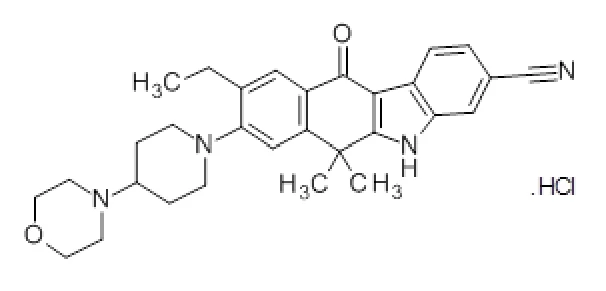
Physicochemical properties: alectinib HCl is a white to yellow or white powder with lumps with a pKa of 7.05 (base)
14. Clinical Trials
14.1. Clinical Trials by Indication
Locally Advanced or Metastatic ALK-Positive Non-Small Cell Lung Cancer
Crizotinib pre-treated patients
The safety and efficacy of ALECENSARO in ALK-positive NSCLC patients pre-treated with crizotinib were studied in two Phase I/II clinical trials (Study NP28761 and Study NP28673).
NP28761 was a Phase I/II single arm, multicenter study conducted in patients with ALK positive advanced NSCLC who have previously progressed on crizotinib treatment. In addition to crizotinib, patients may have received previous treatment with chemotherapy. A total of 87 patients were included in the phase II part of the study and received ALECENSARO orally, at the recommended dose of 600 mg twice daily.
NP28673 was a Phase I/II single arm, international, multicenter study conducted in patients with ALK-positive advanced NSCLC who have previously progressed on crizotinib. In addition to crizotinib, patients may have received previous treatment with chemotherapy. A total of 138 patients were included in the phase II part of the study and received ALECENSARO orally, at the recommended dose of 600 mg twice daily.
Eligibility criteria at baseline were similar for both studies and included adequate hematological, hepatic, renal and cardiac function lab parameters (see 7 Warnings and Precautions).
In addition patients were required to have recovered from toxicities due to prior therapies (at least to Grade 2 as per NCI-CTCAE v4 for NP28673 and G1 for NP28761).
Demographic and disease characteristics for patients receiving 600 mg twice daily in Phase I/II Studies are provided in Table 10.
Table 10 Demographic and Disease Characteristics of ALK-Positive Patients Treated with ALECENSARO (600 mg BID) in NP28761 and NP28673
| Characteristics | NP28761 N= 87 | NP28673 N=138 |
|---|---|---|
Sex, n (%) Male Female | 39 (45) 48 (55) | 61 (44) 77 (56) |
Age (years) Median (range) | 54 (29-79) | 52 (22-79) |
Race, n (%) White Asian Other | 73 (84) 7 (8) 7 (8) | 93 (67) 36 (26) 9 (7) |
Smoking status, n (%) Never smoked Former smoker Current smoker | 54 (62) 33 (38) 0(0) | 96 (70) 39 (28) 3 (2) |
ECOG PS at baseline, n (%) 0 1 2 | 30 (35) 48 (55) 9 (10) | 44 (32) 81 (59) 13 (9) |
Disease stage, n (%) Locally advanced Metastatic | 1 (1) 86 (99) | 2 (1) 136 (99) |
Histological classification, n (%) Adenocarcinoma Other | 82 (94) 5 (6) | 133 (96) 5 (4) |
Prior Chemotherapy, n (%) Yes No | 64 (74) 23 (26) | 110 (80) 28 (20) |
Sites of Metastases, n (%) Lunga CNSb (Measurable and/or Non-measurable Lesions) CNSc (Measurable Lesions) Lymph Nodes Boned Liver Adrenal Gland Other | 73 (84) 52 (60) 16 (18) 37 (43) 31 (36) 30 (34) 9 (10) 32 (37) | 119 (86) 84 (61) 35 (25) 53 (38) 70 (51) 42 (30) 11 (8) 38 (28) |
a Includes Pleura and Pleural Effusion; b Measurable and/or Non-measurable CNS lesions according to CNS RECIST assessment by IRC;
c Measurable CNS lesions according to CNS RECIST assessment by IRC; d Includes Bone Marrow
Efficacy Results for NP28761
The primary endpoint was to evaluate the efficacy of ALECENSARO by Objective Response Rate (ORR) as per central Independent Review Committee (IRC) assessment using Response Evaluation Criteria in Solid Tumours (RECIST) criteria version 1.1. The key efficacy results are presented in Table 11.
Table 11 Summary of Efficacy from NP28761
Alecensaro 600 mg twice daily N=87 | |||
|---|---|---|---|
| Primary Efficacy Parameters | |||
ORR (IRC) in RE population Responders N (%) [95% CI] b | N = 67 a 35 (52.2%) [39.7%, 64.6%] | ||
| Secondary Efficacy Parameters | |||
DOR (IRC) Number of patients with events N (%) Median (months) [95% CI] | N = 35 20 (57.1%) 14.9 [6.9, NE] | ||
CI = confidence interval; DOR = duration of response; IRC = independent review committee; NE = not estimable; ORR = Objective Response Rate; RE = response evaluable
The median duration of follow-up was 93.0 weeks (range: 0.4 to 244.1)
a 20 patients did not have measurable disease at baseline according to the IRC and were not included in the IRC response evaluable population
b Null hypothesis: ORR was equal to 35% versus the alternative hypothesis that the ORR was not equal to 35% (lower boundary of CI > 35%), at a two-sided alpha level of 5%
Efficacy Results for NP28673
The primary endpoint was to evaluate the efficacy of ALECENSARO by ORR as per central IRC assessment using RECIST 1.1 in the overall population (with and without prior exposure of cytotoxic chemotherapy treatments). The co-primary endpoint was to evaluate the ORR as per central IRC assessment using RECIST 1.1 in patients with prior exposure of cytotoxic chemotherapy treatments. The key efficacy results are presented in Table 12.
Table 12 Summary of Efficacy from NP28673
Alecensaro 600 mg twice daily N=138 | |||
|---|---|---|---|
| Primary Efficacy Parameters | |||
ORR (IRC) in RE population Responders N (%) [95% CI]b | N=122 a 62 (50.8%) [41.6%, 60.0%] | ||
ORR (IRC) in Patients Pre-Treated with Chemotherapy Responders N (%) [95% CI] | N = 96 43 (44.8%) [34.6%, 55.3%] | ||
| Secondary Efficacy Parameters | |||
DOR (IRC) Number of patients with events N (%) Median (months) [95% CI] | N = 62 36 (58.1%) 15.2 [11.2, 24.9] | ||
CI = confidence interval; DOR = duration of response; IRC = independent review committee; ORR = Objective Response Rate; RE = response evaluable
The median duration of follow-up was 105.50 weeks (range: 2.4 to 213.1)
a 16 patients did not have measurable disease at baseline according to the IRC and were not included in the IRC response evaluable population.
b Null hypothesis: ORR was equal to 35% versus the alternative hypothesis that the ORR was not equal to 35% (lower boundary of CI > 35%), at a two-sided alpha level of 5%
Pooled CNS Efficacy Results for Studies NP28673 and NP28761
A summary of the pooled analysis of the Central Nervous System (CNS) endpoints based on RECIST (IRC) performed on patients with measurable CNS lesions at baseline (N=50) included in the Phase II NP28761 and NP28673 is presented in the below table.
Of these 50 patients, 34 (68%) received prior brain radiotherapy (25 more than 6 months before starting ALECENSARO, 8 between 4 weeks and 6 months of starting ALECENSARO, and 1 within 4 weeks of starting ALECENSARO).
Patients with CNS metastases or leptomeningeal disease at baseline could be enrolled in the study if any prior CNS treatment (radiotherapy and corticosteroid use) had been discontinued at least 2 weeks before start of ALECENSARO, and any clinical symptoms of CNS disease had been stable for at least 2 weeks before start of ALECENSARO.
Table 13 Summary of the Pooled Analysis for CNS Endpoints from NP28761 and NP28673
| CNS Parameters (NP28761 and NP28673) | Alecensaro 600 mg twice daily | ||||
|---|---|---|---|---|---|
| Patients with Measurable CNS Lesions at Baseline | N= 50 | ||||
| CNS ORR (IRC) | |||||
| Responders (%) | 32 (64.0%) | ||||
| [95% CI] | [49.2%,77.1%] | ||||
| Complete Response | 11 (22.0%) | ||||
| Partial Response | 21 (42.0%) | ||||
| CNS DOR (IRC) | |||||
| Number of patients with events (%) | 18 (56.3%) | ||||
| Median (months) | 11.1 | ||||
| [ 95% CI] | [7.6%; NE] | ||||
CI = confidence interval; DOR = duration of Response; IRC = independent review committee; NE= not estimable; ORR = objective response rate
The median duration of follow-up was 14 months
In 136 patients included in the Phase I/II NP28761 and NP28673 studies, with measurable and/or non-measurable CNS lesions at baseline, the CNS complete response rate was 29%. A CNS partial response cannot be established in non-measurable CNS lesions per RECIST.
Treatment-Naïve Patients
The safety and efficacy of ALECENSARO were studied in a global randomized Phase III open label clinical trial (BO28984) in ALK-positive NSCLC patients who were treatment-naïve. Central testing for ALK protein expression positivity of tissue samples from all patients by Ventana anti ALK (D5F3) immunohistochemistry (IHC) was required before randomization into the study.
A total of 303 patients were included in the Phase III trial; 151 patients randomized to the crizotinib arm, at the recommended dose of 250 mg orally twice daily and 152 patients randomized to the ALECENSARO arm receiving ALECENSARO orally, at the recommended dose of 600 mg twice daily.
ECOG PS (0/1 vs. 2), race (Asian vs. non-Asian), and CNS metastases at baseline (yes vs. no) were stratification factors for randomization.
The primary endpoint of the trial was to demonstrate superiority of ALECENSARO versus crizotinib based on Progression Free survival (PFS) as per investigator assessment using RECIST 1.1. The secondary endpoints supporting the efficacy of ALECENSARO were PFS as per central Independent Review Committee (IRC) assessment, time to CNS progression as per IRC assessment, duration of response, objective response rate (ORR), CNS-ORR as per IRC assessment, and CNS-DOR as per IRC assessment. At the data cut-off point, the overall survival (OS) secondary endpoint data was not mature.
Demographic and disease characteristics for patients receiving ALECENSARO 600 mg twice daily and crizotinib 250 mg twice daily in the Phase III study are provided in Table 14.
Table 14 Demographic and Disease Characteristics of ALK-Positive Patients Treated with ALECENSARO (600 mg BID) and crizotinib (250 mg BID) in BO28984
| Characteristics | ALECENSARO N=152 | crizotinib N=151 |
|---|---|---|
Sex, n (%) Male Female | 68 (45) 84 (55) | 64 (42) 87 (58) |
Age (years) Median (range) | 58 (25-88) | 54 (18-91) |
Race, n (%) White Asian Other | 76 (50) 69 (45) 7 (5) | 75 (50) 69 (46) 7 (5) |
Smoking status, n (%) Active smoker Non-smoker Past smoker | 12 (8) 92 (61) 48 (32) | 5 (3) 98 (65) 48 (32) |
ECOG PS at baseline, n (%) 0 or 1 2 | 142 (93) 10 (7) | 141 (93) 10 (7) |
Disease stage, n (%) Locally advanced (IIIB) Metastatic (IV) | 4 (3) 148 (97) | 6 (4) 145 (96) |
Histological classification, n (%) Adenocarcinoma Other | 136 (90) 16 (11) | 142 (94) 9 (6) |
Prior Brain Radiation, n (%) Yes No | 26 (17) 126 (83) | 21 (14) 130 (86) |
CNS Metastases at Baseline, n (%) Yes No | 60 (40) 92 (61) | 57 (38) 94 (62) |
The trial met its primary endpoint at the primary analysis. Efficacy data are summarized in Table 15 and the Kaplan-Meier curves for investigator and IRC-assessed PFS are shown in Figures 1 and 2. The median duration of follow-up was 18.6 months (range 0.5 – 29.0) for ALECENSARO and 17.6 months (range 0.3-27.0) for crizotinib.
Table 15 Summary of Efficacy Results from Phase III study BO28984
| Parameters | Crizotinib N=151 | Alecensaro N=152 | ||
|---|---|---|---|---|
| Primary Efficacy Parameter | ||||
PFS (INV) Number of patients with event n (%) Median (months) [95% CI] | 102 (68%) 11.1 [9.1; 13.1] | 62 (41%) NE [17.7; NE] | ||
HR [95% CI] Stratified log-rank p-value | 0.47 [0.34, 0.65] p <0.0001 | |||
| Secondary Efficacy Parameters | ||||
PFS (IRC) Number of patients with event n (%) Median (months) [95% CI] | 92 (61%) 10.4 [7.7; 14.6] | 63 (41%) 25.7 [19.9; NE] | ||
HR [95% CI] Stratified log-rank p-value | 0.50 [0.36; 0.70] p < 0.0001 | |||
* Competing risk analysis of CNS progression, systemic progression and death as competing events
** The difference in ORR between the arms was not statistically significant (p < 0.0936)
*** 2 patients in the crizotinib arm and 6 patients in the alectinib arm had CR
CI = confidence interval; CNS = central nervous system; CR = complete response; DOR = duration of response; HR = hazard ratio; IRC = Independent Review Committee assessment; INV = investigator assessment; NE = not estimable; ORR = objective response rate; PFS = progression-free survival
The magnitude of PFS benefit for patients with CNS metastases at baseline (HR=0.40, 95%CI: 0.25-0.64) or without CNS metastases at baseline (HR = 0.51, 95%CI: 0.33-0.80), as determined in a subgroup analysis, suggest benefit of ALECENSARO over crizotinib in both subgroups.
| Parameters | Crizotinib N=151 | Alecensaro N=152 | ||||
|---|---|---|---|---|---|---|
Time to CNS progression (IRC) (without prior systemic PD*) Number of patients with event n (%) | 68 (45%) | 18 (12%) | ||||
Cause-Specific HR [95% CI] Stratified log-rank p-value | 0.16 [0.10; 0.28] p < 0.0001 | |||||
ORR (INV)**, *** Responders n (%) [95% CI] | 114 (75.5%) [67.8; 82.1] | 126 (82.9%) [76.0; 88.5] | ||||
Duration of response (INV) Median (months) [95 % CI] | 11.1 [7.9; 13.0] | NE [NE; NE] | ||||
CNS-ORR in patients with measurable CNS metastases at baseline (IRC) CNS responders n (%) [95% CI] CNS-CR n (%) CNS-DOR , median (months) [95% CI] | N=22 11 (50.0%) [28.2; 71.8] 1 (5%) 5.5 [2.1, 17.3] | N=21 17 (81.0%) [58.1; 94.6] 8 (38%) 17.3 [14.8, NE] | ||||
CNS-ORR in patients with measurable and non-measurable CNS metastases at baseline (IRC) CNS responders n (%) [95% CI] CNS-CR n (%) CNS-DOR , median (months) [95% CI] | N=58 15 (25.9%) [15.3; 39.0] 5 (9%) 3.7 [3.2, 6.8] | N=64 38 (59.4%) [46.4; 71.5] 29 (45%) NE [17.3, NE] | ||||
Figure 1 Kaplan Meier Plot of PFS as per investigator assessment from BO28984
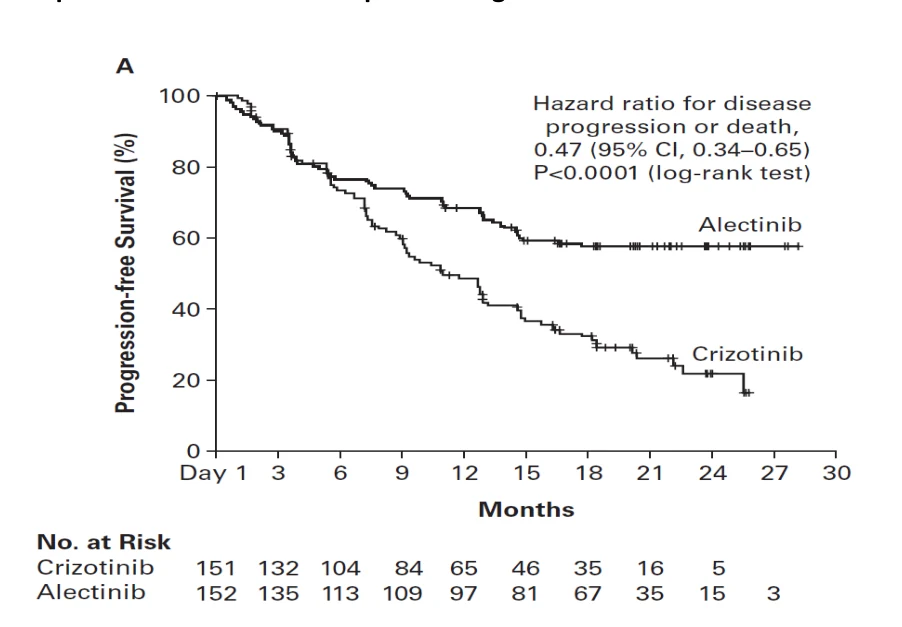
Figure 2 Kaplan Meier Plot of PFS as per central Independent Review Committee assessment from BO28984
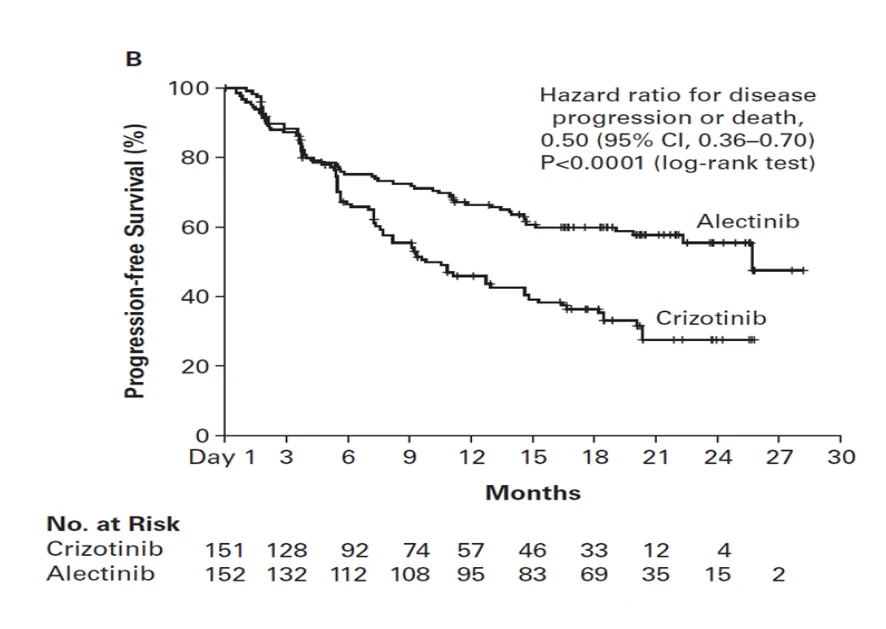
Adjuvant Treatment of Resected ALK-Positive Non-Small Cell Lung Cancer
The efficacy of ALECENSARO for the adjuvant treatment of patients with ALK-positive NSCLC following complete tumour resection was established in a global randomized Phase III open-label clinical trial (BO40336; ALINA). Eligible patients were required to have resectable ALK-positive Stage IB (tumours ≥ 4 cm) – IIIA NSCLC per the Union for International Cancer Control/American Joint Committee on Cancer (UICC/AJCC) Staging System, 7th Edition, with ALK-positive disease identified by a locally performed FDA-approved or CE-marked ALK test, or centrally performed by the Ventana ALK (D5F3) immunohistochemistry (IHC) assay.
Patients were randomized (1:1) to receive ALECENSARO 600 mg twice daily or platinum-based chemotherapy following tumour resection. Randomization was stratified by race (Asian and non-Asian) and stage of disease (IB, II and IIIA). ALECENSARO was administered for a total of 2 years, or until disease recurrence or unacceptable toxicity. Platinum-based chemotherapy was administered intravenously for 4 cycles, with each cycle lasting 21 days, according to one of the following regimens:
- Cisplatin 75 mg/m2 on Day 1 plus vinorelbine 25 mg/m2 on Days 1 and 8
- Cisplatin 75 mg/m2 on Day 1 plus gemcitabine 1250 mg/m2 on Days 1 and 8
- Cisplatin 75 mg/m2 on Day 1 plus pemetrexed 500 mg/m2 on Day 1
In the event of intolerance to a cisplatin-based regimen, carboplatin was administered instead of cisplatin in the above combinations at a dose of area under the free carboplatin plasma concentration versus time curve (AUC) 5 mg/mL/min or 6 mg/mL/min.
The primary efficacy endpoint was disease-free survival (DFS) as assessed by the Investigator in the stage II-IIIA population followed by the ITT population (Stage IB-IIIA), hierarchically tested. DFS was defined as the time from the date of randomization to the date of occurrence of any of the following: first documented recurrence of disease, new primary NSCLC, or death due to any cause, whichever occurred first. The secondary efficacy endpoint was overall survival (OS).
Demographic and disease characteristics for patients receiving ALECENSARO 600 mg twice daily or 4 cycles of platinum-based chemotherapy in the pivotal Phase III study are provided in Table 16.
Table 16 Demographic and Disease Characteristics of ALK-Positive Patients (ITT) Treated with Adjuvant ALECENSARO (600 mg twice daily) and Platinum-Based Chemotherapy (4 cycles) in Study BO40336 (ALINA)
| Characteristics | ALECENSARO (N=130) | Chemotherapy (N=127) |
|---|---|---|
Median Age (years) <65, n (%) ≥65, n (%) | 54 103 (79) 27 (21) | 57 93 (73) 34 (27) |
Sex, n (%) Male Female | 55 (42) 75 (58) | 68 (54) 59 (47) |
Race, n (%) White Asian Black or African American Unknown | 55 (42) 72 (55) 1 (0.8) 2 (1.5) | 52 (41) 71 (56) 0 4 (3) |
ECOG PS at baseline, n (%) 0 1 | 72 (55) 58 (45) | 65 (51) 62 (49) |
Disease stage, n (%) Stage IB Stage II Stage IIIA | 14 (11) 47 (36) 69 (53) | 12 (9) 45 (35) 70 (55) |
Histology, n (%) Squamous | 6 (5) | 3 (2) |
| Non-Squamous | 124 (95) | 124 (98) |
Smoking Status, n (%) Never Smoker Current Smoker Previous Smoker | 84 (65) 5 (4) 41 (32) | 70 (55) 3 (2) 54 (43) |
A total of 257 patients were randomized to ALECENSARO (N=130) or to chemotherapy (N=127). The median age was 56 years (range: 26 to 87), 24% were ≥ 65 years old, 52% were female, 56% were Asian, 60% were never smokers, 53% had an Eastern Cooperative Oncology Group performance status (ECOG PS) of 0, 10% of patients had Stage IB, 36% had Stage II and 54% had Stage IIIA disease.
ALINA demonstrated a statistically significant and clinically meaningful improvement in DFS for patients treated with ALECENSARO compared to patients treated with chemotherapy in the Stage II-IIIA and the Stage IB-IIIA (ITT) patient populations. OS data were not mature at the time of DFS analysis with 2.3% of deaths reported in the ITT population. The median duration of survival follow-up was 27.8 months in the ALECENSARO arm and 28.4 months in the chemotherapy arm.
The DFS efficacy results are summarized in Table 17 and Figure 3.
Table 17 Investigator Assessed DFS Results in BO40336 (ALINA)
| Efficacy Parameter | Stage II-IIIA Population | Stage IB-IIIA (ITT Population) | |||||||||||||||
|---|---|---|---|---|---|---|---|---|---|---|---|---|---|---|---|---|---|
ALECENSARO N=116 | Chemotherapy N=115 | ALECENSARO N=130 | Chemotherapy N=127 | ||||||||||||||
| Number of DFS Events (%) | 14 (12.1) | 45 (39.1) | 15 (11.5) | 50 (39.4) | |||||||||||||
Median DFS, months (95% CI) | NE (NE, NE) | 44.4 (27.8, NE) | NE (NE, NE) | 41.3 (28.5, NE) | |||||||||||||
Stratified HR (95% CI)* | 0.24 (0.13, 0.45) | 0.24 (0.13, 0.43) | |||||||||||||||
| p-value (log-rank)* | <0.0001 | <0.0001 | |||||||||||||||
2 Year Event Free Rate, % (95% CI) | 93.8 (89.4, 98.3) | 63.0 (53.3, 72.7) | 93.6 (89.4, 97.9) | 63.7 (54.6, 72.9) | |||||||||||||
3 Year Event Free Rate, % (95% CI) | 88.3 (80.8, 95.8) | 53.3 (42.3, 64.2) | 88.7 (81.8, 95.6) | 54.0 (43.7, 64.2) | |||||||||||||
*Stratified by race in Stage II-IIIA, stratified by race and stage in Stage IB-IIIA
CI = Confidence Interval; DFS = Disease-Free Survival; HR = Hazard Ratio , ITT = Intent-to-Treat; NE = Not Estimable.
Figure 3 Kaplan-Meier Curve of Disease-Free Survival in the Stage IB – IIIA (ITT Population)
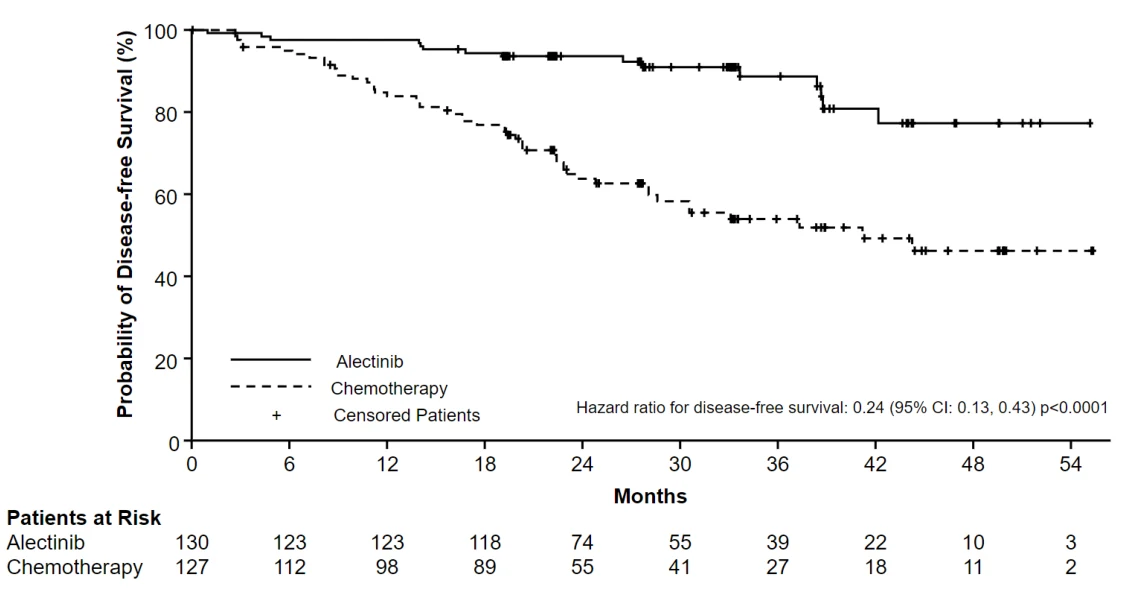
An exploratory analysis of the site(s) of relapse showed the proportion of patients with brain involvement at the time of disease recurrence was 4 patients (3.1%) in the ALECENSARO arm and 14 patients (11.0%) in the chemotherapy arm in the ITT population.
16. Non-Clinical Toxicology
General toxicology:
Pharmacokinetics
Distribution
Alectinib demonstrated good penetration into various tissues in quantitative whole body autoradiography studies in rats. Organs with highest distribution were Harderian glands, adrenal glands, lungs, brown adipose tissue and liver, with tissue-to-plasma concentration (T/P) ratios at tmax being 345, 179, 62.1, 51.8 and 42.0, respectively. The average T/P ratios in CNS tissues (cerebrum, cerebellum and spinal cord) were 0.77 (range, 0.59-0.94) and 1.38 (range, 1.06–1.54) at 8 and 24 hours post-dose, respectively, indicating alectinib penetrating into the CNS. Tissue radioactivity disappeared over time, following a course generally comparable to that of plasma radioactivity.
Pharmacodynamics
Secondary Pharmacology
Alectinib inhibited human ether-a-go-go related gene (hERG) potassium currents with an IC50 of 0.45 μM (217 ng/mL). Alectinib also blocked the L-type Ca2+ channel current (IC50: 222 ng/mL), indicating that alectinib is a calcium channel antagonist.
Genotoxicity: Alectinib was not mutagenic in vitro in the bacterial reverse mutation (Ames) assay but induced a slight increase in numerical aberrations (polyploidy) in the in vitro cytogenetic assay using Chinese Hamster Lung (CHL) cells with metabolic activation, and micronuclei in vitro human lymphoblastoid TK6 cell and rat bone marrow micronucleus test. The mechanism of micronucleus induction was abnormal chromosome segregation (aneugenicity), and not a clastogenicity.
Carcinogenicity: No carcinogenicity studies have been conducted with ALECENSARO.
Reproductive and developmental toxicology:
No fertility studies in animals have been performed to evaluate the effect of ALECENSARO. No adverse effects on male and female reproductive organs were observed in general toxicology studies conducted in rats and monkeys at systemic exposures to alectinib equal to or greater than 2.6 and 0.5 fold, respectively, of the human exposure measured by AUC at the recommended dose of 600 mg twice daily.
Embryo-fetal development studies have been performed in pregnant rabbits and rats. In rabbits, a maternal dose of alectinib equivalent to 2.9-times the recommended human dose of 600 mg twice-daily (based on AUC systemic exposure), caused maternal toxicity, abortion, fetal death, lower fetal body weights, and fetal rib variations. In rats, a maternal dose of alectinib equivalent to 2.7-times the recommended human dose resulted in maternal toxicity, small fetuses, retarded fetal ossification and fetal abnormalities. Total litter loss occurred in rats at a dose equivalent to 4.5 times the recommended human dose.
Special toxicology:
Repeated-dose Toxicity
Target organs in both rat and monkey at clinically relevant exposures in the repeat-dose toxicology studies included, but were not limited to the erythroid system, gastrointestinal tract and hepatobiliary system.
Abnormal erythrocyte morphology was observed at exposures equal or greater than 10-60% the human exposure by AUC at the recommended human dose. Proliferative zone extension in GI mucosa in both species was observed at exposures equal to or greater than 20-120% of the human AUC exposure at the recommended dose. Increased hepatic alkaline phosphatase (ALP) and direct bilirubin as well as vacuolation/degeneration/necrosis of bile duct epithelium and enlargement/focal necrosis of hepatocytes was observed in rats and/or monkeys at exposures equal to or greater than 20-30% of the human exposure by AUC at the recommended dose.
A mild hypotensive effect was observed in monkeys at around clinically relevant exposures.
Phototoxicity
Alectinib absorbs UV light between 200 and 400 nm and demonstrated phototoxic potential in an in vitro photosafety test in cultured murine fibroblasts after UVA irradiation.