


Product Monograph - Lorbrena
Recent Major Label Changes
| 4 Dosage and Administration, Dosing Considerations | 2026-02 |
|---|---|
| 7 Warnings and Precautions, 7.1.3 Pediatrics | 2024-08 |
Table of Contents
Sections or subsections that are not applicable at the time of authorization are not listed.
Recent Major Label Changes .................................................................................................... 2
Table of Contents .................................................................................................................... 2
Part 1: Healthcare Professional Information ............................................................................ 5
- 1.
Indications ................................................................................................................... 5
1.1. Pediatrics ............................................................................................................... 5
1.2. Geriatrics ............................................................................................................... 5
- 2. Contraindications ......................................................................................................... 5
- 3. Serious Warnings and Precautions Box ........................................................................ 6
- 4.
Dosage and Administration .......................................................................................... 6
4.1. Dosing Considerations ........................................................................................... 6
4.2. Recommended Dose and Dosage Adjustment ...................................................... 7
4.4. Administration ..................................................................................................... 11
4.5. Missed Dose ........................................................................................................ 11
- 5. Overdose.................................................................................................................... 11
- 6. Dosage Forms, Strengths, Composition, and Packaging .............................................. 11
- 7.
Warnings and Precautions .......................................................................................... 12
General ............................................................................................................................ 12
Carcinogenesis and Genotoxicity .................................................................................... 13
Cardiovascular ................................................................................................................. 13
Driving and Operating Machinery ................................................................................... 13
Endocrine and Metabolism ............................................................................................. 13
Monitoring and Laboratory Tests .................................................................................... 14
Neurologic ....................................................................................................................... 15
Reproductive Health ....................................................................................................... 15
Respiratory ...................................................................................................................... 16
7.1. Special Populations .............................................................................................. 16
7.1.1. Pregnancy ........................................................................................................ 16
7.1.2. Breastfeeding .................................................................................................. 16
7.1.3. Pediatrics ......................................................................................................... 16
7.1.4. Geriatrics ......................................................................................................... 16
- 8.
Adverse Reactions ...................................................................................................... 17
8.1. Adverse Reaction Overview ................................................................................. 17
8.2. Clinical Trial Adverse Reactions ........................................................................... 18
8.2.1. Clinical Trial Adverse Reactions – Pediatrics .................................................... 24
8.3. Less Common Clinical Trial Adverse Reactions .................................................... 24
8.3.1. Less Common Clinical Trial Adverse Reactions – Pediatrics ............................. 24
8.4. Abnormal Laboratory Findings: Hematologic, Clinical Chemistry and Other Quantitative Data ............................................................................................................ 25
8.5. Post-Market Adverse Reactions .......................................................................... 27
- 9.
Drug Interactions ....................................................................................................... 27
9.2. Drug Interactions Overview ................................................................................. 27
9.4. Drug-Drug Interactions ........................................................................................ 27
9.5. Drug-Food Interactions ........................................................................................ 29
9.6. Drug-Herb Interactions ........................................................................................ 29
- 10.
Clinical Pharmacology ................................................................................................ 30
10.1. Mechanism of Action ....................................................................................... 30
10.2. Pharmacodynamics ......................................................................................... 30
10.3. Pharmacokinetics ............................................................................................ 31
- 11. Storage, Stability, and Disposal .................................................................................. 33
- 12. Special Handling Instructions ..................................................................................... 33
Part 2: Scientific Information ................................................................................................. 34
- 13. Pharmaceutical Information ....................................................................................... 34
- 14.
Clinical Trials .............................................................................................................. 34
14.1. Clinical Trials by Indication .............................................................................. 34
Previously Untreated ALK-Positive Metastatic Non-Small Cell Lung Cancer (Phase 3 Study B7461006, CROWN study) ............................................................................................... 34
Previously Treated ALK-Positive Metastatic NSCLC (Phase 1/2 Study B7461001) ........... 39
- 15. Microbiology .............................................................................................................. 42
- 16. Non-Clinical Toxicology .............................................................................................. 42
Patient Medication Information ............................................................................................ 44
Part 1: Healthcare Professional Information
1. Indications
LORBRENA (lorlatinib) is indicated as:
- monotherapy for the first-line treatment of adult patients with anaplastic lymphoma kinase (ALK)-positive locally advanced (not amenable to curative therapy) or metastatic non-small cell lung cancer (NSCLC)
monotherapy for the treatment of adult patients with anaplastic lymphoma kinase (ALK)-positive metastatic non-small cell lung cancer (NSCLC) who have progressed on: crizotinib and at least one other ALK inhibitor, or patients who have progressed on ceritinib or alectinib.
The marketing authorization for the second and later line indication was based on a primary efficacy endpoint of tumor objective response rate and duration of response; no overall survival benefit has been demonstrated (see 14. Clinical Trials).
1.1. Pediatrics
Pediatrics (<18 years of age): No data are available to Health Canada; therefore, Health Canada has not authorized an indication for pediatric use.
1.2. Geriatrics
Geriatrics (≥ 65 years of age): Of the patients in Study B7461001 (N=295) and Study B7461006 (N=149) who received 100 mg LORBRENA orally once daily, 54 (18%) and 59 (40%), respectively, were aged 65 years or older. No clinically important differences in safety or efficacy were observed between patients aged 65 years or older and younger patients (see 10. Clinical Pharmacology).
2. Contraindications
- LORBRENA (lorlatinib) is contraindicated in patients who are hypersensitive to this drug or to any ingredient in the formulation, including any non-medicinal ingredient, or component of the container. For a complete listing, see 6. Dosage Forms, Strengths, Composition, and Packaging.
- Concomitant use of strong CYP3A inducers with LORBRENA is contraindicated due to the potential for serious hepatotoxicity (aspartate aminotransferase [AST] and alanine aminotransferase [ALT] elevations (see 4. Dosage and Administration and 9. Drug Interactions).
3. Serious Warnings and Precautions Box
- Hypercholesterolemia/Hypertriglyceridemia (see 7. Warnings and Precautions, Endocrine and Metabolism, Hyperlipidemia)
- Pneumonitis (see 7. Warnings and Precautions, Respiratory, ILD/Pneumonitis)
- Hepatotoxicity (see 7. Warnings and Precautions, General, Drug-Drug Interactions
- , Risk of Serious Hepatotoxicity with Concomitant Use of Strong CYP3A Inducers)
LORBRENA should only be prescribed and supervised by a qualified physician experienced in the use of antineoplastic agents.
4. Dosage and Administration
4.1. Dosing Considerations
- Strong cytochrome P-450 (CYP)3A inhibitors: Concurrent use of LORBRENA (lorlatinib) with strong CYP3A inhibitors may increase lorlatinib plasma concentrations. Concomitant use of LORBRENA with strong CYP3A inhibitors should be avoided. An alternative concomitant medicinal product with less potential to inhibit CYP3A should be considered (see 9. Drug Interactions). If a strong CYP3A inhibitor must be co administered concomitantly, the LORBRENA dose of 100 mg once daily should be reduced to once daily 75 mg dose (see 9. Drug Interactions and 10. Clinical Pharmacology). If concurrent use of a strong CYP3A inhibitor is discontinued, LORBRENA should be resumed at the dose used prior to the initiation of the strong CYP3A inhibitor and after a washout period of 3 to 5 half lives of the CYP3A inhibitor.
- Dosing modification for Fluconazole: Avoid concomitant use of LORBRENA with fluconazole, based on Physiologically-Based Pharmacokinetic (PBPK) simulation. If concomitant use is unavoidable, reduce the starting dose of LORBRENA to 75 mg once daily.
- Strong CYP3A inducers: LORBRENA is contraindicated in patients taking strong CYP3A inducers. Discontinue strong CYP3A inducers for 3 plasma half-lives of the strong CYP3A inducer prior to initiating LORBRENA.
- Moderate CYP3A inducers: Avoid concomitant use with moderate CYP3A inducers as they may reduce lorlatinib plasma concentrations. If concomitant use is unavoidable, increase the starting dose of LORBRENA to 125 mg once daily.
- Hepatic impairment: No dose adjustments are recommended for patients with mild hepatic impairment. In a hepatic impairment study following administration of a single oral 100 mg dose of LORBRENA, lorlatinib exposure (AUCinf) increased by 15% and 82% in patients with moderate hepatic impairment (Child-Pugh B) and severe hepatic impairment (Child-Pugh C), respectively, compared to subjects with normal hepatic function (see 10. Clinical Pharmacology). However, as lorlatinib exhibits net autoinduction at steady state in patients without hepatic impairment following repeated dosing, there are uncertainties associated with the applicability of single dose exposure results to steady state exposure in patients with hepatic impairment. Exposure in patients with moderate or severe hepatic impairment following multiple doses may be higher than those observed in the single dose study. If LORBRENA is used in patients with moderate or severe hepatic impairment, dose reductions should be considered and close monitoring is recommended.
- Renal impairment: No dose adjustment is needed for patients with mild or moderate impairment [absolute estimated glomerular filtration rate ≥ 30 mL/min). Reduce the dose when administering LORBRENA in patients with severe renal impairment (absolute eGFR < 30 mL/min) from 100 mg to 75 mg orally once daily (see 10. Clinical Pharmacology). Lorlatinb is not recommended for patients requiring hemodialysis as information for use in these patients is very limited.
4.2. Recommended Dose and Dosage Adjustment
Recommended Dose:
The recommended dose of LORBRENA is 100 mg taken orally once daily continuously. Continue treatment with LORBRENA until disease progression or unacceptable toxicity.
LORBRENA may be taken with or without food (see 10. Clinical Pharmacology).
Pediatric patients (<18 years):
The safety and efficacy of LORBRENA in pediatric patients have not been established. Health Canada has not authorized an indication for pediatric use.
Geriatrics (≥ 65 years):
No clinically important differences in safety or efficacy were observed between patients aged 65 years or older and younger patients (see 10. Clinical Pharmacology).
Dose Modifications:
Dosing interruption and/or dose reduction may be required based on individual safety and tolerability. Dose reduction levels are summarized below.
- First dose reduction: LORBRENA 75 mg taken orally once daily
- Second dose reduction: LORBRENA 50 mg taken orally once daily
LORBRENA should be permanently discontinued if the patient is unable to tolerate LORBRENA 50 mg taken orally once daily.
Dose modification recommendations for toxicities are provided in Table 1. Dose modification recommendations for patients who develop first-degree, second-degree, or complete atrioventricular (AV) block are provided in Table 2.
Table 1. LORBRENA Dose Modifications and Management Recommendations for Adverse Reactions
| Adverse Reaction | LORBRENA Dosing |
|---|---|
| Adverse Reaction | LORBRENA Dosing |
| Adverse Reaction | LORBRENA Dosing |
| Hypercholesterolemia or Hypertriglyceridemia | |
Mild hypercholesterolemia (cholesterol between ULN and 300 mg/dL or between ULN and 7.75 mmol/L) OR Mild hypertriglyceridemia (triglycerides between 150 and 300 mg/dL or 1.71 and 3.42 mmol/L) | Introduce or modify lipid-lowering therapya in accordance with respective prescribing information; continue LORBRENA at same dose. |
Moderate hypercholesterolemia (cholesterol between 301 and 400 mg/dL or between 7.76 and 10.34 mmol/L) OR Moderate hypertriglyceridemia (triglycerides between 301 and 500 mg/dL or 3.43 and 5.7mmol/L) | |
Severe hypercholesterolemia (cholesterol between 401 and 500 mg/dL or between 10.35 and 12.92 mmol/L) OR Severe hypertriglyceridemia (triglycerides between 501 and 1000 mg/dL or 5.71 and 11.4 mmol/L) | Introduce the use of lipid-lowering therapy;a if currently on lipid-lowering therapy, increase the dose of this therapya in accordance with respective prescribing information; or change to a new lipid-lowering therapy. Continue LORBRENA at the same dose without interruption. |
Grade 4 hypercholesterolemia (cholesterol over 500 mg/dL or over 12.92 mmol/L) OR Grade 4 hypertriglyceridemia (triglycerides over 1000 mg/dL or over 11.4 mmol/L) | Introduce the use of lipid-lowering therapya or increase the dose of this therapya in accordance with respective prescribing information or change to a new lipid-lowering therapy. Withhold LORBRENA until recovery of hypercholesterolemia and/or hypertriglyceridemia to moderate or mild severity grade. Re-challenge at same LORBRENA dose while maximizing lipid-lowering therapya in accordance with respective prescribing information. If severe hypercholesterolemia and/or hypertriglyceridemia recurs despite maximal lipid-lowering therapya in accordance with respective prescribing information, reduce LORBRENA by 1 dose level. |
| Central nervous system (CNS) effectsb,c | |
| Grade 1: Mild | Continue at the same dose or withhold dose until recovery to baseline. Then resume LORBRENA at the same dose or reduce by 1 dose level. |
Grade 2: Moderate OR Grade 3: Severe | Withhold dose until toxicity is less than or equal to Grade 1. Then resume LORBRENA at 1 reduced dose level. |
| Grade 4: Life-threatening/Urgent intervention indicated | Permanently discontinue LORBRENA. |
| Interstitial Lung Disease (ILD)/Pneumonitis | |
| Any Grade treatment–related ILD/Pneumonitis | Permanently discontinue LORBRENA. |
| Hypertension | |
| Grade 3 (SBP greater than or equal to 160 mmHg or DBP greater than or equal to 100 mmHg; medical intervention indicated; more than one antihypertensive drug, or more intensive therapy than previously used indicated) | Withhold LORBRENA until hypertension has recovered to Grade 1 or less (SBP less than 140 mmHg and DBP less than 90 mmHg), then resume LORBRENA at the same dose. If Grade 3 hypertension recurs, withhold LORBRENA until recovery to Grade 1 or less, and resume at a reduced dose. If adequate hypertension control cannot be achieved with optimal medical management, permanently discontinue LORBRENA. |
| Grade 4 (life-threatening consequences, urgent intervention indicated) | Withhold LORBRENA until recovery to Grade 1 or less, and resume at a reduced dose or permanently discontinue LORBRENA. If Grade 4 hypertension recurs, permanently discontinue LORBRENA. |
| Hyperglycemia | |
| Grade 3 (greater than 250 mg/dL) despite optimal anti-hyperglycemic therapy OR Grade 4 | Withhold LORBRENA until hyperglycemia is adequately controlled, then resume LORBRENA at the next lower dosage. If adequate hyperglycemic control cannot be achieved with optimal medical management, permanently discontinue LORBRENA. |
| Other adverse reactionsc | |
Grade 1 OR Grade 2 | Consider no dose modification or reduce by 1 dose level, as clinically indicated. |
| Greater than or equal to Grade 3 | Withhold LORBRENA until symptoms resolve to less than or equal to Grade 2 or baseline. Then resume LORBRENA at 1 reduced dose level. |
Abbreviations: CNS=central nervous system; CTCAE=Common Terminology Criteria for Adverse Events; HMG CoA=3-hydroxy-3-methylglutaryl coenzyme A; DBP=diastolic blood pressure; SBP= systolic blood pressure; ULN=upper limit of normal. a Lipid-lowering therapy may include: HMG CoA reductase inhibitor, nicotinic acid, fibric acid, or ethyl esters of omega-3 fatty acids. b Examples of CNS effects comprise psychotic effects (including hallucination) and changes in cognition, mood, mental status or speech (see 7. Warnings and Precautions and 8. Adverse Reactions). c Grade categories are based on CTCAE classifications. | |
Table 2. Recommended LORBRENA Dose Modifications - PR Interval Prolongation/Atrioventricular Block
| Event | LORBRENA Dosing | ||
|---|---|---|---|
| Event | LORBRENA Dosing | ||
| Asymptomatic | Symptomatic | ||
| Asymptomatic | Symptomatic | ||
| First-degree AV block | Continue LORBRENA at the same dose without interruption. Assess concomitant medications and electrolyte imbalance that may prolong PR interval. Monitor ECG/symptoms potentially related to AV block closely. | Withhold LORBRENA. Assess concomitant medications and electrolyte imbalance that may prolong PR interval. Monitor ECG/symptoms potentially related to AV block closely. If symptoms resolve, resume LORBRENA at same dose or at 1 reduced dose level. | |
| Second-degree AV block | Withhold LORBRENA. Assess concomitant medications and electrolyte imbalance that may prolong PR interval. Monitor ECG/symptoms potentially related to AV block closely. If subsequent ECG does not show second-degree block, resume LORBRENA at same dose or 1 reduced dose level. | Withhold LORBRENA. Assess concomitant medications and electrolyte imbalance that may prolong PR interval. Refer for cardiac observation and monitoring. Consider pacemaker placement if symptomatic AV block persists. If symptoms and the second-degree block resolve or if patients revert to asymptomatic first-degree AV | |
| block, resume LORBRENA at 1 reduced dose level. | |||
| Complete AV Block | Withhold LORBRENA dose. Assess concomitant medications and electrolyte imbalance that may prolong PR interval. Refer for cardiac observation and monitoring. Temporary pacemaker placement may be indicated for severe symptoms associated with AV block. If AV block does not resolve, placement of a permanent pacemaker may be considered. If pacemaker placed, may resume LORBRENA at full dose. If no pacemaker placed, resume LORBRENA at 1 reduced dose level only when symptoms resolve AND PR interval is less than 200 msec. | ||
| Abbreviations: AV=atrioventricular; ECG=electrocardiogram. | |||
4.4. Administration
Patients should be encouraged to take their dose of LORBRENA at approximately the same time each day. Tablets should be swallowed whole (tablets should not be chewed, crushed or split prior to swallowing). No tablet should be ingested if it is broken, cracked, or otherwise not intact.
4.5. Missed Dose
If a dose of LORBRENA is missed, then it should be taken as soon as the patient remembers unless it is less than 4 hours before the next dose, in which case the patient should not take the missed dose. Patients should not take 2 doses at the same time to make up for a missed dose.
5. Overdose
There is no known antidote for LORBRENA (lorlatinib). The treatment of LORBRENA overdose should consist of general supportive measures. Given the dose-dependent effect on PR interval, ECG monitoring is recommended.
For the most recent information in the management of a suspected drug overdose, contact your regional poison control centre or Health Canada’s toll-free number, 1-844 POISON-X (1-844-764-7669).
- 6. Dosage Forms, Strengths, Composition, and Packaging
Table – Dosage Forms, Strengths, and Composition
| Route of Administration | Dosage Form/ Strength/Composition | Non-Medicinal Ingredients |
| Oral | Film-coated tablet 25 mg, 100 mg | Tablet core contains: dibasic calcium phosphate anhydrous, magnesium stearate, microcrystalline cellulose, sodium starch glycolate |
Description
25 mg: 8 mm round tan immediate release film-coated tablet, debossed with “Pfizer” on one side and “25” and “LLN” on the other side.
100 mg: oval (17 x 8.5 mm) lavender immediate release film-coated tablet, debossed with “Pfizer” on one side and “LLN 100” on the other side.
Packaging: LORBRENA is supplied as follows:
25 mg
- high density polyethylene bottles containing 30, 60, or 100 tablets
- aluminum foil blisters with aluminum foil backing containing 120 tablets (12 cards of 10 tablets)§
100 mg
- high density polyethylene bottles containing 30, 60, or 100 tablets
- aluminum foil blisters with aluminum foil backing containing 30 tablets (3 cards of 10 tablets)§
§ not commercially available in Canada
7. Warnings and Precautions
See 3. Serious Warnings and Precautions Box.
General
Patients treated with LORBRENA (lorlatinib) must have a documented ALK-positive status based on a validated ALK assay. Assessment of ALK-positive NSCLC should be performed by laboratories with demonstrated proficiency in the specific technology being utilized.
Drug-Drug Interactions
Risk of Serious Hepatotoxicity with Concomitant Use of Strong CYP3A Inducers
Severe hepatotoxicity occurred in 10 of 12 healthy subjects receiving a single dose of LORBRENA with multiple daily doses of rifampin, a strong CYP3A inducer. Grade 4 alanine aminotransferase (ALT) or aspartate aminotransferase (AST) elevations occurred in 6 subjects (50%), Grade 3 ALT or AST elevations occurred in 4 subjects (33%) and Grade 2 ALT or AST elevations occurred in 1 subject (8%). ALT or AST elevations occurred within 3 days and returned to within normal limits after a median of 15 days (7 to 34 days); the median time to recovery was 18 days in subjects with Grade 3 or 4 ALT or AST elevations and 7 days in subjects with Grade 2 ALT or AST elevations.
| Film-coating contains: ferrosofferic oxide/Black iron oxide, hydroxypropyl methylcellulose (HPMC) 2910/hypromellose, iron oxide red, lactose monohydrate, macrogol/polyethylene glycol (PEG) 3350, titanium dioxide, triacetin |
No clinically meaningful changes in liver function tests were seen in healthy subjects after receiving a combination of lorlatinib with the moderate CYP3A inducer modafinil (see 9. Drug Interactions and 10. Clinical Pharmacology).
Carcinogenesis and Genotoxicity
Please see 16. Non-Clinical Toxicology.
Cardiovascular
Atrioventricular (AV) Block
PR interval prolongation and atrioventricular (AV) block events have been reported in patients receiving LORBRENA. In 476 patients who received 100 mg LORBRENA daily in Study B7461001 (n=327) and Study B7461006 (n=149) and who had a baseline electrocardiography (ECG), 9 patients (1.9%) experienced AV block and 1 patient (0.2%) experienced Grade 3 AV block and underwent pacemaker placement (see 10.2. Pharmacodynamics).
For those patients who develop AV block, dose modification may be required (see 4. Dosage and Administration).
Hypertension
Hypertension can occur in patients receiving LORBRENA (see 8. Adverse Reactions). Hypertension occurred in 62 patients (13%) who received 100 mg LORBRENA once daily in Study B7461001 and Study B7461006, including Grade 3 or 4 in 29 patients (6.1%). The median time to onset of hypertension was 6.4 months (1 day to 2.8 years), and 11 patients (2.3%) temporarily discontinued LORBRENA for hypertension.
Withhold and resume at a reduced dose or permanently discontinue LORBRENA based on severity (see 4. Dosage and Administration).
Driving and Operating Machinery
LORBRENA has moderate influence on the ability to drive and use machines. Caution should be exercised when driving or operating machines as patients may experience central nervous system effects (see 8.2. Clinical Trial Adverse Reactions, Nervous system disorders).
Endocrine and Metabolism
Hyperlipidemia
The use of LORBRENA has been associated with increases in serum cholesterol and triglycerides (see 8. Adverse Reactions). Grade 3 or 4 elevations in total cholesterol occurred in 87 patients (18%) and Grade 3 or 4 elevations in triglycerides occurred in 92 patients (19%) of the 476 patients who received 100 mg LORBRENA once daily in Study B7461001 (n=327) and in Study B7461006 (n=149). The median time to onset for both hypercholesterolemia and hypertriglyceridemia was 15 days. The median duration of hypercholesterolemia and hypertriglyceridemia was 451 and 427 days, respectively. No patient was permanently discontinued from treatment with lorlatinib associated with hypercholesterolemia or hypertriglyceridemia. Eighteen (4%) and 33 (7%) patients required temporary discontinuation and 6 (1%) and 13 (3%) patients required dose reduction of LORBRENA for elevations in cholesterol and in triglycerides in Study B7461001 and Study B7461006, respectively. Three hundred ninety-seven patients (83%) required initiation of lipid-lowering medications, with a median time to onset of start of such medications of 17 days.
Initiation, or increase in the dose, of lipid-lowering agents is recommended (see 4. Dosage and Administration).
Hyperglycemia
Hyperglycemia can occur in patients receiving LORBRENA (see 8. Adverse Reactions). Hyperglycemia occurred in 44 patients (9.2%) who received 100 mg LORBRENA once daily in Study B7461001 and Study B7461006, including Grade 3 or 4 in 15 patients (3.2%). The median time to onset of hyperglycemia was 4.8 months (1 day to 2.9 years), and 0.8% of patients temporarily discontinued LORBRENA for hyperglycemia.
Withhold and resume at a reduced dose or permanently discontinue LORBRENA based on severity (see 4. Dosage and Administration).
Monitoring and Laboratory Tests
ALK Testing
Patients treated with LORBRENA must have a documented ALK-positive status based on a validated ALK assay. Assessment of ALK-positive NSCLC should be performed by laboratories with demonstrated proficiency in the specific technology being utilized.
Liver Function Tests
No clinically meaningful changes in liver function tests were seen in healthy subjects after receiving a combination of lorlatinib with the moderate CYP3A inducer modafinil (see 9. Drug Interactions and 10. Clinical Pharmacology).
Pancreatic enzymes - Lipase and amylase increase
Patients should be monitored for lipase and amylase elevations prior to the start of LORBRENA treatment and periodically thereafter as clinically indicated.
ECG Monitoring
Monitor ECG prior to initiating LORBRENA and monthly thereafter, particularly in patients with predisposing conditions to the occurrence of clinically significant cardiac events (see 7. Warnings and Precautions, Cardiovascular; 4. Dosage and Administration).
Hypertension
Control blood pressure prior to initiation of LORBRENA. Monitor blood pressure after 2 weeks and at least monthly thereafter during treatment with LORBRENA. Withhold and resume at a reduced dose or permanently discontinue LORBRENA based on severity (see 7. Warnings and Precautions, Hypertension
, 4. Dosage and Administration).
Hyperlipidemia
Monitor serum cholesterol and triglycerides before initiating LORBRENA, 2, 4, and 8 weeks, after initiating LORBRENA, and periodically thereafter. Withhold and resume at the same dose for the first occurrence: resume at the same or a reduced dose of LORBRENA for recurrence based on severity (see 7. Warnings and Precautions, Endocrine and Metabolism; 4. Dosage and Administration; 8.2. Clinical Trial Adverse Reactions).
Hyperglycemia
Assess fasting serum glucose prior to initiation of LORBRENA and monitor periodically thereafter (see 7. Warnings and Precautions, Endocrine and Metabolism; 4. Dosage and Administration)
Neurologic
Central Nervous System Effects
Central nervous system (CNS) effects have been observed in patients receiving LORBRENA (see 8.2. Clinical Trial Adverse Reactions). These include seizures, psychotic effects and changes in cognitive function, mood (including suicidal ideation), speech, mental status, and sleep. Overall, CNS effects occurred in 246 (52%) of the 476 patients who received 100 mg LORBRENA once daily in clinical trials (see 8.2. Clinical Trial Adverse Reactions). Cognitive effects occurred in 132 (28%) of the 476 patients; in 14 patients (2.9%) these events were severe (Grade 3 or 4). Mood effects occurred in 102 patients (21%); in 8 patients (1.7%) these events were severe. Speech effects occurred in 50 patients (11%); in 3 patients (0.6%) these events were severe. Psychotic effects occurred in 33 patients (7%); in 3 patients (0.6%) these events were severe. Mental status changes occurred in 6 patients (1.3%); in 5 patients (1.1%) these events were severe. Seizures occurred in 9 patients (1.9%) patients, sometimes in conjunction with other neurologic findings. Sleep effects occurred in 55 patients (12%). The median time to first onset of any CNS effect was 1.4 months (1 day to 3.4 years). Overall, 10 patients (2.1%) required permanent discontinuation of LORBRENA for a CNS effect; 46 patients (10%) required temporary discontinuation and 36 patients (8%) required dose reduction.
Dose modification may be required for those patients who develop CNS effects. Permanent discontinuation of LORBRENA is recommended in patients diagnosed with Grade 4 CNS effects (see 4. Dosage and Administration).
Reproductive Health
Women of childbearing potential should be advised to avoid becoming pregnant while receiving LORBRENA. A highly effective non-hormonal method of contraception is required for female patients during treatment with LORBRENA because lorlatinib can render hormonal contraceptives ineffective (see 9. Drug Interactions). If a hormonal method of contraception is unavoidable, then a condom must be used in combination with the hormonal method. Effective contraception must be continued for at least 21 days after completing therapy.
During treatment with LORBRENA and for at least 97 days after the final dose, advise male patients with female partners of reproductive potential to use effective contraception, including a condom, and advise male patients with pregnant partners to use condoms.
- Fertility
Based on nonclinical safety findings, male and female fertility may be compromised during treatment with LORBRENA (see 16. Non-Clinical Toxicology). It is not known whether LORBRENA affects female fertility. Men should seek advice on effective fertility preservation before treatment.
Respiratory
ILD/Pneumonitis
Severe or life-threatening pulmonary adverse reactions consistent with pneumonitis have occurred with LORBRENA. Pneumonitis occurred in 9 patients (1.9%) who received 100 mg LORBRENA once daily in Study B7461001 (n=327) and in Study B7461006 (n=149), including Grade 3 or 4 pneumonitis in 3 patients (0.6%). Four patients (0.8%) discontinued LORBRENA for ILD/pneumonitis.
Promptly investigate for ILD/pneumonitis in any patient who presents with worsening of respiratory symptoms indicative of ILD/pneumonitis (e.g., dyspnea, cough, and fever). Immediately withhold LORBRENA in patients with suspected ILD/pneumonitis. Permanently discontinue LORBRENA for treatment-related ILD/pneumonitis of any severity (see 4. Dosage and Administration).
7.1. Special Populations
7.1.1. Pregnancy
Studies in animals have shown embryo-fetal toxicity (see 16. Non-Clinical Toxicology). There are no data in pregnant women using LORBRENA. LORBRENA may cause fetal harm when administered to a pregnant woman.
LORBRENA is not recommended during pregnancy or for women of childbearing potential not using contraception.
7.1.2. Breastfeeding
It is not known whether lorlatinib and its metabolites are excreted in human milk. A risk to the newborn child cannot be excluded.
LORBRENA should not be used during breast-feeding. Breast-feeding should be discontinued during treatment with LORBRENA and for 7 days after the last dose.
7.1.3. Pediatrics
Pediatrics (<18 years of age): The safety and effectiveness of LORBRENA in the pediatric population were not established; therefore, Health Canada has not authorized an indication for pediatric use.
7.1.4. Geriatrics
Among patients from Study B7461001 who received 100 mg LORBRENA orally once daily (n=295), 241 patients were < 65 years and 54 patients were ≥65 years. Among patients from Study B7461006 who received 100 mg LORBRENA orally once daily (n=149), 90 patients were < 65 years and 59 patients were ≥65 years. The following adverse events were more frequently reported in patients ≥65 years: cognitive effects, dyspnea, fatigue, arthralgia, diarrhea, anemia, myalgia, vomiting, back pain and rash. The limited data on the safety and efficacy of LORBRENA in patients aged 65 years and older do not suggest that a dose adjustment is required in elderly patients (see 10. Clinical Pharmacology). No clinically relevant differences in safety or efficacy were observed between patients aged greater than or equal to 65 years and younger patients.
8. Adverse Reactions
8.1. Adverse Reaction Overview
The pooled safety population described in the 7. Warnings and Precautions section reflects exposure to LORBRENA in 476 patients who received 100 mg LORBRENA once daily in Study B7461001 (N=327) and Study B7461006 (N=149). Among 476 patients who received LORBRENA, 75% were exposed for 6 months or longer and 61% were exposed for greater than 1 year. In this pooled safety population, the most frequent adverse reactions in ≥ 20% of 476 patients who received LORBRENA were edema (56%), peripheral neuropathy (44%), weight gain (31%), cognitive effects (28%), fatigue (27%), dyspnea (27%), arthralgia (24%), diarrhea (23%), mood effects (21%), and cough (21%). Temporary discontinuation occurred 245 (51.5%) of patients, dose reduction occurred in 117 (24.6%) of patients, and permanent discontinuation occurred in 44 (9.2%) of patients. The most frequent Grade 3-4 laboratory abnormalities in ≥ 20% of 476 patients who received LORBRENA were hypercholesterolemia (21%) and hypertriglyceridemia (21%).
Previously Untreated ALK-Positive Metastatic Non-Small Cell Lung Cancer (Phase 3 Study B7461006)
The safety of LORBRENA was evaluated in 149 patients with ALK-positive non-small cell lung cancer (NSCLC) in randomized, open-label, active-controlled Phase 3 Study B7461006. The median duration of exposure to LORBRENA was 16.7 months (4 days to 34.3 months) and 76% received LORBRENA for at least 12 months. Patient characteristics were: median age of 59 years (47 to 68 years), age ≥65 years (35%), female (59%), White (49%), Asian (44%), and Eastern Cooperative Oncology Group (ECOG) performance status 0 or 1 (96%).
The most frequent (≥20%) adverse reactions reported in patients treated with LORBRENA were edema, weight gain, peripheral neuropathy, cognitive effects, diarrhea, and dyspnea. Of the worsening laboratory values, the most frequent (≥30%) were hypertriglyceridemia, hypercholesterolemia, increased creatinine, increased gamma glutamyl transferase (GGT), increased AST, hyperglycemia, increased ALT, increased creatine phosphokinase (CPK), hypoalbuminemia, and anemia.
Serious adverse reactions occurred in 51 (34%) of the 149 patients treated with LORBRENA; the most frequently reported serious adverse reactions were pneumonia in 7 patients (4.7%), dyspnea in 4 patients (2.7%), respiratory failure in 4 patients (2.7%), cognitive effects in 3 patients (2.0%), and pyrexia in 3 patients (2.0%).
Fatal adverse reactions occurred in 7 (4.7%) of patients treated with LORBRENA and included pneumonia in 1 patient (0.7%), respiratory failure in 1 patient (0.7%), cardiac failure acute in 1 patient (0.7%), disease progression in 1 patient (0.7%), lung neoplasm malignant in 1 patient (0.7%), pulmonary embolism in 1 patient (0.7%), and death in 1 patient (0.7%).
Permanent discontinuation of LORBRENA due to adverse reactions occurred in 10 (6.7%) patients. The most frequent adverse reactions that led to permanent discontinuation of LORBRENA was cognitive effects in 2 patients (1.3%). Dose interruption was required in 73 (49%) patients treated with LORBRENA. The most frequent adverse reactions that led to dose interruptions of LORBRENA were hypertriglyceridemia in 11 patients (7.4%), edema in 8 patients (5.4%), pneumonia in 7 patients (4.7%), cognitive effects in 6 patients (4.0%), hypercholesterolemia in 5 patients (3.4%), and mood effects in 5 patients (3.4%). At least 1 dose reduction due to adverse reactions was required in 31 (21%) patients. The most frequent adverse reactions that led to dose reductions were edema in 8 patients (5.4%), hypertriglyceridemia in 6 patients (4.0%), and peripheral neuropathy in 5 patients (3.4%).
Previously Treated ALK-Positive Metastatic NSCLC (Phase 1/2 Study B7461001)
The data from B7461001 described below reflect exposure to LORBRENA in 295 adult patients with ALK positive or ROS1 positive metastatic NSCLC who received LORBRENA 100 mg orally once daily in Study B7461001. The majority of subjects (232 subjects, 78.6%) had been previously treated with 1 or more ALK or ROS1 TKIs.
The median duration of treatment was 12.5 months (range: 1 day to 35 months), the median age was 53 years (range: 19 to 85 years), and 18% of patients were older than 65 years. A total of 170 patients (58%) were female, 145 patients (49%) were White, and 108 patients (37%) were Asian.
The most frequent (≥ 20%) adverse reactions were edema, peripheral neuropathy, cognitive effects, dyspnea, fatigue, weight increased, arthralgia, mood effects and diarrhea.
Of the worsening laboratory values occurring in ≥ 20% of patients, the most frequent were hypercholesterolemia, hypertriglyceridemia, anemia, hyperglycemia, increased AST, hypoalbuminemia, increased ALT, lipase increased, and increased alkaline phosphatase.
Serious adverse reactions occurred in 95 (32%) of the 295 patients; the most frequently reported serious adverse reactions were pneumonia in 10 patients (3.4%), dyspnea in 8 patients (2.7%), pyrexia in 6 patients (2%), mental status changes in 4 patients (1.4%), and respiratory failure in 4 patients (1.4%). Fatal adverse reactions occurred in 8 patients (2.7%) and included pneumonia in 2 patients (0.7%), myocardial infarction in 2 patients (0.7%), acute pulmonary edema in 1 patient (0.3%), embolism in 1 patient (0.3%), peripheral artery occlusion in 1 patient (0.3%), and respiratory distress in 1 patient (0.3%). Permanent discontinuation of LORBRENA for adverse reactions occurred in 23 patients (8%).
The most frequent adverse reactions that led to permanent discontinuation were respiratory failure in 4 patients (1.4%), dyspnea in 2 patients (0.7%), myocardial infarction in 2 patients (0.7%), cognitive effects in 2 patients (0.7%) and mood effects in 2 patients (0.7%). Dose interruption was required in 142 patients (48%). The most frequent adverse reactions that led to dose interruptions were edema in 20 patients (7%), hypertriglyceridemia in 17 patients (6%), peripheral neuropathy in 15 patients (5%), cognitive effects in 13 patients (4.4%), increased lipase in 11 patients (3.7%), hypercholesterolemia in 10 patients (3.4%), mood effects in 9 patients (3.1%), dyspnea in 8 patients (2.7%), pneumonia in 8 patients (2.7%), and hypertension in 6 patients (2.0%). At least 1 dose reduction due to adverse reactions was required in 71 patients (24%). The most frequent adverse reactions that led to dose reductions were edema in 18 patients (6%), peripheral neuropathy in 14 patients (4.7%), cognitive effects in 12 patients (4.1%), and mood effects in 9 patients (3.1%).
8.2. Clinical Trial Adverse Reactions
Clinical trials are conducted under very specific conditions. Therefore, the frequencies of adverse reactions observed in the clinical trials may not reflect frequencies observed in clinical practice and should not be compared to frequencies reported in the clinical trials of another drug.
Table 3 summarizes the most frequent adverse reactions in patients treated with LORBRENA in the Phase 3 study.
Table 3. Adverse Reactions (≥10% for all NCI CTCAE Grades or ≥2% for Grades 3-4) in Patients Treated with LORBRENA in Phase 3 Study B7461006*
| Adverse Reaction | LORBRENA n=149 | Crizotinib n=142 | ||
|---|---|---|---|---|
| Adverse Reaction | LORBRENA n=149 | Crizotinib n=142 | ||
| Adverse Reaction | LORBRENA n=149 | Crizotinib n=142 | ||
All Grades n (%) | Grade 3 or 4 n (%) | All Grades n (%) | Grade 3 or 4 n (%) | |
All Grades n (%) | Grade 3 or 4 n (%) | All Grades n (%) | Grade 3 or 4 n (%) | |
All Grades n (%) | Grade 3 or 4 n (%) | All Grades n (%) | Grade 3 or 4 n (%) | |
Psychiatric Mood effectsa | 24 (16.1) | 2 (1.3) | 7 (4.9) | 0 |
Nervous system Peripheral neuropathyb Cognitive effectsc Headache Dizziness Sleep effectsd | 50 (33.6) 32 (21.5) 25 (16.8) 16 (10.7) 17 (11.4) | 3 (2.0) 3 (2.0) 0 0 2 (1.3) | 21 (14.8) 8 (5.6) 25 (17.6) 20 (14.1) 14 (9.9) | 1 (0.7) 0 1 (0.7) 0 0 |
Respiratory Dyspnea Cough Respiratory failure | 30 (20.1) 24 (16.1) 4 (2.7) | 4 (2.7) 0 3 (2.0) | 23 (16.2) 26 (18.3) 0 | 3 (2.1) 0 0 |
Vascular disorders Hypertension | 27 (18.1) | 15 (10.1) | 3 (2.1) | 0 |
Ocular Vision disordere | 27 (18.1) | 0 | 56 (39.4) | 1 (0.7) |
Gastrointestinal Diarrhea Nausea Constipation Vomiting | 32 (21.5) 22 (14.8) 26 (17.4) 19 (12.8) | 2 (1.3) 1 (0.7) 0 1 (0.7) | 74 (52.1) 74 (52.1) 42 (29.6) 55 (38.7) | 1 (0.7) 3 (2.1) 1 (0.7) 2 (1.4) |
Musculoskeletal and connective tissue Arthralgia Myalgiaf | 28 (18.8) 23 (15.4) | 1 (0.7) 1 (0.7) | 16 (11.3) 10 (7.0) | 0 0 |
Back pain Pain in extremity | 22 (14.8) 26 (17.4) | 1 (0.7) 0 | 16 (11.3) 12 (8.5) | 0 0 |
General Edemag Weight gain Fatigueh Pyrexia Chest pain | 83 (55.7) 57 (38.3) 29 (19.5) 25 (16.8) 16 (10.7) | 6 (4.0) 25 (16.8) 2 (1.3) 2 (1.3) 2 (1.3) | 57 (40.1) 18 (12.7) 46 (32.4) 18 (12.7) 20 (14.1) | 2 (1.4) 3 (2.1) 4 (2.8) 2 (1.4) 1 (0.7) |
Infections Upper respiratory tract infectioni Pneumonia Bronchitis | 17 (11.4) 11 (7.4) 10 (6.7) | 1 (0.7) 3 (2.0) 3 (2.0) | 11 (7.7) 12 (8.5) 3 (2.1) | 2 (1.4) 5 (3.5) 0 |
Skin Rashj | 17 (11.4) | 0 | 12 (8.5) | 0 |
* Adverse reactions were graded using NCI CTCAE version 4.03. Abbreviations: NCI CTCAE=National Cancer Institute Common Terminology Criteria for Adverse Events; SOC=System organ class. a Mood effects (including affective disorder, affect lability, agitation, anger, anxiety, bipolar I disorder, depressed mood, depression, depressive symptom, euphoric mood, intentional self-injury, irritability, mood altered, mood swings, stress). b Peripheral neuropathy (including dysesthesia, gait disturbance, hypoesthesia, motor dysfunction, muscular weakness, neuralgia, neuropathy peripheral, paresthesia, peripheral motor neuropathy, peripheral sensory neuropathy). c Cognitive effects (including events from SOC Nervous system disorders: amnesia, cognitive disorder, disturbance in attention, memory impairment, mental impairment; and also including events from SOC Psychiatric disorders: confusional state, delirium, disorientation). d Sleep effects (including insomnia, nightmare, sleep disorder, somnambulism). e Vision disorder (including diplopia, photophobia, photopsia, vision blurred, visual acuity reduced, visual impairment, vitreous floaters). f Myalgia (including musculoskeletal pain, myalgia). | ||||
g Edema (including edema, edema peripheral, eyelid edema, face edema, generalized edema, localized edema, periorbital edema, peripheral swelling, swelling). h Fatigue (including asthenia, fatigue). i Upper respiratory tract infection (including upper respiratory infection). j Rash (including dermatitis acneiform, maculopapular rash, rash). | ||||
Table 4 summarizes the most frequent adverse reactions in patients treated with LORBRENA in the Phase 1/2 Study B7461001.
Table 4. Adverse Reactions Reported in ≥ 10% of Patients in Phase 1/2 Study B7461001*
| Adverse Reaction | LORBRENA (N=295) | |
| Adverse Reaction | LORBRENA (N=295) | |
All Grades n (%) | Grade 3-4 n (%) | |
All Grades n (%) | Grade 3-4 n (%) | |
Metabolism and nutrition disorders Hypercholesterolemiaa Hypertriglyceridemiab | 249 (84.4) 197 (66.8) | 49 (16.6) 48 (16.3) |
Psychiatric disorders Mood effectsc | 65 (22.0) | 5 (1.7) |
| Nervous system disorders | ||
Peripheral neuropathyd Cognitive effectse Headache Dizziness Speech effectsf Sleep effectsg | 140 (47.5) 80 (27.1) 52 (17.6) 48 (16.3) 34 (11.5) 29 (9.8) | 8 (2.7) 6 (2.0) 2 (0.7) 2 (0.7) 1 (0.3) 0 |
Respiratory Dyspnea Cough | 79 (26.8) 54 (18.3) | 16 (5.4) 0 |
Eye disorders Vision disorderh | 43 (14.6) | 1 (0.3) |
Gastrointestinal disorders Diarrhea Nausea Constipation Vomiting | 64 (21.7) 52 (17.6) 45 (15.3) 34 (11.5) | 2 (0.7) 2 (0.7) 0 3 (1.0) |
Musculoskeletal and connective tissue disorders Arthralgia Myalgiai Back pain Pain in extremity | 67 (22.7) 50 (16.9) 38 (12.9) 39 (13.2) | 2 (0.7) 0 2 (0.7) 1 (0.3) |
General disorders and administration site conditions Edemaj Fatiguek | 159 (53.9) 76 (25.8) 36 (12.2) | 7 (2.4) 1 (0.3) 2 (0.7) |
| Pyrexia | ||
Infections Upper respiratory tract infectionl | 36 (12.2) | 0 |
Skin and subcutaneous tissue disorders Rashm | 41 (13.9) | 1 (0.3) |
Investigations Weight increased | 71 (24.1) | 13 (4.4) |
* Adverse reactions were graded using NCI CTCAE version 4.0. Event terms that represent the same medical concept or condition were grouped together and reported as a single adverse reaction in the table above. Terms actually reported in the studies up to the data cutoff date and contributing to the relevant adverse reaction are indicated in parentheses, as listed below. Abbreviations: NCI CTCAE=National Cancer Institute Common Terminology Criteria for Adverse Events a Hypercholesterolemia (including blood cholesterol increased, hypercholesterolemia). b Hypertriglyceridemia including (blood triglycerides increased, hypertriglyceridemia). c Mood effects (including affective disorder, affect lability, aggression, agitation, anxiety, depressed mood, depression, euphoric mood, irritability, mania, mood altered, mood swings, personality change, stress, suicidal ideation). d Peripheral neuropathy (including burning sensation, carpal tunnel syndrome, dysesthesia, formication, gait disturbance, hypoesthesia, muscular weakness, neuralgia, neuropathy peripheral, neurotoxicity, paresthesia, peripheral sensory neuropathy, sensory disturbance). e Cognitive effects (including events from SOC Nervous system disorders: amnesia, cognitive disorder, dementia, disturbance in attention, memory impairment, mental impairment; and also including events from SOC Psychiatric disorders: attention deficit/hyperactivity disorder, confusional state, delirium, reading disorder). f Speech effects (including aphasia, dysarthria, slow speech, speech disorder) g Sleep effects (including abnormal dreams, insomnia, nightmare, sleep disorder, sleep talking, somnambulism) hVision disorder (including diplopia, photophobia, photopsia, vision blurred, visual acuity reduced, visual impairment, vitreous floaters). I Myalgia (including musculoskeletal pain, myalgia). j Edema (including edema, edema peripheral, eyelid edema, face edema, generalized edema, localized edema, periorbital edema, peripheral swelling, swelling). k Fatigue (including asthenia, fatigue). l Upper respiratory infection (including fungal upper respiratory infection, upper respiratory infection, viral upper respiratory infection). m Rash (including dermatitis acneiform, maculopapular rash, pruritic rash, rash). | ||
8.2.1. Clinical Trial Adverse Reactions – Pediatrics
The safety of lorlatinib has not been demonstrated in pediatric population. Preliminary phase 1 study of lorlatinib as a single agent and in combination with chemotherapy in pediatric, adolescent, and adult patients with ALK aberrant relapsed or refractory high-risk neuroblastoma (HR NBL) is ongoing.
8.3. Less Common Clinical Trial Adverse Reactions
In Study B7461006, additional clinically significant adverse reactions occurring at an overall incidence between 1% and 10% in patients treated with LORBRENA included speech effects in 10 patients (6.7%) and psychotic effects in 5 patients (3.4%).
In Study B7461001, additional clinically significant adverse reactions occurring at an overall incidence between 1% and 10% in patients treated with LORBRENA included psychotic effects in 21 patients (7%).
8.3.1. Less Common Clinical Trial Adverse Reactions – Pediatrics
Not applicable
8.4. Abnormal Laboratory Findings: Hematologic, Clinical Chemistry and Other Quantitative Data
Clinical Trial Findings
Table 5 summarizes laboratory abnormalities in patients treated with LORBRENA in Phase 3 study B7461006.
Table 5. Worsening Laboratory Values Occurring in ≥20% of Patients in Phase 3 Study B7461006*
| Laboratory Abnormality | LORBRENA n=149 | Crizotinib n=142 | ||
|---|---|---|---|---|
All Grades n (%) | Grade 3 or 4 n (%) | All Grades n (%) | Grade 3 or 4 n (%) | |
Chemistry Hypertriglyceridemiaa,A Hypercholesterolemiaa,A Increased creatininea,A Increased GGTa,A Increased ASTa,A Hyperglycemiaa,A Increased ALTa,A Increased CPKa,A Hypoalbuminemiaa,A Increased lipasea,A Increased alkaline phosphatasea,A Hyperkalemiaa,A Increased amylaseb,A | 142 (95) 136 (91) 121 (81) 77 (52) 71 (48) 71 (48) 65 (44) 58 (39) 53 (36) 42 (28.2) 35 (23) 32 (21) 30 (20) | 33 (22) 29 (19) 1 (0.7) 9 (6.0) 3 (2.0) 10 (6.7) 4 (2.7) 3 (2.0) 1 (0.7) 11 (7.4) 0 2 (1.3) 2 (1.4) | 38 (27) 17 (12) 139 (99) 58 (41) 105 (75) 38 (27) 105 (75) 90 (64) 86 (61.0) 48 (34) 70 (50) 38 (27) 45 (32) | 0 0 3 (2.1) 9 (6.4) 5 (3.5) 3 (2.1) 6 (4.3) 7 (5.0) 9 (6.4) 7 (5.0) 1 (0.7) 3 (2.1) 2 (1.4) |
Hematology Anemiaa,A Activated PTTc,B Lymphopeniaa,A Thrombocytopeniaa,A | 72 (48) 35 (25) 34 (23) 34 (23) | 3 (2.0) 0 4 (2.7) 0 | 54 (38) 19 (14) 61 (43) 10 (7.1) | 4 (2.8) 0 8 (5.7) 1 (0.7) |
* Grades using NCI CTCAE version 4.03. Abbreviations: ALT=alanine aminotransferase; AST=aspartate aminotransferase; CPK=creatine phosphokinase; GGT=gamma glutamyl transferase; NCI CTCAE=National Cancer Institute Common Terminology Criteria for Adverse Events; PTT=partial thromboplastin time. N=number of patients who had at least one on-study assessment for the parameter of interest. | ||||
a N=149 (LORBRENA).
A N=141 (crizotinib).
b N=148 (LORBRENA).
B N=135 (crizotinib).
c N=138 (LORBRENA).
Table 6 summarizes laboratory abnormalities in patients treated with LORBRENA in Phase 1/2 Study B7461001.
Table 6. Worsening Laboratory Values Occurring in ≥20% of Patients in Phase 1/2 Study B7461001*
| Laboratory Abnormality | LORBRENA | |
All Grades n (%) | Grade 3 or 4 n (%) | |
Chemistry Hypercholesterolemiaa Hypertriglyceridemiaa Hyperglycemiab Increased ASTa Hypoalbuminemiac Increased ALTa Increased lipased Increased alkaline phosphatasea Increased amylasee Hypophosphatemiaa Hyperkalemiab Hypomagnesemiaa | 279 (96) 262 (90) 151 (52) 108 (37) 95 (33) 82 (28) 70 (24) 70 (24) 61 (22) 61 (21) 61 (21) 60 (21) | 52 (18) 52 (18) 15 (5) 6 (2.1) 3 (1.0) 6 (2.1) 28 (10) 3 (1.0) 11 (3.9) 14 (4.8) 3 (1.0) 0 |
Hematology Anemiab Thrombocytopeniab Lymphopeniaa | 152 (52) 67 (23) 63 (22) | 14 (4.8) 1 (0.3) 10 (3.4) |
* Grades using NCI CTCAE version 4.0.
Abbreviations: ALT=alanine aminotransferase; AST=aspartate aminotransferase; NCI CTCAE=National Cancer Institute Common Terminology Criteria for Adverse Events.
N=number of patients who had at least one on-study assessment for the parameter of interest.
a N=292.
b N=293.
c N=291.
d N=290.
e N=284.
8.5. Post-Market Adverse Reactions
Not applicable.
9. Drug Interactions
9.2. Drug Interactions Overview
In vitro data indicate that LORBRENA (lorlatinib) is primarily metabolized by CYP3A4 and uridine diphosphate-glucuronosyltransferase (UGT) 1A4, with minor contributions from CYP2C8, CYP2C19, CYP3A5, and UGT1A3.
9.4. Drug-Drug Interactions
CYP3A inhibitors
Itraconazole, a strong inhibitor of CYP3A, administered at a dose of 200 mg once daily for 5 days, increased the mean area under the curve (AUC) by 42% and Cmax by 24% of a single 100 mg oral dose of lorlatinib in healthy volunteers. Concomitant administration of lorlatinib with strong CYP3A inhibitors (e.g., boceprevir, cobicistat, conivaptan, itraconazole, ketoconazole, posaconazole, telaprevir, troleandomycin, voriconazole, ritonavir, paritaprevir in combination with ritonavir and ombitasvir and/or dasabuvir, and ritonavir in combination with either danoprevir, elvitegravir, indinavir, lopinavir, saquinavir, or tipranavir) may increase lorlatinib plasma concentrations. Grapefruit products may also increase lorlatinib plasma concentrations. Concomitant use with a strong CYP3A inhibitor increased lorlatinib plasma concentrations, which may increase the incidence and severity of adverse reactions of LORBRENA. An alternative concomitant medicinal product with less potential to inhibit CYP3A should be considered. If a strong CYP3A inhibitor must be concomitantly administered, a dose reduction of lorlatinib is recommended (see 4. Dosage and Administration). Based on PBPK simulations, concomitant use of LORBRENA with fluconazole may increase lorlatinib plasma concentrations, which may increase the incidence and severity of adverse reactions of LORBRENA. Avoid concomitant use of LORBRENA with fluconazole. If concomitant use cannot be avoided, reduce the LORBRENA starting dose to 75 mg once daily.
CYP3A inducers
Rifampin, a strong inducer of CYP3A, administered at a dose of 600 mg once daily for 9 days, reduced the mean lorlatinib AUC by 85% and Cmax by 76% of a single 100-mg dose of lorlatinib in healthy volunteers; increases in liver function tests (AST and ALT) were also observed. Concomitant administration of lorlatinib with strong CYP3A inducers (e.g., rifampin, carbamazepine, enzalutamide, mitotane, phenytoin and St. John’s wort) may decrease lorlatinib plasma concentrations. Severe hepatotoxicity occurred in healthy subjects receiving LORBRENA with rifampin, a strong CYP3A inducer. The use of a strong CYP3A inducer with lorlatinib is contraindicated (see 2. Contraindications and 4. Dosage and Administration). Any strong CYP3A inducers have to be discontinued for at least 3 plasma half-lives of the strong CYP3A inducer before lorlatinib treatment is started. No clinically meaningful changes in liver function test results were seen after administration of the combination of a single 100 mg oral dose of lorlatinib with the moderate CYP3A inducer, modafinil (400 mg once daily for 19 days) in healthy volunteers. Concomitant use of lorlatinib with a moderate CYP3A inducer decreased lorlatinib plasma AUC by 23% and decreased Cmax by 22% (see 10. Clinical Pharmacology). If concomitant use cannot be avoided, increase LORBRENA starting dose to 125 mg once daily.
Proton Pump inhibitors, H2-receptor antagonists, or locally acting antacids
The proton-pump inhibitor rabeprazole had a minimal effect on lorlatinib plasma exposure (90% CI for the AUCinf ratio, expressed as a percentage: 97.6%, 104.3%).
No dose adjustment is required when lorlatinib is taken with proton-pump inhibitors, H2-receptor antagonists, or locally acting antacids.
Drugs whose plasma concentrations may be altered by lorlatinib:
CYP3A substrates
Lorlatinib has a net induction effect on CYP3A both in vitro and in vivo. Lorlatinib 150 mg orally once daily for 15 days decreased AUCinf by 64% and Cmax by 50% of a single oral 2 mg dose of midazolam (a sensitive CYP3A substrate). Concurrent administration of lorlatinib in patients resulted in decreased mean oral midazolam AUC and Cmax than that observed when midazolam was administered alone, suggesting that lorlatinib is an inducer of CYP3A. Thus, coadministration of lorlatinib with CYP3A substrates with narrow therapeutic indices, including but not limited to hormonal contraceptives, alfentanil, cyclosporine, dihydroergotamine, ergotamine, fentanyl, pimozide, quinidine, sirolimus, and tacrolimus, should be avoided since the concentration of these drugs may be reduced by lorlatinib.
In vitro studies of other CYP inhibition and induction
In vitro studies indicated that clinical drug-drug interactions as a result of lorlatinib mediated inhibition of the metabolism of substrates for CYP1A2, CYP2B6, CYP2C8, CYP2C9, CYP2C19, and CYP2D6 are unlikely to occur.
In vitro, studies indicated that lorlatinib is an inhibitor of CYP2C9 and that it activates the human pregnane X receptor (PXR), with the net effect in vivo being weak CYP2C9 induction. In vitro studies also indicated that lorlatinib is a time-dependent inhibitor as well as an inducer of CYP3A, with the net effect in vivo being induction. In vitro studies also indicated that lorlatinib is an inducer of CYP2B6 and activates the human constitutive androstane receptor (CAR), and in vivo lorlatinib is a weak inducer of CYP2B6. Therefore, concomitant use of lorlatinib with CYP2B6 substrates (e.g., bupropion, efavirenz) may result in reduced plasma concentrations of the CYP2B6 substrate. In vitro, lorlatinib has a low potential to cause drug-drug interactions by induction of CYP1A2.
In vitro, the major circulating metabolite for lorlatinib showed a low potential to cause drug-drug interaction by inhibiting CYP1A2, CYP2B6, CYP2C8, CYP2C9, CYP2C19, CYP2D6, and CYP3A, or by inducing CYP1A2, CYP2B6, and CYP3A.
In vitro studies of UDP-glucuronysyltransferase (UGT) inhibition
In vitro studies indicated that clinical drug-drug interactions as a result of lorlatinib mediated inhibition of the metabolism of substrates for UGT1A1, UGT1A4, UGT1A6, UGT1A9, UGT2B7 and UGT2B15 are unlikely to occur. In vitro studies indicated that lorlatinib is an inhibitor of UGT1A1 and that it activates PXR, with the net effect in vivo being weak UGT induction.
In vitro studies indicated that clinical drug-drug interactions as a result of inhibition by the major lorlatinib circulating metabolite of substrates for UGT1A1, UGT1A4, UGT1A6, UGT1A9, UGT2B7, and UGT2B15 are unlikely to occur.
In vitro studies with drug transporters
In vitro studies indicated that clinical drug-drug interactions as a result of lorlatinib mediated inhibition of breast cancer resistance protein (BCRP, systemically), organic anion transporting polypeptide (OATP)1B1, OATP1B3, multidrug and toxin extrusion protein (MATE)2K, organic anion transporter (OAT)1, and organic cation transporter (OCT)2 are unlikely. In vitro studies indicated that lorlatinib is an inhibitor of P-glycoprotein (P-gp) and that it activates PXR, with the net effect in vivo being moderate P-gp induction. Lorlatinib may have the potential to inhibit P glycoprotein (P-gp, systemically and at the gastrointestinal [GI] tract), BCRP (GI tract), OCT1, MATE1, and OAT3 at clinically relevant concentrations.
In vitro studies indicated that clinical drug-drug interactions as a result of inhibition by the major lorlatinib circulating metabolite of substrates for P-gp, BCRP, OATP1B1, OATP1B3, OAT1, OAT3, OCT1, OCT2, MATE1, and MATE2K are unlikely to occur.
In vivo studies with drug transporters
A drug interaction study conducted in non-small cell lung cancer patients indicated that lorlatinib is a moderate inducer of P gp. P-gp substrates with narrow therapeutic index (e.g., digoxin) should be used with caution in combination with lorlatinib due to the likelihood of reduced plasma concentrations of these substrates.
9.5. Drug-Food Interactions
Lorlatinib can be taken with or without food. Administration of lorlatinib with a high fat, high calorie meal resulted in 5% higher AUCinf and 9% lower Cmax (AUCinf ratio of 104.7%; 90% CI for the ratio: 101.3%, 108.3%; Cmax ratio of 90.89%; 90% CI for the ratio: 84.82%, 97.40%), compared to overnight fasting. However, taking lorlatinib with foods that are strong CYP3A inhibitors (e.g. Grapefruit products) may increase lorlatinib plasma concentrations and should be avoided.
9.6. Drug-Herb Interactions
Co-administration of lorlatinib with herbal products that are strong CYP3A inducers (e.g. St. John’s wort) may decrease lorlatinib plasma concentrations. The use of a strong CYP3A inducer with lorlatinib is contraindicated (see 2. Contraindications and 4. Dosage and Administration). Avoid concomitant use with herbal products that are moderate CYP3A inducers, if possible, as they may also reduce lorlatinib plasma concentrations.
10. Clinical Pharmacology
10.1. Mechanism of Action
Lorlatinib is a selective, adenosine triphosphate (ATP) competitive, brain-penetrant, small molecule inhibitor of ALK and ROS1 tyrosine kinases that addresses mechanisms of resistance following previous treatment with ALK inhibitor therapy.
10.2. Pharmacodynamics
In nonclinical studies, lorlatinib potently inhibited catalytic activities of non-mutated ALK and a broad range of clinically relevant ALK mutant kinases in recombinant enzyme and cell-based assays. The ALK mutations analyzed included those conferring resistance to other ALK inhibitors.
Lorlatinib demonstrated marked antitumor activity at low nanomolar free plasma concentrations in mice bearing tumor xenografts that express echinoderm microtubule-associated protein-like 4 (EML4) fusions with ALK variant 1 (v1), including ALK mutations L1196M, G1269A, G1202R, and I1171T. Two of these ALK mutants, G1202R and I1171T, are known to confer resistance to first and second generation ALK inhibitors. Lorlatinib is also capable of penetrating the blood-brain barrier and achieved efficacious brain exposure in mice and rat. In mice bearing orthotropic EML4-ALK or EML4-ALKL1196M brain tumor implants, lorlatinib caused tumor shrinkage and prolonged survival. The overall antitumor efficacy of lorlatinib was dose-dependent and correlated with inhibition of ALK phosphorylation.
Cardiac electrophysiology
QT interval
In B7461001, 2 patients (0.7%) had absolute Fridericia’s correction QTc (QTcF) values >500 msec, and 5 patients (1.8%) had a change in QTcF from baseline >60 msec.
In addition, the effect of a single oral dose of lorlatinib (50 mg, 75 mg, and 100 mg) with and without 200 mg once daily itraconazole was evaluated in a 2-way crossover study in 16 healthy volunteers. No increases in the mean QTc interval were observed at the mean observed lorlatinib concentrations in this study.
PR interval
In 295 patients who received lorlatinib at the recommended dose of 100 mg once daily and had a ECG measurement in Study B7461001, the maximum mean change from baseline for PR interval was 16.4 ms (90% CI: 13.4, 19.4 ms). Among the 284 patients with PR interval <200 ms, 14% (40 patients) had PR interval prolongation ≥200 ms after starting lorlatinib. The prolongation of PR interval occurred in a concentration dependent manner. Atrioventricular block occurred in 1.0% of patients.
For those patients who develop PR prolongation, dose modification may be required (see 4. Dosage and Administration).
10.3. Pharmacokinetics
Absorption
In patients with cancer, peak lorlatinib concentrations in plasma are rapidly reached with the median Tmax of 1.2hours following a single 100 mg dose and 2.0 hours following 100 mg once daily multiple dosing.
After oral administration of lorlatinib tablets, the mean absolute bioavailability is 80.8% (90% CI: 75.7%, 86.2%) compared to intravenous administration.
Administration of lorlatinib with a high fat, high calorie meal resulted in 5% higher AUCinf and 9% lower Cmax (AUCinf ratio of 104.7%; 90% CI for the ratio: 101.3%, 108.3%; Cmax ratio of 90.89%; 90% CI for the ratio: 84.82%, 97.40%), compared to overnight fasting. Lorlatinib may be administered with or without food. The proton pump inhibitor rabeprazole had a minimal effect on lorlatinib plasma exposure (AUCinf ratio of 100.9%; 90% CI for the ratio: 97.6%, 104.3%). No dose adjustment is recommended when lorlatinib is taken with proton pump inhibitors, H2 receptor antagonists or locally acting antacids.
After multiple QD dose administration, lorlatinib Cmax increased dose-proportionally and AUCtau increased slightly less than dose-proportionally over the dose range of 10 mg to 200 mg QD.
At the 100 mg once daily lorlatinib dose, the Cycle 1 Day 15 geometric mean (geometric %CV) peak plasma concentration was 577 (42 ng/mL and the AUC24 5650 (39) ng·h/mL in patients with cancer. The geometric mean (geometric %CV) oral clearance was 17.7 (39) L/h.
Distribution
In vitro binding of lorlatinib to human plasma proteins is 66% with moderate binding to both albumin and α1-acid glycoprotein.
The geometric mean (geometric %CV) steady state volume of distribution (Vss) of lorlatinib was 305 (28) L following 50 mg IV administration to healthy subjects. In patients with cancer, the geometric mean (geometric %CV) Vz/F after 100 mg single dose was 352 (37) L.
Metabolism
In humans, lorlatinib undergoes oxidation and glucuronidation as the primary metabolic pathways. In vitro data indicate that lorlatinib is metabolized primarily by CYP3A4 and UGT1A4, with minor contribution from CYP2C8, CYP2C19, CYP3A5, and UGT1A3.
In plasma, a benzoic acid metabolite of lorlatinib resulting from the oxidative cleavage of the amide and aromatic ether bonds of lorlatinib was observed as a major metabolite, accounting for 21% of the circulating radioactivity. The oxidative cleavage metabolite is pharmacologically inactive.
Elimination
In patients with cancer, the plasma half life of lorlatinib after a single 100 mg dose was 23.6 hours. At steady state, lorlatinib plasma exposures are lower than those expected from single dose pharmacokinetics, indicating a net auto induction effect on lorlatinib metabolism. Following oral administration of a 100 mg radiolabeled dose of lorlatinib, a mean 47.7% of the radioactivity was recovered in urine and 40.9% of the radioactivity was recovered in feces, with overall mean total recovery of 88.6%.
Unchanged lorlatinib was the major component of human plasma and feces, accounting for 44% and 9.1% of total radioactivity in plasma and feces, respectively. Less than 1% of unchanged lorlatinib was detected in urine.
Special populations and conditions
- Pediatrics The safety and efficacy of LORBRENA (lorlatinib) in pediatric patients have not been established. Preliminary pharmacokinetic evaluations are ongoing based on a phase 1 study of lorlatinib as a single agent and in combination with chemotherapy in pediatric, adolescent, and adult patients with ALK aberrant relapsed or refractory high-risk neuroblastoma (HR NBL).
- Geriatrics Out of the 476 patients who received lorlatinib 100 mg orally once daily in Study B7461001 (N=327) and Study B7461006 (N=149), 25.5% of patients were aged 65 years or older. Of the 215 patients in the efficacy population in Study B7461001, 17.7% of patients were aged 65 years or older, and of the 149 patients in the lorlatinib arm of Study B7461006, 40% were aged 65 years or older. No clinically relevant differences in safety or efficacy were observed between patients aged greater than or equal to 65 years of age and younger patients (see 4. Dosage and Administration).
- Age, gender, race, body weight, and phenotype: Population pharmacokinetic analyses in patients with advanced NSCLC and healthy volunteers indicate that there are no clinically relevant effects of age, gender, race, body weight, or phenotypes for CYP3A5 and CYP2C19.
- Hepatic Insufficiency As lorlatinib is metabolized in the liver, hepatic impairment is likely to increase lorlatinib plasma concentrations. Clinical studies that were conducted excluded patients with AST or ALT >2.5 × ULN, or if due to underlying malignancy, >5.0 × ULN or with total bilirubin >1.5 × ULN. Population pharmacokinetic analyses have shown that lorlatinib exposure was not clinically meaningfully altered in patients with mild hepatic impairment (n=50). No dose adjustments are recommended for patients with mild hepatic impairment (see 4. Dosage and Administration). In a hepatic impairment study following administration of a single oral 100 mg dose of LORBRENA, lorlatinib AUCinf increased by 15% and 82% in patients with moderate hepatic impairment (Child-Pugh B) and severe hepatic impairment (Child-Pugh C), respectively, compared to subjects with normal hepatic function. However, as lorlatinib exhibits net autoinduction at steady state in patients without hepatic impairment, there are uncertainties associated with the applicability of single dose exposure results to steady state exposure in patients with hepatic impairment. Exposure in patients with moderate and severe hepatic impairment compared to that of patients with normal hepatic function following multiple doses may be higher than those observed in the single dose study. Dose reductions should be considered in patients with moderate and severe hepatic impairment. Close monitoring is recommended (see 4. Dosage and Administration, 4.1 Dosing Considerations).
Renal Insufficiency Less than 1% of the administered dose is detected unchanged lorlatinib in urine. Clinical studies excluded patients with serum creatinine >1.5 × ULN or estimated CLcr <60 mL/min. Population pharmacokinetic analyses have shown that lorlatinib steady state exposure was not clinically meaningfully altered in patients with mild (n=103, CL cr: 60-89 mL/min) or moderate renal impairment (n=41, CL cr: 30-59 mL/min). Based on a renal impairment study, no dose adjustments are recommended for patients with mild or moderate renal impairment [absolute eGFR based on Modification of Diet in Renal Disease Study equation (MDRD)-derived eGFR (in mL/min/1.73 m2) × measured body surface area/1.73 ≥30 mL/min]. In
- this study, lorlatinib AUCinf increased by 41% in subjects with severe renal impairment (absolute eGFR<30 mL/min) compared to subjects with normal renal function (absolute eGFR≥90 mL/min). Reduce the recommended dosage of LORBRENA in patients with severe renal impairment, from 100 mg to 75 mg orally once daily (see 4. Dosage and Administration). The pharmacokinetics of lorlatinib have not been studied in patients with severe renal impairment requiring hemodialysis.
- Storage, Stability, and Disposal
Store at 15°C to 30°C in the original package to protect from light.
12. Special Handling Instructions
LORBRENA does not require any special handling instructions.
Part 2: Scientific Information
13. Pharmaceutical Information
Drug Substance
Non-proprietary name of the drug substance(s): Lorlatinib
Chemical name: (10R)-7-amino-12-fluoro-2,10,16-trimethyl-15-oxo-10,15,16,17-tetrahydro-2H-4,8-methenopyrazolo[4,3-h][2,5,11]benzoxadiazacyclotetradecine-3-carbonitrile
Molecular formula and molecular mass: C21H19FN6O2; 406.41 daltons
Structural formula:
Physicochemical properties: Lorlatinib is a white to off-white powder with a pKa of 4.92. The solubility of lorlatinib in aqueous media decreases over the range pH 2.55 to pH 8.02 from 32.38 mg/mL to 0.17 mg/mL. The log of the distribution coefficient (octanol/water) at pH 9 is 2.45.
14. Clinical Trials
14.1. Clinical Trials by Indication
Previously Untreated ALK-Positive Metastatic Non-Small Cell Lung Cancer (Phase 3 Study B7461006, CROWN study)
Table 7. Summary of Patient Demographics for Clinical Trials in ALK-positive Patients Treated with LORBRENA and Crizotinib in Phase 3 Study B7461006
| Characteristic | LORBRENA n=149 | Crizotinib n=147 | Total N=296 |
|---|---|---|---|
| Characteristic | LORBRENA n=149 | Crizotinib n=147 | Total N=296 |
| Characteristic | LORBRENA n=149 | Crizotinib n=147 | Total N=296 |
| Age (years), n (%) | |||
| Median (range) | 61 (30-90) | 56 (26-84) | 59 (26-90) |
| ≥65 | 59 (40) | 44 (30) | 103 (35) |
| <65 | 90 (60) | 103 (70) | 193 (65) |
| Sex, n (%) | |||
| Male | 65 (44) | 56 (38) | 121 (41) |
| Female | 84 (56) | 91 (62) | 175 (59) |
| Race, n (%) | |||
| White | 72 (48) | 72 (49) | 144 (49) |
| Asian | 65 (44) | 65 (44) | 130 (44) |
| Black or African American | 0 | 1 (0.7) | 1 (0.3) |
| ECOG performance status, n (%) | |||
| 0 | 67 (45) | 57 (39) | 124 (42) |
| 1 | 79 (53) | 81 (55) | 160 (54) |
| 2 | 3 (2) | 9 (6) | 12 (4) |
| Smoking Status, n (%) | |||
| Never smoked | 81 (54) | 94 (64) | 175 (59) |
| Previous Smoker | 55 (37) | 43 (29) | 98 (33) |
| Current Smoker | 13 (9) | 9 (6) | 22 (7) |
| Current Stage of Disease, n (%) | |||
| IIIA | 1 (0.7) | 0 | 1 (0.3) |
| IIIB | 12 (8) | 8 (5) | 20 (7) |
| IV | 135 (91) | 139 (95) | 274 (93) |
| Other | 1 (0.7) | 0 | 1 (0.3) |
| Histologic Type, n (%) | |||
| Adenocarcinoma | 140 (94) | 140 (95) | 280 (95) |
| Adenosquamous carcinoma | 6 (4) | 5 (3) | 11 (4) |
| Large cell carcinoma | 0 | 1 (0.7) | 1 (0.3) |
| Squamous cell carcinoma | 3 (2) | 1 (0.7) | 4 (1) |
| Patients with prior anti-cancer systemic therapy, n (%)* | |||
| Yes | 12 (8) | 9 (6) | 21 (7) |
| No | 137 (92) | 138 (94) | 275 (93) |
| Patients with prior brain radiotherapy, n (%) | |||
| Yes | 9 (6) | 10 (7) | 19 (6) |
| CNS Metastases at Baseline, n (%) | |||
| Present | 38 (26) | 40 (27) | 78 (26) |
* According to the protocol, previous adjuvant or neoadjuvant anticancer therapy was allowed if it had been completed more than 12 months before randomization.
The efficacy of LORBRENA for the treatment of patients with ALK-positive NSCLC who had not received prior systemic therapy for metastatic disease was established in an open-label, randomized, active-controlled, multicenter study (CROWN study). Patients were required to have an ECOG performance status of 0-2 and ALK-positive NSCLC as identified by the VENTANA ALK (D5F3) CDx assay. Neurologically stable patients with treated or untreated asymptomatic CNS metastases, including leptomeningeal metastases, were eligible. Patients were required to have finished radiation therapy, including stereotactic or partial brain irradiation within 2 weeks prior to randomization; whole brain irradiation within 4 weeks prior to randomization. Patients with severe acute or chronic psychiatric conditions, including recent (within the past year) or active suicidal ideation or behavior, were excluded.
Patients were randomized 1:1 to receive LORBRENA 100 mg orally once daily or crizotinib 250 mg orally twice daily. Randomization was stratified by ethnic origin (Asian vs. non-Asian) and the presence or absence of CNS metastases at baseline. Treatment on both arms was continued until disease progression or unacceptable toxicity.
A total of 296 patients were randomized to LORBRENA (n=149) or crizotinib (n=147). The demographic characteristics of the overall study population were: median age 59 years (range: 26 to 90 years), age ≥65 years (35%), 59% female, 49% White, 44% Asian, and 0.3% Black. The majority of patients had adenocarcinoma (95%) and never smoked (59%). CNS metastases as determined by Blinded Independent Central Review (BICR) neuroradiologists were present in 26% (n=78) of patients: of these, 30 patients had measurable CNS lesions.
The primary efficacy outcome measure was progression-free survival (PFS) as determined by BICR according to Response Evaluation Criteria in Solid Tumors (RECIST) version 1.1 (v1.1). Additional secondary efficacy outcome measures included overall survival (OS), overall response rate (ORR), duration of response (DOR), time to intracranial progression (IC-TTP) evaluated by BICR. In patients with measurable CNS metastases at baseline, additional outcome measures were intracranial overall response rate (IC-ORR) and intracranial duration of response (IC-DOR) all by BICR.
Efficacy results from Study B7461006 (CROWN study) as assessed by BICR are summarized in Table 8 and Figure 1. Results from study demonstrated a significant improvement in PFS for the LORBRENA arm over the crizotinib arm. The median (95% CI) PFS follow-up duration was 18.3 months (16.4, 20.1) and 14.8 months (12.8, 18.4) for participants assigned to the LORBRENA arm and to the crizotinib arm, respectively. The benefit from lorlatinib treatment was comparable across subgroups of baseline patient and disease characteristics. At the data cutoff point OS data was not mature. In the analysis of IC-TTP, the percentage of patients without CNS progression at 12 months was 96% for the LOBRENA arm at 60% for crizotinib.
Table 8. Efficacy Results in Study B7461006
| Efficacy Parameter | LORBRENA n=149 | Crizotinib n=147 | |||||||||||
|---|---|---|---|---|---|---|---|---|---|---|---|---|---|
| Progression-free survival | |||||||||||||
| Number of events, n (%) | 41 (28%) | 86 (59%) | |||||||||||
| Progressive disease, n (%) | 32 (22%) | 82 (56%) | |||||||||||
| Death, n (%) | 9 (6%) | 4 (3%) | |||||||||||
| Median, months (95% CI)a | NE (NE, NE) | 9.3 (7.6, 11.1) | |||||||||||
| Hazard ratio (95% CI)b | 0.28 (0.19, 0.41) | ||||||||||||
| p-value* | <0.0001 | ||||||||||||
| Overall response rate | |||||||||||||
| Overall response rate (95% CI)c | 76% (68, 83) | 58% (49, 66) | |||||||||||
| Complete response | 3% | 0% | |||||||||||
| Partial response | 73% | 58% | |||||||||||
| Duration of response | |||||||||||||
| Number of responders, n | 113 | 85 | |||||||||||
| Median, months (95% CI)a | NE (NE, NE) | 11.0 (9.0, 12.9) | |||||||||||
| Response duration ≥6 months, n (%) | 101 (89%) | 53 (62%) | |||||||||||
| Response duration ≥12 months, n (%) | 79 (70%) | 23 (27)% | |||||||||||
| Response duration ≥18 months, n (%) | 34 (30%) | 9 (11%) | |||||||||||
Abbreviations: CI=confidence interval; N=number of patients; NE=not estimable; PFS=progression free survival. * p-value based on 1-sided stratified log-rank test. a Based on the Brookmeyer and Crowley method. b Hazard ratio based on Cox proportional hazards model; under proportional hazards, hazard ratio <1 indicates a reduction in hazard rate in favor of lorlatinib. c Using exact method based on binomial distribution. | |||||||||||||
Figure 1: Kaplan-Meier Plot of Progression-Free Survival by BICR in Phase 3 Study B7461006
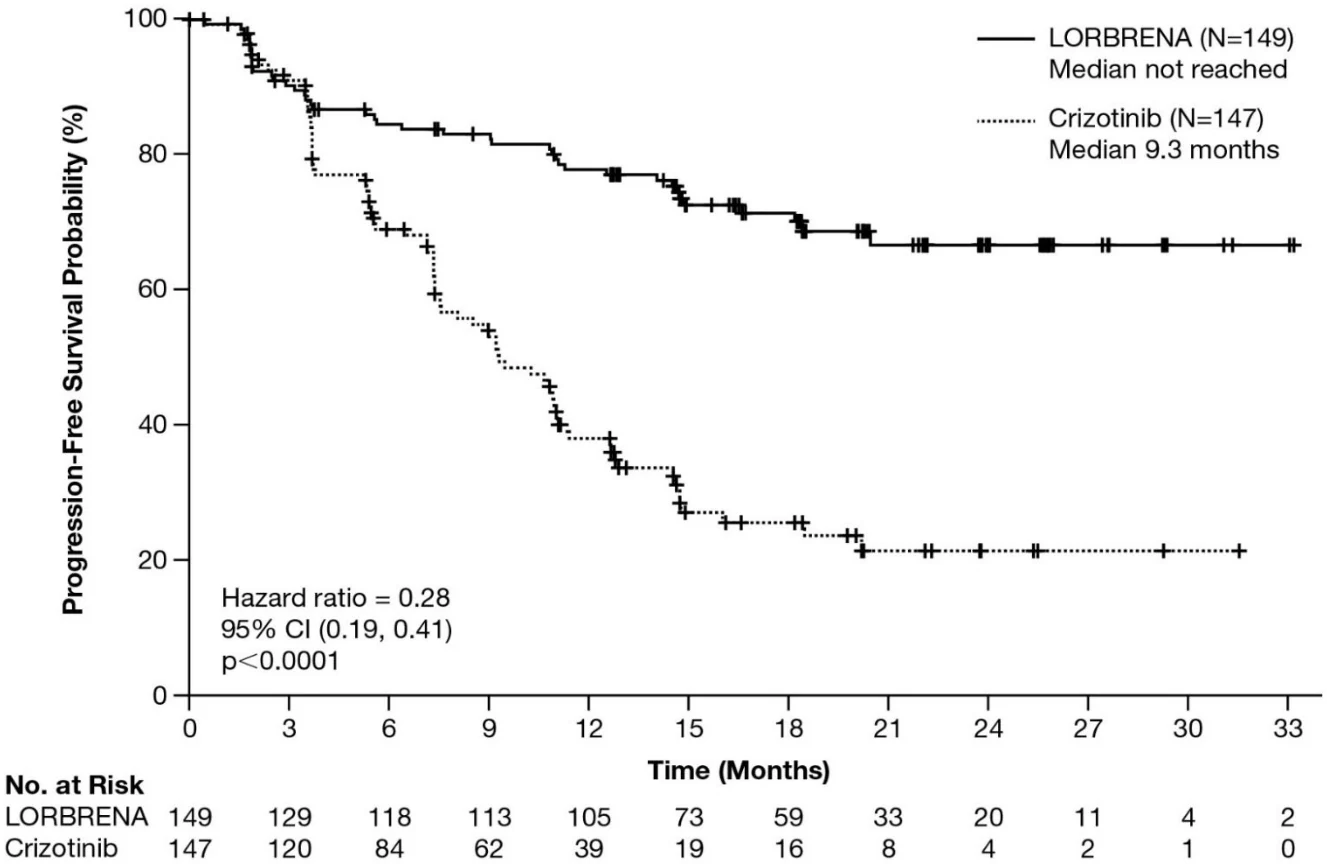
The results of prespecified, exploratory secondary analyses of intracranial response rate in 30 patients with measurable CNS lesions at baseline as assessed by BICR are summarized in Table 9.
Table 9. Intracranial Responses in Patients with Measurable Intracranial Lesions at Baseline in Study B7461006
| Intracranial Tumor Response Assessment | LORBRENA N=17 | Crizotinib N=13 | ||||
|---|---|---|---|---|---|---|
| Intracranial response rate (95% CI)a | 82% (57, 96) | 23% (5, 54) | ||||
| Complete response | 71% | 8% | ||||
| Duration of response | ||||||
| Number of responders, n | 14 | 3 | ||||
| Response duration ≥12 months, n (%) | 11 (79%) | 0 | ||||
Abbreviations: CI=confidence interval; N/n=number of patients. a Using exact method based on binomial distribution. | ||||||
Previously Treated ALK-Positive Metastatic NSCLC (Phase 1/2 Study B7461001)
Table 10. Summary of Patient Demographics for Clinical Trials in Previously Treated ALK-Positive Metastatic NSCLC
| Study # | Study design | Dosage, route of administration and duration |
| B7461001 | Single arm, multicenter Phase 1/2 study | LORBRENA orally at the recommended dose of 100 mg once daily, continuously |
The use of LORBRENA in the treatment of ALK positive advanced NSCLC previously treated with 1 or more ALK TKIs was investigated in B7461001, a single arm, multicenter Phase 1/2 study. A total of 197 patients with ALK positive metastatic NSCLC previously treated with 1 or more ALK TKIs were enrolled in the Phase 2 portion of the study. Patients received LORBRENA orally at the recommended dose of 100 mg once daily, continuously.
Patients were required to have metastatic disease with at least 1 measurable target lesion according to Response Evaluation Criteria in Solid Tumors (RECIST) version 1.1 (v1.1), ECOG performance status of 0 to 2, and documented ALK rearrangement in tumor tissue as determined by fluorescence in situ hybridization (FISH) assay or by Immunohistochemistry (IHC). Patients with asymptomatic CNS metastases, including patients with stable or decreasing steroid use within 2 weeks prior to study entry, were eligible. Patients with severe, acute, or chronic psychiatric conditions including suicidal ideation or behavior were excluded.
Table 11 presents an overview of the patients in the different cohorts, pooled cohorts, and their respective sizes in the Phase 2 study portion.
Table 11. Efficacy Cohorts of ALK-Positive NSCLC Patients Assessed by ICR (Phase 2)
Study Portion
Cohort Name
Cohort Description
Total Number of Patients n
Patients with Brain Metastases at Baseline n
Phase 2
EXP-2:5
1 or more prior ALK TKI ± chemotherapy
197
132
EXP-4:5
2 or more prior ALK TKI ± chemotherapy
111
83
EXP-2:3A
Prior crizotinib only ± prior chemotherapy
59
37
Study Portion
Cohort Name
Cohort Description
Total Number of Patients n
Patients with Brain Metastases at Baseline n
EXP-3B
1 prior non-crizotinib ALK TKI ± chemotherapy
27
12
Abbreviations: ALK=anaplastic lymphoma kinase; EXP=expansion; ICR=independent central review; N/n=number of patients; N/A=not applicable; NSCLC=non-small-cell lung cancer; TKI=tyrosine kinase inhibitor.
Patient demographics of the 197 ALK positive advanced NSCLC patients previously treated with 1 or more ALK TKIs, were 117 (59%) female, 97 (49%) Caucasian, 70 (36%) Asian and the mean age was 53 years (range: 29 to 85 years) with 19% ≥ 65 years of age. The Eastern Cooperative Oncology Group (ECOG) performance status at baseline was 0 or 1 in 190 (97%) patients and 2 in 7 (4%) patients. Brain metastases were present at baseline in 123 (62%) patients. All 197 patients had received prior systemic therapy: 39 (20%) received 1, 55 (28%) received 2, 38 (19%) received 3 and 66 (34%) received 4 or more prior systemic therapies, respectively. Of the 197 patients: 87 (44%) received 1 prior ALK TKI, 65 (33%) received 2 prior ALK TKIs, and 46 (23%) received 3 or more prior ALK TKIs.
The primary efficacy endpoint in the Phase 2 portion of the study was objective response rate (ORR), including intracranial ORR, as per Independent Central Review (ICR) according to modified Response Evaluation Criteria in Solid Tumors (modified RECIST version 1.1). Secondary endpoints included duration of response (DOR), intracranial DOR, time to tumor response (TTR), and progression free survival (PFS).
The main efficacy results for study B7461001 are included in Tables Table 12 and Table 13.
Table 12. Efficacy Results in B7461001
| Efficacy Parameter | Pooled EXP-2:5 | ||
|---|---|---|---|
1 or more ALK TKIs (N = 197) | |||
Objective response ratea (95% CI)b Complete response, n Partial response, n | 47.2% [40.1, 54.4] 4 89 | ||
Duration of response Median, months (95% CI)c | NR (11.1, NR) | ||
Progression-free survival Median, months (95% CI)c | 7.4 (5.6, 11.0) | ||
Abbreviations: ALK=anaplastic lymphoma kinase; CI=confidence interval;
EXP=expansion; ICR=Independent Central Review; N/n=number of patients; NR=not reached;
TKI=tyrosine kinase inhibitor.
a Per ICR.
b Using exact method based on binomial distribution.
c Using the Brookmeyer Crowley method.
Table 13. Intracranial Efficacy Results in B7461001*
| Efficacy Parameter | Pooled EXP-2:5 | ||
|---|---|---|---|
1 or more ALK TKIs (N = 132) | |||
Objective response ratea (95% CI)b Complete response, n Partial response, n | 53.0% (44.2, 61.8) 35 35 | ||
Duration of response Median, Months (95% CI)c | 14.5 (NR, NR) | ||
*In patients with at least 1 measurable baseline brain metastasis Abbreviations: ALK=anaplastic lymphoma kinase; CI=confidence interval; DOR=duration of response; EXP=expansion; ICR=Independent Central Review; N/n=number of patients; NSCLC=non-small cell lung cancer; NR=not reached; ORR=objective response rate; PFS=progression-free survival; TKI=tyrosine kinase inhibitor. a Per ICR. b Using exact method based on binomial distribution. c Using the Brookmeyer Crowley method. | |||
Among the 93 patients with a confirmed objective response by ICR, the median time to response (TTR) was 1.4 months (range: 1.1 to 11.0 months). Among the 70 patients with a confirmed objective tumour response by ICR, the median intracranial TTR was 1.4 months (range: 1.1 to 6.2 months).
15. Microbiology
No microbiological information is required for this drug product.
16. Non-Clinical Toxicology
General Toxicology
The main toxicities observed were inflammation across multiple tissues (with increases in white blood cells), and changes in the pancreas (with increases in amylase and lipase), hepatobiliary system (with increases in liver enzymes), male reproductive system, cardiovascular system, kidneys and gastrointestinal tract, peripheral nerves and the central nervous system (potential for cognitive functional impairment) (approximately 4.6 to 21 times the human clinical exposure at 100 mg based on AUC for all toxicities). Changes in blood pressure and heart rate, and QRS and PR interval prolongation were also observed in animals after acute dosing (approximately 2.6 times the human clinical exposure at 100 mg after a single dose based on Cmax). All target organ findings with the exception of the hepatic bile duct hyperplasia (approximately 7.1 to 21 times the human clinical exposure at 100 mg based on AUC) were partially to fully reversible.
Carcinogenicity
Carcinogenicity studies have not been conducted with lorlatinib.
Genotoxicity
Lorlatinib was not mutagenic in a bacterial reverse mutation (Ames) assay. Lorlatinib induced micronuclei via an aneugenic mechanism in human lymphoblastoid TK6 cells in vitro and in the bone marrow of rats. The exposure of animals at the no observed effect level for aneugenicity was approximately 16.5 times human clinical exposure at 100 mg based on AUC.
Reproductive and developmental toxicology
Effects on male reproductive organs (testis, epididymis, and prostate) were observed in animals (approximately 3.9 to 1.6 times the human clinical exposure at 100 mg based on AUC). The effects on male reproductive organs were fully or partially reversible.
In embryo-fetal toxicity studies increased embryolethality, and lower fetal body weights were observed. Fetal morphologic abnormalities included rotated limbs, supernumerary digits, gastroschisis, malformed kidneys, domed head, high arched palate, and dilation of ventricles of the brain. The lowest doses with embryo-fetal effects in animals correlated with 0.6 to 1.1 times the human clinical exposure at 100 mg, based on AUC.