


Product Monograph - Xalkori
RECENT MAJOR LABEL CHANGES
| 4 Dosage and Administration | 04/2023 |
|---|---|
| 7 Warnings and Precautions | 04/2023 |
TABLE OF CONTENTS
Sections or subsections that are not applicable at the time of authorization are not listed.
RECENT MAJOR LABEL CHANGES ............................................................................................ 2
TABLE OF CONTENTS .............................................................................................................. 2
PART I: HEALTH PROFESSIONAL INFORMATION ...................................................................... 4
1 INDICATIONS ............................................................................................................... 4
1.1 Pediatrics ................................................................................................................ 4
1.2 Geriatrics ................................................................................................................ 4
2 CONTRAINDICATIONS ................................................................................................. 4
3 SERIOUS WARNINGS AND PRECAUTIONS BOX ............................................................ 5
4 DOSAGE AND ADMINISTRATION ................................................................................. 5
4.1 Dosing Considerations ............................................................................................ 5
4.2 Recommended Dose and Dosage Adjustment ....................................................... 5
4.4 Administration ........................................................................................................ 8
4.5 Missed Dose ........................................................................................................... 8
5 OVERDOSAGE .............................................................................................................. 8
6 DOSAGE FORMS, STRENGTHS, COMPOSITION AND PACKAGING ................................. 9
7 WARNINGS AND PRECAUTIONS .................................................................................. 9
7.1 Special Populations............................................................................................... 15
7.1.1 Pregnant Women ........................................................................................... 15
7.1.2 Breast-feeding ................................................................................................ 16
7.1.3 Pediatrics ........................................................................................................ 16
7.1.4 Geriatrics ........................................................................................................ 16
8 ADVERSE REACTIONS ................................................................................................ 17
8.1 Adverse Reaction Overview .................................................................................. 17
8.2 Clinical Trial Adverse Reactions ............................................................................ 17
8.3 Less Common clinical Trial Adverse Reactions ...................................................... 28
8.4 Abnormal Laboratory Findings: Hematologic, Clinical Chemistry and Other Quantitative Data ........................................................................................................... 29
8.5 Post-market Adverse Reactions ............................................................................ 31
9 DRUG INTERACTIONS ................................................................................................ 31
9.2 Drug Interactions Overview .................................................................................. 31
9.4 Drug-Drug Interactions ......................................................................................... 31
9.5 Drug-Food Interactions ......................................................................................... 35
9.6 Drug-Herb Interactions ......................................................................................... 36
9.7 Drug-Laboratory Test Interactions ........................................................................ 36
10 CLINICAL PHARMACOLOGY ....................................................................................... 36
10.1 Mechanism of Action ...................................................................................... 36
10.2 Pharmacodynamics ........................................................................................ 36
10.3 Pharmacokinetics ........................................................................................... 36
11 STORAGE, STABILITY AND DISPOSAL ......................................................................... 40
12 SPECIAL HANDLING INSTRUCTIONS ........................................................................... 40
PART II: SCIENTIFIC INFORMATION ....................................................................................... 41
13 PHARMACEUTICAL INFORMATION ............................................................................ 41
14 CLINICAL TRIALS ........................................................................................................ 41
14.1 Trial Design and Study Demographics ............................................................ 41
14.2 Study Results .................................................................................................. 44
15 MICROBIOLOGY ........................................................................................................ 54
16 NON-CLINICAL TOXICOLOGY ..................................................................................... 54
PATIENT MEDICATION INFORMATION .................................................................................. 56
PART I: HEALTH PROFESSIONAL INFORMATION
1 INDICATIONS
XALKORI (crizotinib) is indicated for
- use as monotherapy in patients with anaplastic lymphoma kinase (ALK)-positive locally advanced (not amenable to curative therapy) or metastatic non-small cell lung cancer (NSCLC).
- use in patients with ROS1-positive locally advanced (not amenable to curative therapy) or metastatic NSCLC.
Efficacy in patients with ROS1-positive NSCLC was based on objective response rate (ORR) and Duration of Response (DR) in a single arm study with a limited number of patients (N=53) including 7 patients who are treatment naïve.
Using a validated ALK or ROS1 assay, assessment for ALK-positive or ROS1-positive locally advanced or metastatic NSCLC should be performed by laboratories with demonstrated proficiency in the specific technology being utilized. Improper assay performance can lead to unreliable test results (see 14 CLINICAL TRIALS).
There are no data available demonstrating improvement in overall survival with XALKORI.
1.1 Pediatrics
Pediatrics (<18 years of age): No data are available to Health Canada; therefore, Health Canada has not authorized an indication for pediatric use. (see 7.1.3 Pediatrics).
1.2 Geriatrics
Geriatrics (≥65 years of age): Of the total ALK-positive NSCLC patients in clinical studies of XALKORI (n=1669), 16% were 65 years or older and 3.7% were 75 years or older. No overall differences in safety or efficacy was observed between these patients and patients <65 years. No starting dose adjustment is required for patients 65 years or older (see 7.1.4 Geriatrics). Of the 53 ROS1 positive NSCLC patients in single arm Study A8081001, 15 (28%) were 65 years or older.
2 CONTRAINDICATIONS
- Patients with congenital long QT syndrome or with a persistent Fridericia-corrected electrocardiogram interval (QTcF) of ≥500 msec (see 7 WARNINGS AND PRECAUTIONS, 8 ADVERSE REACTIONS).
- Patients with a known hypersensitivity to the active substance, crizotinib, or to any ingredient in the formulation or component of the container. For a complete listing, see 6 DOSAGE FORMS, STRENGTHS, COMPOSITION AND PACKAGING.
3 SERIOUS WARNINGS AND PRECAUTIONS BOX
Serious Warnings and Precautions
XALKORI (crizotinib) should only be prescribed and supervised by a qualified physician experienced in the use of anticancer agents. |
|---|
4 DOSAGE AND ADMINISTRATION
4.1 Dosing Considerations
ALK or ROS1 Testing
Prior to receiving therapy with XALKORI, patients must be tested and confirmed for either ALK-positive or ROS1-positive locally advanced or metastatic NSCLC using a validated ALK or ROS1 assay, respectively (see 14 CLINICAL TRIALS). Assessment for ALK-positive or ROS1-positive locally advanced or metastatic NSCLC should be performed by laboratories with demonstrated proficiency in the specific technology being utilized. Improper assay performance can lead to unreliable test results.
The following conditions should be taken into consideration for dose scheduling (see 4.2 Recommended Dose and Dosage Adjustment):
- Hematologic and non-hematologic toxicities
- QT interval prolongation
- Hepatic impairment
- Renal impairment
4.2 Recommended Dose and Dosage Adjustment
The recommended dose schedule of XALKORI (crizotinib) is 250 mg taken orally twice daily with or without food. Treatment should be continued as long as the patient is deriving clinical benefit from therapy.
For patients with moderate hepatic impairment (any AST and total bilirubin >1.5×ULN and ≤3×ULN), the starting XALKORI dose is recommended to be 200 mg twice daily. For patients with severe hepatic impairment (any AST and total bilirubin >3×ULN), the starting XALKORI dose is recommended to be 250 mg once daily.
The starting dose of XALKORI should be 250 mg once daily in patients with severe renal impairment (CLcr < 30 mL/min) not requiring peritoneal dialysis or hemodialysis.
Dose Modification
Dose reduction and/or treatment interruption may be required based on individual safety and tolerability.
The recommended dose reductions for patients treated with XALKORI 250 mg orally twice daily are:
- First dose reduction: XALKORI 200 mg taken orally twice daily
- Second dose reduction: XALKORI 250 mg taken orally once daily
- Permanently discontinue if unable to tolerate XALKORI 250 mg taken orally once daily
Dose modification guidelines for hematologic and non-hematologic toxicities are provided in Tables 1 and 2. For dose modifications in patients treated with a XALKORI dose lower than 250 mg twice daily, follow the recommendations in Table 1 and Table 2 accordingly.
Table 1. XALKORI Dose Modification – Hematologic Toxicitiesa
| CTCAEb Grade | XALKORI Dosing |
|---|---|
| Grade 3 | Withhold until recovery to Grade ≤2, then resume at the same dose schedule |
| Grade 4 | Withhold until recovery to Grade ≤2, then resume at the next lower dosec,d |
a. Except lymphopenia (unless associated with clinical events, e.g., opportunistic infections)
b. NCI Common Terminology Criteria for Adverse Events
c. In case of recurrence, withhold until recovery to Grade <2 or baseline, then resume at 250 mg taken orally once daily. Permanently discontinue in case of further Grade 4 recurrence.
d. For patients treated with 250 mg once daily or whose dose was reduced to 250 mg once daily, discontinue during evaluation.
Table 2. XALKORI Dose Modification – Non-Hematologic Toxicities
| CTCAEa Grade | XALKORI Dosing |
|---|---|
| Grade 3 or 4 ALT or AST elevation with Grade <1 total bilirubin | Withhold until recovery to Grade ≤1 or baseline, then resume at the next lower doseb,c |
| Grade 2, 3 or 4 ALT or AST elevation with concurrent Grade 2, 3 or 4 total bilirubin elevation (in the absence of cholestasis or hemolysis) | Permanently discontinue |
| Any grade interstitial lung disease/pneumonitisd | Permanently discontinue |
Grade 3 QTc prolongation (≥500 msec) | Withhold until recovery to Grade <1 (≤ 470 msec), then resume at the next lower doseb,c |
Grade 4 QTc prolongation (≥500 msec [or >60 msec change from baseline] and Torsade de Pointes or | Permanently discontinue |
| polymorphic ventricular tachycardia, or signs/symptoms of serious arrhythmias) | |
|---|---|
| Grade 2, 3 Bradycardiae (symptomatic, may be severe and medically significant, medical intervention indicated) | Withhold until recovery to Grade ≤ 1 or to heart rate of 60 bpm or above Evaluate concomitant medications known to cause bradycardia, as well as anti-hypertensive medications If contributing concomitant medication is identified and discontinued, or its dose is adjusted, resume at previous dose upon recovery to Grade ≤ 1 or to heart rate of 60 bpm or above If no contributing concomitant medication is identified, or if contributing concomitant medications are not discontinued or dose modified, resume at reduced dose upon recovery to Grade ≤ 1 or to heart rate of 60 bpm or above |
| Grade 4 Bradycardiae,f (life-threatening consequences, urgent intervention indicated) | Permanently discontinue if no contributing concomitant medication is identified If contributing concomitant medication is identified and discontinued, or its dose is adjusted, resume at 250 mg once daily upon recovery to Grade ≤ 1 or to heart rate of 60 bpm or above, with frequent monitoring |
| Grade 4 Visual Loss | Discontinue during evaluation of severe vision loss |
a. NCI Common Terminology Criteria for Adverse Events
b. In case of recurrence, withhold until recovery to Grade <1 or baseline, then resume at 250 mg taken orally once daily. Permanently discontinue in case of further Grade 3 or 4 recurrence.
c. For patients treated with 250 mg once daily or whose dose was reduced to 250 mg once daily, discontinue during evaluation.
d. In the absence of NSCLC progression, other pulmonary disease, infection, or radiation effect
e. Heart rate less than 60 beats per minute (bpm).
f. Permanently discontinue for recurrence.
QT Interval Prolongation
In the event of a QTc of ≥500 msec (Grade 3), dosing with XALKORI should be withheld until recovery to Grade ≤1 (≤470 msec), then resumed at a reduced dose of 200 mg twice daily. Permanent discontinuation of XALKORI is recommended in the event of a Grade 4 QTc prolongation (≥500 msec [or >60 msec change from baseline] and Torsade de Pointes or polymorphic ventricular tachycardia, or signs/symptoms of serious arrhythmias). Machine-read QTc measurements may not be accurate. Consultation with a cardiologist should be considered when assessing the QTcF to ensure appropriate treatment decisions. Baseline ECG QTcF should be measured prior to initiating treatment with XALKORI and ECGs should be repeated periodically during treatment with XALKORI. Hypokalemia, hypomagnesemia, and hypocalcemia must be corrected prior to XALKORI administration. Serum levels of calcium, potassium, and magnesium should be monitored periodically during treatment, particularly in patients at risk for these electrolyte abnormalities (see 7 WARNINGS AND PRECAUTIONS).
Special Populations
Hepatic Impairment
Crizotinib is extensively metabolized in the liver. Treatment with XALKORI should be used with caution in patients with hepatic impairment. Based on the results from a clinical study in patients with advanced cancer and varying degrees of hepatic impairment (based on National Cancer Institute (NCI) classification), no starting dose adjustment of XALKORI is recommended for patients with mild hepatic impairment (either AST > Upper Limit of Normal (ULN) and total bilirubin ≤ULN or any AST and total bilirubin >ULN but ≤1.5×ULN). For patients with moderate hepatic impairment (any AST and total bilirubin >1.5×ULN and ≤3×ULN), the starting XALKORI dose is recommended to be 200 mg twice daily. For patients with severe hepatic impairment (any AST and total bilirubin >3×ULN), the starting XALKORI dose is recommended to be 250 mg once daily. (See 10 CLINICAL PHARMACOLOGY, Special Populations and Conditions, Hepatic Impairment.)
Renal Impairment
The starting dose of XALKORI should be reduced by 50% (250 mg once daily) in patients with severe renal impairment (CLcr < 30 mL/min) not requiring peritoneal dialysis or hemodialysis. No starting dose adjustment is recommended in patients with mild or moderate renal impairment (see 10 CLINICAL PHARMACOLOGY, Special Populations and Conditions, Renal Impairment).
No data are available for patients with severe renal impairment requiring peritoneal dialysis or hemodialysis (CLcr < 30 mL/min) (see 3 SERIOUS WARNINGS AND PRECAUTIONS BOX, and 10 CLINICAL PHARMACOLOGY).
Pediatrics
Health Canada has not authorized an indication for pediatric use.
4.4 Administration
Capsules should be swallowed whole.
4.5 Missed Dose
If a dose of XALKORI is missed, then it should be taken as soon as possible. If it is less than 6 hours until the next dose, then the patient should not take the missed dose. Patients should not take 2 doses at the same time to make up for a missed dose.
5 OVERDOSAGE
The recommended 250 mg BID dosing regimen was the maximum tolerated dose for XALKORI determined in a Phase 1 dose-escalation study in patients with advanced solid tumors. Treatment of overdose with XALKORI should consist of symptomatic treatment and other supportive measures. There is no antidote for XALKORI.
| For management of a suspected drug overdose, contact your regional poison control centre. |
|---|
6 DOSAGE FORMS, STRENGTHS, COMPOSITION AND PACKAGING
Table 3 – Dosage Forms, Strengths, Composition and Packaging
XALKORI (crizotinib) 250 mg capsules: Hard gelatin capsule, size 0, pink opaque/pink opaque, with “Pfizer” on the cap and “CRZ 250” on the body.
XALKORI (crizotinib) 200 mg capsules: Hard gelatin capsule, size 1, white opaque/pink opaque, with “Pfizer” on the cap and “CRZ 200” on the body.
XALKORI is supplied as bottles of 60 and PVC/aluminum foil blisters containing 60 capsules [6 cards of 10 (5 X 2) capsules].
7 WARNINGS AND PRECAUTIONS
Please see 3 SERIOUS WARNINGS AND PRECAUTIONS BOX.
Carcinogenesis and Mutagenesis
Crizotinib was genotoxic in non-clinical studies (see 16 NON-CLINICAL TOXICOLOGY, Carcinogenesis, Mutagenesis, Phototoxicity, Reproductive and Developmental Toxicity).
Carcinogenicity studies with crizotinib have not been performed.
Cardiovascular
Bradycardia
Symptomatic bradycardia (e.g. syncope, dizziness, hypotension) can occur in patients receiving XALKORI. In clinical trials of patients with ALK-positive or ROS1-positive NSCLC, bradycardia occurred in 13% of patients treated with XALKORI. A total of 16% of patients with at least 1 postbaseline vital sign assessment had a heart rate less than 50 beats per minute. In Study A8081014, Grade 3 syncope occurred in 0.6% of XALKORI-treated patients and in 1.2% of chemotherapy-treated patients. In Study
| Route of Administration | Dosage Form / Strength/Composition | Non-medicinal Ingredients |
| Oral | Capsule 200 mg and 250 mg of crizotinib | Anhydrous dibasic calcium phosphate, colloidal silicon dioxide, hard gelatin capsule shells, magnesium stearate, microcrystalline cellulose and sodium starch glycolate The pink opaque capsule shell components contain gelatin, titanium dioxide, and red iron oxide. The white opaque capsule shell components contain gelatin and titanium dioxide. The printing ink contains shellac, propylene glycol, strong ammonia solution, potassium hydroxide and black iron oxide. |
A8081007, Grade 3 syncope occurred in 3.5% of XALKORI-treated patients and in none of the chemotherapy-treated patients.
The full effect on reduction of heart rate may not develop until several weeks after start of treatment (see 7 WARNINGS AND PRECAUTIONS, Monitoring and Laboratory Tests; 8 ADVERSE REACTIONS, Electrocardiography and Haemodynamics). Caution should be exercised in patients with a low heart rate at baseline (<60 beats per minute), a history of syncope or arrhythmia, sick sinus syndrome, sinoatrial block, atrioventricular (AV) block, ischemic heart disease, or congestive heart failure. Avoid using crizotinib in combination with other bradycardic agents (e.g., beta-blockers, non-dihydropyridine calcium channel blockers such as verapamil and diltiazem, clonidine, digoxin) to the extent possible, due to the increased risk of symptomatic bradycardia. Monitor heart rate and blood pressure regularly (see 7 WARNINGS AND PRECAUTIONS, Monitoring and Laboratory Tests).
Permanently discontinue for life-threatening symptomatic bradycardia due to XALKORI. If contributing concomitant medication is identified and discontinued, hold XALKORI until recovery to asymptomatic bradycardia or to a heart rate of 60 bpm or above. Dose modification is not required in cases of asymptomatic bradycardia. For management of patients who develop symptomatic bradycardia, see 4 DOSAGE AND ADMINISTRATION and 7 WARNINGS AND PRECAUTIONS, Monitoring and Laboratory Tests.
QT Interval Prolongation
Prolongation of corrected QT interval without accompanying arrhythmia has been observed (see 7 WARNINGS AND PRECAUTIONS, Monitoring and Laboratory Tests, Electrocardiography and Hemodynamics, 8 ADVERSE REACTIONS).
Pharmacokinetic/pharmacodynamic modeling indicated a concentration-dependent increase in QTcF and decrease in heart rate (HR) (see 7 WARNINGS AND PRECAUTIONS, Monitoring and Laboratory Tests, Electrocardiography and Hemodynamics, 8 ADVERSE REACTIONS). In clinical trials of patients with ALK-positive or ROS1-positive NSCLC, electrocardiogram QT prolonged (all grades) was observed in 3.7% patients. QTcF greater than or equal to 500 msec on at least 2 separate ECGs was observed in 2.1% of patients with at least 1 postbaseline ECG assessment and a maximum increase from baseline QTcF greater than 60msec was observed in 5.0% of patients with a baseline and at least 1 postbaseline ECG assessment. XALKORI should be administered with caution to patients who have a history of, or a predisposition for QTc prolongation, or who are taking medications that are known to prolong the QT interval. When using XALKORI, periodic monitoring of electrocardiogram (ECG) QTc and electrolytes should be considered. In the event of a QTc ≥500 msec (Grade 3), dosing with XALKORI should be withheld until recovery to Grade ≤1 (≤470 msec), then resumed at a reduced dose of 200 mg twice daily. Permanent discontinuation of XALKORI is recommended in the event of a Grade 4 QTc prolongation (≥500 msec [or >60 msec change from baseline] and Torsade de Pointes or polymorphic ventricular tachycardia, or signs/symptoms of serious arrhythmias) (see 4.2 Recommended Dose and Dose Adjustment, Dose Modification and 8 ADVERSE REACTIONS).
QTc prolongation may lead to an increased risk of ventricular arrhythmias including Torsade de Pointes. Torsade de Pointes is a polymorphic ventricular tachyarrhythmia. Generally, the risk of Torsade de Pointes increases with the magnitude of QTc prolongation produced by the drug. Torsade de Pointes may be asymptomatic or experienced by the patient as dizziness, palpitations, syncope, or seizures. If sustained, Torsade de Pointes can progress to ventricular fibrillation and sudden cardiac death. Treatment with XALKORI is not recommended in patients with congenital long QT syndrome, or who are taking medicinal products known to prolong the QT interval (see 9 DRUG INTERACTIONS). Hypokalemia, hypomagnesemia, and hypocalcemia must be corrected prior to XALKORI administration.
Particular care should be exercised when administering XALKORI to patients who are suspected to be at an increased risk of experiencing Torsade de Pointes during treatment with a QTc-prolonging drug.
Risk factors for Torsade de Pointes in the general population include, but are not limited to, the following: female gender; age ≥65 years; baseline prolongation of the QT/QTc interval; presence of genetic variants affecting cardiac ion channels or regulatory proteins, especially congenital long QT syndromes; family history of sudden cardiac death at <50 years of age; cardiac disease; history of arrhythmias; electrolyte disturbances (e.g., hypokalemia, hypomagnesemia, hypocalcemia); bradycardia; acute neurological events (e.g., intracranial or subarachnoid haemorrhage, stroke, intracranial trauma); nutritional deficits; diabetes mellitus; and autonomic neuropathy.
When drugs that prolong the QT/QTc interval are prescribed, healthcare professionals should counsel their patients concerning the nature and implications of the ECG changes, underlying diseases and disorders that are considered to represent risk factors, demonstrated and predicted drug-drug interactions, symptoms suggestive of arrhythmia, risk management strategies, and other information relevant to the use of the drug.
Crizotinib is a functional antagonist of sodium, potassium, and calcium currents.
Thrombotic Events
Deep vein thrombosis was observed in 4.2% of patients in clinical trials of patients with ALK-positive or ROS1-positive NSCLC. Grade 5 treatment-related adverse events of disseminated intravascular coagulation and deep vein thrombosis in 2 patients (<1%) (1 patient each) (see 8 ADVERSE REACTIONS). XALKORI should be used with caution in patients who are at increased risk of thrombotic events. XALKORI has not been studied in patients who have had myocardial infarction, severe/unstable angina, coronary/peripheral artery bypass graft, congestive heart failure, or cerebrovascular accident including transient ischemic attack within the previous 3 months.
Cardiac Dysfunction
In clinical studies with XALKORI and during post marketing surveillance, severe, life-threatening, or fatal adverse reactions of cardiac failure were reported. Patients, with or without pre-existing cardiac disorders, receiving XALKORI, should be monitored for signs and symptoms of heart failure such as edema, dyspnea, rapid weight gain from fluid retention and chest pain. XALKORI has been associated with edema and dyspnea in clinical trials (see 8 ADVERSE REACTIONS). Dosing interruption, dose reduction, or discontinuation should be considered as appropriate if such symptoms are observed. Consideration should be given to the use of cardiac imaging methodologies to monitor cardiac function during XALKORI treatment.
Driving and Operating Machinery
Vision disorder, most commonly visual impairment, photopsia, vision blurred, and vitreous floaters, was experienced by 63% of patients in clinical trials of patients with ALK-positive or ROS1-positive NSCLC. Caution should be exercised when driving or operating machinery by patients who experience vision disorders.
Gastrointestinal
Nausea (57%), diarrhea (54%), vomiting (51%), and constipation (43%) were the most commonly reported gastrointestinal events in patients in clinical trials of NSCLC (see 8 ADVERSE REACTIONS). Most events were mild to moderate in severity. Median times to onset for nausea and vomiting was 3 days and declined in frequency after 3 weeks of treatment. GI events were manageable through the use of dosing interruption, dose reduction, and/or standard medical therapy. Supportive care may include the use of antiemetic medications. In clinical trials, the most commonly used antiemetic medications were ondansetron and prochlorperazine. Median times to onset for diarrhea and constipation were 13 and 17 days, respectively. Supportive care for diarrhea and constipation may include the use of standard antidiarrheal and laxative medications, respectively.
Hematologic
Neutropenia and leukopenia
In clinical studies with crizotinib in patients with either ALK-positive or ROS1-positive NSCLC, Grade 3 or 4 neutropenia has been very commonly (12%) reported. Grade 3 or 4 leukopenia has been commonly (3%) reported (see 8 ADVERSE REACTIONS). Less than 0.5% of patients experienced febrile neutropenia in clinical studies with crizotinib. Complete blood counts including differential white blood cell counts should be monitored as clinically indicated, with more frequent repeat testing if Grade 3 or 4 abnormalities are observed, or if fever or infection occurs (see 4 DOSAGE AND ADMINISTRATION).
Hepatic/Biliary/Pancreatic
Hepatic Impairment
Treatment with XALKORI should be used with caution in patients with hepatic impairment. Based on a clinical study, no starting dose adjustment of XALKORI is recommended for patients with mild hepatic impairment (either AST > Upper Limit of Normal (ULN) and total bilirubin ≤ULN or any AST and total bilirubin >ULN but ≤1.5×ULN). The starting XALKORI dose for patients with moderate hepatic impairment (any AST and total bilirubin >1.5×ULN and ≤3×ULN) is recommended to be 200 mg twice daily. The starting XALKORI dose for patients with severe hepatic impairment (any AST and total bilirubin >3×ULN) is recommended to be 250 mg once daily (see 4 DOSAGE AND ADMINISTRATION and 10.3 Pharmacokinetics).
Drug-induced hepatotoxicity, including hepatic failure, with fatal outcome has occurred in 2 (0.1%) of the 1722 patients treated with XALKORI in clinical trials of patients with ALK-positive or ROS1-positive NSCLC. Concurrent elevations in ALT and/or AST ≥3 x ULN and total bilirubin ≥2 x ULN without significant elevations of alkaline phosphatase (Hy’s Law) have been observed in 8 (<1%) of patients treated with XALKORI in clinical trials. Grade 3 or 4 ALT or AST elevations were observed in 11% and 6% of patients, respectively. Seventeen (1%) patients required permanent discontinuation from treatment associated with elevated transaminases. Transaminase elevations generally occurred within the first 2 months of XALKORI treatment.
Monitor with liver function tests including ALT, AST, and total bilirubin every 2 weeks during the first 2 months of treatment, then once a month and as clinically indicated, with more frequent repeat testing for Grades 2, 3 or 4 elevation in patients who develop transaminase elevations (see 4 DOSAGE AND ADMINISTRATION and 8 ADVERSE REACTIONS).
Monitoring and Laboratory Tests
Renal Monitoring
Creatinine levels should be assessed at baseline and monitored periodically during treatment with XALKORI.
Periodic monitoring with imaging and urinalysis should be considered in patients who develop renal cysts.
Liver Function Test Monitoring
Liver function tests including ALT and total bilirubin should be performed before XALKORI administration and monitored every 2 weeks during the first 2 months of treatment, then once a month and as clinically indicated, with more frequent repeat testing for Grades 2, 3 or 4 elevation. In patients who develop transaminase elevations, consult Dose Modification section (see 4.2 Recommended Dose and Dose Adjustment).
Cardiac Safety Monitoring
Patients receiving XALKORI should be monitored for heart rate and blood pressure. ECG evaluations should be performed at baseline prior to initiating therapy with XALKORI and should be repeated periodically during treatment with XALKORI, to monitor for decreased heart rate and QTc prolongation (see 7 WARNINGS AND PRECAUTIONS, Cardiovascular; 8 ADVERSE REACTIONS, Electrocardiography and Haemodynamics; 9 DRUG INTERACTIONS). Consultation with a cardiologist should be considered when assessing the QT interval to ensure appropriate treatment decisions.
Electrolyte levels (calcium, potassium, and magnesium) should be assessed at baseline and monitored periodically during treatment with XALKORI, particularly in patients at risk for these electrolyte abnormalities (see 7 WARNINGS AND PRECAUTIONS, Cardiovascular; 9 DRUG INTERACTIONS). Hypocalcemia, hypokalemia, and hypomagnesemia should be corrected prior to XALKORI administration.
Hematologic Monitoring
Complete blood counts including differential white blood cell counts should be monitored as clinically indicated, with more frequent repeat testing if Grade 3 or 4 abnormalities are observed, or if fever or infection occurs (see 4 DOSAGE AND ADMINISTRATION).
Neurologic
All-causality neuropathy (motor and sensory, see 8 ADVERSE REACTIONS) was experienced by 25% of patients treated with XALKORI and was mainly Grade 1 or 2 in severity. Median time of onset for neuropathy was 91 days. Neuropathy was effectively managed by dosing interruption with or without dose reduction. Dizziness (25%) and dysgeusia (21%) were also commonly reported in these studies and were primarily Grade 1 in severity.
Cerebral haemorrhage was reported in 7 (0.4%) of 1722 patients with ALK-positive or ROS1-positive NSCLC. Three cases were fatal. CNS haemorrhage has also been reported in 2 patients treated with crizotinib in a Phase 1/2 trial in pediatric patients, both of whom had previously treated primary intracranial tumors (not an authorized indication), 1 of whom had a fatal outcome.
Ophthalmologic
Vision Disorder
Vision disorder, most commonly visual impairment, photopsia, vision blurred, and vitreous floaters, was experienced by 63% of patients treated with XALKORI in clinical trials of patients with either ALK-positive or ROS1-positive advanced NSCLC. Of the 1084 patients who experienced vision disorder, 95% of these patients had Grade 1 visual adverse reactions. There were 5 (0.3%) of patients with a Grade 3 adverse reaction and 1 (0.1%) of patient with a Grade 4 adverse reaction. Seven (0.4%) of patients had a dose interruption and 2 (0.1%) of patients had a dose reduction associated with vision disorder. There were no permanent treatment discontinuations associated with vision disorder for any of the 1722 patients treated with crizotinib.
Based on the Visual Symptom Assessment Questionnaire (VSAQ-ALK), patients treated with XALKORI in Studies A8081007 and A8081014 reported a higher incidence of visual disturbances compared to patients treated with chemotherapy. The onset of vision disorder generally was within the first week of drug administration. The majority of patients on the XALKORI arms in Studies A8081007 and A8081014 (>50%) reported visual disturbances which occurred at a frequency of 4-7 days each week, lasted up to 1 minute, and had mild or no impact (scores 0 to 3 out of a maximum score of 10) on daily activities as captured in the VSAQ-ALK questionnaire.
Ophthalmological evaluation should be considered if vision disorder persists or worsens in severity. Caution should be exercised when driving or operating machinery by patients who experience vision disorder (see 16 NON-CLINICAL TOXICOLOGY).
Severe Visual Loss
In clinical trials of patients with ALK-positive or ROS1-positive NSCLC, the incidence of Grade 4 vision loss was 0.2% (4/1722). Optic atrophy and optic nerve disorder have been reported as potential causes of vision loss.
Discontinue XALKORI in patients with new onset of severe visual loss (best corrected vision less than 20/200 in one or both eyes). Perform an ophthalmological evaluation consisting of best corrected visual acuity, retinal photographs, visual fields, optical coherence tomography (OCT) and other evaluations as appropriate for new onset of severe visual loss. There is insufficient information to characterize the risks of resumption of XALKORI in patients with a severe visual loss; a decision to resume XALKORI should consider the potential benefits to the patient.
Renal
Renal Impairment
Based on a PK study, the starting dose of XALKORI should be reduced by 50% (250 mg once daily) in patients with severe renal impairment (CLcr < 30 mL/min) not requiring peritoneal dialysis or hemodialysis. No starting dose adjustment is recommended for patients with mild (CLcr 60-89mL/min) or moderate (CLcr 30-59 mL/min) renal impairment (see 4 DOSAGE AND ADMINISTRATION and 10 CLINICAL PHARMACOLOGY, Special Populations and Conditions, Renal Impairment).
No data available for patients with severe renal impairment requiring peritoneal dialysis or hemodialysis (CLcr < 30 mL/min) (see 3 SERIOUS WARNINGS AND PRECAUTIONS BOX).
Renal cyst was most commonly complex, and has been reported by 3% of patients treated with
XALKORI in clinical trials of patients with ALK-positive or ROS1-positive advanced NSCLC. There were no reports of clinically relevant abnormal urinalyses or renal impairment in these cases, although local invasion beyond the kidney was observed in some patients. The significance is unknown (see 8 ADVERSE REACTIONS). Renal cyst has been associated with permanent discontinuation in 3 (0.2%) patients. Periodic monitoring with imaging and urinalysis should be considered in patients who develop renal cysts.
Reproductive Health: Female and Maple Potential
- Fertility
Based on reproductive organ findings in toxicology studies, male and female fertility may be impaired by treatment with crizotinib (see 16 NON-CLINICAL TOXICOLOGY).
- Teratogenic Risk
XALKORI may cause fetal harm when administered to a pregnant woman. Crizotinib was shown to be fetotoxic but not teratogenic in pregnant rats and rabbits (see 16 NON-CLINICAL TOXICOLOGY; Carcinogenesis, Mutagenesis, Phototoxicity, Reproductive and Developmental Toxicity).
Respiratory
Interstitial Lung Disease/Pneumonitis
Severe, life-threatening or fatal interstitial lung disease (ILD)/pneumonitis can occur in patients treated with XALKORI. In ALK-positive and ROS1-positive clinical trials, 2.9% of XALKORI-treated patients had any grade ILD/pneumonitis, 1.1% had Grade 3 or 4 ILD/pneumonitis, and 8 patients (0.5%) had fatal cases of ILD/pneumonitis. These cases generally occurred within 3 months after the initiation of treatment. Patients should be monitored for pulmonary symptoms indicative of ILD/pneumonitis. Other potential causes of ILD/pneumonitis should be excluded, and XALKORI should be interrupted during these investigations. XALKORI should be permanently discontinued in patients diagnosed with treatment-related ILD/pneumonitis (see 4.2 Recommended Dose and Dose Adjustment, Dose Modifications and 8 ADVERSE REACTIONS
7.1 Special Populations
7.1.1 Pregnant Women
There are no adequate and well-controlled studies in pregnant women using XALKORI. XALKORI may cause fetal harm when administered to a pregnant woman. Crizotinib was shown to be fetotoxic but not teratogenic in pregnant rats and rabbits (see 16 NON-CLNICAL TOXICOLOGY; Carcinogenesis, Mutagenesis, Phototoxicity, Reproductive and Developmental Toxicity).
Women of childbearing potential should be advised to avoid becoming pregnant while receiving XALKORI. Adequate contraceptive methods should be used during therapy, and for at least 90 days after completing therapy.
If XALKORI is used during pregnancy, or if the patient or their partner becomes pregnant while receiving XALKORI, then the patient or their partner should be apprised of the potential hazard to the fetus or potential risk for loss of the pregnancy.
Male Patients
Adequate contraceptive methods should be used by men during therapy, and for at least 90 days after completing therapy. If the patient’s partner becomes pregnant while receiving XALKORI, then the patient and his partner should be apprised of the potential hazard to the fetus or potential risk for loss of the pregnancy.
7.1.2 Breast-feeding
There are no adequate and well-controlled studies in nursing women using XALKORI. It is not known whether crizotinib and its metabolites are excreted in human milk. Because many drugs are commonly excreted in human milk, and because of the potential harm to nursing infants due to exposure to crizotinib, a decision should be made whether to discontinue nursing or to discontinue the drug, taking into account the importance of the drug to the mother (see 16 NON-CLINICAL TOXICOLOGY).
7.1.3 Pediatrics
Pediatrics (<18 years of age): Based on the data submitted and reviewed by Health Canada, the safety and efficacy of XALKORI in pediatric patients has not been established; therefore, Health Canada has not authorized an indication for pediatric use.
Limited data are available on the use of XALKORI in pediatric patients. XALKORI has been studied in a total of 64 pediatric patients (range: 2.6 – 22 years) with advanced relapsed/refractory solid tumors or ALCL in a phase 1/2 study to explore the pharmacokinetics (PK), pharmacodynamics (PD), safety profile/tolerability and anti-tumor activity. The effectiveness of XALKORI in this pediatric population has not been established. CNS haemorrhage was reported in 2 patients in this trial, both of whom had previously treated primary intracranial tumors (not an authorized indication), 1 of whom had a fatal outcome.
7.1.4 Geriatrics
Geriatrics (≥65 years of age): Of the 171 XALKORI treated ALK-positive NSCLC patients in Study A8081014, 22 (13%) were 65 years or older, and 26 (24%) of the 109 patients who crossed over from chemotherapy to receive XALKORI were 65 years or older. Of the 172 XALKORI-treated ALK-positive NSCLC patients in Study A8081007, 27 (16%) were 65 years or older. Of the 154 patients in Study A8081001, 22 (14%) were 65 years or older. Of the 1063 ALK-positive NSCLC patients in Study A8081005, 173 (16%) were 65 years or older. For ALK-positive NSCLC patients, the frequency of adverse reactions was generally similar for XALKORI-treated patients less than 65 years of age and patients 65 years or older, (though the number of patients in the >65 group was small), with the exception of edema and constipation, which were reported with greater frequency in Study A8081014 among patients 65 years or older. Of the 53 ROS1-positive NSCLC patients in single arm Study A8081001, 15 (28%) were 65 years of older. The frequency of adverse reactions was generally similar for XALKORI-treated patients less than 65 years of age and patients 65 years or older, with the exception of treatment-related Dysgeusia and Nausea, which were reported with greater frequency in patients 65 years or older. Based on existing data, no overall differences in safety or efficacy were observed between these patients and patients <65 years. No starting dose adjustment is required for patients 65 years or older.
8 ADVERSE REACTIONS
8.1 Adverse Reaction Overview
The data described below reflect exposure to XALKORI in 1669 patients with ALK-positive advanced NSCLC who participated in randomized Phase 3 studies (Study A8081007 and A8081014) or in single-arm trials (Studies A8081001 and A8081005), and in 53 patients with ROS1-positive advanced NSCLC who participated in single arm Study 1001, for a total of 1722 patients. These patients received a starting oral dose of 250 mg taken twice daily continuously.
The most serious adverse drug reactions in 1722 patients with either ALK-positive or ROS1-positive advanced NSCLC are hepatotoxicity, ILD/pneumonitis, and QT interval prolongation (see 7 WARNINGS AND PRECAUTIONS). The most common all-causality adverse events (≥10%) of XALKORI are vision disorder, nausea, diarrhea, vomiting, edema, constipation, elevated transaminases, fatigue, decreased appetite, upper respiratory infection, dizziness, neuropathy, cough, dyspnea, neutropenia, dysgeusia, abdominal pain, headache, pyrexia, chest pain, back pain, anemia, leukopenia, stomatitis, asthenia, rash, bradycardia, insomnia, pain in extremity, disease progression, and arthralgia.
Treatment-emergent all-causality bradycardia was experienced by 219 (13%) of 1722 patients treated with XALKORI in clinical trials of patients with either ALK-positive or ROS1-positive advanced NSCLC. The majority of these cases were Grade 1 or 2 in severity. A total of 259 (16%) of 1666 patients with at least 1 postbaseline vital sign assessment had a pulse heart rate <50 bpm.
Across all XALKORI clinical studies, approximately 2100 patients have received XALKORI at a starting dose of 250 mg twice daily across various tumor types, the most common being NSCLC. The safety profile for these patients was consistent with that observed for the 1722 patients with either ALK-positive or ROS1-positive NSCLC.
8.2 Clinical Trial Adverse Reactions
Clinical trials are conducted under very specific conditions. The adverse reaction rates observed in the clinical trials; therefore, may not reflect the rates observed in practice and should not be compared to the rates in the clinical trials of another drug. Adverse reaction information from clinical trials may be useful in identifying and approximating rates of adverse drug reactions in real-world use.
Previously Untreated ALK-Positive Metastatic NSCLC - Study A8081014
The data in Table 4 are derived from 343 patients with ALK-positive metastatic NSCLC who had not received previous systemic treatment for advanced disease who enrolled in a randomized, multicenter, open-label, active-controlled trial (Study A8081014).
The safety analysis population in Study A8081014 included 171 patients who received XALKORI and 169 patients who received chemotherapy (91 pemetrexed/ cisplatin or 78 pemetrexed/carboplatin).
The median duration of study treatment was 10.9 months for patients in the XALKORI arm and 4.1 months for patients in the chemotherapy arm (a maximum of 6 cycles was permitted). Median duration of treatment was 5.2 months for patients who received XALKORI after cross over from chemotherapy. Across the 343 patients who were randomized to study treatment (340 received at least 1 dose of study treatment), the median age was 53 years; 87% of patients in the XALKORI arm and 81% of patients in the chemotherapy arm were younger than 65 years. A total of 61% of patients on XALKORI and 63% of chemotherapy patients were female. Forty-five percent (45%) of XALKORI-treated patients and 47% of chemotherapy-treated patients were Asian.
The most frequent (≥10%) all-causality ADRs for patients treated with XALKORI were vision disorder, diarrhea, nausea, edema, vomiting, constipation, elevated transaminases, decreased appetite, fatigue, dysgeusia, neutropenia, neuropathy, dizziness, bradycardia, dyspepsia, and rash.
The most common (≥1%) grade 3/4 all-causality ADRs for patients treated with XALKORI were elevated transaminases, neutropenia, fatigue, decreased appetite, diarrhea, vomiting, constipation, nausea, electrocardiogram QT prolonged, leukopenia, neuropathy, and bradycardia.
Serious adverse events were reported in 58 patients (33.9%) treated with XALKORI and 47 patients (27.8%) in the chemotherapy arm. The most frequent serious adverse events reported in patients treated with XALKORI were dyspnea (4.1%) and pulmonary embolism (2.9%). Fatal adverse events in XALKORI-treated patients occurred in 2.3% patients, consisting of septic shock, acute respiratory failure, and diabetic ketoacidosis.
Dose reductions due to adverse reactions were required in 11 (6.4%) of XALKORI-treated patients. The most frequent adverse reactions that led to dose reduction in these patients were nausea (1.8%) and elevated transaminases (1.8%).
Dose interruption/temporary discontinuation occurred in 44.3% of patients. The most frequent adverse events that led to dose interruption/temporary discontinuation were neutropenia (8.2%), alanine aminotransferase (6.0%), vomiting (4.8%), nausea (4.1%), aspartate aminotransferase increased (3.8%), pneumonia (3.2%), dyspnea (2.6%), neutrophil count decreased (2.5%), fatigue (2.1%), leukopenia (1.7%), oedema peripheral (1.7%), diarrhoea (1.4%), pyrexia (1.3%), decreased appetite (1.1%), and abdominal pain upper (1.0%).
In this study, 4.1% of patients permanently discontinued XALKORI treatment due to disease progression and 8.2% due to an adverse event. The most frequent adverse reactions that led to permanent discontinuation in XALKORI-treated patients were elevated transaminases (1.2%), hepatotoxicity (1.2%), and ILD (1.2%).
Table 4 summarizes common adverse events experienced by patients in both the XALKORI and chemotherapy arms of study A8081014.
Table 4. Adverse Drug Reactions Reported in Previously Untreated Patients with ALK-Positive NSCLC Who Received Crizotinib or Chemotherapy in Randomized Phase 3 Study A8081014*
| Adverse Reaction | Crizotinib (N=171) | Chemotherapy (N=169) | ||||||||||||
All Grades n (%) | Grade 3/4 n (%) | All Grades n (%) | Grade 3/4 n (%) | |||||||||||
Blood and Lymphatic System Disorders Neutropeniaa Leukopeniab | 36 (21) 12 (7) | 19 (11) 3 (2) | 51 (30) 26 (15) | 26 (15) 9 (5) | ||||||||||
Cardiac Disorders Bradycardiac Electrocardiogram QT prolonged Syncope | 23 (14) 10 (6) 1 (<1) | 2 (1) 4 (2) 1 (<1) | 1 (<1) 3 (2) 2 (1) | 0 (0) 0 (0) 2 (1) | ||||||||||
Eye Disorders Vision disorderd | 122 (71) | 1 (<1) | 16 (10) | 0 (0) | ||||||||||
Gastrointestinal Disorders Oesophagitise Vomiting Diarrhea Nausea Constipation Dyspepsia | 10 (6) 78 (46) 105 (61) 95 (56) 74 (43) 23 (14) | 3 (2) 3 (2) 4 (2) 2 (1) 3 (2) 0 (0) | 1 (1) 60 (36) 22 (13) 99 (59) 51 (30) 4 (2) | 0 (0) 5 (3) 1 (<1) 3 (2) 0 (0) 0 (0) | ||||||||||
| General Disorders and Administration Site Conditions Fatigue Oedemaf | 49 (29) 83 (49) | 5 (3) 1 (<1) | 65 (39) 21 (12) | 4 (2) 1 (<1) | ||||||||||
Hepatobiliary Disordersg Elevated transaminasesh Blood alkaline phosphatase increased | 61 (36) 4 (2) | 24 (14) 0 (0) | 22 (13) 2 (1) | 4 (2) 0 (0) | ||||||||||
Investigations Blood testosterone decreasedi | 1 (<1) | 0 (0) | 0 (0) | 0 (0) | ||||||||||
| Adverse Reaction | Crizotinib (N=171) | Chemotherapy (N=169) | |||||||||
All Grades n (%) | Grade 3/4 n (%) | All Grades n (%) | Grade 3/4 n (%) | ||||||||
Metabolism and Nutrition Disorders Decreased appetite | 51 (30) | 4 (2) | 57 (34) | 1 (<1) | |||||||
Nervous System Disorders Neuropathyj Dizzinessk Dysgeusia | 35 (21) 31 (18) 45 (26) | 2 (1) 0 (0) 0 (0) | 38 (23) 17 (10) 9 (5) | 0 (0) 2 (1) 0 (0) | |||||||
Renal and Urinary Disorders Renal cystl Blood creatinine increasedm | 8 (5) 8 (5) | 0 (0) 0 (0) | 1 (<1) 5 (3) | 0 (0) 0 (0) | |||||||
Respiratory, Thoracic and Mediastinal Disorders Interstitial lung diseasen | 2 (1) | 1 (<1) | 1 (<1) | 0 (0) | |||||||
Skin and Subcutaneous Tissue Disorders Rash | 18 (11) | 0 (0) | 19 (11) | 0 (0) | |||||||
Abbreviations: N=total number of patients; n=number of patients meeting prespecified criteria.
* The percentages of adverse drug reactions were based on the data cutoff date of 30 Nov 2013, with the exception of Blood creatinine increased, for which frequency was based on the data cutoff date of 15 Jul 2014.
Event terms that represent the same medical concept or condition were grouped together and reported as single adverse reaction in the table above. Terms actually reported in the study up to the data cutoff date and contributing to the relevant adverse reaction are indicated in parenthesis, as listed below.
a. Neutropenia (Febrile neutropenia, Neutropenia, Neutrophil count decreased).
b. Leukopenia (Leukopenia, White blood cell count decreased).
c. Bradycardia (Bradycardia, Sinus bradycardia).
d. Vision Disorder (Diplopia, Photophobia, Photopsia, Vision blurred, Visual acuity reduced, Visual field defect, Visual impairment, Vitreous floaters).
e Oesophagitis (Oesophagitis, Oesophageal ulcer)
f. Oedema (Face oedema, Generalised oedema, Local swelling, Localised oedema, Oedema, Oedema peripheral, Periorbital oedema).
g. There were no cases of hepatic failure in Study 1014.
h Elevated Transaminases (Alanine aminotransferase increased, Aspartate aminotransferase increased, Gamma-glutamyltransferase increased, Hepatic function abnormal, Transaminases increased).
i. Blood testosterone decreased (Hypogonadism).
j. Neuropathy (Dysaesthesia, Gait disturbance, Hypoaesthesia, Muscular weakness, Neuralgia, Neuropathy peripheral, Neurotoxicity, Paraesthesia, Peripheral sensory neuropathy, Polyneuropathy, Sensory disturbance).
k Dizziness (Balance disorder, Dizziness, Dizziness postural, Presyncope).
l. Renal Cyst (Renal cyst).
m. Blood creatinine increased (Blood creatinine increased).
n. Interstitial Lung Disease (Interstitial lung disease, Pneumonitis).
Additional adverse events that were observed during the clinical trial included upper respiratory infection (32%), abdominal pain (26%), pyrexia (19%), pain in extremity (16%), asthenia (13%), dysphagia (10%), anemia (8%), and stomatitis (6%).
Previously Treated ALK-Positive Metastatic NSCLC (Study A8081007)
The safety analysis population in Study A8081007 included 172 patients who received XALKORI and 171 patients who received chemotherapy (99 pemetrexed, 72 docetaxel). The median duration of study treatment was 11 months for patients on XALKORI and 3 months for patients on chemotherapy).
The most frequent (≥10%) all-causality ADRs for patients treated with crizotinib were vision disorder, edema, diarrhea, nausea, vomiting, constipation, elevated transaminases, decreased appetite, neutropenia, fatigue, dizziness, dysgeusia, neuropathy, leukopenia, and rash.
The most common (≥1%) grade 3/4 all-causality ADRs for patients treated with XALKORI were elevated transaminases, neutropenia, leukopenia, syncope, pneumonia, electrocardiogram QT prolonged, decreased appetite, constipation, nausea, vomiting, and fatigue.
Serious adverse events occurred in 76 (44%) patients on XALKORI, the most common of which were disease progression, pneumonia, pulmonary embolism and dyspnoea and 42 (25%) patients on chemotherapy, the most common of which was febrile neutropenia. Fatal adverse events in XALKORI-treated patients occurred in 6.4% patients, consisting of arrhythmia, interstitial lung disease, pneumonitis, dyspnea, sepsis/acute respiratory distress syndrome, cognitive disorder, death, pneumonia, pulmonary embolism, respiratory failure, sudden death, pericardial effusion, tumor hemorrhage.
Dosing interruptions due to adverse events occurred in 76 (44%) patients on XALKORI, the most common of which were neutropenia, ALT/AST increased, nausea and vomiting, and 28 (16%) patients on chemotherapy, the most common of which were fatigue and dizziness. Dose reductions due to adverse events occurred in 30 (17%) patients on XALKORI, the most common of which were elevated transaminases, electrocardiogram QT prolonged and neutropenia, and 25 (15%) patients on chemotherapy, the most common of which were neutropenia, fatigue and mucosal inflammation.
In this study, 9.9% of patients permanently discontinued XALKORI treatment due to progression and 13.4% due to an adverse event. The most frequent adverse reactions that led to permanent discontinuation in XALKORI-treated patients were interstitial lung disease/pneumonitis (2.3%), dyspnea (1.7%), elevated transaminases (2.4%), pulmonary embolism (1.2%), and pneumonia (1.2%).
Table 5 compares adverse drug reactions, regardless of causality, experienced by patients in the XALKORI and chemotherapy arms of Study A8081007.
Table 5. Adverse Drug Reactions Reported in Previously Treated Patients with ALK-Positive NSCLC Who Received XALKORI or Chemotherapy in Randomized Phase 3 Study A8081007*
Adverse Reactionb, n (%) | XALKORI (N=172) | Chemotherapy (N=171) | ||||||||||||
| All Grades | Grade 3/4 | All Grades | Grade 3/4 | |||||||||||
Blood and Lymphatic System Disorders Neutropeniaa Leukopeniaa | 54 (31) 38 (22) | 24 (14) 7 (4) | 40 (23) 23 (14) | 33 (19) 12 (7) | ||||||||||
Cardiac Disorders Electrocardiogram QT prolonged Bradycardiaa Syncope | 9 (5) 14 (8) 6 (4) | 6 (4) 0 (0) 6 (4) | 0 (0) 0 (0) 0 (0) | 0 (0) 0 (0) 0 (0) | ||||||||||
Eye Disorders Vision disordera | 108 (63) | 0 (0) | 15 (9) | 0 (0) | ||||||||||
Gastrointestinal Disorders Oesophagitisa Vomiting Nausea Diarrhea Constipation Dyspepsia | 4 (2) 90 (52) 100 (58) 108 (63) 82 (48) 15 (9) | 0 (0) 4 (2) 3 (2) 1 (1) 4 (2) 0 (0) | 0 (0) 32 (19) 64 (37) 34 (20) 39 (23) 6 (4) | 0 (0) 0 (0) 1(1) 1 (1) 0 (0) 0 (0) | ||||||||||
| General Disorders and Administration Site Conditions Fatigue Oedemaa | 52 (30) 74 (43) | 4 (2) 0 (0) | 60 (35) 28 (16) | 8 (5) 0 (0) | ||||||||||
Hepatobiliary Disorders Elevated transaminasesa Blood alkaline phosphatase increased Hepatic failure | 74 (43) 17 (10) 1 (1) | 31 (18) 1 (1) 1 (1) | 25 (15) 6 (4) 0 (0) | 4 (2) 0 (0) 0 (0) | ||||||||||
Infections and Infestations Upper Respiratory Infectiona | 54 (31) | 0 (0) | 23 (14) | 1 (1) | ||||||||||
Investigations Blood testosterone decreaseda | 1 (<1) | 0 (0) | 0 (0) | 0 (0) | ||||||||||
Metabolism and Nutritional Disorders Decreased appetite Hypokalemia | 55 (32) 15 (9) | 5 (3) 8 (5) | 47 (28) 5 (3) | 3 (2) 0 (0) | ||||||||||
Nervous System Disorder Neuropathya Dizzinessa Dysgeusia | 41 (24) 44 (26) 44 (26) | 1 (1) 1 (1) 0 (0) | 30 (18) 15 (9) 17 (10) | 2 (1) 0 (0) 0 (0) | ||||||||||
Adverse Reactionb, n (%) | XALKORI (N=172) | Chemotherapy (N=171) | |||||||||
| All Grades | Grade 3/4 | All Grades | Grade 3/4 | ||||||||
Renal and Urinary Disorders Renal cysta Blood creatinine increased a | 8 (5) 13 (8) | 0 (0) 0 (0) | 1 (1) 3 (2) | 0 (0) 0 (0) | |||||||
Respiratory, Thoracic and Mediastinal Disorders Interstitial lung diseasea Pulmonary Embolisma | 7 (4) 14 (8) | 1 (1) 12 (7) | 1 (1) 5 (3) | 0 (0) 4 (2) | |||||||
Skin and Subcutaneous Tissue Disorders Rash | 21 (12) | 0 (0) | 30 (18) | 0 (0) | |||||||
Abbreviations: N=total number of patients; n=number of patients meeting prespecified criteria.
* The percentages of adverse drug reactions were based on the data cutoff date of 30 Nov 2013, with the exception of Blood creatinine increased, for which frequency was based on the data cutoff date of 15 Jul 2014.
a. Event terms that represent the same medical concept or condition were grouped together and reported as single adverse reaction in the table above. Terms actually reported in the study up to the data cutoff date and contributing to the relevant adverse reaction are indicated in parenthesis, as listed below.
Neutropenia (Febrile neutropenia, Neutropenia, Neutrophil count decreased), Leukopenia (Leukopenia, White blood cell count decreased), Bradycardia (Bradyarrhythmia, Bradycardia, Heart rate decreased, Sinus arrest, Sinus bradycardia), Vision Disorder (Chromatopsia, Diplopia, Halo vision, Photophobia, Photopsia, Vision blurred, Visual acuity reduced, Visual brightness, Visual field defect, Visual impairment, Vitreous floaters), Oesophagitis (Oesophagitis), Oedema (Face oedema, Generalised oedema, Local swelling, Localised oedema, Oedema, Oedema peripheral, Periorbital oedema), Elevated Transaminases (Alanine aminotransferase, Alanine aminotransferase abnormal, Alanine aminotransferase increased, Aspartate aminotransferase, Aspartate aminotransferase abnormal, Aspartate aminotransferase increased, Gamma-glutamyltransferase abnormal, Gamma-glutamyltransferase increased, Hepatic function abnormal, Hepatic enzyme increased, Hepatic function abnormal, Hypertransaminasaemia, Liver function test abnormal, Transaminases, Transaminases abnormal, Transaminases increased), Upper respiratory infection (Laryngitis, Nasopharyngitis, Pharyngitis, Rhinitis, Upper respiratory tract infection), Blood testosterone decreased (Hypogonadism), Neuropathy (Acute polyneuropathy, Amyotrophy, Areflexia, Autoimmune neuropathy, Autonomic failure syndrome, Autonomic neuropathy, Axonal neuropathy, Biopsy peripheral nerve abnormal, Burning feet syndrome, Burning sensation, Decreased vibratory sense, Demyelinating polyneuropathy, Dysaesthesia, Electromyogram abnormal, Formication, Gait disturbance, Genital hypoaesthesia, Guillain-Barre syndrome, Hyperaesthesia, Hypoaesthesia, Hyporeflexia, Hypotonia, Ischaemic neuropathy, Loss of proprioception, Miller Fisher syndrome, Mononeuritis, Mononeuropathy, Mononeuropathy multiplex, Motor dysfunction, Multifocal motor neuropathy, Muscle atrophy, Muscular weakness, Myelopathy, Nerve conduction studies abnormal, Nerve degeneration, Neuralgia, Neuritis, Neuromuscular toxicity, Neuromyopathy, Neuropathy peripheral, Neuropathy vitamin B6 deficiency, Neurotoxicity, Paraesthesia, Peripheral motor neuropathy, Peripheral nerve lesion, Peripheral nerve palsy, Peripheral nervous system function test abnormal, Peripheral sensorimotor neuropathy, Peripheral sensory neuropathy, Peroneal muscular atrophy, Peroneal nerve palsy, Phrenic nerve paralysis, Polyneuropathy, Polyneuropathy chronic, Polyneuropathy idiopathic progressive, Radiation neuropathy, Sensorimotor disorder, Sensory disturbance, Sensory loss, Skin burning sensation, Temperature perception test decreased, Tinel’s sign, Toxic neuropathy, Ulnar neuritis), Dizziness (Balance disorder, Dizziness, Dizziness exertional, Dizziness postural, Presyncope), Renal Cyst (Renal abscess, Renal cyst, Renal cyst excision, Renal cyst haemorrhage, Renal cyst infection, Renal cyst ruptured), Blood creatinine increased (Blood creatinine increased), Interstitial Lung Disease (Acute interstitial pneumonitis, Acute lung injury, Acute respiratory distress syndrome, Alveolitis, Alveolitis allergic, Alveolitis necrotizing, Diffuse alveolar damage, Eosinophilic pneumonia, Eosinophilic pneumonia acute, Idiopathic pulmonary fibrosis, Interstitial lung disease, Pneumonitis, Pulmonary toxicity), Pulmonary embolism (Pulmonary artery thrombosis, Pulmonary embolism, Pulmonary thrombosis).
b. Adverse reaction incidences were not adjusted for the difference in duration of study treatment; median was 11 months for patients who received XALKORI and 3 months for patients who received chemotherapy.
The following treatment-related Serious Adverse Events (SAEs) were reported in XALKORI clinical studies:
Common Clinical Trial Treatment-Related SAEs (≥1% to <10%):
Vomiting, Pneumonia, Alanine aminotransferase increased, Aspartate aminotransferase increased, Electrocardiogram QT prolonged, Interstitial lung disease
Single-Arm Studies in ALK-Positive Advanced NSCLC (Studies A8081001 and A8081005)
The safety analysis population in Study A8081005 included 1063 patients with ALK-positive metastatic NSCLC who received XALKORI in a clinical trial. The median duration of treatment was 45 weeks. Dosing interruptions and dose reductions due to adverse events occurred in 476 (45%) patients and 192 (18%) of patients, respectively, in Study A8081005. The rate of adverse events resulting in permanent discontinuation was 202 (19%) patients. The most adverse reactions (≥25%) were vision disorder (60%), diarrhea (52%), nausea (56%), vomiting (53%), constipation (44%), edema (49%), elevated transaminases (30%), decreased appetite (30%), fatigue (30%), cough (27%), neuropathy (26%) and dyspnea (25%). The most common Grade 3 or 4 treatment-related adverse events (≥3%) were neutropenia, elevated transaminases and fatigue, hypophosphatemia, and leukopenia. The potentially serious adverse reactions of pneumonitis and QT interval prolongation are discussed in 7 WARNINGS AND PRECAUTIONS.
The safety analysis population in Study A8081001 included 154 patients in the ALK rearranged expansion cohort who received XALKORI. The median duration of treatment was 57 weeks. Dosing interruptions and dose reductions due to adverse events occurred in 73 (47%) patients, most common of which were ALT increased, pyrexia and pneumonia, and 18 (12%) patients, most common of which was ALT increased, respectively. The rate of adverse events resulting in permanent discontinuation was 24 (16%), most common of which was pneumonitis. The most common treatment-related adverse reactions (≥ 25%) are consistent with Studies A8081007 and A8081005, and were vision disorder, nausea, diarrhea, vomiting, edema, constipation, dizziness, fatigue, decreased appetite, rash, and neuropathy. The most common Grade 3 or 4 adverse reactions (>3%) in Study A8081001 were elevated transaminases, neutropenia, syncope, nausea, vomiting, edema, fatigue, and neuropathy.
Six unexplained deaths (<1%) occurred during treatment with XALKORI in these studies.
Table 6 Adverse Drug Reactions Reported at a Very Common Frequency (≥10%) in Patients with ALK-Positive Advanced NSCLC in Studies A8081001a* or A8081005a** – in at least 1 study
Adverse Reaction, n (%) | Study A8081001 RP2D (N=119) | Study A8081005 (N=934) | ||||||||
| All Grades | Grade 3/4 | All Grades | Grade 3/4 | |||||||
Blood and Lymphatic System Disorders Neutropeniab | 6 (5) | 4 (3) | 125 (13) | 72 (8) | ||||||
Eye Disorders Vision disorderb | 75 (63) | 0 (0) | 513 (55) | 4 (<1) | ||||||
Gastrointestinal Disorders Nausea | 59 (50) 57 (48) | 1 (1) 1 (1) | 476 (51) 432 (46) | 18 (2) 11 (1) | ||||||
Adverse Reaction, n (%) | Study A8081001 RP2D (N=119) | Study A8081005 (N=934) | ||||||||||
| All Grades | Grade 3/4 | All Grades | Grade 3/4 | |||||||||
Diarrhea Vomiting Constipation Dyspepsia | 48 (40) 45 (38) 14 (12) | 1 (1) 1 (1) 0 (0) | 433 (46) 356 (38) 55 (6) | 12 (1) 4 (<1) 0 (0) | ||||||||
General Disorders and Administration Site Conditions Edemab Fatigue | 43 (36) 30 (25) | 1 (1) 3 (3) | 360 (39) 239 (26) | 13 (1) 28 (3) | ||||||||
Investigations Elevated transminasesb | 24 (20) | 10 (8) | 221 (24) | 65 (7) | ||||||||
Renal and Urinary Disorders Blood creatinine increasedb | 3 (2) | 0 (0) | 102 (10) | 4 (<1) | ||||||||
Metabolism and Nutritional Disorders Decreased Appetite | 28 (24) | 1 (1) | 228 (24) | 7 (<1) | ||||||||
Nervous System Disorder Dizzinessb Neuropathyb Dysgeusia | 35 (29%) 24 (20) 10 (8) | 0 (0) 1 (<1) 0 (0) | 173 (19) 178 (19) 178 (19) | 4 (<1) 9 (1) 0 (0) | ||||||||
Respiratory, Thoracic and Mediastinal Disorders Dyspnoeabc Coughb | 22 (18) 16 (13) | 6 (5) 1 (1) | 184 (20) c 194 (21) | 43 (5) 3 (<1) | ||||||||
Skin and Subcutaneous Tissue Disorders Rash | 21 (18) | 0 (0) | 89 (10) | 1 (<1) | ||||||||
Abbreviations: RP2D: Recommended Phase 2 Dose N=total number of patients; n=number of patients meeting prespecified criteria.
* The percentages of adverse drug reactions from Study 1001 were based on 119 patients with the data cutoff date of 15 September 2010, with the exception of Blood creatinine increased, for which the percentage was based on 154 patients with the data cutoff date of 15 Jul 2014.
** The percentages of adverse drug reactions from Study 1005 were based on 934 patients with the data cutoff date of 15 February 2012, with the exception of Blood creatinine increased, for which the percentage was based on 1065 patients with the data cutoff date of 15 Jul 2014.
Event terms that represent the same medical concept or condition were grouped together and reported as single adverse reaction in the table above. Terms actually reported in the study up to the data cutoff date and contributing to the relevant adverse reaction are indicated in parenthesis, as listed below.
a. Study A8081001 used NCI Common Terminology Criteria for Adverse Events (CTCAE) version 3.0, and Study A8081005 used NCI CTCAE version 4.0
b. Cough (cough, productive cough), dizziness (balance disorder, dizziness, dizziness exertional, dizziness postural, presyncope), dyspnoea (dyspnoea, dyspnoea at rest, dyspnoea exertional, dyspnoea paroxysmal nocturnal, nocturnal dyspnoea, orthopnoea), edema (edema, edema peripheral, face oedema, generalized oedema, local swelling, localized oedema, oedema (edema), oedema peripheral (edema peripheral), periorbital oedema), elevated transaminases (alanine aminotransferase, alanine aminotransferase abnormal, alanine aminotransferase increased, aspartate aminotransferase, aspartate aminotransferase abnormal, aspartate aminotransferase increased, gamma-glutamyltransferase abnormal, gamma-glutamyltransferase increased, hepatic enzyme abnormal, hepatic enzyme increased, hepatic function abnormal, hypertransaminasaemia, liver function test abnormal, transaminases, transaminases abnormal, transaminases increased), blood creatinine increased (blood creatinine increased, creatinine renal clearance decreased), neuropathy (acute polyneuropathy, amyotrophy, areflexia, autoimmune neuropathy, autonomic failure syndrome, autonomic neuropathy, axonal neuropathy, biopsy peripheral nerve abnormal, burning feet syndrome, burning sensation, decreased vibratory sense, demyelinating polyneuropathy, dysaesthesia, electromyogram abnormal, formication, gait disturbance, genital hypoaesthesia, Guillain-Barre syndrome, hyperaesthesia, hypoaesthesia, hyporeflexia, hypotonia, ischaemic neuropathy, loss of proprioception, Miller Fisher syndrome, mononeuritis, mononeuropathy, mononeuropathy multiplex, motor dysfunction, multifocal motor neuropathy, muscle atrophy, muscular weakness, myelopathy, nerve conduction studies abnormal, nerve degeneration, neuralgia, neuritis, neuromuscular toxicity, neuromyopathy, neuropathy peripheral, neuropathy vitamin B6 deficiency, neurotoxicity, paraesthesia, peripheral motor neuropathy, peripheral nerve lesion, peripheral nerve palsy, peripheral nervous system function test abnormal, peripheral sensorimotor neuropathy, peripheral sensory neuropathy, peroneal muscular atrophy, peroneal nerve palsy, phrenic nerve paralysis, polyneuropathy, polyneuropathy chronic, polyneuropathy idiopathic progressive, radiation neuropathy, sensorimotor disorder, sensory disturbance, sensory loss, skin burning sensation, temperature perception test decreased, Tinel’s sign, toxic neuropathy, ulnar neuritis), neutropenia (febrile neutropenia, neutropenia, neutrophil count decreased), and vision disorder (diplopia, halo vision, photophobia, photopsia, vision blurred, visual field defect, visual impairment, vitreous floaters, visual acuity reduced, visual brightness).
c. Includes 6 Grade 5 events
Table 7 Adverse Drug Reactions Reported at a Common Frequency (≥1% to <10%) in Patients with ALK-Positive Advanced NSCLC in Studies A8081001a* and A8081005a**- in at least 1 study
Adverse Reaction, n (%) | Study A8081001 RP2D (N=119) | Study A8081005 (N=934) | |||
| All Grades | Grade 3/4 | All Grades | Grade 3/4 | ||
Blood and Lymphatic System Disorders Leukopenia Lymphopenia | 6 (5) 6 (5) | 0 (0) 3(3) | 58 (6) 34 (4) | 14 (2) 25 (3) | |
Cardiac Disorders Bradycardiab Electrocardiogram QT Prolonged | 8 (7) 1 (1) | 0 (0) 0 (0) | 57 (6) 25 (3) | 2(<1) 11 (1) | |
Gastrointestinal Oesophagitisb | 3 (2) | 0 (0) | 16 (2) | 0 (0) | |
Investigations Blood testosterone decreasedb | 15 (10) | 0 (0) | 11 (1) | 1 (<1) | |
Renal and Urinary Disorders Renal cystb | 0 (0) | 0 (0) | 12 (1) | 1 (<1) | |
Respiratory, Thoracic and Mediastinal Disorders Interstitial lung diseasebc | 3 (3) | 3(3) | 22 (2)c | 8 (1) | |
Vascular Disorders Hypotension | 6 (5) | 0 (0) | 36 (4) | 6 (<1) | |
* The percentages of adverse drug reactions from Study 1001 were based on 119 patients with the data cutoff date of 15 September 2010, with the exception of Blood creatinine increased, for which the percentage was based on 154 patients with the data cutoff date of 15 Jul 2014, and Oesophagitis and Blood testosterone decreased with the cutoff date of 30 Nov 2013.
** The percentages of adverse drug reactions from Study 1005 were based on 934 patients with the data cutoff date of 15 February 2012, with the exception of Blood creatinine increased, for which the percentage was based on 1065 patients with the data cutoff date of 15 Jul 2014, and Oesophagitis and Blood testosterone decreased for which the percentage was based on 1063 patients with the cutoff date of 30 Nov 2013.
RP2D: Recommended Phase 2 Dose
a. Study A8081001 used NCI Common Terminology Criteria for Adverse Events (CTCAE) version 3.0, and Study A8081005 used NCI CTCAE version 4.0
b. Blood testosterone decreased (Blood testosterone decreased, Hypogonadism, Secondary hypogonadism); Bradycardia (bradyarrhythmia, bradycardia, heart rate decreased, sinus bradycardia, sinus arrest), interstitial lung disease (acute interstitial pneumonitis, acute lung injury, acute respiratory distress syndrome, alveolitis, alveolitis allergic, alveolitis fibrosing, alveolitis necrotising, diffuse alveolar damage, eosinophilic pneumonia, eosinophilic pneumonia acute, interstitial lung disease, pneumonitis, pulmonary toxicity), Oesophagitis (Oesophagitis, Oesophageal ulcer), renal cyst (renal abscess, renal cyst, renal cyst excision, renal cyst haemorrhage, renal cyst infection, renal cyst ruptured).
c. Includes 1 Grade 5 event
The following treatment-related Serious Adverse Events (SAEs) were reported in XALKORI clinical studies:
Common Clinical Trial Treatment-Related SAEs (≥1% to <10%)
The following treatment-related SAE was reported with XALKORI treatment at a common frequency (≥1% to <10%): pneumonitis (2%).
Single-Arm Study in ROS1-Positive Advanced NSCLC (ROS1 Rearranged Expansion Cohort from Study A8081001)
The safety analysis population in Study A8081001 included 53 patients with ROS1 positive NSCLC who received XALKORI. The median duration of treatment was 101 weeks. All-causality adverse events associated with dosing interruptions and dose reductions occurred in 24 (45%) patients and 6 (11%) patients, respectively. All-causality adverse events associated with permanent discontinuation from treatment occurred in 4 (8%) patients with ROS1-positive NSCLC in Study A8081001. The most common adverse reactions (≥25%) in patients with ROS1-positive NSCLC from Study A8081001 were consistent with those seen in patients with ALK-positive advanced NSCLC and were vision disorder, nausea, edema, vomiting, diarrhea, constipation, dizziness, elevated transaminases, fatigue, neuropathy, bradycardia, and rash. The most common Grade 3 or 4 adverse reactions (>3%) were neutropenia, syncope, vomiting, elevated transaminases, and electrocardiogram QT prolonged.
Electrocardiography and Haemodynamics
ECG evaluations were performed in all patients who received XALKORI 250 mg twice daily. Serial ECGs in triplicate were collected following a single dose and at steady state to evaluate the effect of XALKORI on QT intervals. Crizotinib 250 mg twice daily was associated with a statistically significant decrease in heart rate during steady-state treatment (see 8 ADVERSE REACTIONS). At 6 hours post-dosing on Day 22 of treatment, heart rate was decreased by mean 15.9 beats per minute (90% CI: -17.9, -13.8) in 105 ALK-positive NSCLC patients in Study A8081005.
XALKORI 250 mg twice daily was also associated with a statistically significant prolongation of the QTcF interval (Fridericia-corrected QT interval) during steady-state treatment. At 6 hours post-dosing on Day
22 of treatment, the QTcF interval was prolonged by mean increase from baseline of 10.3 msec (90% CI: 7.3, 13.3). In clinical trials of patients with ALK-positive or ROS1-positive NSCLC (n=1722), electrocardiogram QT prolonged (all grades) was observed in 64 (3.7%) patients. QTcF greater than or equal to 500 msec on at least 2 separate ECGs was observed in 34 of 1619 (2.1%) patients with at least 1 postbaseline ECG assessment and a maximum increase from baseline QTcF greater than 60 msec was observed in 79 (5.0%) of 1585 patients with a baseline and at least 1 postbaseline ECG assessment.
An ECG substudy from Studies A8081005 and A8081007 using blinded manual ECG measurements was conducted in 52 ALK-positive NSCLC patients who received crizotinib 250 mg twice daily. A total of 11 (21.2%) patients and 1 (1.9%) patient had a maximum increase from baseline in QTcF of ≥30 msec to < 60 msec and ≥ 60 msec, respectively, and no patients had a maximum QTcF ≥ 480 msec in this analysis. The central tendency analysis indicated that the largest mean change from baseline in QTcF was 12.3 msec (90% CI: 5.1, 19.5) (least squares [LS] mean from Analysis of Variance [ANOVA]) and occurred at 6 hours post-dose on Cycle 2 Day 1 (steady state). All upper limits of the 90% CI for the LS mean change from baseline in QTcF at all Cycle 2 Day 1 time points were <20 msec. HR decreased with a maximum reduction of 17.8 (range: -51 to +9) beats per minutes after 8 hours on Cycle 2 Day 1 (last ECG collecting time point). Bradycardia was reported in 6 (9.2%) patients.
Pharmacokinetic/pharmacodynamic modeling indicated a concentration-dependent increase in QTcF and decrease in HR (see 7 WARNINGS AND PRECAUTIONS, Cardiovascular & Monitoring and Laboratory Tests; 9 DRUG INTERACTIONS; 4 DOSAGE AND ADMINISTRATION).
8.3 Less Common clinical Trial Adverse Reactions
The following treatment-related SAEs were reported with XALKORI treatment at an uncommon frequency (≥0.1% to <1%):
Study A8081007
Blood and Lymphatic System Disorders: Febrile neutropenia, Neutropenia
Cardiac Disorders: Arrhythmia, Cardiac arrest, Syncope
Gastrointestinal Disorders: Abdominal pain upper, Diarrhoea, Nausea
General Disorders and Administration Site Conditions: Fatigue, Pyrexia, Drug eruption
Hepatobiliary Disorders: hepatic failure, Hepatitis
Metabolism and Nutrition Disorders: Decreased appetite, Hypokalaemia
Renal and Urinary Disorders: Renal cyst,
Respiratory, Thoracic and Mediastinal Disorders: Acute respiratory failure, Pneumonitis,
Vascular Disorders: Pulmonary artery thrombosis, Pulmonary thrombosis, Pelvis venous thrombosis
Studies A8081001 and A8081005
Blood and Lymphatic System Disorders: febrile neutropenia (0.4%)
Cardiac Disorders: supraventricular tachycardia (0.4%)
Hepatobiliary Disorders: alanine aminotransferase increased (0.4%), hepatic enzyme increased (0.4%), liver function test abnormality (0.4%)
Gastrointestinal Disorders: constipation (0.4%), oesophageal ulcer (0.4%)
Respiratory, Thoracic and Mediastinal Disorders: dyspnoea (0.4%)
General Disorders and Administration Site Conditions: death (0.4%), haematoma (0.4%), oedema peripheral (0.4%)
Metabolism and Nutrition Disorders: hypokalaemia (0.4%), hyponatraemia (0.4%)
Infections and infestations: infection (0.4%), pneumonia (0.4%), renal abscess (0.4%)
There were no clinical trial SAEs that occurred at a rare frequency (≤0.1%).
8.4 Abnormal Laboratory Findings: Hematologic, Clinical Chemistry and Other Quantitative Data
Clinical Trial Findings
Table 8a. Summary of Treatment-Emergent Laboratory Abnormalities with Grade 3 or 4 Incidence of ≥4% in XALKORI-Treated Patients with ALK-positive previously untreated NSCLC– Study A8081014
| Laboratory Abnormality | XALKORI | Chemotherapy | ||
|---|---|---|---|---|
Any Grade (%) | Grade 3/4 (%) | Any Grade (%) | Grade 3/4 (%) | |
| Hematology | ||||
| Neutropenia | 52 | 11 | 59 | 16 |
| Lymphopenia | 48 | 7 | 53 | 13 |
| Chemistry | ||||
| ALT elevation | 79 | 15 | 33 | 2 |
| AST elevation | 66 | 8 | 28 | 1 |
| Hypophosphatemia | 32 | 10 | 21 | 6 |
| Additional laboratory test abnormality in patients treated with XALKORI was an increase in creatinine (Any Grade: 99%; Grade 3: 2%; Grade 4: 0%) compared to the chemotherapy arm (Any Grade: 92%; Grade 3: 0%; Grade 4: 1%). | ||||
Table 8b. Summary of Treatment-Emergent Laboratory Abnormalities with Grade 3 or 4 Incidence of ≥4% in XALKORI-Treated Patients with ALK-positive previously treated NSCLC – Study A8081007
| Laboratory Abnormality | Crizotinib | Chemotherapy | ||
|---|---|---|---|---|
Any Grade (%) | Grade 3/4 (%) | Any Grade (%) | Grade 3/4 (%) | |
| Hematology | ||||
| Neutropenia | 52 | 15 | 28 | 12 |
| Lymphopenia | 58 | 15 | 55 | 24 |
| White blood cell decreased | 55 | 5 | 36 | 8 |
| Chemistry | ||||
| ALT elevation | 79 | 18 | 40 | 5 |
| AST elevation | 69 | 9 | 33 | 1 |
| Hyperglycemia | 44 | 4 | 49 | 4 |
| Hypokalemia | 21 | 5 | 12 | 1 |
| Hypophosphatemia | 37 | 8 | 24 | 6 |
| Additional laboratory test abnormality in patients treated with XALKORI was an increase in creatinine (Any Grade: 96%; Grade 3: 1%; Grade 4: 0%) compared to the chemotherapy arm (Any Grade: 72%; Grade 3: 0%; Grade 4: 0%). | ||||
Table 8c. Summary of Treatment-Emergent Laboratory Abnormalities with Shift to Grade 3 or 4 Incidence of ≥4% in XALKORI-Treated Patients with ALK-positive NSCLC– Study A8081005
| Laboratory Abnormality | ||
|---|---|---|
| Shift to Any Grade | Shift to Grade 3/4 | |
| Hematology | ||
| Neutropenia | 38% | 8% |
| Lymphopenia | 48% | 15% |
| Chemistry | ||
| ALT elevation | 67% | 8% |
| Hypophosphatemia Hyponatremia | 30% 18% | 8% 5% |
Table 8d. Summary of Treatment-Emergent Laboratory Abnormalities with Shift to Grade 3 or 4 Incidence of ≥4% in XALKORI-Treated Patients with ALK-positive NSCLC – Study A8081001
| Laboratory Abnormality | ||
|---|---|---|
| Shift to Any Grade | Shift to Grade 3/4 | |
| Hematology | ||
| Lymphopenia | 35% | 11% |
| Chemistry | ||
| ALT elevation | 65% | 5% |
| Hypophosphatemia Hyponatremia Hyperglycemia | 42% 21% 44% | 5% 5% 4% |
Hepatic Laboratory Abnormalities
In clinical studies of XALKORI in patients with either ALK-positive or ROS1-positive NSCLC, shifts to Grade 3 or 4 ALT, AST, and alkaline phosphatase were observed in 187 (11%), 95 (6%), and 33 (2%) patients, respectively. Patients should be monitored for hepatotoxicity and managed as recommended in 7 WARNINGS AND PRECAUTIONS.
Drug-induced hepatotoxicity, including hepatic failure, with fatal outcome has occurred in 2 (0.1%) of the 1722 patients treated with XALKORI across clinical trials. Concurrent elevations in ALT and/or AST ≥3 x ULN and total bilirubin ≥2 x ULN without significant elevations of phosphatase (Hy’s Law) have been observed in 8 (<1%) patients treated with XALKORI in clinical trials. Grade 3 or 4 ALT or AST elevations were observed in 187 (11%) and 95 (6%) of patients, respectively. Seventeen (1%) patients required permanent discontinuation from treatment associated with elevated transaminases. Concurrent elevations in ALT >3 x ULN and total bilirubin >2 x ULN without elevated alkaline phosphatase were detected in <1% patients in clinical trials. Liver function tests including ALT, AST, and total bilirubin should be monitored every 2 weeks during the first 2 months of treatment, then once a month and as clinically indicated, with more frequent repeat testing for Grades 2, 3 or 4 elevation. In patients who develop transaminase elevations, see Dose Modification section under 4.2 Recommended Dose and Dosage Adjustment.
Renal Laboratory Abnormalities
In clinical studies of crizotinib in patients with ALK-positive advanced NSCLC, the estimated glomerular filtration rate (eGFR) decreased from a baseline median of 96.42 mL/min/1.73 m2 (n=1681) to a median of 80.23 mL/min/1.73 m2 at 2 weeks of treatment (n=1499). Median eGFR appeared to be relatively stable from 12 weeks of treatment (78.06 mL/min/1.73 m2, n=1338) through 104 weeks of treatment (75.45 mL/min/1.73 m2, n=315) and increased to 83.02 mL/min/1.73 m2 at 28 days after the last does of crizotinib (n=123).
Shifts to eGFR Grade 4 (15 to <30 mL/min/1.73 m2) or to eGFR Grade 5 (<15 mL/min/1.73 m2) were observed in 3% and <1% of patients, respectively.
Hematologic Effects
In clinical studies of XALKORI in patients with either ALK-positive or ROS1-positive advanced NSCLC, shifts to Grade 3 or 4 decreases in leukocytes and neutrophils were observed in 64 (4%) and 226 (13%) patients, respectively. Complete blood counts, including differential white blood cell counts, should be monitored as clinically indicated, with more frequent repeat testing if Grade 3 or 4 abnormalities are observed, or if fever or infection occurs. In patients who develop hematologic laboratory abnormalities, see Dose Modification section under 4 DOSAGE AND ADMINISTRATION.
8.5 Post-market Adverse Reactions
- The following ADR is derived from post-marketing experience with XALKORI. As this reaction is reported voluntarily from a population of uncertain size and also might be a class effect, it is not possible to reliably estimate its frequency which is therefore categorized as not known.
Investigation: Increased blood creatine phosphokinase
9 DRUG INTERACTIONS
9.2 Drug Interactions Overview
Crizotinib is a substrate and inhibitor of CYP3A and an inhibitor of CYP2B6. It is also a substrate and an inhibitor of P-glycoprotein (P-gp). The aqueous solubility of crizotinib is pH-dependent. Drug interactions were observed when crizotinib was co-administered with a strong CYP3A inhibitor, a strong CYP3A inducer, and a substrate of CYP3A. Drug interactions may occur when crizotinib is co-administered with other QTc-prolonging and heart rate-lowering drugs. The related findings and precautions are discussed further below.
9.4 Drug-Drug Interactions
Drugs That May Increase Crizotinib Plasma Concentrations
CYP3A Inhibitors
Crizotinib is predominantly metabolized by CYP3A. Co-administration of XALKORI with CYP3A inhibitors may increase crizotinib plasma concentrations. Co-administration of a single 150 mg oral dose of crizotinib in the presence of ketoconazole (200 mg twice daily), a strong CYP3A4 inhibitor, resulted in increases in crizotinib systemic exposure, with crizotinib AUCinf and Cmax values that were approximately 3.2-fold and 1.4-fold, respectively, to those seen when crizotinib was administered alone. Co-administration of XALKORI (250 mg once daily) with itraconazole (200 mg once daily), a strong CYP3A inhibitor, resulted in increases in crizotinib systemic exposure at steady-state. Steady-state AUCτ and Cmax were approximately 1.6-fold and 1.3-fold, respectively, to those observed when XALKORI was administered alone. The concomitant use of strong CYP3A inhibitors, including but not limited to, atazanavir, clarithromycin, indinavir, itraconazole, ketoconazole, nefazodone, nelfinavir, ritonavir, saquinavir, telithromycin, troleandomycin, and voriconazole, should be avoided (see 4 DOSAGE AND ADMINISTRATION). Physiologically-based pharmacokinetic (PBPK) simulations predicted a 17% increase in crizotinib steady-state AUC after treatment with the moderate CYP3A inhibitors (diltiazem or verapamil). Caution should be exercised when moderate CYP3A inhibitors are co-administered.
Drugs That May Decrease Crizotinib Plasma Concentrations
CYP3A Inducers
Co-administration of crizotinib with CYP3A inducers may decrease crizotinib plasma concentrations. Co-administration of crizotinib (250 mg twice daily) with rifampin (600 mg once daily), a strong CYP3A inducer, resulted in 84% and 79% decreases in crizotinib steady-state AUCtau and Cmax, respectively, compared to when crizotinib was given alone. The concurrent use of strong CYP3A inducers, including but not limited to, carbamazepine, phenobarbital, phenytoin, rifabutin, rifampin, and St. John’s wort, should be avoided (see 4 DOSAGE AND ADMINISTRATION).
Agents That Increase Gastric pH
The aqueous solubility of crizotinib is pH-dependent, with high (less acidic) pH resulting in lower solubility. The ratio of adjusted geometric means (90% CI) of crizotinib total exposure (AUCinf) was 89.81% (79.05%, 102.03%), following administration of crizotinib 250 mg relative to crizotinib 250 mg and esomeprazole (40 mg once daily × 5 days). Based on the extent of the change in total exposure, starting dose adjustment is not required when crizotinib is co-administered with agents that increase gastric pH (such as proton pump inhibitors, H2 blockers, or antacids).
Drugs Whose Plasma Concentrations May Be Altered by Crizotinib
The drugs listed in this table are based on either drug interaction case reports or studies, or potential interactions due to the expected magnitude and seriousness of the interaction (i.e., those identified as contraindicated).
Table 9 - Established or Potential Drug-Drug Interactions
| Crizotinib | Source of Evidence | Effect | Clinical comment |
CYP3A Substrates (e.g.: midazolam, alfentanil, cyclosporine, fentanyl, quinidine, sirolimus, and tacrolimus, dihydroergotamine, ergotamine, and pimozide) | C, T | Increased concentration | Crizotinib has been identified as an inhibitor of CYP3A both in vitro and in vivo. Crizotinib may increase plasma concentrations of co-administered CYP3A substrates. Following 28 days of crizotinib dosing at 250 mg taken twice daily in cancer patients, the oral midazolam AUCinf was 3.65-fold (90% CI: 2.63-5.07) those seen when midazolam was administered alone, suggesting that crizotinib is a moderate inhibitor of CYP3A. Caution should be exercised in administering crizotinib in combination with drugs that are predominantly metabolized by CYP3A, particularly those CYP3A substrates that have narrow therapeutic indices, including but not limited to alfentanil, cyclosporine, fentanyl, quinidine, sirolimus, and tacrolimus. Co-administration of crizotinib should be avoided with CYP3A substrates that have narrow therapeutic indices and are associated with life-threatening arrhythmias, including but not limited to dihydroergotamine, ergotamine, and pimozide. |
| CYP2B6 Substrates | T | Increased concentration | Crizotinib is an inhibitor of CYP2B6 in vitro. Therefore, crizotinib may have the potential to increase plasma concentrations of co-administered drugs that are predominantly metabolized by CYP2B6. |
| Crizotinib | Source of Evidence | Effect | Clinical comment |
| Other CYP Substrates | C | No effect | In vitro studies indicated that clinical drug-drug interactions are unlikely to occur as a result of crizotinib-mediated inhibition of the metabolism of drugs that are substrates for CYP1A2, CYP2C8, CYP2C9, CYP2C19 or CYP2D6. In vitro studies in human hepatocytes indicated that clinical drug-drug interactions are unlikely to occur as a result of crizotinib-mediated induction of the metabolism of drugs that are substrates for CYP1A2, CYP2B6, CYP2C8, CYP2C9, CYP2C19 or CYP3A |
UGT Substrates (e.g.: raltegravir, irinotecan, morphine, naloxone) | T | Increased concentration | Crizotinib is identified as a competitive inhibitor of UGT enzyme isoforms UGT 1A1 and UGT2B7 in vitro with IC50 values IC50 5.3 µM and 6.9 µM, respectively. Therefore, crizotinib may have the potential to increase plasma concentrations of co-administered drugs that are metabolized predominantly by UGT1A1 (e.g., raltegravir, irinotecan) or UGT2B7 (e.g. morphine, naloxone). |
| P-gp Substrates | T | Increased concentration | Crizotinib is an inhibitor of P-gp in vitro. Therefore, crizotinib may have the potential to increase plasma concentrations of co-administered drugs that are substrates of P-gp. |
| OCT Substrates | T | Increased concentration | Crizotinib is an inhibitor of OCT1 (IC50 = 2.4µM) and OCT2 (IC50 = 0.22µM) in vitro. Therefore, crizotinib may have the potential to increase plasma concentrations of co-administered drugs that are substrates of OCT1 or OCT2. |
Legend: C = Case Study; CT = Clinical Trial; T = Theoretical
Heart Rate-Lowering Drugs
Bradycardia has been reported in patients treated with XALKORI (see 7 WARNINGS AND PRECAUTIONS, Cardiovascular & Monitoring and Laboratory Tests; 8 ADVERSE REACTIONS, Electrocardiography and Haemodynamics). Avoid using crizotinib in combination with other bradycardic agents (e.g., beta-blockers, non-dihydropyridine calcium channel blockers, cholinesterase inhibitors, and sphingosine-1 phosphate receptor modulators) (including but not limited to atenolol, verapamil, diltiazem, clonidine, digoxin to the extent possible, due to the increased risk of symptomatic bradycardia (syncope, dizziness, hypotension).
The concomitant use of XALKORI with QT interval-prolonging drugs should be avoided to the extent possible (see 7 WARNINGS AND PRECAUTIONS, Cardiovascular & Monitoring and Laboratory Tests; 8 ADVERSE REACTIONS, Electrocardiography and Haemodynamics). Drugs that have been associated with QT interval prolongation and/or Torsade de Pointes include, but are not limited to, the examples in the following list. Chemical/pharmacological classes are listed if some, although not necessarily all, class members have been implicated in QT/QTc interval prolongation and/or Torsade de Pointes:
- Class IA antiarrhythmics (e.g., quinidine, procainamide, disopyramide)
- Class III antiarrhythmics (e.g., amiodarone, sotalol, ibutilide, dronedarone)
- Class 1C antiarrhythmics (e.g., flecainide, propafenone)
- antipsychotics (e.g., chlorpromazine, pimozide, haloperidol, droperidol, ziprasidone)
- antidepressants (e.g., fluoxetine, citalopram, venlafaxine, tricyclic/tetracyclic antidepressants [e.g., amitriptyline, imipramine, maprotiline])
- opioids (e.g., methadone)
- macrolide antibiotics and analogues (e.g., erythromycin, clarithromycin, telithromycin, tacrolimus)
- quinolone antibiotics (e.g., moxifloxacin, levofloxacin, ciprofloxacin)
- pentamidine
- antimalarials (e.g., quinine, chloroquine)
- azole antifungals (e.g., ketoconazole, fluconazole, voriconazole)
- domperidone
- 5-hydroxytryptamine (5-HT)3 receptor antagonists (e.g., dolasetron, ondansetron)
- tyrosine kinase inhibitors (e.g., sunitinib, nilotinib, lapatinib, vandetanib)
- histone deacetylase inhibitors (e.g., vorinostat)
- beta-2 adrenoceptor agonists (e.g., salmeterol, formoterol)
Drugs that Affect Electrolytes
The use of XALKORI with drugs that can disrupt electrolyte levels should be avoided to the extent possible. Drugs that can disrupt electrolyte levels include, but are not limited to, the following:
- loop, thiazide, and related diuretics
- laxatives and enemas
- amphotericin B
- high-dose corticosteroids
The above list of potentially interacting drugs is not comprehensive. Current information sources should be consulted for newly approved drugs that decrease heart rate, prolong the QT/QTc interval, or decrease electrolytes, as well as for older drugs for which these effects have recently been established.
9.5 Drug-Food Interactions
Grapefruit has CYP3A4 inhibitory activity. Therefore, ingestion of grapefruit while on XALKORI (crizotinib) therapy may increase crizotinib plasma concentrations. Concomitant administration of
XALKORI with grapefruit, grapefruit juice, products containing grapefruit extract, star fruit, pomegranate, Seville oranges, and other similar fruits that are known to inhibit CYP3A4 should be avoided.
9.6 Drug-Herb Interactions
St. John’s wort is a strong CYP3A4 inducer. Co-administration with XALKORI may decrease crizotinib plasma concentrations. Patients receiving XALKORI should not take St. John’s wort concomitantly.
9.7 Drug-Laboratory Test Interactions
Interactions with laboratory tests have not been established.
10 CLINICAL PHARMACOLOGY
10.1 Mechanism of Action
Crizotinib is a selective small-molecule inhibitor of the Anaplastic Lymphoma Kinase (ALK) receptor tyrosine kinase (RTK) and its oncogenic variants (i.e., ALK fusion events and selected ALK mutations). Crizotinib is also an inhibitor of the Hepatocyte Growth Factor Receptor (HGFR, c-Met) RTK, ROS (ROS1, c-ros), and Recepteur d’Origine Nantais (RON) RTKs.
10.2 Pharmacodynamics
Crizotinib demonstrated concentration-dependent inhibition of the kinase activity of ALK, ROS1, and c-Met in biochemical assays and inhibited phosphorylation and kinase-dependent phenotypes in cell-based assays. Crizotinib demonstrated potent and selective growth inhibitory activity and induced apoptosis in tumor cell lines exhibiting ALK fusion events (including echinoderm microtubule-associated protein-like 4 [EML4]-ALK and nucleophosmin [NPM]-ALK), ROS1 fusion events, or exhibiting amplification of the ALK or MET gene locus.
Crizotinib demonstrated antitumor efficacy, including marked cytoreductive antitumor activity, in mice bearing tumor xenografts that expressed ALK and ROS1 fusion proteins. The antitumor efficacy of crizotinib was dose-dependent and correlated to pharmacodynamic inhibition of phosphorylation of ALK (EML4-ALK or NPM-ALK) and ROS1 (CD74-ROS1 or EZR-ROS1) fusion proteins in tumors in vivo. Crizotinib also demonstrated marked antitumor activity in mouse xenograft studies, where tumors were generated using a panel of NIH 3T3 cell lines engineered to express key ROS1 fusions identified in human tumors. The antitumor efficacy of crizotinib was dose dependent and demonstrated a correlation with inhibition of ROS1 phosphorylation in vivo.
10.3 Pharmacokinetics
Table 10 - Summary of Crizotinib Pharmacokinetic Parameters in Healthy Volunteers in Fasted State
| Cmax | Tmax | t½ (h) | AUC0-∞ | CL | Vd | |
| Single dose mean (250mg) | 135 mg/mL | 5 hours | 42 hours | 2887 ng.hr/mL | 100 L/hr | - |
Absorption: In patients, following a single oral administration in the fasted state, crizotinib was absorbed with a median time to achieve peak concentrations (Tmax) of 4 hours (range: 2 to 9.33 hours) in patients. The systemic exposure (Cmax, Ctrough and AUCtau) appears to be greater than dose-proportional within the dose range of 200-300 mg twice daily. With twice daily dosing, steady state was achieved within 15 days with a median accumulation ratio of 4.8 (range: 3 to 13), and remained stable. The mean absolute bioavailability of crizotinib was determined to be 43% (range: 32%-66%) following the administration of a single 250 mg oral dose. Following oral administration of a single dose of a 250 mg XALKORI capsule to healthy volunteers in the fasted state, the median Tmax was 5 hours, and the geometric mean Cmax and AUC of crizotinib were 135 ng/mL and 2887 ng.hr/mL, respectively.
A high-fat meal reduced crizotinib AUCinf and Cmax by approximately 14% when a 250 mg single dose was given to healthy volunteers. XALKORI can be administered with or without food (see 4 DOSAGE AND ADMINISTRATION).
Distribution: The geometric mean volume of distribution (Vss) of crizotinib was 1772 L following intravenous administration of a 50 mg dose, indicating extensive distribution into tissues from the plasma. In non-clinical studies, tissues with the highest crizotinib and related metabolite concentrations were liver, uveal tract, adrenal gland, small intestine, and pituitary gland.
Binding of crizotinib to human plasma proteins in vitro is 91% and appears to be independent of drug concentration. In vitro studies suggested that crizotinib is a substrate for P-glycoprotein (P-gp).
Metabolism: In vitro studies demonstrated that CYP3A4/5 were the major enzymes involved in the metabolic clearance of crizotinib. The primary metabolic pathways in humans were oxidation of the piperidine ring to crizotinib lactam and O-dealkylation, with subsequent Phase 2 conjugation of O-dealkylated metabolites.
Crizotinib lactam (M10, PF-06260182) is approximately 2.5- and 7.7-fold less potent than crizotinib in inhibiting ALK and c-Met tyrosine kinases, respectively, in vitro. The O-desalkyl crizotinib (M4, PF-03255243) and O-desalkyl crizotinib lactam (M2, PF-06268935) are inactive against ALK and c-Met.
In vitro studies in human microsomes demonstrated that crizotinib is a time-dependent inhibitor of CYP3A and CYP2B6.
Elimination: Following a single 250 mg oral dose, the terminal half-life (t1/2) of crizotinib was 42 hours (% coefficient of variation [CV]: 21) in patients; the mean apparent clearance (CL/F) was 100 L/hr (%CV: 50). At steady state after 250 mg twice daily (Cycle 1 Day 15), the CL/F appeared to be lower (65 L/hr with % CV of 56). The reduced clearance at steady state may be due to autoinhibition of CYP3A by crizotinib following repeated dosing.
In a non-clinical study, delayed clearance of crizotinib was observed; tissues with the longest t1/2 values (range: 576 to 118 hours) were eye, epididymis, testis, pigmented skin, kidney cortex, and brown fat.
Following the administration of a single 250 mg radiolabeled crizotinib dose to healthy subjects, 63% and 22% of the administered dose was recovered in feces and urine, respectively. Unchanged crizotinib represented approximately 53% and 2.3% of the administered dose in feces and urine, respectively.
Special Populations and Conditions
Hepatic Impairment: Crizotinib is extensively metabolized in the liver. Patients with mild (either AST >ULN and total bilirubin ≤ULN or any AST and total bilirubin >ULN but ≤1.5×ULN), moderate (any AST and total bilirubin >1.5×ULN and ≤3×ULN), or severe (any AST and total bilirubin >3×ULN) hepatic impairment or normal (AST and total bilirubin ≤ULN) hepatic function (who were matched controls for mild or moderate hepatic impairment) were enrolled in an open-label, non-randomized clinical study (Study 1012), based on NCI classification.
Following XALKORI 250 mg twice daily dosing, patients with mild hepatic impairment (N=10) showed similar systemic crizotinib exposure at steady state compared to patients with normal hepatic function (N=8), with geometric mean ratios for area under the plasma concentration-time curve as daily exposure at steady state (AUCdaily) and Cmax of 91.1% and 91.2%, respectively. No starting dose adjustment is recommended for patients with mild hepatic impairment.
Following XALKORI 200 mg twice daily dosing, patients with moderate hepatic impairment (N=8) showed higher systemic crizotinib exposure compared to patients with normal hepatic function (N=9) at the same dose level, with geometric mean ratios for AUCdaily and Cmax of 150% and 144%, respectively. However, the systemic crizotinib exposure in patients with moderate hepatic impairment at the dose of 200 mg twice daily was comparable to that observed from patients with normal hepatic function at a dose of 250 mg twice daily, with geometric mean ratios for AUCdaily and Cmax of 114% and 109%, respectively.
The systemic crizotinib exposure parameters AUCdaily and Cmax in patients with severe hepatic impairment (N=6) receiving a XALKORI dose of 250 mg once daily were approximately 64.7% and 72.6%, respectively, of those from patients with normal hepatic function receiving a dose of 250 mg twice daily.
An adjustment of the dose of XALKORI is recommended when administering XALKORI to patients with moderate or severe hepatic impairment (see 7 WARNINGS AND PRECAUTIONS and 4 DOSAGE AND ADMINISTRATION).
Renal Impairment: The exposure to crizotinib was evaluated in patients with mild (CLcr 60-89 mL/min, N=226) and moderate (CLcr 30-59 mL/min, N=73) renal impairment enrolled in Studies A8081001 and A8081005. An evaluation on the baseline renal function status measured by CLcr on observed crizotinib steady state trough concentrations (Ctrough, ss) demonstrated that in Study A8081001, the adjusted geometric mean of plasma Ctrough, ss in mild (Ctrough, ss = 319 ng/mL, N=35) and moderate (Ctrough, ss = 338 ng/mL, N=8) renal impairment patients were 105.10% (90% CI: 92.90%, 118.91%) and 111.41% (90% CI: 90.17%, 137.66%), respectively, of those in patients with normal renal function (Ctrough, ss = 304 ng/mL, N=44). In Study A8081005, the adjusted geometric mean Ctrough, ss of crizotinib in mild (Ctrough, ss = 311 ng/mL, N=191) and moderate (Ctrough, ss = 328 ng/mL, N=65) renal impairment groups were 109.14% (90% CI: 102.08%, 116.68%) and 115.07% (90% CI: 104.08%, 127.23%), respectively, of those in patients with normal renal function (Ctrough, ss = 285 ng/mL, N=331). The population pharmacokinetic analysis from Studies A8081001, A8081005 and A8081007 indicated that baseline CLcr did not have a clinically relevant effect on crizotinib pharmacokinetics.
An open-label, single dose parallel-group study (A8081020) evaluated the effect of severe renal impairment on exposure to crizotinib. Eight subjects with normal renal function (CLcr ≥90 mL/min)
were matched 1-to-1 to 8 subjects with severe renal impairment not requiring dialysis (CLcr <30 mL/min) with respect to age (mean 61 vs. 63 years), weight (mean 84 vs. 86 kg) race (6 white and 2 black vs. 5 white and 3 black subjects), and sex (2 males and 6 females in each group). All subjects received a single oral crizotinib dose of 250 mg. The results of Study A8081020 are summarized in Table 11.
| Table 11. Statistical Summary of Crizotinib Plasma Exposures by Normal Renal Function and Severe Renal Impairment | ||||
| Parameter (units) | Adjusted Geometric Means | Ratio (Test/Reference) of Geometric Meansb | 90% CI for Ratio | |
| Test (Severe Renal Impairment)a | Reference (Normal Renal Function) | |||
| AUCinf (ng·hr/mL) | 2634 | 1467 | 179.48 | (126.80, 254.03) |
| AUClast (ng·hr/mL) | 2555 | 1402 | 182.18 | (128.05, 259.19) |
| Cmax (ng/mL) | 114.5 | 85.20 | 134.34 | (99.34, 181.65) |
Abbreviation: CI=confidence interval. a. One subject from severe renal impairment group was excluded in the analysis due to vomit episodes occurring at 1 hour post dose. b. The ratios (and 90% CIs) are expressed as percentages. | ||||
In subjects with severe renal impairment, crizotinib AUC and Cmax increased by 79% and 34%, respectively, compared to those with normal renal function. Based on these results, a starting dose reduction by 50% (250 mg once daily) is recommended when administering crizotinib to patients with severe renal impairment not requiring peritoneal dialysis or hemodialysis (see 7 WARNINGS AND PRECAUTIONS and 4.2 Recommended Dose and Dosage Adjustment, Special Populations).
No dedicated renal impairment study has been conducted in patients with mild (CLcr 60-89mL/min) or moderate (CLcr 30-59mL/min) renal impairment. Based on the population pharmacokinetic analysis described above, no starting dose adjustment is recommended in patients with mild or moderate renal impairment (see 7 WARNINGS AND PRECAUTIONS, and 4 DOSAGE AND ADMINISTRATION). No data are available for patients with end-stage renal disease.
Age: Based on the population pharmacokinetic analysis of pooled PK dataset from Studies A8081001, A8081005 and A8081007 containing 1214 patients with a mean (range) age of 51.8 years (19-83 years), age has no effect on crizotinib pharmacokinetics. Therefore, no starting dose adjustments of crizotinib are recommended based on age.
Pediatrics (range: 2-22 years): Limited data are available on the use of XALKORI in pediatric patients. XALKORI has been studied in a phase 1/2 trial, with 64 children who had solid tumors or anaplastic large cell lymphoma and had pharmacokinetic sampling after the first dose (n=15) of XALKORI or at steady state (n=49). Dose levels evaluated ranged from 100 to 365 mg/m2/dose administered twice daily. The effectiveness of XALKORI in this pediatric population has not been established.
Ethnic Origin: After 250 mg twice daily dosing, steady-state crizotinib Cmax and AUCt in Asian patients were 1.57- (90% CI: 1.16-2.13) and 1.50- (90% CI: 1.10-2.04) fold those seen in non-Asian patients, respectively. There was a higher incidence of Grade 3 or 4 adverse events in non-Asians (17%) than Asians (10%).
11 STORAGE, STABILITY AND DISPOSAL
XALKORI (crizotinib) should be stored at 25 °C with excursions to 15-30 °C.
12 SPECIAL HANDLING INSTRUCTIONS
No special requirements.
PART II: SCIENTIFIC INFORMATION
13 PHARMACEUTICAL INFORMATION
Drug Substance
Proper name: Crizotinib
Chemical name: (R)-3-[1-(2,6-Dichloro-3-fluorophenyl)ethoxy]-5-[1-(piperidin-4-yl)-1H-pyrazol-4-yl]pyridin-2-amine
Molecular formula and molecular mass: C21H22Cl2FN5O, 450.34 Daltons
Structural formula:
Physicochemical properties: Crizotinib is a white to pale yellow powder with a pKa of 9.4 (piperidinium cation) and 5.6 (pyridinium cation). The solubility of crizotinib in aqueous media decreases over the range pH 1.6 to pH 8.2 is from >10 mg/mL to <0.1 mg/mL. The log of the distribution coefficient (octanol/water) at pH 7.4 is 1.65.
14 CLINICAL TRIALS
14.1 Trial Design and Study Demographics
ALK-Positive Advanced NSCLC
Previously Untreated ALK-Positive Advanced NSCLC – Randomized Phase 3 Study (A8081014)
The use of single-agent XALKORI for the first-line treatment of ALK-positive advanced NSCLC in patients with or without brain metastases was investigated in a multicenter, multinational, randomized, open-label Phase 3 Study A8081014. The primary objective of this study was to demonstrate that XALKORI was superior to first-line standard-of-care platinum-based chemotherapy (pemetrexed-cisplatin or pemetrexed-carboplatin) in prolonging Progression-Free Survival (PFS) as assessed by independent radiology review (IRR) in patients with ALK-positive advanced NSCLC who had not received previous systemic treatment for advanced disease. Secondary objectives were to compare measures of clinical efficacy including Objective Response Rate (ORR) as assessed by IRR, Duration of Response (DR), Overall Survival (OS), Intracranial Time to Progression (IC-TTP) as assessed by IRR.
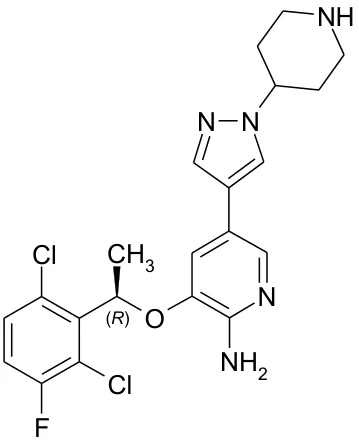
The full analysis population for Study A8081014 included 343 patients with ALK-positive advanced NSCLC as identified by Fluorescence In Situ Hybridization (FISH) prior to randomization. One hundred seventy-two (172) patients were randomized to the XALKORI arm (171 patients received XALKORI 250 mg orally twice daily) and 171 patients were randomized to the chemotherapy arm (169 patients received chemotherapy; 91 patients were treated with pemetrexed/cisplatin and 78 patients were treated with pemetrexed/carboplatin). Chemotherapy consisted of pemetrexed 500 mg/m2 in combination with cisplatin 75 mg/m2 or carboplatin at a dose calculated to produce an area under the concentration-time curve (AUC) of 5 or 6 mg • min/mL. Chemotherapy was given by intravenous infusion every 3 weeks for up to 6 cycles. The median duration of study treatment was 47 weeks in the XALKORI arm and 18 weeks in the chemotherapy arm. Patients could continue XALKORI treatment beyond the time of Response Evaluation Criteria in Solid Tumors (RECIST)-defined disease progression, as assessed by IRR, at the discretion of the investigator if the patient was still experiencing clinical benefit. Patients in the chemotherapy arm who completed 6 cycles were to continue in the study without further treatment, but have ongoing tumor assessments until RECIST-defined disease progression as determined by IRR. Patients in the chemotherapy arm who had RECIST-defined progression of disease as assessed by IRR had the option to receive XALKORI. One hundred forty-four (70%) patients received XALKORI after the randomization phase (128 patients through the crossover process and 16 patients as follow-up therapy).
Randomization was stratified by Eastern Cooperative Oncology Group (ECOG) performance status (0-1 vs 2), race (Asian vs non-Asian), and brain metastases (present vs absent).
Baseline demographic and disease characteristics were similar between the XALKORI and chemotherapy treatment arms with regard to gender (female: 61% vs 63% for XALKORI vs chemotherapy, respectively), median age (52 years vs 54 years), race (White: 53% vs 50%, and Asian: 45% vs 47%); smoking status (current smokers: 6% vs 3%, former smokers: 33% vs 32%, and never smokers: 62% vs 65%), metastatic disease (98% in both treatment arms), tumor histology (adenocarcinoma: 92% vs 93), performance status (ECOG 0 or 1: 95% vs 96%, and ECOG 2: 5% vs 4%), and brain metastases (present 26% vs 28%), prior surgeries (100% in both treatment arms), prior radiation therapy (36% vs 35%), and prior systemic therapies (7% vs 8%).
Previously Treated ALK-Positive Advanced NSCLC – Randomized Phase 3 Study (Study A8081007)
The use of single-agent XALKORI in the treatment of ALK-positive locally advanced or metastatic NSCLC with or without brain metastases was investigated in a multicenter, multinational, randomized, open-label Phase 3 study (A8081007). The clinical trial was designed as a superiority study that examined XALKORI 250 mg orally twice daily compared to standard-of-care chemotherapy (pemetrexed 500 mg/m2 or docetaxel 75 mg/m2) intravenously (IV) every 21 days in patients with ALK-positive advanced NSCLC who had received 1 prior chemotherapy regimen. Patients were required to have ALK-positive NSCLC as identified by FISH prior to randomization. Patients randomized to chemotherapy could cross over to receive XALKORI in Study A8081005 upon RECIST-defined disease progression confirmed by independent radiology review (IRR).The primary efficacy endpoint was PFS with disease progression events determined by IRR. Secondary endpoints included ORR as determined by IRR, DR, and OS.
The full analysis population for Study A8081007 included 347 patients with ALK-positive advanced NSCLC. One hundred seventy-three (173) patients were randomized to the XALKORI arm (172 patients received XALKORI) and 174 patients were randomized to the chemotherapy arm (99 [58%] patients received pemetrexed and 72 [42%] patients received docetaxel). Randomization was stratified by
ECOG performance status (0-1, 2), brain metastases (present, absent), and prior EGFR tyrosine kinase inhibitor treatment (yes, no). The median duration of study treatment was 31 weeks in the XALKORI arm as compared to 12 weeks in the chemotherapy arm.
Patients could continue treatment as assigned beyond the time of RECIST-defined disease progression, as assessed by IRR, at the discretion of the investigator if the patient was still experiencing clinical benefit.
Baseline demographic and disease characteristics for patients in this study were similar between the XALKORI and chemotherapy arms with regard to gender (female: 57% vs 55% for XALKORI vs chemotherapy, respectively), median age (51 years vs 49 years), race (White: 52% in both treatment arms, and Asian: 46% vs 45%), smoking status (current smokers: 3% vs 5%, former smokers: 34% vs 31%, and never smokers: 62% vs 64%), metastatic disease (95% vs 91%), tumor histology (adenocarcinoma: 94% vs 92%), performance status (ECOG 0 or 1: 89% vs 91%, ECOG 2: 11% vs 9%), and brain metastases (present: 35% in both treatment arms) and prior EGFR TKI (12% in both treatment arms).
Single-Arm Studies in ALK-Positive Advanced NSCLC (Studies A8081001 and A8081005)
The use of single-agent XALKORI (crizotinib) in the treatment of patients with ALK-positive advanced NSCLC with or without brain metastases was investigated in 2 multicenter, multinational, single-arm studies (Study A8081001 and Study A8081005) at a dose of 250 mg BID. Patients enrolled into these studies had received prior systemic therapy, with the exception of 16 patients (13%) in Study A8081001 and 3 patients in Study A8081005 who had no prior systemic treatment for locally advanced or metastatic disease. Patients received 250 mg of XALKORI orally twice daily.
The primary efficacy endpoint in both studies was ORR according to Response Evaluation Criteria in Solid Tumors (RECIST Version 1.0) as assessed by the investigator.
Secondary endpoints included DR, Time to Tumor Response (TTR), Disease Control Rate (DCR), PFS, and OS.
In Study 1001 (n=119), the demographic characteristics were 50% female; median age 51 years; baseline ECOG performance status of 0 or 1 (87%) or 2 (12%), 62% White and 29% Asian; <1% current smokers, 27% former-smokers, and 72% never smokers. The disease characteristics were 96% metastatic, 98% adenocarcinoma histology, prior radiation therapy (57%), and 13% with no prior systemic therapy for metastatic disease (0: 13%; 1: 24; 2: 19%; 3: 19%; ≥4: 25%).
In Study 1005 (n=934), the demographic characteristics were 57% female; median age 53 years; baseline ECOG performance status of 0/1 (82%) or 2/3 (18%), 52% White and 44% Asian; and, 4% current smokers, 30% former smokers, and 66% never smokers. The disease characteristics were 92% metastatic, 94% adenocarcinoma histology, prior radiation therapy (55%), and prior systemic therapy for metastatic disease (0: <1%; 1: 27%; 2: 34%; 3: 20%; ≥4: 19%).
ROS1-Positive Advanced NSCLC
The use of single-agent XALKORI in the treatment of ROS1-positive advanced NSCLC was investigated in a multicenter, multinational, single-arm Study A8081001. A total of 53 ROS1-positive advanced NSCLC patients were enrolled in the study at the time of data cutoff, including 46 patients with previously treated ROS1-positive advanced NSCLC and 7 patients who had no prior systemic treatment. The primary efficacy endpoint was ORR according to RECIST. Secondary endpoints included TTR, DR, PFS, and OS. Patients received XALKORI 250 mg orally twice daily.
The demographic characteristics were 57% female; median age 55 years; baseline ECOG performance status of 0 or 1 (98%) or 2 (2%), 57% White and 40% Asian; 25% former smokers, and 75% never smokers. The disease characteristics were 91% metastatic, 96% adenocarcinoma histology, and 13% with no prior systemic therapy for metastatic disease.
14.2 Study Results
ALK-Positive Advanced NSCLC
Previously Untreated ALK-Positive Advanced NSCLC – Randomized Phase 3 Study (A8081014)
XALKORI significantly prolonged PFS compared to chemotherapy as assessed by IRR. The median PFS values and ORRs of the treatment regimens of the chemotherapy arm (pemetrexed/cisplatin, pemetrexed/carboplatin) were similar. Based on final analysis of study A8081014, OS in the patients randomized to crizotinib vs those randomized to chemotherapy did not reach statistical significance. Efficacy data from randomized Phase 3 Study 1014 are summarized in Table 12, and the Kaplan-Meier curves for PFS and OS are shown in Figures 1 and 2, respectively.
For PFS, the benefit from crizotinib treatment was generally comparable across subgroups of baseline patient characteristics, including ECOG PS, brain metastases, age, gender, smoking status, histology, duration from primary diagnosis, race group, and extent of disease.
Table 12. Efficacy Results from Randomized Phase 3 Study 1014 (Full Analysis Population) in Patients With Previously Untreated ALK-Positive Advanced NSCLC*
| Response Parameter | XALKORI (N=172) | Chemotherapy (N=171) | ||||||||||||
|---|---|---|---|---|---|---|---|---|---|---|---|---|---|---|
| Progression-Free Survival (Based on IRR) | ||||||||||||||
| Number with event, n (%) | 100 (58%) | 137 (80%) | ||||||||||||
| Progressive Disease | 89 (52%) | 132 (77%) | ||||||||||||
| Death | 11 (6%) | 5 (3%) | ||||||||||||
| Median PFS in months (95% CI) | 10.9 (8.3, 13.9) | 7.0a (6.8, 8.2) | ||||||||||||
| HR (95% CI)b | 0.45 (0.35, 0.60) | |||||||||||||
| p-valuec | <0.0001 | |||||||||||||
| Overall Survivald | ||||||||||||||
| Number of deaths, n (%) | 71 (41%) | 81 (47%) | ||||||||||||
| Median OS in months (95% CI) | NR (45.8, NR) | 47.5 (32.2, NR) | ||||||||||||
| HR (95% CI)b | 0.76 (0.55, 1.05) | |||||||||||||
| p-valuec | 0.0978 | |||||||||||||
| Objective Response Rate (based on IRR) | ||||||||||||||
| Objective Response Rate % (95% CI) | 74% (67, 81) | 45%e (37, 53) | ||||||||||||
| CR, n (%) | 3 (1.7%) | 2 (1.2%) | ||||||||||||
| PR, n (%) | 125 (73%) | 75 (44%) | ||||||||||||
| p-valuef | <0.0001 | |||||||||||||
| Duration of Response | ||||||||||||||
| Monthsg (95% CI) | 11.3 (8.1, 13.8) | 5.3 (4.1, 5.8) | ||||||||||||
Abbreviations: N/n=number of patients; CI=confidence interval; HR=hazard ratio; IRR=independent radiology review; NR=not reached; PFS=progression-free survival; OS=overall survival; CR=complete response; PR=partial response.
* PFS, Objective Response Rate and Duration of Response are based on the data cutoff date of 30 November 2013; OS is based on the last patient last visit date of 30 November 2016, and represents a median follow up of approximately 46 months.
a. Median PFS times were 6.9 months (95% CI: 6.6, 8.3) for pemetrexed/cisplatin (HR=0.49; p-value <0.0001 for XALKORI compared with pemetrexed/cisplatin) and 7.0 months (95% CI: 5.9, 8.3) for pemetrexed/carboplatin (HR=0.45; p-value <0.0001 for XALKORI compared with pemetrexed/carboplatin).
b. Based on the Cox proportional hazards stratified analysis.
c. Based on the stratified log-rank test (2-sided).
d. Updated based on final OS analysis. OS analysis was not adjusted for the potentially confounding effects of crossover (144 [84%] patients in the chemotherapy arm received subsequent crizotinib treatment).
e. ORRs were 47% (95% CI: 37, 58) for pemetrexed/cisplatin (p-value <0.0001 compared with XALKORI) and 44% (95% CI: 32, 55) for pemetrexed/carboplatin (p-value <0.0001 compared with XALKORI).
f. Based on the stratified Cochran-Mantel-Haenszel test (2-sided).
g. Estimated using the Kaplan-Meier method.
Figure 1. Kaplan-Meier Curves for Progression-Free Survival (Based on IRR) by Treatment Arm in Randomized Phase 3 Study 1014 (Full Analysis Population) in Patients With Previously Untreated ALK-Positive Advanced NSCLC
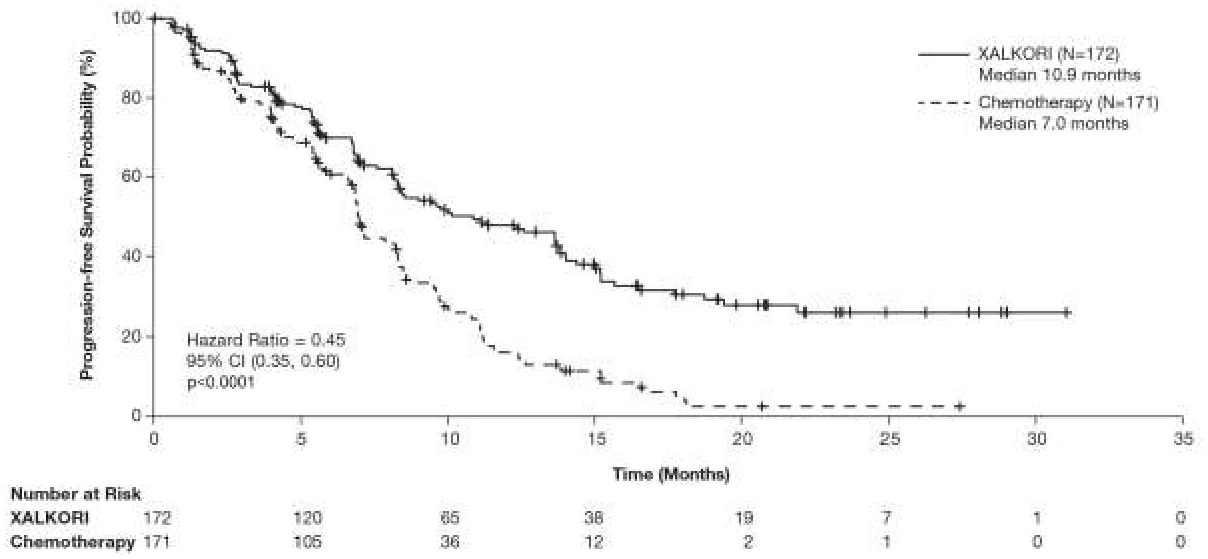
Figure 2. Kaplan-Meier Curves for Overall Survival by Treatment Arm in Randomized Phase 3 Study 1014 (Full Analysis Population) in Patients with Previously Untreated ALK-Positive Advanced NSCLC
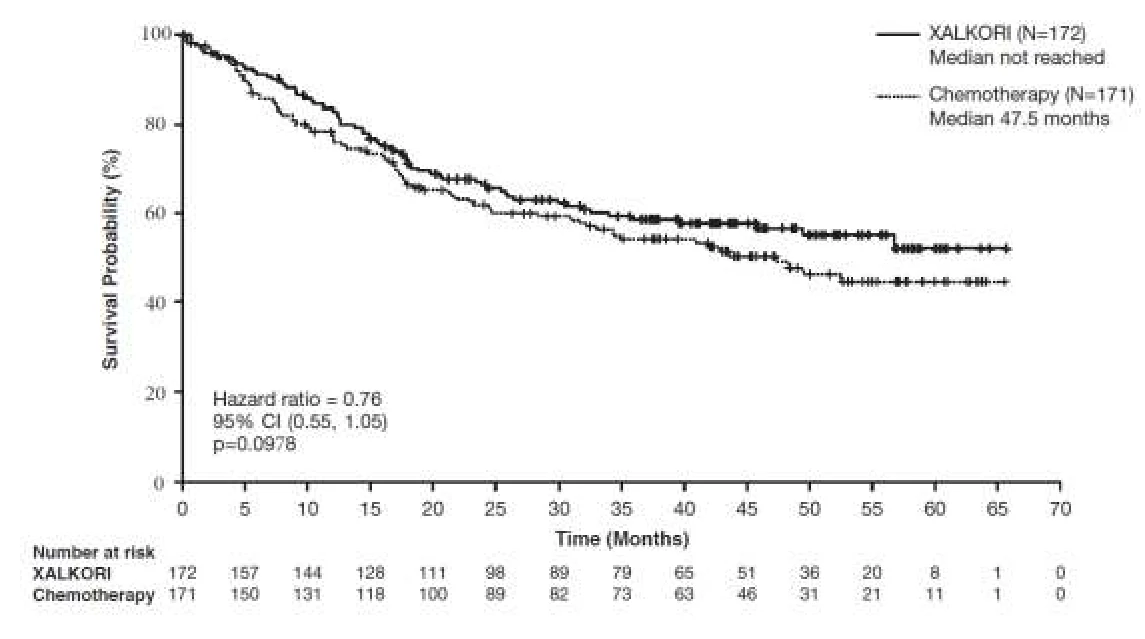
Previously Treated ALK-Positive Advanced NSCLC – Randomized Phase 3 Study (Study A8081007)
XALKORI significantly prolonged PFS compared to chemotherapy as assessed by IRR. The median PFS was 7.7 months for patients randomized to XALKORI and 3.0 months for patients randomized to chemotherapy. The number of PFS events in the XALKORI arm was 100 (58%) of which 84 (49%) were due to objective progression and 16 (9%) were due to death without objective progression and the number of PFS events in the chemotherapy arm was 127 (73%) of which 119 (68%) were due to objective progression and 8 (5%) were due to death without objective progression. The hazard ratio was 0.49 with a p-value of <0.0001 (2-sided log-rank test; HR based on the Cox proportional hazards model stratified by baseline ECOG performance status [0/1 vs 2], presence or absence of brain metastases and presence or absence of prior EGFR TKI treatment). The median PFS for patients treated with XALKORI was 7.7 months and 4.2 months for patients treated with pemetrexed. The hazard ratio was 0.59 with a p-value of 0.0004 (1-sided log-rank test; HR based on the Cox proportional hazards model stratified by baseline ECOG performance status [0/1 vs 2], presence or absence of brain metastases and presence or absence of prior EGFR TKI treatment). The median PFS for patients treated with XALKORI was 7.7 months and 2.6 months for patients treated with docetaxel. The hazard ratio was 0.30 with a p-value of <0.0001 (1-sided log-rank test; HR based on the Cox proportional hazards model stratified by baseline ECOG performance status [0/1 vs 2], presence or absence of brain metastases and presence or absence of prior EGFR TKI treatment).
XALKORI significantly improved IRR-assessed ORR as compared to chemotherapy with a p-value of <0.0001 (2-sided Cochran-Mantel-Haenszel test stratified by baseline ECOG performance status [0/1 vs 2], presence or absence of brain metastases and presence or absence of prior EGFR TKI treatment). The ORR for patients randomized to XALKORI was 65% (95% CI: 58%, 72%) and for patients randomized to chemotherapy was 20% (95% CI: 14%, 26%). The ORR for patients treated with XALKORI was 66% (95% CI: 58%, 73%) and 29% (95% CI: 21%, 39%) for patients treated with pemetrexed, with a p-value of <0.0001 (2-sided Cochran-Mantel-Haenszel test stratified by baseline ECOG performance status [0/1 vs 2], presence or absence of brain metastases and presence or absence of prior EGFR TKI treatment). The ORR for patients treated with XALKORI was 66% (95% CI: 58%, 73%) and 7% (95% CI: 2%, 16%) for patients treated with docetaxel, with a p-value of <0.0001 (2-sided Cochran-Mantel-Haenszel test stratified by baseline ECOG performance status [0/1 vs 2], presence or absence of brain metastases and presence or absence of prior EGFR TKI treatment).
Median DR was 32.1 weeks (95% CI: 26.4 weeks, 42.3 weeks) in the XALKORI arm and 24.4 weeks (95% CI: 15.0 weeks, 36.0 weeks) in the chemotherapy arm.
Based on the final analysis, the median OS was 21.7 months for patients randomized to XALKORI and 21.9 months for patients randomized to chemotherapy. The number of events in the XALKORI arm was 116 (67%) and the number of events in the chemotherapy arm was 126 (72%). The hazard ratio was 0.85 with a p-value of 0.2291 (2-sided log-rank test, based on the Cox proportional hazards model stratified by baseline ECOG performance status [0/1 vs 2], presence or absence of brain metastases and presence or absence of prior EGFR TKI treatment).
Efficacy data from Study A8081007 are summarized in Table 13, and the Kaplan-Meier curve for PFS is shown in Figure 3.
For PFS, the benefit from crizotinib treatment was generally comparable across subgroups of baseline patient characteristics, including ECOG PS, brain metastases, prior EGFR inhibitor treatment group, age, gender, smoking status, histology, duration from primary diagnosis, race group, and extent of disease.
Table 13. ALK-Positive Advanced NSCLC Efficacy Results from Study A8081007 (Full Analysis Population)
| Response Parameter | XALKORI (N=173) | Chemotherapy (N=174) | ||||||||||||
|---|---|---|---|---|---|---|---|---|---|---|---|---|---|---|
| Progression-Free Survival (Based on IRR) | ||||||||||||||
| Number with event, n (%) | 100 (58%) | 127 (73%) | ||||||||||||
| Progressive Disease | 84 (49%) | 119 (68%) | ||||||||||||
| Death | 16 (9%) | 8 (5%) | ||||||||||||
| Median PFS in months (95% CI) | 7.7 (6.0, 8.8) | 3.0a (2.6, 4.3) | ||||||||||||
| HR (95% CI)b | 0.49 (0.37, 0.64) | |||||||||||||
| p-valuec | <0.0001 | |||||||||||||
| Overall Survival | ||||||||||||||
| Number of deaths, n (%) | 116 (67%) | 126 (72%) | ||||||||||||
| Median OS in months (95% CI) | 21.7 (18.9, 30.5) | 21.9 (16.8, 26.0) | ||||||||||||
| HR (95% CI)b | 0.85 (0.66, 1.10) | |||||||||||||
| p-valuec | 0.2291 | |||||||||||||
| Objective Response Rate (based on IRR) | ||||||||||||||
| Objective Response Rate % (95% CI) | 65% (58, 72) | 20%d (14, 26) | ||||||||||||
| CR, n (%) | 1 (0.6%) | 0 | ||||||||||||
| PR, n (%) | 112 (65%) | 34 (20%) | ||||||||||||
| p-valuee | <0.0001 | |||||||||||||
| Duration of Response | ||||||||||||||
| Medianf, months (95% CI) | 7.4 (6.1, 9.7) | 5.6 (3.4, 8.3) | ||||||||||||
Abbreviations: N/n=number of patients; CI=confidence interval; HR=hazard ratio; IRR=independent radiology review; PFS=progression-free survival; OS=overall survival; CR=complete response; PR=partial response.
*PFS, ORR, and DR are based on a different data cutoff date (30 March 2012) than for OS (31 August 2015).
a. Median PFS times were 4.2 months (95% CI: 2.8, 5.7) for pemetrexed (HR=0.59; p-value=0.0004 for XALKORI compared with pemetrexed) and 2.6 months (95% CI: 1.6, 4.0) for docetaxel (HR=0.30; p-value <0.0001 for XALKORI compared with docetaxel).
b. Based on the Cox proportional hazards stratified analysis.
c. Based on the stratified log-rank test (2-sided).
d. ORRs were 29% (95% CI: 21, 39) for pemetrexed (p-value <0.0001 compared with XALKORI) and 7% (95% CI: 2, 16) for docetaxel (p-value <0.0001 compared with XALKORI).
e. Based on the stratified Cochran-Mantel-Haenszel test (2-sided).
f. Estimated using the Kaplan-Meier method.
Figure 3. Kaplan-Meier Curves for Progression-Free Survival (Based on IRR) by Treatment Arm in Study A8081007 (Full Analysis Population) in Patients With Previously Treated ALK-Positive Advanced NSCLC
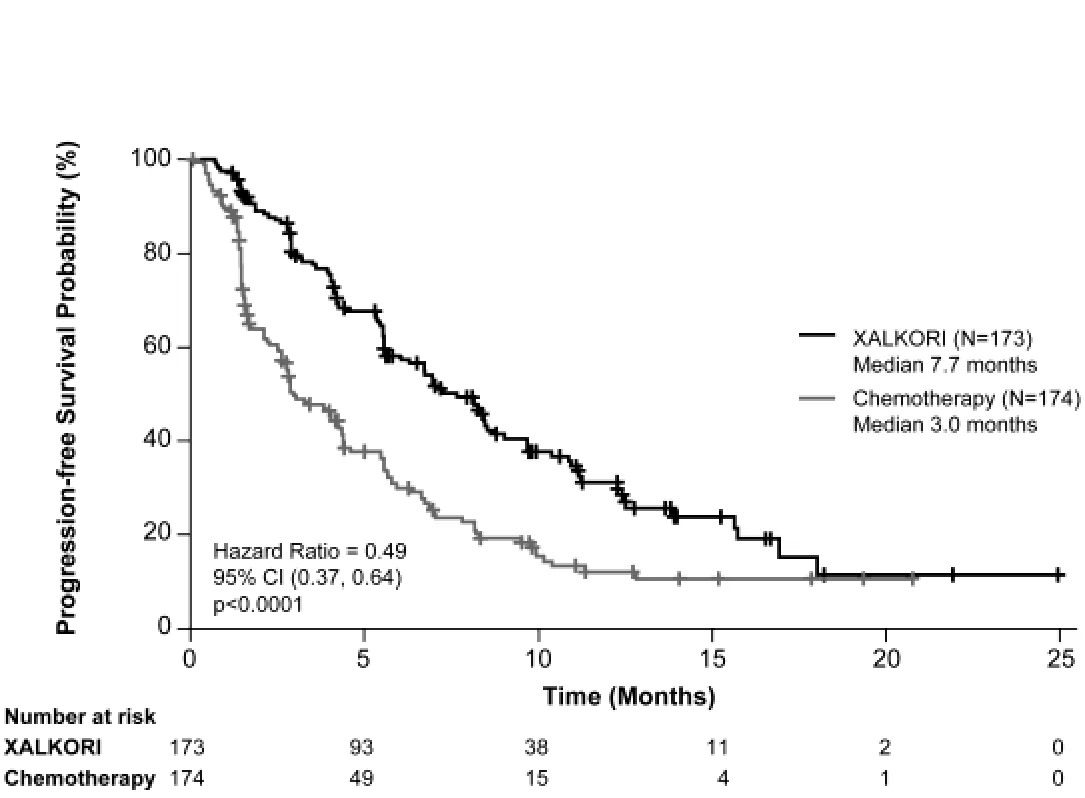
Single-Arm Studies in ALK-Positive Advanced NSCLC (Studies A8081001 and A8081005)
ALK-Positive Advanced NSCLC Study A8081001 Results
In Study A8081001, patients with advanced NSCLC were required to have ALK-positive tumors prior to entering the clinical trial. ALK-positive NSCLC was identified using a number of local clinical trial assays. One hundred nineteen (119) patients with ALK-positive advanced NSCLC were enrolled into Study A8081001 at the time of data cutoff. The median duration of treatment was 31.9 weeks.
Efficacy data from Study A8081001 are provided in Table 14. There were 2 confirmed complete responses and 69 partial responses for an ORR of 61% (95% CI: 52%, 70%). There were an additional 31 patients who had stable disease for a DCR at 8 weeks of 79%. Fifty-five percent (55%) of objective tumor responses were achieved during the first 8 weeks of treatment. The median DR was 48.1 weeks.
Table 14. ALK-Positive Advanced NSCLC Efficacy Results (Study A8081001)
| Efficacy Parameter | Study A8081001 (N=119)a |
| ORRb [% (95% CI)] | 61 (52, 70) |
| TTR [median (range)] weeks | 7.7 (4, 40) |
| DR [median (range) weeks] | 48.1 (4.1+, 76.6+) |
Abbreviations: CI=confidence interval; ORR=Objective response rate; TTR=time to tumor response; DR=duration of response.
a. Per data cutoff date 15 September 2010
b. Three patients were not evaluable for response
+Censored values
Figure 4. Waterfall Plot of Best Percent Change in Target Lesions from Baseline by Patient Based on Investigator Assessment in Study A8081001 (ALK-Positive NSCLC) (N*=106, cut-off date 15 September 2010)
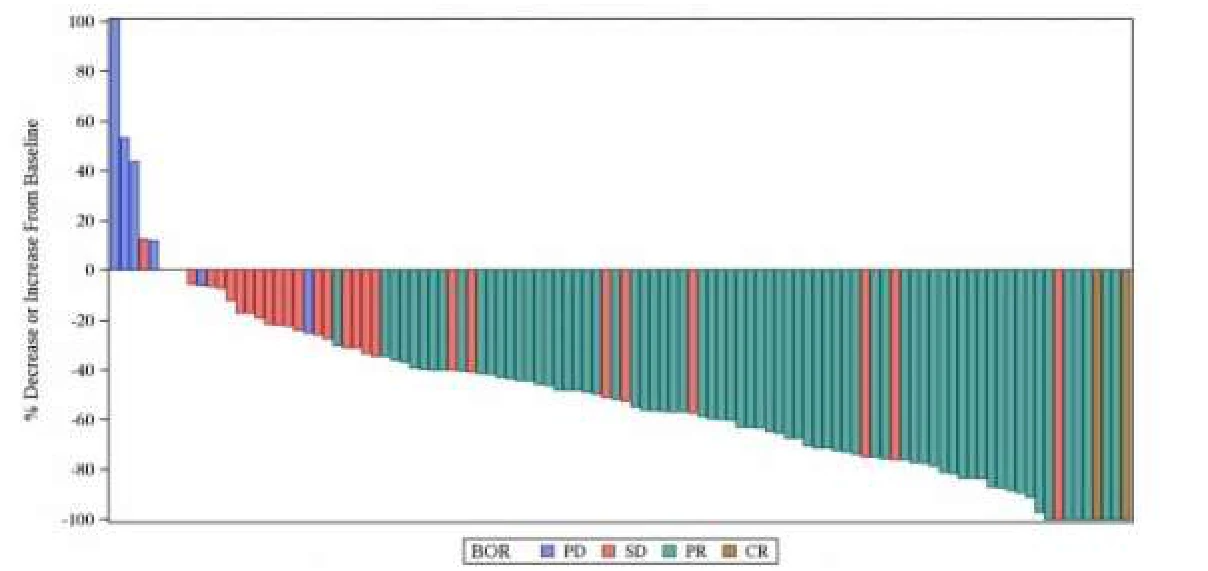
Abbreviations: BOR=best overall response; PD=progressive disease; SD=stable disease; PR=partial response; CR=complete response; N=number of patients; ALK=Anaplastic lymphoma kinase; NSCLC=non-small cell lung cancer; *excludes early death and indeterminate.
Table 15. Study A8081001: ORR by Number of Prior Regimens and ECOG Performance Status (Efficacy Evaluable Population, N=116)
| ORR % (n/N) | |
|---|---|
No. prior regimens*# 0 1 2 3 ≥4 | 80.0 (12/15) 57.1 (16/28) 61.9 (13/21) 59.1 (13/22) 56.7 (17/30) |
ECOG PS 0 1 2 | 53.8 (21/39) 62.9 (39/62) 78.6 (11/14) |
Race Asian Non-Asian | 82.4 (28/34) 52.4 (43/82) |
* Prior treatment regimens include any systemic therapy used in the metastatic setting. # Unknown for 1 patient
Note that the benefit of XALKORI in patients with ALK-negative advanced NSCLC has not been established. XALKORI is not recommended for use in patients with ALK-negative NSCLC.
ALK-Positive Advanced NSCLC Study A8081005 Results
In Study A8081005, patients with advanced NSCLC were required to have received at least 1 prior treatment regimen and harbor ALK-positive tumors prior to entering the clinical trial. For most patients, ALK-positive NSCLC was identified using a Health Canada-approved Vysis ALK break-apart FISH assay.
Nine hundred thirty-four patients with ALK-positive advanced NSCLC were treated with XALKORI in Study A8081005 at the time of data cutoff. The median duration of treatment for these patients was 23 weeks. Patients could continue treatment as assigned beyond the time of RECIST-defined disease progression at the discretion of the investigator if the benefit/risk assessment justified continuation of treatment. Seventy-seven of 106 patients (73%) continued XALKORI treatment for at least 3 weeks after objective disease progression.
Efficacy data from Study A8081005 are provided in Table 16. Seven hundred sixty-five patients with ALK-positive advanced NSCLC from Study A8081005 were both evaluable for response and identified by the Vysis ALK Break-Apart FISH Probe. Based on investigator assessments, there were 8 complete responses and 357 partial responses for an ORR of 48% (95% CI: 44%, 51%). Eighty-three percent (83%) of objective tumor responses were achieved within the first 12 weeks of treatment. The median DR was 47.3 weeks.
Table 16: ALK-Positive Advanced NSCLC Efficacy Results from Study A8081005
| Efficacy Parameter | Study A8081005 (N=765)a |
|---|---|
| ORRb [% (95% CI)] | 48 (44, 51) |
| TTR [median (range)] weeks | 6.1 (3, 49.1) |
| DR [median (95% CI) weeks] | 47.3 (36, 54) |
Abbreviations: CI=confidence interval; ORR=Objective response rate; TTR=time to tumor response; DR=duration of response.
a. Per data cutoff date 15 February 2012
b. 42 patients were not evaluable for response
Figure 5. Waterfall Plot of Best Percent Change in Target Lesions from Baseline by Patient Based on Investigator Assessment in Study A8081005 Response-Evaluable Population (N* = 660, cut-off date 15 February 2012)
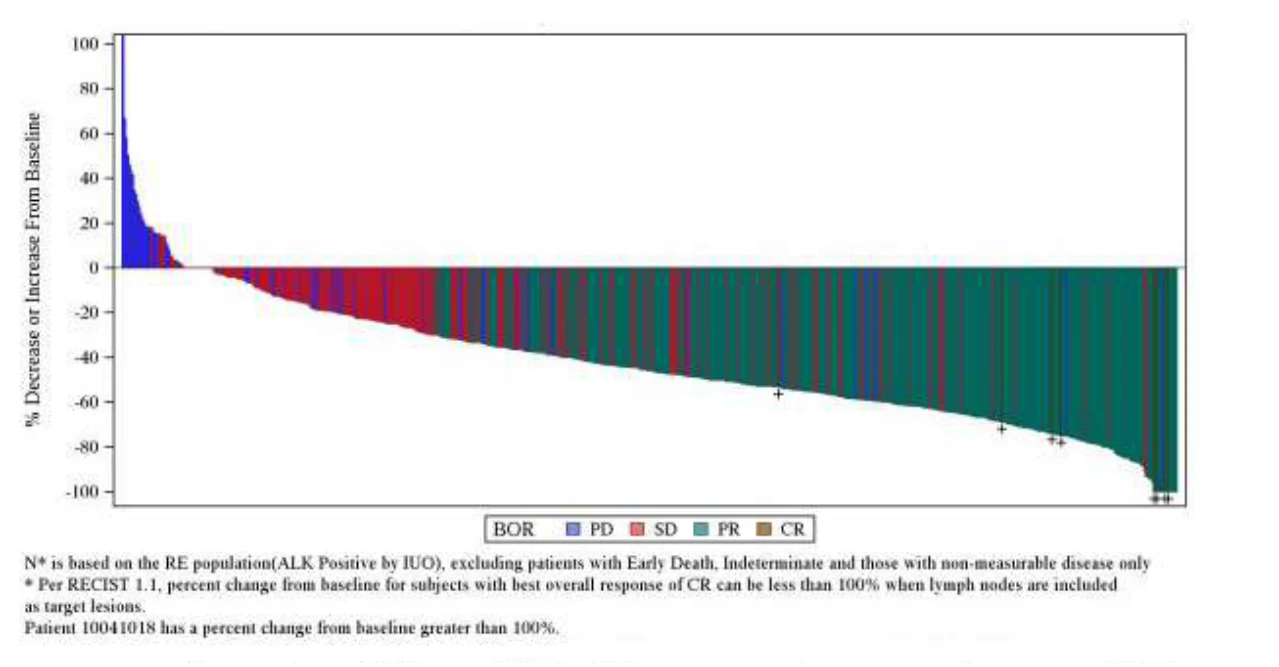
ROS1-Positive Advanced NSCLC
Patients were required to have ROS1-positive advanced NSCLC prior to entering the clinical trial. The ROS1 status of NSCLC tissue samples was determined by laboratory-developed break-apart FISH (96%) or RT-PCR (4%) clinical trial assays. The median duration of treatment was 101 weeks. There were 5 complete responses and 32 partial responses for an ORR of 70% (95% CI: 56%, 82%). The median DR as assessed by investigator was not reached (95% CI: 15.2 months, NR). The median DR by IRR was 18.3 months (95% CI: 12.7 months, NR). Fifty-one percent of objective tumor responses were achieved during the first 8 weeks of treatment. The median PFS at the time of data cutoff was 19.3 months (95% CI: 14.8, NR). Overall survival data were not mature at the time of data cutoff.
Efficacy data from ROS1-positive advanced NSCLC patients from Study A8081001 are provided in Table 17.
Table 17. ROS1-Positive Advanced NSCLC Efficacy Results From Study A8081001
| Efficacy Parameter | Study A8081001 (N=53a) |
|---|---|
ORR [% (95% CI)] (Investigator-assessed) | 70 (56, 82) |
ORRc [% (95%CI)] (Independent Radiology Review) | 66% (51, 79) |
| DRb [median (95% CI)] months (Investigator-assessed) | NR (15.2, NR) |
DRb,c [median (95% CI)] months (Independent Radiology Review) | 18.3 (12.7, NR) |
Abbreviations: N=number of patients; CI=confidence interval: ORR=objective response rate; NR=not reached; DR=duration of response.
a. Per data cutoff date 30 November 2014.
b. Estimated using the Kaplan-Meier method.
c. Based on N=50
15 MICROBIOLOGY
No microbiological information is required for this drug product.
16 NON-CLINICAL TOXICOLOGY
The non-clinical toxicologic profile of crizotinib has been extensively investigated in the rat and dog. The primary target organ findings observed following repeat-dose administration were in the gastrointestinal, hematopoietic, hematological, liver (elevated liver transaminases), and reproductive organs. Gastrointestinal effects were observed clinically as emesis and abnormal feces (soft, mucoid, or watery/diarrhea) in the dog at doses of 5 up to 25 mg/kg/day without a histological correlate in studies up to 3 months in duration (sub-therapeutic to 2 times the human clinical exposure based on AUC). Bone marrow hypocellularity (myeloid and erythroid) or cellular debris evident of toxicity was noted following ≥1 month of dosing in the rat at doses ≥30 mg/kg/day (approximately equivalent to human clinical exposure based on AUC). Elevations of liver transaminases (alanine aminotransferase, aspartate aminotransferase, and/or gamma glutamyltransaminase) occurred without evidence of a histological correlate in studies of up to 3 months duration at doses of 10 to 250 mg/kg/day in the rat and 5 to 25 mg/kg/day in the dog (sub-therapeutic to 3 times the human clinical exposure based on AUC). Effects on male and female reproductive organs included testicular pachytene spermatocyte degeneration at ≥50 mg/kg/day (approximately equivalent to human clinical exposure based on AUC) and single cell necrosis of ovarian follicles of a single rat given 500 mg/kg/day for 3 days (exposure not evaluable). The gastrointestinal, hematopoietic, liver, and reproductive effects observed following 3 months of dosing were shown to be reversible.
Dose-limiting toxicity resulting in mortality occurred in rats (250 mg/kg/day in a 90-day study, 500 mg/kg/day in a 7-day study and 2000 mg/kg/day in a 2-day study and dogs (up to 40 mg/kg/day in a 7-day dose escalation study).
Other crizotinib-related findings observed in the rat included decreased body weight and food consumption, an effect on retinal function, salivary glands, and actively growing long bones, and of unclear clinical relevance was phospholipidosis in multiple organs and the observation of significantly higher exposures (1.6-2.9-fold) in male rats (1-month and 3-month repeat-dose studies) with a similar trend observed in a 7-day dog study. A reduced rate of dark adaptation was identified in rats from electroretinography measurements following 2 and 4 weeks of dosing at 100 mg/kg/day (approximately 3 times human clinical exposure based on AUC). Swelling of salivary gland mucous cells at 100 mg/kg/day following 3 months of dosing in the rat (approximately 3 times human clinical exposure based on AUC) was found to be partially reversible after a 2-month recovery period. Decreased bone formation in growing long bones was observed in immature rats at 150 mg/kg/day following 28 days of dosing (approximately 3 times human clinical exposure based on AUC). Phospholipidosis of multiple organs (kidneys, bile duct, intestine, pituitary gland, prostate, lung, and/or mesenteric lymph node) was identified in the rat following 1 or 3 months of dosing at 30 to 250 mg/kg/day (approximately equivalent to 3 times human clinical exposure based on AUC). After a 2-month recovery period, full reversibility of phospholipidosis was observed in all tissues except the prostate and mesenteric lymph node (kidney not evaluated), where foamy macrophages were noted with decreased incidence, severity and/or distribution.
Carcinogenesis, Mutagenesis, Phototoxicity, Reproductive and Developmental Toxicity
Carcinogenicity studies with crizotinib have not been performed.
Crizotinib demonstrated genotoxicity in a human lymphocyte chromosome aberration assay (in vitro) and rat bone marrow micronucleus assay (in vivo). A positive kinetochore assay suggests an aneugenic mechanism. A no effect level for aneugenicity was identified at 100 mg/kg/day (approximately 2 times the human clinical exposure based on AUC). Crizotinib is not considered a mutagen based on negative results in bacterial reverse mutation assays.
Crizotinib may have phototoxic potential based on a photo-irritation factor (PIF) of 3.4 in an in vitro 3T3 fibroblast Neutral Red Uptake assay. Therefore, it is recommended that patients minimize their exposure to sunlight and other UV emitting sources.
No specific studies with crizotinib have been conducted in animals to evaluate the effect on fertility; however, crizotinib is considered to have the potential to impair reproductive function and fertility in humans based on findings in repeat-dose toxicity studies in the rat. Findings observed in the male reproductive tract included testicular pachytene spermatocyte degeneration in rats given >50 mg/kg/day for 28 days (approximately equivalent to human clinical exposure based on AUC). Findings observed in the female reproductive tract included single-cell necrosis of ovarian follicles of a rat given 500 mg/kg/day for 3 days.
Crizotinib was not shown to be teratogenic in pregnant rats or rabbits. Reduced fetal body weights were considered adverse effects in the rat and rabbit at 200 and 60 mg/kg/day, respectively (approximately equivalent to human clinical exposure based on AUC).