


Patient Medication Information: uses, side effects, how to take - Alphanate
What is ALPHANATE used for?
ALPHANATE is used for prevention and treatment of mild and/or non-life-threatening bleeding episodes or surgical bleeding in adult and pediatric patients with von Willebrand Disease, when certain other medications are either not effective or cannot be used. It is not used for patients with severe VWD (Type 3) undergoing major surgery.
How does ALPHANATE work?
ALPHANATE is a highly purified concentrate of active human von Willebrand factor (VWF) and coagulation factor VIII (FVIII) complex. Patients suffering from von Willebrand Disease have a deficiency or abnormality of VWF. This deficiency in VWF results in lowered FVIII activity and abnormal function of platelets. Platelets are a part of your blood that are involved in the clotting process. When the platelets are not functioning correctly, the blood does not clot properly, which can result in excessive bleeding.
Administration of ALPHANATE restores the plasma levels of VWF to normal levels, so that the blood can clot.
What are the ingredients in ALPHANATE?
Medicinal ingredients: antihemophilic factor/von Willebrand factor complex (human)
Non-medicinal ingredients: albumin (human), arginine and histidine
ALPHANATE comes in the following dosage forms:
250 IU FVIII / 300 IU VWF dried powder in a vial
(with a syringe containing 5 mL sterile water for injection, to make up the solution)
500 IU FVIII / 600 IU VWF dried powder in a vial
(with a syringe containing 5 mL sterile water for injection, to make up the solution)
1000 IU FVIII / 1200 IU VWF dried powder in a vial
(with a syringe containing 10 mL sterile water for injection, to make up the solution)
1500 IU FVIII / 1800 IU VWF dried powder in a vial
(with a syringe containing 10 mL sterile water for injection, to make up the solution)
2000 IU FVIII / 2400 IU VWF dried powder in a vial
(with a syringe containing 10 mL sterile water for injection, to make up the solution)
Do not use ALPHANATE if:
- You have previously suffered an allergic reaction when taking ALPHANATE, or if you know you are allergic to any of the ingredients or packaging components of ALPHANATE.
To help avoid side effects and ensure proper use, talk to your healthcare professional before you take ALPHANATE. Talk about any health conditions or problems you may have, including if you:
- Have a history of deep vein thrombosis, stroke or other conditions involving blood clots
- Have a history hemolysis (a condition where your red blood cells break apart)
- Have previously developed inhibitors to ALPHANATE or another product like it (this is when the product stops working because your immune system makes antibodies against the medicine)
Are pregnant or breastfeeding
Other warnings you should know about:
ALPHANATE is made from human plasma obtained from healthy donors. Plasma is a part of our blood. Like other biological products, it is theoretically possible that the product may contain viruses or other agents that can cause infection and illness. However, every donor and his/her donation are thoroughly screened to discard the presence of pathogens, and the processes used to make ALPHANATE are specifically designed with the ability to destroy or remove these agents if they were present. You should discuss the risks and benefits of this product with your healthcare provider.
Although there are no known interactions with ALPHANATE, be sure to tell your healthcare professional about all the medicines you take, including any drugs, vitamins, minerals, natural supplements or alternative medicines.
How to take ALPHANATE:
ALPHANATE is given as an intravenous administration. If you are administering the medication yourself, be sure to follow all instructions from your healthcare professional concerning the dose and timing of administrations.
Before being administered, the powdered ALPHANATE must be mixed with the sterile water that is provided in the package to create a liquid solution. Follow these instructions to prepare the solution.
| |
| |
| |
| |
| |
|
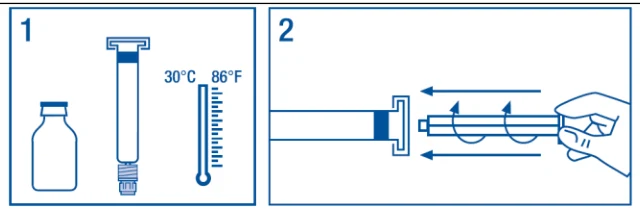
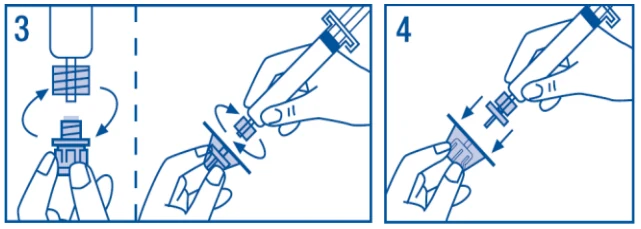
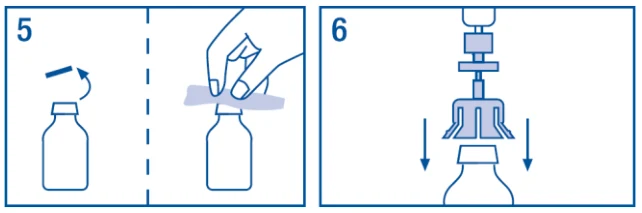
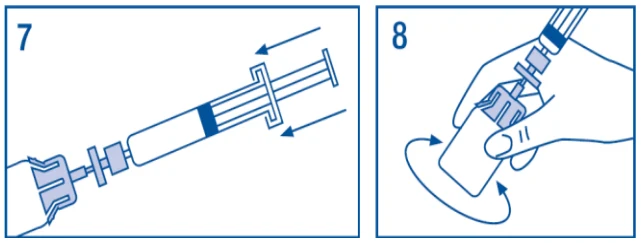
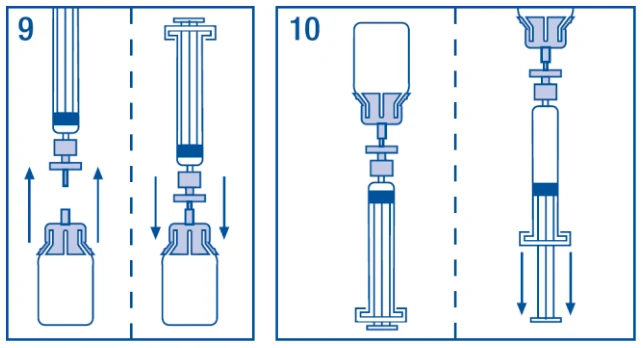
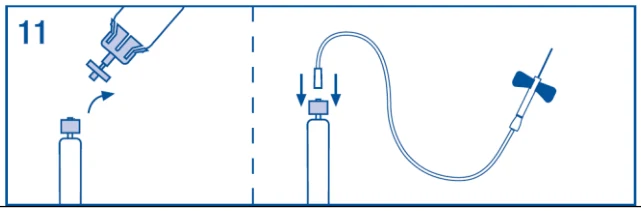
* IMPORTANT: only infusion devices that are compatible with the syringe should be used. Please verify this with your health care professional to ensure proper administration of the product.
Follow all instructions of your healthcare professional for safe administration of this product.
Usual dose:
Your doctor will tell you how much ALPHANATE to take. The dose will be different depending on your condition, and the type of bleeding event or surgical procedure involved.
Overdose:
There are no known symptoms of overdose with ALPHANATE.
| If you think you have taken too much ALPHANATE, contact your healthcare professional, hospital emergency department or regional Poison Control Centre immediately, even if there are no symptoms. |
Missed Dose:
If you miss a dose, the missed dose should be taken as soon as possible, and then treatment should continue as before. If a dose is skipped, the next dose should not be doubled. Always seek and follow the advice of your Health Care Professional.
What are possible side effects from using ALPHANATE?
These are not all the possible side effects you may feel when taking ALPHANATE. If you experience any side effects not listed here, contact your healthcare professional.
The most frequent adverse drug reaction reported in clinical studies with ALPHANATE was itching of the skin (called pruritus). Even less frequently, there were reports of:
- rash
- pain (including headache and back pain)
- tingling sensation (like pins and needles; called paresthesia)
- dizziness
- respiratory distress
- nausea
- swelling of the face
- chills
- dilated blood vessels
- low blood pressure after standing up (called orthostatic hypotension).
The most common adverse drug events reported for ALPHANATE while it has been on the market are allergic (or hypersensitivity) reactions, nausea, fever, joint pain, fatigue, and pain at the infusion site. Allergic reactions may include swelling under the skin (like hives), chest tightness, low blood pressure, rash, nausea, vomiting, tingling sensation (like pins and needles), restlessness, wheezing and dyspnea. These may sometimes be serious, and you should immediately contact a healthcare professional if you believe you are having an allergic reaction.
If you have a troublesome symptom or side effect that is not listed here or becomes bad enough to interfere with your daily activities, talk to your healthcare professional.
Reporting Side Effects
You can help improve the safe use of health products for Canadians by reporting serious and unexpected side effects to Health Canada. Your report may help to identify new side effects and change the product safety information. 3 ways to report:
NOTE: Contact your health professional if you need information about how to manage your side effects. The Canada Vigilance Program does not provide medical advice. |
Storage:
ALPHANATE should be stored in its original packaging at temperatures not exceeding 30 ºC. Do not freeze, since this might damage the syringe with the water. After a vial of ALPHANATE powder has been mixed with the water that was provided, it should be used right away (cannot be used after more than 3 hours). The mixed product should be kept at room temperature (do not refrigerate and keep below 30 ºC).
Keep out of reach and sight of children.
If you want more information about ALPHANATE:
- Talk to your healthcare professional
- Find the full product monograph that is prepared for healthcare professionals and includes this Patient Medication Information by visiting the Health Canada website; the manufacturer’s website www.grifols.ca, or by calling 1-866-482-5226.