


Product Monograph - Alphanate
SUMMARY PRODUCT INFORMATION
| Route of Administration | Dosage Form / Strength | Clinically Relevant Nonmedicinal Ingredients |
| Intravenous injection | lyophilized powder for reconstitution and injection 250 IU FVIII / 300 IU VWF 500 IU FVIII / 600 IU VWF 1000 IU FVIII / 1200 IU VWF 1500 IU FVIII / 1800 IU VWF 2000 IU FVIII / 2400 IU VWF | Human Albumin For a complete listing see Dosage Forms, Composition and Packaging section. |
DESCRIPTION
ALPHANATE (antihemophilic factor/von Willebrand factor complex [human]), is a stable, sterile, purified lyophilized concentrate of the complex formed by Antihemophilic Factor (FVIII) (Human) and von Willebrand Factor (VWF) (Human). Each unit is provided with a pre-filled syringe of sterile water for injections, to reconstitute the product prior to administration.
ALPHANATE is prepared from pooled human plasma by cryoprecipitation of FVIII, fractional solubilization, and further purification employing heparin-coupled, cross-linked agarose which has an affinity to the heparin binding domain of VWF/FVIII:C complex.
ALPHANATE contains human albumin as a stabilizer, and contains no preservatives.
INDICATIONS AND CLINICAL USE
ALPHANATE (antihemophilic factor/von Willebrand factor complex [human]), is indicated for prevention and treatment of mild and/or non-life-threatening bleeding episodes or surgical bleeding in adult and pediatric patients with von Willebrand Disease (VWD), when desmopressin (DDAVP) is known or suspected to be either ineffective or contraindicated. It is not indicated for patients with severe VWD (Type 3) undergoing major surgery.
CONTRAINDICATIONS
ALPHANATE (antihemophilic factor/von Willebrand factor complex [human]) is contraindicated in patients who are hypersensitive to this drug or to any ingredient in the formulation or component of the container. For a complete listing, see the Dosage Forms, Composition and Packaging section of the product monograph.
WARNINGS AND PRECAUTIONS
General
Standard measures to prevent infections resulting from the use of medicinal products prepared from human blood or plasma include selection of donors, screening of individual donations and plasma pools for specific markers of infection and the inclusion of effective manufacturing steps with capacity for the inactivation/removal of viruses. Despite this, when medicinal products prepared from human blood or plasma are administered, the possibility of transmitting infective agents cannot be totally excluded. This also applies to unknown or emerging viruses and other pathogens and theoretically, the agent responsible for the Creutzfeldt-Jakob disease (CJD) or variant CJD, despite steps designed to reduce this risk.
The measures taken are considered effective for enveloped viruses such as human immunodeficiency virus (HIV), hepatitis B virus (HBV) and hepatitis C virus (HCV) and for the non-enveloped hepatitis A virus (HAV). The measures taken may be of limited value against parvovirus B19. Parvovirus B19 infection may be serious for pregnant women (fetal infection) and for individuals with immunodeficiency or increased erythropoiesis (e.g. haemolytic anaemia).
Appropriate vaccination (hepatitis A and B) should be considered for patients in regular receipt of human plasma-derived factor VIII products.
The physician should discuss the risks and benefits of this product with the patient, before prescribing or administering to the patient.
Anaphylaxis and severe hypersensitivity reactions are possible. Early signs of allergic reactions, which can progress to anaphylaxis, may include angioedema, chest tightness, hypotension, rash, nausea, vomiting, paresthesia, restlessness, wheezing and dyspnea. Discontinue treatment with ALPHANATE and administer appropriate emergency treatment should symptoms of anaphylaxis or severe hypersensitivity occur.
Cardiovascular
Serious Warnings and Precautions
- This product is prepared from human blood or plasma, it may potentially contain infectious agents
- May cause thromboembolic events to subjects treated with coagulation factor replacement therapy, especially in patients at risk for thrombosis
Thromboembolic events may occur in VWD patients receiving VWF/FVIII replacement therapy, especially in patients at risk for thrombosis. Caution should be exercised and appropriate measures should be considered in all VWD patients receiving VWF/FVIII replacement therapy, especially when additional thromboembolic risks exist.
Rapid administration may result in vasomotor reactions.
Hematologic
Intravascular hemolysis may occur with infusion of large doses of Antihemophilic Factor/von Willebrand Factor Complex, typically much larger doses than would be required for treatment of VWD. Should this condition occur and lead to progressive hemolytic anemia, discontinue administration of ALPHANATE and consider alternative therapy.
Immune
Patients who receive FVIII/VWF Complex (Human) may develop neutralizing antibodies (inhibitors) to either FVIII or VWF. Development of procoagulant activity-neutralizing antibodies (inhibitors) has been detected in patients receiving FVIII-containing products (References 4 and 5). No specific studies have been conducted with ALPHANATE to evaluate inhibitor formation. Carefully monitor patients for the development of VWF or FVIII inhibitors by appropriate clinical observations and laboratory tests. If following treatment with ALPHANATE, expected plasma VWF or FVIII activity levels are not attained, or if bleeding is not controlled with an appropriate dose, perform an assay that measures VWF or FVIII inhibitor concentrations.
Special Populations
Pregnant Women: Animal reproduction studies have not been conducted with ALPHANATE. It is also not known whether ALPHANATE can cause fetal harm when administered to a pregnant woman or affect reproductive capacity. ALPHANATE should be given to a pregnant woman only if clearly needed.
Nursing Women: No human or animal data. Use only if clearly needed.
Pediatrics (< 18 years of age): The hemostatic efficacy of ALPHANATE has been studied in 18 pediatric subjects (ages 7-18) with von Willebrand Disease in the pivotal clinical trial. An additional 7 pediatric subjects (ages 3-17) were also included in a retrospective study evaluating the effectiveness of ALPHANATE in the perioperative prevention of excessive bleeding.
Geriatrics (> 65 years of age): Although some of the patients who participated in the ALPHANATE studies were > 65 years of age, no formal subgroup analyses were performed and therefore no safety or tolerability conclusions can be made for a geriatric population.
Monitoring and Laboratory Tests
Generally, 1 IU/kg VWF:RCo raises the circulating level of VWF:RCo by 2%. Levels of VWF:RCo of > 0.6 IU/ml (60%) and of FVIII:C of > 0.4 IU/ml (40%) should be achieved. In order to ensure these levels, regular monitoring of VWF:RCo and FVIII are recommended.
ADVERSE REACTIONS
Adverse Drug Reaction Overview
Allergic reactions (which may include angioedema, chest tightness, hypotension, rash, nausea, vomiting, paresthesia, restlessness, wheezing and dyspnea), have been observed with ALPHANATE (antihemophilic factor/von Willebrand factor complex [human]). These may sometimes progress to anaphylaxis.
Clinical Trial Adverse Drug Reactions
Because clinical trials are conducted under very specific conditions the adverse reaction rates observed in the clinical trials may not reflect the rates observed in practice and should not be compared to the rates in the clinical trials of another drug. Adverse drug reaction information from clinical trials is useful for identifying drug-related adverse events and for approximating rates.
Clinical Trial Adverse Drug Reactions
Safety data were obtained from a single large prospective clinical trial with ALPHANATE in von Willebrand Disease involving 81patients being treated for bleeding episodes and/or prophylaxis prior to surgery. A retrospective chart review study for 39 patients with von Willebrand Disease was performed. Additionally, a post-market study in 23 patients for another indication, evaluating long-term safety has been conducted. The mean number of infusions was 53.0 ± 45.5 (median 42, range 2 - 160), and the mean number of months on the study was 10.2 ± 4.1 (median 10, range 2 - 17) for the repeated dose treatment. The results from these studies involved a total of 2116 infusions.
| Table 1 - Adverse Drug Reactions from ALPHANATE Prospective Clinical Study | |||
|---|---|---|---|
| Preferred Term | Total Number and Percent of Subjects with an Adverse Event (N=81) N (%) | ||
All body systems (Total) Dizziness Pruritus Urticaria Chills Headache Nausea Rash Vasodilation | 12 (14.8) 3 (3.7) 3 (3.7) 3 (3.7) 2 (2.5) 2 (2.5) 2 (2.5) 2 (2.5) 2 (2.5) | ||
Abnormal Hematologic and Clinical Chemistry Findings
Standard hematology and chemistry evaluations were performed in all clinical trials described above. There were no issues identified for any laboratory parameter in any of the studies, which was assessed as being related to treatment with ALPHANATE.
Post-Market Adverse Drug Reactions
There is over 40 years post-market experience with ALPHANATE and its predecessor products from the same manufacturer. The most common post-marketing ADRs reported include allergic/hypersensitivity reactions, nausea, fever, joint pain, fatigue, and infusion site pain. Adverse events reported in post-market usage have been consistent with those observed in the prospective clinical study.
DRUG INTERACTIONS
Drug-Drug Interactions
No interactions of human coagulation factor VIII or von Willebrand factor products with other medicinal products are known.
Drug-Food Interactions
Interactions of human coagulation factor VIII or von Willebrand factor products with foods have not been evaluated, but none are known or suspected.
Drug-Herb Interactions
Interactions of human coagulation factor VIII or von Willebrand factor products with herbs have not been evaluated, but none are known or suspected.
Drug-Laboratory Interactions
There were no issues raised for any laboratory parameters in any of the studies conducted with ALPHANATE (antihemophilic factor/von Willebrand factor complex [human]).
Drug-Lifestyle Interactions
ALPHANATE has no or negligible influence on the ability to drive and use machines.
DOSAGE AND ADMINISTRATION
Dosing Considerations
For intravenous injection only, following reconstitution.
- Treatment with ALPHANATE (antihemophilic factor/von Willebrand factor complex [human]) should be initiated under the supervision of a physician experienced in the treatment of hemostatic disorders.
- Generally, 1 IU/kg VWF:RCo raises the circulating level of VWF:RCo by 2%. Levels of VWF:RCo of > 0.6 IU/ml (60%) and of FVIII:C of > 0.4 IU/ml (40%) should be achieved.
Each vial of ALPHANATE contains von Willebrand Factor:Ristocetin Cofactor
(VWF:RCo), which is expressed on the label in International Units (IU) VWF:RCo/vial for the treatment of VWD. Additionally, ALPHANATE contains the antihemophilic factor (AHF) potency (FVIII:C activity) expressed on the label in IU FVIII/vial.
Recommended Dose and Dosage Adjustment
Prevention and treatment of hemorrhage or surgical bleeding in Patients with von Willebrand Disease
Dosage and duration of treatment depend on the severity of the VWF deficiency, the location and extent of bleeding, and the patient’s clinical condition. Careful control of replacement therapy is especially important in cases of major surgery or life-threatening bleeding episodes. The dose recommendations apply to both adult and pediatric patients.
| Table 2 - ALPHANATE Dosing Guidelines for Patients with von Willebrand Disease | |||||||
|---|---|---|---|---|---|---|---|
| Indicated Use | VWF:RCo Dose | Target levels | Safety / Monitoring | ||||
| Bleeding Episode – initial dose | 40 to 60 IU/kg | 80-120 mg/dL | Peak and trough activity levels of both FVIII:C and VWF:RCo should be taken at least once daily, and neither should exceed 150 IU/dL . | ||||
| Bleeding Episode – subsequent doses * | 40 - 60 IU/kg | 80-120 mg/dL | |||||
| Surgical Prophylaxis (1 hour pre-op) | 60 – 75 IU/kg | 120-150 mg/dL | |||||
| Post-Operative* | 40 – 60 IU/kg | 80-120 mg/dL | |||||
* additional doses should be re-administered based on clinical judgement at 12 - 24 hour intervals to maintain hemostasis until healing occurs. The dose and duration of the treatment depend on the clinical status of the patient, the type and severity of bleeding, and both VWF:RCo and FVIII:C levels. Dosing may be reduced in post-operative patients after the 3rd post-operative day.
Treatment guidelines above typically apply to all VWD types, although an initial dose of up to 80 IU/kg of VWF may be required, especially in patients with type 3 von Willebrand disease where maintenance of adequate levels may require greater doses than in other types of von Willebrand disease.
When using a FVIII-containing von Willebrand factor product, the treating physician should be aware that continued treatment may cause an excessive rise in FVIII:C. After 24 - 48 hours of treatment, reduced doses and/or prolongation of the dose interval or the use of a VWF product containing a low level of FVIII should be considered.
Missed Dose
If a patient being misses a dose, the missed dose should be taken as soon as possible, and then treatment should continue as before. If a dose is skipped, the next dose must usually not be doubled.
Administration
For intravenous use after reconstitution only.
- Use aseptic technique during reconstitution and administration.
- Inspect parenteral drug products visually for particulate matter and discoloration prior to administration. The reconstituted ALPHANATE solution should be clear or slightly opalescent. Do not use solutions that are cloudy or have deposits.
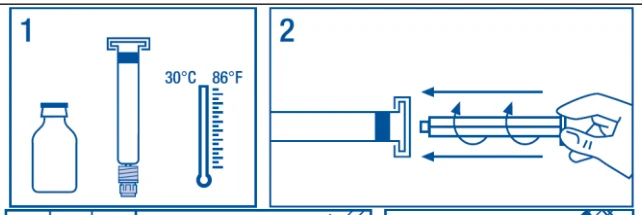
- Do not refrigerate after reconstitution. Store reconstituted ALPHANATE at room temperature (not to exceed 30 °C) prior to administration, and administer intravenously within three hours.
- Administer using suitable infusion needle.
- Do not administer ALPHANATE at a rate exceeding 10 mL/minute. Rapid administration of Factor VIII concentrates may result in vasomotor reactions.
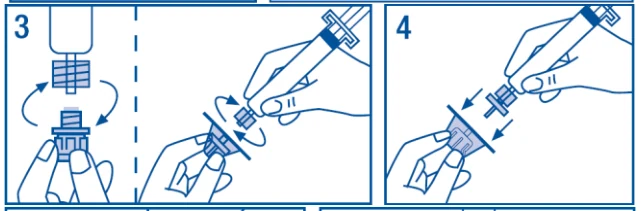
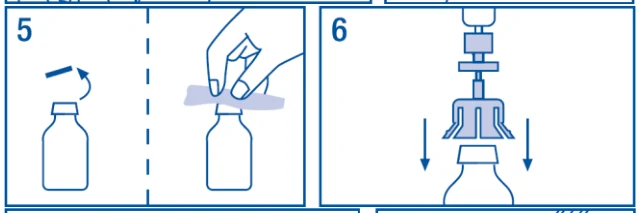
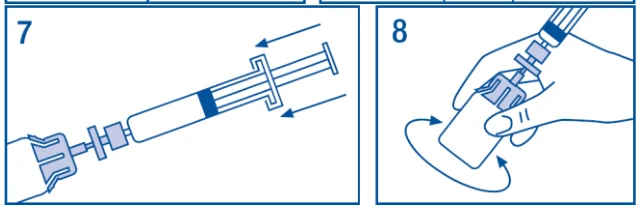
Reconstitution: To prepare the solution: | ||
|  | |
|  | |
|  | |
|  | |
| 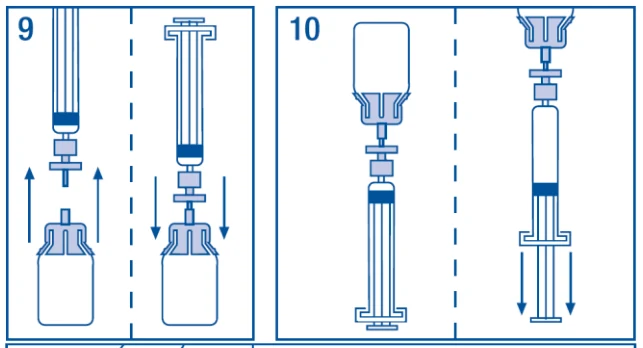 | |
| 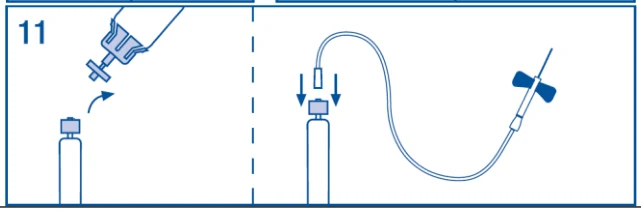 | |
IMPORTANT:
When using the syringe with infusion systems or line extensions, please check the compatibility of the system. Adapters should be used when required to ensure proper administration of the product.
After reconstitution with the Water for Injections solvent provided, the product should be used within 3 hours.
Any unused product or waste material should be disposed of in accordance with local requirements.
Table 3: ALPHANATE Formats Following Reconstitution:
| Format | Volume of Diluent* to be Added to Vial* | Approximate Available Volume | Nominal Concentration per mL (VWF:RCo) |
| 250 IU FVIII / 300 IU VWF | 5 mL | 5 mL | 60 IU/mL |
| 500 IU FVIII / 600 IU VWF | 5 mL | 5 mL | 120 IU/mL |
| 1000 IU FVIII / 1200 IU VWF | 10 mL | 10 mL | 120 IU/mL |
| 1500 IU FVIII / 1800 IU VWF | 10 mL | 10 mL | 180 IU/mL |
| 2000 IU FVIII / 2400 IU VWF | 10 mL | 10 mL | 240 IU/mL |
* diluent is sterile water for injection, EP (provided in prefilled syringe)
OVERDOSAGE
No symptoms of overdose with human VWF have been reported.
| For management of a suspected drug overdose, contact your regional Poison Control Centre. |
ACTION AND CLINICAL PHARMACOLOGY
Mechanism of Action
The von Willebrand Factor (VWF) is a large multimeric glycoprotein made in endothelial cells and megakaryocytes present in plasma and platelets. VWF performs three critical functions in primary hemostasis and in intrinsic blood coagulation, namely: (1) mediation of platelet adhesion at the site of vascular injury, (2) transportation of FVIII to sites where this factor participates in the coagulation process and (3) stabilization and protection of FVIII from in vivo proteolysis. Patients suffering from VWD have a deficiency or abnormality of VWF. A reduction in VWF concentration in the bloodstream results in low FVIII activity and abnormal platelet function. The result is that the platelets are prevented from adhering to sub-endothelial tissue, which can result in excessive bleeding.
In human plasma, VWF circulates as protein complex consisting of a molecule with coagulant activity (FVIII), which is non-covalently bound to the multimers of the VWF carrier protein. FVIII represents only about 1-2 % of the natural FVIII/VWF complex. Activated FVIII (FVIIIa) acts as a cofactor for activated factor IX (FIXa), accelerating the conversion of factor X to activated factor X (FXa). FXa converts prothrombin into thrombin. Thrombin then converts fibrinogen into fibrin and a clot can be formed.
The administration of VWF products re-establishes platelet-adhesion to the sub-endothelium at the site of vascular damage and aggregation of platelets, providing primary hemostasis. This effect occurs immediately, whereas the VWF-induced correction of the associated FVIII deficiency is delayed and progressive. Administered intravenously, VWF binds endogenous FVIII normally produced by the patient, and by stabilizing this factor, avoids its rapid degradation.
Pharmacodynamics
Von Willebrand disease (VWD) is an autosomal-inherited congenital bleeding disorder in which there is a deficiency or dysfunction of VWF as a result of missense and nonsense mutations in the gene encoding VWF. Patients with VWD that have quantitative or qualitative defects of VWF show impairment in both the primary phase of hemostasis and intrinsic blood coagulation. The main goal of treatment in VWD is to correct the dual hemostatic defect due to reduced or abnormal VWF that results in the deficiency of FVIII coagulant activity (FVIII:C) at the time of spontaneous bleeding or before an invasive procedure is performed.
VWF circulates in blood as a series of multimers ranging in size from 500 to 20,000 kDa. ALPHANATE is a FVIII/VWF complex preparation, which includes a range or multimers with molecular weights comparable to those in human plasma. Following infusion of ALPHANATE, an increase in the size of VWF multimers was seen and persisted for at least 24 hours. The shortening of the BT was transient, lasting less than 6 hours following treatment and did not correlate with the presence of large and intermediate size VWF multimers.
Pharmacokinetics
Subjects received a single intravenous dose of ALPHANATE, 60 IU VWF:RCo/kg (75 IU VWF:RCo/kg in subjects younger than 18 years of age). Pharmacokinetic results from ALPHANATE in the 18 subjects are presented in Table 4.
The mean bleeding time (BT) prior to infusion was 29.2 ± 3.89 (range 13.5-30 minutes), with a median of 30 minutes. One hour post infusion, this was shortened to 10.4 ± 3.11 (range 6.0-16.0 minutes), with a median of 10.38 minutes.
Table 4: Summary of ALPHANATE Pharmacokinetic Parameters in Von Willebrand
Disease (N=18)
| VWF:RCo plasma level (mean % normal)1 | FVIII :C plasma level (mean % normal)1 | VWF:RCo t½ (h) | FVIII :C t½ (h) | VWF:RCo in vivo recovery | FVIII:C in vivo recovery | |
|---|---|---|---|---|---|---|
| Single dose mean | 206.0 ± 98.73 | 215.4 ± 86.25 | 7.5 ± 3.2 hours | 21.5 ± 7.2 hours | 3.1 ± 1.5 %/(IU/kg) | 2.2 ± 0.6 %/(IU/kg) |
| Ranges: | 87.0 - 440.0 | 110.0 - 421.0 | 5.9 to 9.1 hours | 17.9 to 25.1 hours | 1.3 - 5.7 %/(IU/kg) | 1.3 - 3.3 %/(IU/kg) |
1- assessed 15 minutes post-infusion
STORAGE AND STABILITY
ALPHANATE (antihemophilic factor/von Willebrand factor complex [human]) and the solvent with which it is packaged for reconstitution should be stored at temperatures not exceeding 30 ºC. Do not freeze, as this may damage the diluent container, and compromise sterility.
Do not use beyond the expiry date noted on the label.
DOSAGE FORMS, COMPOSITION AND PACKAGING
ALPHANATE (antihemophilic factor/von Willebrand factor complex [human]) is a white to slightly yellow freeze dried powder containing nominally 300, 600, 1200, 1800 or 2400 IU of human von Willebrand factor (VWF) per vial, and correspondingly, 250, 500, 1000, 1500 or 2000 IU of antihemophilic factor (FVIII) per vial.
The glass vials are made of Type I (USP) glass and closed with grey butyl rubber stoppers, aluminum crimp seal and plastic “flip-off” cover.
Each vial of ALPHANATE is supplied with a Type I glass syringe containing either 5 ml or 10 ml of Sterile Water for Injections (SWFI) Eur. Ph., for reconstitution of the dosage form.
Table 5: Available Dosage forms
Vial size (IU/vial) (FVIII:C / VWF:RCo ) | Volume of SWFI Provided | Approximate volume after reconstitution | Concentration (IU/mL) (VWF:RCo) |
| 250 IU / 300 IU | 5 mL | 5 mL | 60 IU/mL |
| 500 IU / 600 IU | 5 mL | 5 mL | 120 IU/mL |
| 1000 IU / 1200 IU | 10 mL | 10 mL | 120 IU/mL |
| 1500 IU / 1800 IU | 10 mL | 10 mL | 180 IU/mL |
| 2000 IU / 2400 IU | 10 mL | 10 mL | 240 IU/mL |
The other accessories supplied with ALPHANATE for reconstitution and administration of the product (for example, the vial adapter), are licensed medical devices in Canada and/or are
PART II: SCIENTIFIC INFORMATION
PHARMACEUTICAL INFORMATION
Drug Substance
Proper name: Antihemophilic Factor/von Willebrand Factor Complex (Human)
Molecular formula and molecular mass: Multimeric FVIII/VWF complex from 500 to 20,000 kDa
Physicochemical properties: Blood coagulation factor; ATC code: B02BD06
Product Characteristics
The active ingredient of ALPHANATE is Antihemophilic Factor and von Willebrand Factor Complex, which is derived from human plasma. Antihemophilic Factor (FVIII), is a heterologous glycoprotein required for the intrinsic pathway of blood coagulation, which results in the generation of thrombin and the fibrin clot. Von Willebrand Factor (VWF) co-purifies with Factor VIII as a FVIII/VWF complex. The VWF is a large, multimeric, adhesive glycoprotein that promotes platelet aggregation and platelet adhesion on damaged vascular endothelium and serves as a stabilizing carrier protein for Factor VIII.
ALPHANATE is obtained from source plasma through a purification process consisting of precipitation with polyethylene glycol (PEG) followed by affinity chromatography and precipitation with sodium chloride and glycine. These steps are designed to obtain a high purity FVIII/VWF complex concentrate. ALPHANATE is a sterile, lyophilized powder for injection and contains no preservatives or significant quantities of extraneous proteins such as fibrinogen or fibronectin. The final formulation contains albumin (human) and arginine as stabilizers, and histidine as a solubilizing agent.
Viral Inactivation capacity studies
The results of validation studies performed to determine virus clearance capacity associated with several steps in the manufacturing process of ALPHANATE are summarized below in Table 6. In vitro studies to evaluate the solvent detergent treatment (0.3% Tri-n-butyl Phosphate and 1.0% Polysorbate 80) step in the manufacture of ALPHANATE were conducted to assess the capability of the step to inactivate enveloped viruses, such as Human Immunodeficiency viruses (HIV), as well as marker viruses such as Bovine Viral Diarrhea Virus (BVDV, a model for human Hepatitis C virus), and pseudorabies virus (PRV, a model for human hepatitis B and herpes viruses). In vitro inactivation studies to evaluate the dry heat treatment (80 °C, 72 hours) step in the manufacture of ALPHANATE were conducted to assess the capability of the step to inactivate both enveloped and non-enveloped viruses, such as Hepatitis A virus (HAV), porcine parvovirus (PPV, a model for human Parvovirus B19), PRV, HIV-1 and BVDV. Precipitation with 3.5% polyethylene glycol (PEG) during the manufacturing process for ALPHANATE was also evaluated for virus elimination capability using HAV and PPV, as shown in Table 6.
Table 6: Estimation of the Overall Viral Clearance capacity (Log10 Reduction Factors) for ALPHANATE
| Process steps | Log10 Reduction Factor | ||||
| HIV-1 | PRV | BVDV | HAV | PPV | |
| 3.5% PEG precipitation | n.d. | n.d. | n.d. | 1.21 | 1.63 |
| Solvent-Detergent | ≥ 5.41 | ≥ 6.04 | ≥ 4.69* | n.a. | n.a. |
| Freeze drying + dry heat treatment | ≥ 4.43 | 2.66 | ≥ 4.41 | ≥ 7.9 | 3.02 |
Total log10 Reduction Factor | ≥ 9.84 | ≥ 8.70 | ≥ 9.10 | ≥ 9.11 | 4.65 |
≥: No residual infectivity detected. / nd: not done / na: not applicable, as the virus is resistant to this treatment
* Additional studies:The solvent-detergent step has also been validated for WNV, resulting in an inactivation capacity of ≥6.9 log10/ml.
HIV: Human Immunodeficiency viruses
PRV: pseudorabies virus (model for hepatitis B and herpes viruses)
BVDV: Bovine Viral Diarrhea virus (model for Hepatitis C virus)
HAV: Hepatitis A virus
PPV: Porcine Parvovirus (model for Parvovirus B19)
Additionally, the manufacturing process was investigated for its capacity to remove infectivity of an experimentally spiked agent of transmissible spongiform encephalopathy (TSE), considered as a model for the vCJD and CJD agents. Several of the individual production steps in ALPHANATE manufacturing process have been shown to decrease TSE infectivity of an experimentally spiked model agent. TSE reduction steps include: 3.5% polyethylene glycol precipitation (3.23 log10), affinity chromatography (3.50 log10) and saline precipitation (1.36 log10). These studies provide reasonable assurance that low levels of CJD/vCJD agent infectivity, if present in the starting material, would be removed.
CLINICAL TRIALS
Study demographics and trial design
Table 7: Summary of patient demographics for clinical trials in Von Willebrand Disease
| Study # | Trial design | Dosage, route of admin. and duration | Study subjects (n = ) | Type of VWD (n =) | Mean age (Range) | Gender |
| ATC 93-01 - Part 1a | Open-label, multicenter PK study in VWD subjects - single dose and repeat dose | 40 VWF:RCo IU/kg (50 IU/kg for subjects <18 yrs); IV; single dose | 53 subjects | Type 1= 9 Type 2A=19 Type 2B= 1 Type 3= 22 | 33.9 years (7–75 yrs) | 31 M / 50 F |
| ATC 93-01 - Part 1 (addendum) | Open-label, multicenter PK study in VWD subjects - cross-over comparison | 60 VWF:RCo IU/kg (75 IU/kg for subjects <18 yrs); IV; single dose each of two products | 18 subjects | Type 1= 3 Type 2A=3 Type 3= 12 | ||
| ATC 93-01 - Part 2a | Prospective, open-label, multicenter safety and efficacy study in VWD subjects with bleeding episodes | Mean dose 40.7±13.6 VWF:RCo IU/kg per IV infusion; mean 1.6±1.2 infusions per bleeding episode | 14 subjects (with 87 bleeding episodes) | Type 1= 3 Type 2A=7 Type 3= 4 | ||
| ATC 93-01 - Part 2b | Prospective, open-label, multicenter safety and efficacy study in VWD subjects as prophylaxis prior to elective surgery | Median dose 60 VWF:RCo IU/kg (range: 20-76) for 1st IV infusion; Median dose 40 VWF:RCo IU/kg (range: 10-75) for 2nd IV infusion | 39 subjects (with 71 procedures: 3 Major; 10 moderate, 58 minor) | Type 1= 6 Type 2A=17 Type 2B= 2 Type 3= 14 | ||
| IG-405 | Retrospective; multi-center in VWD subjects treated for peri-operative bleeding prophylaxis | Mean dose 47.4 VWF:RCo IU/kg per IV infusion; mean 5.90±6.23 infusions per procedure | 39 subjects (with 61 procedures) | Type 1= 18 Type 2= 12 Type 3= 9 | 39.2 years (3–72 yrs) | 18 M / 21 F |
A multi-part, open label, multicenter trial (ATC 93-01) was undertaken in 81 subjects with VWD (15 Type 1, 29 Type 2A, 5 Type 2B, 32 Type 3) in whom DDAVP was ineffective or contraindicated. The study included assessments of efficacy and safety among 14 subjects with VWD who were treated with ALPHANATE (antihemophilic factor/von Willebrand factor complex [human]) for 87 mild, non-life-threatening bleeding episodes, as well as assessments of efficacy and safety for 39 subjects with VWD who underwent 71 surgical procedures and were treated prophylactically with ALPHANATE. Pharmacokinetics of ALPHANATE were also investigated. Dosing intervals of 23.8 ± 14.8 hours in treatment of bleeding, and 32.3 ± 56.4 hours in surgical prophylaxis were reported in the study.
Study IG-405 was a retrospective, multicenter study conducted in subjects with vWD who had been treated with ALPHANATE as perioperative prophylaxis against excessive bleeding in a total of 61 surgical or invasive procedures. The study included review of 63 procedures in 41 subjects, of which 61 procedures in 39 subjects were analyzed.
Study results
Table 8 - Results of study ATC 93-01 (Part 2a): Treatment of Minor Bleeding Episodes in Von Willebrand Disease Patients
| Primary Endpoints | Protocol-specified target | Mean # infusions required per bleed episode (by VWD type) | Results |
| Control of the hemorrhage | ≥75% subjects achieve hemostasis without use of alternate treatment | Type 1: 1.3 (±0.5) n= 4 episodes | 100% subjects (87 bleed episodes) achieved bleeding control without alternate FVIII/VWF concentrate or cryoprecipitate for hemostasis |
Type 2: 1.3 (±0.9) n= 67 episodes | |||
Type 3: 2.8 (±1.8) n= 16 episodes | |||
Table 9 - Results of study ATC 93-01 (Part 2b): Prophylaxis Prior to Elective Surgery in Von Willebrand Disease Patients
| Primary Endpoints | Protocol-specified objective | Number of infusions | Results |
| Adequate hemostasis during healing; expected vs. actual blood loss | ≥75% subjects not to exceed 1.5 times expected blood loss; postoperative control of bleeding without alternate treatment | 31/71 (43.7%) procedures used 1 or 2 infusions Mean = 4.2 ±3.55 infusions (range 1 to 18) | Mean blood loss of 141.8 mL significantly less than 173.5 mL predicted (p<0.0001 Wilcoxon rank test). Bleeding no more than 50 mL over predicted in all but 3 subjects. Within 30 minutes of infusion, BT fully corrected in 25/63 (39.7%), partially corrected in 25/ 63 (39.7%) and demonstrated no correction in 12/63 (19%) evaluable procedures (no assessment in one case). |
* BT= Bleed time
Table 10 - Results of study IG-405: Retrospective Assessment of Peri-operative Bleeding Prophylaxis in Von Willebrand Disease Patients
| Primary Endpoints | Mean # infusions (total dose – VWF:RCo) by VWD type | Results |
| Treatment outcome rated using 4-point rating scale by investigator (Excellent; Good; Poor; None) | Type 1 (n=22 procedures) 7.14 (±7.78) infusions 18,541.5 (±18,879.9) IU* | Overall (N=61 procedures): 51 (83.6%) rated “Excellent” 7 (11.5%) rated “Good” 1 (1.6%) rated “Poor” 2 (3.3%) rated “none” Proportion of procedures with effective, vs. not effective rating (95.1% vs. 4.9%; p<0.0001**) Ratings by independent referee (2° endpoint) Proportion of procedures with effective, vs. not effective rating (91.8% vs. 8.2%; p<0.0001**) |
Type 2 (n=23 procedures) 5.09 (±4.13) infusions 19,755.5 (±17,912.9) IU* | ||
Type 3 (n=16 procedures) 5.38 (±6.46) infusions 18,080.4 (±23,516.7) IU* | ||
Total (n=61 procedures) 5.90 (±6.23) infusions 18,878.3 (±19,523.7) IU* | ||
* relative dose of VWF:RCo per infusion over all procedures was 47.4 IU/kg
** binomial test; H0:<70% effective
DETAILED PHARMACOLOGY
Data from 39 subjects in Part 1a of ATC 93-01 (see Table 7) were considered evaluable. Results of the Bleed Time and plasma levels of vWF:RCo and FVlll:C at one hour post infusion of a single ALPHANATE dose (40 IU vWF:RCo/kg or 50 IU vWF:RCo/kg in pediatric subjects), are presented in Tabel 11.
| Table 11 - Evaluation of Response at One Hour Post-Infusion | ||
|---|---|---|
| Variable/statistics | Infusions (N = 39) | |
| RCo increased ≥50% of normal | ||
| Yes | 38 (97.4%) | |
| No | 1 (2.6%) | |
| Not applicable/missing | 0 (0%) | |
| FVIII:C increased ≥50% of normal | ||
| Yes | 39 (100%) | |
| No | 0 (0%) | |
| Not applicable/missing | 0 (0%) | |
| Full or partial correction of bleeding time | ||
| Yes | 26 (66.7%) | |
| Full correction | 9 (34.6%) | |
| Partial correction | 17 (65.4%) | |
| No | 12 (30.8%) | |
| Not applicable/missing | 1 (2.6%) | |
The mean of half-life FVIII:C (39.7 hours), was substantially longer than the mean half-life of VWF:RCo (15.0 hours).
MICROBIOLOGY
Not applicable
TOXICOLOGY
No preclinical toxicity study was conducted for ALPHANATE.
REFERENCES
- 1. Kurth M et al. The use of a single von Willebrand factor-containing, plasma-derived FVIII product in hemophilia A immune tolerance induction: the US experience. J Thromb Haemost 2011; 9: 2229–34.
- 2. Greninger DA et al. The use of factor VIII/von Willebrand factor concentrate for immune tolerance induction in haemophilia A patients with high-titre inhibitors: association of clinical outcome with inhibitor epitope profile. Haemophilia (2008), 14, 295–302.
- 3. Federici AB. Highly purified VWF/FVIII concentrates in the treatment and prophylaxis of von Willebrand disease: the PRO.WILL Study. Haemophilia (2007), 13 (Suppl. 5), 15–24.
- 4. Mannucci PM et al. Factor VIII products and inhibitor development: the SIPPET study (survey of inhibitors in plasma-product exposed toddlers). Haemophilia (2007), 13 (Suppl. 5), 65–68.
- 5. Mannucci, PM et al. Treatment of von Willebrand disease with a high-purity factor VIII/von Willebrand factor concentrate: a prospective, multicenter study. Blood (2002), 99(2):450-456.
- 6. Peyvandi F et al. Source of Factor VIII Replacement (PLASMATIC OR RECOMBINANT) and Incidence of Inhibitory Alloantibodies in Previously Untreated Patients with Severe Hemophilia a: The Multicenter Randomized Sippet Study. 57th ASH Plenary session (2015) Orlando FL.