


Product Monograph - Recothrom
RECENT MAJOR LABEL CHANGES
| 4 DOSAGE AND ADMINISTRATION, 4.3 Reconstitution | |
|---|---|
| 4 DOSAGE AND ADMINISTRATION, 4.4 Administration | |
| 7 WARNINGS AND PRECAUTIONS, General | |
| 7 WARNINGS AND PRECAUTIONS, Sensitivity/Resistance | |
| 7 WARNINGS AND PRECAUTIONS, 7.1 Special Populations | |
| 8 ADVERSE REACTIONS, 8.2 Clinical Trial Adverse Reactions |
TABLE OF CONTENTS
Sections or subsections that are not applicable at the time of authorization are not listed.
RECENT MAJOR LABEL CHANGES ......................................................................................2
TABLE OF CONTENTS ..............................................................................................................2
PART I: HEALTH PROFESSIONAL INFORMATION ..........................................................4
- 1.
INDICATIONS ..........................................................................................................................4
1.1. Pediatrics .......................................................................................................................4
1.2. Geriatrics .......................................................................................................................4
- 2. CONTRAINDICATIONS .........................................................................................................4
- 3. SERIOUS WARNINGS AND PRECAUTIONS BOX ...........................................................4
- 4.
DOSAGE AND ADMINISTRATION......................................................................................5
4.1 Dosing Considerations ...................................................................................................5
4.2 Recommended Dose and Dosage Adjustment ...............................................................5
4.3 Reconstitution ................................................................................................................5
4.4 Administration ...............................................................................................................6
5 OVERDOSAGE ..........................................................................................................................6
- 6. DOSAGE FORMS, STRENGTHS, COMPOSITION AND PACKAGING ........................6
7 WARNINGS AND PRECAUTIONS ........................................................................................7
7.1 Special Populations .......................................................................................................8
7.1.1 Pregnant Women ................................................................................................ 8
7.1.2 Breast-feeding .................................................................................................... 8
7.1.3 Pediatrics ............................................................................................................ 8
7.1.4 Geriatrics ............................................................................................................ 8
8 ADVERSE REACTIONS ...........................................................................................................8
8.1 Adverse Reaction Overview ..........................................................................................8
8.2 Clinical Trial Adverse Reactions ...................................................................................8
- 9.
DRUG INTERACTIONS ........................................................................................................10
9.2 Drug Interactions Overview .........................................................................................10
9.4 Drug-Drug Interactions ................................................................................................10
9.5 Drug-Food Interactions ................................................................................................10
9.6 Drug-Herb Interactions ................................................................................................10
9.7 Drug-Laboratory Test Interactions ..............................................................................10
10 CLINICAL PHARMACOLOGY ..........................................................................................11
10.1 Mechanism of Action .................................................................................................11
10.2 Pharmacodynamics ....................................................................................................11
10.3 Pharmacokinetics .......................................................................................................11
11 STORAGE, STABILITY AND DISPOSAL.........................................................................12
12 SPECIAL HANDLING INSTRUCTIONS ...........................................................................12
PART II: SCIENTIFIC INFORMATION ................................................................................13
- 13. PHARMACEUTICAL INFORMATION ............................................................................13
14 CLINICAL TRIALS ...............................................................................................................14
14.1 Trial Design and Study Demographics ......................................................................14
14.2 Study Results .............................................................................................................15
15 MICROBIOLOGY .................................................................................................................17
16 NON-CLINICAL TOXICOLOGY .......................................................................................17
PATIENT MEDICATION INFORMATION ...........................................................................19
PART I: HEALTH PROFESSIONAL INFORMATION
1. INDICATIONS
RECOTHROM (Thrombin alfa [Recombinant]) is indicated:
- as an aid to hemostasis whenever oozing blood and minor bleeding from capillaries and small venules is accessible and control of bleeding by standard surgical techniques is ineffective or impractical (see Product Monograph PART II: CLINICAL TRIALS).
1.1. Pediatrics
Pediatrics (< 18 years of age):
Safety and effectiveness of RECOTHROM in pediatric patients have not been established.
1.2. Geriatrics
Geriatrics (> 65 years of age):
No substantial differences in safety were observed between elderly and younger patients. No modification to dosing or administration is required (see 4. DOSAGE AND ADMINISTRATION).
2. CONTRAINDICATIONS
- Patients who are hypersensitive to this drug or to any ingredient in the formulation or component of the container. For a complete listing, see the 6. DOSAGE FORMS, STRENGTHS, COMPOSITION AND PACKAGING section.
- Do not use in patients with known hypersensitivity to hamster protein.
- RECOTHROM (Thrombin alfa [Recombinant]) must not be injected directly into the circulatory system.
- RECOTHROM should not be used for the treatment of massive or brisk arterial bleeding.
- SERIOUS WARNINGS AND PRECAUTIONS BOX
Serious Warnings and Precautions
Do not inject RECOTHROM directly into the bloodstream. Intravascular injection of thrombin-containing hemostats may result in life-threatening intravascular coagulation or death (see 7 WARNINGS & PRECAUTIONS).
4. DOSAGE AND ADMINISTRATION
4.1 Dosing Considerations
Do not inject RECOTHROM directly into the bloodstream. Intravascular injection of thrombin-containing hemostats may result in life-threatening intravascular coagulation or death.
RECOTHROM (Thrombin alfa [Recombinant]) is for topical use only.
Apply on the surface of bleeding tissue only.
4.2 Recommended Dose and Dosage Adjustment
The volume of reconstituted RECOTHROM required will vary, depending on the size and number of bleeding sites to be treated and the method of application. The healthcare professional should determine the number of vials required to produce a sufficient volume of reconstituted product. The mean volume of RECOTHROM used in the pivotal phase III trial was 11.6 mL.
4.3 Reconstitution
Inspect the integrity of the RECOTHROM package and contents. Do not use if the packaging or contents have been damaged or opened.
NOTE: Reconstitute the lyophilized powder using the supplied diluent. Use aseptic technique when handling vials and syringes.
6,000-unit and 24,000 unit RECOTHROM Thrombin alfa (Recombinant) Reconstitution
- 1. Remove flip-off plastic cap from the top of the RECOTHROM vial.
- 2. Attach the needle-free transfer device and snap it into place on the vial by placing the vial on a flat surface and attaching the transfer device straight into the center of the vial stopper.
- 3. Open the diluent container by twisting the closure.
- 4. Attach the sterile empty syringe (provided) to the luer lock of the diluent container and remove the diluent.
- 5. Detach the diluent filled syringe from the luer lock container.
- 6. Attach the diluent filled syringe to the needle-free transfer device valve port.
- 7. Inject diluent into the vial. Keep the syringe plunger depressed.
- 8. DO NOT reuse the diluent syringe for transfer of the reconstituted product. Remove and discard the diluent syringe.
- 9. Gently swirl the vial until the powder is completely dissolved (avoid excessive agitation of the vial during reconstitution). The powder should dissolve in less than one minute at room temperature.
- 10. Invert the vial and withdraw the RECOTHROM solution for transfer.
- 11. Attach the adhesive label “Do not inject” provided onto the transfer syringe.
4.4 Administration
Topically apply RECOTHROM solution directly to bleeding site or in conjunction with a compatible absorbable gelatin sponge.
RECOTHROM has been shown to be compatible with GELFOAM®, SURGIFOAM and SPONGOSTAN hemostats, and should only be used with these sponges. The use of RECOTHROM with other absorbable gelatin sponges is not recommended because potency may be affected.
For Use with Absorbable Gelatin Sponge
- 1. Refer to the absorbable gelatin sponge labeling for instructions on appropriate use.
- 2. Transfer reconstituted solution from syringe to a sterile bowl or basin.
- 3. Place the desired size pieces of the absorbable gelatin sponge into the bowl containing reconstituted RECOTHROM to completely saturate the sponge(s).
- 4. Remove the saturated sponge(s) and squeeze gently to remove excess RECOTHROM solution.
- 5. Apply the saturated sponge to the bleeding site in a single layer.
The amount of RECOTHROM required depends upon the area of tissue to be treated and the method of application.
Vials are for single use only. Discard unused contents.
DO NOT INJECT.
5 OVERDOSAGE
A maximum dose of topically applied RECOTHROM (Thrombin alfa [Recombinant]) has not been established. In clinical studies, the maximum volume administered was 48 mL.
| For management of a suspected drug overdose, contact your regional poison control centre. |
|---|
6. DOSAGE FORMS, STRENGTHS, COMPOSITION AND PACKAGING
RECOTHROM (Thrombin alfa [Recombinant]) is supplied in single-use, preservative-free vials in the following packages1:
1 Not all presentations may be available in Canada.
Table – Dosage Forms, Strengths, Composition and Packaging
| Route of Administration | Dosage Form / Strength / Composition | Nonmedicinal Ingredients |
| Topical | Lyophilized powder and sterile diluent for solution; 6000, 24,000 IU/vial | Calcium chloride dihydrate, USP, histidine, mannitol, polyethylene glycol 3350, and sucrose, sodium chloride. The sterile diluent for reconstitution contains sodium chloride and water for injection |
Description
RECOTHROM 6000 IU
- 8 mL clear colourless glass vial (type 1 glass) with a stopper, aluminium seal and plastic flip-off cap containing 6000 IU RECOTHROM
- One 5 mL sterile polyethylene luer-lock bottle containing 5 mL sterile sodium chloride 9 mg/mL (0.9%) solution
- One sterile, needle-free transfer device
- One 5 mL sterile empty syringe
- Adhesive label “Do not inject”
RECOTHROM 24,000 IU
- 20 mL clear colourless glass vial (type 1 glass) with a stopper, aluminium seal and plastic flip-off cap containing 24,000 IU RECOTHROM
- One 20 mL sterile polyethylene luer-lock bottle containing 20 mL sterile sodium chloride 9 mg/mL (0.9%) solution
- One sterile, needle-free transfer device
- One 20 mL sterile empty syringe
- Adhesive label “Do not inject”
The formulated product is a clear, colourless solution upon reconstitution.
Reconstituted RECOTHROM solution may be applied directly to the bleeding site or used with absorbable gelatin sponges.
7 WARNINGS AND PRECAUTIONS
Please see 3 SERIOUS WARNINGS AND PRECAUTIONS BOX.
General
RECOTHROM Thrombin alfa (Recombinant) causes thrombosis if it enters the circulatory system. Apply topically. DO NOT INJECT.
Sensitivity/Resistance
Hypersensitivity reactions, including anaphylaxis, may occur.
RECOTHROM Thrombin alfa (Recombinant) is produced in a genetically modified Chinese Hamster Ovary (CHO) cell line and may contain hamster or snake proteins
7.1 Special Populations
7.1.1 Pregnant Women
No human data are available for use of RECOTHROM in pregnant women.
It is not known whether RECOTHROM causes fetal harm when administered to a pregnant woman or can affect reproduction capacity. RECOTHROM should be given to a pregnant woman only after careful risk/benefit evaluation.
7.1.2 Breast-feeding
There is no information regarding the presence of RECOTHROM in human milk, the effects on the breastfed infant, and the effects on milk production.
The developmental and health benefits of breastfeeding should be considered along with the mother’s clinical need for RECOTHROM and any potential adverse effects on the breastfed child from RECOTHROM or from underlying maternal condition.
7.1.3 Pediatrics
Pediatrics (<18 years of age): Safety and effectiveness of RECOTHROM in pediatric patients have not been established.
7.1.4 Geriatrics
In clinical studies no difference in safety or effectiveness was observed between patients > 65 years of age and younger patients. No modification to dosing or administration is required (see 4. DOSAGE AND ADMINISTRATION).
8 ADVERSE REACTIONS
8.1 Adverse Reaction Overview
The safety database for RECOTHROM (Thrombin alfa [Recombinant]) clinical program reflects treatment with a solution at a nominal concentration of 1000 IU/mL in the 368 subjects: 163 from the phase I and phase II studies and 205 from the phase III study.
RECOTHROM was also administered as a spray in an open-label, noncomparative phase II study in 72 burn patients requiring wound excision and grafting.
8.2 Clinical Trial Adverse Reactions
Because clinical trials are conducted under very specific conditions the adverse reaction rates observed in the clinical trials may not reflect the rates observed in practice and should not be compared to the rates in the clinical trials of another drug. Adverse drug reaction information from clinical trials is useful for identifying drug-related adverse events and for approximating rates.
Thromboembolic adverse reactions were reported in 6% of surgical patients treated with RECOTHROM Thrombin alfa (Recombinant) in all completed clinical trials (N=644) (see Section 4.4 Special Warnings and Precautions for Use).
Antibody formation to RECOTHROM occurred in <1% of patients. None of the antibodies detected neutralized native human thrombin.
Clinical trials have been performed with RECOTHROM thrombin applied with an absorbable gelatin sponge and applied with a spray applicator. A total of 644 patients were exposed to RECOTHROM in these studies.
RECOTHROM Used in Conjunction with Absorbable Gelatin Sponge
Among the 411 subjects treated with RECOTHROM or comparator in the pivotal phase III study, all but 2 subjects (1 subject/treatment group) reported adverse events. Most events were moderate in severity and had a similar incidence in the RECOTHROM and bovine thrombin treatment groups. The most common adverse events were incision site complication (63% for both treatment groups), procedural pain (RECOTHROM 29%; bovine thrombin 34%), and nausea (RECOTHROM 28%; bovine thrombin 35%). Serious adverse events were reported by 18% of subjects treated with RECOTHROM and 22% with bovine thrombin.
Based on analysis of the above database, no specific adverse events have been established as adverse reactions causally related to RECOTHROM administration.
Adverse events of special interest were prespecified, based on the thrombin mechanism of action, use of absorbable gelatin sponge, historical reporting in association with cross-reacting antibodies to bovine thrombin product, and results from RECOTHROM phase II clinical trials. The incidences of these prespecified events were similar between treatment groups (see Error! Reference source not found.).
| Table 1 – Events of Special Interest in the RECOTHROM Phase III Study | ||||||
RECOTHROM (N=205) n (%) | Bovine Thrombin (N=206) n (%) | |||||
| Subjects with any event categorya | 124 (60) | 136 (66) | ||||
| Bleeding | 27 (13) | 24 (12) | ||||
| Cardiac | 41 (20) | 38 (18) | ||||
| Hypersensitivity | 30 (15) | 37 (18) | ||||
| Nausea + vomiting | 68 (33) | 83 (40) | ||||
| Other infection | 26 (13) | 31 (15) | ||||
| Postoperative wound infection | 19 (9) | 22 (11) | ||||
| Thromboembolic | 12 (6) | 10 (5) | ||||
| a Adverse events were included in event categories based on a blinded review of the investigator verbatim and coded terms. | ||||||
Immunogenicity
The development of anti-Thrombin alfa (Recombinant) product antibodies was monitored in the controlled phase III clinical study. Treatment with RECOTHROM resulted in a statistically significantly lower incidence of anti-Thrombin alfa (Recombinant) product antibody development than treatment with bovine thrombin, P < 0.0001 (see Error! Reference source not found.). None of the anti-Thrombin alfa (Recombinant) product antibodies seen in the clinical program neutralized native human thrombin activity.
| Table 2 - Anti-rThrombin Product Antibody Developmentb Following Exposure to Thrombin alfa (Recombinant) or Bovine Thrombin | ||||||
| RECOTHROM (N = 205) | Bovine Thrombin (N = 206) | |||||
| Evaluable patients, n | 198 | 200 | ||||
| Antibody development, n (%) | 3 (1.5%) | 43 (22%) | ||||
| 95% Confidence Interval (CI) | 0% - 4% | 16% - 28% | ||||
| b As evidenced by seroconversion or ≥1.0 titer unit (≥10-fold) increase in antibody levels after study treatment. | ||||||
At baseline in the phase III study, 1.5% of patients (n = 3/198) in the Thrombin alfa (Recombinant) group had positive anti-Thrombin alfa l (Recombinant) product antibody titers compared with 5% of patients in the bovine thrombin group (n = 10/200). Of the patients who had detectable anti-Thrombin alfa (Recombinant) product antibodies at baseline, 0 of 3 in the thrombin group and 8 of 10 in the bovine thrombin group exhibited ≥ 1.0 titer unit (≥ 10-fold) increases in antibody levels after study treatment.
In controlled phase II studies of RECOTHROM applied with a gelatin sponge, incidence of antibody development following treatment with Thrombin alfa (Recombinant) was 1.2% (95% CI, 0% to 6.5%) compared to 2.4% (95% CI, 0.1% to 12.9%) for placebo.
9. DRUG INTERACTIONS
9.2 Drug Interactions Overview
Interactions with other drugs, food, herbal preparations, or laboratory tests have not been established.
9.4 Drug-Drug Interactions
Interactions with other drugs have not been established.
9.5 Drug-Food Interactions
Interactions with food have not been established.
9.6 Drug-Herb Interactions
Interactions with herbal products have not been established.
9.7 Drug-Laboratory Test Interactions
Interactions with laboratory tests have not been established.
10 CLINICAL PHARMACOLOGY
10.1 Mechanism of Action
RECOTHROM (Thrombin alfa [Recombinant]) efficiently activates platelets and catalyzes the conversion of fibrinogen to fibrin, which are steps that are essential for blood clot formation.
Human Pharmacology
RECOTHROM is intended for topical use only. Intravascular administration is contraindicated. As a consequence, intravascular pharmacokinetic studies were not performed in humans.
Animal Pharmacology
To evaluate RECOTHROM (Thrombin alfa [Recombinant]) inhibition and clearance from the bloodstream, radiolabelled RECOTHROM was administered intravenously or subcutaneously to nonhuman primates and applied with an absorbable gelatin sponge, in a rabbit hepatic wound model. RECOTHROM did not circulate in the blood as a free, active molecule, but was rapidly inactivated (<5 minutes) after formation of complexes with endogenous inhibitors (eg, antithrombin III); these complexes were cleared by the liver.
10.2 Pharmacodynamics
RECOTHROM is a highly specific serine protease that promotes hemostasis and acts locally when applied topically to a site of bleeding.
RECOTHROM was evaluated in a Phase III study conducted in 411 subjects undergoing surgery in 1 of 4 surgical settings: spinal surgery, hepatic segment surgery, peripheral arterial bypass surgery, and arteriovenous graft formation for hemodialysis access. The study was a multiple-site, randomized, double-blind, controlled evaluation of RECOTHROM compared to bovine thrombin, each at a nominal concentration of 1000 IU/mL topically applied to bleeding sites with an absorbable gelatin sponge.
10.3 Pharmacokinetics
Human Data
Not applicable.
RECOTHROM is intended for topical use only. Intravascular administration is contraindicated (see 2. CONTRAINDICATIONS section). As a consequence, intravascular pharmacokinetic studies were not performed in humans.
Animal Data
Clinical pharmacokinetic studies were not conducted, as RECOTHROM acts locally, does not appreciably enter the circulation when applied topically, and is rapidly bound to endogenous inhibitors upon entry into the circulation.
11 STORAGE, STABILITY AND DISPOSAL
RECOTHROM (Thrombin alfa [Recombinant]) powder vials should be stored at 2°C to 25°C. Do not store above 25°C. Do not freeze.
Reconstituted solutions of RECOTHROM prepared with sterile sodium chloride solution may be stored for up to 24 hours at 2°C to 25°C.
12 SPECIAL HANDLING INSTRUCTIONS
Not applicable.
PART II: SCIENTIFIC INFORMATION
- 13. PHARMACEUTICAL INFORMATION
Drug Substance
| Proper name: | Thrombin alfa (Recombinant) |
|---|---|
| Chemical name: | thrombin (synthetic human); human thrombin (recombinant, glycosylated), human thrombin (recombinant, glycoform α) |
| Molecular formula: | Recombinant human thrombin is identical in amino acid sequence to endogenous human alfa thrombin. |
| Molecular weight: | 33,821 Da to 36,538 Da |
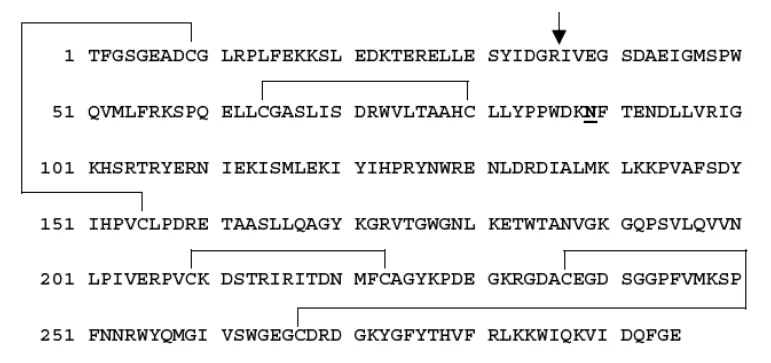
| Structural formula: | |
| Physicochemical properties: | Extinction Coefficient = 2.03 ± 0.02 mL/(mg•cm) Melting Temperature = 50°C Isoelectric Point = 9.2 |
Product Characteristics
RECOTHROM (Thrombin alfa [Recombinant]) is a coagulation protein produced via recombinant DNA technology from a genetically modified CHO cell line. RECOTHROM is identical in amino acid sequence and structurally similar to naturally occurring human thrombin. RECOTHROM precursor is secreted to a culture medium as a single-chain form that is proteolytically converted to a two-chain active form and is purified by a chromatographic process that yields a high-purity product having hemostatic activities similar to native human thrombin. The cell line used to manufacture RECOTHROM has been extensively tested and shown to be free of known infectious agents. The cell culture process used in the manufacture of RECOTHROM employs no additives of human or animal origin.
 |
RECOTHROM is provided as a sterile, white to off-white, preservative-free, lyophilized powder in vials for reconstitution with diluent (sterile 0.9% sodium chloride). A vial of 6000 IU RECOTHROM powder, when reconstituted with 5 mL sterile diluent, and a vial of 24,000 IU RECOTHROM powder, when reconstituted with 20 mL sterile diluent, each yield a solution with pH 6.0 containing 1200 IU/mL of active Thrombin alfa (Recombinant) for topical use. The provided sterile diluent is sterile 0.9% sodium chloride solution.
Viral Inactivation
The manufacturing process of recombinant thrombin was validated for the capability in virus inactivation and/or removal by detergent treatment, column chromatographic steps, and nano-filtration using four model viruses, including ecotropic murine leukemia virus (EMuLV), pseudorabies virus (PRV), parainfluenza type 3 virus (PI3), and minute virus of mice (MVM).
14 CLINICAL TRIALS
The effectiveness of RECOTHROM was evaluated in surgical settings where adjuncts to hemostasis are frequently required: hepatic resection, peripheral arterial bypass surgery, and arteriovenous graft formation for hemodialysis access. The evidence to support the effectiveness of RECOTHROM was not established in spinal surgery.
14.1 Trial Design and Study Demographics
Phase III Study in Four Surgical Settings
RECOTHROM (Thrombin alfa [Recombinant]) was evaluated in a phase III study conducted in 411 patients undergoing surgery in 1 of 4 surgical settings: spinal surgery, hepatic resection, peripheral arterial bypass surgery, and arteriovenous graft formation for hemodialysis access. The study was a multiple-site, randomized, double-blind, controlled evaluation of RECOTHROM compared to bovine thrombin, each at a nominal concentration of 1000 U/mL topically applied to bleeding sites with an absorbable gelatin sponge. (1)
A heterogenous surgical population was enrolled in the phase III study with no comorbidity exclusions except for prior heparin-induced thrombocytopenia. Subject ages ranged from 21 to 89 years; gender was 53% male and 47% female; and the distribution by race was 68% white, 18% black or African American, and 14% other. The distribution of these characteristics was similar in both the RECOTHROM and bovine thrombin treatment groups.
The objectives of the study were to evaluate the comparative efficacy, safety, and immunogenicity of RECOTHROM and bovine thrombin in combination with an absorbable gelatin sponge as adjuncts to hemostasis in surgery. Efficacy was evaluated by the incidence of hemostasis within 10 minutes.
Bleeding appropriate for evaluation was defined as mild to moderate bleeding, either on its own or remaining after brisk bleeding was controlled by standard surgical modalities. Although multiple bleeding sites could be treated, only 1 bleeding site per patient was used to determine primary effectiveness (the proximal anastomosis for peripheral arterial bypass surgery and the arterial anastomosis for arteriovenous graft formation).
| Table 3 – Summary of Trial Design for RECOTHROM as an Aid to Hemostasis in Surgery | ||||
| Study No. (Study Design) | Primary Efficacy Parameter | Treatment Regimen (Number of Patients Valid for Efficacy) | Gender, n (%) | Mean Age (Years) |
| 499E01 (Randomized, Double-blind, Active Controlled) | Incidence of hemostasis within 10 minutes | Thrombin alfa (Recombinant) (198) | Female – 101 (49) Male – 104 (51) | 59.1 |
| Bovine thrombin, topical (203) | Female – 94 (46) Male – 112 (54) | 58.7 | ||
14.2 Study Results
The Phase III study included 411 patients undergoing spinal surgery (n = 122, 30%), hepatic surgery (n = 125, 30%), peripheral arterial bypass surgery (n = 88, 21%), and arteriovenous graft formation (n = 76, 18%). Overall, the incidence of hemostasis within 10 minutes was 95.4% for patients in the RECOTHROM group and 95.1% for patients in the comparator group. This represents a 0.3% (95% CI, -3.7% to 4.4%) difference in patients receiving RECOTHROM compared to those receiving bovine thrombin, demonstrating that the 2 treatments have comparable efficacy. (1)
| Table 4 – Results of Study 499E01 – Hemostasis Within 10 Minutes | ||||
RECOTHROM (n=198) % | Bovine Thrombin (N=203) % | |||
| Overall | 95.4 | 95.1 | ||
| Spinal surgery | 98.4 | 98.4 | ||
| Hepatic resection | 98.4 | 96.8 | ||
| Peripheral arterial bypass | 85.0 | 85.7 | ||
| Arteriovenous graft formation | 97.1 | 97.3 | ||
| Note: The primary efficacy analysis evaluated incidence of hemostasis at ≤10 minutes for subjects treated at 1 of 4 primary TTH bleeding site types: epidural venous plexus, hepatic resection site; peripheral bypass proximal anastomosis, and arteriovenous graft arterial anastomosis (401 efficacy evaluable subjects). | ||||
Differences between treatment groups (Thrombin alfa [Recombinant] – bovine thrombin) in the incidence of hemostasis within 10 minutes ranged from -0.7% (95% CI -16.0% to 14.6%) in PAB surgery to 1.6% (95% CI -3.8% to 6.9%) in hepatic surgery. The 95% CI excluded the prespecified non-inferiority margin of -15% that was prespecified for the pooled analysis of all surgery types in the phase III study. Although not planned, this criterion was even met by all but one single indication. For PAB-surgery the lower CI was at -16%. However, the study was not designed to show comparability of Thrombin alfa (Recombinant) and bovine thrombin within each surgical setting.
The mean volume of study drug administered in phase III clinical study was dependent on the surgical setting: in hepatic segment surgery the volume applied (17.2 mL) was greater than that in the other surgery types (spine surgery 8.6 mL; peripheral arterial bypass surgery 10.3 mL; arteriovenous graft surgery 8.8 mL). The maximum volume administered was 48 mL.
Phase IIIb Study in Subjects with a High Likelihood of Prior Exposure to Bovine Thrombin
An open-label, non-comparative, phase IIIb study was performed at 21 investigative sites to evaluate the immunogenicity and safety of Thrombin alfa (Recombinant) in 209 adult subjects undergoing spinal or vascular surgery who had a history of prior surgery with a high likelihood of bovine thrombin exposure within the previous three years. The primary objective of the study was to compare the development of anti-Thrombin alfa (Recombinant) product antibodies at Day 29 between subjects with and without baseline anti-bovine thrombin product antibodies. In subjects for whom antibody status could be determined at baseline, 15.6% (n=32/205) had anti-bovine thrombin product antibodies, which is higher than the baseline rate of antibody formation observed in the surgical population included in the phase III study. Following treatment, none of the 200 evaluable patients developed antibodies to Thrombin alfa (Recombinant). The mean volume of Thrombin alfa (Recombinant) administered to subjects was 13.8 mL. (2)
Phase II Study in Burn Wound Excision Prior to Skin Grafting
A multiple-site, single-arm, open-label phase II study was conducted to evaluate the safety and immunogenicity of RECOTHROM in patients undergoing skin grafting for burns, trauma, and scar revision. Seventy-two subjects were treated and included in the safety population, and 71 were included in the efficacy analysis. The primary objective of the study was related to safety aspects of RECOTHROM when applied with the spray applicator. The study included 5 children aged from 12 to 17 years. Compared to the other studies, the assessment of efficacy was extended to the 20 minute time point due to the pathologic state of the tissue caused by thermal injury. In the study population, hemostasis was achieved after application of RECOTHROM in 65 of 71 (91.5%) of subjects within 20 minutes of application. The mean volume applied by using a spray applicator kit was 13.4 mL for subjects below 18 years of age and 12.0 mL for subjects of 18 years and above. (3)
Phase II Randomized, Placebo-Controlled Studies
The safety, immunogenicity, and efficacy of RECOTHROM were evaluated in four phase II studies in surgical settings where adjuncts to hemostasis are often required to control bleeding: spinal surgery, major hepatic resection, peripheral arterial bypass (PAB) surgery, and arteriovenous (AV) graft formation for hemodialysis access. Each study was a multi-site, randomized, double-blind, placebo-controlled evaluation of RECOTHROM at a nominal concentration of 1000 units/mL. Both RECOTHROM and placebo (vehicle) were applied with an absorbable gelatine sponge, USP, which itself is a mechanical hemostat. The primary objective was to evaluate the safety of RECOTHROM. Estimation of efficacy was a secondary objective and was measured by several methods including the incidence of hemostasis within 10 minutes. If hemostasis was not achieved after 10 minutes, open-label RECOTHROM was allowed (“rescue therapy”), followed by other hemostatic methods if needed.
A total of 130 subjects received blinded study drug (64 subjects in the RECOTHROM group and 66 in the placebo group). Eighty-eight subjects received RECOTHROM (45 received blinded RECOTHROM only and 43 received RECOTHROM as rescue therapy) and 42 subjects received placebo only. Treated subjects underwent the following types of surgery: 32% spinal, 25% AV graft, 22% hepatic resection, and 21% PAB. Subjects ranged between 24 and 89 years of age; 53% were male.
Serious adverse events and treatment-related adverse events occurred with similar incidence in both treatment groups. RECOTHROM had no effect on standard laboratory parameters or systemic coagulation. One subject in each treatment group developed anti-RECOTHROM product antibodies that did not neutralize native human thrombin.
The incidence of hemostasis within 10 minutes was numerically greater in subjects receiving RECOTHROM compared to those receiving placebo when the results for all surgery types were combined. Point estimates for the incidence of hemostasis within 10 minutes by surgery type and randomized treatment (prior to the use of rescue therapy, if employed) are summarized in Table . The phase II studies were not designed or powered with the intent of demonstrating the superiority of RECOTHROM compared to placebo.
| Table 5 - Incidence (%) of Hemostasis Within 10 Minutes by Surgery Type in Phase II Studies | |||||||
|---|---|---|---|---|---|---|---|
| Surgery Type | RECOTHROM With Gelatin Sponge (N) | Placebo With Gelatin Sponge (N) | Treatment Effecta (95% CIb) | ||||
| Combinedc | 90 (64 | 80 (66) | 10 (-2, 22) | ||||
| Spinal Surgery | 86 (21) | 86 (21) | 0 (-22, 22) | ||||
| Hepatic Resection | 100 (14) | 86 (14) | 14 (-34, 6) | ||||
| PAB | 83 (12) | 73 (15) | 10 (-44, 24) | ||||
| AV Graft | 94 (17) | 75 (16) | 19 (-44, 6) | ||||
a Treatment effect = RECOTHROM - Placebo b CI = confidence interval c Integrated phase II results include all four primary bleeding sites, weighted by enrollment. | |||||||
15 MICROBIOLOGY
No microbiological information is required for this drug product.
16 NON-CLINICAL TOXICOLOGY
General Toxicology
RECOTHROM (Thrombin alfa [Recombinant]) was found to be nontoxic and well tolerated with minimal immunogenicity in nonhuman primates when applied directly to a liver wound with an absorbable gelatin sponge or when administered subcutaneously once weekly for 4 weeks to nonhuman primates. RECOTHROM was found to be non-irritating when instilled in the eyes or applied to normal or abraded skin of rabbits.
RECOTHROM in its intended clinical use as topical hemostatic agent acts only locally and is not systemically available in active form. Furthermore, RECOTHROM is a correlate of the naturally existing plasma thrombin. Therefore, no investigations into safety pharmacology, genotoxicity, carcinogenicity, and reproduction toxicity have been performed.
Acute Toxicity
Single-dose toxicity studies were conducted in cynomolgus monkeys. The studies involved application of RECOTHROM with an absorbable gelatin sponge to a liver wound healing model in male and female cynomolgus monkeys with a recovery period of 8 weeks. Results indicated that RECOTHROM and bovine thrombin were well tolerated in cynomolgus monkeys.
Repeated Dose Toxicity
Repeated administration studies were performed in rats and cynomolgus monkeys. The tolerability and dose-response relationship of thrombin (Thrombin alfa [Recombinant] or bovine thrombin) administered as a single intravenous injection or repeated subcutaneous injection was studied in female Sprague-Dawley rats. As result, female Sprague-Dawley rats tolerated subcutaneous injections of up to 992 IU/kg Thrombin alfa (Recombinant) given once weekly for 2 weeks. Female rats also tolerated a single intravenous bolus injection of 158 IU/kg Thrombin alfa (Recombinant). In contrast, female rats did not tolerate a single intravenous dose of either nominal 178 or 341 IU/kg bovine thrombin. Results of this study demonstrated tolerability of Thrombin alfa (Recombinant) under conditions proposed for evaluation in cynomolgus monkeys and other mammals.
Repeated subcutaneous injections were administered to cynomolgus monkeys to determine the safety and potential incidence and degree of immunologic response to Thrombin alfa (Recombinant). A weekly dose level of 246 IU/kg of Thrombin alfa (Recombinant) or bovine thrombin for 4 weeks was well tolerated. No animals developed antibodies to recombinant thrombin or potential trace prothrombin activator (PTA) impurities. One animal had low levels of specific antibodies to CHO impurities at 2 of 9 nonconsecutive time points.
Carcinogenicity
No carcinogenicity studies have been performed because RECOTHROM acts only locally and is not systemically available in active form.
Reproductive Toxicology
Animal reproduction studies have not been conducted with RECOTHROM.
Toxicity studies using either topical administration of RECOTHROM in surgical wound healing models or using repeated subcutaneous dosing of RECOTHROM to cynomolgus monkeys did not result in any organ toxicity, including reproductive tissues. Therefore, no reproductive toxicity studies have been performed.