


Product Monograph - Octaplex
Recent Major Label Changes
| 1 Indications | 2026-08 |
|---|---|
| 4 Dosage and Administration, 4.2 Recommended Dose and Dosage Adjustment | 2026-08 |
| 4 Dosage and Administration, 4.4 Administration | 2026-08 |
| 4 Dosage and Administration, 4.3 Reconstitution | 2024-11 |
| 4 Dosage and Administration, 4.4 Administration | 2024-11 |
Table of Contents
Certain sections or subsections that are not applicable at the time of the preparation of the most recent authorized product monograph are not listed.
Recent Major Label Changes ................................................................................................ 2
Table of Contents .................................................................................................................. 2
Part 1: Healthcare Professional Information ........................................................................ 4
1 Indications.................................................................................................................. 4
1.1 Pediatrics.......................................................................................................... 4
1.2 Geriatrics .......................................................................................................... 4
2 Contraindications....................................................................................................... 4
3 Serious Warnings and Precautions Box.................................................................... 5
4 Dosage and Administration ....................................................................................... 5
4.1 Dosing Considerations ...................................................................................... 5
4.2 Recommended Dose and Dosage Adjustment................................................... 6
4.3 Reconstitution ................................................................................................... 7
4.4 Administration ................................................................................................. 10
4.5 Missed Dose ................................................................................................... 11
5 Overdose .................................................................................................................. 11
6 Dosage Forms, Strengths, Compositions and Packaging ...................................... 12
7 Warnings and Precautions....................................................................................... 13
7.1 Special Populations ........................................................................................ 16
7.1.1 Pregnancy..................................................................................................... 16
7.1.2 Breastfeeding ................................................................................................ 16
7.1.3 Pediatrics ...................................................................................................... 16
7.1.4 Geriatrics ...................................................................................................... 17
8 Adverse Reactions ................................................................................................... 17
8.1 Adverse Reaction Overview ............................................................................ 17
8.2 Clinical Trial Adverse Reactions ...................................................................... 17
8.3 Less Common Clinical Trial Adverse Reactions ............................................... 21
8.4 Abnormal Laboratory Findings: Hematologic, Clinical Chemistry and Other Quantitative Data ....................................................................................................... 21
8.5 Post-Market Adverse Reactions ...................................................................... 21
9 Drug Interactions ..................................................................................................... 22
9.1 Drug Interactions Overview ............................................................................. 22
9.2 Drug-Behavioral Interactions ........................................................................... 22
9.3 Drug-Drug Interactions .................................................................................... 22
9.4 Drug-Food Interactions ................................................................................... 22
9.5 Drug-Herb Interactions .................................................................................... 23
9.6 Drug-Laboratory Test Interactions ................................................................... 23
10 Clinical Pharmacology ............................................................................................. 23
10.1 Mechanism of Action....................................................................................... 23
10.2 Pharmacodynamics ........................................................................................ 24
10.3 Pharmacokinetics ........................................................................................... 24
10.4 Immunogenicity............................................................................................... 25
11 Storage, Stability, and Disposal .............................................................................. 26
12 Special Handling Instructions.................................................................................. 26
Part 2: Scientific Information .............................................................................................. 27
13 Pharmaceutical Information..................................................................................... 27
14 Clinical Trials............................................................................................................ 28
14.1 Clinical Trials by Indication .............................................................................. 28
14.1.1 Bleeding management or perioperative bleeding prophylaxis in patients treated with vitamin K antagonist therapy ............................................................................... 28
14.1.2 Bleeding management due to acquired deficiency of the prothrombin complex coagulation factors during cardiac surgery (LEX-211) ................................................. 31
15 Non-Clinical Toxicology........................................................................................... 33
16 Patient Medication Information................................................................................ 34
Part 1: Healthcare Professional Information
1 Indications
octaplex (Human Prothrombin Complex) is indicated for:
- The treatment of bleeding and perioperative prophylaxis of bleeding in acquired deficiency of the prothrombin complex coagulation factors, such as deficiency caused by treatment with vitamin K antagonists, or in case of overdose of vitamin K antagonists, when rapid correction of the deficiency is required.
- The treatment of bleeding in acquired deficiency of prothrombin complex coagulation factors, such as deficiency that occurs during cardiac surgery.
1.1 Pediatrics
Pediatrics
No data are available to Health Canada for pediatric use; therefore, Health Canada has not authorized an indication for pediatric use.
No data are available regarding the use of octaplex in case of perinatal bleeding due to vitamin K deficiency in the newborn or due to deficiency of factors of the prothrombin complex.
1.2 Geriatrics
Geriatrics (>65 years of age):
Many of the patients in clinical trials with octaplex were over the age of 65. There is no evidence to suggest that use in the geriatric population is associated with differences in safety or effectiveness.
2 Contraindications
- octaplex is contraindicated for patients who are hypersensitive to this drug or to any ingredient in the formulation or component of the container. For a complete listing, see 6 Dosage Forms, Strengths, Compositions and Packaging.
- Since octaplex contains up to 310 IU of heparin, it should not be given to patients suffering from heparin-induced thrombocytopenia type II or with known allergies to heparin. Even if the antibody against the heparin-protein complex cannot be demonstrated, the administration of octaplex may cause a booster effect with an immediate generation of the antibody.
- octaplex is contraindicated in those rare cases where an individual has an immunoglobulin A (IgA) deficiency, with known antibodies against IgA.
- octaplex should not be used in patients with recent myocardial infarction, with a high risk of thrombosis, or with angina pectoris with the exception of life-threatening bleeds due to overdose of oral anticoagulants, or when an emergency surgical procedure is indicated in patients on vitamin K antagonists and an international normalized ratio (INR) >3.
- In patients suffering from disseminated intravascular coagulation (DIC), the administration of octaplex is principally not recommended because of the pro-coagulant capacity of the product. However, for life-threatening events when the substitution by fresh frozen plasma (FFP) is not sufficient or if FFP cannot be given because of a threat of hypervolemia, octaplex might be used after interrupting the cause of DIC. Under these circumstances, it is important to administer antithrombin (AT) and heparin before the administration of a PCC.
- In patients treated for coagulation disorders because of chronic liver disease or because of liver transplantation, AT levels should be monitored and an AT concentrate should be given concomitantly if an AT deficiency is present. No clinical data are available for octaplex for the treatment of bleeding disorders because of liver parenchymal disorders or oesophageal varices or because of major liver surgery therefore octaplex cannot be recommended in these patients.
3 Serious Warnings and Precautions Box
Patients being treated with Vitamin K antagonist (VKA) therapy have underlying disease states that predispose them to thromboembolic events. Potential benefits of reversing VKA should be weighed against the potential risks of thromboembolic events, especially in patients with the history of a thromboembolic event. Resumption of anticoagulation should be carefully considered as soon as the risk of thromboembolic events outweighs the risk of acute bleeding (see 7 Warnings and Precautions).
This product is prepared from large pools of human plasma, which may contain the causative agents of hepatitis and other viral diseases. The physician should discuss the risks and benefits of this product with the patient before prescribing or administering to the patient (see 7 Warnings and Precautions).
4 Dosage and Administration
4.1 Dosing Considerations
Classical dose-response studies were not performed due to the human origin of the product. Dose recommendations for single factor deficiencies are based on the required level, on the body weight (BW) of the patient, and the activity increase per unit of the respective factor administered. For acquired deficiencies, dosing should also be individualized and preferably be accompanied by laboratory analysis of global and single coagulation parameters.
Because of the risk of thromboembolic complications, close monitoring should be exercised when administering human prothrombin complex to patients with a history of coronary heart disease, myocardial infarction, to patients with liver disease, to peri- or post-operative patients, to neonates, or to patients at risk of thromboembolic events or disseminated intravascular coagulation (see 7 Warnings and Precautions).
4.2 Recommended Dose and Dosage Adjustment
Only general dosage guidelines are given below. Treatment should be initiated under the supervision of a physician experienced in the treatment of coagulation disorders. The dosage and duration of the substitution therapy depend on the severity of the disorder, on the location and extent of the bleeding and on the patient’s clinical condition.
The amount and the frequency of administration should be calculated on an individual patient basis. Dosage intervals must be adapted to the different circulating half -life of the different coagulation factors in the prothrombin complex.
Individual dosage requirements can only be identified on the basis of regular determinations of the individual plasma levels of the coagulation factors of interest, or on global tests of the prothrombin complex levels (prothrombin time, INR), and continuous monitoring of the clinical condition of the patient.
In case of major surgical interventions precise monitoring of the substitution therapy by means of coagulation assays is essential (specific coagulation factor assays and/or global tests, e.g., assessment of prothrombin complex levels or clotting times).
Acquired deficiencies
Bleeding and perioperative prophylaxis of bleeding during vitamin K antagonist treatment:
The dose will depend on the INR before treatment and body weight. Approximate doses (units/kg body weight of the reconstituted product) are provided in Table 1.
Table 1 Approximate Doses of octaplex Required for Normalization of INR
| Pre-treatment INR | 2–<4 | 4–6 | >6 |
|---|---|---|---|
| Dose of octaplex (units1 of Factor IX) / kg body weight | 25 | 35 | 50 |
| Maximum dose (units of Factor IX) | 2,500 | 3,500 | 5,000 |
1 Units refer to International Units.
Dosing is weight-based up to 100 kg. For patients over 100 kg, the maximum single dose (units of Factor IX) should not exceed the values stated in Table 1.
The correction of the vitamin K antagonist induced impairment of hemostasis persists for approximately 6-8 hours. However, the effects of vitamin K, if administered simultaneously, are usually achieved within 4-6 hours. Thus, repeated treatment with human prothrombin complex is not usually required when vitamin K has been administered.
As these recommendations are empirical and recovery and the duration of effect may vary, monitoring of INR treatment is mandatory.
Bleeding in acquired deficiency of the prothrombin complex coagulation factors, such as deficiency that occurs during cardiac surgery:
For patients weighing more than 60 kg, the recommended octaplex dose is 2,000 IU; those weighing 60 kg or less should receive 1,500 IU. If required, the dose may be repeated once.
Calculate each dose using the nominal Factor IX potency printed on the vial.
Administer octaplex to bleeding patients with a confirmed coagulation-factor deficiency (e.g., INR ≥ 1.5) or when such a deficiency is clinically suspected.
Monitor INR (or another clot-initiation assay) and the patient’s clinical response during and after infusion. In Study LEX-211, octaplex reduced INR by at least 0.9 within 60 minutes in most subjects (see 14 Clinical Trials).
4.3 Reconstitution
Table 2 Parenteral Products
| Strength | Vial Size | Volume of Solvent to be Added to Vial | Approximate Available Volume | Concentration per mL | |||||
|---|---|---|---|---|---|---|---|---|---|
| 500 IU | 30 mL | 20 mL | 20 mL | 25 IU/mL FIX | |||||
| 1000 IU | 50 mL | 40 mL | 40 mL | ||||||
IU = International units; FIX = Human Coagulation Factor IX
octaplex is provided with a transfer device for reconstitution of the lyophilized powder in solvent (sterile Water for Injection [sWFI]).
octaplex is for single use only. Do not re-use any of the components.
Inspect all components for physical integrity prior to use. Do not use products or components that appear damaged or broken.
Reconstitute octaplex using aseptic technique for the procedure described below.
The product reconstitutes quickly (1 to 5 minutes) at room temperature (20°C to 25°C). As octaplex contains no preservatives, the solution should be administered immediately after reconstitution, or within 8 hours, provided sterility is maintained. The reconstituted solution can be stored for up to 8 hours at room temperature (20°C to 25°C).
The reconstituted solution should be clear, colourless or slightly blue. Do not use solutions that are cloudy or have deposits. Reconstituted products should be inspected visually for particulate matter and discolouration prior to administration. A blue colour is not interpreted as discolouration.
Instructions for preparation and reconstitution:
- 1. Ensure that the lyophilized powder and solvent vials are at room temperature (20°C to 25°C). This temperature should be maintained during reconstitution. If the octaplex powder and water for injection (WFI) are not already at room temperature, warm up the closed vials to room temperature. This temperature should be maintained during reconstitution. If a water bath is used to warm the WFI, care should be taken to ensure the water does not come into contact with the rubber stopper or closure system of the vials or warming beyond 30°C.
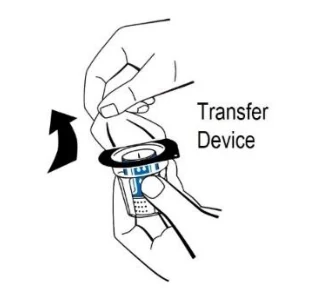
Figure 1
- 2. Remove the flip caps of the lyophilized powder and solvent vials and disinfect the rubber stoppers with an alcohol swab and allow to dry.
- 3. Open the transfer device package by peeling off the lid (Figure 1). To maintain sterility, do not remove the transfer device from the blister package and do not touch the spike.
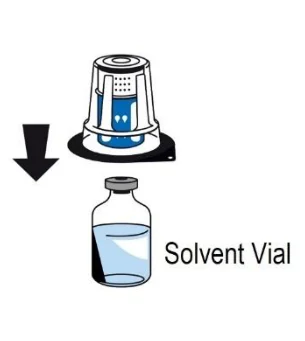
Figure 2
- 4. Place the solvent vial on a flat, even, clean surface and hold it firmly. Without removing the blister package, place the blue part of the transfer device on top of the solvent vial and press straight and firmly down, in one swift motion, until it snaps into place (Figure 2). Do not twist while attaching.
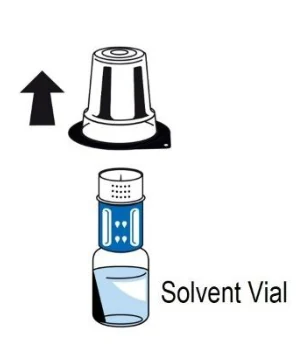
Figure 3
- 5. While holding onto the solvent vial, carefully remove the blister package from the transfer device by pulling vertically upwards. Make sure to leave the transfer device attached firmly to the solvent vial (Figure 3).
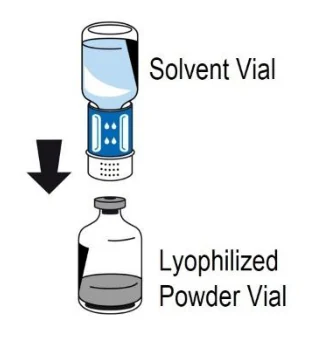
Figure 4
- 6. Place the lyophilized powder vial on a flat, clean surface and hold it firmly. Take the solvent vial with the attached transfer device and turn it upside down. Place the white part of the transfer device connector on top of the powder vial and press firmly down, in one swift motion, until it snaps into place (Figure 4). Do not twist while attaching. The solvent will flow automatically into the powder vial.
Note: The transfer device must be attached to the solvent vial first and then to the lyophilized powder vial. Otherwise, loss of vacuum occurs, and transfer of the solvent does not take place. If the solvent is not completely transferred to the lyophilized powder vial during this process, contact your blood bank.
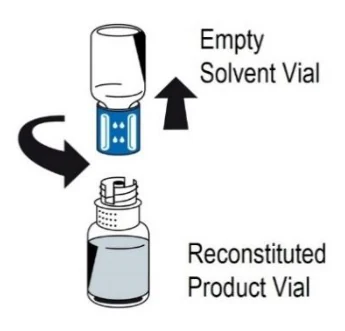
Figure 5
- 7. With both vials still attached, gently swirl the product vial until the product is fully dissolved. To avoid foam formation, do not shake the vial. octaplex dissolves quickly at room temperature (20°C to 25°C) and is a clear solution that may be colorless to slightly blue. Unscrew the transfer device counterclockwise into two parts (Figure 5). Do not touch the luer lock connector.
- 8. Dispose of the empty solvent vial together with the blue part of the transfer device.
After reconstitution the solution must be used immediately.
However, if it is not administered immediately, the reconstituted solution can be stored for up to 8 hours at 2°C to 25°C, provided sterility of the stored product is maintained.
If the same patient is to receive more than one vial, you may pool the contents of multiple vials, provided sterility is maintained. The transfer device is for single use only. Use a separate unused transfer device for the reconstitution of each product vial. Always use the transfer device provided with the product packaging for optimal reconstitution results.
4.4 Administration
Instructions for injection:
octaplex is for intravenous use after reconstitution only.
Do not mix with other medicinal products. Administer octaplex through a separate infusion line. The infusion line may be flushed with normal saline or dextrose 5% solution before and after administration of octaplex.
Instructions for Infusion:
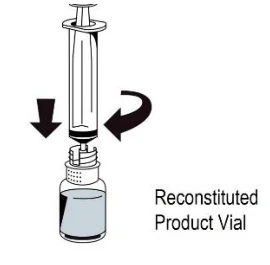
Figure 6
- 1. Attach a syringe to the luer lock outlet on the white part of the transfer device (Figure 6).
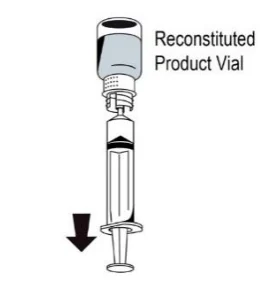
Figure 7
- 2. Turn the vial upside down and draw the solution into the syringe (Figure 7).
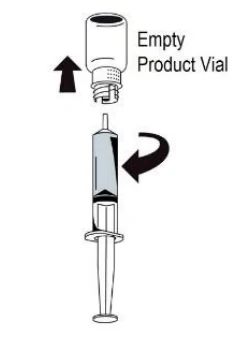
Figure 8
- 3. Once the solution has been transferred, firmly hold the barrel of the syringe (keeping the syringe plunger facing down) and remove the syringe from the transfer device (Figure 8).
- 4. Dispose of the white part of the transfer device together with the empty vial.
- 5. Attach a suitable administration set to the luer adapter of the syringe.
- 6. Disinfect the intended injection site appropriately.
- 7.
Inject the octaplex solution intravenously using an aseptic technique:
Bleeding and perioperative prophylaxis of bleeding during vitamin K antagonist treatment:
- • Infuse at a rate of 0.12 mL/kg/min (~3 units/kg/min), up to a maximum rate of 8 mL/min (~210 units/min)
Bleeding in acquired deficiency of the prothrombin complex coagulation factors, such as deficiency that occurs during cardiac surgery:
- Infuse at a rate of ~15 mL/min (~375 units/min), with maximum 20 mL/min (~500 units/min)
A pump can be used to regulate and control the injection rate when administering octaplex. No blood should enter the syringe due to the risk of fibrin clot formation.
Any unused product or waste material should be disposed of immediately in accordance with local requirements.
Incompatibilities
octaplex should not be mixed with other medication in the same injection set.
Shelf-life
octaplex has a shelf-life of 3 years. Chemical and physical in-use stability has been demonstrated for up to 8 hours at 25°C. Use the product immediately after reconstitution to minimize the risk of microbial contamination. If immediate use is not possible, the user must establish and maintain validated in-use storage times and conditions that prevent contamination.
Special Precautions for Storage
Do not store above 25°C. Do not freeze. Store in the original package in order to protect from light. Please see 11 Storage, Stability and Disposal.
4.5 Missed Dose
Not applicable because octaplex is administered in a hospital setting by health care professionals.
5 Overdose
The use of high doses of human prothrombin complex products has been associated with instances of myocardial infarction, disseminated intravascular coagulation (DIC), venous thrombosis, and pulmonary embolism. Therefore, in the case of an overdose, the risk of development of thromboembolic complications or DIC is enhanced.
For management of a suspected drug overdose, contact your regional poison control centre.
6 Dosage Forms, Strengths, Compositions and Packaging
To help ensure the traceability of biologic products healthcare professionals should record the brand name and the non-proprietary (active ingredient) name as well as other product-specific identifiers such as the Drug Identification Number (DIN) and the batch/lot number of the product supplied.
Table 3 Dosage Forms, Strengths, and Composition
Small amounts of the solvent/detergent (S/D) reagents, TNBP (≤ 5 µg/mL). and Polysorbate 80 (≤ 50 µg/mL), may remain in the finished product. These substances are added during the manufacturing process because of their capacity to inactivate lipid-enveloped viruses. octaplex is a human prothrombin complex (PCC) containing the coagulation factors II, VII, IX, and X and Proteins C and S in the amounts listed in Table 3.
The octaplex manufacturing process has the capability to reduce viruses by way of a S/D viral inactivation process and a virus removal nanofiltration step. The capacity to remove prions has been assessed in a two-step approach for the process: QAE-Sephadex A-50; and nanofiltration. The preparation complies with the monograph on Human Prothrombin Complex (freeze-dried) of the European Pharmacopoeia (2005:0554). Other precautions against viral transmission include: selection of plasma donors; screening of donations and plasma pool; as well as quality control measurements of the final product.
| Route of Administration | Dosage Form / Strength/Composition | Non-Medicinal Ingredients |
| Intravenous injection | Powder and solvent for solution for injection/ Per 20 mL vial: |
| Human Coagulation Factor II | 280-760 IU |
| Human Coagulation Factor VII | 180-480 IU |
| Human Coagulation Factor IX | 500 IU |
| Human Coagulation Factor X | 360-600 IU |
| Protein C | 260-620 IU |
| Protein S | 240-640 IU |
| Per 40 mL vial: |
| Human Coagulation Factor II | 560–1520 IU |
| Human Coagulation Factor VII | 360–960 IU |
| Human Coagulation Factor IX | 1000 IU |
| Human Coagulation Factor X | 720–1200 IU |
| Protein C | 520–1240 IU |
| Protein S | 480–1280 IU |
| Factor IX specific activity is ≥ 0.6 IU/mg proteins. | Heparin (80-310 IU/20 mL vial; 160-620 IU/40 mL vial) Sodium Citrate (17.0–27.0 mmol/L) Solvent (Water for Injection 20 mL/40 mL) |
As with any blood product, a potential problem with PCC preparations is the transmission of blood borne pathogens including those of hitherto unknown origin. When medicinal products prepared from human blood or plasma are given to a patient, the transmission of infectious agents cannot be totally excluded. This applies also to hitherto unknown pathogens. This product is prepared from large pools of human plasma, which may contain the causative agents of hepatitis and other viral diseases (see 7 Warnings and Precautions).
For a list of excipients (non-medicinal ingredients), see Table 3 above.
Description
Nature and contents of container
Powder and solvent for solution for injection.
Package sizes:
octaplex 500 in 20 mL
- Powder in a vial (type I glass) with a stopper (halobutyl rubber) and a flip off cap (aluminium).
- 20 mL of solvent in a vial (type I glass) with a stopper (halobutyl rubber) and a flip off cap (aluminium).
- Transfer device with integrated filter.
octaplex 1000 in 40 mL
- Powder in a vial (type I glass) with a stopper (halobutyl rubber) and a flip off cap (aluminium).
- 40 mL of solvent in a vial (type I glass) with a stopper (halobutyl rubber) and a flip off cap (aluminium).
- Transfer device with integrated filter.
Components used in the packaging of octaplex are latex-free.
7 Warnings and Precautions
Please see 3 Serious Warnings and Precautions Box.
This product is prepared from large pools of human plasma. Thus, there is a possibility it may contain causative agents of viral or other undetermined diseases.
General
For the reversal of oral anticoagulant therapy, the administration of PCCs is indicated only when the desired increase in prothrombin complex factor activity cannot efficiently or adequately be achieved through other therapeutic measures. PCC is not indicated in cases where the prothrombin time can be normalized in time by discontinuing oral anticoagulants or by vitamin K administration. Overdose of oral anticoagulants or reversal of such therapy in case of emergency situations, liver cirrhosis, and neonatal vitamin K deficiency are frequent causes of acquired prothrombin complex factor deficiencies. There are no data available regarding the use of octaplex in pediatric patients.
In patients with acquired bleeding, PCC use should be a component of personalized, targeted hemostatic support based on conventional or viscoelastic coagulation testing and a bleeding management algorithm.
The long-term and repeat use safety of octaplex has not been established in controlled clinical studies.
octaplex should be administered under the supervision of a qualified health professional that is experienced in the use of anticoagulation agents and in the management of coagulation disorders. Appropriate management of therapy and complications is only possible when adequate diagnostic and treatment facilities are readily available.
Products made from human plasma may contain infectious agents, such as viruses, that can cause disease. The risk that such products will transmit an infectious agent has been reduced by screening plasma donors for prior exposure to certain viruses, by testing for the presence of certain current virus infections, and by inactivating and/or removing certain viruses. The measures taken are considered effective for enveloped viruses such as Human Immunodeficiency Virus (HIV), Hepatitis B Virus (HBV) and Hepatitis C Virus (HCV). The measures taken may be of limited value against non-enveloped viruses such as Hepatitis A Virus (HAV) or parvovirus B19. Parvovirus B19 infection may be serious for pregnant women (foetal infection) and for individuals with immunodeficiency or increased red cell production (e.g., hemolytic anemia). Despite these measures, such products can still potentially transmit disease. There is also the possibility that unknown infectious agents may be present in such products. Individuals who receive infusions of blood or plasma products may develop signs and/or symptoms of some viral infections.
The prion issue is more complicated to address. The prion of major concern is the one causing vCJD, and so far, no prion protein has been found in the plasma from even clinical cases of this disease. The capacity to remove prions has been assessed in a two -step approach for the process with an actual removal log of 5.96 log10:
- Step A: Cryoprecipitation and Capture of the Prothrombin Complex by QAE-Sephadex A-50;
- Step B: Nanofiltration.
The studies were performed with PrPSc (hamster-adapted scrapie 263K).
General disorders and administration site conditions: Increase in body temperature has been rarely observed.
Investigations: A transient increase in liver transaminases has been observed in rare instances.
Appropriate vaccination (hepatitis A and B) is recommended for patients in regular/repeated receipt of human plasma-derived prothrombin complex products.
Cardiovascular
Thromboembolic events
Patients receiving a vitamin K antagonist may have an underlying hypercoagulable state which may be exacerbated by the infusion of prothrombin complex concentrate. There have been cases of thromboembolic episodes reported within one month after the administration of octaplex in high-risk postoperative patients.
Activated clotting factors (FVIIa, FIXa, or FXa), lack of inhibiting proteins (PC or PS, heparin and/or AT), overload with FII and FX compared to FIX and the predisposition of patients have been suggested to cause thrombotic events.
Treatment with plasma-derived products that contain factors II, VII, IX, and X has been associated with thrombosis and may be associated with an increased risk of DIC, and thromboembolic complications including myocardial infarction. There is a risk of thrombosis or disseminated intravascular coagulation when patients, with either acquired or congenital deficiency, are treated with human prothrombin complex, particularly with repeated dosing. The risk may be higher in treatment of isolated factor VII deficiency, since the other vitamin K dependant coagulation factors, with longer half-lives, may accumulate to levels considerably higher than normal.
Patients given human prothrombin complex should be observed closely for signs or symptoms of intravascular coagulation or thrombosis. Because of the risk of thromboembolic complications, close monitoring should be exercised when administering human prothrombin complex to patients with a history of coronary heart disease, myocardial infarction, to patients with liver disease, to peri- or post-operative patients, to neonates, or to patients at risk of thromboembolic events or disseminated intravascular coagulation. In each of these situations, the potential benefit of treatment should be weighed against the risk of these complications. Where adequate, a previous administration of AT concentrate is indicated.
Hematologic
octaplex contains heparin. Therefore, a sudden, allergy induced reduction of the blood platelet count below 100 000/µL or 50% of the starting count may be rarely observed (thrombocytopenia type II). In patients not previously hypersensitive to heparin, this decrease in thrombocytes may occur 6-14 days after the start of treatment. In patients with previous heparin hypersensitivity this reduction may happen within a few hours. The treatment with octaplex must be stopped immediately in patients with this allergic reaction. These patients must not receive heparin containing medicinal products in the future.
In case of consumptive coagulation and hyperfibrinolysis, octaplex should only be administered after the disruption of the consumption process by appropriate means (e.g., by heparin, AT, antifibrinolytics).
Immune
Replacement therapy may rarely lead to the formation of circulating antibodies inhibiting one or more of the human prothrombin complex factors. If such inhibitors occur, the condition will manifest itself as a poor clinical response. Rare instances of the development of antibodies (inhibitors) against coagulation factors have been reported after administration of older generation, less-purified prothrombin complex concentrates (PCCs) or activated PCCs (aPCCs). No signal has emerged in modern prospective trials or large pharmacovigilance datasets of single-dose 4F-PCC used for warfarin reversal. The occurrence of inhibitor formation was evaluated in one clinical trial (LEX-201) but the rate could not be established, due to the very small number of patients in the trial (9 only) (see 10.4 Immunogenicity).
Allergic or anaphylactic-type reactions may rarely occur. These may include angioedema, injection site reactions, chills, flushing, urticaria, headache, drop in blood pressure, anxiety, nausea, vomiting, sweating, tachycardia, dyspnoea, or bronchospasm. In rare cases, these reactions may progress to severe anaphylaxis. In patients with a known predisposition to allergies, prophylactic anti-allergic medications should be considered. If allergic or anaphylactic reactions occur, the injection must be stopped immediately. Mild reactions may be controlled with glucocorticoids and/or antihistamines. For severe disorders, such as shock, the current standard medical treatment should be implemented.
Monitoring and Laboratory Tests
Prior to the treatment with octaplex, blood coagulation should be monitored if possible using appropriate coagulation assays, at least the Quick test should be determined. When performing clotting tests, which are sensitive to heparin in patients receiving high doses of human prothrombin complex, the heparin as a constituent of the administered product must be taken into account.
In case of major surgical interventions, precise monitoring of the substitution therapy by means of coagulation assays is essential (specific coagulation factor assays and/or global tests for prothrombin complex levels).
octaplex does not contain AT. However, especially in patients treated for coagulation disorders because of chronic liver disease or because of liver transplantation, AT levels should be monitored and an AT concentrate should be given concomitantly if an AT deficiency is present.
7.1 Special Populations
7.1.1 Pregnancy
The safety of octaplex for use in human pregnancy and during lactation has not been established in clinical trials.
A study of the embryotoxic and teratogenic properties of TNBP and Octoxynol (Triton X-100) was carried out in rats and rabbits at dose levels of 50 to 900 µg/kg BM/day for TNBP and 250 to 4,500 µg/kg BM/day for Octoxynol (Triton X-100). No test was made of the fertility and breeding efficiency, or the peri- and post-natal development since there was no evidence of any effect on the reproductive organs by the substances. In rats, some malformations occurred, but these were of a type commonly occurring in control animals of this species. No malformations were seen in the rabbits. Pre-natal development was not affected in the rats, although in the high-dose group in the rabbit, the resorption rate was slightly increased and body weight of the foetus was moderately and significantly decreased.
The risk of parvovirus B19 infection on pregnant woman and foetus are well known.
Although no harmful effects on mother, embryo, foetus, or child were reported in the three clinical trials, octaplex should be used during pregnancy and lactation only if the benefit outweighs the potential risk.
7.1.2 Breastfeeding
See Pregnant Women section above.
7.1.3 Pediatrics
Pediatrics: No data are available; therefore, Health Canada has not authorized an indication for pediatric use.
7.1.4 Geriatrics
In clinical trials 51 out of 90 patients treated with octaplex were over the age of 65 and 20 were over the age of 75. There is no evidence to suggest that use in the geriatric population is associated with differences in safety or effectiveness.
8 Adverse Reactions
8.1 Adverse Reaction Overview
Thromboembolic adverse reactions and parvovirus B19 seroconversions occurred in clinical trials with octaplex at an incidence rate of 3.0% (15/505) and 1.7% (5/292 [excludes LEX-211, which did not incorporate virology testing]), respectively (see 7 Warnings and Precautions).
8.2 Clinical Trial Adverse Reactions
Clinical trials are conducted under very specific conditions. The adverse reaction rates observed in the clinical trials, therefore, may not reflect the rates observed in practice and should not be compared to the rates in the clinical trials of another drug. Adverse reaction information from clinical trials may be useful in identifying and approximating rates of adverse drug reactions in real-world use.
Six clinical studies have been conducted with octaplex (LEX-201, LEX-202, LEX-203, LEX-205, LEX-209 and LEX-211); one in patients with congenital deficiency of prothrombin complex coagulation factors (LEX-201), four in patients bleeding under vitamin K antagonist treatment (LEX-202, LEX-203, LEX-205, and LEX-209) and one in surgical patients bleeding due to acquired deficiency of the prothrombin complex coagulation factors (LEX-211). See sections 10.3 and 14.1 for details on the clinical trials. In total, 505 patients have been treated and the patients received a total of approximately 1,575,775 IU of octaplex.
LEX-201, LEX-202, and LEX-203
Eight adverse drug reactions were reported in 7 patients across studies LEX-201, LEX-202, and LEX-203 (Error! Reference source not found.). All adverse drug reactions were graded as mild and assessed as possibly related to octaplex treatment.
Table 4 Treatment-Emergent Adverse Events Considered to be at least Possibly Related to Treatment with octaplex within Studies LEX-2011, LEX-2022, and LEX-2032
System Organ Class Preferred MedDRA Term | No. patients (% patients), no. events (n = 90) |
|---|---|
| General disorders and administration site conditions | |
| Injection site burning | 1 (1.1), 1 |
| Investigations | |
| Parvovirus B19 serology positive | 3 (3.3), 3 |
| Liver and biliary system disorders | |
| Hepatic function abnormal | 1 (1.1), 1 |
| Nervous system disorders | |
| Headache | 1 (1.1), 2 |
| Vascular disorders | |
| Hypertension | 1 (1.1), 1 |
1 Congenital deficiency of prothrombin complex coagulation factors
2 Acquired deficiency of prothrombin complex coagulation factors due to vitamin K antagonist treatment
In study LEX-201, a Phase II/III, open-label, non-controlled, multicenter, Phase II/III study in patients ≥12 years old (mean age 20 years) with severe factor II, VII, IX and X deficiency, two adverse reactions (headache) were considered possibly related to study drug. No viral seroconversion was observed in all ten patients that were assessed for viral markers. Viral markers were measured at baseline, after 3 and 6 months, and 6–12 weeks after the last administration of octaplex.
LEX-202 was a non-randomized, open-labelled, non-controlled, multicenter, Phase II study in adult patients (mean age 68 years) with major bleedings, or undergoing surgical or invasive procedures during treatment with anticoagulants of coumarin or indandione type. In 20 patients, only three adverse reactions were assessed as possibly related to the study treatment: two parvovirus B19 infections and one abnormal hepatic function.
LEX-203 was a non-randomized, open-labelled, multicenter, Phase III study in adult patients (mean age 70 years) receiving anticoagulants of coumarin and indandione type and in whom a surgery or invasive procedure was indicated. In 40 patients, only three events occurring in three patients were assessed as possibly related to the study treatment: parvovirus B19 infection, injection site burning, and aggravation of arterial hypertension.
LEX-205
LEX-205 was a prospective, randomized, open-label, active-control, multicenter Phase III study comparing octaplex with FFP in adult patients (≥18 years old; mean age 67 years) receiving anticoagulant therapy requiring urgent surgery or invasive procedures. A total of 13 treatment-emergent adverse events (TEAEs) in 13 (13.4%) patients in the octaplex group and 31 TEAEs in 30 (29.1%) patients in the FFP group were considered possibly or probably related to IMP by the Investigator—these events are listed in Table 5. No TEAE led to discontinuation from the study.
Table 5 Treatment-Emergent Adverse Events Considered to be at least Possibly Related to Treatment1 within Study LEX-205
System Organ Class Preferred MedDRA Term | No. patients (% patients), no. events | ||||||
|---|---|---|---|---|---|---|---|
octaplex (n = 97) | Fresh frozen plasma (n = 103) | ||||||
| Blood and lymphatic system disorders | |||||||
| Hemorrhagic anemia | - | 1 (1.0), 1 | |||||
| Cardiac disorders | |||||||
| Atrial fibrillation | - | 1 (1.0), 1 | |||||
| Cardiac failure | - | 1 (1.0), 1 | |||||
| Cardiac failure congestive | - | 1 (1.0), 1 | |||||
| Cardiogenic shock | - | 1 (1.0), 1 | |||||
| Supraventricular tachycardia | - | 1 (1.0), 1 | |||||
| Tachycardia | - | 1 (1.0), 1 | |||||
| Gastrointestinal disorders | |||||||
| Nausea | - | 2 (1.9), 2 | |||||
| General disorders and administration site conditions | |||||||
| Hyperthermia | - | 2 (1.9), 2 | |||||
| Chills | - | 1 (1.0), 1 | |||||
| Immune system disorders | |||||||
| Hypersensitivity | - | 1 (1.0), 1 | |||||
| Injury, poisoning and procedural complications | |||||||
| Overdose | 1 (1.0), 1 | - | |||||
| Thrombosis in device | 1 (1.0), 1 | - | |||||
| Investigations | |||||||
| Blood lactate dehydrogenase increased | - | 1 (1.0), 1 | |||||
| Hepatitis C antibody positive | - | 1 (1.0), 1 | |||||
| Parvovirus B19 serology positive | 2 (2.1), 2 | 2 (1.9), 2 | |||||
| Metabolism and nutrition disorders | |||||||
| Fluid imbalance | - | 1 (1.0), 1 | |||||
| Nervous system disorders | |||||||
| Headache | - | 1 (1.0), 1 | |||||
| Respiratory, thoracic and mediastinal disorders | |||||||
| Acute respiratory distress syndrome | - | 1 (1.0), 1 | |||||
| Epistaxis | 1 (1.0), 1 | - | |||||
| Hemoptysis | 1 (1.0), 1 | - | |||||
| Pulmonary embolism | 2 (2.1), 2 | - | |||||
| Pulmonary oedema | - | 4 (3.9), 4 | |||||
| Respiratory distress | - | 1 (1.0), 1 | |||||
| Skin and subcutaneous tissue disorders | |||||||
| Pruritus | - | 2 (1.9), 2 | |||||
| Dermatitis allergic | - | 1 (1.0), 1 | |||||
| Vascular disorders | |||||||
| Deep vein thrombosis | 4 (4.1), 4 | 1 (1.0), 2 | |||||
| Hypertension | - | 1 (1.0), 1 | |||||
| Thrombosis | 1 (1.0), 1 | - | |||||
1 Causality according to the Investigator’s assessment.
LEX-209
LEX-209 was a Phase III, prospective, multicenter, randomized, double-blind, group-sequential, non-inferiority study comparing octaplex with a comparator PCC for the reversal of vitamin K antagonist-induced anticoagulation in adult patients (≥18 years old; mean age 66 years) who required urgent surgery with significant bleeding risk. A total of two treatment-emergent adverse events (TEAEs) in 1 (1.0%) patient in the octaplex group and 1 TEAE in 1 (1.0%) patient in the comparator group were considered possibly or probably related to IMP—these events are listed in the table below. No treatment-related TEAEs led to discontinuation in the study.
Table 6 Treatment-Emergent Adverse Events Considered to be at least Possibly Related to Treatment1 within Study LEX-209
System Organ Class Preferred MedDRA Term | No. patients (% patients), no. events | ||||||
|---|---|---|---|---|---|---|---|
octaplex (n = 105) | Comparator PCC (n = 103) | ||||||
| Cardiac disorders | |||||||
| Angina unstable | 1 (1.0), 1 | - | |||||
| General disorders and administration site conditions | |||||||
| Chest pain | 1 (1.0), 1 | - | |||||
| Investigations | |||||||
| Blood lactate dehydrogenase increased | - | 1 (1.0), 1 | |||||
1 Causality according to the Investigator’s assessment. Assessment of relationship was only conducted by the Investigator in Study LEX-209.
PCC = prothrombin complex concentrate.
LEX-211
LEX-211 was a multicenter, randomized, active-control, prospective, Phase III study comparing octaplex with frozen plasma (FP) in adult patients (≥18 years old; mean age 63 years) who underwent cardiac surgery on cardiopulmonary bypass (CPB) and required coagulation factor replacement. A total of 26 thromboembolic events occurred in 18 patients treated with octaplex. The most frequently reported event type was cerebrovascular accident, with one episode in each of three patients; all three events were deemed at least possibly related to treatment. Deep vein thrombosis occurred in four patients, and prosthetic valve thrombosis in one patient. In total, six thromboembolic adverse reactions in six patients were assessed as at least possibly related to study therapy (see 7 Warnings and Precautions).
A total of 15 TEAEs in 15 (7.0%) patients in the octaplex group and 22 TEAEs in 20 (9.7%) patients in the FP group were considered possibly or probably related to IMP by the Investigator and/or Sponsor – these events are listed in Table 7. No TEAEs led to discontinuation in the study.
Table 7 Treatment-Emergent Adverse Events Considered to be at least Possibly Related to Treatment1 within Study LEX-211
System Organ Class Preferred MedDRA Term | No. patients (% patients), no. events | ||||||
|---|---|---|---|---|---|---|---|
Octaplex (n = 213) | Frozen Plasma (n = 207) | ||||||
| Blood and lymphatic system disorders | |||||||
| Anemia | 7 (3.3), 7 | 7 (3.4), 7 | |||||
| Cardiac disorders | |||||||
| Intrapericardial thrombosis | 1 (0.5), 1 | - | |||||
| Immune system disorders | |||||||
| Anaphylactic shock | - | 1 (0.5), 1 | |||||
| Injury, poisoning and procedural complications | |||||||
| Vasoplegia syndrome | - | 2 (1.0), 2 | |||||
| Vascular graft thrombosis | - | 1 (0.5), 1 | |||||
| Investigations | |||||||
| Alanine aminotransferase increased | - | 1 (0.5), 1 | |||||
| Metabolism and nutrition disorders | |||||||
| Hypervolemia | 2 (0.9), 2 | 2 (1.0), 2 | |||||
| Nervous system disorders | |||||||
| Cerebrovascular accident | 1 (0.5), 1 | 3 (1.4), 3 | |||||
| Embolic stroke | 1 (0.5), 1 | - | |||||
| Ischemic stroke | 1 (0.5), 1 | - | |||||
| Skin and subcutaneous tissue disorders | |||||||
| Rash | - | 2 (1.0), 2 | |||||
| Vascular disorders | |||||||
| Hypertension | - | 1 (0.5), 1 | |||||
| Hypotension | - | 1 (0.5), 1 | |||||
| Jugular vein thrombosis | 1 (0.5), 1 | - | |||||
| Superficial vein thrombosis | 1 (0.5), 1 | - | |||||
| Thrombosis | - | 1 (0.5), 1 | |||||
1 Causality according to the Sponsor and/or Investigator’s assessment.
In total, 38 deaths have been reported during clinical trials with octaplex, and all cases were classified as unlikely to be related or unrelated to octaplex treatment, as assessed by the responsible investigators.
8.3 Less Common Clinical Trial Adverse Reactions
Few adverse reactions were observed in the clinical trials conducted with octaplex, all of which are listed in section 8.2.
8.4 Abnormal Laboratory Findings: Hematologic, Clinical Chemistry and Other Quantitative Data
During the pharmacokinetic investigations in study LEX-201, laboratory markers for coagulation activation and fibrinolysis were monitored, i.e., prothrombin fragment F1+2, thrombin-antithrombin III complex, fibrin monomers, d-dimers plasma levels, prothrombin time (PT) and activated partial thromboplastin time (aPTT). No pattern of elevated markers was seen that could have been induced by the administration of octaplex.
In study LEX-202, one patient had transient increases of alanine aminotransferase (ALAT) and aspartate aminotransferase (ASAT) 12 hours after the last octaplex infusion. Five days after infusion the laboratory tests were back to normal. Otherwise, safety laboratory findings were not altered by octaplex injections.
In study LEX-203, a slight decrease over time could be seen for hematological parameters (hematocrit, hemoglobin, blood cell count). Due to the main inclusion criteria for this study being the preparation of a surgical intervention or to control bleedings, and the patient population studied (patients under oral anticoagulant therapy), almost all patients showed abnormal hematological values at baseline and during the subsequent sampling period. None of the clinical chemistry parameters seemed to be affected by the study medication.
In study LEX-205, laboratory evaluations included hematology, clinical chemistry, coagulation/thrombogenicity markers, and virology. Post-baseline abnormalities in hematology parameters, including isolated reports of increased white blood cell count, were observed and were largely consistent with the underlying acute surgical/bleeding setting. These findings were not associated with a consistent treatment-related pattern and thus did not reveal noteworthy differences between octaplex and FFP or raise safety concerns.
In study LEX-209, hematology, clinical chemistry, and viral-marker results did not indicate any safety concerns. The only explicitly highlighted treatment-related laboratory abnormality was blood lactate dehydrogenase increased in one comparator PCC patient. No parallel octaplex treatment-related laboratory abnormality was singled out.
In study LEX-211, hematological parameters—including hematocrit, hemoglobin, and blood cell count—declined during CPB and up to 24 hours after surgery, reflecting perioperative bleeding and hemodilution, followed by a stabilizing trend over time. As patients required coagulation factor replacement due to post-CPB bleeding, these decreases are consistent with the study indication and were observed throughout the sampling period. Overall, hematology and clinical chemistry findings did not indicate any safety concerns, and no apparent differences were observed between the octaplex and FP groups in the changes of these parameters over time.
8.5 Post-Market Adverse Reactions
The following adverse reactions have been reported during the global post-marketing use of octaplex. The frequency of such adverse reactions cannot be reliably estimated due to the voluntary nature of such reports and causality cannot be clearly established.
Adverse Reactions Reported During the global Post-Marketing Use of octaplex
Immune system disorders
Anaphylactic shock, anaphylactic reaction, hypersensitivity
Nervous system disorders
Tremor
Cardiac disorders
Cardiac arrest, tachycardia
Vascular disorders
Thromboembolic event, circulatory collapse, hypotension, hypertension
Respiratory, thoracic and mediastinal disorders
Dyspnoea, respiratory failure
Gastrointestinal disorders
Nausea
Skin and subcutaneous tissue disorders
Urticaria, rash
General disorders and administration site conditions
Pyrexia, chills
Lack of efficacy is mentioned as a listed/expected adverse experience.
9 Drug Interactions
9.1 Drug Interactions Overview
Human prothrombin complex products neutralize the effect of vitamin K antagonist treatment, but no interactions with other medicinal products are known. Nonetheless, octaplex should not be mixed with other medications during injection.
9.2 Drug-Behavioral Interactions
No drug behavioral interactions are known.
9.3 Drug-Drug Interactions
Interactions with other drugs have not been established.
9.4 Drug-Food Interactions
Interactions with food have not been established.
9.5 Drug-Herb Interactions
Interactions with herbal products have not been established.
9.6 Drug-Laboratory Test Interactions
Interference with biological testing:
When performing clotting tests, which are sensitive to heparin in patients receiving high doses of human prothrombin complex, the heparin as a constituent of the administered product must be taken into account.
10 Clinical Pharmacology
10.1 Mechanism of Action
The coagulation factors II, VII, IX and X, which are synthesized in the liver with the help of vitamin K, are commonly called the Prothrombin Complex. FII, FIX and FX are components of the intrinsic coagulation pathway, FVII is a component of the extrinsic pathway. These factors are synthesized in the liver in a vitamin K dependent way. Together they form the prothrombin complex. If one or more of these factors is deficient, the blood coagulation is impaired to such an extent that, depending on coagulation analysis, appropriate substitution therapy may be necessary.
The administration of human prothrombin complex provides an increase in plasma levels of the vitamin K dependent coagulation factors, and can temporarily correct the coagulation defect of patients with deficiency of one or several of these factors. octaplex contains, in addition to FII, FVII, FIX and FX, therapeutically effective concentrations of Protein C and Protein S, inhibitory enzymes of the coagulation pathway. Like the prothrombin complex factors, they are synthesized in the liver.
Acquired deficiency of the vitamin K dependant coagulation factors occurs during treatment with vitamin K antagonists. If the deficiency becomes severe, a severe bleeding tendency results, characterized by retroperitoneal or cerebral bleeds rather than muscle and joint hemorrhage. Severe hepatic insufficiency also results in markedly reduced levels of the vitamin K dependant coagulation factors and a clinical bleeding tendency which, however, is often complex due to a simultaneous ongoing low-grade intravascular coagulation, low platelet levels, deficiency of coagulation inhibitors and disturbed fibrinolysis.
The same mechanism of action applies for bleedings due to vitamin K deficiency, caused by disorders in vitamin K resorption because of biliary tract or pancreatic disorders, persisting diarrhoea, or massive antibiotic therapy.
Factor VII is the zymogen of the active serine protease factor VIla by which the extrinsic pathway of blood coagulation is initiated. The tissue factor-factor VIla complex activates coagulation factors X and IX, whereby factor IXa and Xa are formed. With further activation of the coagulation cascade, prothrombin (factor II) is activated and transformed to thrombin. By the action of thrombin, fibrinogen is converted to fibrin, which results in clot formation. The normal generation of thrombin is also of vital importance for platelet function as a part of the primary hemostasis.
10.2 Pharmacodynamics
octaplex contains in addition to FII, FVII, FIX and FX therapeutically effective concentrations of PC and PS, inhibitory enzymes of the coagulation pathway. Like the prothrombin complex factors, they are synthesized in the liver.
Batch analyses demonstrate an almost physiological proportion of FII, FVII, FIX and FX and rather high amounts of proteins C and S in octaplex.
Classical dose-response studies were not performed due to the human origin of the product. Dose recommendations for single factor deficiencies are based on the required level, on the body weight (BW) of the patient and the activity increase per unit of the respective factor administered. For acquired deficiencies, dosing should also be individualized and preferably be accompanied by laboratory analysis of global and single coagulation parameters.
10.3 Pharmacokinetics
Table 8 Summary of patient demographics for clinical trials of octaplex in patients with congenital deficiency of the prothrombin complex coagulation factors
| Study # | study design | Dosage, route of administration and duration | Study subjects (n) | Mean age (Range) | Sex |
| LEX-201 | Prospective, non-randomized, non-controlled, open-labelled, multicenter study | Single or multiple IV doses of 26 IU FIX/kg (median dose/exposure day) | Hemophilia B: n = 6 FVII deficiency: n = 4 | 20.6 (11-67) | 10 male |
FVII = factor VII; FIX = factor IX; IV = intravenous.
The assessment of pharmacokinetic parameters was one of the main objectives of LEX 201. Half-life and recovery are regarded as the main surrogate endpoints for the assessment of efficacy of coagulation factors. A precise evaluation of pharmacokinetics is only possible in individuals lacking the factor in question, hence in patients with congenital deficiency of any of the prothrombin factors.
The pharmacokinetic properties of octaplex were assessed in 6 hemophilia B patients and in 4 FVII deficient patients in LEX-201. FII and FX deficient patients were not tested. Apart from 2 FVII deficient patients, all had a repetitive pharmacokinetic analysis after 6 months of treatment with octaplex. One FVII deficient patient withdrew consent during the baseline kinetics, therefore, only recovery could be assessed. The other patient did not return for the 6-month visit. Samples for FIX pharmacokinetics were taken at baseline and after 10, 30, and 60 minutes and after 3, 6, 9, 12, 24, 32, 48, and 72 hours. For FVII, sampling was done at baseline and after 5, 10, 30, 45, and 60 minutes and after 2, 3, 6, 9, 12, and 24 hours.
Ranges of recovery and half-life are shown in the Table 9. Because of the low number of patients per group, no mean values are presented.
Table 9 Recovery and half-life of FVII and FIX
Recovery def 11 (% IU/kg-1) | Recovery def 22 (%) | Elimination t1/2 (hours) | |
| FVII3 | 0.84 - 1.24 (n = 4) | 35.5 - 53.4 (n = 4) | 5.4 - 8.3 (n = 3) |
| FIX | 0.8 - 1.42 (n = 6) | 38.6 - 61.0 (n = 6) | 28.7 - 49.1 (n = 6) |
1(Cmax-C0) x (body weight)/dose
2(Cmax –C0) x (bodyweight) x (1-HCT/100)/dose
3 Recovery based upon measured potency
C0 = baseline plasma concentration; Cmax = peak plasma concentration; HCT = hematocrit; t1/2 = half-life
For FVII, recovery has been calculated according to the measured potency (and not the declared potency). This is acceptable as the preparation is filled and labelled according to FIX.
Pharmacokinetic of FII and FX could not be conducted in the clinical trials due to the lack of patients with such deficiencies.
Table 10 Plasma half-life ranges
| Coagulation factor | Half-life |
| Factor II | 48–60 hours |
| Factor VII | 1.5–6 hours |
| Factor IX | 20–24 hours |
| Factor X | 24–48 hours |
| Protein C | 1.5–6 hours |
| Protein S | 24–48 hours |
The half-lives of coagulation factors may be significantly reduced in case of extended catabolic metabolism, severe liver cell damage, or disseminated intravascular coagulation (DIC).
The pharmacokinetic characteristics of octaplex are in the range of what is reported for other PCCs and present a favourable picture of the efficacy of the product.
Absorption, Distribution, Metabolism, and Excretion
octaplex is administered intravenously and therefore immediately available in the organism.
The coagulation factors contained in octaplex are most likely removed by the hepatic reticuloendothelial system followed by degradation to individual amino acids by the normal intracellular processes of proteolytic hydrolysis.
Special Populations and Conditions
No specific pharmacokinetic studies have been performed in patients at increased risk, such as elderly subjects or patients with renal or hepatic impairment.
10.4 Immunogenicity
In study LEX-201, all participants were tested for inhibitor activity using the Bethesda assay at baseline and at 3- and 6-month follow-up, except patient 05 (no post-injection sample) and patient 08 (sample only at 3 months). All available samples tested negative.
11 Storage, Stability, and Disposal
Store the product between 2°C to 25°C. Do not freeze.
Protect from exposure to light.
Unopened vials have a shelf-life of up to 3 years. After reconstitution the solution is to be used immediately. However, if it is not administered immediately, the reconstituted solution can be stored for up to 8 hours at 2°C to 25°C, provided sterility of the stored product is maintained.
12 Special Handling Instructions
Any unused product or waste material should be disposed of in accordance with local requirements.
Part 2: Scientific Information
13 Pharmaceutical Information
Drug Substance
Non-proprietary name of the drug substance: octaplex
Chemical name: Human Prothrombin Complex
Molecular formula and molecular mass: Not applicable
Structure/Structural formula: Not applicable
Physicochemical properties: A detailed table, listing the octaplex content, can be found in PART I: HEALTH PROFESSIONAL INFORMATION – 6 Dosage Forms, Strengths, Compositions and Packaging
Pharmaceutical Standard:
The preparation complies with the monograph on Human Prothrombin Complex (freeze-dried) of the European Pharmacopoeia (2005:0554). Doses of specific factors are expressed in WHO International Units (IU).
Product Characteristics
octaplex is a human prothrombin complex (PCC) containing the coagulation factors II, VII, IX, and X and Proteins C and S in the amounts listed in Table 3 octaplex is manufactured by chromatographic purification of cryo-poor plasma. Two specific viral inactivation steps, and a viral removal step are included in the manufacturing process (see 13 Pharmaceutical Information). The plasma used for the manufacture of octaplex is obtained from collection centres that are inspected by national health authorities and audited by Octapharma. All operations and procedures of the plasma centres are reviewed with particular emphasis on donor selection, plasma testing, and proper documentation. Seroconversion rates for each centre are routinely obtained and monitored.
Each batch of octaplex is made from a maximum of 2,000 kg of Cryo-poor plasma from a maximum of 11 430 single donations. The single donations are tested and must be HBsAg-, anti-HCV-, and anti-HIV-1/2-negative. Single donations are also tested and must be negative for Syphilis. The test interval complies with national regulations. Further, only donations that are tested negative for HIV and HCV by Polymerase Chain Reaction (PCR) in minipools are accepted, and depending upon the donation centre, these donations may be tested for Parvovirus B 19 by PCR in minipools. Additionally, the plasma pool used for the production of octaplex is tested for HCV and Parvovirus B19 by PCR techniques and re-tested for HBsAg and anti- HIV-1/2. During the production process, the product is tested for HAV by PCR. Only preparations, which are negative in all these tests, are used for further manufacture.
The preparation complies with the monograph on Human Prothrombin Complex (freeze-dried) of the European Pharmacopoeia (2005:0554). octaplex is a further development of "PPSB Prothrombinkomplex human 250/500", the previous generation of PCC marketed by Octapharma.
Viral Inactivation
The 3 major requirements to prevent virus transmissions in general are all met by octaplex:
- 1) reduction or elimination of plasma pool contamination with infectious agents, by selecting and testing source plasma (see 13 Pharmaceutical Information);
- 2) ensuring that accidental contamination of plasma pools by donors with silent infections will not lead to infection in the patients, by testing the capacity of the production process to remove or inactivate viruses; and
- 3) testing the product at appropriate stages of production for absence of detectable viral markers.
octaplex is virus reduced by the way of a solvent/detergent (S/D) two-step viral inactivation process and a viral removal nanofiltration step. The S/D treatment was validated with lipid enveloped viruses (PRV, SBV, and HIV-1). The nanofiltration step was validated with lipid-enveloped viruses (HIV-1, SBV, PRV, BVDV) and non-lipid-enveloped viruses (HAV and PPV).
14 Clinical Trials
14.1 Clinical Trials by Indication
14.1.1 Bleeding management or perioperative bleeding prophylaxis in patients treated with vitamin K antagonist therapy
The efficacy and safety of octaplex in patients treated with vitamin K antagonist therapy requiring bleeding management or perioperative bleeding prophylaxis was assessed in four multicenter studies (LEX-202, LEX-203, LEX-205 and LEX-209). Across the four studies, 488 anticoagulated patients who were suffering from major bleeds or required emergency surgery or invasive procedures were enrolled. Two studies (LEX-202, LEX-203) used an open design and no control group. Study LEX-205 used an open label design with FFP as an active control. The LEX-209 study was a prospective, randomized, double-blind, non-inferiority study comparing octaplex with a comparator PCC.
Table 11 presents an overview of the key features of the abovementioned studies.
Table 11 Summary of patient demographics for clinical trials of octaplex for bleeding management or perioperative bleeding prophylaxis in patients treated with vitamin K antagonist therapy
| Study # | Study design | Dosage, route and duration of administration | Study subjects (n) | Mean age (range) | Sex |
| LEX-202 | Prospective, non-randomized, non-controlled, open-label, multicenter study | Single IV doses of 14 to 44 IU FIX/kg BW; median (range) dose was 26.1 IU (13.7–43.8) FIX/kg BW Duration of infusion ranged between approximately 10–70 minutes | Subjects receiving anticoagulant therapy with major bleeds or requiring emergency surgery n = 20 | 68.0 (43–83) | 11 male; 9 female |
| LEX-2031 | Prospective, non-randomized, open-label, multicenter study | Single or multiple IV doses over a few days Median (range) dose at first infusion was 40.9 (11.1-83.3) IU FIX/kg BW; total median (range) dose was 41.1 IU (15.3–83.3) IU FIX/kg BW | Subjects receiving anticoagulant therapy undergoing surgical interventions n = 60 | 67.1 (24–93) | 33 male; 27 female |
| LEX-205 | Prospective, randomized, open-label, active-control, multicenter study comparing octaplex with FFP | Single or multiple IV doses Dosing of octaplex and FFP was based on weight and baseline INR; median (range) dose was 1.25 (0.7–2.5) mL/kg in the octaplex group and 11.5 (3.7–34.0) mL/kg in the FFP group Median (range) duration of infusion was approximately 25 (5–230) minutes in the octaplex group and 155 (10–1,450) minutes in the FFP group | Subjects receiving anticoagulant therapy requiring urgent surgery or invasive procedures octaplex: n = 97 FFP: n = 103 Total: n = 200 | octaplex: 65.5 (29–89) FFP: 67.6 (18–98) | octaplex: 66 male; 31 female FFP: 71 male; 32 female |
| LEX-209 | Prospective, randomized, double-blind, multicenter, non-inferiority study comparing octaplex with a comparator PCC | Single IV dose. Dosing of octaplex and comparator PCC was based on nominal Factor IX content—25, 35, or 50 units/kg for baseline INRs of 2–<4, 4–6, or >6, respectively; median (range) dose was 25 (16–50) IU FIX/kg in the octaplex group and 25 (15–50) in the comparator PCC group | Subjects receiving anticoagulant therapy with major bleeds octaplex: n = 105 Comparator PCC: n = 103 Total: n = 208 | octaplex: 65.6 (31–90) Comparat or PCC: 66.8 (32–92) | octaplex: 58 male; 47 female Comparato r PCC: 60 male; 43 female |
1Infusion duration was not reported in study LEX-203.
BW = bodyweight; FFP = fresh frozen plasma; IV = intravenous; PCC = prothrombin complex concentrate; VKA = vitamin K antagonist
Efficacy
Table 12Error! Reference source not found. presents an overview of the primary efficacy endpoint(s) and the primary efficacy results for studies LEX-202, LEX-203, LEX-205 and LEX-209.
Table 12 Summary of the primary efficacy endpoints and results for clinical trials of octaplex for bleeding management or perioperative bleeding prophylaxis in patients treated with vitamin K antagonist therapy
| Study # | Primary efficacy endpoint(s) | Primary efficacy results |
|---|---|---|
| LEX-202 | Hemostatic efficacy, based on PT correction following octaplex administration | octaplex demonstrated good hemostatic efficacy in 17/20 (85%) patients and moderate efficacy in 3/20 (15%) patients. The mean changes in the INR between baseline and 30 minutes after the end of the OCTAPLEX infusion were -4.53 ± 2.74. |
| LEX-203 | Percentage of patients achieving an individual post-infusion INR below a pre-defined limit | The primary endpoint1 was achieved in 51/56 (91.1%) patients in the PP population. INR <1.4 was achieved in 52/56 patients (92.9%; 95% CI, 82.7%- 98.2%) in the PP population. |
| LEX-205 | Co-primary endpoints:
| INR correction was achieved in 74/97 (76.3%) octaplex-treated patients and 31/103 (30.1%) FFP-treated patients. Noninferiority was demonstrated (p<0.000001).3 Mean ±SD RBC transfusion requirements were 0.2 ±0.5 (9 U total) for 56 octaplex-treated patients and 0.0 ±0.1 (1 U total) for 61 FFP-treated patients. Noninferiority of octaplex vs FFP was demonstrated (p=0.000073).4 |
| LEX-209 | Hemostatic efficacy rating at the end of the surgery, as assessed by an IEAB5 | Hemostatic efficacy was achieved in 99/105 (94.3%) octaplex-treated patients vs 97/103 (94.2%) comparator PCC-treated patients (proportion difference, 0.001; 95% CI, −0.080 to 0.082; p<0.001), meeting the prespecified noninferiority margin of 0.15. |
1 A patient was considered a responder if the geometric mean of post-infusion INR values (measured after 10, 30 and 60 min) was equal to or less than the pre-defined target INR (defined by the local investigator considering the clinical situation of the patient; e.g., overall condition and type and intensity of bleeding).
2 RBC transfusion requirement was defined as the total number of intra-operative units of RBCs received by the patient.
3 Noninferiority was based on a p-value of <0.000001 for interim patients and 0.000005 for post-interim patients.
4 Noninferiority was based on a p-value of 0.000135 for interim and 0.540227 for post-interim populations.
5 Ratings of excellent and good were considered to be effective hemostasis, whereas ratings of moderate and none were considered to be ineffective hemostasis.
| Median (range) duration of infusion was 12 (8–50) minutes in the octaplex group and 13 (7–30) minutes in the comparator PCC group |
CI, confidence interval; FAS = full analysis set; FFP = fresh frozen plasma; IEAB, independent endpoint adjudication board; INR, international normalized ratio; PP = per protocol; PT, prothrombin time; RBC, red blood cells; SD = standard deviation; U = units
Based on the efficacy results from study LEX-202 it can be concluded that with a single octaplex treatment, the detrimental effects of oral anticoagulants of coumarin or indandione type in patients under anticoagulation affected by bleeding episodes or undergoing surgical interventions could be reversed rapidly and effectively. Within 10 minutes after octaplex administration, prothrombin time shortened significantly, and mean ± standard deviation (SD) INR reduced from 6.1 ±2 to 1.5 ±0.3.
In study LEX-203, octaplex demonstrated clinical efficacy in patients under oral anticoagulation with bleeding complications or requiring invasive procedures. Nearly all patients in the per-protocol population achieved the primary endpoint, with only five patients considered non-responders as pre-defined by the study protocol. Furthermore, four of the patients who were considered as non-responders can be regarded as responders from a clinical point of view, as the difference between the expected and actual PT value was only minimal and the clinical efficacy of treatment with octaplex was assessed as excellent. Even in the remaining patient the clinical response was adequate. No complications during surgeries caused by uncontrollable bleeding were observed after octaplex treatment.
The results of study LEX-205 confirmed that the efficacy of octaplex is non-inferior to that of FFP for the reversal of anticoagulant treatment in patients receiving anticoagulant therapy who required urgent surgery or invasive procedures. This was demonstrated by formal rejection of the null hypothesis of inferiority relative to the margins specified for both co-primary variables (INR response and RBC requirement) in a prospective intention-to-treat analysis.
Study LEX-209 demonstrated that octaplex was non-inferior to the comparator PCC as a reversal agent in patients under VKA therapy undergoing urgent surgery with significant bleeding risk. The study was halted early after the pre-specified interim analysis demonstrated statistically significant efficacy. Thirty minutes after infusion, 82/105 (78.1%) octaplex-treated patients and 74/103 (71.8%) comparator PCC-treated patients achieved an INR ≤1.5. Overall, 148/208 (71.2%) participants received concomitant vitamin K, with a median dose of 10 mg in both groups.
14.1.2 Bleeding management due to acquired deficiency of the prothrombin complex coagulation factors during cardiac surgery (LEX-211)
The efficacy and safety of octaplex in patients undergoing cardiac surgery with coagulopathic bleeding was assessed in one multicenter study (LEX-211).
Table 13 presents an overview of the key features of study LEX-211.
Table 13 Summary of patient demographics for a clinical trial of octaplex for bleeding management due to acquired deficiency of the prothrombin complex coagulation factors during surgery
| Study # | study design | Dosage, route and duration of administration | Study subjects (n) | Mean age (range) | Sex |
| LEX-211 | Prospective, randomized, active-control, multicenter, non-inferiority study comparing octaplex with FP | Single IV dose. A second dose of IMP was allowed within 24 hours after the first dose Dosing of octaplex was 1500 IU in patients weighing ≤60 kg and 2000 IU in patients weighing >60 kg; median (range) dose of octaplex was 25 (12.55–63.49) IU FIX/kg Dosing of FP was 3 U in patients weighing ≤60 kg and 4 U in patients weighing >60 kg; median (range) dose of FP was 4 (1–8) U Median (range) duration of infusion was 7 (4–10) minutes in the octaplex group and 26 (17–45) minutes in the FP group | Subjects undergoing cardiac surgery with coagulopathic bleeding octaplex: n = 213 FP: n = 207 Total: n = 420 | octaplex 64.0 (23–88) FP 61.7 (20–84) | octaplex 157 male; 56 female FP 152 male; 55 female |
FP = frozen plasma; IMP = investigational medicinal product; IU = international units; IV = intravenous; U = units
Efficacy
In the LEX-211 study, octaplex demonstrated superiority to FP for the primary efficacy endpoint of hemostatic treatment response from 60 minutes to 24 hours after initiation of first dose of IMP in bleeding adult patients with acquired coagulation factor deficiency (Table 14). The two-sided Farrington-Manning score test yielded a p-value of <0.0001 at a 5% significance level, demonstrating superiority of octaplex over frozen plasma. These findings were consistent in the PP population.
Table 14 LEX-211 primary endpoint: Hemostatic Treatment Response1 from 60 Minutes to 24 Hours After Initiation of The First Dose of IMP – Test of Superiority
| octaplex | FP | Total | |||||
|---|---|---|---|---|---|---|---|
| FAS population | |||||||
| N | 213 | 207 | 420 | ||||
| Effective, n (%) | 166 (77.9) | 125 (60.4) | 291 (69.3) | ||||
| Ineffective, n (%) | 47 (22.1) | 82 (39.6) | 129 (30.7) | ||||
| Difference octaplex to FP2 | Estimated difference 17.55 95% CI 8.72, 26.37 P<0.0001 | - | |||||
1 Hemostatic treatment response was defined as 'effective' if no additional hemostatic intervention, such as administration of any systemic hemostatic agents (including cryoprecipitate, rFVIIa, fibrinogen concentrate, non -IMP PCC, non-IMP FP, platelets or a second dose of IMP) or any hemostatic interventions (including additional surgeries categorized as 'coagulopathic bleeding' or 'surgical source of bleeding' by study clinical experts) was required from 60 minutes to 24 hours after initiation of the first dose of IMP. In addition, hemostatic efficacy was set to 'ineffective' if the patient discontinued for any reason or died before the end of the 24-hour period.
2 The test for superiority was a two-sided Farrington-Manning score test at a significance level of 5%.
CI = confidence interval; FAS = full analysis set; FP = frozen plasma; IMP = investigational medicinal product; PCC = prothrombin complex concentrate; PP = per protocol; rFVIIa = activated recombinant factor VII.
Following treatment, INR changed from mean 2.3 ± 0.8 to 1.5 ± 0.4 in the octaplex group, and from 2.2 ± 0.6 to 1.6 ± 0.7 in the FP group. The mean change was significantly higher in the octaplex group versus the FP group (-0.9 versus -0.7, respectively).
Within 24 hours after the end of CPB, a total of mean ±SD of allogeneic blood product of 6.6 ±7.0 units were transfused in the octaplex group, and 13.8 ±11.4 allogeneic blood product units in the frozen plasma group.
Chest tube drainage was significantly lower in the octaplex group versus the FP group at 24 hours after chest closure: 690.90 mL (±465.62) versus 922.90 mL (±631.90). In addition, the incidence of severe to massive bleeding during the first 24 hours after the start of surgery was 30 (14.1%) for the octaplex group and 71 (34.3%) for the FP group.
15 Non-Clinical Toxicology
As octaplex is a “mixture” of human native proteins (coagulation factors), the standard pharmacodynamic and toxicity studies, generally carried out for new (chemical) substances in commonly used animal species, are not applicable to this product.
In a local tolerance study in rabbits (New Zealand White), octaplex demonstrated excellent tolerability for intravenous infusion, the route of administration intended for clinical use. In animal experiments in rabbits (New Zealand White), octaplex did not show any thrombogenic effects.
The excipients are porcine heparin and sodium citrate (Ph. Eur/USP). Considering the low concentration of these excipients, they are not expected to cause adverse effects following slow intravenous infusion of octaplex.
octaplex contains residual amounts of tri-n-butyl phosphate (TNBP; ≤ 5 µg/mL) and Polysorbate 80 (of vegetable origin; ≤ 50 µg/mL). These chemicals are used during manufacturing for inactivation of enveloped viruses and are afterwards removed by a DEAE-sepharose fast column. The maximum single intravenous dose of 80 IU/kg octaplex results in ≤16 µg/kg TNBP and ≤160 µg/kg Polysorbate 80. A pharmacokinetic animal study shows that negligible amounts of TNBP are expected in human plasma. Based on the results of animal toxicity studies following single and repeated intravenous administration, a therapeutic window (ratio) for humans of at least 290 can be calculated. Studies in rats and rabbits showed that TNBP has no teratogenic effects.
In summary, from a toxicological perspective, there are no restrictions on the safe use of octaplex.