


Product Monograph - Corifact 250
Recent Major Label Changes
| None at time of the most recent authorization |
|---|
Table of Contents
Certain sections (as indicated in section 2.1. of the PM Guidance) or subsections that are not applicable at the time of the preparation of the most recent authorized product monograph are not listed.
Recent Major Label Changes ................................................................................................. 2
Table of Contents ................................................................................................................. 2
Part 1: Healthcare Professional Information.......................................................................... 5
- 1.
Indications..................................................................................................................... 5
1.1. Pediatrics ............................................................................................................... 5
1.2. Geriatrics ............................................................................................................... 5
- 2. Contraindications .......................................................................................................... 5
- 4.
Dosage and Administration ............................................................................................ 5
4.1. Dosing Considerations .......................................................................................... 5
4.2. Recommended Dose and Dosage Adjustment ..................................................... 5
4.3. Reconstitution ....................................................................................................... 6
4.4. Administration ...................................................................................................... 8
4.5. Missed Dose .......................................................................................................... 8
- 5. Overdose ....................................................................................................................... 8
- 6. Dosage Forms, Strengths, Composition, and Packaging .................................................. 8
- 7.
Warnings and Precautions ............................................................................................. 9
General ................................................................................................................................... 9
Cardiovascular ...................................................................................................................... 10
Endocrine and Metabolism .................................................................................................. 10
Immune ................................................................................................................................ 10
Monitoring and Laboratory Tests ......................................................................................... 10
Sensitivity/Resistance ........................................................................................................... 10
7.1. Special Populations ............................................................................................. 11
7.1.1. Pregnancy ............................................................................................................. 11
7.1.2. Breastfeeding ....................................................................................................... 11
7.1.3. Pediatrics .............................................................................................................. 11
7.1.4. Geriatrics .............................................................................................................. 11
- 8.
Adverse Reactions ....................................................................................................... 11
8.1. Adverse Reaction Overview ................................................................................ 11
8.2. Clinical Trial Adverse Reactions .......................................................................... 11
8.2.1. Clinical Trial Adverse Reactions – Pediatrics ........................................................ 12
8.3. Less Common Clinical Trial Adverse Reactions ................................................... 12
8.3.1. Less Common Clinical Trial Adverse Reactions – Pediatrics ................................. 12
8.4. Abnormal Laboratory Findings: Hematologic, Clinical Chemistry, and Other Quantitative Data ................................................................................................................. 12
8.5. Post-Market Adverse Reactions .......................................................................... 13
- 9.
Drug Interactions ......................................................................................................... 13
9.2. Drug Interactions Overview ................................................................................ 13
9.3. Drug-Behaviour Interactions ............................................................................... 13
9.4. Drug-Drug Interactions ....................................................................................... 13
9.5. Drug-Food Interactions ....................................................................................... 13
9.6. Drug-Herb Interactions ....................................................................................... 14
9.7. Drug-Laboratory Test Interactions...................................................................... 14
- 10.
Clinical Pharmacology .................................................................................................. 14
10.1. Mechanism of Action .......................................................................................... 14
10.2. Pharmacodynamics ............................................................................................. 14
10.3. Pharmacokinetics ................................................................................................ 14
10.4. Immunogenicity .................................................................................................. 15
- 11. Storage, Stability, and Disposal .................................................................................... 15
- 12. Special Handling Instructions ....................................................................................... 16
Part 2: Scientific Information .............................................................................................. 17
- 13. Pharmaceutical Information ........................................................................................ 17
- 14.
Clinical Trials ............................................................................................................... 19
14.1. Clinical Trials by Indication ................................................................................. 19
Routine Prophylaxis and Prophylaxis Prior to Surgery ..................................................... 19
- 15. Microbiology ............................................................................................................... 20
- 16. Non-Clinical Toxicology ................................................................................................ 20
Patient Medication Information ......................................................................................... 21
Part 1: Healthcare Professional Information
1. Indications
Corifact (Factor XIII Concentrate, Human) is indicated for:
- Routine prophylactic treatment and peri-operative management of surgical bleeding in adults and pediatric patient with congenital Factor XIII deficiency.
1.1. Pediatrics
Pediatrics (<16 years): Based on the data submitted and reviewed by Health Canada, the safety and efficacy of Corifact in pediatric patients has been established. Therefore, Health Canada has authorized an indication for pediatric use (see 7.1.3 Pediatrics).
1.2. Geriatrics
No data are available to Health Canada; therefore, Health Canada has not authorized an indication for geriatric use.
2. Contraindications
- Corifact is contraindicated in patients with known anaphylactic or severe systemic reactions to human plasma-derived products or to any components in Corifact. For a complete listing, see 6 Dosage Forms, Strengths, Composition, and Packaging.
4. Dosage and Administration
4.1. Dosing Considerations
- Corifact (Factor XIII Concentrate, Human) dosing regimen should be individualized based on body weight, laboratory values, and the patient’s clinical condition.
- The posology and method of administration in children and adolescents is based on body weight and is therefore generally based on the same guidelines as for adults.
4.2. Recommended Dose and Dosage Adjustment
Routine Prophylaxis
- 40 International Units (units)1 per kg body weight.
- The injection rate should not exceed 4 mL per minute.
- Dosing is to be guided by the most recent trough FXIII activity level, with dosing every 28 days (4 weeks) to maintain a trough FXIII activity level of approximately 5% to 20%2.
- Recommended dosing adjustments of ±5 units per kg is to be based on trough FXIII activity levels as shown in Table 1 and the patient’s clinical condition (see 10.3 Pharmacokinetics). Dosing adjustments are to be guided based on a specific assay used to determine FXIII levels. An example
- 1 The potency expressed in units is determined using the Berichrom® activity assay, referenced to the current International Standard for Blood Coagulation Factor XIII, Plasma. Therefore, a unit herein is equivalent to an International Unit.
2 Karl Fickenscher, Angela Aab, and Werner Stuber. A photometric assay for blood coagulation factor XIII. Thrombosis and Haemostasis 1991; 65 (5) 535-540.
- of dose adjustment using the Berichrom® activity assay is outlined in Table 1 below.
Table 1 – Dosage Adjustment Using the Berichrom® Activity Assay
| Factor XIII Activity Trough Level (%) | Dosage Change |
| One trough level of <5% | Increase by 5 units per kg |
| Trough level of 5% to 20% | No change |
| Two trough levels of >20% | Decrease by 5 units per kg |
| One trough level of >25% | Decrease by 5 units per kg |
Prophylaxis Prior to Surgery
After the patient’s last routine prophylactic dose, if a surgery is scheduled:
- Between 21 and 28 days later – Administer the patient’s full prophylaxis dose immediately prior to surgery and the next prophylactic dose should be given 28 days later.
- Between 8 and 21 days later – An additional partial or full dose may be administered prior to surgery. The dose should be guided by the patient’s FXIII activity levels and clinical condition and adjusted based upon the half-life of Corifact (see 10.3 Pharmacokinetics).
- Within 7 days of last dose – Additional dosing may not be needed.
Adjustments to dosing may be different than these recommendations and is to be individualized based on FXIII activity levels and the patient’s clinical condition. Monitor closely all patients during and after surgery. Thus, it is recommended to monitor the increase in FXIII-activity with a FXIII-assay. In the case of major surgery and severe haemorrhages the aim is to obtain near normal values (healthy persons: 70% - 140%)3
4.3. Reconstitution
- Prepare and reconstitute using aseptic techniques.
- Do not use Corifact beyond the expiration date on the vial label and carton.
- Perform a visual inspection of the reconstituted solution. Make sure it is colorless to slightly yellowish, slightly opalescent, and free from visible particles.
The procedures below are provided as general guidelines for the preparation and reconstitution of Corifact.
Reconstitute Corifact at room temperature as follows:
| 1 | Bring the Corifact vial and diluent vial to room temperature. |
| 2 | Place the Corifact vial, diluent vial and Mix2Vial® transfer set on a flat surface. |
| 3 | Remove Corifact vial and diluent vial flip caps and wipe the stoppers with an antiseptic. Allow to dry prior to opening the Mix2Vial® transfer set package. |
3 Hsieh L, Nugent D. Factor XIII deficiency. Haemophilia 2008 Nov;14(6):1190-1200.
| 4 | Open the Mix2Vial® transfer set package by peeling away the lid (Fig. 1). To maintain sterility, leave the Mix2Vial® transfer set in its clear outer package. |  Fig. 1 |
| 5 | Place the diluent vial on an even flat surface and hold the vial tightly. Grip the Mix2Vial® transfer set keeping it in the clear package and push the plastic spike of the blue end of the Mix2Vial® transfer set firmly through the center of the diluent vial stopper (Fig. 2). | 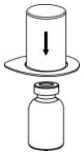 Fig. 2 |
| 6 | While holding the diluent vial, carefully remove the outer package from the Mix2Vial® transfer set. Make sure to pull off only the clear package, not the Mix2Vial® transfer set (Fig. 3). | 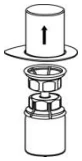 Fig. 3 |
| 7 | Place the Corifact vial on an even flat surface and hold the vial tight. Invert the diluent vial with the Mix2Vial® transfer set attached to it and push the plastic spike of the clear end of the Mix2Vial® firmly through the center of the stopper of the Corifact vial (Fig. 4). The diluent will transfer into the Corifact vial automatically. | 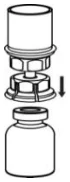 Fig. 4 |
| 8 | With the diluent and Corifact vial still attached to the Mix2Vial® transfer set, gently swirl the Corifact vial to ensure that the Corifact is fully dissolved (Fig. 5). Do not shake the vial. | 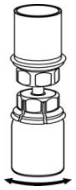 Fig. 5 |
| 9 | With one hand, grip the clear end of the Mix2Vial® transfer set and with the other hand grip the blue end of the Mix2Vial® transfer set, and unscrew counterclockwise the set into two pieces (Fig. 6). | 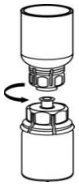 Fig. 6 |
| 10 | Draw air into an empty, sterile syringe. With the Corifact vial upright, screw the syringe to the Mix2Vial® transfer set. Inject air into the Corifact vial. While keeping the syringe plunger pressed, invert the Corifact vial and draw the solution into the syringe by pulling the plunger back slowly (Fig. 7). | 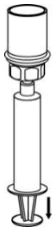 Fig. 7 |
| 11 | Once the solution has been transferred into the syringe, firmly grip the barrel of the syringe (keeping the plunger facing down) and unscrew the syringe counterclockwise from the Mix2Vial® transfer set (Fig. 8). Attach the syringe to an infusion set or another suitable administration set. | 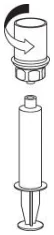 Fig. 8 |
| 12 | If patient is to receive more than one vial, the contents of multiple vials may be pooled into a single syringe. Use a separate unused Mix2Vial® transfer set for each product vial. | |
| 13 | Corifact is for single use only. Contains no preservatives. The product must be used within 3 hours after reconstitution. Do not refrigerate or freeze the reconstituted solution. Discard partially used vials. | |
4.4. Administration
Corifact (Factor XIII Concentrate, Human) should be reconstituted according to the instructions above (see 4.3 Reconstitution). The reconstituted solution should be administered aseptically by slow intravenous injection at a rate not exceeding 4 mL per minute. Corifact must not be mixed with other medicinal products. It must be administered aseptically through a separate infusion line. Care should be taken that no blood enters the syringe filled with product, as there is a risk that the blood could coagulate in the syringe and fibrin clots could therefore be administered to the patient.
4.5. Missed Dose
Maintain a regular Corifact treatment schedule of dosing every 28 days. If a scheduled treatment is missed, another treatment should be performed as soon as possible. The regular Corifact schedule of treatments every 28 days should then be resumed.
5. Overdose
No cases of overdose have been reported.
For the most recent information in the management of a suspected drug overdose, contact your regional poison control centre or Health Canada’s toll-free number, 1-844 POISON-X (1-844-764-7669).
- 6. Dosage Forms, Strengths, Composition, and Packaging
To help ensure the traceability of biologic products, healthcare professionals should record both the brand name and the non-proprietary (active ingredient) name as well as other product-specific identifiers such as the Drug Identification Number (DIN) and the batch/lot number of the product supplied.
Table 2 – Dosage Forms, Strengths, and Composition
Corifact (Factor XIII Concentrate, Human) is a purified lyophilized FXIII (coagulation factor XIII) concentrate for intravenous use.
Corifact is available in 2 formats: Corifact 250 and Corifact 1250. It is supplied as a lyophilized powder in a single use injection vial along with a suitable volume of Sterile Water for Injection (Ph. Eur.) for reconstitution (Table 3). The product package includes a needle-less filter transfer device Mix2Vial® for the reconstitution and withdrawal of the product.
Table 3 – Corifact Presentation
Each vial of Corifact 250 contains 200 to 320 IU FXIII, 24 to 40 mg human albumin, 28 to 44 mg total protein, 16 to 24 mg glucose and 28 to 44 mg sodium chloride. Sodium hydroxide may have been used to adjust the pH.
Each vial of Corifact 1250 contains 1000 to 1600 IU FXIII, 120 to 200 mg human albumin, 140 to 220 mg total protein, 80 to 120 mg glucose monohydrate and 140 to 220 mg sodium chloride. Sodium hydroxide may have been used to adjust the pH.
The components used in the packaging for Corifact are latex-free.
Description
Corifact 250 / Corifact 1250 (Factor XIII Concentrate, Human), commonly known as Corifact, is a purified concentrate of blood coagulation Factor XIII (FXIII). It is derived from human plasma, presented as a white lyophilized powder to be reconstituted with Sterile Water for Injection (included in the product package) for intravenous administration. Corifact is available as a single-use injection vial in two presentations: 250 IU and 1250 IU.
7. Warnings and Precautions
General
Corifact (Factor XIII Concentrate, Human) is made from human plasma. For medicinal products prepared from human plasma the possibility of transmitting infective agents cannot be totally excluded. This applies to unknown or emerging viruses and other pathogens.
Taking into consideration the efficacy of donation screening and the virus inactivation/removal capacity of the manufacturing process it can be concluded that all measures taken during the production of Corifact are effective for enveloped viruses such as HIV, HBV and HCV and for the non-enveloped
| Route of Administration | Dosage Form/ Strength/Composition | Non-Medicinal Ingredients |
| Intravenous (IV) | Lyophilized powder, 250 IU/vial; 1250 IU/vial | Glucose monohydrate, human albumin and sodium chloride |
| Corifact Presentation | Sterile Water for Injection, Ph. Eur. (for Reconstitution) |
| Corifact 250 | Single vial of 4 mL |
| Corifact 1250 | Single vial of 20 mL |
viruses HAV and Parvovirus B19.
Appropriate vaccination (hepatitis A and B) should be generally considered for patients in regular/repeated receipt of human plasma-derived products.
It is strongly recommended that every time that Corifact is administered to a patient, the name and batch number of the product are recorded in order to maintain a link between the patient and the batch of the product. All infections suspected by a physician to have been transmitted by this product should be reported to CSL Behring (CSLB) at 1-866-773-7721. The physician should discuss the risks and benefits of this product with the patient.
Cardiovascular
Thromboembolic complications have been reported in post-marketing surveillance (see 8.5 Post-Market Adverse Reactions). Monitor patients with known risk factors for thrombotic events; consider baseline assessment of blood viscosity for those at risk for hyperviscosity.
Endocrine and Metabolism
Corifact contains 124.4 to 195.4 mg (5.41 to 8.50 mmol) sodium per dose (40 IU/body weight for average of 70 kg), if the recommended dose (2800 IU = 44.8 mL) is applied. This should be taken into consideration in patients on a controlled sodium diet.
Immune
Development of inhibitory antibodies against FXIII has been detected in patients receiving Corifact. Monitor patients for possible development of inhibitory antibodies. Presence of inhibitory antibodies may manifest as an inadequate response to treatment. If expected plasma FXIII activity levels are not attained, or if breakthrough bleeding occurs while receiving prophylaxis, perform an assay that measures FXIII inhibitory antibody concentrations. One case of inhibitory antibodies against FXIII has been reported in the clinical studies (see 8 Adverse Reactions). Cases of inhibitory antibodies against FXIII in patients with congenital FXIII deficiency have also been reported in post-marketing surveillance.
Monitoring and Laboratory Tests
Monitoring patient’s trough FXIII activity level is recommended during treatment with Corifact (see 4 Dosage and Administration)
If breakthrough bleeding occurs, or if expected peak plasma FXIII activity levels are not attained perform an investigation to determine the presence of FXIII inhibitory antibodies (see 10 Clinical Pharmacology).
Sensitivity/Resistance
Hypersensitivity reactions (including allergy, rash, pruritus, erythema, urticaria, tightness of chest, wheezing, and hypotension) have been observed with Corifact. If signs or symptoms of anaphylaxis or hypersensitivity reactions occur, immediately discontinue administration and institute appropriate treatment.
In patients with known allergies to the product (with symptoms like generalised urticaria, rash, fall in blood pressure, dyspnoea), antihistamines and corticosteroids may be administered prophylactically.
7.1. Special Populations
7.1.1. Pregnancy
Limited data on the clinical use of Corifact in pregnancy did not show any negative effects on the course of gestation and the peri- or postnatal development. Corifact should only be given to pregnant women after carefully assessing the risk-benefits.
Corifact has not been studied for use during labor and delivery. Safety and effectiveness in labor and delivery have not been established.
7.1.2. Breastfeeding
It is not known whether Corifact is excreted in human milk. However, based on its large molecular size excretion into milk is unlikely and due to its proteinaceous character, absorption of intact molecules by the infant is also unlikely. Therefore, the use of Corifact may be considered during breastfeeding, if necessary.
7.1.3. Pediatrics
Pediatrics (<16 years): Of the 188 unique subjects in the Corifact clinical studies, 108 were subjects <16 years of age at the time of enrollment (<1 month, n=2; 1 month to <2 years, n=16; 2 to 11 years, n=60; 12 to <16 years, n=30). In the pharmacokinetic study (see 10.3 Pharmacokinetics), 5 of the 14 subjects ranged in age from 2 to <16 years. Subjects less than 16 years had a shorter half-life (5.7 ± 1.00 days), and faster clearance (0.29 ± 0.12 mL/hr/kg) compared to adults (half-life: 7.1 ± 2.74 days, clearance: 0.22 ± 0.07 mL/hr/kg). There were no apparent differences in the safety profile in children as compared to adults.
7.1.4. Geriatrics
The safety and efficacy of Corifact in the geriatric population have not been established due to insufficient number of subjects.
8. Adverse Reactions
8.1. Adverse Reaction Overview
The most common adverse reactions reported in twelve clinical trials in greater than one subject (frequency >1%) following Corifact treatment are joint inflammation, hypersensitivity, rash, pruritus, erythema, hematoma, arthralgia, headache, elevated thrombin-antithrombin levels, and increased blood lactate dehydrogenase. Adverse reactions are undesirable effects, reasonably associated with the use of Corifact.
The most serious adverse reactions were hypersensitivity, acute ischemia, and neutralizing antibodies against FXIII.
8.2. Clinical Trial Adverse Reactions
Clinical trials are conducted under very specific conditions. Therefore, the frequencies of adverse reactions observed in the clinical trials may not reflect frequencies observed in clinical practice and should not be compared to frequencies reported in clinical trials of another drug.
Twelve clinical studies were conducted and included 188 unique subjects, 108 subjects were <16 years of age (see 7.1 Special Populations). These 188 subjects received a total of approximately 4314 infusions of Corifact.
The most common adverse events reported in clinical trials in greater than six subjects (frequency >3%) are flu-like syndrome, diarrhea, contusion, bruising, joint injury, upper respiratory tract infection, cold symptoms, pharyngitis, otitis media, pain in extremity, arthralgia, headache, upper respiratory tract congestion, cough, vomiting, fever, hematoma, acne and rash. Adverse events (AEs) are defined as treatment-emergent AEs after the start of the first Corifact study infusion.
Pivotal Pharmacokinetic Study
In the 12-week prospective, open-label, multicenter, pharmacokinetic and safety study conducted in 7 females and 7 males, ranging in age from 5 to 42 years (3 children, 2 adolescents, and 9 adults), there were no reports of deaths, life-threatening events, or adverse events that led to discontinuation or withdrawal from the study. No bleeding episodes were reported in this study.
Efficacy and Safety Study
A 12-month, prospective, open-label, multicenter efficacy and safety study was conducted in 25 males and 16 females ranging in age from less than 1 year to 42 years old (2 infants, 8 children, 8 adolescents, and 23 adults). There were no reports of deaths, life-threatening events, or adverse events that led to discontinuation or withdrawal from the study. Four subjects received FXIII in the peri-operative setting, and no treatment-related AEs were reported. An additional subject received plasma before and after surgery and experienced a hypersensitivity reaction.
Open Enrollment Safety Study
In the open enrollment, open-label, multicenter, safety study conducted in 35 males and 26 females, ranging in age from 0 to 55 years (4 infants, 15 children, 10 adolescents, and 32 adults (16 to <65 years)), there were no reports of deaths, life-threatening events, or adverse events that led to discontinuation or withdrawal from the study.
Investigator-Initiated Study
In the 9-year investigator-initiated clinical study, 16 subjects received peri-operative treatment with FXIII. No investigator-assessed FXIII-related SAEs were reported.
8.2.1. Clinical Trial Adverse Reactions – Pediatrics
For pediatric data refer to 8.2 Clinical Trial Adverse Reactions.
8.3. Less Common Clinical Trial Adverse Reactions
Not applicable
8.3.1. Less Common Clinical Trial Adverse Reactions – Pediatrics
Not applicable
8.4. Abnormal Laboratory Findings: Hematologic, Clinical Chemistry, and Other Quantitative Data
No clinically relevant laboratory abnormalities were observed.
8.5. Post-Market Adverse Reactions
The adverse reactions spontaneously reported during post-marketing surveillance since 1993, identified by system organ class are provided in Table 4. Frequencies have been evaluated according to the following convention: very common (≥1/10); common (≥1/100 to <1/10); uncommon (≥1/1,000 to <1/100); rare (≥1/10,000 to <1/1,000); very rare (<1/10,000). The list does not include reactions already reported in clinical studies with Corifact (see 8.2 Clinical Trial Adverse Reactions).
Table 4 – Post-Market Adverse Drug Reactions
*Causality to Corifact could not be established for any virus transmission case report.
9. Drug Interactions
9.2. Drug Interactions Overview
No interaction studies have been performed and no relevant interactions are known.
Corifact must not be mixed with other medicinal products, diluents, or solvents except those mentioned in section 4.3 Reconstitution. It must be administered aseptically through a separate infusion line.
9.3. Drug-Behaviour Interactions
The interaction of Corifact with individual behavioural risks (e.g. cigarette smoking, cannabis use, and/or alcohol consumption) has not been studied.
9.4. Drug-Drug Interactions
Interactions with other drugs have not been established.
9.5. Drug-Food Interactions
Interactions with food have not been established.
| MedDRA System Organ Class | MedDRA Preferred Term/Symptoms | Frequency |
| Immune system disorders | Allergic/anaphylactic reaction (including cutaneous reactions, alteration in blood pressure, nausea, dyspnea, fever, and chills) | Rare |
| General disorders and administration site conditions | Pyrexia | Rare |
| Infections and infestations | Transmission of an infectious agent via medicinal products* made from human plasma (see 7 Warnings and Precautions) | Unknown |
9.6. Drug-Herb Interactions
Interactions with herbal products have not been established.
9.7. Drug-Laboratory Test Interactions
Interactions with laboratory tests have not been established.
10. Clinical Pharmacology
10.1. Mechanism of Action
Corifact (Factor XIII Concentrate, Human) is an endogenous plasma glycoprotein consisting of two A-subunits and two B-subunits. FXIII circulates in blood and is present in platelets, monocytes, and macrophages. FXIII appears in 2 forms, a heterotetrameric (A2B2) plasma protein with a molecular weight of about 320 kilodaltons and a homodimeric (A2) cellular form. FXIII is a proenzyme that is activated in the presence of calcium ions by thrombin cleavage of the A-subunit to become activated FXIII (FXIIIa). Intracellularly, the homodimeric form of only the A-subunits (A2) is found. The B-subunits in plasma have no enzymatic activity, and function as carrier molecules for the A-subunits. They stabilize the structure of the A-subunits and protect them from proteolysis.
FXIIIa promotes cross-linking of fibrin during coagulation and is essential to the physiological protection of the clot against fibrinolysis. FXIIIa is a transglutaminase enzyme that catalyzes the cross-linking of the fibrin α- and γ-chains for fibrin stabilization and renders the fibrin clot more elastic and resistant to fibrinolysis4,5. FXIIIa also cross-links α2-plasmin inhibitor to the α-chain of fibrin, resulting in protection of the fibrin clot from degradation by plasmin. Cross-linked fibrin is the end result of the coagulation cascade and provides tensile strength to a primary hemostatic platelet plug4.
10.2. Pharmacodynamics
In clinical studies, the intravenous administration of Corifact demonstrated increased plasma levels of FXIII lasting approximately 28 days.
In the pharmacokinetic study, after the third dose of FXIII of 40 units/kg dose (steady state), the mean maximal increase in FXIII activity levels was 83% with a range of 48 to 114% over the baseline.
10.3. Pharmacokinetics
A 12-week prospective, open-label, multicenter pharmacokinetic and safety study was conducted in 7 females and 7 males with congenital FXIII deficiency, ranging in age from 5 to 42 years (3 children, 2 adolescents, 9 adults). One adult male did not complete the pharmacokinetic study.
Each subject received 40 units/kg Corifact intravenously every 28 days for a total of three doses administered at approximately 250 units per min. Blood samples for doses 1 and 2 were drawn from patients to determine the FXIII activity level at baseline and 30 and 60 minutes after the infusion. Following the infusion of the third dose of Corifact (steady-state), blood samples were drawn at regular intervals up to 28 days to determine the pharmacokinetic parameters. The pharmacokinetic parameters
4 Lauer P, Metzner HJ, Zettlmeissl G, Li M, Smith AG, Lathe R, Dickneite G. Targeted inactivation of the mouse locus encoding coagulation factor XIII-A: hemostatic abnormalities in mutant mice and characterization of the coagulation deficit. Thromb Haemost 2002 Dec;88(6):967-74.
5 Dardik R, Loscalzo J, Inbal A. Factor XIII (FXIII) and angiogenesis. J Thromb Haemost. 2006 Jan;4(1):19-25.
based on baseline adjusted FXIII activity are shown in Table 5.
Table 5 – Pharmacokinetic Parameters (n=13) - Baseline Adjusted Values
| Parameters | Mean ± SD |
| AUCss, 0-inf (units•hr/mL) | 184.0 ± 65.78 |
| Css, max (units/mL)* | 0.9 ± 0.20 |
| Css, min (units/mL)* | 0.05 ± 0.05 |
| Tmax (hr) | 1.7 ± 1.44 |
| Half-life (days) | 6.6 ± 2.29 |
| CL (mL/hr/kg) | 0.25 ± 0.09 |
| Vss (mL/kg) | 51.1 ± 12.61 |
| MRT (days) | 10.0 ± 3.45 |
AUCss, (0-inf) = Area under the plasma concentration curve from time 0 to infinity at steady state
* 100% activity corresponds to 1 unit/mL
Css, max: Peak concentration at steady state
Css, min: Trough concentration at steady state
Tmax: Time to peak concentration
CL: Clearance
Vss: Volume of distribution at steady state
MRT = Mean residence time
SD = Standard deviation
10.4. Immunogenicity
All therapeutic proteins have the potential for immunogenicity.
The detection of antibody formation is highly dependent on the sensitivity and specificity of the assay. Additionally, the observed incidence of antibody (including neutralizing antibody) positivity in an assay may be influenced by several factors including assay methodology, sample handling, timing of sample collection, concomitant medications, and underlying disease. For these reasons, comparison of incidence of antibodies in the studies described below with the incidences of antibodies in other studies or to other products may be misleading.
A case of neutralizing antibodies against FXIII was reported in the post-marketing clinical study. The patient received prophylactic treatment with Corifact for ten years. Concomitant medications included interferon for hepatitis C infection. This patient presented with bruising, and post-infusion FXIII levels were found to be lower than expected. Over several weeks, FXIII recovery values decreased, so the dose and frequency of treatments were increased. Neutralizing antibodies to FXIII were detected, interferon treatment was discontinued, and the subject underwent plasmapheresis. Within a month, neutralizing antibodies were no longer detectable, FXIII recovery levels improved, and the previous prophylactic regimen was resumed.
- 11. Storage, Stability, and Disposal
When stored refrigerated (+2°C to +8°C), Corifact (Factor XIII Concentrate, Human) is stable for the period indicated by the expiration date on the carton and vial label (up to 36 months). Keep Corifact in its original carton until ready to use. Do not freeze. Protect from light.
12. Special Handling Instructions
Administer promptly after reconstitution. This product does not contain a preservative and must be used within 3 hours after reconstitution. Do not refrigerate or freeze the reconstituted solution.
Part 2: Scientific Information
13. Pharmaceutical Information
Drug Substance
Non-proprietary name of the drug substance(s): Factor XIII Concentrate, Human
Chemical name: NA
Molecular formula and molecular mass: 320 kDa
Structural formula: Factor XIII is the zymogenic form of the glutaminyl-peptide γ-glutamyl transferase factor XIIIa (fibrinoligase, plasma transglutaminase, fibrin stabilizing factor, E.C. 2.3.2.13). Plasma-derived Factor XIII is a 320 kDa hetero-tetramer (A2B2), which is the product of two separate genes coding for A and B chains. The A chain is composed of 730 amino acids (83 kDa) and dimerizes forming a non-glycosylated globular molecule. It is also found intracellularly in monocytes/macrophages and platelets/megacaryocytes6. All Factor XIII-A2 molecules found in plasma exist in the hetero-tetrameric form in complex with FXIII-B2. The Factor XIII-A chain has nine free sulfhydryl groups, including the active site with Cys3147. The A chain also contains an activation peptide, the catalytic triad, a calcium binding site and fibrin-binding and substrate-recognition domains. The B chains are secreted by hepatocytes and complex rapidly with the A2 subunits but also circulate in the homodimeric form in plasma. The plasma Factor XIII-A2B2 complex is present at a concentration of 14 to 28 mg /L plasma according to ELISA data8.
Factor XIII is one of the zymogens to become activated in the coagulation cascade and it is the only enzyme in this system that is not a serine protease. The conversion of plasma factor XIII (A2B2) to the active transamidase Factor XIIIa (A2’) results from hydrolysis of the Arg36-Gly37 at the NH2-terminus of the A subunit by thrombin. Full expression of activity is achieved only after the Ca2+ and fibrin(ogen) dependent dissociation of the B subunit dimer from the A2’ dimer.
Physicochemical properties: Corifact is available as a powder for solution which is soluble in water.
Pharmaceutical standard: Ph. Eur. / USP
Product Characteristics:
Corifact is a heat-treated, lyophilized FXIII (coagulation factor XIII) concentrate made from pooled human plasma.
Each vial of Corifact contains the following ingredients:
| Ingredient | Corifact 250 | Corifact 1250 |
| Total Protein | 28-44 mg | 140-220 mg |
6 Nagy, JA et al., Thromb.Haemostas., 248: 1395 (1973)
7 Lopaciuk S, Lovette KM, McDonagh J, Chuang HY, McDonagh. Subcellular distribution of fibrinogen and factor XIII in human blood platelets. Thromb Res. 1976 Apr;8(4):453-65.
8 Murdock PJ, Owens DL, Chitolie A, Hutton RA, Lee CA. Development and evaluation of ELISAs for factor XIIIA and XIIIB subunits in plasma. Thromb Res. 1992 Jul 1;67(1):73-9.
| Ingredient | Corifact 250 | Corifact 1250 | |||||
| Active Ingredient: | |||||||
| Factor XIII | 200-320 IU | 1000-1600 IU | |||||
| Excipients: | |||||||
| Human albumin (Ph. Eur., USP) | 24-40 mg | 120-200 mg | |||||
| Glucose monohydrate (Ph.Eur., USP) | 16-24 mg | 80- 120 mg | |||||
| Sodium chloride (Ph. Eur., USP) | 28-44 mg | 140-220 mg | |||||
| Sodium hydroxide (Ph. Eur.) | Small amounts | Small amounts | |||||
| Supplied Diluent: | |||||||
| Sterilized Water for Injection (Ph. Eur.) | 4 mL | 20 mL | |||||
Viral Inactivation
All plasma used in the manufacture of Corifact is obtained from US donors and is tested using serological assays for hepatitis B surface antigen and antibodies to HIV-1/2 and HCV. The plasma is tested with Nucleic Acid Testing (NAT) for HCV, HIV-1, HAV and HBV and found to be non-reactive (negative), and the plasma is also tested by NAT for Human Parvovirus B19. Only plasma that passed virus screening is used for production, and the limit for Parvovirus B19 in the fractionation pool is set not to exceed 104 International Units of Parvovirus B19 DNA per mL.
Corifact is manufactured from cryo-depleted plasma which is purified by the following steps:
- Precipitation/adsorption
- Ion exchange chromatography
- Heat-treatment (+60°C for 10 hours in an aqueous solution)
- Virus filtration over two 20 nm filters in series
These four manufacturing steps were independently validated in a series of in vitro experiments for their capacity to inactivate or remove both enveloped and non-enveloped viruses. All these measures provide a high degree of assurance that the production process for Factor XIII Concentrate (human) results in high safety margins concerning potential impact on patients by adventitious agents like microorganisms, prions and viruses.
14. Clinical Trials
14.1. Clinical Trials by Indication
Routine Prophylaxis and Prophylaxis Prior to Surgery
Pivotal PK Study
A 12-week prospective, open-label, multicenter pharmacokinetic and safety study was conducted in 7 females and 7 males with congenital FXIII deficiency, ranging in age from 5 to 42 years (3 children, 2 adolescents, 9 adults).
The pharmacokinetic study evaluated three doses at 40 units per kg every 28 days for each subject (see 10.3 Pharmacokinetics). Blood sampling before and after infusion for the first two doses was to determine FXIII activity and a complete PK analysis was conducted after the third dose (steady state). FXIII activity levels were determined by the Berichrom® activity assay.
The PK and safety findings in this study suggested the dosing of FXIII Concentrate (Human) at 40 U/kg every 28 days as the appropriate regimen for routine, long-term prophylaxis in subjects with congenital FXIII deficiency.
Efficacy and Safety Study
The clinical benefit of Corifact was studied in a post-marketing efficacy and safety trial conducted in 41 subjects who received routine prophylactic treatment (40 U/kg every 28 days for 52 weeks) for congenital FXIII deficiency. The incidence density through Week 52 of spontaneous bleeding episodes requiring treatment was evaluated to show correlation between trough levels of FXIII activity and clinical efficacy. Treatment was defined as administration of a FXIII-containing product to treat the bleeding episode. No subject experienced a spontaneous bleeding episode that was treated with a FXIII-containing product. All 5 subjects with spontaneous bleeding episodes (2 nose bleeds, 2 rectal bleeds, and 1 episode of hematuria associated with a urinary tract infection and an indwelling urinary catheter) had pre-disposing factors other than FXIII deficiency.
This result showed that the annualized bleeding rate for spontaneous bleeding episodes requiring treatment per subject improved over the postulated annualized bleeding rate in the study, which was 2.5 episodes (range: 0 to 4) per subject per year based on historical evidence in a population of patients receiving on-demand treatment of acute bleeding in patients with congenital FXIII deficiency9.
Eight bleeding episodes secondary to trauma, and 1 associated with surgery during 52 weeks were also reported. In the 8 bleeding episodes secondary to trauma, 6 did not require treatment with a FXIII-containing product, and 2 were successfully treated with a FXIII-containing product (one was treated with Corifact and one with plasma).
The prophylactic administration of Factor XIII Concentrate (Human) every 28 days in subjects with congenital FXIII deficiency was successful in achieving mean FXIII activity levels between 5% and 20%. FXIII activity was maintained at ≥5% in ≥97% of subjects and ≥10% in ≥85% of subjects. Of the 533 doses administered to 41 subjects, dose adjustment was required on only eight occasions, supporting that 40 U/kg every 28 days is the appropriate dose for the majority of patients.
9 Lusher J, Pipe SW, Alexander S, Nugent D. Prophylactic therapy with Fibrogammin P is associated with a decreased incidence of bleeding episodes: a retrospective study. Haemophilia. 2009; 1-6.
Five subjects had surgery, 4 were scheduled and 1 was an emergency. Of the 4 scheduled surgeries, 3 subjects received Corifact prior to surgery (0 to 7 days prior to surgery) with no post-operative bleeding. One subject who received Corifact 7 days prior to surgery experienced bleeding post-extraction of 4 wisdom teeth. The bleeding was successfully treated 4 hours after the oral surgery with an additional dose of Corifact (50% of the subject’s routine dose). The 1 subject who required emergency surgery was successfully pre-treated with plasma.
This study verified the clinical benefit of Corifact by showing a correlation between trough levels of FXIII activity and clinical efficacy. The clinical benefit of Corifact was also demonstrated by comparing the incidence of bleeding in Corifact-treated subjects to untreated subjects with congenital FXIII deficiency.
15. Microbiology
No microbiological information is required for this drug product.
16. Non-Clinical Toxicology
The toxicity studies were designed to support the i.v. administration of the human FXIII concentrate and were performed in mice, rats and rabbits.
General toxicology
Single dose toxicity studies were conducted in mice and rats up to doses of 3550 and 1420 units (FXIII)/kg body weight (b.w.), respectively. Furthermore, FXIII concentrate was administered up to 2 weeks in daily doses of 35, 100 and 350 units/kg b.w. in a repeated-dose toxicity study in rats. A limited non-GLP toxicokinetic study was included within this study and confirmed dose-dependent systemic exposure up to 100 U/kg b.w. and FXIII accumulation at 350 units/kg b.w. Neither single nor repeated administration of FXIII concentrate resulted in any relevant adverse findings.
A local tolerance study in rabbits demonstrated no clinical or histopathological changes at the injection site after intravenous, intra-arterial or para-venous administration of Corifact.
Genotoxicity
No studies were performed to investigate the genotoxicity in view of the fact that FXIII is a physiological constituent of human plasma.
Carcinogenicity
No studies were performed to investigate the carcinogenicity in view of the fact that FXIII is a physiological constituent of human plasma.
Reproductive and developmental toxicology
No studies were performed to investigate the reproductive and developmental toxicity in view of the fact that FXIII is a physiological constituent of human plasma.
Special toxicology
A thrombogenicity test was performed in rabbits at doses up to 350 units per kg. Corifact showed no thrombogenic potential at the doses tested.