


Product Monograph - Humate-P
RECENT MAJOR LABEL CHANGES
| New Template, administrative changes | April/2025 |
|---|
TABLE OF CONTENTS
Sections or subsections that are not applicable at the time of authorization are not listed.
RECENT MAJOR LABEL CHANGES ............................................................................... 2
TABLE OF CONTENTS ...................................................................................................... 2
PART I: HEALTH PROFESSIONAL INFORMATION ...................................................... 4
1 INDICATIONS ........................................................................................................... 4
1.1 Pediatrics ............................................................................................................ 4
1.2 Geriatrics ............................................................................................................. 4
2 CONTRAINDICATIONS ........................................................................................... 4
3 SERIOUS WARNINGS AND PRECAUTIONS BOX .............................................. 5
4 DOSAGE AND ADMINISTRATION ........................................................................ 5
4.1 Dosing Considerations ...................................................................................... 5
4.2 Recommended Dose and Dosage Adjustment .............................................. 5
4.3 Reconstitution ..................................................................................................... 9
4.4 Administration ................................................................................................... 12
4.5 Missed Dose ..................................................................................................... 12
5 OVERDOSAGE....................................................................................................... 12
6 DOSAGE FORMS, STRENGTHS, COMPOSITION AND PACKAGING ........... 13
7 WARNINGS AND PRECAUTIONS ....................................................................... 14
7.1 Special Populations ......................................................................................... 15
7.1.1 Pregnant Women ......................................................................................... 15
7.1.2 Breast-feeding .............................................................................................. 15
7.1.3 Pediatrics ...................................................................................................... 15
7.1.4 Geriatrics ....................................................................................................... 16
8 ADVERSE REACTIONS ........................................................................................ 16
8.1 Adverse Reaction Overview ........................................................................... 16
8.2 Clinical Trial Adverse Reactions .................................................................... 16
8.2.1 Clinical Trial Adverse Reactions – Pediatrics ........................................... 18
8.5 Post-Market Adverse Reactions .................................................................... 19
9 DRUG INTERACTIONS ......................................................................................... 19
9.2 Drug Interactions Overview ............................................................................ 19
9.3 Drug-Behavioural Interactions ........................................................................ 20
9.4 Drug-Drug Interactions .................................................................................... 20
9.5 Drug-Food Interactions ................................................................................... 20
9.6 Drug-Herb Interactions .................................................................................... 20
9.7 Drug-Laboratory Test Interactions ................................................................. 20
10 CLINICAL PHARMACOLOGY .............................................................................. 20
10.1 Mechanism of Action ....................................................................................... 20
10.2 Pharmacodynamics ......................................................................................... 20
10.3 Pharmacokinetics............................................................................................. 21
11 STORAGE, STABILITY AND DISPOSAL ............................................................ 21
12 SPECIAL HANDLING INSTRUCTIONS ............................................................... 22
PART II: SCIENTIFIC INFORMATION ............................................................................ 23
13 PHARMACEUTICAL INFORMATION .................................................................. 23
14 CLINICAL TRIALS ................................................................................................. 25
14.1 Clinical Trials by Indication ............................................................................. 25
Clinical Efficacy of Humate-P® in the Control of Bleeding in Patients with VWD 25
Safety and Hemostatic Efficacy of Humate-P® in Subjects with VWD Undergoing Surgery .........................................................................................................................27
14.2 Comparative Bioavailability Studies .............................................................. 30
14.3 Immunogenicity ................................................................................................ 30
15 MICROBIOLOGY .................................................................................................... 30
16 NON-CLINICAL TOXICOLOGY ............................................................................ 30
PATIENT MEDICATION INFORMATION ........................................................................ 31
PART I: HEALTH PROFESSIONAL INFORMATION
1 INDICATIONS
HUMATE-P® (Antihemophilic Factor/von Willebrand Factor Complex (Human)) is indicated:
- In adult patients for treatment and prevention of bleeding in hemophilia A (classical hemophilia);
- In adult and pediatric patients (see 7 WARNINGS AND PRECAUTIONS section, subsection Pediatrics) for treatment of spontaneous and trauma-induced bleeding episodes in severe von Willebrand disease, and in mild and moderate von Willebrand disease where use of desmopressin is known or suspected to be inadequate and;
- To prevent excessive bleeding (i.e. bleeding that exceeds the expected blood loss under a given condition) during and after surgery in adult and pediatric patients with von Willebrand disease.
1.1 Pediatrics
Pediatrics (1 month old to 16 years): Based on the data submitted and reviewed by Health Canada, the safety and efficacy of Humate-P® in pediatric patients has been established in the following indications. Therefore, Health Canada has authorized an indication for pediatric use. [see 7 WARNINGS AND PRECAUTIONS section, subsection Pediatrics].
- For treatment of spontaneous and trauma-induced bleeding episodes in severe von Willebrand disease, and in mild and moderate von Willebrand disease where use of desmopressin is known or suspected to be inadequate and
- to prevent excessive bleeding (i.e. bleeding that exceeds the expected blood loss under a given condition) during and after surgery in patients with von Willebrand disease.
1.2 Geriatrics
Geriatrics (65 years and above):
Clinical studies of Humate-P® did not include sufficient numbers of subjects aged 65 and over to determine whether they respond differently from younger subjects.
2 CONTRAINDICATIONS
Humate-P® is contraindicated for patients who are hypersensitive to this drug or to any ingredient in the formulation, including any non-medicinal ingredient, or component of the container. For a complete listing, see 6 DOSAGE FORMS, STRENGTHS, COMPOSITION AND PACKAGING.
3 SERIOUS WARNINGS AND PRECAUTIONS BOX
Serious Warnings and Precautions
- Serious thromboembolic events have been reported in patients with von Willebrand disease who are treated with coagulation factor replacement therapy (see section 7 WARNINGS AND PRECAUTIONS, subsection Cardiovascular).
- May potentially contain infectious agents. The health professional should discuss the risks and benefits of this product with the patient, before prescribing or administering to the patient (see section 7 WARNINGS AND PRECAUTIONS, subsection General).
4 DOSAGE AND ADMINISTRATION
4.1 Dosing Considerations
- Health Professionals should strongly consider administration of hepatitis A and hepatitis B vaccines to individuals receiving plasma derivatives. Potential risks and benefits of vaccination should be carefully weighed by the health professional and discussed with the patient.
- In pediatric patients, dosing should be based upon body weight (kg) in accordance to recommendations for dosing and administration for adults.
4.2 Recommended Dose and Dosage Adjustment
Therapy for Hemophilia A
Each vial of Humate-P® contains the labeled amount of Factor VIII activity in international unit (IU FVIII) for the treatment of hemophilia A. It is important to calculate the dose using the number of IU of coagulation activity (FVIII:C) specified.
As a general rule, 1 IU of Factor VIII activity per kg body weight will increase the circulating Factor VIII level by approximately 2 IU FVIII/dL. Adequacy of treatment must be judged by the clinical effects; thus, the dosage may vary with individual cases. Although dosage must be individualized according to the needs of the patient (weight, severity of hemorrhage, presence of inhibitors), the following general dosages are recommended for adult patients:
Table 1 – Dosage recommendations for the treatment of Hemophilia A
| Hemorrhagic event | Dosage (IU FVIII/kg body weight) |
Minor hemorrhage:
| Loading dose 15 IU FVIII/kg to achieve FVIII:C plasma level of approximately 30% of normal; one infusion may be sufficient. If needed, half of the loading dose may be given once or twice daily for 1-2 days. |
Moderate hemorrhage:
| Loading dose 25 IU FVIII/kg to achieve FVIII:C plasma level of approximately 50% of normal, followed by 15 IU FVIII/kg every 8-12 hours for first 1-2 days to maintain FVIII:C plasma level at 30% of normal, and then the same dose once or twice a day for a total of up to 7 days, or until adequate wound healing. |
Life-threatening hemorrhage:
| Initially 40 to 50 IU FVIII/kg, followed by 20-25 IU FVIII/kg every 8 hours to maintain FVIII:C plasma level at 80-100% of normal for 7 days, then continue the same dose once or twice a day for another 7 days in order to maintain the FVIII:C level at 30-50% of normal. |
Ref: Levine and Brettler DB (1991) Clinical aspects and therapy for hemophilia A. In: Hematology – Basic Principles and Practice.
In all cases, the dose should be adjusted individually by clinical judgment of the potential for compromise of a vital structure, and by frequent monitoring of factor VIII activity in the patient’s plasma.
Therapy for Von Willebrand Disease
Each vial of Humate-P® contains the labeled amount of von Willebrand Factor: Ristocetin Cofactor (VWF:RCo) activity expressed in international unit (IU VWF) for the treatment of VWD. It is important to calculate the dose using the number of IU VWF specified.
The dosage should be adjusted according to the extent and location of bleeding. As a rule, 40-80 IU VWF per kg body weight are given every 8 to 12 hours. Repeat doses are administered for as long as needed based on repeat monitoring of appropriate clinical and laboratory measures. Expected levels of VWF:RCo activity are based on an expected in vivo recovery of 2.0 IU VWF/dL rise per IU VWF/kg administered.
The administration of 1 IU of Factor VIII per kg body weight can be expected to lead to a rise in circulating VWF of approximately 5 IU VWF/dL. The following Table provides dosing guidelines for pediatric and adult patients.
Table 2 – Dosing recommendations for the treatment of von Willebrand disease
| Classification of VWD | Hemorrhage | Dosage (IU VWF/kg body weight) |
| Type 1 | ||
Mild, if desmopressin is inappropriate (Baseline VWF:RCo activity typically >30%) | Major (e.g. severe or refractory epistaxis, GI bleeding, CNS trauma, or traumatic hemorrhage) | 40 to 50 IU VWF/kg every 8 to 12 hours for 3 days to keep the nadir level of VWF:RCo >50%; then 40 to 50 IU VWF/kg daily for a total of up to 7 days of treatment. |
Moderate or severe (Baseline VWF:RCo activity typically <30%) | Minor (e.g. epistaxis, oral bleeding, menorrhagia) | 40 to 50 IU VWF/kg (1 or 2 doses). |
Major (e.g. severe or refractory epistaxis, GI bleeding, CNS trauma, hemarthrosis or traumatic hemorrhage) | 40 to 60 IU VWF/kg every 8 to 12 hours for 3 days to keep the nadir level of VWF:RCo >50%; then 40 to 60 IU VWF/kg daily for a total of up to 7 days of treatment. Factor VIII:C levels should be monitored and maintained according to the guidelines for hemophilia A therapy, Table 1 | |
| Types 2 (all variants) and 3 | ||
Minor (clinical indications above) | 40 to 50 IU VWF/kg (1 or 2 doses) | |
Major (clinical indications above) | 40 to 80 IU VWF/kg every 8 to 12 hours for 3 days to keep the nadir level of VWF:RCo >50%, then 40 to 60 IU VWF/kg daily for a total of up to 7 days of treatment. Factor VIII:C levels should be monitored and maintained according to the guidelines for hemophilia A therapy, Table 1. | |
Ref: Scott and Montgomery (1993) Therapy of von Willebrand disease. Seminars in Thrombosis and Hemostasis, 19:37.
Prevention of Excessive Bleeding During and After Surgery in VWD
The following information provides guidelines for calculating loading and maintenance doses of Humate-P® for patients undergoing surgery. However, in the case of emergency surgery, administer a loading dose of 50 to 60 IU VWF/kg and, subsequently, closely monitor the patient’s trough coagulation factor levels.
When possible, it is recommended that the incremental in vivo recovery (IVR) be measured and that baseline plasma VWF:RCo and FVIII:C activities be assessed in all patients prior a surgery. Measure IVR as follows:
- 1. Measure baseline plasma VWF:RCo activity (IU VWF).
- 2. Infuse 60 IU VWF/kg b.w. intravenously at time 0.
- 3.
At time +30 minutes, measure plasma VWF:RCo activity (IU VWF).
IVR = (plasma IU VWFtime + 30 min – plasma IU VWFbaseline) / 60 IU/kg
Calculation of the loading dose requires four values: the target peak plasma IU VWF level, the baseline IU VWF level, body weight (bw) in kilograms, and IVR. When individual values are not available (e.g. in the case of emergency surgery), a standardized loading dose can be used based on an assumed IVR of 2.0 IU VWF/dL per IU VWF/kg of product administered. Table 3 provides dosing guidelines for adults and pediatric patients.
Table 3 – VWF:RCo and FVIII:C Activity Loading Dose Recommendations for the Prevention of Excessive Bleeding During and After Surgery
| Type of Surgery | VWF:RCo Target Peak Plasma Level (IU VWF/dL) | FVIII:C Target Peak Plasma Level (IU FVIII/dL) | Calculation of Loading Dose (to be administered 1 to 2 hours before surgery) |
|---|---|---|---|
| Major | 100 | 80-100 | Δ* VWF:RCo x BW (kg) / IVR# = IU VWF required. If the incremental IVR is not available (e.g. in the case of emergency surgery), assume an IVR of 2 IU/dL per IU/kg and calculate the loading dose as follows: (100 – baseline plasma IU VWF) x BW (in kg) / 2.0 |
| Minor/oral§ | 50-60 | 40-50 | Δ* VWF:RCo x BW (kg) / IVR# = IU VWF required |
* Δ = Target peak plasma VWF:RCo activity (IU VWF) - baseline plasma VWF:Rco activity (IU VWF).
# IVR= Incremental recovery as measured in the patient.
§ Oral surgery is defined as removal of fewer than three teeth, if the teeth are non-molars and have no bony involvement. Removal of more than one impacted wisdom tooth is considered major surgery due to the expected difficulty of the surgery and the expected blood loss, particularly in subjects with type 2A or type 3 VWD. Removal of more than two teeth is considered major surgery in all patients.
For example, the loading dose of Humate-P® required assuming a target VWF:RCo activity level of 100 IU VWF/dL, baseline VWF:RCo level 20 IU VWF/dL, an IVR of 2.0 (IU/dL)/(IU/kg), Δ of 80 IU/dL, and a body weight of 70 kg would be calculated as follows:
(80 IU VWF/dL x 70 kg) / 2 (IU VWF/dL)/(IU/kg) = 2,800 IU VWF required
For FVIII:C activity, attaining peak plasma level of 80 to 100 IU FVIII for major surgery and 40 to 50 IU FVIII for minor surgery or oral surgery might require additional dosing with Humate-P®. Because the ratio of VWF:RCo to FVIII:C activity in Humate-P® is approximately 2.4 to 1, any additional dosing will increase VWF:RCo activity proportionally more than FVIII:C activity. Assuming an incremental IVR of 2.0 IU VWF/dL per IU/kg infused, additional dosing to increase FVIII:C in plasma will also increase plasma VWF:RCo activity by approximately 5 IU VWF/dL for each IU FVIII/kg of product administered.
The initial maintenance dose for the prevention of excessive bleeding during and after surgery should be half the loading dose, irrespective of additional dosing required to meet FVIII:C targets. Table 4 provides recommendations for target trough plasma levels (based on the type of surgery and the number of days following surgery) and minimum duration of treatment for subsequent maintenance doses. These recommendations apply to both adult and pediatric patients.
Based on individual pharmacokinetic-derived half-lives, the frequency of maintenance doses is generally every 8 to 12 hours; patients with shorter half-lives may require dosing every 6 hours. In the absence of pharmacokinetic data, it is recommended that Humate-P® be administered initially every 8 hours with further adjustments determined by monitoring trough coagulation factor levels.
Table 4 – VWF:RCo and FVIII:C Target Trough Plasma Level and Minimum Duration of Treatment Recommendations for Subsequent Maintenance Doses for the Prevention of Excessive Bleeding During and After Surgery
| Type of Surgery | VWF:RCo Activity Target Trough Plasma Levels* | FVIII:C Activity Target Trough Plasma Levels* | Minimum Duration of Treatment (hours) | ||
|---|---|---|---|---|---|
Up to 3 days following surgery (IU VWF/dL) | After Day 3 (IU VWF/dL) | Up to 3 days following surgery (IU FVIII/dL) | After Day 3 (IU FVIII/dL) | ||
| Major | >50 | >30 | >50 | >30 | 72 |
| Minor | ≥30 | >30 | 48 | ||
| Oral# | ≥30 | >30 | 8-12§ | ||
*Trough levels for either coagulation factor should not exceed 100 IU/dL.
#Oral surgery is defined as removal of fewer than three teeth if the teeth are non-molars and have no bony involvement. Removal of more than one impacted wisdom tooth is considered major surgery due to the expected difficulty of the surgery and the expected blood loss, particularly in subjects with type 2A or type 3 VWD. Removal of more than two teeth is considered major surgery in all patients.
§At least one maintenance dose following surgery based on individual pharmacokinetic values.
It is advisable to monitor trough VWF:RCo and FVIII:C activity levels at least once daily in order to adjust Humate-P® dosing as needed to avoid excessive accumulation of coagulation factors. The duration of the treatment generally depends on the type of surgery performed, but must be assessed for individual patients based on their hemostatic response (see 14 CLINICAL TRIALS section).
4.3 Reconstitution
The reconstituted preparations have the following antihemophilic factor FVIII:C and VWF:RCo activity per mL:
Table 5 – Reconstitution
Vial size (IU FVIII/ IU VWF) | Volume of Diluent to be Added to Vial (mL) | Approximate Available Volume (mL) | FVIII/VWF Concentration (IU/mL) |
|---|---|---|---|
| 250/600 | 5 | 5 | 50/120 |
| 500/1200 | 10 | 10 | 50/120 |
| 1000/2400 | 15 | 15 | 67/160 |
Upon reconstitution with the volume of diluent provided [Diluent (sterile water for injection)], each mL of Humate-P® contains 40 to 80 IU FVIII:C activity, 72 to 224 IU VWF:RCo activity, 8 to 16 mg of Albumin (Human), 15 to 33 mg of glycine, 2 to 5.3 mg of sodium chloride, <0.1 µg aluminum, 3.5 to 9.3 mg of sodium citrate, and 10 to 20 mg of total proteins.
See section 11 STORAGE, STABILITY AND DISPOSAL for the recommended storage period and conditions.
Plastic disposable syringes are recommended for withdrawal and administration of Humate-P® solution. Protein solutions of this type tend to adhere to the ground glass surface of all-glass syringes.
| A | RECONSTITUTION STEPS | |||
|---|---|---|---|---|
| 1 | Before infusion, ensure that Humate-P® and diluent vial are at room temperature. | |||
| 2 | Remove the Humate-P® and diluent vial flip caps to expose central portions of the rubber stoppers. | |||
| 3 | Wipe the rubber stoppers with an antiseptic solution such as an alcohol swab and allow to dry prior to opening the Mix2Vial® package. | |||
| 4 | Open the Mix2Vial® package by peeling away the lid (Fig. 1). To maintain sterility, leave the Mix2Vial® in the clear outer packaging. Place the diluent vial on an even surface and hold the vial tight. Grip the Mix2Vial® together with the clear packaging and firmly snap the blue end onto the diluent stopper (Fig. 2). | 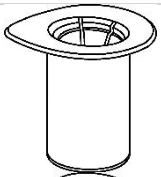 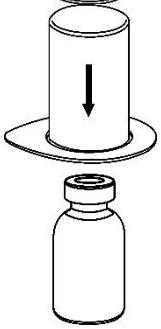 Figure 1 Figure 2 | ||
| 5 | While holding onto the diluent vial, carefully remove the clear outer packaging from the Mix2Vial® set. Make sure that you only pull up the clear outer packaging and not the Mix2Vial® set (Fig. 3). | 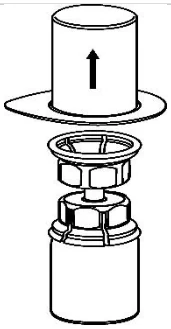 Figure 3 | ||
| 6 | With the product vial firmly on a surface, invert the diluent vial with set attached and firmly snap the transparent adapter onto the product vial stopper (Fig. 4). The diluent will automatically transfer into the product vial. | 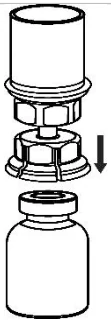 Figure 4 | ||
| 7 | With the diluent and product vial still attached, gently swirl the product vial to ensure the product is fully dissolved (Fig. 5). Do not shake vial. | 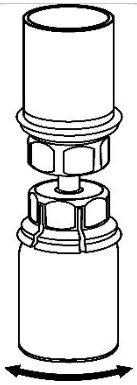 Figure 5 | ||
| 8 | With one hand grasp the product-side of the Mix2Vial® set and with the other hand grasp the blue diluent-side of the Mix2Vial® set and unscrew the set into two pieces (Fig. 6). | 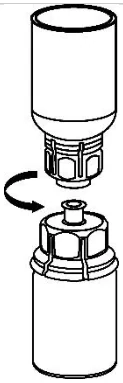 Figure 6 | ||
| 9 | Draw air into an empty, sterile syringe. While the product vial is upright, screw the syringe to the Mix2Vial® set. Inject air into the product vial. While keeping the syringe plunger pressed, invert the system upside down and draw the concentrate into the syringe by pulling the plunger back slowly (Fig. 7). | 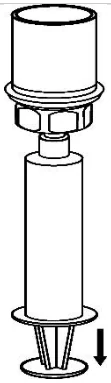 Figure 7 | ||
| 10 | Now that the concentrate has been transferred into the syringe, firmly grasp the barrel of the syringe (keeping the syringe plunger facing down) and unscrew the syringe from the Mix2Vial® (Fig. 8). Attach the syringe to a venipuncture set. | 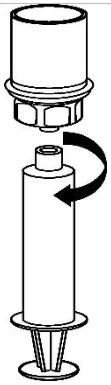 Figure 8 | ||
| 11 | If the same patient is to receive concentrate from more than one vial, the contents of two vials may be drawn into the same syringe through a separate unused Mix2Vial® set before attaching the vein needle. | |||
| 12 | The solution should be clear or slightly opalescent. After filtering/withdrawal the reconstituted product should be inspected visually for particulate matter and discoloration prior to administration. Even if the directions for use for the reconstitution procedure are precisely followed, it is not uncommon for a few flakes or particles to remain. The filter included in the Mix2Vial® device removes those particles completely. Filtration does not influence dosage calculations. Do not use visibly cloudy solutions or solutions still containing flakes or particles after filtration. | |||
Do not refrigerate after reconstitution.
Humate-P® contains no preservative. To assure product sterility, Humate-P® should be administered within 3 hours after reconstitution.
4.4 Administration
Antihemophilic Factor/von Willebrand Factor Complex (Human), Humate-P® is for INTRAVENOUS ADMINISTRATION only.
Prepare and administer using aseptic techniques.
To assure product sterility, Humate-P® should be administered within 3 hours after reconstitution.
Slowly inject the solution (maximally 4 mL/minute) intravenously with a venipuncture set or with another suitable injection set.
Discard the administration equipment and any unused Humate-P® after use.
4.5 Missed Dose
Proceed with the next dose immediately and continue at regular intervals or as advised by the Healthcare professional. Do not take a double dose to make up for a forgotten dose.
5 OVERDOSAGE
No symptoms of overdose with Antihemophilic Factor/von Willebrand Factor Complex, (Human), Humate-P® are known so far.
For management of a suspected drug overdose, contact your regional poison control centre.
6 DOSAGE FORMS, STRENGTHS, COMPOSITION AND PACKAGING
To help ensure the traceability of biologic products, including biosimilars, health professionals should recognise the importance of recording both the brand name and the non-proprietary (active ingredient) name as well as other product-specific identifiers such as the Drug Identification Number (DIN) and the batch/lot number of the product supplied.
Table 6 – Dosage Forms, Strengths, Composition and Packaging
Humate-P® is purified from the cold insoluble fraction of pooled human fresh-frozen plasma and contains highly purified and concentrated Antihemophilic Factor (FVIII) /von Willebrand Factor (VWF) Complex. Humate-P® has a high degree of purity with a low amount of non-factor proteins. Fibrinogen is less than or equal to 0.2 mg/mL. Humate-P® has a higher factor potency than cryoprecipitate preparations.
Each vial of Humate-P® contains the labeled amount of Factor VIII:C coagulant activity in international units (IU FVIII). Additionally, each vial of Humate-P® also contains the labeled amount of von Willebrand Factor: Ristocetin Cofactor (VWF:RCo) activity expressed in international unit (IU VWF) (see section 4 DOSAGE AND ADMINISTRATION). One IU FVIII or 1 IU VWF is approximately equal to the level of Factor VIII:C or VWF:RCo activity found in 1.0 mL of fresh-pooled human plasma.
This product is prepared from pooled human plasma collected from U.S. or Canadian licensed facilities in the U.S. or Canada respectively.
Humate-P® is supplied in a single-use vial in the following formats with a vial of diluent containing sterile water for injection and a Mix2Vial®, a needleless filter transfer device for reconstitution and withdrawal of the product. International unit of activity of Factor VIII (IU FVIII) and VWF (IU VWF) is stated on the carton and label of each vial.
Vial size (IU FVIII/IU VWF) | Volume of Diluent | FVIII:C activity range | VWF:RCo activity range |
| 250/600 | 5 mL | 200-300 | 360-840 |
| 500/1200 | 10 mL | 400-600 | 720-1680 |
| 1000/2400 | 15 mL | 810-1200 | 1440-3360 |
| Route of Administration | Dosage Form/Strength/Composition | Non-medicinal Ingredients |
| Intravenous Injection (IV) | Factor VIII/von Willebrand Factor Activity 250/600 IU/vial 500/1200 IU/vial 1000/2400 IU/vial Dried, pasteurized preparation to be reconstituted with diluent prior to injection. | Albumin (Human), glycine, sodium chloride and sodium citrate. |
7 WARNINGS AND PRECAUTIONS
Please see 3 SERIOUS WARNINGS AND PRECAUTIONS BOX.
This product is prepared from large pools of human plasma. Thus, there is a possibility it may contain causative agents of viral or other undetermined diseases.
General
It is important to determine that the coagulation disorder is caused by Factor VIII or VWF deficiency, since no benefit in treating other deficiencies can be expected.
Humate-P®, Antihemophilic Factor/von Willebrand Factor Complex (Human), is made from human plasma. Products made from large pools of human plasma may contain infectious agents, including the causative agents of hepatitis and other viruses that can cause disease. The risk that such products will transmit an infectious agent has been reduced by screening plasma donors for prior exposure to certain viruses, by testing for the presence of certain current viral infections and by inactivating and/or removing certain viruses during manufacture (see 13 PHARMACEUTICAL INFORMATION section, subsection Viral Inactivation). The manufacturing procedure for Humate-P® includes processing steps designed to reduce further the risk of viral transmission. Stringent procedures, utilized at plasma collection centers, plasma testing laboratories, and fractionation facilities are designed to reduce the risk of viral transmission. The primary viral reduction step of the Humate-P® manufacturing process is the heat treatment of the purified, stabilized aqueous solution at +60 °C +/- 1 °C for 10 hours. In addition, the purification procedure (several precipitation steps) used in the manufacture of Humate-P® also provides viral reduction capacity. Despite these measures, such products may still potentially contain human pathogenic agents, including those not yet known or identified. Thus, the risk of transmission of infectious agents cannot be totally eliminated.
Some viruses, such as parvovirus B19 or hepatitis A, are particularly difficult to remove or inactivate at this time. Parvovirus B19 may most seriously affect pregnant women, or immune-compromised individuals and may induce red cell aplasia in some of these patients.
Although the overwhelming numbers of hepatitis A and parvovirus B19 cases are community acquired, there have been reports of these infections associated with the use of some plasma-derived products. Therefore, health professionals should be alert to the potential symptoms of parvovirus B19 and hepatitis A infections and inform patients under their supervision receiving plasma-derived products to report potential symptoms promptly.
Symptoms of parvovirus B19 may include low-grade fever, rash, arthralgias and transient symmetric, nondestructive arthritis. Diagnosis is often established by measuring B19 specific IgM and IgG antibodies. Symptoms of hepatitis A include low grade fever, anorexia, nausea, vomiting, fatigue and jaundice. A diagnosis may be established by determination of specific IgM antibodies.
Because Humate-P® is made from human blood; it may carry a risk of transmitting infectious agents, e.g. viruses, and theoretically, the Creutzfeldt-Jakob Disease (CJD) agent. Any infections thought by a health professional possibly to have been transmitted by this product should be reported by the health professional or other healthcare provider to CSL Behring at 1-866-773-7721. The health professional should discuss the risks and benefits of this product with the patient.
Patients who are undergoing treatment using a therapeutic product derived from human blood or plasma should be appropriately vaccinated.
Other precautions are as follows:
- The administration equipment and any unused Humate-P® should be discarded.
Cardiovascular
Serious thrombotic/thromboembolic events including pulmonary embolism have been reported in VWD patients receiving coagulation factor replacement therapy, especially in the setting of known risk factors for thrombosis (e.g. perioperative periods without thromboprophylaxis, immobilization, obesity, overdose and cancer). In these patients caution should be exercised and antithrombotic measures and FVIII monitoring should be considered.
Hematologic
Humate-P®, Antihemophilic Factor/von Willebrand Factor Complex (Human), contains blood group isoagglutinins (anti-A and anti-B). When very large or frequently repeated doses are needed, as when inhibitors are present or when pre- and post- surgical care is involved, patients of blood groups A, B and AB should be monitored for signs of intravascular hemolysis and decreasing hematocrit values and be treated appropriately as required.
Monitoring and Laboratory Tests
Strong consideration should be given to monitoring VWF:RCo and FVIII:C activity levels in VWD patients receiving Humate-P® for the prevention of excessive bleeding during and after surgery. It is advisable to monitor trough VWF:RCo and FVIII:C levels at least once daily in order to adjust the dosage of Humate-P® as needed, to avoid excessive accumulation of coagulation factors.
7.1 Special Populations
7.1.1 Pregnant Women
Animal reproduction studies have not been conducted with Humate-P®, Antihemophilic Factor/von Willebrand Factor (Human). It is also not known whether Humate-P® can cause fetal harm when administered to a pregnant woman or can affect reproduction capacity. Humate-P® should be given to a pregnant woman only if clearly needed and the expected benefit outweighs any potential risk.
7.1.2 Breast-feeding
It is unknown if Humate-P® is excreted in human milk. Precaution should be exercised because many drugs can be excreted in human milk.
7.1.3 Pediatrics
Pediatrics:
Hemophilia A (up to 16 years)
Adequate and well-controlled studies with long term evaluation of joint damage have not been done in pediatric patients. Joint damage may result from suboptimal treatment of hemarthroses.
Von Willebrand Disease (1 month to 16 years)
The safety and effectiveness of Humate-P® for the treatment of von Willebrand disease was demonstrated in 26 pediatric patients, including infants, children and adolescents but has not yet been evaluated in neonates. The safety of Humate-P® for the prevention of excessive bleeding during and after a surgery was demonstrated in 8 pediatric subjects (3 through 15 years old) with VWD. Of the 34 pediatric patients studied for both treatment of von Willebrand disease and prevention of excessive bleeding during and after surgery, 4 were infants (1 month old to under 2 years of age), 23 were children (2 through 12 years old), and 7 were adolescents (13 through 15 years old).
7.1.4 Geriatrics
Clinical studies of Humate-P® did not include sufficient numbers of subjects aged 65 and over to determine whether they respond differently from younger subjects.
8 ADVERSE REACTIONS
8.1 Adverse Reaction Overview
Humate-P® is usually tolerated without reaction. Cases of allergic reaction and rise in temperature have been observed. Anaphylactic reactions can occur in rare instances. If allergic/anaphylactic reactions occur, the infusion should be discontinued and appropriate treatment given as required.
In some cases, inhibitors of Factor VIII or VWF may occur.
8.2 Clinical Trial Adverse Reactions
Clinical trials are conducted under very specific conditions. The adverse reaction rates observed in the clinical trials; therefore, may not reflect the rates observed in practice and should not be compared to the rates in the clinical trials of another drug. Adverse reaction information from clinical trials may be useful in identifying and approximating rates of adverse drug reactions in real-world use.
Hemophilia A
Allergic symptoms, including allergic reaction, urticaria, chest tightness, rash, pruritus, and edema, were reported in 6 of 97 (6%) of patients in a Canadian retrospective study. Two of 97 (2%) experienced other adverse events that were considered to have a possible or probable relationship to the product. These included chills, phlebitis, vasodilatation, and paresthesia. All adverse events were mild or moderate in intensity.
Von Willebrand Disease
In a study of 71 VWD patients, the safety of Humate-P® was evaluated in 53 serious bleeding events and 42 surgical events. Nine (9/95, 9.5%) adverse events were considered to have a possible or probable relationship to the product and included mild allergic reaction, paresthesia, vasodilatation, peripheral edema, extremity pain, pseudo-thrombocytopenia and pruritus. Seven (7/95, 7.4%) serious adverse events were considered non-related and included menorrhagia, anemia, hemorrhage, abdominal pain, infection, abnormal wound healing and pneumonia.
VWD Subjects Undergoing Surgery
Among 63 VWD subjects who received Humate-P® for prevention of excessive bleeding during and after surgery, including 1 subject who underwent colonoscopy without the planned polypectomy, the most common adverse events were postoperative bleeding (35 events in 19 subjects with five subjects experiencing bleeding at up to three different sites), postoperative nausea (15 subjects), and postoperative pain (11 subjects). Postoperative bleeding adverse events are shown in Table 7. Although these events were not considered by the investigators as the result of ineffective hemostasis, the lack of efficacy due to inadequate dosing or duration of treatment is a possible risk factor. Even though dosage values are given in the section 4 DOSAGE AND ADMINISTRATION, the clinical effect of Humate-P® remains the single most important factor to determine adequacy of treatment, thus the dosage should be adjusted as needed.
Table 7 – Bleeding Adverse Events in 63 Surgical Subjects
Adverse Events
| Surgical Procedure Category | Number of Subjects/Events | Onset* (Number of Events) | Severity (Number of Events) | |||||||||||
|---|---|---|---|---|---|---|---|---|---|---|---|---|---|---|
| On | Post | Mild | Mod | Severe | ||||||||||
| Wound/injection site bleeding | Major | 8/11 | 7 | 4 | 9 | - | 2 | |||||||
| Minor | 2/2 | 2 | - | 1 | 1 | - | ||||||||
| Oral | 2/6 | - | 6 | 3 | 3 | - | ||||||||
| Epistaxis | Major | 4/4 | 2 | 2 | 3 | 1 | - | |||||||
| Minor | 1/1 | 1 | - | 1 | - | - | ||||||||
Cerebral hemorrhage/ subdural hematoma | Major | 1/2 | 2# | - | - | 2 | - | |||||||
| Gastrointestinal bleeding | Major | 1/3 | 3§ | - | - | 2 | 1 | |||||||
| Menorrhagia | Major | 1/1 | 1+ | - | - | 1 | - | |||||||
| Groin bleed | Oral | 1/1 | - | 1 | 1 | - | - | |||||||
| Ear bleed | Major | 1/1 | 1 | - | 1 | - | - | |||||||
| Hemoptysis | Major | 1/1 | 1 | - | 1 | - | - | |||||||
| Hematuria | Major | 1/1 | 1 | - | 1 | - | - | |||||||
| Shoulder bleed | Major | 1/1 | 1 | - | 1 | - | - | |||||||
* On = on-therapy; onset while receiving Humate-P® or within 1 day of completing Humate-P® administration. Post = post-therapy; onset at least one day after completing Humate-P® administration.
# Reported as serious adverse events after intracranial surgery.
§ Two of these events reported as serious adverse events occurring after gastrojejunal bypass.
+ Reported as serious adverse events requiring hysterectomy after hysteroscopy and dilation and curettage
Table 8 lists the non-hemorrhagic adverse events reported in at least two subjects, regardless of causality, and the adverse events that were possibly related to Humate-P®. A pulmonary embolus that was considered possibly related to Humate-P® occurred in one elderly subject who underwent bilateral knee replacement.
Table 8 – Non-Hemorrhagic and Possibly Related Adverse Events (AE) in 63 Surgical Subjects
| Body System | Adverse Event | Number of Subjects with an AE Possibly Related to Humate-P® | Number of Subjects with an AE Regardless of Causality* |
|---|---|---|---|
| Body as a Whole | Pain | - | 11 |
| Fever | - | 4 | |
| Abdominal Pain | - | 3 | |
| Infection | - | 3 | |
| Surgery | - | 3 | |
| Back Pain | - | 2 | |
| Facial Edema | - | 2 | |
| Cardiovascular | Chest Pain | - | 3 |
| Pulmonary Embolus# | 1 | 1 | |
| Thrombophlebitis# | 1 | 1 | |
| Digestive | Nausea | 1 | 15 |
| Constipation | - | 7 | |
| Vomiting | 1 | 3 | |
| Sore Throat | - | 2 | |
| Hemic and Lymphatic System | Anemia/Decreased Hemoglobin | - | 2 |
| Metabolic/Nutritional | Increase SGPT | 1 | 1 |
| Nervous | Dizziness | 1 | 5 |
| Headache | 1 | 4 | |
| Increase Sweating | - | 3 | |
| Insomnia | - | 2 | |
| Skin and Appendages | Pruritus | - | 3 |
| Rash | 1 | 1 | |
| Urogenital | Urinary Retention | - | 4 |
| Urinary Tract Infection | - | 2 |
* Occuring in two or more subjects.
# These events occurred in separate subjects.
Eight subjects experienced 10 post-operative serious adverse events: one with subdural hematoma and intracerebral bleeding following intracranial surgery related to an underlying cerebrovascular abnormality; one with two occurrences of gastrointestinal bleeding following gastrojejunal bypass; and one each with sepsis, facial edema, infection, menorrhagia requiring hysteroscopy and dilatation and curettage, pyelonephritis, and pulmonary embolus.
8.2.1 Clinical Trial Adverse Reactions – Pediatrics
Von Willebrand Disease
The safety and effectiveness of Humate-P® for the treatment of von Willebrand disease was demonstrated in 26 pediatric patients, including infants, children and adolescents but has not yet been evaluated in neonates.
VWD Subjects Undergoing Surgery
The safety of Humate-P® for the prevention of excessive bleeding during and after a surgery was demonstrated in 8 pediatric subjects (age 3-15) with VWD. Of the 34 pediatric patients studied for both treatment of von Willebrand disease and prevention of excessive bleeding during and after surgery, 4 were infants (1 month old to under 2 years of age), 23 were children (2 through 12 years old), and 7 were adolescents (13 through 15 years old). As in adults, pediatric patients should be dosed based upon body weight (kg) in accordance to information in the 4 DOSAGE AND ADMINISTRATION section.
8.5 Post-Market Adverse Reactions
The following adverse reactions are based on post-marketing experience. The following standard categories of frequency are used:
Very common
≥
Common
≥
1/100 and <1/10
Uncommon
≥
1/1,000 and <1/100
Rare
≥
1/10,000 and <1/1,000
Very rare
<
1/10,000
Unknown
Frequency cannot be estimated from the available data.
Table 9 – Post-market Adverse Drug Reactions
| MedDRA SOC | Adverse Reaction | Frequency |
|---|---|---|
| Blood and Lymphatic System Disorders | Hypervolemia | Unknown |
| Hemolysis | Unknown | |
| VWF inhibition | Very rare | |
| FVIII inhibition | Very rare | |
| General Disorders and Administration Site Conditions | Fever | Very rare |
| Immune System Disorders | Hypersensitivity (allergic reactions) | Very rare |
| Vascular Disorders | Thrombosis | Very rare |
| Thromboembolic events | Very rare | |
| Pulmonary embolism events | Very rare |
9 DRUG INTERACTIONS
9.2 Drug Interactions Overview
There are no known interactions of Humate-P® with other agents.
9.3 Drug-Behavioural Interactions
Not applicable.
9.4 Drug-Drug Interactions
Interactions with other drugs have not been established.
9.5 Drug-Food Interactions
Interactions with food have not been established.
9.6 Drug-Herb Interactions
Interactions with herbal products have not been established.
9.7 Drug-Laboratory Test Interactions
Interactions with laboratory tests have not been established.
10 CLINICAL PHARMACOLOGY
10.1 Mechanism of Action
Hemophilia A is a hereditary disorder of blood coagulation associated with a deficiency of antihemophilic factor VIII activity. It manifests most frequently in males and results in bleeding into joints, muscles or internal organs. Female carriers may also be at risk with surgery.
Factor VIII is essential to the intrinsic pathway of blood coagulation in the activation of factor X, ultimately leading to the conversion of prothrombin to thrombin, thus maintaining effective hemostasis.
VWD is caused by quantitative or qualitative abnormalities of the von Willebrand factor (VWF), a protein present in plasma and platelets in the form of multimers of which the high molecular weight multimers support platelet adhesion to the subendothelium.
Humate-P® consists of two different noncovalently bound proteins, Factor VIII (FVIII) and von Willebrand factor (VWF). FVIII is an essential cofactor in activation of Factor X leading ultimately to formation of thrombin and fibrin. The activity of FVIII is measured by the FVIII:C coagulant assay. The VWF promotes platelet aggregation and platelet adhesion on damaged vascular endothelium; it also serves as a stabilizing carrier protein for the procoagulant protein FVIII. The VWF potency (IU) is measured using Glycoprotein IbM binding assay (VWF:GPIbM) and is expressed in IU of VWF ristocetin cofactor activity (VWF:Rco).
10.2 Pharmacodynamics
In severe forms of VWD and in these forms where the VWF is qualitatively abnormal (e.g. type II VWD), the use of plasma-derived products is a prerequisite for normalization of the bleeding time. Humate-P® has been shown to contain VWF with a multimeric pattern similar to that of normal plasma. When administered to patients with VWD [types 1, 2 (A,B,C), 3] effective hemostasis was achieved, as evidenced by decreased bleeding time. This effect was correlated with the presence of a multimeric composition of VWF similar to that found in normal plasma.
10.3 Pharmacokinetics
Pharmacokinetics in Hemophilia A
After intravenous injection of Humate-P® in humans, there is a rapid increase in the plasma level of antihemophilic factor followed by a rapid decrease in activity (time of equilibration with the extravascular compartment) and a subsequent slower rate of decrease in activity (biological half-life). Studies with Humate-P® in hemophilic patients have demonstrated a mean initial half-disappearance time of 8 hours and a mean biological half-life of 12.2 hours (range: 8.4 to 17.4 hours).
Pharmacokinetics in von Willebrand Disease
Humate-P® has been demonstrated in several studies to contain the high-molecular-weight multimers of VWF. This component is reported to be important for correcting the coagulation defect in patients with VWD.
When administered to patients with VWD [types 1, 2 (A,B,C), 3] bleeding time decreased. This effect was correlated with the presence of a multimeric composition of VWF similar to that found in normal plasma.
Pharmacokinetic studies of Humate-P® have been performed with cohorts of subjects in the non-bleeding state. Wide inter-subject variability was observed in pharmacokinetic values obtained from these studies.
The pharmacokinetics of Humate-P® were evaluated in 41 subjects in a prospective US study in the non-bleeding state prior to a surgical procedure. Subjects received 60 IU VWF/kg body weight of Humate-P®. Sixteen subjects had type 1 VWD, two had type 2A, four had type 2B, six had type 2M, and 13 had type 3. The median terminal half-life of VWF:RCo activity was 11 hours (range: 3.5 to 33.6 hours), excluding five subjects with a half-life exceeding the blood sampling time of 24 or 48 hours. The median clearance and volume of distribution at steady state were 3.1 mL/hr/kg (range 1 to 16.6 mL/hr/kg) and 53 mL/kg (range 29 to 141 mL/kg), respectively. The median in vivo recovery for VWF:RCo activity was 2.4 IU VWF/dL per IU VWF/kg (range: 1.1 to 4.2). High molecular weight multimers were measured in 13 subjects with type 3 VWD; 11 had absent or barely detectable multimers at baseline. Of those 11 subjects, all had some high molecular weight multimers present 24 hours after infusion of Humate-P®.
Pharmacokinetics were also evaluated in 28 subjects in a European study in the non-bleeding state prior to a surgical procedure. Subjects received 80 IU VWF/kg body weight of Humate-P®. Ten subjects had type 1 VWD, 10 had type 2A, one had type 2M, and seven had type 3. The median terminal half-life of VWF:RCo activity was 10 hours (range: 2.8 to 28.3 hours) excluding one subject with a half-life exceeding the blood sampling time of 48 hours. The median clearance and volume of distribution at steady state were 4.8 mL/hr/kg (range: 2.1 to 53 mL/hr/kg) and 59 mL/kg (range: 32 to 290 mL/kg), respectively. The median in vivo recovery for VWF:RCo activity was 1.9 IU VWF/dL per IU VWF/kg (range: 0.6 to 4.5). Infusion of Humate-P® corrected the defect of the multimer pattern in subjects with types 2A and 3 VWD. High molecular weight multimers were detectable until at least 8 hours after infusion.
Based on the small sample size evaluation, it appears that age, sex and types of VWD have no impact on the pharmacokinetics of VWF:RCo.
11 STORAGE, STABILITY AND DISPOSAL
When stored in the refrigerator or at room temperature, at +2°C to +25°C, Humate-P® is stable for the period indicated by the expiration date on its label. Avoid freezing, which may damage the diluent container.
12 SPECIAL HANDLING INSTRUCTIONS
Not applicable.
PART II: SCIENTIFIC INFORMATION
13 PHARMACEUTICAL INFORMATION
Drug Substance
Proper name: Antihemophilic Factor and von Willebrand Factor complex
Chemical name: Not Applicable
Molecular formula and molecular mass: Antihemophilic Factor: 170 to 280 kDa
VWF multimers: 500 to 20,000 kDa
Structural formula: Not Applicable
Physicochemical properties: Liquid, colorless and clear to slightly opalescent solution
The following composition is adjusted by dissolution of the 2nd sodium chloride precipitate, dialysis and dilution to obtain the final bulk.
Table 10 – Composition
| Vial size (IU FVIII) | Target 250&500 IU | Specifications 250&500 IU* | Target 1000 IU | Specifications 1000 IU* |
|---|---|---|---|---|
| FVIII:C | 53-57 IU/mL | 40-60 IU/mL | 53-57 IU/mL | 54-80 IU/mL |
| VWF:RCo | -- | 72-168 IU/mL | -- | 96-224 IU/mL |
| VWF:Ag | -- | 90-220 IU/mL | -- | 130-300 IU/mL |
| Glycine | 20 mg/mL | 15-25 mg/mL | 26.7 mg/mL | 20-33 mg/mL |
| Sodium chloride | 3 mg/mL | 2-4 mg/mL | 4 mg/mL | 2.7-5.3 mg/mL |
| Tri-sodium citrate | 5.5 mg/mL | 3.5-7.0 mg/mL | 7 mg/mL | 4.7-9.3 mg/mL |
| Human Serum Albumin | 10 mg/mL | 8-12 mg/mL | 13.3 mg/mL | 10.6-16.0 mg/mL |
| pH | 7.0 | 6.8-7.4 | 7.0 | 6.8-7.4 |
| Osmolality | - | 350-550 mOsmol/kg | - | 450-700 mOsmol/kg |
* Pharmaceutical standard: An international unit (IU) is defined by current international standards. One IU FVIII or 1 IU VWF is approximately equal to the level of Factor VIII:C or VWF:RCo activity found in 1.0 mL of fresh-pooled plasma.
Product Characteristics:
The active ingredient of Humate-P® is Antihemophilic Factor and von Willebrand Factor Complex, which is derived from human plasma. Factor VIII is synthesized in liver cells as a large single-chain glycoprotein of approximately 300 kDa containing three domains A, B and C arranged in the order A1 : A2 : B : A3 : C1 : C2 Shortly after synthesis FVIII is cleaved to form a heterodimer consisting of an 80 kDa light chain (domains A3 : C1 : C2) and a heavy chain of a variable size ranging from 90 to approximately 200 kDa (domains A1 : A2 and a variable amount of B domain) The binding sites for vWF are localized in the light chain of factor VIII.
The vWF is synthesized in megakaryocytes and endothelial cells and circulates in plasma in the form of multimers with a size ranging from 500 to approximately 20,000 kDa. The VWF is synthesized as a 260 kDa precursor (pro-VWF) that takes the form of a dimer intracellularly. The dimers undergo glycosylation before they are released into the plasma where a further transformation into multimers occurs.
Viral Inactivation
The risk that such products will transmit an infectious agent has been reduced by screening plasma donors for prior exposure to certain viruses, by testing for the presence of certain current viral infections and by inactivating and/or removing certain viruses during manufacture.
The manufacturing procedure for Humate-P® includes multiple processing steps that reduce the risk of virus transmission. The virus reduction capacity of the manufacturing process was evaluated in a series of in vitro spiking experiments. The steps evaluated were:
- 1) cryoprecipitation;
- 2) Al(OH)3 adsorption, glycine precipitation, and NaCl precipitation studied in combination;
- 3) pasteurization in aqueous solution at +60ºC for 10 hours; and
- 4) NaCl/glycine precipitation.
Total cumulative virus reductions ranged from 7.3 to ≥13.0 log10 as shown in Table 11.
Table 11 – Mean Viral Inactivation Factors
Virus Studied | Cryo-precipitation (n)a [log10 ± SD] | Al(OH)3 adsorption/ glycine precipitation /NaCl precipitation (n)a [log10 ± SD] | Pasteurization (n)a [log10 ± SD] | NaCl/ glycine precipitation (n)a [log10 ±SD] | Lyo-philisation (n)a [log10 ± SD] | Overall Virus Reduction [log10 ± SD]* | |||||||||||||
|---|---|---|---|---|---|---|---|---|---|---|---|---|---|---|---|---|---|---|---|
| Enveloped Viruses | |||||||||||||||||||
| HIV | N.D. | 3.8 ± 0.2 (5) | ≥ 6.4 (6) | 2.01 ± 0.4 (5) | N.D. | ≥ 12.2 | |||||||||||||
| BVDV | N.D. | 2.8 ± 0.4 (5) | ≥ 8.9 (10) | 1.3 ± 0.2 (5) | N.D. | ≥ 13.0 | |||||||||||||
| PRV | 1.6 ± 0.3 (2) | 3.9 ± 0.6 (7) | 4.7 ± 0.4 (10) | 1.6 ± 0.3 (5) | N.D. | 11.8 ± 0.7 | |||||||||||||
| WNV | N.D. | N.D. | ≥ 7.8 | N.D. | N.D. | N.A. | |||||||||||||
| Non-Enveloped Viruses | |||||||||||||||||||
| HAV | 2.3 ± 0.3 (6) | 4.2 ± 0.4 (6) | 1.1 ± 0.3 (5) | 1.3 ± 0.2 (14) | 8.9 ± 0.6 | ||||||||||||||
| CPV | .9 ± 0.5 (7) | 3.0 ± 0.4 (5) | 1.1 ± 0.2 (9) | 1.3 ± 0.4 (5) | N.D. | 7.3 ± 0.8 | |||||||||||||
| B19V | N.D. | N.D. | ≥ 3.9 | N.D. | N.D. | N.A. | |||||||||||||
N.D.: Not determined; N.A.: Not available.
HIV: Human immunodeficiency virus
BVDV : Bovine diarrhea virus, model for HCV and WNV.
PRV: Pseudorabies virus, model for large enveloped DNA viruses (e.g. herpes virus).
WNV: West Nile virus.
HAV: Hepatitis A virus.
CPV: Canine parvovirus, model for parvovirus B19.
B19V: Parvovoirus B19.
a. number of experiments covering production conditions used for evaluation.
* Calculation of SD only applicable when for all individual factors a Standard Deviation could be calculated.
14 CLINICAL TRIALS
14.1 Clinical Trials by Indication
Clinical Efficacy of Humate-P® in the Control of Bleeding in Patients with VWD
Clinical efficacy of Humate-P® in the control of bleeding in patients with VWD was determined by a retrospective review of clinical safety and efficacy data obtained from 97 Canadian VWD patients who were provided with product under an Emergency Drug Release Program. Dosage schedule and duration of therapy were determined by the judgment of the medical practitioner.
Humate-P® was administered to 97 patients, in 530 treatment episodes: 73 for surgery, 344 for treatment of bleeding and 20 for prophylaxis of bleeding. For 93 “other” uses, the majority involved dental procedures, diagnostic procedures, prophylaxis prior to a procedure, or a test dose.
Study Results
A summary of the number of patients and bleeding episodes treated, by VWD type and corresponding efficacy rating is provided in Table 12. Some patients had more than one bleeding episode during the study. The efficacy rating was excellent/good in 100% of bleeding episodes treated in type 1 (13 patients, 32 episodes), 2A (2 patients, 17 episodes) and 2B (10 patients, 60 episodes) patients. In type 3 patients, 95% of the bleeding episodes (198 of 208 episodes) were rated as excellent/good and a poor (or no) response was observed in the remaining 5% of bleeding episodes (10 of 208 episodes) treated. Three of 21 type 3 patients experienced at least one bleeding episode where response was categorized as poor (or no) response.
Table 12 – Summary of efficacy for bleeding episodes - all patients
| Diagnosis | ||||||||||||||||
|---|---|---|---|---|---|---|---|---|---|---|---|---|---|---|---|---|
| Type 1 VWD | Type 2A VWD | Type 2B VWD | Type 3 VWD | |||||||||||||
| Number of Patients | 13 | 2 | 10 | 21 | ||||||||||||
Excellent/good Poor/none | 13 - | 100% - | 2 - | 100% - | 10 - | 100% - | 18 3 | 86% 14% | ||||||||
| Number of Episodes | 32 | 17 | 60 | 208 | ||||||||||||
Excellent/good Poor/none | 32 - | 100% - | 17 - | 100% - | 60 - | 100% - | 198 10 | 95% 5% | ||||||||
Note: For type 1, 13 patients experienced 32 episodes, for type 2A, 2 patients experienced 17 episodes, etc.
For pediatric patients a summary of the number of patients and bleeding episodes treated, by VWD type, and corresponding efficacy rating is provided in Table 13 13. The efficacy rating was excellent/good in 100% of bleeding episodes treated in infants (types 2A, 3), children (types 1, 2A, 2B) and adolescents (types 1, 2B). In type 3 children and adolescents, 90% (74 of 82 episodes) and 96% (43 of 45 episodes) of the bleeding episodes were rated as excellent/good and a poor/none response was observed in the remaining 10% (8 of 82 episodes) and 4% (2 of 45 episodes) of the bleeding episodes, respectively.
Table 13 – Summary of efficacy for bleeding episodes - pediatric patients
| Diagnosis | |||||||||||||||||
|---|---|---|---|---|---|---|---|---|---|---|---|---|---|---|---|---|---|
| Type 1 VWD | Type 2A VWD | Type 2B VWD | Type 3 VWD | ||||||||||||||
| Number of Patients | 4 | 2 | 5 | 12 | |||||||||||||
Excellent/good Poor/none | 4 - | 100% - | 2 - | 100% - | 5 - | 100% - | 9 3 | 75% 25% | |||||||||
| Number of Episodes | 8 | 17 | 22 | 138 | |||||||||||||
Excellent/good Poor/none | 8 - | 100% - | 17 - | 100% - | 22 - | 100% - | 128 10 | 93% 7% | |||||||||
The dosing information (all patients) for bleeding episodes is summarized in Table 14. Overall, the median daily dose of Humate-P® per infusion used to treat surgical events was 69.1 IU VWF/kg (range 11.9-222.8); bleeding 55.3 IU VWF/kg (range 17.1-227.5); prophylaxis 41.6 IU VWF/kg (range 34.6-81.0); and “other” events was 51.6 IU VWF/kg (range 7.7-225.0). Similar median dosing values were obtained for the treatment of bleeding episodes in patients with VWD types 1, 2B, and 3. The median dose of Humate-P® administered to these patients was between 45-55 IU VWF/kg. In contrast, the median amount of study product administered to bleeding type 2A VWD patients in this study (17 treatment events) was slightly higher at approximately 70 IU VWF/kg. This study showed that the majority of treatments were completed within 2-3 days. Approximately 26% (83 of 318) of bleeding episodes needed treatment after the first day following the initial event.
Table 14 – Summary of dosing information for bleeding episodes
| TYPE/LOCATION | ||||||||||||||||||||
|---|---|---|---|---|---|---|---|---|---|---|---|---|---|---|---|---|---|---|---|---|
| Digestive System | Nose + Mouth + Pharynx | Integument System | Female Genital System | Musculo- skeletal | ||||||||||||||||
| No. of Episodes (Patients)1 | 49 (14) | 130 (29) | 22 (11) | 9 (4) | 108 (22) | |||||||||||||||
| No. of Loading Doses2 | 37 | 127 | 22 | 7 | 107 | |||||||||||||||
Loading Dose (IU VWF/kg) | Mean | 62.1 | 66.9 | 73.4 | 88.5 | 50.2 | ||||||||||||||
| SD | 31.1 | 24.3 | 37.7 | 28.3 | 24.9 | |||||||||||||||
| No. of Maintenance Doses | 250 | 55 | 4 | 15 | 121 | |||||||||||||||
Maintenance Dose (IU VWF/kg) | Mean | 61.5 | 67.5 | 56.5 | 74.5 | 63.8 | ||||||||||||||
| SD | 38.0 | 22.4 | 63.3 | 17.7 | 28.8 | |||||||||||||||
| No. of Treatment Days per Episode | Mean | 4.6 | 1.4 | 1.1 | 2.8 | 2.0 | ||||||||||||||
| SD | 3.6 | 1.2 | 0.4 | 2.9 | 1.9 | |||||||||||||||
| No. of Infusions/Day | ||||||||||||||||||||
| Day 13 | No. of Episodes (Patients) | 49 (14) | 130 (29) | 22 (11) | 9 (4) | 108 (22) | ||||||||||||||
| Day 2 | No. of Episodes (Patients) | 41 (13) | 12 (9) | 3 (3) | 1 (1) | 26 (15) | ||||||||||||||
| Day 3 | No. of Episodes (Patients) | 25 (12) | 9 (6) | - | 3 (2) | 18 (10) | ||||||||||||||
1 Patients may have multiple bleeding episodes.
2 Number of infusions where the dose per kg bodyweight was available. Loading dose is defined as the first dose given to a patient for a treatment episode.
3 Day 1 = First treatment day.
Safety and Hemostatic Efficacy of Humate-P® in Subjects with VWD Undergoing Surgery
Two clinical studies, one in the US and one in Europe, investigated the safety and hemostatic efficacy of Humate-P® in subjects with VWD undergoing surgery. In both studies, a pharmacokinetic assessment was performed before a surgical procedure in order to individualize the dosing.
The US clinical study investigated the safety and hemostatic efficacy of Humate-P® in 35 subjects (21 females and 14 males) with VWD undergoing surgery. Subjects ranged from 3 to 75 years old (mean 32.9); seven were 15 years old or younger, and two were 65 years old or older. Twelve had type 1 VWD, two had type 2A, three had type 2B, five had type 2M, and 13 had type 3. Twenty-eight of the surgical procedures were classified as major (e.g., orthopedic joint replacement, intracranial surgery, multiple tooth extractions, laparoscopic cholecystectomy), four as minor (e.g., placement of intravenous access device), and three subjects had oral surgery. Seven of the 13 subjects with type 3 VWD had major surgery.
The first 15 subjects received a loading dose of Humate-P® corresponding to 1.5 times the “full dose” (defined as the dose predicted to achieve a peak VWF:RCo level of 100 IU/dL as determined by each subject’s calculated in vivo recovery (IVR) and baseline VWF:RCo levels); the loading dose did not vary with the type of surgery performed (i.e. major, minor or oral). The remaining 20 subjects were dosed based on individual pharmacokinetic assessments and target peak VWF:RCo levels of 80 to 100 IU/dL for major surgery and 50 to 60 IU/dL for minor or oral surgery, respectively. All 35 subjects received initial maintenance doses corresponding to 0.5 times the full dose at intervals of 6, 8, or 12 hours after surgery as determined by their individual half-lives for VWF:RCo: subsequent maintenance doses were adjusted based on regular measurements of trough VWF:RCo and FVIII:C levels. The median duration of treatment was 1 day (range 1 to 2 days) for oral surgery, 5 days (range 3 to 7 days) for minor surgery, and 5.5 days (range 2 to 26 days) for major surgery.
The European clinical study also investigated the safety and hemostatic efficacy of Humate-P® in 27 subjects (18 females and nine males) with VWD undergoing surgery. This study did not have a pre-stated hypothesis to evaluate hemostatic efficacy. The ages of these subjects ranged from 5 to 81 years old (median 46); one was 5 years old, and five were above 65 years old. Ten subjects had type 1 VWD, nine had type 2A, one had type 2M, and seven had type 3. Sixteen of the surgical procedures were classified as major (orthopedic joint replacement, hysterectomy, multiple tooth extractions, laparoscopic adnexectomy, laparoscopic cholecystectomy, and basal cell carcinoma excision). Six of the seven subjects with type 3 VWD had major surgery.
Dosing was individualized based on a pharmacokinetic assessment performed before surgery. The median duration of treatment was 3.5 days (range 1 to 17 days) for minor surgery and 9 days (range 1 to 17 days) for major surgery.
Study Results
In both the US and European studies, assessment of hemostatic efficacy was performed at the end of surgery, 24 hours after the last Humate-P® infusion, and at the end of the study (14 days following surgery). The investigators judged hemostatic efficacy at the end of surgery as “effective” (excellent/good) in 32 (91.4%) (95% CI: 78.5% to 97.6%) of the 35 subjects in the US study and in 25 (96%) (95% CI: 82% to 99.8%) of the 26 subjects in the European study for whom data was available.
In the US study, the hemostatic efficacy of Humate-P® was classified by investigators as excellent/good for all surgical subjects. In the European study, hemostatic efficacy as assessed by the investigator at the end of the study (Day 14) was either excellent or good in all cases.
A summary of the overall hemostatic efficacy of Humate-P® in preventing excessive bleeding in subjects participating in either the US or European study is presented in Table 15. Humate-P® was effective in preventing excessive bleeding during and after surgery.
Table 15 – Investigator’s Overall Hemostatic Efficacy Assessments for the US and European Surgical Studies
| Number of Subjects | Hemostatic Assessment | ||||||
|---|---|---|---|---|---|---|---|
| Effective (Excellent / Good) | 95% CI for Effective Proportion* | ||||||
| US Study# | 35 | 35 (100%) | 91.3% - 100% | ||||
| European Study§ | 27 | 26 (96.3%) | 82.5% - 99.8% | ||||
* 95% CIs according to Blyth-Still-Casella.
# Overall hemostatic efficacy was assessed 24 hours after the last Humate-P® infusion or 14 days after surgery, whichever came earlier.
§ Overall hemostatic efficacy was not prospectively defined for the European study; the efficacy result displayed is the least efficacious ranking assigned by an investigator between surgery and Day 14.
In the US study, all efficacy assessments were reviewed by an independent Data Safety Monitoring Board (DSMB). The DSMB agreed with the investigator’s assessment of the overall hemostatic efficacy for all but two subjects (neither of whom had type 3 VWD). Based on this, the DSMB judged hemostatic efficacy as “effective” in 33 (94.3%) (95 % CI: 81.1% to 99.0 %) of 35 subjects.
In the US study, the median actual estimated blood loss did not exceed the median expected blood loss, regardless of the type of surgery. Table 16 shows the median expected and actual estimated blood loss during surgery in the US study.
Table 16 – Expected and Actual Estimated Blood Loss During Surgery in the US Study
| Estimated Blood Loss | Oral Surgery (n=3) | Minor Surgery (n=4) | Major Surgery (n=28) | Total (n=35) |
|---|---|---|---|---|
Expected - Median (range) mL | 10 (5 - 50) | 8 (0 - 15) | 50 (0 - 300)* | 20 (0 - 300)* |
Actual - Median (range) mL | 3 (0 - 15) | 3 (0 - 10) | 26 (0 - 300)† | 18 (0 - 300)† |
* One subject with missing information.
† Five subjects with missing information.
In the US study, four subjects received transfusions, three due to adverse events and one due to pre-existing anemia. In the European, study one subject received transfusions to treat pre-existing anemia.
Viral Safety
Clinical evidence of the viral safety of Humate-P® was obtained in additional studies. One study was carried on 67 patients, of which 31 were deemed evaluable for viral safety. In an additional study, a cohort of 26 hemophilic or VWD patients, who had not previously received any blood products, were administered a total of 32 lots of Humate-P®. Markers for hepatitis B virus and liver enzymes (ALT and AST) were tested at regular intervals as recommend by the International Committee on Thrombosis and Hemostasis. Lastly, a retrospective study evaluated 155 patients.
Study Results
In the 67 patients study, all evaluable patients (31 of 67) who received Humate-P® remained HBs-antigen negative. None of the 31 patients developed hepatitis B infection or showed clinical signs of NANB hepatitis infection.
The 26 patients study showed no significant elevation in liver enzyme levels over an observation period ranging from 2 months to 12 months. The 10 patients not previously vaccinated remained seronegative for markers of hepatitis B infection as well as for markers of infection with hepatitis A virus, CMV, Epstein-Barr virus and HIV. No patient developed any signs of an infectious disease.
In the retrospective study, all 155 patients evaluated remained negative for the presence of HIV-1 antibody for time periods ranging from four months to nine years from initial administration of product. Sixty-seven of these patients were also tested for HIV-2 antibodies and all remained seronegative.
14.2 Comparative Bioavailability Studies
Not applicable.
14.3 Immunogenicity
Not applicable.
15 MICROBIOLOGY
No microbiological information is required for this drug product.
16 NON-CLINICAL TOXICOLOGY
General Toxicology:
Antihemophilic Factor/von Willebrand Factor Complex (Human), Humate-P® was tolerated in the dog when given in successive doses which totalled 175 U/kg.
Mice and rats tolerated single doses of 50, 100 and 200 U/kg i.v., and did not show any signs of adverse effects. In the rabbit, a single dose of 100 U/kg i.v. had no deleterious effect.
Administration of 3 mL of a preparation containing 25 U/mL injected slowly into the blocked peripheral ear vein of rabbits caused no local effects.
Longer term studies in animals are not possible because of the development of anaphylaxis, probably as a result of the foreign protein being administered.
Carcinogenicity:
Cancerogenicity/Mutagenicity studies cannot be reasonably performed in conventional animal models due to the development of antibodies following the application of heterologous human proteins.
Genotoxicity:
No animal studies have been completed to evaluate the effects of Antihemophilic Factor/von Willebrand Factor Complex (Human) on mutagenesis.
Reproductive and Developmental Toxicology:
No animal studies have been completed to evaluate the effects of Antihemophilic Factor/von Willebrand Factor Complex (Human) on impairment of fertility.