


Product Monograph - Rebinyn
RECENT MAJOR LABEL CHANGES
| 1INDICATIONS, 1.1 Pediatrics | 09/2022 |
| 7 WARNINGS AND PRECAUTIONS, 7.1.3 Pediatrics | 09/2022 |
TABLE OF CONTENTS
RECENT MAJOR LABEL CHANGES ..................................................................................................2
TABLE OF CONTENTS ..................................................................................................................2
PART I: HEALTH PROFESSIONAL INFORMATION .............................................................................4
1 INDICATIONS ..................................................................................................................4
1.1 Pediatrics..............................................................................................................4
2 CONTRAINDICATIONS......................................................................................................4
4 DOSAGE AND ADMINISTRATION .......................................................................................4
4.1 Dosing Considerations ............................................................................................4
4.2 Recommended Dose and Dosage Adjustment ............................................................5
4.3 Reconstitution .......................................................................................................6
4.4 Administration.......................................................................................................6
4.5 Missed Dose..........................................................................................................7
5 OVERDOSAGE .................................................................................................................7
6 DOSAGE FORMS, STRENGTHS, COMPOSITION AND PACKAGING ...........................................7
7 WARNINGS AND PRECAUTIONS ........................................................................................9
7.1 Special Populations .............................................................................................. 10
7.1.1 Pregnant Women ...........................................................................................10
7.1.2 Breast-feeding ...............................................................................................10
7.1.3 Pediatrics ......................................................................................................11
7.1.4 Geriatrics ......................................................................................................11
8 ADVERSE REACTIONS..................................................................................................... 11
8.1 Adverse Reaction Overview ................................................................................... 11
8.2 Clinical Trial Adverse Reactions .............................................................................. 11
9 DRUG INTERACTIONS .................................................................................................... 13
9.2 Drug Interactions Overview ................................................................................... 13
9.4 Drug-Drug Interactions ......................................................................................... 13
9.5 Drug-Food Interactions ......................................................................................... 13
9.6 Drug-Herb Interactions ......................................................................................... 13
9.7 Drug-Laboratory Test Interactions .......................................................................... 13
10 CLINICAL PHARMACOLOGY ............................................................................................ 13
10.1 Mechanism of Action ...................................................................................... 13
10.2 Pharmacodynamics......................................................................................... 13
10.3 Pharmacokinetics ........................................................................................... 13
11 STORAGE, STABILITY AND DISPOSAL ............................................................................... 15
PART II: SCIENTIFIC INFORMATION ............................................................................................. 17
13 PHARMACEUTICAL INFORMATION .................................................................................. 17
14 CLINICAL TRIALS............................................................................................................ 18
14.1 Trial Design and Study Demographics ................................................................ 18
14.2 Study Results ................................................................................................. 20
15 MICROBIOLOGY ............................................................................................................ 27
16 NON-CLINICAL TOXICOLOGY........................................................................................... 27
PATIENT MEDICATION INFORMATION ........................................................................................ 32
PART I: HEALTH PROFESSIONAL INFORMATION
1 INDICATIONS
Rebinyn® (Coagulation Factor IX (Recombinant), pegylated) is an anti-hemophilic factor indicated in adults and children with hemophilia B (congenital factor IX deficiency or Christmas disease) for:
- routine prophylaxis to prevent or reduce the frequency of bleeding episodes
- control and prevention of bleeding episodes
- control and prevention of bleeding in the perioperative setting
1.1 Pediatrics
Pediatrics (<18 years of age): Safety, efficacy and pharmacokinetics of Rebinyn® have been evaluated in 43 previously treated pediatric patients (PTPs) from 1 to <18 years old in four clinical trials. Twelve of these pediatric patients were ≤ 6 years of age, thirteen were from 7 to 12 years of age, and eighteen were from 13 to 17 years of age (see 7 ADVERSE REACTIONS, 10 CLINICAL PHARMACOLOGY and CLINICAL TRIALS). The safety and efficacy have been evaluated in 50 previously untreated patients (PUPs) from 0 to <6 years of age in one trial, (see 8 ADVERSE REACTIONS, and 14 CLINICAL TRIALS).
Juvenile animals administered repeat doses of REBINYN® showed distribution of PEG to the choroid plexus, pituitary, circumventricular organs, and cranial motor neurons (see 7, 16 NON-CLINICAL TOXICOLOGY). PEG levels in these tissues increased with dose and dose duration (10 weeks), decreased after the 13-week treatment free period. The potential clinical implications of these animal findings are unknown.
1.2 Geriatrics
Geriatrics (>65 years of age): Clinical studies of Rebinyn® did not include sufficient numbers of subjects age 65 and over to determine whether or not they respond differently than younger subjects.
2 CONTRAINDICATIONS
- Rebinyn® is contraindicated in patients who are hypersensitive to this drug or to any ingredient in the formulation (including hamster protein), or component of the container. For a complete listing, see 4 DOSAGE FORMS, STRENGTHS, COMPOSITION AND PACKAGING.
Limitations of use: Rebinyn® (Coagulation Factor IX (Recombinant), pegylated) is not indicated for immune tolerance induction in patients with hemophilia B.
4 DOSAGE AND ADMINISTRATION
4.1 Dosing Considerations
- Treatment should be initiated under the supervision of a health care professional experienced in the treatment of hemophilia B.
- The dose recommendations in children are the same as for adults.
- There is limited experience with Rebinyn® in patients of 65 years and above.
- Dose and duration of treatment depends on the location, extent of bleeding, and the patient’s clinical condition.
- If monitoring of factor IX activity is performed, use a chromogenic assay or selected one-stage clotting assay validated for use with Rebinyn® (see 7 WARNINGS AND PRECAUTIONS/ Monitoring and Laboratory Tests).
4.2 Recommended Dose and Dosage Adjustment
Control and Prevention of Bleeding Episodes
Rebinyn® dosing for the control and prevention of bleeding episodes is provided in Table 1.
Table 1: Dosing for control and prevention of bleeding episodes
| Type of bleeding | Recommended dose IU/kg body weight | Additional Information |
Mild and moderate Uncomplicated hemarthrosis, muscle bleed, oral bleed or hematoma | 40 IU/kg | A single dose should be sufficient for minor and moderate bleeds. Additional doses of 40 IU/kg can be given. |
Severe and life threatening Iliopsoas, significant muscle bleed, pharyngeal, retroperitoneal, retropharyngeal, CNS | 80 IU/kg | Additional doses of 40 IU/kg can be given. |
Routine Prophylaxis
The recommended dose is 40 IU/kg body weight once weekly.
Routine monitoring of factor IX activity levels for the purpose of dose adjustment is not required. In the clinical trial program, dose adjustment was not performed.
Perioperative Management
Rebinyn® dosing for perioperative management is provided in Table 2.
Table 2: Dosing for perioperative management
| Type of surgical procedure | Recommended dose IU/kg body weight | Additional Information |
| Minor Surgery Including tooth extraction | 40 IU/kg | A single pre-operative dose should be sufficient. Additional doses can be given if needed. |
Major Surgery Including intraabdominal and joint replacement surgery | 80 IU/kg | Pre-operative dose. |
| 40 IU/kg | Consider two repeated doses of 40 IU/kg (in 1-3 day intervals) within the first week after surgery. The frequency of dosing in the post-surgical period may be extended to once weekly after the first week until bleeding stops and healing is achieved. |
4.3 Reconstitution
Table 3: Reconstitution
| Vial Size | Volume of Histidine Solvent to be Added to Vial | Approximate Concentration After Reconstitution |
| 500 IU/vial | 4 mL | 125 IU/mL |
| 1000 IU/vial | 4 mL | 250 IU/mL |
| 2000 IU/vial | 4 mL | 500 IU/mL |
| 3000 IU/vial | 4 mL | 750 IU/mL |
For detailed instructions on how to prepare and administer Rebinyn® refer to PATIENT MEDICATION INFORMATION of the Product Monograph.
4.4 Administration
- The reconstituted product should be used immediately.
- If you cannot use the reconstituted solution immediately, it should be used within 4 hours when stored at room temperature (up to 30°C) and within 24 hours when stored in a refrigerator (at 2°C – 8°C). Store the reconstituted product in the vial.
- Do not freeze reconstituted Rebinyn® solution or store it in syringes. Keep reconstituted Rebinyn® solution out of direct light.
- Reconstituted product should be inspected visually for particulate matter and discoloration prior to administration. Do not use solutions that are cloudy or have deposits.
- Rebinyn® is administered by intravenous bolus injection over several minutes after reconstitution of the lyophilized powder with the histidine solvent. The rate of administration should be determined by the patient’s comfort level up to a maximum injection rate of 4 mL/min.
- Rebinyn® should not be mixed or reconstituted with infusion solutions other than the contained histidine solvent. Do not administer reconstituted Rebinyn® in the same tubing or container with other medications.
Injecting Rebinyn® via needleless connectors for intravenous (IV) catheters
The prefilled solvent syringe with sterile vial adapter, together serve as a needleless reconstitution system named the MixPro®.
Caution: The MixPro® prefilled solvent syringe is made of glass and is designed to be compatible with standard luer-lock connections. Some needleless connectors with an internal spike are incompatible with the prefilled syringe. This incompatibility may prevent administration of the drug and/or result in damage to the needleless connector.
Follow the instructions for use that come with the needleless connector. Administration through a needleless connector may require withdrawal of the reconstituted solution into a standard 10 mL sterile luer-lock plastic syringe.
If you have encountered any problems with attaching the prefilled solvent syringe to any luer-lock compatible device, or have any questions please contact Novo Nordisk at 1-800-465-4334.
For detailed instructions on how to administer Rebinyn® refer to PATIENT MEDICATION INFORMATION section of the Product Monograph.
4.5 Missed Dose
Patients in routine prophylaxis, who forget a dose, are advised to take their dose upon discovery and thereafter continue with the usual once weekly dosing schedule. A double dose should be avoided.
5 OVERDOSAGE
In the clinical trials, 6 out of 115 previously treated patients (PTPs) reported 7 overdose events. Dose ranged from 53 IU/kg to 169 IU/kg. In the clinical trials for previously untreated patients (PUPs), which included 50 patients, no cases of overdosage have been reported. No symptoms associated with overdoses (at dose range from 53 IU/kg to 169 IU/kg) have been reported.
| For management of a suspected drug overdose, contact your hemophilia treatment centre or your regional poison control centre. |
6 DOSAGE FORMS, STRENGTHS, COMPOSITION AND PACKAGING
Table 4: Dosage Forms, Strengths, Composition and Packaging
Rebinyn® is supplied as a white to off-white, lyophilized powder in a single-use vial.
Rebinyn® is available in strengths of 500, 1000, 2000 or 3000 IU/vial.
The solvent for reconstitution of Rebinyn® is a 10 mM solution (1.6 mg/mL) of histidine in water for injection supplied in a prefilled syringe.
| Route of Administration | Dosage Form / Strength/Composition | Non-medicinal Ingredients |
| Intravenous injection | Lyophilized powder for solution nominally containing 500, 1000, 2000 and 3000 IU/vial | Sodium chloride, sucrose, histidine |
The Rebinyn® package contains 1 vial of Rebinyn® and 1 MixPro® prefilled solvent syringe with sterile vial adapter, which serves as a needleless reconstitution system.
Each Rebinyn® package contains:
- 1 glass vial (type I) with Rebinyn® powder and chlorobutyl rubber stopper
- 1 sterile vial adapter (with 25 micrometer filter) for reconstitution
- 1 prefilled syringe containing 4 mL of histidine solvent with a backstop (polypropylene), a rubber plunger (bromobutyl), and a tip cap with a stopper (bromobutyl)
- 1 plunger rod (polypropylene)
The rubber stopper and plunger are not made with natural rubber latex.
After reconstitution, Rebinyn® contains the following excipients per mL:
| Quantity Per mL | Function | |
|---|---|---|
| Sodium Chloride | 2.34 mg | Tonicity agent |
| Histidine | 3.10 mg | Buffering agent |
| Sucrose | 10 mg | Stabilizer |
| Mannitol | 25 mg | Bulking agent |
| Polysorbate 80 | 0.05 mg | Surfactant |
Rebinyn® is a sterile, non-pyrogenic, white to off-white lyophilized powder for reconstitution with the provided histidine solvent for intravenous injection. After reconstitution the solution appears free of visible particles. The 500 IU, 1000 IU and 2000 IU solution is a clear and colourless liquid, and the 3000 IU solution is a clear and colourless to slightly yellow liquid. Rebinyn® is available in single use vials containing the labeled amount of factor IX activity, expressed in international units. Rebinyn® potency is assigned using an in vitro, thromboplastin time (aPTT)-based, one-stage clotting assay calibrated against the World Health Organization (WHO) international standard for Factor IX concentrates. Rebinyn® contains no preservatives. The histidine solvent for reconstitution is provided in a prefilled syringe.
Rebinyn® is a purified recombinant human factor IX (rFIX) with a 40 kDa polyethylene-glycol (PEG) conjugated to the protein. The average molecular weight of Rebinyn® is approximately 98 kDa and the molecular weight of the protein moiety alone is 56 kDa. The rFIX protein in REBINYN® consists of a gamma-carboxylated domain (Gla domain), two epidermal growth factor-like (EGF-like) domains, an activation peptide (which is cleaved off upon activation) and a protease domain. A 40 kDa PEG-group is selectively attached to specific N-linked glycans in the rFIX activation peptide, with monoPEGylated rFIX as the predominant form of Rebinyn®. Once activated, the resulting rFIX has structural and functional properties similar to those of plasma derived factor IX. The nominal specific activity of Rebinyn® is 144 IU/mg protein.
Rebinyn® is produced by recombinant DNA technology in Chinese Hamster Ovary (CHO) cells. No additives of human or animal origin are used in the cell culture, purification, conjugation or formulation of Rebinyn®. The conjugation of the PEG-group is done by an enzymatic reaction during the purification of Rebinyn®. The production process includes two dedicated and validated viral clearance steps, namely a detergent treatment step for inactivation and a 20 nm filtration step for removal of viruses.
7 WARNINGS AND PRECAUTIONS
Carcinogenesis and Mutagenesis
Studies in animals to evaluate the carcinogenic potential of Rebinyn®, or studies to determine the effects of Rebinyn® on genotoxicity, fertility, developmental or reproductive studies have not been performed.
Hematologic
Thromboembolic events: The use of factor IX containing products has been associated with thrombotic complications. Due to the potential risk of thrombotic complications, it is recommended to monitor patients for early signs of thrombotic and consumptive coagulopathy when administering this product to patients with liver disease, post-operatively, new-born infants or patients at risk of thrombotic phenomena or DIC. In each of these situations, the benefit of treatment with Rebinyn® should be weighed against the risk of these complications.
Immune
Hypersensitivity: As with any intravenous protein product, allergic type hypersensitivity reactions including anaphylactic reactions are possible with Rebinyn®. The product may contain traces of hamster proteins which in some patients may cause allergic reactions. Early signs of allergic reactions, which can progress to anaphylaxis, may include angioedema, chest tightness, dyspnea, wheezing, urticaria, and pruritus. If symptoms of hypersensitivity occur, patients should be advised to discontinue use of the medicinal product immediately and contact their physician who should ensure appropriate treatment.
In case of anaphylactic shock, standard medical treatment should be implemented.
Patients should be informed of the early signs of hypersensitivity reactions.
Because of the risk of severe allergic reactions seen in relation to inhibitor development with any factor IX product, the initial administration of factor IX should be performed under medical observation where proper medical care for allergic reactions can be provided
Inhibitors: The formation of inhibitors (neutralizing antibodies) to factor IX may occur in connection with factor replacement therapy in the treatment of hemophilia B. All patients should be monitored regularly for the development of inhibitors that should be quantified in Bethesda Units (BU) using appropriate biological testing (see Monitoring and Laboratory Tests Section).
An association between the occurrence of a factor IX inhibitor and allergic reactions has been reported. Therefore, patients experiencing allergic reactions should be evaluated for the presence of an inhibitor. It should be noted that patients with factor IX inhibitors may be at an increased risk of severe allergic reactions with subsequent challenge with factor IX.
Monitoring and Laboratory Tests
Due to the interference of polyethylene glycol (PEG) in the one-stage clotting assay with various aPTT reagents, it is recommended to use a chromogenic assay (e.g. Rox Factor IX or Biophen) when monitoring is needed. If a chromogenic assay is not available, it is recommended to use a one-stage clotting assay with an aPTT reagent (e.g. Cephascreen, SynthAFax) qualified for use with Rebinyn®. For modified long-acting factor products it is known that the one-stage clotting assay results are higly dependent on the aPTT reagent and reference standard used. Most one-stage FIX assays significantly overestimate or underestimate true FIX activity of N9-GP and should not be used. One-stage assays using the ellagic acid activator reagent SynthAFax™ or the polyphenol activator reagent Cephascreen® are suitable for monitoring therapy with Rebinyn®. For Rebinyn® other reagents will cause underestimation (30–50%), while most silica containing reagents will cause severe overestimation of the factor IX activity (more than 400%). Therefore, silica based reagents should be avoided. Use of a reference laboratory is recommended when a chromogenic assay or a qualified one-stage clotting assay is not available locally.
Use of a reference laboratory is recommended when a chromogenic assay or a qualified one-stage clotting assay is not available locally.
Inhibitors: If bleeding is not controlled with an appropriate dose and there is a suspicion of inhibitor development, a Bethesda assay should be performed to determine if a factor IX inhibitor is present. In patients with an inhibitor, factor IX therapy may not be effective and other therapeutic options should be considered. Management of such patients should be directed by physicians with experience in the care of patients with hemophilia and factor IX inhibitors.
Renal
Nephrotic syndrome: Nephrotic syndrome has been reported following attempted immune tolerance induction in hemophilia B patients with factor IX inhibitors and a history of allergic reaction. The safety and efficacy of using Rebinyn® for immune tolerance induction has not been established.
Neurologic:
Juvenile animals administered repeat doses of Rebinyn® showed deposition of PEG in the choroid plexus, pituitary, circumventricular organs, and cranial motor neurons (see 7.1.3 Pediatrics and 16 NON-CLINICAL TOXICOLOGY). The clinical implications of the animal findings are unknown and no clinical neurologic or neurocognitive safety signal has emerged. In the clinical studies, children were followed up to 8 years (see 14.2 Study Results) and showed no adverse neurological, cognitive or developmental impairments. Health care professionals should always monitor patients for any unusual or unexpected neurological, cognitive or developmental impairments and report adverse neurocognitive and neurologic reactions.
7.1 Special Populations
7.1.1 Pregnant Women
Animal reproduction studies have not been conducted with Rebinyn®. Based on the rare occurrence of hemophilia B (an X-linked recessive disorder) in women, experience regarding the use of factor IX during pregnancy is not available. Therefore, Rebinyn® should only be used during pregnancy if clearly indicated.
7.1.2 Breast-feeding
It is not known if Rebinyn® is excreted in human milk. Based on the rare occurrence of hemophilia B in women, experience regarding the use of factor IX during breastfeeding is not available. Therefore, Rebinyn® should only be used during breastfeeding if clearly indicated.
7.1.3 Pediatrics
Pediatrics (< 18 years of age): The safety profile of Rebinyn® for the previously treated pediatric patients was consistent with the previously treated adult patients in the clinical trials.
Routine Prophylaxis
FIX inhibition and anaphylactic reaction was reported in PUPs. Fixed doses were studied in the clinical trials and no dose adjustment was required for pediatric patients, due to high FIX activity level, even though body weight-adjusted clearance was observed to be higher for pediatric patients than for adult subjects.
Juvenile animals administered repeat doses of Rebinyn® showed deposition of PEG in the choroid plexus, pituitary, circumventricular organs, and cranial motor neurons (see 7 WARNINGS AND PRECAUTIONS, 16 NON-CLINICAL TOXICOLOGY). The potential clinical implications of these animal findings are unknown.
7.1.4 Geriatrics
Geriatrics (> 65 years of age): Clinical studies of Rebinyn® did not include sufficient numbers of subjects age 65 and over to determine whether or not they respond differently than younger subjects.
Repeat dose animal studies of Rebinyn® showed distribution of PEG in the choroid plexus [see16 NON-CLINICAL TOXICOLOGY]. The potential clinical implications of these animal findings are unknown. No adverse neurologic effects of PEG have been reported in adult patients exposed to REBINYN® during clinical trials; however use in older adults with baseline cognitive dysfunction has not been fully evaluated.
8 ADVERSE REACTIONS
8.1 Adverse Reaction Overview
Common adverse reactions (incidence ≥ 1%) reported in clinical trials in previously treated patients were pruritus and injection site reactions. Common adverse reactions (incidence ≥ 1%) in previously untreated patients reported in clinical trials for Rebinyn® were rash, FIX inhibition, hypersensitivity, pruritus, injection site reaction, and anaphylactic reaction.
Rarely, hypersensitivity and/or allergic reactions have been observed and may in some cases progress to severe anaphylaxis (including anaphylactic shock). Occasionally, these reactions have occurred in close temporal association with development of factor IX inhibitors (see WARNINGS AND PRECAUTIONS). On rare occasions, patients with hemophilia B may develop inhibitors (neutralizing antibodies) to factor IX. In such cases, the presence of inhibitors will manifest itself as an insufficient or lack of clinical response and it is recommended that a hemophilia centre is contacted.
8.2 Clinical Trial Adverse Reactions
Clinical trials are conducted under very specific conditions. The adverse reaction rates observed in the clinical trials; therefore, may not reflect the rates observed in practice and should not be compared to the rates in the clinical trials of another drug. Adverse reaction information from clinical trials may be useful in identifying and approximating rates of adverse drug reactions in real-world use.
During the clinical development program, 115 previously treated male patients received at least one dose of Rebinyn® for routine prophylaxis, treatment of bleeding episodes, perioperative management and in a single dose pharmacokinetic study. A total of 15,167 injections were administered over a median of 733 days (range: 29- 2951 days), equivalent to 15,137 exposure days, equivalent to 292 patient-years. A total of 62 subjects (54%) were treated for more than 2 years: 11 subjects ≤ 6 years of age (77 patient years), 11 subjects 7-12 years of age (71 patient years), 13 subjects 13-17 years of age (27 patient years), and 27 subjects 18-65 years of age (56 patient years).
Table 5: Summary of adverse drug reactions reported by ≥ 1% in previously treated patients
| System Organ Class | Adverse Reaction | REBINYN® n = 115 (%) | Frequency Category |
|---|---|---|---|
| General disorders and administration site conditions | Injection site reactions | 4 (3.5) | Common |
| Immune system disorders | Hypersensitivity | 1 (0.9) | Uncommon |
| Skin and subcutaneous tissue disorders | Pruritus | 3 (2.6) | Common |
No inhibitors were reported in the clinical trials in previously treated patients.
In one multicenter, prospective, non-controlled, open-label clinical trial conducted in previously untreated patients (PUP), 50 patients received at least one dose of REBINYN. A PUP was defined as a subject previously untreated or exposed to FIX-containing products less than or equal to 3 exposure days (5 previous exposures to blood components was acceptable). A total of 6,737 injections were administered over a median of 996 days (range: 61- 2,233 days), equivalent to 6,709 exposure days and 142 patient-years. A total of 32 PUPs (64%) (< 6 years of age) were treated for more than 2 years (123 patient years).
Adverse reactions in previously untreated patients are listed in Table 6.
Table 6: Summary of Adverse Reactions reported by ≥ 1% in Previously Untreated Patients
| System Organ Class | Adverse Reaction | REBINYN® n=50 (%) | Frequency Category |
| Blood and lymphatic system disorders | Factor IX inhibition | 4 (8) | Common |
| General disorders and administration site conditions | Injection site reaction | 1 (2) | Common |
| Immune system disorders | Anaphylactic reaction Hypersensitivity | 1 (2) 3 (6) | Common Common |
| Skin and subcutaneous tissue disorders | Rash Pruritus | 9 (18) 2 (4) | Very Common Common |
In an ongoing trial in previously untreated patients, one anaphylactic reaction has occurred in close temporal association with development of factor IX inhibitor following treatment with Rebinyn®. Inhibitor development and anaphylactic reactions are more likely to occur during the early phases of replacement therapy.
9 DRUG INTERACTIONS
9.2 Drug Interactions Overview
No interaction studies have been performed and no interactions of Rebinyn® with other medicinal products have been reported.
9.4 Drug-Drug Interactions
Interactions with other drugs have not been established.
9.5 Drug-Food Interactions
Interactions with food have not been established.
9.6 Drug-Herb Interactions
Interactions with herbal products have not been established.
9.7 Drug-Laboratory Test Interactions
Interactions with laboratory tests have not been established.
10 CLINICAL PHARMACOLOGY
10.1 Mechanism of Action
Patients with hemophilia B are deficient in coagulation factor IX, which is required for effective hemostasis. Treatment with REBINYN® temporarily replaces the missing clotting factor IX.
Factor IX is activated by factor XIa and by factor VII/tissue factor complex. Upon activation of Rebinyn®, the activation peptide including the 40 kDa polyethylene-glycol moiety is cleaved off, leaving the native factor IX molecule. Activated factor IX, in combination with activated factor VIII, activates factor X. Activated factor X convert’s prothrombin into thrombin. Thrombin then converts fibrinogen into fibrin and a clot is formed.
10.2 Pharmacodynamics
The administration of Rebinyn® increases plasma levels of factor IX and can temporarily correct the coagulation defect in hemophilia B patients, as reflected by a decrease in aPTT.
10.3 Pharmacokinetics
Rebinyn® has a prolonged half-life compared to unmodified factor IX. All pharmacokinetic studies with Rebinyn® were conducted in PTPs with hemophilia B (factor IX ≤ 2%). The plasma samples were analyzed using the one-stage clotting assay. Steady-state pharmacokinetic parameters for adolescents and adults are shown in Table 7.
Table 7: Steady-state pharmacokinetic parameters of REBINYN® (40 IU/kg) in adolescents and adults (geometric mean (CV))
| PK Parameter | 13-17 years N=3 | ≥ 18 years N=6 |
|---|---|---|
| Half-life (t1/2) (hours) | 103 (14) | 115 (10) |
| Incremental Recovery (IR) (IU/mL per IU/kg) | 0.018 (28) | 0.019 (20) |
| Area under the curve (AUC)0-168h (IU*hours/mL) | 91 (22) | 93 (15) |
| Clearance (CL) (mL/hour/kg) | 0.4 (17) | 0.4 (11) |
| Mean residence time (MRT) (hours) | 144 (15) | 158 (10) |
| Volume of distribution (Vss) (mL/kg) | 61 (31) | 66 (12) |
| Factor IX activity 168 h post dosing (IU/mL) | 0.29 (19) | 0.32 (17) |
Clearance = body weight adjusted clearance; Incremental recovery = incremental recovery 30 min post dosing; Volume of distribution = body weight adjusted volume of distribution at steady state; CV = coefficient of variation.
Single-dose pharmacokinetic parameters of Rebinyn® in PTPs in children, adolescents and adults are listed by age in Table 8.
Table 8: Single-dose pharmacokinetic parameters of REBINYN® (40 IU/kg) in pediatrics, adolescents and adults by age (geometric mean (CV))
| PK Parameter | ≤ 6 years N=12 | 7-12 years N=13 | 13-17 years N=3 | ≥ 18 years N=6 |
|---|---|---|---|---|
| Half-life (t1/2) (hours) | 70 (16) | 76 (26) | 89 (24) | 83 (23) |
| Incremental Recovery (IR) (IU/mL per IU/kg) | 0.015 (7) | 0.016 (16) | 0.020 (15) | 0.023 (11) |
| Area under the curve (AUC)inf (IU*hours/mL) | 46 (14) | 56 (19) | 80 (35) | 91 (16) |
| Clearance (CL) (mL/hour/kg) | 0.8 (13) | 0.6 (22) | 0.5 (30) | 0.4 (15) |
| Mean residence time (MRT) (hours) | 95 (15) | 105 (24) | 124 (24) | 116 (22) |
| Volume of distribution (Vss) (mL/kg) | 72 (15) | 68 (22) | 59 (8) | 47 (16) |
| Factor IX activity 168 h post dosing (IU/mL) | 0.08 (16) | 0.11 (19) | 0.15 (60) | 0.17 (31) |
Clearance = body weight adjusted clearance; Incremental recovery = incremental recovery 30 min post dosing; Volume of distribution = body weight adjusted volume of distribution at steady state; CV=coefficient of variation.
As expected, body weight adjusted clearance in pediatric and adolescent patients was higher compared to adults. No dose adjustment was required in pediatric or adolescent patients in the clinical trials.
The estimated mean steady-state trough levels during trials with weekly dosing of 40 IU/kg can be found in Table 9.
Table 9: Factor IX trough levels* of REBINYN® (40 IU/kg) by age at steady-state
≤ 6 years N=12 | 7-12 years N=13 | 13-17 years N=9 | ≥ 18 years N=20 | |
|---|---|---|---|---|
| Estimated mean factor IX trough levels IU/mL (95% CI) | 0.15 (0.13;0.18) | 0.19 (0.16;0.22) | 0.24 (0.20;0.28) | 0.29 (0.26;0.33) |
* Factor IX trough levels = factor IX activity measured prior to next weekly dose (5 to 10 days post dosing) at steady state.
In the pediatric PTP trial, the Factor IX mean trough levels at steady state were within the range of mild hemophilia, independent of age.
The factor IX activity following 80 IU/kg injection in major surgery is shown in Table 10.
Table 10: Factor IX activity following 80 IU/kg bolus for major surgery
| 30 minutes | 8 hours | 24 hours1 | 48 hours2 | |
| N=11 | N=11 | N=10 | N=5 | |
Factor IX activity (%) Median (Range) | 150 (127-224) | 142 (101-175) | 115 (62-146) | 72 (40-110) |
1 Excludes one patient with no factor IX activity measurement obtained.
2 Excludes two patients with no factor IX activity measurement obtained and additionally 4 patients re-dosed prior to second day after surgery for whom the factor IX activity at 24 hours were 84%, 112%, 131% and 134%. The 48 hours measurement reflects a measurement on the 2nd day after surgery (range 47-57 hours)
In the pediatric PUP trial, the mean trough levels at steady state were also measured and were within the range of mild hemophilia. The estimated mean trough level at steady state was 0.156 IU/mL in patients ≤ 6 years old.
11 STORAGE, STABILITY AND DISPOSAL
Store refrigerated (2°C - 8°C). Do not freeze.
Store in the original package in order to protect from light.
Rebinyn® vials can be stored in the refrigerator (2°C - 8°C) up to the expiration date stated on the label. During the shelf-life, REBINYN® may also be stored at room temperature (up to 30°C) for a single period not exceeding 6 months. Once the product has been taken out of the refrigerator the product must not be returned to the refrigerator. Record the beginning of storage at room temperature on the product carton.
Do not use Rebinyn® after the end of the 6 month period at room temperature storage, or after the expiration date stated on the carton, whichever occurs earlier.
After Reconstitution: The reconstituted product should be used immediately.
Chemical and physical in-use stability have been demonstrated for 24 hours when stored refrigerated (2°C -8°C) and 4 hours when stored at room temperature (≤ 30°C). If not used immediately, in-use storage times and conditions prior to use are the responsibility of the users and would normally not be recommended for longer than 4 hours when stored at room temperature (≤ 30°C) or 24 hours when stored refrigerated (2°C- 8°C), unless reconstitution has taken place under controlled and validated aseptic conditions.
Reconstituted medicinal product should be inspected visually for particulate matter and discoloration prior to administration. Do not use solutions that are cloudy or have deposits.
PART II: SCIENTIFIC INFORMATION
13 PHARMACEUTICAL INFORMATION
Drug Substance
Proper name: nonacog beta pegol
Chemical name: Coagulation Factor IX (Recombinant), Pegylated
Molecular formula and molecular mass: C2041 H3114 N558 O641 S25, 98 kDa
Structural formula:
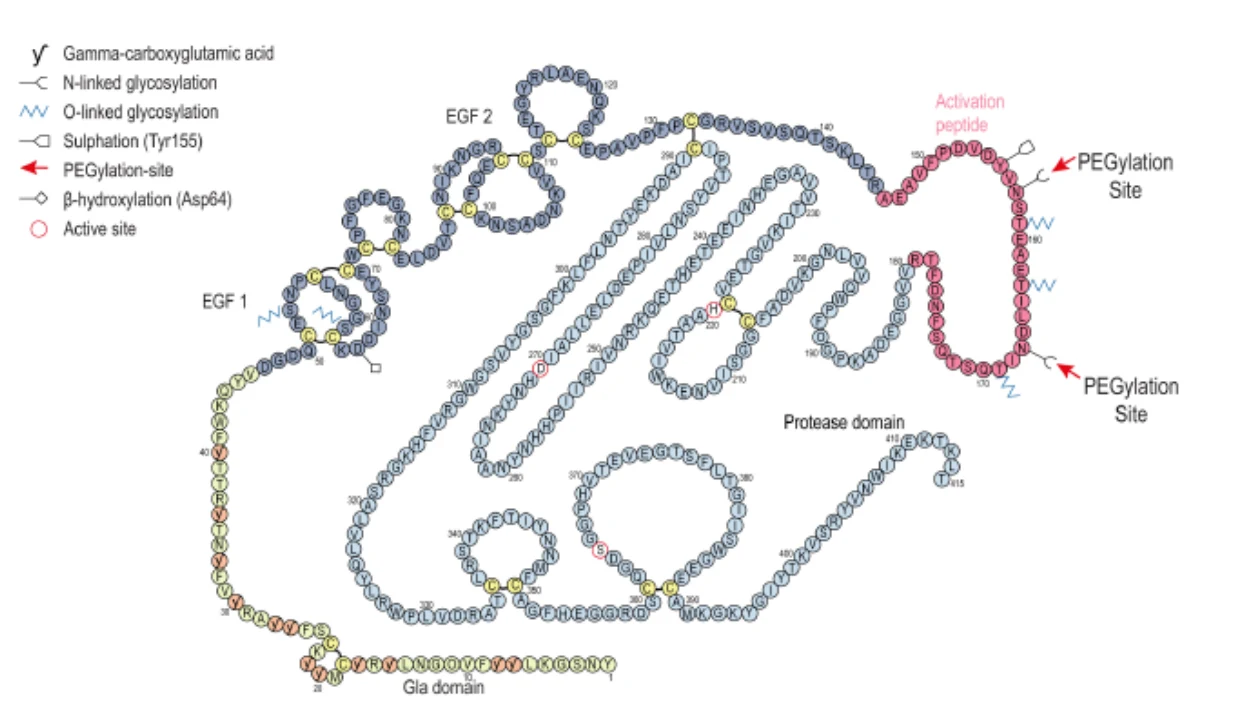
Figure 1: Nonacog beta pegol structure showing the amino acid sequence, disulphide bridges and post-translational modifications of nonacog beta pegol
Physicochemical properties:
| Appearance, colour, physical state | The purified nonacog beta pegol drug substance is contained in a solution. The solution is clear and colourless to slightly yellow |
|---|---|
| Solubility | The physical appearance of nonacog beta pegol drug substance (tested in concentration range 2-10 mg/ml) is a solution |
| Aqueous pH-solubility profile | No visual precipitation is observed between pH 2.7 to pH 10.2. However, aggregation can be detected at pH lower than 5.5 and above pH 8.9 |
| pI value | The isoelectric point (pI) of nonacog beta pegol is approximately 5.5 |
Pharmaceutical standard: In-House
Product Characteristics:
Nonacog beta pegol is a PEGylated recombinant human factor IX. The molecule consists of a Gla domain, two EGF-like (epidermal growth factor) domains, an activation peptide (which is cleaved from nonacog beta pegol upon activation), and a protease domain (see Figure 1).
Recombinant factor IX (rFIX) is an intermediate in the production of nonacog beta pegol. rFIX is produced in Chinese Hamster Ovary cells. The post translational modifications include disulphide bridges, γ-carboxylations, glycosylations, sulphation and hydroxylation.
For production of nonacog beta pegol, a 40 kDa PEG is covalently attached to N-linked carbohydrates (attachment sites: Asn157, Asn167) via a linker. The two possible PEGylation sites in the rFIX molecule (Asn157 and Asn167) are both situated on the activation peptide.
Nonacog beta pegol has a PEGylation profile for which the major form is mono-PEGylated rFIX (approximately 80%) and minor forms are the di- and tri-PEGylated rFIX, as well as non-PEGylated rFIX. For the mono-PEGylated nonacog beta pegol, the distribution between the two possible PEGylation sites (Asn157 and Asn167) is approximately equal.
14 CLINICAL TRIALS
14.1 Trial Design and Study Demographics
Table 11: Study demographics and trial design in previously treated hemophilia B patients
| Study # | Study design | Dosage, route of administration and durationa) | Study subjects (n) | Mean age (Range) | Sex |
Trial 3747 Pivotal trial | A multicentre, single-blindb), non-controlled, randomized trial evaluating safety, efficacy and PK in routine prophylaxis and treatment of bleeds. Adolescent or adult at enrolment (13-65 years of age). Three treatment arms: 10 or 40 IU/kg once weekly prophylaxis for 52 weeks (randomized), or on-demand treatment for 28 weeks. | Prophylaxis: 10 or 40 IU/kg once-weekly. Treatment of bleeds: Mild and moderate bleeds treated with injection(s) of 40 IU/kg; severe bleeds treated with 80 IU/kg. | 74 previously treated adolescent or adult patients
PK: 16 previously treated patients | Mean = 31 years Range = 13-65 years | Male |
Trial 3773 Surgery trial | A multicentre, open-label, non-controlled trial evaluating efficacy and safety during major surgical procedures for 3-12 weeks. Adolescent or adult at enrolment (15-56 years of age) | Pre-operative: 80 IU/kg on the day of surgery. Post-operative: Recommended to give 2 doses of 40 IU/kg within the first 6 days after surgery. | 13 previously treated adolescent or adult patients | Mean = 38 years Range = 15-56 years | Male |
Trial 3775 Extension trial to 3747 and 3773 | A multicentre, open label, non-controlled trial evaluating long-term safety and efficacy in routine prophylaxis and treatment of bleeds. Adolescent or adult patients at enrolment (14-66 years of age). Four treatment arms: 10 or 40 IU/kg once weekly prophylaxis, 80 IU/kg once every second week prophylaxis, or on-demand treatment. Free choice between available treatment arms, and switching of treatment arm during the trial was allowed. | Prophylaxis: 10 or 40 IU/kg once-weekly, or 80 IU/kg once every second week. Treatment of bleeds: Mild and moderate bleeds treated with injection(s) of 40 IU/kg; severe bleeds treated with 80 IU/kg. | 71 previously treated adolescent or adult patients
| Mean = 32 years Range = 14-66 years | Male |
Trial 3774 Pediatric trial | A multicentre, open-label, non-controlled trial evaluating safety, efficacy and PK in routine prophylaxis and treatment of breakthrough bleeds. Children 0-12 years at enrolment. The trial contained a main phase of 52 weeks, followed by an extension phase for up to 10 years in total. One treatment arm with 40 IU/kg once-weekly prophylaxis. | Prophylaxis: 40 IU/kg once-weekly. Treatment of bleeds: Mild and moderate bleeds treated with injection(s) of 40 IU/kg; severe bleeds treated with 80 IU/kg. | 25 previously treated pediatric patients PK: 25 previously treated patients. 22 previously treated patients continued into the extension phase of the trial. | Mean = 6.5 years Range = 1-12 years | Male |
Trial 3895 Pediatric Trial – Previously Untreated Patients | A multicentre, open label, non-controlled, single-arm (but including an optional pre-prophylaxis period up to 20 EDs or 24 months) trial evaluating safety and efficacy in routine prophylaxis and treatment of breakthrough bleeds. Children 0-6 years at enrolment. The trial contained a 1-3 main phase up to ≥50 EDs, followed by 1 year extension phase up to ≥100 EDs and end of trial period up to 10 years in total . | Pre-prophylaxis: 40 IU/kg on demand or intervals longer than once-weekly Prophylaxis: 40 IU/kg once-weekly Treatment of bleeds: Mild and moderate bleeds treated with injection(s) of 40 IU/kg; severe bleeds treated with 80 IU/kg. | 50 previously untreated paediatric patients
| Mean = 0.8 years Range = 0-5 years | Male |
- a) Additional doses for treatment of bleeds could be given at the investigator’s discretion.
- b) Single-blind in this trial meant that patients on prophylaxis did not know whether they were randomised to the 10 IU/kg or the 40 IU/kg once-weekly prophylaxis arm. This information was also concealed from the investigator, however, as the investigator had the possibility to measure FIX activity levels during the trial, the investigator could potentially become unblinded.
14.2 Study Results
The completed clinical trial program included one phase 1 trial and four phase 3 multicentre, non-controlled trials. The objectives of the phase 3 trials were to evaluate the safety and efficacy of Rebinyn® in routine prophylaxis, control and prevention of bleeding episodes, and perioperative management in paediatric and adult PTPs with hemophilia B (factor IX activity ≤ 2%). One multicenter, non-controlled, open-label trial was conducted to evaluate the safety and efficacy of Rebinyn in routine prophylaxis and treatment of breakthrough bleeding episodes in pediatric PUPs (< 6 years old) with hemophilia B (Factor IX activity ≤ 2%). Previously treated patients were defined as patients receiving treatment with other factor IX products for ≥150 exposure days for adolescents and adults, and ≥50 exposure days for pediatric patients. The key exclusion criteria across trials included known or suspected hypersensitivity to trial or related products, known history of factor IX inhibitors or current inhibitor ≥0.6 BU, HIV positive with a viral load ≥400,000 copies/mL or CD4+ lymphocyte count ≤200/μL, additional congenital or acquired coagulation disorders, previous arterial thrombotic events as well as immune modulating or chemotherapeutic medication.
The efficacy evaluation included 105 PTPs: [62 adults (18 to 65 years old), 18 adolescents (13 to 17 years old), and 25 children (1 to 12 years old)] and 50 PUPs (< 6 years old).
Pivotal Trial: The pivotal trial included 74 adolescent (13 to 17 years) and adult (18 to 65 years) previously treated patients. The trial included one open-label on-demand arm with treatment for approximately 28 weeks and two prophylaxis treatment arms, with single-blind randomization to either 10 IU/kg or 40 IU/kg once-weekly for approximately 52 weeks.
Extension trial: There were 71 subjects from the pivotal trial and surgery trial that continued prophylaxis or on-demand treatment with REBINYN® in an open-label extension trial, with the possibility to switch regimens during the trial.
Pediatric trial (PTPs): The main phase of the pediatric trial included 25 pediatric (1-12 years old at trial entry) in which patients received prophylaxis treatment with Rebinyn® 40 IU/kg once-weekly for approximately 52 weeks. The extension phase of the trial included 22 pediatric subjects (1 to 12 years old at trial entry) who continued treatment with Rebinyn 40 IU/kg once weekly for up to 8 years.
Pediatric trial (PUPs) : The main phase of the pediatric trial included 50 pediatric patients (0 to 5 years old), of which 32 received pre-prophylactic treatment (optional on-demand treatment for bleeding episodes and/or dosing of 40 IU/kg at intervals longer than a week until the subject has reached 20 exposure days or has turned 24 months of age) and 47 received routine prophylactic treatment with Rebinyn 40 IU/kg once weekly. The extension phase of the trial included 38 subjects (0 to 4 years old) who continued treatment with Rebinyn 40 IU/kg once weekly for up to 6 years.
Surgery trial: The surgery trial included 13 previously treated adolescent and adult patients in which subjects received one injection of Rebinyn® 80 IU/kg on the day of a major surgery, and post-operatively, injections of 40 IU/kg at the investigator’s discretion for up to 3 weeks after surgery.
Control and Prevention of Bleeding Episodes
Adult/Adolescent/Children PTP Trial
A total of 683 bleeding episodes were reported in 84 out of 105 PTPs (children, adolescents, and adults) in four clinical trials. Bleeding episodes were treated with Rebinyn at 40 IU/kg for minor or moderate bleeds or 80 IU/kg for major bleeds, with additional doses of 40 IU/kg as needed. The median dose to treat a bleeding episode was 42.4 IU/kg.
An overall assessment of efficacy was performed by the patient (for home treatment) or study site investigator (for treatment under medical supervision) using a 4-point scale of excellent, good, moderate, or poor. The overall success rate (defined as excellent or good) for treatment of bleeding episodes when pooling all trials in previously treated patients was 92% across all ages. The majority of PTPs needed 1 injection to treat a bleeding episode.
The success rate and dose needed for treatment of bleeding episodes were independent of the location of the bleeding. The success rate for treatment of bleeding episodes was also independent of whether the bleed was traumatic or spontaneous.
Table 12: Efficacy in control of bleeding episodes
| New Bleeding Episodes | n = 683 |
| Number of injections to treat bleeding episodes | |
| 1 injection | 590 (86.4%) |
| 2 injections | 70 (10.2%) |
| 3 injections | 12 (1.8%) |
| >3 injections | 11 (1.6%) |
| Median total dose (IU/kg) to treat a bleeding episode (range) | 42.4 (20.3;569.3) |
| Number of | Excellent | Good | Moderate | Poor | Missing |
| treated bleeds | ||||||
| Severity of Bleeds | ||||||
| Mild / moderate | 680 | 223 (32.8%) | 400 (58.8%) | 41 (6.0%) | 10 (1.5%) | 6 (0.9%) |
| Severe | 1 | 1 (100.0%) | - | - | - | - |
| Missing | 2 | 1 (50.0%) | 1 (50.0%) | - | - | - |
| Type of Bleeds | ||||||
Spontaneous Bleeding episodes | 397 | 117 (29.5%) | 242 (61.0%) | 29 (7.3%) | 6 (1.5%) | 3 (0.8%) |
Traumatic bleeding episodes | 273 | 102 (37.4%) | 152 (55.7%) | 12 (4.4%) | 4 (1.5%) | 3 (1.1%) |
| After major surgery | 4 | - | 4 (100.0%) | - | - | - |
| After minor surgery | 3 | 1 (33.3%) | 2 (66.7%) | - | - | - |
| Other | 6 | 5 (83.3%) | 1 (16.7%) | - | - | - |
| Location of Bleeds | ||||||
| C.N.S | 1 | 1 (100.0%) | - | - | - | - |
| Gastrointestinal | 1 | 1 (100.0%) | - | - | - | - |
| Genitourinary | 8 | 2 (25.0%) | 6 (75.0%) | - | - | - |
| Joint | 471 | 135 (28.7%) | 295 (62.6%) | 31 (6.6%) | 6 (1.3%) | 4 (0.8%) |
| Mouth/gums/nose | 18 | 9 (50.0%) | 7 (38.9%) | 2 (11.1%) | - | - |
| Mucosal | 16 | 9 (56.3%) | 6 (37.5%) | 1 (6.3%) | - | - |
| Muscle/muscular | 82 | 31 (37.8%) | 45 (54.9%) | 5 (6.1%) | 1 (1.2%) | - |
| Skin or soft tissue | 14 | 6 (42.9%) | 7 (50.0%) | 1 (7.1%) | - | - |
| Skin | 3 | 1 (33.3%) | 2 (66.7%) | - | - | - |
| Subcutaneous | 19 | 12 (63.2%) | 5 (26.3%) | - | 2 (10.5%) | - |
| Other | 22 | 8 (36.4%) | 13 (59.1%) | - | - | 1 (4.5%) |
| Unknown location | 28 | 10 (35.7%) | 15 (53.6%) | 1 (3.6%) | 1 (3.6%) | 1 (3.6%) |
In the pivotal trial in adolescent and adult subjects, there were 70 breakthrough bleeding episodes for 16 out of 29 subjects in the 40 IU/kg prophylaxis arm. The overall success rate for treatment of breakthrough bleeds was 97.1% (67 out of 69 evaluated bleeds). A total of 69 (98.6%) of the 70 bleeding episodes were treated with one injection.
In the on-demand arm there were 143 bleeding episodes in 14 out of 15 subjects. The overall success rate was 95.1% (135 out of 142 evaluated bleeds). A total of 120 bleeds (83.9%) of the 143 bleeding episodes were treated with one injection, and 20 (14.0%) were treated with two injections.
Thirty-three of the 43 previously treated pediatric patients (1 to 17 years old) were treated with Rebinyn® for 223 bleeding episodes. The majority of pediatric subjects needed 1 dose to treat a bleeding episode and reported excellent or good response with Rebinyn® across all age groups. Results are provided in Table 13.
Table 13: Efficacy in control of bleeding episodes in pediatric patients
| New Bleeding Episodes | n = 223 |
| Number of injections to treat bleeding episodes | |
| 1 injection | 183 (82.1%) |
| 2 injections | 27 (12.1%) |
| 3 injections | 8 (3.6%) |
| >3 injections | 5 (2.2%) |
| Median total dose (IU/kg) to treat a bleeding episode (range) | 42.8 (20.3;569.3) |
Number of treated bleeds | Excellent | Good | Moderate | Poor | Missing | |
| Severity of Bleeds | ||||||
| Mild / moderate* | 223 | 75 (33.6%) | 130 (58.3%) | 13 (5.8%) | 4 (1.8%) | 1 (0.4%) |
| Type of Bleeds | ||||||
Spontaneous Bleeding episodes | 86 | 18 (20.9%) | 58 (67.4%) | 7 (8.1%) | 2 (2.3%) | 1 (1.2%) |
Traumatic bleeding episodes | 132 | 52 (39.4%) | 72 (54.5%) | 6 (4.5%) | 2 (1.5%) | - |
| Other | 5 | 5 (100.0%) | - | - | - | - |
| Location of Bleeds | ||||||
| C.N.S | 1 | 1 (100.0%) | - | - | - | - |
| Gastrointestinal | 1 | 1 (100.0%) | - | - | - | - |
| Genitourinary | 4 | 1 (25.0%) | 3 (75.0%) | - | - | - |
| Joint | 105 | 27 (25.7%) | 68 (64.8%) | 9 (8.6%) | 1 (1.0%) | - |
| Mucosal | 16 | 9 (56.3%) | 6 (37.5%) | 1 (6.3%) | - | - |
| Muscle/muscular | 37 | 11 (29.7%) | 22 (59.5%) | 3 (8.1%) | 1 (2.7%) | - |
| Skin or soft tissue | 6 | 2 (33.3%) | 4 (66.7%) | - | - | - |
| Skin | 3 | 1 (33.3%) | 2 (66.7%) | - | - | - |
| Subcutaneous | 19 | 12 (63.2%) | 5 (26.3%) | - | 2 (10.5%) | - |
| Other | 16 | 7 (43.8%) | 9 (56.3%) | - | - | - |
| Unknown location | 15 | 3 (20.0%) | 11 (73.3%) | - | - | 1 (6.7%) |
*All bleeds were mild or moderate
Paediatric PUP Trial
A total of 148 bleeding episodes were reported in 35 out of 50 subjects in the pediatric PUP trial, where 70 bleeding episodes were reported during the pre-prophylaxis period with a mean treatment period of 0.69 years while the remaining 78 bleeds were reported during prophylaxis period with a mean treatment period of 2.56 years. Bleeding episodes were treated with Rebinyn® at 40 IU/kg for minor or moderate bleeds or 80 IU/kg for major bleeds, with additional doses of 40 IU/kg as needed. The median dose to treat a bleeding episode was 43.3 IU/kg.
The overall success rate (defined as excellent or good) for treatment of bleeding episodes was 96% as shown in Table 14. The majority of previously untreated patients needed 1 dose to treat a bleeding episode.
Table 14: Efficacy in Treatment of Bleeding Episodes in Previously Untreated Patients
| Number of Bleeding Episodes* | n = 140 |
| Efficacy assessment | |
| Excellent or Good | 135 (96%) |
| Moderate or Poor | 5 (4%) |
| Number of injections to treat a bleeding episode | |
| 1 injection | 124 (89%) |
| 2 injections | 13 (9%) |
| >2 injections | 3 (2%) |
*Efficacy assessment was based on 140 bleeding episodes treated with REBINYN only (8 other bleeding episodes were treated with other haemostatic drugs or bypassing agents with or without REBINYN). Efficacy was assessed according to a four-point scale using:
Excellent: Abrupt pain relief and/or clear improvement in objective signs of bleeding within 8 hours after a single injection ; Good: Noticeable pain relief and/or improvement in signs of bleeding within 8 hours after a single injection;
Moderate: Probable or slight beneficial effect within the first 8 hours after the first injection but requiring more than one injection within 8 hours;
Poor: No improvement, or worsening of symptoms within 8 hours after the second of two injections.
| Median total dose (IU/kg) to treat a bleeding episode (range) | 43.3 (27.8;636.1) |
Number of treated bleeds | Excellent | Good | Moderate | Poor | Missing | |
| Severity of Bleeds | ||||||
| Mild / moderate | 136 | 86 (63.2%) | 46 (33.8%) | 4 (2.9%) | - | - |
| Severe | 4 | 2 (50.0%) | 1 (25.0%) | 1 (25.0%) | - | - |
| Type of Bleeds | ||||||
Spontaneous Bleeding episodes | 34 | 20 (58.8%) | 14 (41.2%) | - | - | - |
Traumatic bleeding episodes | 103 | 67 (65.0%) | 31 (30.1%) | 5 (4.9%) | - | - |
| Surgical | 2 | - | 2 (100.0%) | - | - | - |
| Unkown | 1 | 1 (100.0%) | - | - | - | - |
| Location of Bleeds | ||||||
| C.N.S | 1 | - | 1 (100.0%) | - | - | - |
| Joint | 21 | 10 (47.6%) | 10 (47.6%) | 1 (4.8%) | - | - |
| Mouth/gums/nose | 20 | 17 (85.0%) | 3 (15.0%) | - | - | - |
| Muscular | 18 | 11 (61.1%) | 6 (33.3%) | 1 (5.6%) | - | - |
| Skin | 69 | 41 (59.4%) | 25 (36.2%) | 3 (4.3%) | - | - |
| Stomach | 3 | 2 (66.7%) | 1 (33.3%) | - | - | - |
| Other | 8 | 7 (87.5%) | 1 (12.5%) | - | - | - |
Routine Prophylaxis
Adult/Adolescent PTP Trial
In the main phase of the adult/adolescent PTP trial, 29 subjects (13 to 65 years old) received Rebinyn® 40 IU/kg once weekly for approximately 52 weeks. The annualized bleeding rate for these subjects in the main phase is presented in Table 15. Target joints were evaluated according to the 2014 ISTH definition (≥ 3 spontaneous bleeds into a single joint within a consecutive 6-month period). A target joint was considered resolved when it had ≤ 2 bleeds within a consecutive 12-month period. Twenty target joints were reported in 13 subjects in the 40 IU/kg once weekly arm at baseline, and 18 out of 20 (90%) of these target joints were considered resolved at the end of the main phase.
Patients from the adult/adolescent trial and the surgery trial could enroll in an open-label extension, in which the prophylaxis treatment with Rebinyn® was evaluated. Fifty-two subjects from the adult/adolescent and surgery trials continued on to the 1-year open-label extension and were allocated to the 40 IU/kg once weekly prophylaxis arm. A total of 98 bleeding episodes were reported for 31 of the 52 subjects (59.6%) on the 40 IU/kg prophylaxis regimen. The median total ABR for these subjects was 1.00 (IQR:0.00;2.03).
Table 15: Annualized Bleeding Rate (ABR) in the Adult/Adolescent PTP Trial (40 IU/kg Once Weekly Arm) – Main Phase
| Main Phase | ||||||
| Age of patient | 13-17 years N=9 | 18-65 years N=20 | Overall ≥ 13 years N=29 | |||
| Total ABR | ||||||
| Poisson-estimated mean (95% CI) | 2.19 (0.73 ; 6.54) | 2.68 (1.34 ; 5.35) | 2.52 (1.40; 4.52) | |||
| Median (IQR) | 1.93 (0.00 ; 4.01) | 1.03 (0.00 ; 4.01) | 1.04 (0.00; 4.01) | |||
| ABR for spontaneous bleeds | ||||||
| Poisson-estimated mean (95% CI) | 0.11 (0.00; 13.23) | 1.77 (0.77; 4.07) | 1.22 (0.46; 3.25) | |||
| Median (IQR) | 0.00 (0.00; 0.00) | 0.00 (0.00; 1.51) | 0.00 (0.00; 0.99) | |||
| ABR for traumatic bleeds | ||||||
| Poisson-estimated mean (95% CI) | 2.08 (0.98; 4.42) | 0.91 (0.41; 2.02) | 1.29 (0.74; 2.25) | |||
| Median (IQR) | 1.93 (0.00; 3.87) | 0.00 (0.00; 1.01) | 0.00 (0.00; 2.05) | |||
| ABR for joint bleeds | ||||||
| Poisson-estimated mean (95% CI) | 1.42 (0.36; 5.57) | 2.19 (1.02; 4.73) | 1.94 (0.97; 3.88) | |||
| Median (IQR) | 0.97 (0.00; 2.17) | 0.51 (0.00; 2.04) | 0.97 (0.00; 2.07) | |||
Pediatric PTP Trial
The median ABR for spontaneous bleeding episodes was 0 across all age groups, and remained at below 1 for traumatic bleeding episodes across all subjects throughout the main and extension phase (Table 16). The median ABR for joint bleeding episodes was 0.13 (IQR: 0.00; 0.50). One target joint was reported in 1 subject in the 7 to 12 years age group at baseline, according to the 2014 ISTH definition, which was considered resolved during the main phase. None of the pediatric subjects developed target joints in the trial.
Table 16: Annualized Bleeding Rate (ABR) in the Pediatric PTP Trial - Main & Extension Phase
| Main Phase | Extension Phase | ||||||||||||||
| Age of patient | ≤ 6 years N=12 | 7-12 years N=13 | ≤ 6 years N=11 | 7-12 years N=11 | |||||||||||
| Mean treatment period (years) | 0.93 | 1.01 | 6.03 | 5.48 | |||||||||||
| Total ABR | |||||||||||||||
| Poisson-estimated mean (95% CI) | 0.90 (0.43 ; 1.89) | 2.06 (1.31 ; 3.24) | 0.59 (0.28 ; 1.24) | 0.86 (0.36 ; 2.07) | |||||||||||
| Median (IQR) | 0.00 (0.00 ; 1.98) | 2.00 (0.96 ; 3.00) | 0.29 (0.00 ; 1.55) | 0.45 (0.14 ; 1.72) | |||||||||||
| ABR for spontaneous bleeds | |||||||||||||||
| Poisson-estimated mean (95% CI) | 0.27 (0.06 ; 1.26) | 0.61 (0.24 ; 1.57) | 0.11 (0.03 ; 0.39) | 0.38 (0.14 ; 1.00) | |||||||||||
| Median (IQR) | 0.00 (0.00 ; 0.00) | 0.00 (0.00 ; 0.96) | 0.00 (0.00 ; 0.14) | 0.00 (0.00 ; 1.02) | |||||||||||
| ABR for traumatic bleeds | |||||||||||||||
| Poisson-estimated mean (95% CI) | 0.63 (0.28 ; 1.43) | 1.14 (0.65 ; 2.01) | 0.48 (0.23 ; 1.00) | 0.48 (0.12 ; 1.86) | |||||||||||
| Median (IQR) | 0.00 (0.00 ; 1.00) | 0.98 (0.00 ; 1.93) | 0.29 (0.00 ; 1.21) | 0.30 (0.14 ; 0.68) | |||||||||||
Pediatric PUP Trial
In the main phase of the pediatric PUP trial, 47 subjects ≤ 6 years old received 40 IU/kg once weekly and 38 patients continued on to the extension phase. Table 17 below shows the mean treatment period and ABRs for both the main and extension phase.
The mean treatment period for prophylaxis treatment was 0.75 years for the main phase and 2.23 years for the extension phase. The median ABR was 0 for spontaneous, traumatic, and joint bleeding episodes. None of the pediatric subjects developed target joints in the trial.
Table 17: Annualized Bleeding Rate (ABR) in the Pediatric PUP Trial - Main and Extension Phase
Main Phase N=47 | Extension Phase N=38 | |
| Mean treatment period (years) | 0.75 | 2.23 |
| Total ABR |
| Poisson-estimated mean (95% CI) | 0.82 (0.34 ; 1.98) | 0.58 (0.35 ; 0.96) |
| Median (IQR) | 0.00 (0.00 ; 1.02) | 0.00 (0.00 ; 0.88) |
| ABR for spontaneous bleeds | ||
| Poisson-estimated mean (95% CI) | 0.20 (0.05 ; 0.81) | 0.12 (0.05 ; 0.25) |
| Median (IQR) | 0.00 (0.00 ; 0.00) | 0.00 (0.00 ; 0.00) |
| ABR for traumatic bleeds | ||
| Poisson-estimated mean (95% CI) | 0.59 (0.22 ; 1.64) | 0.45 (0.24 ; 0.83) |
| Median (IQR) | 0.00 (0.00 ; 0.00) | 0.00 (0.00 ; 0.62) |
Perioperative Management
In a dedicated surgery trial, the efficacy analysis of Rebinyn® in perioperative management included 11 major surgical procedures performed in 11 previous treated adult and adolescent patients. The procedures included 9 orthopedic and 2 surgeries in the oral cavity. The patients received 1 pre-operative injection of Rebinyn® 80 IU/kg on the day of surgery, and post-operatively, injections of 40 IU/kg.
The hemostatic effect during surgery was evaluated on a four point scale of excellent, good, moderate, or poor. The intraoperative hemostatic effect was rated as excellent or good for the 11 surgeries, for a success rate of 100%. A pre-operative dose of 80 IU/kg Rebinyn® was effective and no patients required additional doses on the day of surgery. In the post-surgery period (Day 1 to 6 and Day 7 to 13), the median number of additional 40 IU/kg doses administered was 2.0 and 1.5, respectively. The mean total consumption of Rebinyn® during and after surgery was 236 IU/kg (range: 81 to 460 IU/kg).
Three additional major surgeries and 18 minor surgery procedures were evaluated in the extension trial for REBINYN® in previously treated patients. The hemostatic effect during major and minor surgery was confirmed with a success rate of 100%.
15 MICROBIOLOGY
No microbiological information is required for this drug product.
16 NON-CLINICAL TOXICOLOGY
General Toxicology: In repeat dose toxicity studies in rats and monkeys, 40 kDa polyethylene-glycol (PEG) deposition was observed by immunohistochemical staining in the choroid plexus. In juvenile rats PEG deposition was also observed in circumventricular organs, in the cytoplasm of certain cranial motor neurons and in macrophages in the pituitary gland (see Table 18). There were no reported neurobehavioral and neurocognitive alterations or other neuropathological changes observed in the repeat-dose rat toxicity study, the impact of PEG on the structure, function of these anatomical tissues in the human pediatric population may not be fully elucidated.
In distribution and excretion studies in mice and rats, the 40 kDa polyethylene-glycol (PEG) moiety of Rebinyn® was shown to be widely distributed to and eliminated from organs, and excreted via plasma in urine (42–56%) and feces (28–50%).
Carcinogenicity: Studies concerning carcinogenicity in animals have not been performed.
Genotoxicity: Studies concerning genotoxicity in animals have not been performed.
Reproductive and Developmental Toxicology: Dedicated studies concerning reproductive toxicity in animals have not been performed. In a juvenile rat study with treatment start in 3 week old (corresponding to 2 years of age in humans) males, fertility following 9 weeks of treatment was unaffected (corresponding to 16 years of age in humans).
An overview of the non-clinical toxicity studies is listed in Table 18.
Table 18: Overview of toxicity studies
| Study Title | Species | Dose and Frequency | Key Findings |
|---|---|---|---|
Single Dose Single dose - comparison phase 1 and phase 3 batch [Study 210259] | Wistar rats | Single i.v. dose of 200, 1000 and 2000 IU/kg | Doses up to 2000 IU/kg were well tolerated. No clinical signs and no macroscopic or microscopic findings. No difference in hematology, clinical chemistry or histopathology at any dose level or between batches. |
| Repeat Dose – Non Pivotal | |||
6-week repeat dose [Study 212143] | Rowett nude rat | Twice weekly i.v. doses of 0, 40, 1200 IU/kg | No treatment related macroscopic or histopathological findings. PEG was detected in the cytoplasm of choroid plexus epithelial cells and in the choroid plexus connective tissue at the 1200 IU/kg twice weekly dose. This finding was not associated with tissue damage or abnormal clinical signs. |
13-week repeat dose [Study 208405] | Cynomolgus Monkey | Once weekly i.v. doses of 200 IU/kg | Six of 8 animals developed neutralizing antibodies with effect on exposure. Signs of acquired hemophilia were seen in 4 of 6 antibody positive animals. No other treatment related macroscopic or microscopic findings. |
| Repeat Dose – Pivotal | |||
26- week repeat dose [Study 212513] | Rowett nude rat | Intravenous doses of 0, 40, 150, 600, 1200 IU/kg every 5th day | Doses from 40-1200 IU/kg every fifth day were well tolerated. A treatment related increase in PT was seen, normalizing during recovery. No anti-drug antibodies developed. PEG was detected in small vesicles in the cytoplasm in the choroid plexus epithelial cells and in macrophages in the mesenteric lymph nodes at the 1200 IU/kg dose. |
| Study Title | Species | Dose and Frequency | Key Findings |
|---|---|---|---|
| This finding was not associated with tissue damage or abnormal clinical signs. | |||
4-week repeat dose [Study 208260] | Cynomolgus Monkey | Weekly i.v. doses of 0, 350, 1300, 3750 IU/kg (5 doses in total) | Mild and transient tremors were seen in animals given the highest dose. A treatment related increase in PT was seen, normalizing during recovery. Anti-drug antibodies were detected in the treatment free period. Decrease in aPTT was seen post dose and is an expected pharmacological effect of FIX. From Day 15 and on-wards a time and dose dependent increase in number of animals with an increase in aPTT > 38.1 s prior to dosing was seen; indicating development of neutralizing cross reacting antibodies. Five high dose animals were terminated early due to signs of bleeding simultaneous with an increase in aPTT, indicating development of acquired hemophilia. PEG was detected in the connective tissue of the choroid plexus and in the cytoplasm of a few choroid plexus epithelial cells at the 1300 or 3750 IU/kg dose. |
| Genotoxicity | Not performed | NA | NA |
| Carcinogenicity | Not performed | NA | NA |
| Reproductive and Developmental Toxicity | Not performed | NA | NA |
| Juvenile Toxicity | |||
| Preliminary juvenile tolerance and feasibility study (Study 319293) | Immature male rats | s.c. Day 10-13 of age. 120- 1200 IU/kg/twice weekly i.v. Day 24-67 of age. 120, 600, 1200 IU/kg twice weekly | s.c. phase: Mortality seen after all doses, thus s.c. dosing was considered not tolerable from Day 10-13 of age. i.v. phase: The study established feasibility of using immunocompetent male rats and a high-dose level of 1200 IU/kg/BIW was well-tolerated when dosed i.v. starting at weaning from Day 24 of age. |
| A Juvenile Neurotoxicity Study in the Male CD Rat by Intravenous | Immature male rats | i.v. 120-1200 IU/kg/twice weekly from Day 21 of age | A juvenile animal neurotoxicity study was conducted to evaluate the potential neurotoxicity of Rebinyn® when intravenously administered 120-1200 IU/kg/twice weekly in immature male rats from 3 to 13 weeks (corresponding to 2 to 16 |
| Study Title | Species | Dose and Frequency | Key Findings |
|---|---|---|---|
| Administration, with a 13-Week Recovery Period (Study 319286) | years of age in humans) of age, followed by a 13-week treatment-free period. The doses are 6-60 times higher than the weekly clinical dose of 40 IU/kg. The juvenile rats were examined for general condition, growth, sexual maturation, and functional fertility. Neurobehavioral examinations were performed throughout the treatment and the treatment-free periods to evaluate the potential neurotoxicity of Rebinyn®. The presence of PEG was evaluated in plasma, cerebrospinal fluid, and brain of these rats. PEG was detected in the choroid plexus, pituitary, in five circumventricular organs (the area postrema, pineal gland, median eminence, subfornical organ, nucleus tractus solitarius and the vascular organ of lamina terminalis), the cytoplasm of cranial motor neurons (hypoglossal, ambiguous, oculomotorius, accessory abducens, trigeminus and and facial motor nuclei). PEG was not detected in the cerebrospinal fluid and was not found to cross the blood brain barrier. The presence of PEG showed a dose- and treatment duration-dependent increase in PEG levels and incidence of PEG staining in these tissues. PEG levels decreased but remained detectable after a 13-week treatment free period. The presence of PEG in the choroid plexus, pituitary, circumventricular organs, and cranial motor neurons of juvenile rats was not associated with neurological and behavioral changes and functional findings. Learning and memory capacity and functional fertility were normal. | ||
| Local Tolerance | |||
Local tolerance- [Study 210439] | Rabbit | Single i.v.; i.a; perivenous dose of 0, 40 IU/kg | Some local clinical (hemorrhage/bruising and swelling) and microscopic reactions. Reactions were more pronounced after intraarterial administration. |
26- week repeat dose [Study 212513] | Rowett nude rat | i.v. doses of 0, 40, 150, 600, 1200 IU/kg | No treatment related local reactions. |
| 4- week repeat dose | Cynomolgus Monkey | i.v. doses of 0, 350, 1300, 3750 | No treatment related local reactions. |
| Study Title | Species | Dose and Frequency | Key Findings |
|---|---|---|---|
| [Study 208260] | IU/kg | ||