


Product Monograph - Rixubis
RECENT MAJOR LABEL CHANGES
TABLE OF CONTENTS
Sections or subsections that are not applicable at the time of authorization are not listed.
RECENT MAJOR LABEL CHANGES..........................................................................................2
TABLE OF CONTENTS ............................................................................................................. 2
PART I: HEALTH PROFESSIONAL INFORMATION ................................................................. 4
1 INDICATIONS ................................................................................................................. 4
1.1 Pediatrics ............................................................................................................... 4
1.2 Geriatrics ............................................................................................................... 4
2 CONTRAINDICATIONS .................................................................................................. 4
4 DOSAGE AND ADMINISTRATION................................................................................. 4
4.1 Dosing Considerations ........................................................................................... 4
4.2 Recommended Dose and Dosage Adjustment ....................................................... 5
4.3 Reconstitution ........................................................................................................ 7
4.4 Administration ........................................................................................................ 8
5 OVERDOSAGE ............................................................................................................... 9
6 DOSAGE FORMS, STRENGTHS, COMPOSITION AND PACKAGING ......................... 9
7 WARNINGS AND PRECAUTIONS ................................................................................. 9
7.1 Special Populations ............................................................................................. 11
7.1.1 Pregnant Women .............................................................................................11
7.1.2 Breast-feeding ..................................................................................................11
7.1.3 Pediatrics .........................................................................................................11
7.1.4 Geriatrics ..........................................................................................................11
8 ADVERSE REACTIONS ............................................................................................... 11
8.1 Adverse Reaction Overview ................................................................................. 11
8.2 Clinical Trial Adverse Reactions........................................................................... 11
8.5 Post-Market Adverse Drug Reactions .................................................................. 12
9 DRUG INTERACTIONS ................................................................................................ 12
9.2 Drug Interactions Overview .................................................................................. 12
9.3 Drug-Behavioural Interactions .............................................................................. 12
9.4 Drug-Drug Interactions ......................................................................................... 12
9.5 Drug-Food Interactions ........................................................................................ 12
9.6 Drug-Herbal Interactions ...................................................................................... 12
9.7 Drug-Laboratory Interactions ............................................................................... 12
10 CLINICAL PHARMACOLOGY ...................................................................................... 13
10.1 Mechanism of Action ........................................................................................ 13
10.2 Pharmacodynamics .......................................................................................... 13
10.3 Pharmacokinetics ............................................................................................. 13
11 STORAGE, STABILITY AND DISPOSAL ..................................................................... 15
12 SPECIAL HANDLING INSTRUCTIONS ........................................................................ 15
PART II: SCIENTIFIC INFORMATION ..................................................................................... 17
13 PHARMACEUTICAL INFORMATION ........................................................................... 17
14 CLINICAL TRIALS ........................................................................................................ 18
14.1 Trial Design and Study Demographics ............................................................. 18
14.2 Study Results ................................................................................................... 19
14.4 Immunogenicity ................................................................................................ 23
16 NON-CLINICAL TOXICOLOGY .................................................................................... 23
PATIENT MEDICATION INFORMATION ................................................................................. 25
PART I: HEALTH PROFESSIONAL INFORMATION
1 INDICATIONS
RIXUBIS (Recombinant Coagulation Factor IX (rFIX), Nonacog gamma for Injection) is indicated in adults and children with hemophilia B (congenital factor IX deficiency or Christmas disease) for:
- Control of bleeding episodes
- Perioperative management
- Routine prophylaxis to prevent or reduce the frequency of bleeding episodes
1.1 Pediatrics
Pediatric Use (<12 years of age): Safety, efficacy and pharmacokinetics of RIXUBIS have been evaluated in 23 previously treated pediatric patients (see 8 ADVERSE EVENTS, 10 CLINICAL PHARMACOLOGY and 14 CLINICAL TRIALS).
1.2 Geriatrics
Geriatrics (> 65 years of age): Clinical studies of RIXUBIS did not include subjects aged 65 years and over. It is not known whether they respond differently from younger subjects. As for all patients, dose selection for an elderly patient should be individualized.
2 CONTRAINDICATIONS
RIXUBIS contains trace amounts of Chinese Hamster ovary cell line (CHO). RIXUBIS is contraindicated in patients who are hypersensitive to this drug or to any ingredient in the formulation (including hamster protein), or component of the container. For a complete listing, see 6 DOSAGE FORMS, STRENGTHS, COMPOSITION AND PACKAGING.
4 DOSAGE AND ADMINISTRATION
4.1 Dosing Considerations
General
Treatment should be initiated under the supervision of a physician experienced in the treatment of hemophilia. The safety and efficacy of RIXUBIS administration by continuous infusion has not been established.
The dosage and duration of the replacement therapy depend on the severity of factor IX deficiency, the location and extent of bleeding, and the patient’s clinical condition, age and pharmacokinetic parameters of factor IX, such as incremental recovery and half-life.
Monitor patients using an appropriate factor IX activity assay to ensure that the desired factor IX activity plasma has been attained. If necessary, adjust the dose and the frequency of repeated infusions as appropriate. Careful monitoring of replacement therapy is especially important in cases of major surgery or life-threatening hemorrhages.
Evaluate the patient for the development of factor IX inhibitors if the expected factor IX activity plasma levels are not attained or if bleeding is not controlled with an appropriate dose. (see 7 WARNINGS AND PRECAUTIONS)
Each vial of RIXUBIS has the factor IX (rFIX) potency in international units stated on the vial.
Dosing of RIXUBIS may differ from that of plasma-derived factor IX products (see 10 CLINICAL
PHARMACOLOGY). Subjects at the low end of the observed factor IX recovery may require dose adjustment of RIXUBIS.
FIX potency results can be affected by the type of aPTT reagent and reference standard used in the assay; differences of up to 40% have been observed.
4.2 Recommended Dose and Dosage Adjustment
Method for Calculating Initial Estimated Dose
A guide for calculating the dose for treatment of bleeding episodes is provided in Table 1.
Table 1. Method for Calculating Initial Estimated Dose
| Number of factor IX International Units required (IU) | = | Body Weight (kg) | x | Desired factor IX increase (% or U/dL) | x | Reciprocal of Observed recovery (IU/kg per IU/dL) |
The calculation of the required dose of RIXUBIS is based on the empirical finding that one international unit of RIXUBIS per kg body weight is expected to increase the circulating level of factor IX by 0.7 IU/dL of plasma (0.7% of normal) for patients less than 12 years of age and by 0.9 IU/dL of plasma (0.9% of normal) (range from 0.5 to 1.4 IU/dL) in patients 12 years and older.
Incremental Recovery in Previously Treated Patients (PTPs)
It is recommended to base the calculation of the required dose on the patient’s individual incremental recovery using serial factor IX activity assays due to the wide range of inter-individual differences in incremental recovery. Titrate the dose based on the patient's clinical response and individual pharmacokinetics, in particular incremental recovery and half-life.
Patients <12 Years of Age
For an incremental recovery of 0.7 IU/dL of plasma (0.7% of normal), the dose is calculated as follows:
| Number of factor IX International Units required (IU) | = | Body Weight (kg) | x | Desired factor IX increase (% or U/dL) | x | 1.4 dL/kg |
Examples (assuming patient’s baseline factor IX level is <1% of normal)
- 1. A dose of 1500 IU of RIXUBIS, administered to a 20 kg patient should be expected to result in a peak post-infusion factor IX increase of 1500 IU x {[0.7 IU/dL]/[IU/kg]}/[20 kg] = 53.6 IU/dL (53.6% of normal).
Patients ≥12 Years of Age
For an incremental recovery of 0.9 IU/dL of plasma (0.9% of normal), the dose is calculated as follows:
Table 2. Calculating Incremental Dose Adjustment
| Number of factor IX International Units required (IU) | = | Body Weight (kg) | x | Desired factor IX increase (% or U/dL) | x | 1.1 dL/kg |
Examples (assuming patient’s baseline factor IX level is <1% of normal):
- 1. A dose of 4550 IU RIXUBIS administered to a 70 kg patient should be expected to result in a peak post-infusion factor IX increase of 4550 IU x {[0.9 IU/dL]/[IU/kg]}/[70 kg] = 59 IU/dL (59% of normal).
- 2. A peak level of 70% is required in a 60 kg patient. In this situation, the appropriate dose would be 60 kg x 70 IU/dL/{[0.9 IU/dL]/[IU/kg]} = 4667 IU.
Treatment of Bleeding Episodes and Perioperative Management
A guide for dosing in the treatment of bleeding episodes and perioperative management is provided in Table 3 and Table 4, respectively. Ensure the factor IX activity level is achieved and maintained in the corresponding period.
Table 3. Dosing for Control and Prevention of Bleeding Episodes
| Type of Bleeding Episodes | Circulating factor IX level Required (% or IU/dL) | Dosing Interval (hours) | Duration of Therapy |
Minor Uncomplicated hemarthrosis, superficial muscular or soft tissue | 20-30 | 12-24 | Treat until bleeding stops and healing begins, about 1-2 days |
Moderate Intramuscular or soft tissue with dissection, mucous membranes, or hematuria | 25-50 | 12-24 | Treat until bleeding stops and healing begins, about 2-7 days |
Major Pharyngeal retropharyngeal, retroperitoneal, CNS | 50-100 | 12-24 | Treat until bleeding stops and healing begins, about 7-10 days |
Adapted from Roberts HR, Eberst ME. Current management of hemophilia B. Hematol Oncol Clin North Am. 1993;7(6):1269-1280.
Table 4. Dosing for Perioperative Management
| Type of Surgery | Circulating Factor IX Level Required (% or IU/dL) | Dosing Interval (hours) | Duration of Therapy (days) |
Minor e.g. tooth extraction | 30-60 | 24 | Treat for at least 1 day, until healing begins |
Major e.g. intracranial, intraabdominal, intrathoracic, joint replacement | 80-100 | 8-24 | Treat for 7-10 days, until bleeding stops and healing begins |
Careful monitoring of replacement therapy is especially important in cases of major surgery or life-threatening hemorrhages.
Routine Prophylaxis
RIXUBIS can be administered for routine prophylaxis against bleeding in patients with severe and moderately severe hemophilia B. The recommended dose for previously treated patients (PTPs) is 40 to 80 IU/kg twice weekly for patients less than 12 years of age and is 40 to 60 IU/kg twice weekly for patients more than 12 years of age. Titration of dose may be necessary depending upon the individual patient’s pharmacokinetics, age, bleeding pattern, and physical activity.
4.3 Reconstitution
Administer RIXUBIS by intravenous (IV) infusion after reconstitution.
Perform reconstitution, product administration, and handling of the administration set and needles with caution. Percutaneous puncture with a needle contaminated with blood can transmit infectious viruses including HIV (AIDS) and hepatitis. Obtain immediate medical attention if injury occurs. Place needles in a sharps container after single use. Discard all equipment, including any reconstituted RIXUBIS, in an appropriate container.
RIXUBIS is a white or almost white lyophilized powder and is available in single-use vials which contain the following product strengths: 250 IU, 500 IU, 1000 IU, 2000 IU and 3000 IU
Each kit also contains 5 mL of Sterile Water for Injection and BAXJECT II Transfer device.
Actual factor IX activity in international units is stated on the unit carton and vial label.
Table 5. Reconstitution using BAXJECT II
| Vial Size | Volume of Diluent to be Added to Vial | Approximate Available Volume | Nominal Concentration per mL |
| 10 mL | 5 mL | 5 mL | 50 IU/ml |
| 10 mL | 5 mL | 5 mL | 100 IU/ml |
| 10 mL | 5 mL | 5 mL | 200 IU/ml |
| 10 mL | 5 mL | 5 mL | 400 IU/ml |
| 10 mL | 5 mL | 5 mL | 600 IU/ml |
Preparation and Reconstitution:
The procedures below are provided as general guidelines for the preparation and reconstitution of RIXUBIS. Always work on a clean surface and wash your hands before performing the following procedures:
- 1. Use aseptic technique during reconstitution procedure.
- 2. Allow the RIXUBIS vial (dry factor concentrate) and Sterile Water for Injection, USP vial (diluent) to reach room temperature.
- 3. Remove caps from the factor concentrate and diluent vials.
- 4. Cleanse stoppers with germicidal solution and allow to dry prior to use. Place the vials on a flat surface.
- 5. Open the BAXJECT II device package by peeling away the lid, without touching the inside (Figure A). Do not remove the device from the package. Note that the BAXJECT II device is intended for use with a single vial of RIXUBIS and Sterile Water for Injection, USP only; therefore, reconstituting and withdrawing a second vial into the syringe requires a second BAXJECT II device.
- 6. Turn the package over. Press straight down to fully insert the clear plastic spike through the diluent vial stopper (Figure B).
- 7. Grip the BAXJECT II package at its edge and pull the package off the device (Figure C). Do not remove the blue cap from the BAXJECT II device. Do not touch the exposed white plastic spike.
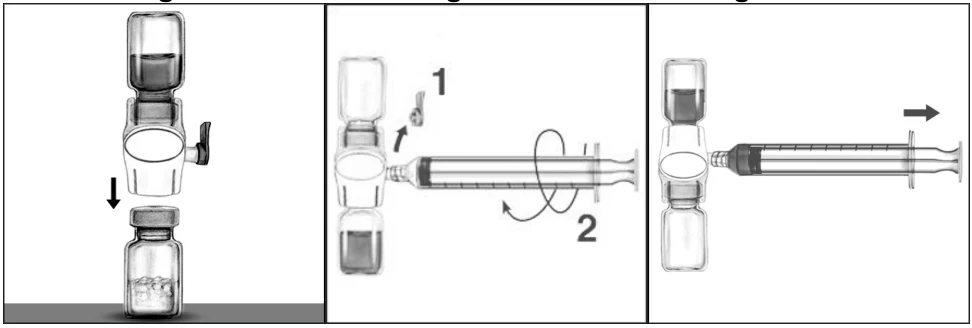
- 8. Turn the system over so that the diluent vial is on top. Quickly insert the white plastic spike fully into the RIXUBIS vial stopper by pushing straight down (Figure D). The vacuum will draw the diluent into the RIXUBIS vial.
- 9. Swirl gently until RIXUBIS is completely dissolved. Do not refrigerate after reconstitution. Use within 3 hours of reconstitution.
4.4 Administration
For intravenous use after reconstitution only.
- The safety and efficacy of RIXUBIS administration by continuous infusion has not been established. Do not administer RIXUBIS by continuous infusion. (see 7 WARNINGS AND PRECAUTIONS)
- Initiate treatment under the supervision of a physician experienced in the treatment of hemophilia. (see 7 WARNINGS AND PRECAUTIONS)
- Inspect parenteral drug products for particulate matter and discoloration prior to administration, whenever solution and container permit. The solution should be clear and colorless in appearance. If not, do not use the solution and notify Takeda.
- Administer RIXUBIS at room temperature within 3 hours of reconstitution. Discard any unused product.
- Only use a plastic syringe with this product.
- Remove the blue cap from the BAXJECT II device. Connect the syringe to the BAXJECT II device (Figure E). Do not inject air.
- Turn the system upside down (factor concentrate vial now on top). Draw the factor concentrate into the syringe by pulling the plunger back slowly (Figure F).
- Disconnect the syringe; attach a suitable needle and inject intravenously as instructed under Administration by Bolus Infusion. If a patient is to receive more than one vial of RIXUBIS, the contents of multiple vials may be drawn into the same syringe.
Maximum infusion rate of 10 mL/min.
Figure A Figure B Figure C
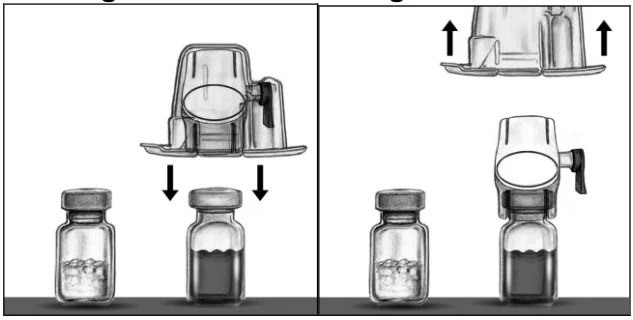
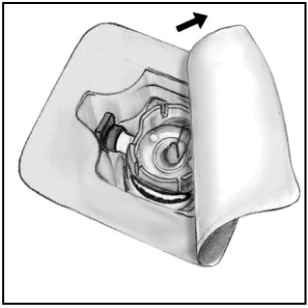
Figure D Figure E Figure F
5 OVERDOSAGE
No symptoms of overdose have been reported. As with other products of the same class, overdose may increase the risk for thrombotic and thromboembolic events (e.g., disseminated intravascular coagulation (DIC), pulmonary embolism, venous thrombosis, and arterial thrombosis).
| For management of a suspected drug overdose, contact your regional poison control centre. |
6 DOSAGE FORMS, STRENGTHS, COMPOSITION AND PACKAGING
To help ensure the traceability of biologic products, including biosimilars, health professionals should recognise the importance of recording both the brand name and the non-proprietary (active ingredient) name as well as other product-specific identifiers such as the Drug Identification Number (DIN) and the batch/lot number of the product supplied.
Table 6. Dosage Forms, Strengths, Composition and Packaging
RIXUBIS is available in single-use vials which contain the following product strengths: 250 IU, 500 IU, 1000 IU, 2000 IU and 3000 IU.
Each kit also contains 5 mL of Sterile Water for Injection and BAXJECT II Transfer device.
Actual factor IX activity in international units is stated on the unit carton and vial label.
7 WARNINGS AND PRECAUTIONS
General
Anaphylaxis and other hypersensitivity reactions have been reported with factor IX-containing products. Patients and/or their caregivers should be informed of the early signs of hypersensitivity reactions. They should be advised to discontinue use of the product immediately and contact their physician if such symptoms occur. The risk is highest during the early phases of initial exposure to factor IX concentrates in previously untreated patients (PUPs), in particular in patients with high risk gene mutations. Early signs of anaphylaxis or allergic reactions include angioedema, chest-tightness, hypotension, lethargy, nausea, vomiting, paresthesia, restlessness, wheezing, and dyspnea.
In some cases, these reactions have progressed to severe anaphylaxis. In the case of shock, the current medical standards for treatment of shock should be observed. In case of severe allergic reactions, alternative hemostatic measures should be considered. Discontinue administration and initiate appropriate treatment if allergic or anaphylactic-type reactions occur.
There have been reports in the literature showing an association between the occurrence of a factor IX inhibitor and allergic reactions. Therefore, patients experiencing allergic reactions should be evaluated for the presence of an inhibitor.
RIXUBIS contains trace amounts of hamster (CHO) proteins. Patients treated with this product may develop hypersensitivity to these non-human mammalian proteins.
| Route of Administration | Dosage Form / Strength/Composition | Non-medicinal Ingredients |
| Intravenous Injection | Lyophilized Powder for Intravenous injection / 250, 500, 1000, 2000, 3000 International Units (IU) per vial reconstituted with 5 mL of water for injection | Calcium Chloride, L-Histidine, Mannitol, Polysorbate 80, Sodium Chloride, Sucrose |
Other factor IX products have had post-marketing reports of thrombotic events in patients receiving continuous-infusion through a central venous catheter, including life-threatening superior vena cava (SVC) syndrome in critically ill neonates.
Inhibitors
Patients with hemophilia B may develop neutralizing antibodies (inhibitors) to factor IX. Patients using RIXUBIS should be regularly evaluated for the development of factor IX inhibitors by appropriate clinical observations and laboratory tests. If expected plasma factor IX activity levels are not attained, or if bleeding is not controlled with an expected dose, an assay that measures factor IX inhibitor concentration should be performed.
If a patient develops an inhibitor, it is recommended that a specialized hemophilia center be contacted.
In patients with high titer factor IX inhibitors, RIXUBIS therapy may not be effective and other therapeutic options should be considered.
Patients with factor IX inhibitors are at an increased risk of severe hypersensitivity reactions or anaphylaxis if re-exposed to factor IX.
Monitoring and Laboratory Tests
Monitor factor IX activity levels by using an appropriate factor IX activity assay, e.g. the one-stage clotting assay, to confirm that adequate factor IX levels have been achieved and maintained, when clinically indicated (see 4 DOSAGE AND ADMINISTRATION). If necessary, appropriate adjustments to the dose and the frequency of repeated infusions should be performed.
Monitor for the development of inhibitors if expected factor IX activity plasma levels are not attained, or if bleeding is not controlled with the recommended dose of RIXUBIS. Assays used to determine factor IX inhibitors if present should be titred in Bethesda units.
Renal Nephrotic Syndrome
Nephrotic syndrome has been reported following attempted immune tolerance induction in hemophilia B patients with factor IX inhibitors. The safety and efficacy of using RIXUBIS for immune tolerance induction has not been established.
Reproductive Health: Female and Male Potential
- Fertility
There is no information on the effects of RIXUBIS on fertility.
- Teratogenic risk
There are no data from the use of RIXUBIS in pregnant women (see 7.1.1 Pregnant Women).
Thromboembolic Complications
The use of factor IX products has been associated with the development of thromboembolic complications (e.g., pulmonary embolism, venous thrombosis, arterial thrombosis, cerebral artery thrombosis, superior vena cava obstruction). Factor IX-containing products may be potentially hazardous in patients with disseminated intravascular coagulation (DIC) and in patients with signs of fibrinolysis.
Clinical surveillance for early signs of thrombotic and consumptive coagulopathy should be initiated with appropriate biological testing, in particular when administering RIXUBIS to patients with liver disease, to patients peri- and post-operatively, to new born infants or to patients at risk for thrombotic events or DIC.
In patients with DIC or those at risk for DIC or thromboembolic events, the benefit of treatment with RIXUBIS should be weighed against the risk of these complications.
7.1 Special Populations
7.1.1 Pregnant Women
There are no data from the use of RIXUBIS in pregnant women. Healthcare providers should balance the potential risks and only prescribe RIXUBIS if clearly needed.
7.1.2 Breast-feeding
There are no data from the use of RIXUBIS in lactating women. Healthcare providers should balance the potential risks and only prescribe RIXUBIS if clearly needed.
7.1.3 Pediatrics
Pediatric Use (<12 years of age): Safety, efficacy and pharmacokinetics of RIXUBIS have been evaluated in 23 previously treated pediatric patients.
Incremental recovery was observed to be 22% lower in pediatric patients (<12 years) and dose adjustment is needed (see 4 DOSAGE AND ADMINISTRATION and 10 CLINICAL PHARMACOLOGY sections). The mean incremental recovery (in ([IU/dL]/[IU/kg]) at the initial pharmacokinetics evaluation was 0.67 (±0.16) in subjects of both age cohorts, with lower values in the younger age cohort (0.59 ±0.13) and higher values in the older age group (0.73 ± 0.16). Clearance was higher in the younger age cohort, with a mean clearance of 10.6 ± 1.7 mL/(kg.hr) (median: 10.5; range: 8.1-14.4) in the <6 years age cohort compared to a mean clearance of 8.7 ± 1.2 mL/(kg.hr) (median: 8.6; range: 6.9-10.8) in the 6 to <12 years age cohort.
Also see 14 CLINICAL TRIALS section for prophylaxis and control of bleeding in patients <12 years of age.
7.1.4 Geriatrics
Geriatrics (> 65 years of age): Clinical studies of RIXUBIS did not include subjects aged 65 years and over. It is not known whether they respond differently from younger subjects. Dose selection for an elderly patient should be individualized. See 4 DOSAGE AND ADMINISTRATION.
8 ADVERSE REACTIONS
8.1 Adverse Reaction Overview
The most common adverse reactions observed in >1% of subjects of RIXUBIS clinical trials were a positive Furin antibody test, dysgeusia and pain in extremity. See Table 7 for Summary of Adverse Reactions.
8.2 Clinical Trial Adverse Reactions
Because clinical trials are conducted under very specific conditions, the adverse reaction rates observed in the clinical trials may not reflect the rates observed in practice and should not be compared to the rates in the clinical trials of another drug. Adverse reaction information from clinical trials is useful for identifying drug-related adverse events and for approximating rates.
During clinical development in a combined trial in 99 male previously treated patients (PTPs; exposed to a factor IX concentrate on ≥ 150 days) received at least 1 infusion of RIXUBIS for either on-demand treatment of bleeding episodes, in the perioperative management of major and minor surgical, dental, or other invasive procedures, for routine prophylaxis, or for the evaluation of the pharmacokinetics of RIXUBIS. Eleven subjects (11.1%) were <6 years of age, 12 (12.1%) were 6 to <12 years of age, 3 (3.0%) were adolescents (12 to <16 years of age), and 73 (73.7%) were adults (16 years of age and older). The treated subjects received a total of 14,018 infusions with a median of 163 infusions of RIXUBIS (range - 8-327 infusions) for a median of 156 exposure days (range 8-316 days).
A total of 337 adverse events were reported in 80 (80.8%) of the 99 subjects.
Adverse reactions that occurred in >1% of subjects are shown in Table 7.
Table 7. Summary of Adverse Reactions
| System Organ Class (SOC) | Events | Number of ARs (n) | Number of Subjects N = 99 n (%) | Percent per Infusion N=14018 |
| Nervous System Disorders | Dysgeusia | 2 | 1 (1.01%) | 0.014% |
| Musculoskeletal and Connective Tissue Disorders | Pain in extremity | 1 | 1 (1.01%) | 0.007% |
| Investigations | Furin antibody test positive* | 2 | 2 (2.02%) | 0.014% |
* See 14.4 Immunogenicity
8.5 Post-Market Adverse Drug Reactions
Immune System Disorders: Hypersensitivity (including symptoms such as dyspnea, pruritus)
Skin and Subcutaneous Tissue Disorders: Urticaria, rash
The following class adverse reactions have been seen with another recombinant factor IX: inadequate factor IX recovery, inhibitor development, anaphylaxis, angioedema, hypotension, and thrombosis.
9 DRUG INTERACTIONS
9.2 Drug Interactions Overview
Interactions have not been established.
9.3 Drug-Behavioural Interactions
Interactions with behavior have not been established.
9.4 Drug-Drug Interactions
Interactions with other drug products have not been established.
9.5 Drug-Food Interactions
Interactions with food have not been established.
9.6 Drug-Herbal Interactions
Interactions with herbal products have not been established.
9.7 Drug-Laboratory Interactions
Interactions with laboratory tests have not been established.
10 CLINICAL PHARMACOLOGY
10.1 Mechanism of Action
RIXUBIS temporarily replaces the missing clotting factor IX that is needed for effective hemostasis. The activated partial thromboplastin time (aPTT) is prolonged in people with hemophilia B. Treatment with factor IX concentrate may normalize the aPTT by temporarily replacing the factor IX.
10.2 Pharmacodynamics
The administration of RIXUBIS increases plasma levels of factor IX, and can temporarily correct the coagulation defect in these patients by decreasing aPTT.
10.3 Pharmacokinetics
PTPs ≥12 Years of Age
A randomized, blinded, controlled, crossover pharmacokinetic study of RIXUBIS and another commercial recombinant factor IX product was conducted in non-bleeding subjects (≥15 years of age). The subjects received either of the products as an IV infusion. The dose range of RIXUBIS and another recombinant factor IX product ranged from 71.27 to 79.38 IU/kg and 70.12 to 80 IU/kg respectively. The pharmacokinetic parameters were calculated from factor IX activity measurements in blood samples obtained up to 72 hours following each infusion.
The pharmacokinetics evaluation was repeated for RIXUBIS in an open-label, uncontrolled study with RIXUBIS in subjects who participated in the initial study and had received RIXUBIS for 26 ± 1 (mean ± SD) weeks for prophylaxis and accumulated at least 30 exposure days to RIXUBIS. The RIXUBIS dose range in the repeat pharmacokinetic study was 64.48 to 79.18 IU/kg.
Pharmacokinetic parameters for evaluable subjects (per-protocol analysis) are presented in Table 8. RIXUBIS was equivalent to another recombinant factor IX product based on AUC.
Table 8. Pharmacokinetic Parameters for RIXUBIS Following Single Repeat Dosing (≥12 years of age)
| Parameter | Initial cross-over study (N=25) | Repeat Evaluation (N=23) |
|---|---|---|
AUC0-inf (IU·hrs/dL)a Mean (SD) Min ; Max | 1207 (242) 850 ; 1710 | 1305 (300) 838 ; 1864 |
Incremental recovery at Cmax(IU/dL : IU/kg)b Mean (SD) Min ; Max | 0.87 (0.22) 0.53 ; 1.35 | 0.95 (0.25) 0.52 ; 1.38 |
Half-life (hrs) Mean (SD) Min ; Max | 26.7 (9.6) 15.8 ; 52.3 | 25.4 (6.9) 16.2 ; 42.2 |
Cmax (IU/dL) Mean ± SD Min ; Max | 66.2 (15.8) 41.7 ; 100.3 | 72.7 (19.7) 38.5 ; 106.3 |
Mean residence time (hrs) Mean ± SD Min ; Max | 30.8 (7.3) 22.3 ; 47.8 | 29.9 (4.2) 21.3 ; 37.5 |
VSSc (mL/kg) Mean (SD) Min ; Max | 201.9 (77.4) 110.0 ; 394.0 | 178.6 (45.2) 112.0 ; 272.0 |
| Parameter | Initial cross-over study (N=25) | Repeat Evaluation (N=23) |
|---|---|---|
Clearance [mL/(kg·hr)] Mean (SD) Min ; Max | 6.4 (1.3) 4.3 ; 9.1 | 6.0 (1.5) 4.1 ; 9.5 |
a Area under the plasma concentration-time curve from time 0 to infinity hours post-infusion. b Calculated as (Cmax – baseline factor IX) divided by the dose in IU/kg, where Cmax is the maximum post-infusion factor IX measurement. c Volume of distribution at steady state | ||
Data from PTPs who underwent repeat in vivo recovery testing for up to 26 weeks demonstrated that the incremental FIX recovery was consistent over time.
Incremental recovery 30 min after infusion was determined for all subjects in the combined study at exposure day 1, at their week 5, 13, and 26 visits, and at the time of study completion or termination, if it did not coincide with the week 26 visit. The data demonstrate that the incremental recovery is consistent over time Table 9.
Table 9. Incremental Recovery for RIXUBIS 30 Minutes After Infusion (≥12 years of age)
Exposure Day 1 (N=73) | Week 5 (N=71) | Week 13 (N=68) | Week 26 (N=55) | At study completion/ terminationb (N=23) |
Incremental recovery 30 min after infusion (IU/dL : IU/kg)a |
Mean ± SD Median (range) |
| 0.79 ± 0.20 0.78 (0.26 - 1.35) | 0.83 ± 0.21 0.79 (0.46 - 1.48) | 0.85 ± 0.25 0.83 (0.14 - 1.47) | 0.89 ± 0.12 0.88 (0.52 - 1.29) | 0.87 ± 0.20 0.89 (0.52 - 1.32) | |
a Calculated as (C30min – baseline factor IX) divided by the dose in IU/kg, where C30min is the factor IX measurement 30 minutes after infusion. b If not coinciding with week 26 visit. | |||||
PTPs <12 Years of Age
Twenty-three male subjects underwent a pharmacokinetic evaluation of RIXUBIS as part of the combined pediatric trial (<6 years and 6-<12 years). The mean (±SD) and median dose were 75.5 ±3.0 and 75.3 IU/kg, respectively, with a range of 70.0 to 83.6 IU/kg. Non-linear mixed model (population PK) was used to estimate the pharmacokinetic parameters from factor IX activity measurements in blood samples obtained up to 60 hours following the infusion. Pharmacokinetic parameters for all subjects are presented in Table 10.
Table 10. Pharmacokinetic Parameters for PTPs
| Parameter | ≥ 12 yearsa (N=25) | 6-<12 years (N=12) | <6 years (N=11) |
|---|---|---|---|
AUC0-inf (IU • hr/dL)a Mean ±SD Median (range) | 1185 ± 273 1197 (783-1780) | 886 ± 134 864 (730-1138) | 724 ± 119 717 (488-947) |
Half-life (hr) Mean ±SD Median (range) | 25.7±1.5 25.6 (22.8-29.0) | 23.2±1.6 22.6 (21.8-27.4) | 27.7 ± 2.7 27.3 (24.0-32.2) |
| Parameter | ≥ 12 yearsa (N=25) | 6-<12 years (N=12) | <6 years (N=11) |
|---|---|---|---|
Mean residence time (hr) Mean±SD Median (range) | 30.2± 2.2 30.3 (25.9-33.9) | 25.3 ± 1.8 24.7 (23.7-30.3) | 30.6 ± 3.3 30.1 (26.2-36.2) |
Vssb(mL/kg) Mean±SD Median (range) | 201.5 ± 47.2 190.2 (138-300) | 220.9 ± 31.7 218.5 (169.9-270.1) | 322.5 ± 52.3 315.7 (264.7-441.5) |
Clearance (mL/[kg • hr]) Mean±SD Median (range) | 6.7 ± 1.5 6.43 (4.1-9.9) | 8.7 ±1.2 8.6 (6.9-10.8) | 10.6 ± 1.7 10.5 (8.1-14.4) |
aNon-linear mixed model (population PK) was applied on the reduced 4 blood samples (30 min, 6 hr, 24 hr, and 60 hr)
bVolume of distribution at steady state
Incremental recovery 30 minutes after infusion was determined for all subjects in the combined trial during the pharmacokinetic evaluation (exposure day 1), at week 5, 13 and 26 visits, and at the time of trial completion or termination, if it did not coincide with the week 26 visit. The data demonstrate that the incremental recovery is consistent over time across all pediatric age groups. (see Table 11 and Table 12)
Table 11. Incremental Recovery for RIXUBIS 30 Minutes After Infusion (<6 years of age)
| Incremental recovery 30 min after infusion | PK (ED 1) (N=10) | Week 5 (N=11) | Week 13 (N=10) | Week 26 (N=10) |
(IU/dL ÷IU/kg)a Mean ± SD Median (range) | 0.59 ± 0.13 0.59 (0.31-0.75) | 0.63 ± 0.10 0.6 (0.49-0.80) | 0.68 ± 0.12 0.66(0.51-0.84) | 0.65 ± 0.13 0.61 (0.51-0.84) |
aCalculated as (C30min-baseline factor IX) divided by the dose in IU/kg, where C30min is the factor IX measurement 30 minutes after infusion.
Table 12. Incremental Recovery for RIXUBIS 30 Minutes After Infusion (6 to <12 years of age)
| Incremental recovery 30 min after infusion | PK (ED 1) (N=12) | Week 5 (N=12) | Week 13 (N=11) | Week 26 (N=11) |
(IU/dL ÷IU/kg)a Mean ± SD Median (range) | 0.73 ± 0.16 0.71 (0.51-1.00) | 0.73 ± 0.13 0.70 (0.48-0.92) | 0.73 ± 0.14 0.70(0.54-1.00) | 0.8 ± 0.14 0.78 (0.56-1.01) |
aCalculated as (C30min-baseline factor IX) divided by the dose in IU/kg, where C30min is the factor IX measurement 30 minutes after infusion
11 STORAGE, STABILITY AND DISPOSAL
- Refrigerated temperature (2° to 8°C (35 to 46°F)) for 36 months or
- Room temperature not to exceed 30°C (86°F) for up to 36 months.
- Do not freeze.
- Do not use beyond the expiration date printed on the carton or vial.
12 SPECIAL HANDLING INSTRUCTIONS
Inspect parenteral drug products for particulate matter and discoloration prior to administration, whenever solution and container permit. The solution should be clear and colorless in appearance. If not, do not use the solution and notify Takeda immediately.
RIXUBIS is to be reconstituted with the provided Sterile Water for Injection (SWFI). Administer RIXUBIS within 3 hours of reconstitution.
This product must not be mixed with other medicinal products.
PART II: SCIENTIFIC INFORMATION
13 PHARMACEUTICAL INFORMATION
Drug Substance
Proper name: Recombinant Coagulation Factor IX (rFIX), Nonacog gamma
Chemical name: Recombinant Coagulation Factor IX (rFIX), Nonacog gamma
Molecular formula and molecular mass: | The molecular formula for the peptide backbone of FVIIa, including the 12 Gla residues and 11 disulfide bonds is: C2053H3114N558O665S25. The theoretical average molecular mass for the protein backbone of mature factor IX according to the above formula is 47,054 Da |
| Structural formula | 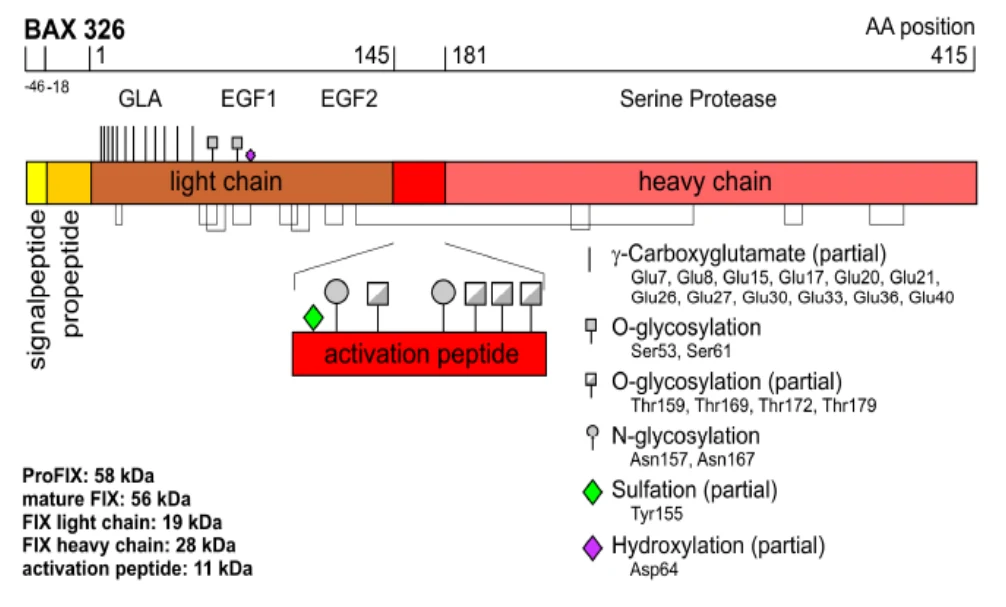 |
| Physicochemical properties: | RIXUBIS is synthesized in the production CHO cells as a single chain polypeptide and secreted in its mature 415 amino acid form into the fermentation medium. The molecule consists of several discrete functional domains, including a Gla domain, two epidermal growth factor (EGF) domains, an activation peptide and the catalytic domain. As in other vitamin K-dependent proteins, RIXUBIS undergoes a number of post-translational maturation events prior to secretion (cleavage of pre-pro leader sequence, glycosylation, gamma-carboxylation, and partial sulfation and hydroxylation). |
| Pharmaceutical standard: | The potency (in international units, IU) is determined using an in vitro one-stage clotting assay against the World Health Organization (WHO) International Standard for Factor IX concentrate. One IU is the amount of factor IX activity present in 1 mL of pooled, normal human plasma. The specific activity of RIXUBIS is greater than or equal to 200 IU per milligram of protein. |
Product Characteristics
RIXUBIS [Recombinant Coagulation Factor IX (rFIX)] is a purified protein produced by recombinant DNA technology. It has a primary amino acid sequence that is identical to the Ala-148 allelic form of plasma-derived factor IX, and has structural and functional characteristics similar to those of endogenous factor IX. RIXUBIS is produced by a genetically engineered Chinese hamster ovary (CHO) cell line that is extensively characterized. No human or animal proteins are added during any stage of manufacturing or formulation of RIXUBIS.
RIXUBIS is not derived from human blood or plasma products, and its manufacture does not include animal or human components. RIXUBIS contains no preservatives.
The CHO cell line secretes recombinant factor IX into a defined cell culture medium that does not contain any proteins derived from animal or human sources as well as hormones, and the recombinant factor IX is purified by a chromatography purification process that does not require a monoclonal antibody step. The process includes validated virus inactivation/removal steps, namely solvent/detergent (S/D) treatment and 15 nm nanofiltration. The S/D treatment has the ability to inactivate lipid-enveloped viruses, whereas the nanofiltration step has the ability to remove both lipid-enveloped and non-lipid-enveloped viruses. RIXUBIS is predominantly a single component by SDS-polyacrylamide gel electrophoresis evaluation.
RIXUBIS is formulated as a sterile, nonpyrogenic, lyophilized powder preparation.
RIXUBIS is intended for intravenous (IV) infusion. It is available in single-use vials containing the labeled amount of factor IX activity, expressed in IU. Factor IX preactivation, the percent of FIXa/FIX as measured by activity assays, is ≤0.10%. Each vial contains nominally 250, 500, 1000, 2000, or 3000 IU of Coagulation Factor IX (Recombinant). After reconstitution of the lyophilized drug product, the concentrations of excipients are 20 mM L-histidine, 60 mM sodium chloride, 4 mM calcium chloride, 110 mM mannitol, 35 mM sucrose, 0.005% polysorbate 80.
All dosage strengths yield a clear, colorless solution upon reconstitution.
Viral Inactivation
Three barriers have been introduced to the manufacture of rFIX to prevent viruses from entering the final product: 1) testing for adventitious viruses performed on the cell culture bulk harvest, 2) the Solvent Detergent (S/D) treatment step used in the rFIX BDS purification process and 3) a 15 nm nanofiltration step. S/D treatment and nanofiltration are dedicated, effective virus inactivation/removal steps and have been introduced to provide an additional safety margin for the final product. Complete inactivation to below the limits of detection of the assay was observed during the S/D treatment of three different enveloped model viruses (i.e X-MuLV, BVDV, PRV). The nanofiltration step for rFIX has also been demonstrated to effectively remove enveloped (i.e. X-MuLV and BVDV) and non-enveloped (i.e. MMV and Reovirus-3) viruses from the product.
Altogether very high margins of safety with regards to adventitious viruses is demonstrated.
14 CLINICAL TRIALS
14.1 Trial Design and Study Demographics
Prophylaxis and Control of Bleeding in PTPs ≥12 Years of Age
The efficacy of RIXUBIS has been evaluated in one completed prospective, open-label, uncontrolled multicenter combined study, in which a total of 73 male PTPs between 12 and 65 years of age received RIXUBIS either for prophylaxis or on-demand treatment. In addition, a prospective open-label uncontrolled multicenter study where 30 PTPs underwent minor or major surgeries receiving RIXUBIS for perioperative management has been completed. PTPs were defined as subjects who were exposed to a factor IX containing products for ≥150 days. All subjects had severe (factor IX level <1%) or moderately severe (factor IX level ≤2%) hemophilia B. Subjects with a history of or a detectable FIX inhibitor ≥0.6 BU, a history with severe allergic reactions following exposure to FIX, evidence of a severe chronic liver disease (INR >1.4), impaired renal function, a CD4 count <200 cells/mm3 or any hemostatic effect other than hemophilia B were excluded from participation. The majority of subjects (88%) had arthropathy at screening and target joints (66%).
14.2 Study Results
Routine Prophylaxis
Fifty-nine (59) PTPs received RIXUBIS for prophylaxis. Fifty-six (56) of these PTPs who received the product for a minimum of 3 months were included in the efficacy evaluation for prophylaxis (see Table 13). The prophylactic regimen consisted of 40 to 60 international units/kg of RIXUBIS twice weekly. The mean total annualized bleeding rate (ABR) was 4.3 for all bleeds, 1.7 for spontaneous bleeds, and 2.9 for joint bleeds (Table 14). The median total ABR was 2.0 with a range of 0 to 23.4.
| Table 13. Efficacy of Prophylaxis with RIXUBIS in 56 PTPs with ≥ 3 months of exposure to RIXUBIS (≥ 12 years of age) | |
Treatment duration (months) Mean ± SD Median (range) | 6.0 ± 0.65 6.0 (5.4 - 9.1) |
Number of infusions per week* Mean ± SD Median (range) | 1.8 ± 0.11 1.8 (1.5 - 1.9) |
Dose per infusion (IU/kg) Mean ± SD Median (range) | 49.4 ± 4.92 50.5 (40.0 - 62.8) |
Total annualized bleeding rate (ABR) Mean ± SD Median (range) | 4.3 ± 5.80 2.0 (0.0 - 23.4) |
ABR for joint bleeds Mean ± SD Median (range) | 2.9 ± 4.25 0.0 (0.0 - 21.5) |
ABR for spontaneous bleeds Mean ± SD Median (range) | 1.7 ± 3.26 0.0 (0.0 - 15.6) |
Subjects with zero bleeding episodes % (n) | 42.9% (24) |
Subjects Number of Exposure Days Mean ± SD Median (range) | 56.3 ±7.2 54.0 (50 - 83) |
* The prophylactic regimen consisted of 40 to 60 IU/kg RIXUBIS twice weekly. The individual dose could be increased up to 75 IU/kg twice weekly.
On-Demand Treatment
An additional 14 PTPs from an on-demand cohort received RIXUBIS for treatment of bleeding episodes only. Subjects in this cohort had to have at least 12 documented bleeding episodes requiring treatment within 12 months prior to enrollment. The mean treatment duration was 3.5
± 1.00 months (median 3.4, ranging from 1.2 to 5.1 months) and, the mean total annualized bleeding rate (ABR) was 33.9 ± 17.37 with a median of 27.0 ranging from 12.9 to 73.1.
Treatment of Bleeding Episodes in PTPs ≥ 12 Years of Age
A total of 249 bleeding episodes were treated with RIXUBIS, of which 115 were recorded for subjects who had breakthrough bleeding episodes while on prophylaxis and, 134 bleeds were recorded for those who received on demand treatment only. There were 197 were joint bleeds and 52 non-joint bleeds (soft tissue, muscle, body cavity, intracranial and other). Of the total of 249 bleeding episodes, 163 were moderate, 71 were minor, and 15 were major. Treatment was individualized based on the severity, cause and site of bleed. Of the total of 249 bleeding episodes, the majority (211; 84.7%) were treated with 1-2 infusions.
Hemostatic efficacy at resolution of a bleed was rated excellent (full relief of pain and cessation of objective signs of bleeding after a single infusion; no additional infusion is required for the control of bleeding) or good (definite pain relief and/or improvement in signs of bleeding after a single infusion; possibly requires more than one infusion for complete resolution) in 96% of all treated bleeding episodes.
Prophylaxis and Control of Bleeding in PTPs <12 years of age
The efficacy of RIXUBIS has been evaluated in a clinical trial, in which a total of 23 male, (PTPs) between 1.8 and 11.8 years (median age 7.10 years) with 11 subjects <6 years, received RIXUBIS for prophylaxis and control of bleeding episodes. PTPs were defined as subjects who were exposed to a factor IX-containing product on ≥ 150 days for subjects aged 6 to <12 years and on ≥50 days for subjects aged <6 years. All subjects had severe (factor IX level <1%) or moderately severe (factor IX level ≤2%) hemophilia B. Subjects with a history of or a detectable FIX inhibitor ≥ 0.6 BU, a history of severe allergic reactions following exposure to FIX, evidence of severe chronic liver disease (INR>1.4), impaired renal function, a CD4 count <200 cells/mm3 or any hemostatic effect other than hemophilia B were excluded from participation. All 23 subjects received prophylactic treatment with RIXUBIS for a minimum of 3 months and were included in the efficacy evaluation for prophylaxis (see Table 14). The ABR reduced or remained zero in 15 of 23 subjects, and increased in 8 of 23 subjects. The mean ABR for all 23 subjects was 2.7 (±3.14) (medium: 2.0; range: 0.0-10.8).
Table 14. Efficacy of Prophylaxis with RIXUBIS in 23 PTPs with 6 months of exposure to Rixubis (< 12 years of age)
Treatment duration (months) Mean ± SD Median (range) | 5.98 (0.712) 5.95 (3.3-7.7) |
Number of infusions per week* Mean ± SD Median (range) | 1.97 (0.082) 1.97 (1.8-2.2) |
Dose per infusion (IU/kg) Mean ± SD Median (range) | 56.25 (8.341) 55.63 (43.0 – 75.5) |
Total annualized bleeding rate (ABR) Mean ± SD Median (range) | 2.7 ± 3.14 2.0 (0.0 – 10.8) |
ABR for joint bleeds Mean ± SD Median (range) | 0.8 ± 1.76 0.0 (0.0 – 7.2) |
ABR for spontaneous bleeds Mean ± SD Median (range) | 0.2 ± 0.66 0.0 (0.0 – 2.0) |
Subjects with zero bleeding episodes % (n) | 39.1% (9) |
Subjects Number of Exposure Days Mean ± SD Median (range) | 53.6 (6.11) 53.0 (35-70) |
* The prophylactic regimen consisted of 40 to 80 IU/kg RIXUBIS twice weekly.
Treatment of Bleeding Episodes in PTPs <12 years of age
A total of 26 bleeding episodes were treated with RIXUBIS, of which 23 bleeds were due to injury, 2 spontaneous and 1 of unknown origin, 19 bleeds were non-joint (soft tissue, muscle, body cavity, intracranial and other) and 7 were joint bleeds of which 1 was a bleed into a target joint. Of the 26 bleeding episodes, 15 were minor, 9 moderate, and 2 major (Minor: little or no pain; little or no change in the range of motion of affected joint (if joint bleeding event); mild restriction of mobility and activity; Moderate: mild to moderate pain; some decrease in range of motion of affected joint (if joint bleeding event); moderate decrease mobility and activity; Major/life threatening: significant pain; substantial decrease in range of motion of affected joint (if joint bleeding event); incapacity; life threatening). Treatment was individualized based on the severity, cause and site of bleed. Bleeding was controlled in all episodes. The majority (23; 88.5%) were treated with 1 to 2 infusions. Of the treated bleeding episodes 15 (57.75) received 1 infusion, 8 (30.8%) received 2 infusions, and 3 (11.5%) were treated with 3 infusions. Hemostatic efficacy at resolution of a bleed was rated excellent or good in 96.2% of all treated bleeding episodes.
Perioperative Management Study
The efficacy of RIXUBIS in perioperative management was evaluated in 38 surgeries performed in 28 previously treated patients (PTPs) between 17 and 57 years of age undergoing major or minor surgical (see Table 4 for definition of major and minor), dental or other surgical invasive procedures. Twenty-One (21) procedures were considered major including 14 orthopedic surgeries and 7 non-orthopedic surgeries (3 abdominal, 3 dental, 1 surgical excision of tumor from soft tissue). Seventeen (17) procedures, including 11 dental surgeries and 6 orthopedic surgeries (5 intra-articular injections and 1 synoviorthesis), were considered minor.
Patients undergoing major surgeries had to perform a pharmacokinetics evaluation. All patients were dosed based on their most recent individual incremental recovery. The recommended initial loading dose of RIXUBIS was to ensure that during surgery factor IX activity levels of 80-100% for major surgeries and 30-60% for minor surgeries were maintained. RIXUBIS was administered by bolus infusions. None of the subjects analyzed (including 2 subjects who only received RIXUBIS for a PK infusion) resulted in the development of inhibitors to FIX or total binding antibodies to FIX. All adverse events were considered unrelated to treatment except one adverse event of hemorrhagic anemia which was considered ‘possibly related’ by the investigator. In summary, the results indicate that RIXUBIS is safe and well tolerated and efficacious in surgical hemostasis. Table 15 shows the types of surgical procedures and the results of the assessment of the hemostatic response at various points in time.
| Table 15. Efficacy of RIXUBIS for Surgical Procedures in PTPs | |||||||||||||
| Procedure (category, # of subjects) | Assessment of Response | ||||||||||||
| Intra-operative | At time of drain removal or on post-operative day 3* | At Time of Discharge | |||||||||||
| Joint replacement (eg, hip, knee, ankle) (Major, n=10) | Excellent (9) Good (1) | Good (3) Excellent (7) | Excellent (3) Good (5) Fair (2) | ||||||||||
| Total right knee arthroplasty (Major, n=1) | Excellent | Excellent | Excellent | ||||||||||
| Removal of intramedullary nail (Major, n=1) | Excellent | Good | Excellent | ||||||||||
| Open synovectomy (Major, n=2) | Excellent (2) | Excellent (1) Good (1) | Excellent (1) Good (1) | ||||||||||
| Hernioplasty (Major, n=2) | Excellent (2) | Excellent (2) | Excellent (1) Good (1) | ||||||||||
| Excision neurofibroma (Major, n=1) | Excellent | Excellent | Excellent | ||||||||||
| Laparoscopic Cholecystectomy (Major, n=1) | Excellent | Excellent | Excellent | ||||||||||
| Dental implant (Major, n=2) | Excellent (2) | Excellent (2) | Excellent (2) | ||||||||||
| Tooth extraction (Major, n=1) | Excellent | Excellent | Excellent | ||||||||||
| Intra-articular infiltration (orthopedic) (Minor, n=4) | Excellent (4) | N/A (4) | Excellent (4) | ||||||||||
| Intra-articular injection (non-orthopedic) (Minor, n=1) | Excellent | N/A | Excellent | ||||||||||
| Synoviorthesis (Minor, n=1) | Excellent | N/A | Excellent | ||||||||||
| Tooth extraction (Minor, n=10) | Excellent (10) | Excellent (1) N/A (9) | Excellent (10) | ||||||||||
| Dental implant (Minor, n=1) | Excellent | N/A | Excellent | ||||||||||
N/A = not applicable
* Where no drain was employed, response was assessed on postoperative day 3.
14.4 Immunogenicity
All 99 subjects were monitored for inhibitory and binding antibodies to factor IX, and binding antibodies to CHO protein and furin, at the following time points: at screening, at 72 hours following the first infusion of RIXUBIS and the commercial recombinant factor IX product in the crossover portion of the pharmacokinetic study, after 5 and 13 weeks following first exposure to RIXUBIS, and thereafter every 3 months. Antibodies against furin were tested by an in-house enzyme-linked immunosorbent assay (ELISA). A titer of 1:20 or 1:40 was considered to be indeterminate for the above validated assay, as these titers were too low to be verified by the confirmatory assay.
No subjects developed neutralizing antibodies to factor IX. Twenty-One subjects (21.2%) developed low-titer, non-neutralizing antibodies against factor IX at one or more time points. Three of these 21 subjects were found to have these antibodies at screening, prior to receiving RIXUBIS. Six of the 21 subjects were pediatric (2 subjects in <6 years of age cohort, 4 subjects in 6 to<12 years age cohort). No clinical adverse findings were observed in any of these 21 subjects.
Nineteen subjects (19.2 %) had signals for antibodies against furin (indeterminate specificity). Five of these 19 subjects expressed signals for antibodies at screening, prior to RIXUBIS treatment. An additional subject had an antibody signal after treatment with the comparator product and prior to RIXUBIS treatment. Two additional subjects had a positive titer of 1:80 that was not present when checked at a later time point and therefore considered transient. Two of the 19 subjects were pediatric (6 to <12 years age cohort). All post-treatment antibody titer increased in these two pediatric subjects were <2 dilution steps and therefore considered unrelated to treatment. No clinical adverse findings were observed in any of these 19 subjects.
In a study of 500 normal volunteers, using the same assay as in the clinical trial, 7% had titers of 1:20 or 1:40 and 1.2% had higher titers ranging from 1:80 to 1:320. These antibodies are thought to be part of a natural immune system response. To date, these antibodies have not been associated with any clinical adverse findings.
The detection of antibody formation is highly dependent on the sensitivity and specificity of the assay. Additionally, the observed incidence of antibody (including neutralizing antibody) positivity in an assay may be influenced by several factors, including assay methodology, sample handling, timing of sample collection, concomitant medications, and underlying disease.
Thrombogenicity
In all studies, subjects were monitored for the presence of thrombosis (see 7 WARNINGS AND PRECAUTIONS). There was no clinical evidence of thrombotic complications in any of the subjects.
Out-of-range values for thrombogenicity markers (Thrombin-antithrombin III [TAT], Prothrombin fragment 1.2, and D-dimer), determined during the pharmacokinetic portion of the combined study, did not reveal any pattern indicative of clinically relevant thrombogenicity with either RIXUBIS or a comparator factor IX-containing product, and were not associated with adverse events.
16 NON-CLINICAL TOXICOLOGY
Carcinogenesis, Mutagenesis, Impairment of Fertility
Nonclinical studies evaluating the carcinogenic and mutagenic potential of RIXUBIS have not been conducted.
No adverse effects on reproductive organs were observed by macroscopic and microscopic pathological investigations in repeated dose toxicity studies. No investigations on impairment of fertility have been conducted.