


Product Monograph - Tretten
1 INDICATIONS
Tretten® (catridecacog) is indicated for routine prophylaxis for bleeding in adult and pediatric patients with congenital Factor XIII A-subunit deficiency.
2 CONTRAINDICATIONS
Patients who are hypersensitive to this drug or to any ingredient in the formulation or component of the container. For a complete listing, see the 6 DOSAGE FORMS, STRENGTHS, COMPOSITION AND PACKAGING section of the product monograph.
4 DOSAGE AND ADMINISTRATION
4.1 Dosing Considerations
- Tretten® (catridecacog) is intended for intravenous administration only.
- Tretten® treatment should be initiated under the supervision of a physician experienced in the treatment of rare bleeding disorders. The congenital Factor XIII A-subunit deficiency should be confirmed by appropriate diagnostic procedures.
- The on-demand treatment of acute bleeds or breakthrough bleeds with Tretten® has not been studied in clinical trials. An alternative treatment should be considered in such situations.
- Although expressed in the same unitage (IU), the posology of Tretten® is different from the dosing schedule of the other FXIII containing products.
- Patients should be advised to store the product according to the specified storage conditions (see 11 STORAGE, STABILITY AND DISPOSAL). Following reconstitution, the product should be used immediately.
4.2 Recommended Dose and Dosage Adjustment
The recommended dose is 35 IU/kg body weight approximately once monthly, administered as an intravenous bolus injection.
The dose volume in mL to be administered to patients weighing at least 24 kg can be calculated using the formula below:
Dose volume in mL = 0.042 x Body weight in kilograms
Dose adjustment can be considered necessary by the physician in certain situations where the prevention of bleeding is not appropriately covered by the recommended 35 IU/kg/month dose. This dose adjustment should be based on FXIII activity levels.
Pediatric Population
No dose adjustment is required when Tretten® is used in pediatric patients, and the dose of 35 IU/kg body weight should be used.
When Tretten® is administered to small children a further dilution of the product might be necessary. If the body weight of the child is less than 24 kg, the reconstituted Tretten® should be diluted with 6.0 mL of 0.9% sodium chloride solution for injection. Once diluted with 6.0 mL of 0.9% sodium chloride solution for injection, the dose volume for the reconstituted Tretten® can be calculated using the formula below:
Dose volume in mL of diluted product = 0.117* x Body weight in kilograms
* The calculation of the correction factor 0.117 is related to the exact quantity of the product and not the nominal value of the product.
4.3 Reconstitution
| Tretten® Vial Size | Volume of Solvent to be Added to Vial | Approximate Concentration After Reconstitution |
| 2500 IU/vial (15 mg/vial) | 3 mL | 833 IU/mL (5 mg/mL) |
After reconstitution with the sterile water for injection, the concentration of the solution in the vial is approximately 833 IU/mL (5 mg/mL) catridecacog.
If the reconstituted Tretten® is diluted with 0.9% sodium chloride solution for injection, as described above for patients weighing less than 24 kg, the concentration of the solution is 299 IU/mL (1.8 mg/mL) catridecacog.
For detailed instructions on how to reconstitute and administer Tretten® refer to PART III of the Product Monograph.
4.4 Administration
- Following reconstitution the product should be administered separately and not mixed with infusion solutions nor be given in a drip.
- The reconstituted product is a clear to slightly opalescent and colourless solution. Reconstituted Tretten® should be inspected visually for particulate matter and discoloration prior to administration. Do not use if particulate matter or discoloration is observed.
- Administer Tretten® as a slow bolus intravenous injection at a rate not exceeding 1-2 mL/minute.
- Any unused Tretten® should be discarded. Do not freeze reconstituted Tretten® or store it in syringes (see 11 STORAGE, STABILITY AND DISPOSAL).
Monitoring
If during monitoring FXIII activity fails to reach expected levels or if reduced therapeutic effect is observed, analysis for inhibitors should be performed [see 7 WARNINGS AND PRECAUTIONS: Immune, Antibody Formation].
5 OVERDOSAGE
In the reported cases of Tretten® overdosing, no clinical symptoms have been observed.
| For management of a suspected drug overdose, contact your regional Poison Control Centre. |
|---|
6 DOSAGE FORMS, STRENGTHS, COMPOSITION AND PACKAGING
Table – Dosage Forms, Strengths, Composition and Packaging
| Route of Administration | Dosage Form / Strength/Composition | Non-medicinal Ingredients |
| Intravenous injection | White lyophilized powder to be reconstituted with solvent for injection 2500 IU per vial (15 mg/vial) | L-histidine, polysorbate 20, sodium chloride, and sucrose |
| For a complete listing of nonmedicinal ingredients see 6 DOSAGE FORMS, STRENGTHS, COMPOSITION AND PACKAGING section. | ||
Each pack contains:
- 1 vial with white powder for solution for injection containing 2500 IU (15 mg) catridecacog
- 1 vial with solvent (sterile water for injection) for reconstitution containing 3.2 mL
- 1 sterile vial adapter for reconstitution
Powder for Reconstitution
Tretten® (catridecacog) is supplied as a white, lyophilized powder in single-use vials. The vials are made of Type I glass, closed with a latex-free chlorobutyl rubber stopper and sealed with an aluminum cap. The vials are equipped with a tamper-evident snap-off plastic cap.
Solvent
The solvent for reconstitution of Tretten® is sterile water for injection and is supplied as a clear colourless solution. The vials are made of Type I glass closed with a latex-free bromobutyl rubber disc, and covered with aluminum cap. The closed vials are equipped with a tamper-evident snap-off plastic cap.
Content of 3 mL Reconstituted Tretten®
| Content | Per Vial1 |
|---|---|
| Catridecacog | 2500 IU (15 mg) |
| L-histidine | 9.30 mg |
| Polysorbate 20 | 0.30 mg |
| Sodium chloride | 8.70 mg |
| Sucrose | 174.0 mg |
- 1. Values are given per 3 mL reconstituted Tretten®
Description
Tretten® (catridecacog) is a recombinant, human FXIII-A2 homodimer composed of two FXIII A-subunits. It is structurally identical to human FXIII A-subunit [A2]. The FXIII A-subunit is a 731 amino acid chain with an acetylated N-terminal serine. When FXIII is activated by thrombin, a 37 amino acid peptide is cleaved from the N-terminus of the A-subunit. Tretten® is manufactured as a soluble protein in yeast (Saccharomyces cerevisiae) production strain containing the episomal expression vector, pD16. It is subsequently isolated by homogenization of cells and purification by several chromatography steps. No animal derived or human proteins are used in the manufacturing process.
7 WARNINGS AND PRECAUTIONS
General
Tretten® (catridecacog) should not be used for prophylactic treatment of bleeding in patients with congenital factor XIII B-subunit deficiency.
FXIII B-subunit deficiency is associated with a much reduced half-life of the administered pharmacologically active A-subunit. The subunit deficiency of patients should be known prior to treatment.
Considering that the posology and the FXIII concentration in Tretten® may be different from those of the other FXIII containing products, careful attention should be paid to the calculation of the appropriate dose for the individual patient.
Patients should be advised to store the product according to the described storage conditions (see 11 STORAGE, STABILITY AND DISPOSAL). Incorrect storage of the product after reconstitution must be avoided as it may result in loss of sterility and in increased levels of non-proteolytically activated rFXIII. Increased levels of non-proteolytically activated rFXIII may increase the risk of thrombosis.
Hematologic
Thrombosis: In case of predisposition to conditions of thrombosis, caution should be exercised due to the fibrin-stabilizing effect of Tretten®. A stabilization of the thrombus might occur, resulting in increased risk of vessel occlusions.
Hepatic/Biliary/Pancreatic
Hepatic Impairment: Patients with hepatic impairment have not been studied. Tretten® may not be effective in patients with hepatic impairment and decreased levels of FXIII B-subunits.
Immune
Hypersensitivity Reactions: As Tretten® is a protein it may cause allergic reactions including anaphylactic reaction. Patients should be informed of the early signs of hypersensitivity reactions (including hives, generalised urticaria, tightness of the chest, wheezing, hypotension) and anaphylaxis.
If allergic or anaphylactic-type reactions occur, the administration should be discontinued immediately and future treatment with Tretten® should not be given.
Antibody Formation: Inhibitor formation to Tretten® therapy has not been detected in clinical trials. Inhibitors may be suspected in the event of lack of therapeutic response observed as clinical bleeding or demonstrated by laboratory findings including FXIII activities that fail to reach expected levels. In the event that inhibitors are suspected, analysis for antibodies should be performed.
Monitoring and Laboratory Tests
If during monitoring FXIII activity fails to reach expected levels or if reduced therapeutic effect is observed, analysis for antibodies should be performed.
Renal
Renal Insufficiency: Patients with renal insufficiency requiring dialysis have not been studied in clinical trials.
Reproductive Health: Female and Male Potential
- Fertility
No effects on reproductive organs are seen in non-clinical studies.
7.1 Special Populations
7.1.1 Pregnant Women
There is no clinical data from the use of Tretten® in pregnant women. Animal studies are insufficient with respect to reproductive toxicity as Tretten® has not been studied in pregnant animals. The potential risk to humans is not known. Tretten® should be avoided during pregnancy unless the benefits clearly outweigh the risks.
Labour and Delivery: Tretten® has not been studied for use during labour and delivery.
7.1.2 Breast-feeding
It is unknown whether Tretten® is excreted in human breast milk. The excretion of Tretten® in milk has not been studied in animals. A decision on whether to continue/discontinue breast-feeding or to continue/discontinue therapy with Tretten® should be made taking into account the benefit of breast-feeding to the child and the benefit of Tretten® therapy to the mother.
7.1.3 Pediatrics
Analyses of data from pediatric patients included in clinical trials have not identified differences in treatment response according to age. Data from six children less than 6 years of age was obtained from a pharmacokinetics study.
7.1.4 Geriatrics
Clinical studies of Tretten® did not include sufficient numbers of subjects aged 65 and over to determine whether they respond differently from younger subjects.
8 ADVERSE REACTIONS
8.1 Adverse Reaction Overview
In clinical trials, Tretten® has been administered to 82 patients with congenital factor XIII A-subunit deficiency (3112 doses). 21 patients were between 6 and 18 years of age. Of the 82 patients, 67 patients were exposed to Tretten® in the phase 3 trials (F13CD-1725 and F13CD-3720), 9 patients were exposed in the Phase 1 trial (F13-1663), and 6 patients aged less than 6 years old were exposed to Tretten® in the pediatric trial (F13CD-3760) and the extension to the pediatric trial (F13CD-3835). There have been a total of 986 exposures to Tretten® in pediatric subjects. These clinical trials were all open label trials.
The most frequent adverse drug reactions are non-neutralizing antibodies. Non-neutralizing antibodies have been seen in 4 of the 82 exposed patients with congenital FXIII deficiency. The four events of non-neutralizing antibodies occurred in patients below the age of 18 (age 8, 8, 14 and 16). These antibodies were seen at the start of treatment with Tretten®. All 4 patients received at least 2 doses of Tretten®. The antibodies had no inhibitory effect and the patients did not experience any adverse events or bleeding in association with these antibodies. All patients had no increase in antibody levels following repeated dosing with Tretten® or other FXIII containing products and the antibodies were transient in all patients.
Tretten® has also been administered to 122 healthy volunteers in four completed clinical trials (234 doses). In a study including 50 healthy male subjects, one subject developed low-titer, transient non-neutralizing antibodies after receiving the first dose of Tretten®. The antibodies had no inhibitory activity, and the subject did not experience any adverse events or bleeding in association with these antibodies. The antibodies disappeared in the 6-month follow up.
In all cases, the non-neutralizing antibodies were found to be of no clinical significance.
8.2 Clinical Trial Adverse Reactions
Because clinical trials are conducted under very specific conditions the adverse reaction rates observed in the clinical trials may not reflect the rates observed in practice and should not be compared to the rates in the clinical trials of another drug. Adverse drug reaction information from clinical trials is useful for identifying drug-related adverse events and for approximating rates.
The following table summarizes the adverse drug reactions at a frequency of ≥ 1% in the pivotal trial F13CD-1725 and the phase 3 extension trial F13CD-3720.
Table 1 - Summary of Treatment Emergent Adverse Events with Possible or Probable Relation to Tretten® at a Frequency of ≥ 1% in the Pivotal Trial F13CD-1725 and the Phase 3 Extension Trial F13CD-3720
F13CD-1725 F13CD-3720 35 IU/kg | |||
|---|---|---|---|
| N | % | E | |
| Number of Subjects | 67 | ||
| All Adverse Events | 19 | 28.4 | 20 |
Blood And Lymphatic System Disorders Leukopenia Neutropenia | 3 2 1 | 4.5 3.0 1.5 | 3 2 1 |
General Disorders And Administration Site Conditions Injection site pain | 1 1 | 1.5 1.5 | 1 1 |
Injury, Poisoning And Procedural Complications Incorrect dose administered Limb injury Overdose | 5 3 1 1 | 7.5 4.5 1.5 1.5 | 6 4 1 1 |
Investigations Antibody test positive (non-neutralizing) Fibrin D dimer increased Alanine aminotransferase increased Blood alkaline phosphatase increased | 7 4 1 1 1 | 10.5 6.0 1.5 1.5 1.5 | 7 4 1 1 1 |
Musculoskeletal And Connective Tissue Disorders Pain in extremity Arthralgia | 2 1 1 | 3.0 1.5 1.5 | 2 1 1 |
Nervous System Disorders Headache | 1 1 | 1.5 1.5 | 1 1 |
|---|
N: Number of subjects with adverse event %: Proportion of subjects with adverse event E: Number of adverse events
In the pivotal trial F13CD-1725, a total of 13 adverse events were evaluated by the investigator to be possibly or probably related to trial product. All events except one positive antibody test were classified as mild events, and all events were characterised by full recovery. 34 patients from the F13CD-1725 trial continued into the F13CD-3720 extension trial and 26 new patients were enrolled into the extension trial. A total of 7 adverse events in F13CD-3720 were evaluated by the investigator to be possibly or probably related to trial product.
One patient with a pre-existing neutropenia experienced a mild aggravation of neutropenia and leukopenia during treatment with Tretten®. Following discontinuation of Tretten® the patient’s neutrophil count returned to levels similar to those prior to treatment with Tretten®.
In the pediatric trial (F13CD-3760) six children less than 6 years old were exposed to one single i.v. dose of Tretten® 35 IU/kg. The single i.v. injection was well tolerated and no thromboembolic adverse events were reported. Furthermore, no treatment emergent adverse events with possible or probable relation to Tretten® were reported. Results of safety laboratory parameters and other safety-related examinations did not indicate clinically relevant changes as a result of the rFXIII administration. No anti-rFXIII antibodies were detected in any of the patients.
In the pediatric extension trial (F13CD-3835) six subjects between the ages of 1 and 6-years-old were exposed to Tretten® for a total of 214 doses over 16.6 subject years. Subjects received 35 IU/kg Tretten® every 28 days for 1.8 to 3.5 years. Two non-serious adverse events (lymphopenia and gastroenteritis) in 2 subjects were assessed as probably or possibly related to Tretten® by the investigator. No thromboembolic adverse events or anti-rFXIII antibodies were reported.
8.4 Abnormal Laboratory Findings: Hematologic, Clinical Chemistry and Other Quantitative Data
No clinically relevant trends in the investigated parameters of coagulation, hematology, biochemistry and urinalysis were observed following Tretten® administration. No sign of systemic activation of the coagulation cascade was observed.
8.5 Post-Market Adverse Reactions
In a post-authorization safety study transient non-neutralizing antibodies were seen in a child with congenital FXIII deficiency after several years of treatment with Tretten®. No clinical findings were associated with these antibodies.
9 DRUG INTERACTIONS
9.4 Drug-Drug Interactions
Coagulation Factor Concentrates
There is no clinical data available on interaction between Tretten® (catridecacog) and other medicinal products.
A potential synergistic effect of combined treatment with Tretten® (17 times the recommended human dose) and rFVIIa (11 times the recommended human dose) in an advanced cardiovascular model in cynomolgus monkey was seen resulting in exaggerated pharmacology (thrombosis and death) at a lower dose level than when administering the individual compounds.
Based on the non-clinical study it is not recommended to combine Tretten® and rFVIIa.
9.5 Drug-Food Interactions
Interactions with food have not been established.
9.6 Drug-Herb Interactions
Interactions with herbal products have not been established.
9.7 Drug-Laboratory Test Interactions
Interactions with laboratory tests have not been established.
10 CLINICAL PHARMACOLOGY
10.1 Mechanism of Action
FXIII is the terminal enzyme in the blood coagulation cascade. When activated by thrombin at the site of vessel wall injury, FXIII plays an important role in the maintenance of hemostasis through cross-linking of fibrin and other proteins in the fibrin clot.
In plasma, FXIII circulates as a heterotetramer [A2B2] composed of two FXIII A-subunits and two FXIII B-subunits held together by strong non-covalent interactions. The FXIII B-subunit acts as carrier molecule for the FXIII A-subunit in circulation, and is present in excess in plasma. When FXIII A-subunit is bound to FXIII B-subunit the half-life of the FXIII A-subunit [A2] is prolonged. FXIII is a pro-enzyme (pro-transglutaminase), which is activated by thrombin in the presence of Ca2+. The enzymatic activity resides with the FXIII A-subunit. Upon activation, the FXIII A-subunit dissociates from the carrier FXIII B-subunit and thereby exposes the active site of the FXIII A-subunit. The active transglutaminase cross-links fibrin and other proteins resulting in increased mechanical strength and resistance to fibrinolysis of the fibrin clot and contributes to enhance platelet and clot adhesion to injured tissue.
Tretten® is a protransglutaminase (rFXIII [rA2] homodimer) and it is structurally identical to the human FXIII A-subunit [A2]. Tretten® (A-subunit) binds to free human FXIII B-subunit resulting in a heterotetramer [rA2B2] with a similar half-life to endogenous [A2B2]. Tretten® has been shown to be activated by thrombin in the presence of Ca2+. Activated Tretten® has been shown to increase mechanical strength of fibrin clots and retard fibrinolysis in a dose-dependent manner. Tretten® has been shown to enhance platelet adhesion to the site of injury. Thus, Tretten® has been shown to have the same pharmacodynamic properties in plasma as endogenous FXIII.
10.2 Pharmacodynamics
At present there are no markers that can quantitatively assess the in vivo pharmacodynamics of FXIII. The results of standard coagulation tests are normal as it is the quality of the clot that is affected. A clot solubility assay is widely used as an indicator of FXIII deficiency, but the assay is qualitative, and when performed correctly the test is positive only when the FXIII activity in the sample is close to zero.
10.3 Pharmacokinetics
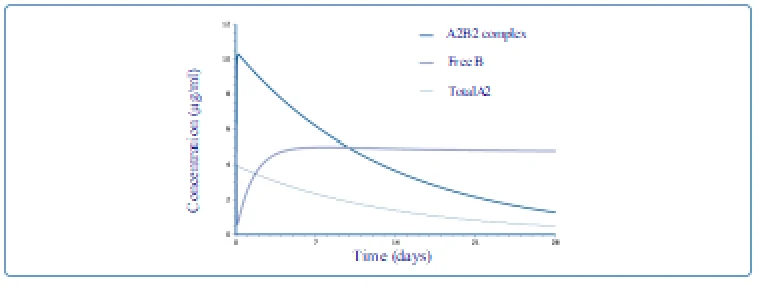
Figure 1 Simulated example of Total A2, A2B2 complex and Free B in plasma as determined by ELISA following single intravenous administration of 35 IU/kg to patients with congenital FXIII deficiency
Assessment of the pharmacokinetic properties of rFXIII in healthy subjects and in patients with congenital FXIII deficiency was based on assays developed to measure plasma concentrations of FXIII subunits (individual dimers or complexes) or FXIII activity. An ELISA was developed to measure free B-subunits, A2-subunits in complex with B-subunits [rA2B2, A2B2] and total A2 [rA2, A2, rA2B2, A2B2]. The total FXIII activity from both endogenous and exogenous protein was measured by the Berichrom® assay.
rFXIII has shown to have the same pharmacokinetic properties as endogenous FXIII A- subunit [A2] following binding to endogenous FXIII B-subunit [B2].
When rFXIII [rA2] is administered to patients with FXIII A-subunit deficiency or to healthy subjects, rA2 forms a heterotetramer complex [rA2B2] with free B-subunit resulting in a rapid decrease of the plasma concentration of free B-subunit after rFXIII administration. In parallel to this, a rapid increase is observed for the concentration of the heterotetramer [rA2B2, A2B2]. Following administration of 20, 50 or 75 U/kg (corresponding to 24, 60 and 89 IU/kg, respectively) of rFXIII to patients, the plasma concentrations of free B-subunit were essentially restored to pre-dose levels within 72 hours.
The resulting half-life observed in clinical single-dose pharmacokinetic trials in healthy subjects was in the range of 218 to 321 hours (9-13 days) based on FXIII activity (Berichrom®), total A2 (ELISA) and A2B2 (ELISA). Plasma clearance was observed to be in the range of 0.15 to 0.25 mL/h/kg. Pharmacokinetic parameters of rFXIII obtained in patients with congenital FXIII deficiency (CD-1) were comparable to those in healthy subjects.
After a single dose of 35 IU/kg of rFXIII in healthy male subjects, the following geometrical mean values and coefficients-of-variation (CV%) across subjects were calculated to provide estimates for a number of pharmacokinetic (PK) parameters for Novo Nordisk rFXIII, based on FXIII activity profiles measured by the Berichom® assay. Prior to calculation of PK parameters, the FXIII activity profiles were adjusted for the endogenous FXIII plasma activity at baseline for the individual subjects.
Clearance was estimated to be 0.13 mL/h/kg (CV=36.5%), the half-life estimate was 11.1 days (CV=64.5%) and volume of distribution at steady state had an estimate of 47.1 mL/kg (CV=24.7%).
The initial baseline-adjusted geometrical mean activity at 30 minutes post-dosing was 0.85 IU/mL (CV=24.2%) which decreased to 0.11 IU/mL (CV=85.5%) 28 days post-dose. The mean
AUC0-28days was 220.3. IU*h/mL (CV=23.8%) and the mean AUCinfinity was 277.6 IU*h/mL (CV=47.2%).
Pediatric population
In a pharmacokinetic trial six children (age 1 to less than 6 years old) with congenital FXIII A-subunit deficiency were exposed to one single i.v. dose of Tretten® 35 IU/kg. The geometric mean t½ of FXIII was 15 days (range: 10 to 25 days). In this trial, the mean clearance in children was 0.15 mL/h/kg.
Pharmacokinetics in Healthy Subjects
Pharmacokinetic parameters for healthy subjects are presented in Table 2. The primary evaluation is based on the geometric mean estimates from the NN1841-3788 trial, in which 50 subjects were exposed to a total of 98 doses of Tretten® at the intended dose level of 35 IU/kg rFXIII (two subjects were withdrawn following the initial dose). The estimated terminal half-life was 266 hours, which is equivalent to approximately 11 days. The mean volume of distribution at steady state (Vss) was 47 mL/kg, mean residence time (MRT) was 15.5 days and mean clearance (CL) was 0.13 mL/h/kg.
Comparison of arithmetic mean estimates showed no major differences in pharmacokinetics across trials, with the dose-independent parameters (Vss, t½, MRT and CL) displaying relatively good agreement (Table 2). Some variation in estimates were observed across trials, which is to be expected given the degree of inter-subject variation in pharmacokinetics and the relatively few number of subjects for whom estimates are based.
Table 2 Pharmacokinetic Parameters – Healthy Subjects
| Trial ID | Dose (IU/kg) | N1 M; F | AUC0−∞ (h*IU/mL) mean (SD) | Cmax (IU/mL) mean (SD) | Vss (mL/kg) mean (SD) | CL (mL/h/kg) mean (SD) | t½ (h) mean (SD) | MRT (h) mean (SD) | |||
|---|---|---|---|---|---|---|---|---|---|---|---|
| Single dose | NN1841-3788 | 35 | 50M | 278 (47)2 301 (142) | 0.85 (24)2 0.87 (0.21)3 | 47 (25)2 48 (12) | 0.13 (37)2 0.14 (0.05) | 266 (64)2 303 (195) | 372 (67)2 423 (282) | ||
| F13-1661 | 30 | 4M; 4F4 | 207 (61) | 0.80 (0.14) | 45 (18) | 0.15 (0.05) | 219 (80) | 313 (139) | |||
| F13-1661 | 60 | 5M; 3F4 | 342 (204) | 1.02 (0.14) | 69 (18) | 0.24 (0.16) | 273 (161) | 402 (232) | |||
| NN1810-3733 | 12 | 8M | 97 (45)2 | 0.28 (17)2 | 52 (29)2 | 0.12 (46)2 | 270 (60)2 | 429 (52)2 | |||
| 35 | 8M | 177 (30)2 | 0.77 (13)2 | 58 (21)2 | 0.20 (37)2 | 176 (37)2 | 291 (31)2 | ||||
| Multiple dose | F13-1662 | 12 | 6M; 2F | AUC0−24h 16.9 (2.1) | 0.87 (0.19) | - | - | 346 (215) | - | ||
| F13-1662 | 30 | 2M; 6F | AUC0−24h 37.4 (5.5) | 1.80 (0.25) | - | - | 167 (50) | - | |||
- 1. N = number of subjects exposed. M = male; F = female.
- 2. Geometric mean (CV) in italics (NN1841-3788 and NN1810-3733).
- 3. C30min (NN1841-3788).
- 4. Of these, 4d and 7e subjects contributed to the PK assessment (F13-1661).
Pharmacokinetics in Patients with Congenital FXIII Deficiency
In the F13CD-1725 phase 3 trial of monthly administration of Tretten®, blood sampling for pharmacokinetics was performed immediately before and one hour after each monthly dose as well as 14 days after the initial dose of Tretten®. Based on FXIII activity as measured by the
Berichrom® assay during the study period, the crude estimate of the half-life of Tretten® in these patients with congenital FXIII deficiency is 11.5 days. This is in agreement with the elimination pharmacokinetics estimated for healthy subjects.
The shape of the mean profiles for A2B2 tetramer and total FXIII A2 corresponded to the FXIII activity profile, reflecting that concentrations increased sharply after each Tretten® administration followed by a gradual decline during the subsequent month.
Results on pharmacokinetics following single i.v. doses of 24, 60 or 89 IU/kg Tretten® to patients with congenital FXIII deficiency are available from the F13-1663 phase 1 trial. The terminal half-life ranged from 6 to 12 days. However, the results should be interpreted with caution as the pharmacokinetic evaluation was based on a total of 6 exposures in 6 subjects.
The pharmacokinetics in 6 pediatric patients less than 6 years old were investigated in study F13CD-3760. Age-stratified pharmacokinetic data from F13CD-3760 and from F13CD-1725 are presented in Table 3.
Table 3 Steady State Pharmacokinetic Parameters for Different Age Groups in Trials F13CD-3760 and F13CD-1725
| Geometric Mean (CV %) | Study F13CD-3760 | Study F13CD-17252 | |||
|---|---|---|---|---|---|
| 1–5 years | 6–11 years | 12–17 years | 18+ years | ||
| Patients, n | 6 | 9 | 6 | 26 | |
| AUC0-28, IU·h/mL1 | 248.6 (13) | 251.7 (26) | 217.1 (19) | 245.2 (22) | |
| Cmax, IU/mL | 0.67 (21) | 0.75 (43) | 0.67 (15) | 0.76 (21) | |
| Ctrough, IU/mL | 0.20 (22) | 0.20 (25) | 0.17 (28) | 0.18 (22) | |
| t½ , days | 15.0 (34) | 12.4 (21) | 11.9 (32) | 11.6 (18) | |
The table presents geometrical means (CV %). AUC, area under the concentration vs. time curve; Cmax, maximal measured FXIII activity; CV, coefficient of variance; T1/2, terminal half-life.
- 1. For F13CD-3760, AUC0-30 is presented.
- 2. For F13CD-1725, PK calculations were based on a more sparsely sampled curve (three time points vs. six time points for F13CD-3760).
11 STORAGE, STABILITY AND DISPOSAL
Store in refrigerator (2°C - 8°C). Store in the original package in order to protect from light. Do not freeze to prevent damage to the solvent vial.
From a microbiological point of view and to avoid formation of non-proteolytically activated Tretten®, the product should be used immediately after reconstitution. Increased levels of non-proteolytically activated Tretten® may increase the risk of thrombosis.
If the reconstituted product is not used immediately, it should be used within 3 hours of reconstitution, and can be stored at room temperature during this period. Any unused product stored at room temperature for 3 or more hours should be discarded.
If the reconstituted product is not administered immediately, it should be stored in the refrigerator at 2°C - 8°C for no longer than 24 hours. After this period the product should be discarded.
If the product is diluted with 0.9% sodium chloride solution for injection (for those patients weighing less than 24 kg), the storage and stability recommendations specified above are still applicable.
Do not freeze reconstituted Tretten® or store it in syringes.
PART II: SCIENTIFIC INFORMATION
13 PHARMACEUTICAL INFORMATION
Drug Substance
Proper name: Catridecacog
Chemical name: Recombinant Coagulation Factor XIII A-Subunit (rFXIII A-Subunit)
Molecular formula and molecular mass: C3708H5735N1013O1111S28 (acetylated N-terminal Serine), 83.2 kDa
Structural formula: The structural formula of the rFXIII A-subunit is provided below:
| SETSRTAFGGRRAVPPNNSNAAEDDLPTVELQGVVPRGVNLQEFLNVTSVHLFKERWD TNKVDHHTDKYENNKLIVRRGQSFYVQIDFSRPYDPRRDLFRVEYVIGRYPQENKGTYIP VPIVSELQSGKWGAKIVMREDRSVRLSIQSSPKCIVGKFRMYVAVWTPYGVLRTSRNPE TDTYILFNPWCEDDAVYLDNEKEREEYVLNDIGVIFYGEVNDIKTRSWSYGQFEDGILDT CLYVMDRAQMDLSGRGNPIKVSRVGSAMVNAKDDEGVLVGSWDNIYAYGVPPSAWTG SVDILLEYRSSENPVRYGQCWVFAGVFNTFLRCLGIPARIVTNYFSAHDNDANLQMDIFL EEDGNVNSKLTKDSVWNYHCWNEAWMTRPDLPVGFGGWQAVDSTPQENSDGMYRC GPASVQAIKHGHVCFQFDAPFVFAEVNSDLIYITAKKDGTHVVENVDATHIGKLIVTKQIG GDGMMDITDTYKFQEGQEEERLALETALMYGAKKPLNTEGVMKSRSNVDMDFEVENAV LGKDFKLSITFRNNSHNRYTITAYLSANITFYTGVPKAEFKKETFDVTLEPLSFKKEAVLIQ AGEYMGQLLEQASLHFFVTARINETRDVLAKQKSTVLTIPEIIIKVRGTQVVGSDMTVTVE FTNPLKETLRNVWVHLDGPGVTRPMKKMFREIRPNSTVQWEEVCRPWVSGHRKLIASM SSDSLRHVYGELDVQIQRRPSM (731) |
|---|
Physicochemical properties:
| Description | White powder for solution for injection. The reconstituted preparation is a clear to slightly opalescent and colourless solution. The reconstituted solution has a pH of approximately 8.0. |
|---|---|
| Aqueous pH-solubility profile | Above pH 7, full solubility is seen in aqueous solutions. Between pH 3 and 7 a significant decrease in solubility is seen, reaching the lowest level near pH 5. Below pH 3 the protein is totally unfolded. |
| pKa, pI value | The pI value is 5.9 determined by isoelectric focusing in a polyacrylamide gel. |
Product Characteristics
Catridecacog is produced in Saccharomyces cerevisiae as the N-acetylated mature protein with no post-translational modifications. Furthermore, no disulfide linkages are present. The higher order structure of catridecacog is provided in the figure below showing the secondary and tertiary structures and the active site of each monomer. The N-terminal activation peptide, consisting of amino acids 1-37 which is cleaved off during activation by thrombin, is drawn as a bold line.
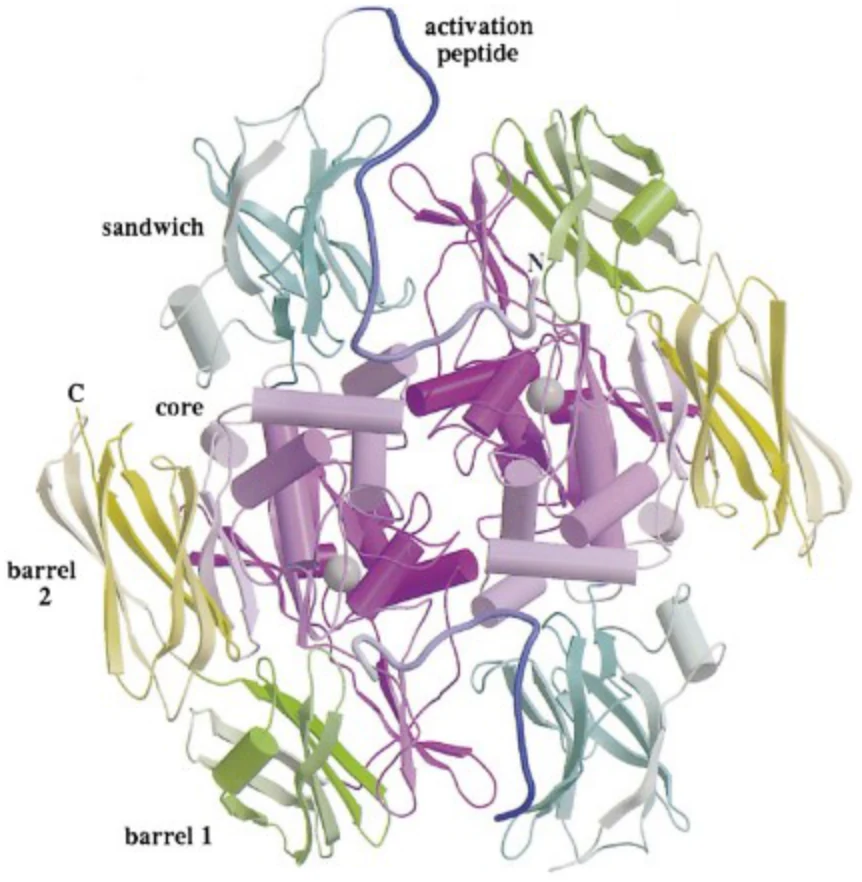
Figure 2 Higher order structure of rFXIII (A2 homodimer)
Cylinder: alpha helix; Arrow: beta strand; Gray sphere: active site. N- and C-termini and structural domains of one A-subunit are labelled
14 CLINICAL TRIALS
14.1 Clinical Trials by Indication
Pivotal Clinical Trial in Congenital FXIII Deficiency
Study Demographics and Trial Design
Table 4 - Summary of Patient Demographics for Pivotal Clinical Trial in Congenital FXIII Deficiency
| Study # | Trial design | Dosage, route of administration and duration | Study subjects (n=number ) | Mean age (Range) | Gender |
| F13CD-1725 | Multi-centre, multi-national, open-label, single-arm, multiple dosing phase 3 trial evaluating the efficacy and safety of monthly replacement therapy with rFXIII in prevention of bleeding episodes associated with congenital FXIII deficiency | 52-week treatment period of monthly (28±2 days) doses of 35 IU/kg rFXIII. Intravenous injection | 41 | Mean = 26.4 years Range = 7.0 – 60.0 years | 18 Females 23 Males |
The demographics of the trial population at baseline are presented in Table 4. The mean age was 26.4 years, and the gender distribution was approximately equal. The majority (68%) of patients were Caucasian. The age range of the trial population was 7 – 60 years.
Study Results
A single pivotal trial (F13CD-1725) was conducted to establish the efficacy and safety of monthly doses of 35 IU/kg in prevention of bleeding in patients with congenital FXIII A-subunit deficiency. 41 patients were dosed in the trial during a period of 52 weeks.
The primary endpoint for the pivotal trial was the rate of bleeding episodes requiring treatment with a FXIII-containing product. During the treatment period with Tretten® (434 patient months), 5 treatment-requiring bleeds were observed, corresponding to a mean rate of (5/434)*12 = 0.138 treatment-requiring bleeds per patient year (95% CI: [0.058; 0.332]).
Pediatric Clinical Trial in Congenital FXIII Deficiency
Study Demographics and Trial Design
Table 5 - Summary of Patient Demographics for Pediatric Clinical Trial in Congenital FXIII Deficiency
| Study # | Trial design | Dosage, route of administration and duration | Study subjects (n=number ) | Mean age (Range) | Gender |
| F13CD-3760 | Multi-centre, multi-national, open-label, single dose trial, evaluating PK and safety of one i.v. dose of rFXIII in children (1 to less than 6 years old) with congenital FXIII A-subunit deficiency | Single dose of 35 IU/kg rFXIII. Intravenous injection | 6 | Mean = 2.7 years Range = 1 – 4 years | 3 Females 3 Males |
The demographics of the trial population at baseline are presented in Table 5. The mean age was 2.7 years, and the gender distribution was equal. Three children were Asian, two children were Caucasian and one child was African American. The age range of the trial population was 1 – 4 years.
Study Results
Pediatric population
Analyses of data from pediatric patients included in clinical trials have not identified differences in treatment response according to age.
Six children (less than 6 years old from a pharmacokinetics study) and 21 children between the age of 6 to less than 18 years old have been treated with Tretten® for a total of 986 exposures.
The suggested dose of 35 IU/kg has shown to be appropriate to provide hemostatic coverage in children with congenital FXIII A-subunit deficiency. Tretten® was well tolerated in this population.
15 MICROBIOLOGY
No microbiological information is required for this drug product.
16 NON-CLINICAL TOXICOLOGY
General Toxicology:
Acute Toxicity
In the cynomolgus monkey, single doses of rFXIII were administered intravenously in doses ranging from 0-30 mg/kg rFXIII (∼ 0- 5010 IU/kg, 0-143 fold the recommended clinical dose of 35 IU/kg). The dose-response relationship for rFXIII toxicity was shown to be steep. The animals either tolerated treatment with rFXIII or at higher doses (≥ 21.9 mg/kg ∼≥ 3657 IU/kg,
104 fold the recommended clinical dose of 35 IU/kg) died or were sacrificed for humane reasons. Affected animals developed generalised occlusive coagulopathy (e.g. intravascular congestion, thrombosis and subsequent ischemic necrosis) in many organs and tissues consistent with a diagnosis of disseminated intravascular coagulation (DIC). Organs and tissues affected included adrenal glands, kidneys, eyes, lungs, heart, the gastrointestinal tract, pancreas, spleen, liver, brain, pituitary (neurohypophysis) and bone marrow thereby reflecting the systemic nature of the toxicity. The observed gross and microscopic changes correlated with the observed changes in clinical pathology parameters (hematology, coagulation and clinical chemistry). For further details please refer to Table 6.
Table 6: Overview of Single Dose Toxicity Studies
| Study number | SBI 1220-175 | SBI 1278-175 | SBI 1249-1751 |
|---|---|---|---|
| Species / strain | Cynomolgus monkey / Macaca fascicularis | Cynomolgus monkey / Macaca fascicularis | Cynomolgus monkey / Macaca fascicularis |
| Dose route | i.v. | i.v. | i.v. |
| Animals per dose/Sex | 1 female | 1 female | 1 male (21.9 mg/kg), 1 male and 1 female (22.5 mg/kg) |
| Dose level (mg/kg) | 0, 10, 17.5, 20 (Avecia DS)3 | 0, 20, 21.2, 22.5, 25, 30 (Avecia DS)3 | 21.9 and 22.5 (Avecia DS)3 |
| Dose level (IU/kg)2 | 0, 1670, 2923 and 3340 | 0, 3340, 3540, 3758, 4175 and 5010 | 3657 and 3758 |
| rFXIIIao in test article (%)4 | 0.19 | 0.33 | 0.26 |
| Duration | 1 day, 8 days observation | 1 day, 8 days observation | 1 day |
| GLP status5 | Non-GLP | Non-GLP | GLP |
| Note worthy findings | None | Animals administered 22.5 and 30 mg/kg died or were sacrificed moribund Day 5 and 1, respectively. Histopathology revealed widespread thrombosis and ischemic necrosis consistent with the diagnosis of DIC | All monkeys died Day 1. Histopathology revealed widespread thrombosis and ischemic necrosis consistent with DIC. |
- 1. In this study both single and repeat doses were given, results from single doses is tabulated in this table and repeat doses in Table 7
- 2. rFXIII was administered in mg/kg the content in IU is not known, the dose level in IU/kg is an approximate dose based on 1 mg= 167 IU
- 3. Drug substance manufactured by Avecia
- 4. rFXIIIao refers to non-proteolytically activated FXIII
- 5. Good Laboratory Practice
Repeat Dose Toxicity
Repeat-dose toxicity studies were conducted for up to 4 weeks in rats and 27 weeks in cynomolgus monkeys.
Repeated doses of rFXIII were generally well tolerated up to 5-15 mg/kg/day in the rat (24-72 fold the recommended clinical dose of 35 IU/kg) and up to 3-8 mg/kg/2 weeks in the cynomolgus monkey (14 to 38 fold the recommended clinical dose of 35 IU/kg), for details including dose interval and noteworthy findings please refer to Table 7.
The toxicity seen (thrombosis, ischemic necrosis and death) after acute and repeated dosing in cynomolgus monkey is considered related to the cross-linking role of activated FXIII and formation of high molecular weight protein complexes (HMEX) causing blood vessel obstruction. Subsequent ischemia and cellular damage occurs and leads to activation of the coagulation cascade, which in the worst case leads to fatal DIC. The histological picture, clinical pathology and the correlation to presence of HMEX in plasma support this proposed sequence of events. The toxicity seen is therefore considered to represent exaggerated pharmacology.
In monkeys dying or sacrificed for humane reason, clinical pathology demonstrated alterations in coagulation, hematology and serum chemistry corresponding to the finding of generalised occlusive coagulopathy (ischemic necrosis) in various organs.
Lymphoid hyperplasia was seen in the spleen in the 4 weeks rat study (NN209502) and one of the repeat dose toxicity studies in monkey (SBI 1266-175). This is a common immunological reaction when administrating a foreign protein to both rat and monkey. The finding is a reversible adaptive response to a species foreign protein but is not considered adverse.
There was not a direct correlation between lymphoid hyperplasia in the spleen and anti-FXIII-antibodies; however the lymphoid hyperplasia may also reflect antibody production towards yeast host-cell-proteins or product-related impurities.
Glomerulopathy/focal nephropathy was noted as a normal background finding in the rat and cynomolgus monkey, but in one monkey study report glomerulopathy was noted as possibly treatment-related. The conclusion was that there were no renal lesions associated with the rFXIII test article. The glomerulopathy reported as treatment-related in study SBI 1266-175 was considered to be similar to those seen in other monkeys, including controls in SBI 1394-175. Based on this, 12.5 mg/kg/2 weeks was considered to be the NOAEL (No Observed Adverse Effect Level) of the 4-weeks repeat dose toxicity study in monkey, rather than the 8 mg/kg/2 weeks concluded in study SBI 1266-175.
In conclusion, the toxicity seen in acute- and repeat-dose toxicity studies is well understood and is an expected pharmacological response to high dose levels rFXIII/rFXIIIa, consistent with the known cross-linking role of endogenous FXIII/rFXIIIa as described in the literature. Consistent with the species foreign nature of rFXIII an immunological response was seen both in rat and cynomolgus monkey. This was seen as lymphoid hyperplasia in the spleen and/or as development of anti-drug antibodies.
Table 7: Overview of Repeat Dose Toxicity Studies
| Study # | NN209517 | NN209502 | SBI 1249-175 | SBI 1394-175 | SBI 1266-175 | NN205255 |
|---|---|---|---|---|---|---|
| Species | Rat | Rat | Monkey | Monkey | Monkey | Monkey |
| Dose route | i.v. | i.v. | i.v. | i.v. | i.v. | i.v. |
| Dose duration | < 1 week | 4 weeks | < 1 week (2 repeat doses) | 2 weeks | 4 weeks | 13 and 27 weeks |
| Dose interval | Daily | Daily | 3 days (72 hours) | Daily | 2 weeks | 2 weeks |
| Dose levels (mg/kg) | 0, 5 and 15 (NN DS)2 | 0, 1, 5, 15 (NN DS)2 1 and 5 (Avecia DS)3 | 0, 12.5 and 17.5 (Avecia DS)3 | 0, 0.3. 3 and 6 (Avecia DS)3 | 0, 5, 8 and 12.5 (Avecia DS)3 | 0, 1, 3 and 10 (Avecia DS)3 |
|---|---|---|---|---|---|---|
| Dose levels (IU/kg) | 0, 835 and 2505 | 0, 167, 835 and 2505 | 0, 2088, 29231 | 0, 50, 501, 10021 | 0, 835, 1336, 20881 | 0, 167, 501, 16701 |
| rFXIIIao in test article (%)4 | < 0.15 | < 0.15 (NN DS)2 0.16 (Avecia DS)3 | 0.26 | 1.02 | 0.26 | 0.53 |
| No of animals and sex per dose group | 5 M and 5 F (main), 6 males and 6 females (TK) | 10 M and 10 F (main), 5 M and 5 F (recovery), 3-6 M and 3-6 F (TK) | 1-2 M and 0-1 F | 3-5 M and 3-5 F | 3-5 M and 3-5 F | 3-15 M and 3-15 F |
| NOAEL (mg/kg)/[IU /kg]1 | 15 [2505] | 15 [2505] (NN DS)2 5 [835] (Avecia DS)3 | No NOAEL | 6 [1002] | 8 [1336] | 3 [501] |
| Note-worthy finding | None | Reversible lymphoid hyperplasia in the spleen was seen in males administered 15 mg/kg rFXIII (NN DS) 2 and in males and females administered 1 and 5 mg/kg rFXIII (Avecia DS). | All monkeys but one administered rFXIII died (or were sacrificed) after 2 repeat doses of rFXIII administered 72 hours apart (12.5 or 17.5 mg/kg). The cause of death was widespread thrombosis and ischemic necrosis consistent with DIC. One monkey survived administered 2 repeat doses of 12.5 mg/kg 72 hours apart. | None | Mild glomerulo pathy in one out of six monkeys administe red 12.5 mg/kg rFXIII. Reversibl e lymphoid hyperplasi a in the spleen was seen in female monkeys administe red 8 and 12.5 mg/kg. | One monkey out of 30 administere d 10 mg/kg rFXIII died after a single dose. Cause of death thrombosis and ischemic necrosis. |
- 1. rFXIII was administered in mg/kg the content in IU is not known, the dose level in IU/kg is an approximate dose based on 1 mg= 167 IU
- 2. Novo Nordisk manufactured drug substance
- 3. Avecia manufactured drug substance
- 4. rFXIIIao refers to non-proteolytically activated FXIII
Carcinogenicity, Mutagenicity, Impairment of Fertility
Studies concerning carcinogenicity, mutagenicity and impairment of fertility in animals have not been performed.