


Product Monograph - Advate (Baxter Healthcare)
SUMMARY PRODUCT INFORMATION
Route of Administration | Dosage Form / Strength | Clinically Relevant Nonmedicinal Ingredients |
| Intravenous | Powder for Intravenous injection / 250, 500, 1000, 1500, 2000 and 3000 International Units (IU) per vial reconstituted in 5 mL of water for injection and / 250, 500, 1000 and 1500 International Units (IU) per vial reconstituted in 2 mL of water for injection. | None are clinically relevant. For a complete listing see Dosage Forms, Composition and Packaging section. |
DESCRIPTION
ADVATE [Antihemophilic Factor (Recombinant), Plasma/Albumin-Free Method] is synthesized by a genetically engineered Chinese hamster ovary (CHO) cell line. In culture, the CHO cell line expresses recombinant antihemophilic factor (rAHF) into the cell culture medium. The rAHF is purified from the culture medium using a series of chromatography columns. The cornerstone of the purification process is an immunoaffinity chromatography step in which a monoclonal antibody directed against Factor VIII is employed to selectively isolate the rAHF from the medium. The rAHF synthesized by the CHO cells has the same biological effects as Antihemophilic Factor (Human) [AHF (Human)]. Structurally the recombinant protein has a similar combination of heterogeneous heavy and light chains as found in AHF (Human).
INDICATIONS AND CLINICAL USE
ADVATE is indicated for:
- routine prophylaxis to prevent or reduce frequency of bleeding episodes in adults and children with hemophilia A (classical hemophilia).
- prevention and control of bleeding episodes, in hemophilia A.
- perioperative management of patients with hemophilia A.
ADVATE can be of therapeutic value in patients with Factor VIII inhibitors not exceeding 10 Bethesda Units (BU) per mL1,2. However, in patients with a known or suspected inhibitor to Factor VIII, the plasma Factor VIII level should be monitored frequently and the dose of ADVATE should be adjusted accordingly. (see WARNINGS AND PRECAUTIONS)
ADVATE is not indicated for treatment of von Willebrand’s disease.
Geriatrics (> 65 years of age):
Insufficient data are available.
Pediatrics (< 16 years of age):
The safety and efficacy of ADVATE in pediatric patients are similar to that of adult patients. (See Dosage and Administration and Clinical Trials)
CONTRAINDICATIONS
ADVATE is contraindicated in patients who have hypersensitivity reactions, including anaphylaxis, to the product or its components, including mouse or hamster proteins. For a complete listing, see the DOSAGE FORMS, COMPOSITION AND PACKAGING sections of the product monograph.
WARNINGS AND PRECAUTIONS
General
Identification of the clotting defect as Factor VIII deficiency is essential before the administration of ADVATE. No benefit may be expected from this product in treating other coagulation factor deficiencies.
As with all Factor VIII products, the clinical response to ADVATE may vary. If bleeding is not controlled with the recommended dose, the plasma level of Factor VIII should be determined and a sufficient dose of ADVATE should be administered to achieve a satisfactory clinical response. If the patient’s plasma Factor VIII level fails to increase as expected or if bleeding is not controlled after adequate dosing, the presence of an inhibitor (neutralizing antibodies) should be suspected and appropriate testing performed.
Carcinogenesis and Mutagenesis
No studies were conducted with the active ingredient in ADVATE to assess its mutagenic or carcinogenic potential. The CHO cell line employed in the production of ADVATE is derived from that used in the biosynthesis of RECOMBINATE rAHF. ADVATE has been shown to be comparable to RECOMBINATE rAHF with respect to its biochemical and physicochemical properties, as well as its non-clinical in vivo pharmacology and toxicology.10 By inference, RECOMBINATE rAHF and ADVATE would be expected to have equivalent mutagenic and carcinogenic potential.
RECOMBINATE rAHF was tested for mutagenicity at doses considerably exceeding plasma concentrations in vitro, and at doses up to ten times the expected maximal clinical dose in vivo. At that concentration, it did not cause reverse mutations, chromosomal aberrations, or an increase in micronuclei formation in bone marrow polychromatic erythrocytes. Studies in animals have not been performed to evaluate carcinogenic potential.
Immune
Hypersensitivity Reactions
Allergic-type hypersensitivity reactions, including anaphylaxis, have been reported with ADVATE and have been manifested by dizziness, paresthesias, rash, flushing, face-swelling, urticaria, and pruritis. Patients should be informed of the early signs of hypersensitivity reactions including hives, generalized urticaria, and tightness of the chest, wheezing, hypotension, and anaphylaxis. Patients should be advised to discontinue use of the product and contact their physician if these symptoms occur.
Formation of Antibodies to Mouse or Hamster Protein
ADVATE contains trace amounts of mouse immunoglobulin G (MuIgG; maximum of 0.1 ng/IU ADVATE rAHF PFM) and hamster (CHO) proteins (maximum of 1.5 ng/IU ADVATE rAHF PFM). As such, there exists a remote possibility that patients treated with this product may develop hypersensitivity to these non-human mammalian proteins.
Perioperative Considerations
ADVATE is also indicated in the perioperative management of patients with hemophilia A. Careful control of replacement therapy is important, especially in cases of major surgery or life threatening hemorrhages.
Sensitivity/Resistance
Formation of Inhibitors to Factor VIII
The formation of neutralizing antibodies, which are inhibitors of Factor VIII, is a known complication in the management of individuals with hemophilia A. Among previously untreated patients receiving rAHF products inhibitors occur in 15-32% of the population.3,4,5,6,7,8,9 The incidence among patients who have previously experienced >50 exposure days to rAHF is approximately 2 per 1000 patient-years.17 These inhibitors are invariably of the immunoglobulin G (IgG) isotype, and the Factor VIII inhibitory activity is expressed as BU per mL of plasma or serum. Patients treated with AHF products should be carefully monitored for the development of Factor VIII inhibitors by appropriate clinical observations and laboratory tests.
The risk of inhibitor development depends on a number of factors relating to the characteristics of the patient (e.g., type of the Factor VIII gene mutation, family history, ethnicity), which are believed to represent the most significant risk factors for inhibitor formation.
Inhibitors have predominately been reported in previously untreated patients.
Special Populations
Pregnant Women:
The safety of ADVATE for use in pregnant or lactating women has not been established. Animal reproduction studies have not been conducted with ADVATE. It is not known whether ADVATE can cause fetal harm when administered to a pregnant woman, or whether it can affect reproductive capacity. Physicians should carefully consider the potential risks and benefits for each specific patient before prescribing ADVATE. ADVATE should be given to a pregnant woman only if clearly needed.
Nursing Women:
It is unknown if the drug is excreted in human milk. Because many drugs are excreted in human milk precaution should be exercised.
Pediatrics (< 16 years of age):
More frequent or larger doses should be considered for pediatric patients to account for the observed difference in adjusted recovery and terminal half-life between adult and pediatric patients (Table 5). Separate dosing guidelines have also been established for pediatric patients < 6 years old (see DOSAGE AND ADMINISTRATION)
Geriatrics (> 65 years of age):
Insufficient data are available.
Monitoring and Laboratory Tests
Although the dose can be estimated using calculations (see DOSAGE AND ADMINISTRATION), it is highly recommended that, whenever possible, appropriate laboratory tests be performed on the patient’s plasma at suitable intervals to assure that adequate Factor VIII levels have been reached and are maintained.
If the patient’s plasma Factor VIII level fails to increase as expected or if bleeding is not controlled after adequate dosing, the presence of an inhibitor should be suspected. By performing the appropriate laboratory procedures, the presence of an inhibitor can be demonstrated and quantified in terms of the number of BU per mL (i.e., the amount of Factor VIII activity neutralized by one mL of patient plasma). If the inhibitor is present at levels less than 10 BU per mL, the administration of additional AHF concentrate may neutralize the inhibitor. Thereafter, the administration of additional AHF concentrate should elicit the predicted response. The close monitoring of plasma Factor VIII levels by laboratory assays is necessary in this situation.
Inhibitor titers above 10 BU per mL may make control of hemostasis with AHF concentrates either impossible or impractical because of the very large dose required. In addition, the inhibitor titer may rise following AHF infusion as a result of an anamnestic response to Factor VIII. The treatment or prevention of bleeding in such patients requires the use of alternative therapeutic approaches and agents.
ADVERSE REACTIONS
Adverse Drug Reaction Overview
The majority of the Adverse Events in the clinical trials appear to have been related to trauma, intercurrent mild respiratory or gastrointestinal disease, or well-described complications of hemophilia (see WARNINGS AND PRECAUTIONS).
Clinical Trial Adverse Drug Reactions
Because clinical trials are conducted under very specific conditions the adverse reaction rates observed in the clinical trials may not reflect the rates observed in practice and should not be compared to the rates in the clinical trials of another drug. Adverse drug reaction information from clinical trials is useful for identifying drug-related adverse events and for approximating rates.
Clinical Studies with ADVATE enrolled 450 unique subjects. The safety analysis set included 418 subjects with at least one exposure to ADVATE from 12 clinical studies: 069901, 060102, BLB-200-01, 060101, 060401, 069902, 060201,060103, 060403, 060702, 060601, and 060801.
A total of 93 adverse reactions (ADR) were reported in 45 of the 418 unique treated subjects. The most common adverse reaction included FVIII inhibition, pyrexia, and headache. Of these, 17 ADRs for FVIII inhibition were considered serious. Factor VIII inhibition was the most frequent ADR that was reported in 4.1% of treated subjects (n=17). Of the 93 ADRs, none were reported in neonates (0 to < 1 month of age), 30 ADRs were reported in 20/60 infants (1 month to <2 years of age), 7 ADRs were reported in 3/68 children (2 to <12 years of age), 10 ADRs were reported in 5/38 adolescents (12 to <16 years of age), and 46 ADRs were reported in 17/147 adults (16 years of age and older).
Table 1 Summary of adverse drug reactions from the ADVATE Clinical Program (n=418) a | ||||
| System Organ Class (SOC) | Preferred MedDRA Term | Number of Unique Subjects | ADR Rate (% of subjects) b | Frequency Category |
BLOOD AND LYMPHATIC SYSTEM DISORDERS | Factor VIII inhibitionc Lymphangitis | 17 1 | 4.07 0.24 | Common Uncommon |
| CARDIAC DISORDERS | Palpitations | 1 | 0.24 | Uncommon |
| EYE DISORDERS | Eye inflammation | 1 | 0.24 | Uncommon |
| GASTROINTESTINAL DISORDERS | Abdominal pain upper Diarrhea Nausea Vomiting | 2 2 1 1 | 0.48 0.48 0.24 0.24 | Uncommon Uncommon Uncommon Uncommon |
GENERAL DISORDERS AND | Pyrexia Chest discomfort | 6 1 | 1.44 0.24 | Common Uncommon |
| ADMINISTRATION SITE CONDITIONS | Chest pain Chills Feeling abnormal Peripheral edema Vessel puncture site hematoma | 1 1 1 1 1 | 0.24 0.24 0.24 0.24 0.24 | Uncommon Uncommon Uncommon Uncommon Uncommon |
| INFECTIONS AND INFESTATIONS | Influenza Laryngitis | 1 1 | 0.24 0.24 | Uncommon Uncommon |
| INJURY, POISONING AND PROCEDURAL COMPLICATIONS | Post procedural complication Post procedural hemorrhage Procedural site reaction | 1 1 1 | 0.24 0.24 0.24 | Uncommon Uncommon Uncommon |
| INVESTIGATIONS | Coagulation factor VIII level decreased Hematocrit decreased Laboratory test abnormal Monocyte count increased | 1 1 1 1 | 0.24 0.24 0.24 0.24 | Uncommon Uncommon Uncommon Uncommon |
| NERVOUS SYSTEM DISORDERS | Headache Dizziness Dysgeusia Memory impairment Migraine Syncope Tremor | 7 4 1 1 1 1 1 | 1.67 0.96 0.24 0.24 0.24 0.24 0.24 | Common Uncommon Uncommon Uncommon Uncommon Uncommon Uncommon |
| RESPIRATORY, THORACIC AND MEDIASTINAL DISORDERS | Dyspnea | 2 | 0.48 | Uncommon |
SKIN AND SUBCUTANEOUS TISSUE DISORDERS | Hyperhidrosis Pruritus Rash Urticaria | 2 2 4 1 | 0.48 0.48 0.96 0.24 | Uncommon Uncommon Uncommon Uncommon |
| VASCULAR DISORDERS | Hematoma Hot flush Pallor | 1 2 1 | 0.24 0.48 0.24 | Uncommon Uncommon Uncommon |
Legend: ADR frequency is based upon the following scale: Very Common (≥1/10); Common (≥1/100 - <1/10), Uncommon (≥1/1,000 - <1/100), Rare (≥1/10,000 - <1/1,000), Very Rare (<1/10,000) a ADRs include only adverse events considered to be related to the investigational product.: 93. b Percent is based on total number of subjects who received ADVATE: 418.
c In study 060103 (PUP), 16 subjects reported an ADR for inhibitor development. In study 060201, one subject reported an ADR for inhibitor development that was not confirmed. In study 069901, one subject had an inhibitor that was not reported as an ADR. In total, there were 17 confirmed inhibitors reported in 17 subjects.
A total of 276 patients, diagnosed with severe to moderately severe hemophilia A (FVIII ≤2%), entered studies that required a minimum of 150 exposure days in adults and older children and 50 exposure days in children < 6 years of age to Factor VIII concentrates prior to participation. Among these patients, one displayed evidence of a Factor VIII inhibitor. This subject manifested a low titer inhibitor (2.0 BU by the Bethesda assay) after 26 exposure days. Follow-up inhibitor tests in this subject after withdrawal from the study were negative. Across all studies, median exposure to ADVATE was 97.0 exposure days per subject (range 1 to 709) for previously treated patients. The overall incidence of any FVIII inhibitor development (low or high) was 0.36% (1 of 276), the 95% CIs: 0.009 to 2.002% based on 276 previously treated patients. The incident results for low titer and overall titer (low and high) were the same.
In addition, 16 out of 55 previously untreated patients (PUPs) developed FVIII inhibitors: 7 subjects developed high-titer inhibitors and 9 subjects developed low-titer inhibitors, 1 of which was also classified as a transient inhibitor.
Abnormal Hematologic and Clinical Chemistry Findings
The abnormal hematologic and clinical chemistry findings that were observed in a single case each are; decrease in FVIII level, decrease in hematocrit and an abnormal laboratory test (see table above). Examination of the changes in laboratory parameters indicated no evidence of toxicity with ADVATE.
Post-Market Adverse Drug Reactions
In addition to the adverse reactions noted in clinical trials, the following adverse reactions have been reported in the post-marketing experience. These adverse reactions are listed by preferred MedDRA term.
Adverse reactions identified during post-approval use of ADVATE can be found in Table 2. Because these reactions are reported voluntarily from a population of uncertain size, it is not always possible to reliably estimate their frequency or establish a causal relationship to drug exposure. For further details, please refer to the “Warnings and Precautions” section.
Because these reactions are reported voluntarily from a population of uncertain size, it is not always possible to reliably estimate their frequency or establish a causal relationship to drug exposure.
Table 1 Summary of Adverse Drug Reactions from ADVATE Post-Marketing Experience
| MedDRA Standard System Organ Class (SOC) | MedDRA Preferred Term (PT) |
| Blood and the lymphatic system disorders | Factor VIII inhibition |
| Immune system disorders | Hypersensitivity Anaphylactic reaction |
| Nervous system disorders | Headache Dizziness Paraesthesia Cerebral haemorrhage |
| Vascular disorders | Flushing |
| Respiratory, thoracic and mediastinal disorders | Dyspnoea Wheezing Bronchospasm Throat tightness |
| Gastrointestinal disorders | Abdominal pain Nausea |
| Skin and subcutaneous disorders | Urticaria (generalized) Erythema Pruritus Rash (macular) Prurigo |
| General disorders and administration site conditions | Drug effect decreased Less than expected effect Pyrexia Chest discomfort Chest pain Chills Infusion site pain Asthenia Malaise Fatigue |
A small cluster of lack of effect events were noted from Germany. More than 90% of these reports of decreased efficacy were received from one Haemophilia Center in Bonn, Germany. The age of the patients ranged between 5 and 52 years (median: 36 yrs). The majority of patients received prophylactic treatment. Period of factor VIII treatment documented prior to ADVATE ranged between 125 to 477 days (median 372 days) and after change to ADVATE between 11 to 340 days (median 133 days).
One third of these patients did not suffer from any bleeding events during ADVATE treatment, however, felt better protected with the previous Factor VIII concentrate. One third suffered from only 1 bleed (primarily spontaneous bleeding) under ADVATE and the remaining patients experienced between 2 and 5 bleeds under ADVATE. However, comparing the pre-ADVATE period with the period of ADVATE therapy, in none of the patients could a clearly increased bleeding incidence be demonstrated.
In three-quarters of the cases, no relevant results on inhibitor testing were available. In one-quarter of the reports, sporadic inhibitor tests were performed during ADVATE treatment; however, results were negative in all instances. No formal pharmacokinetic investigations (recovery, half-life testing) to exclude low factor VIII inhibitors were performed.
However, none of the patients reported a lack of efficacy or increased bleeding frequency with their previous product, observations that are consistent with the absence of inhibitor formation.
DRUG INTERACTIONS
No interaction of ADVATE with other medicinal products is known or has been established.
DOSAGE AND ADMINISTRATION
Dosing Considerations
Each vial of ADVATE is labeled with the rAHF activity expressed in IU per vial. This potency assignment employs a Factor VIII concentrate standard that is referenced to a WHO International Standard for Factor VIII Concentrates, and is evaluated by appropriate methodology to ensure accuracy of the results.
The dosage and duration depend on the severity of Factor VIII deficiency, the location and extent of bleeding, and the patient’s clinical condition. Careful control of replacement therapy is especially important in cases of major surgery or life-threatening hemorrahages.
The expected in vivo peak increase in Factor VIII level expressed as IU/dL of plasma or percent of normal can be estimated by multiplying the dose administered per kg body weight (IU/kg) by two. This calculation is based on the findings of several pharmacokinetic studies of rAHF concentrates,11,12,13,14 and is supported by the data generated by 223 pharmacokinetic determinations with ADVATE in 107 Phase 2/3 pivotal study subjects. These pharmacokinetic
data demonstrated a peak post-infusion recovery of approximately 2 IU/dL per IU/kg above the pre-infusion baseline.
Examples (assuming patient’s baseline Factor VIII level is < 1% of normal):
- 1. A dose of 1,750 IU ADVATE administered to a 70 kg patient, i.e. 25 IU/kg (1,750/70), should be expected to cause a peak post-infusion Factor VIII increase of 25 x 2 or 50 IU/dL (50% of normal).
- 2.
A peak level of 70% is required in a 40 kg child. In this situation, the dose would be
70/2 x 40 = 1,400 IU.
Although the dose can be estimated by the calculations above, it is highly recommended that, whenever possible, appropriate laboratory tests including serial Factor VIII activity assays be performed on the patient’s plasma at suitable intervals to assure that adequate Factor VIII levels have been reached and are maintained. The amount and frequency of administration should be adapted to the clinical response in the patient. Individual patients may vary in their response to Factor VIII, demonstrating different levels of Factor VIII in vivo recovery, half-life as well as clinical response to treatment.
Under certain circumstances (e.g., presence of a low titre inhibitor) doses larger than those recommended may be necessary.
If bleeding is not controlled with the recommended dose, the plasma level of Factor VIII should be determined and a sufficient dose of ADVATE should be administered to achieve a satisfactory clinical response.
Patients with Inhibitors
Patients should be evaluated for the development of Factor VIII inhibitors, if the expected plasma Factor VIII activity levels are not attained, or if bleeding is not controlled with an appropriate dose.
Recommended Dose and Dosage Adjustment
Routine Prophylaxis
For prevention of bleeding episodes, doses between 20 to 40 IU of Factor VIII per kg body weight every other day (3 to 4 times weekly) may be utilized. Alternatively, an every third day dosing regimen targeted to maintain FVIII trough levels ≥ 1% may be employed. The exact dose should be adjusted based on the patient’s clinical response.
In patients under the age of 6, doses of 25 to 50 IU of Factor VIII per kg body weight 3 to 4 times weekly are recommended. The exact dose should be defined by the patient’s clinical status and demonstrated Factor VIII in vivo recovery and half life. Other treatment regimens have been proposed, such as that of Schimpf et al., which describes continuous maintenance therapy.15 Kurnik et al., suggests an early low dose prophylaxis regimen lowers the risk of inhibitor development.25
Prevention and Control of Bleeding Episodes
Physician supervision of the treatment regimen is required. A guide for dosing in the treatment of hemorrhages is provided in Table 3.
Table 3 Guide to ADVATE Dosing for Treatment & Control of Bleeding Episodes
| Degree of hemorrhage | Required peak post-infusion Factor VIII activity in the blood (as % of normal or IU/dL) | Frequency of Infusion1 |
Early hemarthrosis, muscle bleeding episode, or oral bleeding episode | 20-40 | Begin infusions every 12 to 24 hours (8 to 24 hours for patients under the age of 6 years)1 for one to three days until the bleeding episode is resolved (as indicated by relief of pain) or healing is achieved. |
More extensive hemarthrosis, muscle bleeding episode, or hematoma | 30-60 | Repeat infusions every 12 to 24 hours (8 to 24 hours for patients under the age of 6 years)1 for (usually) three days or more until pain and disability are resolved. |
| Life-threatening bleeding episodes such as head injury, throat bleeding episode, or severe abdominal pain | 60-100 | Repeat infusions every 8 to 24 hours (6 to 12 hours for patients under the age of 6 years)1 until resolution of the bleeding episode has occurred. |
1 The frequency of infusion was adjusted for pediatric patients to compensate for the fact that the observed adjusted recovery and half-life were generally higher in adolescents and adults compared to infants and children (Table 5). Peri-operative Management
A guide for dosing in perioperative management is provided in Table 4. Careful monitoring and control of replacement therapy is especially important in cases of major surgery or life-threatening hemorrhages.
Table 4 Guide to ADVATE Dosing for Perioperative Management
| Type of Procedure | Required peak post-infusion Factor VIII activity in the blood (as % of normal or IU/dL) | Frequency of Infusion1 |
Minor surgery, including tooth extraction | 60-100 | A single bolus infusion plus 5-7 days of oral antifibrinolytic therapy (for dental extractions), beginning within one hour of the operation, is sufficient in most cases. |
| Major surgery | 80-120 (pre- and post-operative) | For bolus infusion replacement, repeat infusions every 8 to 24 hours (6 to 24 hours for patients under the age of 6 years1), depending on the desired level of Factor VIII and state of wound healing. For continuous infusion replacement, begin infusion at 4-5 IU/kg/h after a loading dose, monitor levels of Factor VIII at least once per day, and modify the infusion rate according to the desired level of Factor VIII and the state of wound healing (see Administration of ADVATE reconstituted with 5mL sWFI by continuous infusion). |
1 The frequency of infusion was adjusted for pediatric patients to compensate for the fact that the observed adjusted recovery and half-life were generally higher in adolescents and adults compared to infants and children (Table 5).
Missed Dose
- Double doses are generally not required to compensate for forgotten individual doses.
Patients should be advised to proceed immediately with a regular administration of
ADVATE and to continue treatment at regular intervals as required.
Administration
Administration by bolus infusion
Parenteral drug products should be inspected for particulate matter and discolouration prior to administration, whenever solution and container permit. A colourless appearance is acceptable for ADVATE. ADVATE should be administered at room temperature not more than 3 hours after reconstitution. Plastic syringes must be used with this product, since proteins such as ADVATE tend to stick to the surface of glass syringes. A dose of ADVATE should be administered over a period of ≤ 5 minutes (maximum infusion rate, 10 mL/min). The pulse rate should be determined before and during administration of ADVATE. Should a significant
increase in pulse rate occur, reducing the rate of administration or temporarily halting the injection usually allows the symptoms to disappear promptly.
Administration of ADVATE reconstituted with 5 mL sWFI by continuous infusion There are limited safety and efficacy data to support the administration of ADVATE by continuous infusion (see CLINICAL TRIALS).
The 3000, 2000, 1500, 1000, and 500 IU/vial nominal potencies of ADVATE are suitable for use in a continuous infusion mode of administration. Continuous infusion of ADVATE must employ either a syringe pump running at a rate of ≥ 0.4 mL/h, or a CADD-1 type infusion pump running at a rate of ≥1.5 mL/h. In vitro studies employing a syringe pump or a CADD-1 pump have demonstrated >80% recovery of the Hour 0 potency of ADVATE for up to 48 hours of continuous infusion. For sterility assurance purposes, a fresh supply of reconstituted ADVATE for continuous infusion should be replaced at bedside no less frequently than every 12 hours. Either polyvinylchloride or polyethylene infusion tubing (microbore) may be used, and 2-5 IU heparin/mL reconstituted product can be added as a means to prevent thrombophlebitis at the infusion site. ADVATE reconstituted with 5 mL Sterile Water for Injection USP should never be further diluted. However, one of three “piggy-backed” intravenous solutions (normal saline, 0.45% saline, or 0.45% saline in 5% dextrose) may be infused concurrently with ADVATE through a “Y” connector. The post-reconstitution photostability of ADVATE is acceptable under the conditions of visible and ultra-violet light exposure anticipated in a clinical setting.
After administration of a loading dose to correct the plasma Factor VIII level to 80-120 IU/dL, begin infusion of ADVATE at a rate of 4 IU/kg/h for patients >12 years of age and 5 IU/kg/h for children between 5 and 12 years of age.16 The use of ADVATE by continuous infusion has not been evaluated in children under 5 years of age. Based on experience with other Factor VIII products, administration of ADVATE by continuous infusion, in a small number of subjects, was preceded by a loading bolus dose. After administration of a loading dose to correct the plasma Factor VIII level to 80-120 IU/dL, begin infusion of Factor VIII at a rate of 4 IU/kg/h for patients >12 years of age and 5 IU/kg/h for children between 5 and 12 years of age. It is highly recommended that plasma Factor VIII levels be checked within 3 to 6 hours after the initiation of continuous infusion in order to document that the desired Factor VIII levels are being maintained. Rates of infusion should be modified based on the levels of plasma Factor VIII activity measured at least once per day thereafter, and based on the desired level of Factor VIII.
Reconstitution:
Reconstitution using the BAXJECT II device: Use Aseptic Technique
- 1. Bring the ADVATE (dry factor concentrate) and Sterile Water for Injection USP (diluent) to room temperature.
- 2. Remove caps from the factor concentrate and diluent vials.
- 3. Cleanse stoppers with germicidal solution and allow to dry prior to use. Place the vials on a flat surface.
- 4.
Open the BAXJECT II device package by peeling away the lid, without touching the inside
(Figure A). Do not remove the device from the package.
- 5. Turn the package over. Press straight down to fully insert the clear plastic spike through the diluent vial stopper (Figure B).
- 6. Grip the BAXJECT II package at its edge and pull the package off the device (Figure C). Do not remove the coloured luer cap from the BAXJECT II device. Do not touch the exposed white plastic spike.
- 7. Turn the system over, so that the diluent vial is on top. Quickly insert the white plastic spike fully into the ADVATE vial stopper by pushing straight down (Figure D). The vacuum will draw the diluent into the ADVATE vial.
- 8. Swirl gently until ADVATE is completely dissolved.
- 9.
Remove the coloured luer cap from the BAXJECT II device. Connect the syringe to the
BAXJECT II device (Figure E). DO NOT INJECT AIR.
- 10. Turn the system upside down (factor concentrate vial now on top). Draw the factor concentrate into the syringe by pulling the plunger back slowly (Figure F).
- 11.
Disconnect the syringe; attach a suitable needle and inject intravenously as instructed under
Administration.
- 12. If a patient is to receive more than one vial of ADVATE, the contents of multiple vials may be drawn into the same syringe. Please note that the BAXJECT II reconstitution device is intended for use with a single vial of ADVATE and Sterile Water for Injection USP only, therefore reconstituting and withdrawing a second vial into the syringe requires a second BAXJECT II device.
| 5 mL Diluent* | 2 mL Diluent* |
Figure A Figure B Figure C Figure D Figure E Figure F | Figure A Figure B Figure C Figure D Figure E Figure F |
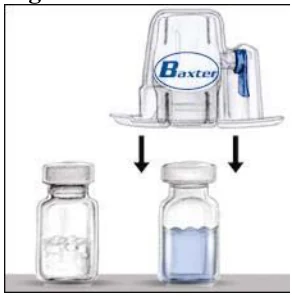
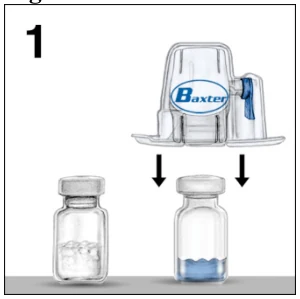
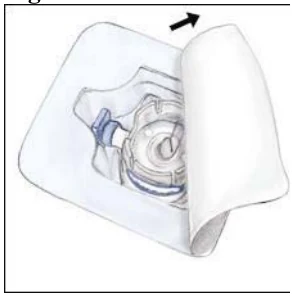
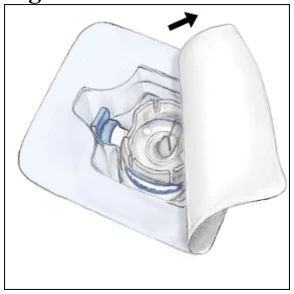
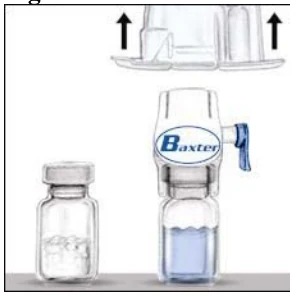
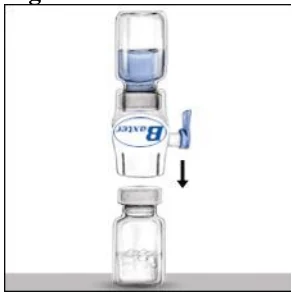
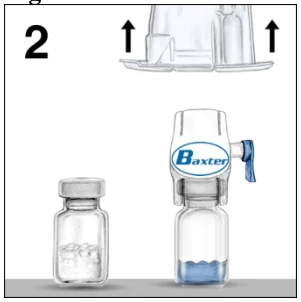
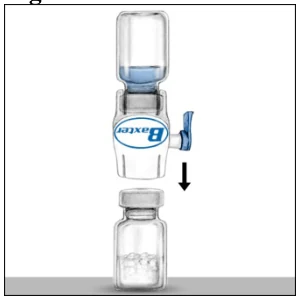
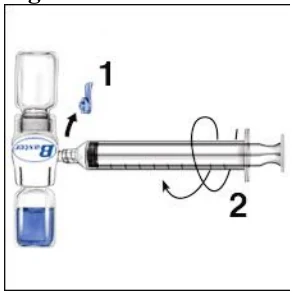
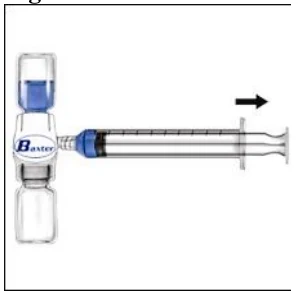
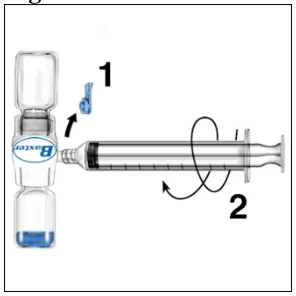
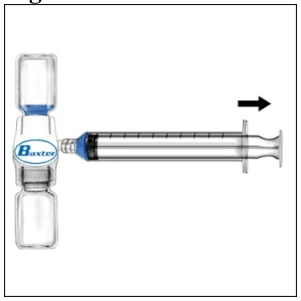
*Diagrams are representational and may not be drawn exactly to scale
NOTE: Do not refrigerate after reconstitution. If ADVATE is being prepared for administration by continuous infusion (see Administration of ADVATE reconstutited with 5mL sWFI by continuous infusion), it should be reconstituted and pooled in a laminar airflow environment in order to optimize the maintenance of sterility during infusion. A fresh supply of reconstituted ADVATE for continuous infusion should be replaced at the bedside at intervals of ≤ 12 hours.
OVERDOSAGE
Of all infusions administered during clinical studies, 0.9% of infusions were >100 IU/kg. No safety concerns were identified in association with these infusions. No subject received a dose > 208 IU/kg in these studies.
For management of a suspected drug overdose, contact your regional Poison Control Centre.
ACTION AND CLINICAL PHARMACOLOGY
Mechanism of Action
ADVATE contains recombinant coagulation Factor VIII, a glycoprotein that has an amino acid sequence comparable to human Factor VIII, and post-translational modifications that are similar to those of the plasma-derived molecule. Activated Factor VIII acts as a cofactor for activated Factor IX, accelerating the conversion of Factor X to activated Factor X. Activated Factor X converts prothrombin to thrombin. Thrombin then converts fibrinogen into fibrin and a fibrin clot is formed.
Pharmacodynamics
Hemophilia A is a sex-linked hereditary disorder of blood coagulation due to decreased levels of Factor VIII activity and results in profuse bleeding into joints, muscles or internal organs, either spontaneously or as a result of accidental or surgical trauma. The plasma levels of Factor VIII are increased by replacement therapy, thereby enabling a temporary correction of the factor deficiency and correction of the bleeding tendency. The level required to achieve adequate hemostasis varies depending on anatomic location and severity of traumatic insult if present.
Pharmacokinetics
All pharmacokinetic (PK) studies with ADVATE were conducted in patients with severe to moderately severe hemophilia A (baseline Factor VIII ≤2%).
A total of 260 subjects provided PK parameters that were included in the full PK analysis set. From this analysis set, 208 subjects provided PK parameters included in the per protocol PK analysis set. Categories of these analyses for infants (1 month to <2 years of age), children (2 to <12 years of age), adolescents (12 to <16 years of age), and adults (16 years of age and older) were used to summarize PK parameters, where age was defined as age at time of PK infusion.
| Table 5 Summary of Pharmacokinetic Parameters of ADVATE per Age Group | ||||
Parameter (Mean ± Standard Deviation) | Infants (n=7) (1 month to < 2 years of age) | Children (n=56) (2 to < 12 years of age) | Adolescents (n=35) (12 to < 16 years of age) | Adultsa (n=162) (16 years of age and older) |
| Total AUC (IU*·hr/dL) | 1240 ± 330 | 1263.40 ± 470.90 | 1300 ± 469 | 1554.88 ±507.92 |
Adjusted Incremental Recovery at Cmax (IU/dL per IU/kg)b | 2.07 ± 0.54 | 1.91 ± 0.50 | 2.05 ± 0.49 | 2.23 ±0.61 |
| Half-life (hr) | 8.67 ± 1.43 | 10.22 ± 2.72 | 12.00 ± 2.92 | 12.96±4.02 |
| Maximum Plasma Concentration Post Infusion (IU/dL) | 104 ± 27 | 97.16 ± 27.13 | 103 ± 25 | 112.35±30.27 |
| Mean Residence Time (hr) | 10.42 ± 2.54 | 12.87 ± 3.70 | 14.89 ± 4.61 | 16.37±5.80 |
| Volume of Distribution at Steady State (dL/kg) | 0.43 ± 0.10 | 0.55 ± 0.15 | 0.60 ± 0.14 | 0.55 ± 0.17 |
| Clearance (mL/kg *hr) | 4.26 ± 1.00 | 4.53 ± 1.51 | 4.21 ± 1.16 | 3.56±1.21 |
a 162 subjects provided PK assessments.
b Calculated as (Cmax – baseline Factor VIII) divided by the dose in IU/kg, where Cmax is the maximal post-infusion Factor
VIII measurement.
Absorption: Refer to Table 5 for a summary of the adjusted recovery, AUC, and Vss in the infant, child, adolescent and adult populations.
Distribution: When infused into a hemophilia patient, ADVATE binds to endogenous von Willebrand factor in the patient’s circulation. The Factor VIII/von Willebrand factor complex is distributed primarily in the intravascular space.18
Metabolism: Not applicable
Excretion: It is currently believed that Factor VIII clearance is mediated by vascular receptors, including low-density lipoprotein receptor-related protein (LPR) and heparin sulphate proteoglycans (HSPGs), by mechanisms that have not been fully elucidated.19,20
Special Populations and Conditions
Pediatrics:
A total of 184 pediatric patients (≤ 16 years old) diagnosed with severe to moderately severe hemophilia A (Factor VIII ≤ 2%) participated in a number of clinical studies. The safety and hemostatic efficacy of ADVATE in this population are similar to that of adult patients. (See CLINICAL TRIALS) The safety and hemostatic efficacy of ADVATE in this population are similar to that of adult patients. Adjusted recovery and terminal half-life was approximately 20% lower in children than in adults. (See Pharmacokinetics, Table 5)
STORAGE AND STABILITY
ADVATE should be refrigerated (2°C- 8°C [36°F – 46°F]). Avoid freezing to prevent damage to the diluent vial. ADVATE may be stored at room temperature (up to 30ºC [86ºF]) for a period of up to six months not to exceed the expiration date. Do not place back in the refrigerator once removed from refrigerated storage. Do not use beyond the expiration date printed on the vial or six months after date noted on the carton, whichever is the earliest.
SPECIAL HANDLING INSTRUCTIONS
- ADVATE reconstituted with 2mL or 5 mL Sterile Water for Injection USP should never be further diluted.
- Do not refrigerate preparation after reconstitution.
- ADVATE should be administered at room temperature not more than 3 hours after reconstitution.
- Parenteral drug products should be inspected for particulate matter and discolouration prior to administration, whenever solution and container permit.
- Plastic syringes must be used with this product, since proteins such as ADVATE tend to stick to the surface of glass syringes.
DOSAGE FORMS, COMPOSITION AND PACKAGING
With 5 mL of Sterile Water for Injection USP: ADVATE is available in single-dose vials that contain nominally 250, 500, 1000, 1500, 2000 and 3000 IU per vial.
With 2 mL of Sterile Water for Injection USP: ADVATE is available in single-dose vials that contain nominally 250, 500, 1000 and 1500 IU per vial.
ADVATE is a sterile, non-pyrogenic, white to off-white powder. After reconstitution, the solution should be clear, colourless, and free from foreign particles. ADVATE is packaged with Sterile Water for Injection USP, a BAXJECT II device for reconstitution, butterfly infusion set for ADVATE 5mL, microbore infusion set for ADVATE 2 mL, 10 mL sterile syringe, alcohol swab, bandage, one full prescribing physician insert, and one patient insert.
ADVATE is to be reconstituted with the provided Sterile Water for Injection (sWFI). When reconstituted with the appropriate volume of diluent, ADVATE contains the following stabilizers, nonmedicinal ingredients, or excipients in target amounts:
| 5 mL Reconstitution Volume | 2 mL Reconstitution Volume | |
| Mannitol | 3.2% (w/v) | 8% (w/v) |
| α, α-Trehalose | 0.8% (w/v) | 2% (w/v) |
| Sodium Chloride | 90 mM | 225 mM |
| Histidine | 10 mM | 25 mM |
Tris(hydroxymethyl) aminomethane | 10 mM | 25 mM |
| Calcium Chloride | 1.7 mM | 4.2 mM |
| Polysorbate 80 | 0.01% (w/v) | 0.025% (w/v) |
| Reduced Glutathione | 0.08 mg/mL | 0.2 mg/mL |
Recombinant von Willebrand Factor (rVWF) is co-expressed with recombinant Factor VIII, and helps to stabilize it in culture. The final product contains no more than 2 ng rVWF/IU rAHF, which will not have any clinically relevant effect in patients with von Willebrand’s Disease. The product contains no preservative.
Each vial of ADVATE is labelled with the AHF activity expressed in IU per vial. Biological potency is determined by an in vitro assay, which employs a Factor VIII concentrate standard that is referenced to a World Health Organization (WHO) International Standard for Factor VIII: C concentrates. The specific activity of ADVATE is 4,000 to 10,000 IU per milligram of protein.
PART II : SCIENTIFIC INFORMATION
PHARMACEUTICAL INFORMATION
Drug Substance
Proper name: Antihemophilic Factor (Recombinant), Plasma/Albumin-Free
Method
Chemical name: Octocog alfa
Molecular formula and molecular mass: 2,332 amino acids with an approximate molecular mass of 280 kDa.
Structural formula:
| C1 A3 B |
A2 A1
| C2 |
a
1
| a |
2
| a |
3
glycosylated asparagines
partially glycosylated
non - glycosylated
potentially glycosylated
disulfide bridge
proposed disulfide bridge
free cysteine sulfated tyrosine
1 400 800 1600 2000 2332
Factor VIII
Physicochemical properties:
ADVATE is a dimeric glycoprotein that is produced using CHO cells with an amino acid sequence that is identical to the licensed Recombinate anti-hemophilic factor currently manufactured by Baxter. The post-translational modifications of ADVATE are similar to plasma-derived Factor VIII.
Viral Inactivation
The cell culture and purification processes used in the manufacture of ADVATE employ no additives of human or animal origin. The production process includes a dedicated, viral inactivation solvent-detergent treatment step. The finished drug product is formulated in a neutral pH, protein-free excipient vehicle.
CLINICAL TRIALS
Prophylaxis and Reduction of Bleeding Episodes in Adults and Children (Clinical Study Report 060201)
In a multi-center, open-label, prospective, randomized, controlled Phase 4 clinical study (060201) of the relative efficacy of ADVATE use in 2 prophylactic treatment regimens compared to that of an on-demand treatment, 53 PTPs (Previously Treated Patients) with severe to moderately severe hemophilia A (FVIII level <2 IU/dL) were analyzed in the per protocol analysis set. Subjects were initially treated for 6 months of on-demand therapy and then randomized to 12 months of either a standard prophylaxis regimen (20-40 IU/kg every 48 hours) or PK – driven prophylaxis regimen (20-80 IU/kg every 72 hours). All subjects had a history of at least 8 joint hemorrhages per year upon entering the study. Each subject in the per protocol analysis set was adherent to >90% of the prescribed number of prophylactic infusions; no subject in the study surpassed the upper boundary of 110% of prescribed infusions.
The median (min, max) age during on-demand was 26 (7, 59) years; during PK-Driven prophylaxis was 24.5 (7, 59) years and during Standard prophylaxis was 33 (10, 55) years. These results reflect the safety analysis set (N=73).
The Number of patients in the Per-Protocol analysis set was 53. This number of patients resulted from the total number of patients exposed to investigational product (N=73) minus 20 patients (27.4%) who did not satisfy one or more criteria for inclusion in this analysis set.
The annualized bleed rate (ABR) was calculated as follows:
{number of bleeding episodes ÷ observed treatment period in days} x 365.25. This algorithm was implemented across all subjects in the Intent-to-Treat and Per-Protocol analysis sets. The median annual bleed rate for on-demand was 44.0 compared to 1.0 while on either prophylaxis regimen. Twenty-two (22) of 53 (42%) patients experienced no bleeding episodes while on either prophylaxis regimen for one year.
The median ABR during the on-demand treatment period was 44 bleeds per subject per year, compared to 1 bleed per subject per year while on either prophylactic regimen, which was a statistically significant difference (p<0.0001).
Table 6 Annual Bleed Rate of Prophylaxis Compared to On-Demand Treatment
| Clinical Parameters | On -Demand (n=53) | Standard Prophylaxis (n=30) | PK-driven Prophylaxis (n=23) | Any Prophylaxis (n=53) |
| Number of Total Treated Bleeding Episodes | 1351 | 77 | 75 | 152 |
| Median (IQR) ABR1 | 44.0 (20.8) | 1.0 (2.14) | 1.0 (4.1) | 1.0 (4.1) |
| Median (IQR) Joint ABR | 38.7 (24.8) | 0.5 (1.96) | 1.0 (4.1) | 1.0 (2.1) |
| Median (IQR) Non-Joint ABR | 4.0 (11.9) | 0.0 (0.0) | 0.0 (0.0) | 0.0 (0.0) |
| Median (IQR) Spontaneous ABR | 32.0 (26.9) | 0.0 (1.9) | 0.0 (2.0) | 0.0 (1.9) |
| Median (IQR) Traumatic ABR | 11.5 (17.2) | 0.0 (1.0) | 1.0 (1.0) | 0.0 (1.0) |
1 Statistically significant difference (p < 0.0001) in median ABR between patients on any prophylaxis versus on-demand therapy using the Wilcoxon Signed-Rank test.
IQR= Interquartile Range
The annualized bleed rates by age category during on-demand and either standard or PK-driven prophylaxis regimens are shown in Table 7.
Table 7 Annualized Bleed Rate by Age category and Any Prophylaxis vs On-Demand (Per
Protocol)
| Age category | Any Prophylaxis | On-Demand | ||||||||
| N | Min | Median | Max | Percentage of Subjects With Zero Bleeds | N | Min | Median | Max | Percentage of Subjects With Zero Bleeds | |
Children (≥7 to <12 years old) | 3 | 0.0 | 5.2 | 8.7 | 33% | 3 | 38.6 | 44.0 | 120.5 | All subjects bleed during On-Demand |
| Adolescents (≥12 to <16 years old) | 4 | 0.0 | 5.0 | 10.0 | 25% | 4 | 37.9 | 58.0 | 81.4 | |
Adults (≥16 years old and older) | 46 | 0.0 | 1.0 | 17.4 | 43% | 46 | 22.7 | 44.7 | 117.8 | |
| All Subjects | 53 | 0.0 | 1.0 | 17.4 | 42% | 53 | 22.7 | 44.0 | 120.5 | |
Within the Valentino et al paper, results in a post hoc analysis performed for prophylaxis patients showed the median ABRs for non-adherent subjects were 20.9 compared to median ABRs for adherent subjects 3.0, with “adherent” subject defined as one who received ≥ 90% of prescribed number of infusions.24
Hemostatic Efficacy:
A secondary objective of study 060201 was to evaluate the hemostatic efficacy of the treatment of bleeding episodes. The hemostatic efficacy was assessed by the number of infusions used to treat each bleeding episode and an efficacy rating provided based on the subject (or caregiver) based on a 4-point ordinal scale.
Table 8 Number of Bleeding Episodes by Treatment Regimen Efficacy Rating
(Study 060201: Hemostatic Efficacy Rating Analysis Set)
| Treatment Regimen | Efficacy Rating | Number of Subjects | Number of Bleeding Episodes a | Percentage of | |||||||||
| Bleeding | |||||||||||||
| Episodes | |||||||||||||
| On-Demand | Excellent | 50 | 547 | 32.70 | |||||||||
| Good | 68 | 943 | 56.37 | ||||||||||
| Fair | 35 | 167 | 9.98 | ||||||||||
| None | 3 | 3 | 0.18 | ||||||||||
| Unknown | 2 | 13 | 0.78 | ||||||||||
| All Ratings | 70 | 1673 | 100.00 | ||||||||||
| Standard Prophylaxis | Excellent | 10 | 39 | 41.94 | |||||||||
| Good | 11 | 38 | 40.86 | ||||||||||
| Fair | 6 | 16 | 17.20 | ||||||||||
| None | 0 | 0 | 0.00 | ||||||||||
| Unknown | 0 | 0 | 0.00 | ||||||||||
| All Ratings | 18 | 93 | 100.00 | ||||||||||
| PK-Driven Prophylaxis | Excellent | 10 | 33 | 23.74 | |||||||||
| Good | 21 | 75 | 53.96 | ||||||||||
| Fair | 9 | 11 | 7.91 | ||||||||||
| None | 2 | 20 | 14.39 | ||||||||||
| Unknown | 0 | 0 | 0.00 | ||||||||||
| All Ratings | 25 | 139 | 100.00 | ||||||||||
| Any Prophylaxis | Excellent | 20 | 72 | 31.03 | |||||||||
| Good | 32 | 113 | 48.71 | ||||||||||
| Fair | 15 | 27 | 11.64 | ||||||||||
| None | 2 | 20 | 8.62 | ||||||||||
| Unknown | 0 | 0 | 0.00 | ||||||||||
| All Ratings | 43 | 232 | 100.00 | ||||||||||
| Treatment Regimen | Efficacy Rating | Number of Subjects | Number of Bleeding Episodes a | Percentage of | ||||||||||
| Bleeding | ||||||||||||||
| Episodes | ||||||||||||||
| All Treatments | Excellent | 53 | 619 | 32.49 | ||||||||||
| Regimens | ||||||||||||||
| Good | 69 | 1056 | 55.43 | |||||||||||
| Fair | 36 | 194 | 10.18 | |||||||||||
| None | 4 | 23 | 1.21 | |||||||||||
| Unknown | 2 | 13 | 0.68 | |||||||||||
| All Ratings | 70 | 1905 | 100.00 | |||||||||||
a There were 37 bleeding episodes (14 unique subjects) which were not included in this table because these events did not occur during a treatment regimen. One bleeding episode has a missing date, so the treatment regimen was not identified.
Health-Related Quality of Life:
Another secondary objective of study 060201 was to evaluate differences in Health-Related Quality of Life (HRQoL) in subjects ≥ 14 year of age between the on-demand and any prophylactic treatments.
Table 9
Mean and Median Change in SF-36v1 Health Domain Scores at End of Treatment
Regimens (Any Prophylaxis Treatment minus On-Demand) a
| SF-36 Health Domain | N | Mean (SD) | Median (IQR) | ||||||||||||
| Physical Functioning (PF) | 57 | 0.89 (7.23) | 2.10 (7.74) | ||||||||||||
| Role-Physical (RP) | 57 | 3.56 (12.20) | 0.00 (9.44) | ||||||||||||
| Bodily pain (BP) | 57 | 4.13 (9.40) | 0.00 (9.42) | ||||||||||||
| General Health (GH) | 57 | 1.36 (7.87) | 2.34 (7.03) | ||||||||||||
| Vitality (VT) | 57 | 0.21 (9.14) | 0.00 (9.47) | ||||||||||||
| Social Functioning (SF) | 57 | 1.72 (8.59) | 0.00 (5.43) | ||||||||||||
| Role-Emotional (RE) | 57 | -1.29 (9.35) | 0.00 (0.00) | ||||||||||||
| Mental Health (MH) | 57 | -0.20 (10.14) | 0.00 (9.09) | ||||||||||||
| Physical Component Score | 57 | 3.56 (7.54) | 2.76 (7.38) | ||||||||||||
| Mental Component Score | 57 | -1.22 (9.22) | -1.30 (8.19) | ||||||||||||
a Only subjects who completed the SF-36 at the end of each treatment period were included in the analysis. Changes in each SF-36 health domains were calculated by subtracting the on-demand score from the any prophylaxis score. Positive change scores reflect HRQOL improvement from the end of any prophylaxis to the end of on-demand.
There are currently no clinical studies undertaken for 2000 IU/vial or 3000 IU/vial. However Baxter continues to maintain post market surveillance (SeeADVERSE REACTIONS).
Study demographics and trial design
Table 10 Summary of Patient Demographics for Clinical Trials for Patients with Hemophilia
Study # | Trial design | Dosage, route of administration and duration | Study subjects enrolled (treated)a | Age Range | Gender |
| 069901 | Part 1: Randomized, double-blind, crossover pharmacokinetic comparison of ADVATE and RECOMBINATE Part 2: Open-label, multi-center, non-controlled, prophylaxis study Part 3: Randomized, double-blind, crossover pharmacokinetic comparison pilot and commercial product | Part 1 Pharmacokinetic: Single Infusion: 50 ± 5 IU/kg Part 2 Prophylaxis: 25-40 IU/kg, 3-4 times/wk Part 3 Pharmacokinetic: Single Infusion: 50 ± 5 IU/kg | 111 (106) | ≥ 10 years | 111 M |
Table 10 Summary of Patient Demographics for Clinical Trials for Patients with Hemophilia
Study # | Trial design | Dosage, route of administration and duration | Study subjects enrolled (treated)a | Age Range | Gender |
| 069902 | Multicenter, prospective, open-label, uncontrolled surgical prophylaxis study (perioperative hemostatic control during surgery, dental extractions and invasive diagnostic procedures) | Perioperative Management Preoperative: Dental procedure loading dose to raise FVIII level to 60% to 100% of normal; Major/Minor procedure loading dose to raise FVIII level to 80% to 120% of normal Intra- and Post-Operative BI or CI regimens, or a combination: BI: as clinically indicated; CI: initial rate of 4 IU·kg-1·h-1 for subjects > 12 years and 5 IU·kg-1·h-1 for subjects 5-12 years, then investigator-determined Home Replacement Therapy Prescribed by investigator for up to 6 weeks for major orthopedic procedures and up to 2 weeks for all other procedures | 59 (58) | ≥ 5 years 7 - 65 years | 59 M |
| 060101 | Part 1: Determination of pharmacokinetic parameters in pediatric patients with severe to moderately severe hemophilia Part 2: Multicenter, open label, uncontrolled, prophylaxis study in pediatric patients with severe to moderately severe hemophilia | Part 1 Pharmacokinetic: Single Infusion: 50 ± 5 IU/kg Part 2 Therapeutic Regimen (determined by investigator):
| 53 (53) | 1 – 5 years | 52 M 1 F |
Table 10 Summary of Patient Demographics for Clinical Trials for Patients with Hemophilia
Study # | Trial design | Dosage, route of administration and duration | Study subjects enrolled (treated)a | Age Range | Gender |
| 060102 | Part 1: single-arm, open-label evaluation of the pharmacokinetics and safety of ADVATE Part 2: Multicenter, open label, randomized, two arm, parallel, pivotal continuation study to collect additional efficacy and safety. | Part 1 Pharmacokinetic: Single Infusion: 50 ± 5 IU/kg Part 2 Therapeutic Regimen (determined by investigator):
| 82 (82) | ≥ 10 years 11 – 67 years | 82 M |
BLB- 200-01 | Part 1: Randomized, double-blind, crossover pharmacokinetic comparison of ADVATE and RECOMBINATE Part 2: Open-label, multi-center, non-controlled, prophylaxis study | Part 1 Pharmacokinetic: Single Infusion: 50 ± 5 IU/kg Part 2 Bleeding Episode: 10-50 IU/kg Prophylaxis: 25-40 IU/kg (frequency determined by investigator) Last visit: 50 ± 5 IU/kg | 15 (15) | 10 – 72 years | 15 M |
| 060103 | Multicenter, open-label, uncontrolled clinical study of the immunogenicity, efficacy, and safety of rAHF-PFM in conjunction with an on-demand or prophylactic therapy regimen in previously untreated patients (PUPs) | Therapeutic Regimen (determined by investigator):
| 29b (26) | N/A (ongoing) | 29 Mb (ongoing) |
M = Male, F = Female
N/A = Not applicable as the study is still ongoing
a The number of treated patients indicates the number of patients listed as treated for each individual clinical study. The number of unique patients treated in the ADVATE clinical development program, totalling 234 patients, were as follows: 069901 (106), 069902 (34), 060101 (53), 060102 (0), 060103 (26), BLB-B200-01 (15).
b Clinical study 060103 is still ongoing. The database snapshot taken was as of 27 March 2006
Of the 234 unique patients treated in the clinical development program, 193 (82.5%) subjects were Caucasian, 15 (6.4%) were Black, 17 (7.3%) were Asian, 7 (3%) were from other racial categories, and for 2 subjects (0.9%) the race category data were missing. Of the 234 subjects with available data, 21 (9.0%) were ethnically Hispanic.
Study results
Phase 2/3 Pivotal Study (Clinical Study Report 069901)
Table 11 Hemostatic Efficacy Results from Pivotal Clinical Study 069901
| End point | Results in 510 new bleeding episodes treated with ADVATE 162 (32%) spontaneous, 228 (45%) antecedent trauma, 120 (24%) unknown etiology |
| Quality of hemostasis | Excellent or good response 439 (86%) Fair response: 61 (12 %) No response: 1 (0.2 %) Unknown response: 9 (2 %) |
| Number of infusion required | Single infusion (1): 411 (81 %) Two (2) infusions: 62 (12 %) Three (3) infusions: 15 (3 %) Four (4) or more infusions: 22 (4 %) |
The rate of new bleeding episodes during the protocol-mandated 75 exposure-day prophylactic regimen (≥ 25 IU/kg body weight 3-4 times per week) was calculated as a function of the etiology of bleeding episodes for 107 evaluable subjects (n = 274 new bleeding episodes). These rates are presented in Table 12.
Table 12 Rate of New Bleeding Episodes During Prophylaxis
| Bleeding Episode Etiology | Mean (Range) New Bleeding Episodes/Subject/Month |
| Spontaneous | 0.41 (0.09 – 2.17) |
| Post-traumatic | 0.45 (0.13 – 2.11) |
| Unknowna | 0.41 (0.11 – 1.51) |
| Overall | 0.52 (0.0 – 3.88) |
a Etiology was indeterminate
The overall rate of bleeding was influenced by the degree of compliance with the prescribed prophylactic regimen. Subjects who infused less than 25 IU ADVATE per kg per dose for more than 20% of prophylactic infusions or administered less than 3 infusions per week for more than 20% of study weeks (n = 37) experienced a 2.3-fold higher rate of bleeding in comparison with subjects who complied with the prescribed prophylactic regimen at least 80% of the time and for ≥ 80% of doses (n = 70).
Phase 2/3 Continuation Study (Clinical Study Report 060102)
Table 13 Hemostatic Efficacy Results from Pivotal Clinical Study 060102
| End point | Results in 837 new bleeding episodes treated with ADVATE 232 (28%) spontaneous, 379 (45%) trauma, 226 (27%) unknown etiology |
| Quality of hemostasis | Excellent or good response: 673 (80.4%) Fair response: 140 (16.7%) No response: 1 (0.1%) Unknown response: 23 (2.7%)a |
| Number of infusion required | Single infusion (1): 521 (62.2 %) Two (2) infusions: 216 (25.8 %) Three (3) infusions: 23 (2.7%) Four (4) or more infusions: 75 (9%) No treatment: 2 (0.3%) |
a Of the 23 bleeding episodes in the “Unknown” category, 20 of 23 had no treatment record provided or the need for treatment could not be discerned, 2 of 23 in 2 subjects did not require treatment, and 1 of 23 was treated in part with non-study factor VIII product (grouped as “unknown”).
The Phase 2/3 continuation study involved subjects previously treated on the pivotal Phase 2/3 study and provided additional efficacy data on ADVATE. An analysis of efficacy was conducted for 82 enrolled subjects who self-administered ADVATE produced in Neuchâtel on a routine prophylactic regimen during a minimum period of 75 exposure days to ADVATE. Of the 82 subjects enrolled in this study, 81 had at least 1 infusion of study product and are included in the total hemostatic efficacy data set. As in the pivotal Phase 2/3 study, new bleeding episodes were treated with ADVATE and the outcome of treatment was rated as excellent, good, fair, or none, based on the quality of hemostasis achieved. A total of 837 new bleeding episodes occurred in 70 of the 81 subjects being treated with ADVATE. By etiology, 45% of these bleeding events resulted from trauma and 28% occurred spontaneously; the other 27% had an undetermined etiology. The response to treatment with ADVATE for the majority (80.4%) of all new bleeding episodes was rated as excellent or good. In addition, 62.2% of the bleeding episodes resolved with only 1 infusion and an additional 25.8% were resolved by a second infusion. Thus, 88% of all bleeding episodes required 1 or 2 infusions of study product.
Phase 2/3 Pediatric PTP Study (Clinical Study Report 060101)
Table 14 Hemostatic Efficacy Results from Pivotal Clinical Study 060101
| End point | Of the 409 total bleeding episodes recorded in the clinical study, 354 bleeding episodes in 44 subjects were treated with ADVATE. Nine (9) subjects experienced no bleeding episodes. 73 (17.8%) spontaneous, 198 (48.4%) trauma, 136 (33.3%) unknown etiology, 2 (0.5%) post-operative Results from the quality of hemostasis determination and number of infusions required to treat a bleed were calculated from the 354 bleeds treated using ADVATE. |
| Quality of hemostasis | Excellent or good response: 332 (93.8 %) Fair response: 17 (4.8 %) Unknown response: 5 (1.4%) |
| Number of infusion required | One (1) or two (2) infusions: 319 (90.1 %) Three (3) infusions: 19 (5.4%) Four (4) or more infusions: 16 (4.5%) |
This was a multi-center, open-label, prospective, uncontrolled clinical study of 53 pediatric PTPs under 6 years of age with severe or moderately severe hemophilia A (baseline factor VIII £ 2%). The overall study consisted of 2 parts. Part 1 was an open-label evaluation of the pharmacokinetics and short-term safety of ADVATE following a single dose of 50 ± 5 IU/kg body weight. Part 2 was an open-label determination of the immunogenicity, hemostatic efficacy, and safety of ADVATE. Subjects continued to receive ADVATE for at least 50 exposure days or a total treatment time of 6 months, whichever came first.
The median dose per infusion for bleeding episodes was 42.9 ± 19.38 IU/kg. The median rate of joint bleeding episodes per year for each treatment regimen was 0.00 for subjects on the standard prophylactic regimen (n=21), 0.00 for subjects on a modified prophylactic regimen (n=37), and 14.18 for subjects receiving on demand treatment (n=5).
Phase 2/3 Surgical Study (Clinical Study Report 069902)
Table 15 Hemostatic Efficacy Results from Pivotal Clinical Study 069902
| End point | Results in 58 subjects who underwent 65 surgical procedures while receiving ADVATE (57 subjects completed the study) (22 major, 35 minor, 8 dental) 24 assessments performed at the time of drain removal |
| Intra and post operative quality of hemostasis | Intra operative assessment: Excellent or good: 61 of 65 (94%) Post operative assessment: Excellent or good: 62 of 65 (95%) |
| Control of hemorrahage from site of surgical drain at the time of removal | Excellent or good: 20 of 24 (83 %) Fair: 2 (8.3%) Unknown: 1 None: 1 |
All study subjects received pre-operative bolus infusions of ADVATE at doses intended to increase 10-30 minute post-infusion plasma Factor VIII levels to 60-100% for dental procedures and 80-120% for all other surgeries. In 59 of 63 surgeries, the target Factor VIII level was met or exceeded following a single loading dose ranging from 29.3 IU/kg to 104.6 IU/kg. Two surgeries were missing post-infusion Factor VIII levels and preoperative Factor VIII target levels were not achieved in 4 surgeries. Nevertheless, no supplemental preoperative bolus loading doses were given in any subject. Eighteen study subjects received ADVATE by continuous infusion. Four patients were treated for major surgery by continuous infusion following a loading bolus dose. The mean weight-adjusted dose administered per infusion in these 4 patients was 43 IU/kg, resulting in mean daily Factor VIII levels of 97%. For minor surgeries, the mean weight-adjusted dose administered per infusion was 46 IU/kg, resulting in mean daily Factor VIII levels of 86%. ADVATE was not administered by continuous infusion for any dental procedures.
A brief description of procedure classifications, along with study drug exposure, are presented in Table 16.
Table 16 Procedure Classifications and Study Drug Exposure
| Procedure Classifications | Number of Procedures | Number of Infusions Mean ± SD | Dose (IU/kg) | |
| Median | Range | |||
| Major | 22 | 51.1 ± 18.9 | 1,490 | 724.9 - 2,415.0 |
| Minor | 35 | 22.3 ± 14.0 | 691.4 | 107.8 - 2,404.2 |
| Dental | 8 | 6.3 ± 5.6 | 174.4 | 40.8 - 317.0 |
Overall, the perioperative hemostatic efficacy assessments were highly comparable by type of infusion (bolus versus continuous infusion). In addition, the actual estimated blood loss (EBL) was below the predicted maximal EBL for 55 of 58 procedures. The EBL values were missing for 7 procedures and the actual EBL was greater than the predicted maximal EBL in 3 procedures.
A total of 23 bleeding events were reported: 16 bleeding episodes and 7 hematomas. Two (2) bleeding episodes occurred at the surgical site within 14 days of surgery and thus were regarded as postoperative bleeding episodes. Ten (10) of these bleeding episodes not regarded as post-operative bleeding episodes were treated with ADVATE ; the treatments were rated as excellent or good for 8, fair for 1, and none for 1. For those treatments rated as fair and none, the investigator commented that the events were probably related to preexisting arthritis and not to bleeding. The remaining 4 bleeding episodes were not connected to the surgery. Seven (7) hematomas were also noted. Four of the 7 hematomas were surgically evacuated. Eleven subjects exhibited Factor VIII clearance rates < 5 mL/kg/h. Three subjects exhibited clearance rates between 5 and 9 mL/kg/h. One subject had clearance rates ranging from 6.8 to 20.8 mL/kg/h, coincident with a central venous catheter-related infection. Hemostasis was maintained at all times in all cases.
Comparative Bioavailability Studies
Phase 2/3 Pivotal Study (Clinical Study Report 069901)
A randomized, crossover pharmacokinetic comparison of ADVATE (the test article) and the currently licensed product, RECOMBINATE rAHF (the control article) was conducted. Study subjects were initially infused with one of the two preparations at a dose of 50 ± 5 IU/kg body weight while in a non-bleeding state. The second study preparation was infused in a non-bleeding state at 50 ± 5 IU/kg after a washout period of 72 hours to 4 weeks following the first study infusion. The order in which each study preparation was administered was determined randomly. Pharmacokinetic parameters (area under the Factor VIII plasma concentration versus time curve [AUC], maximal post-infusion Factor VIII level [Cmax], in vivo recovery, half-life, clearance [CL], mean residence time [MRT], and volume of distribution in steady-state [Vss]) were calculated from Factor VIII activity measurements in blood samples obtained immediately before and at standardized time intervals up to 48 hours following each infusion.
A total of 56 study subjects were enrolled and randomized in this study. Of these, 52 (intent-to-treat population) received at least one infusion of study medication and had pharmacokinetic data available for analysis. Thirty subjects (per-protocol population) met the requirements for study
eligibility and had complete pharmacokinetic data. The mean values (ranges) of pharmacokinetic parameters for each study preparation are presented in Table 17. For the pharmacokinetic parameters AUC0-48h and in vivo recovery, the 90% confidence intervals for the ratios of the mean values for the test and control articles were within the bioequivalence limits of 0.80 and 1.25 for both the per- protocol (n = 30) and intent-to-treat (n = 52) study populations.
Table 17 Pharmacokinetic Parameters for RECOMBINATE rAHF and ADVATE
| Parameter | RECOMBINATE rAHF (n = 30) | ADVATE (n = 30) | Mean Difference Ln(AUC0-48h ) Per-protocol | 90% Confidence Interval about Mean Difference Per-protocol | ||||
| AUC0-48h (IU·h/dL)a | 1515 (970-2205) | 1533 (876-2642) | -0.001 | –0.040 to 0.038 | ||||
| Cmax (IU/dL) | 127 (73-199) | 119 (77-195) | --- | --- | ||||
| In vivo recovery (IU/dL/IU/kg)b | 2.55 (1.47-3.89) | 2.40 (1.54-3.88) | -0.057 | –0.089 to -0.024 | ||||
| Half-life (h) | 11.39 (7.89-18.12) | 11.98 (6.74-24.70) | --- | --- | ||||
| MRT (h) | 14.67(9.41-25.36) | 15.69(8.63-34.25) | --- | --- | ||||
| Vss (dL/kg) | 0.46(0.31-0.68) | 0.47(0.29-0.67) | --- | --- | ||||
| CL (dL/kg/h) | 0.03 (0.02-0.05) | 0.03 (0.02-0.06) | --- | --- | ||||
a Area under the plasma Factor VIII concentration x time curve from 0 to 48 hours post-infusion. b Calculated as (Cmax – baseline Factor VIII) divided by the dose in IU/kg, where Cmax is the maximal post-infusion Factor VIII measurement.
The determination of equivalence of RECOMBINATE rAHF and ADVATE was based on the mean natural log-transformed AUC0-48h for the per-protocol and the mean transformed total AUC (AUC0-∞) values for the intent-to-treat data sets. These Confidence Intervals (CIs) fell within the equivalence limits of -0.223 to 0.223 (corresponding to CIs of 80-125%), demonstrating equivalence in terms of AUC and incremental recovery for ADVATE and RECOMBINATE rAHF in both the per-protocol and intent-to-treat analyses.
In addition, 70 study subjects were evaluated for in vivo recovery in a steady, non-bleeding state at 30 minutes, 1 hour, and 3 hours post-infusion of ADVATE at a dose of 50 ± 5 IU/kg body weight, either as the first exposure to study medication (n = 53) or after a minimum of 75 ADVATE exposure-days (n = 17). The means (ranges) of these recovery results are presented in Table 18.
Table 18 In Vivo Recoverya of ADVATE at the First Exposure and after ≥ 75 Exposure-Days | ||
| Time Point | First Exposure (n = 53) | ≥ 75 Exposure-Days (n = 17) |
| 30 minutes post-infusion | 2.24 (1.25-3.65) | 2.35 (1.71-3.18) |
| 1 hour post-infusion | 2.05 (1.23-3.77) | 2.18 (1.04-3.05) |
| 3 hours post-infusion | 1.67 (0.89-3.45) | 1.71 (1.34-2.57) |
a All recovery measurements are expressed as IU/dL divided by the dose in IU/kg.
Phase 2/3 Continuation Study (Clinical Study Report 060102)
The Phase 2/3 continuation study provided a means for comparing the pharmacokinetics of ADVATE (parameters as described above) at the onset of treatment with those of ADVATE obtained after a period of 75 exposure days. This comparison utilized data from a subset of subjects from the pivotal Phase 2/3 study who also participated in the Phase 2/3 continuation study. Study subjects were treated with ADVATE at a dose of 50 ± 5 IU/kg body weight while in a non-bleeding state and Factor VIII activity was determined in blood samples obtained immediately before and at standardized time intervals up to 48 hours following each infusion.
A total of 22 subjects were included in a per-protocol analysis. The mean values (ranges) of pharmacokinetic parameters before and after a minimum of 75 exposure days are presented in Table 19. Total AUC and in vivo recovery were compared using 95% confidence intervals calculated for mean differences in natural logs of these parameters at the onset of treatment and after a period of ≥ 75 exposure days. The 95% confidence for both total AUC (-0.108 to 0.022) and in vivo recovery (-0.065 to 0.195) included zero, indicating no evidence of a difference in these parameters.
Table 19 Summary of Pharmacokinetic Parameters with ADVATE
| Parameter | Parameters at the Onset of Treatmenta | Parameters after ≥ 75 Exposure Daysb |
| N Mean SD Min Max | N Mean SD Min Max | |
Total AUC (IU·h/dL) Cmax (IU/dL) Adjusted Recovery (IU/dL/IU/kg) Half-life (h) Clearance (dL/(kg·h) Mean residence time (h) Vss (dL/kg) | 22 1409 (1441)c 465 892 2696 22 114 (112)c 20 77 151 22 2.31 (2.27)c 0.42 1.54 3.02 22 11.30 3.05 6.74 17.96 22 0.04 0.01 0.02 0.06 22 14.53 4.28 8.63 23.38 22 0.49 0.09 0.32 0.67 | 22 1368 (1372)c 517 850 3012 22 119 (116)c 26 73 177 22 2.38 (2.32)c 0.54 1.46 3.56 22 11.14 2.06 7.67 16.06 22 0.04 0.01 0.02 0.06 22 13.83 3.44 8.04 21.19 22 0.50 0.11 0.31 0.73 |
a ADVATE Baxter clinical study 069901 b ADVATE in Baxter clinical study 060102 c Geometric mean
Phase 1 Study of Reconstitution in 2 mL versus 5 mL Diluent (Clinical Study Report 060702) An open label, randomized, crossover study to compare the pharmacokinetics and safety of ADVATE reconstituted in 2 mL versus 5 mL sterile water for injection (SWFI) was conducted in subjects with severe hemophilia A (factor VIII [FVIII] activity ≤1% of normal). The study consisted of an adolescent/adult cohort (age 13 to 52 years) and a pediatric cohort (age 2 to 12 years). In the adolescent/adult cohort, complete pharmacokinetic parameters (area under the curve [AUC0-48 h], total area under the curve [AUC0-∞], incremental recovery, half life [T½], clearance [CL], mean residence time [MRT], apparent volume of distribution [Vss] and maximum concentration [Cmax]) were determined and compared for a single dose (50 IU/kg ± 100 IU) of ADVATE reconstituted in 2 mL and 5 mL SWFI. In the pediatric cohort, incremental recovery was determined and compared for a single dose (50 IU/kg) of ADVATE reconstituted in 2 mL and 5 mL SWFI. A washout period of at least 72 hours but not more than 30 days between the last blood draw and the next infusion was to be observed in both cohorts.
Fifty-two subjects were enrolled and 42 subjects received at least 1 infusion (27 adult/adolescent and 15 pediatric subjects). Of the 27 adult/adolescent subjects, 8 were excluded from the per-protocol analysis and the per-protocol dataset comprised of 19 adult/adolescent subjects. The-intent-to-treat (ITT) dataset comprised 27 adult/adolescent subjects and 15 pediatric subjects. Pharmacokinetic parameters for the adult/adolescent cohort based on the per-protocol dataset are given in Table 20.
The mean (±SD) AUC0-48h values for the per-protocol dataset were 1298.67 ± 380.60 IU·h/dL for the 2 mL infusion and 1363.56 ± 487.57 IU·h/dL for the 5 mL infusion. The per-protocol determination of bioequivalence was based on natural log transformed mean AUC0-48h values for the 2 mL and 5 mL infusions of ADVATE. The difference of the least-squares means (2 mL to 5 mL) was -0.052 and the 90% confidence interval (90% CI) for this difference was -0.117 to 0.012. This 90% CI was within the bioequivalence limits of -0.223 to 0.223 (corresponding to a CI of 80% to 125%), demonstrating equivalence in terms of AUC 0-48h.
Table 20 Pharmacokinetic Parameters for ADVATE (rAHF-PFM) Reconstituted in 5 mL sterile Water for Injection
(sWFI) and ADVATE Reconstituted in 2 mL sWFI (Study 060702: Per-Protocol)
| Parameter | rAHF-PFM Reconstituted in 5 mL sWFI (n = 19) Mean (±Standard Deviation) | rAHF-PFM Reconstituted in 2 mL sWFI (n = 19) Mean (±Standard Deviation) | Mean Difference Per- protocol | 90% Confidence Interval about Mean Difference Per-protocol | ||||||
| AUC0-48h (IU·h/dL) a | 1363.56 (487.57) | 1298.67 (380.60) | -0.052 b | -0.117, 0.012 | ||||||
| Cmax (IU/dL) | 107.89 (17.95) | 104.42 (19.35) | --- | --- | ||||||
| In vivo recovery (IU/dL/IU/kg)c | 2.00 (0.36) | 1.93 (0.35) | -0.064 d | -0.111, -0.018 | ||||||
| Half-life (h) | 12.50 (2.89) | 12.54 (3.80) | --- | --- | ||||||
| MRT (h) | 14.34 (4.27) | 14.79 (5.24) | --- | --- | ||||||
| Vss (dL/kg) | 0.51 (0.13) | 0.54 (0.13) | --- | --- | ||||||
CL (mL/(kg·h)) | 3.81 (1.20) | 3.85 (0.95) | --- | --- | ||||||
a Area under the plasma Factor VIII concentration x time curve from 0 to 48 hours post-infusion. b Least-Squares Mean of Differences of Ln(AUC0-48h).
c Calculated as (Cmax – baseline Factor VIII) divided by the dose in IU/kg, where Cmax is the maximal post-infusion Factor VIII measurement.
d Least-Squares Mean of Differences of Ln(In vivo recovery).
The determination of bioequivalence of ADVATE reconstituted in 5 mL sterile water for injection (sWFI) and ADVATE reconstituted in 2 mL SWFI was based on the mean natural log-transformed AUC0-48h and mean natural log-transformed of in vivo adjusted incremental recovery for the per-protocol, primary analysis set for bioequivalence. For both of these parameters the 90% Confidence Intervals (CIs) fell within the equivalence limits of -0.223 to 0.223 (corresponding to CIs of 80-125%), demonstrating bioequivalence in terms of AUC0-48h and in vivo adjusted incremental recovery. Consistent results were obtained when employing the intent-to-treat dataset which supports the per-protocol results.
Fifteen pediatric subjects were evaluated for in vivo incremental recovery at 30 minutes post-infusion of ADVATE reconstituted in 2 mL and 5 mL at a dose of 50 IU/kg.
The results for in vivo recovery are presented in Table 21.
The safety assessments demonstrated that ADVATE reconstituted in 2 mL and 5 mL sWFI were both safe and well-tolerated in adults.
Two infusion site reactions considered related to the infusion process by the investigators, induration/swelling and bruising were mild in severity and observed in 2 pediatric patients after the administration of the 2 mL infusion.
Table 21 Pharmacokinetic Parameters for ADVATE (rAHF-PFM) Reconstituted in 5 mL sterile Water for Injection
(sWFI) and ADVATE Reconstituted in 2 mL sWFI (Study 060702: Pediatric Intent-to-Treat)
| Parameter | rAHF-PFM Reconstituted in 2 mL sWFI (n = 14a) Mean (±Standard Deviation) | rAHF-PFM Reconstituted in 5 mL sWFI (n = 15) Mean (±Standard Deviation) |
| In vivo recovery (IU/dL/IU/kg) | 1.43 (0.36) | 1.67 (0.25) |
| a Subject 120001 only had one PK infusion (2mL). This table does not reflect paired data results. | ||
DETAILED PHARMACOLOGY
Non-Clinical Summary
Primary Pharmacology
RECOMBINATE rAHF, no longer sold in Canada, has been marketed for treatment and prevention of bleeding in persons with hemophilia A in the US, EU and more than 30 other countries since 1992. The safety of RECOMBINATE rAHF has been well established in the context of prospective, clinical studies as well as post-approval pharmacosurveillance.
To develop ADVATE, Baxter Bioscience has introduced modifications to the fermentation process, purification and formulation of the final drug product, which eliminate the requirement for human or animal-derived raw materials at all stages of the production process. The identical genetically engineered Chinese hamster ovary (CHO) cell line that is used for production of RECOMBINATE rAHF has been adapted to a protein-free cell culture environment. The downstream purification of rAHF-rich conditioned media is very similar to that employed for RECOMBINATE rAHF production. A dedicated viral inactivation step (i.e. solvent/detergent) has been introduced into the purification scheme between the cationic and anionic chromatography steps. To derive the final drug product, the ADVATE bulk drug substance is formulated in a neutral pH, protein-free excipient mixture consisting of salts (sodium chloride, calcium chloride), a disaccharide stabilizer (trehalose), a bulking agent (mannitol), buffers (Tris, histidine) and a reducing agent (glutathione). These manufacturing process and formulation innovations result in a rAHF concentrate with virtually no risk of transmission of adventitious agents derived from exogenous human or animal sources.
The non-clinical development strategy was to demonstrate the comparability of ADVATE and Antihemophilic Factor (Recombinant), RECOMBINATE. This was accomplished by comparing the physicochemical, pharmacodynamic, pharmacokinetic, and toxicological profiles of Antihemophilic Factor (Recombinant), RECOMBINATE and ADVATE.
The hemostatic efficacy of RECOMBINATE rAHF (reference article) and ADVATE (test article) were compared in an exon 16 knock-out, mouse model for severe hemophilia A. Both were evaluated for their ability to stop bleeding and raise plasma Factor VIII levels.
The study results showed that both ADVATE and RECOMBINATE rAHF significantly increased Factor VIII activity in mouse plasma (e.g., an increase from < 1 IU/dl to approximately ≥19 IU/dl) and restored hemostasis. Statistical comparisons of the data demonstrated that RECOMBINATE rAHF and the candidate ADVATE formulations tested exhibited comparable restoration of hemostasis.
Measurement of Factor VIII activity in the plasma of exon 16 knock-out, hemophilic mice was performed in separate groups of animals (3/sex/group). Factor VIII activity was determined using a non-neutralizing monoclonal antibody capture/chromogenic substrate activity assay. The results showed that Factor VIII activity in the ADVATE infused animals and RECOMBINATE rAHF infused animals were comparable and significantly higher than in the control groups.
In an anesthetized hemophilic adult male sheltie, the infusion of either rAHF bulk drug (100 IU/kg) or HEMOFIL T (100 IU/kg) restored factor VIII coagulant activity and shortened the cuticle bleeding time. The half-lives of rAHF bulk drug and HEMOFIL T were equivalent (4.5 hours for rAHF and 4.0 to 5.2 hours for HEMOFIL T). Using the same efficacy parameters, additional studies confirmed the efficacy of rAHF bulk drug substance in hemophilic dogs.
Safety Pharmacology
Studies have not been performed to evaluate the safety pharmacology of ADVATE. However, two studies were conducted with RECOMBINATE rAHF to evaluate the safety pharmacology in vivo and in vitro. The in vivo studies were performed in mice, rats and dogs. The in vitro study was done on isolated rat and guinea pig tissues. At intravenous doses up to 1,000 IU/kg, RECOMBINATE rAHF (test article) had no effect on the general behavior, central and autonomic nervous, cardiovascular, and respiratory systems, nor did it affect smooth muscles, the digestive system, renal function, locomotor activity or body temperature.
The effects of RECOMBINATE rAHF on the respiratory and cardiovascular systems were evaluated in dogs. Three beagle dogs anesthetized with pentobarbital, were infused with RECOMBINATE bulk drug at doses of 100, 150 and 500 IU/kg at 30 minute intervals. The results of this study suggested that RECOMBINATE rAHF had no effects on normal functioning of the respiratory or circulatory stems in beagles under the conditions of this study.
A second safety pharmacology assessment was done in a single female Beagle dog. The dog received consecutive single intravenous injections of RECOMBINATE bulk drug substance from three different batches on Day 1 (100 IU/kg), Day 2 (200 IU/kg) and Day 4 (100 IU/kg). No toxic effects on the animal’s heart, or respiratory rate or rectal temperature were observed for a period up to 120 minutes after infusion.
In studies conducted as part of the non-clinical development for RECOMBINATE rAHF and ADVATE were comparable in their ability to stop bleeding and restore plasma factor VIII levels in hemophilic mice.
Safety pharmacology of RECOMBINATE rAHF and RECOMBINATE bulk drug substance was evaluated in mice, rats and dogs and in isolated rat and guinea pig tissues as part of the non-clinical development program for RECOMBINATE rAHF. At doses up to 1,000 IU/kg (i.v.), RECOMBINATE rAHF had no effect on general behavior, cardiovascular, respiratory, central and autonomic nervous systems of test animals. Nor did it affect the smooth muscles, digestive system, renal function, locomotor activity, body temperature or gastrointestinal charcoal transport. The results suggested that RECOMBINATE rAHFhad no effects on measured physiological parameters nor modulate the effects of study control drugs.
Pharmacokinetics
RECOMBINATE rAHF and ADVATE exhibited similar pharmacokinetic profiles in male Sprague-Dawley rats. The time courses for disappearance of ADVATE and RECOMBINATE rAHF from the circulation of the rat were indistinguishable. The lack of statistically significant differences for any of the aforementioned pharmacokinetic parameters demonstrated that RECOMBINATE rAHF and ADVATE have comparable pharmacokinetic profiles.
TOXICOLOGY
Toxicology studies have been conducted with both the candidate and the selected ADVATE ADVATE formulations (or their respective formulation vehicles) to compare the safety profile of ADVATE with that of Antihemophilic Factor (Recombinant), RECOMBINATE. For the selected ADVATE formulation, there were four acute toxicity studies and two tissue irritation studies of ADVATE. In addition, two 30-day, repeat dose studies to characterize the toxicity
profiles of the selected formulation vehicles in the absence of active drug ingredient were performed. ADVATE in the candidate formulations and the candidate formulation vehicles were tested in acute toxicity, repeat-dose toxicity of candidate formulations in the absence of rAHF and tissue irritation studies. These studies showed that ADVATE and RECOMBINATE rAHF possessed similar toxicity profiles.
Extensive literature reviews were conducted to further evaluate the toxicity and safety of the major excipients used in the formulation vehicle for the selected ADVATE formulation. These included trehalose, mannitol, reduced glutathione (GSH), Tris and histidine. These reviews raised no safety concerns regarding the intended use of these compounds in persons with hemophilia A.
In acute toxicity studies, single intravenous infusions of the selected ADVATE formulation at doses up to 4750 IU/kg showed no toxicity in both rats and rabbits. No venous irritation was detected at the site of ADVATE injection at a dose of 3800 IU/kg and no perivenous irritation was observed at a dose of 38 IU/kg, both in rabbits. Acute toxicity and tissue irritation studies of the earlier, candidate ADVATE formulations were also evaluated as part of this non-clinical development program for ADVATE and the results of these studies are included in this submission to further support the safety of certain ADVATE formulation excipients.
Neither the candidate nor the selected ADVATE formulations (i.e., including the active drug ingredient) were evaluated in repeat dose toxicity studies as part of this non-clinical development program for ADVATE. Rather, thirty-day, repeat-dose toxicity studies at the maximal, technically feasible dose equivalent volume (up to 40 mL/kg) were carried out in rats and rabbits for the selected ADVATE formulation vehicle. Three candidate formulation vehicles were also tested in a 30-day, repeat-dose toxicity study in male rats at dose equivalent volumes up to 25 mL/kg. None of these studies showed significant and treatment-related effects associated with either the candidate or the selected formulation vehicles.
The justification for not conducting repeat dose toxicity studies of the selected ADVATE formulation (including the active drug ingredient) is based upon the high level of comparability demonstrated between ADVATE and RECOMBINATE bulk drug substances in extensive physicochemical, pharmacologic and acute toxicity comparison studies. Furthermore, previous 28-day, repeat dose toxicity studies of RECOMBINATE rAHF were conducted in rats and monkeys as part of its development program (see below).
As part of its development program, the toxicity profile of RECOMBINATE rAHF was previously evaluated both in vitro and in vivo. These studies, characterized the general toxicity, genotoxicity, immunogenicity and tissue irritation of RECOMBINATE rAHF.
RECOMBINATE rAHF acute toxicity was evaluated in rats, ferrets and dogs. No toxicity was observed in rats after a single intravenous dose up to 5000 IU/kg. Transient restlessness and skin redness were observed at doses of 2500 IU/kg or greater in dogs. Repeat-dose toxicity of RECOMBINATE rAHF was evaluated in rats and monkeys. Rats and monkeys treated with RECOMBINATE rAHF at intravenous doses up to 1000 IU/kg/day for 28 days showed little toxicity. The only treatment-related finding was a slight prolongation of the activated partial thromboplastin time (aPTT) at high doses in both species. The RECOMBINATE bulk drug substance was non-genotoxic in the following test systems: an in vitro bacterial reverse mutation assay, the Chinese Hamster Ovary (CHO) cell chromosomal aberration assay and the in vivo micronucleus induction assay in mice. Carcinogenicity and reproductive toxicity studies were not conducted for ADVATE.
In summary, results of comparison studies showed that ADVATE and Antihemophilic Factor (Recombinant), RECOMBINATE (or their respective formulation vehicles) had comparable toxicity and tissue compatibility profiles in rats and rabbits and are predicted to have comparable safety profiles in human subjects.
Toxicology studies in rats and rabbits have demonstrated that ADVATE produced no significant treatment-related effects in doses substantially higher than the maximum expected clinical dose. ADVATE was non-irritating when administered perivenously or intravenously to rabbits. As extensive clinical experience with recombinant Factor VIII provides no evidence for tumorigenic and mutagenic effects, long-term studies in animals to evaluate carcinogenic potential have not been performed.
REFERENCES
- 1.
Aledort L; Inhibitors in hemophilia patients; Current status and management. Am J
Hematol 1994; 47: 208-217.
- 2.
Kessler CM; An introduction to factor VIII inhibitors: the detection and quantitation. Am
J Med 1991; 91 (Suppl 5A): 1S-5S.
- 3. Scharrer I, Bray GL Neutzling O; Incidence of inhibitors in haemophilia A patients – a review of recent studies of recombinant and plasma-derived factor VIII concentrates. Haemophilia 1999; 5: 145-154.
- 4. Lusher J; First and second generation recombinant factor VIII concentrates in previously untreated patients: recovery, safety, efficacy, and inhibitor development. Semin Thromb Hemost 2002; 28: 273-276.
- 5. Rothschild C, Laurian Y, Satre EP, et al; French previously untreated patients with severe hemophilia A after exposure to recombinant factor VIII: Incidence of inhibitor and evaluation of immune tolerance. Thromb Haemost 1998; 80:779-783.
- 6. Ewenstein BM, Gomperts ED, Pearson S, O’Banion ME; Inhibitor development in patients receiving recombinant factor VIII (Recombinate rAHF/Bioclate): a prospective pharmacovigilance study. Haemophilia 2004; 10 (5); 491-498.
- 7.
Courter SG, Bedrosian CL; Clinical evaluation of B-domain deleted recombinant factor
VIII in previously untreated patients. Semin Hematol 2001; 38: 52-59.
- 8.
Lusher J, Abildgaard C, Arkin S, Mannucci P M, Zimmermann R, Schwartz L, Hurst D;
Human recombinant DNA-derived antihemophilic factor in the treatment of previously untreated patients with hemophilia A: final report on a hallmark clinical investigation. Jour of Thromb and Haemost 2004; 2 (4); 574-583.
- 9.
Peerlinck K, Hermans C; Epidemiology of inhibitor formation with recombinant factor
VIII replacement therapy. Haemophilia 2006; 12 (6): 579-590.
- 10. Baxter Healthcare Corporation, Westlake Village, CA. U.SA. Data on file, 2002.
- 11.
White II GC, Courter S, Bray GL, et al; A multicenter study of recombinant factor VIII
(Recombinate) in previously treated patients with hemophilia A. Thromb Haemost 1997; 77:660-667.
- 12. Abshire TC, Brackmann H-H, Scharrer I, et al; Sucrose formulated recombinant human antihemophilic factor VIII is safe and efficacious for treatment of hemophilia A in home therapy. Thromb Haemost 2000; 83: 811-816.
- 13.
Lee CA, Owens D, Bray G, et al; Pharmacokinetics of recombinant factor VIII
(Recombinate) using one-stage clotting and chromogenic factor VIII assay. Thromb Haemost 1999; 82: 1644-1647.
- 14.
Fijnvandraat K, Berntorp E, ten Cate JW, et al; Recombinant, B-domain deleted factor
VIII (r-VIII SQ): pharmacokinetics and initial safety aspects in hemophilia A patients. Thromb Haemost 1997; 77: 298-302.
- 15.
Schimpf K, Rothman P, Zimmermann K; Factor VIII doses in prophylaxis of hemophilia
A: a further controlled study. In Proc XIth Cong W.F.H. Kyoto, Japan, Academic Press, 1976: 363-366.
- 16.
Martinowitz U, Schulman S, Gitel S, et al; Adjusted dose continuous infusion of factor
VIII in patients with haemophilia A. Brit J Haematol 1992; 82: 729-734.
- 17. Kempton C L, Soucie J M and Abshire C; Incidence of inhibitors in a cohort of 838 males with hemophilia A previously treated with factor VIII concentrates. Jour of Thromb and Haemost 2006; 4: 2576-2581.
- 18.
Saenko E L, Ananyeva N M, Tuddenham E G D, and Kemball-Cook G; Factor VIII –
Novel Insights into Form and Function. Brit J Haematol 2002; 119: 323-331.
- 19.
Saenko E L and Ananyeva N M; Receptor-mediated clearance of factor VIII:
implications for pharmacokinetic studies in individuals with haemophilia. Haemophilia 2006; 12(4): 15-22.
- 20.
Schwarz HP, Lenting P J, Binder B, Mihaly J, Denis C, Dorner F, and Turecek P L;
Involvement of low-density lipoprotein receptor-related protein (LRP) in the clearance of factor VIII in von Willebrand factor-deficient mice; Blood 2000; 95(5): 1703-1708
- 21. Manco-Johnson MJ, Abshire TC, Shapiro AD et al. Prophylaxis versus episodic treatment to prevent joint disease in boys with severe hemophilia. N Engl J Med. 2007; 357:535-544.
- 22. Löfqvist T, Nilsson IM, Berntorp E, Pettersson H. Hemophilia prophylaxis in young patients--a long term follow up. J Intern Med. 1997; 241:395-400
- 23. Clinical Study Report 060201. A multicenter, open-label randomized, 2-arm parallel clinical study comparing 2 prophylactic regimens following a 6-month period of on-demand treatment. Data on File, 2010.
- 24. Valentino LA, Mamonov V, Hellmann A, et al; A randomized comparison of two prophylaxis regimens and a paired comparison of on-demand and prophylaxis treatments in hemophilia A management. Jour of Thromb and Haemost 2011; 10: 359-367.
- 25. Kurnik K, Bidlingmaier W, Engl H, et al; New early prophylaxis regimen that avoids immunological danger signals can reduce FVIII inihibitor development. Haemophilia 2009;16(2):256-262.
- 26. Tarantino MD, Collins PW, Hay CRM, et al; Clinical evaluation of an advanced category anti-haemophilic factor prepared using a plasma/albumin –free method: pharmacokinetics, efficacy, and safety in previously treated patients with haemophilia A. Haemophilia 2004;10 (5):428-437.
PART III: CONSUMER INFORMATION (5 mL)
ADVATE Antihemophilic Factor (Recombinant),
Plasma/Albumin Free Method
For Reconstitution with 5 mL Diluent
This leaflet is part III of a three-part "Product Monograph" published when ADVATE was approved for sale in Canada and is designed specifically for Consumers. This leaflet is a summary and will not tell you everything about ADVATE. Contact your doctor or pharmacist if you have any questions about the drug.
| ABOUT THIS MEDICATION |
What the medication is used for:
routine prophylaxis to prevent or reduce frequency of bleeding
episodes in adults and children with hemophilia A
ADVATE can temporarily correct the blood clotting process,
so it helps prevent and control bleeding in people with Hemophilia A (Factor VIII deficiency).
- for treatment or prevention of Hemophilia A-related bleeding.
What it does:
ADVATE temporarily raises the level of Factor VIII in the blood to a more normal level, allowing your body’s blood clotting process to function properly.
When it should not be used:
You should not use ADVATE unless your doctor confirms that you have Hemophilia A. Patients with known allergic-type reactions to mouse or hamster proteins should talk to their doctor before using this product.
ADVATE is not indicated for the treatment of von Willebrands Disease.
What the medicinal ingredient is:
ADVATE Antihemophilic Factor (Recombinant), Plasma/Albumin-Free Method (rAHF PFM)
What the important nonmedicinal ingredients are: Calcium, glutathione, histidine, Mannitol, polysorbate-80, trehalose, sodium, Tris (hydroxymethyl) aminomethane For a full listing of nonmedicinal ingredients see Part 1 of the product monograph.
What dosage forms it comes in:
ADVATE is available in single-dose vials that contain nominally 250, 500, 1000, 1500, 2000 and 3000 International Units (IU) per vial reconstituted in 5 mL of water for injection.
WARNINGS AND PRECAUTIONS
NGBEFORE you use ADVATE talk to your doctor or pharmacist if you have known allergies:
- to mouse or hamster proteins.
- to this drug or to any ingredient in the formulation or component of the product.
Your body may form inhibitors to Factor VIII. An inhibitor is an antibody (part of your body’s normal immune defenses) that forms in response to infusions of Factor VIII that prevents the Factor VIII from working properly. These inhibitors can lead to a reduced response, or to no response to Factor VIII therapy. This is not an uncommon complication in the treatment of people with Hemophilia A. Consult with your healthcare provider to make sure you are carefully monitored with blood tests for the development of inhibitors to Factor VIII. Contact your doctor if you are not able to prevent or control bleeding episodes with your regular doses of prescribed Factor VIII therapy. (see SIDE EFFECTS AND WHAT TO DO ABOUT THEM)
| INTERACTIONS WITH THIS MEDICATION |
No interaction of ADVATE with other medicinal products is known or has been established.
| PROPER USE OF THIS MEDICATION |
Usual dose:
Individual doses are usually between 20 – 50 IU Factor VIII/kg body weight, as determined by your physician. Physician supervision of the treatment regimen is required.
Overdose:
No safety concerns were identified in association with clinical study patients who received doses up to four times greater than the maximum recommended usual dose.
In case of drug overdose, contact a health care practitioner, hospital emergency department or regional Poison Control Centre immediately, even if there are no symptoms.
Missed Dose:
- Double doses are generally not required to compensate for forgotten individual doses.
- Patients should be advised to proceed immediately with a
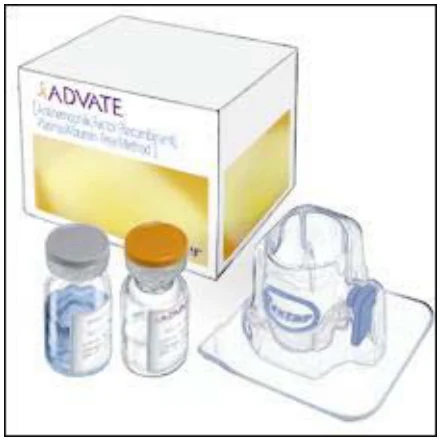
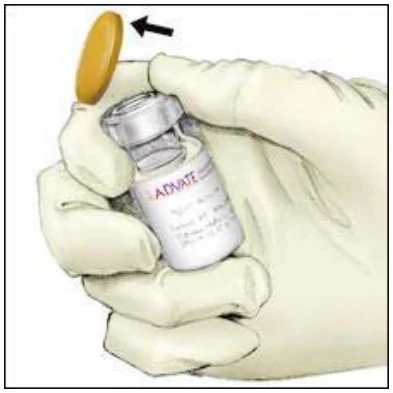
regular administration of ADVATE and to continue treatment at regular intervals as required.
| SIDE EFFECTS AND WHAT TO DO ABOUT THEM |
Should a significant increase in pulse rate during
administration of ADVATE occur, reducing the rate of administration or temporarily halting the injection usually allows the symptoms to disappear promptly.
There is a possibility that you could have an allergic reaction
to ADVATE. Allergic reactions to ADVATE may manifest with any of the following: rash, hives, itching, tightness of the chest, difficulty breathing, throat tightness, and/or low blood pressure (e.g. weak pulse, feeling lightheaded or dizzy when you stand, and possibly shortness of breath). If you experience any of these symptoms, stop the infusion and immediately phone your doctor or go to the Emergency Department.
As with all Factor VIII products, the clinical response to
ADVATE may vary. If your bleeding is not controlled after infusing ADVATE, contact your doctor immediately. Your Factor VIII level may need to be measured by your physician who may recommend another dose of ADVATE in order to achieve a satisfactory clinical response. If your plasma Factor VIII level fails to increase as expected or if bleeding is not controlled after adequate dosing, your physician may test for the presence of an inhibitor (neutralizing antibodies).
This is not a complete list of side effects. For any unexpected effects while taking ADVATE, contact your doctor or pharmacist.
| HOW TO STORE IT |
ADVATE should be refrigerated (2°C- 8°C [36°F - 46°F]).
Avoid freezing to prevent damage to the diluent vial.
ADVATE may be stored at room temperature (up to 30ºC
[86ºF]) for a period of up to six months not to exceed the expiration date.
Do not place back in the refrigerator once removed from
refrigerated storage.
- Do not refrigerate preparation after reconstitution.
Do not use beyond the expiration date printed on the vial or
six months after date noted on the carton, whichever is the earliest.
INSTRUCTIONS FOR USING ADVATE
Antihemophilic Factor (Recombinant), Plasma/Albumin Free Method (For intravenous use only)
IMPORTANT: Contact your doctor or local Hemophilia Treatment Centre if you experience any problems with this procedure. These instructions are intended only as a visual aid for those patients who have been instructed by their doctor or hemophilia center on the proper way to self-infuse the product (diagrams are representational and may not be drawn exactly to scale).
Do not attempt to self-infuse unless you have been taught how by your doctor or hemophilia center.
In a quiet place, prepare a clean surface and gather all the materials you will need for the infusion. Check the expiration date on the ADVATE concentrate vial or package, and let the vial with the ADVATE concentrate and the Sterile Water for Injection USP (diluent) warm up to room temperature. Wash your hands and put on clean exam gloves. If self-infusing at home, the use of gloves is optional.
- 1. After washing your hands and putting on gloves, remove caps from the factor concentrate and diluent vials to expose the centers of the rubber stoppers.
- 2. Disinfect the stoppers with an alcohol swab (or other suitable solution suggested by your doctor or hemophilia center) by rubbing the stoppers firmly for several seconds, and allow to dry prior to use. Place the vials on a flat surface.
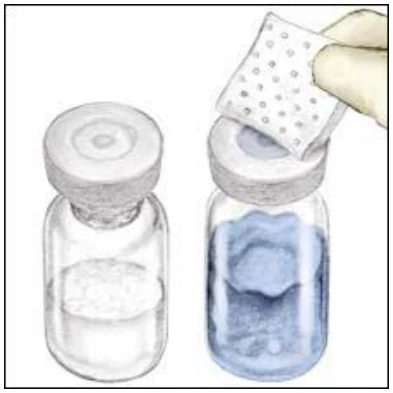
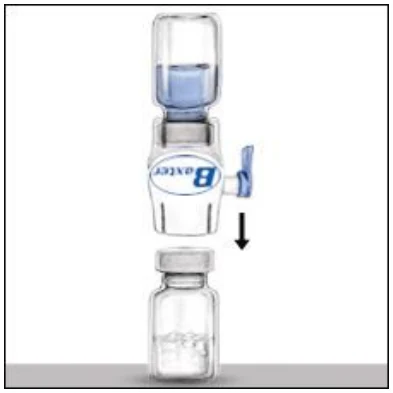
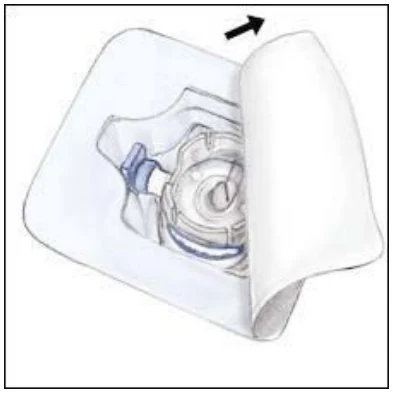
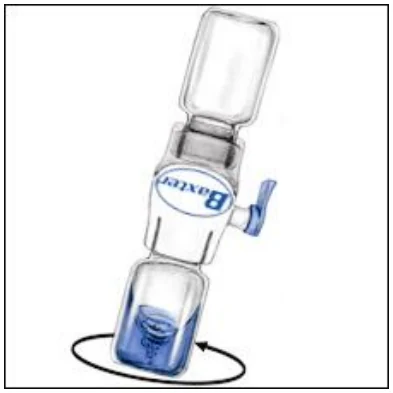
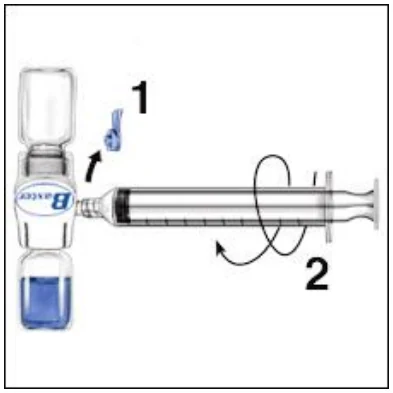
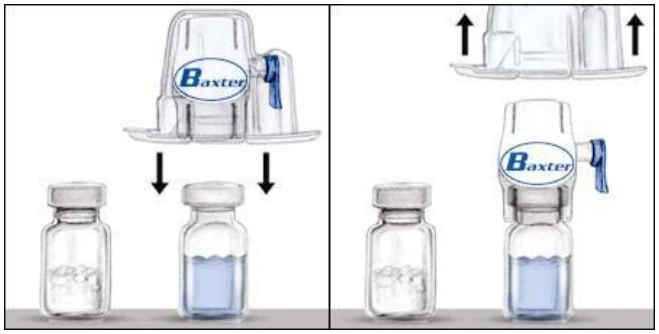
- 3.
Open the BAXJECT II device package by peeling away
the lid, without touching the inside of the package. The BAXJECT II device remains in the package at this time. Do not remove the device from the package.
- 4.
Turn the package with the device upside down, and place
it over the top of the diluent vial. Fully insert the clear plastic spike of the BAXJECT II device into the center of the diluent vial’s stopper by pushing straight down. Grip the package at its edge and pull it off the device. After removing the packaging, be careful not to touch the white plastic exposed spike. Do not remove the blue luer cap from BAXJECT II device. Please note that the connection of the two vials should be done expeditiously to close the open fluid pathway created by the first insertion of the spike to the diluent vial.
- 5.
Quickly turn over the diluent vial with the BAXJECT II
device, place on top of the vial containing the factor concentrate, and fully insert the white plastic spike into the factor concentrate vial’s stopper by pushing straight down. The vacuum will draw the diluent into the factor concentrate vial.
- 6. Swirl the factor concentrate gently and continuously with the BAXJECT II device attached until it is completely dissolved. Do not shake. Check to make sure the factor concentrate is completely dissolved. The solution should be clear and colourless in appearance. If not, do not use the solution and notify Baxter immediately.
- 7.
Remove the blue luer cap from the BAXJECT II device.
Connect the syringe to the BAXJECT II device. DO NOT INJECT AIR.
- 8. Turn the system over so that the factor concentrate
solution vial is on top. Withdraw the factor concentrate solution into the syringe by pulling back the plunger slowly. Disconnect the syringe, leaving the BAXJECT II device connected. Attach the infusion needle to the syringe using a winged infusion set, if available. Point the needle up and remove any air bubbles by gently tapping the syringe with your finger and slowly and carefully pushing air out of the syringe. Dispose of the 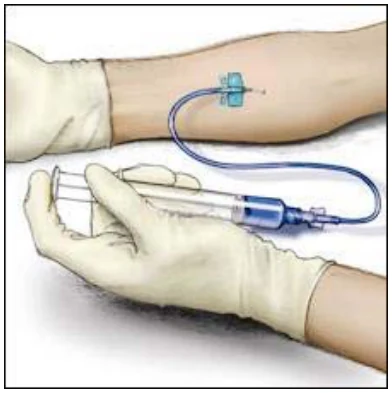
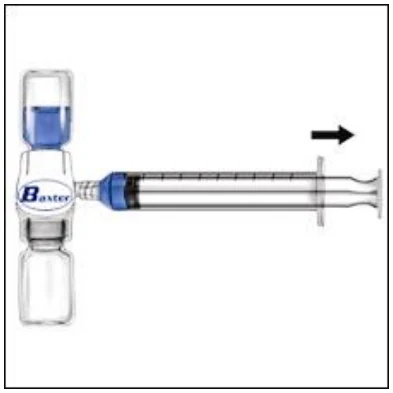
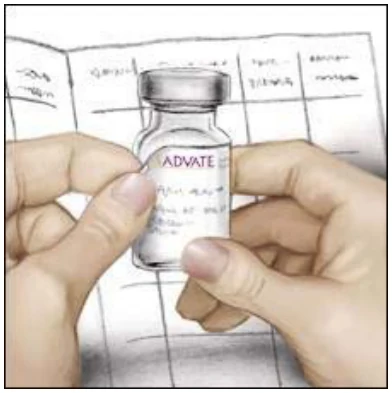
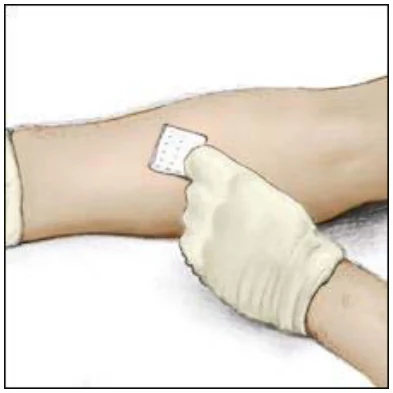
used BAXJECT II system in your hard-walled Sharps container, without taking it apart.
- 9.
If receiving more than one vial of ADVATE, the
contents of multiple vials may be drawn into the same syringe. Please note that the BAXJECT II device is intended for use with a single vial of ADVATE and Sterile Water for Injection only, therefore reconstituting and withdrawing a second vial into the syringe requires a second BAXJECT II device.
- 10.
Apply a tourniquet, and prepare the injection site by
wiping the skin well with an alcohol swab (or other suitable solution suggested by your doctor or hemophilia center).
- 11.
Insert the needle into the vein, and remove the
tourniquet. Infuse the factor concentrate. Do not infuse any faster than 10mL per minute. Remove the needle from the vein and apply pressure with sterile gauze to the infusion site for several minutes. Do not recap the needle after the infusion, and do not dispose in ordinary household trash. Place it with the used syringe in a hard-walled Sharps container for proper disposal.
- 12. After the infusion, remove the peel-off label from the factor concentrate vial and place it in your factor log book. Clean up any spilled blood with a freshly prepared mixture of 1 part bleach and 9 parts water, soap and water, or any household disinfecting solution.
Complete information on reconstituting with Baxject II can be found at: www.baxject2.com
BAXTER, ADVATE, AND BAXJECT are trademarks of Baxter International Inc.
© Copyright 2002. Baxter Healthcare Corporation. All rights reserved.
Baxter Healthcare Corporation Westlake Village, CA 91362 USA
Imported in Canada by:
Baxter Corporation Mississauga, ON, Canada L5N 0C2
REPORTING SUSPECTED SIDE EFFECTS
You can report any suspected adverse reactions associated with the use of health products to the Canada Vigilance Program by one of the following 3 ways:
--------------------------------------------------------------------------
- Report online at www.healthcanada.gc.ca/medeffect
- Call toll-free at 1-866-234-2345
Complete a Canada Vigilance Reporting Form and:
- Fax toll-free to 1-866-678-6789, or
Mail to: Canada Vigilance Program Health Canada
Postal Locator 0701D
Ottawa, Ontario
K1A 0K9
Postage paid labels, Canada Vigilance Reporting Form and the adverse reaction reporting guidelines are available on the MedEffect™ Canada Web site at
www.healthcanada.gc.ca/medeffect.
NOTE: Should you require information related to the management of side effects, contact your health professional. The Canada Vigilance Program does not provide medical advice.
| MORE INFORMATION |
This document plus the full product monograph, prepared for health professionals can be found at:
http://www.ADVATE.ca
or by contacting Baxter Corporation,
at: 1-800-387-8399.
Visit
The Health Canada
PART III: CONSUMER INFORMATION (2 mL)
ADVATE Antihemophilic Factor (Recombinant),
Plasma/Albumin Free Method
For Reconstitution with 2 mL Diluent
This leaflet is part III of a three-part "Product Monograph" published when ADVATE was approved for sale in Canada and is designed specifically for Consumers. This leaflet is a summary and will not tell you everything about ADVATE. Contact your doctor or pharmacist if you have any questions about the drug.
| ABOUT THIS MEDICATION |
What the medication is used for:
routine prophylaxis to prevent or reduce frequency of bleeding
episodes in adults and children with hemophilia A
ADVATE can temporarily correct the blood clotting process,
so it helps prevent and control bleeding in people with Hemophilia A (Factor VIII deficiency).
- for treatment or prevention of Hemophilia A-related bleeding.
What it does:
ADVATE temporarily raises the level of Factor VIII in the blood to a more normal level, allowing your body’s blood clotting process to function properly.
When it should not be used:
You should not use ADVATE unless your doctor confirms that you have Hemophilia A. Patients with known allergic-type reactions to mouse or hamster proteins should talk to their doctor before using this product.
ADVATE is not indicated for the treatment of von Willebrands Disease.
What the medicinal ingredient is:
ADVATE Antihemophilic Factor (Recombinant), Plasma/Albumin-Free Method (rAHF PFM)
What the important nonmedicinal ingredients are: Calcium, glutathione, histidine, Mannitol, polysorbate-80, trehalose, sodium, Tris (hydroxymethyl) aminomethane For a full listing of nonmedicinal ingredients see Part 1 of the product monograph.
What dosage forms it comes in:
ADVATE is available in single-dose vials that contain nominally 250, 500, 1000 and 1500 International Units (IU) per vial reconstituted in 2 mL of water for injection.
| WARNINGS AND PRECAUTIONS |
BEFORE you use ADVATE talk to your doctor or pharmacist if you have known allergies:
- to mouse or hamster proteins.
- to this drug or to any ingredient in the formulation or component of the product.
Your body may form inhibitors to Factor VIII. An inhibitor is an antibody (part of your body’s normal immune defenses) that forms in response to infusions of Factor VIII that prevents the Factor VIII from working properly. These inhibitors can lead to a reduced response, or to no response to Factor VIII therapy. This is not an uncommon complication in the treatment of people with Hemophilia A. Consult with your healthcare provider to make sure you are carefully monitored with blood tests for the development of inhibitors to Factor VIII. Contact your doctor if you are not able to prevent or control bleeding episodes with your regular doses of prescribed Factor VIII therapy. (see SIDE EFFECTS AND WHAT TO DO ABOUT THEM)
| INTERACTIONS WITH THIS MEDICATION |
No interaction of ADVATE with other medicinal products is known or has been established.
| PROPER USE OF THIS MEDICATION |
Usual dose:
Individual doses are usually between 20 – 50 IU Factor VIII/kg body weight, as determined by your physician. Physician supervision of the treatment regimen is required.
Overdose:
No safety concerns were identified in association with clinical study patients who received doses up to four times greater than the maximum recommended usual dose.
In case of drug overdose, contact a health care practitioner, hospital emergency department or regional Poison Control Centre immediately, even if there are no symptoms.
Missed Dose:
- Double doses are generally not required to compensate for forgotten individual doses.
- Patients should be advised to proceed immediately with a
regular administration of ADVATE and to continue treatment 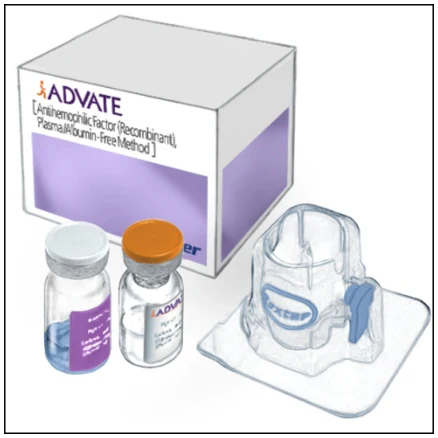
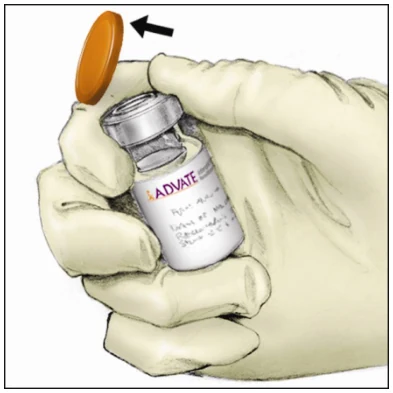
at regular intervals as required.
| SIDE EFFECTS AND WHAT TO DO ABOUT THEM |
Should a significant increase in pulse rate during
administration of ADVATE occur, reducing the rate of administration or temporarily halting the injection usually allows the symptoms to disappear promptly.
There is a possibility that you could have an allergic reaction
to ADVATE. Allergic reactions to ADVATE may manifest with any of the following: rash, hives, itching, tightness of the chest, difficulty breathing, throat tightness, and/or low blood pressure (e.g. weak pulse, feeling lightheaded or dizzy when you stand, and possibly shortness of breath). If you experience any of these symptoms, stop the infusion and immediately phone your doctor or go to the Emergency Department.
As with all Factor VIII products, the clinical response to
ADVATE may vary. If your bleeding is not controlled after infusing ADVATE, contact your doctor immediately. Your Factor VIII level may need to be measured by your physician who may recommend another dose of ADVATE in order to achieve a satisfactory clinical response. If your plasma Factor VIII level fails to increase as expected or if bleeding is not controlled after adequate dosing, your physician may test for the presence of an inhibitor (neutralizing antibodies).
This is not a complete list of side effects. For any unexpected effects while taking ADVATE, contact your doctor or pharmacist.
| HOW TO STORE IT |
ADVATE should be refrigerated (2°C- 8°C [36°F - 46°F]).
Avoid freezing to prevent damage to the diluent vial.
ADVATE may be stored at room temperature (up to 30ºC
[86ºF]) for a period of up to six months not to exceed the expiration date.
Do not place back in the refrigerator once removed from
refrigerated storage.
- Do not refrigerate preparation after reconstitution.
Do not use beyond the expiration date printed on the vial or
six months after date noted on the carton, whichever is the earliest.
INSTRUCTIONS FOR USING ADVATE
Antihemophilic Factor (Recombinant), Plasma/Albumin Free Method (For intravenous use only)
IMPORTANT: Contact your doctor or local Hemophilia Treatment Centre if you experience any problems with this procedure. These instructions are intended only as a visual aid for those patients who have been instructed by their doctor or hemophilia center on the proper way to self-infuse the product (diagrams are representational and may not be drawn exactly to scale).
Do not attempt to self-infuse unless you have been taught how by your doctor or hemophilia center.
In a quiet place, prepare a clean surface and gather all the materials you will need for the infusion. Check the expiration date on the ADVATE concentrate vial or package, and let the vial with the ADVATE concentrate and the Sterile Water for Injection USP (diluent) warm up to room temperature. Wash your hands and put on clean exam gloves. If self-infusing at home, the use of gloves is optional.
- 1. After washing your hands and putting on gloves, remove caps from the factor concentrate and diluent vials to expose the centers of the rubber stoppers.
- 2. Disinfect the stoppers with an alcohol swab (or other suitable solution suggested by your doctor or hemophilia center) by rubbing the stoppers firmly for several seconds, and allow to dry prior to use. Place the vials on a flat surface.
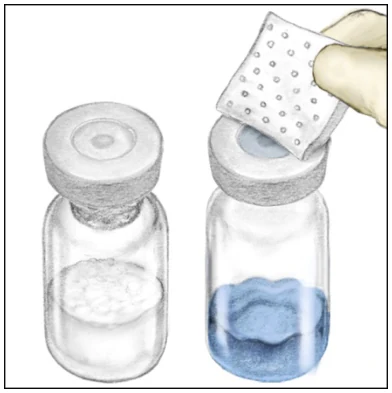
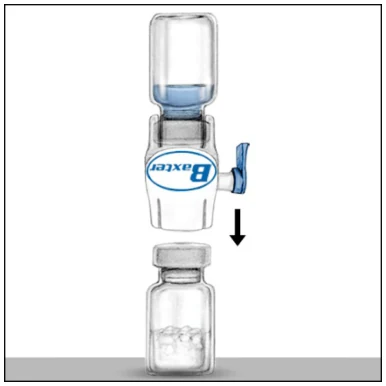
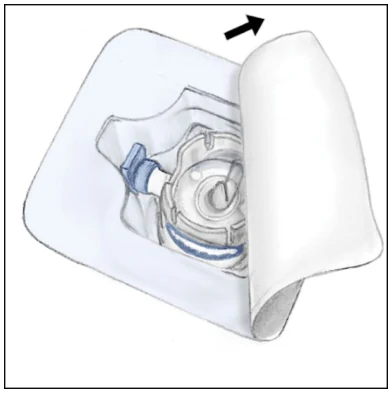
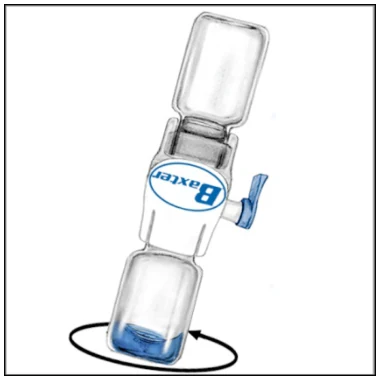
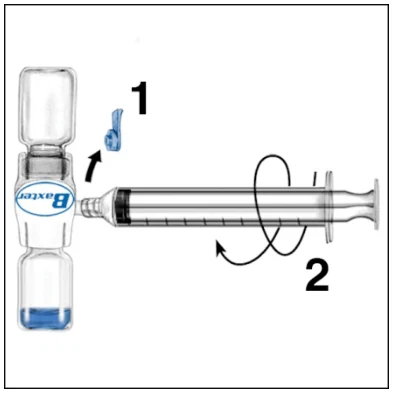
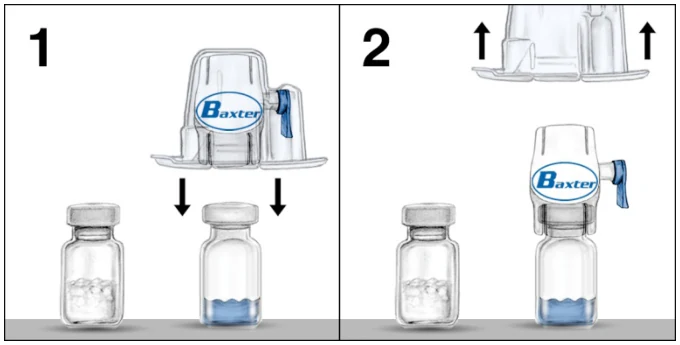
- 3.
Open the BAXJECT II device package by peeling away
the lid, without touching the inside of the package. The BAXJECT II device remains in the package at this time. Do not remove the device from the package.
- 4.
Turn the package with the device upside down, and place
it over the top of the diluent vial. Fully insert the clear plastic spike of the BAXJECT II device into the center of the diluent vial’s stopper by pushing straight down. Grip the package at its edge and pull it off the device. After removing the packaging, be careful not to touch the white plastic exposed spike. Do not remove the blue luer cap from BAXJECT II device. Please note that the connection of the two vials should be done expeditiously to close the open fluid pathway created by the first insertion of the spike to the diluent vial.
- 5.
Quickly turn over the diluent vial with the BAXJECT II
device, place on top of the vial containing the factor concentrate, and fully insert the white plastic spike into the factor concentrate vial’s stopper by pushing straight
down. The vacuum will draw the diluent into the factor concentrate vial.
- 6. Swirl the factor concentrate gently and continuously with the BAXJECT II device attached until it is completely dissolved. Do not shake. Check to make sure the factor concentrate is completely dissolved. The solution should be clear and colourless in appearance. If not, do not use the solution and notify Baxter immediately.
- 7.
Remove the blue luer cap from the BAXJECT II device.
Connect the syringe to the BAXJECT II device. DO NOT INJECT AIR.
- 8. Turn the system over so that the factor concentrate
solution vial is on top. Withdraw the factor concentrate solution into the syringe by pulling back the plunger slowly. Disconnect the syringe, leaving the BAXJECT II device connected. Attach the infusion needle to the 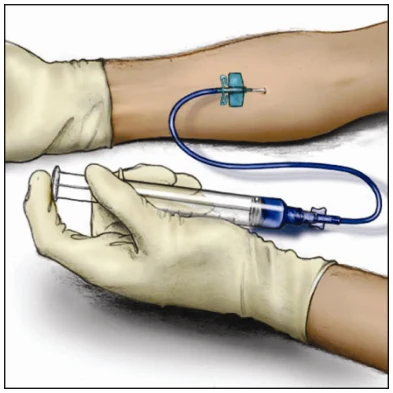
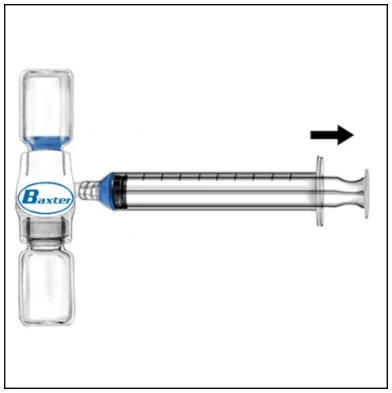
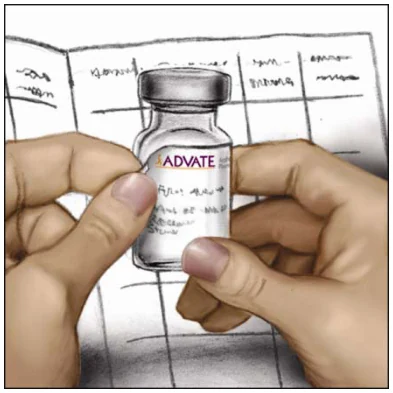
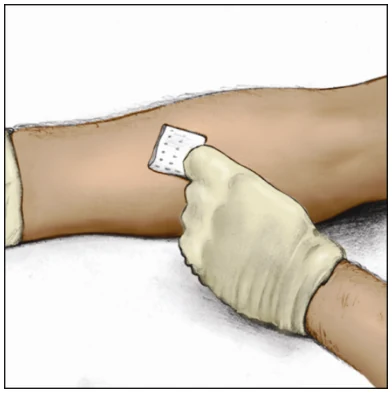
syringe using a winged infusion set, if available. Point the needle up and remove any air bubbles by gently tapping the syringe with your finger and slowly and carefully pushing air out of the syringe. Dispose of the used BAXJECT II system in your hard-walled Sharps container, without taking it apart.
- 9.
If receiving more than one vial of ADVATE, the
contents of multiple vials may be drawn into the same syringe. Please note that the BAXJECT II device is intended for use with a single vial of ADVATE and Sterile Water for Injection only, therefore reconstituting and withdrawing a second vial into the syringe requires a second BAXJECT II device.
- 10.
Apply a tourniquet, and prepare the injection site by
wiping the skin well with an alcohol swab (or other suitable solution suggested by your doctor or hemophilia center).
- 11.
Insert the needle into the vein, and remove the
tourniquet. Infuse the factor concentrate. Do not infuse any faster than 10mL per minute. Remove the needle from the vein and apply pressure with sterile gauze to the infusion site for several minutes. Do not recap the needle after the infusion, and do not dispose in ordinary household trash. Place it with the used syringe in a hard-walled Sharps container for proper disposal.
- 12. After the infusion, remove the peel-off label from the factor concentrate vial and place it in your factor log book. Clean up any spilled blood with a freshly prepared mixture of 1 part bleach and 9 parts water, soap and water, or any household disinfecting solution.
Complete information on reconstituting with Baxject II can be found at: www.baxject2.com
BAXTER, ADVATE, AND BAXJECT are trademarks of Baxter International Inc.
© Copyright 2002. Baxter Healthcare Corporation. All rights reserved.
Baxter Healthcare Corporation Westlake Village, CA 91362 USA
Imported in Canada by:
Baxter Corporation Mississauga, ON, Canada L5N 0C2
REPORTING SUSPECTED SIDE EFFECTS
You can report any suspected adverse reactions associated with the use of health products to the Canada Vigilance Program by one of the following 3 ways:
--------------------------------------------------------------------------
- Report online at www.healthcanada.gc.ca/medeffect
- Call toll-free at 1-866-234-2345
Complete a Canada Vigilance Reporting Form and:
- Fax toll-free to 1-866-678-6789, or
Mail to: Canada Vigilance Program Health Canada
Postal Locator 0701D
Ottawa, Ontario
K1A 0K9
Postage paid labels, Canada Vigilance Reporting Form and the adverse reaction reporting guidelines are available on the MedEffect™ Canada Web site at
www.healthcanada.gc.ca/medeffect.
NOTE: Should you require information related to the management of side effects, contact your health professional. The Canada Vigilance Program does not provide medical advice.
| MORE INFORMATION |
This document plus the full product monograph, prepared for health professionals can be found at:
http://www.ADVATE.ca
or by contacting Baxter Corporation,
at: 1-800-387-8399.
Visit
The Health Canada