


Product Monograph - Nuwiq
1 INDICATIONS
Nuwiq® is a recombinant antihemophilic factor (Recombinant, B-Domain deleted) indicated in adults and children with hemophilia A for:
- Routine prophylactic treatment to prevent or reduce the frequency of bleeding episodes
- Control and prevention of episodic bleeding
- Peri-operative management of bleeding (surgical prophylaxis)
Nuwiq® does not contain von Willebrand factor and is not indicated for the treatment of von Willebrand disease.
1.1 Pediatrics
Pediatrics (< 12 years of age)
The safety and efficacy of Nuwiq® in pediatric patients have been evaluated. See WARNINGS AND PRECAUTIONS, Inhibitors and Special Populations, Pediatrics.
1.2 Geriatrics
Geriatrics (> 65 years of age)
Limited information is available.
2 CONTRAINDICATIONS
Nuwiq® is contraindicated for patients who are hypersensitive to the active substance or to any ingredient in the formulation or component of the container. For a complete listing, see DOSAGE FORMS, STRENGTHS, COMPOSITION AND PACKAGING.
4 DOSAGE AND ADMINISTRATION
4.1 Dosing Considerations
Each vial of Nuwiq® is labelled with the rhFVIII activity expressed in IU per vial. This potency is assigned using the one-stage clotting assay.
The dosage and duration of the substitution therapy depend on the severity of the FVIII deficiency, on the location and extent of the bleeding, and on the patient’s clinical condition.
The number of units of FVIII administered is expressed in IU, which are related to the current WHO international standard for FVIII products. FVIII activity in plasma is expressed either as a percentage (relative to normal human plasma) or in IUs (relative to an international standard for FVIII in plasma).
One IU of FVIII activity is equivalent to the quantity of FVIII in one mL of normal human plasma. The calculation of the required dosage of FVIII is based on the empirical finding that 1 IU FVIII per kg body weight raises the plasma FVIII activity by approximately 2% of normal activity or 2 IU/dL. The required dosage is determined using the following formula:
Required IU = body weight (kg) x desired FVIII rise (%) (IU/dL) x 0.5 (IU/kg per IU/dL)
Expected FVIII rise (% of normal) = 2 x administered IU body weight (kg)
The amount and frequency of administration should always be adjusted according to the clinical effectiveness in the individual patient.
Under certain circumstances (e.g., in the presence of a low-titre inhibitor) doses larger than those recommended may be necessary. The dose and frequency should be titrated to the patient’s clinical response, individual needs, severity of the deficiency, severity of hemorrhage, desired FVIII level, presence of inhibitors, and the patient’s clinical condition.
Study GENA-03, conducted in 59 patients aged ≤ 12 years, did not identify any special dosage requirements for children.
After 24 to 48 hours of treatment, in order to avoid an excessive rise in FVIII coagulation activity (FVIII:C), reduced doses and/or prolonged dosing intervals should be considered.
4.2 Recommended Dose and Dosage Adjustment
Treatment should be initiated under the supervision of a physician experienced in the treatment of hemophilia.
In the case of the following hemorrhagic events, the FVIII activity should not fall below the given plasma activity level (as % of normal or IU/dL) in the corresponding period. Based on the PK data from Nuwiq® studies, monitoring of plasma FVIII can be done using either the chromogenic or the one-stage assay (see CLINICAL PHARMACOLOGY – Pharmacokinetics).
Table 1 can be used to guide dosing for hemorrhages and surgery.
Table 1 Dosing recommendations
| Treatment / Control of Bleeding Episodes | |||
| Degree of hemorrhage | FVIII level required (%) | Frequency of doses (hours) / Duration of therapy (days) | |
| Minor: Early hemarthrosis, muscle bleeding or oral bleeding | 20–40 | Repeat every 12 to 24 hours. At least 1 day, until the bleeding episode, as indicated by pain is resolved or healing is achieved. | |
| Moderate to Major: More extensive hemarthrosis, muscle bleeding or hematoma | 30–60 | Repeat infusion every 12 to 24 hours for 3–4 days or more until pain and disability are resolved. | |
| Life-threatening: Hemorrhages, such as intracranial, intra-abdominal, gastro-intestinal or intrathoracic bleeds | 60–100 | Repeat infusion every 8 to 24 hours until threat is resolved. | |
| Perioperative Management | |||
| Type of surgical procedure | |||
| Minor (including tooth extraction) | 30–60 | Every 24 hours, at least 1 day, until healing is achieved. | |
| Major | 80–100 (pre- and post-operative) | Repeat infusion every 8 to 24 hours until adequate wound healing, then therapy for at least another 7 days to maintain a FVIII activity of 30% to 60% (IU/dL). | |
Dosing for Routine Prophylaxis
Standard Prophylaxis
In children and adults, Nuwiq® may be administered on a regular schedule for prophylaxis of bleeding. For long-term protection against bleeding in patients with severe hemophilia A, the recommended dose for standard prophylaxis is 30 to 40 IU of FVIII/kg every other day or 3 times per week.
Shorter dose intervals and/or higher doses for prophylactic treatment may be necessary in children.
Personalized Prophylaxis
Prophylaxis may be personalized based on PK parameters (e.g., half-life, in vivo recovery).
Adjust the dose and/or dosing frequency based on the patient’s clinical response. Monitor FVIII levels periodically to evaluate individual patient response to the dosage regimen (see CLINICAL TRIALS)
Immune Tolerance
FVIII products have been administered to patients on a high-dose schedule in order to induce immune tolerance to FVIII, which results in disappearance of the inhibitor activity. There is currently no consensus among treating physicians as to the optimal treatment schedule.
4.3 Reconstitution
Parenteral Products:
Nuwiq® is available in 250/500/1000/1500/2000/2500/3000/4000 IU simoctocog alfa vial strengths. All strengths should be reconstituted with the provided solvent (2.5 mL of sterile water for injection) using the supplied sterile transfer device, which results in the concentrations shown in Table 2. Reconstituted solution should be used within 3 hours.
Table 2 Volume and concentrations
| Vial strength (IU) | Volume of solvent to be added to vial (mL) | Approximate available volume (mL) | Nominal concentration per mL (IU) |
| 250 | 2.5 | 2.5 | 100 |
| Vial strength (IU) | Volume of solvent to be added to vial (mL) | Approximate available volume (mL) | Nominal concentration per mL (IU) |
| 500 | 2.5 | 2.5 | 200 |
| 1000 | 2.5 | 2.5 | 400 |
| 1500 | 2.5 | 2.5 | 600 |
| 2000 | 2.5 | 2.5 | 800 |
| 2500 | 2.5 | 2.5 | 1000 |
| 3000 | 2.5 | 2.5 | 1200 |
| 4000 | 2.5 | 2.5 | 1600 |
IU = International Units
Instructions for Reconstitution
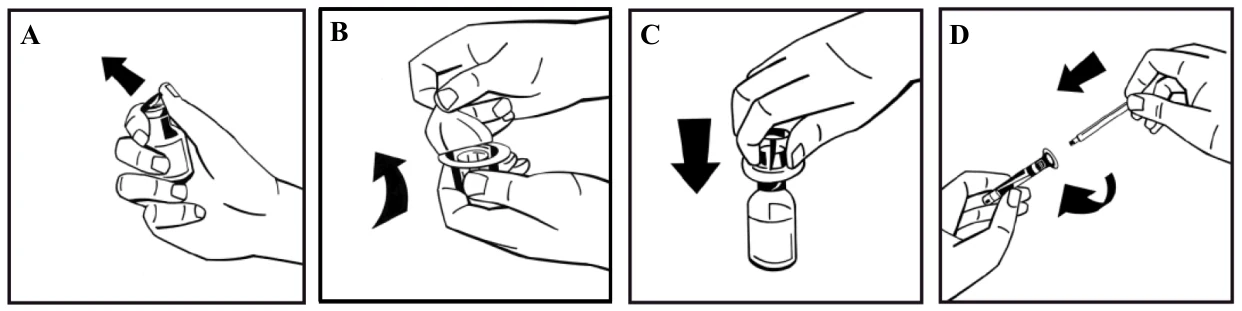
- 1. Allow the solvent (water for injection) in the syringe and the concentrate in the closed vial to reach room temperature. This temperature should be maintained during reconstitution.
- 2. Remove the plastic flip-top cap from the concentrate vial to expose the central portions of the rubber stopper. Do not remove the gray stopper or metal ring around the top of the vial (Figure A)
- 3. Wipe the top of the vial with an alcohol swab (not provided). Allow the alcohol to dry.
- 4. Peel back the paper cover from the vial adapter package. Do not remove the adapter from the package (Figure B).
- 5. Place the concentrate vial on an even surface and hold it. Take the adapter package and place the vial adapter over the centre of the rubber stopper of the concentrate vial. Press down firmly the adapter package until the adapter spike penetrates the rubber stopper. The adapter snaps to the vial when done (Figure C).
- 6. Peel back the paper cover from the prefilled syringe package. Take the plunger rod at the end and avoid contact with the shaft. Attach the threaded end of the plunger rod to the solvent syringe plunger. Turn the plunger rod clockwise until a slight resistance is felt (Figure D).
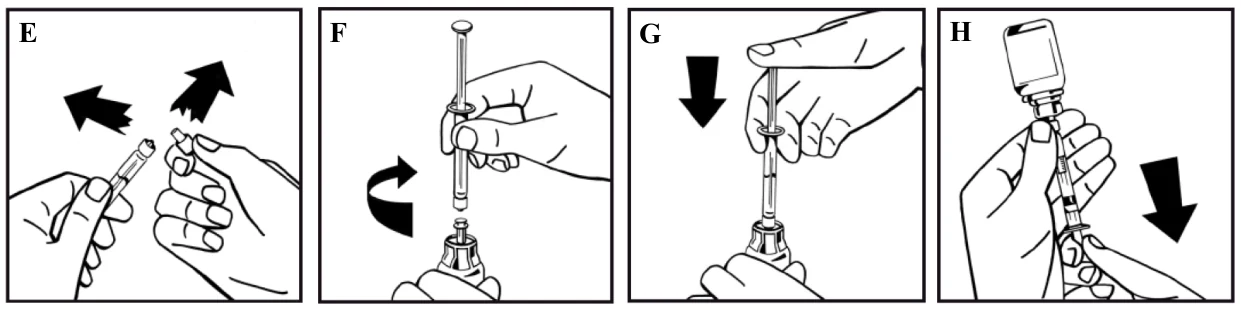
- 7. Break off the tamper-proof plastic tip from the solvent syringe by snapping the perforation of the cap. Do not touch the inside of the cap or the syringe tip (Figure E).
- 8. Remove the adapter package and discard.
- 9. Firmly connect the solvent syringe to the vial adapter by turning clockwise until resistance is felt (Figure F).
- 10. Slowly inject all solvent into the concentrate vial by pressing down the plunger rod (Figure G).
- 11. Without removing the syringe, dissolve the concentrate powder by gently moving or swirling the vial in circles a few times. DO NOT SHAKE. Wait until all the powder dissolves completely.
- 12. Inspect the final solution for particles before administration. The solution should be clear and colourless, practically free from visible particles. Do not use solutions that are cloudy or have deposits.
- 13. Turn the vial attached to the syringe upside down, and slowly draw the final solution into the syringe. Make sure that the entire content of the vial is transferred to the syringe (Figure H).
- 14. Detach the filled syringe from the vial adapter by turning counter clockwise and discard the empty vial.
4.4 Administration
Product should be administered via the intravenous route at a rate of 4 mL per minute.
Nuwiq® should be administered using the pre-filled solvent syringe as provided with your product.
If more than one vial of Nuwiq® is used per injection, each vial should be dissolved according to the instructions in this section.
A separate large sterile luer lock syringe may be used to collect the dissolved contents of each vial for infusion.
The reconstituted solution should always be transferred under aseptic conditions from the vial to the syringe using the vial adapter. The empty syringe should be removed leaving the vial adapter in place. Do not detach the solvent syringes or the large luer lock syringe until you are ready to attach the large luer lock syringe to the next vial adapter or to the infusion set.
The solution is now prepared for immediate use or within 3 hours after reconstitution. In case the solution is not used immediately close the filled syringe with the tamper-proof plastic tip for storage. Do not refrigerate the solution after reconstitution.
Instructions for Injection
As a precautionary measure, the patients pulse rate should be measured before and during the injection. If a marked increase in the pulse rate occurs the injection rate must be reduced or the administration must be interrupted.
- 1. Clean the chosen injection site with an alcohol swab (not provided).
- 2. Attach the provided infusion set to the syringe. Insert the needle of the infusion set into the chosen vein. If you have used a tourniquet to make the vein easier to see, this tourniquet should be released before you start injecting the solution. No blood must flow into the syringe due to the risk of formation of fibrin clots.
- 3. Inject the solution into the vein at a rate of 4 mL per minute.
- 4. After the infusion, remove the peel-off label containing the batch number from the factor concentrate vial and place it in your factor log book.
4.5 Missed Dose
If a patient on prophylactic treatment misses a dose, the missed dose should be taken as soon as possible, and then treatment should continue as before. If a dose is skipped, the next dose should not be doubled.
In the unlikely event that a patient who is actively bleeding misses a dose, it may be appropriate to adjust the next dosage depending on the extent of the bleeding and on the patient’s clinical condition.
5 OVERDOSAGE
No case of overdose has been reported.
6 DOSAGE FORMS, STRENGTHS, COMPOSITION AND PACKAGING
To help ensure the traceability of biologic products, including biosimilars, health professionals should recognise the importance of recording both the brand name and the non-proprietary (active ingredient) name as well as other product-specific identifiers such as the Drug Identification Number (DIN) and the batch/lot number of the product supplied.
Table 3 Product Information
| Route of administration | Dosage form/strength | Clinically relevant non-medicinal ingredients |
| Intravenous injection | Powder for intravenous injection with 250 IU/500 IU/1000 IU/ 1500 IU/2000 IU/ 2500 IU/ 3000 IU/ 4000 IU per vial reconstituted in 2.5 mL of solvent | Sucrose, sodium chloride, calcium chloride, arginine hydrochloride, sodium citrate and poloxamer 188, solvent (water for injection) For a complete listing, see DOSAGE FORMS, STRENGTHS, COMPOSITION AND PACKAGING |
IU = International Units
Nuwiq® is a recombinant human coagulation factor VIII (rhFVIII) produced by DNA technology in genetically modified human embryonic kidney (HEK) 293F cells with no animal- or human-derived materials added during the manufacturing process or to the final medicinal product. Nuwiq® is expressed as a B-domain deleted form with a linker region that is subsequently cleaved.
As Nuwiq® is produced in human cells, it contains post-translational modifications comparable to human plasma-derived FVIII and is devoid of antigenic Neu5Gc or α-1,3-Gal epitopes.
Additionally, production process of Nuwiq® is completely free of animal-derived proteins, minimizing the potential for hypersensitivity reactions.
Nuwiq® drug product is supplied as a white sterile lyophilized powder and solvent for solution for intravenous injection using the provided injection set.
Nuwiq® single-dose vials contain nominally 250, 500, 1000, 1500, 2000, 2500, 3000 or 4000 IU of Antihemophilic Factor (Recombinant, B-Domain deleted), simoctocog alfa, reconstituted in 2.5 mL of solvent. The respective nominal concentrations are 100, 200, 400, 600, 800, 1000, 1200 and 1600 IU/mL.
For a list of excipients, see Table 3.
The Nuwiq® drug product is filled and lyophilized in 8 mL colourless glass vials of type 1 standard (Ph. Eur.). The vials are closed with coated bromobutyl stoppers (Ph. Eur.) and sealed with aluminium flip-off caps, which have no immediate contact with Nuwiq®.
The solvent for reconstitution of the drug product, 2.5 mL sterilized water for injection, is provided in pre-filled syringes.
Package strengths
Nuwiq® 250/500/1000/1500/2000/2500/3000/4000 IU in 2.5 mL
1 package contains:
1 vial with 250/500/1000/1500/2000/2500/3000/4000 IU simoctocog alfa (powder)
1 pre-filled syringe with 2.5 mL sterilized water for injection
1 vial adapter
1 butterfly needle
7 WARNINGS AND PRECAUTIONS
General
It is essential to confirm the deficiency of FVIII before starting treatment with Nuwiq®.
Nuwiq® powder should be reconstituted according to directions and using only the supplied solvent (2.5 mL water for injection) and the supplied injection set to ensure optimal effectiveness and safety. Using contaminated needles or accidental puncture with contaminated needles can result in transmission of infectious viruses, including human immunodeficiency virus (HIV).
Do not use this medicine after the expiry date stated on the label. Do not use the product if signs of deterioration of the tamper-proof packaging, especially of the syringe and/or the vial, are visible.
It is strongly recommended that every time that Nuwiq® is administered to a patient, the name and batch number of the product are recorded in order to maintain a link between the patient and the batch of the product.
Inhibitors
The formation of neutralizing antibodies (inhibitors) to FVIII is a known complication of the management of individuals with hemophilia A. These antibodies, particularly high-titre inhibitors (defined as an inhibitory level ≥ 5 Bethesda Units (BU)/mL), inhibit the action of the infused FVIII, which results in insufficient clinical response. Inhibitor development is greatest in previously untreated patients (PUPs) and during the first 20-50 exposure days (EDs). Inhibitors may also develop when switching between different FVIII preparations.
All patients treated with Nuwiq® should be carefully monitored for the development of inhibitors by appropriate clinical observations and laboratory tests (see Monitoring and Laboratory Tests).
Cardiovascular
In patients with existing cardiovascular risk factors, substitution therapy with FVIII may increase the cardiovascular risk.
Monitoring and Laboratory Tests
In general, all patients treated with FVIII products should be carefully monitored for the development of inhibitors by appropriate clinical observations and laboratory tests. If the expected FVIII activity plasma levels are not attained, or if bleeding is not controlled with an appropriate dose, testing for FVIII inhibitor presence (Bethesda test) should be performed. In patients with high levels of inhibitor, FVIII therapy may not be effective and other therapeutic options, such as immune tolerance induction (ITI), should be considered. Management of such patients should be directed by physicians with experience in the care of hemophilia and FVIII inhibitors.
Peri-Operative Considerations
Nuwiq® is also indicated for the peri-operative treatment of hemophilia A patients. See DOSAGE AND ADMINISTRATION for instructions for prevention of bleeding in case of surgery.
Catheter-related Complications
If a central venous access device (CVAD) is required, risk of CVAD-related complications including local infections, bacteremia and catheter site thrombosis should be considered.
Sensitivity/Resistance
As with any intravenous protein product, allergic-type hypersensitivity reactions are possible. Patients must be closely monitored for any suggestive symptoms throughout the infusion period.
Patients should be informed of the early signs of hypersensitivity reactions, including rash, hives, urticaria, swelling of lips and tongue, difficulty breathing, wheezing, tightness of the chest, dizziness and syncope. These symptoms can constitute an early sign of an anaphylactic shock. Patients should be advised to stop the injection if any of these symptoms arise and contact their physician. Severe symptoms require prompt emergency treatment.
In case of shock, the current medical standards for treatment of shock should be observed.
7.1 Special Populations
7.1.1 Pregnant Women
Animal reproduction studies have not been conducted with Nuwiq® and it has not been used in women. Nuwiq® should be used during pregnancy and lactation only if clearly indicated.
7.1.2 Breast-feeding
Please refer to section 7.1.1.
7.1.3 Pediatrics
Previously Treated Patients (PTPs): The pharmacokinetics (PK), safety and efficacy of Nuwiq® in previously treated children aged ≤ 12 years have been evaluated (see CLINICAL TRIALS and ADVERSE REACTIONS). Half-life (T1/2) and incremental in vivo recovery (IVR) are lower in children than in adults and clearance is higher (see CLINICAL PHARMACOLOGY). Shorter dose intervals and/or higher doses for prophylactic treatment may be necessary in children.
Previously Untreated Patients (PUPs): A study of 110 PUPs with hemophilia A (FVIII:C < 1%) assessed the immunogenicity of Nuwiq®. Of 108 PUPs treated per protocol, 105 PUPs had at least one inhibitor test after the first exposure day (ED). Seventeen (16.2%) patients developed high-titre inhibitors (≥ 5 Bethesda Units (BU)/mL), and 11 (10.5%) patients developed low-titre inhibitors (< 5 BU/mL), which were transient in 5 patients. Of the 28 patients who developed inhibitors, 25 had less than 20 EDs (see CLINICAL TRIALS). Mean times to high-titre and low-titre inhibitor development were 11.0 EDs (range 4–24 EDs) and 14.2 EDs (range 6–34 EDs), respectively. 88.2% of patients had null F8 gene mutations and 13 (31%) had a family history of inhibitors. No PUPs with non-null F8 mutations developed inhibitors.
7.1.4 Geriatrics
Clinical studies with Nuwiq® included two patients aged over 65 years.
8 ADVERSE REACTIONS
8.1 Adverse Reaction Overview
Hypersensitivity or allergic reactions (which may include burning and stinging at the infusion site, chills, flushing, hives, hypotension, lethargy, restlessness, tachycardia, tightness of the chest, tingling) have rarely been observed with FVIII preparations and may in some cases progress to severe anaphylaxis (including shock).
8.2 Clinical Trial Adverse Reactions
Clinical trials are conducted under very specific conditions. The adverse reaction rates observed in the clinical trials; therefore, may not reflect the rates observed in practice and should not be compared to the rates in the clinical trials of another drug. Adverse reaction information from clinical trials may be useful in identifying and approximating rates of adverse drug reactions in real-world use.
Across 7 clinical studies in PTPs, 190 patients received Nuwiq®. Collectively, patients received a total of 81,478,168 IU (1,606,554 IU/kg) of Nuwiq® from 43,262 infusions over 42,808 EDs. A total of 12 (8 in adults, 4 in children) ADRs, i.e., those where a relationship to treatment could not be completely excluded, were reported in 8 patients (4 adults, 4 children) in the study population, which included pediatric (2 to 11 years, n = 58), adolescent (12 to 17 years, n = 3) and adult (n = 129) PTPs with severe hemophilia A.
In a clinical study with Nuwiq® in PUPs, all 108 patients who received a total of 25,551 infusions were included in the safety population. Overall, patients had a mean (± SD) of 181.1 ± 245.3 days of exposure to Nuwiq®, a mean (± SD) of 236.6 ± 421.0 infusions, and a mean total dose of 19,469 ± 45,387 IU/kg. The total number of units administered in the study was 26,812,571 IU. The most commonly reported AEs were pyrexia (56.5% patients), nasopharyngitis (32.4%), FVIII inhibition (25.9%), anemia (19.4%), followed by rhinitis (18.5%).
ADRs across all studies are listed in (Table 4).
Table 4 Frequency of adverse drug reactions (ADRs) in clinical trials
| MedDRA Standard System Organ Class |
|---|
Adverse reactions
| Frequency (%)* | ||
|---|---|---|
| Blood and lymphatic system disorders | Hemorrhagic anemia† FVIII inhibition (PUPs)‡ | 1.0 26.7 |
| Immune system disorders | Hypersensitivity† | 0.7 |
| Nervous system disorders | Paresthesia Headache† Dizziness | 0.3 0.3 0.3 |
| Respiratory, thoracic and mediastinal disorders | Dyspnea† | 0.3 |
| Ear and labyrinth disorders | Vertigo | 0.3 |
| Gastrointestinal disorders | Dry mouth | 0.3 |
| Skin and subcutaneous tissue disorders | Rash† Urticaria† Ecchymosis† | 1.7 0.3 0.7 |
| Musculoskeletal and connective tissue disorders | Back pain† | 0.3 |
| General disorders and administration site conditions | Pyrexia† Injection site inflammation Injection site pain Malaise Chills† | 7.0 0.3 0.3 0.3 0.3 |
| Investigations | Non-neutralizing antibody positive§ | 0.7 |
*Calculated as percentage of patients with ADR per total number of 298 trial patients, of whom 190 were previously treated patients (PTPs) and 108 previously untreated patients (PUPs).
† ADR in pediatric patients.
‡ Of 105 PUPs who had an inhibitor test after treatment
§ In 135 PTPs.
ADR = Adverse drug reaction; MedDRA = Medical dictionary for regulatory activities
FVIII inhibitors were not detected in any PTP patients in any of the studies. In a PUP study, 17 subjects developed high-titre inhibitors and 11 subjects low-titre inhibitors. In total, an ADR for inhibitor development was reported in 28/105 subjects. Five low-titre inhibitors were transient inhibitors that disappeared during regular Nuwiq® treatment without a change in dose or treatment frequency.
Non-neutralizing anti-Factor VIII antibodies (without inhibitory activity as measured by the modified Bethesda assay) were reported in four of 135 patients tested, giving a rate of 3%. Three of four subjects had pre-existing non-neutralizing antibodies prior to exposure with Nuwiq®. The binding antibodies were transient in two of these three subjects. In one subject who was tested negative at screening, the non-neutralizing antibody was measured at study end.
Abnormal Hematologic and Clinical Chemistry Findings
Standard clinical laboratory evaluations were performed in all the studies. There were no particular issues raised for any laboratory parameters in any of the studies.
8.5 Post-Market Adverse Reactions
Angioedema, headache, nausea, urticaria, vomiting, wheezing, anaphylaxis (including shock) have been reported through post-market surveillance.
Post-marketing cases of FVIII inhibitor development have been reported in PTPs.
9 DRUG INTERACTIONS
9.2 Drug Interactions Overview
No interactions of Nuwiq® with other medical products or concurrent illnesses are known.
9.3 Drug-Behavioural Interactions
No drug-behavioural interactions are known.
9.4 Drug-Drug Interactions
Interactions with other drugs have not been established.
9.5 Drug-Food Interactions
Interactions with food have not been established.
9.6 Drug-Herb Interactions
Interactions with herbal products have not been established.
9.7 Drug-Laboratory Test Interactions
Interactions with laboratory tests have not been established.
10 CLINICAL PHARMACOLOGY
10.1 Mechanism of Action
Nuwiq® contains the active substance Antihemophilic Factor (Recombinant, B-Domain deleted), simoctocog alfa. In human plasma, FVIII circulates as part of a protein complex with coagulant activity; FVIII is non-covalently bound to a larger carrier protein, von Willebrand Factor (VWF). Activated FVIII is involved in the intrinsic pathway of blood coagulation, functioning as the co-factor for the factor IXa (FIXa)-mediated activation of FX. Patients with hemophilia A are deficient in FVIII, and are therefore predisposed to episodes of recurrent bleeding.
Nuwiq® does not contain VWF and should not be used to treat von Willebrand disease.
10.2 Pharmacodynamics
The pharmacodynamic effects of recombinant human FVIII administered as a pharmaceutical product are the same as those of the endogenous coagulation FVIII.
When infused into a hemophilia patient, FVIII binds to VWF in the patient’s circulation. Activated FVIII (FVIIIa) acts as a cofactor for FIXa, accelerating the conversion of FX to activated FX (FXa). FXa converts prothrombin into thrombin. Thrombin then converts fibrinogen into fibrin and a clot can be formed.
Hemophilia A is a sex-linked hereditary disorder of blood coagulation due to decreased levels of FVIII and results in profuse bleeding into joints, muscles, or internal organs, either spontaneously or as a result of accidental or surgical trauma. With replacement therapy, the plasma levels of FVIII are increased, thereby enabling a temporary correction of the FVIII deficiency and correction of the bleeding.
10.3 Pharmacokinetics
A total of 22 PTPs (20 adults and 2 adolescents) were included in the pivotal clinical study GENA-01 that investigated PK of Nuwiq® as a primary outcome (Table 5).
The PK results presented in the tables below were obtained after a PK (nominal) dose of 50 IU/kg. Plasma samples were analyzed in a central laboratory using the chromogenic and the one-stage clotting assay for FVIII determination. Additional PK analysis after 6 months of prophylactic treatment yielded comparable results.
Table 5 PK parameters for Nuwiq® obtained with the one-stage clotting assay in PTPs with severe hemophilia A
| Study Population | Adolescents and Adults | Adolescents and Adults | Pediatric |
Initial Assessment (n = 22) | 6-Month Assessment (n = 21) | Initial Assessment (n = 26) | |
| PK parameter | Mean ± SD Median (range) | Mean ± SD Median (range) | Mean ± SD Median (range) |
| AUC (h·IU/mL) | 17.95 ± 5.57 17.37 (7.52–29.76) | 16.86 ± 6.12 16.86 (5.63–29.34) | 10.92 ± 3.80 11.11 (4.44–20.47) |
| AUCnorm (h·IU/mL/(IU/kg)) | 0.37 ± 0.11 0.35 (0.17–0.64) | 0.34 ± 0.11 0.34 (0.13–0.57) | 0.24 ± 0.08 0.25 (0.10–0.45) |
| Cmaxnorm (IU/mL/(IU/kg)) | 0.022 ± 0.003 0.021 (0.017–0.028) | 0.021 ± 0.003 0.021 (0.015–0.027) | 0.017 ± 0.003 0.017 (0.011–0.023) |
| T1/2 (h) | 17.05 ± 11.23 13.66 (11.06–64.75) | 14.05 ± 4.70 12.89 (7.35–27.83) | 12.50 ± 4.17 12.15 (4.68–22.38) |
| IVR (%/IU/kg) | 2.14 ± 0.27 2.13 (1.71–2.79) | 2.05 ± 0.31 1.99 (1.51–2.68) | 1.61 ± 0.29 1.60 (1.05–2.24) |
| MRT (h) | 22.47 ± 14.19 18.12 (12.09–81.35) | 18.82 ± 6.83 17.70 (9.19–38.54) | 15.82 ± 5.51 14.99 (5.86–31.16) |
| CL (mL/h/kg) | 2.96 ± 0.97 2.86 (1.56–6.01) | 3.39 ± 1.42 2.91 (1.75–7.62) | 4.73 ± 1.87 4.07 (2.21–9.80) |
| Vss (mL/kg) | 59.75 ± 19.76 54.55 (42.24–126.64) | 56.90 ± 9.07 53.88 (42.75–71.63) | 67.18 ± 13.27 64.31 (45.58–98.33) |
AUC = Area under the curve (FVIII:C); AUCnorm = AUC divided by the dose; Cmaxnorm = Maximal plasma concentration divided by the dose; CL = Clearance; FVIII:C = FVIII coagulation activity; IVR = Incremental in vivo recovery; MRT = Mean residence time; PK = Pharmacokinetics; SD = Standard deviation; T1/2 = Terminal half-life; Vss = Volume of distribution at steady state
Absorption
See Table 5 for information on IVR, area under the curve (AUC), and volume of distribution at steady state (Vss).
Distribution:
Infused FVIII binds to endogenous von Willebrand factor in the patient’s circulation and is distributed mainly in the intravascular compartment.
Metabolism:
Not applicable.
Elimination
In a non-bleeding state, FVIII is cleared by low-density lipoprotein receptor-related protein (LRP) and low-density lipoprotein receptor (LDLR). In cases of bleeding or surgery, consumption of FVIII occurs at the bleeding site.
Special Populations and Conditions
The PK of pediatric PTPs is presented in Table 6 (6 to 12 years and 2 to 5 years). As known from the literature, IVR and T1/2 were lower in young children than in adults and clearance higher, which may be due in part to the known higher plasma volume per kilogram body weight in younger patients. Additional IVR analysis after 6 months of prophylactic treatment yielded comparable results.
Higher doses and dosing frequency may be considered in younger patients; however, no marked differences in PK parameters have been observed between patients aged 2 to 5 years and those aged 6 to 12 years.
Table 6 PK parameters for Nuwiq® obtained with the one-stage clotting assay in previously treated children with severe hemophilia A by age group
| Age group | 2-5 years (n = 13) | 6-12 years (n = 13) |
| PK parameter | Mean ± SD Median (range) | Mean ± SD Median (range) |
| AUC (h·IU/mL) | 10.07 ± 4.60 8.38 (4.44–20.47) | 11.77 ± 2.72 11.51 (7.47–17.91) |
| AUCnorm (h·IU/mL/(IU/kg)) | 0.22 ± 0.10 0.19 (0.10–0.45) | 0.26 ± 0.06 0.25 (0.17–0.40) |
| Cmaxnorm (IU/mL/(IU/kg)) | 0.016 ± 0.002 0.017 (0.012–0.019) | 0.017 ± 0.004 0.017 (0.011–0.023) |
| T1/2 (h) | 11.91 ± 5.36 10.09 (4.68–22.38) | 13.08 ± 2.59 12.80 (8.74–16.13) |
| IVR (%/IU/kg) | 1.57 ± 0.17 1.60 (1.22–1.87) | 1.64 ± 0.38 1.58 (1.05–2.24) |
| MRT (h) | 15.11 ± 7.35 12.19 (5.86–31.16) | 16.53 ± 2.87 15.74 (12.65–21.06) |
| CL (mL/h/kg) | 5.41 ± 2.32 5.40 (2.21–9.80) | 4.05 ± 0.92 3.93 (2.52–6.05) |
| Vss (mL/kg) | 68.29 ± 10.42 66.90 (55.09–85.81) | 66.07 ± 15.99 59.46 (45.58–98.33) |
AUC = Area under the curve (FVIII:C); AUCnorm = AUC divided by the dose; Cmaxnorm = Maximal plasma concentration divided by the dose; CL = Clearance; FVIII:C = FVIII coagulation activity; IVR = Incremental in vivo recovery; MRT = Mean residence time; PK = Pharmacokinetics; SD = Standard deviation; T1/2 = Terminal half-life; Vss = Volume of distribution at steady state
11 STORAGE, STABILITY AND DISPOSAL
Store Nuwiq® and solvent in a refrigerator at +2°C to +8°C until the indicated expiry date. Nuwiq® may be stored at room temperature (up to 25°C) for up to one month not to exceed the expiration date. Once the product has been taken out of the refrigerator it must not be returned to the refrigerator. Please record the beginning of storage at room temperature on the product carton. Keep the vial in the outer carton in order to protect from light.
The powder should be reconstituted only directly before injection. The reconstituted solution should be used on one occasion only. Use the reconstituted solution immediately or within 3 hours after reconstitution. Keep the reconstituted solution at room temperature. Do not refrigerate after reconstitution. Any solution remaining should be discarded.
Incompatibilities
In the absence of compatibility studies, Nuwiq® must not be mixed with other medicinal products.
Special Precautions for Storage
Do not freeze. Keep the vial in the outer carton in order to protect from light.
12 SPECIAL HANDLING INSTRUCTIONS
Do not use after the expiry date given on the label.
The freeze-dried powder should only be reconstituted with the supplied solvent (2.5 mL water for injection) using the supplied injection set. The vial should be gently rotated until all powder is dissolved. After reconstitution, the solution should be drawn back into the syringe. Reconstituted medicinal product should be inspected visually for particulate matter and discoloration prior to administration. The solution should be clear and colourless. Do not use solutions that are cloudy or have deposits. Any unused product or waste material should be disposed of in accordance with local requirements.
PART II: SCIENTIFIC INFORMATION
13 PHARMACEUTICAL INFORMATION
Drug Substance
Proper name: Antihemophilic Factor (Recombinant, B-Domain deleted)
Chemical name: simoctocog alfa
Molecular formula and molecular mass: 1440 amino acids with an approximate molecular mass of 170 kDa
Structural formula: not applicable
Physicochemical properties: Nuwiq® (Antihemophilic Factor [Recombinant], simoctocog alfa) is a glycoprotein with an approximate molecular mass of 170 kDa, comprising the FVIII domains A1-A2 + A3-C1-C2 whereas the B-domain, present in the full-length plasma-derived FVIII, has been deleted. The purified protein consists of 1440 amino acids. The amino acid sequence is comparable to the 90 + 80 kDa form of human plasma FVIII (i.e., B-domain deleted [BDD]). It has been shown that Nuwiq® is fully sulfated at Tyr1680 which is important for the binding of FVIII to von Willebrand factor.
FVIII is involved in the intrinsic pathway of blood coagulation, functioning as the cofactor for the factor IXa-mediated activation of factor X. In human plasma, FVIII is noncovalently bound to a larger carrier protein (von Willebrand factor). Patients with hemophilia A are deficient in FVIII, and are therefore predisposed to episodes of recurrent bleeding. In plasma, FVIII is present as a heterodimer, consisting of a light chain (domains A3, C1 and C2), and a heavy chain (domains A1, A2 and B). As the B-domain is dispensable for FVIII coagulation activity, patients with hemophilia A can be successfully treated with BDD FVIII concentrates.
Pharmaceutical standard: Antihemorrhagic
Product Characteristics:
Nuwiq® is a fourth-generation recombinant FVIII concentrate that is BDD and contains only those elements directly involved in the function of the molecule in the coagulation cascade. Nuwiq® is produced by recombinant DNA technology in genetically modified HEK 293F cells. No animal- or human-derived materials are added during the manufacturing process or to the final medicinal product, making it inherently free from blood-borne pathogens.
The harvested product is concentrated and purified by a series of chromatography steps, which also include solvent/detergent treatment for virus inactivation/removal. Moreover, the reduced molecular size of the BDD rhFVIII molecule – in comparison to full-length FVIII – allowed the introduction of nanofiltration as a second virus reduction step within the active substance purification process, which improves product safety significantly.
Post-translational modifications of Nuwiq® are similar to endogenous human coagulation FVIII of healthy subjects, and thus antigenic carbohydrate epitopes, as described for recombinant FVIII expressed in hamster cell lines, are not present. The characterization studies examining protein structure and function showed that Nuwiq® has similar structure and function as plasma-derived FVIII and other recombinant FVIII products.
Viral Inactivation
Nuwiq® is produced in a human cell line that has been demonstrated to be free of any endogenous or infectious viruses. The purification process of Nuwiq® includes two specific steps for virus inactivation/removal. Chemical S/D treatment with a solvent, tri-(n-butyl)-phosphate (TNBP), and a detergent, Triton X-100 (Octoxynol), is included for inactivation of enveloped viruses and nanofiltration is included for removal of non-enveloped viruses. In addition, further clearance of potentially present viruses can be expected from the purification process itself, however the clearance capacity of these steps has not been formally evaluated.
14 CLINICAL TRIALS
14.1 Clinical Trials by Indication
Hemophilia A
Table 7 Summary of study demographics and trial design
| Primary objective | Design | Dose and duration | Patients Sex Race | Age [years] Mean (range) | ||||
| GENA-01 | ||||||||
| To determine the PK of Nuwiq® in terms of the FVIII:C and to compare it with a licensed full length rFVIII concentrate in PTPs with severe hemophilia A | Prospective, randomized, actively controlled, cross-over, open-label, multi-centre Phase II | Dosing PK and IVR: 50 IU/kg Treatment of BEs: Minor BEs: 20–30 IU FVIII/kg every 12–24 h until BE resolution Moderate to major BEs: 30–40 IU FVIII/kg every 12–24 h until BE resolution Major to life threatening BEs: Initial dose of 50–60 IU FVIII/kg and then a dose of 20–25 IU FVIII/kg every 8–12 h until BE resolution Surgical prophylaxis: Minor surgeries, including tooth extractions: 25–30 IU FVIII/kg within 3 h prior to surgery to target peak level of ~50–60% repeated every 12–24 h until complete healing. Trough level ~30% Major surgeries: 50 IU FVIII/kg within 3 h prior to surgery to target peak level of ~100%, repeated if necessary after 6–12 h initially and for ≥6 days until complete healing. Trough levels ~50% | 22 male PTPs with severe hemophilia A 18 White 3 Black or African American 1 American Indian or Alaska Native | 39.6 (12–65) (includes 2 adolescents aged 12 and 14 years) | ||||
| Primary objective | Design | Dose and duration | Patients Sex Race | Age [years] Mean (range) | ||||
Duration ≥ 6 months and ≥50 EDs (the study was clinically completed by end of September 2012 regardless of the number of EDs) | ||||||||
| GENA-08 | ||||||||
| To determine in PTPs with severe hemophilia A the efficacy of Nuwiq® during prophylactic treatment, in the treatment of BEs and in surgical prophylaxis | Prospective, open-label, international, multi-centre Phase III | Dosing IVR: As in GENA-01 Prophylactic treatment: 30–40 IU FVIII/kg every other day. Two dose escalations of +5 IU/kg each allowed in case of an inadequate response (≥ 2 spontaneous BEs during 1 month) Treatment of BEs: As in GENA-01 Surgical prophylaxis: As in GENA-01 Duration ≥ 50 EDs and ≥ 6 months | 32 male PTPs with severe hemophilia A 29 White 3 Asian | 37.3 (18–75) | ||||
| GENA-03 | ||||||||
| To assess clinical efficacy of Nuwiq® in terms of prevention and treatment of (breakthrough) BEs | Prospective, non-controlled, open label, multinational, multi-centre Phase III | Dosing PK and IVR: As in GENA-01, in comparison to previously given FVIII product (in 50% of patients) Prophylactic treatment: 30–40 IU FVIII/kg every other day or 3 times weekly. Two dose escalations of + 5 IU/kg each allowed in case of an inadequate response (≥ 2 spontaneous BEs during 1 month) Treatment of BEs: As in GENA-01 | 59 male PTPs with severe hemophilia A (PK analysis: 2–5 years n=13 6–12 years n=13; Efficacy/safety: 2–5 years n=29 6–12 years n=30) 59 White | 6.1 (2–12) | ||||
| Primary objective | Design | Dose and duration | Patients Sex Race | Age [years] Mean (range) | |
Surgical prophylaxis: As in GENA-01 Duration ≥ 50 EDs and ≥ 6 months | |||||
UC = Area under the concentration curve; BE = Bleeding episode; BU = Bethesda unit; ED = Exposure day; FVIII:C = FVIII coagulation activity; IVR = In vivo recovery; PK = Pharmacokinetic; PTP = Previously treated patient; ITI = Immune tolerance induction
Efficacy and safety of Nuwiq® were assessed in three pivotal multicentre, multinational studies (GENA-01, GENA-08 and GENA-03) in PTPs. GENA-03 was a pediatric study in children aged 2 to 12 years. All these studies assessed the efficacy of Nuwiq® in on-demand/breakthrough bleeding and surgical prophylaxis, and all studies except GENA-01 assessed efficacy in prophylaxis.
Prophylaxis and Bleeding Control
Standard Prophylaxis
In the pivotal study GENA-08, 32 adult PTPs received Nuwiq® prophylaxis. Of the 32 subjects, 24 had at least 50 EDs and were followed for at least 6 months. Thirty-one subjects accumulated more than 50 EDs and the same 31 subjects stayed in the study for at least 176 days. The mean prophylactic dose was 32.8 IU/kg and was administered every other day. In the pivotal study, 50% of patients experienced no bleeding. The overall efficacy of prophylactic treatment was evaluated based on the rate of bleeding episodes (BEs) (Table 8).
Table 8 Annualized bleeding rates in adult PTPs at the end of Study GENA-08 [Median (min; max)]
Annualized bleeding rates (n = 32 subjects) 36 BEs | |
|---|---|
| Spontaneous BEs | 0 (0–8.6) |
| Traumatic BEs | 0 (0–8.3) |
| All BEs | 0.90 (0–14.7) |
BE = Bleeding episode
Personalized Prophylaxis
Individually PK-tailored prophylaxis was evaluated in 66 adult PTPs with severe hemophilia A (Study GENA-21). Following a 72-hour PK assessment with a 60 IU/kg dose, patients received standard prophylaxis (30–40 IU/kg every other day or 3 times weekly dosing) for 1 to 3 months (Phase I). Patients then entered a 6-month Phase II, where patients received a personalized prophylaxis regimen predicted to maintain a FVIII:C activity level of 1% normal. FVIII trough levels were measured at 2, 4 and 6 months, with dosage adjustments made in 11 patients (9 decreased and 2 increased dose) and 4 of these patients switched back to the standard regimen. A total of 38 (58%) patients were treated twice weekly or less and 28 (42%) patients were treated more than twice weekly.
The overall median (interquartile range) annualized bleeding rate was 0 (0, 1.97) and the mean (± SD) dose was 45.3 ± 12.0 IU/kg per injection and 97.7 ± 23.1 per week. A total of 48/66 (73%) patients had no BEs during personalized prophylaxis. One patient, who had an ABR of 94 in the 6 months prior to screening despite 108 EDs to FVIII concentrates, had an ABR of 90.4 during Phase I and 106.9 in Phase II despite receiving prophylaxis treatment. Among the 174 BEs that occurred in both prophylactic treatment phases, 97 (55.7%) were spontaneous, another 74 (42.5%) were due to trauma, and the remaining 3 were classified as 'other'.
On-demand Treatment and Control of Bleeding Episodes
Efficacy of Nuwiq® in the on-demand treatment of BEs was assessed in 22 adult and adolescent PTPs with severe hemophilia A (study GENA-01). Of the 22 subjects, 17 of these had at least 50 exposure days. All patients had at least 150 previous EDs to a FVIII concentrate.
A total of 986 BEs were treated with Nuwiq® in this study. In total, 416 (42.2%) were minor, 566 (57.4%) were moderate to major and 3 (0.3%) were major to life-threatening. The severity for one BE was unknown. The mean on-demand treatment dose was 32.3 IU/kg. The median (range) number of infusions required to stop a BE was 1.0 (range 1–13). The mean duration of treatment of BEs overall was 1.1 days.
The overall efficacy of on-demand treatment was evaluated based on criteria including improvement of objective signs of bleeding, number of infusions required to control the bleeding, and the time until bleeding improvement. The proportion of BEs with successful treatment (rated as “good” or “excellent”) was 94.4% (931/986 BEs). The rate of BEs successfully treated with just 1 or 2 infusions was 96.8% (954/986 BEs).
The efficacy of Nuwiq® in the treatment of breakthrough BEs during prophylaxis was assessed in a total of 32 previously treated adults with severe hemophilia A (GENA-08).
These patients experienced a total of 30 BEs which were treated with Nuwiq®. Efficacy was rated excellent or good in 100% of these patients.
Of the 30 BEs, 88.9% were treated with one or two infusions. The mean dose of Nuwiq® per infusion for the treatment of breakthrough BEs was 33.3 IU/kg.
A summary of the two adult studies in which efficacy of Nuwiq® in the treatment of BEs was assessed is shown in Table 9.
Table 9 Efficacy of Nuwiq® in the treatment of bleeding episodes, number of infusions used to treat BEs and doses per infusion in Studies GENA-01 and GENA-08
| Efficacy rating | GENA-01 (n = 22 subjects) | GENA-08 (n = 32 subjects) |
|---|---|---|
| Number of BEs | 997 | 44 |
| Number of treated BEs | 986 | 30 |
| Any BE (N) | 986 | 28* |
Excellent Good Moderate None | 60.3 34.1 5.5 – | 71.4 28.6 – – |
Number of infusions Median (range) | 1.0 (1-13) | 1.0 (1-12) |
Dose per infusion (IU/kg) Mean ± SD (range) | 32.3 ± 10.6 (7-61) | 33.3 ± 6.7 (20-53) |
Efficacy rating data are percentages.
* For 2 BEs, no efficacy assessments were available.
BE = bleeding episode; N = number of BEs.
Surgical Prophylaxis
Across the 2 studies with adults and adolescents (GENA-01 and GENA-08), the efficacy of Nuwiq® as surgical prophylaxis was assessed in a total of 7 surgical procedures in 7 adult patients with severe hemophilia A; 5 procedures were classed as major (Table 10). Efficacy was assessed as excellent in 6 (85.7 %) and moderate in one (14.3%) surgery.
Table 10 Description of major surgical procedures in clinical studies with adults and adolescents
| Study Patient | Description of surgery | Difference between actual and expected average blood loss (mL) | Number of infusions | Total dose (IU/kg) | Overall efficacy rating (surgeon/ hematologist) | ||||
|---|---|---|---|---|---|---|---|---|---|
| GENA-01 | |||||||||
| 010601 | Revision of right total knee | 0 | 15 | 746.88 | Excellent / Excellent | ||||
| Study Patient | Description of surgery | Difference between actual and expected average blood loss (mL) | Number of infusions | Total dose (IU/kg) | Overall efficacy rating (surgeon/ hematologist) | ||||||
|---|---|---|---|---|---|---|---|---|---|---|---|
| GENA-08 | |||||||||||
| 080302 | Joint arthroscopy | 50 | 25 | 1028.74 | Moderate/ Moderate | ||||||
| 081402 | Bilateral ankle joint arthroscopic debridements | –20 | 9 | 320.92 | Excellent / Excellent | ||||||
| 081501 | Total hip replacement | –500 | 16 | 480.39 | Excellent / Excellent | ||||||
| 081701 | Cholecystectomy and liver biopsy | N/A | 5 | 183.33 | Excellent / Excellent | ||||||
IU = International unit; N/A = Not available
Pediatric Previously Treated Patients (PTPs)
Efficacy and safety of Nuwiq® were assessed in a pediatric study (GENA-03) that enrolled 59 children aged 2 to 12 years. Fifty-seven (57) of these patients had at least 50 EDs. All patients had at least 50 previous EDs to a FVIII concentrate. The mean prophylactic dose was 38.9 IU/kg, administrated every other day or 3 times per week. A total of 45.8% of the patients did not experience any bleeding while receiving Nuwiq® prophylaxis. Annualized median (range) rate of all BEs was 1.9 (0-20.7), with spontaneous BE rates of 0 (0-13.8) and traumatic BE rates of 1.57 (0-18.6). Prophylaxis with Nuwiq® was assessed to be excellent or good for spontaneous BEs in 96.6% of the patients, for traumatic in 98.3% and for all BEs 91.5% of the patients.
Efficacy of Nuwiq® in the treatment of breakthrough bleeding was rated excellent or good for 82.4% of BEs. One or two infusions were sufficient to treat 81.3% of BEs and the median (range) number of infusions required to stop a BE was 1.0 (range 1–22). The mean dose for breakthrough bleeding treatment was 45.1 IU/kg. Efficacy of Nuwiq® was assessed in 5 pediatric patients with severe hemophilia A who underwent one major surgery each. Hemostatic efficacy of Nuwiq® was excellent for all surgeries (Table 11).
Table 11 Description of major surgical procedures in clinical studies with children (aged 2–12 years) in Study GENA-03
| Study Patient | Description of surgery | Difference between actual and expected average blood loss (mL) | Number of infusions | Total dose (IU/kg) | Overall efficacy rating (surgeon/ hematologist) |
|---|---|---|---|---|---|
| 034114 | Port catheter implantation | 10 | 20 | 593.22 | Excellent / Excellent |
| 036102 | Circumcision | -10 | 5 | 183.33 | Excellent / Excellent |
| 036103 | Port catheter replacement | -40 | 3 | 150.00 | Excellent / Excellent |
| 036301 | Port catheter implantation | 0 | 5 | 233.33 | Excellent / Excellent |
| 036302 | Port catheter implantation | 2 | 4 | 170.00 | Excellent / Excellent |
IU = International unit
Previously Untreated Patients (PUPs)
Efficacy of prophylactic treatment was evaluated also in previously untreated patients (PUPs). In the pediatric study GENA-05, which enrolled 110 PUPs aged 0 to 2.2 years old, mean 1.6 years of age, the effect of prophylaxis was defined as excellent, good, moderate, or poor by measuring the monthly rate of spontaneous breakthrough bleeds (MBR) during prophylactic treatment with 20–50 IU FVIII/kg every other day, or once weekly followed by twice and three times weekly. The overall prophylaxis efficacy assessment for spontaneous BEs was excellent (MBR < 0.75) in 100 (98%) patients, moderate (MBR > 1-1.5) in 1 (1%) patient, and poor (MBR > 1.5) in 1 (1%) patient. For spontaneous BEs, the mean MBR was 0.080 and the mean ABR was 0.976. For patients on continuous prophylaxis (N=50), bleeding rates were lower: for spontaneous BEs, the mean MBR was 0.044 and mean ABR was 0.536.
Within this study, a total of 24 patients had 26 surgeries. Dosing for minor surgeries, including tooth extractions was 25–30 IU FVIII/kg within 3 h prior to surgery to target peak level of >30% repeated every 12–24 h if needed, aiming for a trough level ≥ 30%. Dosing for major surgeries was 40-60 IU FVIII/kg within 3 h prior to surgery to target peak level of ~100%, repeated if necessary after 6–12 h initially and for at least 6 to 14 days until complete healing and recurrence to prophylactic treatment is possible, and aiming for trough levels >50%. Of these, 13 patients had 15 minor surgeries and 11 patients had 11 major surgeries. Twenty-one of these surgeries had an overall efficacy assessment (efficacy in 5 minor surgeries were not assessed). Efficacy was assessed as excellent in 15, good in 3, moderate in 2, and “none” in 1 surgery. The surgery with efficacy rated as “none” was performed in a patient with inhibitors.
14.2 Comparative Bioavailability Studies
Human Pharmacokinetics
The PK profile of Nuwiq® was examined in 22 PTPs (including 20 adults and 2 adolescents) in one pivotal study (GENA-01) and IVR was examined in all 5 studies. The mean maximum concentration in blood of 0.022 to 0.025 IU/mL/(IU/kg) (depending on the assay) was reached approximately 20 minutes after administration. FVIII IVR was over 2%/IU/kg as measured by both assays and remained relatively stable at 3 and 6 months. The mean T1/2 following infusion was approximately 15 to 17 hours, with a mean residence time of approximately 19 to 23 hours. The volume at steady state was 50 to 60 mL/kg. Clearance occurred at a rate of 2.9 to 3.0 mL/h/kg.
Analysis of PK characteristics of Nuwiq® in pediatric patients showed a slightly lower IVR and T1/2 and increased clearance.
For detailed PK characteristics of Nuwiq®, see CLINICAL PHARMACOLOGY.
Previously Treated Adults and Adolescents
Pivotal study GENA-01 investigated the bioavailability of Nuwiq® in previously treated adults (and 2 adolescents) in comparison with a full-length recombinant FVIII (Kogenate). PK data with Nuwiq® are presented in Table 5. Comparable results were obtained for Nuwiq® and Kogenate as shown in Table 12.
Table 12 Comparative bioavailability study in previously treated adults and adolescents with severe hemophilia A (n=22)
One-stage clotting assay Mean ± SD Median (range) | ||||||||
| PK parameter | Nuwiq® | Kogenate | ||||||
| AUC (h·IU/mL) | 17.95 ± 5.57 17.37 (7.52–29.76) | 24.22 ± 6.04 23.88 (14.68–36.71) | ||||||
| AUCnorm (h·IU/mL/(IU/kg)) | 0.37 ± 0.11 0.35 (0.17–0.64) | 0.38 ± 0.10 0.37 (0.24–0.63) | ||||||
| Cmaxnorm (IU/mL/(IU/kg)) | 0.022 ± 0.003 0.021 (0.017–0.028) | 0.021 ± 0.003 0.020 (0.015–0.026) | ||||||
| T1/2 (h) | 17.05 ± 11.23 13.66 (11.06–64.75) | 18.75 ± 5.94 17.21 (10.61–30.30) | ||||||
| IVR (%/IU/kg) | 2.14 ± 0.27 2.13 (1.71–2.79) | 2.03 ± 0.28 1.99 (1.51–2.58) | ||||||
| MRT (h) | 22.47 ± 14.19 18.12 (12.09–81.35) | 24.18 ± 6.76 22.43 (14.98–37.71) | ||||||
| CL (mL/h/kg) | 2.96 ± 0.97 2.86 (1.56–6.01) | 2.82 ± 0.72 2.72 (1.59–4.13) | ||||||
| Vss (mL/kg) | 59.75 ± 19.76 54.55 (42.24–126.64) | 64.81 ± 12.84 64.48 (44.47–87.78) | ||||||
AUC = Area under the curve (FVIII:C); AUCnorm = AUC divided by the dose; Cmaxnorm = Maximal plasma concentration divided by the dose; CL = Clearance; FVIII:C = FVIII coagulation activity; IVR = Incremental in vivo recovery; MRT = Mean residence time; PK = Pharmacokinetics; SD = Standard deviation; T1/2 = Terminal half-life; Vss = Volume of distribution at steady state
Previously Treated Children
Bioavailability of Nuwiq® was investigated in 26 previously treated pediatric patients (13 in the age groups 2–5 years and 6–11 years each) with severe hemophilia A in comparison with the patients’ previously used FVIII concentrates, including plasma-derived and full-length recombinant products. PK data for Nuwiq® are shown in Table 5 and Table 6.
14.3 Immunogenicity
Immunogenicity was assessed in a prospective, multicentre, multinational, open-label, non-controlled, phase 3 pediatric study (GENA-05) that enrolled 110 previously untreated patients (PUPs) with severe hemophilia A (FVIII:C < 1%). Of those patients, 108 were included in the intent to treat population. The planned study duration per patient was 100 EDs, for a maximum of 5 years from screening, and for immune tolerance induction (ITI) a maximum of 36 months.
Overall, 42 (38.9%) had a family history of hemophilia, 13 (12%) had a family history of inhibitors to FVIII, and 73.1% of patients had a gene defect associated with a high risk of inhibitor formation.
Of the 108 PUPs, 105 had at least one inhibitor test after ED1. Of those, 28 (26.7%) developed inhibitors; 17 (16.2%) patients developed high-titre inhibitors and 11 (10.5%) developed low-titre inhibitors. Of the 28 patients who developed an inhibitor, 25 did so with ≤ 20 EDs prior to detection. In 5 patients, low-titre inhibitors were eliminated by continuation of prophylactic treatment.
16 NON-CLINICAL TOXICOLOGY
Animal Toxicology Studies
Toxicology studies were performed in rats and monkeys and a local tolerance study was performed in rabbits. Genotoxicity studies and carcinogenicity studies are not applicable for recombinant products and were therefore not performed.
Since Nuwiq® is a natural replacement protein for a deficient coagulation factor, no adverse effects on human reproductive functions or the human fetus are expected. Furthermore, long-term reproduction studies cannot be conducted because of the heterologous nature of the human protein for animals.
Single-Dose Toxicity in Rats
Ten animals were administered 10,000 IU/kg of Nuwiq®, observed for 14 days post-dose, weighed pre-dose and on Day 8 and Day 15, and necropsied on Day 15. During this time no deaths or in-life changes to treatment were recorded and all animals were considered to have achieved satisfactory body weight gains throughout the study.
Based on these results the highest non-lethal intravenous dose of Nuwiq® in rat was determined to be greater than 10,000 IU/kg.
Repeated-Dose Toxicity in Monkeys
Two studies were performed to assess the repeated-dose toxicity in cynomolgus monkeys. The aim of the first preliminary study was to establish an appropriate dosage for the following 28-day repeated toxicity main study. The 28-day main repeated-dose toxicity study was performed to assess the systemic toxic potential of Nuwiq® when administered by daily intravenous injection to cynomolgus monkeys in comparison with formulation vehicle as control and a marketed plasma-derived FVIII product.
Preliminary Dose Range-Finding Study
Two groups of 1 male and 1 female monkey received Nuwiq® at dose levels of 50 IU/kg/occasion (group 1) or 500 IU/kg/occasion (group 2) on Days 1 to 7, 11, 14 and 21. Group 2 animals received further doses at a dose level of 1500 IU/kg/occasion on alternate days from Day 29 to 41 inclusive; this was followed by a 2-week observation period.
Nuwiq® was clinically well tolerated and no deaths or any treatment-related effects were recorded.
Group 1: Analysis for anti-FVIII antibodies indicated a presence of antibodies pre-dose in the untreated animal with an increase in concentration at Day 25 for the female at 50 IU/kg/occasion. No measurable antibody concentrations were detected pre-dose in the untreated male or at study Day 25.
Group 2: At 500/1500 IU/kg/occasion anti-FVIII antibodies were measured on Days 25, 35, 49 and 55 with the highest concentration at Day 35. No measurable antibody concentrations were detected pre-dose in the untreated animals.
28-Day Repeated Dose Toxicity Study and Immunogenicity Evaluation in Monkeys
The systemic toxic potential of Nuwiq® to cynomolgus monkeys by intravenous injection was assessed over a period of 4 weeks, followed by a 2-week recovery period. Two groups of three males and three females received Nuwiq® at doses of 50 and 500 IU/kg/day Nuwiq®, respectively, and a group of three males and three females was administered 500 IU/kg/day of a plasma-derived FVIII product as comparator. Included in the study were a similarly constituted control group and recovery animals.
Intravenous administration of Nuwiq® to cynomolgus monkeys resulted in an initial increase in FVIII activity (Day 1) followed by decreased FVIII activity and inhibition of rhFVIII and endogenous FVIII activity (from the 13 day) due to the generation of anti-FVIII antibodies.
The immune response to Nuwiq® was similar to the plasma-derived FVIII product. In general, there was a good correlation among the effects on blood clotting function and hemorrhages with the emergence of increased neutralizing antibody titres, thus confirming inhibitor cross-reaction with endogenous FVIII. For both products, the onset of FVIII antibodies and FVIII inhibitors was accompanied by a decrease in FVIII activity to below pre-treatment levels and suppressed systemic blood clotting function as measured by a prolongation in activated partial thromboplastin time (APTT).
There was no evidence of systemic toxicity because there were no effects on clinically relevant parameters, which were considered to be related to treatment.
Local Tolerance
A rabbit local tolerance study was performed to evaluate local reaction to peri-venous administration. No treatment-related reactions were observed at the injection sites following a single peri-venous injection in rabbit ears.
Human Toxicology Studies
Human Immunogenicity
Throughout clinical studies performed with Nuwiq® in 135 PTPs, there have been no cases of inhibitor development (see WARNINGS AND PRECAUTIONS).