


Product Monograph - Hemgenix
Recent Major Label Changes
| Dosage and Administration, 4.4 Administration | 2025-05 |
|---|
Table of Contents
Certain sections (as indicated in section 2.1. of the PM Guidance) or subsections that are not applicable at the time of the preparation of the most recent authorized product monograph are not listed.
Recent Major Label Changes .................................................................................................. 2
Table of Contents................................................................................................................... 2
Part 1: Health Professional Information ................................................................................. 4
- 1.
Indications .................................................................................................................. 4
1.1 Pediatrics......................................................................................................... 4
1.2 Geriatrics ......................................................................................................... 4
- 2. Contraindications ....................................................................................................... 4
- 4.
Dosage and Administration ........................................................................................ 4
4.1 Dosing Considerations...................................................................................... 4
4.2 Recommended Dose and Dosage Adjustment ................................................... 5
4.4 Administration ................................................................................................. 7
4.5 Missed Dose .................................................................................................. 12
- 5. Overdose .................................................................................................................. 12
- 6. Dosage Forms, Strengths, Composition, and Packaging............................................. 12
- 7.
Warnings and Precautions ........................................................................................ 13
General ..................................................................................................................... 13
Driving and Operating Machinery .............................................................................. 13
Hematologic.............................................................................................................. 14
Hepatic/Biliary/Pancreatic ......................................................................................... 14
Immune .................................................................................................................... 15
Monitoring and Laboratory Tests ............................................................................... 16
Reproductive Health.................................................................................................. 16
7.1 Special Populations ........................................................................................ 16
7.1.1 Pregnancy .................................................................................................. 16
7.1.2 Breastfeeding............................................................................................. 16
7.1.3 Pediatrics ................................................................................................... 17
- 8.
Adverse Reactions .................................................................................................... 17
8.1 Adverse Reaction Overview ............................................................................ 17
8.2 Clinical Trial Adverse Reactions ...................................................................... 17
8.3 Less Common Clinical Trial Adverse Reactions ................................................ 18
8.4 Abnormal Laboratory Findings: Hematologic, Clinical Chemistry and Other Quantitative Data ...................................................................................................... 18
8.5 Post-Market Adverse Reactions ...................................................................... 18
- 9.
Drug Interactions ...................................................................................................... 18
9.2 Drug Interactions Overview ............................................................................ 18
9.3 Drug-Behaviour Interactions........................................................................... 19
9.4 Drug-Drug Interactions................................................................................... 19
9.5 Drug-Food Interactions .................................................................................. 19
9.6 Drug-Herb Interactions................................................................................... 19
9.7 Drug-Laboratory Test Interactions .................................................................. 19
- 10.
Clinical Pharmacology ............................................................................................... 19
10.1 Mechanism of Action ..................................................................................... 19
10.2 Pharmacodynamics ........................................................................................ 19
10.3 Pharmacokinetics........................................................................................... 21
- 11. Storage, Stability, and Disposal................................................................................. 22
- 12. Special Handling Instructions .................................................................................... 23
Part 2: Scientific Information ............................................................................................... 24
- 13. Pharmaceutical Information ..................................................................................... 24
- 14.
Clinical Trials............................................................................................................. 24
14.1 Clinical Trials by Indication ............................................................................. 24
Adult Hemophilia B Patients without FIX Inhibitors .................................................... 24
- 15. Microbiology ............................................................................................................ 27
- 16. Non-Clinical Toxicology............................................................................................. 27
Patient Medication Information........................................................................................... 28
Part 1: Health Professional Information
1. Indications
HEMGENIX (etranacogene dezaparvovec) is indicated for treatment of adults (aged 18 years of age or older) with Hemophilia B (congenital Factor IX deficiency) who require routine prophylaxis to prevent or reduce the frequency of bleeding episodes.
There is no clinical experience of HEMGENIX use in patients with mild or moderate Hemophilia B (FIX activity > 2%).
1.1 Pediatrics
Pediatrics (< 18 years of age): No data are available to Health Canada; therefore, Health Canada has not authorized an indication for pediatric use.
1.2 Geriatrics
Geriatrics (> 65 years of age): Out of 54 total patients, the Phase 3 clinical study with HEMGENIX (CT-AMT-061-02) included 6 patients who were over 65 years of age at time of enrollment. There were no differences in the safety and efficacy of HEMGENIX in these patients compared to younger patients although the comparisons are limited by small numbers.
2. Contraindications
HEMGENIX is contraindicated in patients who are hypersensitive to this drug or to any ingredient in the formulation, including any non-medicinal ingredient, or component of the container.
For a complete listing, see 6 Dosage Forms, Strengths, Composition, and Packaging.
4. Dosage and Administration
4.1 Dosing Considerations
HEMGENIX must be prescribed and administered by a health professional experienced in treating Hemophilia.
Patient selection
For patient selection, baseline testing is required. This includes examinations of:
- Preexisting neutralizing AAV5 antibody titer (See 7 Warnings and Precautions). A patient blood sample is required for testing for AAV5 neutralizing antibodies. If a patient has AAV5 neutralizing antibodies above a pre-determined threshold they will not be eligible for treatment with HEMGENIX. If a patient has no detectable AAV5 neutralizing antibodies or neutralizing antibodies below the established threshold then the patient may be eligible for treatment with HEMGENIX.
- Factor IX inhibitor presence. In case of a positive test for alloantibodies against Factor IX, a re-test within approximately 2 weeks should be performed. If both the initial test and re-test results are positive, the patient should not receive HEMGENIX.
Liver health, including:
- Enzyme testing (alanine aminotransferase (ALT), aspartate aminotransferase (AST), alkaline phosphatase (ALP), and total bilirubin). It is recommended that the ALT test is repeated at least once prior to HEMGENIX administration to establish patient’s ALT baseline.
- Hepatic ultrasound and elastography.
In case of radiological liver abnormalities and/or sustained liver enzyme elevations, consideration of a consultation with hepatologist is recommended to assess eligibility for HEMGENIX noting that patients with severe hepatic impairment or active liver infections were excluded from clinical studies with HEMGENIX (See 7 Warnings and Precautions).
4.2 Recommended Dose and Dosage Adjustment
HEMGENIX must be administered intravenously as a single dose of 2 × 10¹³ genome copies (gc) per kilogram (kg) of body weight (bw) after dilution with 0.9% sodium chloride solution (normal saline) (See 4.4 Administration).
The dose should be calculated as follows:
HEMGENIX dose (in mL) = The per kilogram dose of 2 × 10¹³ gc/kg multiplied by body weight (in kg) divided by the concentration of HEMGENIX at 1 × 10¹³ gc/mL.
Number of HEMGENIX vials needed = HEMGENIX dose (in mL) divided by 10 (round up to next whole number of vials).
The division factor 10 represents the extractable volume of HEMGENIX from each vial (10 mL).
The total volume of the patient’s HEMGENIX dose to be diluted may be less than the total volume of vials needed.
Table 1. Number of HEMGENIX vials required by patient body weight
| Total Number of Vials | Patient Body Weight (kg) | Total Volume (mL) |
|---|---|---|
| Total Number of Vials | Patient Body Weight (kg) | Total Volume (mL) |
| 10 | 46-50 | 100 |
| 11 | 51-55 | 110 |
| 12 | 56-60 | 120 |
| 13 | 61-65 | 130 |
| 14 | 66-70 | 140 |
| 15 | 71-75 | 150 |
| 16 | 76-80 | 160 |
| 17 | 81-85 | 170 |
| 18 | 86-90 | 180 |
| 19 | 91-95 | 190 |
| 20 | 96-100 | 200 |
| 21 | 101-105 | 210 |
| 22 | 106-110 | 220 |
| 23 | 111-115 | 230 |
| 24 | 116-120 | 240 |
| 25 | 121-125 | 250 |
| 26 | 126-130 | 260 |
| 27 | 131-135 | 270 |
| 28 | 136-140 | 280 |
| 29 | 141-145 | 290 |
| 30 | 146-150 | 300 |
| 31 | 151-155 | 310 |
| 32 | 156-160 | 320 |
| 33 | 161-165 | 330 |
| 34 | 166-170 | 340 |
| 35 | 171-175 | 350 |
| 36 | 176-180 | 360 |
| 37 | 181-185 | 370 |
| 38 | 186-190 | 380 |
| 39 | 191-195 | 390 |
| 40 | 196-200 | 400 |
| 41 | 201-205 | 410 |
| 42 | 206-210 | 420 |
| 43 | 211-215 | 430 |
| 44 | 216-220 | 440 |
| 45 | 221-225 | 450 |
| 46 | 226-230 | 460 |
| 47 | 231-235 | 470 |
| 48 | 236-240 | 480 |
Special Populations
Pediatric population
The safety and efficacy of HEMGENIX in children below 18 years of age has not been studied. No data are available. Health Canada has not authorized an indication for pediatric use (See 1.1 Pediatrics).
Women
HEMGENIX is not intended for administration in women.
Geriatric population
Clinical studies with HEMGENIX included 6 elderly patients with Hemophilia B aged 68 to 75 years at time of enrollment. While limited by small numbers, there were no meaningful differences in the safety and efficacy of HEMGENIX in these patients compared to patients aged 18 to 65 years and no dose adjustment should be considered.
Renal impairment
In the pivotal Phase 3 study, 8 of the 54 enrolled patients were renally impaired. Seven patients had mild and 1 patient had moderate renal impairment (See 14 Clinical Trials). All 8 patients with renal impairment responded to HEMGENIX treatment. No dose adjustment should be considered.
Patients with severe renal impairment and end-stage renal disease were excluded from clinical studies and the safety and efficacy of HEMGENIX in these patients has not been established. (See 10.3 Pharmacokinetics).
Hepatic impairment
The safety and efficacy of HEMGENIX in patients with advanced hepatic impairment, including cirrhosis, advanced liver fibrosis (e.g. suggestive of or equal to METAVIR [Meta-analysis of Histological Data in Viral Hepatitis] Stage 3 disease or a liver elastography [FibroScan score of ≥9 kPa], or uncontrolled Hepatitis B and C, has not been established (See 10.3 Pharmacokinetics). No dose adjustments are recommended for patients with hepatic disorders should they be considered eligible for treatment with HEMGENIX (See 7 Warnings and Precautions).
4.4 Administration
- HEMGENIX is administered only once.
- For single-dose intravenous infusion only.
General Instructions
- Follow universal biohazard precautions for handling. For instructions on preparation, handling, measures to take in case of accidental exposure to and disposal of the medicinal product, see 12 Special Handling Instructions.
- HEMGENIX does not contain preservatives. Use aseptic techniques during the preparation and administration of HEMGENIX. Use a new needle/vial adapter and syringe for each HEMGENIX vial.
- DO NOT expose HEMGENIX to the light of an ultraviolet radiation disinfection lamp.
- Confirm that the patient’s identity matches with the patient-specific identifier number on the outer carton.
- Verify the required dose of HEMGENIX based on the patient’s body weight. The total number of vials in each finished pack corresponds to the dosing requirement for each individual patient based on the body weight (See Table 1).
- Confirm that the carton contains sufficient number of vials to prepare the diluted HEMGENIX patient-specific infusion bag.
- In the absence of compatibility studies, this medicinal product must not be mixed with other medicinal products, except for 0.9% normal saline solution used for HEMGENIX dilution prior to administration. The compatibility of HEMGENIX was established for intravenous infusion lines with integrated in-line 0.2 µm filters made out of polyethersulfone (PES).
- After dilution, HEMGENIX should be a clear, colourless solution.
For instructions on dilution of the product before administration, see below (Section Preparation).
PREPARATION
Required supplies and materials for product preparation (not included in product package)
- Normal saline infusion bag(s)* of 500 mL (1 or 2 based on the patient’s body weight – see Step 1: Product Preparation)
- Label(s)** for the infusion bag(s) of 500 mL
- IV Infusion line*/drip chamber* primed with 0.9% normal saline
- Infusion bag connector(s)
- 20 mL or larger luer-lock syringe(s)*
- 20 G needles* or vial adaptors*
- 70% isopropyl alcohol
- Sharps disposal container
Table 2 shows the supplies and materials compatible with HEMGENIX.
Table 2: Supplies and Materials Compatible with HEMGENIX (Preparation)
| Component* | Material of Construction |
|---|---|
| Normal saline infusion bag (0.9% normal saline) | PE/PP copolymer (PVC free) |
| IV Infusion line/drip chamber | PVC/TOTM, PP/styrene-ethylene-butylene-styrene |
| Luer-lock syringe | PP, Silicone |
| 20 G Needle | Stainless Steel |
| Vial adaptor | PP, Silicone; PP, stainless; MABS, acrylic silicone; ABS |
ABS = Acrylonitrile butadiene styrene; MABS = Methyl methacrylate acrylonitrile butadiene styrene; PE = Polyethylene; PP = Polypropylene; PVC = Polyvinyl Chloride; TOTM = Trioctyltrimellitate
** Information to be included on the infusion bag label:
- Product name: Diluted HEMGENIX
- Patient identifier
- Expiration date/time (24h from the vial removal from refrigerator)
- Storage condition: Room temperature (15-25°C) protected from light
- Contains recombinant viral vector product
- Number of infusion bags (e.g., 1 of 2 bags / 2 of 2 bags, or 1 of 1 bag).
Step A: Preparation of 0.9% normal saline infusion bags
- 1.
HEMGENIX must be diluted with 0.9% normal saline solution prior to administration.
- a. Prior to dilution, spike the infusion bag(s) of 0.9% normal saline solution with applicable connector.
- b. Connect a luer-lock syringe at the mixing adapter site of the applicable connector.
- c. Withdraw the volume of the calculated HEMGENIX dose (in mL) from the 500 mL infusion bag(s) with 0.9% normal saline solution. The volume of 0.9% normal saline to be removed from the infusion bag(s) will vary based on the patient body weight.
Table 3: Required Number of Infusion Bags and Respective Volume
| Patient body weight | Number of 500 mL 0.9% normal saline infusion bag(s) required | Volume of 0.9% normal saline to withdraw |
|---|---|---|
| Less than 120 kg body weight | 1 | Equal to the total HEMGENIX dose (in mL) from one bag |
| Equal to or more than 120 kg body weight | 2 | Equal to the total HEMGENIX dose (in mL). Remove half of the dose equivalent volume from each of the two infusion bags. |
Step B: Addition of HEMGENIX to the 0.9% normal saline infusion bags
Dilute HEMGENIX with 0.9% normal saline solution only prior to administration.
- 2.
Prior to dilution, inspect each of the HEMGENIX single-dose vials.
- • If particulates, cloudiness, or discoloration is visible, DO NOT use the vial(s).
- 3.
Gently swirl the vials 3 times (about 10 seconds) to homogenize the HEMGENIX suspension.
- • To avoid foaming, DO NOT shake the HEMGENIX vial(s).
- 4. Remove the plastic flip-off cap from the vials and disinfect the rubber stopper with a sterilizing agent (for example sterile 70% isopropyl alcohol).
- 5.
Withdraw HEMGENIX from each vial using a 20 G needle/vial adapter and syringe.
- • Use recommended 20 mL luer-lock or larger syringe that is suitable for volume measuring and a needle.
- • DO NOT use filter needles during preparation of HEMGENIX.
- • Use a new needle/vial adapter and syringe for each HEMGENIX vial.
- • Dispose of the needle and syringe in an appropriate container.
- 6.
Slowly add the required HEMGENIX dose from the syringe(s) directly to the 0.9% normal saline solution in the infusion bag(s) (from Step 1c) to bring the total volume in each infusion bag back to 500 mL.
- • DO NOT add HEMGENIX into the airspace of the bag to avoid foaming throughout this process.
- 7.
Repeat steps 5 and 6 with additional needles/vial adaptors and syringes to inject the total calculated HEMGENIX volume to the infusion bag(s) required for the patient dose.
- a.
Gently invert the infusion bag(s) at least 3 times (about 10 seconds) to mix the solution and ensure even distribution of the diluted product.
- To avoid foaming, DO NOT shake the diluted HEMGENIX infusion bag(s).
- b. Label the infusion bag(s).
- c. Connect the infusion bag(s) to an infusion tube pre-filled with sterile 0.9% normal saline solution to reduce the risk of spillage and/or aerosol formation.
- d. Transport the diluted HEMGENIX infusion bag(s) in the transport container/bag protected from light to the administration site, avoiding any shaking or excessive agitation.
- a.
ADMINISTRATION
Required supplies and materials for infusion (not included with the product package)
- Winged intravenous needle* or catheter set*
- Infusion pump
- 0.2 µm in-line filter*
- Antiseptic skin preps
- 70% isopropyl alcohol wipes
- Gauze and tape, or transparent dressing
- Sharps disposal container
- Virucidal agent to treat spill/spill kit
Table 4 shows the supplies and materials compatible for infusion of HEMGENIX.
Table 4: Supplies and Materials Compatible for Infusion of HEMGENIX (Administration)
| Component* | Material of Construction |
|---|---|
| Winged intravenous needle or catheter set | PVC/TOTM, MABS |
| 0.2 µm In-line filter | PES |
| Catheter | PVC/DEHT, stainless steel |
DEHT = Di(2-ethylhexyl)terephthalate; MABS = Methyl methacrylate acrylonitrile butadiene styrene; PES = Polyether sulfone; PVC = Polyvinyl chloride; TOTM = Trioctyltrimellitate
Step C: Infusion of HEMGENIX
- 8.
Diluted HEMGENIX should be visually inspected prior to administration. The diluted HEMGENIX should be a clear, colourless solution.
- DO NOT use HEMGENIX if particulates, cloudiness or discoloration are visible in the infusion bag.
- 9. Use the diluted HEMGENIX within 24 hours after the dose preparation [see 11 Storage, Stability, and Disposal]
- 10. Use an integrated (in-line) 0.2 µm filter made out of polyethersulfone (PES).
- 11.
The diluted HEMGENIX solution must be administered into a peripheral vein by a separate intravenous infusion line through a peripheral venous catheter.
- • DO NOT use a central line or port.
- • DO NOT infuse the diluted HEMGENIX solution in the same intravenous line with any other products.
- 12. Subsequently, connect the pre-filled IV infusion line/drip chamber to the main intravenous line, which has been primed with sterile 0.9% normal saline solution prior to use.
Infusion rate
The diluted product should be administered, through a peripheral venous catheter, at a constant infusion rate of 500 mL/hour (8 mL/min).
HEMGENIX MUST NOT be administered as an intravenous push or bolus.
- In the event of an infusion reaction during administration, the infusion rate should be slowed or stopped to ensure patient tolerability (see 7 Warnings and Precautions). If the infusion is stopped, it may be restarted at a slower rate when the infusion reaction is resolved and based on patient tolerability (e.g. 250mL/hour, which should take approx. 2 hours for administration).
- If the infusion rate needs to be reduced, or stopped and restarted, the HEMGENIX solution should be infused within the shelf life of diluted HEMGENIX, i.e., within 24 hours after the dose preparation.
- HEMGENIX solution should be infused closely following the infusion rate(s) provided above. The administration should be completed within ≤24 hours after the dose preparation.
- After the entire content of the infusion bag(s) is infused, the infusion line must be flushed at the same infusion rate with 0.9% normal saline solution to ensure all HEMGENIX is delivered.
- Treat spills of HEMGENIX with a virucidal agent with proven activity against non-enveloped viruses.
- Dispose of unused product and disposable materials that may have come in contact with HEMGENIX in accordance with local biosafety guidelines applicable for handling and disposal of the pharmaceutical waste.
Monitoring post-infusion
After administration of HEMGENIX, regular monitoring is required. This includes examinations of:
- Liver enzymes to monitor for liver enzyme elevations which may indicate immune-mediated liver hepatotoxicity (See 7 Warnings and Precautions). Monitor ALT levels by testing weekly for at least 3 months following administration of HEMGENIX. After 3 months, it is recommended to test ALT every 3 months in the first year post-treatment and every 6 months in the second year post-treatment, with subsequent yearly testing for at least 5 years to routinely assess liver function.
Factor IX activity (e.g. weekly for at least 3 months).
- Monitor patients regularly for their Factor IX activity (see 7 Warnings and Precautions, Monitoring and Laboratory Tests).
- Use of exogenous Factor IX concentrates before and after HEMGENIX administration may affect an accurate estimation of HEMGENIX-derived Factor IX activity.
- Perform regular alpha-fetoprotein (AFP) level testing and abdominal ultrasound (e.g. annually) in patients with preexisting risk factors for hepatocellular carcinoma (See 7 Warnings and Precautions).
- Monitor patients for human Factor IX inhibitors. Post-dose testing should be performed if plasma Factor IX activity levels are not achieved, decrease or if bleeding is not controlled or returns.
Corticosteroid regimen
An immune response to the AAV5 capsid proteins will occur after HEMGENIX administration (See 8 Adverse Reactions ). This may lead to elevations in liver transaminases (transaminitis) (See 7 Warnings and Precautions and 8 Adverse Reactions ). In case of elevated ALT levels above the normal limits or to double of the patient’s baseline value within the first 3 months post-dose, a corticosteroid treatment should be considered to dampen the immune response, e.g. starting with oral 60 mg/day prednisolone or prednisone (see Table 5). Corticosteroid tapering should be commenced, once the ALT levels are below the upper limit of normal levels.
Table 5: Recommended prednisolone treatment applied in clinical studies with HEMGENIX
| Timeline | $Prednisolone oral dose (mg/day) |
|---|---|
| Week 1 | 60 |
| Week 2 | 40 |
| Week 3 | 30 |
| Week 4 | 30 |
| Maintenance dose until ALT level returns to baseline level | 20 |
| Taper dose after baseline level has been reached | Reduce daily dose by 5 mg/week |
$Medications equivalent to prednisolone may also be used. A combined immunosuppressant regimen or the use of other products can also be considered in case of prednisolone treatment failure or contraindication.
Discontinuation of continuous routine prophylaxis with exogenous human Factor IX
It may take several weeks before improved hemostatic control becomes apparent after HEMGENIX infusion (See 10.3 Pharmacokinetics). Therefore, continued hemostatic support with exogenous human Factor IX may be required during the first weeks after HEMGENIX administration to provide sufficient Factor IX coverage for the initial days post-treatment. Monitoring of the Factor IX activity (e.g. weekly for at least 3 months) is recommended post-dose to follow patient’s response to HEMGENIX.
4.5 Missed Dose
HEMGENIX is administered only once.
5. Overdose
There are no clinical study data regarding overdose with HEMGENIX.
| For the most recent information in the management of a suspected drug overdose, contact your regional poison control centre or Health Canada’s toll-free number, 1-844 POISON-X (1-844-764-7669). |
|---|
- 6. Dosage Forms, Strengths, Composition, and Packaging
To help ensure the traceability of biologic products, healthcare professionals should record both the brand name and the non-proprietary (active ingredient) name as well as other product-specific identifiers such as the Drug Identification Number (DIN) and the batch/lot number of the product supplied.
Table 6. Dosage Forms, Strengths, and Composition
- HEMGENIX is a clear, colourless solution stored in a glass vial.
- After dilution with sterile 0.9% normal saline, HEMGENIX should be a clear, colourless solution.
- Each mL of HEMGENIX contains a nominal concentration of 1 × 10¹³ genome copies (gc).
- Each vial contains an extractable volume of not less than 10 mL of suspension for intravenous infusion.
- The total number of vials in each pack corresponds to the dosing requirement for the individual patient, depending on the patient’s body weight, and is provided on the package (refer to Table 1).
7. Warnings and Precautions
General
Shedding
Shedding of HEMGENIX vector DNA will occur in blood, feces, and semen of patients receiving HEMGENIX. Since some patients have detectable viral/transgene DNA detected in semen between 1 to 2 years following administration of HEMGENIX, barrier contraception is recommended for 2 years for males and their female partners of childbearing potential (see Reproductive Health).
Blood, organ, and tissue donation
Patients treated with HEMGENIX should not donate blood, or organs, tissues and cells for transplantation to minimize the risk of exposure to non-target individuals. Caregivers should be advised on the proper handling of waste material generated from contaminated medicinal ancillaries during HEMGENIX use (see 12 Special Handling Instructions).
Driving and Operating Machinery
Patients treated with HEMGENIX may experience dizziness, fatigue, headaches, chest tightness and abdominal pain shortly after administration of HEMGENIX that may affect their ability to drive and use machines. Patients should not drive or use machines until symptoms resolve.
| Route of Administration | Dosage Form / Strength/Composition | Non-Medicinal Ingredients |
| Intravenous | 1 × 10¹³ genome copies (gc)/mL; suspension for intravenous infusion | Disodium phosphate, Hydrochloric acid (for pH adjustment), Polysorbate-20, Potassium chloride, Potassium dihydrogen phosphate, Sodium chloride, Sucrose, Water for Injection |
Hematologic
Risk of Thromboembolic Events
In clinical studies with HEMGENIX, treatment-related thromboembolic events were not reported and there was no evidence of supraphysiological FIX activity occurring in any patient.
Restoration of Factor IX activity following administration of HEMGENIX, which encodes for a hyperactive Factor IX variant (Padua), may give rise to the potential risk for thromboembolic events. This potential risk is increased in Hemophilia B patients with pre-existing risk factors for thromboembolic events such as a history of cardiovascular disease, arteriosclerosis, hypertension, diabetes, and advanced age.
Hepatic/Biliary/Pancreatic
Hepatotoxicity
Hemophilia B patients with ALT, AST, total bilirubin and ALP > 2X upper limit of normal (ULN), advanced liver fibrosis (e.g. suggestive of or equal to METAVIR [Meta-analysis of Histological Data in Viral Hepatitis] Stage 3 disease or a liver elastography [FibroScan score of ≥9 kPa]), or uncontrolled Hepatitis B or C were excluded from clinical studies with HEMGENIX. There should be careful consideration before administering HEMGENIX to these patients.
Intravenous administration of a liver-directed AAV vector may potentially lead to liver transaminase elevations (transaminitis). Transaminitis, particularly when observed in the first 3 months after HEMGENIX administration, is presumed to occur due to immune-mediated injury of transduced hepatocytes and may reduce the therapeutic efficacy of the AAV-vector based gene therapy.
In clinical studies with HEMGENIX, transient, asymptomatic and predominantly mild elevations in liver transaminases were observed, most often in the first 3 months after HEMGENIX administration. Some transaminase elevations resolved spontaneously while others required administration of a corticosteroid taper to normal levels after a period of up to several weeks. Patients requiring treatment with corticosteroids following administration of HEMGENIX had numerically lower transgene FIX activity compared to patients who were not treated with corticosteriods (see 10.2 Pharmacodynamics).
To mitigate the risk of potential hepatotoxicity, transaminases should be closely monitored at least once per week for at least 3 months after HEMGENIX administration. A course of corticosteroid taper should be considered in the event of ALT increase to above the upper limit of normal or to double the patient’s baseline levels, along with human Factor IX activity examinations (See 4.4 Administration).
Follow-up monitoring of transaminases in all patients who developed liver enzyme elevations is recommended on a regular basis until liver enzymes return to baseline.
It is recommended to advise patients treated with HEMGENIX to avoid, if possible, concomitant use of hepatotoxic medication or potential hepatotoxic agents (including potentially hepatotoxic herbal products, nutritional supplements, and alcohol) due to the risk of potential loss or decrease in efficacy and more serious hepatic reactions.
Hepatocellular carcinogenicity
HEMGENIX is composed of a non-replicating AAV5 vector whose DNA remains largely in episomal form although DNA integration events have been reported in non-clinical (see 16 Non-Clinical Toxicology) and clinical studies. Vector integration into human genome, expected to occur at low frequency, may potentially result in insertional mutagenesis that could contribute to the development of malignancies. HEMGENIX-associated clonal expansion or carcinogenicity was not observed in preclinical or clinical studies. One patient with pre-existing risk factors for developing hepatic cancer developed a hepatocellular carcinoma following treatment with HEMGENIX, which was assessed as not likely related to the gene therapy based on vector integration site analyses and whole genome sequencing (where vector DNA was estimated to be integrated in < 0.03% of tumour cells).
It is recommended that patients with pre-existing risk factors for hepatocellular carcinoma (such as hepatic cirrhosis, advanced hepatic fibrosis, hepatitis C or B disease, non-alcoholic fatty liver disease) receive regular abdominal ultrasound screenings and are regularly monitored (e.g. annually) for alpha-fetoprotein (AFP) elevations in the 5 years following administration (See 4.4 Administration).
Immune
Immune-mediated neutralization of the AAV5 vector capsid
In AAV-vector based gene therapies, pre-existing neutralizing AAV antibodies may impede transgene expression at desired therapeutic levels.
In the clinical studies with HEMGENIX, patients were not excluded based on pre-existing AAV5 neutralizing antibodies and the patient sub-group with detectable pre-existing neutralizing AAV5 antibodies had a mean Factor IX activity that was lower compared to that of the patient sub-group without detectable pre-existing neutralizing AAV5 antibodies. However, both patient groups, with and without detectable pre-existing neutralizing AAV5 antibodies, demonstrated an improved hemostatic protection compared to the standard of care Factor IX prophylaxis, except for one patient with a very high pre-existing neutralizing AAV5 titer who had no Factor IX transgene activity and was required to resume prophylactic treatment with exogenous Factor IX. Based on information obtained from the Phase 3 CT-AMT-061-02 clinical study, a threshold for an acceptable AAV5 neutralizing titer has been established to screen patients for eligibility to receive HEMGENIX (see 4 Dosage and Administration).
Infusion-related reactions
Serious infusion related reactions, including hypersensitivity reactions and anaphylaxis, can occur during and immediately following HEMGENIX administration. Symptoms may include chest tightness, headaches, abdominal pain, light-headedness, flu-like symptoms, shivering, flushing, rash, and hypertension. Closely monitor patients for signs or symptoms of infusion reactions throughout the infusion period and for at least 3 hours after end of infusion. In the event of an infusion reaction during administration, the infusion may be slowed or stopped. If the infusion is stopped, restart at a slower rate when the infusion reaction has resolved. Consider treatment with a corticosteroid or antihistamine for management of an infusion reaction.
In clinical studies with HEMGENIX in adult patients, three individuals had their infusions temporarily interrupted and resumed at a slower infusion rate. One individual who had their infusion stopped due to a serious hypersensitivity reaction did not resume treatment and had no measurable response to therapy.
Monitoring and Laboratory Tests
After HEMGENIX administration, a patient’s Factor IX activity should be regularly monitored.
The activated partial thromboplastin time (aPTT)-based one-stage clotting assay (OSA) may produce variable results between laboratories for determining Factor IX activity and this can be affected by the type of aPTT reagent, laboratory, equipment and the reference standard used in the assay. This is important when considering changing the laboratory, equipment and/or reagents used in the assay. Therefore, the same assay, laboratory, equipment and reagents are recommended to be used to monitor each patient’s Factor IX activity over time.
The results of Factor IX activity tests are lower if measured with the two-stage chromogenic substrate assay (CSA) compared to the aPTT one-stage assay. In the clinical efficacy study with HEMGENIX, the post-dose Factor IX activity measured with CSA gave results that were approximately 50% lower (the mean CSA to aPTT one-stage Factor IX activity ratio ranging from 0.41 to 0.55).
Monitor patients through appropriate clinical observations and laboratory tests for the development of inhibitors to Factor IX after HEMGENIX administration. Perform an assay that detects Factor IX inhibitors if bleeding is not controlled, or plasma Factor IX activity levels decrease. If Factor IX activity decreases in the absence of FIX inhibitors, then loss of transgene expression in the liver should be suspected.
Reproductive Health
Fertility
No clinical studies have been performed to evaluate the effects of HEMGENIX on impairment of human fertility. Vector DNA in some hemophilia B patients has been detected up to 2 years following infusion of HEMGENIX, clinical significance is unknown. It is recommended that male hemophilia B patients and their female partners of childbearing potential use barrier contraception for 2 years following infusion of HEMGENIX.
7.1 Special Populations
7.1.1 Pregnancy
HEMGENIX is not intended for administration in women and no women were enrolled in clinical studies with HEMGENIX.
7.1.2 Breastfeeding
HEMGENIX is not intended for administration in women and no women were enrolled in clinical studies with HEMGENIX.
7.1.3 Pediatrics
Pediatrics (<18 years): No data are available to Health Canada; therefore, Health Canada has not authorized an indication for pediatric use.
7.1.4 Geriatrics
See Section 1.2 Geriatrics.
8. Adverse Reactions
8.1 Adverse Reaction Overview
The safety of HEMGENIX was evaluated in two clinical studies (the first study enrolled 3 patients and the Phase 3 CT-AMT-061-02 study enrolled 54 patients). Both studies enrolled adult male Hemophilia B patients with moderately severe or severe disease (N = 57), and who received a single intravenous dose of 2 × 10¹³ gc/kg body weight of HEMGENIX.
The most frequently reported adverse drug reactions in clinical studies related to HEMGENIX were ALT elevations (10/57 patients [17.5%]), headache (9/57 patients [15.8%]), influenza-like illness (8/57 patients [14%]) and AST elevations (5/57 patients [8.8%]). For all Treatment Emergent Adverse Events (TEAEs) please refer to Table 7.
The most common adverse reactions were infusion-related reactions [19/57 patients (33%)], including serious events (see 7 Warnings and Precautions, Immune).
8.2 Clinical Trial Adverse Reactions
Clinical trials are conducted under very specific conditions. Therefore, the frequencies of adverse reactions observed in the clinical trials may not reflect frequencies observed in clinical practice and should not be compared to frequencies reported in clinical trials of another drug.
Table 7: Treatment Emergent Adverse Events ≥5% Following Treatment With HEMGENIX
MedDRA System Organ Class (SOC) Treatment Emergent Adverse Events | HEMGENIX N = 57 n (%) |
|---|---|
| Gastrointestinal disorders | |
| Nausea | 6 (10.5%) |
| General disorders and administration site conditions | |
| Fatigue | 14 (24.5%) |
| Influenza-like illness | 8 (14.0%) |
| Malaise | 5 (8.8%) |
| Investigations | |
| Alanine aminotransferase increased | 12 (21.0%) |
| Aspartate aminotransferase increased | 9 (15.8%) |
| Blood creatine phosphokinase increased | 9 (15.80%) |
| Injury, poisoning and procedural complications | |
| Infusion-related reactionsa | 19 (33.0%) |
| Nervous system disorders | |
| Headache | 18 (31.6%) |
a Infusion-related reaction: In 7 patients symptoms occurred during infusion, in 12 patients after infusion. Symptoms occurring in ≥ 5% of patients were: Dizziness, Flu-like symptoms and Headache. Symptoms occurring in < 5% of patients were: Abdominal pain, Abdominal discomfort, Chest discomfort, Chills, Eye pruritus, Fever (Pyrexia), Flushing, Hives (Urticaria), Infusion site reaction, and Tachycardia. Eleven patients recovered on the day or day one after infusion. Eight patients recovered within 8 days after infusion.
8.3 Less Common Clinical Trial Adverse Reactions
- Investigations: Blood bilirubin increased: [(1/57, 1.8%)]
- Nervous system disorders: Dizziness: [(2/57 patients, 3.5%)]
8.4 Abnormal Laboratory Findings: Hematologic, Clinical Chemistry and Other Quantitative Data
Table 8 describes hepatic laboratory abnormalities following administration of HEMGENIX. ALT increases are further characterised, as they may be accompanied by decreased Factor IX activity and may indicate the need to initiate corticosteroid treatment.
Table 8: Hepatic laboratory abnormalities in patients administered 2 x 10¹³ gc/kg body weight HEMGENIX in clinical studies
| Laboratory Parameter Increasesa | HEMGENIX N = 57 n (%) |
|---|---|
| ALT increases > ULNb | 23 (40.4%) |
| > ULN – 3.0 x ULNc | 17 (29.8%) |
| > 3.0 – 5.0 x ULNd | 1 (1.8%) |
| > 5.0 – 20.0 x ULNe | 1 (1.8%) |
| AST increases > ULNb | 24 (42.1%) |
| > ULN – 3.0 x ULNc | 19 (33.3%) |
| > 3.0 – 5.0 x ULNd | 4 (7.0%) |
| Bilirubin increases > ULNb | 14 (24.6%) |
| > ULN – 1.5 x ULNc | 12 (21.1%) |
Abbreviations: ULN = Upper Limit of Normal; CTCAE = Common Terminology Criteria for Adverse Events
aHighest post-dose CTCAE Grades of values are presented
bNot all patients with laboratory abnormality >ULN reached CTCAE Grade 1 due to elevated baseline levels cCTCAE Grade 1
dCTCAE Grade 2
eCTCAE Grade 3
8.5 Post-Market Adverse Reactions
Not Applicable
9. Drug Interactions
9.2 Drug Interactions Overview
No drug interactions have been established.
9.3 Drug-Behaviour Interactions
The interaction of HEMGENIX with individual behavioural risks (e.g. cigarette smoking, cannabis use, and/or alcohol consumption) has not been studied.
9.4 Drug-Drug Interactions
Interactions with other drugs have not been established.
9.5 Drug-Food Interactions
Interactions with food have not been established.
9.6 Drug-Herb Interactions
Interactions with herbal products have not been established.
9.7 Drug-Laboratory Test Interactions
Interactions with laboratory tests have not been established.
10. Clinical Pharmacology
10.1 Mechanism of Action
HEMGENIX is a gene therapy designed to introduce a copy of the human Factor IX gene into hepatocytes to address the root cause of the Hemophilia B disease. HEMGENIX consists of a codon-optimized coding DNA sequence of the gain-of-function Padua variant of the human Factor IX (hFIXco-Padua), under control of the liver-specific LP1 promoter, encapsulated in a non-replicating recombinant adeno-associated viral vector of serotype 5 (AAV5).
Following single intravenous infusion, HEMGENIX enter cells of the body, where the vector DNA resides almost exclusively in episomal form. After transduction, HEMGENIX directs liver-specific expression of Factor IX-Padua protein using a liver specific promoter (LP1). As a result, HEMGENIX helps to restore circulating Factor IX procoagulant activity of Hemophilia B patients and their hemostatic potential, which limits bleeding episodes and the need for exogenous Factor IX treatment.
10.2 Pharmacodynamics
Factor IX activity
The mean Factor IX activity levels over time, as measured by one-stage [activated Partial Thromboplastin Time (aPTT)-based] assay are summarized in Table 9. Patients achieved a mean (± SD) uncontaminated (i.e., excluding measurements within five half-lives of Factor IX replacement therapy) Factor IX activity levels of 39% (± 18.7), 41.5% (± 21.7), 36.9% (± 21.4) and 36.7 (± 19.0) of normal, respectively, at 6, 12, 18 and 24 months. The time to onset of Factor IX protein expression post-dose was detectable by first uncontaminated measurement at Week 3 in the clinical efficacy study (N = 54).
Table 9. Summary of Uncontaminated Factor IX Activity Over Time Following Administration of 2 x 10¹³ gc/kg of HEMGENIX [FAS; One-Stage (aPTT-Based) Assay]
| Factor IX Activity in % (One-stage) | |||
| Patient Number (*n) | Median (Min, Max) | Mean (SD) | |
| Week 3 | 43 | 23.7 (4.9, 56.7) | 26.8 (12.7) |
| Month 3 | 51 | 33.8 (7.6, 91.0) | 36.8 (18.2) |
| Month 6 | 51 | 37.3 (8.2, 97.1) | 39.0 (18.7) |
| Month 12 | 50 | 39.9 (5.9, 113.0) | 41.5 (21.7) |
| Month 18 | 50 | 33.6 (4.5, 122.9) | 36.9 (21.4) |
| Month 24 | 50 | 33.9 (4.7, 99.2) | 36.7 (19.0) |
Study: Hope B trial
Abbreviations: SD = Standard Deviation; FAS = Full Analysis Set including all 54 patients dosed; Min = Minimum; Max = Maximum. Uncontaminated Factor IX activity values exclude measurements within five half-lives of Factor IX replacement therapy. *Contaminated and missing values are not shown here. Specifically, the number of patients excluded for contamination with Factor IX replacement therapy at Week 3, Month 3, Month 6, Month 12, Month 18, and Month 24, were 10, 3, 3, 3, 3, 2, respectively.
Hemophilia B patients treated with HEMGENIX and who received corticosteroids due to liver enzyme elevations had numerically lower Factor IX activity compared to Hemophilia B patients treated with HEMGENIX and who did not require corticosteroids (see section 7 Warnings and Precautions, Hepatotoxicity). Factor IX activity in these patients at month 6 following infusion of HEMGENIX are shown (Table 10).
Table 10: Uncontaminated Factor IX Activity at Month 6 in Hemophilia B Patients Treated with and Without Corticosteroids
| Statistic | Factor IX Activity in % (One-stage aPTT Assay) | |
|---|---|---|
| Without Corticosteroids | With Corticosteroids | |
| n | 46 | 9 |
| Mean (SD) | 42.8 (17.4) | 18.7 (11.1) |
| Median (Q1, Q3) | 37.7 (32.7, 51.4) | 15.9 (10.0, 25.1) |
Special populations and conditions
Pediatrics
HEMGENIX has not been studied in children below 18 years of age. No data are available.
Geriatrics
Limited data (N = 7) from 60 -75 years subgroup showed that the mean Factor IX activity levels were approximately up to 2-fold higher in this subgroup compared to 18 to < 40 years of age subgroup (N = 31), but comparable to 40 to <60 years age subgroup (N = 15).
Hepatic Impairment
In the Phase 3 study, patients with varying degree of baseline liver steatosis, specifically the degree of hepatic steatosis with the Controlled Attenuation Parameter (CAP) score of ≥S2 (≥260 decibels/m) versus <S2 (<260 decibels/m) were compared. Patients with (CAP) scores of ≥S2 (≥260 decibels/m; n=12; range: 262 to 400)), <S2 (<260 decibels/m; n=28; range: 100 to 259) and missing score (n=14) showed no clinically relevant difference in Factor IX activity levels between the groups following HEMGENIX administration.
Patients with advanced liver impairment and advanced fibrosis (elastography of e.g. ≥9 kPA, or suggestive of or equal to METAVIR Stage 3 disease) were excluded from clinical studies.
Renal Impairment
In the Phase 3 study, patients with mild renal impairment [creatinine clearance (CLcr) = 60 to 89 mL/min defined by Cockcroft-Gault equation, n=7] were observed to have numerically higher Factor IX activity (up to 37% relative difference) compared to those with normal renal function (CLcr ≥90 mL/min; n=45) across different time points following HEMGENIX administration. One patient with moderate renal impairment (CLcr = 30 to 59 mL/min) in this study had similar Factor IX activity as patients with normal renal function.
HEMGENIX was not studied in patients with severe renal impairment (CLcr = 15 to 29 mL/min) or end-stage renal disease (CLcr< 15 mL/min).
10.3 Pharmacokinetics
HEMGENIX vector DNA shedding
Temporary shedding of HEMGENIX vector DNA occurred in blood and semen of patients receiving HEMGENIX. Although the vector DNA remains largely episomal, integration of viral DNA in non-clinical and clinical studies have been reported and the risks of an adverse effect to human health although low are possible (see 7 Warnings and Precautions).
The pharmacokinetics of vector DNA shedding in blood and semen following HEMGENIX administration was characterized in clinical studies with 57 Hemophilia B patients.
The pharmacokinetics of shedding following HEMGENIX administration was characterised using a sensitive polymerase chain reaction (PCR) assay to detect vector DNA sequences in blood and semen samples. This assay is sensitive to transgene DNA, including fragments of degraded DNA. It does not indicate whether DNA is present in the vector capsid, in cells or in the fluid phase of the matrix (e.g., blood plasma, seminal fluid), or whether intact vector is present.
In the Phase 2b study (N=3), clearance of vector DNA from semen and blood, as confirmed by 3 subsequent measurements below limit of detection (LOD), was achieved in 2/3 patients after 3 years post-dose. One of 3 patients had positive blood testing results at 30 months post-dose and did not return the required number of semen samples to assess the shedding status as per the definition of 3 subsequent measurements below the LOD.
In the Phase 3 study, the time of observed maximum levels of vector DNA ranged between 4 to 7 hours in blood and between weeks 5 and 27 in semen after HEMGENIX administration (N=54 patients). The earliest absence of vector DNA in blood (i.e., confirmed with 3 subsequent measurements below LOD of vector DNA) was observed by week 17 (1/54; 1.9% of patients). A total of 56% (30/54) of patients reached absence of vector DNA from blood by month 24. The earliest absence of vector DNA in semen was observed by week 6 (1/54; 1.9% of patients). A total of 69% (37/54) of patients reached absence of vector DNA from semen by month 24. Several patients did not return the required number of blood and semen samples to assess the shedding status as per the definition. Considering shedding results obtained from the final 2 available consecutive samples, a total of 40/54 (74%) and 47/54 (87%) patients were identified to have reached absence of vector DNA from blood and semen, respectively, at 24 months post-dose. The median time to absence of vector DNA in semen was 52.3 weeks in blood and 45.8 weeks in semen at 24 months post-dose.
- 11.
Storage, Stability, and Disposal
- HEMGENIX is shipped at +2°C to +8°C.
- Upon receipt, store HEMGENIX vials in a refrigerator at +2°C to +8°C.
- DO NOT FREEZE.
- Store HEMGENIX in the original package in order to protect from light, until time of dilution and administration
- The shelf life of HEMGENIX is 24 months from the date of manufacture.
Stability after dilution
Once diluted with 0.9% normal saline (see 4.4 Administration), HEMGENIX can be stored at +15 to +25°C in the infusion bag protected from light. However, the administration of HEMGENIX dose to the patient should be completed within 24 hours after the dose preparation.
The stability after dilution was established for Polyethylene/Polypropylene (PE/PP) copolymer, Polyvinyl chloride (PVC)-free infusion bags with 0.9% normal saline.
Disposal
HEMGENIX is a recombinant adeno-associated virus. Unused medicinal product and all materials (solid and liquid waste) that have been in contact with the recombinant viral vector product should be handled and disposed of as potentially infectious waste in a container dedicated to biohazard material, autoclaved and destroyed in accordance with local biosafety guidelines.
Non-disposable materials should be cleaned with a disinfectant with proven virucidal activity for non-enveloped viruses e.g. a chlorine releasing disinfectant like hypochlorite containing 0.1% available chlorine (1000 ppm) after usage and then autoclaved, if possible. Contact surfaces should be disinfected with a similar disinfectant.
12. Special Handling Instructions
Personal protective equipment, including gloves, safety goggles, protective clothing and masks, should be worn while handling and administering HEMGENIX.
Measures to take in case of accidental exposure
Accidental exposure to HEMGENIX should be avoided.
Local guidelines on handling of material that have been in contact with the recombinant viral vector product should be followed in case of accidental exposure. Work surfaces and materials which have potentially been in contact with HEMGENIX must be decontaminated with appropriate disinfectant.
- In case of accidental exposure to eyes, immediately flush eyes with water for at least 15 minutes. DO NOT use alcohol solution.
- In case of accidental needle stick exposure, encourage bleeding of the wound and wash injection area well with soap and water.
- In case of accidental exposure to skin, the affected area must be thoroughly cleaned with soap and water for at least 15 minutes. DO NOT use alcohol solution.
- In case of accidental inhalation, move the person into fresh air.
- In case of accidental oral exposure, abundantly rinse mouth with water.
- In each case, obtain subsequent medical attention.
Part 2: Scientific Information
13. Pharmaceutical Information
Drug Substance
Non-proprietary name of the drug substance: Etranacogene dezaparvovec
Chemical name: AAV5-hFIXco-Padua
Structural formula:
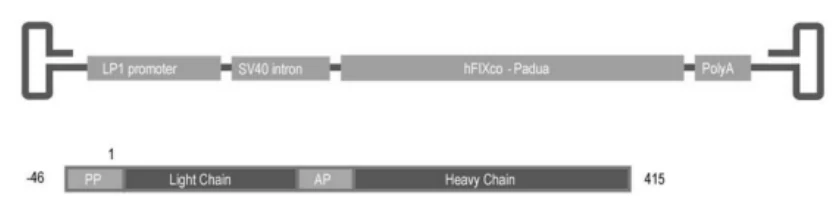
AP = activation peptide; FIX = factor IX; hFIXco = human factor IX, codon-optimized; kb = kilobases; LP1 = liver-specific promoter-1; polyA = polyadenylation; PP = pre-pro-peptide; SV40 = simian virus 40.
Physicochemical properties: Clear, colourless solution.
Product Characteristics:
HEMGENIX is a gene therapy medicinal product that employs a non-replicating, recombinant adeno-associated viral vector serotype 5 (AAV5) containing a codon-optimized coding DNA sequence for the human coagulation Factor IX variant R338L (hFIXco-Padua) under the control of a liver-specific promoter (LP1).
HEMGENIX is produced using recombinant baculovirus technology.
14. Clinical Trials
14.1 Clinical Trials by Indication
Adult Hemophilia B Patients without FIX Inhibitors
Trial Design and Study Demographics
Table 11: Patient Demographics for ClinicalTrials in Hemophilia B
| Study # | Study design | Dosage, route of administration and duration | Study patients (n) | Median age at enrolment (Range) | Sex |
| Phase 3 (CT-AMT-061-02) | Open-label, single-dose, single-arm | Single IV dose of 2 × 10¹³ gc/kg bw | 54 | 37.0 (19-75) | Male |
The safety and efficacy of HEMGENIX was evaluated in a prospective, open-label, single-dose, single-arm multi-national study (CT-AMT-061-02). In the ongoing study, fifty-four Hemophilia B patients aged 19 to 75 at enrollment with moderately severe or severe disease completed a ≥6-month observational lead-in period with standard of care routine Factor IX prophylaxis after which patients received a single intravenous dose of HEMGENIX. Post-treatment follow-up visits occurred regularly, with 53/54 patients completing at least 18 months of follow-up. One patient, with numerous cardiovascular and urologic risk factors, aged 75 at screening, died of urosepsis and cardiogenic shock at month 15 post-dose (at age 77 years), an event confirmed not treatment-related. The remaining 53/54 patients will continue on follow-up for a total of 5 years. Of these, 1 patient received a partial dose (10%) of HEMGENIX due to an infusion related hypersensitivity reaction.
Patients were excluded from the study if they were less than 18 years of age, had FIX inhibitors, presented with hepatic or renal dysfunction (> 2 X ULN in either ALT, AST, total bilirubin, ALP, or creatinine), had HIV not controlled with anti-viral therapy, had a Hepatitis B or C infection, had thrombocytopenia (platelets < 50 x 109/L), an active infection, or a medical condition expected to interfere with liver transduction of the vector (i.e. disseminated intravascular coagulation, accelerated fibrinolysis, or advance liver fibrosis).
Study Results
The primary objective was to establish the non-inferiority of HEMGENIX by comparing patient annualized bleeding rates (ABRs) during months 7 to 18 post HEMGENIX treatment (after establishment of stable Factor IX expression by month 6 following HEMGENIX infusion) to the ABR reported in the observational lead-in period of ≥ 6 months treated with prophylactic Factor IX. For this purpose, all bleeding episodes, regardless of investigator assessment, were considered. The results for the total bleeding events are shown in Table 12. Non-inferiority of HEMGENIX treatment was demonstrated as the upper bound for the 95% confidence interval of the ABR ratio (post-HEMGENIX treatment/lead-in prophylaxis treatment) is lower than the pre-specified non-inferiority margin of 1.8. For the bleeding episodes that needed Factor-IX treatment during the HEMGENIX treatment period, lower bleeding rates were demonstrated as compared to prophylaxis Factor-IX lead-in period treatment including treated joint and spontaneous bleeds and the results are shown in Table 13.
Table 12: Total bleeding events and ABRs
| Number | ≥6-month Lead-in period (N=54) | 7-18 months Post-HEMGENIX (N=54) |
|---|---|---|
| Patients with bleeds | 40 (74.1%) | 20 (37.0%) |
| Patients with zero bleeds | 14 (25.9%) | 34 (63.0%) |
| All bleeds | 136 | 54 |
Mean adjusteda, b ABRc (95% CI) | 4.13 (2.95, 5.22) | 1.73 (0.64, 4.02) |
ABRc ratio (post-dose / lead-in) 2-sided 95% CI | 0.42 (0.18, 0.97) | |
Abbreviations: ABR = annualized bleeding rate; CI = confidence interval
aAdjusted: Adjusted ABR and non-inferiority comparison of ABR between lead-in and post-treatment period was estimated using a repeated measures generalized estimating equations negative binomial regression model accounting for the paired design of the study with an offset parameter to account for the differential collection periods. Treatment period was included as a categorical covariate.
b Two patients contributed to very short person-time (PT) post-treatment as they were not able to stop routine prophylaxis after HEMGENIX treatment during Months 7 to 18. To account for the unstable individual ABRs (due to very short at risk on-treatment PT) for these 2 patients, the post-treatment bleeding counts for these patients were multiply imputed using a negative binomial distribution under conservative assumption of mean ABR of 20 (equivalent to bleeding counts during on-demand treatment) with larger dispersion parameter of 0.74 to reflect higher variability in bleeding counts under on-demand treatment.
cThe ABR was measured from month 7 to 18 after HEMGENIX infusion, ensuring this period represented steady-state Factor IX expression from the transgene.
Table 13: Treated ABRs and Overall Joint and Spontaneous Bleed Incidences
Abbreviations: ABR = Annualized Bleeding Rate; CI = Confidence Interval
aAdjusted: Adjusted ABR and non-inferiority comparison of ABR between lead-in and post-treatment period was estimated using a repeated measures generalized estimating equations negative binomial regression model accounting for the paired design of the study with an offset parameter to account for the differential collection periods. Treatment period was included as a categorical covariate.
b Two patients contributed to very short person-time (PT) post-treatment as they were not able to stop routine prophylaxis after HEMGENIX treatment during Months 7 to 18. To account for the unstable individual ABRs (due to very short at risk on-treatment PT) for these two patients, the post-treatment bleeding counts for these patients were multiply imputed using negative a binomial distribution under conservative assumption of mean ABR of 20 (equivalent to bleeding counts during on -demand treatment) with larger dispersion parameter of 0.26 to reflect higher variability in bleeding counts under on-demand treatment.
cThe ABR was measured from month 7 to 18 after HEMGENIX infusion, ensuring this period represented steady-state Factor IX expression from the transgene.
≥6-Month Lead-in period (N=54) | 7-18 Months Post-HEMGENIX (N=54) | ||||
|---|---|---|---|---|---|
Mean adjusteda, b ABR (95% CI) based on Factor IX-treated bleeds | 3.57 (2.60, 4.54) | 1.27 (0.33, 2.98) | |||
ABR ratioc (Post-dose/ Lead-in) 2-sided 95% CI for Factor IX-treated bleeds | 0.36 (0.11, 0.82) | ||||
Observed Joint Bleed Count (% of total bleeds) | 77 (57%) | 19 (35%) | |||
Observed Spontaneous Bleed Count (% of total bleeds) | 50 (37%) | 14 (26%) | |||
15. Microbiology
No microbiological information is required for this drug product.
16. Non-Clinical Toxicology
General toxicology: Preclinical studies were initiated with a gene therapy product employing the recombinant adeno-associated virus serotype 5 (rAAV5) expressing the wild type human coagulation factor IX (rAAV5-hFIX). HEMGENIX (rAAV5-hFIXco-Padua) was subsequently developed from rAAV5-hFIX by introduction of a 2 nucleotide change in the transgene for human Factor IX, generating the naturally occurring Padua variant of Factor IX, which exhibits significantly augmented activity.
HEMGENIX and its predecessor were intravenously administered to mice and nonhuman primates (NHP) to determine the biodistribution and potential toxicity. Dose-dependent preferential distribution to the liver was confirmed for both vectors and their transgene expression. Both products were well tolerated and not associated with adverse effects during a 3 or 6-month follow up period, respectively. The No Observed-Adverse-Effect-Level (NOAEL) was set at the highest dose tested in NHPs of 9 × 10¹³ gc/kg bw, which is approximately 5-fold above the recommended human HEMGENIX dose of 2 × 10¹³ gc/kg bw.
One out of 10 healthy mice administered 5 x 10¹³ gc/kg of HEMGENIX and the predecessor of HEMGENIX developed pulmonary thrombi at 13 weeks post-dose. This dose level is 2.5- fold higher than the recommended dose level for HEMGENIX. In a non-human primate (NHP) follow-up study, pulmonary thrombi events were not observed at a dose level of 9 x 10¹³ gc/kg, which is 4.5-fold higher than the recommended dose for HEMGENIX. However, compared to concurrent controls, prolonged prothrombin time, decreased activated partial thromboplastin time and decreased heart rates were observed in the NHPs administered 9 x 10¹³ gc/kg of HEMGENIX during the 26-week study.
Genotoxicity: Genotoxic and reproductive risks were evaluated with the rAAV5-hFIX. The integration site analysis in host genomic DNA was performed on liver tissue from mice and NHP injected with rAAV5-hFIX up to a dose of 2.3 x 10¹⁴ gc/kg bw, corresponding to approximately 10-fold the clinical dose in human. Low level of integrated rAAV5-hFIX DNA was distributed throughout the host genome with no preferred integration in genes associated with mediation of malignant transformation in human.
Carcinogenesis and mutagenesis: No dedicated carcinogenicity or mutagenicity studies were conducted with HEMGENIX.
Reproductive and developmental toxicology: The risk of germline transmission after administration of 2.3 x 10¹⁴ gc/kg bw rAAV5-hFIX, i.e., a dose approximately 10-fold higher than recommended for human, was assessed in mice. The rAAV5-hFIX administration resulted in detectable vector DNA in the reproductive organs and sperm of male animals. However, following mating of these mice with naïve female animals at 6 days after administration, the rAAV5-hFIX vector DNA was not detected in the female reproductive tissues nor in the resulting foetuses, indicating low risk of paternal germline transmission.