


Product Monograph - Apo-Linezolid
RECENT MAJOR LABEL CHANGES
| 4 DOSAGE AND ADMINISTRATION, 4.1 Dosing Considerations | 02/2023 |
|---|---|
| 7 WARNINGS AND PRECAUTIONS | 02/2023 |
| 7 WARNINGS AND PRECAUTIONS, 7.1.2 Breast-feeding | 02/2023 |
| 7 WARNINGS AND PRECAUTIONS, 7.1.4 Geriatrics | 02/2023 |
| 7 WARNINGS AND PRECAUTIONS, Monitoring and Laboratory Tests | 04/2024 |
| 7 WARNINGS AND PRECAUTIONS, Musculoskeletal | 04/2024 |
TABLE OF CONTENTS
Sections or subsections that are not applicable at the time of authorization are not listed.
RECENT MAJOR LABEL CHANGES ............................................................................................. 2
TABLE OF CONTENTS ............................................................................................................... 2
PART I: HEALTH PROFESSIONAL INFORMATION ....................................................................... 4
1 INDICATIONS .................................................................................................................. 4
1.1 Pediatrics .................................................................................................................... 5
1.2 Geriatrics .................................................................................................................... 5
2 CONTRAINDICATIONS ..................................................................................................... 5
4 DOSAGE AND ADMINISTRATION .................................................................................... 6
4.1 Dosing Considerations ................................................................................................ 6
4.2 Recommended Dose and Dosage Adjustment ........................................................... 6
4.4 Administration ............................................................................................................ 7
4.5 Missed Dose ............................................................................................................... 7
5 OVERDOSAGE ................................................................................................................. 7
6 DOSAGE FORMS, STRENGTHS, COMPOSITION AND PACKAGING .................................... 8
7 WARNINGS AND PRECAUTIONS ...................................................................................... 8
7.1 Special Populations ................................................................................................... 13
7.1.1 Pregnant Women .................................................................................................. 13
7.1.2 Breast-feeding ....................................................................................................... 13
7.1.3 Pediatrics ............................................................................................................... 13
7.1.4 Geriatrics ............................................................................................................... 13
8 ADVERSE REACTIONS .................................................................................................... 13
8.1 Adverse Reaction Overview ...................................................................................... 13
8.2 Clinical Trial Adverse Reactions ................................................................................ 14
8.3 Less Common Clinical Trial Adverse Reactions ......................................................... 16
8.5 Post-Market Adverse Reactions ............................................................................... 17
9 DRUG INTERACTIONS ................................................................................................... 20
9.1 Serious Drug Interactions ......................................................................................... 20
9.2 Drug Interactions Overview ...................................................................................... 21
9.4 Drug-Drug Interactions ............................................................................................. 21
9.5 Drug-Food Interactions ............................................................................................. 22
9.6 Drug-Herb Interactions ............................................................................................. 23
9.7 Drug-Laboratory Test Interactions ............................................................................ 23
10 CLINICAL PHARMACOLOGY ........................................................................................... 23
10.1 Mechanism of Action ................................................................................................ 23
10.3 Pharmacokinetics ..................................................................................................... 23
11 STORAGE, STABILITY AND DISPOSAL............................................................................. 28
PART II: SCIENTIFIC INFORMATION ........................................................................................ 29
13 PHARMACEUTICAL INFORMATION ............................................................................... 29
14 CLINICAL TRIALS ........................................................................................................... 29
14.1 Clinical Trials by Indication ....................................................................................... 30
14.3 Comparative Bioavailability Studies.......................................................................... 32
15 MICROBIOLOGY ............................................................................................................ 33
16 NON-CLINICAL TOXICOLOGY ......................................................................................... 37
17 SUPPORTING PRODUCT MONOGRAPHS ....................................................................... 40
PATIENT MEDICATION INFORMATION ................................................................................... 41
PART I: HEALTH PROFESSIONAL INFORMATION
1 INDICATIONS
APO-LINEZOLID (linezolid) tablets are indicated for:
Treatment of adult patients with the following infections, when caused by susceptible strains of the designated aerobic Gram-positive micro-organisms:
Note: APO-LINEZOLID is not indicated for the treatment of Gram-negative infections. It is critical that specific Gram-negative therapy be initiated immediately if a concomitant Gram-negative pathogen is documented or suspected (see 7 WARNINGS AND PRECAUTIONS).
Vancomycin-Resistant Enterococcus faecium (VREF) Infections: APO-LINEZOLID is indicated for the treatment of the following infections when due to VREF:
Intra-abdominal, skin and skin-structure, and urinary tract infections (including cases associated with concurrent bacteremia) (see 14 CLINICAL TRIALS).
Note: This indication for VREF is based on non-comparative studies.
Nosocomial pneumonia caused by Staphylococcus aureus (methicillin-susceptible and - resistant strains), or Streptococcus pneumoniae (penicillin-susceptible strains only).
Community-acquired pneumonia caused by Streptococcus pneumoniae (penicillin-susceptible strains only) including cases with concurrent bacteremia or Staphylococcus aureus (methicillin-susceptible and -resistant strains).
Complicated skin and skin structure infections, including non-limb threatening diabetic foot infections, without concomitant osteomyelitis, caused by Staphylococcus aureus (methicillin-susceptible and -resistant strains), Streptococcus pyogenes, or Streptococcus agalactiae.
Note: Linezolid has not been studied in the treatment of necrotizing fasciitis or decubitus ulcers.
Uncomplicated skin and skin structure infections caused by Staphylococcus aureus (methicillin-susceptible strains only) or Streptococcus pyogenes.
To reduce the development of drug-resistant bacteria and maintain the effectiveness of APO-LINEZOLID and other antibacterial drugs, APO-LINEZOLID should be used only to treat infections that are proven or strongly suspected to be caused by susceptible bacteria. When culture and susceptibility information are available, they should be considered in selecting or modifying antibacterial therapy. In the absence of such data, local epidemiology and susceptibility patterns may contribute to the empiric selection of therapy.
1.1 Pediatrics
Pediatrics (<18 years of age): No data are available to Health Canada; therefore, Health Canada has not authorized an indication for pediatric use.
1.2 Geriatrics
Geriatrics (≥65 years of age): Although special monitoring is recommended, no overall differences in safety or effectiveness were observed between these patients and younger patients (see 7 WARNINGS AND PRECAUTIONS, Monitoring and Laboratory Tests, 7.1.4 Geriatrics).
2 CONTRAINDICATIONS
APO-LINEZOLID is contraindicated for use in patients who have known hypersensitivity to linezolid or any of the other product components. For a complete listing, see 6 DOSAGE FORMS, STRENGTHS, COMPOSITION AND PACKAGING.
Monoamine Oxidase Inhibitors
Linezolid is contraindicated in patients taking any medicinal product which inhibits monoamine oxidases A or B (e.g. phenelzine, isocarboxazid) or within two weeks of taking any such medicinal product.
Potential Interactions Producing Elevation of Blood Pressure
Unless patients are monitored for potential increases in blood pressure, linezolid is contraindicated in patients with:
- uncontrolled hypertension,
- pheochromocytoma,
- thyrotoxicosis
and/or patients taking any of the following types of medications:
- directly and indirectly acting sympathomimetic agents (e.g., pseudoephedrine, phenylpropanolamine),
- vasopressive agents (e.g., epinephrine, norepinephrine),
- dopaminergic agents (e.g., dopamine, dobutamine).
Potential Serotonergic Interactions
Unless patients are carefully observed for signs and/or symptoms of serotonin syndrome, linezolid is contraindicated in patients with:
- carcinoid syndrome
and/or patients taking any of the following medications:
- serotonin re-uptake inhibitors,
- tricyclic antidepressants,
- serotonin 5-HT1 receptor agonists (triptans),
- buspirone or
- opioids including meperidine.
(see 7 WARNINGS AND PRECAUTIONS and 9.4 Drug-Drug Interactions).
4 DOSAGE AND ADMINISTRATION
4.1 Dosing Considerations
Prior to instituting treatment with APO-LINEZOLID, appropriate specimens should be obtained for isolation of the causative organism(s) and for determination of susceptibility to APO-LINEZOLID. In infections where concomitant Gram-negative and/or anaerobic pathogens are suspected or are known to be present, APO-LINEZOLID must be used in combination with an appropriate antibiotic in order to provide adequate antimicrobial coverage.
If clinically indicated, treatment with APO-LINEZOLID may be started empirically before results of susceptibility testing are available. Once culture results become available antimicrobial therapy can be adjusted accordingly.
Because the inappropriate use of antibiotics can increase organism resistance, prescribers should carefully consider alternatives before initiating treatment with APO-LINEZOLID in an outpatient setting.
There is an increased risk of thrombocytopenia in patients with hepatic and renal impairment. The benefits of using APO-LINEZOLID in patients with hepatic and renal insufficiency should be weighed against the potential risks of thrombocytopenia (see 7 WARNINGS AND PRECAUTIONS, Hematologic, Myelosuppression).
4.2 Recommended Dose and Dosage Adjustment
The recommended dosage for APO-LINEZOLID (linezolid) tablets for the treatment of infections in adults is described in Table 1. Doses of APO-LINEZOLID are administered every 12 hours (q12h).
Table 1 - Dosage Guidelines for Linezolid
| Infection* | Dosage and Route of Administration | Recommended Duration of Treatment (consecutive days) |
|---|---|---|
| Vancomycin-resistant Enterococcus faecium infections, including concurrent bacteremia | 600 mg oral q12h | 14 to 28 |
| Nosocomial pneumonia | 600 mg oral q12h | 10 to 14 |
Complicated skin and skin structure infections:
| 600 mg oral q12h | 10 to 14 |
| Infection* | Dosage and Route of Administration | Recommended Duration of Treatment (consecutive days) |
|---|---|---|
| 600 mg oral q12h | 14 to 28 |
| Community-acquired pneumonia, including concurrent bacteremia | 600 mg oral q12h | 10 to 14 |
| Uncomplicated skin and skin structure infections | 400 mg oral q12h | 10 to 14 |
| Note: Patients with infection due to MRSA should be treated with APO-LINEZOLID 600 mg q12h | ||
* due to the designated pathogens (see 1 INDICATIONS)
In controlled clinical trials, the protocol-defined duration of treatment for all infections ranged from 7 days to 28 days. Total treatment duration was determined by the treating physician based on site and severity of the infection, and on the patient’s clinical response.
No dose adjustment is necessary when switching from intravenous to oral administration. Patients whose therapy is started with linezolid injection may be switched to linezolid tablets or linezolid oral suspension at the discretion of the physician, when clinically indicated.
4.4 Administration
APO-LINEZOLID may be taken with or without food.
4.5 Missed Dose
If a dose is missed, it should be taken as soon as possible. However, if it is almost time for the next dose, the missed dose should be skipped and the regular dosing schedule resumed. Doses should not be doubled.
5 OVERDOSAGE
In the event of overdosage, supportive care is advised, with maintenance of glomerular filtration. Hemodialysis may facilitate more rapid elimination of linezolid. In a phase I clinical trial, approximately 30% of a dose of linezolid was removed during a 3-hour hemodialysis session beginning 3 hours after the dose of linezolid was administered. Data are not available for removal of linezolid with peritoneal dialysis or hemoperfusion. Clinical signs of acute toxicity in animals were decreased activity and ataxia in rats and vomiting and tremors in dogs treated with 3000 mg/kg/day and 2000 mg/kg/day, respectively.
For management of a suspected drug overdose, contact your regional poison control centre.
6 DOSAGE FORMS, STRENGTHS, COMPOSITION AND PACKAGING
Table 2 – Dosage Forms, Strengths, Composition and Packaging
| Route of Administration | Dosage Form / Strength/Composition | Non-medicinal Ingredients |
| oral | tablet 600 mg of linezolid | Colloidal silicon dioxide, crospovidone, hydroxypropyl cellulose, hydroxypropyl methylcellulose, magnesium stearate, methyl cellulose, polyethylene glycol and titanium dioxide. |
Description
Linezolid Tablets: APO-LINEZOLID Tablets are available in 600 mg (white, oval, biconvex, film-coated tablets with engraved “APO” on one side and “LIN600” on the other side) strength and are supplied in bottles of 20 and 30.
7 WARNINGS AND PRECAUTIONS
General
The use of antibiotics may promote the overgrowth of nonsusceptible organisms. Should superinfection occur during therapy, appropriate measures should be taken.
Linezolid Tablets have not been studied in patients with uncontrolled hypertension, pheochromocytoma, carcinoid syndrome, or untreated hyperthyroidism.
Large quantities of foods or beverages with high tyramine content should be avoided while taking APO-LINEZOLID (see 9.5 Drug-Food Interactions for foods or beverages with high tyramine content).
In healthy volunteers, co-administration of rifampin with linezolid resulted in a 21% decrease in linezolid Cmax and a 32% decrease in linezolid AUC (see 9.4 Drug-Drug Interactions, Antibiotics). The clinical significance of this interaction is unknown.
The safety and efficacy of linezolid given for longer than 28 days have not been evaluated in controlled clinical trials.
Lactic acidosis
Lactic acidosis has been reported with the use of linezolid. Patients who develop recurrent nausea or vomiting, unexplained acidosis, or a low bicarbonate level while receiving APO-LINEZOLID should receive immediate medical attention.
Mortality Imbalance in an Investigational Study in Patients with Catheter-Related Bloodstream Infections, including those with catheter-site infections.
An imbalance in mortality was seen in patients treated with linezolid relative to vancomycin/dicloxacillin/oxacillin in an open-label study in seriously ill patients with intravascular catheter-related infections [78/363 (21.5%) vs. 58/363 (16.0%); odds ratio 1.426, 95% CI 0.970, 2.098]. While causality has not been established, this observed imbalance occurred primarily in linezolid-treated patients in whom either Gram-negative pathogens, mixed Gram-negative and Gram-positive pathogens, or no pathogen were identified at baseline, but was not seen in patients with Gram-positive infections only.
Linezolid is not approved and should not be used for the treatment of patients with catheter-related bloodstream infections or catheter-site infections.
Linezolid has no clinical activity against Gram-negative pathogens and is not indicated for the treatment of Gram-negative infections. It is critical that specific Gram-negative therapy be initiated immediately if a concomitant Gram-negative pathogen is documented or suspected; appropriate concomitant therapy is also required when anaerobic pathogens are isolated (see 1 INDICATIONS).
Serotonin Syndrome
Very rare spontaneous reports of serotonin syndrome with co-administration of linezolid and serotonergic agents have been reported. Since there is limited experience with concomitant administration of linezolid and serotonergic agents (such as serotonin re-uptake inhibitors, opioids, tricyclic antidepressants and serotonin 5-HT1 receptor agonists) physicians should be alert to the possibility of signs and symptoms of serotonin syndrome (e.g., hyperpyrexia, and cognitive dysfunction) in patients receiving such concomitant therapy (see 2 CONTRAINDICATIONS, 8.5 Post-Market Adverse Reactions and 9.4 Drug-Drug Interactions, Serotonergic Agents).
Carcinogenesis and Mutagenesis
See 16 NON-CLINICAL TOXICOLOGY Carcinogenicity, Mutagenicity.
Endocrine and Metabolism
Diabetes
Some MAO inhibitors have been associated with hypoglycemic episodes in diabetic patients receiving insulin or oral hypoglycemic agents.
While a causal relationship between linezolid and hypoglycemia has not been established, diabetic patients should be cautioned of potential hypoglycemic reactions when treated with linezolid. If hypoglycemia occurs, a decrease in the dose of insulin or oral hypoglycemic agent, or discontinuation of oral hypoglycemic agent, insulin, or linezolid may be required. Therefore, APO-LINEZOLID should be used with caution in diabetics under treatment with this drug.
Gastrointestinal
Clostridioides difficile-associated disease
Clostridioides difficile-associated disease (CDAD) has been reported with use of many antibacterial agents, including linezolid. CDAD may range in severity from mild diarrhea to fatal colitis. It is important to consider this diagnosis in patients who present with diarrhea, or symptoms of colitis, pseudomembranous colitis, toxic megacolon, or perforation of colon subsequent to the administration of any antibacterial agent. CDAD has been reported to occur over 2 months after the administration of antibacterial agents.
Treatment with antibacterial agents may alter the normal flora of the colon and may permit overgrowth to Clostridioides difficile. Clostridioides difficile produces toxins A and B, which contribute to the development of CDAD. CDAD may cause significant morbidity and mortality. CDAD can be refractory to antimicrobial therapy.
If the diagnosis of CDAD is suspected or confirmed, appropriate therapeutic measures should be initiated. Mild cases of CDAD usually respond to discontinuation of antibacterial agents not directed against Clostridioides difficile. In moderate to severe cases, consideration should be given to management with fluids and electrolytes, protein supplementation, and treatment with an antibacterial agent clinically effective against Clostridioides difficile. Surgical evaluation should be instituted as clinically indicated, as surgical intervention may be required in certain severe cases (see 8 ADVERSE REACTIONS section).
Hematologic
Myelosuppression
Myelosuppression (anemia including pure red blood cell aplasia, leukopenia, pancytopenia, and thrombocytopenia) has been reported in patients receiving linezolid. Thrombocytopenia may occur more often in patients with moderate to severe renal insufficiency, whether or not on dialysis, and in patients with moderate to severe hepatic impairment. In cases where the outcome is known, when linezolid was discontinued, the affected hematologic parameters have risen toward pretreatment levels. Complete blood counts should be monitored at least weekly in patients who receive linezolid, particularly in those who receive linezolid for longer than two weeks, patients who are at increased risk for bleeding, those with pre-existing myelosuppression, who have moderate to severe renal insufficiency or moderate to severe hepatic impairment, those receiving concomitant drugs that produce bone marrow suppression, or decreased hemoglobin levels or platelet counts or function, or those with a chronic infection who have received previous or concomitant antibiotic therapy. Discontinuation of therapy with linezolid should be considered in patients who develop or have worsening myelosuppression.
Hepatic
Thrombocytopenia may occur more often in patients with moderate to severe hepatic impairment. (see 7 WARNINGS AND PRECAUTIONS, Hematologic, Myelosuppression).
Monitoring and Laboratory Tests
Complete blood counts should be monitored at least weekly in patients who receive linezolid, particularly in those:
- who receive linezolid for longer than two weeks,
- who are at increased risk for bleeding,
- with pre-existing myelosuppression,
- receiving concomitant drugs that produce bone marrow suppression, or decreased hemoglobin levels or platelet counts or function,
- with moderate to severe renal or moderate to severe hepatic impairment, or
- with a chronic infection who have received previous or concomitant antibiotic therapy (see 7 WARNINGS AND PRECAUTIONS, Hematologic, Myelosuppression).
Serum sodium levels should be monitored regularly in:
- the elderly,
- patients taking diuretics, and
- patients at risk of hyponatremia (see 7 WARNINGS AND PRECAUTIONS, Renal).
Consider regular monitoring of creatine kinase (CK) levels in:
- patients with an increased risk of myopathy or rhabdomyolysis
- patients who recently received or are currently taking other medications known to be associated with myopathy or rhabdomyolysis
- patients who develop any signs or symptoms of rhabdomyolysis, including muscle pain or weakness (see 7 WARNINGS AND PRECAUTIONS, Musculoskeletal)
Musculoskeletal
Rhabdomyolysis associated with creatine kinase (CK) elevations has been reported with the use of linezolid. In some cases, rhabdomyolysis led to acute kidney injury. If signs or symptoms of rhabdomyolysis are observed, such as muscle pain, weakness, or dark urine, linezolid should be discontinued and appropriate therapy initiated.
Neurologic
Peripheral neuropathy has been reported primarily in patients treated for longer than the maximum recommended duration of 28 days with linezolid. When outcome was known, recovery was reported in only some cases following linezolid withdrawal.
If symptoms of peripheral neuropathy such as numbness, tingling, prickling sensations or burning pain occur, the continued use of APO-LINEZOLID should be weighed against the potential risk.
Convulsions have been reported to occur rarely in patients when treated with linezolid. In most of these cases, a history of seizures or risk factors for seizures was reported.
Ophthalmologic
Optic neuropathy has been reported in patients treated with linezolid, primarily those treated for longer than the maximum recommended duration of 28 days. When outcome was known, recovery was reported in some cases following linezolid withdrawal. In cases of optic neuropathy that progressed to loss of vision, patients were treated for longer than the maximum recommended duration. Visual blurring has been reported in some patients treated with linezolid for less than 28 days.
Visual function should be monitored in all patients taking APO-LINEZOLID for longer than the maximum recommended duration and in all patients reporting new visual symptoms regardless of length of therapy with APO-LINEZOLID. If patients experience symptoms of visual impairment, such as changes in visual acuity, changes in color vision, blurred vision, or visual field defect, prompt ophthalmologic evaluation is recommended. If optic neuropathy occurs, the continued use of APO-LINEZOLID in these patients should be weighed against the potential risks.
Renal
Hyponatremia and/or Syndrome of Inappropriate Antidiuretic Hormone Secretion (SIADH) have been observed in some patients treated with linezolid. It is recommended that serum sodium levels be monitored regularly in the elderly, in patients taking diuretics, and in other patients at risk of hyponatremia.
Thrombocytopenia may occur more often in patients with moderate to severe renal insufficiency, whether or not on dialysis (see 7 WARNINGS AND PRECAUTIONS, Hematologic, Myelosuppression).
Sensitivity /Resistance
Prescribing APO-LINEZOLID in the absence of a proven or strongly suspected bacterial infection is unlikely to provide benefit to the patient and risks the development of drug-resistant bacteria.
7.1 Special Populations
7.1.1 Pregnant Women
There are no adequate and well-controlled studies in pregnant women. APO-LINEZOLID should be used during pregnancy only if the potential benefit justifies the potential risk to the fetus.
7.1.2 Breast-feeding
Because linezolid is excreted in human milk, caution should be exercised when APO-LINEZOLID is administered to a breast-feeding woman. Breast-feeding women should be advised to monitor a breastfed infant for diarrhea and vomiting.
7.1.3 Pediatrics
Pediatrics (<18 years of age): There are insufficient data on the safety and efficacy of linezolid in children and adolescents (< 18 years old) to establish dosage recommendations (see 10.3 Pharmacokinetics, Special Populations and Conditions, Pediatrics). Therefore, until further data are available, use of linezolid in this age group is not recommended.
7.1.4 Geriatrics
It is recommended that serum sodium levels be monitored regularly in elderly patients, who may be at increased risk for hyponatremia (see 7 WARNINGS AND PRECAUTIONS, Renal).
Of the 2046 patients treated with linezolid in phase III comparator-controlled clinical trials, 589 (29%) were 65 years or older and 253 (12%) were 75 years or older. No overall differences in safety or effectiveness were observed between these patients and younger patients.
8 ADVERSE REACTIONS
8.1 Adverse Reaction Overview
The safety of linezolid Tablets and Injection were evaluated in 2046 adult patients enrolled in seven phase III comparator-controlled clinical trials, who were treated for up to 28 days. In these studies, 85% of the adverse events reported with linezolid were described as mild to moderate in intensity. The most common adverse events in patients treated with linezolid were diarrhea (incidence across studies: 2.8% to 11.0%), headache (incidence across studies: 0.5% to
11.3%), and nausea (incidence across studies: 3.4% to 9.6%).
Other adverse events reported in phase II and phase III studies included oral moniliasis, vaginal moniliasis, hypertension, dyspepsia, localized abdominal pain, pruritus, and tongue discoloration.
8.2 Clinical Trial Adverse Reactions
Clinical trials are conducted under very specific conditions. The adverse reaction rates observed in the clinical trials; therefore, may not reflect the rates observed in practice and should not be compared to the rates in the clinical trials of another drug. Adverse reaction information from clinical trials may be useful in identifying and approximating rates of adverse drug reactions in real-world use.
Phase III Clinical Trials:
Table 3 shows the incidence of drug-related adverse events reported in at least 1% of adult patients in these trials by dose of linezolid.
Table 3 - Incidence of Drug-Related Adverse Events Occurring in >1% of Adult Patients Treated with Linezolid in Comparator - Controlled Clinical Trials
| Adverse Event | Uncomplicated Skin and Skin Structure Infections | All Other Indications | ||
|---|---|---|---|---|
Linezolid 400 mg PO q12h (n=548) | Comparator (n=537) | Linezolid 600 mg q12h (n=1498) | All Other Comparators (n=1464) | |
| % of patients with at least 1 drug-related adverse event | 25.4 | 19.6 | 20.4 | 14.3 |
| % of patients discontinuing due to drug-related adverse events† | 3.5 | 2.4 | 2.1 | 1.7 |
| Diarrhea | 5.3 | 4.8 | 4 | 2.7 |
| Nausea | 3.5 | 3.5 | 3.3 | 1.8 |
| Headache | 2.7 | 2.2 | 1.9 | 1 |
| Taste alteration | 1.8 | 2 | 0.9 | 0.2 |
| Vaginal moniliasis | 1.6 | 1.3 | 1 | 0.4 |
| Fungal Infection | 1.5 | 0.2 | 0.1 | <0.1 |
| Abnormal liver function tests | 0.4 | 0 | 1.3 | 0.5 |
| Vomiting | 0.9 | 0.4 | 1.2 | 0.4 |
| Tongue discoloration | 1.1 | 0 | 0.2 | 0 |
| Dizziness | 1.1 | 1.5 | 0.4 | 0.3 |
| Adverse Event | Uncomplicated Skin and Skin Structure Infections | All Other Indications |
|---|---|---|
Linezolid 400 mg PO q12h (n=548) | ||
Comparator (n=537) | ||
Linezolid 600 mg q12h (n=1498) | All Other Comparators (n=1464) | |
| Oral moniliasis | 0.4 | |
| 0 | 1.1 | |
| 0.4 | ||
† The most commonly reported drug-related adverse events leading to discontinuation in patients treated with linezolid were nausea, headache, diarrhea, and vomiting.
In controlled clinical trials, abdominal pain/cramp/distension and abnormal hematology tests were also reported occurring at an incidence of at least 1%.
Phase III Clinical Trials:
Abnormal Hematologic and Clinical Chemistry Findings
Linezolid has been associated with thrombocytopenia when used in adults in doses up to and including 600 mg every 12 hours for up to 28 days. In phase III comparator-controlled trials, the percentage of patients who developed a substantially low platelet count (defined as less than 75% of lower limit of normal and/or baseline) was 2.4% (range among studies: 0.3 to 10.0%) with linezolid and 1.5% (range among studies: 0.4 to 7.0%) with a comparator.
Thrombocytopenia associated with the use of linezolid appears to be dependent on duration of therapy (generally greater than 2 weeks of treatment). The platelet counts for most patients returned to the normal range/baseline during the follow-up period. No related clinical adverse events were identified in phase III clinical trials in patients developing thrombocytopenia. Bleeding events were identified in thrombocytopenic patients in a compassionate use program for linezolid; the role of linezolid in these events cannot be determined (see 7 WARNINGS AND PRECAUTIONS).
Changes seen in other laboratory parameters, without regard to drug relationship, revealed no substantial differences between linezolid and the comparators. These changes were generally not clinically significant, did not lead to discontinuation of therapy, and were reversible. The incidence of patients with at least one substantially abnormal hematologic or serum chemistry value is presented in Tables 4 and 5.
Table 4 - Percent of Adult Patients who Experienced at Least One Substantially Abnormal* Hematology Laboratory Value in Comparator-Controlled Clinical Trials with Linezolid
| Laboratory Assay | Uncomplicated Skin and Skin Structure Infections | All Other Indications | ||||||
|---|---|---|---|---|---|---|---|---|
Linezolid 400 mg q12h | Comparator | Linezolid 600 mg q12h | All Other Comparators | |||||
| Hemoglobin (g/L) | 0.9 | 0.0 | 7.1 | 6.6 | ||||
| Platelet count (x 109/L) | 0.7 | 0.8 | 3.0 | 1.8 | ||||
| WBC (x 109/L) | 0.2 | 0.6 | 2.2 | 1.3 | ||||
| Neutrophils (x 106/L) | 0.0 | 0.2 | 1.1 | 1.2 | ||||
* <75% (<50% for neutrophils) of Lower Limit of Normal (LLN) for values normal at baseline;
<75% (<50% for neutrophils) of LLN and of baseline for values abnormal at baseline.
Table 5 - Percent of Adult Patients who Experienced at Least One Substantially Abnormal* Serum Chemistry Laboratory Value in Comparator-Controlled Clinical Trials with Linezolid
| Laboratory Assay | Uncomplicated Skin and Skin Structure Infections | All Other Indications | ||||||
|---|---|---|---|---|---|---|---|---|
Linezolid 400 mg q12h | Comparator | Linezolid 600 mg q12h | All Other Comparators | |||||
| AST (U/L) | 1.7 | 1.3 | 5.0 | 6.8 | ||||
| ALT (U/L) | 1.7 | 1.7 | 9.6 | 9.3 | ||||
| LDH (U/L) | 0.2 | 0.2 | 1.8 | 1.5 | ||||
| Alkaline phosphatase (U/L) | 0.2 | 0.2 | 3.5 | 3.1 | ||||
| Lipase (U/L) | 2.8 | 2.6 | 4.3 | 4.2 | ||||
| Amylase (U/L) | 0.2 | 0.2 | 2.4 | 2.0 | ||||
| Total bilirubin (mcmol/L) | 0.2 | 0.0 | 0.9 | 1.1 | ||||
| BUN (mmol/L) | 0.2 | 0.0 | 2.1 | 1.5 | ||||
| Creatinine (mcmol/L) | 0.2 | 0.0 | 0.2 | 0.6 | ||||
* >2 x Upper Limit of Normal (ULN) for values normal at baseline;
>2 x ULN and >2 x baseline for values abnormal at baseline.
8.3 Less Common Clinical Trial Adverse Reactions
Adverse drug reactions that were possibly or probably related to linezolid with an incidence less than 1.0% but greater than 0.1% in controlled clinical trials were:
| Body System | |
| Metabolic and Nutritional | Amylase Increased, Hyperglycemia, Hyponatremia, Lipase High, Serum Creatine Phosphokinase Increased, AST Increased and ALT Increased |
| Special Senses | Blurred Vision, Tinnitus |
| Musculo-Skeletal | None |
| Hemic and Lymphatic | Eosinophilia, Neutropenia, Thrombocytopenia |
| Respiratory | None |
| Cardiovascular | Hypertension, Phlebitis |
| Digestive | Constipation, Dry Mouth, Dyspepsia, Gastritis, Glossitis, Increased Thirst, Stomatitis and Tongue Discoloration |
| Nervous | Dizziness, Hypesthesia, Insomnia, Paresthesia |
Body as a whole | Abdominal Pain, Chills, Diaphoresis, Fatigue, Fungal Infection, Injection/Vascular Catheter Site Pain, and Injection/Vascular Catheter Site Phlebitis/Thrombophlebitis |
| Urogenital | Polyuria, and Vaginitis/Vaginal Infection |
| Skin | Dermatitis, Moniliasis Skin, Pruritus, Rash, and Urticaria |
In controlled clinical trials the pattern of drug related adverse reactions by body system with an incidence less than 1.0% but greater than 0.1% were similar to comparators.
Serious adverse reactions in controlled clinical trials considered possibly or probably related to linezolid treatment with an incidence less than 0.1% were, Hypertension, Kidney Failure, Liver Function Test Abnormality, Pancreatitis, Thrombocytopenia, Transient Ischemic Attacks and Vomiting.
8.5 Post-Market Adverse Reactions
In a phase IV comparator-controlled study (Study 113) of adult diabetic patients with clinically documented complicated skin and skin structure infections (“diabetic foot infections”) (see 14 CLINICAL TRIALS), most drug-related adverse events were rated as mild or moderate in intensity; 13.0% were rated as severe, and with the exception of diarrhea (0.8%), each severe drug-related event was reported in no more than one patient.
Table 6 Frequencies of Study-emergent Drug-Related Adverse Events Reported for ≥1% of Patients in Either Treatment Group [Study 113, linezolid in the treatment of adult diabetic patients with clinically documented complicated skin and skin structure infections ("diabetic foot infections")]
| COSTART Body System Classification | Adverse Event (Medically Equivalent Term*) | Treatment Group |
|---|---|---|
Linezolid N = 241 n (%)† | Comparator N = 120 n (%)† | |
| Total Reported | ||
| Patients reporting at least 1 drug-related AE | ||
| 64 (26.6) | 12 (10.0) | |
| Digestive | ||
| Diarrhea | 18 (7.5) | 4 (3.3) |
| Nausea | 14 (5.8) | 0 |
| Vomiting | 4 (1.7) | 1 (0.8) |
| Dyspepsia | 3 (1.2) | 1 (0.8) |
| COSTART Body System Classification | Adverse Event (Medically Equivalent Term*) | Treatment Group |
|---|---|---|
Linezolid N = 241 n (%)† | Comparator N = 120 n (%)† | |
| Appetite decreased | 3 (1.2) | 0 |
| Hemic and Lymphatic | ||
| Anemia | 11 (4.6) | 0 |
| Thrombocytopenia | 9 (3.7) | 0 |
* The information represents the number (%) of patients who reported a given study- emergent adverse event. Any patient with multiple reports of the same event was counted only once for that event.
† All percentages are based on the number of ITT patients.
In Study 113, serious drug-related events were reported for seven patients in the linezolid treatment group: congestive heart failure, peripheral vascular disease; biliary pain and cholestatic jaundice; Clostridioides difficile colitis; gastrointestinal bleeding; anemia; and hypokalemia.
Table 7 shows the frequencies of selected abnormal hematologic test values in Study 113 at End of Treatment.
Table 7 - Frequencies of Abnormal Values for Selected Hematology Assays at EOT [Study 113, linezolid in the treatment of adult diabetic patients with clinically documented complicated skin and skin structure infections ("diabetic foot infections")]
| Hematology Assay | Clinically Significant Abnormal*/ All abnormal values for assay | |
|---|---|---|
Linezolid n/N (%) | Comparator n/N (%) | |
| Hemoglobin | 9/111 (8.1) | 1/52 (1.9) |
| Hematocrit | 6/112 (5.4) | 1/49 (2.0) |
| WBC | 2/26 (7.7) | 1/12 (8.3) |
| Platelet Count | 9/43 (20.9) | 3/16 (18.8) |
Abbreviations: EOT=end of treatment, WBC = white blood count
* Abnormal values assessed by the investigator as clinically significant.
Table 8 summarizes abnormal chemistry values in Study 113 assessed at End of Treatment.
Table 8 - Frequencies of Abnormal Values for Selected Chemistry Assays at EOT* [(Study 113, linezolid in the treatment of adult diabetic patients with clinically documented complicated skin and skin structure infections ("diabetic foot infections")]
| Chemistry Assay | Clinically Significant Abnormal*/ All abnormal values for assay | |
|---|---|---|
Linezolid n/N (%) | Comparator n/N (%) | |
| ALT | 3/32 (9.4) | 1/15 (6.7) |
| AST | 1/24 (4.2) | 1/19 (5.3) |
| Bicarbonate. | 1/22 (4.5) | 0/15 |
| Lactic dehydrogenase | 3/38 (7.9) | 0/16 |
| Amylase | 3/17 (17.6) | 0/18 |
Abbreviations: ALT=Alanine aminotransferase, AST=Aspartate aminotransferase, EOT=end of treatment
* Assessed by the investigator as clinically significant.
Less Common Clinical Trial Adverse Drug Reactions (<1%)
In Study 113, adverse drug reactions that were possibly or probably related to linezolid with an incidence less than 1.0% but greater than 0.1% were:
| Body System | |
| Metabolic and Nutritional | Healing Abnormal, Hypoglycemia, Hypokalemia, LDH Increased |
| Special Senses | Taste Perversion |
| Musculo-Skeletal | None |
| Hemic and Lymphatic | Ecchymosis/Bruise, Neutropenia |
| Respiratory | Dyspnea |
| Cardiovascular | Congestive Heart Failure, Disorder Peripheral Vascular |
| Digestive | Anorexia, Biliary Pain, C. Difficile Colitis, Cholestatic Jaundice, Disorder Gastrointestinal NOS, Disorder Rectal, Flatulence, Gastrointestinal Bleeding, Monilia Oral |
| Nervous | Disorientation, Dizziness, Somnolence |
Body as a whole | Abdominal Cramp, Abdominal Pain Localized, Asthenia, Disorder Mucous Membrane, Fatigue, Headache, Fungal Infection NOS, Infection NEC, Laboratory Test Abnormality Other |
| Urogenital | None |
| Skin | Dermatitis, Dermatitis Fungal, Erythema, Rash, Ulcer Skin |
Abbreviations: NEC = not elsewhere classified; NOS = not elsewhere specified
Myelosuppression (anemia including pure red blood cell aplasia, leukopenia, pancytopenia, sideroblastic anemia* and thrombocytopenia) has been reported during post marketing use of linezolid (see 7 WARNINGS AND PRECAUTIONS, Hematologic).
* Primarily reported in patients receiving linezolid for more than the maximum recommended duration of 28 days
Peripheral neuropathy, and optic neuropathy sometimes progressing to loss of vision, have been reported in patients treated with linezolid. These reports have primarily been in patients treated for longer than the maximum recommended duration of 28 days (see 7 WARNINGS AND PRECAUTIONS, Neurologic and 7 WARNINGS AND PRECAUTIONS, Ophthalmologic).
Lactic acidosis (see 7 WARNINGS AND PRECAUTIONS, General), convulsions (see 7 WARNINGS AND PRECAUTIONS, Neurologic), angioedema and anaphylaxis have been reported.
Hypoglycemia, including symptomatic episodes, has been reported (see 7 WARNINGS AND PRECAUTIONS, Endocrine and Metabolism).
Reports of bullous skin disorders including severe cutaneous adverse reactions (SCAR) such as toxic epidermal necrolysis, Stevens-Johnson syndrome and hypersensitivity vasculitis have been received.
Very rare spontaneous reports of serotonin syndrome with co-administration of linezolid and serotonergic agents including antidepressants such as selective serotonin reuptake inhibitors (SSRIs) and opioids have been reported (see 7 WARNINGS AND PRECAUTIONS, Serotonin Syndrome).
These events have been chosen for inclusion due to either their seriousness, frequency of reporting, possible causal connection to linezolid, or a combination of these factors. Because they are reported voluntarily from a population of unknown size, estimates of frequency cannot be made and causal relationship cannot be precisely established.
Hyponatremia and/or Syndrome of Inappropriate Antidiuretic Hormone Secretion (SIADH) have been observed in some patients treated with linezolid (see 7 WARNINGS AND PRECAUTIONS, Renal).
Thrombocytopenia has been observed at a greater rate in patients with moderate to severe renal impairment, and in patients with moderate to severe hepatic impairment or cirrhosis (Child-Pugh Class C) (see 7 WARNINGS AND PRECAUTIONS, Hematologic, Myelosuppression).
Rhabdomyolysis associated with creatine kinase (CK) elevations, in some cases resulting in acute kidney injury, has been reported in patients treated with linezolid (see 7 WARNINGS AND PRECAUTIONS, Musculoskeletal).
9 DRUG INTERACTIONS
9.1 Serious Drug Interactions
| Serious Drug Interactions |
|---|
Linezolid is contraindicated in patients taking:
(see 2 CONTRAINDICATIONS). |
|---|
9.2 Drug Interactions Overview
Drugs Metabolized by Cytochrome P450: Linezolid is not an inducer of cytochrome P450 (CYP) in rats. It is not detectably metabolized by human cytochrome P450 and it does not inhibit the activities of clinically significant human CYP isoforms (1A2, 2C9, 2C19, 2D6, 2E1, 3A4). Therefore, no CYP450-induced drug interactions are expected with linezolid. Concurrent administration of linezolid does not substantially alter the pharmacokinetic characteristics of (S)- warfarin, which is extensively metabolized by CYP2C9. Drugs such as warfarin and phenytoin, which are CYP2C9 substrates, may be given with linezolid without changes in dosage regimen.
9.4 Drug-Drug Interactions
Monoamine Oxidase Inhibition: Linezolid is a mild reversible nonselective inhibitor of MAO-A and MAO-B and is contraindicated for use with other MAO A/B inhibitors (e.g. phenelzine, isocarboxazid). Therefore, linezolid has the potential for interaction with adrenergic and serotonergic agents. Studies in healthy volunteers have examined the effect of linezolid on the pharmacodynamic responses to tyramine, sympathomimetic amines, and dextromethorphan (see 2 CONTRAINDICATIONS).
Adrenergic Agents: A significant pressor response has been observed in normal adult subjects receiving linezolid and tyramine doses of more than 100 mg. Therefore, patients receiving linezolid need to avoid consuming large amounts of foods or beverages with high tyramine content.
Some individuals receiving APO-LINEZOLID may experience a reversible enhancement of the pressor response to indirect-acting sympathomimetic agents, vasopressor or dopaminergic agents. Initial doses of adrenergic agents, such as dopamine or epinephrine, should be reduced and titrated to achieve the desired response (see 2 CONTRAINDICATIONS).
A reversible enhancement of the pressor response of either pseudoephedrine HCl (PSE) or phenylpropanolamine HCl (PPA) is observed when linezolid is administered to healthy normotensive subjects. A similar study has not been conducted in hypertensive patients. The interaction studies conducted in normotensive subjects evaluated the blood pressure and heart rate effects of placebo, PPA or PSE alone, linezolid alone, and the combination of steady-state linezolid (600 mg q12h for 3 days) with two doses of PPA (25 mg) or PSE (60 mg) given 4 hours apart. Heart rate was not affected by any of the treatments. Blood pressure was increased with both combination treatments. Maximum blood pressure levels were seen 2 to 3 hours after the second dose of PPA or PSE, and returned to baseline 2 to 3 hours after peak.
Serotonergic Agents: A study to assess the potential interaction of linezolid with a serotonin-reuptake inhibitor (dextromethorphan) was conducted in healthy volunteers. No significant differences were found in the pharmacodynamic measures of temperature, digit symbol substitution, nurse-rated sedation, blood pressure, or pulse when subjects were administered dextromethorphan with or without linezolid. The effects of other serotonin-reuptake inhibitors have not been studied.
Very rare spontaneous reports of serotonin syndrome with co-administration of linezolid and serotonergic agents (such as serotonin re-uptake inhibitors, opioids, tricyclic antidepressants and serotonin 5-HT1 receptor agonists) have been reported. Since there is limited experience with concomitant administration of linezolid and serotonergic agents, physicians should be alert to the possibility of signs and symptoms of serotonin syndrome (e.g., hyperpyrexia, and cognitive dysfunction) in patients receiving such concomitant therapy (see 2 CONTRAINDICATIONS).
Antibiotics:
Aztreonam - The pharmacokinetics of linezolid or aztreonam are not altered when administered together.
Gentamicin - The pharmacokinetics of linezolid or gentamicin are not altered when administered together.
Rifampin - The effect of rifampin on the pharmacokinetics of linezolid was studied in sixteen healthy adult male volunteers administered linezolid 600 mg twice daily for 2.5 days with and without rifampin 600 mg once daily for 8 days. Rifampin decreased the linezolid Cmax and AUC by a mean 21% [90% CI, 15, 27] and a mean 32% [90% CI, 27, 37], respectively. The mechanism of this interaction and its clinical significance are unknown (see 7 WARNINGS AND PRECAUTIONS, General).
Antacids: No studies have been conducted with antacids and chelating agents. Based on the chemical structure, concurrent administration with these agents is not expected to affect absorption of linezolid.
9.5 Drug-Food Interactions
Large quantities of foods or beverages with high tyramine content should be avoided while taking APO-LINEZOLID. Quantities of tyramine consumed should be less than 100 mg per meal. Foods high in tyramine content include those that may have undergone protein changes by aging, fermentation, pickling, or smoking to improve flavor, such as aged cheeses (0 to 15 mg tyramine per 28 gm); fermented or air-dried meats (0.1 to 8 mg tyramine per 28 gm); sauerkraut (8 mg tyramine per 224 gm); soy sauce (5 mg tyramine per 1 teaspoon); tap beers (4 mg tyramine per 360 mL); red wines (0 to 6 mg tyramine per 240 mL). The tyramine content of any protein-rich food may be increased if stored for long periods or improperly refrigerated.
9.6 Drug-Herb Interactions
Interactions with herbal products have not been established.
9.7 Drug-Laboratory Test Interactions
Interactions with laboratory tests have not been established.
10 CLINICAL PHARMACOLOGY
10.1 Mechanism of Action
Linezolid is a synthetic antibacterial agent of a new class of antibiotics, the oxazolidinones, with in vitro activity against aerobic gram-positive bacteria, certain gram-negative bacteria, and anaerobic microorganisms. Linezolid inhibits bacterial protein synthesis through a unique mechanism of action. Linezolid binds to sites on the bacterial 23S ribosomal RNA of the 50S subunit and prevents the formation of a functional 70S initiation complex, which is an essential component of the bacterial translation process. The mechanism of action of linezolid (oxazolidinones) differs from that of other antibiotic classes (e.g., aminoglycosides, beta-lactams, folic acid antagonists, glycopeptides, lincosamides, quinolones, rifamycins, streptogramins, tetracyclines, chloramphenicol). Therefore, cross-resistance between linezolid and the mentioned classes of antibiotics is unlikely. Linezolid is active against selected gram positive bacteria that are susceptible or resistant to these antibiotics. In vitro tests have shown that resistance to linezolid develops slowly via multiple-step mutations in the 23S ribosomal RNA and occurs at a frequency of 1 x 10⁻⁹ to 1 x 10-11.
10.3 Pharmacokinetics
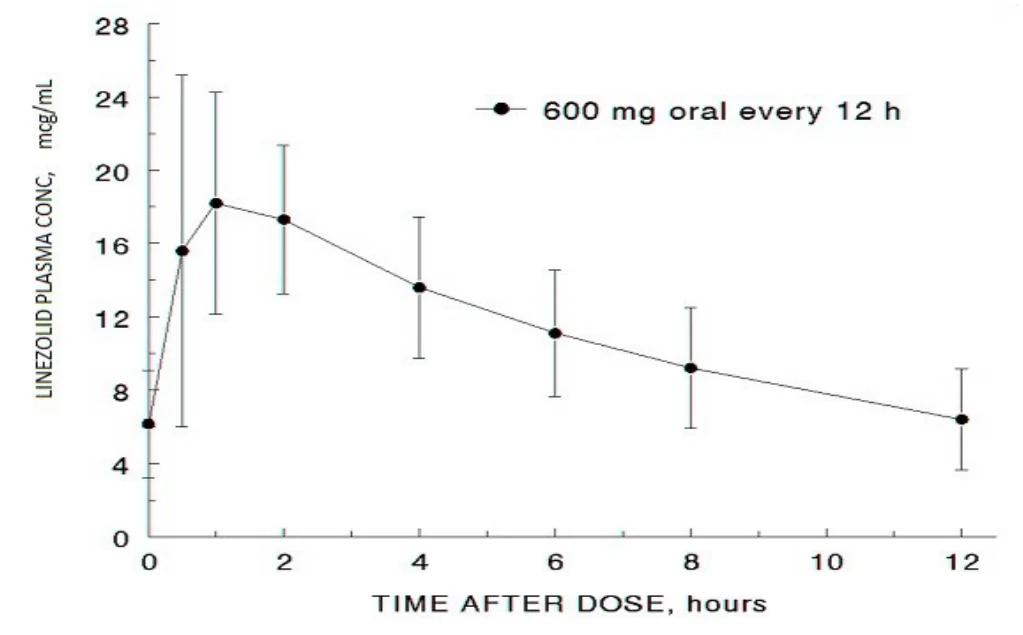
The mean pharmacokinetic parameters of linezolid in adults after single and multiple oral and intravenous doses are summarized in Table 9. Plasma concentrations of linezolid at steady- state following oral dosing of 600 mg every 12 hours (q12h) are shown in Figure 1.
Table 9 - Mean (standard deviation) Pharmacokinetic Parameters of Linezolid in Adults
| Dose of Linezolid | Cmax (mcg/mL) | Cmin (mcg/mL) | Tmax (hrs) | AUC* (mcg·h/mL) | t1/2 (hrs) | CL (mL/min) |
|---|---|---|---|---|---|---|
400 mg tablet single dose † bid dose | 8.10 (1.83) 11.00 (4.37) | --- 3.08 (2.25) | 1.52 (1.01) 1.12 (0.47) | 55.10 (25.00) 73.40 (33.50) | 5.20 (1.50) 4.69 (1.70) | 146 (67) 110 (49) |
600 mg tablet single dose bid dose | 12.70 (3.96) 21.20 (5.78) | --- 6.15 (2.94) | 1.28 (0.66) 1.03 (0.62) | 91.40 (39.30) 138.00 (42.10) | 4.26 (1.65) 5.40 (2.06) | 127 (48) 80 (29) |
600 mg IV injection ‡ single dose bid dose | 12.90 (1.60) 15.10 (2.52) | --- 3.68 (2.36) | 0.50 (0.10) 0.51 (0.03) | 80.20 (33.30) 89.70 (31.00) | 4.40 (2.40) 4.80 (1.70) | 138 (39) 123 (40) |
600 mg oral suspension single dose | 11.00 (2.76) | --- | 0.97 (0.88) | 80.80 (35.10) | 4.60 (1.71) | 141 (45) |
* AUC for single dose = AUC0-∞; for multiple-dose = AUC0-τ
† Data dose-normalized from 375 mg
‡ Data dose-normalized from 625 mg
Cmax = Maximum plasma concentration; Cmin = Minimum plasma concentration; Tmax = Time to Cmax; AUC = Area under concentration-time curve; t1/2 = Elimination half-life; CL = Systemic clearance
The average minimum plasma concentrations (Cmin) at steady state for oral administration of 400 or 600 mg linezolid every 12 hours were 3.08 and 6.15 mcg/mL, respectively, and the corresponding average maximum concentrations (Cmax) were 11.0 and 21.2 mcg /mL, respectively. These results indicate that for these dose regimens, the Cmin values are near or above the highest MIC90 (4 mcg/mL) for target microorganisms.
Figure 1. Steady-State Linezolid Plasma Concentrations in Healthy Adults Following Oral
Dosing of 600 mg (Tablets) Every 12 Hours (Mean ± Standard Deviation, n=16)
Absorption
Linezolid is rapidly and extensively absorbed after oral dosing. As shown in Figure 1, maximum plasma concentrations are reached approximately 1 to 2 hours after dosing, and the absolute bioavailability is approximately 100%. Therefore, linezolid may be given orally or intravenously without dose adjustment.
Linezolid may be administered without regard to the timing of meals. The time to reach the maximum concentration is delayed from 1.5 hours to 2.2 hours and Cmax is decreased by about 17% when high fat food is given with linezolid. However, the total exposure measured as AUC0-∞ values is similar under both conditions.
Distribution
Animal and human pharmacokinetic studies have demonstrated that linezolid readily distributes to well-perfused tissues. The plasma protein binding of linezolid is approximately 31% and is concentration-independent. The volume of distribution of linezolid at steady-state averaged 40 to 50 liters in healthy adult volunteers.
Linezolid concentrations have been determined in various fluids from a limited number of subjects in Phase I volunteer studies following multiple dosing of linezolid. The ratio of linezolid in saliva relative to plasma was 1.2 to 1 and for sweat relative to plasma was 0.55 to 1. The ratio for epithelial lining fluid was 4.5 to 1, and for alveolar cells of the lung was 0.15 to 1, when measured at steady-state Cmax. In a small study of subjects with ventricular-peritoneal shunts and essentially non-inflamed meninges, the ratio of linezolid in cerebrospinal fluid to plasma at Cmax was 0.7 to 1 after multiple dosing of linezolid.
Metabolism
Linezolid is primarily metabolized by oxidation of the morpholine ring, which results in two inactive ring-opened carboxylic acid metabolites: the aminoethoxyacetic acid metabolite (A), and the hydroxyethyl glycine metabolite (B). Formation of metabolite B is mediated by a non-enzymatic chemical oxidation mechanism in vitro. Linezolid is not an inducer of cytochrome P450 (CYP) in rats, and it has been demonstrated from in vitro studies that linezolid is not detectably metabolized by human cytochrome P450 and it does not inhibit the activities of clinically significant human CYP isoforms (1A2, 2C9, 2C19, 2D6, 2E1, 3A4).
The lack of effect of linezolid to induce CYP2C9 was shown in a healthy volunteer study using warfarin as a metabolism probe.
Elimination
Nonrenal clearance accounts for approximately 65% of the total clearance of linezolid. Under steady-state conditions, approximately 30% of the dose appears in the urine as linezolid, 40% as metabolite B, and 10% as metabolite A. The renal clearance of linezolid is low (average 40 mL/min) and suggests net tubular reabsorption. Virtually no linezolid appears in the feces, while approximately 6% of the dose appears in the feces as metabolite B, and 3% as metabolite A.
A small degree of nonlinearity in clearance was observed with increasing doses of linezolid, which appears to be due to lower renal and nonrenal clearance of linezolid at higher concentrations. However, the difference in clearance was small and was not reflected in the apparent elimination half-life.
Special Populations and Conditions
Pediatrics: Currently, there are limited data on the pharmacokinetics of linezolid during multiple dosing in pediatric patients of all ages. There are insufficient data on the safety and efficacy of linezolid in children and adolescents (< 18 years old). Further studies are needed to establish safe and effective dosage recommendations
Pharmacokinetic studies indicate that after single and multiple doses in children (1 week to <12 years), linezolid clearance (based on kg body weight) was greater in pediatric patients than in adults, but decreased with increasing age.
In children 1 week to <12 years old, administration of 10 mg/kg every 8 hours daily gave exposure approximating to that achieved with 600 mg twice daily in adults.
In neonates up to 1 week of age, the systemic clearance of linezolid (based on kg body weight) increases rapidly in the first week of life. Therefore, neonates given 10 mg/kg every 8 hours daily will have the greatest systemic exposure on the first day after delivery. However, excessive accumulation is not expected with this dosage regimen during the first week of life as clearance increases rapidly over that period.
In adolescents (≥12 to <18 years old), linezolid pharmacokinetics were similar to that in adults following a 600mg dose. Therefore, adolescents administered 600 mg every 12 hours daily will have similar exposure to that observed in adults receiving the same dosage.
- Geriatrics: The pharmacokinetics of linezolid are not significantly altered in elderly patients (65 years or older). Therefore, dose adjustment for geriatric patients is not necessary.
- Sex: Females have a slightly lower volume of distribution of linezolid than males. Plasma concentrations are higher in females than in males, which is partly due to body weight differences. After a 600 mg dose, mean oral clearance is approximately 38% lower in females than in males. However, there are no significant gender differences in mean apparent elimination-rate constant or half-life. Thus, drug exposure in females is not expected to substantially increase beyond levels known to be well tolerated. Therefore, dose adjustment by gender is not necessary.
- Ethnic Origin: The total clearance of linezolid is not influenced by race. Therefore, dose adjustment is not necessary for different races.
- Hepatic Insufficiency: The pharmacokinetics of linezolid are not altered in patients (n=7) with mild-to-moderate hepatic insufficiency (Child-Pugh class A or B). On the basis of the available information, no dose adjustment is recommended for patients with mild-to-moderate hepatic insufficiency. The pharmacokinetics of linezolid in patients with severe hepatic insufficiency have not been evaluated. Literature reports showed decrease in linezolid clearance and increased risk of thrombocytopenia in severe hepatic insufficiency patients (Child-Pugh class C).
- Renal Insufficiency: In a single dose renal impairment study, the pharmacokinetics of the parent drug linezolid are not altered in patients with any degree of renal insufficiency except, renal clearance of linezolid was significantly reduced in severe renal impairment patients. However, literature reports showed increased linezolid exposure and decreased clearance in patients with moderate to severe renal impairment who are treated daily with linezolid. The two primary metabolites of linezolid may accumulate in patients with renal insufficiency, with the amount of accumulation increasing with the severity of renal dysfunction (see Table 10). The clinical significance of accumulation of these two metabolites has not been determined in patients with severe renal insufficiency. Given the absence of information on the clinical significance of accumulation of the primary metabolites, use of linezolid in patients with renal insufficiency should be weighed against the potential risks of accumulation of these metabolites. Both linezolid and the two metabolites are eliminated by dialysis. No information is available on the effect of peritoneal dialysis on the pharmacokinetics of linezolid. Approximately 30% of a dose was eliminated in a 3-hour dialysis session beginning 3 hours after the dose of linezolid was administered; therefore, linezolid should be given after hemodialysis.
Table 10 - Mean (Standard Deviation) AUCs and Elimination Half-lives of Linezolid and Metabolites A and B in Adult Patients with Varying Degrees of Renal Insufficiency After a Single 600-mg Oral Dose of Linezolid
| Parameter | Healthy Subjects CLCR > 80 mL/min | Moderate Renal Impairment 30 < CLCR < 80 mL/min | Severe Renal Impairment 10 < CLCR < 30 mL/min | Hemodialysis-Dependent | |
|---|---|---|---|---|---|
| Off Dialysis* | On Dialysis | ||||
| Linezolid | |||||
| AUC0-4, mcg h/mL | 110 (22) | 128 (53) | 127 (66) | 141 (45) | 83 (23) |
| t1/2, hours | 6.4 (2.2) | 6.1 (1.7) | 7.1 (3.7) | 8.4 (2.7) | 7.0 (1.8) |
| Metabolite A | |||||
| AUC0-48, mcg h/mL | 7.6 (1.9) | 11.7 (4.3) | 56.5 (30.6) | 185 (124) | 68.8 (23.9) |
| t1/2, hours | 6.3 (2.1) | 6.6 (2.3) | 9.0 (4.6) | NA | NA |
| Metabolite B | |||||
| AUC0-48, mcg h/mL | 30.5 (6.2) | 51.1 (38.5) | 203 (92) | 467 (102) | 239 (44) |
| t1/2, hours | 6.6 (2.7) | 9.9 (7.4) | 11.0 (3.9) | NA | NA |
* between hemodialysis sessions
NA = Not applicable
11 STORAGE, STABILITY AND DISPOSAL
Store APO-LINEZOLID Tablets at room temperature, 15°C to 30°C.
PART II: SCIENTIFIC INFORMATION
13 PHARMACEUTICAL INFORMATION
Drug Substance
| Proper name: | Linezolid |
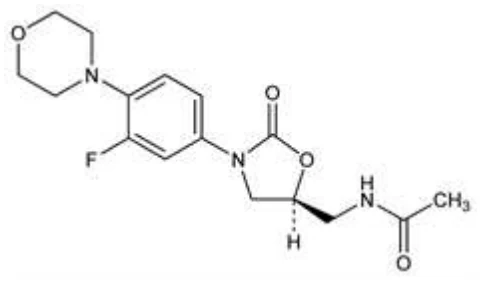
| Chemical name: | (S)-N-[[3-[3-Fluoro-4-(4-morpholinyl)phenyl]-2-oxo-5-oxazolidinyl] methyl]-acetamide |
| Molecular formula and molecular mass: | C16H20FN3O4 and 337.35 g/mol |
| Structural formula: | |
| Physicochemical properties1: | |
| Physical Form: | White to off-white solid |
| Solubility: | Slightly soluble in ethanol, ethyl acetate & water |
| pKa and pH values: | pH is Neutral and pKa is 1.8 |
| Partition Co-efficient: | 3.5 (logPC = 0.55) in aqueous buffers (I = 0.1 M) and n-octanol and is independent of pH in the range of pH 3 to 9 |
| Melting Point: | 154.5°C |
14 CLINICAL TRIALS
Clinical studies have been conducted to establish in adults the safety and efficacy of linezolid for the treatment of infections described in the 1 INDICATIONS section. This section provides clinical data for the indications of Vancomycin-Resistant Enterococcus faecium (VREF) infections and Complicated Skin and Skin Structure infections, Diabetic Foot infections only.
 | |
| 1 Linezolid Open Part DMF of Apotex Pharmachem India Pvt Ltd. |
14.1 Clinical Trials by Indication
Vancomycin-Resistant Enterococcal Infections
At the test-of-cure visit patients with vancomycin-resistant Enterococcus faecium (VREF) infections showed the following response rates for the population shown (Table 11):
Table 11. Clinical Cure Rates at Test of Cure visit for Patients with VREF (Pooled VREF data)*
| Source of Infection | Intent-to-Treat Population n/N (%) | Clinically Evaluable Population n/N (%) | Microbiologically Evaluable Population n/N (%) |
|---|---|---|---|
| Intra-Abdominal Infection | 31/34 (91.2) | 30/32 (93.8) | 30/32 (93.8) |
| Peritonitis @ | 13/15 (86.7) | 13/14 (92.9) | 13/14 (92.9) |
| Abdominal Infection @+ | 18/19 (94.7) | 17/18 (94.4) | 17/18 (94.4) |
| Skin and Skin Structure Infection | 14/19 (73.7) | 13/15 (86.7) | 12/14 (85.7) |
| Urinary Tract Infection | 12/18 (66.7) | 10/11 (90.9) | 9/10 (90.0) |
| Pneumonia | 3/5 (60.0) | 3/3 (100.0) | 3/3 (100.0) |
| Bacteremia of Unknown Origin | 16/22 (72.7) | 15/20 (75.0) | 12/17 (70.6) |
Any Site With Associated Bacteremia | 28/32 (87.5) | 25/26 (96.2) | 24/25 (96.0) |
| Any Site++ | 98/123 (79.7) | 85/95 (89.5) | 79/89 (88.8) |
* 600 mg BID patients only
@ Subsets of Intra-Abdominal Infection
+ Including abdominal abscess, abdominal/intra-abdominal infections, pelvic infections
++ All patients regardless of Source of Infection
Complicated Skin and Skin Structure Infections, Diabetic Foot Infections
Table 12. Summary of trial design and patient demographics for Study 113, linezolid in the treatment of adult diabetic patients with clinically documented complicated skin and skin structure infections ("diabetic foot infections")
| Study # | Study design | Dosage, route of administration and duration* | Study subjects (n) | Mean age (Range) | Sex (% M/F) | |||||
|---|---|---|---|---|---|---|---|---|---|---|
| 766-INF-0026-113 | Randomized (2:1 ratio), multi-center, | Linezolid IV or oral – 600 mg BID, 7 to 28 consecutive days | 241 | 63 (30 to 86) | 71/29 | |||||
| Ampicillin/sulbactam IV | 120 | 62 (28 to 88) | 71.7/28.3 | |||||||
| Study # | Study design | Dosage, route of administration and duration* | Study subjects (n) | Mean age (Range) | Sex (% M/F) | ||
|---|---|---|---|---|---|---|---|
open-label, comparator controlled trial | (1.5 to 3 g QID) or Amoxicillin/clavulanate IV (500 mg to 2 g QID) or oral (500 to 875 mg TID or BID) 7 to 28 consecutive days | ||||||
* Patients in the comparator group could also be treated with vancomycin IV 1 g q12h if MRSA was isolated from the foot infection. Patients in either treatment group who had Gram-negative bacilli isolated from the infection site could also receive aztreonam IV (1 to 2 g q8-12h). All patients were eligible to receive appropriate adjunctive treatment methods, such as debridement and off-loading, as typically required in the treatment of diabetic foot infections, and most patients received these treatments.
Demographic Characteristics: Treatment groups were similar with regard to disposition of patients by age, weight, race, sex and ethnicity. Diabetic patients in each treatment group were mostly white, male, and over 45 years of age.
Table 13. Clinical Cure Rates at Test of Cure Visit for ITT, MITT, CE and ME Populations in Study 113, linezolid in the treatment of adult diabetic patients with clinically documented complicated skin and skin structure infections ("diabetic foot infections")
| Endpoints | Study Population | Assessment | Linezolid N = 241 n (%)* | Comparator N = 120 n (%)* | 95% CI§ |
|---|---|---|---|---|---|
| Patient clinical outcome [clinical cure rate at follow-up (test of cure)] | ITT | Success (cured) | 165 (81.3) | 77 (71.3) | -0.1, 20.1 |
Number Assessed¶ | 203 (100) | 108 (100) | |||
| Total | 239 | 119 | |||
| MITT | Success (cured) | 124 (79.5) | 61 (70.9) | -2.9, 20.1 | |
Number Assessed¶ | 156 (100) | 86 (100) | |||
| Total | 180 | 92 | |||
| CE | Success (cured) | 159 (82.8) | 74 (73.3) | -0.6, 19.7 | |
Number Assessed¶ | 192 (100) | 101 (100) | |||
| Total | 212 | 105 | |||
| ME | Success (cured) | 119 (81.0) | 36 (66.7) | 0.2, 28.4 | |
Number Assessed¶ | 147 (100) | 54 (100) | |||
| Endpoints | Study Population | Assessment | Linezolid N = 241 n (%)* | Comparator N = 120 n (%)* | 95% CI§ | |||
|---|---|---|---|---|---|---|---|---|
| Total | 161 | 55 | ||||||
Abbreviations: ITT = intent-to-treat, MITT = modified intent-to-treat, CE = clinically evaluable, ME=microbiologically evaluable
* All percentages are based on the number of patients assessed.
§ Confidence interval for the difference in cure rates based on normal approximation, expressed as a percentage
¶ Excludes patients with Indeterminate or Missing outcomes.
The cure rates by pathogen for microbiologically evaluable patients are presented in Table 14.
Table 14. Cure Rates at the Test-of-Cure Visit for Microbiologically Evaluable Adult Patients with Diabetic Foot Infections [Study 113, linezolid in the treatment of adult diabetic patients with clinically documented complicated skin and skin structure infections ("diabetic foot infections")]
| Pathogen | Cured | |||||
|---|---|---|---|---|---|---|
Linezolid n/N (%) | Comparator n/N (%) | |||||
| Staphylococcus aureus | 49/64 (77) | 20/30 (67) | ||||
| Methicillin-resistant S.aureus | 12/17 (71) | 2/3 (67) | ||||
| Streptococcus agalactiae | 25/30 (83) | 9/17 (53) | ||||
| Streptococcus pyogenes | 2/2 (100) | -- | ||||
14.3 Comparative Bioavailability Studies
A randomized, two-way, single-dose, crossover comparative bioavailability study of APO-LINEZOLID 600 mg tablets (Apotex Inc.) and PrZYVOXAM ® 600 mg tablets (Pfizer Canada Inc.) was conducted in healthy, adult, male subjects under fasting conditions. Comparative bioavailability data from 27 subjects that were included in the statistical analysis are presented in the following table:
SUMMARY TABLE OF THE COMPARATIVE BIOAVAILABILITY DATA
Linezolid (1 x 600 mg) Geometric Mean Arithmetic Mean (CV %) | ||||
| Parameter | Test1 | Reference2 | % Ratio of Geometric Means | 90% Confidence Interval |
AUCT (mcg·h/mL) | 128.0 129.9 (16.2) | 129.5 132.3 (19.4) | 98.8 | 94.5 – 103.2 |
AUCI (mcg·h/mL) | 131.0 133.3 (17.6) | 132.8 136.0 (20.4) | 98.6 | 94.1 – 103.5 |
Linezolid (1 x 600 mg) Geometric Mean Arithmetic Mean (CV %) | ||||
| Parameter | Test1 | Reference2 | % Ratio of Geometric Means | 90% Confidence Interval |
Cmax (mcg/mL) | 12.8 13.1 (23.0) | 13.2 13.7 (31.5) | 97.4 | 90.1 – 105.2 |
Tmax3 (h) | 1.3 (0.3 – 4.0) | 1.3 (0.3 – 4.0) | ||
T½4 (h) | 5.8 (24.7) | 5.9 (23.2) | ||
1 APO-LINEZOLID (linezolid) tablets, 600 mg (Apotex Inc.)
2 PrZYVOXAM® (linezolid) tablets, 600 mg (Pfizer Canada Inc.)
3 Expressed as the median (range) only
4 Expressed as the arithmetic mean (CV%) only
15 MICROBIOLOGY
Linezolid belongs to a relatively new class of antimicrobial agents which possess a unique mechanism of bacterial protein synthesis inhibition. Linezolid targets the initiation phase of bacterial translation by preventing the formation of a functional 70S initiation complex. The action of linezolid is distinct from that of other protein synthesis inhibitors that inhibit elongation or termination. No inhibition of eukaryotic translation was observed in a cell-free mammalian translation system.
Linezolid has been shown to be active in vitro against most isolates of the organisms listed in Table 15.
Table 15 - In vitro Activity of Linezolid Against Aerobic and Facultative Gram-positive Microorganisms
| Organism | No. Studies | No. Isolates | Weighted Average | |
|---|---|---|---|---|
| MIC50 | MIC90 | |||
| Staphylococcus aureus (methicillin-susceptible) | 9 | 916 | 1.8 | 2.5 |
| Staphylococcus aureus (methicillin-resistant) | 9 | 973 | 1.7 | 3.2 |
| Staphylococcus epidermidis (methicillin-susceptible) | 6 | 183 | 1.3 | 2.4 |
| Staphylococcus epidermidis (methicillin-resistant) | 6 | 216 | 1.2 | 2.1 |
| Enterococcus faecalis (vancomycin-susceptible) | 4 | 476 | 1.2 | 2.0 |
| Enterococcus faecalis (vancomycin-resistant) | 7 | 148 | 1.7 | 3.1 |
| Enterococcus faecium (vancomycin-susceptible) | 4 | 68 | 1.9 | 2.0 |
| Enterococcus faecium (vancomycin-resistant) | 6 | 252 | 1.3 | 2.4 |
| Organism | No. Studies | No. Isolates | Weighted Average | |
|---|---|---|---|---|
| MIC50 | MIC90 | |||
| Streptococcus pneumoniae (penicillin-susceptible) | 5 | 303 | 0.6 | 1.0 |
| Streptococcus pneumoniae (penicillin-intermediate) | 4 | 242 | 0.6 | 1.0 |
| Streptococcus pneumoniae (penicillin-resistant) | 6 | 266 | 0.6 | 0.9 |
| Streptococcus agalactiae | 2 | 164 | 1.9 | 2.0 |
| Streptococcus pyogenes | 3 | 182 | 1.1 | 2.2 |
The following in vitro data are available, but their clinical significance is unknown. At least 90% of the following microorganisms exhibit an in vitro minimum inhibitory concentration (MIC) less than or equal to the susceptible breakpoint for linezolid. However, the safety and effectiveness of linezolid in treating clinical infections due to these microorganisms have not been established in adequate and well-controlled clinical trials.
Aerobic and facultative Gram-positive microorganisms
Corynebacterium jeikeium
Enterococcus casseliflavus
Enterococcus gallinarum
Listeria monocytogenes
Staphylococcus aureus (vancomycin-intermediate strains)
Staphylococcus haemolyticus
Staphylococcus lugdunensis
Streptococcus intermedius
Viridans group streptococci
Group C streptococci
Group G streptococci
Aerobic and facultative Gram-negative microorganisms
Pasteurella canis
Pasteurella multocida
Anaerobic microorganisms
Peptostreptococcus anaerobius
“Other” microorganisms
Chlamydia pneumoniae
In clinical trials, resistance to linezolid developed in 6 patients infected with E. faecium (4 patients received 200 mg q12h, lower than the recommended dose, and 2 patients received 600 mg q12h). In a compassionate use program, resistance to linezolid developed in 8 patients with E. faecium and in 1 patient with E. faecalis. All patients had either unremoved prosthetic devices or undrained abscesses. Resistance to linezolid occurs in vitro at a frequency of 1 x 10⁻⁹ to 1 x 10-11. In vitro studies have shown that point mutations in the 23S rRNA are associated with linezolid resistance. Resistance to linezolid has not been seen in clinical trials in patients infected with Staphylococcus spp. or Streptococcus spp., including S. pneumoniae.
Susceptibility Testing Methods
NOTE: Susceptibility testing by dilution methods requires the use of linezolid susceptibility powder. Linezolid Injection should not be used for susceptibility testing.
When available, the results of in vitro susceptibility test results for antimicrobial drugs used in the resident hospitals should be provided to the physician as periodic reports which describe the susceptibility profile of nosocomial and community-acquired pathogens. These reports should aid the physician in selecting the most effective antimicrobial.
Dilution Techniques: Quantitative methods are used to determine antimicrobial minimum inhibitory concentrations (MICs). These MICs provide estimates of the susceptibility of bacteria to antimicrobial compounds. The MICs should be determined using a standardized procedure. Standardized procedures are based on a dilution method (broth or agar) or equivalent with standardized inoculum concentrations and standardized concentrations of linezolid powder. The MIC values should be interpreted according to criteria provided in Table 16.
Table 16 - Susceptibility Interpretive Criteria for Linezolid
| Susceptibility Interpretive Criteria | ||||||||||||||
|---|---|---|---|---|---|---|---|---|---|---|---|---|---|---|
| Pathogen | Minimal Inhibitory Concentrations (MIC in mcg/mL) | Disk Diffusion (Zone Diameters in mm) | ||||||||||||
| S | I | R | S | I | R | |||||||||
| Enterococcus spp | ≤2 | 4 | ≥8 | ≥23 | 21-22 | ≤20 | ||||||||
| Staphylococcus spp a | ≤4 | - | - | ≥21 | - | - | ||||||||
| Streptococcus pneumoniae a | ≤2b | - | - | ≥21c | - | - | ||||||||
| Streptococcus spp other than S pneumoniae a | ≤2b | - | - | ≥21c | - | - | ||||||||
a The current absence of data on resistant strains precludes defining any categories other than “Susceptible”. Strains yielding test results suggestive of a “nonsusceptible” category should be retested, and if the result is confirmed, the isolate should be submitted to a reference laboratory for further testing.
b These interpretive standards for S. pneumoniae and Streptococcus spp. other than S. pneumoniae are applicable only to tests performed by broth microdilution using cation-adjusted Mueller-Hinton broth with 2 to 5% lysed horse blood inoculated with a direct colony suspension and incubated in ambient air at 35°C for 20 to 24 hours.
c These zone diameter interpretive standards are applicable only to tests performed using Mueller- Hinton agar supplemented with 5% defibrinated sheep blood inoculated with a direct colony suspension and incubated in 5% CO2 at 35°C for 20 to 24 hours.
Diffusion Techniques: Quantitative methods that require measurement of zone diameters also provide reproducible estimates of the susceptibility of bacteria to antimicrobial compounds.
One such standardized procedure requires the use of standardized inoculum concentrations. This procedure uses paper disks impregnated with 30 mcg of linezolid to test the susceptibility of microorganisms to linezolid. The disc diffusion interpretive criteria are provided in Table 16.
Anaerobic Techniques: For anaerobic bacteria, the susceptibility to linezolid as MICs can be determined by standardized test methods. Interpretive criteria for linezolid and anaerobic microorganisms have not been defined.
A report of “Susceptible” indicates that the pathogen is likely to be inhibited if the antimicrobial compound in the blood reaches the concentrations usually achievable. A report of “Intermediate” indicates that the result should be considered equivocal, and, if the microorganism is not fully susceptible to alternative, clinically feasible drugs, the test should be repeated. This category implies possible clinical applicability in body sites where the drug is physiologically concentrated or in situations where high dosage of drug can be used. This category also provides a buffer zone which prevents small uncontrolled technical factors from causing major discrepancies in interpretation. A report of “Resistant” indicates that the pathogen is not likely to be inhibited if the antimicrobial compound in the blood reaches the concentrations usually achievable; other therapy should be selected.
Quality Control
Standardized susceptibility test procedures require the use of quality control microorganisms to control the technical aspects of the test procedures. Standard linezolid powder should provide the following range of values noted in Table 17. NOTE: Quality control microorganisms are specific strains of organisms with intrinsic biological properties relating to resistance mechanisms and their genetic expression within bacteria; the specific strains used for microbiological quality control are not clinically significant.
Table 17 - Acceptable Quality Control Ranges for Linezolid to be Used in Validation of Susceptibility Test Results
| QC Strain | Acceptable Quality Control Ranges | |
|---|---|---|
Minimum Inhibitory Concentration (MIC in mcg/mL) | Disk Diffusion (Zone Diameters in mm) | |
Enterococcus faecalis ATCC 29212 | 1 to 4 | Not applicable |
Staphylococcus aureus ATCC 29213 | 1 to 4 | Not applicable |
Staphylococcus aureus ATCC 25923 | Not applicable | 27 to 31 |
Streptococcus pneumoniae ATCC 49619 | 0.50 to 2 | 28 to 34 |
16 NON-CLINICAL TOXICOLOGY
General Toxicology:
The toxicity of linezolid was evaluated in acute oral and IV toxicity studies in rats and an acute oral toxicity study in dogs, repeated-dose oral toxicity studies up to 6 months in duration in rats and 3 months in duration in dogs, a 4-week oral toxicity study in juvenile rats, repeated-dose IV toxicity studies up to 1 month in duration in rats and dogs, developmental and reproductive toxicity studies in mice and adult and juvenile rats, mutagenic potential studies in vitro and in vivo, and special toxicology studies (handler safety [ocular and dermal irritation] studies and MAO inhibition studies).
Acute Toxicity
Rat
When the acute oral toxicity of linezolid was evaluated in rats given two equally divided doses of drug on one day, the minimum lethal oral dose was between 1000 to 3000 mg/kg/day. Clinical signs in surviving and moribund animals included decreased activity, ataxia, salivation, alopecia, and soiled face and urogenitalia. Suppressed or decreased body weight gain, which returned to normal by the end of the study, was observed at doses of 3000 and 5000 mg/kg/day. In surviving rats, the main gross findings consisted of enlarged cecum (a common effect in rats treated with antibiotics) and alopecia. No toxic signs or adverse effects were seen in acute IV toxicity studies when rats were administered dose levels of up to 400 mg/kg/day.
Dog
In male dogs given two equally divided doses of linezolid orally on one day, the minimum lethal dose was greater than 2000 mg/kg/day. Vomiting, tremors, and decreased activity were the primary clinical observations. No symptoms were observed twenty-four hours after the evening (PM) dose. Food consumption and body weight gains in dogs given 500 and 2000 mg/kg/day were suppressed slightly in the early phase of the observation period and returned to normal thereafter. Slight, transient elevations in serum alanine aminotransferase (ALT) were seen in one dog given 2000 mg/kg/day.
Repeated-Dose Toxicity
Studies performed to assess the toxicity of linezolid after repeated dosing indicated that the primary target organs of toxicity were the hematopoietic and gastrointestinal systems in rats and dogs, and the reproductive system in rats. The NOAELs were 40 mg/kg/day in the 6-month oral rat study, 10 mg/kg/day in the 3-month oral rat study, 20 mg/kg/day in the 1-month oral rat study, and 20 mg/kg/day in the 1- and 3-month oral dog studies.
Hematopoietic Effects
Linezolid produced myelosuppression in rats and dogs that was time- and dose-dependent, and reversible. Findings included mild bone marrow hypocellularity and moderate decreases in red blood cell, white blood cell, and platelet counts. A 1-month recovery period was sufficient for the reversal of myelosuppression in most studies, and in the case of the 3-month oral dose study in dogs, reversal of effects was observed during the dosing phase of the study when the dose was reduced from 40 to 30 mg/kg/day.
Gastrointestinal Effects
Gastrointestinal effects were observed in rats and dogs that were likely primarily related to antibiotic-induced alterations in intestinal microflora. Findings in rats included decreased food consumption and diarrhea, which resulted in decreased weight gain, and histological changes in the large and small intestines (atrophy of intestinal mucosa and necrosis of epithelial cells in the intestinal crypts) in the 2-week study at high doses of 200 and 1000 mg/kg/day. In the longer term definitive studies in rats, treatment-related decreases in body weight gain and food consumption were not accompanied by microscopic findings. Reduced gastric emptying, noted in the safety pharmacology studies in rats, may have been a contributing factor to the inappetence. In dogs, anorexia, vomiting, and mucous stools accompanied weight loss. The gastrointestinal findings were not related to oral administration of linezolid, as they were also observed in the intravenous studies. All effects reversed with cessation of treatment.
Other Effects
In rats administered linezolid orally for 6 months, non-reversible, minimal to mild axonal degeneration of sciatic nerves was observed at 80 mg/kg/day; minimal degeneration of the sciatic nerve was also observed in 1 male at this dose level at a 3-month interim necropsy. Sensitive morphologic evaluation of perfusion-fixed tissues was conducted to investigate evidence of optic nerve degeneration. Minimal to moderate optic nerve degeneration was evident in 2 male rats administered linezolid at 80 mg/kg/day for 6 months, but the direct relationship to drug was equivocal because of the acute nature of the finding and its asymmetrical distribution. The optic nerve degeneration observed was microscopically comparable to a spontaneous unilateral optic nerve degeneration reported in aging rats and may be an exacerbation of a common background change.
Carcinogenicity:
Linezolid will be used for short-term therapy. Therefore carcinogenicity bioassay studies have not been conducted.
Mutagenicity:
Linezolid is considered to be nonmutagenic and nonclastogenic, based on negative results in a battery of tests including those designed to measure chemically induced gene mutation in bacterial and mammalian cells (the Ames and AS52 assays, respectively) and those designed to measure chromosome aberrations in human lymphocytes in vitro and micronuclei in mouse bone marrow cells in vivo. In addition, linezolid did not induce unscheduled DNA synthesis (UDS) in vitro, a measure of DNA repair following chemically induced DNA damage.
Reproductive and Developmental Toxicology:
Linezolid did not affect the fertility or reproductive performance of adult female rats, while it reversibly decreased fertility in adult male rats when given orally at doses ≥50 mg/kg/day for 4 to 10 weeks with exposures approximately equal to or greater than the expected human exposure level (exposure comparisons are based on AUC0-24 in animals vs (2 x AUC0-τ) in humans given 600 mg twice daily). Epithelial cell hypertrophy in the epididymis may have contributed to the decreased fertility by affecting sperm maturation. Similar epididymal changes were not seen in dogs. Light microscopic examination of the testes did not show overt drug-induced effects, although an effect on spermatogenesis cannot be excluded. Although the concentrations of sperm in the testes were in the normal range, the concentrations in the cauda epididymis were decreased, and sperm from the vas deferens had decreased motility.
Mildly decreased fertility occurred in juvenile male rats treated with linezolid orally through most of their period of sexual development (50 mg/kg/day from days 7 to 36 of age, and 100 mg/kg/day from days 37 to 55 of age, with exposures ranging from 0.4-fold to 1.2-fold that expected in humans based on AUC). No histopathological evidence of adverse effects was observed in the male reproductive tract.
In mice, embryo and fetal toxicity was seen only at doses that caused maternal toxicity (clinical signs and reduced body weight gain). An oral dose of 450 mg/kg/day (6.5-fold the estimated human exposure level based on AUC) correlated with increased postimplantational embryo death, including total litter loss; decreased fetal body weights and an exacerbation of a normal genetic predisposition to sternal variations in the strain of mice used, in the form of an increased incidence of costal cartilage fusion.
In rats, mild fetal toxicity was observed at oral doses of 15 and 50 mg/kg/day (exposure levels 0.22- fold to approximately equivalent to the estimated human exposure, respectively, based on AUC). The effects consisted of decreased fetal body weights and reduced ossification of sternebrae, a finding often seen in association with decreased fetal body weights. Slight maternal toxicity, in the form of reduced body weight gain, was seen at 50 mg/kg/day.
In rabbits, reduced fetal body weight occurred only in the presence of maternal toxicity (clinical signs, reduced body weight gain and food consumption) when administered twice daily at total oral daily doses of 15 mg/kg/day (0.06-fold the estimated human exposure based on AUCs).
Linezolid was not teratogenic in mice, rats, or rabbits at exposure levels 6.5-fold (in mice), equivalent to (in rats), or 0.06-fold (in rabbits) the expected human exposure level, based on AUCs. However, embryo and fetal toxicities were seen.
When female rats were treated orally with 50 mg/kg/day of linezolid during pregnancy and lactation, survival of pups was decreased on postnatal days 1 to 4, and mild delays in maturational milestones were observed. Pups permitted to mature to reproductive age, when mated, showed evidence of a dose-related increase in preimplantation loss at maternal doses ≥2.5 mg/kg/day, with exposures below those expected in humans.
Other Studies
In ocular and dermal irritation studies in albino rabbits, linezolid caused minimal and transient irritation when administered as a single dose of 100 mg/eye and was slightly irritating to abraded skin when applied at a dose of 100 mg/site/day for 5 days.
17 SUPPORTING PRODUCT MONOGRAPHS
- 1. Pr ZYVOXAM®, (Linezolid Injection 2 mg/mL, Linezolid Powder for Oral Suspension 100 mg/5mL when reconstituted), submission control 279230, Product Monograph, Pfizer Canada Inc., (FEB 12, 2024)