


Product Monograph - Apo-Nebivolol
SUMMARY PRODUCT INFORMATION
| Route of Administration | Dosage Form / Strength | Nonmedicinal Ingredients |
| Oral | Tablet 2.5 mg, 5 mg, 20 mg | co-povidone, crospovidone, ferric oxide red (5 mg only), indigotine Al lake, iron oxide yellow (5 mg only), lactose monohydrate, magnesium stearate and pregelatinized starch |
INDICATIONS AND CLINICAL USE
APO-NEBIVOLOL (nebivolol tablets) is indicated for the treatment of mild to moderate essential hypertension.
APO-NEBIVOLOL may be used alone or concomitantly with thiazide diuretics or angiotensin converting enzyme (ACE) inhibitors [see DRUG INTERACTIONS, DOSAGE AND ADMINISTRATION and CLINICAL TRIALS].
APO-NEBIVOLOL is not recommended for the emergency treatment of hypertensive crises.
Geriatrics (≥ 65 years of age):
No dosage adjustment is required in geriatric patients. Of the total number of patients receiving nebivolol tablets in clinical studies, 436 (18%) were 65 years of age or older. No differences in efficacy or safety of nebivolol tablets were observed between older and younger patients [see DOSAGE AND ADMINISTRATION and ACTION AND CLINICAL PHARMACOLOGY, Special Populations and Conditions].
Pediatrics (< 18 years of age):
The safety and efficacy of nebivolol tablets in pediatric patients have not been established and therefore use in children is not recommended.
CONTRAINDICATIONS
- Patients who are hypersensitive to this drug or to any ingredient in the formulation or component of the container. For a complete listing, see the DOSAGE FORMS, COMPOSITION AND PACKAGING section of the Product Monograph.
- Severe bradycardia (generally <50 bpm prior to start of therapy)
- Patients with cardiogenic shock
- Decompensated heart failure
- Second or third degree atrioventricular (AV) block
- Sick sinus syndrome or sinoatrial block
- Patients with severe hepatic impairment (Child-Pugh Score >B)
- Severe peripheral arterial circulatory disorders
- Patients with the rare hereditary conditions of Galactose intolerance, Lapp lactase deficiency or glucose-galactose malabsorption
WARNINGS AND PRECAUTIONS
General
Effects on ability to drive and use machines
No studies on the effects of nebivolol tablets on the ability to drive and use machines have been performed. Some adverse effects of a reduction in blood pressure, such as lightheadedness, dizziness or syncope may impair the patient’s ability to concentrate and react and, therefore, constitute a risk in situations where these abilities are of particular importance.
Use with CYP2D6 Inhibitor
Nebivolol exposure increases significantly with inhibition of CYP2D6 [see DRUG INTERACTIONS]. The dose of APO-NEBIVOLOL may need to be reduced.
Cardiovascular
Abrupt Cessation of Therapy
Do not abruptly discontinue APO-NEBIVOLOL therapy in patients with coronary artery disease. Severe exacerbation of angina, myocardial infarction and ventricular arrhythmias have been reported in patients with coronary artery disease following the abrupt discontinuation of therapy with β-blockers. Myocardial infarction and ventricular arrhythmias may occur with or without preceding exacerbation of angina pectoris. Caution patients without overt coronary artery disease against interruption or abrupt discontinuation of therapy. As with other β-blockers, when discontinuation of APO-NEBIVOLOL is planned, the dosage should be gradually reduced over a period of about two weeks and the patient should be carefully observed and advised to limit physical activity to a minimum. The same frequency of administration should be maintained. In situations of greater urgency, APO-NEBIVOLOL should be discontinued stepwise over a shorter time and under closer observation.
If the angina worsens or acute coronary insufficiency develops, re-start APO-NEBIVOLOL promptly, at least temporarily.
Decreased Heart Rate and PR Interval Prolongation
Like other β1-blocking agents, nebivolol tablets causes a decrease in heart rate and PR interval prolongation [see ACTION AND CLINICAL PHARMACOLOGY, Electrocardiography]. Bradycardia and atrioventricular block have been reported with the use of nebivolol tablets [see ADVERSE REACTIONS]. Caution should be observed in patients with first degree atrioventricular block, conduction disorders, a history of syncope or arrhythmia, angina, or ischemic heart disease. Concomitant medications that result in a decrease in heart rate and/or PR interval prolongation should be carefully considered to determine whether the therapeutic benefit outweights the potential risk [see DRUG INTERACTIONS].
Sinus Bradycardia
Severe sinus bradycardia may occur with the use of nebivolol tablets from unopposed vagal activity remaining after blockade of β1-adrenergic receptors; in such cases, dosage should be reduced.
Peripheral Artery Disorders
β-blockers may aggravate the symptoms of peripheral arterial circulatory disorders, mainly due to their blood pressure lowering effect. Caution should be exercised in individuals with such disorders.
Non-dihydropyridine Calcium Channel Blockers
The combination of non-dihydropyridine calcium channel blockers of the verapamil and diltiazem type and β-blockers warrants caution since additive effects on myocardial contractility, heart rate and AV conduction have been observed. Close medical supervision is recommended [see DRUG INTERACTIONS].
Endocrine and Metabolism
Diabetes and Hypoglycemia
APO-NEBIVOLOL should be used with caution in patients subject to hypoglycemic episodes since β-blockers may mask some of the manifestations of hypoglycemia, particularly tachycardia.
Nonselective β-blockers may potentiate insulin-induced hypoglycemia and delay recovery of serum glucose levels. Nebivolol hydrochloride is β1-selective; however, it is not known whether nebivolol tablets have these effects. Patients subject to spontaneous hypoglycemia and diabetic patients receiving insulin or oral hypoglycemic agents should be advised about these possibilities.
Thyrotoxicosis
In patients with thyrotoxicosis, possible deleterious effects from long-term use of nebivolol tablets have not been adequately appraised. β-blockers may mask clinical signs of hyperthyroidism, such as tachycardia and give a false impression of improvement. Therefore, these patients should be carefully monitored for thyroid function. Abrupt withdrawal of β-blockers may be followed by an exacerbation of the symptoms of hyperthyroidism or may precipitate a thyroid storm.
Pheochromocytoma
APO-NEBIVOLOL should be used with caution and only after pretreatment with α-receptor blockers in patients with known or suspected pheochromocytoma.
Hepatic/Biliary/Pancreatic
Impaired Hepatic Function
Metabolism of nebivolol is decreased in patients with moderate hepatic impairment. Nebivolol tablets have not been studied in patients with severe hepatic impairment [see CONTRAINDICATIONS, DOSAGE AND ADMINISTRATION, and ACTION AND CLINICAL PHARMACOLOGY, Special Populations and Conditions].
Immune
Risk of Anaphylactic Reactions
While taking β-blockers, patients with a history of severe anaphylactic reactions to a variety of allergens may be more reactive to repeated accidental, diagnostic, or therapeutic challenge.
There may be increased difficulty in treating an allergic-type reaction in patients on β-blockers since these patients may be unresponsive to the usual doses of epinephrine used to treat allergic reactions. While larger doses of epinephrine may be needed to overcome the bronchospasm, these doses can be associated with excessive α-adrenergic stimulation with consequent hypertension, reflex bradycardia and heart block and possible potentiation of bronchospasm.
Peri-Operative Considerations
Anesthesia and Major Surgery
It is not advisable to withdraw β-adrenoceptor blocking drugs prior to surgery in the majority of patients. However, care should be taken when using APO-NEBIVOLOL with anesthetic agents that depress the myocardial function, such as ether, cyclopropane, and trichloroethylene [see DRUG INTERACTIONS]. Some patients receiving β-adrenoceptor blocking drugs have been subject to protracted severe hypotension during anesthesia. Difficulty in restarting and maintaining the heartbeat has been reported.
In emergency surgery, the β-blocking effects of nebivolol hydrochloride can be reversed by β-agonists, e.g., dobutamine or isoproterenol.
If β-blocking therapy is withdrawn prior to major surgery, the impaired ability of the heart to respond to reflex adrenergic stimuli may augment the risks of general anesthesia and surgical procedures.
Renal
Impaired Renal Function
Renal clearance of nebivolol is decreased in patients with severe renal impairment. Nebivolol tablets has not been studied in patients receiving dialysis and is therefore not recommended for use in this patient population [see DOSAGE AND ADMINISTRATION, and ACTION AND CLINICAL PHARMACOLOGY, Special Populations and Conditions].
Respiratory
Bronchospastic Disease
In general, patients with bronchospastic pulmonary disease should not receive β-blockers. However, because of its relative β1-selectivity, APO-NEBIVOLOL may be used cautiously in patients with bronchospastic disease who do not respond to, or who cannot tolerate other antihypertensive treatment. Since β1-selectivity is not absolute, the lowest possible dose of APO-NEBIVOLOL should be employed, a β2-agonist (bronchodilator) should be made available, and the patient should be monitored closely. In patients already on bronchodilator therapy the dose may have to be increased.
Skin
Oculomucocutaneous Syndrome
Various skin rashes and conjunctival xerosis have been reported with β-blockers, including nebivolol hydrochloride. A severe syndrome (oculomucocutaneous syndrome) whose signs include conjunctivitis sicca and psoriasiform rashes, otitis, and sclerosing serositis has occurred with the chronic use of one β-adrenergic blocking agent (practolol). This syndrome has not been observed with nebivolol hydrochloride. However, physicians should be alert to the possibility of such reactions and should discontinue treatment in the event that they occur.
Special Populations
Pregnant Women: No studies of nebivolol were conducted in pregnant women. Use APO-NEBIVOLOL during pregnancy only if the potential benefit to the mother justifies the potential risk to the fetus, taking into account that toxicity was seen in animals.
Animal Data: In rats, maternal toxicity included mortality, ptosis and decreased body weights at ≥10 mg/kg (∼5 times the maximum recommended human dose (MRHD) on body surface area basis). Reprotoxicity included low prolonged gestation with dystocia, increased duration of gestation and decreased nursing behaviour at doses ≥5 mg/kg (∼2.5 times the MRHD on body surface area basis). These effects were associated with increased fetal deaths and stillborn pups, and decreased birth weight, live litter size and pup survival rate.
Nebivolol or its metabolites crossed the placental barrier in pregnant rats. When nebivolol was administered to pregnant rats, developmental abnormalities including split thoracic vertebrae changes in sternebrae and ureter dilatation occurred at 40 mg/kg (∼20 times the MRHD on body surface area basis).
Nursing Women: It is not known whether this drug is excreted in human milk, but nebivolol and its metabolites have been found in the milk of lactating rats. Because of the potential for β- blockers to produce serious adverse reactions in nursing infants, especially bradycardia, APO-NEBIVOLOL is not recommended in nursing women. A decision should be made to discontinue nursing or discontinue the drug, taking into account the importance of the drug to the nursing mother.
Pediatrics (< 18 years of age): Safety and efficacy in pediatric patients have not been established and therefore use in children is not recommended.
ADVERSE REACTIONS
Adverse Drug Reaction Overview
Nebivolol tablets have been evaluated for safety in more than 7,100 patients with hypertension with a clinical trial exposure to nebivolol hydrochloride in approximately 5,400 patients. Patients received nebivolol tablets for up to 36 months, with over 1,000 patients treated for at least 6 months, and approximately 500 patients for more than one year.
In placebo-controlled monotherapy trials, the most common adverse events (≥ 2% of patients) observed with nebivolol tablets were headache (7.1%), fatigue (3.6%), nasopharyngitis (3.1%), dizziness (2.9%), diarrhea (2.5%), and upper respiratory tract infections (2.1%). Nebivolol tablets were well tolerated and adverse events have generally been mild to moderate in intensity.
In placebo-controlled monotherapy trials, discontinuation of therapy due to adverse events was reported in 2.6% of patients treated with nebivolol tablets (47/1811), and in 2.0% of patients given placebo (4/205). The most common events leading to discontinuation are headache (0.2%), nausea (0.2%), bradycardia (0.2%), myocardial infarction (0.2%), orthostatic hypotension (0.1%), dyspnea (0.1%), and chest pain (0.1%) for patients who received nebivolol tablets.
Clinical Trial Adverse Drug Reactions
Because clinical trials are conducted under very specific conditions the adverse reaction rates observed in the clinical trials may not reflect the rates observed in practice and should not be compared to the rates in the clinical trials of another drug. Adverse drug reaction information from clinical trials is useful for identifying drug-related adverse events and for approximating rates.
In three multi-center, randomized, parallel-group, double-blind, placebo-controlled monotherapy trials, 1,811 hypertensive patients were treated over 12 weeks with a nebivolol tablets dose ranging from 1.25 mg to 40 mg, and 205 patients were given placebo. The median exposure to treatment in these three trials was 85-days.
Table 1: Number (%) of Patients with Adverse Events (Incidence ≥1% in any nebivolol hydrochloride group) by Preferred Term - Placebo-Controlled, 12-Week Monotherapy Studies (Pooled Safety Population)
| System Organ Class/ Preferred Term | Placebo (n=205) | Nebivolol hydrochloride 2.5 mg (n=131) | Nebivolol hydrochloride 5 mg (n=459) | Nebivolol hydrochloride 10 mg (n=461) | Nebivolol hydrochloride 20 mg (n=460) | ||||||||
|---|---|---|---|---|---|---|---|---|---|---|---|---|---|
| Cardiac Disorders | |||||||||||||
| Bradycardia/Sinus Bradycardia | 1 (0.5%) | 0 | 3 (0.7%) | 3 (0.7%) | 10 (2.2%) | ||||||||
| Palpitations | 0 | 2 (1.5%) | 2 (0.4%) | 4 (0.9%) | 1 (0.2%) | ||||||||
| Eye Disorders | |||||||||||||
| Vision blurred | 0 | 2 (1.5%) | 2 (0.4%) | 3 (0.7%) | 3 (0.7%) | ||||||||
| Gastrointestinal Disorders | |||||||||||||
| Diarrhea | 4 (2.0%) | 2 (1.5%) | 11 (2.4%) | 9 (2.0%) | 15 (3.3%) | ||||||||
| Nausea | 1 (0.5%) | 3 (2.3%) | 3 (0.7%) | 13 (2.8%) | 10 (2.2%) | ||||||||
| Constipation | 5 (2.4%) | 1 (0.8%) | 2 (0.4%) | 5 (1.1%) | 3 (0.7%) | ||||||||
| Dry mouth | 0 | 2 (1.5%) | 3 (0.7%) | 3 (0.7%) | 1 (0.2%) | ||||||||
| Dyspepsia | 3 (1.5%) | 1 (0.8%) | 5 (1.1%) | 5 (1.1%) | 4 (0.9%) | ||||||||
| General Disorders and Administration Site Conditions | |||||||||||||
| Fatigue | 3 (1.5%) | 6 (4.6%) | 10 (2.2%) | 11 (2.4%) | 27 (5.9%) | ||||||||
| Chest Pain | 0 | 2 (1.5%) | 2 (0.4%) | 5 (1.1%) | 8 (1.7%) | ||||||||
| Edema | 0 | 2 (1.5%) | 0 | 0 | 1 (0.2%) | ||||||||
| Edema Peripheral | 1 (0.5%) | 1 (0.8%) | 4 (0.9%) | 6 (1.3%) | 2 (0.4%) | ||||||||
| Pain | 0 | 0 | 1 (0.2%) | 1 (0.2%) | 5 (1.1%) | ||||||||
| Infections and Infestations | |||||||||||||
| Nasopharyngitis | 9 (4.4%) | 5 (3.8%) | 17 (3.7%) | 10 (2.2%) | 17 (3.7%) | ||||||||
| Upper Respiratory Tract Infection | 5 (2.4%) | 2 (1.5%) | 11 (2.4%) | 6 (1.3%) | 12 (2.6%) | ||||||||
| Urinary Tract Infection | 2 (1.0%) | 2 (1.5%) | 9 (2.0%) | 2 (0.4%) | 7 (1.5%) | ||||||||
| Sinusitis | 2 (1.0%) | 0 | 6 (1.3%) | 7 (1.5%) | 5 (1.1%) | ||||||||
| Influenza | 1 (0.5%) | 0 | 6 (1.3%) | 2 (0.4%) | 6 (1.3%) | ||||||||
| Bronchitis | 1 (0.5%) | 0 | 4 (0.9%) | 4 (0.9%) | 5 (1.1%) | ||||||||
| Investigations | |||||||||||||
C-Reactive Protein Increased | 1 (0.5%) | 5 (3.8%) | 3 (0.7%) | 4 (0.9%) | 5 (1.1%) | ||||||||
Blood Triglycerides Increased | 3 (1.5%) | 1 (0.8%) | 1 (0.2%) | 9 (2.0%) | 3 (0.7%) | ||||||||
| Low Density Lipoprotein Increased | 1 (0.5%) | 2 (1.5%) | 2 (0.4%) | 1 (0.2%) | 1 (0.2%) | ||||||||
| Musculoskeletal and Connective Tissue Disorders | |||||||||||||
| Arthralgia | 3 (1.5%) | 3 (2.3%) | 6 (1.3%) | 7 (1.5%) | 4 (0.9%) | ||||||||
| Back Pain | 2 (1.0%) | 1 (0.8%) | 2 (0.4%) | 7 (1.5%) | 9 (2.0%) | ||||||||
| Pain In Limb | 1 (0.5%) | 1 (0.8%) | 5 (1.1%) | 2 (0.4%) | 3 (0.7%) | ||||||||
| System Organ Class/ Preferred Term | Placebo (n=205) | Nebivolol hydrochloride 2.5 mg (n=131) | Nebivolol hydrochloride 5 mg (n=459) | Nebivolol hydrochloride 10 mg (n=461) | Nebivolol hydrochloride 20 mg (n=460) | |||||||||||
|---|---|---|---|---|---|---|---|---|---|---|---|---|---|---|---|---|
| Nervous System Disorders | ||||||||||||||||
| Headache | 12 (5.9%) | 8 (6.1%) | 41 (8.9%) | 28 (6.1%) | 28 (6.1%) | |||||||||||
| Dizziness | 4 (2.0%) | 4 (3.1%) | 7 (1.5%) | 12 (2.6%) | 19 (4.1%) | |||||||||||
| Carpal Tunnel Syndrome | 0 | 2 (1.5%) | 0 | 0 | 0 | |||||||||||
| Psychiatric Disorders | ||||||||||||||||
| Insomnia | 1 (0.5%) | 3 (2.3%) | 3 (0.7%) | 4 (0.9%) | 9 (2.0%) | |||||||||||
| Respiratory, Thoracic and Mediastinal Disorders | ||||||||||||||||
| Cough | 2 (1.0%) | 3 (2.3%) | 5 (1.1%) | 7 (1.5%) | 3 (0.7%) | |||||||||||
| Sinus Congestion | 0 | 3 (2.3%) | 4 (0.9%) | 4 (0.9%) | 1 (0.2%) | |||||||||||
| Dyspnea | 1 (0.5%) | 0 | 1 (0.2%) | 5 (1.1%) | 7 (1.5%) | |||||||||||
| Pharyngolaryngeal Pain | 0 | 1 (0.8%) | 1 (0.2%) | 3 (0.7%) | 5 (1.1%) | |||||||||||
| Skin and Subcutaneous Tissue Disorders | ||||||||||||||||
| Rash | 0 | 3 (2.3%) | 0 | 5 (1.1%) | 4 (0.9%) | |||||||||||
Less Common Clinical Trial Adverse Drug Reactions (<1%)
Adverse events reported in the placebo-controlled studies with incidence rates of less than <1% and at a higher frequency than placebo-treated patients are listed below.
Blood and Lymphatic System Disorders: anemia; leukopenia; lymphadenopathy
Cardiac Disorders: myocardial infarction; myocardial ischemia; angina pectoris; atrioventricular block first degree; cardiac failure congestive; extrasystoles; tachycardia; withdrawal arrhythmia
Ear And Labyrinth Disorders: deafness; ear pain; hearing impaired; vertigo
Eye Disorders: conjunctival haemorrhage; conjunctivitis; eye pain; glaucoma; vision disturbances
Gastrointestinal Disorders: abdominal pain; flatulence; gastro-oesophageal reflux disease; oral mucosal lesions; toothache; vomiting
General Disorders and Administration Site Conditions: influenza-like illness; pyrexia; weakness
Immune System Disorders: hypersensitivity
Infections and Infestations: fungal infection; gastroenteritis; hepatitis; localized infection; lower respiratory tract infection
Investigations: alanine aminotransferase increased; aspartate aminotransferase increased; blood alkaline phosphatase increased; blood glucose increased; blood uric acid increased; cardiac murmur; haematocrit/hemoglobin decreased; high density lipoprotein decreased; weight increased
Metabolism and Nutrition Disorders: diabetes mellitus; gout; hypercholesterolaemia; hyperkalaemia; hyperlipidaemia
Musculoskeletal and Connective Tissue Disorders: arthritis; muscle cramps; muscle weakness; myalgia
Nervous System Disorders: burning sensation; cerebral haemorrhage; hypoaesthesia; memory impairment; migraines; paraesthesia; transient ischemic attack
Psychiatric Disorders: anxiety; decreased libido; depression; nightmare
Renal and Urinary Disorders: haematuria; proteinuria; urinary frequency increased Reproductive System and Breast Disorders: dysmenorrhoea; erectile dysfunction; galactorrhoea Respiratory, Thoracic and Mediastinal Disorders: epistaxis; nasal congestion
Skin and Subcutaneous Tissue Disorders: angioneurotic oedema; contusion; pruritus; sweating
Vascular Disorders: deep vein thrombosis; flushing; hypotension; intermittent claudication; orthostatic hypotension; phlebitis
Abnormal Hematologic and Clinical Chemistry Findings
In placebo-controlled monotherapy studies, patients were reported to have laboratory abnormalities of clinical significance for the clinical laboratory parameters shown in Table 2.
Table 2: Number of Patients with Abnormal Laboratory Results of Clinical Significance Occurring After First Dose of Treatment in Placebo-Controlled, 12-Week Monotherapy Studies (Pooled Safety Population)
| Parameters (values of clinical significance) | Placebo (n=205) | Nebivolol | |||
| 2.5 mg (n=131) | 5 mg (n=459) | 10 mg (n=461) | 20 mg (n=460) | ||
| Chemistry | |||||
| AST (≥3 X ULN) | 0 | 0 | 3 (0.7%) | 2 (0.4%) | 4 (0.9%) |
| Blood urea nitrogen (BUN) (≥10.7 mmol/L) | 0 | 1 (0.8%) | 2 (0.4%) | 3 (0.7%) | 2 (0.4%) |
| Uric acid (Male≥625 μmol/L; Female ≥506 μmol/L) | 0 | 0 | 2 (0.4%) | 0 | 1 (0.2%) |
| Hematology | |||||
| Eosinophils (≥10%) | 2 (1.0%) | 1 (0.8%) | 8 (1.7%) | 3 (0.7%) | 5 (1.1%) |
| Hematocrit (Male≤37%; Female≤32%) | 3 (1.5%) | 2 (1.5%) | 4 (0.9%) | 5 (1.1%) | 9 (2.0%) |
| Hemoglobin (Male≤7.1 mmol/L; Female≤5.9 mmol/L) | 1 (0.5%) | 1 (0.8%) | 2 (0.4%) | 1 (0.2%) | 4 (0.9%) |
| Urinalysis | |||||
| Protein (increase≥2units) | 2 (1.0%) | 0 | 4 (0.9%) | 1 (0.2%) | 5 (1.1%) |
AST, aspartate aminotransferase; Normal ranges: AST: 0 to 42 U/L; BUN: 2.5 to 8.9 mmol/L; uric acid: 149 to 446 mcmol/L; hematocrit: 35 to 46%; hemoglobin: 7.4 to 9.7 mmol/L.
The clinical laboratory parameters for which patients were reported to experience shifts from normal at baseline to the out-of-normal range during nebivolol treatment phase with a higher frequency than in placebo-treated patients are listed below.
Triglycerides: Shifts from normal to values above the upper limit of normal (2.2 mmol/L) were reported in 11.5%, 14.3%, 17.0% and 16.3% of patients treated with nebivolol 2.5 mg, 5 mg, 10 mg and 20 mg, respectively, as compared to 10.5% with placebo.
HDL cholesterol: Shifts from normal to values below the lower limit of normal (0.9 mmol/L) were reported in 1.1%, 3.0%, 4.4% and 4.1% of patients treated with nebivolol 2.5 mg, 5 mg, 10 mg and 20 mg, respectively, as compared to 1.3% with placebo.
Post-Market Adverse Drug Reactions
Other adverse events reported in post-marketing use include: abnormal hepatic function (including increased AST, ALT and bilirubin), acute pulmonary edema, acute renal failure, angioedema, atrioventricular block (both second and third degree), bronchospasm, hepatitis, hypersensitivity (including urticaria and allergic vasculitis), peripheral ischemia/claudication, pruritus, psoriasis, Raynaud’s phenomenon, somnolence, suicidal ideation, syncope, thrombocytopenia and various rash and skin disorders. Few cases, some fatal, of cardiac arrest have been reported shortly after initiation of nebivolol therapy; causality has not been established.
DRUG INTERACTIONS
Overview
Nebivolol is a substrate for CYP2D6. Inhibitors, inducers or substrates of CYP2D6 alter the exposure of nebivolol. When APO-NEBIVOLOL is co-administered with an inhibitor, inducer, or substrate of this enzyme, the dose of APO-NEBIVOLOL may need to be adjusted.
Based on in vitro results, the potential of nebivolol to have a clinically meaningful inhibitory effect on other cytochrome P450 isozymes is unlikely (i.e. CYP1A2, CYP2A6, CYP2B6, CYP2C8, CYP2C9, CYP2C19, CYP2E1, CYP3A4/5 and CYP4A9/11) [see DETAILED PHARMACOLOGY].
Like other β1-blocking agents, nebivolol hydrochloride causes a decrease in heart rate and PR interval prolongation [see WARNINGS AND PRECAUTIONS, Cardiovascular and ACTION AND CLINICAL PHARMACOLOGY, Electrocardiography]. The concomitant use of APO-NEBIVOLOL with other drugs that lower heart rate and/or prolong the PR interval, including, but not limited to, antiarrhythmics, non-dihydropyridine calcium channel blockers, digitalis glycosides, α2-adrenoceptor agonists, cholinesterase inhibitors, sphingosine-1 phosphate receptor modulators (e.g. fingolimod), and some of the HIV protease inhibitors, should be carefully considered to determine whether the therapeutic benefit outweighs the potential risk.
Drug-Drug Interactions
Table 3: Established or Potential Drug-Drug Interactions
| Common Name | Reference | Effect | Clinical Comments |
|---|---|---|---|
| α2-adrenergic receptor agonists (e.g., clonidine, guanethidine) | T | The added β-blocking action of nebivolol hydrochloride may produce excessive reduction of sympathetic activity. | Closely monitor patients concomitantly treated with an α2- agonist. In patients who are receiving nebivolol hydrochloride and clonidine, discontinue APO-NEBIVOLOL for several days before the gradual tapering of clonidine. |
Angiotensin converting enzyme (ACE) inhibitors | CT | No pharmacokinetic interaction was seen when nebivolol was co-administered with ramipril. The risk of bradycardia/sinus bradycardia was slightly increased when nebivolol was given concomitantly with lisinopril compared to administration of nebivolol alone. More patients showed a shift in total cholesterol and low density lipoprotein cholesterol (LDL-C) from normal to high range when treated concomitantly with nebivolol and lisinopril compared to patients treated with each of these drugs alone. | Use caution when APO-NEBIVOLOL is co-administered with ACE inhibitors. |
| Common Name | Reference | Effect | Clinical Comments |
|---|---|---|---|
| Anesthetic agents (e.g., ether, cyclopropane and trichloroethylene) | T | Concomitant use with anesthetic agents which depress myocardial function can exacerbate myocardial depression. | Monitor patients ECG and blood pressure closely when APO-NEBIVOLOL is co-administered with anesthetic agents. |
| Antiarrhythmics (e.g., amiodarone, disopyramide, flecainide) | C, T | APO-NEBIVOLOL can exacerbate the effects of myocardial depressants or inhibitors of atrioventricular conduction. | Monitor patients closely when APO-NEBIVOLOL is co-administered with antiarrhythmics. Dose adjustment may be needed. |
| Antidiabetic agents (e.g., insulin and oral hypoglycemic agents) | C, T | β-blockers may mask some of the manifestations of hypoglycemia, particularly tachycardia. | Use caution when APO-NEBIVOLOL is co-administered in patients subject to hypoglycemic episodes. |
| Calcium channel blockers (particularly verapamil and diltiazem, etc.) | C*, T | APO-NEBIVOLOL can exacerbate the effects of myocardial depressants or inhibitors of atrioventricular conduction. Cases of serious effects (e.g. bradycardia, syncope, requiring hospitalization) in patients treated with nebivolol and verapamil, diltiazem were reported. | Monitor patients closely when APO-NEBIVOLOL is co-administered with non-dihydropyridine calcium channel blockers. |
CYP2D6 inducers (e.g., dexamethasone, rifampin) | T | Inducers of CYP2D6 may decrease the exposure of nebivolol. | The dose of APO-NEBIVOLOL may need to be adjusted. |
CYP2D6 inhibitors (e.g., fluoxetine, quinidine, paroxetine, propafenone and cimetidine) and substrates (e.g., thioridazine, venlafaxine) | CT, C | Inhibitors or substrates of CYP2D6 increase the exposure of nebivolol. Fluoxetine, a CYP2D6 inhibitor, administered at 20 mg per day for 21 days prior to a single 10 mg dose of nebivolol hydrochloride to 10 healthy adults, led to an 8-fold increase in the AUC and 3-fold increase in Cmax for d-nebivolol. | Use caution when APO-NEBIVOLOL is co-administered with CYP2D6 inhibitors/substrates. The dose of APO-NEBIVOLOL may need to be reduced. |
| Digoxin | T, C* | Concomitant administration of APO-NEBIVOLOL and digoxin can exacerbate slowing atrioventricular conduction and heart rate. Cases of bradycardia were reported with concomitant use. | Monitor patients closely when APO-NEBIVOLOL is co-administered with digoxin. |
| Diuretics: hydrochlorothiazide, furosemide, spironolactone | CT, C* | No pharmacokinetic interactions were observed in healthy adults between nebivolol hydrochloride (10 mg daily for 10 days) and furosemide (40 mg single dose), hydrochlorothiazide (25 mg once daily for 10 days), or spironolactone (25 mg once daily for 10 days). Cases of bradycardia, hypotension and loss of consciousness were reported with concomitant use. | Use caution when APO-NEBIVOLOL is co-administered with diuretics. |
| Fingolimod | CT | Bradycardia | Concomitant use of fingolimod with beta blockers may potentiate bradycardic effects and is not recommended. Where such coadministration is considered necessary, appropriate monitoring at treatment administration e.g., at |
| Common Name | Reference | Effect | Clinical Comments |
|---|---|---|---|
| least overnight monitoring, is recommended. | |||
| Histamine-2 Receptor Antagonists | CT | The pharmacokinetics of nebivolol hydrochloride (5 mg single dose) were not affected by the co-administration of ranitidine (150 mg twice daily). Cimetidine (400 mg twice daily) causes a 23% increase in the plasma levels of d-nebivolol. | No specific action required. |
| Sildenafil | CT | The co-administration of nebivolol and sildenafil decreased AUC and Cmax of sildenafil by 21 and 23% respectively. The effect on the Cmax and AUC for d- nebivolol was also small (<20%). Given that both agents modulate the nitric oxide pathway, vital signs were measured. | Use caution when APO-NEBIVOLOL is co-administered with sildenafil. When co-administered, the effects on pulse and blood pressure were approximately the sum of the effects of sildenafil and nebivolol. |
| Valsartan | CT | Concomitant administration of nebivolol tablets (20 mg once daily) and valsartan (320 mg once daily) in 30 healthy adult volunteers resulted in a 47% and 19% reduction in d-nebivolol Cmax and AUC, respectively. |
C=Case Study, CT=Clinical Trial, I=In vitro, T=Theoretical, C* = Case Report from PSUR data
No pharmacokinetic interaction has been observed when nebivolol is concomitantly administered with activated charcoal, alcohol, digoxin, losartan or warfarin in healthy adult volunteers.
Moreover, nebivolol has no significant effects on the anticoagulant activity of warfarin (prothrombin time and INR).
Drug-Food Interactions
Food does not significantly alter the pharmacokinetics of nebivolol. APO-NEBIVOLOL may be taken with or without food.
Drug-Herb Interactions
Interactions with herbal products have not been established.
Drug-Laboratory Interactions
Interactions with laboratory testing have not been established.
DOSAGE AND ADMINISTRATION
Recommended Dose and Dosage Adjustment
In the treatment of mild to moderate essential hypertension, the dose of APO-NEBIVOLOL (nebivolol tablets) should be individualized to the needs of the patient.
For most patients, the recommended starting dose is 5 mg once daily, with or without food. For patients requiring further reduction in blood pressure, the dose can be increased at two-week intervals up to 20 mg once daily.
Once-daily dosing has shown to sustain efficacy over 24 hours. A more frequent dosing regimen is unlikely to be beneficial.
Concomitant use of ACE inhibitors
When APO-NEBIVOLOL is to be co-administered with an ACE inhibitor, the lowest dose of the added agent should be employed initially and if needed, can be then increased at two-week intervals up to the maximum recommended dose [see DRUG INTERACTIONS].
Renal Impairment
In patients with severe renal impairment (ClCr less than 30 mL/min) the recommended initial dose is 2.5 mg once daily; titrate up slowly if needed. Nebivolol tablets have not been studied in patients receiving dialysis and is therefore not recommended for use in this patient population [see WARNINGS AND PRECAUTIONS and ACTION AND CLINICAL PHARMACOLOGY, Special Populations and Conditions].
Hepatic Impairment
In patients with moderate hepatic impairment, the recommended initial dose is 2.5 mg once daily; titrate up slowly if needed. Nebivolol tablets have not been studied in patients with severe hepatic impairment and therefore is contraindicated in that population [see CONTRAINDICATIONS, and ACTION AND CLINICAL PHARMACOLOGY, Special Populations and Conditions].
Geriatric Patients
No dose adjustments are usually necessary for elderly patients.
CYP2D6 Polymorphism
No dose adjustments are necessary for patients who are CYP2D6 poor metabolizers. The clinical effect and safety profile observed in poor metabolizers were similar to those of extensive metabolizers [see ACTION AND CLINICAL PHARMACOLOGY, Special Populations and Conditions].
Missed Dose
If patients miss a dose, they should wait until their next scheduled dose. Patients should not double their dose. APO-NEBIVOLOL should be taken once approximately every 24 hours.
OVERDOSAGE
| For management of a suspected drug overdose, contact your regional Poison Control Centre. |
Symptoms:
In clinical trials and worldwide post-marketing experience there were reports of nebivolol tablets overdose. The most common signs and symptoms associated with nebivolol tablets overdosage are bradycardia and hypotension. Other important adverse reactions reported with nebivolol tablets overdose include heart failure, dizziness, hypoglycemia, fatigue and vomiting. Other adverse reactions associated with β-blocker overdose include bronchospasm and heart block.
The largest known ingestion of nebivolol tablets worldwide involved a patient who ingested up to 500 mg of nebivolol hydrochloride along with several 100 mg tablets of acetylsalicylic acid in a suicide attempt. The patient experienced hyperhydrosis, pallor, depressed level of consciousness, hypokinesia, hypotension, sinus bradycardia, hypoglycemia, hypokalemia, respiratory failure and vomiting. The patient recovered.
Treatment:
Because of extensive drug binding to plasma proteins, hemodialysis is not expected to enhance nebivolol clearance. Administration of activated charcoal is not recommended as it has no effect on the pharmacokinetics of nebivolol hydrochloride.
If overdose occurs, provide general supportive and specific symptomatic treatment. Based on expected pharmacologic actions and recommendations for other β-blockers, consider the following general measures, including stopping APO-NEBIVOLOL, when clinically warranted:
Bradycardia: Administer IV atropine. If the response is inadequate, isoproterenol or another agent with positive chronotropic properties may be given cautiously. Under some circumstances, transthoracic or transvenous pacemaker placement may be necessary.
Hypotension: Administer IV fluids and vasopressors. Intravenous glucagon may be useful.
Heart Block (second or third degree): Monitor and treat with isoproterenol infusion. Under some circumstances, transthoracic or transvenous pacemaker placement may be necessary.
Congestive Heart Failure: Initiate therapy with digitalis glycoside and diuretics. In certain cases, consider the use of inotropic and vasodilating agents.
Bronchospasm: Administer bronchodilator therapy such as a short-acting inhaled β2-agonist and/or aminophylline.
Hypoglycemia: Administer IV glucose. Repeated doses of IV glucose or possibly glucagon may be required.
Supportive measures should continue until clinical stability is achieved.
ACTION AND CLINICAL PHARMACOLOGY
Mechanism of Action
Nebivolol hydrochloride is a cardioselective β-adrenergic receptor antagonist with vasodilating activity. The exact mechanism of action of its antihypertensive response has not been definitively established. The ability of β-adrenergic receptor antagonists to decrease blood pressure appears to be related to decreased heart rate, decreased myocardial contractility, decreased sympathetic activity, and suppression of renin activity. Nebivolol also has vasodilating properties, likely due to its ability to increase nitric oxide release from human endothelial cells, which may decrease peripheral vascular resistance, but their relative contribution to the overall blood pressure lowering effect of nebivolol has not been demonstrated.
Nebivolol lacks appreciable affinity for α-adrenergic receptors. Nebivolol does not appear to have intrinsic sympathomimetic activity at β1-adrenergic receptors.
Pharmacodynamics
Nebivolol is preferentially β1-selective with a 320-fold higher affinity for human cardiac β1- vs. β2-adrenergic receptors. In extensive metabolizers (most of the population) and at doses less than or equal to 20 mg, nebivolol is preferentially β1-selective. At clinically relevant doses in extensive metabolizers, nebivolol is not expected to significantly block α1-adrenergic receptors as determined in a clinical study with the 5 mg dose and inferred from nebivolol Cmax (32 nM at 20 mg dose) in relation to its binding affinity for α1-adrenergic receptors (Ki of 330 nM). In poor metabolizers and at higher doses, nebivolol inhibits both β1- and β2-adrenergic receptors. Several metabolites of nebivolol that demonstrate binding affinity at the β1-adrenergic receptor have been identified following oral administration of nebivolol. The Ki for the active metabolites range from 0.7 nM to 19.8 nM, compared to Ki = 0.7 nM for nebivolol, suggesting that these metabolites may contribute to the β-blocking activity.
Nebivolol is a racemic mixture of d-nebivolol and l-nebivolol. Exposure to l-nebivolol is higher than to d-nebivolol but l-nebivolol contributes little to the drug’s β1-blocking activity as d- nebivolol’s β-receptor affinity is > 1000-fold higher than l-nebivolol [see DETAILED PHARMACOLOGY].
Electrocardiography: A randomized, open-label, placebo- and active-controlled (atenolol and moxifloxacin), parallel group study was performed to assess the effect of nebivolol tablets on electrocardiographic intervals in healthy subjects (N=67-71/group). Nebivolol tablets were administered at a therapeutic dose of 20 mg QD on days 1 to 3 and a supratherapeutic dose of 40 mg QD on days 4 to 7. ECG assessments were performed on days 1, 4, and 7. Nebivolol tablets reduced heart rate and increased the PR interval as presented in Table 4.
Table 4: Maximum Placebo-Adjusted Mean Changes from Baseline During Treatment with nebivolol tablets on Days 1, 4, and 7
| Heart Rate (bpm) | PR Interval (msec) | |||||||||
| Mean (90% CI) | Time (h) | Mean (90% CI) | Time (h) | |||||||
| Day 1 | -14.2 ( -18.0, -10.3) | 6 | 13.0 ( 9.0, 17.0) | 2.5 | ||||||
| Day 4 | -19.4 ( -23.1, -15.7) | 4 | 13.8 ( 9.3, 18.3) | 2.5 | ||||||
| Day 7 | -20.8 ( -24.2, -17.4) | 23.5 | 11.4 ( 7.2, 15.5) | 4.0 | ||||||
Similar effects on heart rate and the PR interval were seen with the active comparator atenolol, administered as 100 mg QD on days 1-3 and as 200 mg QD on days 4-7.
Nebivolol tablets were not demonstrated to have a treatment-related effect on the Fridericia- corrected QT interval (QTcF=QT/RR0.33) in this study.
Pharmacokinetics
Table 5: Summary of d,l-Nebivolol Pharmacokinetic Parameters after Repeated Oral Administration of 10 mg Dose for 14 Days
| Parameter | Extensive Metabolizers (EM) | Poor Metabolizers (PM) |
| AUC (ng.hr/ml) | 19.7 | 663 |
| Cmax (ng/ml) | 3.5 | 32 |
| Tmax (hr) | 1.2 | 3.7 |
| T1/2 (hr) | 12.7 | 56 |
| CL/F (L/hr) | 657 | 16 |
Absorption: APO-NEBIVOLOL is an immediate release tablet. The absolute bioavailability has not been determined. Pharmacokinetic steady state is reached in 3 and 5 days in CYP2D6 extensive and poor metabolizers, respectively.
Food does not significantly alter the pharmacokinetics of nebivolol. Under fed conditions, nebivolol glucuronides are slightly reduced. APO-NEBIVOLOL may be administered with or without food.
Distribution: In human plasma, approximately 98% of nebivolol is bound to protein (mostly to albumin), regardless of nebivolol concentration, and the drug is widely distributed into tissues, including the brain.
Metabolism: Nebivolol is predominantly (75%) metabolized by cytochrome P450 2D6 via direct glucuronidation and to a lesser extent, via N-dealkylation and oxidation of the parent compound. Its stereospecific metabolites contribute to the pharmacologic activity. Nebivolol is also metabolized to a lesser extent by CYP3A4/5 (16 to 20%). d-Nebivolol, has an effective half- life of about 13 hours in CYP2D6 extensive metabolizers (EM, most people), and 22 hours in poor metabolizers (PM) and exposure to d-nebivolol is substantially increased in poor metabolizers. This may have less importance than usual, however, because the metabolites, including the hydroxyl metabolite and glucuronides (the predominant circulating metabolites), partially contribute to β-blocking activity of nebivolol.
Excretion: After a single oral administration of 14C-nebivolol, 37% of the dose was recovered in urine and 42% in feces for EMs and 57% in urine and 8% in feces for PMs. Essentially all nebivolol was excreted as multiple oxidative metabolites or their corresponding glucuronide conjugates.
Special Populations and Conditions
Pediatrics: The pharmacokinetics of nebivolol in patients <18 years of age has not been studied.
Geriatrics: Based on the results of a population pharmacokinetic analysis, no differences were seen in the pharmacokinetics of nebivolol in elderly (≥ 65 years) patients as compared to younger patients.
Gender: Based on the results of a population pharmacokinetic analysis, no differences in the pharmacokinetics of nebivolol were seen between males and females.
Race: Based on the results of a population pharmacokinetic analysis, no differences were observed in the pharmacokinetics of nebivolol and its glucuronide metabolites among different races.
Hepatic Insufficiency: d-Nebivolol peak plasma concentration and exposure (AUC) increased 3.5-fold, and the apparent clearance decreased by 90% in patients with moderate hepatic impairment (Child-Pugh Class B). No studies have been performed in patients with severe hepatic impairment and nebivolol is contraindicated in these patients.
Renal Insufficiency: The exposure (AUC) of d-nebivolol increased approximately 2- and 5-fold in patients with moderate and severe renal impairment, respectively. The apparent clearance of d-nebivolol was unchanged following a single 5 mg dose of nebivolol tablets in patients with mild renal impairment (ClCr 50 to 80 mL/min, n=7), while it was reduced by 48% in patients with moderate (ClCr 30 to 50 mL/min, n=9), and by 66% in patients with severe renal impairment (ClCr <30 mL/min, n=5). No studies have been conducted in patients on dialysis.
Genetic Polymorphism: A small percentage of the general population (about 7% of Caucasians, 2% of African Americans, and about 2% of Asians) is deficient in CYP2D6 enzyme activity, and is considered poor metabolizers of CYP2D6 metabolized drugs. Nebivolol undergoes hepatic metabolism mainly (up to 77% in animals and 75% in humans) by CYP2D6, and is subject to this genetic polymorphism.
Poor CYP2D6 metabolizers have been shown to have markedly higher plasma concentrations of nebivolol and less oxidative related metabolites compared with people with normal CYP2D6 activity, while maintaining their ability to glucuronidate nebivolol.
STORAGE AND STABILITY
Store between 15°C to 30°C.
SPECIAL HANDLING INSTRUCTIONS
No special handling is required.
DOSAGE FORMS, COMPOSITION AND PACKAGING
APO-NEBIVOLOL (nebivolol tablets) is available as tablets for oral administration containing nebivolol hydrochloride equivalent to 2.5, 5 and 20 mg of nebivolol, and will be supplied in bottles of 100 tablets.
APO-NEBIVOLOL contains the following inactive ingredients: co-povidone, crospovidone, ferric oxide red (5 mg only), indigotine Al lake, iron oxide yellow (5 mg only), lactose monohydrate, magnesium stearate and pregelatinized starch.
APO-NEBIVOLOL 2.5 mg tablets are available as light blue colored, triangular shaped, biconvex tablets engraved with “APO” on one side and “N2.5” on the other side.
APO-NEBIVOLOL 5 mg tablets are available as beige colored, triangular shaped, biconvex tablets engraved with “APO” on one side and “N5” on the other side.
APO-NEBIVOLOL 20 mg tablets are available as light blue colored, triangular shaped, biconvex tablets engraved with “APO” on one side and “N20” on the other side.
PART II: SCIENTIFIC INFORMATION
PHARMACEUTICAL INFORMATION
Drug Substance
Proper name: Nebivolol hydrochloride
Chemical name: i. αR,α’R,2R,2’S)-rel-α,α’-[Iminobis(methylene)]bis[6-fluoro-3,4-dihydro-2H-1-benzopyran-2-methanol]hydrochloride
ii. α, α’-(iminodimethylene)bis[6-fluoro-2 c hromanmethanol] hydrochloride
Molecular formula and molecular mass: C22H25F2NO4•HCl with a MW: 441.90 g/mol
Structural formula:
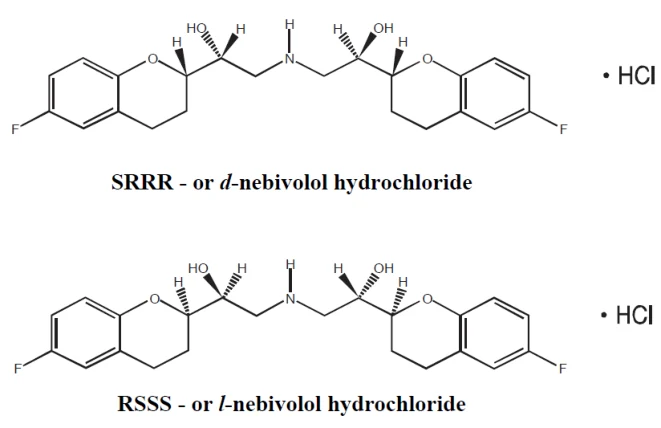
Physicochemical properties:
Appearance: A white to off-white crystalline powder
Solubility: Sparingly soluble in Dimethylformamide, slightly soluble in methanol and very slightly soluble in water and practically insoluble in 0.1M Hydrochloric acid.
pKa: 8.4
CLINICAL TRIALS
Comparative bioavailability studies
A randomized, single-dose, double-blinded, 2-way crossover comparative bioavailability study was conducted under fasting conditions on healthy male volunteers. The rate and extent of absorption of nebivolol was measured and compared following a single oral dose (1 x 5 mg tablet) of APO-NEBIVOLOL 5 mg tablets (Apotex Inc.) and Bystolic® 5 mg tablets (Forest Laboratories Canada Inc.). The results obtained from the 26 volunteers who completed the study are summarized in the following table.
Nebivolol (1 x 5 mg) From Measured Data Geometric mean Arithmetic Mean (CV%) | ||||
| Parameter | Test* | Reference† | % Ratio of Geometric Means | 90% Confidence Interval (%) |
| AUCt (pg•h/mL) | 7778.1 12357.9 (193.1) | 7945.6 12787.7 (200.0) | 97.9 | 95.0- 100.9 |
| AUCI (pg•h/mL) | 8267.2 14638.0 (229.7) | 8429.9 15639.4 (245.0) | 98.1 | 95.2- 101.0 |
| Cmax (pg/mL) | 1187.1 1282.2 (44.8) | 1162.3 1248.3 (42.0) | 102.1 | 94.8- 110.0 |
| Tmax§ (h) | 1.26 (46.9) | 1.56 (94.3) | ||
| T1/2§ (h) | 15.85 (34.7) | 15.48 (34.0) | ||
* APO-Nebivolol (Nebivolol) 5 mg Tablets (Apotex Inc.) † PrBystolic® (Nebivolol) 5 mg Tablets (Forest Laboratories Canada Inc.) was purchased in Canada. § Expressed as arithmetic means (CV%) only. | ||||
A randomized, single-dose, double-blinded, 2-way crossover comparative bioavailability study was conducted under fasting conditions on healthy male volunteers. The rate and extent of absorption of nebivolol was measured and compared following a single oral dose (1 x 20 mg tablets) of APO-NEBIVOLOL 20 mg tablets (Apotex Inc.) and Bystolic® 20 mg tablets (Forest Laboratories Canada Inc.). The results obtained from the 23 volunteers who completed the study are summarized in the following table.
Nebivolol (1 x 20 mg) From Measured Data Geometric Mean Arithmetic Mean (CV%) | ||||
| Parameter | Test* | Reference† | % Ratio of Geometric Means | 90% Confidence Interval (%) |
| AUCt (ng•h/mL) | 29796.6 31714.8 (40.8) | 30323.1 32182.9 (40.0) | 98.3 | 93.1 - 103.8 |
| AUCI (ng•h/mL) | 30338.8 32311.2 (41.2) | 30883.7 32795.8 (40.5) | 98.2 | 93.1 - 103.7 |
| Cmax (ng/mL) | 4835.7 5021.7 (28.8) | 5017.8 5297.9 (33.4) | 96.4 | 84.1 - 110.4 |
| Tmax§ (h) | 1.27 (53.5) | 1.54 (59.7) | ||
| T1/2§ (h) | 13.61 (14.1) | 13.84 (16.3) | ||
* APO-Nebivolol (Nebivolol) 20 mg Tablets (Apotex Inc.) † PrBystolic® (Nebivolol) 20 mg Tablets (Forest Laboratories Canada Inc.) was purchased in Canada. § Expressed as arithmetic means (CV%) only. | ||||
The antihypertensive efficacy of nebivolol tablets as monotherapy has been investigated in three randomized, double-blind, multi-centre, placebo-controlled trials at doses ranging from 1.25 to 40 mg for 12 weeks (Studies 1, 2 and 3). In two separate combination studies, additional antihypertensive effect was demonstrated when nebivolol tablets were administered concomitantly with either thiazide diuretics or ACE inhibitors. Sustained efficacy over 24 hours has been shown for nebivolol tablets once-daily dosing schedule.
Monotherapy Studies
Study demographics and trial design
Table 6: Summary of Patient Demographics for Clinical Trials in Treatment of Mild to Moderate Essential Hypertension
| Study | Trial design | Dosage, route of administration and duration | Study subjects (ITT/completed study) | Median age (Range) | Sex (M - Male, F - Female) |
| Study 1 | Double- blind, | Oral Placebo, nebivolol tablets | Placebo 81/67 nebivolol tablets | 54 years (22–84) | M: 518 (57%) F: 391(43%) |
| placebo- controlled | 1.25 mg, 2.5 mg, 5 mg, 10 mg, 20 mg, 30/40 mg 28 to 42-day, single-blind placebo run-in, 12 weeks double-blind treatment | 1.25 mg 83/68, 2.5 mg 82/68, 5 mg 165/148, 10 mg 166/133, 20 mg 166/144, 30/40 mg 166/149 Total 909/777 | |||
| Study 2 | Double-blind, Placebo-controlled | Oral Placebo, nebivolol tablets 5 mg, 10 mg, 20 mg. 28 to 42-day single-blind placebo run-in, 12 weeks double-blind treatment | Placebo 75/61 nebivolol tablets 5 mg 244/218, 10 mg 244/206, 20 mg 244/217 Total 807/702 | 53 years (22–82) | M: 432 (53.5%) F: 375 (46.5%) |
| Study 3 | Double-blind, Placebo-controlled | Oral Placebo, nebivolol tablets 2.5 mg, 5 mg, 10 mg, 20 mg, 40 mg 14 to 42-day, single-blind, placebo run-in, 12 weeks double-blind treatment | Placebo 49/41 nebivolol tablets 2.5 mg 49/42, 5 mg 50/41, 10 mg 51/47, 20 mg 50/45, 40 mg 51/43 Total 300/259 | 50 years (26–79) | M: 136 (45.3%) F: 164 (54.7%) |
The three monotherapy trials included a total of 2,016 patients (1,811 nebivolol tablets, 205 placebo) with mild to moderate hypertension who had baseline diastolic blood pressures (DBP) of 95 to 109 mmHg. Patients received either nebivolol tablets or placebo once daily for 12 weeks. Two of these monotherapy trials (Studies 1 and 2) studied 1,716 patients in the general hypertensive population with a mean age of 54 years, 55% males, 26% non-Caucasians, 7% diabetics and 6% genotyped as poor metabolizers (PMs). The third monotherapy trial (Study 3) studied 300 Black hypertensive patients with a mean age of 51 years, 45% males, 14% diabetics, and 2.3% as PMs.
Study Results
The primary endpoint in the three monotherapy trials was the change from baseline in trough sitting DBP as Week 12. Change from baseline in trough sitting systolic blood pressure (SBP) was used as a secondary endpoint. Blood pressure reductions by dose for each study are presented in Table 7. The least square (LS) mean reduction in trough sitting DBP was significantly greater with nebivolol tablets doses ≥5 mg than with placebo in all studies. Nebivolol tablets reduced trough sitting DBP in patients regardless of race, age or sex.
The LS mean reduction in trough sitting SBP was significantly greater with nebivolol tablets than with placebo for all doses in Study 1, the 20 mg dose in Study 2 and the 10 mg and 20 mg doses in Study 3.
Table 7: Analysis of Sitting Diastolic and Systolic Blood Pressure (mmHg) at Trough at Week 12
| Study | Treatment group | Placebo | Nebivolol tablets | ||
| 2.5 mg | 5 mg | 10 mg | 20 mg | ||
Study 1 Mean Baseline SBP/DBP: 153.1/99.5 mmHg | Trough Sitting Diastolic BP (mmHg) | ||||
| LS Mean Changea | -2.9 | -8.5 | -8.4 | -9.2 | -9.8 |
| p-valuea,b | <0.001 | <0.001 | <0.001 | <0.001 | |
| Trough Sitting Systolic BP (mmHg) | |||||
| LS Mean Changea | +2.2 | -6.3 | -5.9 | -7.0 | -6.5 |
| p-valuea,b | <0.001 | <0.001 | <0.001 | <0.001 | |
Study 2 Mean Baseline SBP/DBP: 151.3/99.0 mmHg | Trough Sitting Diastolic BP (mmHg) | ||||
| LS Mean Changea | -4.6 | -- | -7.8 | -8.5 | -9.1 |
| p-valuea,b | -- | 0.002 | <0.001 | <0.001 | |
| Trough Sitting Systolic BP (mmHg) | |||||
| LS Mean Changea | -0.4 | -- | -4.2 | -3.5 | -6.7 |
| p-value a,b | -- | 0.035NS | 0.086 NS | <0.001 | |
Study 3 Mean Baseline SBP/DBP: 152.2/100.2 mmHg | Trough Sitting Diastolic BP (mmHg) | ||||
| LS Mean Changea | -2.8 | -5.7 | -7.7 | -8.9 | -8.9 |
| p-valuea,b | 0.084 NS | 0.004 | <0.001 | <0.001 | |
| Trough Sitting Systolic BP (mmHg) | |||||
| LS Mean Changea | -0.4 | -1.9 | -3.0 | -6.4 | -7.6 |
| p-valuea,b | 0.611NS | 0.383NS | 0.044 | 0.005 | |
aFrom an ANCOVA with factor treatment and covariates (baseline blood pressure, metabolism rate, diabetes status, gender, race, and age group).
bBased on pairwise comparison of treatment vs. placebo LS=least-squares, NS=not significant
The blood pressure lowering effect of nebivolol tablets was seen within two weeks of treatment and was maintained over the 24-hour dosing interval with trough-to-peak ratios for diastolic response ranging from 60 to 90% in all studies for nebivolol tablets doses of 2.5 to 20 mg.
Twenty-eight days after cessation of nebivolol tablets treatment, blood pressure returned toward baseline, without however reaching that level. There was no evidence of rebound hypertension after abrupt cessation of therapy.
After 12 weeks of treatment, the response rate in Study 1 was 50.0% for nebivolol tablets 2.5 mg, 50.3% for 5 mg, 53.6% for 10 mg and 59.6% for 20 mg vs. 24.7% for placebo (all p≤0.001). The response rates in Study 2 were 49.3%, 66.0%, 66.8% and 68.9% in the placebo, nebivolol tablets 5 mg, 10 mg, and 20 mg groups, respectively (all p≤0.009). In Study 3, the percentage of responders were 36.7%, 58.0%, 58.8% and 64.0% in the nebivolol tablets 2.5 mg, 5 mg, 10 mg and 20 mg groups compared with a placebo response rate of 26.5% (p≤0.002 for nebivolol tablets doses of 5 mg and above).
Heart rate was assessed in all studies. In Study 1, mean seated trough heart rate changes were
+0.2, -4.3, -6.5, -6.5 and -9.7 bpm for placebo, nebivolol tablets 2.5 mg, 5 mg, 10 mg and 20 mg, respectively. The reductions observed with nebivolol tablets were significant as compared to placebo (p<0.001 for doses 2.5 to 20 mg). Heart rate was also significantly lowered for all doses in Study 2. Mean placebo-subtracted reductions ranged from
-5.1 bpm to -7.2 bpm (p<0.001 vs. placebo). In Study 3, reductions in sitting heart rate at peak plasma drug level for nebivolol tablets 5 mg, 10 mg, and 20 mg were statistically significant (p<0.015).
Concomitant Therapy Studies
Diuretics
Nebivolol tablets 1 mg, 5 mg and 10 mg and hydrochlorothiazide (HCTZ) 12.5 mg, and 25 mg were studied alone and in combination in a 12-week, randomized, double-blind, placebo-controlled, parallel-group, 12-arm factorial study including 240 patients with mild to moderate essential hypertension (mean baseline sitting SBP/DBP of 157.7/100.8 mmHg). The average age was 52 and 66% of the patients were male. The primary efficacy endpoint was the change from baseline in trough sitting DBP at Week 12. Blood pressure reductions by dose are presented in Table 8. The mean reductions in trough sitting DBP (primary efficacy endpoint) from baseline were statistically significant for all treatment arms (p<0.05 vs. baseline). All active treatment (monotherapy and combination) were also found to be more effective than placebo (p<0.05). No statistical analysis for comparison vs. placebo was performed for the secondary endpoint, trough sitting SBP.
Table 8: Summary of Mean Changes from Baseline in Trough Sitting Blood Pressure (SBP/DBP) (mmHg) for Patients Receiving nebivolol tablets, HCTZ, or nebivolol tablets/HCTZ in Combination
| Nebivolol tablets | HCTZ | |||||||
| 0 mg | 12.5 mg | 25 mg | ||||||
| 0 mg | -0.2 / -1.4 | -11.2 / -4.6 | -15.0 / -5.8 | |||||
| 1 mg | -6.5 / -5.5 | -14.1 / -9.4 | -19.4 / -10.3 | |||||
| 5 mg | -16.7 / -8.5 | -16.0 / -9.9 | -17.9 / -12.4 | |||||
| 10 mg | -17.6 / -13.8 | -21.9 / -12.6 | -29.0 / -15.3 | |||||
N=20 patients/arm; within treatment comparisons to baseline were statistically significant for all treatment groups with p-value ≤0.003. DBP: all pairwise comparisons vs. placebo were statistically significant with p-value <0.05
SBP: comparisons vs. placebo not assessed
Significant reductions in trough sitting DBP from baseline were observed as early as week two. Significant increases in the percentage of patients who responded to treatment were obtained with nebivolol tablets in combination with HCTZ, as compared to placebo (p<0.02). The response rates were 60%, 85%, 80% and 85% for the 5 mg/12.5 mg, 5 mg/25 mg, 10 mg/12.5 mg and 10 mg/25 mg nebivolol tablets/HCTZ combinations, respectively, and 15% for placebo. Nebivolol tablets 5 mg and 10 mg in combination with HCTZ, 12.5 mg and 25 mg, provided heart rate reductions of -3 bpm to -10 bpm (p<0.05 vs. placebo) for all combination groups excluding nebivolol tablets 5 mg/HCTZ 25 mg.
Angiotensin Converting Enzyme (ACE) Inhibitors
Nebivolol tablets 5 mg to 20 mg and lisinopril 10 mg to 40 mg were studied alone and in combination in a 12-week, multi-centre, randomized, double-blind, placebo- and active- controlled, parallel-group, 4-arm study including 656 patients with stage 2 diastolic hypertension (DBP ≥ 100 mm Hg). The mean baseline sitting SBP/DBP was 163.8/104.4 mmHg. The mean age of patients was 49.3 years, 57.8% were males, 14.9% were diabetic and 38.0% were non-Caucasian. The primary efficacy endpoint was the change from baseline in trough sitting DBP at Week 6 and the secondary efficacy endpoint was the change from baseline in trough sitting SBP at Week 6.
Blood pressure reductions by treatment group are presented in Table 9. The combination of nebivolol tablets and lisinopril was significantly more effective in lowering DBP than nebivolol tablets or lisinopril alone (p≤0.001). All active treatments (combination and monotherapy) were more effective than placebo (p≤0.0013). The combination treatment group showed a statistically significant greater reduction in DBP compared with the average effect of nebivolol tablets and lisinopril (p<0.0001). Significant reductions in trough sitting DBP from baseline were observed as early as two weeks of treatment.
Table 9: Analysis of Sitting Diastolic and Systolic Blood Pressure (mmHg) at Trough at Week 6
| Placebo (N=93) | Nebivolol tablets + Lisinopril (N=189) | Nebivolol tablets (N=185) | Lisinopril (N=189) | ||||||||||||
| Trough Sitting Diastolic BP (mmHg) | |||||||||||||||
Mean Baseline DBP: 104.4 mmHg | Mean Change | -8.0 | -17.2 | -13.3 | -12.0 | ||||||||||
| LSMD* a | 9.0 | -- | 3.3 | 5.1 | |||||||||||
| p-value 1a | <0.0001 | -- | 0.0010 | <0.0001 | |||||||||||
| p-value 2b | -- | <0.0001 | -- | -- | |||||||||||
| Trough Sitting Systolic BP (mmHg) | |||||||||||||||
Mean Baseline SBP: 163.8 mmHg | Mean Change | -9.9 | -19.2 | -14.4 | -16.1 | ||||||||||
| LSMD* a | 10.0 | -- | 3.5 | 3.2 | |||||||||||
| p-value 1a | <0.0001 | -- | 0.0470 | 0.0704 | |||||||||||
| p-value 2b | -- | 0.0278 | -- | -- | |||||||||||
ANCOVA, analysis of covariance; LSMD, least squares mean difference
* Analysis was based on ANCOVA model with treatment group and study center as factors and baseline value as a covariate
- a [*] comparing the combination group vs. placebo, the combination group vs. nebivolol tablets, and the combination group vs. lisinopril.
- b [*] comparing the combination group vs. the average of nebivolol tablets and lisinopril.
The combination of nebivolol tablets and lisinopril was significantly more effective in lowering SBP than nebivolol tablets alone (p=0.0470). The combination showed a numerically greater reduction in SBP than lisinopril alone (p=0.0704). All active treatments (combination and monotherapy) were found to be more effective than placebo (p≤0.0033). The combination treatment group showed a statistically significant greater reduction in SBP compared with the average effect of nebivolol tablets and lisinopril (p=0.0278).
After 6 weeks of treatment, the response rate (BP < 140/90 mmHg or < 130/80 mmHg for diabetic patients) was significantly greater for patients treated with the combination of nebivolol tablets and lisinopril at 33.9%, compared to 21.6%, 21.7% and 7.5% for patients treated with nebivolol tablets monotherapy, lisinopril monotherapy or placebo respectively (all p≤0.0031).
Geriatrics (≥ 65 years of age)
Of the 2,016 patients in the placebo-controlled monotherapy studies, 375 patients were 65 years of age or older. No overall differences in efficacy or in the incidence of adverse events were observed between older and younger patients.
DETAILED PHARMACOLOGY
Nebivolol is a racemic mixture containing equal amounts of two enantiomers, d-nebivolol and l- nebivolol. It is a selective β1-adrenergic antagonist with vasodilating properties. The d- enantiomer provides selective β1-adrenergic receptor blockade, whereas l-nebivolol possesses vasodilating properties thought to be attributable to nitric oxide modulation via the L-arginine- nitric oxide pathway.
Preclinical pharmacology studies show that nebivolol binds to human cardiac β1-adrenergic receptors with high affinity (Ki = 0.7 nM). Nebivolol antagonizes β1-adrenergic receptor mediated responses in isolated tissues from guinea pigs and dogs and in rat heart cell cultures in vitro. Nebivolol also effectively inhibits various β1-adrenergic receptors responses in vivo in rodent, cat and dog models. Nebivolol retains β1-adrenergic receptor selectivity in a wide variety of these test systems. Nebivolol does not have relevant effects in other test systems, such as
α-adrenergic and muscarinic receptor systems.
Nebivolol, dose-dependently, reduces blood pressure in spontaneously hypertensive rats following acute and repeated administration and does not produce an increase in peripheral vascular resistance or decrease in cardiac output in anesthetized dogs, but at peak after 10 mg/kg orally, a 38% decrease of cardiac output was observed as compared to baseline in awake dogs.
Mechanistic studies in isolated coronary arteries showed that nebivolol and, more potently, l- nebivolol induce the release of nitric oxide from vascular endothelium in vitro. In both pre- clinical and clinical studies, nebivolol-induced vasodilation can be blocked by inhibitors of nitric oxide synthase. This property appears to contribute to the pharmacological profile of nebivolol.
In addition, nebivolol protected myocardial cells from calcium overload and preserved cardiac function in ischemic myocardium. Nebivolol demonstrated antiarrhythmic activity in vivo, suppressing experimentally induced arrhythmias produced by ischemia and reperfusion (rat and dog) as well as those induced by aconitine (rat) and by ouabain (guinea pig), but it also increased atrial conduction time thus leading to increased PQ and PR intervals and significantly decreased HR. Moreover, nebivolol increased the ventricular fibrillation threshold in anesthetized open- chest guinea pigs and dogs, but it increased AV blocks and branch bundle block occurence.
Nebivolol seems to have low affinity for α-adrenoreceptors in in vitro receptor binding assays (Ki ≥ 295 nM) at target therapeutic concentrations, and had apparently little activity at α1- adrenergic receptors in in vivo and ex vivo functional assays (IC50 ≥ 1.4 mcM). Nebivolol was found to lack appreciable activity or to be inactive on responses mediated by serotonin, histamine, dopamine, acetylcholine (muscarinic and nicotinic), angiotensin II and bradykinin receptor activation, but bound at higher concentrations to β2-adrenergic, serotonin (5HT1A) and dopamine receptors (D4.4) (Ki = 4.5 nM, 15.1 nM, 56.2 nM respectively). In addition, receptor binding or transactivation assays also demonstrated that nebivolol did not bind to opioid, GABAergic and various hormone receptors, such as the estrogen receptor. Therefore at therapeutic plasma concentrations, nebivolol has little activity at other receptors that would produce vasodilation except for β2-adrenergic, serotonin (5HT1A) and dopamine receptors (D4.4).
Nebivolol is predominantly metabolized in humans and in animals by CYP2D6 (75%) and to a lesser extent by CYP3A4 (16-20%) [see ACTION AND CLINICAL PHARMACOLOGY,
Pharmacokinetics]. In vitro studies have demonstrated that nebivolol has an inhibitory effect on cytochrome P450 isozymes including CYP3A4/5 (Ki: 13 µM), CYP2A6 (Ki: 49 mcM), CYP2C8 (Ki: 55 mcM), CYP2B6 (Ki: 92 mcM), CYP1A2 (Ki: 92 mcM), CYP2C9 (Ki: 110 mcM), CYP2C19 (Ki: 130 mcM) and CYP4A9/11 (Ki: 180 mcM). In addition, nebivolol was also found to significantly increase (by 50%) the activity of CYP2E1. Given the Cmax/Ki ratios, it is unlikely that these inhibitory effects in vitro would translate into clinically meaningful inhibitory effects.
TOXICOLOGY
Acute Toxicity
Single-dose study findings revealed that nebivolol has a low order of acute toxicity by the oral route. The highest non-lethal dose levels tested were approximately 80 and >260 times the maximum recommended human dose (MRHD) for the rat and dog, respectively, based on body surface area. Single-dose studies at high doses of nebivolol showed that female rats were more sensitive than male rats, while there were no sex differences with mice or dogs.
Long Term Toxicity
Repeated dose oral toxicology studies of nebivolol were conducted in mice for 3 months and in rats and dogs for 3, 6 and 12 months duration. Target organs for repeat dose studies in rodents were spleen, adrenals, gonads, lungs, and lymph nodes, with decreases in hemoglobin, hematocrit, red blood cells, cholesterol, triglycerides, and phospholipids and an increase in potassium. The no-observed-adverse-effect level (NOAEL) for these effects in the one-year rat study was 5 mg/kg/day. The AUC values for 5 mg/kg/day were 5.6- and 7.2- (extensive metabolizers) and 0.17- and 0.23- (poor metabolizers) times the maximum anticipated human exposure for a 20 mg clinical dose for male and female rats, respectively. The target organs for nebivolol in dogs were spleen and heart. The changes in ECG reported in dog studies included the prolongation of QTc and QRS intervals at ≥20 and 40 mg/kg in the 6- and 12-month studies, respectively. A lengthening of the PQ interval was evident at ≥20 and ≥10 mg/kg, respectively. These doses were at least ≥17 times the MRHD. The NOAEL for the ECG changes in the 12- month study was 2.5 mg/kg, which corresponds to ∼2 times the MRHD based on body surface area.
Carcinogenesis
In a two-year study of nebivolol in mice, a statistically significant increase in the incidence of testicular Leydig cell hyperplasia and adenomas was observed in male mice at 40 mg/kg/day (10 times the MRHD based on body surface area), but not at 10 mg/kg/day. This finding was unique to mice (i.e., not seen in rats or dogs). Relative exposures for male and female mice, respectively, at 40 mg/kg/day were 343- and 310- (extensive metabolizers) and 11- and 10- (poor metabolizers) times the maximum anticipated human exposure for a 20 mg clinical dose. At the 10 mg/kg/day dose, which did not show an increase in Leydig cell tumors, relative exposures were 37- (extensive metabolizers) and 1- (poor metabolizers) times the maximum anticipated human exposure for a 20 mg clinical dose. Development of testicular Leydig cell hyperplasia and adenomas were associated with an increase in serum LH level secondary to nebivolol-related decrease in serum testosterone. No evidence of a tumorigenic effect was observed in a 24-month study in Wistar rats receiving doses of nebivolol up to 40 mg/kg/day; relative exposures for males and females, respectively, at 40 mg/kg/day were 271- and 150- (extensive metabolizers) and 8- and 4- (poor metabolizers) times the maximum anticipated human exposure for a 20 mg clinical dose.
Mutagenesis
Nebivolol was not genotoxic when tested in a battery of assays (Ames, in vitro mouse lymphoma TK+/-, in vitro human peripheral lymphocyte chromosome aberration, in vivo Drosophila melanogaster sex-linked recessive lethal, and in vivo mouse bone marrow micronucleus tests).
Reproduction and Development
Effects on spermatogenesis were seen in male rats and mice at ≥40 mg/kg/day (20 and 10 times the MRHD, respectively, based on body surface area). For rats the effects on spermatogenesis were not reversed and may have worsened during a four-week recovery period. The effects of nebivolol on sperm in mice, however, were partially reversible.
Decreased pup body weights occurred at 1.25 and 2.5 mg/kg in rats, when exposed during the perinatal period (late gestation, parturition and lactation). At 5 mg/kg and higher doses (2.5 times the MRHD based on body surface area), prolonged gestation, dystocia and reduced maternal care were produced with corresponding increases in late fetal deaths and stillbirths and decreased birth weight, live litter size and pup survival. Insufficient numbers of pups survived at 5 mg/kg to evaluate the offspring for reproductive performance.
In studies in which pregnant rats were given nebivolol during organogenesis, reduced fetal body weights were observed at maternally toxic doses of 20 and 40 mg/kg/day (10 and 20 times the MRHD based on body surface area), and small reversible delays in sternal and thoracic ossification associated with the reduced fetal body weights and a small increase in resorption occurred at 40 mg/kg/day (20 times the MRHD based on body surface area). No adverse effects on embryo-fetal viability, sex, weight or morphology were observed in studies in which nebivolol was given to pregnant rabbits at doses as high as 20 mg/kg/day (20 times the MRHD based on body surface area).
REFERENCES
- 1. Lacourcière Y, Lefebvre J, Poirier L, et al. Treatment of ambulatory hypertensives with nebivolol or hydrochlorothiazide alone and in combination: a randomized, double-blind, placebo-controlled, factorial-design trial. American Journal of Hypertension 1994;7:137– 45.
- 2. Weiss RJ, Weber MA, Carr AA, et al. A randomized, double-blind, placebo-controlled parallel-group study to assess the efficacy and safety of nebivolol, a novel beta-blocker, in patients with mild to moderate hypertension. Journal of Clinical Hypertension 2007;9:667–76.
- 3. Saunders E, Smith WB, DeSalvo KB, et al. The efficacy and tolerability of nebivolol in hypertensive African American patients. Journal of Clinical Hypertension 2007;9:866– 75.
- 4. Greathouse M. Nebivolol efficacy and safety in patients with stage I-II hypertension. Clinical Cardiology 2010;33(4):E20-E27.
- 5. Weber MA, Basile J, Stapff M, et al. Blood Pressure Effects of Combined β-Blocker and Angiotensin Converting Enzyme Inhibitor Therapy Compared with the Individual Agents: A Placebo-Controlled Study with Nebivolol and Lisinopril. Journal of Clinical Hypertension 2012;14:588–592.
- 6. Product Monograph: BYSTOLIC®, (nebivolol tablets) 2.5 mg, 5 mg, 10 mg, and 20 mg nebivolol (as nebivolol hydrochloride), Allergan Inc., Date of Revision - September 27, 2018; Submission Control No: 218324