


Product Monograph - Apretude
Recent Major Label Changes
| 4 Dosage and Administration, 4.2 Recommended Dose and Dosage Adjustment, Renal Insufficiency | 06/2025 |
|---|---|
| 7 Warnings and Precautions, Importance of adherence | 06/2025 |
| 7 Warnings and Precautions, Potential Risk of Resistance | 06/2025 |
| 7 Warnings and Precautions, Hypersensitivity Reactions | 06/2025 |
Table of Contents
Certain sections or subsections that are not applicable at the time of the preparation of the most recent authorized product monograph are not listed.
Recent Major Label Changes ................................................................................................. 2
Table of Contents ................................................................................................................. 2
Part 1: Healthcare Professional Information.......................................................................... 4
1 Indications ................................................................................................................ 4
1.1 Pediatrics ................................................................................................................ 4
1.2 Geriatrics ................................................................................................................ 4
2 Contraindications ...................................................................................................... 4
3 Serious Warnings and Precautions Box ...................................................................... 5
4 Dosage and Administration ....................................................................................... 5
4.1 Dosing Considerations ........................................................................................... 5
4.2 Recommended Dose and Dosage Adjustment ...................................................... 6
4.4 Administration ....................................................................................................... 8
4.5 Missed Dose ........................................................................................................... 8
5 Overdose .................................................................................................................. 9
6 Dosage Forms, Strengths, Composition, and Packaging ............................................ 10
7 Warnings and Precautions ....................................................................................... 10
7.1 Special Populations .............................................................................................. 13
7.1.1 Pregnancy ......................................................................................................... 13
7.1.2 Breastfeeding ................................................................................................... 14
7.1.3 Pediatrics .......................................................................................................... 14
7.1.4 Geriatrics .......................................................................................................... 14
8 Adverse Reactions ................................................................................................... 14
8.1 Adverse Reaction Overview ................................................................................. 14
8.2 Clinical Trial Adverse Reactions ........................................................................... 14
8.2.1 Clinical Trial Adverse Reactions – Pediatrics.................................................... 17
8.3 Less Common Clinical Trial Adverse Reactions .................................................... 17
8.4 Abnormal Laboratory Findings: Hematologic, Clinical Chemistry and Other Quantitative Data ............................................................................................................. 17
8.5 Post-Market Adverse Reactions ........................................................................... 18
9 Drug Interactions .................................................................................................... 18
9.2 Drug Interactions Overview ................................................................................. 18
9.4 Drug-Drug Interactions ........................................................................................ 18
9.5 Drug-Food Interactions ........................................................................................ 22
9.6 Drug-Herb interactions ........................................................................................ 22
9.7 Drug-Laboratory Test Interactions....................................................................... 22
10 Clinical Pharmacology ............................................................................................. 22
10.1 Mechanism of Action ........................................................................................... 22
10.2 Pharmacodynamics .............................................................................................. 22
10.3 Pharmacokinetics ................................................................................................. 22
11 Storage, Stability, and Disposal ................................................................................ 27
12 Special Handling Instructions ................................................................................... 27
Part 2: Scientific Information .............................................................................................. 28
13 Pharmaceutical Information .................................................................................... 28
14 Clinical Trials ........................................................................................................... 29
14.1 Clinical Trials by Indication .................................................................................. 29
HIV-1 Pre-Exposure Prophylaxis in Adults ....................................................................... 29
HIV-1 Pre-Exposure Prophylaxis in Adolescents 12 Years Of Age and Older and Weighing At Least 35 kg ................................................................................................................... 33
15 Microbiology ........................................................................................................... 34
16 Non-Clinical Toxicology ........................................................................................... 36
Patient Medication Information ......................................................................................... 37
Part 1: Healthcare Professional Information
1 Indications
APRETUDE is indicated for at-risk adults and adolescents aged 12 years and older and weighing at least 35 kg for PrEP to reduce the risk of sexually acquired HIV-1 infection.
1.1 Pediatrics
Pediatrics (≥ 12 and < 18 years of age): The use of APRETUDE in adolescent individuals ≥ 12 years of age and weighing ≥ 35 kg is supported by the interim safety and pharmacokinetic data of an ongoing phase 1/2 open-label, non-comparative study in which oral and injectable cabotegravir or oral and injectable rilpivirine, each as a single agent, was administered in combination with other antiretroviral agents to HIV-1 infected adolescents. The pharmacokinetic data from two open-label Phase 2b safety studies of adolescent individuals ≥ 12 years of age and weighing ≥ 35 kg receiving APRETUDE was consistent with that study. Additionally, the safety and pharmacokinetics were consistent with the two Phase 3 studies in adults, which showed the safety and efficacy of APRETUDE (see 8 Adverse Reactions, 10 Clinical Pharmacology, and 14 Clinical Trials).
Pediatrics (< 12 years of age): The safety and efficacy of APRETUDE in pediatric individuals < 12 years of age or weighing < 35 kg have not been established.
1.2 Geriatrics
Geriatrics (≥ 65 years of age): No dose adjustment is required in elderly individuals. There are limited data available on the use of APRETUDE in individuals aged 65 years and over (see 10.3 Pharmacokinetics).
2 Contraindications
APRETUDE tablets and injection are contraindicated in individuals:
- who are hypersensitive to cabotegravir or to any ingredient in the formulations, including any non-medicinal ingredient, or component of the containers. For a complete listing, see 6 Dosage Forms, Strengths, Composition, and Packaging.
- with an unknown or positive HIV-1 status.
APRETUDE tablets and injection are contraindicated with strong inducers of UGT1A1 or UGT1A9, including the following (see 9 Drug Interactions):
- Anticonvulsants: Carbamazepine, oxcarbazepine, phenobarbital, and phenytoin
- Antimycobacterials: Rifampin, rifapentine
3 Serious Warnings and Precautions Box
Serious Warnings and Precautions
|
|---|
4 Dosage and Administration
4.1 Dosing Considerations
- Individuals must have had a documented negative HIV-1 test, in accordance with applicable guidelines, prior to initiating APRETUDE.
- APRETUDE should be prescribed by a healthcare professional knowledgeable in the management of HIV PrEP.
- APRETUDE must be administered by a healthcare professional by gluteal intramuscular injection.
- Prior to starting APRETUDE, healthcare professionals should carefully select individuals who agree to the required dosing schedule and counsel individuals about the importance of adherence to scheduled dosing visits to help reduce the risk of acquiring HIV-1 infection (see 7 WARNINGS AND PRECAUTIONS).
- Prior to starting APRETUDE, the healthcare professional should discuss safer sex practices so as to reduce the risk of developing HIV-1. This may include being tested for other sexually transmitted infections, if appropriate.
- APRETUDE tablets may be used as an oral lead-in prior to the initiation of APRETUDE injection to assess tolerability to cabotegravir (see Table 1).
- Alternatively, the healthcare professional and individual may proceed directly to injection therapy with APRETUDE injection (see Table 2).
- Clinical and laboratory monitoring should be considered and APRETUDE should not be administered if hepatotoxicity is suspected. If hepatotoxicity is confirmed, APRETUDE should be discontinued and the individuals managed as clinically indicated.
4.2 Recommended Dose and Dosage Adjustment
Adults, adolescents weighing ≥ 35 kg
When an oral lead-in is used, dosing for APRETUDE consists of 3 distinct phases:
- An oral lead-in with APRETUDE tablets,
- Initiation injections of APRETUDE injection (3 mL), and
- Continuation injections with APRETUDE injection (3 mL every 2 months).
APRETUDE injection may also be initiated without an oral lead-in. No safety and efficacy data are available for use of APRETUDE without an oral lead-in (see 8 Adverse Reactions and 14 Clinical Trials). However, in HIV-1 treatment clinical trials, data show that an oral lead-in is not needed to ensure adequate plasma cabotegravir exposure upon initiation of injections and that the safety and efficacy results of CABENUVA (cabotegravir extended-release injectable suspension; rilpivirine extended-release injectable suspension) were similar when administered with and without an oral lead-in.
Refer to the recommended dosing section below (see Table 2).
Oral lead-in
The recommended dose of APRETUDE tablets is one 30 mg tablet orally once daily with or without food.
APRETUDE tablets is recommended to be administered for approximately one month (at least 28 days) prior to the initiation of APRETUDE injection to assess tolerability of the individual to cabotegravir. See Table 1 for recommended oral dosing schedule.
Intramuscular Injection Dosing
Initiation Injections
Initiation injections should be administered on the last day of oral lead-in if used or within 3 days thereafter (see Table 1). The recommended initial dose of APRETUDE injection is a single 3 mL (600 mg) intramuscular injection. One month later, a second 3 mL (600 mg) intramuscular injection should be administered. Individuals may be given the second 3 mL (600 mg) initiation injection up to 7 days before or after the scheduled injection visit (see Table 1 or Table 2, as applicable).
Continuation Injections
After the second initiation injection, the recommended continuation dose of APRETUDE injection is a single 3 mL (600 mg) intramuscular injection administered every 2 months. Individuals may be given APRETUDE injection up to 7 days before or after the scheduled injection visit (see Table 1 or Table 2, as applicable).
Table 1 Recommended Dosing Schedule when using an Oral Lead-in
| ORAL LEAD-IN | I.M. INITIATION INJECTIONS | I.M. CONTINUATION INJECTIONS | ||
|---|---|---|---|---|
| Month Prior to Starting Injectionsa | Month 1b and Month 2c | Month 4 and Every 2 Months Onwards c | ||
APRETUDE Tablets 30 mg cabotegravir tablet once daily | APRETUDE Injection 3 mL (600 mg) cabotegravir injection | APRETUDE Injection 3 mL (600 mg) cabotegravir injection |
I.M. = Intramuscular injection
aAt least 28 days
bShould be administered on the last day of oral lead-in or within 3 days thereafter.
cIndividuals may be given APRETUDE injection up to 7 days before or after the date the individual is scheduled to receive the injections.
Table 2 Recommended Dosing schedule when starting APRETUDE Injection directly
| I.M. INITIATION INJECTIONS | I.M. CONTINUATION INJECTIONS | |
|---|---|---|
| Month 1 and Month 2a | Month 4 and Every 2 Months Onwardsa | |
APRETUDE Injection 3 mL (600 mg) cabotegravir injection | APRETUDE Injection 3 mL (600 mg) cabotegravir injection |
I.M. = Intramuscular injection
aIndividuals may be given APRETUDE injection up to 7 days before or after the date the individual is scheduled to receive the injections.
Pediatrics (<12 years of age)
The safety and efficacy of APRETUDE has not been established in pediatric individuals < 12 years of age or weighing < 35 kg.
Geriatrics
No dose adjustment is required in elderly individuals. There are limited data available on the use of APRETUDE in individuals ≥ 65 years of age (see 10.3 Pharmacokinetics, Special Populations and Conditions, Geriatrics).
Hepatic Insufficiency
No dosage adjustment is required in individuals with mild or moderate hepatic impairment (Child-Pugh score A or B). APRETUDE has not been studied in individuals with severe hepatic impairment (Child-Pugh score C) (see 10.3 Pharmacokinetics, Special Populations and Conditions, Hepatic Insufficiency).
Renal Insufficiency
No dosage adjustment is required in individuals with mild (creatinine clearance ≥60 to <90 mL/min), moderate (creatinine clearance ≥30 to <60 mL/min) or severe renal impairment (creatinine clearance ≥15 to <30 mL/min and not on dialysis) (see 10.3 Pharmacokinetics, Special Populations and Conditions, Renal Insufficiency).
4.4 Administration
Intramuscular Injections of APRETUDE
Injections must be administered by a healthcare professional. Refer to the Instructions for Use for complete administration instructions with illustrations. Carefully follow these instructions when preparing the injection to avoid leakage.
The body mass index (BMI) of the individual should be taken into consideration to ensure that the needle length is sufficient to reach the gluteus muscle.
4.5 Missed Dose
Missed Tablet
If the individual misses a dose of APRETUDE tablets, they should take the missed dose as soon as they remember if it is more than 12 hours until the next dose. If the next dose is due within 12 hours, the individual should skip the missed dose and resume the usual dosing schedule.
Missed Injection
Adherence to the injection dosing schedule is strongly recommended. Individuals who miss a scheduled injection visit should be clinically reassessed and an HIV test performed to ensure resumption of PrEP remains appropriate. APRETUDE tablets may be used as short-term oral PrEP in individuals who will miss planned dosing with APRETUDE injections. See Table 3 and Table 4 for dosing recommendations after a missed injection.
Table 3 Recommendation for Missed 2nd Initiation Injection
| Time Since Last Injection | Recommendations for Oral Bridging |
|---|---|
| Less than or equal to 1 Month + 7 days | Continue with 3 mL (600 mg) APRETUDE injection |
| Greater than 1 Month + 7 days | It is strongly recommended that individuals begin the every-2-month dosing regimen only if they are able to attend both initiation injections visits. If the individual plans to miss the second initiation injection visit by more than 7 days, the individual should be initiated on APRETUDE Tablets once daily approximately 1 month after the initial initiation injection for up to two months. Injections are to be resumed on the same day as the last day of oral APRETUDE or within 3 days thereafter. For oral APRETUDE durations greater than two months, an alternate regimen to oral APRETUDE is recommended. If oral dosing has not been taken, individuals should be clinically reassessed to determine if resumption of injections remains appropriate. |
| Time Since Last Injection | Recommendations for Resumption of Injections |
| Less than or equal to 2 Months | If clinically appropriate, resume with 3 mL (600 mg) APRETUDE injection as soon as possible. Then follow with the every-2-month injection dosing schedule. |
| Greater than 2 Months | If clinically appropriate, reinitiate the individual on 3 mL (600 mg) APRETUDE injection, followed one month later by a second dose of 3 ml (600 mg) cabotegravir injection. Then follow the every-2-month injection dosing schedule. |
Table 4 Recommendation for Missed Continuation Injections
| Time Since Last Injection | Recommendations for Oral Bridging |
|---|---|
| Less than or equal to 2 Months + 7 days | Continue with 3 mL (600 mg) APRETUDE Injection |
| Greater than 2 Months + 7 days | Planned Missed Injections If an individual plans to miss a scheduled injection visit by more than 7 days, APRETUDE tablets may be used once daily for a duration of up to 2 months to replace 1 missed injection. The first dose of oral APRETUDE (or alternative oral PrEP regimen) should be taken approximately 2 months (+/- 7 days) after the last injection dose of APRETUDE injection. Injection dosing should be planned to resume on the last day of oral APRETUDE or within 3 days, thereafter. For oral APRETUDE durations greater than two months, an alternative regimen to oral APRETUDE is recommended. |
| Greater than 2 Months + 7 days | Unplanned Missed Injections If a scheduled injection visit is missed or delayed by more than 7 days and oral dosing has not been taken in the interim, individuals should be clinically reassessed to determine if resumption of injections remains appropriate (see 7 Warnings and Precautions, Importance of adherence). |
| Time Since Last Injection | Recommendation for Resumption of Injections |
| Less than or equal to 3 Months | If clinically appropriate, resume with 3 mL (600 mg) APRETUDE injection as soon as possible. If the individual was on oral APRETUDE, injections are to be resumed on the same day as the last day of oral therapy dosing or within 3 days thereafter. Continue with the every-2-month injection dosing schedule. |
| Greater than 3 Months | If clinically appropriate, reinitiate the individual on 3 mL (600 mg) APRETUDE injection, followed one month later by the second initiation dose of 3 mL (600 mg) APRETUDE injection. If the individual was on oral APRETUDE, injections are to be resumed on the same day as the last day of oral APRETUDE or within 3 days thereafter. Continue with the every-2-month injection dosing schedule. |
5 Overdose
Symptoms and Signs
There is currently no experience of overdose with cabotegravir.
Treatment
There is no specific treatment for overdose with cabotegravir. If overdose occurs, the individual should be treated supportively with appropriate monitoring as necessary. Further management should be as clinically indicated or as recommended by the national poisons centre, where available.
Cabotegravir is known to be highly protein bound in plasma; therefore, dialysis is unlikely to be helpful in removal of drug from the body. Management of overdose with cabotegravir injection should take into consideration the prolonged exposure to drug following an injection (see 7 Warnings and Precautions, Long acting properties of APRETUDE injection).
| For the most recent information in the management of a suspected drug overdose, contact your regional poison control centre or Health Canada’s toll-free number, 1-844 POISON-X (1-844-764-7669). |
|---|
6 Dosage Forms, Strengths, Composition, and Packaging
Table 5 Dosage Forms, Strengths, Composition and Packaging
Dosage Forms
APRETUDE Tablets are white, film-coated, oval tablets debossed with “SV CTV” on one side. Each film-coated tablet contains 31.62 mg of cabotegravir sodium (equivalent to 30 mg of cabotegravir).
APRETUDE Injection is a white to light pink, free-flowing extended-release injectable suspension containing 200 mg/mL of cabotegravir.
Packaging
APRETUDE Tablets are supplied in white HDPE (high density polyethylene) bottles with child-resistant closures. Each bottle contains 30 film-coated tablets.
APRETUDE Injection is supplied as a kit containing one 3 mL single-dose vial, with an orange flip-off cap, of cabotegravir extended release injectable suspension containing 600 mg of cabotegravir. The kit also contains 1 syringe, 1 syringe adaptor, and 1 needle for intramuscular injection (23-gauge, 1½ inch). The vial stoppers are not made with natural latex rubber.
7 Warnings and Precautions
General
APRETUDE is not always effective in preventing HIV-1 acquisition (see 14 Clinical Trials). The time to onset of protection after commencing cabotegravir is unknown.
APRETUDE should only be used to reduce the risk of acquiring HIV-1 in individuals confirmed to be HIV negative (see 2 Contraindications). Therefore, individuals must be confirmed to be HIV-1 negative prior to initiation of APRETUDE and re-confirmed to be HIV-negative at frequent intervals (e.g. at every dosing interval) while taking APRETUDE. HIV-1 resistance substitutions may emerge in individuals with undiagnosed HIV-1 infection who are taking APRETUDE. Counsel uninfected individuals to strictly adhere to the recommended dosing and testing schedule for APRETUDE to reduce the risk of HIV-1
| Route of Administration | Dosage Form / Strength/Composition | Non-medicinal Ingredients |
| Oral | Tablet / 30 mg cabotegravir (as cabotegravir sodium) | hypromellose, lactose monohydrate, magnesium stearate, microcrystalline cellulose, polyethylene glycol, sodium starch glycolate, and titanium dioxide |
| Intramuscular | Extended Release Injectable Suspension/ 600 mg cabotegravir / 3 mL | mannitol, polysorbate 20, polyethylene glycol (PEG) 3350, water for injection |
acquisition and the potential development of resistance (see 4 Dosage and Administration and 15 Microbiology).
APRETUDE should be used as part of an overall HIV-1 infection prevention strategy including the use of other HIV-1 prevention measures. Individuals should be counselled periodically to strictly adhere to the recommended dosing schedule in order to reduce the risk of HIV-1 acquisition and the potential development of resistance. Risk for HIV-1 acquisition includes behavioral, biological, and epidemiologic factors including, but not limited to, condomless sex, past or current STIs, self-identified HIV risk, having sexual partners of unknown HIV-1 viremic status, or sexual activity in a high prevalence area or network. Individuals should be informed regarding the use of other prevention measures (e.g., consistent and correct condom use; knowledge of partner(s)’ HIV-1 status, including viral suppression status; and regular testing for STIs) (see 4 Dosage and Administration). If clinical symptoms consistent with acute viral infection are present and recent (< 1 month) exposures to HIV-1 are suspected, HIV-1 status should be reconfirmed.
Hepatic/Biliary/Pancreatic
Hepatotoxicity:
Cases of hepatotoxicity, presenting as serum transaminase elevations, have been reported in individuals receiving APRETUDE with or without known pre-existing hepatic disease or other identifiable risk factors (see 8 Adverse Reactions).
Individuals with marked elevations in transaminases prior to treatment or with underlying hepatitis B or C may be at increased risk for worsening or development of transaminase elevations. Clinical and laboratory monitoring should be considered and APRETUDE should not be administered if hepatotoxicity is suspected. If hepatotoxicity is confirmed, APRETUDE should be discontinued and the individuals managed as clinically indicated (see 4 Dosage and Administration).
Importance of adherence
Individuals should be counselled periodically to strictly adhere to the recommended dosing schedule for APRETUDE in order to reduce the risk of HIV-1 acquisition and the potential development of resistance.
For more information on the APRETUDE Education Program (Prescribers’
Guide, User Guide, Prescribers’ Checklist, and Injection Appointment Reminder Card), log onto https://apretude.ca/en-ca/resources/.
Risk of reduced drug concentration of APRETUDE due to drug interactions
The concomitant use of APRETUDE and other drugs may result in reduced drug concentration of APRETUDE (see 2 Contraindications; 9 Drug Interactions). Caution should be given when prescribing APRETUDE with other drugs that may reduce its exposure. See 9.4 Drug-Drug Interactions, Table 9 for steps to prevent or manage these possible and known significant drug interactions, including dosing recommendations. Consider the potential for drug interactions prior to and during therapy with APRETUDE; review concomitant medications during therapy with APRETUDE.
Long-acting properties of APRETUDE injection
Residual concentrations of cabotegravir injection may remain in the systemic circulation of individuals for prolonged periods (up to 12 months or longer), therefore, healthcare professionals should take the prolonged release characteristics of cabotegravir into consideration when the medicinal product is discontinued. (see 5 Overdose, 7.1.1 Pregnancy, and 9 Drug Interactions).
Potential Risk of Resistance
There is a potential risk of developing resistance to APRETUDE if an individual acquires HIV-1 either before or during administration of APRETUDE, or following discontinuation of APRETUDE.
To minimize this, it is essential to clinically reassess individuals for risk of HIV-1 acquisition and to frequently test to confirm HIV-1 negative status. Individuals who are suspected or confirmed with HIV-1 should immediately begin antiretroviral therapy. Alternative forms of PrEP should be considered following discontinuation of APRETUDE for those individuals at continued risk of HIV-1 acquisition and initiated within 2 months of the final APRETUDE injection.
Seroconversion while on APRETUDE is considered an adverse event and should be reported to the Canadian Vigilance Program by:
- Visiting the Web page on Adverse Reaction Reporting: www.canada.ca/en/health-canada/services/drugs-health-products/medeffect-canada for information on how to report online, by mail or by fax; or
- Calling 1-866-234-2345 (toll-free).
For more information on the APRETUDE Education Program (Prescribers’
Guide, User Guide, Prescribers’ Checklist, and Injection Appointment Reminder Card), log onto https://apretude.ca/en-ca/resources/.
Hypersensitivity Reactions
Stevens-Johnson syndrome (SJS) and toxic epidermal necrolysis (TEN), severe and potentially life-threatening conditions, have been reported very rarely in association with APRETUDE (see 8 Adverse Reactions). Other hypersensitivity reactions have been reported in association with integrase inhibitors (INSTIs), including cabotegravir. Administration of cabotegravir oral lead-in dosing was used in clinical studies to help identify participants who may be at risk of a hypersensitivity reaction. These reactions were characterized by rash, constitutional findings and sometimes organ dysfunction, including liver injury. Discontinue APRETUDE immediately should signs or symptoms of hypersensitivity develop and consider an alternative form of PrEP. If the patient has developed a serious reaction such as SJS or TEN with the use of cabotegravir, treatment with cabotegravir must not be restarted in this patient at any time.
Discontinue APRETUDE immediately if signs or symptoms of hypersensitivity reactions develop (including, but not limited to, severe rash, or rash accompanied by fever, general malaise, fatigue, muscle or joint aches, blisters or peeling of the skin, mucosal involvement [oral blisters or lesions], conjunctivitis, facial edema, hepatitis, eosinophilia, angioedema, or difficulty breathing). Clinical status, including laboratory parameters with liver aminotransferases, should be monitored and appropriate therapy initiated (see 2 Contraindications; 4 Dosage and Administration).
Psychiatric
Depressive Disorders:
Depressive disorders (including depression, depressed mood, major depression, suicidal ideation, suicide attempt) have been reported with APRETUDE (see 8 Adverse Reactions). Promptly evaluate individuals with depressive symptoms to assess whether the symptoms are related to APRETUDE and to determine whether the benefits of treatment are outweighed by the risks.
Reproductive Health: Female and Male Potential
- Fertility
There are no data on the effects of cabotegravir on human male or female fertility. Animal studies indicate no effects of cabotegravir on male or female fertility.
Cabotegravir when administered orally to male and female rats at exposure (AUC) greater than 20 times the exposure at the Maximum Recommended Human Dose (MRHD) of 30 mg dosed orally or 400 mg IM injection did not cause adverse effects on male or female reproductive organs or spermatogenesis, and no functional effects on mating or fertility were observed.
7.1 Special Populations
7.1.1 Pregnancy
APRETUDE should be used in pregnant women only if the potential benefits outweigh the potential risks to the fetus. Healthcare professionals should discuss the benefit-risk of using APRETUDE with individuals of childbearing potential or during pregnancy. There are insufficient human data on the use of APRETUDE during pregnancy to adequately assess a drug-associated risk of birth defects and miscarriage. While there are insufficient human data to assess the risk of neural tube defects (NTDs) with exposure to APRETUDE during pregnancy, NTDs were reported with dolutegravir, another integrase inhibitor.
Reproductive toxicity studies in pregnant rats showed that cabotegravir crosses the placenta and can be detected in fetal tissue. Cabotegravir was not teratogenic when studied in pregnant rats and rabbits but in rats caused decreased fetal weight, a delay in the onset of parturition and increased stillbirths and neonatal deaths at exposures higher than for therapeutic doses. The relevancy to human pregnancy is unknown.
In an embryo-fetal development study, there were no adverse developmental outcomes following oral administration of cabotegravir to pregnant rabbits at doses with exposures up to 0.66 times the exposure at the MRHD of 30 mg. In rats, alterations in fetal growth (decreased body weights) were observed at exposures that were 28 times the exposure at the MRHD.
In the rat pre- and post-natal studies at exposures 28 times the exposures at the MRHD of 30 mg oral or 400 mg IM dose, cabotegravir was associated with delayed onset of parturition, and increased number of stillbirths and neonatal mortalities immediately after birth. In a cross-fostering study, similar incidences of stillbirths and early postnatal deaths were observed when rat pups born to cabotegravir-treated mothers were nursed from birth by control mothers. There was no effect on neonatal survival of control pups nursed from birth by cabotegravir-treated mothers. A lower dose of cabotegravir (at exposures >10 times the exposure at the MRHD of 30 mg oral or 400 mg IM dose) was not associated with delayed parturition or neonatal mortality in rats. In rabbit and rat studies there was no effect on survival when fetuses were delivered by caesarean section.
Cabotegravir has been detected in systemic circulation for up to 12 months or longer after an injection, therefore, consideration should be given to the potential for fetal exposure during pregnancy (see 7 Warnings and Precautions, Long acting properties of APRETUDE injection).
Antiretroviral Pregnancy Registry (APR): To monitor pregnancy outcomes in women exposed to APRETUDE during pregnancy, an Antiretroviral Pregnancy Registry has been established. Healthcare Professionals are encouraged to register individuals:
http://www.apregistry.com
Telephone: (800) 258-4263
Fax: (800) 800-1052
7.1.2 Breastfeeding
It is expected that cabotegravir will be secreted into human milk based on animal data, although this has not been confirmed in humans. Cabotegravir may be present in human milk for up to 12 months or longer after the last cabotegravir injection.
It is recommended that women breast-feed only if the expected benefit justifies the potential risk to the infant.
7.1.3 Pediatrics
Pediatrics (< 12 years of age): The safety and efficacy of APRETUDE in pediatric individuals < 12 years of age or weighing < 35 kg has not been established.
Adolescents (≥ 12 years to < 18 years): Although clinical studies did not show an increased incidence of psychiatric illness in adolescents compared to adult participants, suicidal ideation and suicide attempt have been reported with cabotegravir, particularly in those with pre-existing psychiatric illness (see 7 WARNINGS AND PRECAUTIONS, Psychiatric). Given the vulnerability of the adolescent population, adolescents should be counselled before prescribing, and periodically while receiving APRETUDE, and managed as clinically indicated.
7.1.4 Geriatrics
Geriatrics (> 65 years of age): No dose adjustment is required in elderly individuals. There are limited data available on the use of APRETUDE in individuals aged 65 years and over (see 10.3 Pharmacokinetics).
8 Adverse Reactions
8.1 Adverse Reaction Overview
The following adverse drug reactions are discussed in the 7 Warnings and Precautions section:
- Hepatotoxicity
- Hypersensitivity reactions
- Depressive disorders
8.2 Clinical Trial Adverse Reactions
Clinical trials are conducted under very specific conditions. Therefore, the frequencies of adverse reactions observed in the clinical trials may not reflect frequencies observed in clinical practice and should not be compared to frequencies reported in clinical trials of another drug.
The safety assessment of APRETUDE is based on the analysis of data from 2 international, multicenter, double-blind trials, HPTN 083 and HPTN 084 (see 14 Clinical Trials).
Adverse reactions were reported while on blinded study product following exposure to APRETUDE extended-release injectable suspension and APRETUDE tablets as oral lead-in. The median time on blinded study product in HPTN 083 was 65 weeks and 2 days (range: 1 day to 156 weeks and 1 day), with a total exposure on cabotegravir of 3,231 person-years. The median time on blinded study product in HPTN 084 was 64 weeks and 1 day (range: 1 day to 153 weeks and 1 day), with a total exposure on cabotegravir of 2,009 person-years.
The most common adverse reactions regardless of severity reported in at least 1% of participants in HPTN 083 or HPTN 084 are presented in Table 6.
In HPTN 083, 6% of participants in the group receiving APRETUDE intramuscular injection every 2 months and 4% of participants receiving oral TRUVADA [emtricitabine (FTC) and tenofovir disoproxil fumarate (TDF)] once daily discontinued due to adverse events (all causality). Adverse events (all causality) leading to discontinuation and occurring in ≥1% of participants were increased alanine aminotransferase with APRETUDE and TRUVADA, and injection site pain with APRETUDE.
In HPTN 084, 1% of participants receiving APRETUDE and 1% of participants receiving TRUVADA discontinued due to adverse events. The most commonly reported adverse event (all causality) leading to discontinuation was increased alanine aminotransferase (<1%) with APRETUDE and TRUVADA.
Table 6 Adverse Drug Reactionsa (All Grades) Reported in at Least 1% of Participants Receiving APRETUDE in Either HPTN 083 or HPTN 084
Adverse Reactions
| HPTN 083 | HPTN 084 | ||||||||||
|---|---|---|---|---|---|---|---|---|---|---|---|
APRETUDE Every 2 Months (n = 2,281) | TRUVADA Once Daily (n = 2,285) | APRETUDE Every 2 Months (n = 1,614) | TRUVADA Once Daily (n = 1,610) | ||||||||
| Injection site reactionsb | 82% | 35% | 38% | 11% | |||||||
| Diarrhea | 4% | 5% | 4% | 4% | |||||||
| Headache | 4% | 3% | 12% | 13% | |||||||
| Pyrexiac | 4% | <1% | <1% | <1% | |||||||
| Fatigued | 4% | 2% | 3% | 3% | |||||||
| Sleep disorderse | 3% | 3% | 1% | 1% | |||||||
| Nausea | 3% | 5% | 4% | 8% | |||||||
| Dizziness | 2% | 3% | 4% | 6% | |||||||
| Flatulence | 1% | 1% | <1% | <1% | |||||||
| Abdominal painf | 1% | 1% | 2% | 2% | |||||||
| Vomiting | <1% | 1% | 2% | 5% | |||||||
| Myalgia | <1% | <1% | 2% | 1% | |||||||
| Rashg | <1% | <1% | 2% | 1% | |||||||
| Decreased appetite | <1% | <1% | 2% | 4% | |||||||
| Somnolence | <1% | <1% | 2% | 2% | |||||||
| Back pain | <1% | <1% | 1% | <1% | |||||||
| Upper respiratory tract infection | 0 | <1% | 4% | 4% | |||||||
a Adverse reactions defined as “treatment-related” as assessed by the investigator, with exception of injection site reactions, where all injection site reactions were reported regardless of causality.
b Participants who received injection: HPTN 083, APRETUDE (n = 2,117) and TRUVADA (n = 2,081); HPTN 084, APRETUDE (n = 1,519) and TRUVADA (n = 1,516). See Injection-Associated Adverse Reactions for additional information.
c Pyrexia includes pyrexia, feeling hot, chills, influenza-like illness. The majority of pyrexia events were reported within one week of injections.
d Fatigue includes fatigue, malaise.
e Sleep disorders includes insomnia, abnormal dreams.
f Abdominal pain includes abdominal pain, upper abdominal pain.
g Rash includes rash, erythema, pruritis, macular, papular, maculopapular.
Injection-Associated Adverse Reactions: Local Injection Site Reactions (ISRs)
The most frequent adverse reactions associated with the intramuscular administration of APRETUDE in HPTN 083 were ISRs. After 20,286 injections, 8,900 ISRs were reported. Of the 2,117 participants who received at least one injection of APRETUDE, 1,740 (82%) participants experienced at least one ISR, of which a total of 3% of participants discontinued APRETUDE because of ISRs. Among the participants who received APRETUDE and experienced at least one ISR, the maximum severity of reactions was mild (Grade 1) in 41% of participants, moderate (Grade 2) in 56% of participants, and severe (Grade 3) in 3% of participants. The median duration of overall ISR events was 4 days. The proportion of participants reporting ISRs at each visit and the severity of the ISRs decreased over time. The most commonly reported ISRs (all causality and grades) in at least 1% of participants who received APRETUDE and experienced at least one ISR from HPTN 083 are presented in Table 7.
The most frequent adverse reactions associated with the intramuscular administration of APRETUDE in HPTN 084 were ISRs. After 13,068 injections, 1,171 ISRs were reported. Of the 1,519 participants who received at least one injection of APRETUDE, 578 (38%) participants experienced at least one ISR. No participants discontinued APRETUDE because of ISRs. Among the participants who received APRETUDE and experienced at least one ISR, the maximum severity of reactions was mild (Grade 1) in 66% of participants, moderate (Grade 2) in 34% of participants, and severe (Grade 3) in less than 1% of participants. The median duration of overall ISR events was 8 days. The proportion of participants reporting ISRs at each visit and the severity of the ISRs generally decreased over time. The most commonly reported ISRs (all causality and grades) in at least 1% of participants who received APRETUDE and experienced at least one ISR from HPTN 084 are presented in Table 7.
Table 7 Injection Site Reactions (All Grades) Reported in at Least 1% of Participants who Experienced at Least One Injection Site Reaction (All Causality) with APRETUDE in Either HPTN 083 or HPTN 084
| Injection Site Reactions | HPTN 083 | HPTN 084 | ||
|---|---|---|---|---|
APRETUDE (n = 1,740) | TRUVADAa (n = 724) | APRETUDE (n = 578) | TRUVADAa (n = 166) | |
| Pain/tenderness | 98% | 95% | 90% | 87% |
| Nodules | 15% | 2% | 14% | 2% |
| Induration | 15% | <1% | 12% | 2% |
| Swelling | 12% | 1% | 18% | 3% |
| Bruising | 4% | 4% | 1% | 0 |
| Erythema | 4% | 2% | 5% | 2% |
| Pruritus | 3% | 3% | 6% | 11% |
| Warmth | 3% | 1% | <1% | 0 |
| Anesthesia | 1% | 2% | 1% | 2% |
| Abscess | <1% | 0 | 2% | 3% |
| Discoloration | <1% | 0 | 1% | 0 |
a Placebo injectable suspension: intralipid 20% fat emulsion.
Other Injection-Associated Adverse Reactions: In the HPTN 083 clinical trial, an increased incidence of pyrexia (including pyrexia, feeling hot, chills, influenza-like illness) (4%) was reported by participants receiving APRETUDE compared with participants receiving TRUVADA (<1%). There were no differences reported in the incidence of pyrexia between groups in HPTN 084.
Vasovagal or pre-syncopal reactions considered treatment related were reported in <1% of participants after injection with APRETUDE in HPTN 083. None were reported as treatment related by the investigators in HPTN 084.
8.2.1 Clinical Trial Adverse Reactions – Pediatrics
Based on data from the Week 16 analysis of the MOCHA study in HIV-infected adolescents (aged at least 12 years and weighing 35 kg or more) receiving background antiretroviral therapy, no new safety concerns were identified in adolescents with the addition of oral cabotegravir followed by injectable cabotegravir (n=29) when compared with the safety profile established with cabotegravir in adults (see 14 Clinical Trials).
In 64 adolescents who received APRETUDE in the two Phase 2b clinical trials (HPTN 083-01 and HPTN 084-01), the safety data were comparable to the safety data reported in adults receiving APRETUDE.
8.3 Less Common Clinical Trial Adverse Reactions
Select adverse reactions of all Grades that occurred in <1% of participants receiving APRETUDE in HPTN 083 or HPTN 084 are presented below.
Hepatobiliary Disorders: Hepatotoxicity
Investigations: Weight increase (see below)
Psychiatric Disorders: Anxiety, depression, suicidal ideation*, suicide attempt* (*particularity in individuals with a pre-existing history of depression or psychiatric illness)
Weight Increase: At the Week 41 and Week 97 timepoints in HPTN 083, participants who received APRETUDE gained a median of 1.2 kg (Interquartile Range [IQR]; -1.0, 3.5; n = 1,623) and 2.1 kg (IQR; -0.9, 5.9; n = 601) in weight from baseline, respectively. Those who received TRUVADA gained a median of 0.0 kg (IQR; -2.1, 2.4; n = 1,611) and 1.0 kg (IQR; -1.9, 4.0; n = 598) in weight from baseline, respectively.
At the Week 41 and 97 timepoints in HPTN 084, participants who received APRETUDE gained a median of 2.0 kg (IQR; 0.0, 5.0; n = 1,151) and 4.0 kg (IQR; 0.0, 8.0; n = 216) in weight from baseline, respectively. Those who received TRUVADA gained a median of 1.0 kg (IQR; -1.0, 4.0; n = 1,131) and 3.0 kg (IQR; -1.0, 6.0; n = 218) in weight from baseline, respectively.
8.4 Abnormal Laboratory Findings: Hematologic, Clinical Chemistry and Other Quantitative Data
Grade 3 or 4 post-baseline maximum toxicity laboratory abnormalities for HPTN 083 or HPTN 084 are summarized in Table 8.
A few participants in both the APRETUDE and TRUVADA groups had adverse events of AST or ALT increased which resulted in discontinuation of study product. In HPTN 083, the number of participants in the APRETUDE vs TRUVADA groups who discontinued due to ALT increased were: 29 (1%) vs 31 (1%) and due to AST increased were 7 (<1%) vs 8 (<1%), respectively. In HPTN 084, the number of participants in the APRETUDE vs TRUVADA groups who discontinued due to ALT increased were 12 (<1%) vs 15 (<1%) and there were no discontinuations due to AST increased.
Table 8 Laboratory Abnormalities (Grades 3 to 4) in ≥1% of Participants in Either HPTN 083 or HPTN 084
| Laboratory Parameter | HPTN 083 | HPTN 084 | ||
|---|---|---|---|---|
APRETUDE Every 2 Months (n = 2,281) | TRUVADA Once Daily (n = 2,285) | APRETUDE Every 2 Months (n = 1,614) | TRUVADA Once Daily (n = 1,610) | |
| ALT (≥5.0 x ULN) | 2% | 2% | <1% | 1% |
| AST (≥5.0 x ULN) | 3% | 3% | <1% | <1% |
| Creatine phosphokinase (≥10.0 x ULN) | 15% | 14% | 2% | 2% |
| Lipase (≥3.0 x ULN) | 3% | 3% | <1% | <1% |
| Creatinine (>1.8 x ULN) or increase to ≥1.5 x baseline) | 3% | 3% | 5% | 4% |
ALT = Alanine transaminase, ULN = upper limit of normal, AST = Aspartate aminotransferase.
8.5 Post-Market Adverse Reactions
These events have been chosen for inclusion due to either their seriousness, frequency of reporting, potential causal connection to cabotegravir-containing regimens, or a combination of these factors. Because they are reported voluntarily from a population of unknown size, estimates of frequency cannot be made.
Immune System Disorders: Hypersensitivity reactions (including angioedema and urticaria).
Skin and Subcutaneous Tissue Disorders: Stevens-Johnson syndrome (SJS) and toxic epidermal necrolysis (TEN).
9 Drug Interactions
9.2 Drug Interactions Overview
APRETUDE is a single antiretroviral agent for the pre-exposure prophylaxis of HIV-1 in uninfected individuals. If an individual develops HIV-1, APRETUDE should be discontinued and a complete antiretroviral regimen should be initiated. Cabotegravir is detectable in the plasma for an extended period of time (up to a year or longer). At this time, there are no limitations on the use of other antiretroviral medications for the treatment of HIV-1 infection if APRETUDE is discontinued (see 9.4 Drug-Drug Interactions, Established or Potential Drug Interactions).
9.4 Drug-Drug Interactions
Effect of Cabotegravir on the Pharmacokinetics of Other Agents
In vitro, cabotegravir did not inhibit (IC50 >50 micromolar) the enzymes and transporters: cytochrome P450 (CYP)1A2, 2A6, 2B6, 2C8, 2C9, 2C19, 2D6, 3A4; uridine diphosphate glucuronosyl transferase (UGT) 1A1, 1A3, 1A4, 1A6, 1A9, 2B4, 2B7, 2B15, and 2B17; P-glycoprotein (P-gp); breast cancer resistance protein (BCRP); Bile salt export pump (BSEP); organic cation transporter (OCT)1, OCT2; organic anion transporter polypeptide (OATP) 1B1, OATP1B3; multidrug and toxin extrusion transporter (MATE) 1, MATE 2-K; multidrug resistance protein (MRP) 2 or MRP4.
In vitro, cabotegravir is a metabolism dependent inhibitor of CYP3A4; however, no clinical drug interaction was observed with repeat administration of cabotegravir once daily with the CYP3A4 substrates midazolam or rilpivirine (see Table 10).
In vitro, cabotegravir inhibited the basolateral renal transporters, organic anion transporters (OAT) 1 (IC50=0.81 micromolar) and OAT3 (IC50=0.41 micromolar). However, based on physiologically based pharmacokinetics (PBPK) modelling no interaction with OAT substrates is expected at clinically relevant concentrations. Therefore, caution is advised when co-dosing APRETUDE with narrow therapeutic index OAT 1/3 substrate drugs (e.g. methotrexate).
In vitro, cabotegravir did not induce CYP1A2, CYP2B6, or CYP3A4. Based on these data and the results of drug interaction studies, cabotegravir is not expected to affect the pharmacokinetics of drugs that are substrates of these enzymes or transporters.
Based on the in vitro and clinical drug interaction profile, cabotegravir is not expected to alter concentrations of other anti-retroviral medications including protease inhibitors, nucleoside reverse transcriptase inhibitors, non-nucleoside reverse transcriptase inhibitors, integrase inhibitors, entry inhibitors, and ibalizumab.
Effect of Other Agents on the Pharmacokinetics of Cabotegravir
Cabotegravir is metabolized by UGT1A1 with some contribution from UGT1A9. Drugs which are strong inducers of UGT1A1 or 1A9 are expected to decrease cabotegravir plasma concentrations and may result in loss of virologic response; therefore, co-administration with these drugs is contraindicated (see 2 Contraindications). Simulations using PBPK modeling show that no clinically significant interaction is expected with co-administration of cabotegravir with drugs that inhibit these enzymes.
In vitro, cabotegravir is not a substrate of OATP1B1, OATP1B3, OATP2B1, or OCT1 therefore drugs that solely modulate these transporters are not expected to affect cabotegravir plasma concentration.
In vitro, cabotegravir is a substrate of BCRP and P-gp, however, because of its high permeability, no alteration in cabotegravir absorption is expected when co-administered with BCRP or P-gp inhibitors.
Antacid products containing polyvalent cations (e.g. Aluminum or magnesium hydroxide, calcium carbonate) are recommended to be administered at least 2 hours before or 4 hours after taking APRETUDE tablets.
No drug interaction studies have been performed with cabotegravir injection. The drug interaction data provided in Table 9 is obtained from studies with oral cabotegravir.
Established or Potential Drug Interactions
Established and theoretical interactions with selected medicinal products are listed in Table 9. The drugs listed in this table are not all-inclusive. Recommendations are based on either drug interaction studies, or potential or predicted interactions due to the expected magnitude of interaction and/or potential for serious adverse events or loss of efficacy.
Table 9 Established or Potential Drug-Drug Interactions
| Concomitant Drug Class: Drug Name | Effect on Concentration | Clinical comment |
| Antacids containing polyvalent cations (e.g., Aluminum or magnesium hydroxide, calcium carbonate) | ↓Cabotegravir (tablets) | Administer antacid products at least 2 hours before or 4 hours after taking APRETUDE tablets. |
Anticonvulsants: Carbamazepine Oxcarbazepine Phenobarbital Phenytoin | ↓Cabotegravir | Co-administration is contraindicated with APRETUDE. |
Antimycobacterials: Rifampina Rifapentine | ↓Cabotegravir | Co-administration is contraindicated with APRETUDE |
Antimycobacterial: Rifabutina | ↓Cabotegravir ↔Rifabutin | APRETUDE tablets: No dose adjustment is required. APRETUDE injection: When rifabutin is started before or concomitantly with the first initiation injection of APRETUDE, the recommended dosing of APRETUDE is one 3 mL (600 mg) injection followed 2 weeks later by a second 3 mL (600 mg) initiation injection and monthly, thereafter, while on rifabutin. When rifabutin is started at the time of the second initiation injection or later, the recommended dosing schedule of APRETUDE is 3 mL (600 mg), monthly, while on rifabutin. After stopping rifabutin, the recommended dosing schedule of APRETUDE is 3 mL (600 mg) every 2 months. |
Legend: ↓ = Decrease, ↔ = No change.
aSee Table 11 for magnitude of interaction.
Drugs without Clinically Significant Interactions
Cabotegravir
Based on drug interaction study results, the following drugs can be co-administered with cabotegravir without a dose adjustment: etravirine, midazolam, oral contraceptives containing levonorgestrel and ethinyl estradiol, and rilpivirine (see Table 10 and Table 11).
The effects of cabotegravir on the exposure of co-administered drugs are shown in Table 10. The effects of co-administered drugs on the exposure of cabotegravir are shown in Table 11.
Table 10 Effect of Cabotegravir on the Pharmacokinetics of Coadministered Drugs
Coadministered Drug(s) and Dose(s) | Dose of Cabotegravir | n | Geometric Mean Ratio (90% CI) of Pharmacokinetic Parameters of Coadministered Drug with/without Cabotegravir No Effect = 1.00 | ||
| Cmax | AUC | Cτ or C24 | |||
Ethinyl estradiol 0.03 mg once daily | 30 mg once daily | 19 | 0.92 [0.83, 1.03] | 1.02 [0.97, 1.08] | 1.00 [0.92, 1.10] |
Levonorgestrel 0.15 mg once daily | 30 mg once daily | 19 | 1.05 [0.96, 1.15] | 1.12 [1.07, 1.18] | 1.07 [1.01, 1.15] |
Midazolam 3 mg | 30 mg once daily | 12 | 1.09 [0.94, 1.26] | 1.10 [0.95, 1.26] | NA |
Rilpivirine 25 mg once daily | 30 mg once daily | 11 | 0.96 [0.85, 1.09] | 0.99 [0.89, 1.09] | 0.92 [0.79, 1.07] |
CI = Confidence Interval; n = Maximum number of participants with data; NA = Not available.
Table 11 Effect of Co-administered Drugs on the Pharmacokinetics of Cabotegravir
Co-administered Drug(s) and Dose(s) | Dose of Cabotegravir | n | Geometric Mean Ratio (90% CI) of Cabotegravir Pharmacokinetic Parameters with/without Co-administered Drugs No Effect = 1.00 | ||
| Cmax | AUC | Cτ or C24 | |||
Etravirine 200 mg twice daily | 30 mg once daily | 12 | 1.04 [0.99, 1.09] | 1.01 [0.96, 1.06] | 1.00 [0.94, 1.06] |
Rifabutin 300 mg once daily | 30 mg once daily | 12 | 0.83 [0.76, 0.90] | 0.79 [0.74, 0.83] | 0.74 [0.70, 0.78] |
Rifampin 600 mg once daily | 30 mg single dose | 15 | 0.94 [0.87, 1.02] | 0.41 [0.36, 0.46] | NA |
Rilpivirine 25 mg once daily | 30 mg once daily | 11 | 1.05 [0.96, 1.15] | 1.12 [1.05, 1.19] | 1.14 [1.04, 1.24] |
CI = Confidence Interval; n = Maximum number of participants with data; NA = Not available.
9.5 Drug-Food Interactions
APRETUDE tablets may be taken without regard to food. (see 10 Clinical Pharmacology).
9.6 Drug-Herb interactions
Interactions with herbal products have not been established.
9.7 Drug-Laboratory Test Interactions
Interactions with laboratory tests have not been established.
10 Clinical Pharmacology
10.1 Mechanism of Action
Cabotegravir inhibits HIV integrase by binding to the integrase active site and blocking the strand transfer step of retroviral deoxyribonucleic acid (DNA) integration which is essential for the HIV replication cycle.
10.2 Pharmacodynamics
Effects on Electrocardiogram
In a randomized, placebo-controlled, 3-period cross-over trial, 42 healthy participants were randomized into 6 random sequences and received 3 oral doses of placebo, cabotegravir 150 mg every 12 hours (mean steady-state Cmax was approximately 2.8-fold and 5.6-fold above the 30 mg oral once-daily dose and the 600 mg cabotegravir injection every 2 month dose, respectively), or single dose of moxifloxacin 400 mg (active control). After baseline and placebo adjustment, the maximum time-matched mean QTc change based on Fridericia’s correction method (QTcF) for cabotegravir was 2.62 msec (1-side 90% upper CI:5.26 msec). Cabotegravir did not prolong the QTc interval over 24 hours post-dose.
10.3 Pharmacokinetics
The pharmacokinetic (PK) properties of the components of APRETUDE tablets and APRETUDE injection are provided in Table 12. The multiple-dose pharmacokinetic parameters are provided in Table 13 and Table 14.
Table 12 Pharmacokinetic Properties of APRETUDE (Cabotegravir Tablets and Injection)
Cabotegravir Tablets | Cabotegravir Injection | |
|---|---|---|
| Absorption | ||
| Tmax, median | 3 hours | 7 days |
| Effect of high-fat meal (relative to fasting): AUCT ratioa | 1.14 (1.02, 1.28) | NA |
| Distribution | ||
| Bound to human plasma proteins | >99.8% | >99.8% |
| Blood-to-plasma ratio | 0.5 | 0.5 |
| CSF-to-plasma concentration ratiob | 0.003 (0.002 to 0.004) | 0.003 (0.002 to 0.004) |
| Metabolism | ||
| Metabolic pathways | UGT1A1 UGT1A9 (minor) | UGT1A1 UGT1A9 (minor) |
| Elimination | ||
| t1/2, mean | 41 (h) | 5.6 to 11.5 (weeks)c |
| Major route of elimination | Metabolism | Metabolism |
| % Dose excreted as total 14C (unchanged drug) in urined | 27 (0) | ND |
| % Dose excreted as total 14C (unchanged drug) in fecesd | 59 (47) | ND |
aGeometric mean ratio (fed/fasted) in pharmacokinetic parameters and 90% confidence interval. High calorie/high-fat meal = 870 kcal, 53% fat
b Median (range). The clinical relevance of CSF-to-plasma concentration ratios is unknown. Concentrations were measured at steady-state 1 week after intramuscular administration of cabotegravir extended-release injectable suspensions given monthly or every 2 months.
ct1/2 absorption rate limited
dDosing in mass balance studies: single-dose oral administration of [14C] cabotegravir
Table 13 Multiple-Dose Pharmacokinetic Parameters of APRETUDE Tablets
| Parameter | Geometric Mean (5th, 95th percentile)a |
|---|---|
| Cmax (mcg/mL) | 8.0 (5.3, 11.9) |
| AUCtau (mcg.h/mL) | 145 (93.5, 224) |
| Ctau (mcg/mL) | 4.6 (2.8, 7.5) |
aPharmacokinetic (PK) parameter values were based on individual post-hoc estimates from population PK models for patients in Phase III treatment studies of HIV treatment studies.
Table 14 Multiple-Dose Pharmacokinetic Parameters following Initiation and Every 2 Month Continuation IM Injections of APRETUDE Injection
| Dose | Geometric Mean (5th, 95th percentile)a | ||
|---|---|---|---|
| AUCtaub (mcg•h/mL) | Cmax (mcg/mL) | Ctau(mcg/mL) | |
| 600-mg Initial IM injectionc | 1591 (714, 3245) | 8.0 (5.3, 11.9) | 1.5 (0.65, 2.9) |
| 600-mg Every 2 month IM Injection | 3764 (2431, 5857) | 4.0 (2.3, 6.8) | 1.6 (0.8, 3.0) |
aPharmacokinetic (PK) parameter values were based on individual post-hoc estimates from population PK models for patients in Phase III treatment studies of HIV treatment studies.
btau is dosing interval: 24 hours for oral administration; 1 month for the initial injection and 2 months for every-2- month dosing schedule for IM injections of extended-release injectable suspension.
c Initial injection Cmax values primarily reflect oral dosing because the initial injection was administered on the same day as the last oral dose; however, the AUC(0-tau) and Ctau values reflect the initial injection. When administered without oral lead-in to HIV infected recipients (n = 110), the observed cabotegravir geometric mean (5th, 95th percentile) Cmax (1 week post-initial injection) was 1.89 µg/mL (0.438, 5.69) and Ctau was 1.43 µg/mL (0.403, 3.90).
Absorption
Oral Cabotegravir
Cabotegravir is rapidly absorbed following oral administration of the tablet formulation, with median Tmax at 3 hours. The linearity of cabotegravir pharmacokinetics is dependent on dose and formulation. Following oral administration of the tablet formulation, cabotegravir pharmacokinetics was dose-proportional to slightly less than proportional to dose from 10 mg to 60 mg. With once daily dosing, pharmacokinetic steady-state is achieved by 7 days.
The absolute bioavailability of cabotegravir has not been established.
Effects of Food on Oral Absorption
Food increased the extent of absorption of cabotegravir: high fat meals increased cabotegravir AUC (0-∞) by 14% and increased Cmax by 14% relative to fasted conditions. These increases are not clinically significant.
Cabotegravir Injection
Cabotegravir injection exhibits absorption-limited (flip-flop) kinetics resulting from slow absorption from the gluteal muscle into the systemic circulation resulting in sustained plasma concentrations. Following a single 600 mg intramuscular dose, plasma cabotegravir concentrations are detectable on the first day with median cabotegravir concentrations at 4 hours post dose of 0.290 μg/mL, which is above in-vitro PA-IC90 of 0.166 μg/mL, and reach maximum plasma concentration with a median Tmax of 7 days. Target concentrations are achieved following the initial IM injection (see Table 15). Cabotegravir has been detected in plasma up to 52 weeks or longer after administration of a single injection.
Plasma cabotegravir exposure increases in proportion or slightly less than in proportion to dose following single and repeat IM injection of doses ranging from 100 to 800 mg.
Distribution
Cabotegravir is highly bound (approximately >99%) to human plasma proteins, based on in vitro data. Following administration of oral tablets, the mean apparent oral volume of distribution (Vz/F) in plasma was 12.3 L. In humans, the estimate of plasma cabotegravir Vc/F was 5.27 L and Vp/F was 2.43 L. These volume estimates, along with the assumption of high F, suggest some distribution of cabotegravir to the extracellular space.
Cabotegravir is present in the female and male genital tract, following a single 3 mL (600 mg) IM injection, as observed in a study in healthy participants (n=15). Median cabotegravir concentrations at Day 3 (the earliest tissue PK sample) were 0.49 μg/mL in cervical tissue, 0.29 μg/mL in cervicovaginal fluid, 0.37 μg/mL in vaginal tissue, 0.32 μg/mL in rectal tissue, and 0.69 μg/mL in rectal fluid, which are above the in vitro PA-IC90. Median tissue cabotegravir concentrations remained approximately equal to or above the in vitro PA-IC90 up to 4 weeks post IM injection. Cabotegravir has been detected in the CSF of HIV-1 infected patients receiving cabotegravir long-acting injectable suspensions.
Metabolism
Cabotegravir is primarily metabolized by UGT1A1 with a minor UGT1A9 component. Cabotegravir is the predominant circulating compound in plasma, representing > 90% of plasma total radiocarbon. Following oral administration in humans, cabotegravir is primarily eliminated through metabolism; renal elimination of unchanged cabotegravir is low (<1% of the dose). Forty-seven percent of the total oral dose is excreted as unchanged cabotegravir in the faeces. It is unknown if all or part of this is due to unabsorbed drug or biliary excretion of the glucuronidate conjugate, which can be further degraded to form the parent compound in the gut lumen. Cabotegravir was observed to be present in duodenal bile samples. The glucuronic acid metabolite was also present in some but not all of the duodenal bile samples. Twenty-seven percent of the total oral dose is excreted in the urine, primarily as a glucuronide metabolite (75% of urine radioactivity, 20% of total dose).
Elimination
Oral
Cabotegravir has a mean terminal half-life of 41 h and an apparent clearance (CL/F) of 0.21 L per hour based on population pharmacokinetic analyses.
Injectable Suspension
Cabotegravir mean apparent terminal phase half-life is absorption-rate limited and is estimated to be 5.6 to 11.5 weeks after a single dose IM injection. The significantly longer apparent half-life compared to oral administration reflects absorption from the injection site into the systemic circulation. The apparent CL/F was 0.151 L/h.
Special Populations and Conditions
No clinically significant differences in the pharmacokinetics of cabotegravir were observed based on age, sex, race/ethnicity, BMI, or UGT1A1 polymorphisms. There are no data available for the use of cabotegravir in participants with hepatitis B virus and hepatitis C virus co-infection in PrEP studies.
- Pediatrics: Population pharmacokinetic analyses revealed no clinically relevant differences in exposure between adolescent participants (at least 12 years of age and weighing ≥ 35 kg) and HIV-1 infected and uninfected adult participants from the cabotegravir development programme, therefore, no dosage adjustment is needed for adolescents weighing ≥ 35 kg.
Table 15 Pharmacokinetic parameters following cabotegravir orally once daily, and initiation and every 2 month continuation intramuscular injections in Adolescent Participants aged 12 to less than 18 years (≥ 35 kg)
| Dosing Phase | Dosage Regimen | Geometric Mean (5th, 95th Percentile)a | ||
|---|---|---|---|---|
| AUC(0-tau)b (µg•h/mL) | Cmax (µg/mL) | Ctau (µg/mL) | ||
| Oral lead-in | 30 mg once daily | 203 (136, 320) | 11 (7.4, 16.6) | 6.4 (4.2, 10.5) |
| Initial injectionc | 600 mg IM Initial Dose | 2085 (1056, 4259) | 11 (7.4, 16.6) | 1.9 (0.80, 3.7) |
| Every 2-month injection | 600 mg IM Every 2-month | 5184 (3511, 7677) | 5.1 (3.1, 8.2) | 2.5 (1.3, 4.2) |
a Pharmacokinetic (PK) parameter values were based on individual post-hoc estimates from population PK models in both a HIV-1 infected adolescent population (n=147) weighing 35.2-98.5 kg and a HIV-1 uninfected adolescent population (n=62) weighing 39.9-167 kg.
b tau is dosing interval: 24 hours for oral administration; 1 month for the initial injection, 2 months for every- 2-month dosing schedule for IM injections of extended-release injectable suspension.
c Initial injection Cmax values primarily reflect oral dosing because the initial injection was administered on the same day as the last oral dose; however, the AUC(0-tau) and Ctau values reflect the initial injection.
The pharmacokinetics and dosing recommendations of cabotegravir in individuals less than 12 years of age or weighing less than 35 kg have not been established.
- Geriatrics: Population pharmacokinetic analysis of indicated age had no clinically relevant effect on the pharmacokinetics of cabotegravir. Pharmacokinetic data for cabotegravir in individuals aged 65 years and older are limited.
- Gender: Population pharmacokinetic analyses revealed that gender had no clinically relevant effect on the pharmacokinetics of cabotegravir. In addition, no clinically relevant differences in plasma cabotegravir concentrations were observed in the HPTN 083 study by gender, including in cisgender men and transgender women with or without cross-sex hormone therapy use.
- Genetic Polymorphism: In a meta-analysis of healthy and HIV-infected participants, HIV-infected individuals with UGT1A1 genotypes conferring poor cabotegravir metabolism had a 1.2-fold increase in mean steady-state cabotegravir AUC, Cmax, and Ctau following cabotegravir injection vs. 1.38-fold mean increase following oral cabotegravir administration. This was similar to 1.3- to 1.5-fold mean increase in steady-state cabotegravir, cabotegravir AUC, Cmax, and Ctau observed following oral cabotegravir in healthy and HIV infected participants combined. These differences are not considered clinically relevant. Polymorphisms in UGT1A9 were not associated with differences in the pharmacokinetics of cabotegravir, therefore, no dose adjustment is required in individuals with either UGT1A1 or UGT1A9 polymorphisms.
- Ethnic Origin: Population pharmacokinetic analyses revealed no clinically relevant effect of race on the pharmacokinetics of cabotegravir.
Hepatic Insufficiency: No clinically important pharmacokinetic differences between participants with moderate hepatic impairment and matching healthy participants were observed. No dosage adjustment is necessary for individuals with mild to moderate hepatic impairment (Child-Pugh Score A or B). The effect of severe hepatic impairment (Child-Pugh
- Score C) on the pharmacokinetics of cabotegravir has not been studied.
- Renal Insufficiency: No clinically important pharmacokinetic differences between participants with severe renal impairment (CrCL ≥ 15 to <30 mL/min and not on dialysis) and matching healthy participants were observed. No dosage adjustment is necessary for individuals with mild, moderate or severe renal impairment (not on dialysis). Cabotegravir has not been studied in individuals on dialysis.
- Obesity: Population pharmacokinetic analyses revealed no clinically relevant effect of BMI on the pharmacokinetics of cabotegravir, therefore no dose adjustment is required on the basis of BMI.
11 Storage, Stability, and Disposal
Store APRETUDE tablets up to 30°C.
Store APRETUDE injections at or below 30°C in the original carton. Do not freeze.
12 Special Handling Instructions
Injectable Suspension
If the pack has been stored in the refrigerator, the vial should be brought to room temperature prior to administration (not to exceed 30°C).
Once the suspension has been drawn into the syringe, the injection should be administered as soon as possible, but may remain in the syringe for up to 2 hours at room temperature. The filled syringe should not be placed in the fridge. If 2 hours are exceeded, the medication, syringe, and needle must be discarded.
Part 2: Scientific Information
13 Pharmaceutical Information
Cabotegravir – Oral Tablets
Proper name: cabotegravir sodium
Chemical name: sodium (3S,11aR)-N-[(2,4-difluorophenyl)methyl]-6-hydroxy-3-methyl-5,7-dioxo-2,3,5,7,11,11a-hexahydro[1,3]oxazolo[3,2-a]pyrido [1,2-d]pyrazine-8-carboxamide
Molecular formula and molecular mass: C19H16F2N3NaO5
427.33 g/mol
Structural formula:
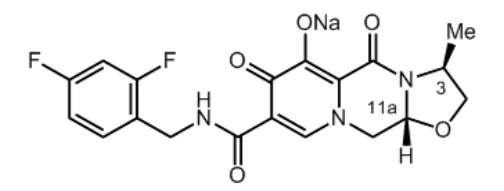
Physicochemical properties: Cabotegravir sodium is a white to almost white solid that is slightly soluble in water. Over most of the physiological pH range cabotegravir sodium is practically insoluble.
Cabotegravir – Extended Release Injectable Suspension
Proper name: cabotegravir
Chemical name: (3S,11aR)-N-[(2,4-Difluorophenyl)methyl]-6-hydroxy-3-methyl-5,7-dioxo-2,3,5,7,11,11a-hexahydro[1,3]oxazolo[3,2-a]pyrido[1,2-d]pyrazine-8-carboxamide
Molecular formula and molecular mass: C19H17F2N3O5
405.35 g/mol
Structural formula:
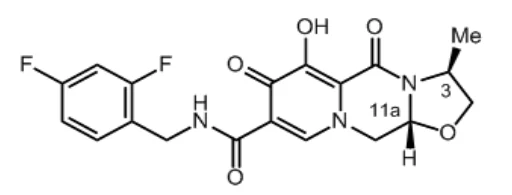
Physicochemical properties: Cabotegravir is white to almost white solid that is practically insoluble in water. Over most of the physiological pH range cabotegravir is practically insoluble.
14 Clinical Trials
14.1 Clinical Trials by Indication
HIV-1 Pre-Exposure Prophylaxis in Adults
The efficacy of APRETUDE has been evaluated in two randomized (1:1), double blind, multi-site, two-arm, controlled studies HPTN 083 in HIV-1 uninfected men and transgender women who have sex with men and have evidence of high-risk behavior for HIV-1 infection and HPTN 084 in HIV-1–uninfected cisgender women at risk of acquiring HIV-1.
Participants randomized to receive APRETUDE initiated oral lead-in dosing with one 30 mg cabotegravir tablet and a placebo daily, for up to 5 weeks, followed by APRETUDE 3mL (600 mg) intramuscular (IM) injection at months 1, 2 and every 2 months thereafter and a daily placebo tablet. Participants randomized to receive TRUVADA initiated oral TRUVADA (TDF 300 mg/FTC 200 mg) and placebo for up to 5 weeks, followed by oral TRUVADA daily and placebo IM injection at months 1, 2 and every 2 months thereafter.
In HPTN 083, a non-inferiority study, 4570 cisgender men and transgender women who have sex with men, were randomized 1:1 to receive either APRETUDE (n=2283) or TRUVADA (n=2287). Of these, 4566 participants were treated with APRETUDE (n=2281) or TRUVADA (n=2285) as blinded study medication up to Week 153. Four participants were randomized but did not receive study drug (2 participants each in the APRETUDE and TRUVADA groups).
- non-white and 67% were <30 years.
- is presented in Table 16.
Table 16 Summary of Demographics and Baseline Characteristics (Randomized Population) for HPTN 083
| Demographic Characteristic | APRETUDE (N=2283) | TRUVADA (N=2287) | |||||||||
|---|---|---|---|---|---|---|---|---|---|---|---|
| Demographic Characteristic | APRETUDE (N=2283) | TRUVADA (N=2287) | |||||||||
| Age (years), n | |||||||||||
| Median (minimum, maximum) | 26.0 (18, 69) | 26.0 (18, 69) | |||||||||
| Cohort, n (%) | |||||||||||
| MSM | 2014 (88) | 1982 (87) | |||||||||
| TGW | 266 (12) | 304 (13) | |||||||||
| Prefer not to answer | 3 (<1) | 1 (<1) | |||||||||
| Race, n (%) | |||||||||||
| White | 618 (27) | 649 (28) | |||||||||
| American Indian or Alaska Native | 616 (27) | 600 (26) | |||||||||
| Black or African American | 565 (25) | 569 (25) | |||||||||
| Asian | 417 (18) | 406 (18) | |||||||||
| Mixed race | 49 (2) | 54 (2) | |||||||||
| Native Hawaiian or Other Pacific Islander | 5 (<1) | 2 (<1) | |||||||||
| Unknown | 13 (<1) | 7 (<1) | |||||||||
| Ethnicity, n (%) | |||||||||||
| Hispanic or Latino | 1043 (46) | 1067 (47) | |||||||||
| Not Hispanic or Latino | 1240 (54) | 1219 (53) | |||||||||
| Not Reported | 0 | 1 (<1) | |||||||||
| SexPro Score, n (%)a | |||||||||||
| ≤16 | 1555 (68%) | 1571 (69%) | |||||||||
| BMI (kg/m2) | |||||||||||
| Median (minimum, maximum) | 24.40 (14.7, 91.0) | 24.50 (14.3, 67.4) | |||||||||
| |||||||||||
HPTN 084
- APRETUDE (n=1614) or TRUVADA (n=1610) as blinded study medication up to Week 153.
- -white, >99% were cisgender women and 49% were <25 years of age.
A summary of the demographic characteristics for HPTN 084 is presented in Table 17.
Table 17 Participant Demographics and Baseline Characteristics (Randomized Population) for HPTN 084
| Demographic Characteristic | APRETUDE (N=1614) | TRUVADA (N=1610) | ||||||||||
|---|---|---|---|---|---|---|---|---|---|---|---|---|
| Age | ||||||||||||
| Median (minimum, maximum) age in years | 25.0 (18, 44) | 25.0 (18, 45) | ||||||||||
| <25 years age group, n (%) | 800 (50) | 794 (49) | ||||||||||
| Race/Ethnicity, n (%) | ||||||||||||
| Asian | 2 (<1) | 3 (<1) | ||||||||||
| Black or African Americana | 1612 (>99) | 1606 (>99) | ||||||||||
| White | 0 | 1 (<1) | ||||||||||
| Sex Assigned at Birth | ||||||||||||
| Male | 0 | 0 | ||||||||||
| Female | 1614 (100) | 1610 (100) | ||||||||||
| Self-Identified Gender | ||||||||||||
| Male | 0 | 3 (<1) | ||||||||||
| Female | 1612 (>99) | 1607 (>99) | ||||||||||
| Transgender Male (female to male) | 2 (<1) | 0 | ||||||||||
| VOICE Risk Score at Screening, n (%) | ||||||||||||
| <5 | 327 (20) | 345 (21) | ||||||||||
| ≥5 | 1287 (80) | 1265 (79) | ||||||||||
| BMI (kg/m2) | ||||||||||||
| Median (minimum, maximum) | 25.7 (16.4, 54.3) | 25.6 (15.0, 51.3) | ||||||||||
| BMI <30, n (%) | 1149 (71) | 1180 (73) | ||||||||||
| BMI ≥30, n (%) | 465 (29) |
| ||||||||||
| a Black or African American is an FDA race category. There were no African American participants in this study. | ||||||||||||
Study Results
HPTN 083
The primary endpoint was the rate of incident HIV infections among participants randomised to oral APRETUDE tablets and APRETUDE injections compared to oral TRUVADA (corrected for early stopping). The primary analysis demonstrated the superiority of APRETUDE compared to TRUVADA with a 66% reduction in the risk of acquiring incident HIV infection, hazard ratio (95% CI) 0.34 (0.18, 0.62); further testing revealed one of the infections on APRETUDE to be prevalent then yielding a 69% reduction in the risk of incident infection relative to TRUVADA (see Table 18). At a pre-planned interim review of trial data, a multinational Data and Safety Monitoring Board (MDSMB) recommended that the blinded phase of HPTN 083 be stopped due to the demonstration of superior efficacy of APRETUDE when compared to daily, oral TRUVADA and that participants randomized to the active TRUVADA group be offered APRETUDE.
Table 18 Primary Efficacy Endpoint: Comparison of Rates of Incident HIV Infections during Randomised Phase in HPTN 083 (mITTa, extended retrospective virologic testing)
APRETUDE (N=2278) | TRUVADA (N=2281) | Superiority P-Value | |||||
|---|---|---|---|---|---|---|---|
| Person years | 3211 | 3193 | |||||
| HIV-1 incident infections (incidence rate per 100 person years) | 12b (0.37) | 39 (1.22) | |||||
| Hazard ratio (95% CI) | 0.31 (0.16, 0.58) | p=0.0003 | |||||
- Modified intent-to-treat
- Following the primary analysis, extended retrospective virologic testing was performed to better characterize the timing of HIV infections. As a result, one of the 13 incident infections on APRETUDE was determined to be a prevalent infection. The original hazard ratio (95% CI) from the primary analysis is 0.34 (0.18, 0.62).
- rate of incident HIV-1 infections observed for participants randomized to the APRETUDE group compared with participants randomized to the TRUVADA group (see Table 19).
Table 19 Rate of incident HIV-1 infection by subgroup in HPTN 083 (mITT, extended retrospective virologic testing)
| Subgroup | APRETUDE incidence per 100 person years | APRETUDE person years | TRUVADA incidence per 100 person years | TRUVADA person years) | HR (95% CI) |
|---|---|---|---|---|---|
| Subgroup | APRETUDE incidence per 100 person years | APRETUDE person years | TRUVADA incidence per 100 person years | TRUVADA person years) | HR (95% CI) |
| Age | |||||
| <30 years | 0.47 | 2110 | 1.66 | 1987 | 0.29 (0.15, 0.59) |
| ≥30 years | 0.18 | 1101 | 0.50 | 1206 | 0.39 (0.08, 1.84) |
| Gender | |||||
| MSMa | 0.35 | 2836 | 1.14 | 2803 | 0.32 (0.16, 0.64) |
| TGWb | 0.54 | 371 | 1.80 | 389 | 0.34 (0.08, 1.56) |
| Race (US) | |||||
| 0.58 | 691 | 2.28 | 703 | 0.26 (0.09, 0.76) | |
| Non-Black | 0.00 | 836 | 0.50 | 801 | 0.11 (0.00, 2.80) |
| Region | |||||
| US | 0.26 | 1528 | 1.33 | 1504 | 0.21 (0.07, 0.60) |
| Latin America | 0.49 | 1020 | 1.09 | 1011 | 0.47 (0.17, 1.35) |
| Asia | 0.35 | 570 | 1.03 | 581 | 0.39 (0.08, 1.82) |
| Africa | 1.08 | 93 | 2.07 | 97 | 0.63 (0.06, 6.50) |
- MSM= cisgender men who have sex with men
- TGW = Transgender women who have sex with men
- zed to oral APRETUDE tablets and APRETUDE injections compared to oral TRUVADA (corrected for early stopping). The primary analysis demonstrated the superiority of APRETUDE compared to TRUVADA with an 88% reduction in the risk of acquiring incident HIV-1 infection hazard ratio (95% CI) 0.12 (0.05, 0.31); further testing revealed 1 of the infections on APRETUDE to be prevalent then yielding a 90% reduction in the risk of HIV-1 incident infection relative to TRUVADA (see Table 20). The MDSMB recommended early termination of the blinded, randomized portion of HPTN 084 after an interim analysis indicated that pre-specified stopping criteria had been met (superiority of APRETUDE compared with TRUVADA).
Table 20 Primary Efficacy Endpoint in HPTN 084: Comparison of Rates of Incident HIV Infections during Randomised Phase (mITT, extended retrospective virologic testing)
APRETUDE (N=1613) | TRUVADA (N=1610) | Superiority P-Value | |
|---|---|---|---|
| Person years | 1960 | 1946 | |
| HIV-1 incident infections (incidence rate per 100 person years) | 3a (0.15) | 36 (1.85) | |
| Hazard ratio (95% CI) | 0.10 (0.04, 0.27) | p<0.0001 | |
- Following the primary analysis, extended retrospective virologic testing was performed to better characterize the timing of HIV-1 infections. As a result, 1 of the 4 HIV-1 incident infections in participants receiving APRETUDE was determined to be a prevalent infection. The original hazard ratio corrected for early stopping (95% CI) from the primary analysis is 0.12 (0.05, 0.31).
- -planned subgroup analyses were consistent with the overall protective effect, with a lower rate of incident HIV-1 infections observed for participants randomized to the APRETUDE group compared with participants randomized to the TRUVADA group (see Table 21).
Table 21 Rate of incident HIV-1 infection by subgroup in HPTN 084 (mITT, extended retrospective virologic testing)
| Subgroup | APRETUDE incidence per 100 person years | APRETUDE person years | TRUVADA incidence per 100 person years | TRUVADA person years) | HR (95% CI) |
|---|---|---|---|---|---|
| Age | |||||
| <25 years | 0.23 | 868 | 2.34 | 853 | 0.12 (0.03, 0.46) |
| ≥25 years | 0.09 | 1093 | 1.46 | 1093 | 0.09 (0.02, 0.49) |
| BMI | |||||
| <30 | 0.22 | 1385 | 1.88 | 1435 | 0.12 (0.04, 0.38) |
| ≥30 | 0.00 | 575 | 1.76 | 511 | 0.04 (0.00, 0.93) |
HIV-1 Pre-Exposure Prophylaxis in Adolescents 12 Years Of Age and Older and Weighing At Least 35 kg
- PTN 083-01 and HPTN 084-01
- -label multicentre Phase IIb clinical trials (HPTN 083-01 and HPTN 084-01). 64 HIV-uninfected, at-risk adolescents <18 years of age and weighing ≥ 35 kg were enrolled and received one 30 mg cabotegravir tablet daily, for up to 5 weeks, followed by cabotegravir injection (single 3 mL (600 mg) injection, at months 1, 2 and every 2 months thereafter, at months 4, 6, 8).
- -01, at baseline, the median age of participants was 17.0 years, the median weight was 70.6 kg, 100% were male, and 44% were non-white.
- -01, the median age of participants was 16.0 years, the median weight was 55.7 kg, 100% were female, and 100% were non-white.
- injectable cabotegravir in healthy, HIV uninfected adolescents <18 years of age, was met (see 8 Adverse Reactions).
MOCHA
- pharmacokinetics of oral and injectable cabotegravir were assessed in an ongoing Phase I/II multicentre, open-label, non-comparative study, MOCHA (IMPAACT 2017, Study 208580). 30 HIV-1 infected and virologically supressed adolescents, aged 12 to <18 years, weighing at least 35 kg were enrolled and received one 30 mg cabotegravir tablet, daily, for at least 4 weeks followed by cabotegravir injections for 3 months (month 1: 600 mg injection, months 2 and 3: 400 mg injection), or cabotegravir every 2 month injections for 2 months (months 1 and 2: 600 mg injection), while continuing background cART.
- 15.0 years, the median weight was 47.9 kg, 47% were female, 100% were non-white, no participants had a CD4+ cell count less than 350 cells per mm3.
- which were to confirm the doses, safety and pharmacokinetics for oral and injectable cabotegravir, in HIV-infected, virologically suppressed adolescents, were met (see 8 Adverse Reactions, 10.3 Pharmacokinetics, Special Populations and Conditions).
15 Microbiology
Antiviral Activity in Cell Culture Cabotegravir exhibited antiviral activity against laboratory strains of wild-type HIV-1 with mean concentration of cabotegravir necessary to reduce viral replication by 50 percent (EC50) values of 0.22 nM in peripheral blood mononuclear cells (PBMCs), 0.74 nM in 293T cells and 0.57 nM in MT-4 cells. Cabotegravir demonstrated antiviral activity in cell culture against a panel of 24 HIV-1 clinical isolates (three in each group of M clades A, B, C, D, E, F, and G, and 3 in group O) with EC50 values ranging from 0.02 nM to 1.06 nM for HIV-1. Cabotegravir EC50 values against three HIV-2 clinical isolates ranged from 0.10 nM to 0.14 nM. No clinical data is available in patients with HIV-2.
Antiviral Activity in Combination with Other Antiviral Agents No drugs with inherent anti-HIV activity were antagonistic to cabotegravir’s antiretroviral activity (in vitro assessments were conducted in combination with rilpivirine, lamivudine, tenofovir and emtricitabine).
Effect of Human Serum and Serum Proteins In vitro studies suggested a 408-fold shift in IC50 of cabotegravir in the presence of 100% human serum (by method of extrapolation), and the protein adjusted IC50 (PA-IC50) was estimated to be 102 nM in MT4 cells.
Resistance in vitro Isolation from wild-type HIV-1 and activity against resistant strains:
Cabotegravir-resistant viruses were selected during passage of HIV-1 strain IIIB in MT-2 cells in the presence of cabotegravir. Amino acid substitutions in integrase that emerged and conferred decreased susceptibility to cabotegravir included Q146L (fold-change range 1.3-4.6), S153Y (fold-change range 2.8-8.4) and I162M (fold-change = 2.8). The integrase substitution T124A also emerged alone (fold change: 1.1 to 7.4 in cabotegravir susceptibility), in combination with S153Y (fold change: 3.6 to 6.6 in cabotegravir susceptibility) or I162M (2.8-fold change in cabotegravir susceptibility). Cell culture passage of virus harboring integrase substitutions Q148H, Q148K, or Q148R selected for additional substitutions (C56S, V72I, L74M, V75A, T122N, E138K, G140S, G149A, and M154I), with substituted viruses having reduced susceptibility to cabotegravir of 2.0- to 410-fold change. The combinations of E138K+Q148K and V72I+E138K+Q148K conferred the greatest reductions of 53- to 260-fold change and 410-fold change, respectively.
Resistance in vivo
HPTN 083
In the primary analysis of the HPTN 083 study, there were 13 incident infections on the cabotegravir arm and 39 incident infections on the tenofovir disoproxil fumarate (TDF)/emtricitabine (FTC) arm. In the cabotegravir arm, 5 incident infections occurred when receiving cabotegravir PrEP injections, of which 4 participants received on-time injections and 1 participant had one injection off-schedule. Five incident infections occurred ≥6 months after the last dose of cabotegravir PrEP. Three incident infections occurred during the oral lead-in period.
HIV genotyping and phenotyping were attempted at the first visit where HIV viral load was >500 copies/mL. Of the 13 incident infections in the cabotegravir arm, 4 participants had INSTI resistance mutations. In the TDF/FTC arm, the 4 participants with NRTI resistance (including 3 who had multi-class resistance) included 3 with M184V/I and one with K65R.
None of the 5 participants who were infected after prolonged interruption from cabotegravir administration had INSTI resistance mutations. Neither genotype nor phenotype could be generated for one of the 5 participants, with just 770 copies/mL HIV-1 RNA. Integrase phenotype could not be generated for one of the remaining 4 participants. The remaining 3 participants retained susceptibility to all INSTIs.
Three participants became infected during the oral lead-in phase, prior to receiving cabotegravir injections. One participant with undetectable plasma cabotegravir levels had no INSTI resistance mutations and was susceptible to all INSTIs. Two participants with detectable plasma cabotegravir concentrations had INSTI resistance mutations. The first participant had INSTI resistant mutations E138E/K, G140G/S, Q148R and E157Q. Integrase phenotype could not be generated. The second participant had INSTI resistance mutations E138A and Q148R. This virus was resistant to cabotegravir (fold-change =5.92) but susceptible to dolutegravir (fold-change=1.69).
Five participants acquired HIV-1, despite on time cabotegravir injections for 4 participants and one off-schedule injection for one participant. Two participants had viral loads too low to analyze. The third participant had no INSTI resistance mutations at the first viraemic visit (Week 17) but had R263K at 112 and 117 days later. While phenotype could not be determined 112 days later, day 117 phenotype showed this virus to be susceptible to both cabotegravir (fold-change= 2.32) and dolutegravir (fold-change=2.29). The fourth participant had INSTI resistance mutations G140A and Q148R. Phenotype showed resistance to cabotegravir (fold-change=13) but susceptibility to dolutegravir (fold-change=2.09). The fifth participant had no INSTI resistance mutations.
In addition to the 13 incident infections, one further participant was HIV-1 infected at enrolment and had no INSTI resistance mutations at that time, however, 60 days later, INSTI resistance mutation E138K and Q148K were detected. Phenotype could not be generated.
Following the primary analysis, extended retrospective virologic testing was performed to better characterise the timing of HIV infections. As a result, one of the 13 incident infections in a participant receiving on time cabotegravir injections was determined to be a prevalent infection.
HPTN 084
In the primary analysis of the HPTN 084 study, there were 4 incident infections on the cabotegravir arm and 36 incident infections on the TDF/FTC arm.
In the cabotegravir arm, 2 incident infections occurred while receiving injections; one participant had 3 delayed cabotegravir injections and both had been non-adherent to oral cabotegravir.
Two incident infections occurred after the last dose of oral cabotegravir; both participants were non-adherent to oral cabotegravir. The first HIV positive visit occurred approx. 11 weeks after enrolment for one participant and 57 weeks after enrolment for the other.
HIV genotyping was attempted at the first visit where HIV viral load was >500 c/mL (first viraemic visit). HIV genotyping results were available for 3 of the 4 cabotegravir arm participants. No major INSTI resistance mutations were detected.
HIV genotyping results were available for 33 of the 36 incident infections in the TDF/FTC group. One participant had a major NRTI mutation (M184V); this participant also had NNRTI resistance with the mutation K103N. Nine other participants had NNRTI resistance (7 had K103N, alone or with E138A or P225H; 1 had K101E alone; 1 had E138A alone).
Following the primary analysis, extended retrospective virologic testing was performed to better characterize the timing of HIV-1 infections. As a result, 1 of the 4 HIV-1 incident infections in participants receiving cabotegravir was determined to be a prevalent infection.
HPTN 083-01 and HPTN 084-01
In studies HPTN 083-01 and HPTN 084-01, there were no incident infections observed among 64 at-risk adolescents (weighing ≥ 35 kg) receiving cabotegravir for HIV-1 PrEP.
16 Non-Clinical Toxicology
General Toxicology
The effect of prolonged daily treatment with high doses of cabotegravir has been evaluated in repeat oral dose toxicity studies in rats (26 weeks) and in monkeys (39 weeks). There were no drug-related adverse effects in rats or monkeys given cabotegravir orally at doses up to 1000 mg/kg/day (>20 times the exposure at the oral MRHD) or 500 mg/kg/day (>4 times the exposure at the oral MRHD), respectively.
In the 14 day monkey toxicity study, a dose of 1000 mg/kg/day was not tolerated and resulted in morbidity associated with gastro-intestinal (GI) effects (body weight loss, emesis, loose/watery faeces, and moderate to severe dehydration).
In the 28 day monkey toxicity study, end of study exposure at 500 mg/kg/day was similar to that achieved in the 14-day study at 1000 mg/kg/day. This suggests that GI intolerance observed in the 14 day study was the result of local drug administration and not systemic toxicity.
In a 3 month study in rats, when cabotegravir was administered by monthly sub-cutaneous (SC) injection (up to 100 mg/kg/dose); monthly IM injection (up to 75 mg/kg/dose) or weekly SC injection (100 mg/kg/dose), there were no adverse effects noted and no new target organ toxicities (at exposures >30 times the exposure in humans at the MRHD of 400 mg IM dose). Local effects at the injection sites were observed and these included dose-proportional increases in redness and swelling at all dose-levels accompanied by inflammatory reactions (erythema and edema graded very slight to severe) in animals given monthly IM injections, at all doses in female animals given monthly SC injections (≥5 mg/kg/month) and in males given ≥30 mg/kg/month. Treatment-related microscopic findings consisted of granulomatous inflammation and mixed inflammatory cell infiltration at the injection sites, with correlating macroscopic changes (pale areas, nodules, and masses).
Carcinogenicity/mutagenesis
Two-year carcinogenicity studies in mice and rats were conducted with cabotegravir. In mice, no drug-related increases in tumor incidence were observed at cabotegravir exposures (AUC) up to 8 times (males) and 7 times (females) MRHD. In rats, no drug-related increases in tumor incidence were observed at cabotegravir exposures up to 26 times MRHD. Cabotegravir was not genotoxic in the bacterial reverse mutation assay, mouse lymphoma assay, or in the vivo rodent micronucleus assay.