


Product Monograph - Bactroban Cream
SUMMARY PRODUCT INFORMATION
| Route of Administration | Dosage Form / Strength | Clinically Relevant Nonmedicinal Ingredients |
| Topical | mupirocin cream 2% | Benzyl Alcohol, Cetomacrogol 1000, Cetyl Alcohol, Mineral Oil, Phenoxyethanol, Purified Water, Stearyl Alcohol, Xanthan Gum. |
INDICATIONS AND CLINICAL USE
BACTROBAN® CREAM (mupirocin cream 2% as mupirocin calcium) is indicated for the topical treatment of secondarily infected traumatic lesions such as small lacerations, sutured wounds or abrasions.
To reduce the development of drug-resistant bacteria and maintain the effectiveness of BACTROBAN® CREAM and other antibacterial drugs, BACTROBAN® CREAM should be used only to treat infections that are proven or strongly suspected to be caused by susceptible bacteria. When culture and susceptibility information are available, they should be considered in selecting or modifying antibacterial therapy. In the absence of such data, local epidemiology and susceptibility patterns may contribute to the empiric selection of therapy.
CONTRAINDICATIONS
BACTROBAN® CREAM is contraindicated in patients with hypersensitivity to mupirocin or to any of its components (see DOSAGE FORMS, COMPOSITION AND PACKAGING).
WARNINGS AND PRECAUTIONS
General
In the rare event of a possible sensitization reaction or severe local irritation occurring with the use of the product, treatment should be discontinued, the product should be wiped off and appropriate alternative therapy for the infection instituted. As with other antibacterial products, prolonged use may result in overgrowth of non-susceptible organisms.
Avoid contact with the eyes.
Prescribing BACTROBAN® CREAM in the absence of a proven or strongly suspected bacterial infection is unlikely to provide benefit to the patient and risks the development of drug-resistant bacteria.
Ear/Nose/Throat
BACTROBAN® CREAM is not suitable for intranasal use.
Gastrointestinal
Pseudomembranous colitis has been reported with the use of antibiotics and may range in severity from mild to life-threatening. Therefore, it is important to consider its diagnosis in patients who develop diarrhea during or after antibiotic use. Although this is less likely to occur with topically applied mupirocin, if prolonged or significant diarrhea occurs or the patient experiences abdominal cramps, treatment should be discontinued immediately and the patient investigated further.
Ophthalmologic
BACTROBAN® CREAM is not suitable for ophthalmic use. Avoid contact with the eyes. If contaminated, the eyes should be thoroughly irrigated with water until the cream residue has been removed.
Sensitivity/Resistance
The use of this product may result in overgrowth of non-susceptible organisms. Also the use of this product may result in localized site irritation. Please see General Warning section above for further information or PART II MICROBIOLOGY and PART II TOXICOLOGY for further information.
Sexual Function/Reproduction
There are no data on the effects of mupirocin on human fertility. Studies in rats showed no effects on fertility (see PART II TOXICOLOGY).
Serious Warnings and Precautions
BACTROBAN® CREAM is not suitable for ophthalmic or intranasal use. Care should be taken to avoid contact with the eyes.>
Skin
In the rare event of a possible sensitization reaction or severe local irritation occurring with the use of the product, treatment should be discontinued, the product should be wiped off and appropriate alternative therapy of the infection instituted.
As with other topical antibacterial products, prolonged use may result in overgrowth of non-susceptible organisms.
Special Populations
Pregnant Women:
Reproduction studies on mupirocin in rodents have revealed no evidence of harm to the fetus. However, since data is not available on the effects on the human fetus, the safety of BACTROBAN® CREAM in the treatment of infections during pregnancy has not been established. If administration to pregnant patients is considered necessary, its potential benefits should be weighed against the possible hazards to the fetus.
Nursing Women:
There is no information on the excretion of mupirocin in milk. Caution should be exercised when BACTROBAN® CREAM is administered to nursing mothers. If a cracked nipple is to be treated, it should be thoroughly washed prior to breast-feeding or manual expression. If a treated cracked nipple is used for manual expression, milk from the affected breast should be discarded. The safety and efficacy of BACTROBAN® CREAM during lactation has not been demonstrated in animal or human models. |
ADVERSE REACTIONS
Adverse Drug Reaction Overview
Data from clinical trials was used to determine the frequency of very common to rare undesirable effects. Very rare adverse reactions were primarily determined from post-marketing experience data and therefore refer to reporting rate rather than true frequency.
The following convention has been used for the classification of frequency:-
very common >1/10, common >1/100 and <1/10 , uncommon >1/1000 and <1/100, rare >1/10,000 and <1/1000 , very rare <1/10,000.
Immune system disorders:
Very rare: Systemic allergic reactions such as anaphylaxis, generalized rash, urticaria and angioedema
Skin and subcutaneous tissue disorders:
Common: Application site hypersensitivity reactions including urticaria, pruritus, erythema, burning sensation, contact dermatitis, rash
Skin dryness and erythema have been reported in irritancy studies in volunteers.
Clinical Trial Adverse Drug Reactions
Because clinical trials are conducted under very specific conditions the adverse reaction rates observed in the clinical trials may not reflect the rates observed in practice and should not be compared to the rates in the clinical trials of another drug. Adverse drug reaction information from clinical trials is useful for identifying drug-related adverse events and for approximating rates.
All Patients
BACTROBAN® CREAM is generally well tolerated. The adverse reactions listed below are thought to be at least possibly related as reported from two randomized, double blind, double-dummy clinical trials, where 357 patients were treated with BACTROBAN® CREAM plus oral placebo while 349 patients received oral cephalexin and a topical placebo.
| Event | BACTROBAN® CREAM (n = 357) | Oral cephalexin* (n = 349) |
| Headache | 2.0% | 1.1% |
| Diarrhea | 1.1% | 2.3% |
| Nausea | 1.1% | 1.1% |
(*) 250 mg q.i.d. for patients >40 kg or 25 mg/kg/day oral suspension in four divided doses for patients ≤40 kg.
The most frequently reported adverse events (>1%), irrespective of relationship to drug, following the use of BACTROBAN® CREAM in the two pivotal clinical trials were:
- BACTROBAN® CREAM: headache (4.5%), upper respiratory tract infection (2.5%), nausea (2.2%), pain (1.7%), diarrhea (1.7%), pharyngitis (1.7%) and injury (1.4%).
- Oral cephalexin: headache (3.4%), upper respiratory tract infection (1.7%), nausea (1.4%), pain (0%), diarrhea (3.2%), pharyngitis (1.4%) and injury (2.9%).
Pediatric Patients
The most frequently reported adverse experiences, irrespective of relationship to drug, in the pediatric population (49 patients were treated with BACTROBAN® CREAM plus oral placebo while 64 patients received oral cephalexin and a topical placebo) were upper respiratory infections (5.3%), fever (4.0%) and pharyngitis (4.0%) for topical BACTROBAN® CREAM, and abdominal pain (3.5%), diarrhea (2.4%), fever (2.4%), headache (2.4%) and rhinitis (2.4%) for oral cephalexin.
Post-Market Adverse Drug Reactions
Very rare adverse events consisting of systemic allergic reactions, including anaphylaxis, urticaria, angioedema, and generalized rash have been reported in patients treated with formulations of BACTROBAN®.
DRUG INTERACTIONS
Overview
Drug-Drug Interactions
Serious Drug Interactions
There are no known serious drug interactions noted for mupirocin.
No drug interactions with BACTROBAN® CREAM have been identified.
DOSAGE AND ADMINISTRATION
Recommended Dose and Dosage Adjustment
A small quantity of BACTROBAN® CREAM should be applied to the affected area with a piece of clean wool or gauze swab 3 times daily for up to 10 days. Discontinue use and consult a physician if condition worsens or if irritation occurs. Scabs do not have to be removed. The treated area may be covered by a dressing. Wash your hands before and after applying.
No dosage adjustment is necessary for patients with hepatic or renal impairment.
Do not mix with other preparations as there is a potential risk of dilution, resulting in a reduction in the antibacterial activity and potential loss of stability of the mupirocin in the cream.
Missed Dose
If an application of BACTROBAN® CREAM is missed, apply as soon as you remember or when it is convenient.
Administration
Populations
- Adults/Children/Elderly
See Recommended Dose and Dosage Adjustment for full information.
OVERDOSAGE
Overdosage has not been known to occur during topical treatment therapy with BACTROBAN® CREAM.
| For management of a suspected drug overdose, contact your regional Poison Control Centre. |
ACTION AND CLINICAL PHARMACOLOGY
Mechanism of Action
Mupirocin is a novel antibiotic produced through fermentation by Pseudomonas fluorescens. Mupirocin inhibits isoleucyl transfer-RNA synthetase, thereby arresting bacterial protein synthesis. Due to this particular mode of action and its unique chemical structure, mupirocin does not show any cross-resistance with other clinically available antibiotics.
Mupirocin is bactericidal at concentrations achieved locally by topical application. Mupirocin exhibits in vitro MICs of 4 µg/mL or less against most (>90%) strains of Staphylococcus aureus, beta-hemolytic Streptococcus, Staphylococcus epidermidis, Staphylococcus saprophyticus, and Streptococcus pyogenes. The clinical significance of the in vitro activity against Staphylococcus epidermidis and Staphylococcus saprophyticus is unknown.
Pharmacodynamics
Mupirocin is a topical antibacterial agent showing in vivo activity against Staphylococcus aureus (including methicillin-resistant strains), S. epidermidis and beta-haemolytic Streptococcus species.
The in vitro spectrum of activity includes the following bacteria:
| Commonly Susceptible Species: |
| Staphylococcus aureus1,2 |
| Staphylococcus epidermidis1,2 |
| Coagulase-negative staphylococci1,2 |
| Streptococcus species1 |
| Haemophilus influenzae |
| Neisseria gonorrhoeae |
| Neisseria meningitidis |
| Moraxella catarrhalis |
| Pasteurella multocida. |
1Clinical efficacy has been demonstrated for susceptible isolates in approved clinical indications.
2Including beta-lactamase producing strains and methicillin-resistant strains
| Resistant Species: |
| Corynebacterium species |
| Enterobacteriaceae |
| Gram negative non-fermenting rods |
| Micrococcus species |
| Anaerobes |
Mupirocin susceptibility (MIC) breakpoints for Staphylococcus spp.
Susceptible: Less than or equal to 1 microgram/ml
Intermediate: 2 to 256 micrograms/ml
Resistant: greater than 256 micrograms/ml
See PART II DETAILED PHARMACOLOGY for further information.
Pharmacokinetics
Absorption:
Systemic absorption of mupirocin through intact human skin is low although it may occur through broken/diseased skin. However, clinical trials have shown that when given systemically, it is metabolized to the microbiologically inactive metabolite monic acid and rapidly excreted.
Percutaneous Absorption
Systemic absorption of mupirocin through intact human skin is minimal. The systemic absorption of mupirocin was studied following application of BACTROBAN® CREAM three times a day for 5 days to various skin lesions (greater than 10 cm in length or 100 cm2 in area) in 16 adults (aged 29 to 60 years) and 10 children (aged 3 to 12 years). Some systemic absorption was observed as evidenced by the detection of the metabolite, monic acid, in urine. Data from this study indicated more frequent occurrence of percutaneous absorption in children (90% of patients) compared to adults (44% of patients). However, the observed urinary concentrations in children (0.07 – 1.3 μg/mL [1 pediatric patient had no detectable level]) are within the observed range (0.08 – 10.03μg/mL [9 adults had no detectable level]) in the adult population.
In general, the degree of percutaneous absorption following multiple dosing appears to be minimal in adults and children. Any mupirocin reaching the systemic circulation is rapidly metabolized, predominantly to inactive monic acid, which is eliminated by renal excretion.
Effect of Occlusion
In an in vitro study using normal cadaver skin, application of mupirocin with occlusion brought about a five-fold greater penetration of mupirocin than without occlusion, although the amount of penetration was still very low (up to 0.33%).
Distribution:
No data available.
Metabolism:
Mupirocin is suitable only for topical application. Following i.v. or oral administration, or if mupirocin is absorbed (e.g. through broken/diseased skin) mupirocin is rapidly metabolized to inactive monic acid.
Excretion:
Mupirocin is rapidly eliminated from the body by metabolism to its inactive metabolite monic acid which is rapidly excreted by the kidney.
Special Populations and Conditions
No data available.
STORAGE AND STABILITY
BACTROBAN® CREAM should be stored at 15°C - 25°C. Self-life of the product is 18 months.
SPECIAL HANDLING INSTRUCTIONS
Do not freeze.
DOSAGE FORMS, COMPOSITION AND PACKAGING
Each gram of BACTROBAN® CREAM contains 21.5 mg of mupirocin calcium, equivalent to 2% (w/w) mupirocin free acid, in an oil and water-based emulsion. The non-medicinal ingredients are benzyl alcohol, cetomacrogol 1000, cetyl alcohol, mineral oil, phenoxyethanol, purified water, stearyl alcohol, and xanthan gum.
BACTROBAN® CREAM is available in 15 gram tubes.
PART II: SCIENTIFIC INFORMATION
PHARMACEUTICAL INFORMATION
Drug Substance
Proper name: Mupirocin calcium dihydrate
Chemical name: Nonanoic acid, 9-[[3-methyl-1-oxo-4-[tetrahydro-3,4-dihydroxy-5-[[3-2-hydroxy-1-methylpropyl)oxiranyl]methyl]-2H–pyran-2-yl]-2-butenyl]oxy]-,[2S-[2, 3, 4, 5[2R*,3R*(1R*,2R*)]]]
Molecular formula and molecular mass: C52H86O18Ca • 2H2O /1075.3
Structural formula:
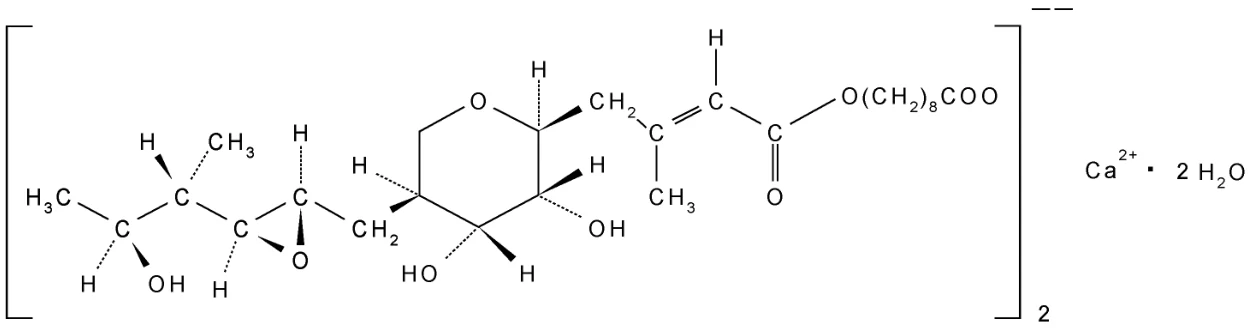
[115074-43-6]
Physicochemical properties: Mupirocin calcium is a white to off-white solid.
CLINICAL TRIALS
All Patients
The efficacy of topical BACTROBAN® CREAM for the treatment of secondarily infected traumatic lesions (e.g., small lacerations, sutured wounds and abrasions) was compared to that of oral cephalexin in two randomized, double-blind, double-dummy clinical trials. Clinical efficacy rates at follow-up in the per protocol populations were 95.1% for BACTROBAN® CREAM (n = 245) and 95.3% for oral cephalexin (n = 233).
Bacterial eradication rates at follow-up in the per protocol populations were 100% for BACTROBAN® CREAM (n = 136 pre-therapy pathogens/98 patients) and 100% for oral cephalexin (n = 148 pre-therapy pathogens/92 patients).
Pediatrics
One hundred and thirteen children (aged 2 weeks to 16 years) of 706 patients treated for secondarily infected traumatic lesions (e.g., small lacerations, sutured wounds and abrasions) were randomized to either 10 days of topical BACTROBAN® CREAM t.i.d. or 10 days of oral cephalexin (250 mg q.i.d. for patients >40 kg or 25 mg/kg/day oral suspension in four divided doses for patients ≤40 kg). Clinical efficacy at follow-up (7 to 12 days post therapy) in the per protocol populations was 98.0% (48/49) for BACTROBAN® CREAM and 95.3% (61/64) for cephalexin.
DETAILED PHARMACOLOGY
MICROBIOLOGY
The in vitro spectrum of activity of mupirocin against strains of various organisms is presented in Table 1 on the following page.
| TABLE 1: | In vitro activity of mupirocin |
| LABORATORY SPECIES MIC (μg/mL) | |
| Aerobic Gram-Positive |
Staphylococcus S. epidermidis ................................................. ………0.25 S. hemolyticus ........................................................... 0.5 S. hominis .................................................................. 0.5 S. saprophyticus ........................................................ 0.25 S. aureus ATCC 25923 .............................................. 0.5 S. aureus NCTC 6571 ............................................... 0.25 S. capitis .................................................................... 0.06 S. cohnii..................................................................... 0.12 |
Streptococcus S. pyogenes ................................................................ 0.12 S. species Group C .................................................... 0.25 S. species Group G .................................................... 0.25 S. agalactiae .............................................................. 0.12 S. pneumoniae ........................................................... 0.5 S. durana ................................................................. 32 S. bovis .................................................................. 128 S. mitis ....................................................................... 0.25 |
Enterococcus E. faecium ........................................................... 32 E. faecalis ........................................................... 64 |
Corynebacterium C. xerosis......................................................... >128 C. minutissimum .............................................. >128 Corynebacterium species GroupJK ................ >128 |
| Bacillus subtilis ............................................................... 0.25 |
Micrococcus M. luteus ........................................................ >1024 M. varians ...................................................... >1024 M. nishinomiyaenosis .................................... >1024 |
| Erysipelothrix rhusiopathiae .........................................16 |
| Listeria monocytogenes .................................................16 |
| Anaerobic Bacteria |
| Peptostreptococcus anaerobius ................................ >128 |
| Peptostreptococcus asaccharolyticus ....................... >128 |
Clostridium C. difficile ........................................................ >1024 C. sporogenes .................................................. >1024 C. tertium ........................................................ >1024 |
Propionibacterium P. acnes ........................................................... >1024 P. granulosum ................................................. >1024 P. avidum ........................................................ >1024 |
| Aerobic Gram-Negative |
| Neisseria gonorrhoeae ....................................................0.06 |
| Haemophilus influenzae ..................................................0.06 |
| Pasteurella multocida ......................................................0.12 |
| Escherichia coli ...........................................................128 |
Klebsiella K. pneumoniae .....................................................128 K. oxytoca ............................................................256 |
Providencia P. rettegeri ...................................................... >1024 P. stuartii Harding .................................................32 |
| Acinetobacter anitratus .......................................... >1024 |
| Pseudomonas aeruginosa ....................................... >1024 |
| Morganella morganii ............................................. >1024 |
| Serratia marcescens ............................................... >1024 |
| Anaerobic Bacteria |
| Bacteroides fragilis ................................................ >1024 |
| Effect of Inoculum Size: |
| There is only a slight effect of inoculum size on mupirocin calcium cream’s minimum inhibitory concentrations (MIC's). For Staphylococcus aureus, inocula ranging from 106 cells/mL (undiluted) to 10 cells/mL (105 dilution) resulted in a two- to four-fold variation in the MIC values. |
| Effect of Composition and pH of Medium: |
The antibacterial activity of mupirocin was not influenced by the composition of the medium. The MIC values of mupirocin were generally two-to four-fold lower at acid pH (6.0) and two- to four-fold higher at alkaline pH (8.0) than those observed in the medium of normal pH (7.4).
Effect of Serum:
Mupirocin was highly bound to serum protein (96.5% bound) and consequently, the activity of the compound was markedly reduced in the presence of human serum.
Minimum Bactericidal Concentrations:
The MIC values of mupirocin against strains of Staphylococcus aureus ranged from 0.12 μg/mL to 2.0 μg/mL and the MBC values from 0.5 - >128 μg/mL. In most cases, the MBC values were from eight- to thirty-two-fold higher than the corresponding MIC values.
Development of Resistance:
The selection of mupirocin-resistant variants of Staphylococcus aureus after repeated exposure to increasing concentrations of the compound, occurred in a slow and stepwise fashion.
Cross-resistance to Other Antibiotics:
There is no evidence of cross-resistance between mupirocin and other anti microbial drugs.
TOXICOLOGY
Acute Toxicology:
The acute toxicity of mupirocin* was determined in mice and rats dosed orally, subcutaneously and intravenously.
(*) The dose level was in terms of pure sodium salt.
| Acute Toxicity | ||||
| Species | Route | Sex | LD50 (mg/kg) | |
| Mice | Oral | M | > 5000 | |
| F | > 5000 | |||
| Rats | Oral | M | > 5000 | |
| F | > 5000 | |||
| Mice | s.c. | M | 4000-5000 | |
| F | 4000-5000 | |||
| Rats | s.c. | M | > 5000 | |
| F | > 5000 | |||
| Mice | i.v. | M | 1638-2048 | |
| F | 1638-2048 | |||
| Rats | i.v. | M | 1310-2560 | |
| F | 1310-2560 | |||
All animals were observed for 14 days. Animals dosed orally remained in healthy condition throughout the study and there were no abnormal findings at post-mortem. Subcutaneously dosed animals showed injection site irritancy with scab formation. Mottled kidneys were found in all surviving mice and in half of those which did not survive. Animals dosed intravenously were observed to convulse immediately after dosing and sedation was evident in most animals. Mottled or pale kidneys were found in many of those surviving.
Subacute Toxicity:
Rats:
Mupirocin was administered for 14 days to 3 groups of rats each comprising 10 males and 10 females. Two groups were subcutaneously (s.c.) dosed at 100 or 500 mg/kg/day and the third group was orally
(p.o.) dosed at 100 mg/kg/day. A fourth and fifth group served as controls and the sixth group of 5 males and 5 females was the health screen. Clinical conditions and laboratory determinations were carried out. There were no treatment related deaths during the study. Injection site damage and alopecia was seen in all animals in the high subcutaneous dose group. Body weight gain, food consumption and water intake were unaffected by treatment. High s.c. dosed animals had slight decreases in hemoglobin, PCV (packed cell volume) and red cell count together with an increase in total leukocyte count and absolute neutrophil count. Orally dosed females had slightly increased hemoglobin and red cell counts and decreased MCV (mean corpuscular volume). Subcutaneously high dosed animals had reductions in SAP (serum alkaline phosphatase) activity, total protein, albumin A/G ratio together with increases in SGPT activity. The males also exhibited increased glucose and decreased potassium. Female receiving 500 mg/kg s.c. exhibited increased urine osmolality on day 13. Macroscopic examination revealed that there was a dose related increase in severity and extent of injection site irritancy. Increases in adrenal weights were noted in males from the high dose s.c. and orally dosed groups. The relative thymic weight in high dose s.c. males was reduced by 13% compared to controls. Significant increases of 31% and 20% were seen in the relative splenic weights of the male and female 500 mg/kg (s.c.) groups respectively and of 13% in the female oral dose group. Histological examination of the kidneys revealed minimal chronic inflammatory cell infiltration and was associated with occasional distended tubules and tubules characterized by the basophilic staining of the cells of the epithelium in the high dose s.c. and oral dose groups.
Squirrel Monkeys:
Mupirocin was administered to four groups of squirrel monkeys each comprising of 2 males and 2 females. Two groups were dosed orally at 50 or 150 mg/kg/day for 14 days and two groups were dosed intramuscularly at 50 or 150 mg/kg/day for 14 days. A fifth group served as control. Clinical conditions and laboratory determinations were monitored and post-mortem and histopathologic determinations were carried out. There were no deaths during the study and no clinical adverse signs. Body weights and food intake were unaffected by treatment.
Hematology, urinalysis and blood chemistry revealed no treatment related effects. At post-mortem examinations, no effects of the drug on organ weights was noted. Histopathological studies showed mild involution of the thymus in some treated animals. Examination of the injection site soft tissues of the i.m. dosed groups revealed mild to moderate irritation reactions.
Subchronic Toxicity:
Rats:
Mupirocin in the nasal ointment base (white soft paraffin with Softisan 649) was applied topically to a shaved unabraded area on the dorsum of 3 groups of rats. Each group was comprised of 10 males and 10 females dosed at 10, 20 or 40 mg/kg/day in dose volumes of 0.5 mL/kg, 1 mL/kg and 2 mL/kg respectively. Dosing was daily for 28 days. A fourth and fifth group served as control and vehicle control. Five male and five female rats were added to each of the control groups and the high dose groups to determine effect of drug withdrawal. At the end of the treatment period these three groups were left undosed for a period of two weeks before sacrificing. Clinical condition and laboratory determinations were monitored and post-mortem and histopathological determinations were carried out. There were no treatment-related deaths. There were no drug-related changes to ophthalmoscopy, body weight, food or water consumptions, urinalysis, organ weights and histopathology. Slight change in some hematology parameters were observed in male rates at day 29 as follows: decreased PT in vehicle control and low dose groups, decreased PCV in low dose groups, increased MCHC in vehicle control and low dose groups and increased MCH in vehicle treated male rats. A slight increase in reticulocyte and neutrophil count was observed at the same time in female rats at intermediate and high dose, respectively. A decrease in HB in male and female rats and a decrease in PCV in males were observed on day 43 at the high dose. All these changes, although statistically significant, were considered likely to be fortuitous and not drug related.
Rabbits:
Mupirocin in the nasal ointment base (white soft paraffin with Softisan 649) was applied topically to a shaved abraded area on the back of 3 groups of rabbits. Each group was comprised of 5 male and 5 female animals dosed at 10, 20 or 40 mg/kg/day in dose volumes of 0.5 mL/kg, 1 mL/kg and 2 mL/kg respectively. Treatment was daily for 28 days (6 hr/day under an occlusive dressing). A fourth and fifth group served as control and vehicle control. Two male and two female animals were added to each of the control groups and the high dose group to determine the effect of drug withdrawal. At the end of the treatment period these three groups were left undosed for a period of two weeks before sacrificing. Clinical conditions and laboratory determinations were monitored and post-mortem and histopathologic determinations were carried out. There were no treatment-related deaths. There were no drug-related changes in ophthalmoscopy, body weight, food or water consumptions, clinical chemistry, organ weights and hematology. The histopathologic determinations revealed minimal inflammatory reactions in the dermis of the majority of treated animals: the involved areas were wider in the animals treated with vehicle than in the high dose treated rabbits. Slight to moderate degree of acanthosis, hyperkeratosis and increase in the number of hair follicles were seen in nearly all treated animals, including vehicle treated rabbits. Acanthosis was not present at the end of the 14 day off-dose period. Many mineral deposits were present in the urinary bladder of 4/10 vehicle control and 4/10 high dose rabbits.
Rats:
Mupirocin was administered daily by the subcutaneous route to 3 groups of rats each comprising 15 males and 15 females at doses of 10, 40 or 100 mg/kg/day for 3 months. A fourth group (control) received sterile saline. Five male and 5 female rats were added to each of the high dose and control groups to determine the effect of drug withdrawal. At the end of the treatment period, these two groups were left undosed for 28 days. Clinical conditions and laboratory determinations were monitored and post-mortem and histopathological determinations were carried out. One female was killed in extremis on day 3 and replaced. Autopsy revealed no treatment related causes. One low dose female and one intermediate dose male died under anesthetic and a further female was killed in extremis following accidental injury. Alopecia and scab formation were seen at the injection sites of high dose males from day 7 onward. Mild signs of sialodacryoadenitis were noted in all groups from day 42. Weight gain in high dose females was reduced after 6 weeks of dosing but was comparable to control by the end of dosing period. In intermediate dose males, weight gain was 14% overall greater than controls. Low dose females gained 63% more than controls in the final 5 weeks of dosing. Food intake was greater in intermediate dose males. Water intake of males increased during week four.
Female rats had decreased water consumption in week 4 but low dose females had significant increase in week 12. During "off-dose", females in the high dose group had slightly less water consumption than controls. There were no significant haematologic changes except for a slight reduction in red cell parameters in treated females at the interim examination. Increases in ALT (alanine amino-transferase) were noted intermediate and high dose males. Decreased total protein and albumin in high dose males and increased A/G ratio in low dose males was also noted. Increases in urine volume occurred in high dose males and females. Macroscopic examinations revealed a treatment related incidence of injection site irritation. After treatment period, there was an increase in spleen weight in the high dose females. A significant increase in liver weights of high dose level females at this time showed reversal upon drug withdrawal.
Dogs:
A similar study was carried out in beagle dogs. Mupirocin was administered daily by the route to 3 groups of dogs each comprising 4 males and 4 females at doses of 5, 10 and 20 mg/kg/day. (These doses were reduced from 10, 40 and 80 mg/kg respectively on day 4). A fourth group (control) received sterile saline. Two males and two females were added to each of the high dose and control groups to determine the effect of drug withdrawal. At the end of the treatment period, these two groups were left undosed for a period of 28 days. Immediate reaction to treatment in the form of muscular weakness and convulsions was evident in several dogs at levels of 40 and 80 mg/kg. On lowering of these dose levels, reactions continued until day 6 until a reduced injection rate was introduced. There were no mortalities. A decrease in total leucocyte count was seen in most intermediate and high dose males and most females in all dose groups. Blood chemistry revealed increases in A/G ratios in 4 high dose males at terminal examination. Analysis of ECG's from dogs showing adverse reactions at onset of dosing showed pronounced bradycardia, sometimes with tachycardia with onset, during or immediately after dosing and recovery within 2 minutes. Macroscopic, pathologic and histopathologic examinations revealed no changes considered to be related to treatment.
Carcinogenesis/Mutagenesis:
Carcinogenesis:
Carcinogenicity studies with mupirocin have not been conducted.
Genotoxicity:
In non-mammalian cell in vitro assays, mupirocin produced weak positive results in Escherichia coli repairable genetic damage tests and in Salmonella typhimurium TA98 in reverse mutation assays, both in the absence of metabolic activation. Other non-mammalian cell assays including an Ames assay with Salmonella. typhimurium, a gene conversion test with Saccharomyces cerevisiae, and a forward mutation test with E. coli were negative.
In an in vitro mammalian gene mutation assay (MLA), no increase in mutation frequency was observed in the absence of metabolic activation. In the presence of metabolic activation, small increases in mutation frequency were observed at highly cytotoxic concentrations.
However, no treatment-related effects were observed in, yeast cell assays for gene conversion/mutation, an in vitro human lymphocyte assay or in an in vitro unscheduled DNA synthesis (UDS) assay. Furthermore, an in vivo mouse micronucleus assay (chromosome damage) and a rat Comet assay (DNA strand breakage) were negative, indicating the small increases observed at highly cytotoxic concentrations in vitro do not translate to the in vivo situation.
Reproductive studies:
Fertility and General Reproductive performance:
Mupirocin was administered subcutaneously to 3 groups of rats, each comprising 28 males and 28 females, at doses of 10, 40 and 100 mg/kg/day. A fourth group (control) received the vehicle (sterile saline). Male rats were dosed daily from 10 weeks prior to mating until successful littering by F0 females. Female rats were treated daily from day 15 prior to mating until day 24 post partum or until selected for cesarean section on gestation day 21.
On gestation day 21, 14 females/group were sacrificed and a cesarean section carried out and the remaining 14/group were allowed to litter normally. From these litters a total of 28 males and 28 females were selected to form the F1 generation. They were mated at 11 weeks of age and the procedures followed were comparable to the F0 generation. One female animal in the high dose group was killed, not due to a direct effect of treatment. Alopecia and scabbing at injection sites was seen in the female intermediate dose group and in all animals at the high dose level. Top dose females had a reduction in body weight gains during the latter part of gestation. Fertility and general reproductive performance were not affected by treatment. In the litters of females sacrificed for cesarean section there were treatment related trends in reduction in general cranial ossification. Pups from females allowed to litter were unaffected by parental treatment.
The F1 generation showed no signs of physical condition ascribable to treatment of the F0 generation. One female in the low dose group was killed following total litter loss on day 2 post-partum. Before pairing females derived from treated parents showed significant increases in body weight gains compared to animals from control parents. The rate was similar in all groups during gestation but significantly reduced in the intermediate and high dose group animals during lactation. Males derived from high dose F0 generation had slightly poorer recall ability. In the F1 animals allowed to litter the only effect recorded in the pups was a significant reduction in the percentage of females in the top dose group to have developed the static righting reflex.
Teratology:
Three groups of 15 female rabbits were mated and mupirocin was then subcutaneously administered from day 6 to day 18 of gestation at doses of 10, 40 and 160 mg/kg/day. A fourth group (control) was dosed with physiological saline (vehicle). On day 29 of gestation, the animals were sacrificed and cesarean section carried out. Orange coloration of the urine was seen in the majority of high dose animals and in some intermediate dose animals. Four high dose animals showed palpable thickening and tightening of the skin and associated abnormal gait. Three of these affected animals aborted and were killed before day 29. One other animal in the high dose group and one in the control group also aborted but survived until termination of study. Higher incidence of anorexia and reduced fecal output during dosing or post-dosing periods was noticed in the intermediate and high dose groups. Maternal weight gain was impaired in the high dose group. A slightly lower mean number of corpora lutea was recorded in all test groups and pre-implantation loss was higher in low and intermediate dose groups resulting in lower number of implantations but these were not statistically significant. Autopsy of high dose animals revealed dose-related injection site reactions with subcutaneous haemorrhage, dermal thickening and subcutaneous white discolouration in the dorsal area. There were no significant changes in litter parameters and incidences of major malformations, minor anomalies and skeletal variants were unaffected by treatment.
In a preliminary developmental study in rats, there was no evidence of embryotoxicity, embryolethality or teratogenicity at subcutaneous doses up to 375 mg/kg/day.
Perinatal and Postnatal Studies:
Mupirocin was administered subcutaneously to 3 groups, each comprising 22 pre-mated rats, at doses of 11.l, 44.2 or 106.7 mg/kg/day from day 15 of gestation to day 25 post-partum. A fourth group (control) was dosed with sterile saline. One parent animal in the low dose group was killed following extreme dystocia. Local irritation in the form of swelling and/or scabbing at the injection site was seen in all dose levels. Pregnancy rate and implantation index and length of gestation was comparable for all groups. Autopsy of parent animals revealed an increased number of injection site reactions in the form of subdermal hemorrhaging, scabbing and alopecia in the high dose group. These incidences were less severe in the low and intermediate dose groups. There was no evidence of treatment related effect on the general condition of the offspring. Group mean litter size was slightly lower than control in the intermediate dose group and markedly lower in the higher dose group. There was a slight reduction in the viability index (at day 4) of the high dose animals with more minimal effects seen in the remaining treated and control groups. The F1 generation parameters revealed no other meaningful differences or dose related trends in litter observations, behavioral and developmental indices.
Irritation and Sensitization Studies:
Animal:
Rats:
Mupirocin calcium in a cream base was administered topically to groups of 10 male and 10 female Sprague Dawley rats, at doses nominally equivalent to 0 (untreated control), 0 (vehicle control), 10, 20 and 40 mg/kg/day pfa1 for 28 days. The formulation was applied once daily to the shaved but intact, unoccluded skin.
In 3 groups, an additional 5 males and 5 females remained undosed, or received either the vehicle alone of 40 mg/kg/day, and were maintained for a 14 day off dose period immediately following treatment. In addition to local reactions, general physical signs, body weight gain, food and water consumption, ophthalmoscopy, blood and urine chemistry, hematological parameters, organ weight changes and tissue histology were evaluated. There were no adverse physical signs, including skin reactions. Other in-life parameters assessed showed no changes considered to be related to administration of the formulation.
Rabbits:
Mupirocin calcium in a cream base was applied topically to groups of 2 male and 2 female New Zealand White rabbits at doses nominally equivalent to 0 (vehicle control) and 40 mg/kg/day pfa for 10 days. The formulation was administered once daily to the shaved, abraded skin. The application site was occluded for 6 hours each day, before being rinsed with water and dried. There were no adverse physical signs, including skin reactions.
A single application of 0.1 mL of a formulation of mupirocin calcium in a cream base was made to one eye of each of 9 female New Zealand White rabbits. In 3 animals the treated eye remained unrinsed after instillation of the test article, whereas in two other groups of 3 the eye was rinsed with 20 mL of clean lukewarm water 2 seconds or 4 seconds after instillation, respectively. The untreated eye acted as a control. Pain immediately upon application was recorded, and irritation assessed 1 hour and 1, 2, 3, 4 and 7 days after treatment to yield an index of irritant potential. Mupirocin was classed as a slight irritant to the rinsed or unrinsed eye of rabbits.
Mupirocin calcium in a cream base was applied topically to groups of 5 male and 5 female New Zealand White rabbits at doses nominally equivalent to 0 (untreated control), 0 (vehicle control), 10, 20 and 40 mg/kg/day pfa for 28 days. The formulation was administered once daily to the shaved abraded skin. The application site was occluded for 6 hours each day, before being rinsed with water and dried. In 3 groups, an additional 2 males and 2 females remained undosed, or received either the vehicle alone or 40 mg/kg/day, and were observed for a further 14-day treatment free period. General physical signs, body weight gain, food and water consumption, ophthalmoscopy, blood and urine chemistry, hematological parameters, organ weight changes and tissue histology were evaluated, as
1 pfa – pure free acid.
well as local reactions. Parameters assessed during the live phase revealed no reaction to treatment. The mild skin changes produced were concluded to be primarily vehicle-related.
There was no evidence of systemic toxicity in any mupirocin calcium-treated animal.
Guinea Pigs:
A clipped area of the back of each of 20 male Duncan Hartley guinea pigs was treated with 0.2mL of 10% sodium dodecyl sulphate in white soft paraffin, under occlusion, to aid subsequent penetration of the test materials. Two hours later the sites were washed, treated with 0.2 mL formulation of mupirocin calcium in a cream base, and reoccluded. Application of this formulation was repeated on day 1, 3 (after intradermal injection of 0.1 mL Freund’s complete adjuvant each side of the induction site) and on day 6. An additional group of 5 animals was treated in the same manner with a positive control substance, 0.3% (w/v) DNCB in propylene glycol. Ten guinea pigs served as negative controls, and were treated only with intradermal injections of FCA on day 3. Application sites were reoccluded after each treatment. On day 21, applications of 0.2mL of challenge material were made to the shaved flanks. The sites were occluded, and assessed 28, 48 and 72 hours later, after depilation. Results showed that the cream formulation did not induce contact hypersensitivity reactions in guinea pigs according to the protocol used.
Human:
Mupirocin cream was applied under an occlusive patch to the arms of 30 volunteers. One patch remained in situ for 5 hours and the other for 24 hours. No indication of irritancy was reported following 5 hour occlusion. There were no subjective symptoms of local intolerance such as itching, burning or discomfort reported by any volunteer whilst the patches were applied. Very slight erythema was reported at the one patch site at 25 hours, in one subject, but this had resolved one hour later. One assessor also reported slight erythema of the test site at 25 hours in another subject but the second observer did not confirm this. All test sites were negative at the 7-day follow up assessment.
A second study was conducted to investigate the tolerance to and sensitization potential of a mupirocin cream formulation. Twenty healthy volunteers made repeat unoccluded applications of mupirocin cream (0.1mL) to the same test site, on the volar aspect of one forearm, 3 times daily for 10 days. Daily self-assessments were undertaken for signs and symptoms of irritation and spontaneously reported by subjects. Ten days following completion of dosing, a challenge was performed with mupirocin cream applied under an occlusive patch for 48 hours to the upper back.
The challenge site was visually inspected by 2 assessors at 1 hour, 24 hours and 120 hours after patch removal for evidence of contact sensitization. Hematology and clinical chemistry samples were collected for safety monitoring just prior to the first application of calcium mupirocin cream. No clinically significant change was detected in any of the parameters measured. Only one subject reported mild itching at the patch site before and after patch removal during challenge. There were no serious adverse events and no subject withdrawals.
A three-stage study with 2% mupirocin as mupirocin calcium cream formulation was performed with 112 healthy volunteers. Two preliminary irritancy stages were completed in 10 volunteers, and included a placebo comparator. The first dosing period involved repeat unoccluded applications of each treatment for 5 hours, once daily for 5 days to the inner forearm. Assessments were performed at 6 and 24 hours after concomitant applications of each treatment. During the second dosing period, the same volunteers received two consecutive semi-occluded applications for 5 hours and 18 hours, respectively, followed by two occluded applications of 23 hours duration each, to the upper arm, over a total period of 72 hours. Irritancy assessments were performed 1 hour after patch removal and at follow up, 24 hours after the last application. The third stage of the study investigated contact sensitization of mupirocin calcium cream compared to placebo cream in 100 volunteers. 102 volunteers received repeat concomitant applications of both treatments across the upper back, occluded for 48 and 72 hours each, over a period of 22 days. A challenge was performed 14 days later, involving a single application of mupirocin cream and placebo to fresh test sites. Blood and urine samples were taken prior to treatment and on completion of dosing on day 22. There were no clinically significant abnormal findings in any parameter studied. Mupirocin calcium cream appears to have minimal capacity for causing dermal irritancy, which is comparable to mupirocin ointment. There were no serious adverse experiences, although 6 subjects were withdrawn due to adverse experiences. Of these, one subject was withdrawn due to dizziness on day 19, and another subject was withdrawn with a severe application site reaction, dyspnea and headache, which was considered to be drug related.
Two parallel groups, each comprising 6 female volunteers, received either 2% mupirocin as mupirocin calcium cream or Naseptin® cream containing chlorhexidine hydrochloride 0.1% and neomycin sulphate 0.5% nasally. Subjects in both groups received 0.05 mL cream to each nostril, 3 times daily for 7 days. Signs and symptoms of irritancy were assessed daily. Blood samples for clinical chemistry and hematology, and urine samples were collected prior to first application of mupirocin calcium cream or Naseptin® and on day 8 following the end of repeated application. No clinically significant change was detected in any of the parameters measured. There were no subject withdrawals and no serious adverse events. Repeated nasal application of mupirocin calcium cream to the anterior nares of healthy volunteers was generally well tolerated. Mupirocin calcium cream did not produce any significant signs of irritation and was comparable to Naseptin® cream.
REFERENCES
|
|
|
|
|
|
|