


Product Monograph - Taro-Mupirocin
SUMMARY PRODUCT INFORMATION
| Route of Administration | Dosage Form / Strength | Clinically Relevant Nonmedicinal Ingredients |
| topical | ointment 2% (20 mg/g) | polyethylene glycol 400 and polyethylene glycol 3350. |
INDICATIONS AND CLINICAL USE
Taro-Mupirocin (mupirocin) is considered appropriate for the topical treatment of the following when caused by sensitive strains of staphylococcus and streptococcus species:
- impetigo
- superficially infected dermatoses
- lesions which are moist and weeping
For abrasions, minor cuts and wounds, the use of Taro-Mupirocin (mupirocin) may prevent the development of infections by sensitive Gram-positive organisms.
To reduce the development of drug-resistant bacteria and maintain the effectiveness of Taro-Mupirocin (mupirocin) and other antibacterial drugs, Taro-Mupirocin (mupirocin) should be used only to treat infections that are proven or strongly suspected to be caused by susceptible bacteria. When culture and susceptibility information are available, they should be considered in selecting or modifying antibacterial therapy. In the absence of such data, local epidemiology and susceptibility patterns may contribute to the empiric selection of therapy.
CONTRAINDICATIONS
Taro-Mupirocin (mupirocin) should not be given to patients with a history of hypersensitivity to mupirocin or any of the constituents of the preparation. For a complete listing, see the Dosage Forms, Composition and Packaging section of the product monograph.
WARNINGS AND PRECAUTIONS
Serious Warnings and Precautions
This mupirocin ointment formulation is not suitable for ophthalmic or intranasal use or use in conjunction with cannulae or at the site of venous cannulation.
General
When Taro-Mupirocin (mupirocin) is used on the face, care should be taken to avoid the eyes.
Polyethylene glycol can be absorbed from open wounds and damaged skin and is excreted by the kidneys. In common with other polyethylene glycol based ointments, Taro-Mupirocin (mupirocin) should not be used in conditions where absorption of large quantities of polyethylene glycol is possible, especially if there is evidence of moderate or severe renal impairment.
Prescribing Taro-Mupirocin (mupirocin) in the absence of a proven or strongly suspected bacterial infection is unlikely to provide benefit to the patient and risks the development of drug-resistant bacteria.
Ear/Nose/Throat
Taro-Mupirocin (mupirocin) is not suitable intranasal use.
Gastrointestinal
Pseudomembranous colitis has been reported with the use of antibiotics and may range in severity from mild to life-threatening. Therefore, it is important to consider its diagnosis in patients who develop diarrhea during or after antibiotic use. Although this is less likely to occur with topically applied mupirocin, if prolonged or significant diarrhea occurs or the patient experiences abdominal cramps, treatment should be discontinued immediately and the patient investigated further.
Ophthalmologic
Taro-Mupirocin (mupirocin) is not suitable for ophthalmic use. Avoid contact with the eyes. If contaminated, the eyes should be thoroughly irrigated with water until the ointment residue has been removed.
Renal
Moderate or severe renal impairment may occur upon absorption of large quantities of polyethylene glycol; please see General Information Section for further information.
Sensitivity/Resistance
Use of topical antibiotics occasionally allows overgrowth of non-susceptible organisms.
If this occurs, or irritation or sensitization develops, treatment should be discontinued and appropriate therapy instituted.
Sexual Function/Reproduction
There are no data on the effects of mupirocin on human fertility. Studies in rats showed no effects on fertility (see PART II Non-Clinical Information).
Skin
In the rare event of a possible sensitization reaction or severe local irritation occurring with the use of the product, treatment should be discontinued, the product should be wiped off and appropriate alternative therapy of the infection instituted.
As with other topical antibacterial products, prolonged use may result in overgrowth of non-susceptible organisms.
Special Populations
Pregnant Women: The safety of Taro-Mupirocin (mupirocin) in the treatment of infections during pregnancy has not been established. If administration to pregnant patients is considered necessary, its potential benefits should be weighed against the possible hazards to the fetus.
Studies in animals do not indicate reproductive toxicity (see PART II Non-Clinical Information).
Nursing Women: There is no information on the excretion of mupirocin in milk. Caution should be exercised when Taro-Mupirocin (mupirocin) is administered to nursing mothers. If a cracked nipple is to be treated, it should be thoroughly washed prior to breastfeeding or manual expression. If a treated cracked nipple is to be used for manual expression, milk from the affected breast should be discarded.
The safety and efficacy of Taro-Mupirocin (mupirocin) during lactation has not been demonstrated in animal or human models.
ADVERSE REACTIONS
Adverse Drug Reaction Overview
Adverse reactions are listed below by system organ class and frequency. Frequencies are defined as:
very common (≥1/10), common (≥1/100, <1/10), uncommon (≥1/1000, <1/100), rare (≥1/10,000,
<1/1000), very rare (<1/10,000), including isolated reports.
Common and uncommon adverse reactions were determined from pooled safety data from a clinical trial population of 1573 treated patients encompassing 12 clinical studies. Very rare adverse reactions were primarily determined from post-marketing experience data and therefore refer to reporting rate rather than true frequency.
Immune system disorders:
Very rare: Systemic allergic reactions including anaphylaxis, urticaria, angioedema, and generalized rash have been reported with Taro-Mupirocin (mupirocin) Ointment.
Skin and subcutaneous tissue disorders:
Common: Burning localized to the area of application.
Uncommon: Itching, erythema, stinging and dryness localized to the area of application. Uncommon: Cutaneous sensitization reactions to mupirocin or the ointment base.
Post-Market Adverse Drug Reactions
Very Rare adverse events consist of systemic allergic reactions, including anaphylaxis, urticaria, angioedema, and generalized rash have been reported in patients treated with formulations of Taro-Mupirocin (mupirocin).
DRUG INTERACTION
Serious Drug Interactions
There are no known serious drug interactions noted for mupirocin.
Overview
There is no evidence of cross-resistance between mupirocin and other anti-microbial drugs.
DOSAGE AND ADMINISTRATION
Recommended Dose and Dosage Adjustment
A small amount of Taro-Mupirocin (mupirocin) should be applied to cover the affected area 3 times daily for up to 10 days, depending on the response. The area treated may be covered with a gauze dressing if desired. Always wash your hands before and after applying.
Any product remaining at the end of treatment should be discarded.
Do not mix with other preparations as there is a risk of dilution, resulting in a reduction in the antibacterial activity and potential loss of stability of the mupirocin in the ointment.
Missed Dose
If an application of Taro-Mupirocin (mupirocin) is missed, apply as soon as you remember or when it is convenient, and then continue as before.
Administration
Populations
Renal impaired:
See WARNINGS AND PRECAUTIONS.
OVERDOSAGE
Overdosage has not been known to occur during topical therapy with mupirocin ointment.
For management of a suspected drug overdose, contact your regional Poison Control Centre.
ACTION AND CLINICAL PHARMACOLOGY
Mechanism of Action
Mupirocin is a novel antibiotic produced through fermentation of Pseudomonas fluorescens. Mupirocin inhibits isoleucyl transfer-RNA synthetase, thereby arresting bacterial protein synthesis. Due to this particular mode of action, and its unique chemical structure, mupirocin does not show any cross- resistance with other clinically available antibiotics.
Mupirocin has bacteriostatic properties when applied locally at minimum inhibitory concentrations and bactericidal properties when applied at higher concentrations on the skin.
Pharmacodynamics
Mupirocin is a topical antibacterial agent showing in vivo activity against Staphylococcus aureus
(including methicillin-resistant strains), S. epidermidis and beta-haemolytic Streptococcus species.
The in vitro spectrum of activity includes the following bacteria:
Commonly Susceptible Species:
Staphylococcus aureus1,2
Staphylococcus epidermidis1,2
Coagulase-negative staphylococci1,2
Streptococcus species1
Haemophilus influenzae Neisseria gonorrhoeae Neisseria meningitidis Moraxella catarrhalis Pasteurella multocida.
1Clinical efficacy has been demonstrated for susceptible isolates in approved clinical indications.
2Including beta-lactamase producing strains and methicillin-resistant strains
Resistant Species:
Corynebacterium species
Enterobacteriaceae
Gram negative non-fermenting rods
Micrococcus species
Anaerobes
Mupirocin susceptibility (MIC) breakpoints for Staphylococcus spp.
Susceptible: Less than or equal to 1 microgram/ml
Intermediate: 2 to 256 micrograms/ml
Resistant: greater than 256 micrograms/ml
See PART II DETAILED PHARMOCOLOGY for further information.
Pharmacokinetics
Absorption:
Percutaneous Absorption
In man, a mean topical dose of 0.487 grams of radiolabelled mupirocin in the ointment base applied directly to the skin resulted in less than 0.24% systemic availability of the applied dose up to 120 hours after application. The amount of mupirocin-related material in blood and plasma were less than approximately 1.2 ng/mL. The penetration of mupirocin into the outer layers of skin was a mean of
2.71% of the applied dose 24 hours after application. Assessment of the persistence of mupirocin, as measured microbiologically, after four days of twice daily application, showed no evidence of persistence 48 hours after the last dose. It is concluded that mupirocin itself does not form a depot in the skin. However, it is evident that metabolites (primarily, biologically inactive monic acid) of mupirocin are present in the skin for up to 168 hours after application.
Mupirocin is poorly absorbed through intact human skin.
Effect of Occlusion
In an in vitro study using normal cadaver skin, application of mupirocin with occlusion brought about a five-fold greater penetration of mupirocin than without occlusion, although the amount of penetration was still very low (up to 0.33%).
Distribution:
Effect of Serum
Mupirocin was highly bound to serum protein (96.5% bound) and consequently, the activity of the compound was markedly reduced in the presence of human serum.
Metabolism:
Mupirocin is suitable only for topical application. Following i.v. or oral administration, or if mupirocin is absorbed (e.g. through broken/diseased skin) mupirocin is rapidly metabolized to inactive monic acid.
Excretion:
Mupirocin is rapidly eliminated from the body by metabolism to its inactive metabolite monic acid which is rapidly excreted by the kidney.
STORAGE AND STABILITY
Store at 15º – 25ºC.
SPECIAL HANDLING INSTRUCTIONS Incompatibilities
None identified.
Use and Handling
Do not freeze.
Any product remaining at the end of treatment should be discarded. Wash your hands after application.
DOSAGE FORMS, COMPOSITION AND PACKAGING
Each gram of Taro-Mupirocin (mupirocin) Ointment USP, 2%, contains 20 mg mupirocin in a bland water-soluble ointment base consisting of polyethylene glycol 400 and polyethylene glycol 3350.
Taro-Mupirocin (mupirocin) Ointment USP, 2%, is available in 15 gram and 30 gram tubes.
PART II: SCIENTIFIC INFORMATION
PHARMACEUTICAL INFORMATION
Drug Substance
Proper name: Mupirocin
Chemical name: (E)-(2S,3R,4R,5S)-5-[(2S,3S,4S,5S)-2,3-Epoxy-5-hydroxy-4-methylhexyl]tetrahydro-3,4-dihydroxy-β-methyl-2H-pyran-2-crotonic acid, ester with 9-hydroxynonanoic acid
Molecular formula and molecular mass: C26H44O9 500.62
Structural formula:
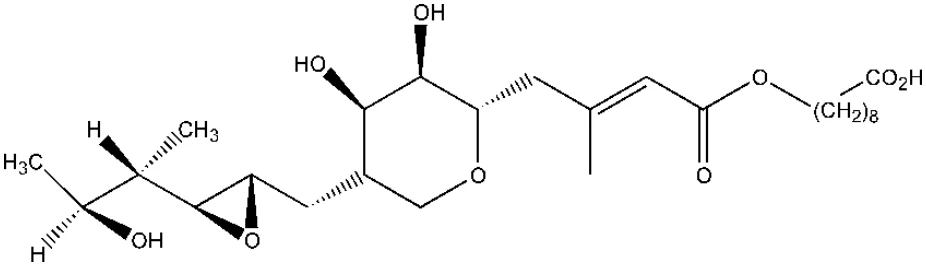
Physicochemical properties: A white to off-white crystalline solid. Freely soluble in acetone, chloroform, dehydrated alcohol and methanol; slightly soluble in ether and very slightly soluble in water. Melts between 70º and 76.5ºC.
CLINICAL TRIALS
A multicenter, randomized, double-blind, parallel-group, placebo-controlled study compared the safety and efficacy of Taro-Mupirocin Ointment with that of Bactroban® Ointment 2% (GlaxoSmithKline Inc., U.S.A.), in patients who had a clinical diagnosis of impetigo contagiosa or uncomplicated blistering impetigo and who were 18 months of age or older. A thin layer of ointment was applied to the affected areas 3 times daily for 7 days (21 applications). The primary efficacy endpoint was the clinical response 7 days post-treatment or at early termination. Clinical success was defined as sufficient resolution of signs and symptoms of infection such that no additional antibiotic therapy was required to treat impetigo, and a SIRS (Skin Infection Rating Scale) score of <2 for each of erythema/inflammation and itching/pain. Safety was assessed by adverse events, early terminations, extent of exposure and concomitant medications.
Five hundred and sixty-five (565) patients were randomized, 222 to Taro-Mupirocin Ointment 2%, 224 to Bactorban® Ointment 2% and 119 to the Placebo group. The mean age was 11.9 years (range 1 – 62 years). The primary efficacy analysis, clinical response 7 days post-treatment in the per-protocol analysis set, demonstrated noninferiority of Taro-Mupirocin Ointment 2% versus Bactroban® Ointment 2% (see Table 1). Results for the intent-to-treat analysis set 7 days post-treatment were similar.
Table 1 Comparison of Clinical Response and Assessment of Noninferiority 7 days post-treatment for the per-protocol Analysis Data Set for Taro’s Vehicle, Taro-Mupirocin Ointment and Bactroban® Ointment 2% (U.S.) Reference Product
| Product | Clinical Success % | N | 95% CI Taro vs. Bactroban® | p Value Active vs. Vehicle |
| Taro | 96.9 | 191 | -1.2-8.5* | p<0.0001 |
| Bactroban® | 93.2 | 191 | p<0.0001 | |
| Vehicle | 64.0 | 89 | ||
| 471 |
*Since the 95% CI lay entirely above -13%, Taro-Mupirocin was declared noninferior to Bactroban® (U.S.) in the treatment of impetigo.
One hundred and twenty-three (21.8%) patients reported 163 adverse events over the duration of the study: 15.8% of patients with Taro-Mupirocin, 19.6% of patients with Bactroban®, and 37.0% of patients with Placebo. The most commonly reported adverse events were viral infection, furuncle, upper respiratory tract infection and laceration. A small number of patients experienced application site burning, bleeding or pain; these adverse events were reported in all treatment groups.
Bridging Study
A bridging study compared the antimicrobial activity of Taro-Mupirocin Ointment 2% with that of Bactroban® Ointment 2% marketed in Canada, the U.K. and the U.S. in reducing the viability of Staphylococcus aureus on experimentally-contaminated skin of the forearms of healthy adult subjects. Staphylococcus aureus was chosen for this assay because of its clinical relevance and because it generally requires as high or higher a MIC for efficacy as does mupirocin sensitive Streptococcus. Mean kill rates for Taro-Mupirocin 2% and Canadian Bactroban® Ointment are detailed in Table 2. This study demonstrated that Mupirocin Ointment 2% manufactured by Taro Pharmaceuticals Inc. (Canada) is therapeutically equivalent to Mupirocin Ointment 2% (Bactroban®) marketed by GlaxoSmithKline Inc. (Canada).
Table 2 Comparison of Mean Kill Rates Normalized to Control for Taro-Mupirocin Ointment 2%, and Canadian, U.S. and U.K. Bactroban® Ointment 2% Reference Products
| Kill Rates ± S.D. (%) | N | Ratio (%) | 90% CI | |
Taro 94.5 ± 12.0 | Canada 97.7 ± 5.7 | 71 | Taro/Canada 96.7 | Taro/Canada 94.6 – 98.9 |
Taro 94.5 ± 12.0 | U.S. 98.4 ± 3.0 | 71 | Taro/U.S. 96.0 | Taro/U.S. 93.8 – 98.3 |
Taro 94.5 ± 12.0 | U.K. 97.5 ± 7.5 | 71 | Taro/U.K. 96.9 | Taro/U.K. 94.7 – 99.1 |
Study Design and demographics
Table 3 provides the study design and demographics for 4 clinical studies. .
Study 2095-01X was a double-blinded, vehicle controlled, parallel-group Phase III studies that evaluated the efficacy and safety of Mupirocin ointment 2% for the treatment of secondary infections of the skin in adult subjects.
Study 20925-02X was a double-blinded, vehicle controlled, parallel-group Phase III studies that evaluated the efficacy and safety of Mupirocin ointment 2% for the treatment of secondary infections of the skin in pediatric subjects.
Study 20925-03X/A was a double-blinded, vehicle controlled, parallel-group Phase III study that evaluated the efficacy and safety of Mupirocin ointment 2% for the treatment of primary infections of the skin in adult and pediatric subjects.
Study 20925-04X assessed the efficacy and safety of Mupirocin ointment 2% in an open label (no vehicle control) study for the treatment of primary and secondary infections of the skin in children.
All protocols required patients to be treated with Mupirocin ointment 2% 3 times a day for 3-9 days (up to 12 days was permitted if scheduling did not permit subject return at scheduled (+1) day 8 evaluation). Bacteriological and clinical evaluations were recorded before and after therapy. Subjects returned mid- treatment (day 4 +1) for clinical assessment, at which time the therapy could be halted if the infection had healed or worsened. Patients were allowed no less than 3 days or more than 12 days of therapy to be evaluable for efficacy.
Table 3- Summary of clinical study design and patient demographics
Study # | Trial design | Infection | Duration | Age Range | Subjects (n) | Gender M/F | Outcomes measured |
20925- 01x | Double-blind vehicle controlled | Secondary infections of the skin | 3 times daily for 3- 9 days | > 12 years | 979 | 512/467 | Clinical efficacy rates: cured/improved/failed Pathogen eradication: failure/success |
20925- 02X | Double-blind vehicle controlled | Secondary infections of the skin | 3 times daily for 3- 9 days | < 12 years | 51 | 25/26 | Clinical efficacy rates: cured/improved/failed Pathogen eradication: failure/success |
20925- 03X/A | Double-blind vehicle controlled | Primary infections of the skin | 3 times daily for 3- 9 days | No age restrictions | 163 | 82/81 | Clinical efficacy rates: cured/improved/failed Pathogen eradication: failure/success |
20925- 04X | Open label, no vehicle control | Primary and secondary infections of the skin | 3 times daily for 3- 9 days | 0.1 to ≤ 13 years | 139 | 63/76 | Efficacy and safety |
Study Results
Table 4 provides a summary of the clinical study results
Table 4 – Summary of clinical study results
| Study # | Primary Endpoints | Associated value and statistical significance for Drug (mupirocin 2% w/w) | Associated value and statistical significance for Placebo or active control | Statistical Analysis |
| 20925-01x | Clinically beneficial response (cure, improvement) Bacteriologically beneficial response | 91% (p<0.001) 86% (p<0.001) | 78% (p<0.001) 53% (P<0.001) | Chi-square test Chi-square test |
| 20925-02X | Clinically beneficial response (cure, improvement) Bacteriologically beneficial response | 95% (p<0.05) 97% (p<0.001) | 71% (p<0.05) 46% (p<0.001) | Chi-square test Chi-square test |
| 20925-03X/A | Clinically beneficial response (cure, improvement) Bacteriologically beneficial response | 95% (p<0.01) 94% (p<0.001) | 78 % (p<0.01) 62% (p<0.001) | Chi-square test Chi-square test |
| 20925-04X | Clinically beneficial response (cure, improvement) Bacteriologically beneficial response | 99% 99% | N/A | N/A |
Study 20925-01X: adult patients
A clinically beneficial response (cure, improvement) was seen in 91% of patients (n=422) receiving Mupirocin ointment 2% and in 78% of patients receiving vehicle (n=392)(p<0.001). A bacteriologically beneficial response was achieved in 86% pathogens from patients in the Mupirocin ointment 2% group (n=553) and in 53% pathogens from the vehicle group (n=524)(p<0.001).
Study 20925-02X: paediatric patients
A clinically beneficial response (cure, improvement) was seen in 95% of patients (n=20) receiving Mupirocin ointment 2% and in 71% of patients receiving vehicle (n=17)(p<0.05). A bacteriologically beneficial response was achieved in 97% of pathogens from patients in the Mupirocin ointment 2% group (n=30) and in 46% pathogens from the vehicle group (n=24)(p<0.001).
Study 20925-03X/A: no age restrictions
A clinically beneficial response (cure, improvement) was seen in 95% of patients (n=61) receiving
Mupirocin ointment 2% and in 78% of patients receiving vehicle (n=63)(p<0.01). A bacteriologically beneficial response was achieved in 94% of pathogens from patients in the Mupirocin ointment 2% group (n=79) and 62% of pathogens from the vehicle group (n=82)(p<0.001).
Study 20925-04X: paediatric patients
A clinically beneficial response (cure, improvement) was seen in 99% of patients receiving Mupirocin ointment 2% (n=127). A bacteriologically beneficial response was achieved in 99% pathogens from patients receiving Mupirocin ointment 2% (n=138).
DETAILED PHARMACOLOGY
MICROBIOLOGY
Mupirocin is active against those micro-organisms responsible for the majority of skin infections. It is particularly active against staphylococci, including methicillin-resistant strains. It is also active against many Gram-negative bacteria as a result of the high concentrations achieved after topical administration.
Most strains of Morganella morganii, Serratia marcescens and Pseudomonas aeruginosa are resistant. It is not active against most anaerobic bacteria, mycobacteria, mycoplasma, chlamydia, yeast, and fungi. The in vitro activity of mupirocin against strains of various organisms is presented in Table 5.
TABLE 5:
Staphylococcus
S. epidermidis ......................................................................... .0.25
S. haemolyticus ........................................................................0.5
S. hominis ................................................................................0.5
S. saprophyticus...................................................................... .0.25
S. aureus ATCC 25923 ............................................................0.5
S. aureus NCTC 6571 ............................................................. .0.25
S. capitis ................................................................................. .0.06
S. cohnii .................................................................................. .0.12
Streptococcus
S. pyogenes ............................................................................. .0.12
Streptococcus species Group C ...............................................0.25
Streptococcus species Group G ...............................................0.25
S. agalactiae ........................................................................... .0.12
S. pneumoniae..........................................................................0.5
S. durans ................................................................................ 32
S. bovis................................................................................. 128
S. mitis .................................................................................... .0.25
Enterococcus
E. faecium .............................................................................. 32
E. faecalis .............................................................................. 64
Corynebacterium
C. xerosis .......................................................................... >128
C. minutissimum ............................................................... >128
Corynebacterium species Group JK ................................. >128
Bacillus subtilis ..................................................................................... .0.25
Micrococcus
M. luteus ......................................................................... >1024
M. varians ....................................................................... >1024
M. nishinomiyaenosis ..................................................... >1024
Erysipelothrix rhusiopathiae............................................................... . 16
Listeria monocytogenes ....................................................................... 16
Anaerobic Bacteria
Peptostreptococcus anaerobius ...................................................... >128
Peptostreptococcus asaccharolyticus ............................................. >128
Clostridium
C. difficile ....................................................................... >1024
C. sporogenes ................................................................. >1024
C. tertium ........................................................................ >1024
Propionibacterium
P. acnes ........................................................................... >1024
P. granulosum ................................................................. >1024
P. avidum......................................................................... >1024
Aerobic Gram-Negative
Neisseria gonorrhoeae ........................................................................... 0.06
| In vitro activity of mupirocin |
| LABORATORY SPECIES MIC (∝g/mL) |
| Aerobic Gram-Positive |
Haemophilus influenzae ........................................................................ 0.06
Pasteurella multocida............................................................................. 0.12
Aerobic Gram-Negative
Escherichia coli ................................................................................. 128
Klebsiella
K. pneumoniae..................................................................... 128
K. oxytoca............................................................................ 256
Providencia
P. rettegeri....................................................................... >1024
P. stuartii Harding ................................................................ 32
Acinetobacter anitratus .................................................................. >1024
Pseudomonas aeruginosa ............................................................... >1024
Morganella morganii ..................................................................... >1024
Serratia marcescens ....................................................................... >1024
Anaerobic Bacteria
Bacteroides fragilis ........................................................................ >1024
Effect of Inoculum Size
There is only a slight effect of inoculum size on mupirocin’s minimum inhibitory concentrations (MIC’s). For Staphylococcus aureus, inocula ranging from 106 cells/mL (undiluted) to 10 cells/mL (105 dilution) resulted in a two- to four-fold variation in the MIC values.
Effect of Composition and pH of Medium
The antibacterial activity of mupirocin was not influenced by the composition of the medium. The MIC values of mupirocin were generally two- to four-fold lower at acid pH (6.0) and two- to four-fold higher at alkaline pH (8.0) than those observed in the medium of normal pH (7.4).
Minimum Bactericidal Concentrations
The MIC values of mupirocin against strains of Staphylococcus aureus ranged from 0.12 mcg/mL to 2.0 mcg/mL and the MBC values from 0.5- >128 mcg/mL. In most cases, the MBC values were from eight- to thirty-two-fold higher than the corresponding MIC values.
Development of Resistance
The selection of mupirocin-resistant variants of Staphylococcus aureus after repeated exposure to increasing concentrations of the compound, occurred in a slow and stepwise fashion.
TOXICOLOGY
Acute Toxicology
The acute toxicity of mupirocin* was determined in mice and rats dosed orally, subcutaneously and intravenously.
*The dose level was in terms of pure sodium salt.
| Acute Toxicity | |||
| Species | Route | Sex | LD50 (mg/kg) |
| Mice | Oral | M | >5000 |
| F | >5000 | ||
| Rats | Oral | M | >5000 |
| F | >5000 | ||
| Mice | s.c. | M | 4000 - 5000 |
| F | 4000 - 5000 | ||
| Rats | s.c. | M | >5000 |
| F | >5000 | ||
| Mice | i.v. | M | 1638 - 2048 |
| F | 1638 - 2048 | ||
| Rats | i.v. | M | 1310 - 2560 |
| F | 1310 - 2560 | ||
All animals were observed for 14 days. Animals dosed orally remained in healthy condition throughout the study and there were no abnormal findings at post-mortem. Subcutaneously dosed animals showed injection site irritancy with scab formation. Mottled kidneys were found in all surviving mice and in half of those which did not survive. Animals dosed intravenously were observed to convulse immediately after dosing and sedation was evident in most animals. Mottled or pale kidneys were found in many of those surviving.
Subacute Toxicity:
Rats:
Mupirocin was administered for 14 days to 3 groups of rats each comprising 10 males and 10 females. Two groups were subcutaneously (s.c.) dosed at 100 or 500 mg/kg/day and the third group was orally (p.o.) dosed at 100 mg/kg/day. A fourth and fifth group served as controls and the sixth group of 5 males and 5 females was the health screen. Clinical conditions and laboratory determinations were carried out. There were no treatment related deaths during the study. Injection site damage and alopecia was seen in all animals in the high subcutaneous dose group. Body weight gain, food consumption and water intake were unaffected by treatment. High s.c. dosed animals had slight decreases in haemoglobin, PCV (packed cell volume) and red cell count together with an increase in total leucocyte count and absolute neutrophil count. Orally dosed females had slightly increased haemoglobin and red cell counts and decreased MCV (mean corpuscular volume). Subcutaneously high dosed animals had reductions in SAP (serum alkaline phosphatase) activity, total protein, albumin A/G ratio together with increases in SGPT activity. The males also exhibited increased glucose and decreased potassium. Females receiving 500 mg/kg s.c. exhibited increased urine osmolality on day 13. Macroscopic examination revealed that there was a dose related increase in severity and extent of injection site irritancy. Increases in adrenal weights were noted in males from the high dose s.c. and orally dosed groups. The relative thymic weight in high dose s.c. males was reduced by 13% compared to controls. Significant increases of 31% and 20% were seen in the relative splenic weights of the male and female 500 mg/kg (s.c.) groups respectively and of 13% in the female oral dose group. Histological examination of the kidneys revealed minimal chronic inflammatory cell infiltration and was associated with occasional distended tubules and tubules characterized by the basophilic staining of the cells of the epithelium in the high dose s.c. and oral dose groups.
Squirrel Monkeys:
Mupirocin was administered to four groups of squirrel monkeys each comprising of 2 males and 2 females. Two groups were dosed orally at 50 or 150 mg/kg/day for 14 days and two groups were dosed intramuscularly at 50 or 150 mg/kg/day for 14 days. A fifth group served as control.
Clinical conditions and laboratory determinations were monitored and post-mortem and histopathologic determinations were carried out. There were no deaths during the study and no clinical adverse signs. Body weights and food intake were unaffected by treatment. Haematology, urinalysis and blood chemistry revealed no treatment-related effects. At post-mortem examinations, no effects of the drug on organ weights was noted. Histopathological studies showed mild involution of the thymus in some treated animals. Examination of the injection site soft tissues of the i.m. dosed groups revealed mild to moderate irritation reactions.
Chronic Toxicity:
Rats:
Mupirocin in a polyethylene glycol vehicle was applied topically to a shaved unabraded area on the dorsum of 3 groups of rats. Each group was comprised of 10 males and 10 females dosed at 10, 20 or 40 mg 1pfa/kg/day in dose volumes of 0.5 mL/kg, 1 mL/kg and 2 mL/kg respectively. Dosing was conducted daily for 28 days. A fourth and fifth group served as control and vehicle control. Five male and five female rats were added to each of the control groups and the high dose groups to determine effect of drug withdrawal. At the end of the treatment period these three groups were left undosed for a period of two weeks before sacrificing. Clinical condition and laboratory determinations were monitored and post-mortem and histopathological determinations were carried out. In the final 4 days off-dose the high dose treated females gained less weight than those undosed controls (33%) and vehicle controls (20%). This was of uncertain significance. Blood chemistry showed slight decrease in glucose in the male intermediate dose group at day +29. Increases in glucose were noted in intermediate and high dose male groups and an increase in urine volume with decreased osmolality in the intermediate dose female group. Histological examination revealed vacuolation of parietal cells in females in all dose groups. This change was not observed in the high dose group after the off-dose period.
1 pfa – pure free acid
Rabbits:
Mupirocin in a cream base was applied topically to a shaved abraded area on the back of 3 groups of rabbits. Each group was comprised of 5 male and 5 female animals dosed at 10, 20 or 40 mg pfa/kg/day in dose volume of 0.5 mL/kg, 1 mL/kg and 2 mL/kg respectively. Treatment was conducted daily for 30 days (6 hr/day under an occlusive dressing). A fourth and fifth group served as control and vehicle control. Two male and two female animals were added to each of the control groups and the high dose group to determine the effect of drug withdrawal. At the end of the treatment period these three groups were left undosed for a period of two weeks before sacrificing. Clinical conditions and laboratory determinations were monitored and post-mortem and histopathologic determinations were carried out. One male from the intermediate dose group died. Necropsy revealed a large abscess on the serosal surface of the colon. Similar body weight gains were recorded for all groups throughout the study, however, marked increases in body weight gains were noted in all animals during off-dose period. Slight skin irritation (erythema, oedema and atonia) was noted in all treatment groups including vehicle control animals. Macroscopic pathology revealed minimal acanthosis of the epidermis and/or leucocyte accumulation in the statum corneum.
Rats:
Mupirocin was administered daily by the subcutaneous route to 3 groups of rats each comprising 15 males and 15 females at doses of 10, 40 or 100 mg/kg/day for 3 months. A fourth group (control) received sterile saline. Five male and 5 female rats were added to each of the high dose and control groups to determine the effect of drug withdrawal. At the end of the treatment period, these two groups were left undosed for 28 days. Clinical conditions and laboratory determinations were monitored and post-mortem and histopathological determinations were carried out. One female was killed in extremis on day 3 and replaced. Autopsy revealed no treatment related causes. One low dose female and one intermediate dose male died under anaesthetic and a further female was killed in extremis following accidental injury. Alopecia and scab formation wereseen at the injection sites of high dose males from day 7 onward. Mild signs of sialodacryoadenitis were noted in all groups from day 42. Weight gain in high dose females was reduced after 6 weeks of dosing but was comparable to control by the end of dosing period. In intermediate dose males, weight gain was 14% overall greater than controls. Low dose females gained 63% more than controls in the final 5 weeks of dosing. Food intake was greater in intermediate dose males. Water intake of males increased during week four.
Female rats had decreased water consumption in week 4 but low dose females had significant increase in week 12. During “off-dose”, females in the high dose group had slightly less water consumption than controls. There were no significant haematologic changes except for a slight reduction in red cell parameters in treated females at the interim examination. Increases in ALT (alanine amino-transferase) were noted intermediate and high dose males. Decreased total protein and albumin in high dose males and increased A/G ratio in low dose males was also noted. Increases in urine volume occurred in high dose males and females. Macroscopic examinations revealed a treatment related incidence of injection site irritation. After treatment period, there was an increase in spleen weight in the high dose females. A significant increase in liver weights of high dose level females at this time showed reversal upon drug withdrawal.
Dogs:
A similar study was carried out in beagle dogs. Mupirocin was administered daily by the route to 3 groups of dogs each comprising 4 males and 4 females at doses of 5, 10 and 20 mg/kg/day. (These doses were reduced from 10, 40 and 80 mg/kg respectively on day 4.) A fourth group (control) received sterile saline. Two males and two females were added to each of the high dose and control groups to determine the effect of drug withdrawal. At the end of the treatment period, these two groups were left undosed for a period of 28 days. Immediate reaction to treatment in the form of muscular weakness and convulsions was evident in several dogs at levels of 40 and 80 mg/kg. On lowering of these dose levels, reactions continued until day 6 until a reduced injection rate was introduced. There were no mortalities. A decrease in total leucocyte count was seen in most intermediate and high dose males and most females in all dose groups. Blood chemistry revealed increases in A/G ratios in 4 high dose males at terminal examination. Analysis of ECG’s from dogs showing adverse reactions at onset of dosing showed pronounced bradycardia, sometimes with tachycardia with onset, during or immediately after dosing and recovery within 2 minutes. Macroscopic, pathologic and histopathologic examinations revealed no changes considered to be related to treatment.
Carcinogenesis/Mutagenesis:
Carcinogenesis:
Carcinogenicity studies with mupirocin have not been conducted.
Genotoxicity:
In non-mammalian cell in vitro assays, mupirocin produced weak positive results in Escherichia coli repairable genetic damage tests and in Salmonella typhimurium TA98 in reverse mutation assays, both in the absence of metabolic activation. Other non-mammalian cell assays including an Ames assay with Salmonella. typhimurium, a gene conversion test with Saccharomyces cerevisiae, and a forward mutation test with E. coli were negative.
In an in vitro mammalian gene mutation assay (MLA), no increase in mutation frequency was observed in the absence of metabolic activation. In the presence of metabolic activation, small increases in mutation frequency were observed at highly cytotoxic concentrations.
However, no treatment-related effects were observed in, yeast cell assays for gene conversion/mutation, an in vitro human lymphocyte assay or in an in vitro unscheduled DNA synthesis (UDS) assay.
Furthermore, an in vivo mouse micronucleus assay (chromosome damage) and a rat Comet assay (DNA strand breakage) were negative, indicating the small increases observed at highly cytotoxic concentrations in vitro do not translate to the in vivo situation.
Reproductive Toxicology:
Fertility and General Reproductive Performance:
Mupirocin was administered subcutaneously to 3 groups of rats, each comprising 28 males and 28 females, at doses of 10, 40 and 100 mg/kg/day. A fourth group (control) received the vehicle (sterile saline). Male rats were dosed daily from 10 weeks prior to mating until successful littering by F0 females. Female rats were treated daily from day 15 prior to mating until day 24 post-partum or until selected for caesarean section on gestation day 21. On gestation day 21, 14 females/group were sacrificed and a caesarean section carried out and the remaining 14/group were allowed to litter normally. From these litters a total of 28 males and 28 females were selected to form the F1 generation. They were mated at 11 weeks of age and the procedures followed were comparable to the F0 generation. One female animal in the high dose group was killed, not due to a direct effect of treatment. Alopecia and scabbing at injection sites was seen in the female intermediate dose group and in all animals at the high dose level. Top dose females had a reduction in body weight gains during the latter part of gestation. Fertility and general reproductive performance were not affected by treatment.
In the litters of females sacrificed for caesarean section there were treatment related trends in reduction in general cranial ossification. Pups from females allowed to litter were unaffected by parental treatment. The F1 generation showed no signs of physical condition ascribable to treatment of the F0 generation. One female in the low dose group was killed following total litter loss on day 2 post-partum. Before pairing females derived from treated parents showed significant increases in body weight gains compared to animals from control parents. The rate was similar in all groups during gestation but significantly reduced in the intermediate and high dose group animals during lactation. Males derived from high dose F0 generation had slightly poorer recall ability. In the F1 animals allowed to litter the only effect recorded in the pups was a significant reduction in the percentage of females in the top dose group to have developed the static righting reflex.
Teratology:
Three groups of 15 female rabbits were mated and mupirocin was then subcutaneously administered from day 6 to day 18 of gestation at doses of 10, 40 and 160 mg/kg/day. A fourth group (control) was dosed with physiological saline (vehicle). On day 29 of gestation, the animals were sacrificed and caesarean section carried out. Orange colouration of the urine was seen in the majority of high dose animals and in some intermediate dose animals. Four high dose animals showed palpable thickening and tightening of the skin and associated abnormal gait. Three of these affected animals aborted and were killed before day 29. One other animal in the high dose group and one in the control group also aborted but survived until termination of study. Higher incidence of anorexia and reduced fecal output during dosing or post-dosing periods was noticed in the intermediate and high dose groups. Maternal weight gain was impaired in the high dose group. A slightly lower mean number of corpora lutea was recorded in all test groups and pre-implantation loss was higher in low and intermediate dose groups resulting in lower number of implantations but these were not statistically significant. Autopsy of high dose animals revealed dose-related injection site reactions with subcutaneous haemorrhage, dermal thickening and subcutaneous white discolouration in the dorsal area. There were no significant changes in litter parameters and incidences of major malformations, minor anomalies and skeletal variants were unaffected by treatment.
In a preliminary developmental study in rats, there was no evidence of embroyotoxicity, embryolethality or teratogenicity at subcutaneous doses up to 375 mg/kg/day.
Perinatal and Postnatal Studies:
Mupirocin was administered subcutaneously to 3 groups, each comprising 22 pre-mated rats, at doses of 11.1, 44.2 or 106.7 mg/kg/day from day 15 of gestation to day 25 post-partum. A fourth group (control) was dosed with sterile saline. One parent animal in the low dose group was killed following extreme dystocia. Local irritation in the form of swelling and/or scabbing at the injection site was seen in all dose levels. Pregnancy rate and implantation index and length of gestation was comparable for all groups. Autopsy of parent animals revealed an increased number of injection site reactions in the form of subdermal haemorrhaging, scabbing and alopecia in the high dose group. These incidences were less severe in the low and intermediate dose groups. There was no evidence of treatment related effect on the general condition of the offspring. Group mean litter size was slightly lower than control in the intermediate dose group and markedly lower in the higher dose group. There was a slight reduction in the viability index (at day 4) of the high dose animals with more minimal effects seen in the remaining treated and control groups. The F1 generation parameters revealed no other meaningful differences or dose related trends in litter observations, behavioural and developmental indices.
Irritation and Sensitization Studies:
Animal
Rabbits:
The area on the back of six female rabbits was clipped free from hair. The left side was left intact, the right side was abraded, penetrating the stratum corneum but not damaging the underlying dermis. Mupirocin in an ointment base was then applied to both sides at a dose of 0.5 mL and covered with gauze for a period of 24 hours. Dressings were then removed and skin wiped free of ointment. Observations made at 24 hours and 72 hours after treatment revealed no adverse skin reactions.
Guinea Pigs:
An area on either side of the trunk of 50 male guinea pigs was clipped free of hair and groups were dosed as follows:
Group 1, comprised of 20 animals was dosed with 0.5 mL mupirocin in a polyethylene glycol base.
Group2, control was comprised of 20 animals and dosed with 0.5 mL base formulation.
Group 3, positive control was comprised of 10 animals and dosed with 0.5 mL DNCB (0.1% w/v 1-chloro-2,4-dinitrobenzene).
Each group was dosed a total of 10 times, each 3 days apart at a different skin site. Fourteen days after the last dose, each group received a challenge application. Skin reactions were assessed 24 hours and 48 hours after each induction and challenge application. One animal in group 1 was killed on day 6 following a prolapse and another animal died on day 18. No abnormalities were noted at necropsy. One control animal died on day 24. No abnormalities were noted at necropsy. No adverse skin reactions were noted in any of the control groups during the induction period. Twenty-four hours following the challenge application, five animals in group 1 showed very slight erythema. This had disappeared in all but 1 of the animals at the 48 hour observation. Following the challenge application in group 3, all animals produced skin responses in the form of slight to well-defined erythema and slight oedema. These responses were increased slightly at the 48 hour observation.
Human:
Mupirocin in a polyethylene glycol base was applied to the arms of 80 volunteers 2 or 3 times daily for 21 or 28 days at doses of approximately 1 mL per application on a site 5 cm x 5 cm. A further 19 subjects applied the base only in the same manner. After 7 or 14 days without treatment, a rechallenge was made with another similar application. Haematology, clinical chemistry, urinalysis and any reactions to the applications were monitored throughout the study. One subject receiving active drug demonstrated slight redness at the application site on day 2. Another subject developed a rash over the dosing site 18 days after the rechallenge. This was not considered an allergic response to the application. There were no drug related changes in clinical chemistry, haematology or urinalysis.
Mupirocin in a polyethylene glycol base was applied to the arms of 107 volunteers twice daily for 28 days at doses of 0.1 mL/application to a site 5 cm x 5 cm. The site was then covered with an occlusive dressing. The application sites were exposed to air up to 1 hour/day. A further 16 subjects received the base only in a similar manner. Seven to 14 days after dosing, a patch sensitization test was carried out, leaving the patch in place for 48 hours. Haematology, clinical chemistry, urinalysis and any reactions to dosing were regularly monitored for the duration of the study. One subject receiving active material withdrew from the study because of pruritis under the occlusive dressing. A number of subjects experienced itching related to the occlusive dressing. Eight subjects receiving active material developed transient rashes at the application sites, however, 5/8 had not removed the occlusion daily. Five subjects experienced burning, itching or aching pains in association with the application but without cutaneous rashes. The patch sensitization test did not result in a reaction to the application. There were no drug related changes in haematology, clinical chemistry or urinalysis parameters.
Seventy-eight subjects who had received mupirocin in the previous 1 ½ - 35 months participated in a rechallenge test. Each subject had 0.1 mL of 2% mupirocin ointment applied to an “A1-test” disc, placed on the arm and occluded for 48 hours. None of these subjects showed evidence of sensitization.
Twenty-five volunteers had 2% mupirocin ointment applied to sites on their forearms, which had been previously treated with 1.0% sodium lauryl sulphate. Each subject was treated with 0.3 grams for five 48 hour periods. Ten days later a challenge application was applied to a different site which had been pre-treated with 10.0% aqueous solution of sodium lauryl sulphate. There were no instances of irritation or contact sensitization during the application period or after challenge with either material.
REFERENCES
- 1. Fuller AT, Banks GT, Mellows G, Barrow KD, Woolford M, Chain EB. Pseudomonic acid: an antibiotic produced by Pseudomonas fluorescens. NATURE 1971 234(5329): 416-417.
- 2. Hughes J, Mellows G. On the mode of action of pseudomonic acid inhibition of protein synthesis in Staphylococcus aureus. J ANTIBIOT (TOKYO) 1978 31(4): 330-335.
- 3. Wuite J, Davies BI, Go M, Lambers J, Jackson D, Mellows G. Pseudomonic acid: a new topical antimicrobial agent. LANCET 1983 2: 394.
- 4. Tasker TCG, Boon RJ, Master PJ, Kind JD, Murray AT. The effects of pseudomonic acid on human skin flora. PROC 13th IVV VIENNA 1983 (PART 112): 79-882.
- 5. White AR, Masters PJ, Sutherland R. Antibacterial activity of pseudomonic acid, an antibiotic from Pseudomonas fluorescens. PROC 13th ICC VIENNA 1983 (PART 112): 75-78.
- 6. Reilly GD, Spencer RC. Pseudomonic acid – a new antibiotic for skin infections. J ANTIMICROB CHEMOTHER 1984 13: 295-298.
- 7.
Gerding DN, Muto CA and Owens RC Jr. Treatment of Clostridium difficile infection. Clin Infect Dis
2008; 46 (suppl 1): S32–42.
- 8. Blondeau JM. What have we learned about antimicrobial use and the risks for Clostridium difficile-associated diarrhoea? J Antimicrob Chemother 2009; 63: 238–42.
- 9.
Williams OM, Spencer RC. The management of Clostridium difficile infection. Br Med Bull
2009; 91: 87–110.
- 10.
McCusker ME, Harris AD, Perencevich E and Roghmann M-C. Fluoroquinolone use and
Clostridium difficile-associated diarrhea. Emerg Infect Dis 2003; 9: 730–3.
- 11. Loo VG, et al. A predominantly clonal multi-institutional outbreak of Clostridium difficile- associated diarrhea with high morbidity and mortality. N Engl J Med 2005; 353: 2442–9.
- 12.
Pépin J, et al. Emergence of fluoroquinolones as the predominant risk factor for Clostridium difficile-associated diarrhea: a cohort study during an epidemic in Quebec. Clin Infect Dis 2005;
41: 1254–60.
- 13.
Leffler DA, Lamont JT. Treatment of Clostridium difficile-associated disease.
GASTROENTEROLOGY 2009;136:1899–1912.
- 14.
O’Grady et al. Guidelines for the Prevention of Intravascular Catheter-related Infections.
Clinical Infectious Diseases 2011;52(9):e162–e193.
- 15. Johnson S. Recurrent Clostridium difficile infection: a review of risk factors, treatments, and outcomes. J Infect 2009; 58: 403–10.
- 16. Leyden JJ. Mupirocin: a new topical antibiotic. Semin Dermatol. 1987; 6:48-54.
- 17. Parenti MA, Hatfield SM, Leyden JJ. Mupirocin: a topical antibiotic with a unique structure and mechanism of action. Clin Pharm. 1987; 6:761-70.
- 18.
Jackson D, Tasker TCG, Sutherland R et al. Clinical pharmacology of Bactroban:
pharmacokinetics, tolerance and efficacy studies. In: Dobson RL, ed. Bactroban proceedings of an international symposium. Nassau; 1984:54-67.56.
- 19. Rumsfield J, West DP, Aronson IK. Topical mupirocin in the treatment of bacterial skin infections. Drug Intell Clin Pharm. 1986; 20:943-8.
- 20. Mellows G. Pseudomonic acid: its chemistry and metabolism. In: Dobson RL, ed. Bactroban proceedings of an international symposium. Nassau; 1984:3-10.
- 21.
White AR, Beale AS, Boon RJ et al. Antibacterial activity of mupirocin. In: Dobson RL, ed.
Bactroban proceedings of an international symposium. Nassau; 1984:19-36.
- 22. Casewell MW, Hill RL. In-vitro activity of mupirocin (pseudomonic acid) against clinical isolates of Staphylococcus aureus. J Antimicrob Chemother. 1985; 15:523-31.
- 23. GlaxoSmithKline Inc. Bactroban Product Monograph. Control # 194465. Date of Preparation: July 6, 2016.