


Product Monograph - Beteflam
SUMMARY PRODUCT INFORMATION
Route of Administration | Dosage Form / Strength | Clinically Relevant Nonmedicinal Ingredients |
| Topical | Each topical patch contains 2.25 mg (0.1% w/w) of betamethasone valerate equivalent to 1.845 mg of betamethasone. Each patch is 7.5 cm x 10 cm in size. | For a complete listing see Dosage Forms, Composition and Packaging section. |
INDICATIONS AND CLINICAL USE
BETEFLAM® (betamethasone valerate) is indicated for the treatment of mild to moderate plaque psoriasis of the elbows and knees for a maximum duration of 30 days in adult patients.
Geriatrics (> 65 years of age):
A limited number of subjects aged > 65 years have been treated with BETEFLAM® in clinical trials, therefore the safety and efficacy have not been established in this patient population (see WARNINGS AND PRECAUTIONS, Special Populations, Geriatrics).
Pediatrics (< 18 years of age):
BETEFLAM® is contraindicated in children <18 years of age (see CONTRAINDICATIONS).
CONTRAINDICATIONS
Patients who are hypersensitive to this drug or to any ingredient in the
formulation or component of the container. For a complete listing, see DOSAGE FORMS, COMPOSITION AND PACKAGING section of the product monograph.
- Patients who are hypersensitive to other corticosteroids.
- Patients with viral (e.g. herpes or varicella) lesions of the skin, bacterial or fungal skin infections, parasitic infections, skin manifestations relating to tuberculosis or syphilis, eruptions following vaccinations.
- Patients < 18 years of age.
WARNINGS AND PRECAUTIONS
General
Patients should be advised to inform physicians of current or prior use of corticosteroids (see WARNINGS AND PRECAUTIONS, Endocrine and Metabolism).
BETEFLAM® should not be used under occlusion due to risk of increasing systemic exposure and infection.
Conditions which augment systemic absorption may increase the patient’s exposure to the drug (see WARNINGS AND PRECAUTIONS, Skin).
BETEFLAM® has not been tested in psoriasis of the face, scalp, or intertriginous areas.
Cardiovascular
Suitable precautions should be taken when using topical corticosteroids in patients with stasis dermatitis and other skin diseases with impaired circulation.
Use of corticosteroids around chronic leg ulcers may be associated with a higher occurrence of local hypersensitivity reactions and an increased risk of local infection.
Endocrine and Metabolism
Systemic absorption of topical corticosteroids can produce reversible hypothalamic-pituitary-adrenal (HPA) axis suppression, which can lead to secondary hypoadrenalism and adrenal hypercorticism, including manifestations of Cushing’s syndrome, hyperglycemia, and glucosuria.
The use of other topical or systemic corticosteroids at the same time as BETEFLAM® can have a cumulative effect and exacerbate their potential for HPA suppression.
If HPA axis suppression is suspected, the patient should be evaluated (see WARNINGS AND PRECAUTIONS, Special Populations, Monitoring and Laboratory Tests).
Hepatic
There are no adequate and well controlled studies of BETEFLAM® use in patients with hepatic impairment. As corticosteroids undergo hepatic metabolism, BETEFLAM® should be used with caution in patients with hepatic impairment.
Immune
Medicinal products containing corticosteroids must be used with caution in patients with
impaired immune system function (T-lymphocytes) or in those being treated with immunosuppressive therapy.
Topical corticosteroids may increase the risk of infections including aggravation of cutaneous infection, masked infection and secondary infections. In particular, bacterial infection is encouraged by the warm, moist conditions within skin folds or caused by occlusive dressings. If concomitant skin infections develop, BETEFLAM® should be discontinued and antimicrobial therapy administered.
Renal
There are no adequate and well controlled studies of BETEFLAM® use in patients with renal impairment. As corticosteroids undergo renal excretion, BETEFLAM® should be used with caution in patients with renal impairment.
Sensitivity/Resistance
Local hypersensitivity reactions may resemble symptoms of the condition under treatment. If hypersensitivity reactions occur, BETEFLAM® should be discontinued and appropriate therapy initiated.
Allergic contact dermatitis with corticosteroids is usually diagnosed by observing a failure to heal rather than noticing a clinical exacerbation. Such an observation should be corroborated with appropriate diagnostic patch testing.
The product contains methyl parahydroxybenzoate and propyl parahydroxybenzoate, which may cause hypersensitivity reactions (possibly delayed).
Skin
BETEFLAM® should be used with caution as topical corticosteroid use may lead to rebound relapses, development of tolerance, risk of generalised pustular psoriasis and development of local or systemic toxicity.
Prolonged use of topical corticosteroid preparations may produce striae or atrophy of the skin or subcutaneous tissue. If skin atrophy is observed, treatment with BETEFLAM® should be discontinued.
Conditions which augment systemic absorption may increase the patient’s exposure to the drug. Such conditions include the formulation and potency of the topical corticosteroid, the application of topical corticosteroids over large body surface areas, application to intertriginous areas (such as the axillae and anogenital area), frequency of application, prolonged use, or the addition of occlusive dressings. Other risk factors for increased systemic effects include increasing hydration of the stratum corneum, use on thin skin areas (such as the face), and use on broken skin or in conditions where the skin barrier may be impaired.
The phototoxic potential of BETEFLAM® has not been evaluated. Exposure of the BETEFLAM® patch to intense sunlight or to UV rays should be done with caution.
Special Populations
Pregnant Women: There are limited data from the use of betamethasone valerate in pregnant women.
Topical and subcutaneous administration of corticosteroids to pregnant animals have been shown to cause abnormalities in fetal development, such as cleft palate and skeletal malformations (see TOXICOLOGY). The relevance of this finding to humans has not been established. Therefore, BETEFLAM® should only be considered during pregnancy if the expected benefit to the mother outweighs the risk to the foetus. The minimum quantity should be used for the shortest duration.
Nursing Women: The safety of topical corticosteroid use during lactation has not been established.
Systemically administered corticosteroids appear in human milk and could suppress growth, interfere with endogenous corticosteroid production, or cause other untoward effects. It is not known whether topical administration of corticosteroids could result in sufficient systemic absorption to produce detectable quantities in human breast milk. Administration of BETEFLAM® during lactation should only be considered if the expected benefit to the mother outweighs the risk to the infant.
Pediatrics (<18 years of age): The safety of BETEFLAM® has not been studied in pediatric patients. BETEFLAM® is contraindicated in patients less than 18 years of age.
Pediatric patients have a higher ratio of skin surface area to body mass, putting them at a greater risk of HPA axis suppression when they are treated with topical corticosteroids. They are therefore also at greater risk of adrenal insufficiency during and/or after withdrawal of treatment.
Geriatrics (> 65 years of age): A limited number of subjects aged >65 years have been treated with BETEFLAM® in clinical trials, therefore the safety and efficacy have not been established in this patient population.
BETEFLAM® should be used with caution in elderly patients, reflecting their increased skin fragility and greater frequency of hepatic, renal, or cardiac dysfunction, and of concomitant disease or other drug therapy (see DOSAGE AND ADMINISTRATION).
Race: The safety and efficacy of BETEFLAM® have been established only in the Caucasian population.
Monitoring and Laboratory Tests: The cosyntropin (ACTH1-24) stimulation test may be helpful in evaluating patients for HPA axis suppression.
ADVERSE REACTIONS
Adverse Drug Reaction Overview
The commonly reported adverse drug reactions (ADRs) that occurred in patients using BETEFLAM® were skin and subcutaneous tissue disorders, occurring in < 5% of patients treated. These constituted local effects on the skin in the patch application area.
Clinical Trial Adverse Drug Reactions
Because clinical trials are conducted under very specific conditions the adverse reaction rates observed in the clinical trials may not reflect the rates observed in practice and should not be compared to the rates in the clinical trials of another drug. Adverse drug reaction information from clinical trials is useful for identifying drug-related adverse events and for approximating rates.
The safety of BETEFLAM® has been evaluated by monitoring ADRs occurring in the course of randomized, active-controlled, Phase II and Phase III studies of 3 to 5 weeks in duration. The studies in psoriasis patients involved a total of 299 patients who received BETEFLAM®. All ADRs were less than 1% in frequency for BETEFLAM® (See Table 1).
Table 1: Incidence of adverse drug reactions in pooled studies of patients with mild to moderate plaque psoriasis
| System Organ Class | BETEFLAM® n= 299 | Active Controls (n = 288) | |
Betamethasone valerate 0.1% cream n = 129 | 50 µg/g calcipotriol + 0.5 mg/g betamethasone dipropionate ointment n = 159 | ||
| Skin and Subcutaneous Tissue Disorders | |||
| Application site folliculitis | 0 | 1 (0.8%) | 0 |
| Folliculitis | 0 | 1 (0.8%) | 0 |
| Pruritus | 2 (0.7%) | 0 | 0 |
| Rash | 0 | 2 (1.6%) | 0 |
| Rash papular | 0 | 1 (0.8%) | 0 |
| Rash pruritic | 0 | 1 (0.8%) | 0 |
| Skin erosion | 1 (0.3%) | 0 | 0 |
| Nervous System Disorders | |||
| Burning Sensation | 1 (0.3%) | 0 | 0 |
| General Disorders and Administration Site Conditions | |||
| Application Site Pruritus | 0 | 1 (0.8%) | 0 |
Abnormal Hematologic and Clinical Chemistry Findings
BETEFLAM® use was associated with a slight decrease in plasma cortisol in some patients.
Post-Market Adverse Drug Reactions
The following adverse reactions have been identified during post-approval use of BETEFLAM®. Because these reactions are reported voluntarily from a population of uncertain size, it is not possible to reliably estimate their frequency or establish a causal relationship to drug exposure.
General Disorders and Administration Site Conditions: Oedema, rash, epidermolysis, pain, burning sensation, erythema, pruritus, hypersensitivity, abnormal hair growth
Infections and Infestations: Herpes zoster, administration site infection
Skin and Subcutaneous Tissue Disorders: Eczema, dyshidrotic eczema, dermatitis, contact dermatitis, bullous dermatitis, ulceration of psoriasis, skin hypertrophy, increase in psoriasis plaque surface, dry skin, skin striae
Vascular disorders: Capillary fragility
Other adverse reactions known to be associated with topical corticosteroids
Acneiform eruptions, purpura, skin exfoliation, hypertrichosis, hyperaesthesia, stretching sensation, folliculitis and skin hypopigmentation.
DRUG INTERACTIONS
Overview
No clinical trials were specifically designed to assess potential drug-drug, drug-food, drug-herb, or drug-laboratory interactions with BETEFLAM®.
Drug-Drug Interactions
Co-administration of drugs that can inhibit CYP3A4 (e.g. ritonavir, itraconazole) has been shown to inhibit the metabolism of corticosteroids leading to increased systemic exposure.
At recommended doses, BETEFLAM® is not known to cause medically significant drug interactions.
Drug-Food Interactions
Interactions with food have not been established.
Drug-Herb Interactions
Interactions with herbal products have not been established.
Drug-Laboratory Interactions
Corticosteroids may affect the results of the nitroblue tetrazolium test (NBT) for diagnosing bacterial infections by producing false negative results.
DOSAGE AND ADMINISTRATION
Dosing Considerations
- Patients should be instructed to use the minimum quantity of patches of BETEFLAM® for the shortest duration of time necessary to achieve the desired therapeutic benefit because of the potential for corticosteroids to suppress the HPA axis and cause skin atrophy (see WARNINGS AND PRECAUTIONS).
- The greater frequency of decreased hepatic or renal function in the elderly may delay elimination if systemic absorption occurs. Elderly patients may also be more susceptible to percutaneous absorption and the potential effects of systemic absorption. Therefore BETEFLAM® should be used with caution in patients ≥ 65 years of age.
Recommended Dose and Dosage Adjustment
Apply the topical patch once a day to the skin area to be treated. The patch can be cut to size to cover the lesion. The recommended daily dose is up to five (5) topical patches, which corresponds to 11.25 mg daily of betamethasone valerate.
The maximum treatment period should not exceed 30 days. The safety and efficacy of BETEFLAM® have not been tested beyond 30 days.
A new topical patch must be applied every 24 hours. The minimum application duration should be 20 hours. It is also advisable to wait at least 30 minutes between one application and the next.
Pediatrics: BETEFLAM® is contraindicated in children under the age of 18 years.
Geriatrics (> 65 years of age): BETEFLAM® should be used with caution in elderly patients, reflecting their increased skin fragility and greater frequency of hepatic, renal, or cardiac dysfunction, and of concomitant disease or other drug therapy.
Renal/Hepatic Impairment: In patients with renal or hepatic impairments, the minimum quantity should be used for the shortest duration to achieve the desired therapeutic benefit (see WARNINGS AND PRECAUTIONS, Hepatic and also WARNINGS AND PRECAUTIONS, Renal).
Missed Dose
In the event of a missed dose, BETEFLAM® should be applied as soon as possible after the missed dose is remembered. If this is close to the scheduled application time of the next dose, the patient should wait and apply the next scheduled dose. The usual schedule should be resumed thereafter.
Administration
Cleanse and carefully dry the area to be treated before each application so that the topical patch adheres well to the skin.
Open the sachet containing the topical patch and, if necessary, cut the patch so that it fits the area to be treated. Peel off the protective film and apply the adhesive medicated side to the affected area.
Once applied to the skin, the topical patch must not be removed and/or reused.
It is advisable to take a bath or have a shower between applications.
If the edges of the patch start to lift, it is advisable to apply a small amount of medical adhesive tape to the detached part only.
Once the topical patch has been applied to the skin, the patch should not become wet. If the patch becomes wet, the patient should be advised to remove the patch and wait until the next scheduled dose to apply a new patch.
Never cover the topical patch completely with occlusive material or dressing.
Used BETEFLAM® patches should be removed carefully to avoid irritation of the underlying lesions. Used or unused patches should be carefully discarded in order to prevent accidental application or ingestion.
OVERDOSAGE
Due to the route of administration of BETEFLAM®, the occurrence of symptoms and signs of corticosteroid overdose are unlikely. In the event of chronic toxicity, the patient should be gradually weaned off the corticosteroid.
For management of a suspected drug overdose, contact your regional Poison Control Centre.
ACTION AND CLINICAL PHARMACOLOGY
Mechanism of Action
BETEFLAM® contains betamethasone valerate, which belongs to a class of potent topical corticosteroids. Topical corticosteroids share anti-inflammatory, antipruritic and vasoconstrictive actions. The mechanism of anti-inflammatory activity of topical corticosteroids is unclear. However, corticosteroids are thought to act by the induction of phospholipase A2 inhibitory proteins, collectively called lipocortins. It is postulated that these proteins control the biosynthesis of potent mediators of inflammation such as prostagladins and leukotrienes by inhibiting the release of their common precursor arachidonic acid. Arachidonic acid is released from membrane phospholipids by phospholipase A2.
Pharmacodynamics
The vasoconstrictor and anti-inflammatory activities of BETEFLAM® have been confirmed in pharmacodynamics studies. The results of cutaneous colorimetry assessments showed that the vasoconstrictor activity of BETEFLAM® is comparable to that of a marketed 0.12% betamethasone valerate cream. Colorimetric evaluations also showed that BETEFLAM® has comparable anti-inflammatory activity to that of a 0.12% betamethasone cream applied under occlusion (see DETAILED PHARMACOLOGY, Pharmacodynamics).
Pharmacokinetics
The pharmacokinetic properties of the drug class of topically applied corticosteroids is incompletely understood.
Absorption: Topical corticosteroids can be systemically absorbed from intact healthy skin. The absorption of corticosteroids applied to the skin is controlled by the stratum corneum, and only a small part penetrates to the dermis and reaches systemic circulation. Occlusion, hydration of the stratum corneum, inflammation and/or other disease processes affecting the skin may increase percutaneous absorption.
Application of six BETEFLAM® patches daily for three consecutive weeks in patients with chronic plaque psoriasis resulted in very low betamethasone plasma concentrations, below the lower level of quantification (LLOQ) of 50 pg/mL in approximately half of patients. Maximum betamethasone plasma levels never exceeded 265 pg/mL.
Distribution: Corticosteroids are bound to plasma proteins in varying degrees and widely distributed in the peripheral tissue and organs.
Metabolism: Once absorbed through the skin, topical corticosteroids undergo the same pharmacokinetic pathways as systemically administered corticosteroids. Corticosteroids are metabolized primarily in the liver by CYP3A4.
Excretion: Corticosteroids and their metabolites are conjugated in the liver and kidneys with sulphate or glucoronic acid and excreted in urine. In addition, some corticosteroids and their metabolites are also excreted in the bile.
STORAGE AND STABILITY
Store at room temperature (15 - 25°C). Keep the BETEFLAM® patch in its original sachet. After opening of the sachet, the patch should be used immediately.
SPECIAL HANDLING INSTRUCTIONS
Keep out of reach and sight of children.
Following use, the patch should be discarded in a manner that prevents accidental application or ingestion.
DOSAGE FORMS, COMPOSITION AND PACKAGING
BETEFLAM® is a patch composed of an adhesive base, laminated unwoven cloth and a protective film. The adhesive base contains 2.25 mg (0.1% w/w) of betamethasone valerate, which is uniformly distributed between the laminated unwoven cloth and the protective film. The non-medicinal ingredients contained in each component are provided below.
Adhesive base: 1,3-butylene glycol, aluminium glycinate, carmellose sodium, disodium edetate, glycerol, hydroxypropylcellulose, methyl parahydroxybenzoate (E218), polyacrylic acid, polyacrylic acid aqueous solution, propyl parahydroxybenzoate (E216), purified water, sodium hyaluronate, sodium polyacrylate, and tartaric acid.
Laminated unwoven cloth: unwoven cloth (polypropylene/polyethylene and rayon fibres) laminated with an ethylene methyl methacrylate copolymer film.
Protective film: polyethylene terephthalate film.
Each topical patch is packaged individually in a paper/polyethylene/aluminium/ethylene-methacrylic acid copolymer sachet. Each topical patch is 7.5 cm x 10 cm in size. The boxes are available in pack sizes of 4 topical patches/ 8 topical patches/16 topical patches. 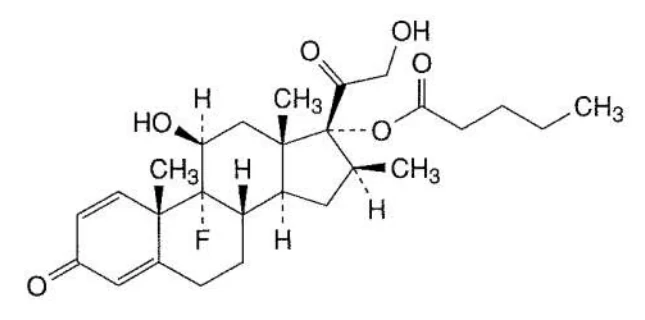
PART II: SCIENTIFIC INFORMATION
PHARMACEUTICAL INFORMATION
Drug Substance
Proper name: Betamethasone valerate
Chemical name:
Pregna-1,4-diene-3,20-dione, 9-fluoro-11,21-dihydroxy-16-methyl-17-[(l-oxopentyl)oxy]-, (11β, 16β);
9-Fluoro-11β,17,21-trihydroxy-16β-methylpregna-1,4-diene-3, 20-dione 17-valerate
Molecular formula and molecular mass: C27H37FO6; 476.59
Structural formula:
Physicochemical properties: Betamethasone valerate is a white or almost white crystalline or microcrystalline powder and is practically insoluble in water, freely soluble in acetone, methylene chloride and chloroform, and slightly soluble in benzene and ether.
CLINICAL TRIALS
Study demographics and trial design (Pivotal Trials)
The clinical efficacy of BETEFLAM® (betamethasone valerate) was demonstrated by two multicentre, assessor-blinded, randomized active-controlled studies involving 555 patients with mild-to-moderate chronic plaque psoriasis vulgaris, of which 281 patients received BETEFLAM® (Study Numbers 04EU-BMT06 and 09EU-BMT12) (Table 2).
Table 2: Summary of patient demographics for pivotal clinical trials in the treatment of chronic plaque psoriasis Study #
| 04EU-BMT06 |
09EU-BMT12
Trial Design
| Multicenter, prospective, assessor-blind, randomized, active-controlled parallel group study |
Multicenter, prospective, assessor-blind, randomized, active-controlled parallel group study
Duration
| 3 weeks + additional 2 weeks if plaques were not cleared after 3 weeks (max: 5 weeks) |
Maximum 4 weeks
Dosage,
Route of Administration
BETEFLAM® patch applied once daily on the target plaques (min: 2 patches; max: 8 patches based on number of plaques) Control: Betamethasone valerate 0.1% cream applied twice a day on the target plaques, morning and evening |
BETEFLAM® patch applied once daily on the target plaques (min: 2 patches; max: 4 patches based on number of plaques)
Control: 50 µg/g calcipotriol + 0.5 mg/g betamethasone diproprionate ointment applied once daily (amount based on number/extension of the plaques; max: 60g/week, i.e. 8.5g/day)
Study
Subjects
| BETEFLAM® | 116 |
165
| Control | 114 |
159 Mean Age (range)
| BETEFLAM® | 48.7 years (24 – 82) |
47.5 years (18 – 85)
| Control | 49.5 years (19 – 85) |
46.7 years (19 – 79) Gender (%M/F)
| BETEFLAM® | 63M/27F |
62M/38F
| Control | 71M/29F |
62M/38F M=male; F=female
Study 04EU-BMT06: The primary endpoint was remission (disappearance of active target lesions) after 3 weeks of treatment, based on the 6-point Psoriasis Global Assessment (PGA) scale independently evaluated by two blinded assessors based on digitalized images. Secondary efficacy endpoints included: remission rates based on patient and investigator assessment at 3 and 5 weeks, extent of target lesions, PGA scores, patient self-assessment of symptom severity, treatment tolerability, acceptability/satisfaction, and ease of use, rate and time to relapse and rebound. Safety was evaluated by monitoring the occurrence of adverse events (AE), with particular emphasis on skin atrophy, folliculitis and hypertricosis.
Study 09EU-BMT12: The primary objective of the study was to assess the non-inferiority of BETEFLAM® compared to a 50 µg calcipotriol plus 0.5 mg betamethasone dipropionate ointment in terms of the reduction of the 4-item Total Severity Score (TSS) after four weeks of treatment. Treatment outcome was evaluated by a blinded investigator after 1, 2, 3 and 4 weeks of treatment. If at any control visit all the plaques identified as target lesions were assessed as “cleared or almost cleared” (TSS ≤ 1), the study treatment was stopped and the subject entered an 8-week follow-up observation period (without treatment). Subjects not receiving any clinically significant benefit from the assigned treatment by week 4 were discontinued and were given an appropriate alternate treatment. The end-of-study assessments were completed 8 weeks after the last treatment. Pre-defined secondary endpoints included the 4-item and 3-item TSS, including individual sign- and symptom subscores and PGA scores at each visit, proportion of
patients with complete clearance after 4 weeks, plaque surface area, quality of life, patient assessment of treatment acceptability/satisfaction, and relapse/rebound rate during the follow-up period.
Study results
Study 04EU-BMT06
In total, 230 subjects were randomized and treated (116 in the BETEFLAM® group and 114 in the 0.1% betamethasone valerate cream group, respectively), comprising the Intent-to-treat (ITT) population.
The proportion of patients achieving remission after 3 weeks of treatment in the ITT population, as evaluated by blinded assessors (primary endpoint), was significantly higher in the BETEFLAM® group (n = 59, 52.7%) compared to the betamethasone valerate cream group (n = 34, 31.2%; p<0.001).
Analyses of the secondary efficacy variables confirmed the results of the primary endpoint analysis. The primary and secondary endpoint results are summarized in Table 3.
Table 3: Primary and Secondary Endpoint Results for Study 04EU-BMT06 in patients with mild-to-moderate chronic plaque psoriasis vulgaris Endpoints
| RESULTS |
Statistical Test
(p Value)
| BETEFLAM® | Betamethasone valerate 0.1% cream |
Primary Endpoint (ITT)
Number of patients with remission (i.e. PGA = 0) after 3 weeks, as per blinded assessor
ITT: 59 (52.68%) ITT: 34 (31.19%)
ITT: p <0.001a
Secondary Endpoints (ITT)
Number (%) of patients with remission after 3 weeks as per Principal Investigator / patient evaluation
Principal Investigator
54 (46.55%) 23 (20.18%) p<0.001a
Patient Evaluation
52 (44.83%) 22 (19.30%) p<0.001a
Number (%) of patients with remission after 5 weeks as per blinded assessors / Principal Investigator / patient evaluation
Blinded Assessor
65 (58.04%) 45 (40.18%) p = 0.006a
Principal Investigator
81 (69.83%) 46 (40.35%) p <0.001a
Patient Evaluation
| 78 (67.24%) | 44 (38.60%) |
p< 0.001a
Total target lesion surface area as per blinded assessors at Week 3 and Week 5 (BETEFLAM® vs. betamethasone valerate 0.1% cream; difference between the adjusted means)
| Week 3: -6.05 (95% C.I. -23.7 to 11.64) |
p = 0.501
| Week 5: -13.3 (95% C.I. -24.3 to -2.43) |
p = 0.017a
Changes in PGA score as per blinded assessor, Principal Investigator and patient evaluation at Week 3 and Week 5
(BETEFLAM® vs. betamethasone valerate 0.1% cream; difference between the adjusted means)
Blinded Assessor
Week 3: -0.36 (95% C.I. – 0.63/ -0.10) p = 0.007a
Week 5: 0.33 (95% C.I. – 0.59/ -0.06) p = 0.016a
Principal Investigator
Week 3: -0.57 (95% C.I. -0.82/ -0.33) p < 0.001a
Week 5: -0.64 (95% C.I. -0.91/ -0.38) p < 0.001a
Patient Evaluation
Week 3: -0.62 (95% C.I. -0.89/ -0.35) p <0.001a
Week 5: -0.67 (95% C.I. -0.96/ -0.38) p < 0.001a
Patient’s assessment of itching and sorenessb at Week 3 and Week 5 (BETEFLAM® vs. betamethasone valerate 0.1% cream; difference between the adjusted means)
Itchingb
Week 3: -0.21 (95% C.I. -0.31 /-0.73) Not significant
Week 5: -0.26 (95% C.I. -0.78 / 0.26) Not significant
Sorenessb
| Week 3: -0.13 (95% C.I. -0.49/0.23) |
Not significant
| Week 5: -0.24 (95% C.I. -0.60/0.11) |
Not significant
Patient’s assessment of treatment acceptability/ satisfactionc
| 7.96 ± 1.98 | 7.11 ± 2.42 |
p < 0.005a
Patient’s assessment of ease of used
| 6.63 ± 2.25 | 9.02 ± 1.40 |
p < 0.001a
Number (%) of patients with relapse/rebound and time to re-lapse / rebound
9 (9.88%) – 4 (4.94%)
| 1 (2.08%) – 4(8.33%)
|
Not significant a. The statistical comparison favours BETEFLAM®.
b. Symptom severity (itching, soreness) was assessed by the patient, using a 10-point severity categorical scale (from 0 = no symptoms, to 10 = very severe symptoms)
c. Treatment acceptability/satisfaction was assessed by the patient, using a 10-point categorical scale (from 0 = very poor, to 10 = excellent)
d. Ease of use was assessed by the patient, using a 10-point categorical scale (from 0 = very poor, to 10 = excellent)
Taken together, the results of this study confirm that BETEFLAM® demonstrated superior efficacy compared to 0.1% betamethasone valerate cream in the treatment of mild-to-moderate chronic plaque psoriasis in a setting resembling daily clinical practice.
Study 09EU-BMT12
In total, 324 subjects were randomized and treated (165 in the BETEFLAM® group and 159 in the 50 µg calcipotriol plus 0.5 mg betamethasone dipropionate ointment group). At the end of the 4-week treatment period, the adjusted mean TSS scores were 1.981 in the BETEFLAM® and 1.693 in the combination ointment group in the Per Protocol (primary analysis) population. The difference in adjusted TSS mean values between the two groups (-0.288), and the corresponding two-sided 95% confidence interval (CI) -0.610 to 0.034 were greater than the pre-specified non-inferiority margin of -1, thus demonstrating the non-inferiority of BETEFLAM® to the combination product. Between-group comparisons of the primary efficacy parameter showed no statistically significant differences at any evaluation time-point during treatment and follow-up. The results of the primary analysis were further confirmed in the ITT population.
Analysis of the secondary efficacy variables confirmed that the clinical efficacy of BETEFLAM® is comparable to that of the combination ointment.
The results of the primary and secondary endpoints are summarized in Table 4.
Table 4: Primary and Secondary Endpoint Results for Study 09EU-BMT12 in patients with mild-to-moderate chronic plaque psoriasis vulgaris
Endpoints
| RESULTS |
Statistical Test
(p Value)
| BETEFLAM® | 50 µg/g calcipotriol + 0.5 mg/g betamethasone dipropionate ointment |
Primary Endpoint (ITT)
4-item TSS, as evaluated by the blinded Investigator at Week 4
4.67 ± 2.20; -5.04; -4.30
4.99 ± 1.88; -5.31; -4.67
p = 0.001
Secondary Endpoints (ITT)
4-item TSS evaluated by the blinded investigator at week 1, 2 and 3 and at follow-up visit (adjusted mean scores)
| Wk 1: 4.348 | Wk 1: 4.232 |
Wk 1: p = 0.440
| Wk 2: 3.558 | Wk 2: 3.136 |
Wk 2: p = 0.005
| Wk 3: 2.878 | Wk 3: 2.513 |
Wk 3: p = 0.012
| FU: 2.766 | FU: 3.412 |
FU: p = 0.062
PGA evaluated by the Blinded Investigator (adjusted mean scores)
| Wk 1: 2.446 | Wk 1: 2.394 |
Wk 1: p = 0.420
| Wk 2: 2.135 | Wk 2: 2.018 |
Wk 2: p = 0.097
| Wk 3: 1.927 | Wk 3: 1.784 |
Wk 3: p = 0.057
| Wk 4: 1.454 | Wk 4: 1.295 |
Wk 4: p = 0.073
Number of patients with
disappearance of the active lesions based on PGA
| 76 (46.1%) | 88 (55.3%) |
p = 0.057
Number of patients with
disappearance of the active lesions based on TSS
| 75 (45.5%) | 90 (56.6%) |
p = 0.039
Mean DLQI total score (adjusted mean scores)
| Wk 1: 6.046 | Wk 1: 5.781 |
Wk 1: p = 0.462
| Wk 2: 5.041 | Wk 2: 4.590 |
Wk 2: p = 0.232
| Wk 3: 3.949 | Wk 3: 3.603 |
Wk 3: p = 0.315
| Wk 4: 3.717 | Wk 4: 2.908 |
Wk 4: p = 0.022
Mean surface area of the target plaques (adjusted mean scores)
| Wk 1: 35.077 | Wk 1: 34.118 |
Wk 1: p = 0.604
| Wk 2: 31.241 | Wk 2: 27.391 |
Wk 2: p = 0.037
| Wk 3: 29.494 | Wk 3: 22.895 |
Wk 3: p < 0.001
| Wk 4: 27.687 | Wk 4: 21.281 |
Wk 4: p = 0.002
3-item TSS evaluated by the Independent Blinded Assessors
| Wk 1: 3.178 | Wk 1: 3.111 |
Wk 1: p = 0.625
| Wk 2: 2.966 | Wk 2: 2.599 |
Wk 2: p = 0.012
judging on photographs at week 1, 2, 3 and 4 (adjusted mean scores)
| Wk 3: 2.780 | Wk 3: 2.372 |
Wk 3: p = 0.006
| FU: 2.665 | FU: 2.309 |
FU: p = 0.016
Number of patients with
disappearance of the active lesions based on 3-item TSS (Independent Blinded Assessors)
| 29 (17.6%) | 37 (23.3%) |
p = 0.185
Rate of patients with
relapse/rebound during the 8-week follow-up
| 14.5% | 19.5% |
p = 0.2353
Abbreviations: DLQI = Dermatology Life Quality Index; FU = Follow-up; PGA = Psoriasis Global Assessment; TSS = Total Severity Score; Wk = week.
DETAILED PHARMACOLOGY
Pharmacokinetics
Absorption
Following topical application of betamethasone valerate to skin, little systemic absorption occurs relative to parenteral administration. Data regarding percutaneous absorption however suggests that given the appropriate conditions of application, namely large surface area, damaged skin, and/or occlusion, systemic effects from topical application of corticosteroids are possible.
The percutaneous absorption of betamethasone valerate after application of BETEFLAM® was evaluated in two studies.
Study 1 was a pharmacokinetic study in 6 healthy volunteers with normal skin and 6 patients with chronic psoriasis vulgaris. BETEFLAM® was applied at the dose of six patches daily (total area of 450 cm²) for 4 consecutive days. Both after the first 24-hour application and during repeated application, most of subjects showed plasma concentrations of betamethasone below the Lower Limit of Quantification (LLOQ) of 50 pg/mL and, when detectable concentrations were found, the observed peak concentrations (Cmax) of betamethasone did not exceed 188 pg/mL in healthy volunteers and 211 pg/mL in psoriatic patients.
Study 2 was a pharmacokinetic study performed in 33 patients with chronic psoriasis vulgaris. Seventeen patients were treated with six BETEFLAM® patches daily for three consecutive weeks (total betamethasone valerate content of patches was 13.5 mg/day), and compared with 16 patients receiving betamethasone valerate 0.12% cream applied once daily under occlusion (betamethasone valerate 13.5 mg/day) for four days, followed by a twice daily non-occluded treatment (betamethasone valerate 7 mg/day) for three weeks. Systemic exposure to betamethasone following the topical patch applications was slightly higher than after administration of betamethasone valerate cream, where peak betamethasone was 264 pg/mL and 100 pg/mL, respectively.
Distribution
Corticosteroids are bound to plasma proteins in varying degrees and widely distributed in the peripheral tissue and organs.
Metabolism
Betamethasone valerate is relatively resistant to metabolism in the skin, with an enzyme-independent isomerisation step from betamethasone 17-valerate to the less-active betamethasone 21-valerate being rate limiting. If systemic absorption does occur, betamethasone valerate is transported to the liver where betamethasone 21-valerate rapidly undergoes enzymatic hydrolysis to the free alcohol form of betamethasone, which is further metabolized and inactivated as a glucocorticoid. Metabolism in the liver is mediated by CYP3A4 enzymes.
Excretion
Corticosteroids and their metabolites are conjugated in the liver and kidneys with sulphate or glucoronic acid and excreted in urine. Therefore, urinary excretion would be expected to be the main route of elimination. In addition, some corticosteroids and their metabolites are also excreted in the bile.
Pharmacodynamics
The vasoconstrictor activity of BETEFLAM® was investigated in 26 healthy volunteers in a double-blind placebo-controlled clinical trial, in comparison with a marketed 0.12% betamethasone valerate cream. The results of the cutaneous colorimetry assessments showed that the vasoconstrictor activity of BETEFLAM® is comparable to that of the cream, with no statistically significant differences observed between the two formulations at any time point.
The anti-inflammatory activity of BETEFLAM® was studied in a double-blind double-dummy study in 26 healthy volunteers with experimentally induced eczematous lesions (contact dermatitis). Colorimetric evaluations showed that BETEFLAM® has comparable anti-inflammatory activity to that a 0.12% betamethasone valerate cream applied under occlusion. Echographic evaluations of the dermis and epidermis, used to visualize the cutaneous inflammation and to quantify the thickening of dermis as a consequence of inflammation and leukocytes infiltration, confirmed the anti-inflammatory activity of BETEFLAM®, with no statistically significant difference compared to an occlusive application of the cream.
TOXICOLOGY
Acute studies
Acute toxicity of betamethasone valerate has been investigated after oral (p.o.), subcutaneous (s.c.) and intraperitoneal (i.p.) administration. In mice, the LD50 values were found to be 4,067-4,410 mg/kg, 496-538 mg/kg, and 632-714 mg/kg after p.o., s.c., and i.p. administration, respectively. In rats, LD50 values 4,000 (female) - 5,000 (male) mg/kg, 4,000 mg/kg, and 4,000 mg/kg were determined after dermal, p.o., s.c., and i.p. administration, respectively. In rabbits, the LD50 values were found to be 61.2 mg/kg after s.c. administration.
Repeat-dose studies
The repeated dose toxicity of betamethasone valerate has been investigated following dermal or systemic (oral, i.p., s.c.) administration in rats and dogs.
Rats were administered betamethasone valerate (0.12% w/w, cream or ointment) by the dermal route at 1.5 g/kg/day for up to 6 months. There was significant suppression of weight gain, adrenal and thymic atrophy, lymphopenia, and fat/glycogen deposition in the liver; all indicative of systemic corticosteriod effects. In rats administered betamethasone valerate ointment (0.12% w/w) at up to 250 mg/kg/day for 30 days or dogs administered betamethasone valerate ointment (0.12% w/w) at up to 200 mg/kg/day for 3 months, similar effects were observed but were of less severity. Following cessation of dosing, the effects were primarily reversible across each of these studies. In general, there were minimal or an absence of effects at the lower doses tested in each study, and fewer effects were typically observed in studies of shorter duration.
Betamethasone valerate (0.25 - 3 mg/kg/day) was administered to rats and dogs by the oral and i.p. route of administration for up to 6 weeks. In rats, betamethasone valerate was administered by the s.c. route at 0.08 to 3 mg/kg/day for up to 6 months. Following administration by the oral, i.p., or s.c. route, the systemic findings observed in each of these studies were considered consistent with corticosteroid toxicity. At 0.08 mg/kg/day s.c., decreased body weight, changes in clinical pathology (hematology, clinical chemistry), and decreases in organ weights were observed following 6 months of dosing.
Carcinogenesis
The carcinogenicity and genotoxicity of betamethasone valerate have not been investigated.
Reproduction
Reproductive toxicology studies have been carried out with betamethasone valerate by the dermal or s.c. route. In rabbits, administration of betamethasone valerate at 0.1 to 0.625 mg/kg/day by the dermal or s.c. route during gestational days (GD) 6/7 to 18 was associated with fetal effects (e.g., decreased body weight gain, fetal resportion, skeletal defects (cleft palate), and death). The s.c. administration of betamethasone valerate to rats resulted in decreased fetal body weights at 0.1 mg/kg/day and skeletal malformations at ≥ 1 mg/kg/day. Dermal administration of betamethasone valerate at 1.8 mg/kg/day to pregnant rats resulted in skeletal malformations (dosing period not specified). Fetal abnormalities such as cleft palate have been observed following s.c. administration during pregnancy in mice and rats at ≥ 0.1 mg/kg/day or rabbits at ≥ 0.012 mg/kg/day.
REFERENCES
Naldi L, Yawalkar N, Kaszuba A, Ortonne JP, Morelli P, Rovati S, et al. Efficacy and safety of the Betamethasone valerate 0.1% plaster in mild-to-moderate chronic plaque psoriasis: a randomized, parallel-group, active-controlled, phase III study. Am J Clin Dermatol. 2011 Jun; 12(3): 191-201.
Ortonne JP, Esposito M, Chimenti S, Kapińska-Mrowiecka M, Grodzińska A, Naldi L, et al. Betamethasone valerate dressing is non-inferior to calcipotriol-betamethasone dipropionate ointment in the treatment of patients with mild-to-moderate chronic plaque psoriasis: results of a randomized assessor-blinded multicentre trial. JEADV. 2013 10.1111/jdv.12270.