


Product Monograph - Luxiq
SUMMARY PRODUCT INFORMATION
Route of Administration | Dosage Form / Strength | Clinically Relevant Nonmedicinal Ingredients |
| Topical use | Foam, 0.12% w/w | Ethanol For a complete listing see Dosage Forms, Composition and Packaging section. |
INDICATIONS AND CLINICAL USE
LUXIQ® (betamethasone valerate) Foam is a medium potency topical corticosteroid indicated for:
- the relief of the inflammatory and pruritic manifestations of moderate to severe psoriasis of the scalp for up to 4 weeks in adult patients.
Geriatrics (≥ 65 years of age):
A limited number of patients at or above 65 years of age have been treated with LUXIQ® Foam (see WARNINGS AND PRECAUTIONS, Special Populations, Geriatrics (≥65 years of age)).
Pediatrics (< 18 years of age):
Safety and effectiveness of LUXIQ® Foam in pediatric patients less than 18 years of age have not been established. Use in pediatric patients is not recommended (see WARNINGS AND PRECAUTIONS, Special Populations, Pediatrics (<18 years of age)).
CONTRAINDICATIONS
- Patients who are hypersensitive to this drug or to any ingredient in the formulation or component of the container. For a complete listing, see the Dosage Forms, Composition and Packaging section.
- Patients who are hypersensitive to other corticosteroids.
- Patients with viral (e.g. herpes or varicella) lesions of the skin, bacterial or fungal skin infections, parasitic infections, skin manifestations relating to tuberculosis or syphilis, eruptions following vaccinations.
- Treatment of rosacea, acne vulgaris, pruritis without inflammation or perioral dermatitis.
- Topical application to the eye.
WARNINGS AND PRECAUTIONS
General
Patients should be advised to inform subsequent physicians of the prior use of corticosteroids.
LUXIQ® (betamethasone valerate) Foam should not be used under occlusion due to increased risk of systemic exposure and infection. When used under occlusive dressing or over extensive areas of the scalp, sufficient absorption may occur to result in adrenal suppression and other systemic effects (see WARNINGS AND PRECAUTIONS, Endocrine and Metabolism, Immune and Ophthalmologic).
Carcinogenesis and Mutagenesis
Long-term animal studies have not been performed to evaluate the carcinogenic potential or the effect of betamethasone valerate on fertility.
Cardiovascular
Suitable precautions should be taken when using topical corticosteroids in patients with stasis dermatitis and other skin diseases with impaired circulation.
Endocrine and Metabolism
Systemic absorption of topical corticosteroids has produced reversible hypothalamic-pituitary-adrenal (HPA) axis suppression with the potential for glucocorticosteroid insufficiency after withdrawal from treatment. Manifestations of Cushing’s syndrome, hyperglycemia, and glucosuria can also be produced in some patients by systemic absorption of topical corticosteroids while on treatment.
Conditions which augment systemic absorption include the formulation and potency of the topical corticosteroid, the application of topical corticosteroids over large surface areas, application to intertriginous areas (such as the axillae), frequency of application, prolonged use or the addition of occlusive dressings. Other risk factors for increased systemic effects include increasing hydration of the stratum corneum, use on thin skin areas (such as the face), use on broken skin or conditions where the skin barrier may be impaired. If patients must be treated over large body surface areas, they should be evaluated periodically for evidence of HPA axis suppression (see WARNINGS AND PRECAUTIONS -Monitoring and Laboratory Tests). If HPA axis suppression is noted, an attempt should be made to withdraw the drug gradually by reducing the frequency of application. Abrupt withdrawal of treatment may result in glucocorticosteroid insufficiency (see OVERDOSAGE).
Recovery of HPA axis function is generally prompt upon discontinuation of topical corticosteroids. Infrequently, signs and symptoms of glucocorticosteroid insufficiency may occur requiring supplemental systemic corticosteroids. For information on systemic supplementation, see prescribing information for those products.
The effect of LUXIQ® Foam on HPA axis function was investigated in adult patients in one study. In this study, patients with psoriasis or atopic dermatitis covering at least 30% of their body applied 15 g of LUXIQ® Foam twice daily for 7 days. No patient out of 18 patients aged 23 to 69 years of age demonstrated HPA axis suppression after 7 days of use based on the cosyntropin stimulation test. In this study HPA axis suppression was defined as a pre-injection (basal) plasma cortisol level < 5 μg/dL, serum cortisol level ≤ 18 μg/dL 30-min post cosyntropin stimulation, and a difference between the post- and pre-injection levels ≤ 7 μg/dL.
Patients with acute illness or injury may have increased morbidity and mortality with intermittent HPA axis suppression. Patients should be instructed to use LUXIQ® Foam for the minimum amount of time necessary to achieve the desired results (see DOSAGE AND ADMINISTRATION).
Immune
Topical corticosteroids may increase the risk of infections including aggravation of cutaneous infection, masked infection and secondary infections. In particular, bacterial infection is encouraged by the warm moist conditions within skin folds or caused by occlusive dressings. If concomitant skin infections develop, LUXIQ® Foam should be discontinued and antimicrobial therapy administered.
Ophthalmologic
Topical corticosteroids should be used with caution on lesions close to the eye because systemic absorption may cause increased intraocular pressure, glaucoma or cataracts.
Sensitivity
Local hypersensitivity reactions (see ADVERSE REACTIONS) may resemble symptoms of the condition under treatment. If hypersensitivity reactions occur, the drug should be discontinued and appropriate therapy initiated if there are signs of reaction.
Allergic contact dermatitis with corticosteroids is usually diagnosed by observing a failure to heal rather than noting a clinical exacerbation. Such an observation should be corroborated with appropriate diagnostic patch testing.
Skin
Topical corticosteroids should be used with caution in psoriasis as rebound relapses, development of tolerances, risk of generalised pustular psoriasis and development of local or systemic toxicity due to impaired barrier function of the skin have been reported in some cases. When used in psoriasis careful patient supervision is important.
If irritation develops, LUXIQ® Foam should be discontinued and appropriate therapy instituted. Prolonged use of topical corticosteroid preparations may produce striae or atrophy of the skin or subcutaneous tissue. If skin atrophy is observed, treatment should be discontinued.
Special Populations
Pregnant Women: There are no adequate and well-controlled studies of LUXIQ® Foam in pregnant women. Therefore, LUXIQ® should be used during pregnancy only if the potential benefit justifies the potential risk to the fetus. The minimum quantity should be used for the minimum duration.
Corticosteroids have been shown to be teratogenic in laboratory animals when administered systemically at relatively low dosage levels. Some corticosteroids have been shown to be teratogenic after dermal application to pregnant laboratory animals.
Fertility: There are no data in humans to evaluate the effect of topical corticosteroids on fertility.
Nursing Women: The safe use of topical corticosteroids during lactation has not been established. Systemically administered corticosteroids appear in human milk and could suppress growth, interfere with endogenous corticosteroid production, or cause other untoward effects. It is not known whether topical administration of corticosteroids could result in sufficient systemic absorption to produce detectable quantities in breast milk. Because many drugs are excreted in human milk, caution should be exercised when LUXIQ® is administered to a nursing woman. Administration of LUXIQ® during lactation should only be considered if the expected benefit to the mother outweighs the risk to the infant.
Pediatrics (< 18 years of age): Safety and effectiveness in pediatric patients have not been established. Use in pediatric patients is not recommended.
Because of a higher ratio of skin surface area to body mass, pediatric patients may absorb larger amounts of topical corticosteroids than adults and thus are at greater risk of systemic toxicity such as HPA axis suppression and Cushing’s syndrome. They are therefore also at greater risk of adrenal insufficiency during and/or after withdrawal of treatment with topical corticosteroids.
Adverse effects including striae have been reported with inappropriate use of topical corticosteroids in infants and children. HPA axis suppression, Cushing’s syndrome, linear growth retardation, delayed weight gain, and intracranial hypertension have been reported in children receiving topical corticosteroids. Manifestations of adrenal suppression in children include low plasma cortisol levels and an absence of response to ACTH stimulation. Manifestations of intracranial hypertension include bulging fontanelles, headaches, and bilateral papilledema. Chronic corticosteroid therapy may interfere with the growth and development of children.
Geriatrics (≥ 65 years of age): A limited number of patients at or above 65 years of age have been treated with LUXIQ® Foam in clinical trials. In general, topical corticosteroids should be used cautiously in elderly patients, usually starting at the low end of the dosing range, reflecting their increased skin fragility and greater frequency of hepatic, renal, or cardiac dysfunction, and of concomitant disease or other drug therapy. The greater frequency of decreased hepatic or renal function in the elderly may delay elimination if systemic absorption occurs. Therefore the minimum quantity should be used for the shortest duration to achieve the desired clinical benefit.
Patients with renal / hepatic impairment: In case of systemic absorption, metabolism and elimination may be delayed leading to increased risk of systemic toxicity; therefore, minimum quantity should be used for the minimum duration.
Monitoring and Laboratory Tests
The cosyntropin (ACTH1-24) stimulation test may be helpful in evaluating patients for HPA axis suppression.
ADVERSE REACTIONS
Adverse Drug Reaction Overview
The most common adverse events reported in association with LUXIQ® (betamethasone valerate) Foam occurred mainly at the application site and included mild burning, itching, and stinging.
Clinical Trial Adverse Drug Reactions
Because clinical trials are conducted under very specific conditions the adverse reaction rates observed in the clinical trials may not reflect the rates observed in practice and should not be compared to the rates in the clinical trials of another drug. Adverse drug reaction information from clinical trials is useful for identifying drug-related adverse events and for approximating rates.
A phase III controlled clinical trial provide safety information on 188 subjects with moderate to severe scalp psoriasis treated with twice daily applications of LUXIQ® Foam (n =63), Vehicle Foam (n=32), Betamethasone valerate Lotion 0.12% (formally expressed as 0.1% betamethasone) (n=63), and placebo lotion (n=30) for 4 weeks. The most frequent adverse events with LUXIQ® Foam have been local skin reactions (burning, stinging, itching), which were mild to moderate in nature. There was no significant difference in the percentage of subjects reporting adverse events among the treatment groups.
Table 1 summarizes adverse reactions reported by at least 1% of patients in any treatment group in the phase III trial. The majority of adverse reactions were transient and mild to moderate in severity.
Table 1 Incidence of common (≥ 1%) adverse drug reaction related to study treatment reported during the phase III controlled clinical trial (Descending order of frequency, Safety Population)
| System Organ Class | LUXIQ® Foam n=63 | Vehicle Foam n=32 | Betamethasone valerate Lotion 0.1% n=63 | Placebo Lotion n=30 |
Body as a whole Pain Headache Infection Fungal | 0 0 0 0 | 2(6%) 1(3%) 0 1(3%) | 3(5%) 2(3%) 1(2%) 0 | 1(3%) 1(3%) 0 0 |
Metabolic and Nutritional Disorders Hyperglycemia | 0 0 | 0 0 | 0 0 | 1(3%) 1(3%) |
| Nervous System Paresthesia | 1(2%) 1(2%) | 1(3%) 1(3%) | 1(2%) 1(2%) | 0 0 |
Skin and Appendages Pruritus Psoriasis Acne Alopecia Rash | 4(6%) 1(2%) 1(2%) 1(2%) 1(2%) 0 | 1(3%) 0 1(3%) 0 0 0 | 1(2%) 1(2%) 0 0 0 0 | 2(7%) 1(3%) 0 0 0 1(3%) |
| Special Senses Conjunctivitis | 1(2%) 1(2%) | 0 0 | 0 0 | 0 0 |
Less Common Clinical Trial Adverse Drug Reactions (<1%)
General Disorders and Administration Site Conditions: application site pruritus, application site burning, application site stinging, application site acne, application site pain, application site itching and application site alopecia
Infections and Infestations: application site infection, folliculitis
Nervous System Disorders: headache, paraesthesia
Skin and Subcutaneous Tissue Disorders: acne, alopecia
The following additional local adverse reactions have been reported with topical corticosteroids: acneiform eruptions, hypopigmentation, perioral dermatitis, allergic contact dermatitis, secondary infection, irritation, striae and miliaria. They may occur more frequently with the use of higher potency corticosteroids.
Abnormal Hematologic and Clinical Chemistry Findings
No abnormal hematologic and clinical chemistry findings were identified during clinical trials with LUXIQ® Foam.
Post-Market Adverse Drug Reactions
The following adverse reactions have been identified during post approval use of LUXIQ® Foam and topical corticosteroids. Because these reactions are reported voluntarily from a population of uncertain size, it is not always possible to reliably estimate their frequency or establish a causal relationship to drug exposure.
Endocrine Disorders: HPA axis suppression, cushingoid features (e.g. moon face, central obesity), delayed weight gain/growth retardation in children, osteoporosis, glaucoma, hyperglycemia/glucosuria, cataract, hypertension, increased weight/obesity, decreased endogenous cortisol levels, alopecia, trichorrhexis.
General Disorders and Administration Site Conditions: application site irritation/pain.
Immune System Disorders: local hypersensitivity.
Infections and Infestations: opportunistic infection, folliculitis.
Skin and Subcutaneous Tissue Disorders: pruritus, local skin burning/skin pain, allergic contact dermatitis/dermatitis, erythema, rash, urticaria, pustular psoriasis, skin thinning*, skin atrophy*, skin wrinkling*, skin dryness*, striae*, telangiectasias*, pigmentation changes*, hypertrichosis, acneiform eruption , perioral dermatitis, miliaria, exacerbation of underlying symptoms, swelling, erosion, vesicles and skin exfoliation. Reports of facial swelling have also been received.
*Skin features secondary to local and/or systemic effects of hypothalamic-pituitary adrenal (HPA) axis suppression.
DRUG INTERACTIONS
Drug-Drug Interactions
Co-administered drugs that can inhibit CYP3A4 (e.g. ritonavir, itraconazole) have been shown to inhibit the metabolism of corticosteroids leading to increased systemic exposure. The extent to which this interaction is clinically relevant depends on the dose and route of administration of the corticosteroids and the potency of the CYP3A4 inhibitor.
Drug-Food Interactions
Interactions with food have not been established.
Drug-Herb Interactions
Interactions with herbal products have not been established.
Drug-Laboratory Interactions
Interactions with laboratory tests have not been established.
DOSAGE AND ADMINISTRATION
Dosing Considerations
- Patients should be instructed to use LUXIQ® (betamethasone valerate) Foam for the minimum amount of time necessary to achieve the desired results because of the potential for corticosteroids to suppress the hypothalamic-pituitary-adrenal (HPA) axis and cause skin atrophy (See WARNINGS AND PRECAUTIONS).
- LUXIQ® Foam is for topical use only and not for ophthalmic use.
Pediatrics: Use in pediatric patients below 18 years of age is not recommended (see
WARNINGS AND PRECAUTIONS, Special Populations, Pediatrics (<18 years of age)). Pediatric patients may be more susceptible to local and systemic toxicity from equivalent doses because of their larger skin surface to body weight ratios.
- Geriatrics: The greater frequency of decreased hepatic or renal function in the elderly may delay elimination if systemic absorption occurs. LUXIQ® Foam should be used with caution in patients ≥ 65 years of age who may be more susceptible to percutaneous absorption and the potential effects of systemic absorption.
Recommended Dose and Dosage Adjustment
Apply a thin layer of LUXIQ® Foam to the affected area(s) twice daily, morning and evening for a maximum of 4 weeks.
Avoid abrupt discontinuation of LUXIQ® Foam therapy once control is achieved as rebound of pre-existing dermatoses can occur. If no improvement is seen within 2 weeks, reassessment of the diagnosis may be necessary.
Pediatrics (<18 years of age): LUXIQ® Foam is not recommended for use in pediatric patients below 18 years of age (see WARNINGS AND PRECAUTIONS, Special Populations, Pediatrics (<18 years of age)).
Geriatrics (≥ 65 years of age): LUXIQ® Foam should be used with caution due to increased risk of renal or hepatic impairment in this population. The minimum quantity should be used for the shortest duration to achieve the desired clinical benefit (see
WARNINGS AND PRECAUTIONS — Special Populations, Geriatrics (≥ 65 years of age)).
Renal/Hepatic Impairment: The minimum quantity should be used for the shortest duration to achieve the desired clinical benefit (see WARNINGS AND PRECAUTIONS — Special Populations, Patients with renal/hepatic impairment).
Missed Dose
In the event of a missed dose, LUXIQ® Foam should be applied as soon as possible after the missed dose is remembered. If this is close to the scheduled application time or the next dose, the subject should wait and apply the next scheduled dose. The usual schedule should be resumed thereafter.
Administration
For proper dispensing of foam, shake the can, hold it upside down, and depress the actuator. Dispense the smallest amount of LUXIQ® Foam (typically a dollop the size of a golf ball, approximately 3g) necessary to adequately cover the affected area(s) onto a saucer or other cool surface. Do not dispense directly onto hands as foam will begin to melt immediately upon contact with warm skin. Pick up small amounts of foam with fingers and gently massage into affected area until foam disappears. Repeat until entire affected scalp area is treated. Avoid contact with the eyes.
LUXIQ® Foam should not be used with occlusive dressings.
LUXIQ® Foam is extremely flammable, avoid fire, open flame, spark or smoking during and immediately following application.
OVERDOSAGE
Topically applied corticosteroids can be absorbed in sufficient amounts to produce systemic effects. Excessive prolonged use or misuse may suppress hypothalamic-pituitary-adrenal (HPA) axis function, resulting in secondary adrenal insufficiency, which is usually reversible. If symptoms of HPA axis suppression occur (see ADVERSE REACTIONS), LUXIQ® Foam should be gradually discontinued by reducing the frequency of application or by substituting a less potent corticosteroid because of the risk of glucocorticosteroid insufficiency. If toxic effects occur, treatment should be discontinued and symptomatic therapy administered (see WARNINGS AND PRECAUTIONS). Further management should be as clinically indicated.
For management of a suspected drug overdose, contact your regional Poison Control Centre.
ACTION AND CLINICAL PHARMACOLOGY
Mechanism of Action
Topical corticosteroids share anti-inflammatory, antipruritic, and vasoconstrictive properties. The mechanism of the anti-inflammatory activity of the topical steroids is unclear. However, corticosteroids are thought to act by the induction of phospholipase A2 inhibitory proteins, collectively called lipocortins. It is postulated that these proteins control the biosynthesis of potent mediators of inflammation such as prostaglandins and leukotrienes by inhibiting the release of their common precursor arachidonic acid. Arachidonic acid is released from membrane phospholipids by phospholipase A2.
Pharmacokinetics
The pharmacokinetics of LUXIQ® (betamethasone valerate) Foam (absorption, distribution, excretion and metabolism) has not been specifically investigated in any studies. Pharmacokinetic properties of the drug class of topically applied corticosteroids remain incompletely understood.
Topical corticosteroids can be systematically absorbed from intact healthy skin. The extent of percutaneous absorption of topical corticosteroids is determined by many factors, including the product formulation, potency, vehicle, frequency and duration of application, as well as integrity of the epidermal barrier, skin thickness, application to intertriginous areas (such as the axillae) and to large skin surface areas. Occlusion, hydration of the stratum corneum, inflammation and/or other disease processes in the skin may also increase percutaneous absorption. The use of pharmacodynamic endpoints for assessing the systemic exposure of topical corticosteroids may be necessary due to the fact that circulating levels are often below the level of detection.
Once absorbed through the skin, topical corticosteroids are handled through pharmacokinetic pathways similar to systemically administered corticosteroids. They are metabolized, primarily in the liver, and are then excreted in the bile or by the kidneys. Some corticosteroids and their metabolites are also excreted in the bile.
Pharmacodynamics
The vasoconstriction activity of LUXIQ® Foam in normal skin was assessed in comparison to that of other topical corticosteroid formulations in one study with 35 healthy adult male and female subjects. There were differences in the vasoconstriction response between the LUXIQ® Foam, the betamethasone valerate ointment and the betamethasone valerate lotion formulations, supporting that the potency for the betamethasone valerate foam formulation is intermediate to those of the betamethasone valerate ointment and betamethasone valerate lotion formulations.
The effect of LUXIQ® Foam on hypothalamic-pituitary-adrenal (HPA) axis function was studied in 18 patients aged 23 to 69 years with either psoriasis or atopic dermatitis involving at least 30% body surface area, who applied 15 g LUXIQ® Foam twice daily.
In this study, there were no patients experienced suppression of the adrenal glands following 7 days of therapy (see WARNINGS AND PRECAUTIOINS: Endocrine and Metabolism).
Special Populations and Conditions
LUXIQ® Foam was not tested in special populations.
STORAGE AND STABILITY
Store upright at controlled room temperature (20-25° C). Avoid storage in an inverted position.
SPECIAL HANDLING INSTRUCTIONS
DANGER
EXTREMELY FLAMMABLE, AVOID FIRE, OPEN FLAME, SPARK OR SMOKING DURING AND IMMEDIATELY FOLLOWING APPLICATION.
Warning: Contents under pressure. Do not place in hot water or near radiators, stoves or other sources of heat. Do not puncture or incinerate container or store at temperatures above 49° C.
Avoid contact with eyes or other mucous membranes.
Keep out of the reach and sight of children.
DOSAGE FORMS, COMPOSITION AND PACKAGING
Each gram of LUXIQ® Foam, 0.12%, contains 1.2 mg betamethasone valerate, USP, in a hydroethanolic aerosol foam vehicle consisting of cetyl alcohol, citric acid, ethanol, polysorbate 60, potassium citrate, propylene glycol, purified water, and stearyl alcohol pressurized with a hydrocarbon (propane/butane) propellant.
LUXIQ® Foam, dispensed from an aluminum can pressurized with a hydrocarbon (propane/butane) propellant, is supplied in 12 g, 50 g and 100 g aluminum cans.
PART II: SCIENTIFIC INFORMATION
PHARMACEUTICAL INFORMATION
Drug Substance
Proper name: Betamethasone valerate
Chemical name: 9-fluoro-11ß,17, 21-trihydroxy-16ß-methylpregna-1, 4-diene-
3, 20-dione 17-valerate
Molecular formula and molecular mass: C27H37FO6
Molecular mass: 476.58
Structural formula:
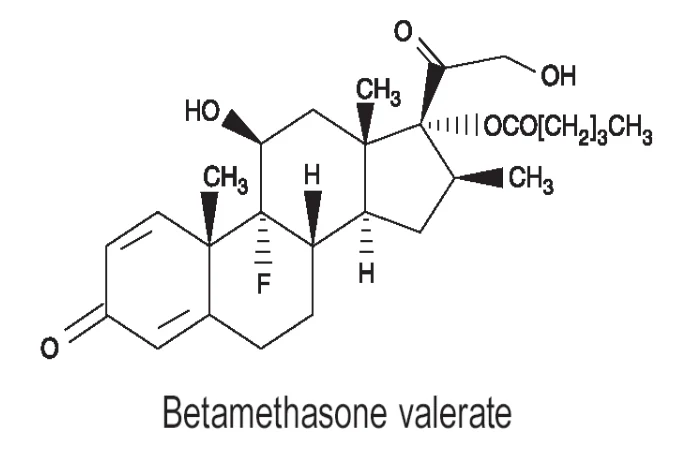
Physicochemical properties: Betamethasone valerate is a white to practically white, odourless crystalline powder, and is practically insoluble in water, freely soluble in acetone and in chloroform, soluble in alcohol, and slightly soluble in benzene and in ether.
CLINICAL TRIALS
A double-blind, randomized study was conducted in 190 patients with moderate to severe scalp psoriasis. Patients were treated twice daily for four weeks with LUXIQ® (betamethasone valerate) Foam, Placebo Foam, a commercially available betamethasone valerate lotion 0.12% (formerly expressed as 0.1% betamethasone), or Placebo lotion.
The primary endpoints were the change in psoriasis score for the target lesion in scaling, erythema, and plaque thickness at baseline, day 15 and day 29 using the 5 point score and an Investigator’s Global Assessment (ISGA) score for the target lesion at day 29 of clear or almost clear of disease using the 7 point score.
In addition a sum of the individual psoriasis scores (composite psoriasis score) was tabulated. The results of this study demonstrated that LUXIQ® Foam was more effective than vehicle foam in reducing the manifestations of scalp psoriasis, as measured by treatment success.
Study demographics and trial design
Table 2 Summary of patient demographics for the phase III clinical trial in the treatment of male and female subjects ≥ 18 years of age with psoriatic lesions involving at least 10% of the scalp (Intent to Treat Population*).
Study #
| Trial design | Dosage, route of administration and duration | Study subjects (n=number) | Mean age (Range) |
Gender (%M/F)
BMSP.C.006
| LUXIQ® Foam, 3 g, bid, 28 days | 64 | 46.7(19-77) |
44M/56F
Betamethasone valerate lotion, 1-1.5 mL, bid, 28 days | 63 | 48.4 (24-80) |
54M/46F
| Vehicle Foam, 3 g, bid, 28 days | 32 | 50.2 (24-84) |
47M/53F
| Placebo lotion, 1-1.5 mL, bid, 28 days | 31 | 48.1(20-81) |
52M/48F
M=male; F=female
*Intent to Treat Population (ITT) includes all subjects randomized and dispensed study medication
Overall enrolment by gender in the intent to treat (ITT) population was 49% (93/190) male and 51% (97/190) female. Subjects ranged in age from 19 to 84 years. The distribution of the age of the subjects in the ITT population was 72% (137/190) 18 to < 60 years of age and 27% (53/190) ≥ 65 years of age. The enrolled study subject population was comprised of Caucasian 95% (181/377) and Other 5% (9/190).
There were no notable differences among the treatment groups in the severity of Baseline disease scores for scaling, erythema, or plaque thickness. Baseline mean scaling scores per treatment group ranged from 2.67 to 2.88, Baseline mean erythema scores from 2.48 to 2.69 and Baseline mean plaque scores from 2.54 to 2.65.
Study results
Table 3 Results of the phase III clinical trial in the treatment of male and female subjects ≥ 18 years of age with psoriatic lesions involving at least 10% of the scalp (ITT population).
Subjects with
Target Lesion
Parameter Clear
at Endpoint
LUXIQ® Foam n (%) | Betamethasone valerate lotion n (%) | Vehicle Foam n (%) |
Placebo lotion n (%)
Scaling
| 30 (47%) | 22 (35%) | 2 (6%) |
4 (13%)
Erythema
| 26 (41%) | 16 (25%) | 2 (6%) |
1 (3%)
Plaque Thickness
| 42 (66%) | 25 (40%) | 5 (16%) |
5 (16%)
Investigator's
Global: Subjects Completely Clear or Almost Clear at Endpoint
| 43 (67%) | 29 (46%) | 6 (19%) |
6 (19%)
DETAILED PHARMACOLOGY
Betamethasone 17-valerate is a derivative of betamethasone developed to maximize anti-inflammatory properties while minimizing mineralocorticoid activity. Betamethasone valerate has been studied in several dosage forms, including creams, lotions and ointments. LUXIQ® (betamethasone valerate) Foam has not been tested in nonclinical pharmacology studies.
Pharmacodynamics
The major pharmacological activities of topically applied glucocorticoids, include non-specific anti-inflammatory, immunosuppressive, and anti-mitotic activities on dermal cell types. Betamethasone valerate is a synthetic glucocorticoid which has selective topical activity. (1) The potency of betamethasone valerate in different formulations; lotion, cream, and ointment, spans the middle of the range of the potencies for topical corticosteroids. (2) The potency variations result from the components of the formulation affecting the bioavailability of the active pharmaceutical ingredient, betamethasone valerate, to the skin, rather than from changes in pharmacological actions.
Pharmacokinetics
There have been no in vivo nonclinical studies performed on the betamethasone valerate foam formulation to characterize its distribution, metabolism and excretion. Therefore, the expected pharmacokinetics of betamethasone valerate foam are based on studies of various other betamethasone valerate formulations.
The enhanced in vitro delivery of betamethasone valerate into the skin by the foam formulation compared to a lotion formulation has been shown to correlate well with its clinical efficacy (disease improvement or clearance) in comparison to other betamethasone valerate formulations. (3) Following topical application of betamethasone valerate to skin, little systemic absorption occurs relative to parenteral administration. Data regarding percutaneous absorption however suggests that given the appropriate conditions of application, namely large surface area, damaged skin, and/or occlusion, systemic effects from topical application of corticosteroids are possible.
Betamethasone valerate is relatively resistant to metabolism in the skin, with an enzyme-independent isomerisation step from betamethasone 17-valerate to the less-active betamethasone 21-valerate being rate limiting. If systemic absorption does occur, betamethasone valerate is transported to the liver where betamethasone 21-valerate rapidly undergoes enzymatic hydrolysis to the free alcohol form of betamethasone, which is further metabolized and inactivated as a glucocorticoid. Urinary excretion of the betamethasone valerate metabolites would be expected to be the main route of elimination.
TOXICOLOGY
No acute or repeat-dose studies were performed with betamethasone valerate foam. However, studies have been conducted with betamethasone and various other formulations of betamethasone valerate.
The acute toxicity of betamethasone valerate has been studied in several laboratory animal species via various routes of administration. Reported LD50 values for betamethasone valerate are as follows: subcutaneous: 61.2 mg/kg (rabbits); intraperitoneal: 632 mg/kg (mice), > 2 g/kg (rats, cream formulation), and > 0.2 g/kg (dogs, cream formulation); and oral: 4067 mg/kg (mice) and > 1 g/kg (dogs, cream formulation).
Repeat-dose toxicity of betamethasone valerate has been evaluated following systemic administration (oral and intraperitoneal) of betamethasone valerate to rats and dogs (0.25
- 3 mg/kg/day) for up to six weeks and subcutaneous administration for up to 6 months in rats (0.08 – 3 mg/kg/day). Systemic findings consistent with glucocorticoid toxicity were observed after oral, intraperitoneal or subcutaneous administration. Administration of betamethasone valerate at dose levels as low as 0.08 mg/kg/day subcutaneously resulted in changes in haematology and clinical chemistry parameters as well as decreases in body and organ weights. (4)
Repeat topical applications of 0.12% betamethasone valerate cream or ointment formulations have been studied. In rats administered 1.5 g/kg/day, ointment or cream (0.12% betamethasone valerate) for 6 months resulted in significant systemic effects characteristic of glucocorticoids, including; suppression of weight gain, adrenal and thymic atrophy, lymphopenia, and fat/glycogen deposition in the liver. (5). Similar findings, with less severity, were seen in dogs (6) and rats (7) treated topically for 90 or 30 days, with doses of 200 or 250 mg/kg/day ointment (0.12% betamethasone valerate), respectively. These effects were largely reversible upon cessation of exposure to betamethasone valerate. At low doses, and shorter time periods, side effects from topical administration of betamethasone valerate were minimal or non-existent.
Special Toxicity Studies:
Two acute irritation studies (skin and eye) and a dermal sensitization study performed on betamethasone valerate Foam.
Table 4 Tabulation of Special Toxicity studies with Betamethasone valerate Foams.
| Species | Route | Test Substance | Study Type |
| Rabbit | Topical | betamethasone valerate Foam 0.1% | Acute Dermal Irritation |
| Rabbit | Intraocular | betamethasone valerate Foam 0.1% | Acute Eye Irritation |
| Guinea pig | Topical | betamethasone valerate Foam 0.1% | Skin Sensitization (repeat dose) |
Betamethasone valerate Foam was found to be a non-irritant to both intact and abraded skin, was mildly irritating to the eye, and showed no evidence of producing a dermal hypersensitivity response.
Developmental and Reproduction Studies:
There have been no reproductive toxicity or developmental studies performed with betamethasone valerate foam.
Effects on embryo-fetal development have been reported in various laboratory animal species treated topically or subcutaneously with betamethasone valerate. Fetal effects, including decreased body weight gain, fetal resorption, skeletal defects including cleft palate, and death have been reported with varying severity with dose levels between of 0.1 and 0.625 mg/kg/day in rabbits treated subcutaneously (8) or topically (9) with betamethasone valerate during gestational days (GD) 6/7 to 18. Subcutaneously administration of betamethasone valerate to rats resulted in decreased fetal body weights at a dose level of 0.1 mg/kg/day, and skeletal malformations starting at a dose level of 1 mg/kg/day. (10) Skeletal malformations have been reported in rats from topical administration of betamethasone valerate at 1.8 mg/kg/day (dosing period not specified). These results are similar to those of other corticosteroids.
Subcutaneous administration of betamethasone valerate to mice or rats at doses ≥ 0.1 mg/kg/day or rabbits at doses ≥ 12 micrograms/kg/day during pregnancy produced foetal abnormalities including cleft palate.
Mutagenicity/Carcinogenicity:
No mutagenicity or carcinogenicity studies have been conducted with either LUXIQ® or betamethasone valerate.
Genotoxicity:
No specific studies have been conducted to investigate the genotoxic potential of betamethasone valerate.
REFERENCES
- 1.
Reynolds JEF, ed. MARTINDALE The Extra Pharmacopoeia. Thirty-first edition.
London: Royal Pharmaceutical Society 1996:1038-1039, 1058.
- 2.
Stoughton R, Cornell R. Corticosteroids. In: Fitzpatrick TB et al, editors.
Dermatology in General Medicine Volume II. Fourth edition. McGraw-Hill 1993:2846- 2850.
- 3. Franz TJ et al. Betamethasone valerate foam 0.12%: a novel vehicle with enhanced delivery and efficacy. International Journal of Dermatology 1999;38:628-632.
- 4. Tarumoto Y, Kimura M, Abe S, Kasai A, Noda K, Nakane S et al. [Studies on toxicity of hydrocortisone 17-butyrate 21-propionate. Part 2. Subacute toxicity in rats by subcutaneous administration (author’s transl)]. J Toxicol Sci 1981a;6 Suppl:17-46.
- 5.
Tarumoto Y, Kimura M, Tokado H, Shinozawa R, Tsuchida T, Noda K et al.
[Studies of toxicity of hydrocortisone 17-butyrate 21-propionate. Part 5. Chronic toxicity in rats by percutaneous administration (author’s transl)]. J Toxicol Sci 1981b;6 Suppl:97-120.
- 6. Tarumoto Y, Sakagawa T, Tsutsui Y, Tokado H, Noda K, Nakane S et al. [Studies of toxicity of hydrocortisone 17-butyrate 21-propionate. Part 6. Subacute toxicity in dogs by percutaneous administration (author’s transl)]. J Toxicol Sci 1981c;6 Suppl:121-140.
- 7. Shimo T, Takahara Y, Noguchi Y, Mukawa A, Kato H, Ito Y. [Comparative toxicity test of dexamethasone valerate (DV-17) and other steroid ointments in rats (author’s transl)]. J Toxicol Sci 1982a;7 Suppl 1:15-33.
- 8.
Koga T, Ota T, Yasumichi A, Suganuma Y. Reproduction studies of prednisolone
17-valerate 21-acetate: 2. Teratological study in rabbits. Oyo Yakuri 1980b;20(1):87-98.
- 9.
Ishimura K, Honda Y, Neda K, Ishikawa I, Otawa T, Kawaguchi Y et al.
Teratological studies on beamethasone 17-Benzoate (MS-1112) II. Teratogenicity test in rabbits. Oyo Yakuri Pharmacometrics 1975;10(5):685-94.
- 10. Yamada T, Suzuki H, Nogariya T, Nakane S, Sasajima M, Ohzeki M. Reproduction studies of hydrocortisone 17-butyrate 21-propionate (2) teratological study in rats. Oyo Yakuri 1981;21(3):441-466.
- 11. Study Report, BMSP.C.006 : A double-blind, placebo-controlled study of the efficacy and safety of betamethasone valerate foam in treating scalp psoriasis.
- 12.
Study Report A/S/40571: Studies on Betamethasone Valerate foam 0.1%, Acute
Dremal Irritation Study in the Rabbit
- 13.
Study Report A/E/40591: Studies on Betamethasone Valerate foam 0.1%, Acute
Eye Irritation Study in the Rabbit
- 14.
Study Report A/K/40675: Studies on Betamethasone Valerate foam 0.1%, Skin
Sensitisation Study in the Guinea Pig