


Product Monograph - Teva-Topilene
ACTIONS AND CLINICAL PHARMACOLOGY
TEVA-TOPILENE provides anti-inflammatory, antipruritic and vasoconstrictive effects.
The propylene glycol components of the vehicle increase penetration and enhance the local effectiveness of betamethasone dipropionate.
Corticosteroids diffuse across cell membranes and complex with specific cytoplasmic receptors. These complexes then enter the cell nucleus, bind to DNA (chromatin) and stimulate transcription of messenger RNA (m RNA) and subsequent protein synthesis of various enzymes thought to be ultimately responsible for anti-inflammatory effects of topically applied corticosteroids. The overall effect of corticosteroids is a catabolic one.
The therapeutic effectiveness of topical corticosteroids is then based primarily on their local anti-inflammatory activity. It is a non specific mechanism which, by a vasoconstrictive action on small cutaneous vessels and an inhibitory effect on phagocytosis, lymphocytic migration and margination, contribute to prevent or suppress the development of the local heat, redness, swelling and tenderness by which inflammation is recognized.
Definitive explanation of the effects of corticosteroids on endogenous mediators of inflammation such as histamine, kinins, lysosomal enzymes (stabilization), and prostaglandins (decrease formation) awaits further experimental clarification.
Immunosuppressive activity is less important and seems too slow to modify immunological process of inflammation.
The antimitotic effects of corticosteroids on human epidermis may account for an additional mode of action (inhibition of cell division or DNA synthesis) in psoriasis and other dermatologic diseases associated with increased cell turnover.
Corticosteroids are absorbed systematically, although minimally (approximately 1% of a dose), following application to normal skin. The extent of absorption of a topical dosage form may be influenced by the vehicle used in a specific formulation; being maximal with ointment forms and progressively decreasing with cream, gel and lotion presentations. Further, use of occlusive dressings, over extensive areas, in intertriginous areas, anatomic region where skin is thinner like face, scalp, vulval or scrotal skin, or broken, or prolonged use increases absorption of topical dosage forms.
Biotransformation of topical corticosteroids occurs mostly in skin; fluorinated compounds with 17-hydroxyl position derivatives are more slowly metabolized in the skin and tend to be systematically absorbed to a greater extent.
Betamethasone dipropionate is a fluorinated compound classified as a high potency topical corticosteroid; the effectiveness and the possibility of adverse effects increase with potency which varies in terms of concentration and vasoconstritive activity.
Corticosteroids in circulation are extensively bound to plasma proteins (90% or more), mainly to globulin and less so to albumin. Only unbound corticosteroid has pharmacological effects or is metabolized. The synthetic corticosteroids are less extensively protein bound than hydrocortisone (cortisol). They also tend to have longer half-lives. Plasma half-life of cortisol is about 2 hours. Corticosteroids are metabolized mainly in the liver (at least 70%), with some metabolism occurring in the kidney, and are excreted in the urine (most recovered within 72 hours). The slower metabolism of the synthetic corticosteroids with their lower protein-binding affinity may account for their increased potency compared with the natural corticosteroids.
INDICATIONS AND CLINICAL USE
TEVA-TOPILENE is indicated for the relief of the inflammatory manifestations of resistant or severe psoriasis and corticosteroid-responsive dermatoses.
CONTRAINDICATIONS
TEVA-TOPILENE is contraindicated in viral diseases including vaccinia, varicella, herpes simplex, and fungal infections; also, tuberculosis of the skin. TEVA-TOPILENE products are contraindicated in those patients with a history of sensitivity reactions to betamethasone dipropionate, other corticosteroids or to any of the components of
TEVA-TOPILENE products.
WARNINGS
Do not use in or near the eyes since TEVA-TOPILENE is not formulated for ophthalmic use. This product should not be used under occlusive dressing.
The lotion contains isopropyl alcohol and may cause stinging or burning upon application to abraded or sun-burned skin.
Any of the side effects that are reported following systemic use of corticosteroids, including adrenal suppression, may also occur with topical corticosteroids, especially in infants and children.
Pregnancy and lactation: Since safety of topical corticosteroid use in pregnant women has not been established, drugs of this class should be used during pregnancy only if the potential benefit justifies the potential risk to the fetus. Drugs of this class should not be used extensively in large amounts or for prolonged periods of time in pregnant patients.
Since it is not known whether topical administration of corticosteroids can result in sufficient systemic absorption to produce detectable quantities in breast milk, a decision should be made to discontinue nursing or to discontinue the drug, taking into account the importance of the drug to the mother.
Pediatric use: This product is not recommended for use in children under 12 years of age.
Pediatric patients may demonstrate greater susceptibility than mature patients to topical corticosteroid-induced HPA axis suppression and to exogenous corticosteroid effects because of greater absorption due to a larger skin surface area to body weight ratio.
HPA axis suppression, Cushing's syndrome, linear growth retardation, delayed weight gain, and intracranial hypertension have been reported in children receiving topical corticosteroids. Manifestations of adrenal suppression in children include low plasma cortisol levels and absence of response to ACTH stimulation. Manifestation of intracranial hypertension include a bulging fontanelle, headache and bilateral papilledema.
TEVA-TOPILENE is not for ophthalmic use.
Visual disturbance may be reported with systemic and topical (including, intranasal, inhaled and intraocular) corticosteroid use. If a patient presents with symptoms such as blurred vision or other visual disturbances, the patient should be considered for referral to an ophthalmologist for evaluation of possible causes of visual disturbances which may include cataract, glaucoma or rare diseases such as central serous chorioretinopathy (CSCR) which have been reported after use of systemic and topical corticosteroids.
PRECAUTIONS
Suitable precautions should be taken in using topical glucocorticoids in patients with stasis dermatitis and other skin diseases with impaired circulation; hypersensitive subjects and in patients with glaucoma.
Patients should be advised to inform subsequent physicians of the prior use of glucocorticoids.
If irritation, sensitization, excessive dryness develop with the use of TEVA-TOPILENE, treatment should be discontinued.
During the use of topical corticosteroids, infections may occur. If an overt infection is present, appropriate anti-microbial treatment is indicated.
If symptomatic response is not noted within a few days to a week, the local application of corticosteroids should be discontinued and the patient re-evaluated.
Prolonged use of corticosteroid preparations may produce striae or atrophy of the skin or subcutaneous tissues. If this occurs, treatment should be discontinued.
Betamethasone diproprionate lotion and cream have been shown to suppress the hypothalamic-pituitary adrenal (HPA) axis with repeated application of 7 mL/day and 7 g/day, respectively.
Application of corticosteroids over extensive lesions, or failure to follow dosage schedule may result in significant systemic absorption producing hypercortisolism manifesting itself by adrenal suppression, moon facies, striae and suppression of growth.
Systemic absorption of topical corticosteroids will be increased with the use of more potent corticosteroid formulations, with prolonged usage or if extensive body surface areas are treated. Therefore, patients receiving large doses of potent topical corticosteroids, applied to a large surface area should be evaluated periodically for evidence of HPA axis suppression. If HPA axis suppression occurs, an attempt should be made to withdraw the drug, to reduce the frequency of application, or to substitute with a less potent corticosteroid agent.
Recovery of HPA axis function is generally prompt and complete upon discontinuation of the drug. Infrequently, signs and symptoms of corticosteroid withdrawal may occur, requiring supplemental systemic corticosteroid therapy.
ADVERSE REACTIONS
The following adverse reactions were reported with betamethasone dipropionate: mild to moderate transient folliculitis, increased erythema, itching, vesiculation, perilesional scaling, telangiectasia, dryness, stinging, burning, skin atrophy, local irritation, urticaria.
Rarely reported adverse effects include tingling, prickly skin, tightening or cracking of skin, warm feeling, lamellar scaling, follicular rash, hyperesthesia and pruritus.
Subnormal plasma cortisol levels were also reported.
The following local adverse reactions have been reported with the use of topical steroids: itching, folliculitis, striae, hypertrichosis, change in pigmentation, secondary infection, perioral dermatitis, allergic contact dermatitis, maceration of the skin, acneiform eruptions and miliaria.
Adrenal suppression has also been reported following topical corticosteroid therapy.
Posterior subcapsular cataracts have been reported following systemic use of corticosteroids.
Systemic adverse reactions, such as vision blurred, have also been reported with the use of topical corticosteroids.
SYMPTOMS AND TREATMENT OF OVERDOSAGE
Overdosage is very unlikely to occur. However, in the case of chronic overdosage or misuse, the features of hypercorticism, including Cushing’s disease, may appear.
Recovery of the HPA axis is usually prompt and complete following discontinuation of the topical steroid; however, if symptoms of adrenal insufficiency occur, supplemental oral steroid therapy may be initiated and tapered off gradually.
For management of a suspected drug overdose, contact your regional Poison Control
Centre.
DOSAGE AND ADMINISTRATION
Cream and Ointment: A thin film of cream or ointment should be applied to cover the affected area completely once daily, in the morning. The cream or ointment may also be applied twice daily, in the morning and at night or as directed by the physician.
Treatment should be discontinued when the dermatologic disorder is controlled.
According to clinical response, duration of therapy may vary from a few days to a longer period of time. However, treatment should not be continued for more than 4 weeks without patient re-evaluation.
Lotion: A few drops of lotion should be applied to cover completely the affected area once daily, in the morning, and a gentle massage should be effected until the lotion disappears. Once a day for 3 weeks is the usual frequency of application.
The cream, ointment and lotion should not be used under an occlusive dressing.
The cream is recommended for wet and oozing lesions. The ointment helps retain moisture and is useful for dry lesions. The lotion is recommended for hairy surfaces.
AVAILABILTY OF DOSAGE FORMS
Cream: Each g contains: 0.5 mg (0.05%) of betamethasone (as dipropionate USP).
Non-medicinal ingredients in alphabetical order: ceteareth-20, cetyl alcohol, glyceryl stearate, light mineral oil, methylparaben, petrolatum, polysorbate 60, propylene glycol, propylene glycol monostearate, propylparaben and purified water.
Tubes of 15 and 50 g.
Ointment: Each g contains: 0.5 mg (0.05%) of betamethasone (as dipropionate
USP). Non-medicinal ingredients in alphabetical order: petrolatum, propylene glycol, propylene glycol monostearate. Tubes of 15 and 50 g.
Lotion: Each g contains: 0.5 mg (0.05%) betamethasone (as dipropionate USP).
Non-medicinal ingredients in alphabetical order: carbomer, isopropyl alcohol, propylene glycol, purified water, sodium phosphate monobasic, triethanolamine. Plastic squeeze bottles of 30 and 60 mL.
Store between 15-30°C.
PHARMACEUTICAL INFORMATION
Drug substance: Betamethasone dipropionate
Chemical name: 9-fluoro-11, 17, 21-trihydroxy-16-methylpregna-1, 4-diene-
3, 20-dione. 17, 21-dipropionate.
Structural formula: 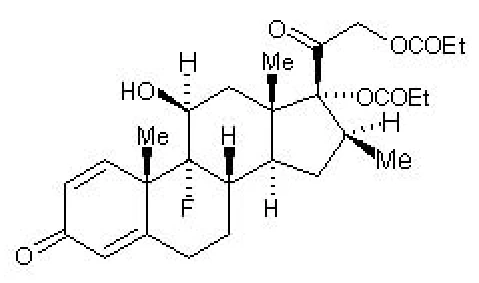
Molecular formula: C28H37FO7
C 66,65% H 7,39% F 3,76% 0 22,20%
Description:
Molecular weight: 504.59
Melting point: 178 - 179°C
Physical form: White to cream-white odourless powder.
Solubility: Insoluble in water; freely soluble in acetone and in chloroform; sparingly soluble in alcohol.
MORE INFORMATION
This document plus the full prescribing information prepared for health professionals can be found by contacting Teva Canada Limited by:
Phone: 1-800-268-4127 ext. 3 Email: druginfo@tevacanada.com; or Fax: 1-416-335-4472
30 Novopharm Court
Toronto, Ontario
M1B 2K9
Canada
www.tevacanada.com
Last Revised: October 16, 2018