


Product Monograph - Topicort
RECENT MAJOR LABEL CHANGES
| 1 INDICATIONS | 05/2022 |
| 1 INDICATIONS, 1.1 Pediatrics | 05/2022 |
| 1 INDICATIONS, 1.2 Geriatrics | 05/2022 |
| 4 DOSAGE AND ADMINISTRATION | 05/2022 |
| 4 DOSAGE AND ADMINISTRATION, 4.1 Dosing Considerations | 05/2022 |
| 7 WARNINGS AND PRECAUTIONS | 05/2022 |
| 7 WARNINGS AND PRECAUTIONS, Endocrine and Metabolism | 05/2022 |
| 7 WARNINGS AND PRECAUTIONS, 7.1.3 Pediatrics | 05/2022 |
TABLE OF CONTENTS
Sections or subsections that are not applicable at the time of authorization are not listed.
RECENT MAJOR LABEL CHANGES ................................................................................... 2
TABLE OF CONTENTS ......................................................................................................... 2
PART I: HEALTH PROFESSIONAL INFORMATION.............................................................. 4
1 INDICATIONS............................................................................................................. 4
1.1 Pediatrics .......................................................................................................... 4
1.2 Geriatrics........................................................................................................... 4
2 CONTRAINDICATIONS .............................................................................................. 4
4 DOSAGE AND ADMINISTRATION ............................................................................. 4
4.1 Dosing Considerations ....................................................................................... 4
4.2 Recommended Dose and Dosage Adjustment ................................................... 5
5 OVERDOSAGE .......................................................................................................... 5
6 DOSAGE FORMS, STRENGTHS, COMPOSITION AND PACKAGING ....................... 6
7 WARNINGS AND PRECAUTIONS ............................................................................. 6
7.1 Special Populations ........................................................................................... 8
7.1.1 Pregnant Women ............................................................................................... 8
7.1.2 Breast-feeding .................................................................................................... 8
7.1.3 Pediatrics ........................................................................................................... 8
8 ADVERSE REACTIONS ............................................................................................. 8
8.1 Adverse Reaction Overview ............................................................................... 8
8.2 Clinical Trial Adverse Reactions ......................................................................... 8
8.3 Less Common Clinical Trial Adverse Reactions.................................................. 9
8.5 Post-Market Adverse Reactions ......................................................................... 9
9 DRUG INTERACTIONS .............................................................................................. 9
9.4 Drug-drug interactions ....................................................................................... 9
9.5 Drug-food interactions........................................................................................ 9
9.6 Drug-herb interactions ....................................................................................... 9
9.7 Drug-laboratory test interactions ...................................................................... 10
10 CLINICAL PHARMACOLOGY .................................................................................. 10
10.1 Mechanism of Action .................................................................................. 10
10.3 Pharmacodynamics.................................................................................... 10
11 STORAGE, STABILITY AND DISPOSAL ................................................................. 11
12 SPECIAL HANDLING INSTRUCTIONS .................................................................... 11
PART II: SCIENTIFIC INFORMATION ................................................................................. 12
13 PHARMACEUTICAL INFORMATION ....................................................................... 12
14 CLINICAL TRIALS ................................................................................................... 13
15 MICROBIOLOGY...................................................................................................... 13
16 NON-CLINICAL TOXICOLOGY ................................................................................ 13
PATIENT MEDICATION INFORMATION ............................................................................. 16
PART I: HEALTH PROFESSIONAL INFORMATION
1 INDICATIONS
TOPICORT is indicated for the relief of acute or chronic corticosteroid-responsive dermatoses.
1.1 Pediatrics (> 18 years old)
TOPICORT is indicated for use in pediatrics patients (see 4.1 Dosing Considerations and 7.1.3 Pediatrics).
1.2 Geriatrics (≤ 65 years old)
Evidence from clinical studies and experience suggests that use in the geriatric population is associated with differences in safety or effectiveness.
2 CONTRAINDICATIONS
- Patients who are hypersensitive to this drug or to any ingredient in the formulation or component of the container. For a complete listing, see the 6 DOSAGE FORMS, COMPOSITION AND PACKAGING section of the Product Monograph.
- Topical corticosteroids are contraindicated in untreated bacterial, tubercular, fungal and most viral lesions of the skin (including herpes simplex, vaccinia and varicella) and in those patients with a history of hypersensitivity to any of the components of the preparation.
- TOPICORT is not for ophthalmic use.
- Topical corticosteroids when used over large areas, at high doses for prolonged period or under an airtight dressing are more likely to be absorbed into the bloodstream and cause side effects. Apply only enough to cover the affected areas. TOPICORT should not be applied over large areas unless advised by your doctor.
4 DOSAGE AND ADMINISTRATION
4.1 Dosing Considerations
- Topical corticosteroids when used over large areas, at high doses for prolonged period or under an airtight dressing are more likely to be absorbed into the bloodstream and cause side effects. Apply only enough to cover the affected areas. TOPICORT should not be applied over large areas unless advised by the healthcare professional.
- There are risks associated with sudden discontinuation after prolonged use of corticosteroids such as exacerbation or recurrence of the underlying disease, adrenocortical insufficiency or steroid withdrawal syndrome. TOPICORT should not be suddenly discontinued unless advised by the healthcare professional (see 7 WARNINGS AND PRECAUTIONS, Endocrine and Metabolism).
TOPICORT has been shown to be safe and effective in children and is indicated in this
- population. However, children may absorb proportionally larger amounts of topical corticosteroids and thus be more susceptible to systemic toxicity. Pediatric patients may demonstrate greater susceptibility to topical corticosteroid induced HPA axis suppression and Cushing’s syndrome than mature patients because of a larger skin surface area to body weight ratio.
4.2 Recommended Dose and Dosage Adjustment
Apply a thin film of TOPICORT to the affected skin areas twice daily. Rub in gently.
5 OVERDOSAGE
Toxic effects due to prolonged percutaneous absorption of large amounts of corticosteroids may include: reversible suppression of adrenal function, skin striae, ecchymoses, discoloration or atrophy, acneiform eruptions, hirsutism, infection. Prolonged systemic corticosteroid action may cause hypertension, peptic ulceration, hypokalemia, muscle weakness and wastage and subcapsular cataracts.
Treatment should include symptomatic therapy and discontinuation of corticosteroid administration. In chronically affected patients, a gradual discontinuation may prevent the development of steroid withdrawal symptoms.
| For management of a suspected drug overdose, contact your regional poison control centre. |
6 DOSAGE FORMS, STRENGTHS, COMPOSITION AND PACKAGING
Table 1: Dosage Forms, Strengths, Composition and Packaging
TOPICORT Cream 0.25% w/w is available in tubes of 20 g, 60 g and 10 tubes of 2 g sample pack.
TOPICORT Cream 0.05% w/w is available in in tubes of 20 g and 60 g.
TOPICORT Gel 0.05% w/w is available in tubes of 60 g.
TOPICORT Ointment 0.25% w/w is available in tubes of 60 g.
7 WARNINGS AND PRECAUTIONS
General
Patients should be advised to inform subsequent physicians of the prior use of corticosteroids.
Infection
If local infection exists, suitable concomitant antimicrobial or antifungal therapy should be administered as primary therapy. If it is considered necessary, the topical corticosteroid may be used as an adjunct to control inflammation, erythema and itching. If a favorable response does not occur promptly, application of the corticosteroid should be discontinued until the infection is adequately controlled.
| Route of Administration | Dosage Form / Strength/Composition | Non-medicinal Ingredients |
| Topical | Cream 0.25% w/w Cream 0.05% w/w Gel 0.05% w/w Ointment 0.25% w/w | Isopropyl Myristate, Methylparaben, Propylparaben, Water, Wool Alcohols, and Wool Alcohols Ointment. Edetate Disodium, Isopropyl Myristate, Lactic Acid, Methylparaben, Propylparaben, Water, Wool Alcohols, and Wool Alcohols Ointment. Alcohol, Carbomer Homopolymer Type C, Docusate Sodium, Edetate Disodium, Isopropyl Myristate, Trolamine and Water. Aluminum Stearates, Beeswax, Dicocoyl Pentaerythrityl, Distearyl Citrate, Propylene Glycol, Sorbitan Sesquioleate, White Petrolatum, and Vitamin E. |
Endocrine and Metabolism
Hyperglycemia has been reported as a systemic adverse effects of desoximetasone administration. Adrenal suppression has been shown to occur with prolonged use of large doses of topical corticosteroids, particularly under occlusion due to increased percutaneous absorption.
The use of occlusive dressings increases the percutaneous absorption of corticosteroids; their extensive use increases the possibility of systemic effects and is therefore not advisable. For patients with extensive lesions, it may be preferable to use a sequential approach, treating one portion of the body at a time. The patient should be kept under close observation if treated with large amounts of topical corticosteroid or with the occlusive technique over a prolonged period of time.
Occlusive dressings should not be applied if there is an elevation of body temperature.
The product should be used with caution in patients with stasis dermatitis and other skin diseases associated with impaired circulation.
The risks associated with sudden discontinuation after prolonged use of corticosteroids are exacerbation or recurrence of the underlying disease, adrenocortical insufficiency or steroid withdrawal syndrome.
The risk may vary as per the potency of the steroid.
Typical signs and symptoms of topical steroid withdrawal are erythema, burning pain, desquamation of the skin, pruritus etc.
Skin
Systemic side-effects may occur with topical corticosteroid preparations, particularly when these preparations are used over large areas or for an extended period of time or with occlusive dressings. A patient who has been on prolonged therapy, especially occlusive therapy, may develop adrenal suppression due to sufficient absorption of the steroid.
If local irritation or sensitization develops, TOPICORT should be discontinued, and appropriate therapy instituted.
Prolonged use of topical corticosteroid products may produce atrophy of the skin and of subcutaneous tissues, particularly on flexor surfaces and on the face. If this is noted, discontinue the use of this product.
Ophthalmic
Visual disturbance may be associated with systemic and topical corticosteroid use. If a patient presents with symptoms such as blurred vision or other visual disturbances, the patient should be considered for referral to an ophthalmologist for evaluation of possible causes which may include cataract, glaucoma or rare diseases such as central serous chorioretinopathy (CSCR).
Topical corticosteroids should be used with caution on lesions close to the eyes.
7.1 Special Populations
7.1.1 Pregnant Women
The safety of topical corticosteroid preparations during pregnancy has not been established.
7.1.2 Breast-feeding
The safety of topical corticosteroid preparations during lactation has not been established. The potential benefit should be weighed in these conditions against possible hazard to the fetus or the nursing infant. When indicated, they should not be used extensively, in large amounts or for prolonged periods of time in pregnant patients or nursing mothers.
7.1.3 Pediatrics
TOPICORT has been shown to be safe and effective in children and is indicated in this population. However, children may absorb proportionally larger amounts of topical corticosteroids and thus be more susceptible to systemic toxicity.
Paediatric patients may demonstrate greater susceptibility to topical corticosteroid induced HPA axis suppression and Cushing’s syndrome than mature patients because of a larger skin surface area to body weight ratio.
Administration of topical corticosteroids to children should be limited to the least amount compatible with an effective therapeutic regimen. Chronic corticosteroid therapy may interfere with the growth and development of children.
8 ADVERSE REACTIONS
8.1 Adverse Reaction Overview
The following adverse skin reactions have been reported with the use of topical steroids and are listed in an approximately decreasing order of occurrence: itching, folliculitis, striae, hypertrichosis, change in pigmentation, secondary infection, perioral dermatitis, allergic contact dermatitis, maceration of the skin, acneiform eruptions and miliaria.
Adrenal suppression has also been reported following topical corticosteroid therapy. Posterior subcapsular cataracts have been reported following systemic use of corticosteroids.
Systemic adverse reactions, such as vision blurred, have also been reported with the use of topical corticosteroids.
8.2 Clinical Trial Adverse Reactions
Clinical trials are conducted under very specific conditions. The adverse reaction rates observed in the clinical trials; therefore, may not reflect the rates observed in practice and should not be compared to the rates in the clinical trials of another drug. Adverse reaction information from clinical trials may be useful for identifying and approximating rates of adverse drug reactions in real-world use.
8.3 Less Common Clinical Trial Adverse Reactions
TOPICORT is well tolerated; side effects have been rare. Similar to other topical corticosteroid preparations, they may cause burning sensation, dryness, itching, erythema, change in skin pigmentation, folliculitis, pyoderma, striae, telangiectasia and skin atrophy. The following reactions are reported when corticosteroid preparations are used extensively on intertriginous areas or under occlusive dressings: maceration of the skin, secondary infection, striae, miliaria, hypertrichosis and localized skin atrophy.
8.5 Post-Market Adverse Reactions
The following local adverse reactions have been reported infrequently with topical corticosteroids but may occur more frequently with the use of occlusive dressings. These reactions are listed in an approximate decreasing order of frequency: burning, itching, irritation, dryness, folliculitis, hypertrichosis, acneiform eruptions, hypopigmentation, perioral dermatitis, allergic contact dermatitis, maceration of the skin, secondary infection, miliaria, glucocorticosteroid insufficiency. In addition, there are reports of the development of pustular psoriasis from chronic plaque psoriasis following reduction of discontinuation of potent topical steroid products.
Hypothalamic-pituitary-adrenal [HPA] axis suppression, Cushing’s syndrome and intracranial hypertension have been reported in children receiving topical corticosteroids. Manifestations of adrenal suppression in children include linear growth retardation, delayed weight gain, low plasma cortisol levels and absence of response to ACTH stimulation. Manifestations of intracranial hypertension include bulging fontanelles, headaches and bilateral papilledema.
Endocrine disorders: symptoms like erythema, burning pain, desquamation of the skin, pruritus (steroid withdrawal syndrome). Hyperglycemia has been reported as a systemic adverse effects of desoximetasone administration. Adrenal suppression has been shown to occur with prolonged use of large doses of topical corticosteroids, particularly under occlusion due to increased percutaneous absorption.
Eye disorders: blurred vision and chorioretinopathy have been reported. Posterior subcapsular cataracts have been reported following systemic use of corticosteroids.
9 DRUG INTERACTIONS
9.4 Drug-drug interactions
No formal drug-drug interaction studies were conducted with TOPICORT.
Co-administered drugs that can inhibit CYP3A4 (e.g., ritonavir, itraconazole) have been shown to inhibit the metabolism of corticosteroids leading to increased systemic exposure. The extent to which this interaction is clinically relevant depends on the dose and route of administration of the corticosteroids and the potency of the CYP3A4 inhibitor.
9.5 Drug-food interactions
Interactions with food have not been established.
9.6 Drug-herb interactions
Interactions with herbal products have not been established.
9.7 Drug-laboratory test interactions
Interactions with laboratory tests have not been established.
10 CLINICAL PHARMACOLOGY
10.1 Mechanism of Action
TOPICORT is primarily effective because of their anti-inflammatory, anti-pruritic and vaso-constrictive actions.
10.3 Pharmacodynamics
In experimental studies in laboratory animals desoximetasone was demonstrated to have potent anti-inflammatory activity when compared with other corticosteroids following local or systemic administration.
In the “Granuloma Patch Test” (with croton oil), desoximetasone showed an activity comparable to dexamethasone and approximately ten times weaker than fluocinolone.
Following oral or subcutaneous administration to rats, desoximetasone was five times less potent than dexamethasone in inhibiting granuloma formation (induced by subcutaneously implanted cotton pellets) and in the thymolytic assay system.
A potent anti-inflammatory activity could also be demonstrated comparatively with prednisolone and hydrocortisone following local and topical administration to rats. When administered into the pouch, desoximetasone inhibited granuloma formation twice as effectively as prednisolone and seven times as effectively as hydrocortisone but was slightly less effective than dexamethasone. When cotton pellets were impregnated with the test drugs prior to implantation, desoximetasone was 3.5 times as potent as prednisolone and six times as potent as hydrocortisone, but four times less potent than dexamethasone.
Additional investigations confirmed the potent glucocorticoid effect following systemic administration. In adrenalectomized fasted rats, the ability of desoximetasone to induce glycogen deposition in the liver was three times less than that of dexamethasone. Following subcutaneous administration, both desoximetasone and dexamethasone showed definite diuretic, natriuretic and kaliuretic effects in rats.
Following subcutaneous injection of 3H-labelled desoximetasone to rats, the blood maximum concentration was observed one hour after administration. The half-life of the tested compound was 2.3 hours. The drug was rapidly eliminated in the urine and feces, with 95% of the administered radioactivity recovered within 24 hours.
The dermal absorption of 3H-labelled desoximetasone was studied in rats; blood level reached a peak at 24 hours. Urinary and fecal excretion accounted for 5-10% of the applied dose. Urinary excretion was four times greater than fecal excretion with 50% of the former as unchanged drug.
11 STORAGE, STABILITY AND DISPOSAL
Store between 15-30 °C.
Keep out of sight and reach of children.
12 SPECIAL HANDLING INSTRUCTIONS
Wash your hands after applying the medications.
TOPICORT when used over large areas, at high doses for prolonged period or under an airtight dressing is more likely to be absorbed into the bloodstream and cause side effects.
PART II: SCIENTIFIC INFORMATION
13 PHARMACEUTICAL INFORMATION
Drug Substance
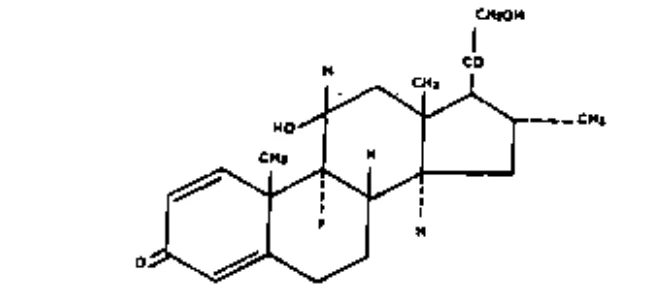
Proper name: Desoximetasone
Chemical name: 9α-fluoro,11β,21-dihydroxy-16α-methylpregna-1,4-diene-3,20-dione
Molecular formula and molecular mass: C22H29FO4 376.46 g/mol
Structural formula:
Physicochemical properties:
Description: White to practically white crystalline powder.
Solubility: Insoluble in water; freely soluble in alcohol, in acetone and in chloroform.
Melting range: 206-218ºC
14 CLINICAL TRIALS
The clinical trial data based on which the original indication was initially authorized are not available.
15 MICROBIOLOGY
No microbiological information is required for this drug product.
16 NON-CLINICAL TOXICOLOGY
General Toxicology
Acute Toxicity
In acute toxicity studies in mice, rats, rabbits and dogs, the oral LD50 (95% confidence limits) were determined as follows:
Mice: 1519 (1144-2016) mg/kg
Rats: 1469 (935-2152) mg/kg
Rabbits: 2546 (1926-3365) mg/kg
Mice and rats tolerated a single dose of 50 mg/kg of desoximetasone in various formulations when given either orally, intraperitoneally or subcutaneously.
In an acute oral toxicity study, all rats survived a dose of 36 g/kg desoximetasone gel. Toxic effects, attributed to the alcohol excipient, were decreased spontaneous activity and respiratory rate, ataxia and diminished or absent corneal, tail pinch, and righting reflexes.
Rabbits tolerated a single dose of about 5 mg/kg of desoximetasone, when topically applied to the intact skin for 24 hours. The oral LD50 (with 95% confidence limits) in neonatal rats were 230 (204-260) mg/kg for desoximetasone as compared to 134 (96-188) mg/kg for dexamethasone. Neonatal rats survived a single, intraperitoneal dose of 50 mg/kg of desoximetasone, whereas the same dose of dexamethasone killed 7 of 19 pups.
Subacute and Chronic Toxicity
In subacute and chronic toxicity studies the abnormal findings reflected the known systemic effects of corticosteroids.
Subcutaneous administration of desoximetasone to rats for 14 days was well tolerated at the dose of 25 mcg/kg. Doses of 100 mcg/kg inhibited the body weight gain. Rats given 400 and 1600 mcg/kg showed depression in body weight gain and decrease in weights of the thymus, adrenals and spleen.
In similar studies of 26-week duration, the effects of desoximetasone were compared to those of dexamethasone in rats and dogs. Rats given 50 mcg/kg showed a significant elevation of blood glucose. Systemic effects of corticosteroids were seen with doses of 160 mcg/kg and 500 mcg/kg of desoximetasone, the latter dose was also associated with systemic infection and death in 55% of the males and 5% of the females. Dexamethasone, at the dose of 50 mcg/kg showed similar but much less pronounced effects than desoximetasone at 500 mcg/kg. In dogs, typical and dose-related systemic corticosteroid effects were observed in animals treated with doses of 200 to 800 mcg/kg. Dexamethasone, at the dose of 200 mcg/kg, produced more frequent and more marked steroid effects than those observed with 800 mcg/kg of desoximetasone.
Dermal application of desoximetasone on intact or abraded skin was studied in rats, rabbits and dogs. Large doses of desoximetasone applied to the skin for 3 to 24 weeks produced typical local and systemic corticosteroid effects which were attributed to percutaneous absorption.
Desoximetasone failed to produce any signs of irritation when applied directly to the conjunctival sac of the rabbit eye, except for a slight lacrimation immediately following the application. When applied as an emollient cream, the preparation was very well tolerated. When 100 mg of desoximetasone gel 0.05% was instilled into one eye of six New Zealand white rabbits, the other eye serving as a control, very slight conjunctival redness was observed in one treated eye.
A single dose of 100 mg instilled into the right eye of New Zealand white rabbits male and female, the left used as control, failed to produce any sign of ocular mucosal irritation to 72 hours after application and therefore, desoximetasone 0.25% ointment is not considered an irritant to the eye.
Carcinogenesis
Long-term animal studies have not been performed to evaluate the carcinogenic potential of desoximetasone.
Reproductive and Developmental Toxicology
Reproduction and teratology studies were done in mice, rats and rabbits.
Desoximetasone, given subcutaneously at the dose of 1600 mcg/kg to pregnant mice during gestational days 7-15, induced a depression of body weight gain and an expected slight increase in the incidence of cleft palate in the fetuses. By comparison, dexamethasone produced, at the lower dose of 400 mcg/kg, a higher incidence of cleft palate in the fetuses.
Desoximetasone and especially dexamethasone produced an inhibitory effect on the weight gain of adult male and female rats during the premating period. The fertility rates were not affected; however, a higher-than-normal number of resorptions was observed in rats given 100 mcg/kg of dexamethasone. Lower, dose-dependent birth weights of pups as compared to controls were seen in treated animals, especially in those given dexamethasone.
Administered subcutaneously to pregnant rats during gestational days 8-16, desoximetasone produced, at the doses of 400 and 100 mcg/kg, depression of body weight gain in the dams during the treatment period. A retardation of ossification of the odontoid process and an increased incidence of lumbar ribs were also noted.
Topical application of 0.25% desoximetasone ointment to the intact skin of rats during gestational days 7-16 and of rabbits during gestational days 7-19 produced typical corticosteroid effects in treated animals. The dams showed decreased weight gain, increased rate of abortion, and in utero fetal death. Delivered fetuses exhibited varying degrees of growth retardation and corticosteroid induced malformations which were dose-dependent.