


Product Monograph - Teva-Mometasone (Teva Canada, 0.1 %)
Recent Major Label Changes
None at time of the most recent authorization
Table of Contents
Certain sections or subsections that are not applicable at the time of the preparation of the most recent authorized product monograph are not listed.
Recent Major Label Changes ............................................................................................................... 2
Table of Contents ..................................................................................................................................... 2
Part 1: Healthcare Professional Information ........................................................................................... 4
- 1.
Indications ............................................................................................................................................ 4
1.1 Pediatrics ................................................................................................................................................ 4
1.2 Geriatrics ................................................................................................................................................ 4
2 Contraindications .................................................................................................................................. 4
- 4.
Dosage and Administration .................................................................................................................. 4
4.1 Dosing Considerations ........................................................................................................................... 4
4.2 Recommended Dose And Dosage Adjustment .................................................................................... 5
4.4 Administration ....................................................................................................................................... 5
4.5 Missed Dose ........................................................................................................................................... 5
- 5. Overdosage ........................................................................................................................................... 5
- 6. Dosage Forms, Strengths, Composition, And Packaging ..................................................................... 6
- 7.
Warnings and Precautions ................................................................................................................... 6
7.1 Special Populations ................................................................................................................................ 8
7.1.1 Pregnancy ............................................................................................................................................ 8
7.1.2. Breastfeeding ..................................................................................................................................... 9
7.1.3. Pediatrics ............................................................................................................................................ 9
7.1.4. Geriatrics ............................................................................................................................................ 9
- 8.
Adverse Reactions .............................................................................................................................. 10
8.1 Adverse Reaction Overview ................................................................................................................ 10
8.2. Clinical Trial Adverse Reactions .......................................................................................................... 10
8.3. Less Common Clinical Trial Adverse Reactions ................................................................................. 10
- 9.
Drug Interactions ................................................................................................................................ 11
9.3. Drug-Behavioural Interactions ........................................................................................................... 11
9.4 Drug-Drug Interactions ........................................................................................................................ 11
9.5 Drug-Food Interactions ........................................................................................................................ 11
9.6 Drug-Herb Interactions ........................................................................................................................ 11
9.7 Drug-Laboratory Test Interactions ...................................................................................................... 11
- 10.
Clinical Pharmacology ...................................................................................................................... 11
10.1. Mechanism Of Action ....................................................................................................................... 11
10.2 Pharmacodynamics ............................................................................................................................ 12
10.3 Pharmacokinetics ............................................................................................................................... 12
- 11. Storage, Stability And Disposal ........................................................................................................ 13
- 12. Special Handling Instructions ........................................................................................................... 13
Part 2: Scientific Information ................................................................................................................. 14
- 13. Pharmaceutical Information ............................................................................................................ 14
- 14.
Clinical Trials ..................................................................................................................................... 14
14.1. Clinical Trials By Indication ............................................................................................................... 15
14.2 Comparative Bioavailability Studies .................................................................................................. 17
- 16. Non-Clinical Toxicology .................................................................................................................... 18
- 17. Supporting Product Monographs ..................................................................................................... 18
Patient Medication Information ............................................................................................................ 20
Part 1: Healthcare Professional Information
1. Indications
TEVA-MOMETASONE (mometasone furoate):
- is indicated for the relief of the inflammatory and pruritic manifestations of corticosteroid-responsive dermatoses such as psoriasis and atopic dermatitis.
- can be used for a maximum of 3 weeks duration on the body and of 5 days duration on the face, axillae and scrotum.
1.1 Pediatrics
Pediatrics (<18 years of age): Safety and efficacy of mometasone furoate have not been established in pediatric patients (see 7. Warnings and Precautions, 7.1. Special Populations, 7.1.3. Pediatrics).
1.2 Geriatrics
Geriatrics (≥ 65 years of age): No overall differences in safety and effectiveness were observed between subjects greater than 65 years of age and younger subjects receiving mometasone furoate ointment. Geriatric patients may be more susceptible to the potential effects of systemic absorption. Decreased hepatic or renal function in the elderly may delay elimination (see 7. Warnings and Precautions, 7.1. Special Populations, 7.1.4. Geriatrics).
2 Contraindications
TEVA-MOMETASONE is contraindicated:
- in patients who are sensitive to mometasone furoate, to other corticosteroids or to any component of these preparations. For a complete listing, see the Dosage Forms, Composition, and Packaging section of the product monograph.
- In patients with viral (e.g. herpes or varicella) lesions of the skin, bacterial or fungal skin infections, parasitic infections, skin manifestations relating to tuberculosis or syphilis, eruptions following vaccinations, acne vulgaris, rosacea, pruritus without inflammation.
- For use in the eyes.
- For use with occlusive dressings
4. Dosage and Administration
4.1 Dosing Considerations
Patients/caregivers should be instructed to use TEVA-MOMETASONE for the minimum amount of time necessary to achieve the desired results because of the potential for corticosteroids to suppress the hypothalamic-pituitary-adrenal (HPA) axis and cause skin atrophy (See 7. Warnings and Precautions).
TEVA-MOMETASONE is for topical use only and not for use on mucous membranes.
Use in pediatric patients is not recommended. Pediatric patients may be more susceptible to local and systemic toxicity from equivalent doses because of their larger skin surface to body weight ratios.
Geriatric patients may be more susceptible to the potential effects of systemic absorption. Decreased hepatic or renal function in the elderly may delay elimination.
4.2 Recommended Dose and Dosage Adjustment
Apply a thin film of TEVA-MOMETASONE to the affected skin areas once daily.
TEVA-MOMETASONE should be used on the face, axillae or scrotum for a maximum of 5 days.
TEVA-MOMETASONE should be used on the body for a maximum of 3 weeks. If no improvement is seen within 2 weeks, reassessment of diagnosis and treatment may be necessary.
Therapy should be discontinued when control is achieved. Continue an emollient as maintenance therapy.
Geriatrics (≥ 65 years of age): TEVA-MOMETASONE should be used with caution due to increased risk of renal or hepatic impairment in this population. The minimum quantity should be used for the shortest duration to achieve the desired clinical benefit (see 7. Warnings and Precautions, 7.1 Special Populations, 7.1.4 Geriatrics).
Patients with renal/hepatic impairment: The minimum quantity should be used for the shortest duration to achieve the desired clinical benefit (see 7. Warnings and Precautions, Renal).
4.4 Administration
Do not use occlusive dressings.
TEVA-MOMETASONE should not be applied to mucous membranes.
4.5 Missed Dose
Any missed dose should be applied as soon as possible after the missed dose is remembered. If this is close to the scheduled application time or the next dose, the subject should wait and apply the next scheduled dose. The usual schedule should be resumed thereafter.
5. Overdosage
Topically applied corticosteroids can be absorbed in sufficient amounts to produce systemic effects. Excessive prolonged use or misuses may suppress hypothalamic-pituitary-adrenal (HPA) axis function, resulting in secondary adrenal insufficiency. If symptoms of HPA axis suppression occur, TEVA-MOMETASONE should be gradually discontinued by reducing the frequency of application or by substituting a less potent corticosteroid, as clinically indicated. If toxic effects occur, TEVA-
MOMETASONE should be discontinued and symptomatic therapy administered (see 7. Warnings and Precautions).
For the most recent information in the management of a suspected drug overdose, contact your regional poison control centre or Health Canada’s toll-free number, 1-844 POISON-X (1-844-764-7669).
- 6. Dosage Forms, Strengths, Composition, and Packaging
Table 1 – Dosage Forms, Strengths, Composition
| Route of Administration | Dosage Form / Strength/Composition | Non-medicinal Ingredients |
|---|---|---|
| Topical | Ointment / 0.1% w/w | hexylene glycol, propylene glycol monostearate, white petrolatum and white wax. |
Each gram TEVA-MOMETASONE Ointment 0.1% contains 1 mg mometasone furoate. TEVA-MOMETASONE Ointment 0.1% is supplied in 15 g and 50 g tubes.
7. Warnings and Precautions
General
Patients should be advised to inform subsequent physicians of the prior use of corticosteroids.
TEVA-MOMETASONE should not be used under occlusion, due to increased risk of systemic exposure and infection. When used under occlusive dressing, which is contraindicated, over extensive areas or on the face, axillae or scrotum, sufficient absorption may occur to result in adrenal suppression and other systemic effects (see 7. Warnings and Precautions, Endocrine and Metabolism, Immune and Ophthalmologic).
Carcinogenesis and Genotoxicity
In genetic toxicity studies, mometasone furoate was not mutagenic in bacteria (Ames test) or mammalian (mouse lymphoma) cells and was not clastogenic in the mouse micronucleus test.
Cardiovascular
Suitable precautions should be taken when using topical corticosteroids in patients with stasis dermatitis and other skin diseases with impaired circulation.
Use of corticosteroids around chronic leg ulcers may be associated with a higher occurrence of local hypersensitivity reactions and an increased risk of local infection.
Endocrine and Metabolism
Manifestations of hypercortisolism (Cushing’s syndrome) and reversible hypothalamic-pituitary-adrenal (HPA) axis suppression, leading to glucocorticosteroid insufficiency, can occur in some individuals as a result of increased systemic absorption of topical corticosteroids. Hyperglycemia and glucosuria may occur in some patients due to systemic absorption of topical corticosteroids (see 8. Adverse Reactions).
Conditions which augment systemic absorption include the formulation and potency of the topical corticosteroid, the application of topical corticosteroids over large body surface areas, application to intertriginous areas (such as the axillae), frequency of application, prolonged use or the addition of occlusive dressings. Other risk factors for increased systemic effects include increasing hydration of the stratum corneum, use on thin skin areas (such as the face), use on broken skin or conditions where the skin barrier may be impaired.
If patients must be treated over large body surface areas, they should be evaluated periodically for evidence of HPA axis suppression (see 7. Warnings and Precautions, Monitoring and Laboratory Tests). If HPA axis suppression or Cushing’s syndrome is observed, an attempt should be made to withdraw the drug by reducing the frequency of the application. Abrupt withdrawal of treatment may result in glucocorticosteroid insufficiency (see 8. Adverse Reactions).
Recovery of HPA axis function is generally prompt upon discontinuation of topical
corticosteroids. Infrequently, signs and symptoms of glucocorticosteroid insufficiency may occur requiring supplemental systemic corticosteroids. For information on systemic corticosteroid supplementation, see prescribing information for those products.
Pediatric patients may absorb larger amounts of topical corticosteroids and thus be more susceptible to systemic toxicity from equivalent doses because of their larger skin surface to body mass ratios as compared with adults (see 7. Warnings and Precautions, 7.1 Special Populations, 7.1.3 Pediatrics).
Immune
Topical corticosteroids may increase the risk of infections including aggravation of cutaneous infection, masked infection and secondary infections. In particular, bacterial infection is encouraged by warm, moist conditions within skin-fold areas or caused by occlusive dressings. If concomitant skin infections develop, TEVA-MOMETASONE should be discontinued and antimicrobial therapy administered.
Monitoring and Laboratory Tests
The cosyntropin (ACTH1-24) stimulation test may be helpful in evaluating patients for HPA axis suppression.
Ophthalmologic
Topical corticosteroids should be used with caution on lesions close to the eye because systemic absorption may cause increased intraocular pressure, glaucoma or cataracts.
Visual disturbance may be reported with systemic and topical (including, intranasal, inhaled and intraocular) corticosteroid use. If a patient presents with symptoms such as blurred vision or other visual disturbances, the patient should be considered for referral to an ophthalmologist for evaluation of possible causes of visual disturbances; this may include cataract, glaucoma or rare diseases such as central serous chorioretinopathy (CSCR) which have been reported after use of systemic and topical corticosteroids.
Renal
Safety of mometasone has not been established in patients with renal or hepatic impairment. In case of systemic absorption, metabolism and elimination may be delayed leading to increased risk of systemic toxicity; therefore, minimum quantity should be used for the minimum duration.
Reproductive Health
- Fertility
There are no data in humans to evaluate the effect of topical corticosteroids on fertility.
Sensitivity/Resistance
Local hypersensitivity reactions (see 8. Adverse Reactions) may resemble symptoms of the condition under treatment. If hypersensitivity reactions occur, the drug should be discontinued and appropriate therapy initiated.
Allergic contact dermatitis with corticosteroids is usually diagnosed by observing a failure to heal rather than noticing a clinical exacerbation. Such an observation should be corroborated with appropriate diagnostic patch testing.
Skin
If irritation or sensitization develops with the use of TEVA-MOMETASONE products, treatment should be discontinued and appropriate therapy instituted.
Prolonged use of topical corticosteroid preparations may produce striae or atrophy of the skin or subcutaneous tissue. Topical corticosteroids should be used with caution on lesions of the face, groin and axillae as these areas are more prone to atrophic changes than other areas of the body. Frequent observation is important if these areas are to be treated. If skin atrophy is observed, treatment should be discontinued.
7.1 Special Populations
7.1.1 Pregnant
The safe use of topical corticosteroids during pregnancy has not been established. Corticosteroids have been shown to be teratogenic in laboratory animals when administered systemically at dosage levels that are similar to therapeutic doses. Some corticosteroids have been shown to be teratogenic after dermal application in laboratory animals. The relevance of this finding to human beings has not been established.
In reproduction studies conducted in rats and rabbits, mometasone furoate produced effects such as reduced maternal body weight gain, suppression of fetal growth, delayed ossification, umbilical hernias, prolonged gestation, difficult and prolonged labor and inability to deliver (see 16. Non-Clinical Toxicology).
TEVA-MOMETASONE should be used during pregnancy only if the potential benefit justifies the potential risk to the fetus. The minimum quantity should be used for the minimum duration.
7.1.2. Breastfeeding
Systemically administered corticosteroids appear in human milk and could suppress growth, interfere with endogenous corticosteroid production, or cause other untoward effects. The safe use of topical corticosteroids during lactation has not been established. It is not known whether topical administration of corticosteroids could result in sufficient systemic absorption to produce detectable quantities in human milk. Because many drugs are excreted in human milk, caution should be exercised when TEVA-MOMETASONE is administered to a nursing woman. Administration of TEVA-MOMETASONE during lactation should only be considered if the expected benefit to the mother outweighs the risk to the infant. If used during lactation, TEVA-MOMETASONE should not be applied to the breasts to avoid accidental ingestion by the infant.
7.1.3. Pediatrics
Safety and efficacy of mometasone furoate have not been established in pediatric patients.
Because of a higher ratio of skin surface area to body mass, pediatric patients are at a greater risk than adults of HPA axis suppression and Cushing’s syndrome when they are treated with topical corticosteroids. They are therefore also at greater risk of adrenal insufficiency during and/or after withdrawal of treatment.
Adverse effects including striae have been reported with use of topical corticosteroids in infants and children. HPA axis suppression, Cushing’s syndrome, linear growth retardation, delayed weight gain, and intracranial hypertension have been reported in children receiving topical corticosteroids. Manifestations of adrenal suppression in children include low plasma cortisol levels and an absence of response to ACTH stimulation. Manifestations of intracranial hypertension include bulging fontanelles, headaches, and bilateral papilledema. Chronic corticosteroid therapy may interfere with the growth and development of children.
7.1.4. Geriatrics
No overall differences in safety were observed between subjects greater than 65 years of age and younger subjects receiving mometasone furoate ointment. Topical corticosteroids should be used cautiously in elderly patients, reflecting their increased skin fragility and greater frequency of hepatic, renal, or cardiac dysfunction, and of concomitant disease or other drug therapy. Decreased hepatic or renal function in the elderly may delay elimination if systemic absorption occurs. The minimum quantity should be used for the minimum duration.
8. Adverse Reactions
8.1 Adverse Reaction Overview
Local adverse reactions rarely reported with mometasone furoate ointment 0.1% include burning, pruritus, tingling/stinging and signs of skin atrophy. In <1% of patients, adverse reactions reported with mometasone furoate ointment 0.1% include aggravated allergy, dermatitis, erythema, furunculosis, increased lesion size, nausea (one patient) and vaginal discharge (one patient).
8.2. Clinical Trial Adverse Reactions
Clinical trials are conducted under very specific conditions. Therefore, the frequencies of adverse reactions observed in the clinical trials may not reflect frequencies observed in clinical practice and should not be compared to frequencies reported in clinical trials of another drug.
The overall incidence of side effects was 4.9%, i.e. 40 of 812 subjects reported treatment-related adverse experiences.
Table 2 – Local Adverse Reactions Occurring at an Incidence ≥1% in Clinical Trials
Ointment n = 812 (%) | |
Skin and subcutaneous tissue disorders Burning Pruritus Skin Atrophy | 1.6 1 1 |
8.3. Less Common Clinical Trial Adverse Reactions
Infections and infestations: furuncle
Nervous system disorders: paraesthesia
Skin and subcutaneous tissue disorders: pain of skin
The following local adverse reactions have been reported infrequently when other topical dermatologic corticosteroids have been used as recommended. These reactions are listed in an approximate decreasing order of occurrence: burning, itching, irritation, dryness, folliculitis, hypertrichosis, acneiform eruptions, hypopigmentation, perioral dermatitis, allergic contact dermatitis, maceration of the skin, secondary infection, skin atrophy, striae, miliaria.
Hypothalamic-pituitary-adrenal (HPA) axis suppression has been reported with topical corticosteroids. Manifestations of HPA axis suppression include increased weight / obesity, delayed weight gain / growth retardation in children, Cushing’s syndrome, cushingoid features (e.g., moon face, central obesity), HPA disorder, decreased endogenous cortisol levels, hyperglycemia / glucosuria, hypertension, osteoporosis, cataract, glaucoma, steroid withdrawal syndrome (see 7. Warnings and Precautions).
Systemic adverse reactions, such as vision blurred, have also been reported with the use of topical corticosteroids.
Posterior subcapsular cataracts have been reported following systemic use of corticosteroids.
9. Drug Interactions
9.3. Drug-Behavioural Interactions
Interaction with lifestyle has not been established.
9.4 Drug-Drug Interactions
Interactions with other drugs have not been established.
Table 3 – Established or Potential Drug-Drug Interactions
| [Proper/Common name] | Effect | Clinical comment |
|---|---|---|
| Drugs that can inhibit CYP3A4 (e.g., ritonavir, itraconazole) | Inhibit the metabolism of corticosteroids leading to increased systemic exposure | The extent to which this interaction is clinically relevant depends on the dose and route of administration of the corticosteroids and the potency of the CYP3A4 inhibitor. |
9.5 Drug-Food Interactions
Interaction with food has not been established.
9.6 Drug-Herb Interactions
Interaction with herbs has not been established.
9.7 Drug-Laboratory Test Interactions
Interaction with laboratory testing has not been established.
10. Clinical Pharmacology
10.1. Mechanism of Action
TEVA-MOMETASONE (mometasone furoate) has anti-inflammatory, antipruritic and vasoconstrictive actions. The exact mechanism, however, of corticosteroids in each disease is uncertain. Mometasone furoate, has been shown to have topical (dermatologic) and systemic pharmacologic and metabolic effects characteristic of this class of drugs.
10.2 Pharmacodynamics
In a study of the effects of mometasone furoate ointment on the HPA axis, 15 g were applied BID for seven days to patients with psoriasis or atopic dermatitis. The ointment was applied without occlusion to at least 30% of body surface. The results suggest that the drug caused a slight reduction of urinary-free cortisol. However, this change was not considered clinically important since it was not accompanied by subnormal levels of plasma cortisol or 17-OHC.
The pharmacologic profile of mometasone furoate was determined by standard laboratory methods. Relative to betamethasone valerate, the anti-inflammatory activity and anti-psoriatic activity of mometasone furoate were evaluated in mice and guinea pigs, respectively. Hypothalamic-pituitary-adrenal (HPA) axis suppression, thymolysis and skin atrophy were evaluated in mice.
In the croton oil assay in mice, mometasone furoate (ED50 = 0.02 mcg/ear) was equipotent to betamethasone valerate after single application and was approximately eight times as potent as betamethasone valerate after five daily applications (ED50 values = 0.002 mcg/ear/day vs 0.014 mcg/ear/day). In guinea pigs, mometasone furoate was approximately twice as potent as betamethasone valerate in reducing M. Ovalis-induced epidermal acanthosis after 14 daily applications.
With respect to pharmacologic activities commonly associated with corticosteroids, mometasone furoate (ED50 = 5.3 mcg/ear/day) was less potent than betamethasone valerate (ED50 = 3.1 mcg /ear/day) in suppressing the HPA axis in mice after five daily applications. In the thymolysis assay, mometasone furoate (ED50 = 26.6 mcg /ear/day) was approximately two times as potent as betamethasone valerate (ED50 = 51.6 mcg /ear/day) when applied topically, and following subcutaneous administration for five days, mometasone furoate (ED50 = 11.2 mcg /mouse) was approximately six times as potent as betamethasone valerate (ED50 = 59.8 mcg /mouse. At doses five to 5000 times the effective anti-inflammatory doses, mometasone furoate was three to eight times more potent than betamethasone valerate with respect to skin thinning in mice. Based on the ratio of systemic potency (HPA suppression or thymolysis) to topical anti-inflammatory potency, the therapeutic indexes for mometasone furoate were approximately three to ten times greater than those for the comparative, betamethasone valerate. Therefore, mometasone furoate would be expected to have a superior safety margin to that of betamethasone valerate.
10.3 Pharmacokinetics
A percutaneous absorption study with radio-labeled 3H-mometasone furoate ointment was conducted in adult male volunteers with intact skin. Based on the amounts of radioactivity excreted after an eight-hour application of the active ointment and analysis of urine and feces, approximately 0.7% of the applied dose was absorbed systemically without occlusion.
The percutaneous absorption and excretion of 3H mometasone furoate ointment was evaluated in rats, rabbits and dogs with doses ranging from 5.2 to 22 mcg/cm2. Additionally, the tissue distribution of absorbed radioactivity was determined in rabbits.
Systemic absorption of 3H-mometasone furoate was minimal in all species studied, ranging from approximately 2% in dogs to 6% in rabbits over a 5 to 7-day period. The cream and ointment formulations were comparable with respect to systemic absorption. Plasma levels were low ranging from <0.1 to <1 ng/ml. Less than 1.3% of the applied dose was excreted in urine of all species and from 1.5 to 4.2% was excreted in feces. Characterization of urinary metabolites was not possible due to the low levels of drug in urine. However, it is well known that corticosteroids are metabolized to inactive water-soluble substances such as sulfate esters or glucuronides and are excreted as such. In rabbits, there was no unusual accumulation of radioactivity in any tissue.
11. Storage, Stability and Disposal
Store between 15° and 30°C.
12. Special Handling Instructions
There are no special requirements for use or handling of this product.
Part 2: Scientific Information
13. Pharmaceutical Information
Drug Substance
Proper name: mometasone furoate
Chemical name: 9a,21-Dichloro-11b,17-dihydroxy-16a-methylpregna-1,4-diene-3,20-dione 17-(2-furoate)
Molecular formula and molecular mass: C27H30Cl2O6 and a molecular weight of 521.4 g/mol
Structural formula:
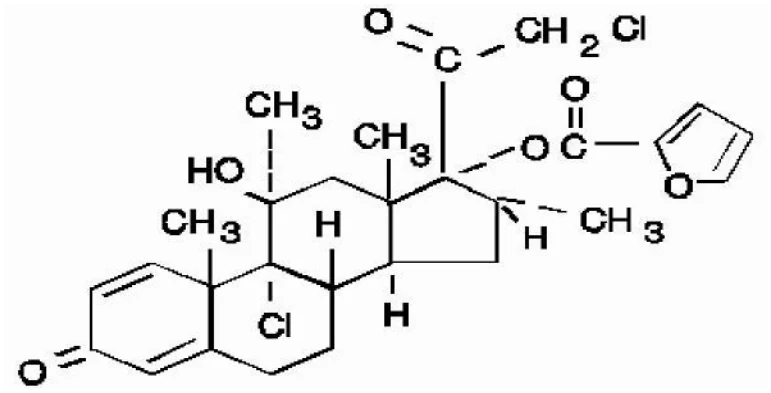
Physicochemical properties: Mometasone furoate is a white to off-white powder practically insoluble in water, slightly soluble in octanol and moderately soluble in ethyl alcohol.
14. Clinical Trials
Onset of Action:
Ointment
Mometasone furoate ointment 0.1% QD also had a rapid onset of action in psoriatic patients as evidenced by percent improvement from baseline in total disease sign/symptom scores after one treatment week (ranging from 38% to 59%). Percent improvements for comparative agents were triamcinolone acetonide (28%), fluocinolone acetonide (33%), betamethasone dipropionate (23%), betamethasone valerate (56%) and vehicle alone (43%). In two of these studies mometasone furoate was significantly more effective than triamcinolone acetonide or fluocinolone acetonide at Day 4 evaluation (P<0.01).
The effects of mometasone furoate ointment 0.1% in the treatment of patients with atopic dermatitis also were rapid in onset as demonstrated by mean percent improvement and mean global evaluation scores at Day 4 and Week 1. Mometasone furoate-treated patients showed an improvement in total sign/symptom score that ranged from 27% to 47% at Day 4 and 51% to 64% at Week 1. In comparison, hydrocortisone butyrate and betamethasone valerate demonstrated 17% and 43% improvement, respectively, at Day 4 and 24% and 65%, respectively, at Week l. Global scores at one-week indicated moderate improvement in patients treated with mometasone furoate or betamethasone valerate and slight improvement in those treated with hydrocortisone butyrate.
Safety Studies:
In a study of the effects of mometasone furoate ointment on the HPA axis, 15 g were applied BID for seven days to patients with psoriasis or atopic dermatitis. The ointment was applied without occlusion to at least 30% of body surface. The results suggest that the drug caused a slight reduction of urinary-free cortisol. However, this change was not considered clinically important since it was not accompanied by subnormal levels of plasma cortisol or 17-OHC.
The results of other local and systemic safety studies also showed that mometasone furoate ointment 0.1% has minimal percutaneous absorption and do not cause adrenal suppression. In other investigations, mometasone furoate ointment 0.1% demonstrated minimal potential for irritation, sensitization, photocontact allergenicity and phototoxic reactions when used as recommended. Furthermore, when compared to hydrocortisone ointment 0.1% mometasone furoate ointment 0.1% has a low atrophogenic potential. No clinical meaningful changes in laboratory test values were observed with mometasone furoate ointment.
14.1. Clinical Trials by Indication
Efficacy Studies: Mometasone Furoate Ointment 0.1%
Psoriasis
In two bilateral-paired comparison trials, the efficacy of BID applications of mometasone furoate ointment in concentrations of 0.1% and 0.05% was compared to that of betamethasone valerate ointment also applied BID for 14 days. Results showed that the 0.1% formulation of mometasone furoate ointment was significantly (P<0.05) more effective than betamethasone valerate ointment1 .As demonstrated by the physician's global evaluation of change in disease status, 60% of patients responded more favorably to mometasone furoate ointment 0.1%, while 13% experienced a comparable response in the betamethasone valerate-treated group. Improvement from baseline in total disease sign score was 51% and 40% for mometasone furoate ointment 0.1% and betamethasone valerate ointment, respectively. Furthermore, these results also demonstrated that mometasone furoate ointment 0.05% was superior to betamethasone valerate ointment but not as effective as the 0.1% mometasone furoate ointment formulation.
In a third bilateral-paired comparative study of mometasone furoate ointment 0.1% and betamethasone dipropionate ointment2 applied BID for 14 days, percent improvement in total disease scores was similar between the two preparations, 63% and 58% for mometasone furoate ointment 0.1% and betamethasone dipropionate ointment, respectively. However, 38% of patients responded more favorably to mometasone furoate ointment 0.1% while 3% responded better to betamethasone dipropionate ointment.
Furthermore, three randomized, multicentric, parallel group studies were conducted in patients with psoriasis
1 VALISONE ® Ointment
2 DIPROSONE ® Ointment
to compare the efficacy of mometasone furoate ointment 0.1% applied QD to that of triamcinolone acetonide3 applied BID, fluocinolone acetonide4 applied TID or to that of the vehicle alone applied QD for 21 days. Mometasone furoate ointment 0.1% was significantly (P<0.01) better than triacinolone acetonide, fluocinolone acetonide and the vehicle as demonstrated by the percent improvement in total disease sign scores. The superior efficacy of mometasone furoate ointment applied QD was observed despite the more frequent administrations of the two comparative agents. Physician’s global evaluation of disease status at endpoint analysis also confirmed that mometasone furoate ointment 0.1% was significantly (P<0.01) more effective than triamcinolone acetonide, fluocinolone acetonide or the vehicle alone in the treatment of patients with psoriasis.
Two additional studies in psoriatic patients compared QD applications of mometasone furoate ointment 0.1% with QD applications of betamethasone dipropionate 0.05% and BID applications of betamethasone valerate 0.1%5 respectively for three weeks. Mometasone furoate ointment 0.1% QD was significantly (P<0.01) more effective than betamethasone valerate BID and comparable to betamethasone dipropionate QD as demonstrated by percent improvement in total disease sign scores at endpoint analysis. Physician's overall evaluation of disease status also indicated that mometasone furoate ointment was significantly (P<0.01) more effective than betamethasone valerate in the treatment of psoriasis. At the end of the three-week study period, mean scores were indicative of marked to moderate improvement in most patients treated with mometasone furoate ointment. Comparable improvement was effected with betamethasone dipropionate and moderate to slight improvement was observed in the betamethasone valerate-treated group.
Atopic Dermatitis
Patients with atopic dermatitis participated in a bilateral-paired comparative study, which evaluated the efficacy of mometasone furoate ointment 0.1% against that of betamethasone valerate ointment. Results demonstrated that mometasone furoate ointment 0.1% was equivalent in activity to betamethasone valerate ointment when both agents were applied BID. Another three randomized, multicentric parallel-group studies compared the efficacy of mometasone furoate ointment 0.1% QD with that of betamethasone valerate ointment BID, the ointment vehicle alone applied QD, or hydrocortisone butyrate ointment 0.1%6 applied BID for three weeks. In these studies, mometasone furoate was equivalent to the known standard agents, betamethasone valerate and hydrocortisone butyrate, even though mometasone furoate was applied less frequently than each of these comparatives. Percent improvement in total disease sign score at end-point analysis in the three studies were 82%, 83% and 60%, respectively, for mometasone furoate ointment 0.1% as compared to 79%, 24% and 46% for betamethasone valerate ointment, the vehicle and hydrocortisone butyrate, respectively (P<0.01). Furthermore, global scores at endpoint reflected marked improvement in the mometasone furoate and betamethasone valerate-treatment groups, moderate improvement in the hydrocortisone-treated group and slight improvement in the vehicle-treated group.
Corticosteroid-Responsive Dermatoses
3 KENALOG® ER Squibb & Sons, Inc., Princeton, NJ USA
4 SYNALAR® Syntax Laboratories, Palo Alto, CA USA
5 BETNOVATE® Ointment, Glaxo Laboratories, UK
6 LOCOID® Ointment, Owen Laboratories, SA TX USA
In three parallel-group studies, the efficacy of mometasone furoate ointment 0.1% was compared to that of betamethasone valerate 0.05% and clobetasone butyrate 0.025% in the treatment of various corticosteroid-responsive dermatoses. Mometasone furoate ointment was applied QD while the comparative agents were each applied BID for three weeks. After one treatment week, improvement in disease signs ranged from 58% to 90% with QD mometasone furoate administration, 52% to 77% with BID application of betamethasone valerate and 69% with BID administration of clobetasone butyrate. By treatment end, percent improvement averaged 93% for mometasone furoate, 89% and 93% for betamethasone valerate and 90% for clobetasone butyrate. At endpoint evaluation, global scores indicated disease clearance in the majority of mometasone-treated patients; marked improvement was observed in most patients treated with betamethasone valerate or clobetasone butyrate.
14.2 Comparative Bioavailability Studies
A one-period, randomized, two-treatment, single dose (1x10µL) vasoconstrictor study of Mometasone 0.1% ointment (Teva Canada Limited), and Elocom® 0.1% ointment (Shering Canada Inc.) was conducted in healthy, adult female subjects and the relative potency of each product was measured using a ChromaMeter.
The following table reveals the results of the skin blanching measurements in 38 subjects. Both products demonstrated comparable vasoconstrictor (therapeutic) activity.
Mometasone 1x10µL | ||||
|---|---|---|---|---|
| Test1 | Reference2 | Ratio | 90% Confidence Interval | |
ChromaMeter Reading3 (Skin blanching) | 13.01 (12.78) | 13.28 (12.62) | 98.0 | 88.0 – 108.5 |
1Teva-Mometasone 0.1% (Teva Canada Ltd)
2Elocom 0.1% (Schering Canada Inc.) purchased in Canada
3Expressed as arithmetic means (SD)
16. Non-Clinical Toxicology
General Toxicology:
A program consisting of evaluation of local and systemic toxicity, reproductive toxicity, genetic toxicity, dermal irritation and sensitization potential and ocular irritation was conducted to determine the safety of mometasone furoate cream and ointment. Acute toxicity was evaluated in mice, rats and dogs including young (21-day old) mice and rats. Repeated dose toxicity was evaluated in rats, rabbits and dogs by subcutaneous and/or topical routes. Reproduction studies were conducted in rats and rabbits and included evaluation of teratology, peri and post-natal development and general reproductive performance. Sensitization potential was determined in guinea pigs and dermal and ocular irritation were evaluated in rabbits. In vitro and in vivo genetic toxicology studies were conducted to evaluate potential mutagenicity and clastogenicity (capacity to induce chromosomal changes).
The acute subcutaneous LD50 values of mometasone furoate were determined to be between 200 and 2000 mg/kg in mice, 2000 mg/kg or greater in rats and >200 mg/kg in dogs. Following oral administration the LD50 values were >2000 mg/kg in mice and rats. As expected, the LD50 values for young (21-day old) mice and rats were 2 to 20 times lower than those for adult animals.
Following repeated administration of mometasone furoate in rats, rabbits and dogs at doses up to 670 times the anticipated maximum human dose for up to 6 months, findings were typical of corticosteroid administration in all species. These included (1) slight reduction in body weight gain, (2) skeletal muscle wasting, (3) abdominal distention, (4) decrease in lymphocytes and eosinophils and increase in neutrophils, (5) increase in serum transaminases (ALT and AST), cholesterol and triglycerides, (6) lipemia, and (7) organ changes (atrophy of spleen and thymus, local skin thinning, increased liver and kidney weights and reduced osteogenesis). These changes were generally observed more frequently or more severe in animals receiving the comparative agent, betamethasone valerate. No unusual systemic effects were observed with either drug. Dermal responses to repeated application of mometasone furoate or betamethasone valerate cream were limited to transient episodes of slight to moderate erythema, skin wrinkling, desquamation and the presence of papules and/or pustules.
Genotoxicity:
In genetic toxicity studies, mometasone furoate was not mutagenic in bacteria (Ames test) or mammalian (mouse lymphoma) cells and was not clastogenic in the mouse micronucleus test.
Reproductive and Developmental Toxicology:
In reproduction studies, mometasone furoate produced effects which are known to be associated with corticosteroids and/or progestational agents such as reduced maternal body weight gain, suppression of fetal growth, delayed ossification, umbilical hernias, prolonged gestation, difficult and prolonged labor and inability to deliver.
17. Supporting Product Monographs
- 1. ELOCOM® (cream, 0.1% w/w; ointment, 0.1% w/w; and lotion 0.1% w/w), control 295432, product monograph, Organon Canada Inc. (2025-09-19)