


Product Monograph - Dermatop Ointment
RECENT MAJOR LABEL CHANGES
| 1 INDICATIONS | 04/2022 |
| 1 INDICATIONS, 1.1 Pediatrics | 04/2022 |
| 1 INDICATIONS, 1.2 Geriatrics | 04/2022 |
| 4 DOSAGE AND ADMINISTRATION | 04/2022 |
| 4 DOSAGE AND ADMINISTRATION, 4.1 Dosing Considerations | 04/2022 |
| 7 WARNINGS AND PRECAUTIONS | 04/2022 |
| 7 WARNINGS AND PRECAUTIONS, Endocrine and Metabolism | 04/2022 |
TABLE OF CONTENTS
Sections or subsections that are not applicable at the time of authorization are not listed.
RECENT MAJOR LABEL CHANGES ................................................................................... 2
TABLE OF CONTENTS ......................................................................................................... 2
PART I: HEALTH PROFESSIONAL INFORMATION.............................................................. 4
1 INDICATIONS............................................................................................................. 4
1.1 Pediatrics .......................................................................................................... 4
1.2 Geriatrics........................................................................................................... 4
2 CONTRAINDICATIONS .............................................................................................. 4
4 DOSAGE AND ADMINISTRATION ............................................................................. 4
4.1 Dosing Considerations ....................................................................................... 4
4.2 Recommended Dose and Dosage Adjustment ................................................... 5
5 OVERDOSAGE .......................................................................................................... 5
6 DOSAGE FORMS, STRENGTHS, COMPOSITION AND PACKAGING ....................... 6
7 WARNINGS AND PRECAUTIONS ............................................................................. 6
7.1 Special Populations ........................................................................................... 8
7.1.1 Pregnant Women ............................................................................................... 8
7.1.2 Breast-feeding .................................................................................................... 8
7.1.3 Pediatrics ........................................................................................................... 8
8 ADVERSE REACTIONS ............................................................................................. 9
8.1 Adverse Reaction Overview ............................................................................... 9
8.2 Clinical Trial Adverse Reactions ......................................................................... 9
8.2.1 Clinical trial adverse reactions – pediatrics ........................................................ 10
8.3 Less Common Clinical Trial Adverse Reactions................................................ 10
8.5 Post-Market Adverse Reactions ....................................................................... 10
9 DRUG INTERACTIONS ............................................................................................ 11
9.4 Drug-drug interactions ..................................................................................... 11
9.5 Drug-food interactions...................................................................................... 11
9.6 Drug-herb interactions ..................................................................................... 11
9.7 Drug-laboratory test interactions ...................................................................... 11
10 CLINICAL PHARMACOLOGY .................................................................................. 11
10.1 Mechanism of Action .................................................................................. 11
10.3 Pharmacodynamics.................................................................................... 11
11 STORAGE, STABILITY AND DISPOSAL ................................................................. 13
12 SPECIAL HANDLING INSTRUCTIONS .................................................................... 13
PART II: SCIENTIFIC INFORMATION ................................................................................. 14
13 PHARMACEUTICAL INFORMATION ....................................................................... 14
14 CLINICAL TRIALS ................................................................................................... 15
15 MICROBIOLOGY...................................................................................................... 16
16 NON-CLINICAL TOXICOLOGY ................................................................................ 16
PATIENT MEDICATION INFORMATION ............................................................................. 21
PART I: HEALTH PROFESSIONAL INFORMATION
1 INDICATIONS
DERMATOP OINTMENT (prednicarbate ointment, 0.1% w/w) and DERMATOP EMOLLIENT CREAM (prednicarbate cream, 0.1% w/w) are indicated for the relief of the inflammatory and pruritic manifestations of acute and chronic corticosteroid-responsive dermatoses.
1.1 Pediatrics
DERMATOP EMOLLIENT CREAM has been shown to be safe and effective in children and infants and is indicated in this population.
Based on the data submitted and reviewed by Health Canada, the safety and efficacy of DERMATOP OINTMENT in pediatric patients has not been established; therefore, Health Canada has not authorized an indication for pediatric use (see 7.1.3 Pediatrics).
1.2 Geriatrics
Evidence from clinical studies in this population is limited. Therefore, use in geriatric patients may be associated with variations in safety or effectiveness.
2 CONTRAINDICATIONS
- Patients who are hypersensitive to this drug or to any ingredient in the formulation or component of the container. For a complete listing, see the 6 DOSAGE FORMS, COMPOSITION AND PACKAGING section of the Product Monograph.
- DERMATOP EMOLLIENT CREAM contains wool alcohols ointment and wool wax alcohols and is contraindicated in individuals hypersensitive to wool/lanolin. DERMATOP OINTMENT and DERMATOP EMOLLIENT CREAM should not be used to treat bacterial/fungal skin infections, tuberculosis of the skin, syphilitic skin infections, chicken pox, eruptions following vaccinations and viral diseases of the skin in general. DERMATOP OINTMENT and DERMATOP EMOLLIENT CREAM are not for ophthalmic use.
4 DOSAGE AND ADMINISTRATION
4.1 Dosing Considerations
- Therapy should be limited to two weeks. If a symptomatic response is not noted within a few days to a week, the local applications of corticosteroid should be discontinued, and the patient re-evaluated. Therapy should be discontinued as soon as lesions heal. DERMATOP OINTMENT and DERMATOP EMOLLIENT CREAM should not be used with occlusive dressings unless directed by the healthcare professional.
Topical corticosteroids when used over large areas, at high doses for prolonged period or under an airtight dressing are more likely to be absorbed into the bloodstream and cause side effects. Apply only enough to cover the affected areas. DERMATOP OINTMENT or DERMATOP EMOLLIENT CREAM should not be applied over large areas unless advised
- by the healthcare professional.
- There are risks associated with sudden discontinuation after prolonged use of corticosteroids such as exacerbation or recurrence of the underlying disease, adrenocortical insufficiency or steroid withdrawal syndrome. DERMATOP OINTMENT or DERMATOP EMOLLIENT CREAM should not be suddenly discontinued unless advised by the healthcare professional (see 7 WARNINGS AND PRECAUTIONS, Endocrine and Metabolism).
4.2 Recommended Dose and Dosage Adjustment
Apply a thin film of DERMATOP OINTMENT or DERMATOP EMOLLIENT CREAM to affected areas of skin twice daily. Rub in gently and completely.
DERMATOP EMOLLIENT CREAM may be used with caution in pediatric patients 1 year of age or older. DERMATOP EMOLLIENT CREAM should not be applied in the diaper area if the child still requires diapers or plastic pants as these garments may constitute occlusive dressing.
5 OVERDOSAGE
No specific antidote to prednicarbate is available and treatment should be symptomatic. Topically applied DERMATOP OINTMENT and DERMATOP EMOLLIENT CREAM can be absorbed systemically. Percutaneous absorption is enhanced when large amounts of corticosteroids are applied, when used under occlusive dressing or when used chronically. Toxic effects of hypercorticism and adrenal suppression may appear. Should toxic effects occur, the dosage of DERMATOP OINTMENT and DERMATOP EMOLLIENT CREAM should be discontinued slowly, consistent with accepted procedures for discontinuation of chronic steroid therapy. The restoration of hypothalamic-pituitary axis may be slow; and during periods of pronounced physical stress (severe infections, trauma, surgery); a supplement with systemic steroids may need to be considered. Toxic effects may include ecchymosis of skin, peptic ulceration, hypertension, aggravation of infection, hirsutism, acne, edema and muscle weakness due to protein depletion. Treatment of a patient with systemic toxic manifestations consists of assuring and maintaining a patent airway and supporting ventilation using oxygen and assisted or controlled respiration as required. This usually will be sufficient in the management of most reactions. Should circulatory depression occur, vasopressors such as ephedrine and i.v. fluids may be used. Should a convulsion persist despite oxygen therapy, small increments of an ultra-short acting barbiturate (pentobarbital or secobarbital) may be given i.v. Allergic reactions are characterized by cutaneous lesions, urticaria, edema or anaphylactoid reactions.
| For management of a suspected drug overdose, contact your regional poison control centre. |
6 DOSAGE FORMS, STRENGTHS, COMPOSITION AND PACKAGING
Table 1: Dosage Forms, Strengths, Composition and Packaging
DERMATOP OINTMENT is available in tubes of 60 grams for topical use.
DERMATOP EMOLLIENT CREAM is available in tubes of 20 and 60 grams for topical use.
7 WARNINGS AND PRECAUTIONS
General
To minimize systemic absorption when long-term therapy or large surface area for treatment is likely, periodic interruption of treatment or treatment of one area of the body at a time should be considered.
Patients should be advised to inform subsequent healthcare professionals of the prior use of corticosteroids.
DERMATOP OINTMENT and DERMATOP EMOLLIENT CREAM contain a paraffin, which can cause leaking or breaking of latex condoms. Contact between DERMATOP OINTMENT and DERMATOP EMOLLIENT CREAM and latex condoms must therefore be avoided.
Carcinogenesis and Mutagenesis
See section 16 NON-CLINICAL TOXICOLOGY, Carcinogenesis and Genotoxicity.
Endocrine and Metabolism
Systemic absorption of topical corticosteroids can produce reversible hypothalamic-pituitary-adrenal (HPA) axis suppression. Manifestations of Cushing’s syndrome, hyperglycemia, and glucosuria can also be produced in some patients by systemic absorption of topical corticosteroids.
DERMATOP OINTMENT and DERMATOP EMOLLIENT CREAM applied to human skin at 30 gm daily for 7 days did not produce any indication of systemic effects on the HPA axis. Conditions which augment systemic absorption include application of the more potent steroids,
| Route of Administration | Dosage Form / Strength/Composition | Non-medicinal Ingredients |
| Topical | Ointment 0.1% w/w Emollient Cream 0.1% w/w | White Petrolatum, Octyldodecanol, and Cithrol GMO 50-LQ-(AP) (made of Glycerol Oleate, Propylene Glycol and Citric Acid). Isopropyl Myristate NF, Wool Alcohols Ointment, Wool Wax Alcohols BP, Lactic Acid USP, Edetate Sodium USP, Benzyl Alcohol NF, and Purified Water USP. |
use over large surface areas, prolonged use, and use of occlusive dressings. Patients receiving a large dose of potent topical steroids to a large surface area or under an occlusive dressing should be evaluated periodically for evidence of HPA axis suppression. This may be done using ACTH stimulation test or other recognized, validated test. If HPA axis suppression is noted, an attempt should be made to withdraw the drug, to reduce the frequency of application, or to substitute a less potent steroid. Recovery of HPA axis is generally prompt and complete upon discontinuation of the drug. Infrequently, signs and symptoms of steroid withdrawal may occur, requiring supplemental systemic corticosteroids. Occlusive dressings should not be applied if body temperature is elevated.
The risks associated with sudden discontinuation after prolonged use of corticosteroids are exacerbation or recurrence of the underlying disease, adrenocortical insufficiency or steroid withdrawal syndrome.
The risk may vary as per the potency of the steroid.
Typical signs and symptoms of topical steroid withdrawal are erythema, burning pain, desquamation of the skin, pruritus etc.
Skin
When used under occlusive dressing, over extensive areas, or on the face, scalp, axillae and scrotum, sufficient absorption of the topical corticosteroid may occur, giving rise to adrenal suppression and other systemic effects.
If concomitant skin infections are present or develop, an appropriate antifungal or antibacterial agent should be used. If a favourable response does not occur promptly, use of DERMATOP OINTMENT and DERMATOP EMOLLIENT CREAM should be discontinued until the infection has been adequately controlled.
If irritation develops, DERMATOP OINTMENT and DERMATOP EMOLLIENT CREAM should be discontinued and appropriate therapy instituted. Allergic contact dermatitis from corticosteroids is usually diagnosed by observing “failure to heal” rather than clinical exacerbations as with most topical products not containing corticosteroids. Such an observation should be corroborated with appropriate diagnostic patch testing.
Suitable precautions should be taken when using topical corticosteroids in patients with stasis dermatitis and other skin diseases associated with impaired circulation.
Topical corticosteroids, particularly the more potent ones, should be used with caution on lesions close to the eye because systemic absorption may cause increased intraocular pressure, glaucoma or cataracts.
Prolonged use of topical corticosteroid preparations may produce stria or atrophy of the skin or sub-cutaneous tissue. Topical corticosteroids should be used with caution on lesions of the face, groin and axillae as these areas are more prone to atrophic changes than other areas of the body. Frequent observation is important if these areas are to be treated. If skin atrophy is observed, treatment should be discontinued.
Ophthalmic
When used under occlusive dressing, over extensive areas, or on the face, scalp, axillae and scrotum, sufficient absorption of the topical corticosteroid may occur, giving rise to adrenal suppression and other systemic effects.
Visual disturbance may be associated with systemic and topical corticosteroid use. If a patient presents with symptoms such as blurred vision or other visual disturbances, the patient should be considered for referral to an ophthalmologist for evaluation of possible causes which may include cataract, glaucoma or rare diseases such as central serous chorioretinopathy (CSCR).
Systemic absorption of topical corticosteroids may occur (especially when used for a prolonged duration, high dose, improper or excessive use, on large surface area, under occlusive dressing).
7.1 Special Populations
7.1.1 Pregnant Women
Corticosteroids are generally teratogenic in laboratory animals when administered systemically at relatively low dosage. Prednicarbate has been shown to be teratogenic and embryotoxic in rats and rabbits when administered subcutaneously.
There are no adequate and well-controlled studies in pregnant women on teratogenic effects of prednicarbate. DERMATOP OINTMENT and DERMATOP EMOLLIENT CREAM should be used in pregnancy only if the potential benefit justifies the potential risk to the foetus, particularly in the first trimester of pregnancy. Drugs of this class should not be used extensively on pregnant patients, in large amounts, or for prolonged periods of time. Infants born of mothers who have received substantial doses of corticosteroids during pregnancy should be carefully observed for hypoadrenalism.
7.1.2 Breast-feeding
Systemically administered corticosteroids are secreted into human milk, and could suppress growth, interfere with endogenous corticosteroid production or cause untoward effects. Caution should be exercised when DERMATOP OINTMENT and DERMATOP EMOLLIENT CREAM is administered to a breast-feeding woman.
7.1.3 Pediatrics
Pediatrics
DERMATOP EMOLLIENT CREAM has been shown to be safe and effective in children and infants and is indicated in this population.
The safety and effectiveness of DERMATOP OINTMENT in children and infants has not been established. Because of the higher ratio of skin surface area to body mass, children are at a greater risk than adults for HPA axis suppression when treated with topical corticosteroids. They are also at a greater risk of glucocorticosteroid insufficiency after withdrawal of treatment and of Cushing’s syndrome while on treatment. Adverse effects including striae have been reported with use of topical corticosteroids in infants and children. HPA axis suppression, Cushing’s syndrome and intracranial hypertension have been reported in children receiving topical corticosteroids. Manifestations of adrenal suppression in children include linear growth retardation, delayed weight gain, low plasma cortisol levels and absence of response to ACTH stimulation. Manifestations of intracranial hypertension include bulging fontanelles, headaches and bilateral papilledema.
Administration of topical corticosteroids to children should be limited to the latest amount compatible with an effective therapeutic regimen. Chronic corticosteroid therapy may interfere with the growth and development of children.
DERMATOP EMOLLIENT CREAM should not be used in the treatment of diaper dermatitis.
Children may be more susceptible to systemic toxicity from equivalent dosing due to larger skin surface to body mass ratios.
8 ADVERSE REACTIONS
8.1 Adverse Reaction Overview
The following adverse skin reactions have been reported with the use of topical steroids and are listed in an approximately decreasing order of occurrence: itching, folliculitis, striae, hypertrichosis, change in pigmentation, secondary infection, perioral dermatitis, allergic contact dermatitis, maceration of the skin, acneiform eruptions and miliaria.
Adrenal suppression has also been reported following topical corticosteroid therapy. Posterior subcapsular cataracts have been reported following systemic use of corticosteroids.
Systemic adverse reactions, such as vision blurred, have also been reported with the use of topical corticosteroids.
8.2 Clinical Trial Adverse Reactions
Clinical trials are conducted under very specific conditions. The adverse reaction rates observed in the clinical trials; therefore, may not reflect the rates observed in practice and should not be compared to the rates in the clinical trials of another drug. Adverse reaction information from clinical trials may be useful for identifying and approximating rates of adverse drug reactions in real-world use.
In controlled clinical trials in adults, the total incidence of adverse reactions associated with the use of DERMATOP OINTMENT was low (1.6%).
Table 2: Adverse Events Occurring in ≥ 1% of the Subjects Treated with DERMATOP OINTMENT
| DERMATOP OINTMENT | |
|---|---|
Pruritis Burning Drying, scaling and cracking of the skin accompanied by pain Irritant dermatitis with increased pruritis | 0.6% 0.3% 0.3% 0.3% |
A similar frequency of adverse reactions (1.8%) was associated with the use of DERMATOP EMOLLIENT CREAM in controlled clinical trials with patients aged 12-86 years.
8.2.1 Clinical trial adverse reactions – pediatrics
- In pediatric studies with patients ranging in age from 2 months to 12 years, the frequency of adverse reactions seen with DERMATOP EMOLLIENT CREAM was 5.1%. This was similar to the frequency observed with 1% hydrocortisone cream in the same study (7.8%). Adverse reactions associated with the use of DERMATOP EMOLLIENT CREAM were usually mild in severity and are listed in decreasing order of occurrence as follows: application site reaction (2.8%), skin disorder (1.1%), infection (0.6%) and rash (0.6%).
In a controlled study in pediatric patients with atopic dermatitis, mild signs of atrophy were observed in 3 (3%) of the prednicarbate treated subjects (mild telangiectasia and thinness, mild loss of elasticity, mild shininess) and 1 (1%) of the hydrocortisone treated subjects (mild shininess). In an uncontrolled study in a similar patient population, mild signs of atrophy developed in 5 patients (8%) with 2 patients exhibiting more than one sign. Two patients (3%) developed shininess, and 2 patients (3%) developed thinness. Three patients were observed with mild telangiectasia. It is unknown whether prior use of topical corticosteroids was a contributing factor in the development of telangiectasia in two of the patients.
8.3 Less Common Clinical Trial Adverse Reactions
These adverse reactions were usually mild to moderate in severity and listed in decreasing order of occurrence are as follows: pruritis (0.9%), edema (0.4%), burning sensation (0.4%) and rash (0.4%).
8.5 Post-Market Adverse Reactions
The following local adverse reactions have been reported infrequently with topical corticosteroids but may occur more frequently with the use of occlusive dressings. These reactions are listed in an approximate decreasing order of frequency: burning, itching, irritation, dryness, folliculitis, hypertrichosis, acneiform eruptions, hypopigmentation, perioral dermatitis, allergic contact dermatitis, maceration of the skin, secondary infection, miliaria. In addition, there are reports of the development of pustular psoriasis from chronic plaque psoriasis following reduction of discontinuation of potent topical steroid products. Skin atrophogenic effects (such as skin thinning, skin atrophy, skin discolouration, telangiectasia) may occur with use of DERMATOP OINTMENT and DERMATOP EMOLLIENT CREAM for more than three weeks.
Endocrine disorders: symptoms like erythema, burning pain, desquamation of the skin, pruritus (steroid withdrawal syndrome). Adrenal suppression has been reported following topical corticosteroid therapy. Posterior subcapsular cataracts have been reported following systemic use of corticosteroids.
Eye disorders: blurred vision and chorioretinopathy have been reported.
9 DRUG INTERACTIONS
9.4 Drug-drug interactions
No formal drug-drug interaction studies were conducted with DERMATOP OINTMENT or DERMATOP EMOLLIENT CREAM.
Co-administered drugs that can inhibit CYP3A4 (e.g., ritonavir, itraconazole) have been shown to inhibit the metabolism of corticosteroids leading to increased systemic exposure. The extent to which this interaction is clinically relevant depends on the dose and route of administration of the corticosteroids and the potency of the CYP3A4 inhibitor.
9.5 Drug-food interactions
Interactions with food have not been established.
9.6 Drug-herb interactions
Interactions with herbal products have not been established.
9.7 Drug-laboratory test interactions
Interactions with laboratory tests have not been established.
10 CLINICAL PHARMACOLOGY
10.1 Mechanism of Action
DERMATOP OINTMENT and DERMATOP EMOLLIENT CREAM are a mid-potency, non-fluorinated topical corticosteroid. Topical corticosteroids are synthetic derivatives of cortisone which are effective when applied locally to control many types of inflammatory, allergic and pruritic dermatoses. The mechanism of anti-inflammatory activity of topical corticosteroids is unclear. However, corticosteroids are thought to induce phospholipase A2 inhibitor proteins, preventing arachidonic acid release and the biosynthesis of potent mediators of inflammation.
10.3 Pharmacodynamics
In vitro
Effect on proliferative capacity of fibroblasts in culture by gluco-corticosteroids was evaluated. Growth inhibition was not observed with prednicarbate or hydrocortisone at a concentration of 10 mcg/mL while betamethasone valerate and clobetasol-17-propionate produced inhibition at concentrations of 5 and 2 mcg/mL, respectively.
Animal
General
The anti-inflammatory activity of prednicarbate has been primarily compared with desoximetasone.
Prednicarbate and desoximetasone have been shown to be equieffective against the inflammatory response to the irritant croton oil when applied topically to the ears of rats or mice. The IC50 in mice was 0.08 mg/mL while in rats it was 1.4 mg/mL for both prednicarbate and desoximetasone. Rat thymus weight was reduced by both compounds at the 3 mg/mL dose although the percent reduction with prednicarbate (27%) was less than that produced by desoximetasone (60%).
In a model of delayed hypersensitivity, topical prednicarbate (IC50 = 0.03 mg/mL) was as potent as topical desoximetasone (IC50 = 0.06 mg/mL) at inhibiting oxazolone-induced ear edema in mice.
In the carrageenan-induced paw edema test in rats, prednicarbate and desoximetasone, when administered as admixtures with carrageenan, reduced paw swelling with approximate ED50’s of 20 and 10 mcg, respectively.
In the cotton pellet granuloma model in rat, prednicarbate showed weak long-term effects when it was included in the cotton pellet at a dose of 0.3 mg/pellet: thymus and adrenal weights were unchanged when compared with controls. Desoximetasone was a potent inhibitor of granuloma at 0.003 mg/pellet. After 0.03 mg/pellet desoximetasone, thymus involution and reduced adrenal weights were observed.
To determine whether topical application results in systemic activity, prednicarbate and desoximetasone were used on hairless rats in the cotton-pellet granuloma model. Granuloma weight, adrenal and thymus involution were measured after application of doses up to 0.3 mg/day for seven days. At 0.3 mg/day, there was only a thymus involution with prednicarbate whereas all three parameters were significantly reduced by 0.03 mg/day of desoximetasone. Reduction in body weight was observed with desoximetasone at 0.03 and 0.01 mg doses but not with prednicarbate at doses of 0.03-0.3 mg.
In a seven-day study, in the cotton-pellet granuloma test in rat, a daily subcutaneous injection of prednicarbate significantly reduced the dry weight of granuloma and thymus gland only at doses of 1 mg/kg , but not at doses of 0.1 and 0.3 mg/kg. Desoximetasone at a dose of 0.1 mg/kg resulted in a significant reduction in granuloma and thymus weights, but not at a dose of 0.03 mg/kg. Retardation of body weight increase was also apparent with all doses of both compounds. These results indicate that after systemic administration, prednicarbate has 1/10 the activity of desoximetasone.
In the carrageenan-induced paw edema in rat, prednicarbate (ED50 = 0.4 mg/kg) subcutaneous was approximately seven times less potent than desoximetasone (ED50 = 0.06 mg/kg) by the same route.
To evaluate adrenal suppression following topical administration, prednicarbate or desoximetasone was applied to shaved backs of rats for seven days. Corticosterone release was decreased by approximately 50% after doses of 0.01-0.05 mg/kg/day of prednicarbate. Desoximetasone suppressed corticosterone release dose-dependently (ED50 = 0.004 mg/kg/day).
The gluconeogenic activity of prednicarbate and desoximetasone was assessed in adrenalectomized rats. Liver glycogen content was not altered by a subcutaneous dose of 0.3 mg/kg prednicarbate but a subcutaneous dose of 0.01-0.03 mg/kg of desoximetasone increased liver glycogen.
In adrenalectomized rats with free accessible sodium chloride 0.9% solution as drinking water, urine volume increases were approximately equal after prednicarbate (0.3-3mg/kg) or desoximetasone subcutaneous (0.03-0.3 mg/kg). Sodium, potassium and chloride excretion were elevated more by desoximetasone than prednicarbate compared to saline controls. In adrenalectomized rats with free accessible drinking water instead of sodium chloride 0.9% solution, diuresis and saluresis were increased at doses of 0.3-1.0 mg/kg of prednicarbate. Desoximetasone at 0.01 mg/kg increased diuresis and saluresis and had a prolonged action.
11 STORAGE, STABILITY AND DISPOSAL
Store between 15 and 30ºC.
Keep out of sight and reach of children.
12 SPECIAL HANDLING INSTRUCTIONS
There are no special handling instructions for this product.
PART II: SCIENTIFIC INFORMATION
13 PHARMACEUTICAL INFORMATION
Drug Substance
Proper name: Prednicarbate
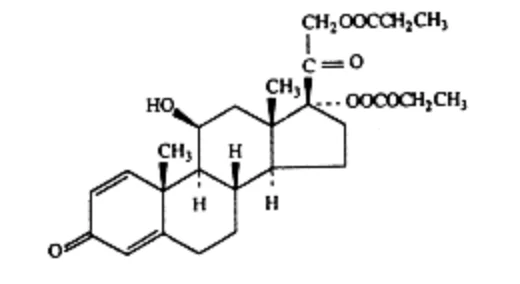
Chemical name: Pregna-1,4-diene-3,20-dione,17[(ethoxy-carbonyl) oxy]-11-hydroxy-21-(1-oxopropoxy)-,(11ß)
Molecular formula and molecular mass: C27H36O8 488.58 g/mol
Structural formula:
Physicochemical properties:
Description: Practically odorless, white to yellowish-white powder
Solubility: Practically insoluble in water, sparingly soluble in toluene, soluble in polyethylene glycol 400 and freely soluble in acetone and ethanol
Melting range: 182-188ºC
14 CLINICAL TRIALS
Ointment
Four multi-centre double blind, randomized trials support the efficacy of DERMATOP OINTMENT in the treatment of corticosteroid-responsive dermatoses (psoriasis and atopic dermatitis).
In a trial involving 165 patients with psoriasis, prednicarbate ointment 0.1% w/w administered twice daily for 21 days was compared to its vehicle. Improvement with prednicarbate was evident at day 7 with significantly lower scores for pruritis, erythema, and total signs. By day 21, there was significantly greater improvement for pruritis, erythema and scaling (p<0.001), thickening (p<0.05) and total sign score (p<0.001) in the prednicarbate group. In a second trial involving 157 patients with psoriasis, prednicarbate ointment administered twice daily for 14 days was compared to triamcinolone acetonide ointment 0.1% w/w. Results of all analyses – improvement in signs and symptom scores, and overall evaluation, demonstrate that prednicarbate ointment is as effective as triamcinolone acetonide ointment in the treatment of psoriasis with 32-34% of patients in the two groups showing a mean improvement in erythema, thickening and scaling.
DERMATOP OINTMENT administered twice daily for 14 days was compared to its vehicle in 140 patients with atopic dermatitis. Improvement scores for all primary efficacy variables (erythema, thickening, pruritis and scaling) were significantly better in the prednicarbate groups by day 7. After 14 days, the percent improvement in the mean signs/symptoms scores was almost twice that of vehicle with twice as many subjects in the prednicarbate group clear of symptoms. In a second trial involving 114 patients, prednicarbate ointment 0.1% w/w administered twice daily for two weeks was compared to triamcinolone acetonide ointment 0.1% w/w. Results of all analyses – improvement in signs/symptoms, overall evaluation, demonstrated that prednicarbate ointment was as effective as triamcinolone ointment in the treatment of atopic dermatitis. Key signs/symptom scores at day 14 showed an improvement of approximately 50% in the two groups.
Cream (adults)
Twice-daily treatment with DERMATOP EMOLLIENT CREAM was compared to hydrocortisone valerate cream 0.2% w/w in 50 patients with psoriasis, during a two-week bilateral paired comparison study. Both treatments produced slight to moderate improvement in the severity of moderate psoriasis, with no significant difference in efficacy between the two products.
An additional two clinical trials compared DERMATOP EMOLLIENT CREAM (n=203) to DERMATOP EMOLLIENT CREAM vehicle (n=191) in patients with psoriasis or atopic dermatitis. Both studies demonstrated statistically significant differences between treatments for all variables at all return visits. After 3 weeks of twice-daily treatment, DERMATOP EMOLLIENT CREAM produced at least moderate improvement in 34% of psoriasis patients, and at least excellent improvement in 72% of patients with atopic dermatitis.
Cream (pediatrics)
Pediatric patients (n=235) aged 2 months to 12 years with atopic dermatitis of at least 20% body surface involvement were randomized to receive treatment with prednicarbate cream 0.1% w/w or hydrocortisone cream 1% w/w twice daily for 21 days. Prednicarbate cream 0.1% w/w was significantly more effective than hydrocortisone cream 1% w/w in these patients. Prednicarbate-treated patients had significantly better improvement of overall disease severity (p<0.001) and had a significantly greater change (decrease) in the mean total body surface affected (p<0.05). Patients who received prednicarbate also demonstrated significantly greater improvement in ratings of the key signs and symptoms of erythema and induration/papulation (p<0.001), as well as ratings for dryness (p<0.05). No significant difference was observed for pruritis or fresh excoriations.
In a second study, 59 pediatric patients with atopic dermatitis involving > 20% body surface area were treated with prednicarbate cream twice daily for 21 consecutive days. Prednicarbate cream showed good to excellent improvement in all treated areas at all return visits and at endpoint. By day 22, total scores for key signs/symptoms (erythema, pruritis, induration/papulation, fresh excoriations) had improved by 85%. None of the 59 patients showed evidence of HPA axis suppression.
A systemic tolerance study using prednicarbate cream in patients from 4 to 143 months (mean age = 5 years), found no effects on HPA axis function when it was used to treat at least 20% of their total body surface for 21 consecutive days.
15 MICROBIOLOGY
No microbiological information is required for this drug product.
16 NON-CLINICAL TOXICOLOGY
General Toxicology
Acute Toxicity
The acute toxicity of prednicarbate was determined orally in immature mouse and rat, subcutaneously in immature rat and topically in white rabbits. The oral LD50’s were 3102 mg/kg (2475-3719) in mouse and greater than 8000 mg /kg in rat. The subcutaneous LD50 was 1366 mg/kg (1101-1695) in the rat. The topical LD50 was greater than 250 mg/kg in the white rabbit. Principal signs of systemic toxicity were considered typical of corticosteroids and included reduced body weight, ruffled hair or loss of hair, squatting, abdominal position, reduced motility and diarrhea. Pathological changes were also typical of a cortisone effect and included, for example, liver cell necrosis and fatty degeneration of the residual parenchyma, atrophy of the spleen, foci of necrotic myocardial fibers, fatty degeneration of epithelia of renal tubules.
Repeated-dose Toxicity
The subacute toxicity of prednicarbate was determined subcutaneously and topically in immature rat, in rabbit and in dog for periods of 20 to 90 days.
Prednicarbate was administered, as suspension, subcutaneously to groups of 15 male and 15 female immature rats at doses of 0 (vehicle and saline), 0.05, 0.2 and 0.8 mg/kg daily for 90 days. Doses of 0.2 and 0.8 mg/kg produced a dose-dependent inhibition in gain of body weight and decreased lymphocytes and increased segmented neutrophils. A dose of 0.8 mg/kg produced slightly increased serum GOT and GPT levels and decreased weight of adrenals. These changes were reversible and considered typical of large doses of corticosteroids.
The main degradation product of prednicarbate (S 80 9402) was given subcutaneously for 2 weeks to rats (0.1, 0.5 and 2.5 mg/kg/day), and to dogs (0.1, 0.32 and 1.0 mg/kg/day). Observations included decreased weight gains, increased urine pH (rats only), and other findings consistent with the known effects of corticosteroids.
Prednicarbate was topically applied to abraded and intact back of 4 groups of 4 male and 4 female white rabbits at doses of 0, 200, 500 and 1000 mg/kg daily for 20 days. Four deaths occurred, unrelated to treatment, and comprised one female control, one male and one female of the 500 mg/kg group and one male of the 1000 mg/kg group. Changes considered typical of a corticosteroid administration were observed and affected the body weight, lymphocytes and leukocytes, transaminases and alkaline phosphatase, absolute and relative weight of liver and adrenals. Microscopic changes observed are representative of a corticosteroid administration and consisted of increased amounts of hepatic glycogen and accelerated thymic involution.
Prednicarbate was given subcutaneously into the nape area to four groups of 4 male and 4 female beagle dogs at doses of 0, 0.1, 0.32 and 1.0 mg/kg daily for 3 months. Ten deaths occurred: one control male at day 45 because of peritonitis secondary to incidental ileus with perforation of jejunum, one female of 0.32 mg/kg group at day 77 due to extensive abscesses in area of injection, and the 4 males and 4 females of 1.0 mg/kg groups, of which one female died at day 18; the others were killed at day 40 because of moribund condition due to bacterial infection secondary to corticosteroid administration. A dose-dependent inhibition of body weight and increased consumption of water was observed. Diarrhea was dose dependent. There was also a dose-dependent degree of lymphopenia and neutrophilia, an effect typical of corticosteroids. Dose-dependent changes ranging from not significant to significantly different were observed for erythrocytes, haemoglobin, haematocrit, anemia and leukocytosis. A dose-dependent change was observed for serum GOT, GPT and alkaline phosphatase levels in 0.32 and 1.0 mg/kg groups. There were microscopic changes consisting of reduced adrenals, enlarged and clay brown discoloration of liver, reduced prostate, and dark brown discoloration of kidneys. Microscopic changes were attributed to the glucocorticoid activity and shown to be largely reversible during recovery period and included adrenals, thymus, lymphoreticular organs, liver and heart, and skeletal musculature and diaphragm at the 0.32 mg/kg dose level.
DERMATOP OINTMENT was topically applied to groups of 15 male and 15 female rats at doses of 0, 0.1, 0.3 and 1.0 mg/kg daily for 6 months. Two deaths, one male of 0.1 mg/kg dose at week 20 because of moribund condition and metastasizing lymphosarcoma and one male of 0.3 mg/kg dose at week 7 due to extensive hepatocellular necrosis. Compound-related changes consisted of increased incidences of alopecia and dermal findings at application sites with microscopic epidermis and dermis changes, and hair follicles and adnexa changes. Dose-related and more pronounced changes in males than females were observed for body weight, haematological parameters, liver enzymes and incidence and degree of urinary protein and of severity of thymic involution of 1.0 mg/kg group which may be a reflection of the overall toxic state of animals of this latest group.
Carcinogenesis
Long-term animal studies have not been performed to evaluate the carcinogenic potential of prednicarbate.
Genotoxicity
Prednicarbate was not mutagenic in the Salmonella reversion test (Ames test) over a wide range of concentrations in the presence and absence of S-9 microsomal fraction. It was not clastogenic in the mouse micronucleus test when mice were administered doses ranging from 1 to 160 mg/kg of the drug.
In the micronucleus test, prednicarbate was given subcutaneously as a suspension to four groups of five male and female mice at single doses of 0, 1.0, 12.5 and 160.0 mg/kg. No increase in occurrence of polychromatic erythrocytes with micronuclei was observed and therefore, the compound was negative for mutagenicity.
In the Ames test, prednicarbate was assessed in five strains of Salmonella typhimurium and one strain of Escherichia coli. Prednicarbate, at concentrations ranging from 4 to 500 mcg/plate, was negative for mutagenic activity.
Prednicarbate was tested for effects on reproduction. In a study of the effect of prednicarbate on fertility, pregnancy and postnatal development in rats, no effect was noted on the fertility or pregnancy of parent animals or postnatal development of the offspring after administration of up to 0.20 mg/kg/day of prednicarbate subcutaneously. A 0.80 mg/kg/day dose produced slight growth retardation of foetuses and placentas.
Prednicarbate has been shown to be teratogenic and embryotoxic in Wistar rats and Himalayan rabbits when administered subcutaneously during gestation at doses of 2.24 mg/kg/day and 0.018 to 0.056 mg/kg/day respectively during organogenesis.
In the rats, slightly retarded foetal development and an incidence of thickened and wavy ribs higher than the spontaneous rate were noted. In rabbits, increased liver weights and a slight increase in the foetal intrauterine death rate were observed. The foetuses that were delivered exhibited reduced placental weight, increased frequency of cleft palate, ossification disorders in the sternum, omphalocele, and anomalous posture of the forelimbs.
In the HGPRT forward mutation assay, the ability of prednicarbate to cause mutations in cultured hamster lung fibroblasts was assessed with and without metabolic activation. Doses ranging from 10 to 75 mcg/mL were not considered mutagenic.
Reproductive and Developmental Toxicology
Reproduction and teratological effects were assessed in three studies in the rat and one study in the rabbit following subcutaneous administration.
The effects on fertility-pregnancy, and post-natal development were determined in four groups of 30 male and 30 female rats receiving as suspension doses of 0, 0.05, 0.2 and 0.8 mg/kg daily. Males of 0.05 and of 0.2 mg/kg groups exhibited transiently a local thinning of coat in the region of the eyes, ears and nape of neck, while they persisted in males and 3 females of the 0.8 mg/kg dose. Males of the 0.8 mg/kg group exhibited piloerection that was compound-related. A dose-dependent body weight reduction was observed in males and females of the 0.2 and 0.8 mg/kg dosage group. The 0.8 mg/kg dose produced slight retardation in growth of foetuses and placentas, reflected by a slight impairment of ossification of foetal skeleton. The dams rearing their offspring exhibited a slight increase in supernumerary implantation sites, a possible indication that some foetuses were consumed by mother at birth.
Toxic effects on embryos of prednicarbate were determined in four groups of 20 pregnant rats receiving, as suspension, doses of 0, 0.56, 2.24 and 9.0 mg/kg body weight daily from gestational day 7 through 16. A second control and 9.0 mg/kg groups were added to the study since especially high dose animals exhibited a reduction in placental weights. Doses of 2.24 mg/kg daily had a slight retardation in weight gain of dams and reduced liver and spleen weights. Foetuses were slightly stunted and frequently exhibited thickened and undulating ribs. Dams of 9.0 mg/kg dose experienced piloerection, moderate reduction of weight gain, reduced liver and spleen weights. Foetuses were moderately stunted which was apparent because of a poor ossification of skeleton. Umbilical hernias and skeletal deformations were also frequently encountered in foetuses. The added groups showed that the retardation of the foetuses and bone deformations were reversible postnatally. The pre and postnatal foetal death rate and the fragmented dorsal vertebral centers exhibited in numerous young were very slightly increased and especially in offspring reared to weaning age.
The effects of prednicarbate on peri and postnatal development were assessed in four groups of 20 pregnant rats receiving as suspension doses of 0, 0.1, 0.5 and 2.5 mg/kg daily from gestational day 17 to day 21 after parturition. Two dams died: one control and one of 0.1 mg/kg dose group unrelated to compound. Dams of 0.5 and 2.5 mg/kg doses exhibited slight to moderate reduction of body weight during lactation period. Dams of the 2.5 mg/kg group had reduced splenic weights. A slight reduction in birth weights was observed in offspring of the 2.5 mg/kg dose.
The effects of prednicarbate on the embryo were determined in four groups of 15 pregnant rabbits receiving as suspension doses of 0, 0.0056, 0.0180, and 0.0560 mg/kg daily from gestational day 7 through 19. One death occurred at 0.0560 mg/kg, unrelated to prednicarbate. Abnormalities were observed in posture of the forelimbs in three foetuses from two litters of 0.0180 mg/kg dose. One of the foetuses was stunted and also exhibited anomalies of head, abdomen and limbs and causal connection with the compound cannot be ruled out. Dams of 0.0560 mg/kg had increased liver weights. A slight increase in intrauterine foetal death rate was observed. Foetuses of the 0.056 mg/kg dose were stunted and exhibited lighter placental weights, frequently cleft palates, impairment of ossification of sternum, umbilical hernias and anomalies in posture of forelimbs. A slight decrease in viability of foetuses was noted.
Special Toxicology
Irritation Studies
DERMATOP OINTMENT and DERMATOP EMOLLIENT CREAM potential for irritation was determined in guinea pig in four studies and in rabbit in five studies following a topical application.
In guinea pig, prednicarbate 0.25% w/w, desoximetasone 0.25% w/w and placebo solution in one study; prednicarbate 0.25% w/w, desoximetasone 0.25% w/w and placebo ointment in another study have been compared following topical application on the flanks. In the two other studies, prednicarbate 0.1% w/w and 0.25% w/w as fatty ointment, and prednicarbate 0.25% w/w as cream were evaluated following topical application on flanks.
The tested sites comprised one half abraded and one-half intact skin of groups of three males and three females per testing formulation. Subsequently, the treated site was occluded. The irritation indexes for prednicarbate 0.25% w/w, desoximetasone 0.25% w/w and placebo solution were 0.04, 0.04 and 0 respectively, and for ointment 0.08, 0.08 and 0.0 respectively;
for prednicarbate 0.1% w/w and 0.25% w/w as fatty ointment these were 0.29 and 0.25 respectively and for prednicarbate 0.25% w/w cream it was 0.0; thus, preparations were found non-irritant.
In rabbit, prednicarbate 0.25% w/w, desoximetasone 0.25% w/w and placebo solution in one study; prednicarbate 0.25% w/w, desoximetasone 0.25% w/w and placebo ointment in another study have been compared following a topical application on the flanks. In two other studies, prednicarbate 0.1% w/w and 0.25% w/w as fatty ointment, and prednicarbate 0.25% w/w as cream were evaluated after application on flanks. The tested site comprised one half abraded and one-half intact skin of groups of three males and three females per testing formulation. Subsequently, the tested site was occluded. The irritation indexes for prednicarbate 0.25% w/w, desoximetasone 0.25% w/w and placebo solution were 0.1 and for the ointment 0.01, 0.2 and 0.2 respectively. For the fatty ointment, indexes for prednicarbate 0.1% w/w and 0.25% w/w were 0.0 and 0.08 respectively, and for the cream base it was 0.29; thus, the compound is non-irritant.
In a rabbit study, a single 100 mg dose of DERMATOP OINTMENT (prednicarbate ointment, 0.1% w/w) was instilled in the right eye while the left served as control and remained untreated. No sign of ocular mucosal irritation was observed after 24-72 hours and the preparation was considered non-irritant in this model.
Primary irritation studies were performed in the rabbit using prednicarbate cream, 0.1% w/w. This was found not to be an eye irritant (0.1 mL/animal) or a dermal irritant (0.5 g/site) on either abraded or intact skin. DERMATOP EMOLLIENT CREAM (commercial formulation) was also tested on rabbit skin and found to have a primary dermal irritation index of 0.0; no irritation was observed on either intact or abraded skin.