


Product Monograph - Bricanyl Turbuhaler
RECENT MAJOR LABEL CHANGES
| 1 INDICATIONS, 1.1 Pediatrics | 06/2021 |
|---|---|
| 1 INDICATIONS, 1.2 Geriatrics | 06/2021 |
| 2 CONTRAINDICATIONS | 06/2021 |
| 7 WARNINGS AND PRECAUTIONS, General | 12/2022 |
| 7 WARNINGS AND PRECAUTIONS, Sensitivity/Resistance | 06/2021 |
TABLE OF CONTENTS
Sections or subsections that are not applicable at the time of authorization are not listed.
RECENT MAJOR LABEL CHANGES ......................................................................................... 2
TABLE OF CONTENTS ............................................................................................................... 2
PART I: HEALTH PROFESSIONAL INFORMATION .................................................................. 4
1 INDICATIONS ................................................................................................................... 4
1.1 Pediatrics ................................................................................................................. 4
1.2 Geriatrics ................................................................................................................. 4
2 CONTRAINDICATIONS ................................................................................................... 4
4 DOSAGE AND ADMINISTRATION .................................................................................. 4
4.1 Dosing Considerations ............................................................................................ 4
4.2 Recommended Dose and Dosage Adjustment ....................................................... 4
4.4 Administration .......................................................................................................... 5
5 OVERDOSAGE ................................................................................................................ 5
6 DOSAGE FORMS, STRENGTHS, COMPOSITION AND PACKAGING ......................... 5
7 WARNINGS AND PRECAUTIONS .................................................................................. 6
7.1 Special Populations ................................................................................................. 8
7.1.1 Pregnant Women ............................................................................................... 8
7.1.2 Breast-feeding ................................................................................................... 8
7.1.3 Pediatrics ........................................................................................................... 8
8 ADVERSE REACTIONS ................................................................................................... 8
8.1 Adverse Reaction Overview .................................................................................... 8
9 DRUG INTERACTIONS .................................................................................................... 9
9.4 Drug-Drug Interactions ............................................................................................ 9
10 CLINICAL PHARMACOLOGY ......................................................................................... 9
10.1 Mechanism of Action ......................................................................................... 9
10.2 Pharmacodynamics ........................................................................................... 9
10.3 Pharmacokinetics ............................................................................................ 11
11 STORAGE, STABILITY AND DISPOSAL ...................................................................... 12
12 SPECIAL HANDLING INSTRUCTIONS ......................................................................... 12
PART II: SCIENTIFIC INFORMATION ....................................................................................... 13
13 PHARMACEUTICAL INFORMATION ............................................................................ 13
14 CLINICAL TRIALS ......................................................................................................... 13
14.1 Clinical Trial by Indication ................................................................................ 13
15 MICROBIOLOGY ............................................................................................................ 13
16 NON-CLINICAL TOXICOLOGY ..................................................................................... 13
PATIENT MEDICATION INFORMATION .................................................................................. 16
PART I: HEALTH PROFESSIONAL INFORMATION
1 INDICATIONS
BRICANYL TURBUHALER (terbutaline sulfate) is indicated as a bronchodilator for the symptomatic relief of bronchial asthma and for relief of reversible bronchospasm which may occur in association with bronchitis and emphysema.
1.1 Pediatrics
Pediatrics (≥6 years of age): Based on the data submitted and reviewed by Health Canada, the safety and efficacy of BRICANYL TURBUHALER in pediatric patients has been established. Therefore, Health Canada has authorized an indication for pediatric use. BRICANYL TURBUHALER is not recommended for children under the age of 6.
1.2 Geriatrics
BRICANYL TURBUHALER should be administered with caution to elderly patients (see Cardiovascular).
2 CONTRAINDICATIONS
BRICANYL TURBUHALER (terbutaline sulfate) is contraindicated:
- in patients who are hypersensitive to terbutaline, or lactose (which may contain milk protein residue), or sympathomimetic amines;
- like other sympathomimetic amines, in patients who are known to have tachyarrhythmias;
- as a tocolytic in patients at risk of premature labour or threatened abortion.
4 DOSAGE AND ADMINISTRATION
4.1 Dosing Considerations
Dosage should be individualized, and patient response should be monitored by the prescribing physician on an ongoing basis.
4.2 Recommended Dose and Dosage Adjustment
Adults and Children ≥ 6 Years
The generally recommended dose of BRICANYL TURBUHALER (terbutaline sulfate) is one inhalation (0.5 mg) taken as required. This will usually be adequate to relieve bronchospasm in the majority of patients, however, if required, a second dose may be taken, preferably after waiting five minutes for the effect of the first dose to be obtained. If a more severe attack has not been relieved by the second administration, higher doses may be required. In these cases, patients should immediately consult their healthcare professional or the nearest hospital.
More than six doses (six inhalations of BRICANYL TURBUHALER) should not be necessary in any 24 hour period.
If a previously effective dosage regimen fails to provide the usual relief, or the effects of a dose last for less than three hours, medical advice should be sought immediately; this is a sign of worsening of the underlying condition and warrants a reassessment of therapy.
Treatment with β2-agonists in bronchial asthma should be on demand, e.g., symptoms oriented. Patients must not use them on a daily basis for control of bronchospasm without using other concomitant anti-inflammatory medication(s) according to the present practice for asthma treatment to control airway inflammation.
The daily dose of BRICANYL TURBUHALER should not be increased without adequate reassessment of the therapy plan.
As with other β2-agonists, increasing use of BRICANYL TURBUHALER in bronchial asthma is a sign of poor asthma control and indicates that the treatment plan should be revised.
4.4 Administration
When prescribing BRICANYL TURBUHALER to children, it is necessary to ascertain that they can follow the instructions for use. BRICANYL TURBUHALER is not recommended for use in children below the age of 6 years.
The medication from BRICANYL TURBUHALER is delivered to the lungs as the patient inhales and, therefore, it is important to instruct the patient to breathe in forcefully and deeply through the mouthpiece. The patient may not taste or feel any medication when using BRICANYL TURBUHALER due to the small amount of drug dispensed.
5 OVERDOSAGE
The symptoms of overdosage are similar to those described under 8 ADVERSE REACTIONS, and are attributable to excessive β-adrenergic stimulation. To antagonize the effect of excessive stimulation, the judicious use of a β-adrenergic blocking agent such as propranolol may be considered, bearing in mind the danger of inducing an asthmatic attack.
There is a potential for progressive accumulation of dry powder in the mouthpiece of BRICANYL TURBUHALER (terbutaline sulfate) that could be released if dropped (e.g., from a table) towards the end of inhaler life. To minimize unnecessary systemic exposure to terbutaline, the patients should be advised to, when possible, rinse their mouth after each use (see General).
| For management of a suspected drug overdose, contact your regional poison control centre. |
|---|
6 DOSAGE FORMS, STRENGTHS, COMPOSITION AND PACKAGING
Table 1 – Dosage Forms, Strengths and Composition
BRICANYL TURBUHALER (terbutaline sulfate) is a multidose, inspiratory flow driven metered
| Route of Administration | Dosage Form / Strength/Composition | Non-medicinal Ingredients |
| Oral Inhalation | Dry powder 0.5 mg terbutaline sulfate per dose | Lactose monohydrate |
dose dry powder inhaler which is supplied in one strength: 0.5 mg/dose. This corresponds to a delivered dose (the dose leaving the mouthpiece) of 0.4 mg terbutaline sulfate. Each inhaler contains 120 doses. The inhaler is made of plastic parts.
BRICANYL TURBUHALER also contains lactose monohydrate (which may contain milk protein residue). Each delivered dose contains approximately 0.4 mg of lactose monohydrate. This amount does not normally cause problems in lactose-intolerant people.
7 WARNINGS AND PRECAUTIONS
General
Like other β2-agonist inhalers, BRICANYL TURBUHALER (terbutaline sulfate) should not be used on a regular daily basis without appropriate concomitant anti-inflammatory therapy (see 4 DOSAGE AND ADMINISTRATION).
To ensure optimal delivery of BRICANYL TURBUHALER (terbutaline sulfate) to the bronchial tree, the patient should be properly instructed in the use of TURBUHALER.
With each inhalation a fraction of the delivered dose will be deposited in the oral cavity. To minimize unnecessary systemic exposure to terbutaline, the patients should be advised to, when possible, rinse their mouth after each use (see 5 OVERDOSAGE).
Excessive Use
Irrespective of asthma severity, having uncontrolled asthma is an important risk factor for exacerbations. Prescription of three or more short acting beta-agonist (SABA) inhalers in a year is associated with an increased risk of severe exacerbations and mortality. The risk increases with the number of inhalers prescribed.
In mild asthma patients, there is an increased risk of severe exacerbations associated with over-reliance on SABA monotherapy.
Patients who are prescribed maintenance anti-inflammatory therapy should be advised to continue taking their anti-inflammatory medication even when symptoms decrease and they do not require BRICANYL TURBUHALER.
Cardiovascular
BRICANYL TURBUHALER should be used with caution in patients with hypertension. As with other sympathomimetic bronchodilator agents, BRICANYL TURBUHALER should be administered cautiously to cardiac patients, especially those with associated arrhythmias, and coronary insufficiency, to elderly or to patients who are unusually responsive to sympathomimetic amines.
In patients requiring concomitant treatment with BRICANYL TURBUHALER and a beta-blocker, it is recommended that a beta-blocker (e.g., metoprolol) with less predominant β2-blocking effects be considered (see Monitoring and Laboratory Tests).
Beta-receptor blocking agents (including eye-drops), especially those which are non-cardioselective, may partially or totally inhibit the effect of beta-receptor stimulants. Severe resistant bronchospasm may be produced with the use of beta-blockers in asthmatic patients.
In patients in whom the administration of BRICANYL TURBUHALER induces cardiac irregularities, the administration of the drug should be stopped. If a reduced response to BRICANYL TURBUHALER becomes apparent, the patient should seek medical advice.
Endocrine and Metabolism
BRICANYL TURBUHALER should be used with caution in patients with diabetes and hyperthyroidism. Due to the hyperglycemic effects of β2-agonists, additional blood glucose controls are recommended initially in diabetic patients.
Potentially serious hypokalemia may result from β2-agonist therapy, mainly from parenteral or nebulized administration. Particular caution is advised in acute severe asthma as this may be potentiated by hypoxia and concomitant treatment with xanthine derivatives, steroids and diuretics; it is recommended that serum potassium levels be monitored in such situations.
Monitoring and Laboratory Tests
If concomitant treatment with a beta-blocker is necessary, patients should be monitored carefully for possible deterioration in pulmonary function and the need to adjust the dosage of either drug (see 9.4 Drug-Drug Interactions).
Monitoring Control of Asthma
If therapy does not produce a significant improvement or if the patient's condition gets worse, medical advice must be sought in order to determine a new plan of treatment.
In the case of acute or rapidly worsening dyspnea, a healthcare professional should be consulted immediately.
Increasing use of β2-agonists to control symptoms of bronchial obstruction, especially administration on a regular basis or in high amounts, indicates deterioration of asthma control. Under these conditions, the patient's therapy plan has to be revised. It is inadequate simply to increase the use of bronchodilators under these circumstances, in particular over extended periods of time (see 4 DOSAGE AND ADMINISTRATION). The revised treatment regimen should include concomitant use of anti-inflammatory drugs.
Neurologic
BRICANYL TURBUHALER should be used with caution in patients with a history of seizures.
Respiratory
Occasionally, patients have been reported to have developed severe paradoxical bronchospasm with repeated use of sympathomimetic inhalant preparations. In such instances, the preparation should be discontinued immediately and alternate therapy instituted. Fatalities, the exact causes of which are unknown, have been reported following excessive use of inhaled preparations containing sympathomimetic amines. Cardiac arrest was noted in several instances.
Sensitivity/Resistance
Immediate hypersensitivity reactions and exacerbation of bronchospasm have been reported after terbutaline administration.
BRICANYL TURBUHALER inhalation powder contains lactose. The excipient lactose may contain small amounts of milk protein residues. In patients with hypersensitivity to milk protein, these small amounts may cause allergic reactions. The amount of lactose in BRICANYL
TURBUHALER does not normally cause problems in lactose intolerant people (see 2 CONTRAINDICATIONS).
7.1 Special Populations
7.1.1 Pregnant Women
The safe use of BRICANYL TURBUHALER has not been established in human pregnancy. The use of this drug in pregnancy, lactation, or women of child-bearing potential requires that the expected therapeutic benefit of the drug be weighed against its possible hazards to the mother or child. Animal reproductive studies have shown no adverse effects on fetal development.
Transient hypoglycemia has been reported in newborn pre-term infants after maternal β2-agonist treatment.
Systemic β2-agonists should be used with caution before childbirth in view of their inhibiting effect on uterine contractions.
7.1.2 Breast-feeding
Terbutaline is excreted in breast milk. Caution should be exercised when BRICANYL TURBUHALER is administered to nursing women.
7.1.3 Pediatrics
BRICANYL TURBUHALER is not presently recommended for children below 6 years of age due to limited clinical data in this pediatric group.
8 ADVERSE REACTIONS
8.1 Adverse Reaction Overview
When treatment with BRICANYL TURBUHALER (terbutaline sulfate) is started, the following adverse reactions can be classified as frequent (i.e., > 1/100): tremor, palpitations, restlessness, headache, muscle cramps, nervousness. Other reported reactions include increased heart rate, tachycardia, ectopic beats, myocardial ischemia, drowsiness, nausea, vomiting, sweating and dizziness. As for all β2-agonists, cardiac arrhythmias, e.g., atrial fibrillation, supraventricular tachycardia and extrasystoles have been rarely reported.
These adverse reactions are all characteristic of sympathomimetic amines and initial dose titrations will often reduce these reactions. With the possible exception of muscle cramps, all have been spontaneously reversible within the first two weeks of treatment. Urticaria and exanthema may also occur.
Sleep disturbances and behavioural disturbances, such as agitation, hyperactivity and restlessness, have been observed. As with other inhalation therapy, the potential for paradoxical bronchospasm should be kept in mind with BRICANYL TURBUHALER. If it occurs, the preparation should be discontinued immediately and alternative therapy instituted. Potentially serious hypokalemia may result from β2-agonist therapy.
9 DRUG INTERACTIONS
9.4 Drug-Drug Interactions
Sympathomimetic Bronchodilators and Epinephrine
The concomitant use of BRICANYL TURBUHALER with other sympathomimetic bronchodilators or epinephrine is not generally recommended since their combined effect on the cardiovascular system may be deleterious to the patient. If additional adrenergic drugs are to be administered by any route to the patient using BRICANYL TURBUHALER, the adrenergic drugs must be used with caution. Such concomitant use, however, should be individualized and not given on a routine basis. If regular co-administration is required, alternative therapy should be considered.
MAO Inhibitors and Tricyclic Antidepressants
BRICANYL TURBUHALER should be administered with caution in patients being treated with monoamine oxidase (MAO) inhibitors or tricyclic antidepressants, since the action of BRICANYL TURBUHALER on the vascular system may be potentiated.
Beta-Adrenergic Receptor Blockers
Beta-adrenergic receptor blocking agents not only block the pulmonary effect of terbutaline but may produce severe asthmatic attacks in asthmatic patients. Therefore, patients requiring treatment for both bronchospastic disease and hypertension should be treated with medication other than beta-adrenergic blocking agents for their hypertension.
Halogenated anesthetics
Halothane anesthesia should be avoided during β2-agonists treatment, since it increases the risk of cardiac arrhythmias. Other halogenated anesthetics should be used cautiously together with β2-agonists.
Potassium depleting agents and hypokalemia
Owing to the hypokalemic effect of beta-agonists, concurrent administration with BRICANYL TURBUHALER of serum potassium depleting agents known to exacerbate the risk of hypokalemia, such as diuretics, methyl xanthines and corticosteroids, should be administered cautiously after careful evaluation of the benefits and risks with special regard to the increased risk of cardiac arrhythmias arising as a result of hypokalemia. Hypokalemia also predisposes to digoxin toxicity.
10 CLINICAL PHARMACOLOGY
10.1 Mechanism of Action
BRICANYL TURBUHALER (terbutaline sulfate) produces bronchodilation by stimulation of the β2-adrenergic receptors in bronchial smooth muscle, thereby causing relaxation of muscle fibers. This action is manifested by an increase in pulmonary function as demonstrated by Forced Expiratory Volume in 1 second (FEV1) measurements. BRICANYL TURBUHALER also produces a decrease in airway and pulmonary resistance.
10.2 Pharmacodynamics
Following inhalation of BRICANYL TURBUHALER, a significant improvement in pulmonary function measurements is well established after 5 minutes.
The maximal response is usually attained between 15 and 60 minutes following administration. Significant bronchodilator activity has been observed to persist for 4 to 7 hours.
Animal Pharmacodynamics
Terbutaline sulfate has been shown by pharmacological studies in animals to exert a preferential effect on β2-adrenergic receptors, such as those located in bronchial smooth muscle.
Bronchodilator Effect
In Vitro Studies
The bronchospasmolytic effect of terbutaline sulfate, L-epinephrine, orciprenaline and isoproterenol has been studied on spirally cut trachea from guinea pig and rabbit, and on cat bronchi. All four compounds relaxed pilocarpine induced contraction. The order of potency (by weight) was as follows: isoproterenol, L-epinephrine, terbutaline sulfate (DL form), orciprenaline.
Terbutaline sulfate was added to organ baths containing spirally cut guinea pig trachea and right auricle. Epinephrine was studied as a reference drug. At low concentration rates, terbutaline sulfate produced a relaxation of the trachea without increasing the force of auricular contraction while epinephrine produced a similar degree of tracheal relaxation but also increased auricular contraction force. At higher concentrations, terbutaline sulfate also stimulated auricular contraction force.
In Vivo Studies
The bronchospasmolytic effect of terbutaline sulfate, orciprenaline and isoproterenol was studied in anesthetized guinea pigs, cats and dogs. It was found that the bronchospasm induced by histamine or acetylcholine could be prevented by appropriate intravenous doses of these agents. The order of potency was as in the in vitro studies described above.
Terbutaline sulfate, orciprenaline and isoproterenol administered orally or intraperitoneally to unanesthetized guinea pigs protected the animals against histamine induced bronchoconstriction. As determined graphically, the intraperitoneal doses protecting 50% of the animals were in the following order of potency: Isoproterenol (0.065 mg/kg), terbutaline sulfate (0.15 mg/kg), orciprenaline (0.60 mg/kg). The ED50 following oral administration of each drug showed the following order of potency: terbutaline sulfate (0.4 mg/kg), orciprenaline (1.2 mg/kg), isoproterenol (1.4 mg/kg).
Circulatory Effect
In Vitro Studies
Isolated heart muscle from guinea pigs and rabbits was used to compare the direct effect of terbutaline sulfate, isoproterenol, epinephrine and orciprenaline. The four substances produced increases in both contractile force and heart rate. Relative to the effect of epinephrine, the potencies of the different compounds with respect to the production of 20% inotropic and chronotropic increases were as follows: isoproterenol (15.3 - 42.0), epinephrine (1.0), orciprenaline (0.05 - 0.33), terbutaline sulfate (0.005 - 0.05).
Similar results were obtained using left auricle and papillary muscle preparations from the cat.
In Vivo Studies
In the anesthetized cat, terbutaline sulfate decreased mean arterial pressure, increased pulse pressure and increased heart rate. Decreases in mean arterial pressure were noted at intravenous doses greater than 0.07 µg/kg. Following intravenous isoproterenol administration, increased heart rate and decreased arterial blood pressure were seen at 0.008 µg/kg, which was the lowest dose studied.
In the anesthetized dog, increased heart rate and decreased mean arterial blood pressure were seen at doses of 0.005 μg/kg of isoproterenol, 0.5 μg/kg of orciprenaline and 1.0 μg/kg of terbutaline sulfate.
Other Pharmacological Activities
Terbutaline sulfate was shown to have an inhibiting effect on spontaneous contractions of the rabbit duodenum. In cats, terbutaline sulfate has been shown in vitro and in vivo to have a relaxing effect on the sphincter of Oddi. Terbutaline sulfate has demonstrated a relaxing effect on rabbit urinary bladder and rat uterine muscle.
10.3 Pharmacokinetics
Table 2 - Summary of BRICANYL TURBUHALER Pharmacokinetic Parameters in Healthy Volunteers
| Cmax | Tmax | t½ | AUC | |
| Single 1.5 mg dose1 | 12 nmol/L | 1.3 hours | 12 hours | 89 nmol*h/L |
1 3 inhalations of 0.5 mg
Absorption, Distribution, Metabolism and Elimination
The absolute pulmonary bioavailability is about 16% of the delivered dose at a normal inhalation flow rate.
Terbutaline is mainly metabolised by conjugation with sulphuric acid and excreted as the sulphate conjugate. No active metabolites are formed.
Following oral administration of tritiated drug to man, plasma radioactivity peaked at 60 - 90 minutes, and declined with a half-life of 4 - 6 hours. Approximately 24% of the dose was absorbed, as indicated by recovery of radioactivity in urine; 5 - 6% of the dose was excreted in urine as unchanged drug and the remainder was identified as a sulfate conjugate.
Fecal radioactivity accounted for 35 - 56% of the original dose and was identified as unchanged drug.
The disposition of tritiated terbutaline sulfate following inhalation has been studied in man. Serum concentrations of total radioactivity were low. Peak concentrations were seen 3 - 6 hours following administration. Between 2 - 37% of the delivered drug was recovered in feces and 3 - 35% in urine. As with other routes of administration, inhaled drug was shown to be biotransformed by conjugation.
Following intravenous administration to man, 78 - 85% of the administered radioactivity was excreted in urine; 52 - 60% of the dose was excreted as unchanged drug, and 4 - 19% as sulfate conjugate. Less than 3% of the administered dose appeared in feces. Biliary excretion following intravenous dosing has been studied in two subjects with biliary drainage; less than 1% of the administered dose was excreted by this route.
Following subcutaneous administration to man, plasma levels plateaued from 10 - 40 minutes after dosing. Ultimately, 92 - 95% of the administered dose was recovered in the urine; approximately 60% of the administered radioactivity was excreted as unchanged drug. Less than 3% of the dose was excreted in feces.
In vitro experiments indicated that terbutaline sulfate is not metabolized by rat and human liver O-methyltransferases and monoamine oxidases, nor did it inhibit these enzymes significantly.
Plasma-binding of terbutaline sulfate has been studied in vitro using plasma prepared from human citrated blood. In the concentration range of 0.7 - 64.5 ng/mL, 25% of the drug was bound to plasma protein.
11 STORAGE, STABILITY AND DISPOSAL
BRICANYL TURBUHALER should be stored with the cover tightened, at room temperature (15 - 30°C). BRICANYL TURBUHALER is sensitive to moisture.
BRICANYL TURBUHALER cannot be re-filled and should be discarded when empty.
12 SPECIAL HANDLING INSTRUCTIONS
No special instructions for handling are required.
PART II: SCIENTIFIC INFORMATION
13 PHARMACEUTICAL INFORMATION
Drug Substance
Proper name: terbutaline sulfate
Chemical name: 1-(3,5-Dihydroxyphenyl)-2-t-butylaminoethanol sulfate
Molecular formula and molecular mass: (C12H19NO3)2.H2SO4; 548.6
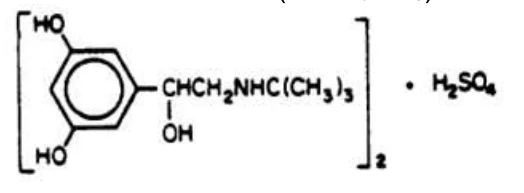
Structural formula:
Physicochemical properties: terbutaline sulfate is water soluble
Product Characteristics: white to off-white crystalline powder
14 CLINICAL TRIALS
14.1 Clinical Trial by Indication
The clinical trial data on which the indication(s) was originally authorized is not available.
15 MICROBIOLOGY
No microbiological information is required for this drug product.
16 NON-CLINICAL TOXICOLOGY
General Toxicology
Acute Toxicity: Acute toxicity studies with orally and parenterally administered terbutaline sulfate are summarized below.
Table 3
| Species | Route | LD50 mg/kg |
| Mouse | i.v. i.p. s.c. oral | ~56 263 295 3,000 |
| Rat | i.v. i.p. s.c. oral | ~74 316 800 ~1,800 |
| Rabbit | i.v. s.c. oral | ~65 ~1,600 ~9,000 |
| Dog | i.v. s.c. oral | > 125 ~300 ~1,000 - 2,000 |
Similar studies were performed on monkeys exposed in head chambers to an estimated dose of 80.5 mg/kg over 2 hours. Exudate around the mouth, and circumorbital erythema, were seen. Slight bradycardia was observed. Animals recovered and behaved normally during the post-exposure period. At autopsy, marked pulmonary congestion and edema were seen in half of the animals.
In animals, theophylline, chlorpromazine, meprobamate, chlorodiazepoxide, imipramine and phenylbutazone, in doses corresponding to twice the maximal clinical dose, did not influence the toxicity of terbutaline sulfate. Nialamide, however, caused a slight increase in the toxicity. Pre-treatment of animals with a dose corresponding to one third of the LD50 of the above drugs increased the toxicity of terbutaline sulfate. This increase was slight with all drugs except for nialamide, which at this high dose level strongly increased the toxicity.
Subacute and Chronic Toxicology: The effect of repeated daily administration of terbutaline sulfate, subcutaneously and orally, has been studied in rats and dogs. Other sympathomimetic amines were included as reference compounds in most studies.
Clinical manifestations of toxicity included hyperemia of mucous membrane and skin, vomiting after initial dosing, and abnormal quietness or irritability. Dose-related increased heart rate was seen in both species. Decreased blood glucose concentrations were observed in an 18 month rat study.
Myocardial changes, such as focal necrosis or fibrosis or chronic focal myocarditis, were the most significant pathological findings related to treatment and were also seen with each of four other sympathomimetic amines studied as reference compounds. These findings, in relation to terbutaline sulfate, are summarized in Table 4 which shows the dose levels studied for each species and route of administration. Those levels at which myocardial lesions were seen are underlined.
Table 4
| Species | Route | Duration | Dose Levels (mg/kg/day) |
| Dog | subcutaneous | 2 weeks 4 weeks | 0.0, 0.025, 0.5, 5.0 0.0, 0.005, 0.01, 0.025, 0.1 |
| oral | 1 month 3 months 6 months 12 months | 0.025, 0.25, 4.0, 20.0 0.0, 0.2, 1.0, 10.0 0.0, 0.3, 2.0, 10.0-20.0 0.0, 0.3, 2.0, 10.0-20.0 | |
| Rat | subcutaneous | 3 days 1 month | 0.0, 0.025, 0.1, 0.5, 1.0, 10.0, 50.0 0.0, 0.1, 1.0, 5.0, 25.0-50.0 |
| oral | 1 month 3 months 18 months | 0.0, 10.0, 100.0, 500.0 0.0, 0.2, 2.0, 50.0 0.0, 2.0, 20.0, 200.0 |
In the dog, myocardial lesions were observed after the intratracheal administration of 0.7 mg/kg/day for two days. Morphologically similar toxicity was seen with reference bronchodilating compounds. In a 4 week rat study, myocardial lesions were seen in 4 of 10 animals exposed for 90 min/day to an aerosol cloud containing 4 - 6 mg/L. These lesions were considered similar to the findings in rats and dogs treated with orally or subcutaneously administered drug.
Three-month studies, in which rats and monkeys were exposed to terbutaline sulfate under circumstances calculated to provide inhaled doses of up to 25 and 27.3 mg/kg/day, respectively, failed to reveal drug-related pathology of the myocardium or other tissues.
Carcinogenicity
Carcinogenicity studies were conducted in mice and rats. Terbutaline sulfate was given orally at dose levels from 2 - 200 mg/kg/day for 18 months. Results obtained did not suggest carcinogenicity since the number of tumors in control and treated animals were statistically comparable.
Genotoxicity
Studies of terbutaline sulfate have not been conducted to determine mutagenic potential.
Reproductive and Developmental Toxicology
Reproduction and Teratology studies have been performed in mice, rats and rabbits. None of these studies revealed any adverse effects on the reproductive performance, or development of fetus, attributable to terbutaline sulfate.