


Product Monograph - Onbrez Breezhaler
RECENT MAJOR LABEL CHANGES
N/A
TABLE OF CONTENTS
Sections or subsections that are not applicable at the time of authorization are not listed.
PART I: HEALTH PROFESSIONAL INFORMATION ................................................................. 4
1 INDICATIONS ................................................................................................................. 4
1.1 Pediatrics ............................................................................................................... 4
2 CONTRAINDICATIONS .................................................................................................. 4
3 SERIOUS WARNINGS AND PRECAUTIONS BOX ........................................................ 5
4 DOSAGE AND ADMINISTRATION................................................................................. 5
4.1 Dosing Considerations ........................................................................................... 5
4.2 Recommended Dose and Dosage Adjustment ....................................................... 5
4.3 Administration ........................................................................................................ 5
4.5 Missed Dose .......................................................................................................... 5
5 OVERDOSAGE ............................................................................................................... 5
6 DOSAGE FORMS, STRENGTHS, COMPOSITION AND PACKAGING ......................... 6
7 WARNINGS AND PRECAUTIONS ................................................................................. 6
7.1 Special Populations ............................................................................................... 9
7.1.1 Pregnant Women ...............................................................................................9
7.1.2 Breast-feeding ....................................................................................................9
7.1.3 Pediatrics ...........................................................................................................9
7.1.4 Geriatrics ............................................................................................................9
8 ADVERSE REACTIONS ............................................................................................... 10
8.1 Adverse Reaction Overview ................................................................................. 10
8.2 Clinical Trial Adverse Reactions........................................................................... 10
8.3 Less Common Clinical Trial Adverse Reactions ................................................... 11
8.6 Post-Market Adverse Reactions ........................................................................... 11
9 DRUG INTERACTIONS ................................................................................................ 12
9.2 Overview .............................................................................................................. 12
9.3 Drug-Drug Interactions ............................................ Error! Bookmark not defined.
10 ACTION AND CLINICAL PHARMACOLOGY ............................................................... 14
10.1 Mechanism of Action ........................................................................................ 14
10.2 Pharmacodynamics .......................................................................................... 14
10.3 Pharmacokinetics ............................................................................................. 16
11 STORAGE, STABILITY AND DISPOSAL ..................................................................... 17
12 SPECIAL HANDLING INSTRUCTIONS ........................................................................ 18
PART II: SCIENTIFIC INFORMATION ..................................................................................... 19
13 PHARMACEUTICAL INFORMATION ........................................................................... 19
14 CLINICAL TRIALS ........................................................................................................ 20
14.1 Trial Design and Study Demographics ............................................................. 20
14.2 Study Results ................................................................................................... 20
16 NON-CLINICAL TOXICOLOGY .................................................................................... 22
PATIENT MEDICATION INFORMATION ................................................................................. 28
PART I: HEALTH PROFESSIONAL INFORMATION
1 INDICATIONS
ONBREZ® BREEZHALER® (indacaterol maleate) is a long-acting beta2-agonist (LABA) indicated for long-term, once-daily, maintenance bronchodilator treatment of airflow obstruction in patients with chronic obstructive pulmonary disease (COPD), including chronic bronchitis and emphysema.
- ONBREZ BREEZHALER is not indicated for the relief of acute deterioration of COPD.
- ONBREZ BREEZHALER is not indicated for asthma use. The safety and effectiveness of ONBREZ BREEZHALER in asthma have not been established.
No dosage adjustment is required for geriatric patients, patients with mild and moderate hepatic impairment, or renally impaired patients. No data are available for subjects with severe hepatic impairment (see ACTION AND CLINICAL PHARMACOLOGY for details).
1.1 Pediatrics
Pediatrics (less than 18 years of age): ONBREZ BREEZHALER should not be used in patients under 18 years of age.
2 CONTRAINDICATIONS
ONBREZ BREEZHALER is contraindicated in patients who are hypersensitive to this drug or to any ingredient in the formulation, including any non-medicinal ingredient, or component of the container. For a complete listing, see Dosage Forms, Strengths, Composition and Packaging.
All LABA are contraindicated in patients with asthma without use of a long-term asthma control medication (see WARNINGS AND PRECAUTIONS). ONBREZ BREEZHALER is not indicated for the treatment of asthma.
3 SERIOUS WARNINGS AND PRECAUTIONS BOX
4 DOSAGE AND ADMINISTRATION
4.1 Dosing Considerations
No dosage adjustment is required for geriatric patients, patients with mild and moderate hepatic impairment, or renally impaired patients. No data is available for subjects with severe hepatic impairment (see ACTION AND CLINICAL PHARMACOLOGY).
ONBREZ BREEZHALER should not be used in patients under 18 years of age.
4.2 Recommended Dose and Dosage Adjustment
The recommended dosage of ONBREZ BREEZHALER is the once-daily inhalation of the contents of one 75 mcg capsule using the BREEZHALER inhaler.
4.3 Administration
ONBREZ BREEZHALER should be administered around the same time everyday by the oral inhalation route. ONBREZ BREEZHALER should always be administered with the ONBREZ BREEZHALER inhalation device.
ONBREZ BREEZHALER capsules must not be swallowed. ONBREZ BREEZHALER capsules must always be stored in the blister, and only removed IMMEDIATELY BEFORE USE.
4.5 Missed Dose
Patients should be advised that if they forget to take a dose, they should take one as soon as they remember. ONBREZ BREEZHALER should not be used more than one time every 24 hours.
5 OVERDOSAGE
In COPD patients single doses of 40 times the 75 mcg dose were associated with a moderate
Serious Warnings and Precautions
WARNING: ASTHMA RELATED DEATH
Long-acting beta2-adrenergic agonists (LABA) increase the risk of asthma-related death. Data from a large placebo controlled US study that compared the safety of another LABA (salmeterol) or placebo added to patients’ usual asthma therapy showed an increase in asthma-related deaths in patients receiving salmeterol. This finding with salmeterol is considered a class effect of LABA, including indacaterol maleate, the active ingredient of ONBREZ BREEZHALER.
ONBREZ BREEZHALER is only indicated for COPD. The safety and efficacy of ONBREZ BREEZHALER in patients with asthma have not been established. ONBREZ BREEZHALER is not indicated for the treatment of asthma.
increase in pulse rate, systolic blood pressure and QTc interval.
An overdose of indacaterol is likely to lead to exaggerated effects typical of beta2-adrenergic stimulants i.e., angina, hypertension or hypotension, tachycardia, with rates up to 200 bpm, tremor, palpitations, nervousness, headache, nausea, dry mouth, vomiting, drowsiness, muscle cramps, ventricular arrhythmias, metabolic acidosis, fatigue, malaise, insomnia, hypokalaemia and hyperglycaemia. As with all inhaled sympathomimetic medications, cardiac arrest and even death may be associated with an overdose of ONBREZ BREEZHALER.
Supportive and symptomatic treatment is indicated. In serious cases, patients should be hospitalised. There is insufficient evidence to determine if dialysis is beneficial for overdosage of ONBREZ BREEZHALER. Cardiac monitoring is recommended in cases of overdosage. Use of cardioselective beta-blockers may be considered, but only under the supervision of a physician and with extreme caution since the use of beta-adrenergic blockers may provoke bronchospasm.
| For management of a suspected drug overdose, contact your regional poison control centre. |
6 DOSAGE FORMS, STRENGTHS, COMPOSITION AND PACKAGING
Table 1 – Dosage Forms, Strengths, Composition and Packaging.
ONBREZ BREEZHALER hard gelatin capsules for inhalation 75 mcg.
75 mcg ONBREZ BREEZHALER contains: aluminum blister-packaged 75 mcg indacaterol natural transparent uncolored capsule with black product code “IDL 75” printed above a bar on one side of the capsule and the symbol  printed on the other side, and one ONBREZ BREEZHALER inhalation device. Unit Dose (blister pack), Box of 10 or 30 (strips of 10).
Each capsule contains 97 mcg indacaterol maleate equivalent to 75 mcg indacaterol and lactose monohydrate.
7 WARNINGS AND PRECAUTIONS
Please see the Serious Warnings and Precautions Box at the beginning of Part I: Health Professional Information.
General
ONBREZ BREEZHALER is only indicated for COPD. ONBREZ BREEZHALER should not be used in asthma due to the absence of long-term safety and efficacy data in asthma with ONBREZ BREEZHALER.
It has been shown that long-acting beta2-adrenergic agonists may increase the risk of asthma-related death. Data from a 28-week, large placebo-controlled US study comparing the safety of
| Route of Administration | Dosage Form / Strength/Composition | Non-medicinal Ingredients |
| Inhalation | 75 mcg indacaterol per capsule | Gelatin (capsule shell) and lactose monohydrate |
a twice-daily long-acting beta2-adrenergic agonist (salmeterol) with placebo, each added to usual asthma therapy, showed an increase in asthma-related deaths in patients receiving salmeterol (13 out of 13,176 in patients treated with salmeterol vs. 3 out of 13,179 in patients treated with placebo; RR 4.37, 95% CI 1.25, 15.34). The increased risk of asthma related death may represent a class effect of the long-acting beta2-adrenergic agonists, including ONBREZ BREEZHALER. No study adequate to determine whether the rate of asthma-related death is increased in patients treated with ONBREZ BREEZHALER has been conducted.
Serious asthma-related events, including death, were reported in clinical studies with ONBREZ BREEZHALER. The sizes of these studies were not adequate to precisely quantify the differences in serious asthma exacerbation rates between treatment groups.
Data are not available to determine whether the rate of death in patients with COPD is increased by long-acting beta2-adrenergic agonists.
ONBREZ BREEZHALER is not indicated for the initial treatment of acute episodes of bronchospasm, i.e., as a rescue therapy. ONBREZ BREEZHALER has not been studied in the relief of acute symptoms and extra doses should not be used for that purpose. Acute symptoms should be treated with an inhaled short-acting beta2-agonist. ONBREZ BREEZHALER should not be initiated in patients with acutely deteriorating COPD, which may be a life-threatening condition. The use of ONBREZ BREEZHALER in this setting is inappropriate.
When prescribing ONBREZ BREEZHALER, the healthcare professional should also provide the patient with an inhaled, short-acting bronchodilator for treatment of COPD symptoms that occur acutely, despite regular once-daily use of ONBREZ BREEZHALER.
When beginning treatment with ONBREZ BREEZHALER, patients who have been taking inhaled, short-acting bronchodilators on a regular basis (e.g., four times a day) should be instructed to discontinue the regular use of these drugs and use them only for symptomatic relief of acute respiratory symptoms.
As with other inhaled beta2-adrenergic drugs, ONBREZ BREEZHALER should not be used more often or at higher doses than recommended.
COPD may deteriorate acutely over a period of hours or chronically over several days or longer. If ONBREZ BREEZHALER no longer controls the symptoms of bronchoconstriction, or the patient’s inhaled, short-acting beta2-agonist becomes less effective or the patient needs more inhalation of short-acting beta2-agonist than usual, these may be markers of deterioration of disease. In this setting, a re-evaluation of the patient and the COPD treatment regimen should be undertaken at once. Increasing the daily dosage of ONBREZ BREEZHALER beyond the recommended dose is not appropriate in this situation.
ONBREZ BREEZHALER should not be used in conjunction with other long-acting beta2-adrenergic agonists or medications containing long-acting beta2-adrenergic agonists as this may increase the risk of adrenergic stimulation (see DRUG INTERACTIONS).
Cardiovascular
Indacaterol, like other beta2-adrenergic agonists, may produce a clinically significant cardiovascular effect in some patients as measured by increases in pulse rate, systolic and/or diastolic blood pressure, and/or symptoms. In case such effects occur, the drug may need to be discontinued. In addition, beta-adrenergic agonists have been reported to produce ECG changes, such as flattening of the T wave, QTc interval prolongation, and ST segment depression, although the clinical significance of these findings is unknown.
Therefore, ONBREZ BREEZHALER, like other beta2-adrenergic agonists, should be used with caution in patients with cardiovascular disorders (coronary artery disease, acute myocardial infarction, cardiac arrhythmias and hypertension), in patients with known or suspected prolongation of the QT interval or patients treated with medicinal products affecting the QT interval, in patients with convulsive disorders or thyrotoxicosis, and in patients who are unusually responsive to beta2-adrenergic agonists.
Beta2-adrenergic agonists may produce significant hypokalemia in some patients, which has the potential to produce adverse cardiovascular effects. In patients with severe COPD, hypokalemia may be potentiated by hypoxia and concomitant treatment (see DRUG INTERACTIONS) which may increase the susceptibility to cardiac arrhythmias.
Endocrine and Metabolism
Coexisting Conditions
ONBREZ BREEZHALER, like other sympathomimetic amines, should be used with caution in patients with convulsive disorders or thyrotoxicosis, and in patients who are unusually responsive to sympathomimetic amines. Doses of the related beta2-agonist salbutamol, when administered intravenously, have been reported to aggravate pre-existing diabetes mellitus and ketoacidosis.
Hypokalemia
Beta2-agonist medications may produce significant hypokalemia in some patients, possibly through intracellular shunting, which has the potential to produce adverse cardiovascular effects (see ACTION AND CLINICAL PHARMACOLOGY). The decrease in serum potassium is usually transient, not requiring supplementation.
Hyperglycemia
Inhalation of high doses of beta2-adrenergic agonists may produce increases in plasma glucose. Upon initiation of treatment with ONBREZ BREEZHALER plasma glucose should be monitored more closely in diabetic patients.
ONBREZ BREEZHALER has not been investigated in patients whose diabetes mellitus is not controlled.
Respiratory
Paradoxical Bronchospasm
As with other inhalation therapy, administration of ONBREZ BREEZHALER may result in paradoxical bronchospasm that may be life-threatening. If paradoxical bronchospasm occurs, ONBREZ BREEZHALER should be discontinued immediately and alternative therapy instituted.
Sensitivity/Resistance
Immediate Hypersensitivity Reactions
Immediate hypersensitivity reactions may occur after administration of ONBREZ BREEZHALER. If signs suggesting allergic reactions (in particular, difficulties in breathing or swallowing, swelling of tongue, lips and face, urticaria, skin rash) occur, ONBREZ BREEZHALER should be discontinued immediately and alternative therapy instituted. The patient should NOT be re-challenged with ONBREZ BREEZHALER (see CONTRAINDICATIONS).
7.1 Special Populations
Hepatic Impairment: Patients with mild and moderate hepatic impairment did not show any relevant changes in Cmax or AUC. Furthermore, protein binding did not differ between mild and moderate hepatically impaired subjects and their healthy controls. Studies in subjects with severe hepatic impairment were not performed.
Renal Impairment: Due to the very low contribution of the urinary pathway to total body elimination, a study in renally impaired subjects was not performed.
7.1.1 Pregnant Women
No clinical data on exposed pregnancies in COPD patients are available. Studies in animals have shown reproductive toxicity associated with an increased incidence of one type of skeletal abnormality in rabbits. The potential risk for humans is unknown. Because there are no adequate and well-controlled studies in pregnant women, indacaterol should be used during pregnancy only if the expected benefit justifies the potential risk to the fetus.
Labour and delivery: Like other beta2-adrenergic agonists, ONBREZ BREEZHALER may inhibit labor due to a relaxant effect on uterine smooth muscle.
7.1.2 Breast-feeding
It is not known whether indacaterol passes into human breast milk. Because many drugs are excreted in human milk, and because indacaterol has been detected in the milk of lactating rats, the use of ONBREZ BREEZHALER by breast-feeding women should only be considered if the expected benefit to the woman is greater than any possible risk to the infant.
7.1.3 Pediatrics
ONBREZ BREEZHALER should not be used in patients under 18 years of age. The safety and effectiveness of ONBREZ BREEZHALER in patients under 18 years of age have not been established.
7.1.4 Geriatrics
No adjustment of ONBREZ BREEZHALER dosage in geriatric patients is warranted. Of the total number of patients who received ONBREZ BREEZHALER in the clinical studies from the pooled 3-month database, 239 were <65 years, 153 were 65–74 years and 57 were ≥75 years of age. No overall differences in effectiveness were observed, and in the 3-month pooled data, the adverse drug reaction profile was similar in the older population compared to the patient population overall.
8 ADVERSE REACTIONS
8.1 Adverse Reaction Overview
Long-acting beta2-adrenergic agonists such as ONBREZ BREEZHALER increase the risk of asthma-related death. ONBREZ BREEZHALER is not indicated for the treatment of asthma (See BOXED WARNING and WARNING AND PRECAUTIONS).
Summary of safety profile
The safety experience with ONBREZ BREEZHALER comprises exposure of up to one year at doses up to 600 mcg once-daily.
The most common adverse drug reactions at the recommended dose of 75 mcg of ONBREZ BREEZHALER once-daily were cough, nasopharyngitis, headache, nausea and oropharyngeal pain, muscle spasms and viral upper respiratory tract infection. These were in the vast majority mild or moderate.
Description of population
The ONBREZ BREEZHALER safety database reflects a total of 4,764 patients exposed to ONBREZ BREEZHALER at doses of 75 mcg once-daily or greater for at least 12 weeks in 11 randomized, double-blind, placebo and active-controlled clinical trials. In these trials, 449 patients were exposed to the recommended dose of 75 mcg for up to 3 months, and 2,611, 1,157 and 547 COPD patients were exposed to a dose of 150, 300 or 600 mcg for one year, respectively. Overall in Phase III, approximately 41% of patients had severe COPD. The mean age of patients was 64 years, with 46% of patients aged 65 years or older, and the majority (80%) was Caucasian.
8.2 Clinical Trial Adverse Reactions
Because clinical trials are conducted under very specific conditions, the adverse reaction rates observed in the clinical trials may not reflect the rates observed in practice and should not be compared to the rates in the clinical trials of another drug. Adverse reaction information from clinical trials is useful for identifying drug-related adverse events and for approximating rates.
Table 2 displays adverse drug reactions observed during a 3-month exposure at the recommended dose of ONBREZ BREEZHALER 75 mcg once-daily with the corresponding control group. Adverse drug reactions are listed according to MedDRA system organ class in descending order of frequency. Within each system organ class, the adverse drug reactions are ranked by frequency, with the most frequent reactions first.
Table 2 Number and frequency of adverse drug reactions (>1.0% and higher than placebo) in COPD patients exposed to ONBREZ BREEZHALER for 3 months, in controlled studies
Indacaterol 75 mcg once daily | Placebo | |
| n=449 | n=445 | |
| n (%) | n (%) | |
| Gastrointestinal disorder | ||
| Nausea | 11 (2.4) | 4 (0.9) |
| Infections and infestations | ||
| Viral upper respiratory tract infection | 5 (1.1) | 3 (0.7) |
| Musculoskeletal and connective tissue disorders | ||
| Muscle spasms | 6 (1.3) | 2 (0.4) |
| Nervous system disorders | ||
| Headache | 23 (5.1) | 11(2.5) |
| Respiratory, thoracic and mediastinal disorders | ||
| Cough | 29 (6.5) | 20 (4.5) |
| Nasopharyngitis | 24 (5.3) | 12 (2.7) |
| Oropharyngeal pain | 10 (2.2) | 3 (0.7) |
8.3 Less Common Clinical Trial Adverse Reactions
Additional adverse drug reactions reported in <1% (and higher than placebo) were as follows:
- Musculoskeletal and connective tissue disorders: musculoskeletal pain, myalgia
- General disorders and administration site conditions: edema peripheral, chest discomfort
- Cardiac disorders: atrial flutter
- Gastrointestinal disorders: dry mouth
- Respiratory, thoracic and mediastinal disorders: sinus congestion, rhinorrhoea
At higher doses, up to 600 mcg once-daily, the safety profile of ONBREZ BREEZHALER was overall similar to that of the recommended dose. Additional adverse drug reactions at the higher doses were pneumonia, ischemic heart disease, palpitations, tachycardia, paradoxical bronchospasm, pruritus/rash, sinusitis and tremor. Furthermore, atrial fibrillation, angina pectoris, diabetes mellitus and hyperglycemia, and muscle spasm occurred more frequently at higher doses than at the recommended dose.
Cough experienced post-inhalation
In Phase III clinical studies, health care providers observed during clinic visits on average 14% of patients experienced a sporadic cough that occurred usually within 15 seconds following inhalation of ONBREZ BREEZHALER and typically lasted for 5 seconds. There is no evidence that cough experienced post inhalation is associated with bronchospasm, exacerbations, deteriorations of disease or loss of efficacy.
8.6 Post-Market Adverse Reactions
Post-market adverse reactions such as atrial fibrillation was reported in patients treated with 75 mcg once-daily. Additionally, post-market adverse reactions such as hypersensitivity reactions, paradoxical bronchospasm, tachycardia/heart rate increase/palpitations, pruritus/rash and dizziness have been identified for indacaterol 150 mcg and 300 mcg once-daily. Because these reactions are reported voluntarily from a population of uncertain size, it is not always possible to reliably estimate their frequency or establish a causal relationship to drug exposure.
9 DRUG INTERACTIONS
9.2 Overview
Drugs known to prolong QTc interval
ONBREZ BREEZHALER, as other beta2-adrenergic agonists, should be administered with caution to patients being treated with monoamine oxidase inhibitors, tricyclic antidepressants, or drugs known to prolong the QT interval, as any effect of these on the QT interval may be potentiated. Drugs known to prolong the QT-interval may increase the risk of ventricular arrhythmia (see WARNINGS AND PRECAUTIONS).
Sympathomimetic agents
Concomitant administration of other sympathomimetic agents (alone or as part of combination therapy) may potentiate the undesirable effects of ONBREZ BREEZHALER (see WARNINGS AND PRECAUTIONS).
Treatments Leading to Hypokalaemia
Concomitant treatment with methylxanthine derivatives, steroids, or non-potassium-sparing diuretics may potentiate the possible hypokalaemic effect of beta2-adrenergic agonists (see WARNINGS AND PRECAUTIONS).
Beta-adrenergic blockers
Beta-adrenergic blockers may weaken or antagonize the effect of beta2-adrenergic agonists. Therefore ONBREZ BREEZHALER should not be given together with beta-adrenergic blockers (including eye drops) unless there are compelling reasons for their use. Where required, cardioselective beta-adrenergic blockers should be preferred, although they should be administered with caution.
Metabolic and transporter based drug interaction
Inhibition of the key contributors of indacaterol clearance, CYP3A4 and P-gp, has no impact on safety of therapeutic doses of ONBREZ BREEZHALER. Drug interaction studies were carried out using potent and specific inhibitors of CYP3A4 and P-gp (i.e., ketoconazole, erythromycin, verapamil and ritonavir). Verapamil was used as the prototypic inhibitor of P-gp and resulted in 1.4- to two-fold increase in AUC and 1.5-fold increase in Cmax. Co-administration of oral erythromycin with ONBREZ BREEZHALER resulted in an increase of 1.4- to 1.6-fold for AUC and 1.2 fold for Cmax. Combined inhibition of P-gp and CYP3A4 by the very strong dual inhibitor ketoconazole caused a two-fold and 1.4-fold increase in AUC and Cmax of ONBREZ BREEZHALER, respectively. Concomitant treatment with another dual inhibitor of CYP3A4 and P-gp, ritonavir, resulted in a 1.6-fold to 1.8-fold increase in AUC whereas Cmax was unaffected. No adjustment is warranted for the 75 mcg dose.
9.3 Drug-Drug Interactions
The drugs listed in this table are based on either drug interaction case reports or studies, or potential interactions due to the expected magnitude and seriousness of the interaction (i.e., those identified as contraindicated).
Table 3 Established or Potential Drug-Drug Interactions
| Drug | Ref. | Effect | Clinical Comment |
| Beta-adrenergic blockers (including ophthalmic agents) | T | Potential pharmacodynamic interaction (antagonism of pulmonary effects resulting in severe bronchospasm | If concomitant therapy is required, consider cautious use of cardioselective β-adrenergic blocking agents |
| Xanthine derivatives | T | Potential pharmacodynamic interaction (increased risk of hypokalemia) | Cautious use is recommended |
| Corticosteroids | T | Potential pharmacodynamic interaction (increased risk of hypokalemia) | Cautious use is recommended |
| Diuretics, non-potassium sparing | T | Potential pharmacodynamic interaction (increased risk of hypokalemia | Cautious use is recommended |
| MAO inhibitors | T | Potential pharmacodynamic interaction (prolongation of the QTc interval and increased risk of ventricular arrhythmias) | Caution is recommended during concomitant therapy |
| Tricyclic antidepressants | T | Potential pharmacodynamic interaction (prolongation of the QTc interval and increased risk of ventricular arrhythmias) | Caution is recommended during concomitant therapy |
| QTc prolonging drugs | T | Potential pharmacodynamic interaction (prolongation of the QTc interval and increased risk of ventricular arrhythmias) | Caution is recommended during concomitant therapy |
| Sympathomimetic agents | T | Potential pharmacodynamic interaction (additive pharmacologic and adverse effects) | Caution recommended for concomitant use of indacaterol and sympathomimetic agents administered by any route |
| Inhibitors of Cytochrome P450 and P-gp efflux transporter | CT | Potential pharmacokinetic interaction with the inhibitors of CYP3A4 with maximal 2-fold increase in exposure with the potent CYP3A4 inhibitor | ONBREZ BREEZHALER has been evaluated in clinical studies up to 600 mcg at steady state, with exposure exceeding that |
| ketoconazole. | observed in combination with ketoconazole, without evidence an impact on safety of therapeutic doses |
| Legend: C = Case Study; CT = Clinical Trial; CS = Class Statements; T = Theoretical | |
10 ACTION AND CLINICAL PHARMACOLOGY
10.1 Mechanism of Action
Indacaterol is a long-acting beta2-adrenergic agonist for once-daily administration. When inhaled, indacaterol acts locally in the lung as a bronchodilator. Indacaterol is a nearly full agonist at the human beta2-adrenergic receptor with nanomolar potency. In isolated human bronchus, indacaterol has a rapid onset of action and a long duration of action. The pharmacological effects of beta2-adrenoceptor agonists, including indacaterol, are at least in part attributable to stimulation of intracellular adenyl cyclase, the enzyme that catalyzes the conversion of adenosine triphosphate (ATP) to cyclic-3’, 5’-adenosine monophosphate (cyclic monophosphate). Increased cyclic AMP levels cause relaxation of bronchial smooth muscle. In vitro studies have shown that indacaterol has more than 24-fold greater potency at beta2-receptors compared to beta1-receptors and 20-fold greater potency compared to beta3-receptors. This selectivity profile is similar to formoterol. The clinical significance of this finding is unknown.
Although beta2-receptors are the predominant adrenergic receptors in bronchial smooth muscle and beta1-receptors are the predominant receptors in the human heart, there are also beta2-adrenergic receptors in the human heart comprising 10% to 50% of the total adrenergic receptors. The precise function of beta2-adrenergic receptors in the heart is unclear, but their presence raises the possibility that even highly selective beta2-adrenergic agonists may have cardiac effects.
10.2 Pharmacodynamics
Primary Pharmacodynamic Effects
ONBREZ BREEZHALER provided consistently significant improvement in lung function (as measured by the forced expiratory volume in one second, FEV1) over 24 hours in a number of clinical pharmacodynamic and efficacy trials. There was a rapid onset of action within 5 minutes after inhalation of ONBREZ BREEZHALER and a peak effect occurring between 2-4 hours following the dose. There was no evidence for tachyphylaxis to the bronchodilator effect after repeated dosing for up to 52 weeks. The bronchodilator effect did not depend on the time of dosing (morning or evening).
Secondary Pharmacodynamic Effects
The characteristic adverse effects of inhaled beta2-adrenergic agonists occur as a result of activation of systemic beta-adrenergic receptors. The most common adverse effects include skeletal muscle tremor and cramps, insomnia, tachycardia, decreases in serum potassium and increases in plasma glucose.
Effects on cardiac electrophysiology
The effect of ONBREZ BREEZHALER on the QT interval was evaluated in a double-blind, placebo- and active (moxifloxacin)-controlled study following multiple doses of indacaterol 150 mcg, 300 mcg or 600 mcg once-daily for 2 weeks in 404 healthy volunteers. Fridericia’s method for heart rate correction was employed to derive the corrected QT interval (QTcF). Maximum mean prolongation of QTcF intervals was <5 ms, and the upper limit of the 90% confidence interval was below 10 ms for all time-matched comparisons versus placebo. There was no evidence of a concentration-delta QTc relationship in the range of doses evaluated.
Electrocardiographic monitoring in patients with COPD
The effect of ONBREZ BREEZHALER on heart rate and rhythm was assessed using continuous 24-hour ECG recording (Holter monitoring) in a subset of 605 patients with COPD from a 26-week, double-blind, placebo-controlled Phase III study (see CLINICAL TRIALS). Holter monitoring occurred once at baseline and up to 3 times during the 26-week treatment period (at weeks 2, 12 and 26).
A comparison of the mean heart rate over 24 hours showed no increase from baseline. Hourly heart rate analysis was similar compared to placebo. The pattern of diurnal variation over 24 hours was maintained and was similar to placebo.
No difference from placebo was seen in the rates of atrial fibrillation, time spent in atrial fibrillation and also the maximum ventricular rate of atrial fibrillation.
No clear patterns in the rates of single ectopic beats, couplets or runs were seen across visits.
Because the summary data on rates of ventricular ectopic beats can be difficult to interpret, specific pro-arrhythmic criteria were analyzed. In this analysis, baseline occurrence of ventricular ectopic beats was compared to change from baseline, setting certain parameters for the change to describe the pro-arrhythmic response. The number of patients with a documented pro-arrhythmic response was very similar compared to placebo.
Overall, there was no clinically relevant difference in the development of arrhythmic events in patients receiving indacaterol treatment over those patients who received placebo.
Effects on serum potassium and plasma glucose
Changes in serum potassium and plasma glucose were evaluated in COPD patients in double-blind, placebo-controlled Phase III studies (see CLINICAL TRIALS). In pooled data, at the recommended dose, at 1 hour post-dose at week 12, there was no change compared to placebo in serum potassium; the change in mean plasma glucose was 0.07 mmol/L.
Tachyphylaxis
Tolerance to the effects of inhaled beta-agonists can occur with regularly-scheduled, chronic use. ONBREZ BREEZHALER consistently provided significant improvement in lung function (as measured by the forced expiratory volume in one second, FEV1) over 24 hours in a number of clinical pharmacodynamic and efficacy trials. There was no evidence for tachyphylaxis to the bronchodilator effect after repeated dosing for up to 52 weeks.
10.3 Pharmacokinetics
Table 4 Summary of indacaterol’s Pharmacokinetic Parameters
| Cmax1 | t½ (h)2 | AUC0-241 (pg/mL) | Clearance3 (L/h) | Volume of distribution3 (L) |
|---|---|---|---|---|
| 100 (39) | 45.5-126 | 1150 (551) | 18.8 -23.3 | 2360-2560 |
1Arithmetic mean (SD) systemic exposure in COPD patients treated once daily for 14/15 days with 75 mcg indacaterol;
2Range of arithmetic mean half-lives observed across clinical trials;
3Determined following intra-venous indacaterol administration
Absorption: The median time to reach peak serum concentrations of indacaterol was approximately 15 min after single or repeated inhaled doses. Systemic exposure to indacaterol increased with increasing dose (150 mcg to 600 mcg) in a dose proportional manner, and was about dose-proportional in the dose range of 75 mcg to 150 mcg. Absolute bioavailability of indacaterol after an inhaled dose was on average 43-45%. Systemic exposure results from a composite of pulmonary and intestinal absorption.
Indacaterol serum concentrations increased with repeated once-daily administration. Steady-state was achieved within 12 to 15 days. The mean accumulation ratio of indacaterol, i.e., AUC over the 24-h dosing interval on Day 14 or Day 15 compared to Day 1, was in the range of 2.9 to 3.8 for once-daily inhaled doses between 75 mcg and 600 mcg.
Distribution: After intravenous infusion the volume of distribution (Vz) of indacaterol was 2,361 L to 2,557 L indicating an extensive distribution. The in vitro human serum and plasma protein binding was 94.1 to 95.3% and 95.1 to 96.2%, respectively.
Metabolism: After oral administration of radiolabelled indacaterol in a human ADME (absorption, distribution, metabolism, excretion) study, unchanged indacaterol was the main component in serum, accounting for about one third of total drug-related AUC over 24 h. A hydroxylated derivative was the most prominent metabolite in serum. A phenolic O-glucuronide of indacaterol and hydroxylated indacaterol were further prominent metabolites. A diastereomer of the hydroxylated derivative, a N-glucuronide of indacaterol, and C- and N-dealkylated products were further metabolites identified.
In vitro investigations indicated that UGT1A1 is the only UGT isoform that metabolized indacaterol to the phenolic O-glucuronide. The oxidative metabolites were found in incubations with recombinant CYP1A1, CYP2D6, and CYP3A4. CYP3A4 is concluded to be the predominant isoenzyme responsible for hydroxylation of indacaterol. In vitro investigations further indicated that indacaterol is a low affinity substrate for the efflux pump P-gp.
In vitro investigations indicated that indacaterol has negligible potential to cause metabolic interactions with medications (by inhibition or induction of cytochrome P450 enzymes, or induction of UGT1A1) at the systemic exposure levels achieved in clinical practice. In vitro investigation furthermore indicated that, in vivo, indacaterol is unlikely to significantly inhibit transporter proteins such as P-gp, MRP2, BCRP, the cationic substrate transporters hOCT1 and hOCT2, and the human multidrug and toxin extrusion transporters hMATE1 and hMATE2K, and that indacaterol has negligible potential to induce P-gp or MRP2.
Elimination: In clinical studies which included urine collection, the amount of indacaterol excreted unchanged via urine was generally lower than 2% of the dose. Renal clearance of indacaterol was, on average, between 0.46 and 1.20 L/h. When compared with the serum clearance of indacaterol of 18.8 L/h to 23.3 L/h, it is evident that renal clearance plays a minor role (about 2 to 6% of systemic clearance) in the elimination of systemically available indacaterol.
In a human ADME study where indacaterol was given orally, the fecal route of excretion was dominant over the urinary route. Indacaterol was excreted into human feces primarily as unchanged parent drug (54% of the dose) and, to a lesser extent, hydroxylated indacaterol metabolites (23% of the dose). Mass balance was complete with ≥90% of the dose recovered in the excreta.
Indacaterol serum concentrations declined in a multi-phasic manner with an average terminal half-life ranging from 45.5 to 126 hours. The effective half-life, calculated from the accumulation of indacaterol after repeated dosing ranged from 40 to 56 hours which is consistent with the observed time-to-steady state of approximately 12 to 15 days.
Special Populations and Conditions
A population pharmacokinetic analysis was performed for indacaterol utilizing data from 3 controlled clinical trials that included 1,844 patients with COPD aged 40 to 88 years who received treatment with ONBREZ BREEZHALER.
The population analysis of the effect of age, gender and weight on systemic exposure in COPD patients after inhalation indicated that ONBREZ BREEZHALER can be used safely in all age and weight groups and regardless of gender. It did not suggest any difference between ethnic subgroups in this population. Limited treatment experience is available for the African-American population.
Genetic Polymorphism: The pharmacokinetics of indacaterol was investigated in two different UGT1A1 genotypes – the fully functional [(TA)6, (TA)6] genotype and the low activity [(TA)7, (TA)7] genotype (Gilbert’s syndrome genotype). The study demonstrated that steady-state AUC and Cmax of indacaterol were 1.2-fold higher in the [(TA)7, (TA)7] genotype, indicating that systemic exposure to indacaterol is only insignificantly affected by this UGT1A1 genotypic variation.
Hepatic Insufficiency: Patients with mild and moderate hepatic impairment showed no relevant changes in Cmax or AUC of indacaterol, nor did protein binding differ between mild and moderate hepatically impaired subjects and their healthy controls. Studies in subjects with severe hepatic impairment were not performed.
Renal Insufficiency: Due to the very low contribution of the urinary pathway to total body elimination, a study in renally impaired subjects was not performed.
11 STORAGE, STABILITY AND DISPOSAL
Store in a dry place at 25°C; excursions permitted to 15-25°C.
Protect ONBREZ BREEZHALER 75 mcg capsules from light and moisture.
Keep out of the reach and sight of children.
12 SPECIAL HANDLING INSTRUCTIONS
- ONBREZ BREEZHALER capsules should be used with the ONBREZ BREEZHALER inhalation device only. The ONBREZ BREEZHALER inhalation device should not be used with any other capsules.
- Capsules should always be stored in the blister and only removed from the blister immediately before use.
- Always use the new ONBREZ BREEZHALER inhalation device provided with each new prescription and discard the old device.
PART II: SCIENTIFIC INFORMATION
13 PHARMACEUTICAL INFORMATION
Drug Substance
Proper name: indacaterol maleate
Chemical name: (R)-5-[2-(5,6-Diethylindan-2-ylamino)-1-hydroxyethyl]-8-hydroxy-1H quinolin-2 one maleate
Molecular formula and molecular mass: C24H28N2O3 • C4H4O4 (508.56)
Structural formula: 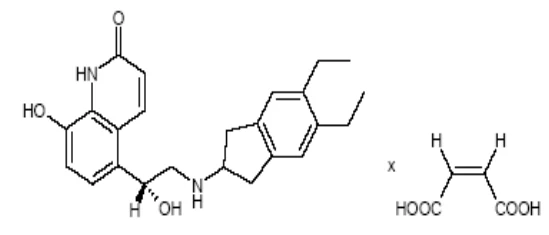
Physicochemical properties:
Indacaterol is the pure R-enantiomer of this molecule.
Indacaterol maleate consists of a single polymorphic form, form A.
The pH of indacaterol maleate in 0.1% (g/100 ml) suspension in water at room temperature is 4.9. The pH value of 0.1% (g/100 ml) solution in water/ethanol 80:20 (V/V) at room temperature is 5.0.
The melting range of indacaterol is 195 – 202°C with decomposition.
Indacaterol maleate is a white to very slightly grayish or very slightly yellowish powder. Indacaterol maleate is freely soluble in N-methylpryrrolidone and dimethylformamide, slightly soluble in methanol, ethanol, propylene glycol and polyethylene glycol 400, very slightly soluble in water, isopropyl alcohol and practically insoluble in 0.9% sodium chloride in water, ethyl acetate and n-octanol.
Drug Product
ONBREZ BREEZHALER 75 mcg inhalation powder hard capsules:
Each capsule contains 97 mcg indacaterol maleate equivalent to 75 mcg indacaterol. The delivered dose (the dose that leaves the mouthpiece of the ONBREZ BREEZHALER device) is 60 mcg indacaterol.
ONBREZ BREEZHALER INHALATION DEVICE
The ONBREZ BREEZHALER is a plastic inhalation device used for inhaling the content of ONBREZ BREEZHALER (indacaterol maleate) capsules. The amount of drug delivered to the lung will depend on patient factors, such as inspiratory flow rate and inspiratory time. Peak inspiratory flow rates (PIFR) achievable through the ONBREZ BREEZHALER inhalation device were evaluated in 26 adult patients with COPD of varying severity. Mean PIFR was 95 L/min (range 52-133 L/min) for adult patients. Approximately 95% of the population studied generated a PIFR through the device exceeding 60 L/min.
14 CLINICAL TRIALS
The ONBREZ BREEZHALER COPD development program included six confirmatory trials that were randomized, double-blinded placebo and active-controlled in design (Trial B2335S, a 26-week seamless adaptive design trial that included an initial 2 week dose-ranging phase; Trials B2354, B2355, and B2346, 12-week trials; Trial B2336, a 26-week trial; and Trial B2334, a 52 week trial). After the initial 2-week dose-ranging portion of the design, Trial B2335S was conducted with ONBREZ BREEZHALER doses of 150 mcg and 300 mcg once daily, placebo, and an active comparator. Trials B2354 and B2355 were conducted with ONBREZ BREEZHALER dose of 75 mcg once daily, and placebo. Trial B2346 was conducted with ONBREZ BREEZHALER dose of 150 mcg once daily and placebo. Trial B2336 was conducted with ONBREZ BREEZHALER dose of 150 mcg once daily, an active comparator, and placebo.
The efficacy of ONBREZ BREEZHALER administered at 75 mcg once daily was evaluated in two placebo-controlled clinical trials, Trials B2354 and B2355.
14.1 Trial Design and Study Demographics
Trials B2354 and B2355 were 12 week, multicenter, randomized, double-blind, placebo-controlled, parallel-group studies to assess the efficacy and safety of once daily indacaterol (75 mcg o.d.) in patients with COPD. These two trials enrolled 641 patients with a clinical diagnosis of COPD, who were 40 years or older, had a smoking history of at least 10 pack years, had a post-bronchodilator FEV1 less than 80% and at least 30% of the predicted normal value and a post-bronchodilator ratio of FEV1 over FVC of less than 70%.
Table 5 Summary of patient demographics for pivotal clinical trials in COPD
| Study # | Trial design | Dosage, route of administration and duration | Study subjects* (n=number) | Mean age (Range) | Gender n (%) |
| B2354 | Multicenter, randomized, double-blind, placebo-controlled, parallel-group study to assess the efficacy and safety of once daily indacaterol (75 mcg o.d.) in patients with COPD. | Indacaterol inhalation 75 mcg o.d. 12 weeks | Total: n=323 Indacaterol 75 mcg: n=163 Placebo: n=160 | 64.0 years (40-90) | Male: 176 (54.5) Female: 147 (45.5) |
| B2355 | Multicenter, randomized, double-blind, placebo-controlled, parallel-group study to assess the efficacy and safety of once daily indacaterol (75 mcg o.d.) in patients with COPD. | Indacaterol inhalation 75 mcg o.d. 12 weeks | Total: n=318 Indacaterol 75 mcg: n=159 Placebo: n=159 | 61.4 years (40-86) | Male: 172 (54.1) Female: 146 (45.9) |
* Number of patients exposed to treatment or placebo
14.2 Study Results
Overview of Results
Assessment of efficacy in trials B2354 and B2355 was based on FEV1. The primary efficacy endpoint was 24-hour post-dose trough FEV1 (defined as the average of two FEV1 measurements taken after 23 hours and 10 minutes and 23 hours and 45 minutes after the previous dose) after 12 weeks of treatment. Other efficacy variables included other FEV1 and FVC time points, rescue medication use, symptoms, transition dyspnoea index (TDI), and health-related quality of life measured using the St. George’s Respiratory Questionnaire (SGRQ), a disease-specific patient reported instrument which measures symptoms, activities, and impact of disease on daily life.
Individual Study Results
ONBREZ BREEZHALER 75 mcg, showed significantly greater 24-hour post-dose trough FEV1 compared to placebo at 12 weeks. Results are shown in Table 6.
Table 6 LS Mean for trough FEV1 at 12 weeks
| Treatment | Trough FEV1 at Week 12 (liters) | Treatment Difference LS Mean (95% CI) | ||
| Trial B2354 (N=323) | ||||
| Indacaterol 75 mcg | 1.38 | 0.12 (0.08, 0.15) | ||
| Placebo | 1.26 | |||
| Trial B2355 (N=318) | ||||
| Indacaterol 75 mcg | 1.49 | 0.14 (0.10, 0.18) | ||
| Placebo | 1.35 | |||
In addition, serial FEV1 measurements in patients treated with ONBREZ BREEZHALER demonstrated a bronchodilatory treatment effect after the first dose compared to placebo at 5 minutes post dose of 0.09 L (Trial B2354) and 0.10 L (Trial B2355). The mean peak improvement relative to baseline within the first 4 hours after the first dose (Day 1) was 0.19 L (Trial B2354) and 0.22 L (Trial B2355) and was 0.24 L (Trial B2354) and 0.27 L (Trial B2355) after 12 weeks. Improvement in lung function observed at week 4 was consistently maintained over the 12-week treatment period in both trials.
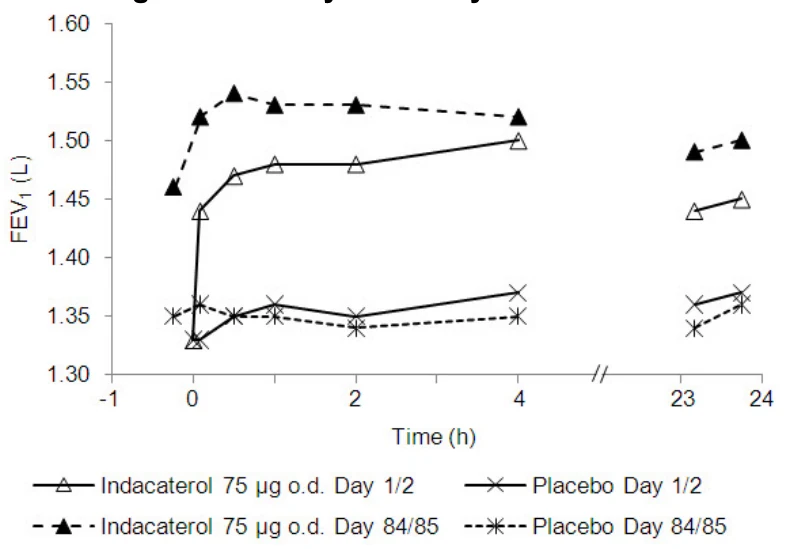
In study B2355, 4-hour serial spirometric measurements were performed in a subset of patients. Serial FEV1 values over 4 hours at Day 1 and Day 84 and trough FEV1 values at Day 2 and Day 85 are shown in Figure 1.
Figure 1 Serial Spirometry Least Square Mean FEV1 Over 4 Hours at Day 1 and Day 84 and Trough FEV1 at Day 2 and Day 85
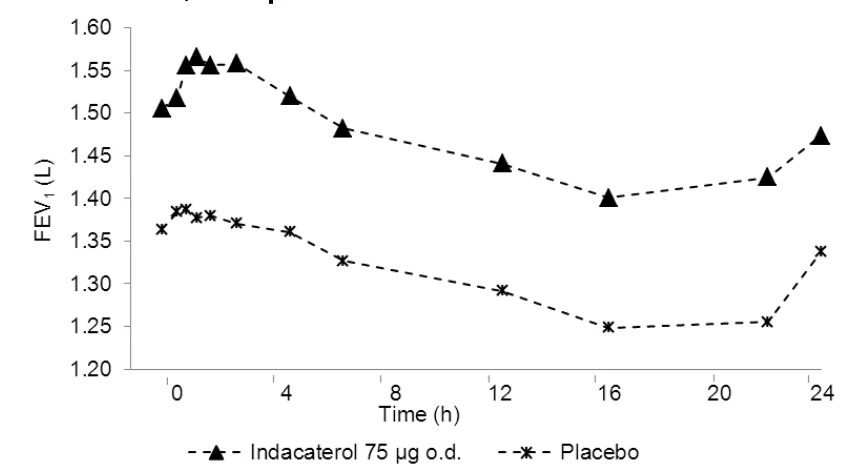
In Trial B2355, 24-hour spirometry was assessed in a subset of 239 patients at week 12. See Figure 2.
Figure 2 LS Mean FEV1 time profile curve over 24 hours at Week 12 in Trial B2355
Symptom Related Outcomes
In the two pivotal clinical trials B2354 and B2355, patients treated with 75 mcg ONBREZ BREEZHALER demonstrated an improvement in the TDI focal score, had an increase in the percentage of ‘days able to perform usual daily activities’, and used less daily rescue salbutamol during the trial compared to patients treated with placebo.
At week 12, patients treated with ONBREZ BREEZHALER 75 mcg demonstrated an improvement over placebo in SGRQ total score of -3.8 with a 95% CI of (-6.2, -1.4) for Study B2354, and -3.6 (95% CI of -6.4, -0.9) for Study B2355.
In conclusion, ONBREZ BREEZHALER administered by the BREEZHALER at a dose of 75 mcg once daily provides rapid onset of bronchodilation in patients with stable COPD that was maintained over 24 hours.
Since the bronchodilator effect of ONBREZ BREEZHALER is still significant 24 hours after inhalation, once-daily maintenance therapy controls bronchoconstriction associated with chronic conditions both during the day and at night.
Dose Ranging
Dose selection for ONBREZ BREEZHALER for COPD was based on two placebo-controlled dose-ranging trials (Trial B2356, a 2-week dedicated dose ranging trial with doses of 18.75, 37.5, 75, and 150 mcg once daily and one active comparator, N=552 patients; Trial B2335S , a 26 -week adaptive seamless design trial that included an initial 2-week dose ranging phase with doses of 75, 150, 300, and 600 mcg once daily and two active comparators, N=801 patients).
Trial B2356 showed that the effect on FEV1 in patients treated with ONBREZ BREEZHALER 18.75 mcg dose was lower compared to patients treated with other ONBREZ BREEZHALER doses. Although a dose-response relationship was observed at Day 1, the effect did not clearly differ among the 37.5, 75 and 150 mcg doses by Day 15.
The 2-week dose ranging phase of Trial B2335S included ONBREZ BREEZHALER doses of 75, 150, 300, and 600 mcg once daily, placebo, and two active comparators. Although a dose-response relationship was observed at week 2, the effect did not clearly differ among the ONBREZ BREEZHALER doses.
Based on the results of the dose-ranging data, a once-daily dose of 75 mcg was selected as it provided clinically relevant bronchodilation.
16 NON-CLINICAL TOXICOLOGY
General Toxicology
Non-clinical data reveal no special hazard for humans based on conventional studies of safety pharmacology, repeated-dose toxicity, genotoxicity, carcinogenic potential, and toxicity to reproduction.
Acute Toxicity
Single oral administrations of indacaterol to rats and mice at doses of 1600 mg/kg were well tolerated. Single oral administrations of indacaterol to dogs at doses between 0.1 and 10 mg/kg were consistent with the pharmacological effect of indacaterol. Higher doses were not tolerated. Single subcutaneous administrations of indacaterol to mice at doses of 5 mg/kg in males and 100 mg/kg in females and to rats at doses up to 100 mg/kg were tolerated without mortalities. Mortality that may be associated with tolerability issues at the administration site was apparent at higher doses.
Repeat-dose Toxicity
The effects of indacaterol seen in toxicity studies in dogs were mainly on the cardiovascular system and consisted of tachycardia and associated increased QTc intervals, arrhythmias and myocardial lesions that included myocardial fibrosis. These are known pharmacological effects and can be explained by the beta2-agonistic properties of indacaterol. Beta2-agonistic mediated vasodilation and associated hypotension is known to result in a reflex tachycardia, which when excessive is associated with heart lesions. Clinical experience in humans shows that multiple doses at 800 mcg/day or below do not affect heart rate. Other effects noted in repeated-dose toxicity studies were mild irritancy of the upper respiratory tract in rats consisting of rhinitis and epithelial changes of the nasal cavity and larynx. All these findings were observed only at exposures considered sufficiently in excess of the maximum human exposure. The clinical significance of these is likely of little relevance, yet they do remain unclear.
Table 7 Sub-Chronic and Chronic Toxicology (Pivotal studies)
| Study Type | Species | Route | Doses (Mg/kg/day) | Findings |
|---|---|---|---|---|
| 14-day | Wistar Rat | Inhalation | 0, 2.1, 5.8, 17.0 | Mild inflammation or irritation of nasal cavity at doses ≥5.8 mg/kg/day. At 17.0 mg/kg/day, exaggerated breathing, increased response to stimuli and increased urinary pH were observed. In addition, accumulation of alveolar macrophages in the lungs was apparent. NOAEL=2.1 mg/kg/day |
| 28-day | Wistar Rat | Inhalation | 0, 0.93, 2.77, 8.46 | Increased body weight gain, white blood cell parameters and plasma bilirubin were noted at ≥0.93 mg/kg/day. Mild irritation of the nasal cavity was observed at ≥2.77 mg/kg/day (focal, olfactory epithelial degeneration along roof of dorsal meatus) and of the larynx among animals treated at the highest dose (ventral floor at base of epiglottis, focal squamous metaplasia in epithelium lining). All findings were reversible. NOAEL=0.93 mg/kg/day |
| 26-week | Wistar Rat | Inhalation | 0.31, 1.02, 3.14 | Findings at ≥0.31 mg/kg/day comprised increased skeletal muscle mass, increased body weight and food consumption and decreased blood glucose. At 3.14 mg/kg/day, increased white blood cell counts and mild irritation of the larynx (squamous metaplasia of epithelium of ventral larynx) were observed. Notable decrease in muscle mass following the 4-week recovery period. All other effects were reversible. NOAEL: 1.02 mg/kg/day |
| 14-day | Beagle Dog | Inhalation | 0, 0.01, 0.47, 0.93 | Reddening of ears and gums, increased heart force and rate, increased breathing rate and decreased blood pressure were apparent at ≥0.01 mg/kg/day. At ≥0.47 mg/kg/day, increased heart rate during ECG evaluations on Day 1 was associated with QTc-prolongation. Cardiac lesions were apparent on completion of treatment at ≥0.47 mg/kg/day (minimal to moderate myocardial necrosis, fibrosis in the papillary muscle). Periportal hepatocellular vacuolation (consistent with increased glycogen concentrations) was seen at all dose levels. NOAEL=0.01 mg/kg/day |
| Study Type | Species | Route | Doses (Mg/kg/day) | Findings |
|---|
| 28-day | Beagle Dog | Inhalation | 0, 0.01, 0.10, 0.97 | Reddened gums, salivation and increased heart force were observed at ≥0.10 mg/kg/day. Changes at the highest dose included decreased hemoglobin and hematocrit values and increased QTC values during ECG evaluations on day 1 of treatment only. Cardiac lesions (myocardial fibrosis with/without mineralization in left papillary muscle, atrial hemorrhage, pericarditis) were seen at 0.97 mg/kg/day. Myocardial fibrosis was still evident following a 2-week recovery period Periportal vacuolation in the liver was present at ≥0.10 mg/kg/day and was reversible. NOAEL=0.01 mg/kg/day |
| 13-week | Beagle Dog | Inhalation | 0, 0.02, 0.12, 1.10 | Reddening of the ears, gums and abdomen were seen at all doses whilst increased heart rate and force were observed at 1.10 mg/kg/day in week 1 only. Increased body weight gain was noted in males at ≥0.12 mg/kg/day. Increased blood potassium and creatine phosphokinase levels were seen at 1.10 mg/kg/day. Increased heart rate and QTC values were apparent at 1.10 mg/kg/day during ECG evaluations on day 1 only. Minimal to moderate cardiac lesions (myocardial fibrosis) were observed in one male and female at the highest dose level. Minimal to mild periportal hepatocellular vacuolation (glycogen-mediated) was seen at all doses NOAEL: 0.12 mg/kg/day |
| 39-week | Beagle Dog | Inhalation | 0.03, 0.10, 0.31 | Increased body weight gain and blood creatinine levels, were observed at 0.31 mg/kg/day. Slight increases in heart rate and QTc values were also seen at the highest dose during ECG evaluation but excessive tachycardia was not observed. There were no cardiac lesions. Minimal to mild periportal hepatocellular vacuolation was seen at all doses. With the exception of blood creatinine levels, all findings were reversible following a 4-week recovery period. NOAEL: 0.31 mg/kg/day |
Carcinogenicity
The carcinogenic potential of indacaterol has been evaluated in a 2-year inhalation study in rats and a 26-week oral transgenic mouse study. Lifetime treatment of rats resulted in increased incidences of benign ovarian leiomyoma and focal hyperplasia of ovarian smooth muscle in females at doses approximately 136-times the dose of 150 mcg once-daily for humans (on a mg/m2 basis). Increases in leiomyomas of the rat female genital tract have been similarly demonstrated with other β2-adrenergic agonist drugs. A 26-week oral (gavage) study in CB6F1/TgrasH2 hemizygous mice with indacaterol did not show any evidence of tumorigenicity at doses approximately 19600-times the dose of 150 mcg once-daily for humans (on a mg/m2 basis).
Genotoxicity
No evidence of any mutagenic or clastogenic potential was observed for indacaterol.
Table 8 Genetic Toxicology and Carcinogenicity
| Study Type | Species | Route | Doses | Findings |
|---|---|---|---|---|
| Ames test | Salmonella typhimurium strains TA98, TA100, TA1535, TA102, TA97a | In vitro | 1.6 to 1000 mcg/plate (in the presence and absence of S9) | Indacaterol was non-mutagenic under the conditions of this assay. |
| Chromosome aberration assay | Chinese Hamster cells | In vitro | -S9: 10-32 mcg/mL +S9: 30-171 mcg/mL | Indacaterol was non-clastogenic under the conditions of this assay. |
| Micronucleus test | Wistar Rat | Subcutaneous | 200, 630 and 2000 mg/kg for two days. | Indacaterol had no clastogenic and/or aneugenic potential in vivo under the test conditions used. |
| Rat carcinogenicity study (2 yr) | Wistar Rat | Inhalation | 0, 0, 0.21, 0.62, 2.09 mg/kg/day | Increased muscle mass in males and females and reduced body weight gain in males were observed at all doses. A higher incidence of minimal to mild progressive cardiomyopathy was observed in female animals at 2.09 mg/kg/day. This lesion was also observed at a high incidence in control animals. Increased incidences of ovarian leiomyoma and focal hyperplasia of ovarian smooth muscle were apparent in females at 2.09 mg/kg/day. |
| Transgenic mouse carcinogenicity study (6 mo) | CB6F1-TgrasH2 mice | PO | 0, 100, 300, 600 mg/kg/day | Indacaterol was not carcinogenic in CB6F1-TgrasH2 mice. Tumors were observed in the positive control group receiving N-methyl-N-Nitrosourea (MNU) which confirms the adequacy of the model. |
Reproductive toxicity
Adverse effects with respect to fertility, pregnancy, embryonal/foetal development, pre- and postnatal development could only be demonstrated at doses 390-fold the daily inhalation dose of 150 mcg in humans (on a mg/m2 basis). The effects, namely an increased incidence of one type of skeletal abnormality, were observed in rabbits. Indacaterol was not teratogenic in rats or rabbits following subcutaneous administration.
Table 9 Reproductive Toxicology (pivotal studies)
| Study Type | Species | Route | Doses (Mg/kg/day) | Findings |
|---|---|---|---|---|
| Fertility, reproductive performance and early embryonic development | Wistar Rat | Subcutaneous | 0.2, 0.6, 2 bid | Increased body weight parameters and food consumption at ≥0.2 mg/kg/day. Skin lesions at injection sites of animals treated at ≥0.6 mg/kg/day NOEL for effects on fertility, reproductive performance or early embryonic development was 2 mg/kg/day |
| Embryo-fetal development | Wistar Rat | Subcutaneous | 0.1, 0.3 and 1 b.i.d. | Skin lesions at the injection sites at ≥ 0.1 mg/kg/day. Increased body weight and body weight gain at ≥ 0.3 mg/kg/day and increased food consumption at 1 mg/kg/day. NOEL for pregnant rat not established NOEL for fetus: 1 mg/kg/day; no teratogenicity |
| Embryo-fetal development | NZW Rabbit | Subcutaneous | 0.1, 1, 3 | Skin lesions were apparent at the injection sites at 1 and 3 mg/kg/day. At the highest dose, decreased food consumption and an increased incidence of full supernumerary rib were observed. NOEL for pregnant rabbit:1 mg/kg/day NOEL for fetus: 1 mg/kg/day; no teratogenicity |
| Peri-postnatal development, reproduction and fertility | Wistar Rat | Subcutaneous | 0.1, 0.3 and 1.0 | F0 effects: increased body weight parameters and discoloration at the injection sites at ≥0.3 mg/kg/day. Transient increases in food consumption at 1 mg/kg/day. F1 effects: decreased body weight parameters at ≥0.3 mg/kg/day. Decrease in number of animals reaching criterion for acquisition/learning in males at 1 mg/kg/day. Fertility and fecundity were affected with a decrease in the number of pregnant animals at 1 mg/kg/day. No effect on mating or other parameters of reproductive performance. NOEL: 0.1 mg/kg/day |