


Product Monograph - Cabtreo
1 INDICATIONS
CABTREO (clindamycin phosphate, adapalene and benzoyl peroxide) is indicated for the topical treatment of acne vulgaris in patients 12 years of age and older.
CABTREO contains an antibacterial ingredient, clindamycin. To reduce the risk of development of drug-resistant bacteria and maintain the effectiveness of clindamycin, CABTREO should only be used for the authorized indication and clinical use.
1.1 Pediatrics
Pediatrics (< 12 years of age): The safety and efficacy of CABTREO in pediatric patients (12 years of age and older) have been established; therefore, Health Canada has authorized an indication for pediatric patients (see 7.1.3 Pediatrics).
1.2 Geriatrics
Geriatrics (> 65 years of age): A limited number of subjects aged ≥ 65 years have been treated with CABTREO in clinical trials; therefore, the safety and efficacy of CABTREO have not been established in this patient population (see 7.1.4 Geriatrics).
2 CONTRAINDICATIONS
- Patients who are hypersensitive to clindamycin phosphate, to adapalene, to benzoyl peroxide or to any ingredient in the formulation or component of the container. For a complete listing, see the 6 DOSAGE FORMS, COMPOSITION AND PACKAGING section of the Product Monograph.
- CABTREO is contraindicated in patients with a history of regional enteritis (Crohn’s disease), ulcerative colitis, or antibiotic-associated colitis.
- CABTREO is contraindicated in pregnant women and women planning a pregnancy (see 7.1.1 Pregnant Women).
4 DOSAGE AND ADMINISTRATION
4.2 Recommended Dose and Dosage Adjustment
Apply a thin layer of CABTREO to the affected area once daily.
CABTREO is for topical use only. Not for oral, ophthalmic, or intravaginal use.
Health Canada has not authorized CABTREO for pediatric use under the age of 12 years (see 7.1.3 Pediatrics).
4.4 Administration
Before applying CABTREO, wash the affected area, rinse with warm water, and pat the skin dry. Dispense a pea-sized amount of CABTREO onto one fingertip, dot onto the chin, cheeks, nose, and forehead, then gently rub over the entire face once daily. If a bath or shower is taken prior to application, the skin should be dry before applying the gel.
Wash hands thoroughly after applying CABTREO. If needed, use a moisturizer before or after the use of CABTREO and allow sufficient time for the skin to dry between both applications.
Avoid the eyes, mouth, paranasal creases of the nose, mucous membranes and areas of broken, eczematous, or sunburned skin. If CABTREO gets in or near eyes, rinse thoroughly with water.
4.5 Missed Dose
Apply the missed dose as soon as you remember. Skip the missed dose if it is almost time for your next dose. Do not use extra medicine to make up the missed dose.
5 OVERDOSAGE
Acute overdosage with the topical use of CABTREO is unlikely. If CABTREO is applied excessively, no more rapid, or better results will be obtained and marked redness, peeling or discomfort may occur. The literature indicates that clindamycin could be absorbed topically (see 7 WARNINGS AND PRECAUTIONS, Gastrointestinal). In the event of accidental ingestion, treatment should be symptomatic.
Inadvertent oral ingestion of adapalene may lead to the same adverse effects as those associated with excessive oral intake of Vitamin A (hypervitaminosis) or other retinoids, including teratogenesis in women of childbearing age. If accidental oral ingestion occurs, the patient should be monitored, and appropriate supportive measures should be administered as necessary, including pregnancy testing in women of childbearing age.
| For management of a suspected drug overdose, contact your regional poison control centre. |
|---|
6 DOSAGE FORMS, STRENGTHS, COMPOSITION AND PACKAGING
Table 1: Dosage Forms, Strengths, Composition and Packaging
*Does not include any fragrance, colorant or alcohol
| Route of Administration | Dosage Form / Strength/Composition | Non-medicinal Ingredients* |
| Topical | Gel Clindamycin Phosphate (1.2% w/w), Adapalene (0.15% w/w) and Benzoyl Peroxide (3.1% w/w) | Carbomer Homopolymer Type C (Carbomer 980), Potassium Hydroxide, Propylene Glycol and Purified Water |
CABTREO is a triple combination of clindamycin phosphate, adapalene and benzoyl peroxide.
CABTREO is a white to off-white, opaque, smooth, water-based polymeric gel supplied in a 50 g pump. Physicians’ samples are supplied in 3.5 g laminate tubes.
7 WARNINGS AND PRECAUTIONS
General
CABTREO is for external use only. Not for ophthalmic use.
Avoid contact with the eyes, eyelids, paranasal creases of the nose, lips, mucous membranes, severely inflamed skin. The product should not be applied to cuts, open lesions, abrasions, eczematous or sunburned skin or to other areas where treatment is not intended.
CABTREO should be applied only to the affected areas. Excessive use should be avoided.
Concomitant topical acne therapy is not recommended because a possible cumulative irritancy effect may occur, especially with the use of peeling, desquamating, or abrasive agents. Avoid concomitant use of other potentially irritating topical products (medicated or abrasive soaps and cleansers, soaps and cosmetics that have strong skin-drying effect and products with high concentrations of alcohol, astringents, spices, or limes). Use of electrolysis, “waxing” and chemical depilatories for hair removal should be avoided on skin treated with CABTREO.
CABTREO may bleach hair and coloured fabric. Use caution when applying near hairline (see 9.3 Drug- Behavioral Interactions).
Patients should be advised to use non-comedogenic cosmetics (see 9.3 Drug- Behavioral Interactions).
Certain cutaneous signs and symptoms such as erythema, dryness, scaling, burning, or pruritus are associated with the topical application of retinoids and can also be expected with the use of CABTREO. These treatment-related effects generally occur during the first four weeks of therapy, are mostly mild to moderate in intensity, and usually lessen as the skin adjusts with continued use. Depending on the degree of the side effects, patients can be directed to use a moisturizer, use the medication less frequently or temporarily discontinue use until the symptoms subside (see 4.4 Administration).
Carcinogenesis and Mutagenesis
Only animal data are available (see 16 NON-CLINICAL TOXICOLOGY, Carcinogenicity).
Gastrointestinal
Orally and parenterally administered clindamycin have been associated with severe colitis, which may result in patient death. Use of the topical formulation of clindamycin can result in absorption of the antibiotic from the skin surface. Diarrhea, colitis, and pseudomembranous colitis have been observed to begin up to several weeks following cessation of oral and parenteral therapy with clindamycin If significant diarrhea occurs, CABTREO should be discontinued. Antiperistaltic agents such as opiates and diphenoxylate with atropine may prolong and/or worsen severe colitis.
Studies indicate toxin(s) produced by Clostridia is one primary cause of antibiotic-associated colitis. The colitis is usually characterized by severe persistent diarrhea and severe abdominal cramps and may be associated with the passage of blood and mucus. Endoscopic examination may reveal pseudomembranous colitis. Stool cultures for Clostridium difficile and stool assay for C. difficile toxin may be helpful diagnostically. When significant diarrhea occurs, the drug should be discontinued. Large bowel endoscopy should be considered to establish a definitive diagnosis in cases of severe diarrhea.
Reproductive Health: Female and Male Potential
Teratogenic Risk (class effect)
Topical adapalene is contraindicated in pregnant women and women planning a pregnancy because of the possibility of an increased systemic exposure due to various factors (e.g. damaged skin barrier, excessive use) (see 2 CONTRAINDICATIONS).
Sensitivity/Resistance
Development of Drug-Resistant Bacteria
Prescribing CABTREO in the absence of the authorized indications is unlikely to provide benefit to the patient and risks the development of drug-resistant bacteria.
Potential for Microbial Overgrowth
Prolonged use of CABTREO may result in overgrowth of non-susceptible organisms including fungi. If this should occur, therapy with CABTREO should be discontinued and appropriate measures taken.
Cutibacterium acnes (C. acnes; previously called Propionibacterium acnes)resistance to clindamycin has been documented. Resistance to clindamycin is often associated with resistance to erythromycin. If this should occur, therapy with CABTREO should be discontinued and alternative therapy should be initiated.
Skin
Photosensitivity
CABTREO may increase sensitivity to ultraviolet light. Avoid or minimize sun exposure (including use of tanning beds, and sun lamps) following CABTREO application. Instruct patients to use sunscreen products (minimum SPF of 15) and wear protective apparel (e.g., hat) when exposure to sun cannot be avoided.
Local Irritation
Erythema, scaling, dryness, and stinging/burning may be experienced with use of CABTREO. These are most likely to occur during the first four weeks of treatment, are mostly mild to moderate in intensity, and usually lessen with continued use of the medication. Irritant and allergic contact dermatitis may occur. Depending upon the severity of these adverse reactions, patients should be instructed to use a moisturizer, reduce the frequency of the application of CABTREO, or discontinue use. The product should not be applied to cuts, abrasions, eczematous, or sunburned skin.
Avoid concomitant use of other potentially irritating topical products (medicated or abrasive soaps and cleansers, soaps and cosmetics that have strong skin-drying effect and products with high concentrations of alcohol, astringents, spices, or limes).
In case of sunburn, allow the skin to heal before using CABTREO. Weather extremes, such as wind or cold, may also be irritating to patients under treatment with adapalene.
7.1 Special Populations
7.1.1 Pregnant Women
CABTREO is contraindicated in women who are or may become pregnant (see 2 CONTRAINDICATIONS). There are no available data on CABTREO use in pregnant women to evaluate a drug associated risk of major birth defects, miscarriage, or adverse maternal or fetal outcomes.
There have been rare reports of birth defects among babies born to women exposed to topical retinoids such as adapalene during pregnancy. However, there are no well controlled prospective studies of the use of topical retinoids, including adapalene, in pregnant women. A retrospective study of mothers exposed to topical tretinoin during the first trimester of pregnancy found no increase in the incidence of birth defects. If the patient becomes pregnant while using these drugs, treatment should be discontinued.
In limited published trials in pregnant women administered clindamycin during the first trimester of pregnancy, there was no difference in the rate of major birth defects reported among in utero exposed infants compared to unexposed infants.
In limited published clinical trials with pregnant women, the systemic administration of clindamycin during the second and third trimesters has not been associated with an increased frequency of major birth defects.
The systemic exposure of benzoyl peroxide is unknown. Based on published literature, benzoyl peroxide is rapidly metabolized to benzoic acid (an endogenous substance), which is eliminated in the urine. Hence, maternal use is not expected to result in fetal exposure of the drug.
7.1.2 Breast-feeding
Because of the potential for serious adverse reactions in nursing infants, a decision should be made whether to discontinue nursing or to discontinue the drug, taking into account the importance of the drug to the mother.
If used during lactation, CABTREO should not be applied to the chest region and, care should be taken to avoid accidental exposure by the infant.
There are no data on the presence of clindamycin phosphate, adapalene and benzoyl peroxide in human milk, the effects on the breastfed infant, or the effects on milk production following topical administration. However, orally, and parenterally administered clindamycin has been reported to appear in breast milk.
7.1.3 Pediatrics
Pediatrics (< 12 years of age)
The safety and effectiveness of CABTREO in pediatric patients below the age of 12 years have not been established (see 1.1 Pediatrics).
7.1.4 Geriatrics
Geriatrics (> 65 years of age)
Clinical trials of CABTREO did not include sufficient numbers of subjects aged 65 years and older to determine whether they respond differently from younger subjects (see 1.2 Geriatrics).
8 ADVERSE REACTIONS
8.1 Adverse Reaction Overview
The most frequent adverse reactions that may occur with CABTREO are mild to moderate application site reactions, such as skin irritation characterized by scaling, dryness, erythema, and burning/stinging.
8.2 Clinical Trial Adverse Reactions
Clinical trials are conducted under very specific conditions. The adverse reaction rates observed in the clinical trials may not reflect the rates observed in practice and should not be compared to the rates in the clinical trials of another drug. Adverse reaction information from clinical trials may be useful in identifying and approximating rates of adverse drug reactions in real-world use.
In 2 multicenter, randomized, double-blind, vehicle-controlled clinical trials, subjects aged 9 years and older applied CABTREO or vehicle once daily for 12 weeks. Adverse reactions reported by >1% of subjects treated with CABTREO and more frequently than subjects treated with vehicle are summarized in Table 2. Most adverse reactions were mild to moderate in severity. Severe adverse reactions represented 0.8% of the subjects treated.
| Table 2 : Adverse Reactions Reported by >1% of the CABTREO Group and More Frequently than the Vehicle Group | ||
CABTREO N = 242 n (%) | Placebo N = 121 n (%) | |
General disorders and administration site conditions Application site pain1 Application site dryness Application site exfoliation Application site irritation Xerosis Application site dermatitis Application site erythema | 48 (19.8) 33 (13.6) 7 (2.9) 4 (1.7) 5 (2.1) 3 (1.2) 3 (1.2) 3 (1.2) | 2 (1.7) 1 (0.8) 0 0 0 1 (0.8) 0 0 |
Investigations Coronavirus test positive | 6 (2.5) 3 (1.2) | 2 (1.7) 0 |
Skin and subcutaneous tissue disorders Erythema | 7 (2.9) 3 (1.2) | 1 (0.8) 0 |
1Application site pain defined as application site stinging, burning, or pain.
Local tolerability evaluations were conducted at each study visit in the clinical trials by assessment of erythema, scaling, itching, burning, and stinging. Table 3 presents the signs and symptoms of local facial tolerability at during the 12-week treatment period in subjects treated with CABTREO or vehicle. Both the assessments at week 12 and the maximum assessed incidence throughout the trial are presented.
Table 3 : Cutaneous Tolerability Assessment during 12-week treatment period in Subjects with Acne Vulgaris Treated with CABTREO in Trials 1 and 2
| Maximum During Treatment* | Week 12 (End of Treatment)** | |||||||||||||
|---|---|---|---|---|---|---|---|---|---|---|---|---|---|---|
Mild (%) | Moderate (%) | Severe (%) | Mild (%) | Moderate (%) | Severe (%) | |||||||||
CABTREO (N=242) | ||||||||||||||
| Erythema | 34.2 | 19.7 | 2.1 | 22.4 | 6.5 | 0.5 | ||||||||
| Burning | 29.6 | 10.7 | 3.0 | 4.2 | 1.4 | 0.9 | ||||||||
| Scaling | 26.7 | 3.4 | 0 | 7.0 | 0.9 | 0 | ||||||||
| Itching | 24.3 | 3.4 | 0.4 | 6.0 | 0.9 | 0 | ||||||||
| Stinging | 20.5 | 5.1 | 2.6 | 2.3 | 0.9 | 0.5 | ||||||||
Vehicle (N=121) | ||||||
|---|---|---|---|---|---|---|
| Erythema | 22.5 | 21.7 | 1.7 | 25.5 | 5.5 | 0 |
| Burning | 2.5 | 0.8 | 0.8 | 0.9 | 0 | 0 |
| Scaling | 12.5 | 0 | 0 | 4.5 | 0 | 0 |
| Itching | 11.6 | 0.8 | 0 | 1.8 | 0 | 0 |
| Stinging | 3.3 | 0.8 | 0 | 1.8 | 0 | 0 |
*The denominators for calculating the percentages were the number of subjects with at least one post-baseline cutaneous tolerability
assessment.
**The denominators for calculating the percentages were the number of subjects with Week 12 assessment.
Local tolerability scores for erythema, scaling, itching, burning, and stinging generally rose during the first two weeks of treatment and decreased thereafter. These reactions usually occur early in the treatment and tend to gradually lessen over time.
8.3 Less Common Clinical Trial Adverse Reactions (< 1%)
Psychiatric disorders: Depression.
Skin and subcutaneous tissue disorders: Dermatitis contact, dry skin, and swelling face.
8.5 Post-Market Adverse Reactions
There is no post-marketing experience with CABTREO.
The following adverse reactions have been identified during post-approval use of products containing clindamycin phosphate, adapalene and benzoyl peroxide as the active ingredients: anaphylaxis, allergic reactions, sunburn, blister, pruritis, hyperpigmentation, and hypopigmentation.
Because post-marketing adverse reactions are reported voluntarily from a population of uncertain size, it is not always possible to reliably estimate their frequency or establish a causal relationship to drug exposure.
9 DRUG INTERACTIONS
9.2 Drug Interactions Overview
CABTREO is a topical product with low systemic availability. As CABTREO has the potential for local irritation, it is possible that concomitant use of abrasive cleansers, strong drying agents, or irritant products may produce additive irritant effects.
Clindamycin has been shown to have neuromuscular blocking properties and potential antagonism with erythromycin and aminoglycosides.
9.3 Drug-Behavioral Interactions
CABTREO should not come into contact with any coloured material including hair and fabrics as this may result in bleaching and discolouration.
As with other retinoids, use of electrolysis, “waxing” and chemical depilatories for hair removal should be avoided on skin treated with CABTREO.
Patients should be advised to use non-comedogenic cosmetics. Colour cosmetics such as blushers and powders are acceptable; however, make-up cosmetics should be water based. Cosmetics must be removed by thorough cleansing before the area is treated.
9.4 Drug-Drug Interactions
No formal drug-drug interaction studies have been conducted with CABTREO.
The drugs listed in this table are based on either drug interaction case reports or studies, or potential interactions due to the expected magnitude and seriousness of the interaction.
Table 4 : Established or Potential Drug-Drug Interactions
| Common name | Source of Evidence | Effect | Clinical Comment |
|---|---|---|---|
| Aminoglycosides | T | Clindamycin is reported to antagonize bactericidal activity of aminoglycosides in vitro. In vivo antagonism has not been demonstrated. | CABTREO should be used with caution in patients receiving such agents. |
| Concomitant Topical Medication | T | Concomitant topical medication, medicated or abrasive soaps and cleansers, soaps and cosmetics that have a strong drying effect and products with high concentrations of alcohol, astringents, spices, or lime should be used with caution as they may produce additive irritant effects. | Particular caution should be exercised in using preparations containing sulphur, resorcinol, or salicylic acid in combination with CABTREO. |
| Erythromycin | T | Antagonism has been demonstrated between clindamycin and erythromycin in vitro. Clindamycin and erythromycin may compete for the same protein binding site in bacteria. | Due to possible clinical significance the two drugs should not be administered concurrently. |
| Neuromuscular blocking agents | CS | Clindamycin has been shown to have neuromuscular blocking properties that may enhance the action of other neuromuscular blocking agents. | CABTREO should be used with caution in patients receiving such agents. |
|---|
Legend: C = Case Study; CT = Clinical Trial; T = Theoretical
9.5 Drug-Food Interactions
Interactions with food have not been established.
9.6 Drug-Herb Interactions
Interactions with herbal products have not been established.
9.7 Drug-Laboratory Test Interactions
Interactions with laboratory tests have not been established.
10 CLINICAL PHARMACOLOGY
10.3 Mechanism of Action
Adapalene, clindamycin phosphate and benzoyl peroxide, have complementary mechanisms of action targeting the pathology of acne vulgaris. The active ingredients have an effect on three pathophysiologic factors known to contribute to acne vulgaris: altered follicular growth and differentiation (comedogenesis), colonization of the pilosebaceous unit with Cutibacterium acnes (C. acnes), and inflammation.
CABTREO combines these three active substances, which have complementary mechanisms of action targeting the physiopathology of acne vulgaris. The targets of their action are distinct, with no known pharmacodynamic interactions.
Clindamycin
Clindamycin is a semisynthetic derivative of the parent compound lincomycin that is produced by Streptomyces lincolnensis and is predominantly bacteriostatic (see 15 MICROBIOLOGY). Clindamycin binds to the 50S ribosomal subunits of susceptible bacteria and prevents elongation of peptide chains by interfering with peptidyl transfer, thereby suppressing bacterial protein synthesis.
Adapalene
Adapalene is a chemically stable, retinoid-like compound. Biochemical and pharmacological profile studies have demonstrated that adapalene is a potent modulator of cellular differentiation, keratinization, and inflammatory processes, all of which represent important features in the pathology of acne vulgaris. Mechanistically, adapalene binds to specific retinoic acid nuclear receptors but, unlike tretinoin, does not bind to the cytosolic receptor protein. Although the exact mode of action of adapalene in acne vulgaris is unknown, current evidence suggests that topical adapalene normalizes the differentiation of follicular epithelial cells resulting in decreased microcomedone formation. In vitro studies with adapalene have shown inhibition of the AP-1 factors and the inhibition of the expression of toll like receptors 2. This profile suggests that the cell mediated inflammatory component of acne is reduced by adapalene.
Benzoyl Peroxide
Benzoyl peroxide is an oxidizing agent with a broad-spectrum bactericidal activity, in particular against Cutibacterium acnes (C. acnes), which is abnormally present in the acne-affected pilosebaceous unit. Additionally, benzoyl peroxide has demonstrated exfoliative and keratolytic activities.
The use of benzoyl peroxide in combination with a topical antibiotic, clindamycin, has been shown to reduce the potential for emergence of organisms resistant to clindamycin.
10.3 Pharmacokinetics
Systemic exposure following topical application of CABTREO was evaluated in 20 subjects in an open label, randomized, pharmacokinetic study. Subjects aged 12 years and older with moderate to severe acne applied approximately 2.5 grams of CABTREO to the entire face (excluding eyes and lips), neck, upper chest, upper back, and shoulders once daily for 28 days.
Clindamycin Phosphate concentrations were measurable in the majority of samples following single and repeated topical administration of CABTREO (limit of quantification = 0.0500 ng/mL). The mean Cmax and mean AUC[0-t] values for clindamycin phosphate were 2.52 ng/mL and 28.8 ng•h/mL on Days 28-29, respectively.
Clindamycin (Cmax and AUC[0-t]) accumulated up to approximately 3-fold between Days 1-2 and Days 28-29 following once daily application of CABTREO.
Adapalene concentrations were measurable in the majority of samples following single and repeated topical administration of CABTREO (LOQ = 0.100 ng/mL). The mean Cmax and mean AUC(0-t) values for adapalene were 0.124 ng/mL and 2.74 ng•h/mL on Days 28-29, respectively.
In subjects ≥ 12 years of age, adapalene (AUC[0-t]) accumulated up to approximately 3-fold between Days 1-2 and Days 28-29 for CABTREO.
Benzoyl peroxide has been shown to be absorbed by the skin where it is converted to benzoic acid. The percutaneous penetration of benzoyl peroxide is low; when applied topically, it is rapidly and completely converted into benzoic acid in the skin and eliminated in the urine.
Special Populations and Conditions Pharmacokinetic studies have not been conducted in subjects with a medical condition which might interfere with the absorption, distribution, metabolism, or excretion of clindamycin phosphate, adapalene and benzoyl peroxide topical gel, in particular, a history of hepatic or renal disease.
11 STORAGE, STABILITY AND DISPOSAL
- Store pump upright.
- Protect from freezing.
- Keep away from heat.
- Keep container tightly closed.
- Keep out of sight and reach of children.
Healthcare Professional:
- Prior to Dispensing: Store in a refrigerator (2° to 8°C).
Patient:
- Store at room temperature (15° to 25°C).
- Use within 10 weeks after first opening.
- Do not freeze.
12 SPECIAL HANDLING INSTRUCTIONS
- Dispense CABTREO with a 10-week expiration date.
- Specify “Store at room temperature (15° to 25°C). Do not freeze.
PART II: SCIENTIFIC INFORMATION
13 PHARMACEUTICAL INFORMATION
Drug Substance
Proper name: Clindamycin Phosphate
Chemical name: Methyl-7-chloro-6, 7, 8-trideoxy-6-(1-methyl-trans-4-propyl-L-2- pyrrolidinecarboxamido)-1-thio-L-threo-alpha-D-galacto- octopyranoside-2-(dihydrogen phosphate)
Molecular formula and molecular mass: C18H34ClN2O8PS 504.97 g/mol
Structural formula:
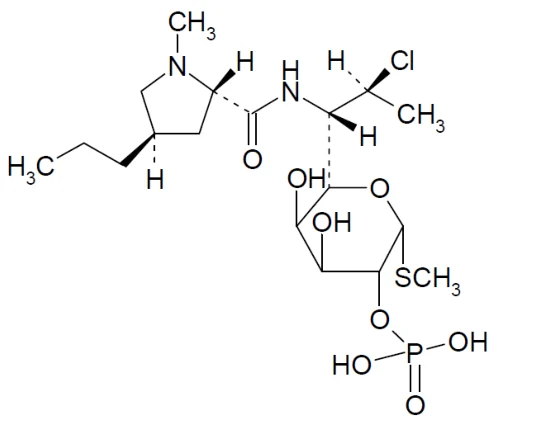
Physicochemical properties:
Description: Clindamycin is a white to off-white, hygroscopic, crystalline powder.
Proper name: Adapalene
Chemical name: 6-(3-[1-adamantyl]-4-methoxyphenyl)-2-naphthoic acid
Molecular formula and molecular mass: C28H28O3 412.5 g/mol
Structural formula:
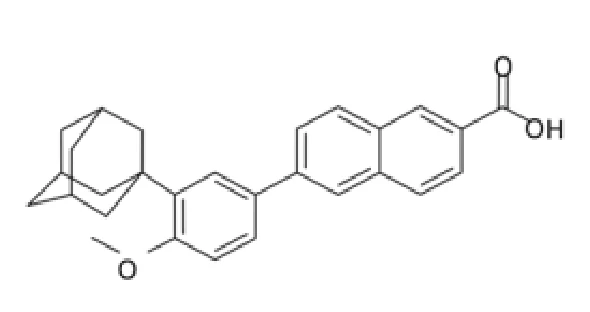
Physicochemical properties:
Description: Adapalene is a white to off-white powder.
Solubility: Sparingly soluble in tetrahydrofuran, practically insoluble in ethanol and in water.
Proper name: Benzoyl Peroxide
Chemical name: Peroxide, dibenzoyl
Molecular formula and molecular mass: C14H10O4 242.23g/mol
Structural formula:
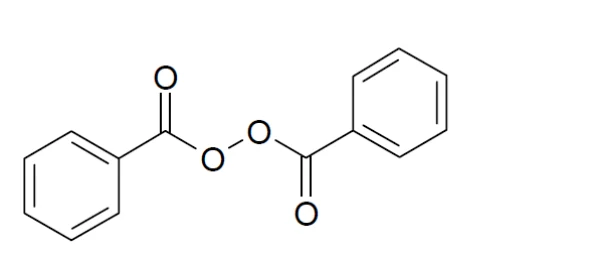
Physicochemical properties:
Description: Benzoyl peroxide is a white, granular powder
Solubility: Soluble in acetone and methylene chloride, slightly soluble in alcohol and insoluble in water.
14 CLINICAL TRIALS
14.1 Clinical Trials by Indication
Treatment of Acne Vulgaris in Patients 9 Years of Age and Older
The safety and efficacy of once daily use of CABTREO for the treatment of facial acne vulgaris were assessed in two multicenter, randomized, double-blind clinical trials in subjects 9 years and older with facial acne vulgaris. Patient demographics that participated in the trials (N = 363) consisted of 73.6% white, 14.9% Black/African American and 7.2 % Asian. As assessed by the Evaluator’s Global Severity Score (EGSS), 91.2% and 8.8% of participants had moderate or severe facial acne, respectively, at baseline.
While subjects aged 9 to less than 12 years were included in these trials, CABTREO is approved for use in patients of 12 years of age and above.
Table 5: Summary of Patient Demographics for Clinical Trials in The Treatment of Acne Vulgaris
| Study # | Study design | Dosage, route of administration and duration | Study subjects (n) | Mean age (Range) | Sex |
| 301 | Multicenter, double blind, randomized, parallel group study designed to assess the safety, tolerability, and efficacy of CABTREO in subjects with a clinical diagnosis of moderate to severe facial acne | Applied topically, once daily for 12 weeks | 183 patients CABTREO (122 patients) Vehicle Gel (61 patients) | 20.0 years old (10 to 44 years old) | 77 Male (42.1 %) 106 Female (57.9 %) |
| 302 | Multicenter, double blind, randomized, parallel group study designed to assess the safety, tolerability, and efficacy of CABTREO Gel in subjects with a clinical diagnosis of moderate to severe facial acne | Applied topically, once daily for 12 weeks | 180 patients CABTREO (120 patients) Vehicle Gel (60 patients) | 20.6 years old (10 to 48 years old) | 74 Male (41.1 %) 106 Female (58.9 %) |
14.2 Study Results
Table 6: Results of Studies 301 and 302 in The Treatment of Acne Vulgaris
| Primary Endpoints | Associated value and statistical significance for Placebo or active control |
| Absolute change in the facial inflammatory lesion count from baseline to Week 12 | Both studies (301 and 302) met their coprimary efficacy endpoints and thereby demonstrated that CABTREO is superior to Vehicle Gel in the treatment of acne (Table 7). The percentages of subjects with treatment success were also markedly similar when compared by study drug group between studies. |
| Absolute change in the facial non-inflammatory lesion count from baseline to Week 12 | |
| Percentage of subjects who achieved at least a 2-grade reduction at Week 12 from baseline in the EGSS and had an EGSS at Week 12 that equated to clear or almost clear (defined as treatment success) | |
Table 7: Studies 301 and 302: Co-Primary Efficacy Results (ITT Population)
| 301 | 302 | |||||||||||||||||
|---|---|---|---|---|---|---|---|---|---|---|---|---|---|---|---|---|---|---|
| CABTREO (N = 122) | Vehicle Gel (N = 61) | Treatment Difference (95% CI) | P-value | CABTREO (N = 120) | Vehicle Gel (N = 60) | Treatment Difference (95% CI) | P-value | |||||||||||
Inflammatory Lesion Count Absolute change from baseline at Week 12 | ||||||||||||||||||
LSM (LS SD)a | -27.7 (9.55) | -21.7 (8.79) | -5.94 (-8.73, -3.14) | < 0.001b | -30.1 (9.64) | -20.8 (9.90) | -9.30 (-12.38, -6.23) | < 0.001b | ||||||||||
| Percent change from baseline at Week 12 | ||||||||||||||||||
LSM (LS SD)a | -75.70 (26.663) | -59.62 (24.348) | -16.08 (-23.72, -8.44) | < 0.001b | -80.13 (25.274) | -56.18 (25.149) | -23.95 (-31.73, -16.16) | < 0.001b | ||||||||||
Non-inflammatory Lesion Count Absolute change from baseline at Week 12 | ||||||||||||||||||
LSM (LS SD)a | -35.4 (15.52) | -23.5 (14.93) | -11.85 (-16.56, -7.14) | < 0.001b | -35.2 (14.48) | -22.0 (14.27) | -13.27 (-17.74, -8.80) | < 0.001b | ||||||||||
| Percent change from baseline at Week 12 | ||||||||||||||||||
LSM (LS SD)a | -72.70 (32.364) | -47.61 (31.069) | -25.09 (-34.96, -15.22) | < 0.001b | -73.26 (27.640) | -48.99 (27.345) | -24.27 (-32.86, -15.68) | < 0.001b | ||||||||||
| EGSS reduction ≥ 2 grades from baseline and achieving clear or almost clear at Week 12 | ||||||||
|---|---|---|---|---|---|---|---|---|
| Treatment Success, % | 49.6 | 24.9 | 24.7 (10.7, 38.7)c | 0.003d | 50.5 | 20.5 | 30.0 (16.4, 43.6)c | 0.001d |
CI = confidence interval; EGSS = Evaluator’s Global Severity Score; ITT = intent-to-treat; LS = least squares; LSM = least squares means; max = maximum; min = minimum; SD = standard deviation;
Multiple imputation (Markov Chain Monte Carlo) was used to impute missing data.
a Least squares means, SDs, differences in LSM, and associated 95% CIs were from an analysis of covariance with factors of treatment group and analysis center, and the respective baseline lesion count as a covariate. In the analysis of covariance for the inflammatory lesion count, an interaction of treatment by analysis center was significant and included in the model. Values have been adjusted for multiple imputation. Negative LSM values represent decreases from baseline.
b P-values were obtained from a ranked analysis of covariance with factors of treatment group and analysis center, and the respective baseline lesion count as a covariate. In the ranked analysis of covariance for the inflammatory lesion count, an interaction of treatment by analysis center was significant and included in the model. Values have been adjusted for multiple imputation.
c Treatment difference and corresponding 95% CI based on the reported percentages of success.
d P-value was obtained from a logistic regression (using Firth’s penalized likelihood) with factors of treatment group and analysis center. Values have been adjusted for multiple imputation.
Percent changes from baseline in inflammatory and non-inflammatory lesion counts at weeks 4, 8, and 12 in addition to the percentage of participants achieving 2-grade reduction from baseline in EGSS at week 12 were also assessed in studies 301 and 301. All secondary endpoints from both studies were pre-planned, multiplicity-controlled and achieved statistical significance vs vehicle.
15 MICROBIOLOGY
No microbiology studies were conducted with CABTREO.
Clindamycin binds to the 50S ribosomal subunits of susceptible bacteria and prevents elongation of peptide chains by interfering with peptidyl transfer, thereby suppressing bacterial protein synthesis.
Clindamycin and benzoyl peroxide individually have been shown to have in vitro activity against Cutibacterium acnes (C. acnes), an organism which has been associated with acne vulgaris. In an in vitro study, the minimum inhibitory concentration (MIC) for benzoyl peroxide against C. acnes is 128 mg/L. The clinical significance of this activity against C. acnes is not known.
Development of Resistance
Cutibacterium acnes (C. acnes) resistance to clindamycin has been documented. Resistance to clindamycin is often associated with resistance to erythromycin.
16 NON-CLINICAL TOXICOLOGY
No carcinogenicity, genotoxicity, or reproductive and developmental toxicology studies were conducted with CABTREO. Data are available for individual components or a combination of two components (see Carcinogenicity, Genotoxicity, Reproductive and Developmental Toxicology and Special Toxicology).
General Toxicology
The dermal and systemic toxicity of CABTREO was investigated in a subchronic toxicity study in Göttingen minipigs following once daily dermal applications to 10% of total body surface area for 3 consecutive months. CABTREO was well tolerated and did not adversely affect any measured parameters. The no-observed-adverse-effect-level (NOAEL) was the high dose which used an enhanced formulation with 2.4% clindamycin phosphate, 6.2% benzoyl peroxide, and 0.3% adapalene (26 times the maximum recommended human dose, MRHD, of 2.5 grams of CABTREO, based on a mg/m2 comparison).
Carcinogenicity
Carcinogenicity studies have been conducted with a gel formulation containing 1% clindamycin phosphate and 5% benzoyl peroxide. In a 2-year dermal carcinogenicity study in mice, treatment with the gel formulation at doses of 900, 2700, and 15000 mg/kg/day (1.2, 3.6 and 20 times the MRHD for clindamycin phosphate and 2.3, 7, and 39 times the MRHD for benzoyl peroxide, respectively, based on a mg/m2 comparison) did not cause any increase in tumors.
Topical treatment with a different gel formulation containing 1% clindamycin phosphate and 5% benzoyl peroxide at doses of 100, 500, and 2000 mg/kg/day in a 2-year dermal carcinogenicity study in rats caused a dose-dependent increase in the incidence of keratoacanthoma at the treated skin site of male rats. In an oral (gavage) carcinogenicity study in rats, treatment with the gel formulation at doses of 300, 900, and 3000 mg/kg/day (0.8, 2.4 and 8 times the MRHD for clindamycin phosphate and 1.5, 4.6, and 16 times the MRHD for benzoyl peroxide, respectively, based on a mg/m2 comparison) for up to 97 weeks did not cause any increase in tumors.
Carcinogenicity studies with adapalene were conducted in mice at topical doses of 0.4, 1.3, and 4.0 mg/kg/day, and in rats at oral doses of 0.15, 0.5, and 1.5 mg/kg/day. The highest dose levels are 4.3 (mice) and 3.2 (rats) times the MRHD based on a mg/m2 comparison. In the rat study, an increased incidence of benign and malignant pheochromocytomas reported in the adrenal medulla of male rats was observed.
Benzoyl peroxide is a tumor promoter in several animal species. The significance of this finding in humans is unknown.
Genotoxicity
Clindamycin phosphate was not genotoxic in the human lymphocyte chromosome aberration assay.
Bacterial mutagenicity assays (Ames test) with benzoyl peroxide reported mutagenic potential in a few but not in the majority of investigations. Benzoyl peroxide has been shown to produce single-strand DNA breaks in human bronchial epithelial and mouse epidermal cells, DNA-protein cross-links in the human cells, and a dose-dependent increase in sister chromatid exchanges in Chinese hamster ovary cells.
Adapalene did not exhibit mutagenic or genotoxic effects in vitro (Ames test, Chinese hamster ovary cell assay, or mouse lymphoma TK assay) or in vivo (mouse micronucleus test).
Reproductive and Developmental Toxicology
Animal reproductive/developmental toxicity studies have not been conducted with CABTREO.
Fertility studies in rats treated orally with up to 300 mg/kg/day of clindamycin phosphate (approximately 80 times the MRHD based on a mg/m2 comparison) revealed no effects on fertility or mating ability.
Developmental toxicity studies of clindamycin performed in pregnant rats and mice administered during the period of organogenesis at oral doses of up to 600 mg/kg/day clindamycin phosphate (160 and 80 times the MRHD, respectively, based on a mg/m2 comparison) or subcutaneous doses of up to 200 mg/kg/day clindamycin phosphate (53 and 27 times the MRHD, respectively, based on a mg/m2 comparison) revealed no malformations or embryo-fetal development toxicity.
In a combined repeated dose and reproduction/developmental toxicity study, benzoyl peroxide was administered to rats by oral gavage at 0, 250, 500, and 1000 mg/kg/day. Males were dosed for 29 days, and females were dosed for 41 to 51 days (from 14 days before mating to day 3 of lactation). No benzoyl peroxide -related changes in pre-coital time and rate of copulation, fertility, and gestation were noted. The NOAEL for reproductive toxicity was 500 mg/kg/day in males based on reproductive organ weight reduction and slight testes degeneration at 1000 mg/kg/day (52 and 103 times the MRHD, respectively, based on a mg/m2 comparison). In females, slight uterine epithelial vacuolation and hyperplasia was observed at the high dose but considered not treatment related. The NOAEL for developmental toxicity was 500 mg/kg/day based on a high birthrate of runts and decreased pup body weight gain at 1000 mg/kg/day (52 and 103 times the MRHD, respectively, based on a mg/m2 comparison).
In a rat oral reproduction study, 20 mg/kg/day adapalene (43 times the MRHD based on a mg/m2 comparison) did not affect the reproductive performance and fertility of F0 males and females, or the growth, development, and reproductive function of F1 offspring.
No teratogenic effects were observed in rats treated with oral doses of 0.15 to 5.0 mg/kg/day adapalene (up to 11 times the MRHD based on a mg/m2 comparison). However, teratogenic effects were observed in rats and rabbits at ≥ 25 mg/kg/day adapalene (53 and 107 times the MRHD, respectively, based on a mg/m2 comparison). Findings included cleft palate, microphthalmia, encephalocele, and skeletal abnormalities in rats and umbilical hernia, exophthalmos, and kidney and skeletal abnormalities in rabbits.
Dermal teratology studies conducted in rats and rabbits at doses of 0.6-6.0 mg/kg/day adapalene (up to 13 and 26 times the MRHD, respectively, based on a mg/m2 comparison) exhibited no fetotoxicity and only minimal increases in supernumerary ribs in both species and delayed ossification in rabbits.
Special Toxicology
The phototoxic potential of CABTREO was evaluated in the EpiDerm in vitro skin model and predicted to be not phototoxic. CABTREO was predicted to be minimally irritating/non-irritating to the eye in the EpiOcular in vitro model.
The combination of clindamycin and benzoyl peroxide (1% clindamycin and 5% benzoyl peroxide) was a mild primary ocular irritant in rabbit, not a primary rabbit skin irritant, and not a dermal sensitizer in the Buehler guinea pig test. There was no evidence of UVA-mediated dermal irritation in rabbits treated topically.
Skin sensitization tests with benzoyl peroxide have consistently shown positive results in non-clinical studies, which included the mouse local lymph node assay, the guinea pig Buehler and human patch tests. However, in a clinical repeated insult patch test (RIPT) to assess dermal sensitization, CABTREO had low sensitization potential.