


Product Monograph - Dalacin T 1%
SUMMARY PRODUCT INFORMATION
| Route of Administration | Dosage Form / Strength | Clinically Relevant Nonmedicinal Ingredients |
| Topical | 1% (10 mg/mL) of clindamycin (as clindamycin phosphate) | Propylene glycol (50 mg) (5.0% w/v), isopropyl alcohol (500 mg) (50.0% w/v) For a complete listing see Dosage Forms, Composition and Packaging section. |
INDICATIONS AND CLINICAL USE
DALACIN T (clindamycin phosphate) is indicated for the treatment of acne vulgaris.
To reduce the development of drug-resistant bacteria and maintain the effectiveness of DALACIN T and other antibacterial drugs, DALACIN T should be used only to treat infections that are proven or strongly suspected to be caused by susceptible bacteria. When culture and susceptibility information are available, they should be considered in selecting or modifying antibacterial therapy. In the absence of such data, local epidemiology and susceptibility patterns may contribute to the empiric selection of therapy.
Geriatrics (> 65 years of age):
Clinical studies of clindamycin did not include sufficient numbers of patients age 65 and over to determine whether they respond differently from younger patients.
Pediatrics
Safety and effectiveness in pediatric patients under the age of 12 have not been established.
CONTRAINDICATIONS
DALACIN T (clindamycin phosphate) is contraindicated in individuals with a history of hypersensitivity to preparations containing clindamycin or lincomycin or to any ingredient in the formulation or component of the container (see DOSAGE FORMS, COMPOSITION AND PACKAGING).
DALACIN T is also contraindicated in individuals with a history of inflammatory bowel disease (including regional enteritis and ulcerative colitis), or a history of antibiotic - associated colitis (including pseudomembranous colitis).
WARNINGS AND PRECAUTIONS
General
FOR EXTERNAL USE ONLY. NOT FOR ORAL OR OPHTHALMIC USE.
DALACIN T (clindamycin phosphate) contains an alcohol base, isopropyl alcohol, which will cause burning and irritation of the eye. Avoid contact with eyes, mouth, lips, other mucous membranes, or areas of broken skin. In the event of accidental contact with sensitive surfaces bathe with copious amounts of cool tap water (see OVERDOSAGE).
The solution has an unpleasant taste and caution should be exercised when applying medication around the mouth.
Concomitant use of topical preparations containing alcohol should be avoided because they potentiate the drying action on the skin. The solvent vehicles in some of peeling, desquamating or abrasive agents as cleansers, medicated soaps or cosmetics are alcoholic and should be used with caution since a possible cumulative irritancy effect may occur in patients undergoing treatment.
DALACIN T should be prescribed with caution in atopic individuals.
Care should be exercised when treating patients with multiple medications. Resistance to clindamycin is often associated with resistance to erythromycin. It is therefore advisable to avoid concurrent use of the two agents either by topical or oral treatment (see DRUG INTERACTIONS).
Flammability
DALACIN T solution is flammable. Patients should avoid smoking or being near an open flame during application and immediately after use.
Gastrointestinal
Clostridium difficile-associated disease:
Clostridium difficile-associated disease (CDAD) has been reported with use of many antibacterial agents, including DALACIN T (clindamycin phosphate topical solution USP 1%). CDAD may range in severity from mild diarrhea to fatal colitis. It is important to consider this diagnosis in patients who present with diarrhea, or symptoms of colitis, pseudomembranous colitis, toxic megacolon, or perforation of colon subsequent to the administration of any antibacterial agent. CDAD has been reported to occur over 2 months after the administration of antibacterial agents.
Treatment with antibacterial agents may alter the normal flora of the colon and may permit overgrowth of Clostridium difficile. C. difficile produces toxins A and B, which contribute to the development of CDAD. CDAD may cause significant morbidity and mortality. CDAD can be refractory to antimicrobial therapy.
If the diagnosis of CDAD is suspected or confirmed, appropriate therapeutic measures should be initiated. Mild cases of CDAD usually respond to discontinuation of antibacterial agents not directed against Clostridium difficile. In moderate to severe cases, consideration should be given to management with fluids and electrolytes, protein supplementation, and treatment with an antibacterial agent clinically effective against Clostridium difficile. Surgical evaluation should be instituted as clinically indicated, as surgical intervention may be required in certain severe cases (see ADVERSE REACTIONS).
Susceptibility/Resistance
Development of drug-resistant bacteria:
Prescribing DALACIN T in the absence of a proven or strongly suspected bacterial infection is unlikely to provide benefit to the patient and risks the development of drug-resistant bacteria.
Special Populations
Pregnant Women: There are no adequate and well-controlled studies in pregnant women. Safety for use in pregnancy has not been established.
DALACIN T should not be used during pregnancy unless clearly needed and unless the expected benefits to the mother outweigh any potential risks to the fetus.
Reproduction studies have been performed in rats and mice using subcutaneous and oral doses of clindamycin ranging from 20 to 600 mg/kg/day and have revealed no evidence of impaired fertility or harm to the fetus due to clindamycin except at doses that caused maternal toxicity. In one mouse strain, cleft palates were observed in treated fetuses; this response was not produced in other mouse strains or in other species, and therefore may be a strain specific effect. Oral and subcutaneous reproductive toxicity studies in rats and rabbits revealed no evidence of impaired fertility or harm to the fetus due to clindamycin, except at doses that caused maternal toxicity. Animal reproduction studies are not always predictive of human response.
Nursing Women: It is not known whether clindamycin is excreted in human breast milk following the use of topically-applied DALACIN T. However, clindamycin has been reported to appear in human breast milk in ranges from <0.5 to 3.8 mcg/mL following systemic use.
Clindamycin has the potential to cause adverse effects on the breastfed infant’s gastrointestinal flora such as diarrhea or blood in the stool, or rash. Because of the potential for serious adverse reactions in nursing infants, if clindamycin is required by a nursing mother, it is not a reason to discontinue breastfeeding, but an alternate drug may be preferred. If DALACIN T is used by a nursing mother, monitor the infant for possible adverse effects on the gastrointestinal flora, such as diarrhea, candidiasis (thrush, diaper rash) or blood in the stool indicating possible antibiotic-associated colitis.
The developmental and health benefits of breastfeeding should be considered along with the mother’s clinical need for DALACIN T and any potential adverse effects on the breastfed child from DALACIN T or from the underlying maternal condition.
ADVERSE REACTIONS
Adverse Drug Reaction Overview
In a large U.S. postmarketing surveillance study among 1298 patients treated only with topical clindamycin phosphate solution, skin dryness/irritation, diarrhea or gastrointestinal symptoms were the most commonly reported medical events. Of those, 258 (19.9%) reported one or more of the following dermatological events. Among patients treated with oral antibiotics only, or no antibiotics, the percentage of patients reporting dermatologic event(s) was 20.8% and 25.4% respectively.
Dry skin Irritation
Acne worse Itching
Rash/redness New Acne
Peeling Sunburn
Discolouration Contact Dermatitis
Urticaria
The following new gastrointestinal problems were reported in this surveillance study by 18.7% of the DALACIN T treated patients, 22.9% of the oral antibiotic treated patients, and 18.4% of the patients with no antibiotic exposure.
Abdominal Pain/cramps "Nervous" stomach
Nausea Ulcers
Flu/Virus Vomiting
Indigestion Colon problems
Gas/Bloating (not colitis)
Cases of diarrhea, bloody diarrhea and colitis (including pseudomembranous colitis) have been reported as adverse reactions in patients treated with topical formulations of clindamycin. Diarrhea was reported by 55 of the 1298 (5%) DALACIN T patients, compared to 3.9% of control patients (see WARNINGS and PRECAUTIONS, Gastrointestinal, CDAD).
In addition to the above, the following side effects have also been occasionally reported during drug treatment with DALACIN T: oily skin, eye pain and gram-negative folliculitis.
Additional serious adverse reactions and altered laboratory tests have been reported with the oral or parenteral use of clindamycin.
DRUG INTERACTIONS
Overview
Clinically important interactions between topical clindamycin and systemically co-administered drugs are unlikely, based on the low systemic exposure following multiple topical applications of clindamycin phosphate.
Clindamycin has been shown to have neuromuscular blocking properties and potential antagonism with erythromycin and aminoglycosides (see Table 1).
Drug-Drug Interactions
The drugs listed in this table are based on either drug interaction case reports or studies, or potential interactions due to the expected magnitude and seriousness of the interaction.
Table 1 - Established or Potential Drug-Drug Interactions
| Proper name | Ref | Effect | Clinical comment |
Neuromuscular blocking agents Examples include: atracurium, doxacurium, pancuronium, vecuronium | CS | Clindamycin (parenterally-administered) has been shown to have neuromuscular blocking properties that may enhance the action of other neuromuscular blocking agents. | Use with caution in patients receiving these agents concurrently. |
| aminoglycosides | T | Clindamycin is reported to antagonize bactericidal activity of aminoglycosides in vitro. In vivo antagonism has not been demonstrated. | Use with caution in patients receiving such agents. |
| erythromycin | T | Antagonism has been demonstrated between clindamycin and erythromycin in vitro. Clindamycin and erythromycin may compete for the same protein binding site in bacteria. | Due to possible clinical significance the two drugs should not be administered concurrently. |
Legend: C = Case Study; CT = Clinical Trial; T = Theoretical
Drug-Food Interactions
Interactions with food have not been established.
Drug-Herb Interactions
Interactions with herbal products have not been established.
Drug-Laboratory Interactions
Interactions with laboratory tests have not been established.
DOSAGE AND ADMINISTRATION
Dosing Considerations
The safety and efficacy of DALACIN T lotion has not been demonstrated beyond 12 week’s duration.
Recommended Dose and Dosage Adjustment
Apply thin film of DALACIN T to the skin twice daily. Patients responding to DALACIN T should show improvement in 8 weeks. Treatment beyond 12 weeks may call for evaluation by the physician.
Administration
DALACIN T is for external use only. Not for oral, intravaginal or ophthalmic use. Apply a thin film of DALACIN T twice daily to clean, dry skin of the whole area affected by acne not just to the pimples. Hands should be washed after application.
DALACIN T solution is flammable. Do not use the solution near flames or while you are smoking.
Unless skin is oily, washing 2 or 3 times a day with non-medicinal cleanser is enough. The face should not be washed for at least two hours after applying this medicine. After shaving, it is best to wait 30 minutes before applying the medicine because the alcohol in it may irritate freshly shaven skin.
To assist the patient, the pharmacist may assemble the bottle upon dispensing as follows:
- 1) remove cap from bottle and discard,
- 2) firmly press applicator into bottle,
- 3) seal firmly by tightening domed-cap.
Missed Dose
If a dose is missed, it should be applied as soon as remembered unless it is almost time for the next dose. The dose should not be doubled to make up for a missed dose.
OVERDOSAGE
| For management of a suspected drug overdose, contact your regional Poison Control Centre. |
Symptoms
DALACIN T contains isopropyl alcohol. Systemic absorption of isopropyl alcohol should be considered a possibility in the event of accidental ingestion.
Topically applied clindamycin phosphate can be absorbed in sufficient amounts to produce systemic side effects including abdominal pain, nausea, vomiting and diarrhea (see WARNINGS AND PRECAUTIONS).
The average biological half-life of clindamycin is 2.4 hours in the serum.
Treatment
No specific antidote is available. In the event of accidental ingestion, activated charcoal may be administered to aid in the removal of unabsorbed drug. General supportive measures are recommended.
In the event of accidental contact with sensitive surface (eye, abraded skin, mucous membrane) or excessive application of DALACIN T, the application site should be bathed with copious amounts of cool tap water (see WARNINGS AND PRECAUTIONS).
ACTION AND CLINICAL PHARMACOLOGY
Mechanism of Action
Clindamycin is a lincosamide antibiotic that inhibits bacterial protein synthesis. It affects both ribosome assembly and the translation process by targeting specifically the peptidyl transferase loop in domain V of 23S rRNA of the 50S ribosomal subunit. This is the site for peptide bond formation during protein elongation (transpeptidation or translocation) and for the hydrolysis of peptidyl-tRNA during the termination of bacterial protein synthesis. Clindamycin may also inhibit the binding of aminoacyl-tRNA (decoding). Clindamycin phosphate is inactive in vitro but rapid in vivo hydrolysis converts this compound to the antibacterially active clindamycin. Clindamycin has been shown to have in vitro activity against isolates of the anaerobic gram positive non-spore-forming bacilli species, which includes Propionibacterium acnes. This may account for its usefulness in acne. Clindamycin activity has been demonstrated in serum, urine and in comedonal extracts from acne patients.
The mean concentration of antibiotic activity in extracted comedones after application of DALACIN T (clindamycin phosphate) for 4 weeks was 597 μg/gram of comedonal material (range 60-1490). Clindamycin in vitro inhibits Propionibacterium acnes cultures tested.
STORAGE AND STABILITY
Temperature:
DALACIN T (clindamycin phosphate topical solution) should be stored at controlled room temperature (15º - 30°C).
Light:
Protect from exposure to heat and light.
Other:
- Keep in a safe place out of the reach and sight of children.
- Dalacin T is flammable. Keep away from flames.
- Do not freeze.
- Store the bottle upright.
DOSAGE FORMS, COMPOSITION AND PACKAGING
Each mL of DALACIN T (clindamycin phosphate topical solution) contains clindamycin phosphate equivalent to 10 mg clindamycin. The solution also contains isopropyl alcohol 50% v/v, propylene glycol and purified water. When needed, the pH of the solution is adjusted with hydrochloric acid and/or sodium hydroxide.
DALACIN T is available in 30 and 60 mL bottles. A dab-o-matic applicator and cap is provided external to each bottle for placement into the bottle.
PART II: SCIENTIFIC INFORMATION
PHARMACEUTICAL INFORMATION
Drug Substance
Proper name: clindamycin phosphate
Chemical name: (1) Octopyranoside, methyl 7-chloro-6,7,8-trideoxy-6- trans(1-methyl-4-propyl-L-2-pyrrolidinecarboxamido)-1-thio-L-threo -α-D-galacto-,2-(dihydrogen phosphate), hydrate;
(2) Lincomycin, 7(S)-chloro-7-deoxy-,2-phosphate, hydrate;
(3) Clindamycin 2-phosphate hydrate
Molecular formula: C18H34ClN2O8PS
Molecular mass: 505
Structural formula:
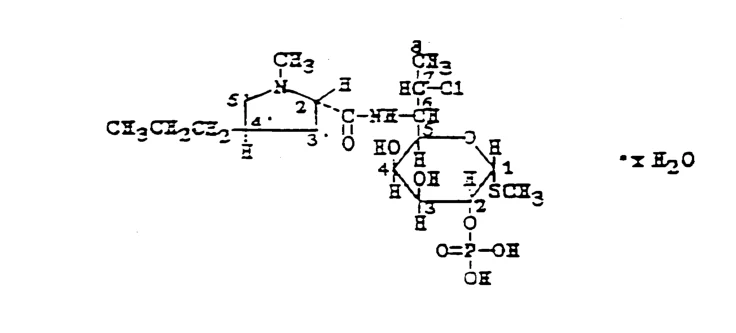
Physicochemical properties: Clindamycin phosphate is a water soluble ester of
clindamycin and phosphoric acid. The intact ester is essentially inactive as an antibacterial agent. Chemical or enzymatic hydrolysis of clindamycin phosphate is necessary to obtain the antibiotic activity of the clindamycin base. Clindamycin phosphate is a white to off-white, hygroscopic, crystalline powder which melts at about 175ºC with decomposition. It has two acidic protons with pK1 = 0.964 and pK2 = 6.081. The partition co-efficient is 0.03. The pH of a solution of 10 mg/mL in water is between 3.5 and 4.5.
DETAILED PHARMACOLOGY
In vitro studies using human skin from leg amputations indicated that approximately 5 to 10% of a single application of 1% 3H-clindamycin solution penetrated the epidermis. Twice daily applications increased the total amount of clindamycin penetrating the skin but three times a day applications did not.
Clindamycin plasma concentrations were detectable (≥ 0.5 ng/ml) in 5 of 6 patients when 1% clindamycin phosphate was applied to approximately 300 cm2 of the face every 12 hours for 6 doses. Peak concentrations in plasma ranged from 0 to 3.0 ng/ml which represent levels 1000 times lower than peak levels after 600 mg clindamycin phosphate given intravenously or 300 mg of clindamycin hydrochloride given orally.
Clindamycin phosphate was detected in the urine of all 6 patients in amounts from less than 1 ng/ml to 53 ng/ml. Since the total cumulative dose of clindamycin phosphate applied to the skin was 60 mg, the percent of dose recovered in the urine was 0.156% (range 0.08 to 0.34%).
The penetration of clindamycin into comedones has been demonstrated. When 9 patients were treated with topical 1% clindamycin phosphate twice daily for 16 weeks, all patients had one or more comedones containing clindamycin bioactivity. In addition, quantitative cultures of acne comedones were performed on 5 clindamycin and 8 vehicle-treated patients. Clindamycin produced significantly reduced P. acnes colony counts at weeks 6, 12 and 14.
Thirty-five P. acnes isolates from the clindamycin-treated patients were tested for their clindamycin susceptibility. No stepwise increases in MIC were encountered in specimens collected over the observation period (16 weeks treatment, 12 weeks post-treatment). The largest MIC observed was 0.39 μg/ml.
Four patients treated with topical clindamycin phosphate developed resistant strains of Staphylococcus aureus and enterococci during treatment. Two thirds of these strains had disappeared 8 weeks after treatment. All strains of Propionibacteria acnes were sensitive to clindamycin and remained so through an 8 week treatment period.
There were no changes in the colonic flora when patients received topical clindamycin phosphate treatment. No increased resistance to clindamycin was detected in the colon.
A comparative irritancy study showed retinoic acid most irritating, followed by 1% clindamycin hydrochloride and benzoyl peroxide. No irritancy was found for clindamycin phosphate or a 3% sulfur cream.
An evaluation for potential to cause allergic contact dermatitis was performed in 102 patients using 1% and 3% clindamycin phosphate. On rechallenge all were negative.
Clindamycin phosphate 1% solution was tested for sensitization potential by the Draize test with the addition of ultraviolet irradiation. No evidence of photoallergic or allergic contact sensitization was found in any subject.
MICROBIOLOGY
Clindamycin phosphate is inactive in vitro but rapid in vivo hydrolysis converts this compound to the antibacterially active clindamycin. Clindamycin has been shown to have in vitro activity against isolates of Propionibacterium acne.
Pharmacodynamic effects
Efficacy against the pathogen is related to the time period over which the agent level is above the minimum inhibitory concentration (MIC), or in short, the %T > MIC.
Resistance
Resistance to clindamycin in Propionibacterium acnes can be caused by mutations at the rRNA antibiotic binding site or by methylation of specific nucleotides in the 23S RNA of the 50S ribosomal subunit. These alterations can determine cross resistance to macrolides and streptogramins B (MLSB phenotype). Macrolide-resistant isolates should be tested for inducible resistance to clindamycin using the D-zone test. Cross resistance has been demonstrated between clindamycin and lincomycin.
The prevalence of acquired resistance may vary geographically and with time for selected species and local information on resistance is desirable, particularly when treating severe infections. As necessary, expert advice should be sought when the local prevalence of resistance is such that the utility of the agent in at least some types of infections is questionable. Particularly in severe infections or therapy failure microbiological diagnosis with verification of the pathogen and its susceptibility to clindamycin is recommended.
Resistance is usually defined by susceptibility interpretive criteria (breakpoints) established by regulatory agencies, CLSI or EUCAST for systemically administered antibiotics. These breakpoints may be less relevant for topically administered clindamycin. Although clindamycin is not specifically cited, EUCAST has suggested that, for topically applied antimicrobials, resistance might be better defined by epidemiological cut-off values (ECOFFS) rather than the clinical breakpoints determined for systemic administration. However, MIC distributions and ECOFFS have not been published by EUCAST for P. acnes. Based on correlations between clinical results in acne patients and the clindamycin MICs for their P. acnes isolates, values as high as 256 mg/L are considered susceptible for topically administered clindamycin.
CLSI has published MIC ranges for a limited number (58) of unique clinical isolates of P. acnes collected in 2010-2012 in US hospitals; 91% of these isolates were susceptible to clindamycin (MIC ≤8 mg/L). A recent Belgian surveillance study (2011-2012) of anaerobic bacteria included
22 P. acnes isolates; 95.5% were susceptible to clindamycin. An earlier European surveillance study, which included 304 isolates of P. acnes, had reported a resistance rate of 15% to clindamycin. However, this study used a breakpoint of 0.12 mg/L; using the current breakpoint of 4 mg/L, there were no resistant isolates.
Breakpoints
CLSI and EUCAST breakpoints for Gram-positive anaerobes are listed below. Although the two institutions report the values differently, the resistance breakpoint is the same, because CLSI recognized a category of intermediate susceptibility (4 mg/L). As indicated above, these breakpoints are based on use in systemic infections.
EUCAST Breakpoints for Systemically Administered Clindamycin
| Pathogen | Susceptible | Resistant |
| Gram-positive anaerobes (excluding Clostridium difficile) | ≤4 mg/L | >4 mg/L |
CLSI Breakpoints for Systemically Administered Clindamycin
| Pathogen | Susceptible | Resistant |
| Anaerobes | ≤2 mg/L | ≥8 mg/L |
TOXICOLOGY
Animal Studies
A 1% solution of clindamycin phosphate was applied once a day and a 3% solution was applied three times a day to rats for 21 days. No inflammation, hyperplasia, parakeratosis, hemorrhage or edema was noted in the treated area of the skin. In the 3% solution study, females grew in weight slightly more, had slightly lower leukocyte and heterophil counts, and had a lower proportion of liver: body weight (21 day) when compared to control animals. Bioactivity was present in serum immediately after last application in the 1% and 3% studies, however in the 3% study, bioactivity was present in the skin, urine and trace amounts in the long bones 5 days after the last application. There was no difference in absorption between animals with intact or abraded skin.
A 1% clindamycin hydrochloride topical solution was applied daily to dogs for 21 days. There was no skin damage and no evidence of absorption in the dog.
A 3% clindamycin hydrochloride solution was applied three-times-a-day to pigs for 21 days. There was no skin irritation and five days post-therapy, there was residual bioactivity present in the treated skin, which was largely confined to the epidermis.
Reproduction and Development Toxicity
Oral and subcutaneous reproductive toxicity studies in rats and rabbits revealed no evidence of impaired fertility or harm to the fetus due to clindamycin, except at doses that caused maternal toxicity.
In oral embryo fetal development studies in rats and subcutaneous embryo fetal development studies in rats and rabbits, no developmental toxicity was observed except at doses that produced maternal toxicity.
Mutagenicity
Clindamycin phosphate did not show evidence of mutagenicity when tested in the AMES ASSAY (Salmonella/Microsome Test) or the Micronucleus Test.
Ocular Application
Rats were administered 1% clindamycin hydrochloride or phosphate formulations to the eyes for 20 days. There was no evidence of ocular irritation or inflammation. A single administration of 1% clindamycin hydrochloride to the eyes of rabbit produced mild to moderate irritation similar to that for the vehicle control.
REFERENCES
- 1. Becker LE, Bergstresser PR, Whiting DA, Clendenning WE, Dobson RL, Jordan WP, Abell E, LeZotte LA, Pochi PE, Shupack JL, Sigafoes RB, Stoughton RB, Voorhees JJ. Topical Clindamycin Therapy for Acne Vulgaris: A Cooperative Clinical Study. Arch Dermatol 1981;117(8):482-5.
- 2. Resh W, Stoughton RB. Topically applied antibiotics in acne Vulgaris. Arch Dermatol 1976;112:182-4.
- 3. Stoughton RB. Topical antibiotics for acne vulgaris: Current usage. Arch Dermatol 1979;115:486-9.
- 4. Stoughton RB, Resh W. Topical clindamycin in the control of acne vulgaris. Cutis 1976;17:551-4.
- 5. Stoughton RB, Cornell RC, Gange RW, Walter JF. Double-blind Comparison of Topical 1 Percent Clindamycin Phosphate (Cleocin T) and Oral Tetracycline 500 mg/Day in the Treatment of Acne. Cutis 1980;26(4):424-5 & 429.
- 6. Thomsen RJ, Stranieri A, Knutson D, Strauss J. Topical Clindamycin Treatment of Acne: Clinical, Surface Lipid Composition, and Quantitative Surface Microbiology Response. Arch Dermatol 1980;116(9):1031-4.
- 7. Borglud E, Hagermark O, Nord C. Impact of topical clindamycin and systemic tetracycline on the skin and colon microflora in patients with acne vulgaris. Scand J Infect Dis 1984;43:76-81.
- 8. Puhvel SM. Effects of treatment with erythromycin 1.5% topical solution or clindamycin phosphate 1% topical solution on P. acnes counts and free fatty acid levels. Cutis 1983;31:339-42.
- 9. Leyden JL, Shalita AR, Saatjian GD, Sefton J. Erythromycin 2% gel in comparison with clindamycin phosphate 1% solution in acne vulgaris. J Am Acad Dermatol 1987;16(4):822-7.
- 10. Parry MF and Rha C-K. Pseudomembranous colitis caused by topical clindamycin phosphate. Arch Dermatol. 1986; 122: 583-4