


Product Monograph - Stievamycin Regular
INDICATIONS AND CLINICAL USE
STIEVAMYCIN® topical gels are indicated in the treatment of acne vulgaris, primarily where comedones, papules and pustules predominate. STIEVAMYCIN® is not indicated for the treatment of cysts and nodules. It is not indicated for use in Grade IV acne.
Geriatrics (> 65 years of age): Safety and effectiveness of STIEVAMYCIN® topical gels in patients aged 65 years and above have not been established.
Pediatrics (< 12 years of age): Safety and effectiveness of STIEVAMYCIN® topical gels in patients below the age of 12 years have not been established.
CONTRAINDICATIONS
STIEVAMYCIN® topical gels are contraindicated in patients with known hypersensitivity to retinoids and/or erythromycin or to any ingredients contained in the preparation.
WARNINGS
STIEVAMYCIN® TOPICAL GELS ARE INTENDED FOR EXTERNAL USE ONLY AND
SHOULD BE KEPT AWAY FROM ABRADED SKIN, LIPS, EYES, NOSE, MOUTH,
AND OTHER MUCOUS MEMBRANES BECAUSE OF ITS IRRITANT EFFECT. IN
CASE OF ACCIDENTAL CONTACT WITH THE EYE AND IF SENSITIVITY OR
CHEMICAL IRRITATION OCCURS, THE MEDICATION SHOULD BE
DISCONTINUED. RINSE PROFUSELY WITH WATER AND REFER THE PATIENT
TO THE OPHTHALMOLOGIST.
Do not apply to eyelids or to the skin at the corners of the eyes and mouth. Avoid the angles of the nose, skin fold areas and nasolabial fold (if treatment in these areas is necessary, apply very sparingly).
Topical use may induce severe local erythema and peeling at the site of application. If the degree of local irritation warrants, patients should be directed to use the medication less frequently, discontinue use temporarily or discontinue use altogether.
STIEVAMYCIN® topical gels should be used with caution in patients using medications that are known photosensitizers (see DRUG INTERACTIONS).
Topical tretinoin has been reported to cause severe irritation of eczematous skin and should only be used with utmost caution in patients with this condition.
Fertility
There are no data on the effect of topical erythromycin and/or tretinoin on fertility in humans.
SPECIAL POPULATIONS
Pregnant Women
Erythromycin/Tretinoin
Topical erythromycin/tretinoin gel should not be used by pregnant women.
Topical erythromycin/tretinoin gel is not recommended for women of childbearing years without the proper use of an effective method of contraception.
Tretinoin
Observational studies of varying sample size involving a total of 1535 women presumed exposed to topical tretinoin during the first trimester of pregnancy did not detect an increased incidence of congenital abnormalities, including retinoic acid embryopathy or major structural defects.
Cases of temporally associated congenital abnormalities have been reported during clinical use of topical tretinoin during pregnancy, including the rare birth defect category, holoprosencephaly.
Orally administered retinoids are known teratogens causing a high incidence of severe birth defects, and are contraindicated during pregnancy.
Nonclinical reproductive toxicity studies of topical retinoids have found evidence of developmental toxicity at doses ≥ 80-fold the anticipated clinical dose.
The magnitude of risk to the embryo/fetus from topical use of tretinoin is uncertain.
When used in accordance with the prescribing information, there is an approximate 1 % to 6 % systemic absorption from topically administered tretinoin. However, even though systemic absorption is low from topically administered tretinoin, risk cannot be excluded since there may be other factors that contribute to an increased systemic exposure such as dose used, skin barrier integrity, concurrent use with other products, hypervitaminosis A and dietary intake of vitamin A and/or provitamin A (beta-carotene)
or ingestion of these as supplements.
Erythromycin
The safety of erythromycin during pregnancy has not been established. There are limited data on the use of topical erythromycin in pregnant women. Systemic exposure to erythromycin is very limited with topical application. Erythromycin crosses the placental barrier.
Nursing Women
- Topical erythromycin/tretinoin gel has not been studied during breast-feeding.
- It is unknown whether tretinoin is excreted in human milk after topical application.
- Erythromycin is excreted in human milk following oral and parenteral administration.
A risk to the newborns/infants cannot be excluded. Therefore, a decision should be made whether to discontinue nursing or to discontinue the drug taking into account the benefit of breast-feeding to the child and the benefit of the drug to the mother.
Pediatrics (<12 years of age)
Safety and efficacy in patients below the age of 12 years have not been established, therefore STIEVAMYCIN® topical gels are not recommended for use in this population.
PRECAUTIONS
General
Tretinoin has irritant properties, heightens susceptibility to ultraviolet light radiation, is sensitive to oxidation and is photolabile.
STIEVAMYCIN® topical gels should be used with caution in patients with:
- a history of local tolerability reactions, photoallergy or local hypersensitivity.
- A personal or family history of skin cancer.
- Inflammatory skin conditions that coexist with acne.
- Sensitive skin/or fair complexion.
Skin
Due to the irritant nature of tretinoin, caution should be used when applying to sensitive areas of skin, such as the neck, or in patients with inflammatory skin conditions that coexist with acne.
The skin of certain sensitive individuals, particularly those with fair complexions, may become excessively red, edematous, blistered or crusted when exposed to
STIEVAMYCIN® topical gels.
If skin irritation (redness, peeling or discomfort) or effects of other acne or other treatments with irritating potential are present, this should be resolved before initiating treatment with STIEVAMYCIN® topical gels.
Patients should be advised that excessive application will not improve efficacy, but may increase the risk of severe skin irritation. If severe irritation occurs, interrupt dosing to allow the skin to recover, and re-evaluate the dosing regimen with the patient.
Resistance and Cross-resistance
Resistance
The use of preparations containing antibiotics may be associated with overgrowth of antibiotic resistant Propionibacterium acnes as well as other bacteria (e.g.
Staphylococcus aureus, Streptococcus pyogenes), which may appear as poor response or worsening of the condition.
Cross-resistance
Cross-resistance between erythromycin and macrolide antibiotics can occur. If this should occur, therapy should be discontinued and appropriate measures taken. A cross-resistance between erythromycin and clindamycin has rarely been reported (see
DRUG INTERACTIONS).
Gastrointestinal
Clostridium Difficile-Associated Disease (CDAD)
Clostridium difficile-associated disease (CDAD) has been reported with use of many antibacterial agents. CDAD may range in severity from mild diarrhea to fatal colitis. It is important to consider this diagnosis in patients who present with diarrhea, or symptoms of colitis, pseudomembranous colitis, toxic megacolon, or perforation of colon subsequent to the administration of any antibacterial agent. CDAD has been reported to occur over 2 months after the administration of antibacterial agents.
Treatment with antibacterial agents may alter the normal flora of the colon and may permit overgrowth of Clostridium difficile. C. difficile produces toxins A and B, which contribute to the development of CDAD. CDAD may cause significant morbidity and mortality. CDAD can be refractory to antimicrobial therapy.
If the diagnosis of CDAD is suspected or confirmed, appropriate therapeutic measures should be initiated. Mild cases of CDAD usually respond to discontinuation of antibacterial agents not directed against Clostridium difficile. In moderate to severe cases, consideration should be given to management with fluids and electrolytes, protein supplementation, and treatment with an antibacterial agent clinically effective against Clostridium difficile. Surgical evaluation should be instituted as clinically indicated, as surgical intervention may be required in certain severe cases.
Environmental Factors
As tretinoin may cause increased sensitivity to ultraviolet radiation, exposure to sunlight and sun lamps should be avoided or minimized during the use of STIEVAMYCIN® topical gels.
When exposure to strong sunlight cannot be avoided (e.g. patients whose occupations require considerable exposure to the sun), patients should be advised to use a broad spectrum sunscreen with a SPF of at least 15, to re-apply sunscreen regularly and to wear protective clothing over treated areas.
Due to the potential for photosensitivity, resulting in a greater risk for sunburn,
STIEVAMYCIN® topical gels should be used with caution in patients with a personal or family history of skin cancer.
If a patient has sunburn, this should be resolved before initiating treatment with
STIEVAMYCIN® topical gels. If sunburn occurs while using STIEVAMYCIN® topical gels, it is advisable to interrupt therapy until the severe erythema and peeling subside.
Weather extremes, such as wind or cold, may be more irritating to patients using tretinoin-containing products.
Flammability
Due to the flammable nature of STIEVAMYCIN® topical gels, patients should avoid smoking or being near open flame during and immediately following application.
Carcinogenicity and Mutagenesis
No carcinogenicity studies were conducted with STIEVAMYCIN® topical gels.
Tretinoin
Carcinogenicity studies in hairless mice suggest that concurrent dermal exposure to isotretinoin, an isomer of tretinoin, may enhance the tumorigenic potential of ultraviolet irradiation (See TOXICOLOGY, Carcinogenesis).
Erythromycin
Carcinogenecity studies have not been conducted with erythromycin base (see
TOXICOLOGY, Carcinogenesis).
DRUG INTERACTIONS
Clindamycin and erythromycin have been shown to be antagonistic in vitro.
Concomitant application of oxidising agents, such as benzoyl peroxide, should be avoided since they may reduce the efficacy of topical tretinoin. If combination therapy is required, the products should be applied at different times of the day (e.g. one in the morning and the other in the evening).
Augmented Photosensitivity
Medications known to be photosensitizers (e.g., thiazides, tetracyclines,
fluroquinolones, phenothiazines, sulfonamides) should be used with caution with
STIEVAMYCIN® topical gel because augmented photosensitivity may occur.
Cumulative Irritation
Concomitant topical acne therapy and other topical medications should be used with caution because cumulative irritation may occur. Particular caution should be exercised during concomitant use of preparations containing a peeling agent (such as sulfur, resorcinol or salicylic acid) with STIEVAMYCIN® topical gels. If irritation or dermatitis occurs (redness, peeling or discomfort), reduce frequency of application or temporarily interrupt treatment and resume once the irritation subsides. Treatment should be discontinued if the irritation persists.
In patients whose skin has been subjected to procedures such as depilation, chemical hair treatments, chemical peels, dermabrasion or laser resurfacing, allow the skin to recover before initiating treatment with STIEVAMYCIN® topical gels.
Cosmetics that have a strong drying effect, including products with high concentrations of alcohol and/or astringents, or that have a potential irritating effect (abrasive agents, products containing spices or limes, etc.) should be used with caution as cumulative irritation may occur.
Patients may use noncomedogenic, hypoallergenic, and oil-free cosmetic products.
ADVERSE REACTIONS
Clinical Trial Adverse Drug Reactions
The following very common adverse drug reactions (> 10%) were reported in a clinical trial involving an erythromycin/tretinoin topical gel (see PHARMACOLOGY):
Skin and subcutaneous disorders: Skin burning sensation, skin exfoliation, erythema, pruritus.
To date, all adverse clinical effects of tretinoin encountered have been reversible upon discontinuance of therapy. In many instances, reinstitution of therapy with tretinoin failed to produce the adverse effect previously experienced.
Post-Marketing Adverse Drug Reactions
The following adverse drug reactions have been reported during post approval use of
STIEVAMYCIN® topical gels:
Immune system disorders: Hypersensitivity.
Gastrointestinal disorders: Abdominal pain, diarrhea.
Skin and subcutaneous disorders: Dry skin, photosensitivity reaction, rash, skin atrophy, skin hyperpigmentation, skin irritation.
General disorders and administration site conditions: Application site pain, facial edema.
SYMPTOMS AND TREATMENT OF OVERDOSAGE
For management of suspected drug overdosage, contact your regional Poison
Control Centre.
If topical medication is applied excessively, marked redness, peeling or discomfort may occur. If severe irritation occurs, suspend treatment and appropriate symptomatic measures should be taken.
In case of a suspected overdosage, a symptomatic and supportive treatment should be instituted. Inadvertent oral ingestion of STIEVAMYCIN® topical gels may lead to the same adverse effects as those associated with excessive oral intake of Vitamin A including teratogenesis in women of childbearing years. Therefore, in such cases, pregnancy testing should be carried out in women of childbearing years.
In oral doses of over 2g erythromycin per day, abdominal discomfort, nausea or diarrhea may occur. Inadvertent oral ingestion of STIEVAMYCIN® topical gels could cause the same gastrointestinal adverse reactions as those seen with orally administered erythromycin (manifested by abdominal discomfort, cramping, diarrhea, or vomiting). There is no specific treatment.
The formulation contains a significant quantity of ethanol. Systemic absorption of this should be considered a possibility in the event of overdosage.
DOSAGE AND ADMINISTRATION
STIEVAMYCIN® gels are for topical use only.
Recommended Dose and Dose Adjustment
STIEVAMYCIN® topical gels should be applied to the affected area once a day, preferably before bedtime.
Therapeutic results may be noticed after 2 to 3 weeks of therapy; however, results may not be optimal until after 8 to 10 weeks of treatment. Once the acne lesions have responded satisfactorily, it may be possible to maintain the improved state with less frequent applications; however a maintenance dose has not been studied or established.
Excessive application will not improve efficacy, but may increase the risk of severe irritation.
Formulation strength should be selected and adjusted according to the patient’s tolerance.
Treatment should be discontinued if a severe local inflammatory response is experienced.
In case of an apparent exacerbation of the acne lesions during early weeks of therapy dosing frequency may be reduced or a lower strength of STIEVAMYCIN® topical gel may be used.
In cases of undue skin irritation (redness, peeling or discomfort), the frequency of application should be reduced (e.g. application every other day), use a lower strength of the product, if applicable, or temporarily interrupt treatment. Efficacy has not been established for less than once daily dosing frequencies. The normal frequency of therapy should be resumed once the skin irritation subsides. Treatment should be discontinued if skin irritation persists.
Administration
The area under treatment (not just clinical lesions) should be thoroughly cleansed with a mild soap, and dried, followed by application of the gel in a gentle rubbing motion, using fingertips to apply medication. Hands should be washed before and after application.
Application may be accompanied by a transitory feeling of warmth or a stinging sensation. Patients may also use a moisturiser as needed.
Do not apply STIEVAMYCIN® topical gels to eyelids or to the skin at the corners of the eyes and mouth. Avoid the angles of the nose, skin fold areas and nasolabial fold. If treatment in these areas is necessary, apply very sparingly. Caution should be used when applying to sensitive areas of skin, such as the neck, or in patients with inflammatory skin conditions that coexist with acne (see WARNINGS).
Patients being treated with STIEVAMYCIN® topical gels may continue to use water-based, noncomedogenic, hypoallergenic and oil-free cosmetics. Following application of
STIEVAMYCIN® topical gels, the patient should be instructed to allow the skin to dry before applying cosmetics (see DRUG INTERACTIONS).
Missed Dose
If patients forget to take a dose of STIEVAMYCIN® topical gels, they should be instructed to apply the next dose at the usual time. Patients should be instructed to not apply a double dose to make up for forgotten doses.
PHARMACEUTICAL INFORMATION
DRUG SUBSTANCE
A. TRETINOIN
Proper Names: Tretinoin, Retinoic acid, vitamin A acid.
Chemical Names: 3,7-dimethyl-9-(2,6,6-trimethyl-1-cyclohexen-1-yl)-2,4,6,8-nonatetraenoic acid.
Structural Formula:
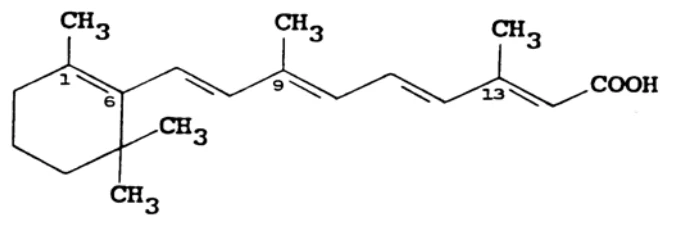
Molecular Formula: C20H2802 Molecular Weight: 300.44
Description: Tretinoin is a yellow to light orange crystalline powder.
Solubility: Insoluble in water.
Slightly soluble in alcohol and chloroform.
Melting Point: 180 °- 182°C
B. ERYTHROMYCIN
Proper Name: Erythromycin
Chemical Name: (3R*,4S*,5S*,6R*,7R*,9R*,11R*,12R*,13S*,14R*)-4- [(2,6-
Dideoxy-3-C-methyl-3-0-methyl-a-L-ribo-hexopyranosyl)oxy]-14-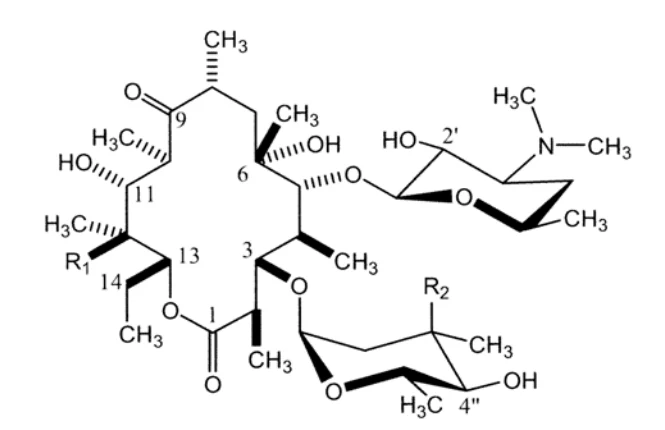
ethyl-7,12,13-trihydroxy-3,5,7,9,11,13-hexamethyl-6-[[3,4,6-trideoxy-3 (dimethylamino)-ß-D-xylo-hexopyranosyl]oxy]
oxacyclotetradecane-2,10-dione.
Structural Formula:
Erythromycin R1 R2
A OH OCH3
B H OCH3
C OH OH
Erythromycin contains primarily erythromycin A but also contains erythromycin B and C, with each having antibacterial activity.
Description: Erythromycin is a white to slightly yellow powder and/or crystals.
Solubility: Soluble in alcohol, ether, and chloroform. It is slightly soluble in water.
pKa: 8.8
Melting Point: 133°C 138°C
pH: Between 8.0 and 10.5 as a saturated aqueous solution.
DRUG PRODUCT
Composition: STIEVAMYCIN® MILD contains tretinoin USP 0.01% w/w and erythromycin USP 4% w/w in an alcohol gel base containing ethyl alcohol, hydroxypropyl cellulose, and butylated hydroxytoluene as non-medicinal ingredients.
Erythromycin A Erythromycin B Erythromycin C
Molecular Formula: C37H67NO13 C37H67NO12 C36H65NO13
Molecular Weight: 733.94 717.95 719.91 STIEVAMYCIN® REGULAR contains tretinoin USP 0.025% w/w and erythromycin USP 4% w/w in an alcohol gel base containing ethyl alcohol, hydroxypropyl cellulose, and butylated hydroxytoluene as non-medicinal ingredients.
STIEVAMYCIN® FORTE contains tretinoin USP 0.05% w/w and erythromycin USP 4% w/w in an alcohol gel base containing ethyl alcohol, hydroxypropyl cellulose, and butylated hydroxytoluene as non-medicinal ingredients.
Stability and Storage Recommendations:
STIEVAMYCIN® topical gels should be stored between 15°C and 25°C. Do not freeze.
Keep the tube tightly closed when not in use.
AVAILABILITY OF DOSAGE FORM
STIEVAMYCIN® MILD: 45 g tubes, each containing tretinoin USP 0.01% w/w and erythromycin USP 4% w/w in an alcohol gel base.
STIEVAMYCIN® REGULAR: 45 g tubes, each containing tretinoin USP 0.025% w/w and erythromycin USP 4% w/w in an alcohol gel base.
STIEVAMYCIN® FORTE: 45 g tubes, each containing tretinoin USP 0.05% w/w and erythromycin USP 4% w/w in an alcohol gel base.
MICROBIOLOGY
Erythromycin is a macrolide antibiotic which inhibits protein synthesis in susceptible organisms by reversibly binding to 50 S ribosomal subunits, thereby inhibiting translocation of aminoacyl transfer-RNA and inhibiting polypeptide synthesis.
Topical erythromycin is known to inhibit in vitro the growth of Propionibacterium acnes
(Corynebacterium acnes), an anaerobe found in sebaceous glands and follicles.
In Vitro Susceptibility of 125 Strains
of Propionibacterium acnes to Erythromycin6
| Cumulative % of Strains inhibited at MIC (mg/L) | |||||||||||
| 0.004 | 0.008 | 0.015 | 0.03 | 0.06 | 0.125 | 0.50 | 1.0 | 2 | 4 | 8$ | 16 |
| 2 | 4 | 18 | 57 | 70 | 74 | 75 | 78 | 78 | 78 | 79 | 100 |
Applied topically, erythromycin suppresses Propionibacterium acnes, resident bacteria of sebaceous follicles thus reducing the P. acnes mediated hydrolysis of triglycerides to fatty acids and so decreasing fatty acid formation. This is thought to be one factor responsible for its effectiveness in reducing acne lesion counts.
Resistance and Cross-resistance
Bacterial resistance to erythromycin may occur during course of therapy with
STIEVAMYCIN® topical gel.
Continuous use of erythromycin for more than 8-12 weeks can increase the risk of development of erythromycin-resistant P acnes.
Cross-resistance can develop as a result of point mutations in the genes encoding the
23 S ribosomal RNA. As a result of these point mutations, most strains of P acnes that are resistant to erythromycin may be cross-resistant to clindamycin. Studies show less common cross-resistance phenotypes against macrolides, lincosamide, and type B streptogramin.
In the clinical use of erythromycin, strains of P. acnes have been recovered which are resistant to erythromycin. These have been reported as developing in about 20 % of subjects. The resistant organisms recovered were also resistant to clindamycin.
PHARMACOLOGY
Tretinoin is a known metabolite of vitamin A. It appears to form inactive oxidation products which are excreted in the urine and glucuronides excreted in the feces.
In humans, cutaneous absorption of retinoic acid was studied by application of 3 grams of 14C labelled 0.1% retinoic acid cream on 200 cm2 of skin. After administration, radioactivity was detected in samples of blood, urine, stool and on skin occlusive dressings.
In subjects pretreated with unlabelled material, slight increases in their blood radioactivity were observed 8 hours after application of the labelled material. In patients not pretreated, no significant increases in radioactivity were observed.
Urine recovery studies in the subjects not pretreated showed a 1.24 to 2.60% (mean:
1.82%) urinary excretion of the applied dose. The mean urinary excretion of the pretreated subjects was 4.45%. Between 0.3 and 2.89% (mean: 1.58%) of the material was recovered in the stool of the pretreated subjects. Extraction of radioactivity from skin occlusive dressings accounted for 73 to 96% (mean: 85.9%) of the applied dose.
In a further study, 2 and 4 hours after application of radioactively labelled tretinoin to normal human skin, tretinoin was minimally detectable in the horny layer and sebaceous glands, but appreciably higher levels were found in the hair follicles and apocrine glands. After 24 hours, no penetration of radioactivity was detected beyond the
Malpighian layer. Clinical evaluation of the photosensitivity potential of tretinoin in one short-term study has shown the preparation to be free of phototoxic properties.
STIEVAMYCIN® topical gels were compared in a double-blind study7 to Stieva-A
(tretinoin 0.025%) in fifty-six patients (21 males, 35 females; ages 14-35 years). The
STIEVAMYCIN® group (n=31) had a more rapid reduction in inflammatory lesions than the Stieva-A group (n=25) at three weeks lasting to six weeks. Patients on
STIEVAMYCIN® experienced fewer adverse effects especially burning (p<0.05 at three weeks), erythema and skin peeling.
Relatively large systemic doses of tretinoin produced minor changes in the circulatory system of the cat. With 100 mg/kg, reduced perfusion in the hind extremities was noted, but there was no influence on blood pressure or respiration. Using 250 mg/kg, a mild reduction in blood pressure and a slight increase in pulse rate and circulation in the hind extremities were apparent. At a higher dose (1000 mg/kg) a pronounced increase in blood pressure and irregular respiration were observed; cardiac arrest followed fifteen minutes later.
Tretinoin, when administered orally or intraperitoneally, was shown to have a therapeutic effect on chemically induced skin papillomas and skin carcinomas in mice.
The extent of the regression of the papillomas appeared to be dependent on the dose and duration of treatment. Tretinoin was also shown to have not only a prophylactic effect on the induction of papillomas but on the development of carcinomas in mice. It has been observed in mice, that tretinoin applied to experimentally produce dermatologic wounds, stimulated wound healing.
The effect of tretinoin on the survival of skin grafts in mice has been investigated.
Tretinoin is thought to increase the susceptibility of skin homographs to the process of immunological rejection.
In several studies, tretinoin was administered orally to rats. It appears that little, if any, free tretinoin could be detected in the bile. Retinoyl ß-glucuronide is apparently the only naturally occurring metabolite in rat bile. The glucuronide undergoes ester interchange or dehydration reactions which result in the formation of all trans- or cis-methyl retinoates and retinoyl ß-glucurono-g-lactone, respectively. Retinoyl ß-glucuronide was also identified in the liver and intestine8.
TOXICOLOGY
Acute Toxicity
A. TRETINOIN
| LD50 (mg/kg*) | ||||
| Tretinoin | 0.1% and 0.3% | 0.05% | ||
| Pure Substance | Cream Formulation | Solution | ||
| Species | p.o. | i.p. | p.o. | p.o. |
| Mice | 2580 | 791 | >40 (0.1%) >60 (0.3%) | 9.5 ±0 |
| Neonatal Rats | 225±14 | - | - | - |
| Rats | 1995 | 786 | >60 (0.3%) | 13±1 |
| Rabbits | - | - | >60 (0.3%) | >5 |
*As active ingredient
In the animals receiving the 0.05% solution decreased motor activity, hypnosis, salivation and vasodilatation occurred. Tretinoin pure substance suspended in 5% gum acacia produced sedation, respiratory depression, diarrhea and alopecia in mice and rats. In neonatal rats receiving the pure substance, cyanosis and stunted growth were noted. In a dog tolerance study, tretinoin pure substance was tolerated at an oral dose of 320 mg/kg. A single oral dose of 10 mL/kg of the cream formulation (0.3%) produced emesis and an elevation of SGOT and SGPT levels.
In another dog tolerance study 2 mL/kg of the solution formulation produced emesis and the polymorphonuclear leucocyte/lymphocyte ratio increased in one dog.
B. ERYTHROMYCIN
| LD50 (mg/kg) | ||
| ROUTE | MICE | RATS |
| I.V. | 426 | 209 |
| I.M. | 394 | -- |
| P.O. | 3112 | 9227 |
Subacute Toxicity
A. TRETINOIN
Tretinoin was administered orally to rats at levels of 0.78, 1.56, 3.12, 6.25 and 12.5 mg/kg per day for 11 days. All the high dose animals died within 5 days and one animal from each of the next 3 lower dose groups died during the study, while all animals survived at the lowest dose level. Intestinal irritation and diarrhea were noted. Skeletal fractures were observed in several animals.
In a four week oral study in rats (2.5, 5, 10 and 20 mg/kg tretinoin per day), body weight grain was poor in the 20 mg/kg dose group. No bone fractures were observed in this study.
In a subsequent nine week study in rats, tretinoin was administered orally at 1.56 and
3.12 mg/kg per day levels and no mortality occurred. Females had a slight increase in body weight gain and the males showed a slight decrease. Four groups of rats received topical applications of a 0.3% cream at levels corresponding to 0, 1.5, 3 and 6 mg/kg/day of tretinoin 5 days per week of 13 weeks. Food consumption and body weight gain were slightly reduced in the high dose group. Skin lesions with irritation and inflammation were noted and appeared to be dose-dependent. Elevated total and polymorphonuclear leucocyte counts were observed in all dose groups. With the exception of a 3 mm mammary tumor in a control animal, there were no gross changes observed at autopsy. Microscopic examination of the skin revealed focal ulcerations and inflammatory changes of significant degree in the high and mid dose groups.
In another thirteen week rat study, 6 mg/kg of tretinoin per day administered 7 days per week in the diet was well tolerated, although body weight gain, red blood cell count, packed cell volume, haemoglobin concentration and serum protein values all decreased.
On the other hand, plasma alkaline phosphatase values were markedly elevated.
Histological examination revealed hyperplasia of blood-forming elements, increase in number and size of Kupffer liver cells, hydropic changes in the protoplasm of hepatocytes, increased number of foam cells and lymphatic elements of the lung, thinning of the epidermis and proliferation around the hair follicles.
In a 13 week dog study, tretinoin was administered orally to 4 groups of dogs at levels of 0, 3, 10 and 30 mg/kg/day, 7 days per week. No mortality occurred in any of the groups. In the high dose group, one dog lost about 25% of his initial body weight.
Eczema, acanthotic proliferation of the epidermis and diarrhea were also noted in the 10 and 30 mg/kg groups. Low erythrocyte count, haemoglobin concentration and packed cell volume were noted in the 30 mg/kg group. Changes in the albumin and gamma globulin fractions were seen and blood sedimentation rates increased in the 2 highest dose groups. Lack of spermatogenesis and atrophy of the tubular epithelia occurred;
there was hyperplasia of the blood-forming elements in bone marrow in the high dose group.
B. ERYTHROMYCIN
A chronic toxicity study with erythromycin base was performed in dogs and rats. Dogs were administered dosages ranging up to100 mg/kg/day for a period up to 90 weeks.
Rats were given up to 4 g/kg/day for a period up to 85 weeks. A review of the clinical signs and symptoms, weight curves, clinical laboratory values and gross and microscopic findings showed no evidence of toxicity due to drug action in dogs and rats at the dose levels indicated.
Topical Applications
A. TRETINOIN
Eye and skin irritation studies were performed on rabbits with the tretinoin cream formulation at concentrations ranging from 0.01% to 0.5%. In the eye irritation test, slight reddening of the conjunctiva occurred. Very slight edema and well-defined to moderate erythema were produced when applied to abraded and intact rabbit skin.
In subsequent irritation studies in rabbits, tretinoin, 0.3% cream and a placebo cream were compared. The same degree of irritation was noted in the 3 groups. Tretinoin substance produced slight erythema, while the cream and placebo produced well-defined erythema and slight edema to rabbit skin.
In another study, the 0.05% tretinoin solution and a placebo were tested in rabbits.
There appeared to be a very slight reddening of the conjunctiva and very slight discharge with both placebo and test solution groups. The placebo and test solution were considered non-irritating to the skin.
B. ERYTHROMYCIN
In irritation studies in rabbits, topical application of erythromycin 2% in ethyl alcohol resulted in minimal to moderate dermal erythema and edema in both abraded and intact skin.
TERATOLOGY
A. TRETINOIN
Female mice received tretinoin in oral doses of 1, 3, 9, 17, 43, 86 and 130 mg/kg from the 9th to 10th day of gestation. A slight increase in the incidence of skeletal malformations was observed in low dose group (1 mg/kg). A pronounced teratogenic effect was produced with 3 mg/kg and higher doses. Multiple malformations of the head
(cleft palate, exencephaly) were observed most frequently. A slight increase in rate of resorption occurred at 3 mg/kg. With 9 mg/kg, 50% of all implanted embryos were resorbed. At still higher doses, complete resorption occurred.
In a study in which 10 mg/kg/day was administered by gavage to 11 pregnant monkeys from days 20 to 45 of gestation, several teratogenic defects were observed. Specific defects such as cleft palate, auricular malformation, open eye with unilateral ablepharia, kyphosis, scoliosis, missing digits and severe curvature of the radius were observed9.
Vaginal hemorrhage was observed frequently in the mothers. Abortion or fetal death with intrauterine retention (in 6 of the 11 mothers) was also observed. Three normal fetuses resulted, two of which aborted before term.
In one study, no teratogenic effects were seen in the fetuses when Vitamin A Acid was topically applied daily to the skin of pregnant rats during the second third of gestation.
Results from topical teratology studies in rats and rabbits have been inconclusive.
B. ERYTHROMYCIN
There was no evidence of teratogenicity or other adverse effects on reproduction in female rats fed erythromycin base (up to 0.25 percent of diet) prior to and during mating, during gestation and through weaning of two successive litters.
CARCINOGENESIS
No carcinogenicity studies were conducted with STIEVAMYCIN® topical gels.
A. TRETINOIN
Carcinogenicity studies in hairless mice suggest that concurrent dermal exposure to isotretinoin, an isomer of tretinoin, may enhance the tumorigenic potential of ultraviolet irradiation.
B. ERYTHROMYCIN
Carcinogenicity studies have not been conducted with erythromycin base.
Carcinogenicity studies in mice and rats with dietary administration of erythromycin stearate did not show evidence of tumorigenicity.
BIBLIOGRAPHY
- 1.
Vitamin A deficiency and xerophthalmia. World Health Organization Technical
Report 1976; Series No. 590: 11-16.
- 2. Frost P, Weinstein GD. Topical administration of vitamin A for ichthyosiform dermatoses and psoriasis. JAMA 1969; 207: 1963-1968.
- 3.
Kligman AM, Fulton FE, Plewig G. Topical vitamin A acid in acne vulgaris. Arch
Derm 1969; 99: 469-476.
- 4. Leyden JJ, Kligman AM. Acne vulgaris: New concepts in pathogenesis and treatment. Drugs 1976; 12: 292-300.
- 5. Crawford WW, Crawford IP, Stoughton RB, Cornell RC. Laboratory induction and clinical occurrence of combined clindamycin and erythromycin resistance in Corynebacterium acnes. J. Invest. Derm 1979; 72: 187-190.
- 6.
Leyden JJ, Kenneth MD, McGinley J, Cavalieri S, Webster GF, Mills OH.
Propionibacterium acnes resistance to antibiotics in acne patients. J. Am. Acad. Dermatol. 1983; 8: 41-45.
- 7.
DeLuca HF, Roberts AB. Pathways of retinoic acid and retinol metabolism. Am. J.
Clin. Nutr. 1969; 22: 945-952.
- 8. Fantel AG, Shepard TH, Newell LL, Moffett BC. Teratogenic effects of retinoic acid in monkeys. Teratology 1975; 11:17A.
- 9.
Herold M, Cahn J, Gomont P. Toxicology of vitamin A acid. Acta Dermato Venerol
1975; 55:29-32.
- 10. Jick SS, Terris BZ, Jick H. First trimester topical tretinoin and congenital disorders. The Lancet 1993; 341:1181-1182.