


Patient Medication Information: uses, side effects, how to take - Cellcept
Serious Warnings and Precautions Box
What CellCept® is used for:
- CellCept is used after kidney, heart and liver transplantation to help prevent organ rejection.
- It is used along with other medicines including cyclosporine and medicines called corticosteroids.
How CellCept® works:
CellCept works by slowing down your body's defense system (immune system). When you receive an organ transplant, CellCept prevents your body from rejecting this organ.
The ingredients in CellCept® are:
Medicinal ingredients: mycophenolate mofetil
Non-medicinal ingredients:
|
CellCept 250 mg capsules contain the following non-medicinal ingredients: croscarmellose sodium, magnesium stearate, povidone (K-90) and pregelatinized starch. The capsule shells contain black iron oxide, indigotine (FD&C blue #2), gelatin, potassium hydroxide, red iron oxide, shellac, titanium dioxide, and yellow iron oxide.
CellCept 500 mg film-coated tablets contain the following non-medicinal ingredients: croscarmellose sodium, hydroxypropyl cellulose, hydroxypropyl methylcellulose, indigotine (FD&C blue #2) aluminum lake, iron oxide, magnesium stearate, microcrystalline cellulose, polyethylene glycol 400, povidone (K-90), titanium dioxide.
CellCept® comes in the following dosage forms:
As capsules containing 250 mg mycophenolate mofetil.
As tablets containing 500 mg mycophenolate mofetil.
Do not use CellCept® if you:
- are allergic to mycophenolate mofetil or to mycophenolic acid.
- are allergic to any other ingredients in CellCept.
are pregnant.
- are breastfeeding.
- are of childbearing age and not using highly effective birth control.
- do not have results from a pregnancy test showing that you are not pregnant.
To help avoid side effects and ensure proper use, talk to your healthcare professional before you take CellCept®. Talk about any health conditions or problems:
- If you are already on any immune suppressant treatment.
- Rare diseases called Lesch-Nyhan and Kelley-Seegmiller syndrome.
- Digestive problems, including ones with your stomach or bowels.
- Severe renal problems.
Other warnings you should know about:
Important warnings for women taking Cellcept:
- Do not take CellCept if you are pregnant.
- CellCept can cause first trimester pregnancy loss (miscarriage) and birth defects when used along with other medicines used to prevent organ rejection.
- These birth defects can affect the development of a baby’s ears, limbs, face, heart and brain.
- You can only take CellCept if you are not pregnant and if you are using highly effective birth control.
- If you think you may be pregnant tell your doctor right away. Keep taking CellCept until you see your doctor. They will talk to you about other medicines you can take to prevent rejection of your transplanted organ.
- Women who can get pregnant must have two negative blood or urine pregnancy tests. The second test should be performed 8-10 days after the first. You can only start CellCept if the tests are negative. You will be given repeat pregnancy tests during follow-up visits.
You must always use two reliable methods of birth control:
- Before you start taking CellCept,
- During your entire treatment with CellCept and
- For 6 weeks after stopping your treatment with CellCept.
- Talk to your doctor about the best methods of contraception for you. If you take oral contraceptives (birth control pills) while using CellCept you must also use another form of birth control method. This is because CellCept may make oral contraceptives less effective.
- Do not breastfeed your baby if you are taking CellCept. It may pass into your breast milk and may harm your baby.
- Be sure to keep all appointments at your transplant clinic. During these visits, pregnancy tests may be administered by your doctor.
Important warnings for men taking Cellcept:
- If you are a sexually active male, you must use effective birth control. Or, your female partner must use effective birth control while you are taking CellCept. Effective birth control must be used for at least 90 days after you stop taking CellCept.
- Men should not donate semen during therapy and for 90 days after taking of CellCept.
Serious infections and cancers:
- CellCept suppresses your immune system. This can make you more likely to get infections and certain cancers, such as lymphoma.
- CellCept slows down your immune system. This can affect your body’s ability to fight infections. You are more likely to get infections when you take CellCept. Some of these infections can be serious and fatal. Infections include: viral infections, a brain infection called progressive multifocal leukoencephalopathy, sepsis and other infections. It can also cause other infections to emerge in your body like hepatitis B or C or infections caused by polyomaviruses. See “Serious side effects and what to do about them” table for more information.
CellCept increases your chances of getting certain cancers, especially skin cancers. See “Serious side effects and what to do about them” table for more information. You must limit the amount of sunlight and UV light you get. Do this by:
- wearing protective clothing which also covers your head, neck, arms and legs.
- using a sunscreen with a high sun protection factor (SPF).
Additional Important warnings for all patients taking Cellcept:
- Tell all health professionals you see that you are taking CellCept.
- Be sure to keep all appointments at your transplant clinic. During these visits, complete blood counts will need to be measured weekly in the first month, twice monthly for the second and third months of treatment and then monthly for the remainder of the first year. Your doctor may sometimes order additional blood tests.
- You should not donate blood during therapy and for at least 6 weeks after taking CellCept.
During treatment with CellCept, vaccinations may be less effective. Also, you should not receive live
- vaccines. Talk to your doctor before receiving any vaccines.
CellCept may affect your ability to drive and use machines. Before driving or using machines, wait until you are feeling well again.
Tell your healthcare professional about all the medicines you take, including any drugs, vitamins, minerals, natural supplements or alternative medicines.
The following may interact with CellCept®:
- Acyclovir, an antiviral medication;
- Ganciclovir or valganciclovir, antiviral medications’
- Isavuconazole, an antiviral medication;
- Tacrolimus, used to suppress the body’s immune system;
- Telmisartan, used to treat high blood pressure;
- Rifampicin, an antibiotic;
- Azathioprine, used to suppress the body’s immune system;
- Antacids, which neutralize stomach acidity;
- Proton pump inhibitors, such as lansoprazole and pantoprazole;
- Renagel® (sevelamer), or other calcium free phosphate binders;
- Cholestyramine, which is used to treat high blood cholesterol.
- Combinations of antibiotics taken at the same time.
How to take CellCept®:
- Take CellCept exactly as your doctor has told you to. Ask your healthcare professional if you are not sure.
- Your initial dose of CellCept should be taken as soon as possible following transplantation. If you are not sure of your dose, or when to take it, ask your doctor, pharmacist or nurse.
- Leave capsules and tablets in blister pack until you are ready to take a dose.
Take CellCept on an empty stomach.
- Swallow tablets or capsules whole with plenty of water. Do not crush, chew or open them up.
- Space your two doses of CellCept as evenly as you can throughout the day leaving about 12 hours between each dose.
- Take CellCept along with other medicines prescribed to you, including cyclosporine and medicines called corticosteroids. These are also medicines used to prevent rejection of your transplanted organ. It is important to take all of these medicines properly. Talk to your doctor if you are not sure.
- Try to take your doses at the same times each day. Taking your medicine at the same time each day will also help you remember each dose.
- Vomiting or diarrhea may prevent CellCept from being taken up into your body. Always call your doctor if you have either of these episodes.
- Do not change the dose on your own, no matter how you are feeling. Call your doctor.
- Do not stop taking CellCept on your own even if you have been taking it for several years.
- Avoid contact with any powder, including accidentally breathing it in, from damaged capsules or tablets. Wash any powder from your skin with soap and water. If you get any in your eyes, rinse eyes with plain water.
Usual dose:
Kidney Transplant Patients
Adults:
- A dose of 1 g taken twice a day (daily dose of 2 g) is recommended after kidney transplantation.
Pediatric Patients:
- Your doctor will decide how much CellCept you will receive. The dose will depend on your body surface area.
Heart Transplant Patients
Adults:
- A dose of 1.5 g twice a day (daily dose of 3 g) is recommended after heart transplantation in adults.
Liver Transplant Patients
Adults:
- A dose of 1.5 g taken twice a day (daily dose of 3 g) is recommended after liver transplantation in adults.
Overdose:
| If you think you, or a person you are caring for, have taken too much CellCept® , contact a healthcare professional, hospital emergency department, regional poison control centre or Health Canada’s toll-free number, 1-844 POISON-X (1-844-764-7669) immediately, even if there are no symptoms. |
|---|
Missed Dose:
- If you ever do miss a dose of CellCept, do not catch up on your own. Instead call your doctor or pharmacist right away for advice. It is also a good idea to ask your doctor ahead of time what to do about missed doses. Do not double dose.
Possible side effects from using CellCept®:
These are not all the possible side effects you may have when taking CellCept®. If you experience any side effects not listed here, tell your healthcare professional.
Serious side effects and what to do about them
| Symptom / effect | Talk to your healthcare professional | Stop taking this drug and get immediate medical help | |
|---|---|---|---|
| Symptom / effect | Talk to your healthcare professional | Stop taking this drug and get immediate medical help | |
| Symptom / effect | Talk to your healthcare professional | Stop taking this drug and get immediate medical help | |
| Only if severe | In all cases | ||
| Only if severe | In all cases | ||
| Only if severe | In all cases | ||
| VERY COMMON | |||
| Abdominal pain | ✓ | ||
| Blood in urine | ✓ | ||
| Constipation | ✓ | ||
| Increased cough | ✓ | ||
| Diarrhea | ✓ | ||
| Fever | ✓ | ||
| Laboured breathing | ✓ | ||
| Headache | ✓ | ||
| High blood pressure | ✓ | ||
| Swelling of parts of your body | ✓ | ||
| Vomiting | ✓ | ||
| Weakness | ✓ | ||
| COMMON | |||
| Chest or back pain | ✓ | ||
| Dizziness | ✓ | ||
| Heart burn | ✓ | ||
| Involuntary trembling | ✓ | ||
| Muscle weakness | ✓ | ||
| Nausea | ✓ | ||
| Nosebleed | ✓ | ||
| Sleeplessness | ✓ | ||
| Stomach pain | ✓ | ||
| Sepsis (severe infection): fever and chills, low body temperature, fast heartbeat, nausea and vomiting | ✓ | ||
| Gastrointestinal perforation (a hole in your stomach or bowels): chills or fever, nausea, severe abdominal pain, vomiting | ✓ | ||
| UNCOMMON | |||
| Blood or black tarry stools | ✓ | ||
| Joint pain: painful inflammation and stiffness of the joints | ✓ | ||
| Muscle pain | ✓ | ||
| UNKNOWN | |||
| Progressive multifocal leukoencephalopathy (infection of the brain): loss of coordination, difficulty walking, facial drooping, loss of vision, trouble speaking | ✓ | ||
| Infections: body aches and pains, boils on your skin, chills, cold symptoms, earache, flu-like symptoms, headache, pain when you urinate, sore throat, cuts and scrapes that are red, have pus or don’t heal. | ✓ | ||
| Pure red cell aplasia (bone marrow stops producing red cells): dizziness, fainting, fatigue, feeling unwell, pale skin, pale stools, rapid heartbeat, shortness of breath, weakness | ✓ | ||
| Neutropenia (decreased white blood cells): infections, fatigue, fever, aches, pains and flu-like symptoms. | ✓ | ||
| Bone marrow suppression (a large decrease in the production of blood cells and platelets by the bone marrow) : fatigue, increased heart rate, unexpected bruising, bleeding; paleness of the skin, lips, and nail beds; dizziness | ✓ | ||
| BK virus-associated nephropathy (kidney disease due to an infection): changes in vision, like blurred vision; changes in the color | ✓ | ||
| of your urine (urine that is brown or red in color); difficulty urinating; needing to urinate more than is normal for you; a cough, cold, or trouble breathing; fever, muscle pain, or weakness | |||
| Certain types of cancers (such as lymphoma and skin cancer): new moles, skin lesions or bumps; change in the size or colour of a mole, moles with uneven borders or that are asymmetric, fever, prolonged tiredness, weight loss, lymph node swelling, a change in your bowel or bladder habits, unusual bleeding or discharge, the appearance of a lump or thickened areas in your breast or anywhere else on your body, unexplained stomach upset or any trouble with swallowing, a nagging cough or hoarseness, night sweats | ✓ | ||
| Anaphylactic Reaction (serious allergic reaction that happens quickly and can be fatal): swelling of the face, lips, tongue, or throat; rash, hives, or itching; fainting, dizziness, feeling lightheaded; trouble breathing or swallowing; fast heartbeat; chest pain | ✓ | ||
If you have a troublesome symptom or side effect that is not listed here or becomes bad enough to interfere with your daily activities, tell your healthcare professional.
Reporting Side Effects
You can report any suspected side effects associated with the use of health products to Health Canada by:
NOTE: Contact your health professional if you need information about how to manage your side effects. The Canada Vigilance Program does not provide medical advice. |
Storage:
- Keep CellCept out of reach and sight of children. A child who accidentally takes the drug may be seriously harmed. A locked drawer or cupboard is best if you have small children in the house.
- CellCept capsules and tablets should be stored at room temperature (15-25°C). The tablets should be protected from moisture. Remember to keep each capsule or tablet in its original package until you need to take it.
- CellCept should not be used after the expiry date (EXP) shown on the package.
Keep out of reach and sight of children.
If you want more information about CellCept®:
- Talk to your healthcare professional
- Find the full product monograph that is prepared for healthcare professionals and includes this Patient Medication Information by visiting the Health Canada website: https://www.canada.ca/en/health-canada/services/drugs-health-products/drug-products/drug-product-database.html, www.rochecanada.com, or by contacting the sponsor, Hoffmann-La Roche Limited, at 1-888-762-4388.
Date of Authorization: 2026-09-15
©Copyright 1995-2026, Hoffmann-La Roche Limited.
CellCept® is a registered trademark of F.Hoffmann-La Roche AG, used under license.
All other trademarks are the property of their respective owners.

Hoffmann-La Roche Limited
Mississauga, Ontario L5N 5M8
Patient Medication Information
READ THIS FOR SAFE AND EFFECTIVE USE OF YOUR MEDICINE
PrCellCept®
mycophenolate mofetil
Powder for Oral Suspension
Manufacturer’s Standard
Read this carefully before you start taking CellCept® and each time you get a refill. This leaflet is a summary and will not tell you everything about this drug. Talk to your healthcare professional about your medical condition and treatment and ask if there is any new information about CellCept®.
What CellCept® is used for:
- CellCept is used after kidney, heart and liver transplantation to help prevent organ rejection.
- It is used along with other medicines including cyclosporine and medicines called corticosteroids.
How CellCept® works:
CellCept works by slowing down your body's defense system (immune system). When you receive an organ transplant, CellCept prevents your body from rejecting this organ.
The ingredients in CellCept® are:
Medicinal ingredients: mycophenolate mofetil
Serious Warnings and Precautions
|
Non-medicinal ingredients:
CellCept 200 mg/mL powder for oral suspension contains the following non-medicinal ingredients: aspartame, citric acid, colloidal silicon dioxide, fruit flavour, methylparaben, sodium citrate, sorbitol, soybean lecithin, and xanthan gum.
CellCept® comes in the following dosage forms:
As a powder for suspension containing 200 mg/mL mycophenolate mofetil.
Do not use CellCept® if you:
- are allergic to mycophenolate mofetil or to mycophenolic acid.
- are allergic to any other ingredients in CellCept.
- are pregnant.
- are breastfeeding.
- are of childbearing age and not using highly effective birth control.
- do not have results from a pregnancy test showing that you are not pregnant.
To help avoid side effects and ensure proper use, talk to your healthcare professional before you take CellCept®. Talk about any health conditions or problems:
- If you are already on any immune suppressant treatment.
- Rare diseases called Lesch-Nyhan and Kelley-Seegmiller syndrome.
- Digestive problems, including ones with your stomach or bowels.
- Severe renal problems.
Other warnings you should know about:
Important warnings for women taking Cellcept
- Do not take CellCept if you are pregnant.
- CellCept can cause first trimester pregnancy loss (miscarriage) and birth defects when used along with other medicines used to prevent organ rejection.
- These birth defects can affect the development of a baby’s ears, limbs, face, heart and brain.
- You can only take CellCept if you are not pregnant and if you are using highly effective birth control.
- If you think you may be pregnant tell your doctor right away. Keep taking CellCept until you see your doctor. They will talk to you about other medicines you can take to prevent rejection of your transplanted organ.
- Women who can get pregnant must have two negative blood or urine pregnancy tests. The second test should be performed 8-10 days after the first. You can only start CellCept if the tests are negative. You will be given repeat pregnancy tests during follow-up visits.
You must always use two reliable methods of birth control:
- Before you start taking CellCept,
- During your entire treatment with CellCept and
- For 6 weeks after stopping your treatment with CellCept.
- Talk to your doctor about the best methods of contraception for you. If you take oral contraceptives (birth control pills) while using CellCept you must also use another form of birth control method. This is because CellCept may make oral contraceptives less effective.
Important warnings for men taking CellCept
- If you are a sexually active male, you must use effective birth control. Or, your female partner must use effective birth control while you are taking CellCept. Effective birth control must be used for at least 90 days after you stop taking CellCept.
- Men should not donate semen during therapy and for 90 days after taking of CellCept.
Serious infections and cancers:
- CellCept suppresses your immune system. This can make you more likely to get infections and certain cancers, such as lymphoma and skin cancer.
- CellCept slows down your immune system. This can affect your body’s ability to fight infections. You are more likely to get infections when you take CellCept. Some of these infections can be serious and fatal. Infections include: viral infections, a brain infection called progressive multifocal leukoencephalopathy, sepsis and other infections. It can also cause other infections to emerge in your body like hepatitis B or C or infections caused by polyomaviruses. See “Serious side effects and what to do about them” table for more information.
CellCept increases your chances of getting certain cancers, especially skin cancers. See “Serious side effects and what to do about them” table for more information. You must limit the amount of sunlight and UV light you get. Do this by:
- wearing protective clothing which also covers your head, neck, arms and legs.
- using a sunscreen with a high sun protection factor (SPF).
Additional important warnings for all patients taking CellCept:
- Tell all health professionals you see that you are taking CellCept.
- Be sure to keep all appointments at your transplant clinic. During these visits, complete blood counts will need to be measured weekly in the first month, twice monthly for the second and third months of treatment and then monthly for the remainder of the first year. Your doctor may sometimes order additional blood tests.
- You should not donate blood during therapy and for at least 6 weeks after taking CellCept.
- During treatment with CellCept, vaccinations may be less effective. Also, you should not receive live vaccines. Talk to your doctor before receiving any vaccines.
- CellCept may affect your ability to drive and use machines. Before driving or using machines, wait until you are feeling well again.
Tell your healthcare professional about all the medicines you take, including any drugs, vitamins, minerals, natural supplements or alternative medicines.
The following may interact with CellCept®:
- Acyclovir, an antiviral medication;
- Ganciclovir or valganciclovir, antiviral medications’
- Isavuconazole, an antiviral medication;
- Tacrolimus, used to suppress the body’s immune system;
- Telmisartan, used to treat high blood pressure;
- Rifampicin, an antibiotic;
- Azathioprine, used to suppress the body’s immune system;
- Antacids, which neutralize stomach acidity;
- Proton pump inhibitors, such as lansoprazole and pantoprazole;
- Renagel® (sevelamer), or other calcium free phosphate binders;
- Cholestyramine, which is used to treat high blood cholesterol.
- Combinations of antibiotics taken at the same time.
How to take CellCept®:
- Take CellCept exactly as your doctor has told you to. Ask your healthcare professional if you are not sure.
- Your initial dose of CellCept should be taken as soon as possible following transplantation. If you are not sure of your dose, or when to take it, ask your doctor, pharmacist or nurse.
- Take CellCept on an empty stomach.
- Space your two doses of CellCept as evenly as you can throughout the day leaving about 12 hours between each dose.
- Take CellCept along with other medicines prescribed to you, including cyclosporine and medicines called corticosteroids. These are also medicines used to prevent rejection of your transplanted organ. It is important to take all of these medicines properly. Talk to your doctor if you are not sure.
- Try to take your doses at the same times each day. Taking your medicine at the same time each day will also help you remember each dose.
- Vomiting or diarrhea may prevent CellCept from being taken up into your body. Always call your doctor if you have either of these episodes.
- Do not change the dose on your own, no matter how you are feeling. Call your doctor.
- Do not stop taking CellCept on your own even if you have been taking it for several years.
Usual dose:
Kidney Transplant Patients
Adults:
- A dose of 1 g taken twice a day (daily dose of 2 g) is recommended after kidney transplantation.
Pediatric Patients:
- Your doctor will decide how much CellCept you will receive. The dose will depend on your body surface area.
Heart Transplant Patients
Adults:
- A dose of 1.5 g twice a day (daily dose of 3 g) is recommended after heart transplantation in adults.
Liver Transplant Patients
Adults:
- A dose of 1.5 g taken twice a day (daily dose of 3 g) is recommended after liver transplantation in adults.
How Do I Take CellCept?
Oral Suspension:
You will need:
- A bottle of prepared CellCept oral suspension with the bottle adapter and cap on
- One of the two 5 mL oral dispensers that come with your medicine pack.
- Do not use the medicine if the packaging or any items are damaged. If both oral dispensers are missing or damaged (for example, the markings are hard to read or the dispenser is difficult to use), contact your doctor or pharmacist. They will tell you what to do next.
- Please follow instructions carefully to ensure proper dosing of the oral suspension.
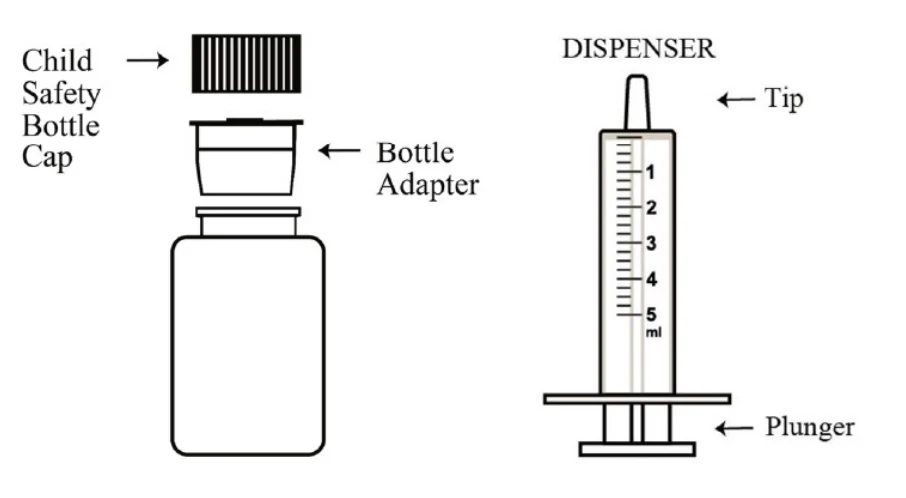
- 1. Put on disposable gloves.
- 2. Shake closed bottle well for about 5 seconds before each use.
- 3. Remove the child safety bottle cap (see figure above).
- 4. Before inserting the tip of the dispenser into bottle adapter, push the plunger completely down toward the tip of the dispenser. Insert tip firmly into opening of the bottle adapter.
- 5. Turn the entire unit (bottle and dispenser) upside down.
- 6. Pull the plunger out slowly until the desired amount of medication is withdrawn into the dispenser (see figure below). Stop at the mark that shows the dose you need.
- 7. Turn the entire unit right side up and remove the oral dispenser slowly from the bottle while holding the body of the dispenser.
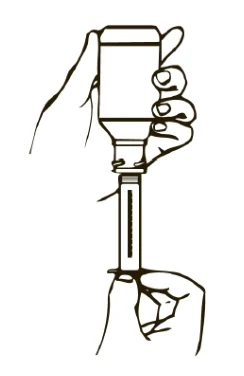
- 8. Dispense directly into mouth and ensure all medication is swallowed. Do not mix with any liquid when you swallow it. To avoid choking/vomiting, ensure upright body position, place the oral dispenser into the mouth with the tip along either cheek and slowly push the plunger all the way down. Do not squirt forcefully into the back of the throat.
- 9. Close bottle with child safety bottle cap after each use.
- 10. Immediately after use, disassemble oral dispenser and rinse both parts under running tap water until all residue is removed. If clean tap water is not available, rinse with clean water (e.g. distilled water). Allow it to air dry prior to next use.
- • Avoid contact of the skin, mouth, nose and eyes with both the oral suspension powder and the mixed suspension. In case of contact with the eyes, rinse with water. In case of contact with skin, wash thoroughly with soap and water.
- • Wipe up any spills using wet paper towels. Recap the bottle and wet wipe its outside surfaces.
- • Be sure you are wearing disposable gloves when wiping any spills.
- • Do not sterilize the oral dispenser or put into boiling water to avoid damage of the dispenser. Do not use solvent-containing wipes for cleaning. Do not use clothes or wipes for drying.
- • Keep the dispenser dry and away from sunlight.
- • Do not throw away the oral dispenser as it needs to be used multiple times. Only after its final use, dispose of the oral dispenser according to local guidelines.
Overdose:
| If you think you, or a person you are caring for, have taken too much CellCept®, contact a healthcare professional, hospital emergency department, regional poison control centre or Health Canada’s toll-free number, 1-844 POISON-X (1-844-764-7669) immediately, even if there are no symptoms. |
|---|
Missed Dose:
- If you ever do miss a dose of CellCept, do not catch up on your own. Instead call your doctor or pharmacist right away for advice. It is also a good idea to ask your doctor ahead of time what to do about missed doses. Do not double dose.
Possible side effects from using CellCept®:
These are not all the possible side effects you may have when taking CellCept®. If you experience any side effects not listed here, tell your healthcare professional.
Serious side effects and what to do about them
| Symptom / effect | Talk to your healthcare professional | Stop taking drug and get immediate medical help | |
|---|---|---|---|
| Symptom / effect | Talk to your healthcare professional | Stop taking drug and get immediate medical help | |
| Symptom / effect | Talk to your healthcare professional | Stop taking drug and get immediate medical help | |
| Only if severe | In all cases | ||
| Only if severe | In all cases | ||
| Only if severe | In all cases | ||
| VERY COMMON | ✓ | ||
| Abdominal pain | ✓ | ||
| Blood in urine | ✓ | ||
| Constipation | ✓ | ||
| Increased cough | ✓ | ||
| Diarrhea | ✓ | ||
| Fever | ✓ | ||
| Laboured breathing | ✓ | ||
| Headache | ✓ | ||
| High blood pressure | ✓ | ||
| Swelling of parts of your body | ✓ | ||
| Vomiting | ✓ | ||
| Weakness | ✓ | ||
| COMMON | |||
| Chest or back pain | ✓ | ||
| Dizziness | ✓ | ||
| Heart burn | ✓ | ||
| Involuntary trembling | ✓ | ||
| Muscle weakness | ✓ | ||
| Nausea | ✓ | ||
| Nosebleed | ✓ | ||
| Sleeplessness | ✓ | ||
| Stomach pain | ✓ | ||
| Sepsis (severe infection): fever and chills, low body temperature, fast heartbeat, nausea and vomiting | ✓ | ||
| Gastrointestinal perforation (a hole in your stomach or bowels): chills or fever, nausea, severe abdominal pain, vomiting | ✓ | ||
| UNCOMMON | |||
| Blood or black tarry stools | ✓ | ||
| Joint pain: painful swelling and stiffness of the joints | ✓ | ||
| Muscle pain | ✓ | ||
| UNKNOWN | |||
| Progressive multifocal leukoencephalopathy (infection of the brain): loss of coordination, difficulty walking, facial drooping, loss of vision, trouble speaking | ✓ | ||
| Infections: body aches and pains, boils on your skin, chills, cold symptoms, earache, flu-like symptoms, headache, pain when you urinate, sore throat, cuts and scrapes that are red, have pus or don’t heal. | ✓ | ||
| Pure red cell aplasia (bone marrow stops producing red cells): dizziness, fainting, fatigue, feeling unwell, pale skin, pale stools, rapid heartbeat, shortness of breath, weakness | ✓ | ||
| Neutropenia (decreased white blood cells): infections, fatigue, fever, aches, pains and flu-like symptoms. | ✓ | ||
| Bone marrow suppression (a large decrease in the production of blood cells and platelets by the bone marrow): fatigue, increased heart rate, unexpected bruising, | ✓ | ||
| bleeding; paleness of the skin, lips, and nail beds; dizziness | |||
| BK virus-associated nephropathy (kidney disease due to an infection): changes in vision, like blurred vision; changes in the color of your urine (urine that is brown or red in color); difficulty urinating; needing to urinate more than is normal for you; a cough, cold, or trouble breathing; fever, muscle pain, or weakness | ✓ | ||
| Certain types of cancers (such as lymphoma and skin cancer): new moles, skin lesions or bumps; change in the size or colour of a mole, moles with uneven borders or that are asymmetric, fever, prolonged tiredness, weight loss, lymph node swelling, a change in your bowel or bladder habits, unusual bleeding or discharge, the appearance of a lump or thickened areas in your breast or anywhere else on your body, unexplained stomach upset or any trouble with swallowing, a nagging cough or hoarseness, night sweats | ✓ | ||
| Anaphylactic Reaction (serious allergic reaction that happens quickly and can be fatal): swelling of the face, lips, tongue, or throat; rash, hives, or itching; fainting, dizziness, feeling lightheaded; trouble breathing or swallowing; fast heartbeat; chest pain | ✓ | ||
If you have a troublesome symptom or side effect that is not listed here or becomes bad enough to interfere with your daily activities, tell your healthcare professional.
Reporting Side Effects
You can report any suspected side effects associated with the use of health products to Health Canada by:
NOTE: Contact your health professional if you need information about how to manage your side effects. The Canada Vigilance Program does not provide medical advice. |
Storage:
- Keep CellCept out of reach and sight of children. A child who accidentally takes the drug may be seriously harmed. A locked drawer or cupboard is best if you have small children in the house.
- Store dry powder at 15-30ºC. Store reconstituted suspension at 15-30ºC or in the refrigerator between 2-8ºC, both for up to 60 days. Do not freeze. The pharmacist will write the date of expiration on the bottle label.
- CellCept should not be used after the expiry date (EXP) shown on the package.
If you want more information about CellCept®:
- Talk to your healthcare professional
- Find the full product monograph that is prepared for healthcare professionals and includes this Patient Medication Information by visiting the Health Canada website: https://www.canada.ca/en/health-canada/services/drugs-health-products/drug-products/drug-product-database.html, www.rochecanada.com, or by contacting the sponsor, Hoffmann-La Roche Limited, at 1-888-762-4388.
Date of Authorization: 2026-09-17
©Copyright 1995-2026, Hoffmann-La Roche Limited.
CellCept® is a registered trademark of F.Hoffmann-La Roche AG, used under license.
All other trademarks are the property of their respective owners.
Oral dosing dispenser (920451) manufactured by B. Braun Melsungen AG. 34209 Melsungen Germany
Hoffmann-La Roche Limited
Mississauga, Ontario L5N 5M8
Patient Medication Information
READ THIS FOR SAFE AND EFFECTIVE USE OF YOUR MEDICINE
PrCellCept® i.v.
mycophenolate mofetil
Hydrochloride for injection
Powder for solution
Manufacturer’s Standard
Read this carefully before you start taking CellCept® and each time you get a refill. This leaflet is a summary and will not tell you everything about this drug. Talk to your healthcare professional about your medical condition and treatment and ask if there is any new information about CellCept®.
What CellCept® is used for:
- CellCept is used after kidney, heart and liver transplantation to help prevent organ rejection.
- It is used along with other medicines including cyclosporine and medicines called corticosteroids.
How CellCept® works:
CellCept works by slowing down your body's defense system (immune system). When you receive an organ transplant, CellCept prevents your body from rejecting this organ.
Serious Warnings and Precautions
|
The ingredients in CellCept® are:
Medicinal ingredients: mycophenolate mofetil
Non-medicinal ingredients:
citric acid, 5 mg, polysorbate 80, 25 mg, and sodium hydroxide and/or hydrochloric acid to adjust pH.
CellCept® comes in the following dosage forms:
CellCept i.v. is available for patients who are unable to take oral medications. It comes as a powder for solution containing 500 mg mycophenolate mofetil.
Do not use CellCept® if you:
- are allergic to mycophenolate mofetil or to mycophenolic acid.
- are allergic to any other ingredients in CellCept.
- are pregnant.
- are breastfeeding.
- are of childbearing age and not using highly effective birth control.
- do not have results from a pregnancy test showing that you are not pregnant.
- are allergic to Polysorbate 80 (also known as TWEEN).
To help avoid side effects and ensure proper use, talk to your healthcare professional before you take CellCept®. Talk about any health conditions or problems:
- If you are already on any immune suppressant treatment.
- Rare diseases called Lesch-Nyhan and Kelley-Seegmiller syndrome.
- Digestive problems, including ones with your stomach or bowels.
- Severe renal problems.
Other warnings you should know about:
Important warnings for women taking CellCept
- Do not take CellCept if you are pregnant.
- CellCept can cause first trimester pregnancy loss (miscarriage) and birth defects when used along with other medicines used to prevent organ rejection.
- These birth defects can affect the development of a baby’s ears, limbs, face, heart and brain.
- You can only take CellCept if you are not pregnant and if you are using highly effective birth control.
- If you think you may be pregnant tell your doctor right away. Keep taking CellCept until you see your doctor. They will talk to you about other medicines you can take to prevent rejection of your transplanted organ.
- Women who can get pregnant must have two negative blood or urine pregnancy tests. The second test should be performed 8-10 days after the first. You can only start CellCept if the tests are negative. You will be given repeat pregnancy tests during follow-up visits.
You must always use two reliable methods of birth control:
- Before you start taking CellCept,
- During your entire treatment with CellCept and
- For 6 weeks after stopping your treatment with CellCept.
- Talk to your doctor about the best methods of contraception for you. If you take oral contraceptives (birth control pills) while using CellCept you must also use another form of birth control method. This is because CellCept may make oral contraceptives less effective.
Important warnings for men taking CellCept:
- If you are a sexually active male, you must use effective birth control. Or, your female partner must use effective birth control while you are taking CellCept. Effective birth control must be used for at least 90 days after you stop taking CellCept.
- Men should not donate semen during therapy and for 90 days after taking of CellCept.
Serious infections and cancers:
- CellCept suppresses your immune system. This can make you more likely to get infections and certain cancers, such as lymphoma and skin cancer.
- CellCept slows down your immune system. This can affect your body’s ability to fight infections. You are more likely to get infections when you take CellCept. Some of these infections can be serious and fatal. Infections include: viral infections, a brain infection called progressive multifocal leukoencephalopathy, sepsis and other infections. It can also cause other infections to emerge in your body like hepatitis B or C or infections caused by polyomaviruses. See “Serious side effects and what to do about them” table for more information.
CellCept increases your chances of getting certain cancers, especially skin cancers. See “Serious side effects and what to do about them” table for more information. You must limit the amount of sunlight and UV light you get. Do this by:
- wearing protective clothing which also covers your head, neck, arms and legs.
- using a sunscreen with a high sun protection factor (SPF).
Additional important warnings for all patients taking CellCept:
- Tell all health professionals you see that you are taking CellCept.
- Be sure to keep all appointments at your transplant clinic. During these visits, complete blood counts will need to be measured weekly in the first month, twice monthly for the second and third months of treatment and then monthly for the remainder of the first year. Your doctor may sometimes order additional blood tests.
- You should not donate blood during therapy and for at least 6 weeks after taking CellCept.
- During treatment with CellCept, vaccinations may be less effective. Also, you should not receive live vaccines. Talk to your doctor before receiving any vaccines.
- CellCept may affect your ability to drive and use machines. Before driving or using machines, wait until you are feeling well again.
Tell your healthcare professional about all the medicines you take, including any drugs, vitamins, minerals, natural supplements or alternative medicines.
The following may interact with CellCept®:
- Acyclovir, an antiviral medication;
- Ganciclovir or valganciclovir, antiviral medications’
- Isavuconazole, an antiviral medication;
- Tacrolimus, used to suppress the body’s immune system;
- Telmisartan, used to treat high blood pressure;
- Rifampicin, an antibiotic;
- Azathioprine, used to suppress the body’s immune system;
- Antacids, which neutralize stomach acidity;
- Proton pump inhibitors, such as lansoprazole and pantoprazole;
- Renagel® (sevelamer), or other calcium free phosphate binders;
- Cholestyramine, which is used to treat high blood cholesterol.
- Combinations of antibiotics taken at the same time.
How to take CellCept®:
- CellCept will be given to you by a healthcare professional.
- It will be infused directly into your vein.
- CellCept will be given to you as soon as possible after transplantation.
- CellCept must be taken with other immunosuppressive medicines (such as cyclosporine and corticosteroids). Discuss with your doctor if you are to stop, or to continue, the other immunosuppressant drugs you had been taking.
Usual dose:
Your doctor will decide what dose of CellCept you will get and when you will get it.
Kidney Transplant Patients
Adults:
- A dose of 1 g taken twice a day (daily dose of 2 g) is recommended after kidney transplantation.
Heart Transplant Patients
Adults:
- A dose of 1.5 g twice a day (daily dose of 3 g) is recommended after heart transplantation in adults.
Liver Transplant Patients
Adults:
- A dose of 1.5 g taken twice a day (daily dose of 3 g) is recommended after liver transplantation in adults.
Overdose:
| If you think you have been given too much CellCept®, contact a healthcare professional, hospital emergency department, regional poison control centre or Health Canada’s toll-free number, 1-844 POISON-X (1-844-764-7669) immediately, even if there are no symptoms. |
|---|
Missed Dose:
- If you miss a dose of CellCept i.v., your doctor will decide when you should receive your next dose.
Possible side effects from using CellCept® are:
These are not all the possible side effects you may have when taking CellCept®. If you experience any side effects not listed here, tell your healthcare professional.
Serious side effects and what to do about them
| Symptom / effect | Talk to your healthcare professional | Stop taking drug and get immediate medical help | |
|---|---|---|---|
| Symptom / effect | Talk to your healthcare professional | Stop taking drug and get immediate medical help | |
| Symptom / effect | Talk to your healthcare professional | Stop taking drug and get immediate medical help | |
| Symptom / effect | Talk to your healthcare professional | Stop taking drug and get immediate medical help | |
| Only if severe | In all cases | ||
| Only if severe | In all cases | ||
| Only if severe | In all cases | ||
| Only if severe | In all cases | ||
| VERY COMMON | ✓ | ||
| Abdominal pain | ✓ | ||
| Blood in urine | ✓ | ||
| Constipation | ✓ | ||
| Increased cough | ✓ | ||
| Diarrhea | ✓ | ||
| Fever | ✓ | ||
| Laboured breathing | ✓ | ||
| Headache | ✓ | ||
| High blood pressure | ✓ | ||
| Swelling of parts of your body | ✓ | ||
| Vomiting | ✓ | ||
| Weakness | ✓ | ||
| COMMON | |||
| Chest or back pain | ✓ | ||
| Dizziness | ✓ | ||
| Heart burn | ✓ | ||
| Involuntary trembling | ✓ | ||
| Muscle weakness | ✓ | ||
| Nausea | ✓ | ||
| Nosebleed | ✓ | ||
| Sleeplessness | ✓ | ||
| Stomach pain | ✓ | ||
| Sepsis (severe infection): fever and chills, low body temperature, fast heartbeat, nausea and vomiting | ✓ | ||
| Gastrointestinal perforation (a hole in your stomach or bowels): chills or fever, nausea, severe abdominal pain, vomiting | ✓ | ||
| UNCOMMON | |||
| Blood or black tarry stools | ✓ | ||
| Joint pain: painful inflammation and stiffness of the joints | ✓ | ||
| Muscle pain | ✓ | ||
| UKNOWN | |||
| Progressive multifocal leukoencephalopathy (infection of the brain): loss of coordination, difficulty walking, facial drooping, loss of vision, trouble speaking | ✓ | ||
| Infections: body aches and pains, boils on your skin, chills, cold symptoms, earache, flu-like symptoms, headache, pain when you urinate, sore throat, cuts and scrapes that are red, have pus or don’t heal. | ✓ | ||
| Pure red cell aplasia (bone marrow stops producing red cells): dizziness, fainting, fatigue, feeling unwell, pale skin, pale stools, rapid heartbeat, shortness of breath, weakness | ✓ | ||
| Neutropenia (decreased white blood cells): infections, fatigue, | ✓ | ||
| fever, aches, pains and flu-like symptoms. | |||
| Bone marrow suppression (a large decrease in the production of blood cells and platelets by the bone marrow): fatigue, increased heart rate, unexpected bruising, bleeding; paleness of the skin, lips, and nail beds; dizziness | ✓ | ||
| BK virus-associated nephropathy (kidney disease due to an infection): changes in vision, like blurred vision; changes in the color of your urine (urine that is brown or red in color); difficulty urinating; needing to urinate more than is normal for you; a cough, cold, or trouble breathing; fever, muscle pain, or weakness | ✓ | ||
| Certain types of cancers (such as lymphoma and skin cancer): new moles, skin lesions or bumps; change in the size or colour of a mole, moles with uneven borders or that are asymmetric, fever, prolonged tiredness, weight loss, lymph node swelling, a change in your bowel or bladder habits, unusual bleeding or discharge, the appearance of a lump or thickened areas in your breast or anywhere else on your body, unexplained stomach upset or any trouble with swallowing, a nagging cough or hoarseness, night sweats | ✓ | ||
| Anaphylactic Reaction (serious allergic reaction that happens quickly and can be fatal): swelling of the face, lips, tongue, or throat; rash, hives, or itching; fainting, dizziness, feeling lightheaded; | ✓ | ||
| trouble breathing or swallowing; fast heartbeat; chest pain | |||
If you have a troublesome symptom or side effect that is not listed here or becomes bad enough to interfere with your daily activities, tell your healthcare professional.
Reporting Side Effects
You can report any suspected side effects associated with the use of health products to Health Canada by:
NOTE: Contact your health professional if you need information about how to manage your side effects. The Canada Vigilance Program does not provide medical advice. |
Storage:
- Keep CellCept out of reach and sight of children. A child who accidentally takes the drug may be seriously harmed. A locked drawer or cupboard is best if you have small children in the house.
- CellCept i.v. powder for solution should be stored at room temperature (15-30°C). The healthcare professional will store the reconstituted/infusion solutions at room temperature (15-30°C).
- CellCept should not be used after the expiry date (EXP) shown on the package.
If you want more information about CellCept®:
- Talk to your healthcare professional
- Find the full product monograph that is prepared for healthcare professionals and includes this Patient Medication Information by visiting the Health Canada website: https://www.canada.ca/en/health-canada/services/drugs-health-products/drug-products/drug-product-database.html, www.rochecanada.com, or by contacting the sponsor, Hoffmann-La Roche Limited, at 1-888-762-4388.
Date of Authorization: 2026-09-17
©Copyright 1995-2026, Hoffmann-La Roche Limited.
CellCept® is a registered trademark of F.Hoffmann-La Roche AG, used under license.
All other trademarks are the property of their respective own
Hoffmann-La Roche Limited
Mississauga, Ontario L5N 5M8