


Product Monograph - Clotrimazole Topical
INDICATIONS AND CLINICAL USE
Clotrimazole Topical is indicated for the topical treatment of the following dermal infections:
- Tinea pedis, tinea cruris, and tinea corporis due to Trichophyton rubrum, Trichophyton mentagrophytes, Epidermophyton floccosum;
- Candidiasis due to Candida albicans;
- Tinea versicolor due to Malassezia furfur;
- diaper rash infected by Candida albicans.
CONTRAINDICATIONS
Clotrimazole Topical is contraindicated in patients who are hypersensitive to clotrimazole or to any non-medicinal ingredients in the formulation of Clotrimazole Topical. For a complete listing, see the Composition section of the product monograph.
WARNINGS AND PRECAUTIONS
General
As with all topical agents, skin sensitization may result. Use of Clotrimazole Topical should be discontinued should such reactions occur, and appropriate therapy instituted.
Clotrimazole Topical is not suitable for treating fungal infections of the nail or scalp.
Occlusive dressings should not be applied over Clotrimazole Topical unless directed by a physician. It is noted that diapers would not be considered occlusive dressings because of frequent changes and airings, normal hygiene practices and the use of newer more breathable and absorbent diapers.
Clotrimazole Topical is not for ophthalmic use.
Effects on Fertility
No human studies of the effects of clotrimazole on fertility have been performed; however, animal studies have not demonstrated any effects of the drug on fertility.
Special Populations
Pregnant Women: There are limited amounts of data from the use of clotrimazole in pregnant women. Animal studies do not indicate direct or indirect harmful effects with respect to reproductive toxicity (see ‘Reproduction and Teratology’). Although the topical application of clotrimazole has resulted in very low serum and tissue levels, the use of Clotrimazole Topical by pregnant women is not recommended unless it is on the advice of a physician. Clotrimazole Topical should not be used in the first trimester or if you are trying to get pregnant unless the physician considers it essential to the welfare of the patient.
Nursing Women: Available pharmacodynamic/toxicological studies in animals have shown excretion of clotrimazole/metabolites in milk. Breastfeeding should be discontinued during treatment with clotrimazole. Although the topical application of clotrimazole has resulted in very low serum and tissue levels, the use of Clotrimazole Topical by lactating women is not recommended unless it is on the advice of a physician.
ADVERSE REACTIONS
Adverse Drug Reaction Overview
Experimental, therapeutic, and large scale clinical studies have shown clotrimazole to be well tolerated after topical application.
Immune system disorders: anaphylactic reactions, angioedema, hypersensitivity
Vascular disorders: hypotension, syncope
Respiratory, thoracic and mediastinal disorders: dyspnea
Skin and subcutaneous tissue disorders: blisters, dermatitis contact, erythema, paraesthesia, skin exfoliation, pruritis, rash, urticaria, stinging/burning sensation
General disorders and administration site conditions: application site irritation, application site reaction, edema, pain
Out of a total of 184 patients treated with the 1% cream, irritation was reported in 12 and soreness in 1 patient; therapy was discontinued in 3 patients. In comparison, 1 case of increased inflammation and pruritus and 1 case of folliculitis was reported in the 54 patients treated with the vehicle control.
Other Formulations:
Drying effect, maculopapular rash and increased sweating have been reported with use of clotrimazole topical solution in a clinical trial.
DOSAGE AND ADMINISTRATION
Dosing Considerations
Clinical improvement with relief of pruritus, usually occurs within the first week of treatment. The symptoms of jock itch, ringworm and diaper rash usually resolve within 2-4 weeks. Athlete's foot may require at least four (4) weeks. In mycoses of the foot, treatment should be continued - even when it has led to rapid subjective improvement - for about 2 weeks after all symptoms have disappeared so that relapses may be prevented. If the signs and symptoms of the infection have not been resolved after four weeks of treatment with Clotrimazole Topical, a physician should be consulted.
If a cure is not mycologically confirmed, treatment should, as a rule, be continued for 2 weeks after all clinical symptoms have disappeared. Candida infections are generally treated for only 2 weeks.
Added hygienic measures are of special importance in the management of the often refractory fungal diseases of the foot. After washing, the feet - particularly between the toes - should be dried thoroughly to avoid trapped moisture. Well-fitting, ventilated shoes and cotton or wool socks are recommended to ensure a successful treatment outcome and to help prevent a recurrence.
Recommended Dose and Dosage Adjustment
Skin Infections
CHILDREN (for the treatment of diaper rash): Thinly apply and gently massage sufficient Clotrimazole Topical onto the affected and surrounding skin areas twice daily at a diaper change (in the morning and evening). Do not use for more than 14 days. If symptoms worsen or there is no improvement after 2 weeks, consult a physician.
ADULTS (for the treatment of jock itch, athletes foot and ringworm): Thinly apply and gently massage sufficient Clotrimazole Topical into the affected and surrounding skin areas twice daily, in the morning and evening. For the treatment to be completely successful Clotrimazole Topical should be applied regularly and in sufficient quantities.
OVERDOSAGE
For management of a suspected drug overdose, contact your regional Poison Control Centre.
ACTION AND CLINICAL PHARMACOLOGY
Mechanism of Action
Clotrimazole acts primarily by damaging the permeability barrier in the cell membrane of fungi. Clotrimazole brings about inhibition of ergosterol biosynthesis, an essential constituent of fungal cell membranes. If ergosterol synthesis is completely or partially inhibited, the cell is no longer able to construct an intact cell membrane. This leads to death of the fungus.
Exposure of Candida albicans to clotrimazole causes leakage of intracellular phosphorus compounds into the ambient medium with a concomitant breakdown of cellular nucleic acids and potassium efflux. The onset of these events is rapid and extensive after exposure of the organism to the drug, and causes a time-dependent and concentration-dependent inhibition of fungal growth.
Pharmacokinetics
Metabolism studies performed after oral or intravenous administration have shown that in most species studied, levels of clotrimazole in tissue and serum are low. The majority of the drug is excreted as metabolites in the feces, with small amounts excreted in the urine. Human studies indicate slow excretion following oral administration of 14C-labelled clotrimazole (greater than 6 days). After intraperitoneal and subcutaneous administration, very low levels have been observed in the urine. Sitka reported levels of about 1% of the quantity of clotrimazole in the 24-hour urine in newborns and premature infants. The absorption and organ distribution of the drug is very poor when administered parenterally.
The pharmacokinetics of topically applied clotrimazole in human subjects have been evaluated by Duhm et al. who reported on the penetration of radioactive Clotrimazole 1% cream into intact and acutely inflamed skin. Six hours after application of the drug, the concentration of clotrimazole found in skin layers varied from 100 μg/cm3 in the stratum corneum to 0.5 to 1.0 μg/cm3 in the stratum reticulare and < 0.1 μg/cm3 in the subcutis. No measurable amount of radioactivity (0.001 μg/mL) was found in the serum within 48 hours after application of 0.8 g of the cream. Sitka et al. reported serum levels of about 3 μg/mL in newborns and prematures and about 2.7 μg/mL in school children. Due to delayed excretion, prematures and newborns still showed values of 0.4 to 1.2 μg/mL after 24 hours; this level dropped faster to the zero point after 12 hours in older children.
In animal experiments, clotrimazole exerts an in vitro and in vivo, dose-dependent stimulating effect on certain microsomal enzyme systems which is approximately equal to that of phenobarbital in its inductive potential. However, this stimulating effect subsides rapidly when treatment is discontinued. The enzyme-inductive effect of clotrimazole has been found to be intact in adrenalectomized animals.
Results of twenty two mycologically controlled double-blind, one mycologically controlled single-blind, and four mycologically controlled open studies show that Clotrimazole 1% cream is effective in the treatment of tinea cruris, tinea corporis, tinea pedis, tinea versicolor and cutaneous candidiasis. For the cream, mycological cure rates were 80% for tinea cruris/tinea corporis, 67% for tinea pedis, 88% for tinea versicolor and 92% for cutaneous candidiasis as compared to 4.7%, 0%, 37.5% and 0%, respectively, for the vehicle control (total of 238 patients).
STORAGE AND STABILITY
Store between 15°C and 30°C.
DOSAGE FORMS, COMPOSITION AND PACKAGING
Clotrimazole Topical is supplied in 15 g and 30 g tubes in cartons.
Composition
Each g contains 10 mg of clotrimazole in a cream base of sorbitan monostearate, polysorbate 60, cetyl esters wax, cetostearyl alcohol, 2-octyldodecanol and purified water with 1% benzyl alcohol as preservative.
PART II: SCIENTIFIC INFORMATION
PHARMACEUTICAL INFORMATION
DRUG SUBSTANCE
Proper Name: clotrimazole
Chemical Name: 1-(o-chloro-αα-diphenylbenzyl) imidazole
Structural Form ula:
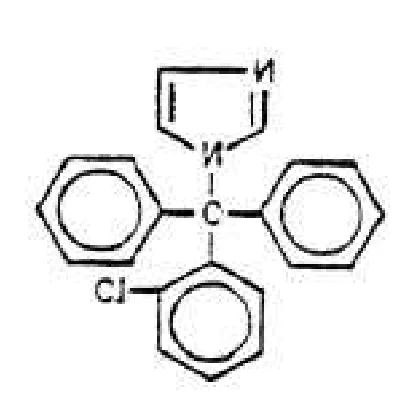
Molecular Formula: C22H17CIN2
Molecular Weight: 344.84 g/mol
Physicochemical
properties: Clotrimazole is a white to pale yellow, crystalline, weakly alkaline substance, M.P. 145°C, soluble in acetone, chloroform and ethanol, and practically insoluble in water. It forms stable salts with both inorganic and organic acids. It is not photosensitive but slightly hygroscopic and may be hydrolyzed in acid media.
MICROBIOLOGY
Clotrimazole is an antifungal agent with a broad spectrum of activity. In general, the in vitro activity of clotrimazole corresponds to that of tolnaftate, griseofulvin, and pyrrolnitrin against dermatophytes (Trichophyton, Microsporum and Epidermophyton species) and to that of the polyenes, amphotericin B and nystatin, against budding fungi (Candida and Histoplasma species).
In vitro, clotrimazole is fungistatic for most isolates of pathogenic fungi at concentrations of 0.02 to 10 μg/mL. The drug is fungicidal for many isolates of Trichophyton, Microsporum, Epidermophyton and Candida species at concentration of 0.1 to 2 μg/mL.
No one-step or multiple-step secondary resistance to clotrimazole has developed during successive passages of C. albicans, C. krusei, C. pseudotropicalis, T. mentagrophytes, T. rubrum, Cryptococcus neoformans, Aspergillus niger, and A. nidulans. Only a few isolates have been designated as having primary resistance to clotrimazole: a single isolate of C. guillermondii, six isolates of C. neoformans, three isolates of Paracoccidioides brasiliensis and two isolates of Blakeslea trispora.
Topical application of clotrimazole has been effective in the treatment of skin infections experimentally induced in the guinea pig with T. mentagrophytes and T. quinckeanum.
Clinical studies conducted as double-blind trials with mycological control have shown that clotrimazole is effective in the treatment of tinea cruris, tinea corporis, tinea pedis, tinea versicolor and cutaneous candidiasis. Mycological examinations have proven its efficacy against Trichophyton rubrum, T. mentagrophytes, Malassezia furfur and Candida albicans.
Griseofulvin-resistant dermatophytes show no cross resistance to clotrimazole. It may be assumed, therefore, that the site of action of this drug is different from that of other antimycotics. Consequently, there is no cross resistance between these agents.
Antifungal Activity in Vitro
Minimum inhibitory concentrations (MICs) of clotrimazole were determined in serial dilution in broth or agar and in agar diffusion tests using the punched hole procedure. Conventional culture substrates, incubation times, and incubation temperatures were used. At concentrations less than 2 μg/mL, clotrimazole was fungicidal for many isolates of C. albicans, Trichophyton sp., Microsporum sp., and Epidermophyton sp., tested, and at concentrations less than 5 μg/mL, clotrimazole was fungistatic for other isolates of these species. Addition of bovine serum to the culture media at a final concentration of 30% resulted in somewhat higher MICs of clotrimazole.
The in vitro antifungal activity of clotrimazole was comparable to that of pyrrolnitrin; either compound at 0.78 μg/mL was fungicidal for most strains of Trichophyton sp., Microsporum sp. and Epidermophyton sp., tested.
The type of action of clotrimazole was determined in the Warburg apparatus by measuring the oxygen consumption of proliferating organisms exposed to varying concentrations of the drug.
Additional studies were performed using a classical subculture technique with organism counts made after 16, 24 and 48 hours of exposure to the drug. These experiments showed that the primary action of clotrimazole at concentrations up to 20 μg/mL is fungistatic and affects only proliferating organisms. At concentrations greater than 20 μg/mL, Clotrimazole was fungicidal for some organisms.
The determinations of MICs of clotrimazole for budding fungi and for biphasic fungi in the yeast phase have been shown to be dependent on the size of the inoculum and the length of incubation time. MICs for several isolates of Candida albicans and Torulopsis glabrata were higher when the inoculum size or incubation time or both were increased.
The effects of inoculum size has been attributed to binding of clotrimazole to the surface of the fungal cells. This was established in a study of turntable cultures of C. albicans. After 24 hours, the amount of clotrimazole in a nutrient substrate was reduced from 1 μg/mL to 0.7 μg/mL by an inoculum of 1 to 5 x 10⁵ cells/mL.
A larger inoculum, 1 x 10⁸ cells/mL, reduced the drug concentration from 1 μg/mL to 0.3 μg/mL.
When the cultures were centrifuged and the cell sediment was washed with physiological saline solution, the wash solutions contained clotrimazole in concentrations of 0.2 μg/mL to 0.4 μg/mL.
The effect of incubation time on the determination of MIC values is thought to be related to the mechanism of action of clotrimazole. Initial studies indicated that clotrimazole acted as an antimetabolite upon the amino acid and protein metabolism of the fungi, causing a gradual inhibition of fungal growth.
However, recent studies using C. albicans as the test organism have shown that the primary mode of action of clotrimazole is damage to the permeability of the cell membrane. Exposure of C.albicans to clotrimazole caused leakage of intracellular phosphorus compounds into the ambient medium with a concomitant breakdown of cellular nucleic acids. The onset of these events was rapid and extensive after exposure of C. albicans to the drug and caused a time-dependent and concentration-dependent inhibition of fungal growth.
Resistance Development
Only a few isolates have been designated as having primary resistance to clotrimazole; a single isolate of Candida guillermondii, six isolates of Cryptococcus neoformans, three isolates of Paracoccidioides brasiliensis, and two isolates of Blakeslea trispora. The potential for development of secondary resistance to clotrimazole was determined for several organisms by successive passages in a liquid medium, successive passages on a solid medium, or the Warburg proliferation test. Growth of dermatophytes and yeasts on Szybalski plates was also used as a method for determining the development of secondary resistance.
No change in sensitivity was detected for C. albicans in any of the tests for secondary resistance, and no change in sensitivity was detected for Trichophyton mentagrophytes, T. rubrum, C. krusei, C.pseudotropicalis, C. neoformans, Aspergillus niger, or A. nidulans after successive passages on liquid and solid media. Possible resistance development was noted in successive passages of Torulopsis glabrata and other Torulopsis species. Data obtained from Szybalski plate growth and from other tests indicated that dermatophytes and yeasts do not develop one-step or oligo-step secondary resistance.
TOXICOLOGY
Non-clinical data reveal no specific hazard for humans based on conventional studies of safety pharmacology, repeated dose toxicity, genotoxicity, carcinogenic potential and toxicity to reproduction and development. Carcinogenicity of clotrimazole was evaluated in a 78-week oral dosing study in rats and the results did not show any carcinogenic effect of clotrimazole.
Clotrimazole has been extensively studied in in vitro and in vivo mutagenicity assays, and no evidence of genotoxic potential was found. In an Ames test, an in vitro biological assay to detect the mutagenicity of chemical compounds, clotrimazole showed no evidence of mutagenic activity. Clotrimazole was found to be non-mutagenic in two additional in vitro studies, a gene mutation test in V79 cell lines and an Unscheduled DNA Synthesis (UDS) in primary rat hepatocytes. Studies evaluating the mutagenicity of clotrimazole in germ cells did not demonstrate mutagenic effects in a spermatogonia test in male hamsters, or in a dominant lethal test in male mice. Additionally, in mice, clotrimazole was not clastogenic in a micronucleus test.
ACUTE TOXICITY (ORAL)
Animal
| Species | LD50 mg/kg |
Mouse Rat Rabbit Cat Dog | 761-923 708-718 >1000 >1000; vomiting from 100 mg/kg >2000; vomiting from 100 mg/kg |
Multidose Local Tolerance
- Primary skin irritation (patch test): no detectable reddening on the intact rabbit skin at either 24 or 72 hours with Clotrimazole 1% cream. Very slight erythema formation was observed after 24 hours in the scarified rabbit skin.
- Primary irritation on conjunctival mucosa: clotrimazole cream produced a transient conjunctival irritation in rabbits, consisting of low-grade reddening and a slight increase in secretion. No grossly detectable alterations were present in either the cornea or the iris of any of the treated animals. It produced a transient, very slight reddening of the conjunctival mucosa. No alterations occurred on the cornea.
- Subacute (up to 13 weeks) dermal tolerance: the application of 1% Clotrimazole cream was systemically well tolerated; no edema was seen on the treated skin, although mild erythema was observed sporadically. The animals in all groups with abraded skin manifested a slight healing tendency.
Human
In 679 of 721 patients with dermatomycosis under treatment for several months, Clotrimazole 1% cream were tolerated without difficulty. In 12 cases a low-grade irritation was observed during treatment which, however, necessitated neither the interruption of therapy nor the institution of any other therapeutic measures. In 17 cases poor tolerance was observed which resulted in interruption of the treatment.
In 3 of 200 patients suffering mainly from allergy and eczemas, a positive epicutaneous test was obtained.
In 453 cases under treatment which were evaluated with respect to photosensitivity and phototoxicity, no reactions were encountered.
Twenty normal subjects were tested in a controlled study for sensitivity to ultraviolet radiation. Areas of skin treated with clotrimazole were irradiated for 30 seconds on the first day and for one-half minute longer each time on every second day thereafter. One of the 20 subjects was irradiated once only; 9 subjects three times, and 10 subjects four times. One subject developed papule formation after the first exposure to ultraviolet radiation.
Allergies and skin irritations after application of Clotrimazole Topical Cream 1% could not be determined even after extensive testing as reported by Sitka et al. Also, they note that side effects are less pronounced in children than in adults. This is attributed to the observation that there is no interference by clotrimazole with hepatic enzymes in children as is evidenced in adults.
REPRODUCTION AND TERATOLOGY
At dosages up to 100 mg/kg (subcutaneous), clotrimazole was well tolerated by pregnant mice, rats and rabbits, and it had no embryotoxic or teratogenic effect.
When given to pregnant rats at oral doses up to 100 mg/kg from day 6 through day 15 of gestation, the number of resorptions was higher and the fetal weights were lower than the controls, but the number of fetal malformations did not differ significantly from that of the control group.
Rats treated with Clotrimazole for 10 weeks at doses up to 50 mg/kg/day did not show any difference from the control group in the duration of estrus, fertility, duration of pregnancy, or in the number of implantations and resorptions. The dose of 50mg/kg/day impaired the development of the young, and dams receiving this dose level raised fewer offspring.
REFERENCES
- 1.
Duhm B, Maul W, Medenwald H et al.: Pharmakokinetik nach topischer Anwendung von Bisphenyl-(2-chlorophenyl)-1-imidazolyl-methan-(14C) after topical application). Arzneimittel- Forschung 22:1276-1280 (1972). English version, Drugs Made in Germany
15:99-103(1972).
- 2. Fredriksson T. Topical treatment with BAY b 5097. A new broad spectrum antimycotic agent. Brit. J. of Dermatology 866:628-630 (1972).
- 3.
Freis A. The tolerance of Clotrimazole on Topical Application. Drugs made in Germany
XV. 120-121(1972).
- 4.
Holt R. Studies on a broad-spectrum antimycotic agent FB b 5097. X. Int. Congress for
Microbiology, Mexico City, August, 1970.
- 5.
Iwata K, Yamaguchi H, Hiratani T. Mode of Action of Clotrimazole. Sabouraudia
11:158-66 (1973).
- 6. Iwata K, Kanda Y, Yamaguchi H et al. Electron microscopic studies on the mechanism of action of Clotrimazole. Sabouraudia 11:205-209(1973).
- 7.
Njoku JC et al. Antifungal Therapy in Pregnancy and Breastfeeding. Curr Fungal Infect
Rep 2010; 4: 62-69.
- 8. Plempel M, Bartmenn K, Buchel KH, and Regel E. BAY b 5097, a New Orally Applicable Antifungal Substance with Broad-spectrum Activity. Antimicrobial Agents and Chemotherap.271 -274(1969)
- 9. Sitka U, Weingartner L. Clotrimazole in the treatment of candida infections in hospital wards for premature and newborns children. Med Klin71 :635-9(1976).
- 10. Waitz A, Weinstein M. Chemotherapeutic Evaluation of Clotrimazole (BAY b 5097), 1-(0- Chloro-α-α -Diphenylbenzyl) Imidazole). Appl. Microbiol. 22(5) 891-8(1971).
- 11.
Canesten 1% Topical Cream Product Monograph. Bayer In., Submission Control #:
254732, Date of Revision: January 20, 2022