


Product Monograph - Cromolyn Eye Drops
1 INDICATIONS
CROMOLYN EYE DROPS (cromolyn sodium ophthalmic solution) is indicated in the prevention of the signs and symptoms of seasonal allergic conjunctivitis (itching, tearing, congestion, etc.).
1.1 Pediatrics
Pediatrics (from 5 to 18 years of age): Based on the data submitted and reviewed by Health Canada, the safety and efficacy of CROMOLYN EYE DROPS in pediatric patients has been established. Therefore, Health Canada has authorized an indication for pediatric use. (Safety and efficacy in children under 5 years of age have not been established.) See 4 DOSAGE AND ADMINISTRATION.
1.2 Geriatrics
Geriatrics (over 65 years of age): No data are available to Health Canada; therefore, Health Canada has not authorized an indication for geriatric use.
2 CONTRAINDICATIONS
- CROMOLYN EYE DROPS is contraindicated in patients who are hypersensitive to this drug or to any ingredient in the formulation, including any non-medicinal ingredient, or component of the container. For a complete listing, see 6 DOSAGE FORMS, STRENGTHS, COMPOSITION AND PACKAGING.
4 DOSAGE AND ADMINISTRATION
4.2 Recommended Dose and Dosage Adjustment
Adults and children 5 years of age and older:
1-2 drops in each eye 4 times a day at regular intervals.
- Maximum single dose per eye: 2 drops (1.6 mg).
- Maximum total daily dose per eye: 8 drops (6.4 mg).
In most patients, the signs and symptoms of seasonal allergic conjunctivitis (tearing, itching, congestion, etc.) can be expected to improve within 2-3 days of commencing treatment. With continued treatment, the patient will usually be free from ophthalmic signs and symptoms during the challenge period.
CROMOLYN EYE DROPS should be used continually throughout the patient's usual allergy season, even when the patient is free of symptoms. Continued use could help ensure the patient remains symptom-free.
4.4 Administration
The effectiveness of CROMOLYN EYE DROPS therapy depends on its administration at regular intervals. It is therefore important to provide patients with clear instructions on the number of drops to be taken daily and the regular use of the product.
In addition, the patient should be instructed to replace the cap after use and to avoid touching the eye or other surfaces with the applicator tip (to maintain sterility).
4.5 Missed Dose
Take the missed dose as soon as you remember. Skip the missed dose if it is almost time for your next scheduled dose. Do not take extra medicine to make up the missed dose.
5 OVERDOSAGE
There have been no reported cases of overdosage with cromolyn sodium. Should overdosage occur, institute symptomatic treatment.
For management of a suspected drug overdose, contact your regional poison control centre.
6 DOSAGE FORMS, STRENGTHS, COMPOSITION AND PACKAGING
Table 1 – Dosage Forms, Strengths, Composition and Packaging
CROMOLYN EYE DROPS is supplied in plastic dropper bottles containing 5 mL, 10 mL or 12.5 mL of a sterile ophthalmic solution.
| Route of Administration | Dosage Form / Strength / Composition | Non-medicinal Ingredients |
| Ophthalmic | A sterile 2% (w/v) solution of cromolyn sodium | Benzalkonium chloride 0.01% (as a preservative), disodium edetate, purified water |
7 WARNINGS AND PRECAUTIONS
General
CROMOLYN EYE DROPS should not be used in the treatment of eye injury or infection. A doctor should be consulted immediately if the patient experiences any of the following:
- eye pain
- changes in vision
- pain on exposure to light
- redness of the eye
- excessive discharge
- abnormal pupils
- condition worsens or relief is not obtained within 72 hours
CROMOLYN EYE DROPS should not be used with any other eye treatment except on the advice of a physician.
Soft contact lenses should not be worn during treatment with CROMOLYN EYE DROPS.
7.1 Special Populations
7.1.1 Pregnant Women
During clinical use there have been, to date, no reports of adverse effects on the mother or the fetus which could be attributed to the use of cromolyn sodium. Caution must nevertheless be exercised during pregnancy.
7.1.2 Breast-feeding
It is unknown if cromolyn sodium is excreted in human milk. Precaution should be exercised because many drugs can be excreted in human milk.
7.1.3 Pediatrics
Pediatrics (from 5 to 18 years of age): Based on the data submitted and reviewed by Health Canada, the safety and efficacy of CROMOLYN EYE DROPS in pediatric patients has been established. Therefore, Health Canada has authorized an indication for pediatric use. (Safety and efficacy in children under 5 years of age have not been established.) See 4 DOSAGE AND ADMINISTRATION.
8 ADVERSE REACTIONS
8.1 Adverse Reaction Overview
Transient ocular stinging or burning upon instillation has been observed as a frequently reported adverse reaction in patients using cromolyn sodium.
Watery, itchy eyes, conjunctival infection, dryness around the eyes, puffy eyes, eye irritation and sties have been reported as infrequent effects. It is not clear whether these reactions are due to the drug.
8.2 Clinical Trial Adverse Reactions
The clinical trial data on which the original indication was authorized is not available.
9 DRUG INTERACTIONS
9.4 Drug-Drug Interactions
Interactions with other drugs have not been established. However, no incompatibility was detected in the rabbit eye when cromolyn sodium 4% ophthalmic solution was used with commonly used ophthalmic drugs (see 16 NON-CLINICAL TOXICOLOGY, Special Toxicology, Drug Interaction Studies):
❖ Drugs given once daily for 5 days:
- Topicamide 0.5% (Mydriacyl 0.5% ophthalmic solution)
- Phenylephrine hydrochloride 10% (Neo-Synephrine 10% ophthalmic solution)
- Cyclopentolate hydrochloride 0.5% (Cyclogyl 0.5% ophthalmic solution)
❖ Drugs given once daily for 28 days:
Vasoconstrictors
- Tetrahydrozoline HCl 0.05% (Visine ophthalmic solution)
- Murine ophthalmic Solution
Antibiotics
- Gentamycin sulfate (Garamycin ophthalmic solution)
- Chloramphenicol 0.5% (Choromycetin 0.5% ophthalmic solution)
- Polymyxin B - neomycin - gramicidin (Neosporin ophthalmic solution)
- Sodium sulfacetamide 30% (sodium Sulamyd 30% ophthalmic solution)
Astringents
- Zinc sulfate 09.25% (Zincfrin ophthalmic solution)
Steroids
- Dexamethasone sodium phosphate 0.1% (Decadron 0.1% ophthalmic solution)
- Prednisolone acetate 1% + phenylephrine 0.12% (Prednefrin Forte 1% aqueous suspension).
9.5 Drug-Food Interactions
Interactions with food have not been established.
9.6 Drug-Herb Interactions
Interactions with herbal products have not been established.
9.7 Drug-Laboratory Test Interactions
Interactions with laboratory tests have not been established.
10 CLINICAL PHARMACOLOGY
10.1 Mechanism of Action
In the immediate allergic reaction (Type I) the union of antigen with reaginic antibody leads to the formation and release of the mediators of the local anaphylactic reaction. Cromolyn sodium appears to block a step in the chain of events triggered by this union. The action appears to be specific for reaginic (immediate type) antigen/antibody reactions. No direct effect has been demonstrated on other types of immune reactions (Type II, III and IV).
Cromolyn sodium has no intrinsic bronchodilator, antihistaminic or anti-inflammatory activity.
10.2 Pharmacodynamics
Cromolyn sodium appears to act mainly through a local effect on the lung mucosa, nasal mucosa, and eyes. Cromolyn sodium prevents release of the mediators of type I allergic reactions, including histamine and slow-reacting substance of anaphylaxis (SRS-A), from sensitized mast cells, initiated by the interaction of antigen with reagin (type II) antibodies.
When cromolyn sodium was administered intradermally with human reaginic serum to macaque monkeys previously sensitised to the antigen, the compound inhibited the passive cutaneous anaphylactic (PCA) reactions. In other macaque monkeys, cromolyn sodium did not inhibit the PCA skin reactions when administered intradermally with either histamine, bradykinin, or 5-hydroxytryptamine. Using anaesthetised marmosets, passively sensitized with human reaginic serum, cromolyn sodium was able to substantially inhibit the antigen-induced histamine bronchoconstriction after antigen challenge.
Cromolyn sodium effectively and completely inhibits the homologous PCA reactions with reagin-like antibody in rats using egg albumen/B. pertussis and N. brasiliensis sensitized systems.
Examination of the PCA sites revealed that a rapid mast cell degranulation was a feature of reagin-induced PCA reactions which was markedly inhibited by cromolyn sodium. This interference with mast cell permeability was not unspecific since cromolyn sodium did not prevent the skin reactions or mast cell disruption produced by compound 48/80, a potent histamine releaser.
In contrast, homologous PCA reactions with precipitating antibody in guinea pigs were unaffected by cromolyn sodium. The drug also failed to provide any protective activity against either aerosol or intravenous antigen-induced bronchospasm. Furthermore, cromolyn sodium did not have any effect on the release of histamine or slow-reacting substance A (SRS-A) from actively or passively sensitized guinea pig in vitro chopped lung when challenged with antigen.
In vitro studies
In a series of experiments using the isolated ileum of the guinea pig, cromolyn sodium had no antagonistic effect against the following spasmogens: SRS-A, bradykinin, substance P, nicotine, acetylcholine, serotonin (5-HT), and histamine.
Histamine and SRS-A release from fresh human chopped lung passively sensitized with human reaginic serum was measured after in vitro exposure to specific antigens. Cromolyn sodium, over a narrow range of concentrations, inhibited the release of both SRS-A and histamine. In vitro, cromolyn sodium had no direct action on human bronchial chain nor did it have any antagonistic effect towards the response to acetylcholine, prostaglandin F2, SRS-A and histamine.
The results of these studies indicate that cromolyn sodium interferes with the release of the spasmogens rather than antagonize them following their release. Furthermore, the studies emphasize that cromolyn sodium is most effective prior to the antigen challenge.
Other Studies
Cromolyn sodium has few pharmacological effects. It is neither a bronchodilator nor an anti-inflammatory agent and its action is distinct from that of corticosteroids. Large doses of cromolyn sodium had negative or only weak inconsistent effects on the respiratory or cardiovascular systems of the rat, cat, guinea pig and pig. However, in the marmoset and dog there were marked effects.
In anaesthetized marmosets cromolyn sodium produced a large rise in blood pressure and heart rate with doses of 20 µg/kg and above; with higher doses there was also transient apnea. These effects were caused by stimulation of the post-ganglionic sympathetic fibres. In the marmoset cromolyn sodium showed no significant effect in several anti-inflammatory tests.
The effects of cromolyn sodium in the conscious and anaesthetised dogs are similar, and result from activation (by cromolyn sodium) of chemoreceptors situated in the pulmonary and coronary circulation, initiating a reflex response. The reflex, mediated via vagal afferents, produces general stimulation of the parasympathetic system, producing bradycardia, hypotension, bradypnea and sometimes apnea.
In experiments on cat trachea in vivo, and on isolated frog oesophagus and human bronchial epithelium in vitro, cromolyn sodium at high concentrations did not interfere with pulmonary clearance.
Cromolyn sodium does not affect steroid metabolism as indicated by plasma corticosterone and adrenal ascorbic acid levels.
10.3 Pharmacokinetics
Studies have been performed on the distribution, metabolism, and excretion of cromolyn sodium in the mouse, rat, guinea pig, rabbit, cat, dog, monkey and man. The drug was administered by the intravenous, oral and nasal (rat) routes, as well as by inhalation. Tritium-labelled cromolyn sodium has been used for the animal studies, whereas 14C-labelled drug, radioimmunoassay, HPLC, and spectrophotometric methods have been used in human studies.
Absorption
After administration of cromolyn sodium as a fine powder aerosol into the lungs of rats, rabbits and monkeys, all animals showed rapid clearance of the drug from the lungs. The rate of absorption was such that 75% of the inhaled dose had been removed in 2 hours, and by 24 hours less than 2% of the inhaled dose remained following absorption. Only the liver and kidneys accumulate cromolyn sodium to any extent, prior to excretion of the compound (unchanged) in the bile and urine.
Similar studies in human volunteers have shown that only a small proportion of the administered dose is absorbed from the lung. A peak plasma level at 10 minutes was followed by a fall in concentration similar to that demonstrated in animal experiments. Following inhalation of the powder aerosol, 3 to 5% of the dose was excreted in the urine over a 6-hour period. Assuming a similar rate of biliary excretion, approximately 10% of the administered dose was absorbed from the lung.
In the monkey, 6 hours after intravenous administration, 80-90% of the total dose could be accounted for by biliary and renal excretion. At this stage, there is general distribution of the cromolyn sodium throughout the tissues, with a higher concentration in the kidneys and liver. After intranasal administration of cromolyn sodium to rats, peak plasma levels occurred approximately 20 minutes after dosing. The AUC corresponded to an absorption of 60% of the dose over 3 hours and the total amount of cromolyn sodium excreted in the bile over the same time period corresponded to an absorption of 53% of the dose administered.
Distribution
Following intravenous doses of cromolyn sodium, there is a rapid clearance of the compound from the plasma and a general distribution throughout the tissues with only the liver and kidneys accumulating the compound to any extent. Rapid excretion of the unchanged compound follows. Intramuscular administration resulted in a pattern of absorption and excretion similar to that which occurs after intravenous administration. In the rat and dog no tissue accumulation could be detected after repeated intramuscular injections.
Metabolism
Cromolyn sodium is not metabolized and is excreted unchanged.
Elimination
Once absorbed, cromolyn sodium is rapidly cleared by the liver and kidneys prior to excretion in the bile and urine.
In man, oral administration of sodium cromoglycate is followed by a low rate of urinary excretion. In one study, the mean urinary excretion over 24 hours was only 0.5% of the dose administered. This indicates that absorption of sodium cromoglycate through the gastrointestinal tract is low.
11 STORAGE, STABILITY AND DISPOSAL
Store between 15°C and 30°C. Protect from light. Discard the opened bottle after 4 weeks.
Keep out of reach and sight of children. Bring unused and expired prescription drugs to your local pharmacist for proper disposal.
PART II: SCIENTIFIC INFORMATION
13 PHARMACEUTICAL INFORMATION
Drug Substance
Proper name: Cromolyn Sodium
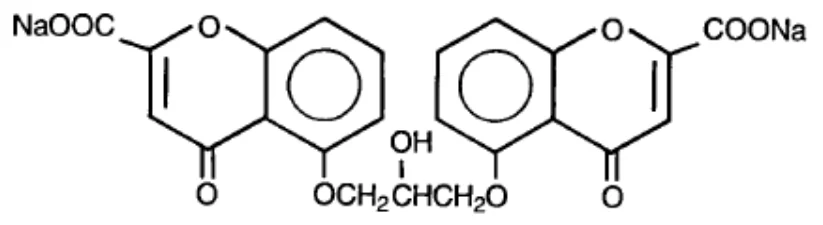
Chemical name: 4H-1-Benzopyran-2-carboxylic acid, 5,5'-[(2-hydroxy-1,3- propanediyl)bis(oxy)]bis[4-oxo-, disodium salt]
Molecular formula and molecular mass: C23H14Na2O11 / 512.3 g/mol
Structural formula:
Physicochemical properties: An odourless, white, hydrated crystalline powder. It is freely soluble in water up to 5 percent at 20°C. It is insoluble in alcohol and sparingly soluble in common organic solvents such as dioxan, pyridine, ether and chloroform.
14 CLINICAL TRIALS
The clinical trial data on which the original indication was authorized is not available.
15 MICROBIOLOGY
No microbiological information is required for this drug product.
16 NON-CLINICAL TOXICOLOGY
General Toxicology
Acute Toxicity
In acute toxicity tests in small laboratory animals the LD50 on parenteral administration was usually between 2000 and 4000 mg/kg.
Subacute and Chronic Toxicity
In a prolonged test in rats no toxic effects resulted from 90 daily subcutaneous injections except at doses greater than 30 mg/kg. The only pathological lesion produced in any of these tests was an inflammation and degeneration of the renal tubules. In Rhesus monkeys no evidence of renal or other toxicity could be found after 180 daily doses of 50 mg/kg had been given by the intravenous route. No toxicity was found in 90-day inhalation studies in rats, guinea pigs and monkeys. In the case of the monkeys the drug was administered as a powder and each monkey received a capsule every 5 minutes for 6 hours a day, 5 days a week for 3 months. In none of these tests could any lung changes be detected nor were there any other indications of toxicity.
In one inhalation study using a group of 30 rats exposed to a concentration of 4.6 mg/L of air for one hour and three hours daily for 5 weeks, no toxic effect resulting from this treatment was observed. A chronic inhalation toxicological study of cromolyn sodium was performed in the Squirrel monkey. Each of 5 experimental groups consisted of 3 male and 3 female monkeys.
Groups 1 and 2 were exposed 6 hr/day, 7 days/week, for 1 year to aerosols containing cromolyn sodium in approximate concentrations of 0.5 and 0.05 mg/L of air, respectively. Group 3 animals were similarly exposed to an aerosol containing 0.01 mg lactose/L of air. Group 4 subjects served as chamber controls and the room controls (Group 5) were maintained in the animal holding room throughout the study. A comprehensive toxicological evaluation of the monkeys was carried out prior to and throughout the study. No histopathological changes were seen in any variable.
Studies of Cromolyn Sodium Ophthalmic Solution
A 28-day irritancy test of rabbit eyes was conducted using 4% cromolyn sodium ophthalmic solution applied to one eye up to four times daily. Assessment of the reaction (Draize method) showed cromolyn sodium solution was non-irritant to the cornea, iris or conjunctiva, and no drug-related gross or microscopic changes were observed.
Studies of 2% cromolyn sodium ophthalmic solution were carried out in the New Zealand albino rabbit (3 months) and squirrel monkey (6 months). Each experimental group consisted of 4 males and 4 females. Two drops of cromolyn sodium solution were instilled into both eyes of each high dose animal, two to ten times daily. The control animals were treated similarly with placebo solution only. No fundoscopic changes were seen. Detailed histopathological examination of eyes and related structures revealed no local irritation or toxic effects of treatment.
Carcinogenesis and Mutagenesis
Long term studies in mice (12 months intraperitoneal treatment followed by 6 months observation), hamsters (12 months intraperitoneal treatment followed by 12 months observation) and rats (18 months subcutaneous treatment) showed no neoplastic effect of cromolyn sodium. No evidence of chromosomal damage or cytotoxicity was obtained in various mutagenesis studies.
Immunotoxicity
The effect of the drug on microbiological neutralizing systems, including viruses in vivo and in vitro, was studied. No effect was observed on:
- various antibody neutralizing or agglutinating systems
- development of active immunity or antibody production
- protection conferred by passive or active immunity
No effect was found on the following virus/antibody neutralizing systems in vitro:
- influenza, polio with human or rabbit antiserum
- vaccinia with rabbit antiserum
- herpes simplex with human antiserum
None of the neutralization titres studied were affected by the presence of the compound up to concentrations of 1000 μg/mL.
No effect was observed on the LD50 in mice infected with mouse-adapted polio virus, nor on their protection by Salk vaccine.
No effect was observed on the neutralization of Clostridium welchii type A toxin by specific antiserum, nor on several bacterial agglutinating systems tested. No effect was observed on the cytotoxic behaviour of rabbit anti-HeLa serum on HeLa cells in vitro.
Reproductive and Developmental Toxicology
No teratogenic effects were seen in rabbits in which the compound was given intravenously, daily throughout pregnancy, in doses up to 250 mg/kg. The latter dose was sufficient to cause severe damage to the maternal kidneys. At even higher doses (500 mg/kg) some partially resorbed fetuses showed developmental defects, but all full-term fetuses were normal. In rats dosed at 185 mg/kg daily s.c. throughout pregnancy, one fetus (out of 272) showed a grossly shortened humerus. No abnormalities were seen at lower doses (90 mg/kg). No teratogenic effect was seen in mice at daily doses of up to 540 mg/kg.
Special Toxicology
Cytotoxicity
At the cellular level, no effects of sodium cromoglycate were observed at concentrations up to and including 1 mg/mL upon the following:
- migration characteristics of guinea pig macrophages
- morphology of chick embryo fibroblasts.
- morphology of human epithelial cells from a cell line.
- ciliary activity of samples of human ciliated epithelium.
Drug Interaction Studies
No incompatibility could be detected in the rabbit eye when cromolyn sodium 4% ophthalmic solution was used with the following commonly used ophthalmic drugs:
❖ Drugs given once daily for 5 days:
- Topicamide 0.5% (Mydriacyl 0.5% ophthalmic solution)
- Phenylephrine hydrochloride 10% (Neo-Synephrine 10% ophthalmic solution)
- Cyclopentolate hydrochloride 0.5% (Cyclogyl 0.5% ophthalmic solution)
❖ Drugs given once daily for 28 days:
Vasoconstrictors
- Tetrahydrozoline HCl 0.05% (Visine ophthalmic solution)
- Murine ophthalmic Solution
Antibiotics
- Gentamycin sulfate (Garamycin ophthalmic solution)
- Chloramphenicol 0.5% (Choromycetin 0.5% ophthalmic solution)
- Polymyxin B - neomycin - gramicidin (Neosporin ophthalmic solution)
- Sodium sulfacetamide 30% (sodium Sulamyd 30% ophthalmic solution)
Astringents
- Zinc sulfate 09.25% (Zincfrin ophthalmic solution)
Steroids
- Dexamethasone sodium phosphate 0.1% (Decadron 0.1% ophthalmic solution)
- Prednisolone acetate 1% + phenylephrine 0.12% (Prednefrin Forte 1% aqueous suspension).