


Product Monograph - Dacogen
RECENT MAJOR LABEL CHANGES
Not applicable
TABLE OF CONTENTS
RECENT MAJOR LABEL CHANGES ......................................................................................2
TABLE OF CONTENTS ..............................................................................................................2
PART I: HEALTH PROFESSIONAL INFORMATION ............................................................4
1 INDICATIONS....................................................................................................................4
1.1 Pediatrics ....................................................................................................................4
1.2 Geriatrics ....................................................................................................................4
2 CONTRAINDICATIONS ..................................................................................................4
3 SERIOUS WARNINGS AND PRECAUTIONS BOX ..................................................4
4 DOSAGE AND ADMINISTRATION ...............................................................................5
4.1 Dosing Considerations ...............................................................................................5
4.2 Recommended Dose and Dosage Adjustment ...........................................................5
4.3 Administration ...........................................................................................................7
4.4 Reconstitution ............................................................................................................7
4.5 Missed Dose ...............................................................................................................8
5 OVERDOSAGE .................................................................................................................8
6 DOSAGE FORMS, STRENGTHS, COMPOSITION AND PACKAGING ................8
7 WARNINGS AND PRECAUTIONS ...............................................................................8
7.1 Special Populations ..................................................................................................11
7.1.1 Pregnant Women ................................................................................................. 11
7.1.2 Breast-feeding ..................................................................................................... 11
7.1.3 Pediatrics ............................................................................................................. 11
7.1.4 Geriatrics ............................................................................................................. 11
8 ADVERSE REACTIONS................................................................................................12
8.1 Adverse Reaction Overview ....................................................................................12
8.2 Clinical Trial Adverse Reactions .............................................................................12
8.3 Clinical Trial Adverse Reactions (Pediatrics)..........................................................22
8.4 Abnormal Laboratory Findings: Hematologic, Clinical Chemistry and Other Quantitative Data ...............................................................................................................22
8.5 Post-Market Adverse Reactions ...............................................................................24
9 DRUG INTERACTIONS .................................................................................................24
9.1 Drug-Drug Interactions ............................................................................................24
9.2 Drug-Food Interactions ............................................................................................25
9.3 Drug-Herb Interactions ............................................................................................25
9.4 Drug-Laboratory Test Interactions ..........................................................................25
10 ACTION AND CLINICAL PHARMACOLOGY ...........................................................25
10.1 Mechanism of Action ...........................................................................................25
10.2 Pharmacodynamics...............................................................................................25
10.3 Pharmacokinetics .................................................................................................26
11 STORAGE, STABILITY AND DISPOSAL..................................................................27
12 SPECIAL HANDLING INSTRUCTIONS .....................................................................28
PART II: SCIENTIFIC INFORMATION ...................................................................................29
13 PHARMACEUTICAL INFORMATION ........................................................................29
14 CLINICAL TRIALS .........................................................................................................30
15 NON-CLINICAL TOXICOLOGY ...................................................................................36
PART III: PATIENT MEDICATION INFORMATION .............................................................37
PART I: HEALTH PROFESSIONAL INFORMATION
1 INDICATIONS
DACOGEN® (decitabine) is indicated for the treatment of adult patients with de novo or secondary Myelodysplastic Syndrome (MDS), untreated or previously treated with chemotherapy, who are not considered candidates for hematopoietic stem cell transplantation, including:
- Intermediate-1, intermediate-2 and high-risk International Prognostic Scoring System (IPSS) groups,
- All French-American-British (FAB) subtypes (refractory anemia, refractory anemia with ringed sideroblasts, refractory anemia with excess blasts, refractory anemia with excess blasts in transformation, and chronic myelomonocytic leukemia (CMML)).
1.1 Pediatrics
Pediatrics (< 18 years of age): MDS is rare in children. DACOGEN is not indicated in the pediatric population, as the safety and efficacy of DACOGEN has not been studied in patients less than 18 years of age.
1.2 Geriatrics
Geriatrics (> 65 years of age): No overall differences in safety or effectiveness were observed between patients 65 years and older as compared to younger subjects. However, in older individuals (75 years and older) catheter related infections (5% in patients 65 and older vs. 24% in patients 75 years and older) were reported more frequently in a phase 3 clinical trial.
2 CONTRAINDICATIONS
DACOGEN is contraindicated in patients who are hypersensitive to this drug or to any ingredient in the formulation, including any non-medicinal ingredient, or component of the container. For a complete listing, see DOSAGE FORMS, STRENGTHS, COMPOSITION AND PACKAGING.
3 SERIOUS WARNINGS AND PRECAUTIONS BOX
DACOGEN should only be administered by healthcare professionals experienced in the use of antineoplastic agents.
|
4 DOSAGE AND ADMINISTRATION
4.1 Dosing Considerations
DACOGEN must be administered under the supervision of a qualified physician experienced in the use of chemotherapeutic agents.
Patients may be premedicated with standard anti-emetic therapy. A mild to moderate increase in nausea, vomiting and diarrhea was reported in patients receiving DACOGEN. (See ADVERSE REACTIONS).
Two dosing regimens are recommended. With either regimen it is recommended that patients be treated for a minimum of 4 cycles; however, a complete or partial response may take longer than 4 cycles. Complete blood counts and platelet counts should be performed as needed to monitor response and toxicity, but at a minimum, prior to each cycle. Liver chemistries and serum creatinine should be obtained prior to initiation of treatment.
Treatment may be delayed at the discretion of the treating physician, if patients experience hematological or non-hematological adverse reactions (see Recommended Dose and Dosage Adjustment).
If after 4 cycles, the patient’s hematological values (e.g., platelet counts or absolute neutrophil count), have not returned to pre-treatment levels or if disease progression occurs (peripheral blast counts are increasing or bone marrow blast counts are worsening), the patient may be considered to be a non-responder and alternative therapeutic options to DACOGEN should be considered.
Dosage should be modified in the presence of hematological and non-hematological toxicities.
4.2 Recommended Dose and Dosage Adjustment
Recommended Dose
There are two possible treatment regimens for DACOGEN.
Option 1: In Patient (3-Day Dosing Regimen)
DACOGEN is administered at a dose of 15 mg/m2 body surface area by continuous intravenous infusion over 3 hours repeated every 8 hours for 3 consecutive days. This cycle should be repeated every 6 weeks depending on the patient’s clinical response and observed toxicity.
Option 2: Out Patient (5-Day Dosing Regimen)
DACOGEN is administered at a dose of 20 mg/m2 body surface area by continuous intravenous infusion over 1 hour repeated daily for 5 consecutive days. This cycle should be repeated every 4 weeks depending on the patient’s clinical response and observed toxicity.
Dosage Adjustment
If patients experience toxicities as described below DACOGEN dosage should be adjusted.
Non-Hematologic Toxicity
DACOGEN treatment should be delayed subsequent to any the following non-hematologic toxicities and should not be restarted until toxicities resolve:
- Serum creatinine ≥ 2 mg/dL
- SGPT, total bilirubin ≥ 2 times ULN
- Active or uncontrolled infection
Hematologic Toxicity
Myelosuppression and adverse events related to myelosuppression (thrombocytopenia, anemia, neutropenia, and febrile neutropenia) are common in both treated and untreated patients. Complications of myelosuppression include infections and bleeding. Treatment may be delayed at the discretion of the treating physician, if the patient experiences myelosuppression-associated complications, such as those described below. Treatment with DACOGEN may be resumed once these conditions have improved or have been stabilized with adequate treatment (anti-infective therapy, transfusion, or growth factors).
- Febrile neutropenia (temperature ≥ 38.5°C and absolute neutrophil count (ANC) < 1,000/µL)
- Active viral, bacterial or fungal infection (i.e., requiring intravenous anti-infectives or extensive supportive care)
- Hemorrhage (gastrointestinal, genito-urinary, pulmonary with platelets < 25,000/µL or any central nervous system hemorrhage). (See WARNINGS AND PRECAUTIONS, ADVERSE REACTIONS).
Option 1: In Patient (3-Day Dosing Regimen)
If hematologic recovery (ANC at least 1,000/μL and platelets at least 50,000/μL) from a previous DACOGEN treatment cycle requires more than 6 weeks, the next cycle of DACOGEN therapy should be delayed and DACOGEN dose temporarily should be reduced by following this algorithm:
- If DACOGEN treatment is required for more than 6, but less than 8 weeks – DACOGEN dosing should be delayed for up to 2 weeks and the dose should be temporarily reduced to 11 mg/m2 by surface area every 8 hours (33 mg/m2/day, 99 mg/m2/cycle) upon restarting therapy.
- If DACOGEN treatment is required for more than 8, but less than 10 weeks - bone marrow aspirate should be performed to assess for disease progression. In the absence of progression, DACOGEN dose should be delayed up to 2 more weeks and the dose should be reduced to 11 mg/m2 by surface area every 8 hours (33 mg/m2/day, 99 mg/m2/cycle) upon restarting therapy, then the dose should be maintained or increased in subsequent cycles as clinically indicated.
Option 2: Out Patient (5-Day Dosing Regimen)
Dose reduction is not recommended for the 5-day dosing regimen.
If hematologic recovery (ANC at least 1,000/μL and platelets at least 50,000/μL) from a previous DACOGEN treatment cycle requires more than 4 weeks, DACOGEN therapy should be delayed to the next cycle.
Pediatrics (< 18 years of age): There is no safety and efficacy data available from children. MDS occurs rarely in children.
Geriatrics (> 65 years of age): No overall differences in safety or effectiveness were observed between patient 65 years and older as compared to younger subjects. However, in older individuals (75 years and older) catheter related infections (5% in patients 65 and older vs. 24% in patients 75 years and older) were reported more frequently in a phase 3 clinical trial.
Renal Impairment: Patients with renal impairment were excluded from the trials. Decitabine is mainly excreted (90%) in the urine. DACOGEN should be used with caution in renal impairment and these patients should be monitored closely for toxicity including worsening of renal function. Serum creatinine should be obtained prior to initiation of treatment if non-hematologic toxicities are present. DACOGEN treatment should not be restarted until serum creatinine ≥ 2 mg/dL. (See ACTION AND CLINICAL PHARMACOLOGY, Pharmacokinetics).
Hepatic Impairment: There are no data on patients with hepatic impairment because they were excluded from the trials. Hyperbilirubinemia appeared as an early event. DACOGEN should be used with caution and liver function tests should be monitored closely during DACOGEN treatment. Liver chemistries should be obtained prior to initiation of treatment and if non-hematologic toxicities are present. DACOGEN treatment should not be restarted until ALT and total bilirubin ≥ 2x ULN. (See ACTION AND CLINICAL PHARMACOLOGY, Pharmacokinetics).
4.3 Administration
DACOGEN is administered by intravenous infusion.
DACOGEN is a cytotoxic drug and caution should be exercised when handling and preparing DACOGEN. Procedures for proper handling and disposal of antineoplastic drugs should be applied (see SPECIAL HANDLING INSTRUCTIONS).
4.4 Reconstitution
DACOGEN should be aseptically reconstituted with 10 mL of Sterile Water for Injection (SWI) at room temperature; gently swirl to dissolve and ensure the solution is clear (no visible undissolved matter. Upon reconstitution, each mL contains approximately 5 mg of decitabine at pH 6.7-7.3.
Table 1 – Reconstitution
| Vial Size | Volume of Diluent to be Added to Vial | Approximate Available Volume | Nominal Concentration per mL |
| 50 mg lyophilized powder | 10 mL | 10 mL | 5 mg/mL |
If administration is planned within 15 minutes of reconstitution, the reconstituted solution should immediately be further diluted as per the recommended procedure with infusion fluids, such as 0.9% Sodium Chloride Injection or 5% Dextrose Injection to a final drug concentration of 0.1 – 1 mg/mL.
Unless administration of the diluted solution is started within 15 minutes of reconstitution, the reconstituted solution must be further diluted with cold (2-8°C) infusion fluids and stored at 2-8°C for a maximum of 4 hours until administration (see STORAGE, STABILITY AND DISPOSAL).
Inspect the diluted product visually for particulate matter and discoloration prior to administration. DO NOT use if solution appears hazy, contains particles.
Check the container for minute leaks prior to use by squeezing the bag firmly; ensure that the seal is intact. If leaks are found, discard the solution as sterility may be impaired.
4.5 Missed Dose
If a dose is missed, treatment should be resumed as soon as possible.
5 OVERDOSAGE
There is no known antidote for overdosage with DACOGEN. Higher doses are associated with increased myelosuppression including prolonged neutropenia and thrombocytopenia. Standard supportive measures should be initiated in the event of an overdose.
| For management of a suspected drug overdose, contact your regional poison control centre. |
6 DOSAGE FORMS, STRENGTHS, COMPOSITION AND PACKAGING
Table 2 – Dosage Forms, Strengths, Composition and Packaging
7 WARNINGS AND PRECAUTIONS
General
DACOGEN administration should only be administered by healthcare professionals experienced with cancer chemotherapeutic drugs.
DACOGEN is a cytotoxic drug and caution should be exercised while handling and disposal of DACOGEN. See DOSAGE AND ADMINISTRATION; SPECIAL HANDLING INSTRUCTIONS.
There is a risk of DACOGEN degradation at room temperature if not used within 15 minutes of reconstitution. Therefore, DACOGEN should be diluted with cold recommended infusion fluids and stored at 2-8°C for a maximum of 4 hours until administration (see DOSAGE AND ADMINISTRATION, Administration, Reconstitution, STORAGE, STABILITY AND DISPOSAL).
| Route of Administration | Dosage Form / Strength/Composition | Non-medicinal Ingredients |
| Intravenous infusion | Single-use clear colorless glass vials containing 50 mg lyophilized powder for solution for infusion, with a potency of 5 mg/mL upon reconstitution. | Potassium dihydrogen phosphate, sodium hydroxide |
Carcinogenesis and Mutagenesis
Carcinogenicity studies with decitabine have not been conducted. Decitabine is mutagenic in vitro and in vivo studies. (See NON-CLINICAL TOXICOLOGY).
Cardiovascular
No thorough clinical QT/QTc study have been conducted. Patients with a history of severe congestive heart failure or clinically unstable cardiac disease were excluded from clinical studies and therefore the safety and efficacy of DACOGEN in these patients has not been established. Patients with history of severe congestive heart failure or clinically unstable cardiac disease should be closely monitored. (See NON-CLINICAL TOXICOLOGY).
Driving and Operating Machinery
Patients should be advised that they may experience fatigue, dizziness, confusional state, and blurred vision due to anemia during treatment. Due caution should be exercised when driving or operating a vehicle or potentially dangerous machinery.
Hematologic
Hemorrhage
Serious bleeding-related adverse reactions (AR) such as central nervous system (CNS) haemorrhage (1%) and gastrointestinal (GI) haemorrhage (2%), were reported due to severe thrombocytopenia in patients receiving DACOGEN. Patients receiving DACOGEN should be monitored closely for signs and symptoms of serious bleeding-related adverse events. (See ADVERSE REACTIONS).
Myelosuppression
Complete blood and platelet counts should be performed regularly, as clinically indicated and prior to each treatment cycle. In the presence of myelosuppression or its complications, DACOGEN may be interrupted or supportive measures such as growth factor support (e.g. G-CSF) for neutropenia and red blood cell or platelet transfusions or antimicrobial agents for the prevention and treatment of myelosuppression or infections may be instituted according to institutional guidelines. (See WARNINGS AND PRECAUTIONS, Monitoring and Laboratory Tests, DOSAGE AND ADMINISTRATION).
Increased risk of febrile neutropenia, worsening of neutropenia from Grade 3 to Grade 4 (in 85% patients) and increased requirements for transfusion occurred in the first two treatment cycles. Myelosuppression and complications of myelosuppression, including infections and bleeding that occur in patients with MDS may be exacerbated with DACOGEN treatment. The highest incidence of Grade 3 and/or Grade 4 ARs with neutropenia (87%), thrombocytopenia (85%), febrile neutropenia (23%) and leukopenia (22%) occurred with DACOGEN. Additionally, eight patients had fatal events due to infection and/or bleeding that were considered at least possibly related to DACOGEN treatment. Fungal infections and bacteremia appeared as early events, as do febrile neutropenia, rigor and hyperbilirubinemia. (See ADVERSE REACTIONS).
Hepatic
There are no data in patients with hepatic impairment because these patients were excluded from the trials. Hyperbilirubinemia appeared as an early event. DACOGEN should be used with caution and liver function tests should be monitored closely during DACOGEN treatment (see ACTION AND CLINICAL PHARMACOLOGY, Pharmacokinetics).
Immune
Hypersensitivity
Hypersensitivity reactions including serious anaphylactic reactions have been reported with DACOGEN. Skin and subcutaneous events and petechiae also appeared early, but diminish more slowly than other early events. DACOGEN treatment should be discontinued for serious adverse reactions. Supportive treatment should be initiated promptly. (See ADVERSE REACTIONS).
Infections and Infestations:
Serious infection-related adverse reactions such as septic shock, sepsis, and pneumonia were reported in patients receiving DACOGEN. Infections were reported with higher frequency early in treatment during Cycles 1 and 2. Fungal infections and bacteremia appeared as early events, as did febrile neutropenia. Patients should be monitored for signs and symptoms of infection and supportive prophylactic antibiotics and treatment should be initiated promptly. (See ADVERSE REACTIONS).
Monitoring and Laboratory Tests
Complete blood and platelet counts should be performed to monitor response and toxicity as needed, but at a minimum prior to each dose. Liver chemistries and serum creatinine should be obtained prior to initiation of treatment and if signs and symptoms of liver/renal toxicities are suspected. (See Hematologic, ADVERSE REACTIONS).
Renal
Patients with renal impairment were excluded from the trials. Decitabine is mainly excreted (90%) in the urine. DACOGEN should be used with caution and these patients should be monitored closely. (See ACTION AND CLINICAL PHARMACOLOGY, Pharmacokinetics).
Respiratory thoracic and mediastinal disorders
Cases of interstitial lung disease (ILD) (including pulmonary infiltrates, organising pneumonia and pulmonary fibrosis) without signs of infectious aetiology have been reported in patients receiving decitabine. Careful assessment of patients with an acute onset or unexplained worsening of pulmonary symptoms should be performed to exclude ILD. If ILD is confirmed, appropriate treatment should be initiated. (See ADVERSE REACTIONS).
Sexual Health
Reproduction
Women of childbearing potential should be advised to avoid becoming pregnant and should be counseled to use effective contraception while receiving DACOGEN. Based on its mechanism of action, DACOGEN alters DNA synthesis and can cause fetal harm. The time period following treatment with DACOGEN where it is safe to become pregnant is unknown.
Men should be advised not to father a child while receiving treatment with DACOGEN, and for 3 months following completion of treatment. Men with female partners of childbearing potential should use effective contraception during this time. (See ACTION AND CLINICAL PHARMACOLOGY, Mechanism of Action; NON-CLINICAL TOXICOLOGY).
Fertility
In vivo studies demonstrated significant decreases in sperm counts in mice administered half of the decitabine recommended dose in humans. Because of the possibility of infertility as a consequence of DACOGEN therapy, men should be advised to seek advice on conservation of sperm prior to any DACOGEN treatment and female patients of childbearing potential should seek consultation regarding oocyte cryopreservation prior to initiation of treatment. (See NON-CLINICAL TOXICOLOGY).
7.1 Special Populations
7.1.1 Pregnant Women
There are no adequate data and well-controlled studies of DACOGEN in pregnant women.
Decitabine is teratogenic in embryo-fetal studies in rats and mice, in the absence of maternal toxicity. Based on results from animal studies and its mechanism of action, DACOGEN can cause fetal harm and therefore should not be used during pregnancy. If DACOGEN is to be used in pregnant woman, or if the patient becomes pregnant while taking DACOGEN, the patient should be apprised of the potential hazard to the fetus. (See NON-CLINICAL TOXICOLOGY).
7.1.2 Breast-feeding
It is not known whether decitabine or its metabolites are excreted in breast milk. Because many drugs are excreted in human milk, and because of the potential for serious adverse reactions in nursing infants who are exposed to decitabine, mothers should be advised not to breast-feed while undergoing therapy with DACOGEN.
7.1.3 Pediatrics
Pediatrics (< 18 years): There is no safety and efficacy data available from children. MDS occurs rarely in children. Lack of efficacy was reported from clinical studies in children with Acute Myeloid Leukemia (AML) receiving DACOGEN in sequential/combination with other drugs. It is unlikely that DACOGEN priming prior to induction therapy will improve the remission rate of pediatric subjects with AML.
7.1.4 Geriatrics
Geriatrics (> 65 years of age): No overall differences in safety or effectiveness were observed between patients 65 years and older as compared to younger subjects. However, in older individuals (75 years and older) catheter related infections (5% in patients 65 and older vs. 24% in patients 75 years and older) were reported more frequently in a phase 3 clinical trial. (See CLINICAL TRIALS).
8 ADVERSE REACTIONS
8.1 Adverse Reaction Overview
The safety of DACOGEN in MDS adult patients was studied in a single-arm study (N = 99) and a controlled supportive care trial (N = 83 DACOGEN, N = 81 supportive care). In the controlled supportive care trial, patients received 15 mg/m2 DACOGEN by body surface area intravenously every 8 hours for 3 days every 6 weeks. In the single-arm MDS study (N=99) DACOGEN was dosed at 20 mg/m2 intravenously infused by body surface area, over one hour daily for 5 consecutive days of a 4-week cycle. Patients with a history of uncontrolled cardiac disease or congestive heart failure, renal dysfunction or, hepatic dysfunction were excluded.
The safety profile of DACOGEN using the 3-day and 5-day regimens are similar in that the most common adverse reactions were blood and lymphatic systems disorders: mainly myelosuppression (neutropenia, thrombocytopenia, anemia, and febrile neutropenia). The incidence of these adverse reactions were lower in patients treated with the 5-day regimen. In the first two treatment cycles, there was an increased risk of febrile neutropenia and increased requirements for transfusion which were not seen in later cycles. Dose-related, but transient cytopenias, were reported early in the treatment regimen following the initial DACOGEN infusions. Serious infection-related adverse reactions such as septic shock, sepsis, and pneumonia were reported in patients receiving DACOGEN.
Serious bleeding-related adverse reactions such as central nervous system (CNS) haemorrhage (1%) and gastrointestinal (GI) haemorrhage (2%), in the context of severe thrombocytopenia, were reported in patients receiving decitabine. Cases of interstitial lung disease (ILD) (including pulmonary infiltrates, organising pneumonia and pulmonary fibrosis) without signs of infectious aetiology have been reported in patients receiving decitabine. Cases of myelosuppression, cardiac arrest, infections, hypersensitivity (anaphylaxis) and intracranial hemorrhage have been reported in patients receiving decitabine.
8.2 Clinical Trial Adverse Reactions
Because clinical trials are conducted under very specific conditions, the adverse reaction rates observed in the clinical trials may not reflect the rates observed in practice and should not be compared to the rates in the clinical trials of another drug. Adverse reaction information from clinical trials is useful for identifying drug-related adverse events and for approximating rates.
Myelodysplastic Syndrome (MDS)
Option 1: In Patient (3-Day Dosing Regimen)
A Phase 3 (D-0007), randomized open-label, multicenter, controlled trial was conducted with DACOGEN plus supportive care vs. supportive care alone in 170 adult patients with MDS. 83 patients received DACOGEN intravenously infused at a dose of 15 mg/m2 per body surface area over a 3-hour period, every 8 hours, for 3 consecutive days. This cycle was repeated every 6 weeks, depending on the patient’s clinical response and toxicity. The median number of cycles completed was 3 for the DACOGEN and for Supportive Care treatment arms (range 1 to 9).
The most common adverse reactions in patients who received DACOGEN were: neutropenia (90%), thrombocytopenia (89%), anaemia (82%), fatigue (48%), pyrexia (53%), nausea (42%), cough (40%), petechiae (39%), constipation (35%), diarrhoea (34%), and hyperglycaemia (33%). Pyrexia, cough, headache, staphylococcal infection, and pneumonia occurred consistently throughout treatment. Fungal infections and bacteremia appeared as early events, as did febrile neutropenia, rigor and hyperbilirubinemia.
The overall incidence of death was similar (71% DACOGEN vs. 68% Supportive Care) for the two treatment arms during the study period or during long term follow-up. The major causes of death on study in both study arms were disease progression (MDS/AML) and infection. Fewer patients died on study in the DACOGEN arm (14%) than in the Supportive Care arm (22%). The situation was reversed in the long-term follow-up period (57% DACOGEN vs. 46% Supportive Care).
Serious adverse reactions (SARs) were experienced by 69% of the DACOGEN patients and 56% of the Supportive Care patients. SARs occurred most commonly in the SOC categories of blood and lymphatic system disorders, general disorders and administrative sites conditions, infections and infestations and cardiac disorders. The most common SARs in the DACOGEN arm that occurred in more than one patient and at an incidence numerically greater than in the Supportive Care arm were: febrile neutropenia (25%), pneumonia (17%), pyrexia (14%), and catheter-related infections (5%). The highest incidence of Grade 3 and/or Grade 4 SARs in the DACOGEN arm occurred with neutropenia (87%), thrombocytopenia (85%), febrile neutropenia (23%) and leukopenia (22%). In the first two treatment cycles, there was an increased risk of febrile neutropenia and increased requirements for transfusion which were not seen in later cycles.
Ten percent of patients discontinued due to toxicity. Adverse reactions for permanent discontinuation were due to thrombocytopenia (2%), neutropenia (1%), cardiopulmonary arrest (1%), pneumonia NOS (1%), lymphadenopathy (1%), elevated total bilirubin (1%), elevated SGPT (1%), Mycobacterium avium complex infection (1%), subarachnoid hemorrhage (1%), cardio-respiratory arrest (1%), increased blood bilirubin (1%), intracranial hemorrhage (1%), and abnormal liver function tests (1%).
Approximately one - third of patients receiving DACOGEN required dose delay or dose reduction. The adverse reactions most frequently resulting in permanent discontinuation were thrombocytopenia (2%), neutropenia (1%), cardiopulmonary arrest (1%), pneumonia NOS (1%), MAC infection (1%), subarachnoid hemorrhage (1%), lymphadenopathy (1%), elevated total bilirubin (1%), and elevated SGPT (1%). Adverse reactions leading to temporarily dose suspension were neutropenia (2%), pulmonary congestion (1%), atrial fibrillation (1%), central line infection (1%), and febrile neutropenia (1%); while adverse reaction leading to dose reduction were thrombocytopenia (4%), neutropenia (2%), tachycardia (1%), pharyngitis (1%), anemia (1%), lethargy (1%), edema (1%), and depression (1%).
Table 3 presents all adverse reactions occurring in at least 5% of patients in the DACOGEN group and at a rate greater than supportive care.
Table 3 – Adverse Reactions Occurring in ≥5% of Subjects in Myelodysplastic Syndromes (MDS) Study and at a Rate Greater than Supportive Care Study D-0007 with Option 1: In Patient (3-Day Dosing Regimen) | |||||||||||||||||
|---|---|---|---|---|---|---|---|---|---|---|---|---|---|---|---|---|---|
| SOC Heading Preferred MedDRA Term | DACOGEN N = 83 (%) | Supportive Care N = 81 (%) | |||||||||||||||
| Grade 3 N (%) | Grade 4 N (%) | All Grades N (%) | Grade 3 N (%) | Grade 4 N (%) | All Grades N (%) | ||||||||||||
| Blood and Lymphatic System Disorders | |||||||||||||||||
| Neutropenia | 8 (10) | 64 (77) | 75 (90) | 20 (25) | 20 (25) | 58 (72) | |||||||||||
| Thrombocytopenia | 18 (22) | 52 (63) | 74 (89) | 22 (27) | 13 (16) | 64 (79) | |||||||||||
| Anemia | 9 (11) | 1 (1) | 68 (82) | 11 (14) | 1 (1) | 60 (74) | |||||||||||
| Febrile Neutropenia | 14 (17) | 5 (6) | 24 (29) | 3 (4) | 0 (0) | 5 (6) | |||||||||||
| Leukopenia | 7 (8) | 12 (14) | 23 (28) | 4 (5) | 2 (2) | 11 (14) | |||||||||||
| Lymphadenopathy | 0 (0) | 0 (0) | 10 (12) | 0 (0) | 1 (1) | 6 (7) | |||||||||||
| Thrombocythemia | 0 (0) | 0 (0) | 4 (5) | 0 (0) | 0 (0) | 1 (1) | |||||||||||
| Cardiac disorders | |||||||||||||||||
| Pulmonary oedema NOS | 0 (0) | 0 (0) | 5 (6) | 0 (0) | 0 (0) | 0 (0) | |||||||||||
| Eye disorders | |||||||||||||||||
| Vision blurred | 1 (1) | 0 (0) | 5 (6) | 0 (0) | 0 (0) | 0 (0) | |||||||||||
| Gastrointestinal Disorders | |||||||||||||||||
| Nausea | 1 (1) | 0 (0) | 35 (42) | 3 (4) | 0 (0) | 13 (16) | |||||||||||
| Constipation | 2 (2) | 0 (0) | 29 (35) | 1 (1) | 0 (0) | 11 (14) | |||||||||||
| Diarrhea | 0 (0) | 0 (0) | 28 (34) | 1 (1) | 1 (1) | 13 (16) | |||||||||||
| Vomiting | 0 (0) | 0 (0) | 21 (25) | 0 (0) | 0 (0) | 7 (9) | |||||||||||
| Abdominal pain NOS | 2 (2) | 0 (0) | 12 (14) | 3 (4) | 0 (0) | 5 (6) | |||||||||||
| Oral mucosal Petechiae | 2 (2) | 0 (0) | 11 (13) | 1 (1) | 0 (0) | 4 (5) | |||||||||||
| Stomatitis | 0 (0) | 0 (0) | 10 (12) | 0 (0) | 0 (0) | 5 (6) | |||||||||||
| Dyspepsia | 1 (1) | 0 (0) | 10 (12) | 0 (0) | 0 (0) | 1 (1) | |||||||||||
| Ascites | 0 (0) | 0 (0) | 8 (10) | 0 (0) | 0 (0) | 2 (2) | |||||||||||
| Gingival bleeding | 1 (1) | 0 (0) | 7 (8) | 0 (0) | 0 (0) | 5 (6) | |||||||||||
| Haemorrhoids | 0 (0) | 0 (0) | 7 (8) | 0 (0) | 0 (0) | 3 (4) | |||||||||||
| Loose stools | 0 (0) | 0 (0) | 6 (7) | 0 (0) | 0 (0) | 3 (4) | |||||||||||
| Tongue ulceration | 0 (0) | 0 (0) | 6 (7) | 0 (0) | 0 (0) | 2 (2) | |||||||||||
| Dysphagia | 2 (2) | 0 (0) | 5 (6) | 0 (0) | 1 (1) | 2 (2) | |||||||||||
| Oral soft tissue disorder NOS | 0 (0) | 0 (0) | 5 (6) | 0 (0) | 0 (0) | 1 (1) | |||||||||||
| Lip ulceration | 0 (0) | 0 (0) | 4 (5) | 0 (0) | 0 (0) | 3 (4) | |||||||||||
| Abdominal distension | 0 (0) | 0 (0) | 4 (5) | 0 (0) | 0 (0) | 1 (1) | |||||||||||
| Abdominal pain upper | 0 (0) | 0 (0) | 4 (5) | 0 (0) | 0 (0) | 1 (1) | |||||||||||
| Gastrooesophageal reflux disease | 0 (0) | 0 (0) | 4 (5) | 0 (0) | 0 (0) | 0 (0) | |||||||||||
| Glossodynia | 0 (0) | 0 (0) | 4 (5) | 0 (0) | 0 (0) | 0 (0) | |||||||||||
| General Disorders and Administration Site Conditions | |||||||||||||||||
| Pyrexia | 4 (5) | 1 (1) | 44 (53) | 0 (0) | 1 (1) | 23 (28) | |||||||||||
| Oedema peripheral | 3 (4) | 0 (0) | 21 (25) | 0 (0) | 0 (0) | 13 (16) | |||||||||||
Table 3 – Adverse Reactions Occurring in ≥5% of Subjects in Myelodysplastic Syndromes (MDS) Study and at a Rate Greater than Supportive Care Study D-0007 with Option 1: In Patient (3-Day Dosing Regimen) |
|---|
| SOC Heading Preferred MedDRA Term | DACOGEN N = 83 (%) | Supportive Care N = 81 (%) |
|---|
| Grade 3 N (%) | Grade 4 N (%) | All Grades N (%) | Grade 3 N (%) | Grade 4 N (%) | All Grades N (%) | |
|---|---|---|---|---|---|---|
| Rigors | 1 (1) | 0 (0) | 18 (22) | 0 (0) | 0 (0) | 14 (17) |
| Oedema NOS | 0 (0) | 0 (0) | 15 (18) | 0 (0) | 0 (0) | 5 (6) |
| Pain NOS | 3 (4) | 0 (0) | 11 (13) | 0 (0) | 0 (0) | 5 (6) |
| Lethargy | 2 (2) | 1 (1) | 10 (12) | 0 (0) | 0 (0) | 3 (4) |
| Tenderness NOS | 0 (0) | 0 (0) | 9 (11) | 0 (0) | 0 (0) | 0 (0) |
| Fall | 1 (1) | 0 (0) | 7 (8) | 1 (1) | 0 (0) | 3 (4) |
| Chest discomfort | 1 (1) | 0 (0) | 6 (7) | 0 (0) | 0 (0) | 3 (4) |
| Intermittent pyrexia | 0 (0) | 0 (0) | 5 (6) | 1 (1) | 0 (0) | 3 (4) |
| Malaise | 0 (0) | 0 (0) | 4 (5) | 0 (0) | 0 (0) | 1 (1) |
| Crepitations NOS | 0 (0) | 0 (0) | 4 (5) | 0 (0) | 0 (0) | 1 (1) |
| Catheter site erythema | 0 (0) | 0 (0) | 4 (5) | 0 (0) | 0 (0) | 1 (1) |
| Catheter site pain | 0 (0) | 0 (0) | 4 (5) | 0 (0) | 0 (0) | 0 (0) |
| Injection site swelling | 0 (0) | 0 (0) | 4 (5) | 0 (0) | 0 (0) | 0 (0) |
| Hepatobiliary Disorders | ||||||
| Hyperbilirubinaemia | 4 (5) | 1 (1) | 12 (14) | 0 (0) | 0 (0) | 4 (5) |
| Infections and Infestations | ||||||
| Pneumonia NOS | 11 (13) | 2 (2) | 18 (22) | 6 (7) | 2 (2) | 11 (14) |
| Cellulitis | 2 (2) | 1 (1) | 10 (12) | 2 (2) | 0 (0) | 6 (7) |
| Candidal infection NOS | 0 (0) | 0 (0) | 8 (10) | 0 (0) | 0 (0) | 1 (1) |
| Catheter related infection | 2 (2) | 0 (0) | 7 (8) | 0 (0) | 0 (0) | 0 (0) |
| Urinary tract infection NOS | 1 (1) | 0 (0) | 6 (7) | 1 (1) | 0 (0) | 1 (1) |
| Staphylococcal infection | 2 (2) | 1 (1) | 6 (7) | 0 (0) | 0 (0) | 0 (0) |
| Oral candidiasis | 0 (0) | 0 (0) | 5 (6) | 0 (0) | 0 (0) | 2 (2) |
| Sinusitis NOS | 0 (0) | 0 (0) | 4 (5) | 1 (1) | 0 (0) | 2 (2) |
| Bacteraemia | 2 (2) | 0 (0) | 4 (5) | 0 (0) | 0 (0) | 0 (0) |
| Injury, poisoning and procedural complications | ||||||
| Transfusion reaction | 0 (0) | 0 (0) | 6 (7) | 0 (0) | 0 (0) | 3 (4) |
| Abrasion NOS | 0 (0) | 0 (0) | 4 (5) | 0 (0) | 0 (0) | 1 (1) |
| Investigations | ||||||
| Cardiac murmur NOS | 0 (0) | 0 (0) | 13 (16) | 0 (0) | 0 (0) | 9 (11) |
| Metabolism and nutrition disorders | ||||||
| Appetite decreased NOS | 0 (0) | 0 (0) | 13 (16) | 1 (1) | 1 (1) | 12 (15) |
| Anorexia | 0 (0) | 0 (0) | 13 (16) | 1 (1) | 0 (0) | 8 (10) |
| Dehydration | 1 (1) | 0 (0) | 5 (6) | 1 (1) | 0 (0) | 4 (5) |
| Musculoskeletal and connective tissue disorders | ||||||
| Arthralgia | 3 (4) | 0 (0) | 17 (20) | 0 (0) | 0 (0) | 8 (10) |
| Pain in limb | 1 (1) | 0 (0) | 16 (19) | 1 (1) | 0 (0) | 8 (10) |
Table 3 – Adverse Reactions Occurring in ≥5% of Subjects in Myelodysplastic Syndromes (MDS) Study and at a Rate Greater than Supportive Care Study D-0007 with Option 1: In Patient (3-Day Dosing Regimen) |
|---|
| SOC Heading Preferred MedDRA Term | DACOGEN N = 83 (%) | Supportive Care N = 81 (%) |
|---|
| Grade 3 N (%) | Grade 4 N (%) | All Grades N (%) | Grade 3 N (%) | Grade 4 N (%) | All Grades N (%) | |
|---|---|---|---|---|---|---|
| Back pain | 2 (2) | 0 (0) | 14 (17) | 0 (0) | 0 (0) | 5 (6) |
| Chest wall pain | 0 (0) | 0 (0) | 6 (7) | 0 (0) | 0 (0) | 1 (1) |
| Musculoskeletal discomfort | 0 (0) | 0 (0) | 5 (6) | 0 (0) | 0 (0) | 0 (0) |
| Myalgia | 0 (0) | 0 (0) | 4 (5) | 0 (0) | 0 (0) | 1 (1) |
| Nervous system disorders | ||||||
| Headache | 2 (2) | 0 (0) | 23 (28) | 0 (0) | 0 (0) | 11 (14) |
| Dizziness | 0 (0) | 0 (0) | 15 (18) | 2 (2) | 0 (0) | 10 (12) |
| Hypoaesthesia | 0 (0) | 0 (0) | 9 (11) | 0 (0) | 0 (0) | 1 (1) |
| Psychiatric disorders | ||||||
| Insomnia | 0 (0) | 0 (0) | 23 (28) | 0 (0) | 0 (0) | 11 (14) |
| Confusional state | 1 (1) | 0 (0) | 10 (12) | 0 (0) | 0 (0) | 3 (4) |
| Anxiety | 0 (0) | 0 (0) | 9 (11) | 0 (0) | 0 (0) | 8 (10) |
| Renal and urinary disorders | ||||||
| Dysuria | 0 (0) | 0 (0) | 5 (6) | 0 (0) | 0 (0) | 3 (4) |
| Urinary frequency | 0 (0) | 0 (0) | 4 (5) | 0 (0) | 0 (0) | 1 (1) |
| Respiratory, thoracic and mediastinal disorders | ||||||
| Cough | 0 (0) | 0 (0) | 33 (40) | 0 (0) | 0 (0) | 25 (31) |
| Pharyngitis | 2 (2) | 0 (0) | 13 (16) | 0 (0) | 0 (0) | 6 (7) |
| Crackles lung | 0 (0) | 0 (0) | 12 (14) | 0 (0) | 0 (0) | 1 (1) |
| Breath sounds decreased | 0 (0) | 0 (0) | 8 (10) | 0 (0) | 0 (0) | 7 (9) |
| Hypoxia | 5 (6) | 0 (0) | 8 (10) | 1 (1) | 1 (1) | 4 (5) |
| Rales | 0 (0) | 0 (0) | 7 (8) | 0 (0) | 0 (0) | 2 (2) |
| Postnasal drip | 0 (0) | 0 (0) | 4 (5) | 0 (0) | 0 (0) | 2 (2) |
| Skin and subcutaneous tissue disorders | ||||||
| Ecchymosis | 1 (1) | 0 (0) | 18 (22) | 0 (0) | 0 (0) | 12 (15) |
| Rash NOS | 0 (0) | 0 (0) | 16 (19) | 0 (0) | 0 (0) | 7 (9) |
| Erythema | 0 (0) | 0 (0) | 12 (14) | 0 (0) | 0 (0) | 5 (6) |
| Skin lesion NOS | 0 (0) | 0 (0) | 9 (11) | 0 (0) | 0 (0) | 3 (4) |
| Pruritis | 0 (0) | 0 (0) | 9 (11) | 0 (0) | 0 (0) | 2 (2) |
| Alopecia | 0 (0) | 0 (0) | 7 (8) | 0 (0) | 0 (0) | 1 (1) |
| Urticaria NOS | 0 (0) | 0 (0) | 5 (6) | 0 (0) | 0 (0) | 1 (1) |
| Swelling face | 0 (0) | 0 (0) | 5 (6) | 0 (0) | 0 (0) | 0 (0) |
| Vascular disorders | ||||||
| Petechiae | 2 (2) | 0 (0) | 32 (39) | 1 (1) | 0 (0) | 13 (16) |
| Pallor | 0 (0) | 0 (0) | 19 (23) | 0 (0) | 0 (0) | 10 (12) |
| Hypotension NOS | 1 (1) | 0 (0) | 5 (6) | 0 (0) | 1 (1) | 4 (5) |
| Haematoma NOS | 0 (0) | 0 (0) | 4 (5) | 0 (0) | 0 (0) | 3 (4) |
Table 4 presents serious adverse reactions in the myelodysplastic syndromes (MDS) D-0007 study not reported in previous table.
| Table 4 – Other Serious Adverse Reactions In Myelodysplastic Syndromes (MDS) D-0007 Study with Option 1: In Patient (3-Day Dosing Regimen) | |||||||||||||||
|---|---|---|---|---|---|---|---|---|---|---|---|---|---|---|---|
| SOC Serious Adverse Event Preferred Term | DACOGEN (N = 83) | Supportive Care (N = 81) | |||||||||||||
| Grade 3 N (%) | Grade 4 N (%) | All Grades N (%) | Grade 3 N (%) | Grade 4 N (%) | All Grades N (%) | ||||||||||
| Blood and lymphatic system disorders | |||||||||||||||
| Lymphadenopathy | 0 (0) | 0 (0) | 2 (2) | 0 (0) | 0 (0) | 0 (0) | |||||||||
| Myelosuppression | 0 (0) | 1 (1) | 1 (1) | 0 (0) | 0 (0) | 0 (0) | |||||||||
| Splenomegaly | 0 (0) | 0 (0) | 1 (1) | 0 (0) | 0 (0) | 0 (0) | |||||||||
| Cardiac disorders | |||||||||||||||
| Myocardial infarction | 0 (0) | 2 (2) | 2 (2) | 0 (0) | 0 (0) | 0 (0) | |||||||||
| Cardiac failure congestive | 1 (1) | 0 (0) | 1 (1) | 0 (0) | 1 (1) | 1 (1) | |||||||||
| Cardio–respiratory arrest | 0 (0) | 1 (1) | 1 (1) | 0 (0) | 1 (1) | 1 (1) | |||||||||
| Cardiomyopathy NOS | 0 (0) | 1 (1) | 1 (1) | 0 (0) | 1 (1) | 1 (1) | |||||||||
| Atrial fibrillation | 1 (1) | 0 (0) | 1 (1) | 0 (0) | 0 (0) | 0 (0) | |||||||||
| Cardiac failure NOS | 0 (0) | 1 (1) | 1 (1) | 0 (0) | 0 (0) | 0 (0) | |||||||||
| Supraventricular tachycardia | 1 (1) | 0 (0) | 1 (1) | 0 (0) | 0 (0) | 0 (0) | |||||||||
| Gastrointestinal disorders | |||||||||||||||
| Gingival pain | 1 (1) | 0 (0) | 1 (1) | 0 (0) | 0 (0) | 0 (0) | |||||||||
| Upper gastrointestinal haemorrhage | 0 (0) | 0 (0) | 1 (1) | 0 (0) | 0 (0) | 0 (0) | |||||||||
| General disorders and administrative site conditions | |||||||||||||||
| Asthenia | 1 (1) | 0 (0) | 1 (1) | 0 (0) | 0 (0) | 0 (0) | |||||||||
| Mucosal inflammation NOS | 0 (0) | 0 (0) | 1 (1) | 0 (0) | 0 (0) | 0 (0) | |||||||||
| Catheter site haemorrhage | 1 (1) | 0 (0) | 1 (1) | 0 (0) | 0 (0) | 0 (0) | |||||||||
| Hepatobiliary disorders | |||||||||||||||
| Cholecystitis NOS | 1 (1) | 0 (0) | 1 (1) | 0 (0) | 0 (0) | 0 (0) | |||||||||
| Infections and infestations | |||||||||||||||
| Fungal infection NOS | 0 (0) | 1 (1) | 2 (2) | 0 (0) | 0 (0) | 0 (0) | |||||||||
| Sepsis NOS | 0 (0) | 1 (1) | 1 (1) | 1 (1) | 0 (0) | 1 (1) | |||||||||
| Upper respiratory tract infection NOS | 0 (0) | 0 (0) | 1 (1) | 1 (1) | 0 (0) | 1 (1) | |||||||||
| Bronchopulmonary aspergillosis | 0 (0) | 1 (1) | 1 (1) | 0 (0) | 0 (0) | 0 (0) | |||||||||
| Table 4 – Other Serious Adverse Reactions In Myelodysplastic Syndromes (MDS) D-0007 Study with Option 1: In Patient (3-Day Dosing Regimen) |
|---|
| SOC Serious Adverse Event Preferred Term | DACOGEN (N = 83) | Supportive Care (N = 81) |
|---|
| Grade 3 N (%) | Grade 4 N (%) | All Grades N (%) | Grade 3 N (%) | Grade 4 N (%) | All Grades N (%) | |
|---|---|---|---|---|---|---|
| Peridiverticular abscess | 1 (1) | 0 (0) | 1 (1) | 0 (0) | 0 (0) | 0 (0) |
| Respiratory tract infection NOS | 0 (0) | 0 (0) | 1 (1) | 0 (0) | 0 (0) | 0 (0) |
| Lung infection pseudomonal | 0 (0) | 0 (0) | 1 (1) | 0 (0) | 0 (0) | 0 (0) |
| Mycobacterium avium complex infection | 1 (1) | 0 (0) | 1 (1) | 0 (0) | 0 (0) | 0 (0) |
| Injury, poisoning and procedural complications | ||||||
| Post procedural pain | 1 (1) | 0 (0) | 1 (1) | 0 (0) | 0 (0) | 0 (0) |
| Post procedural haemorrhage | 0 (0) | 0 (0) | 1 (1) | 0 (0) | 0 (0) | 0 (0) |
| Nervous system disorders | ||||||
| Intracranial haemorrhage NOS | 1 (1) | 1 (1) | 3 (4) | 0 (0) | 0 (0) | 0 (0) |
| Psychiatric disorders | ||||||
| Mental status changes | 1 (1) | 0 (0) | 1 (1) | 0 (0) | 0 (0) | 0 (0) |
| Renal and urinary disorders | ||||||
| Renal failure | 0 (0) | 1 (1) | 1 (1) | 0 (0) | 0 (0) | 0 (0) |
| Urethral haemorrhage | 0 (0) | 0 (0) | 1 (1) | 0 (0) | 0 (0) | 0 (0) |
| Respiratory, thoracic and mediastinal disorders | ||||||
| Dyspnoea | 2 (2) | 2 (2) | 5 (6) | 1 (1) | 3 (3) | 4 (5) |
| Hemoptysis | 1 (1) | 0 (0) | 1 (1) | 0 (0) | 0 (0) | 1 (1) |
| Lung infiltration NOS | 0 (0) | 0 (0) | 1 (1) | 0 (0) | 0 (0) | 0 (0) |
| Pulmonary embolism | 0 (0) | 1 (1) | 1 (1) | 0 (0) | 0 (0) | 0 (0) |
| Respiratory arrest | 0 (0) | 1 (1) | 1 (1) | 0 (0) | 0 (0) | 0 (0) |
| Pulmonary mass | 0 (0) | 0 (0) | 1 (1) | 0 (0) | 0 (0) | 0 (0) |
More infections were reported in males and a greater incidence of febrile neutropenia was reported in females.
Adverse reactions that increased with age in patients receiving DACOGEN were anemia NOS, leukocytosis, CHF, tinnitus, blood creatinine increased, irregular heart rate, intracranial haemorrhage NOS, micturition disorder, contusion, ecchymosis, pallor and hypertension NOS.
No overall differences in safety or effectiveness were observed between patients 65 years and older as compared to younger subjects. However, in older individuals (75 years and older) catheter related infections (5% in patients 65 and older vs. 24% in patients 75 years and older) were reported more frequently. (See CLINICAL TRIALS).
Option 2: Out Patient (5-Day Dosing Regimen)
A phase 2, nonrandomized open-label, multicenter, single-arm study (DACO-020) in 99 adult patients with MDS was conducted in support of 5-Day dosing regimen. Patients received DACOGEN as a 20 mg/m2 by surface area in 1-hour IV infusion once daily on Days 1 through 5 of a 4-week cycle in an outpatient setting. The median number of cycles administered was 5 (range 1 to 27).
The highest incidences of Grade 3 or Grade 4 adverse reactions were neutropenia (37%), thrombocytopenia (24%) and anemia (22%). Dose reduction was not allowed with this 5-Day dosing regimen. Seventy-eight percent of patients had dose delays, the median duration of this delay was 7 days and the largest percentage of delays was due to hematologic toxicities. Eight patients had fatal events due to infection and/or bleeding (seven of which occurred in the clinical setting of myelosuppression) that were considered at least possibly related to drug treatment. Nineteen of 99 patients (20%) permanently discontinued therapy for adverse reactions.
Table 5 presents all adverse reactions occurring in at least 5% of subjects in Myelodysplastic Syndromes (MDS) DACO-020 study.
| Table 5 – Adverse Reactions Occurring in ≥5% of Subjects in Myelodysplastic Syndromes (MDS) DACO-020 Study with Option 2: Out Patient (5-Day Dosing Regimen) | ||||||||||
|---|---|---|---|---|---|---|---|---|---|---|
| MedDRA System Organ Class MedDRA Preferred Term | DACOGEN (N = 99) | |||||||||
| Grade 3 n (%) | Grade 4 n (%) | Total n (%) | ||||||||
| Blood and lymphatic system disorders | ||||||||||
| Anaemia | 15 (15.2) | 7 (7.1) | 31 (31) | |||||||
| Febrile neutropenia | 13 (13.1) | 4 (4.0) | 20 (20) | |||||||
| Leukopenia | 3 (3.0) | 2 (2.0) | 6 (6) | |||||||
| Neutropenia | 7 (7.1) | 30 (30.3) | 38 (38) | |||||||
| Pancytopenia | 1 (1.0) | 4 (4.0) | 5 (5) | |||||||
| Thrombocythaemia | 1 (1.0) | 0 | 5 (5) | |||||||
| Thrombocytopenia | 6 (6.1) | 18 (18.2) | 27 (27) | |||||||
| Cardiac disorders | ||||||||||
| Cardiac failure congestive | 2 (2.0) | 0 | 5 (5) | |||||||
| Tachycardia | 0 | 0 | 8 (8) | |||||||
| Ear and labyrinth disorders | ||||||||||
| Ear pain | 0 | 0 | 6 (6) | |||||||
| Gastrointestinal disorders | ||||||||||
| Abdominal pain | 3 (3.0) | 0 | 14 (14) | |||||||
| Abdominal pain upper | 2 (2.0) | 0 | 6 (6) | |||||||
| Constipation | 0 | 0 | 30 (30) | |||||||
| Diarrhoea | 0 | 0 | 28 (28) | |||||||
| Dyspepsia | 1 (1.0) | 0 | 10 (10) | |||||||
| Dysphagia | 2 (2.0) | 0 | 5 (5) | |||||||
| Gastrooesophageal reflux disease | 0 | 0 | 5 (5) | |||||||
| Nausea | 2 (2.0) | 0 | 40 (40) | |||||||
| Oral pain | 1 (1.0) | 0 | 5 (5) | |||||||
| Stomatitis | 3 (3.0) | 0 | 11 (11) | |||||||
| Toothache | 0 | 0 | 6 (6) | |||||||
| Table 5 – Adverse Reactions Occurring in ≥5% of Subjects in Myelodysplastic Syndromes (MDS) DACO-020 Study with Option 2: Out Patient (5-Day Dosing Regimen) |
|---|
| MedDRA System Organ Class MedDRA Preferred Term | DACOGEN (N = 99) |
|---|
| Grade 3 n (%) | Grade 4 n (%) | Total n (%) | |
|---|---|---|---|
| Vomiting | 2 (2.0) | 0 | 16 (16) |
| General disorders and administration site conditions | |||
| Asthenia | 5 (5.1) | 0 | 15 (15) |
| Chest pain | 1 (1.0) | 0 | 6 (6) |
| Chills | 0 | 0 | 16 (16) |
| Fatigue | 11 (11.1) | 1 (1.0) | 46 (46) |
| Mucosal inflammation | 0 | 0 | 9 (9) |
| Oedema | 0 | 0 | 5 (5) |
| Oedema peripheral | 1 (1.0) | 0 | 27 (27) |
| Pain | 0 | 0 | 5 (5) |
| Pyrexia | 1 (1.0) | 0 | 36 (36) |
| Infections and infestations | |||
| Cellulitis | 4 (4.0) | 0 | 9 (9) |
| Oral candidiasis | 1 (1.0) | 0 | 6 (6) |
| Pneumonia | 13 (13.1) | 0 | 20 (20) |
| Sinusitis | 0 | 0 | 6 (6) |
| Staphylococcal bacteraemia | 7 (7.1) | 0 | 8 (8) |
| Tooth abscess | 0 | 0 | 5 (5) |
| Upper respiratory tract infection | 1 (1.0) | 0 | 10 (10) |
| Urinary tract infection | 2 (2.0) | 0 | 7 (7) |
| Injury, poisoning and procedural complications | |||
| Contusion | 0 | 0 | 9 (9) |
| Investigations | |||
| Breath sounds abnormal | 0 | 0 | 5 (5) |
| Weight decreased | 0 | 0 | 9 (9) |
| Metabolism and nutrition disorders | |||
| Anorexia | 2 (2.0) | 0 | 23 (23) |
| Decreased appetite | 1 (1.0) | 0 | 8 (8) |
| Dehydration | 2 (2.0) | 0 | 8 (8) |
| Hyperglycaemia | 3 (3.0) | 1 (1.0) | 6 (6) |
| Hypokalaemia | 2 (2.0) | 0 | 12 (12) |
| Hypomagnesaemia | 0 | 0 | 5 (5) |
| Musculoskeletal and connective tissue disorders | |||
| Arthralgia | 2 (2.0) | 0 | 17 (17) |
| Back pain | 3 (3.0) | 0 | 18 (18) |
| Bone pain | 1 (1.0) | 0 | 6 (6) |
| Muscle spasms | 0 | 0 | 7 (7) |
| Muscular weakness | 2 (2.0) | 0 | 5 (5) |
| Musculoskeletal pain | 0 | 0 | 5 (5) |
| Myalgia | 2 (2.0) | 0 | 9 (9) |
| Pain in extremity | 3 (3.0) | 0 | 18 (18) |
| Nervous system disorders |
| Table 5 – Adverse Reactions Occurring in ≥5% of Subjects in Myelodysplastic Syndromes (MDS) DACO-020 Study with Option 2: Out Patient (5-Day Dosing Regimen) |
|---|
| MedDRA System Organ Class MedDRA Preferred Term | DACOGEN (N = 99) |
|---|
| Grade 3 n (%) | Grade 4 n (%) | Total n (%) | |
|---|---|---|---|
| Dizziness | 0 | 0 | 21 (21) |
| Headache | 4 (4.0) | 0 | 23 (23) |
| Psychiatric disorders | |||
| Anxiety | 1 (1.0) | 0 | 9 (9) |
| Confusional state | 0 | 0 | 8 (8) |
| Depression | 0 | 0 | 9 (9) |
| Insomnia | 0 | 0 | 14 (14) |
| Respiratory, thoracic and mediastinal disorders | |||
| Cough | 1 (1.0) | 0 | 27 (27) |
| Dyspnoea | 7 (7.1) | 1 (1.0) | 29 (29) |
| Epistaxis | 3 (3.0) | 0 | 13 (13) |
| Pharyngolaryngeal pain | 1 (1.0) | 0 | 8 (8) |
| Pleural effusion | 0 | 0 | 5 (5) |
| Sinus congestion | 0 | 0 | 5 (5) |
| Skin and subcutaneous tissue disorders | |||
| Dry skin | 0 | 0 | 8 (8) |
| Ecchymosis | 0 | 0 | 9 (9) |
| Erythema | 0 | 0 | 5 (5) |
| Night sweats | 0 | 0 | 5 (5) |
| Petechiae | 0 | 0 | 12 (12) |
| Pruritus | 0 | 0 | 9 (9) |
| Rash | 1 (1.0) | 0 | 11 (11) |
| Skin lesion | 1 (1.0) | 0 | 5 (5) |
| Vascular disorders | |||
| Hypertension | 1 (1.0) | 0 | 6 (6) |
| Hypotension | 0 | 1 (1.0) | 11 (11) |
Table 6 presents serious adverse reactions in myelodysplastic syndromes (MDS) DACO-020 study by ≥ 2% of patients not reported in previous table.
Table 6 – Serious Adverse Reactions In Myelodysplastic Syndromes (MDS) Study Reported by ≥ 2% of Patients with Option 2: Out Patient (5-Day Dosing Regimen)
| MedDRA System Organ Class MedDRA Preferred Term | DACOGEN (N = 99) | ||||||||
| Grade 3 n (%) | Grade 4 n (%) | Total n (%) | |||||||
| Cardiac disorders | |||||||||
| Myocardial infarction | 0 | 1 (1.0) | 2 (2.0) | ||||||
| General disorders and administration site conditions | |||||||||
| Disease progression | 0 | 0 | 4 (4.0) | ||||||
| Infections and infestations | |||||||||
| Clostridial infection | 2 (2.0) | 0 | 3 (3.0) | ||||||
| Lung infection | 2 (2.0) | 0 | 2 (2.0) | ||||||
| Sepsis | 1 (1.0) | 1 (1.0) | 4 (4.0) | ||||||
| Septic shock | 0 | 1 (1.0) | 2 (2.0) | ||||||
| Staphylococcal sepsis | 2 (2.0) | 0 | 2 (2.0) | ||||||
| Respiratory, thoracic and mediastinal disorders | |||||||||
| Dyspnoea | 2 (2.0) | 1 (1.0) | 4 (4.0) | ||||||
| Respiratory failure | 1 (1.0) | 0 | 2 (2.0) | ||||||
The incidence of most adverse reactions was similar in both males and females.
In the blood and lymphatic system disorders SOC, patients ≥70 years of age had a higher incidence than patients 65 to 69 years old for adverse reactions of anemia (40.0% vs. 26.5%), neutropenia (48.6% vs. 32.7%), and thrombocytopenia (42.9% vs. 20.4%), but a lower incidence of febrile neutropenia (8.6% vs. 24.5%). Other adverse reactions having a ≥10% higher frequency in patients ≥70 years of age compared to patients aged 65-69 years include pneumonia (31.4% vs. 14.3%), dizziness (34.3% vs. 12.2%), confusional state (17.1% vs. 0%), and pollakiuria (11.4% vs. 0%).
8.3 Clinical Trial Adverse Reactions (Pediatrics)
There is no safety and efficacy data available from children. MDS occurs rarely in children.
8.4 Abnormal Laboratory Findings: Hematologic, Clinical Chemistry and Other Quantitative Data
Option 1: In Patient (3-Day Dosing Regimen)
Clinically relevant abnormalities of routine hematological or biochemical laboratory values observed in the phase III clinical study (D-0007) are presented in Table 7:
Table 7 – Laboratory Abnormalities Observed in the Phase 3 Clinical Study (D-0007) with Option 1: In Patient (3-Day Dosing Regimen)
| SOC Heading Preferred MedDRA Term | DACOGEN N = 83 (%) | Supportive Care N = 81 (%) | ||||
|---|---|---|---|---|---|---|
| Grade 3 N (%) | Grade 4 N (%) | All Grades N (%) | Grade 3 N (%) | Grade 4 N (%) | All Grades N (%) | |
| Neutropenia | 8 (10) | 64 (77) | 75 (90) | 20 (25) | 20 (25) | 58 (72) |
| Thrombocytopenia | 18 (22) | 52 (63) | 74 (89) | 22 (27) | 13 (16) | 64 (79) |
| Anemia | 9 (11) | 1 (1) | 68 (82) | 11 (14) | 1 (1) | 60 (74) |
| Leukopenia | 7 (8) | 12 (14) | 23 (28) | 4 (5) | 2 (2) | 11 (14) |
| Hyperbilirubinaemia | 4 (5) | 1 (1) | 12 (14) | 0 (0) | 0 (0) | 4 (5) |
| Blood alkaline phosphatase increased | 0 (0) | 0 (0) | 9 (11) | 0 (0) | 0 (0) | 7 (9) |
| Aspartate aminotransferase | 1 (1) | 0 (0) | 8 (10) | 0 (0) | 0 (0) | 7 (9) |
| Blood urea increased | 0 (0) | 0 (0) | 8 (10) | 0 (0) | 0 (0) | 1 (1) |
| Blood lactate dehydrogenase increased | 0 (0) | 0 (0) | 7 (8) | 0 (0) | 0 (0) | 5 (6) |
| Blood albumin decreased | 0 (0) | 0 (0) | 6 (7) | 0 (0) | 0 (0) | 0 (0) |
| Blood bicarbonate increased | 0 (0) | 0 (0) | 5 (6) | 0 (0) | 0 (0) | 1 (1) |
| Blood chloride decreased | 0 (0) | 0 (0) | 5 (6) | 0 (0) | 0 (0) | 1 (1) |
| Protein total decreased | 0 (0) | 0 (0) | 4 (5) | 0 (0) | 0 (0) | 3 (4) |
| Blood bicarbonate decreased | 0 (0) | 0 (0) | 4 (5) | 0 (0) | 0 (0) | 1 (1) |
| Blood bilirubin decreased | 0 (0) | 0 (0) | 4 (5) | 0 (0) | 0 (0) | 1 (1) |
| Hyperglycaemia NOS | 7 (8) | 0 (0) | 27 (33) | 1 (1) | 0 (0) | 16 (20) |
| Hypoalbuminaemia | 2 (2) | 0 (0) | 20 (24) | 1 (1) | 0 (0) | 14 (17) |
| Hypomagnesaemia | 0 (0) | 0 (0) | 20 (24) | 1 (1) | 0 (0) | 6 (7) |
| Hypokalaemia | 2 (2) | 0 (0) | 18 (22) | 4 (5) | 0 (0) | 10 (12) |
| Hyponatraemia | 1 (1) | 0 (0) | 16 (19) | 1 (1) | 0 (0) | 13 (16) |
| Hyperkalaemia | 0 (0) | 0 (0) | 11 (13) | 1 (1) | 0 (0) | 3 (4) |
Option 2: Out Patient (5-Day Dosing Regimen)
Clinically relevant abnormalities of routine hematological or biochemical laboratory values observed in the phase II clinical study (DACO-020) are presented in Table 8:
Table 8 – Laboratory Abnormalities Observed In The Phase 2 Clinical Study (DACO-020) with Option 2: Out Patient (5-Day Dosing Regimen)
| MedDRA System Organ Class MedDRA Preferred Term | DACOGEN (N = 99) | |||||||||
| Grade 3 n (%) | Grade 4 n (%) | Total n (%) | ||||||||
| Anaemia | 15 (15.2) | 7 (7.1) | 31 (31) | |||||||
| Leukopenia | 3 (3.0) | 2 (2.0) | 6 (6) | |||||||
| Neutropenia | 7 (7.1) | 30 (30.3) | 38 (38) | |||||||
| Pancytopenia | 1 (1.0) | 4 (4.0) | 5 (5) | |||||||
| Thrombocythaemia | 1 (1.0) | 0 | 5 (5) | |||||||
| Thrombocytopenia | 6 (6.1) | 18 (18.2) | 27 (27) | |||||||
| Blood bilirubin increased | 3 (3.0) | 0 | 6 (6) | |||||||
| Hyperglycaemia | 3 (3.0) | 1 (1.0) | 6 (6) | |||||||
| Hypokalaemia | 2 (2.0) | 0 | 12 (12) | |||||||
| Hypomagnesaemia | 0 | 0 | 5 (5) | |||||||
8.5 Post-Market Adverse Reactions
The following adverse reactions have been identified during post-approval use of DACOGEN. Because these reactions are reported voluntarily from a population of uncertain size, it is not always possible to reliably estimate their frequency or establish a causal relationship to drug exposure. Based on the worldwide distribution of DACOGEN over the first 10 years of commercialization, the estimated exposure to decitabine is 119,471 treatment courses.
Cases of interstitial lung disease (including pulmonary infiltrates, organising pneumonia and pulmonary fibrosis), hypersensitivity including anaphylactic reaction and Sweet’s Syndrome (acute febrile neutrophilic dermatosis) have been reported. Cases of enterocolitis have been reported, including events with a fatal outcome.
9 DRUG INTERACTIONS
9.1 Drug-Drug Interactions
Drug interaction studies with decitabine have not been conducted. There is the potential for a drug-drug interaction with other agents which are also activated by sequential phosphorylation (via intracellular phosphokinase activities) and/or metabolised by enzymes implicated in the inactivation of decitabine (e.g., cytidine deaminase). Therefore, caution should be exercised if these active substances are combined with decitabine. In vitro studies in human liver microsomes suggest that decitabine is unlikely to inhibit or induce cytochrome P450 enzymes. In vitro metabolism studies have suggested that decitabine is not a substrate for human liver cytochrome P450 enzymes. As plasma protein binding of decitabine is negligible (<1%), interactions due to displacement of more highly protein bound drugs from plasma proteins are not expected. Decitabine has been shown to be a weak inhibitor of P-glycoprotein (P-gp) mediated transport in vitro and is therefore also not expected to affect P-gp mediated transport of co-administered medicinal products.
9.2 Drug-Food Interactions
Interactions with food have not been established.
9.3 Drug-Herb Interactions
Interactions with herbal products have not been established.
9.4 Drug-Laboratory Test Interactions
Interactions with laboratory tests have not been established.
10 ACTION AND CLINICAL PHARMACOLOGY
10.1 Mechanism of Action
Decitabine is believed to exert its antineoplastic effects after phosphorylation and direct incorporation into DNA and inhibition of DNA methyltransferase, causing hypomethylation of DNA and cellular differentiation or apoptosis. Decitabine inhibits DNA methylation in vitro, which is achieved at concentrations that do not cause major suppression of DNA synthesis. Decitabine-induced hypomethylation in neoplastic cells may restore normal function to genes that are critical for the control of cellular differentiation and proliferation. In rapidly dividing cells, the cytotoxicity of decitabine may also be attributed to the formation of covalent adducts between DNA methyltransferase and decitabine incorporated into DNA. Non-proliferating cells are relatively insensitive to decitabine.
10.2 Pharmacodynamics
Decitabine has been shown to induce hypomethylation both in vitro and in vivo. However, there have been no studies of decitabine-induced hypomethylation and pharmacokinetic parameters.
In Vitro Antitumor Effects
In vitro, decitabine produced antiproliferative and differentiating effects in a panel of leukemic cell lines from murine and human origin, with IC50 values generally below 1µM. Similarly, decitabine decreased the proliferation of many solid tumor cell lines with IC50 values varying from the nM to the µM range. The differentiation effects were usually observed at concentrations that did not show clear cytotoxic effects. Also, in models of normal hematopoietic cell differentiation, decitabine reduced the growth and induced differentiation characteristic of normal hematopoietic cells without inducing cytotoxicity at concentrations of 10, 50 and 100 nM.
In Vivo Effects in Tumor Models
Decitabine showed dose-dependent antitumor activity in several mouse leukemia models as well as in a rat myeloid leukemia model, with a clear effect on survival at well-tolerated doses.
Decitabine displayed a synergistic interaction with histone deacetylase (HDAC) inhibitors, a class of agents that interfere with the deacetylation of histones and alter gene expression. However, antagonistic or conflicting results were obtained with drugs that block the cell cycle (hydroxyurea), or interfere with nucleoside synthetic pathways and DNA synthesis such as cytarabine. The latter interactions reflect the requirement for decitabine incorporation into DNA in cells progressing through the S-phase of the cell cycle.
10.3 Pharmacokinetics
In a single-arm, open-label, Phase 1 PK trial decitabine was administered to patients with MDS (≥30% blasts) at a dose of 15 mg/m2 by surface area as a 3-hour infusion every 8 hours for 3 consecutive days of a 6-week cycle. Treatment length was to be 2 cycles, with PK measured in both cycles. Blood samples for PK analysis were collected from subjects (n=14) on days 1, 2, and 3 of cycle 1. There was no systemic accumulation of drug as determined by the day 3 to day 1 AUC0-∞ ratio of 0.99±0.29.
Table 9 – Mean (SD) Decitabine Pharmacokinetic Parameters Following a 15 mg/m2 by Surface Area 3-hour Infusion (Day 1)
| Dose | Cmax (ng/mL) | Tmax (h) | t½ (h) | AUC0-∞ (ng-h/mL) | CL (L/h/m2) | Vdss (L/m2) |
|---|---|---|---|---|---|---|
| 15 mg/m2 3-hour infusion | 73.8 (48.6) 66 a | 2.49 (0.70) 28 a | 0.62 (0.31) 49 a | 163 (101) 62 a | 125 (66.7) 53 a | 71.8(62.7) 87 a |
a Coefficient of variation (%)
Decitabine was administered intravenously at a dose of 20 mg/m2 by surface area as a 1-hour IV infusion once daily for 5 days every 4 weeks in a study in MDS patients. Blood samples for PK analysis were collected from a subset of subjects (n=11) on day 5 of cycle 1. Samples were drawn before the start of the infusion, and at 30, 60 (immediately before the end of the infusion), 65, 75, 90 minutes and 2, 3, and 4 hours after the start of the infusion.
Table 10 – Mean (SD) Decitabine Pharmacokinetic Parameters Following a 20 mg/m2 by Surface Area 1-hour Infusion
| Dose* | Cmax (ng/mL) | Tmaxa (h) | t½ (h) | AUC0-∞ (ng-h/mL) | CL (L/h/m2) | Vdss (L/m2) |
|---|---|---|---|---|---|---|
20 mg/m2 1-hour infusion * | 147 (71.6) 49 b | 1.0 (0.5-1.08) 29b | 0.54 (0.23) 43 b | 115 (49.3) 43 b | 210 (98.6) 47 b | 89.7 (46.9) 52 b |
* Day 5 of the first dosing cycle, once daily 1-h i.v. infusion (20 mg/m2/day)
a Median (range)
b Coefficient of variation (%)
Distribution: A mass balance study in 4 subjects using a single 3-hour IV infusion of 20 mg 14C-labelled compound demonstrated that decitabine has relatively slow distribution to the peripheral compartment with volume of distribution at steady state (Vdss) of 116 L.
Metabolism: Decitabine clearance is much higher than the normal hepatic blood flow (90 L/h). Decitabine clearance is much higher than the normal hepatic blood flow (90 L/h). The primary route of metabolism is likely thorough deamination by cytidine deaminase in the liver, kidney, intestinal epithelium and blood. Intracellularly, decitabine is activated through sequential phosphorylation via deoxycytidine kinase and other phosphokinase activities to the corresponding decitabine triphosphate which is then incorporated into DNA.
Elimination: The high total body clearance, low urinary excretion of unchanged drug in the urine, and high urinary excretion of metabolites indicate that decitabine is predominantly eliminated by metabolism.
Special Populations and Conditions
Pediatrics: There is no safety and efficacy data available from children. MDS occurs rarely in children.
Geriatrics: The pharmacokinetic parameters of decitabine were not shown to be dependent on age.
Ethnic origin: Most of the patients studied were Caucasian (95%).
Hepatic Impairment: The pharmacokinetics of decitabine have not been studied in patients with hepatic impairment. Results from a human mass-balance study and in vitro experiments indicated that the CYP enzymes are unlikely to be involved in the metabolism of decitabine.
Renal Impairment: The pharmacokinetics of decitabine have not been studied in patients with renal insufficiency. Results from a mass balance study in cancer patients with radioactive 14C-decitabine showed that approximately 90% of the administered dose of decitabine is excreted in the urine with only 4.2% as unchanged drug. The major circulating metabolites are not known to be pharmacologically active.
11 STORAGE, STABILITY AND DISPOSAL
Storage
Store unopened vial between 15 and 30ºC.
Stability
After reconstitution: Unless used within 15 minutes of reconstitution, the diluted solution must be prepared using cold (2 to 8˚C) infusion fluids and should be stored at 2 to 8˚C for up to a maximum of 4 hours until administration. (See WARNINGS AND PRECAUTIONS, General).
| Container Closure System | Storage Conditions (and In-use Storage Conditions, if applicable) | Shelf Life (and In-use Period, if applicable) |
|---|---|---|
| Reconstituted with 10 mL Sterile Water for Injection in Single-use clear colorless glass vial | Store at room temperature (15°C to 30°C) | 15 minutes |
| Diluted to 0.1 – 1 mg/mL in Infusion Bag | Store at 2-8ºC | Up to 4 hours |
| Infusion at room temperature | Up to 3 hours |
Disposal
Any unused product or waste material should be disposed of in accordance with procedures for proper handling and disposal of cytotoxic medicinal products.
12 SPECIAL HANDLING INSTRUCTIONS
DACOGEN is a cytotoxic drug and caution should be exercised when handling and reconstituting. Procedures for proper handling of antineoplastic drugs should be applied. Skin contact should be avoided and protective gloves should be worn.
If reconstituted DACOGEN comes into contact with the skin, immediately and thoroughly wash with soap and water (see DOSAGE AND ADMINISTRATION, Reconstitution, WARNINGS AND PRECAUTIONS, General).
PART II: SCIENTIFIC INFORMATION
13 PHARMACEUTICAL INFORMATION
Drug Substance
Proper/Common name: Decitabine
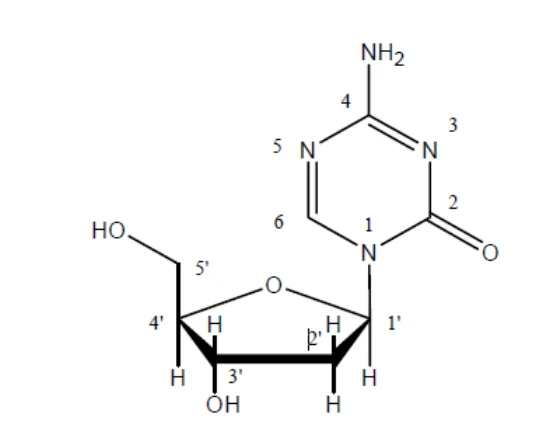
Chemical name: 4-Amino-1-(2-deoxy-β-D-erythro-pentofuranosyl)-1,3,5-triazin-2(1H)-one
Molecular formula and molecular mass: C8H12N4O4
228.21 daltons
Structural formula:
Physicochemical properties:
Decitabine is a fine, white, crystalline powder. Decitabine drug substance is sparingly soluble in water with a solubility of 8-12 mg/mL.
14 CLINICAL TRIALS
Myelodysplastic syndrome (MDS)
The clinical trial program for DACOGEN included a randomized controlled pivotal trial (D-0007), and a single arm Phase 2 study (DACO-020), involving 269 patients, conducted between 2001 and 2008.
These studies enrolled adult myelodysplastic syndromes (MDS) patients meeting French-American-British (FAB) classification criteria (1997) and International Prognostic Scoring System (IPSS) intermediate-1, intermediate-2 and high-risk prognostic scores (1997). Therefore, these trials included patients with blasts between 20 and 30% by the old FAB classification who are now considered AML by the World Health Organization classification (WHO 2008).
Patients with other progressive malignant disease; uncontrolled cardiac disease or uncontrolled congestive heart failure; creatinine values of >1.5 X upper limit of normal; total bilirubin of >1.5 X upper limit of normal, AST and ALT > 2.5 X upper limit of normal were excluded from these studies.
Option 1: In Patient (3-Day Dosing Regimen)
Phase 3 Trial (D-0007)
Supporting the 3-day dosing regimen, a randomized open-label, multicenter, controlled trial (D-0007) evaluated 170 MDS patients to compare the efficacy and safety of DACOGEN plus Supportive Care (SC) treatment arm to a Supportive Care (SC) only. Patients were randomized (1:1) to the DACOGEN arm to receive DACOGEN intravenously infused at a dose of 15 mg/m2 over a 3-hour period, every 8 hours, for 3 consecutive days. This cycle was repeated every 6 weeks, depending on the patient’s clinical response and toxicity. Both treatment groups received standard medical care, i.e., blood and blood product transfusions, prophylactic antibiotics, and hematopoietic growth factors.
Eighty-nine (89) patients were randomized to DACOGEN therapy plus supportive care (only 83 received DACOGEN), and 81 to supportive care alone.
The study endpoints were overall response rate (complete response + partial response) and time to AML or death. Responses were classified using the MDS International Working Group (IWG) criteria (2000); patients were required to be RBC and platelet transfusion independent during the time of response. Response criteria are given in Table 11:
Table 11 – Response Criteria for Phase 3 MDS Trial
Complete Response (CR) ≥ 8 weeks | Bone Marrow | On repeat aspirates:
|
| Peripheral Blood | In all samples during response:
| |
Partial Response (PR) ≥ 8 weeks | Bone Marrow | On repeat aspirates:
|
| Peripheral Blood | Same as for CR |
Patients in the DACOGEN and supportive care treatment arms had similar demographics, disease characteristics and baseline performance. No significant imbalances between the two treatment arms were present at baseline. Most patients were elderly (over 65 years of age), white males with de novo MDS that had been diagnosed at a median of approximately 30 weeks prior to start of study.
Table 12 – Summary of Patient Demographics and Baseline Disease Characteristics – Study D-0007 (MDS)
| Parameter | DACOGEN N = 89 | Supportive Care N = 81 |
|---|---|---|
| Age (years) | ||
| Mean (SD) | 69 (10) | 67 (10) |
| (Range: min-max) | (31–85) | (30–82) |
| Gender – n (%) | ||
| Male | 59 (66) | 57 (70) |
| Female | 30 (34) | 24 (30) |
| Ethnic Origin – n (%) | ||
| White | 83 (93) | 76 (94) |
| 4 (4) | 2 (2) | |
| Other | 2 (2) | 3 (4) |
| FAB Classification – n (%) | ||
| RA | 12 (13) | 12 (15) |
| RARS | 7 (8) | 4 (5) |
| RAEB | 47 (53) | 43 (53) |
| RAEB-t | 17 (19) | 14 (17) |
| CMML | 6 (7) | 8 (10) |
| WHO Performance Status – n (%) | ||
| 0 | 24 (27) | 28 (35) |
| 1 | 61 (69) | 48 (59) |
| 2 | 4 (4) | 4 (5) |
| Missing Values | 0 (0) | 1 (1) |
| IPSS Classification – n (%) | ||
| Intermediate–1 | 28 (31) | 24 (30) |
| Intermediate–2 | 38 (43) | 36 (44) |
| High Risk | 23 (26) | 21 (26) |
| Type of MDS – n (%) | ||
| De novo | 77 (87) | 70 (86) |
| Secondary | 12 (13) | 11 (14) |
AML=acute myeloid leukemia; CMML=chronic myelomonocytic leukemia; FAB =French-American-British classification; IPSS=International Prognostic Scoring System; MDS=myelodysplastic syndromes; RA=refractory anemia; RAEB=refractory anemia with excess blasts; RAEBt=refractory anemia with excess blasts in transformation; RARS=refractory anemia with ringed sideroblasts; SD=standard deviation
In the intention-to-treat (ITT) analysis, the overall response rate (ORR) in DACOGEN patients was superior, i.e.,17% (15/89) to that seen in the supportive care arm 0% (0/81), (p < 0.001). There were eight (8) patients with Complete Response and seven (7) with Partial Response. Responses were durable with a median duration of 288 days (range 116 – 388 days). Median time to response was 93 days (55–272 days) as shown in Table 13 below. The median cycle to respond was cycle 3.
Table 13 – Overall Adjudicated Response Rate (CR + PR), ITT Analysis Set – Study D-0007 (MDS)
| Parameter | DACOGEN N = 89 | Supportive Care N = 81 | p-values† |
|---|---|---|---|
| Intention to Treat Analysis | |||
| Overall Response Rate (CR + PR) | 15 (17%) | 0 (0%) | < 0.0011 |
| 95% CI Overall Response Rate | (9.8, 26.3) | (0, 4.5) | – |
| Complete Response (CR) | 8 (9%) | 0 (0%) | – |
| Partial Response (PR) | 7 (8%) | 0 (0%) | – |
| Median time to (CR + PR) response (days) (Range) | 93 (55-272) | (0) | – |
| Median Duration of (CR + PR) response (days) (Range) | 288 (116-388) | (0) | – |
1From two-sided Fisher’s Exact Test for equal Overall Response (CR+PR) Rate.
†In the co-primary endpoint model, a p-value of ≤ 0.024 was required to achieve statistical significance.
The other co-primary efficacy endpoint was time to AML or death. The date of progression to AML was taken from either the adjudicated (expert reviewer) or investigator data set, whichever provided the earliest diagnosis of AML. The time to AML or death in the ITT analysis did not reach statistical significance although DACOGEN patients had a trend toward longer median time to AML or death compared with patients treated with supportive care alone (12.1 vs. 7.8 months). Kaplan-Meier curves, with the DACOGEN treatment arm showed early separation in the ITT analysis and therefore suggest that progression to AML or death was delayed in the DACOGEN arm.
Table 14 – Time to AML or death* after 92 Events, ITT Analysis Set – Study D-0007 (MDS)
| Parameter | DACOGEN N = 89 | Supportive Care N = 81 | p-value† |
|---|---|---|---|
| Number of events (%) | 46 (52) | 46 (57) | 0.0431, 0.1602 |
| Median (95% CI) days | 340 (285–407) | 219 (148–379) | |
| Range days (min-max)! | 24–624 | 7–432 | |
† In the co-primary endpoint model, a p-value of ≤ 0.024 was required to achieve statistical significance.
* Reflects analysis after 92 events. Patients crossing over or never receiving randomized treatment are censored
! From actual events only
1 From two-sided Wilcoxon test for homogeneity of survival distributions
2 From two-sided log-rank test for homogeneity of survival distributions
Subgroup analyses indicate that the Overall Response Rate (CR + PR) difference observed between the DACOGEN and Supportive Care treatment arms in the study population is robust and is maintained across IPSS risk groups, gender, age, FAB classifications (except RARS), type of MDS (de novo vs. secondary) and in patients with history of prior MDS treatment (prior therapy vs. treatment naïve).
A higher percentage of patients on the supportive care arm received erythropoietic growth factors compared with patients on the DACOGEN arm (41% vs. 20%).
Option 2: Out Patient (5-Day Dosing Regimen)
Phase 2 Study (DACO-020)
The outpatient use of DACOGEN in the treatment of patients with MDS was studied in a single-arm trial (DACO-020) with 99 patients. Patients received DACOGEN by intravenous infusion at a dose of 20 mg/m2 by surface area over 1-hour daily, on days 1 to 5 of week 1 every, 4 weeks (1 cycle).
Table 15 – Summary of Patient Demographics and Baseline Disease Characteristics, ITT Analysis Set – Study DACO-020 (MDS)
| Parameter | DACOGEN N = 99 |
| Age (years) | |
| Mean (SD) | 71(9) |
| (Range: min-max) | (34-87) |
| Gender – n (%) | |
| Male | 71 (72) |
| Female | 28 (28) |
| Race – n (%) | |
| White | 86 (87) |
| 6 (6) | |
| Asian | 4 (4) |
| Other | 3 (3) |
| IPSS Classification – n (%) | |
| Low Risk | 1 (1) |
| Intermediate–1 | 52 (53) |
| Intermediate–2 | 23 (23) |
| High Risk | 23 (23) |
| FAB Classification – n (%) | |
| RA | 20 (20) |
| RARS | 17 (17) |
| RAEB | 45 (45) |
| RAEB-t | 6 (6) |
| CMML | 11 (11) |
| Type of MDS – n (%) | |
| De Novo | 88 (89) |
| Secondary | 11(11) |
CMML=chronic myelomonocytic leukemia; FAB = French-American-British classification; IPSS=International Prognostic Scoring System; MDS=myelodysplastic syndromes; RA=refractory anemia; RAEB=refractory anemia with excess blasts; RAEBt=refractory anemia with excess blasts in transformation; RARS=refractory anemia with ringed sideroblasts; SD=standard deviation
In the ITT Analysis Set, the overall response rate (comprised of all patients with either a CR or PR) was 16% with a 95% CI of 9.5% to 24.9%. A complete response (CR) was achieved in 15% (15/99) patients, with 1% (1/99) patient achieving a partial response (PR). Responses were durable with a median duration of 443 days. The median number of days to achieve an initial response (CR or PR) was 162, with a range of 50 to 267 days. The overall improvement rate (comprised of all patients with either CR, PR, or Hematologic Improvement) was 43% with a 95% CI of 33.5% to 53.8%.
Table 16 – Patient Response on Study Using IWG-2000 Response Criteria, ITT Analysis Set – Study DACO-020 (MDS)
| Best Response | Decitabine (N = 99) n (%) |
| Overall Response Rate (CR+PR) | 16 (16) |
| --95% CI for Overall Response Rate | (9.5, 24.9) |
| Complete Remission (CR) | 15 (15) |
| Partial Remission (PR) | 1 (1) |
CR= Complete Response; PR = Partial Response; CI = Confidence Interval
Results from subgroup analyses by baseline FAB, IPSS scores as well as baseline cytogenetic risk group, and baseline chromosomal abnormality showed overall responses were observed in all IPSS and FAB classifications except RAEB-t. However, one out of 6 RAEB-t patients experienced overall improvement. Amongst cytogenetic risks, none of the 12 patients with deletion of the 5q gene responded, however 4 (22%) of the 18 patients with chromosome 7 abnormality responded.
15 NON-CLINICAL TOXICOLOGY
Carcinogenicity studies with decitabine have not been conducted.
The mutagenic potential of decitabine was tested in several in vitro and in vivo systems. Decitabine increased mutation frequency in L5178Y mouse lymphoma cells, and mutations were produced in an Escherichia coli lac-I transgene in colonic DNA of decitabine-treated mice. Decitabine caused chromosomal rearrangements in larvae of fruit flies.
The effect of decitabine on postnatal development and reproductive capacity was evaluated in mice administered a single 3 mg/m2 IP injection (approximately 7% the recommended daily clinical dose) on day 10 of gestation. Body weights of males and females exposed in utero to decitabine were significantly reduced relative to controls at all postnatal time points. No consistent effect on fertility was seen when female mice exposed in utero were mated to untreated males. Untreated females mated to males exposed in utero showed decreased fertility at 3 and 5 months of age (36% and 0% pregnancy rate, respectively). In male mice given IP injections of 0.15, 0.3 or 0.45 mg/m2 decitabine (approximately 0.3% to 1% the recommended clinical dose) 3 times a week for 7 weeks, decitabine did not affect survival, body weight gain or hematological measures (hemoglobin and WBC counts). Testes weights were reduced, abnormal histology was observed and significant decreases in sperm number were found at doses ≥ 0.3 mg/m2. In females mated to males dosed with ≥ 0.3 mg/m2 decitabine, pregnancy rate was reduced and preimplantation loss was significantly increased.
Decitabine had no effect on potassium currents in hERG-transfected HEK293 cells at concentrations up to 6.8 μg/mL and had no effect on cardiovascular or respiratory parameters in cynomolgus monkeys after a continuous IV infusion (1 hour) at a dose of 52.4 mg/kg (628.8 mg/m2).