


Product Monograph - Onureg
Recent Major Label Changes
Not Applicable.
Table of Contents
Recent Major Label Changes ...................................................................................................2
Table of Contents ........................................................................................................................2
Part I: Health Professional Information .................................................................................4
1 Indications ........................................................................................................................4
1.1 Pediatrics ..................................................................................................................4
1.2 Geriatrics ..................................................................................................................4
2 Contraindications............................................................................................................4
4 Dosage and Administration..........................................................................................4
4.1 Dosing Considerations .............................................................................................4
4.2 Recommended Dose and Dosage Adjustment .........................................................5
4.4 Administration .........................................................................................................7
4.5 Missed Dose .............................................................................................................7
5 Overdosage ......................................................................................................................7
6 Dosage Forms, Strengths, Composition and Packaging .....................................7
7 Warnings and Precautions ...........................................................................................8
General .................................................................................................................................8
Carcinogenesis and Genotoxicity ........................................................................................8
Cardiovascular .....................................................................................................................8
Driving and Operating Machinery .......................................................................................9
Gastrointestinal ....................................................................................................................9
Hematologic .........................................................................................................................9
Hepatic/Biliary/Pancreatic ...................................................................................................9
Monitoring and Laboratory Tests ........................................................................................9
Reproductive Health ..........................................................................................................10
7.1 Special Populations ................................................................................................10
7.1.1 Pregnancy .......................................................................................................... 10
7.1.2 Breastfeeding .................................................................................................... 10
7.1.3 Pediatrics ........................................................................................................... 10
7.1.4 Geriatrics ........................................................................................................... 11
8 Adverse Reactions........................................................................................................11
8.1 Adverse Reaction Overview ..................................................................................11
8.2 Clinical Trial Adverse Reactions ...........................................................................11
8.3 Less Common Clinical Trial Adverse Reactions ...................................................13
8.4 Abnormal Laboratory Findings: Hematologic, Clinical Chemistry and Other Quantitative Data ...............................................................................................................13
8.5 Post-Market Adverse Drug Reactions ...................................................................14
9 Drug Interactions ..........................................................................................................15
9.2 Drug Interactions Overview ...................................................................................15
9.4 Drug-Drug Interactions ..........................................................................................15
9.5 Drug-Food Interactions ..........................................................................................15
9.6 Drug-Herb Interactions ..........................................................................................15
9.7 Drug-Laboratory Test Interactions ........................................................................15
10 Clinical Pharmacology .................................................................................................15
10.1 Mechanism of Action .............................................................................................15
10.2 Pharmacodynamics ................................................................................................16
10.3 Pharmacokinetics ...................................................................................................16
11 Storage, Stability and Disposal .................................................................................18
12 Special Handling Instructions ...................................................................................18
13 Pharmaceutical Information .......................................................................................19
14 Clinical Trials..................................................................................................................19
14.1 Clinical Trials by Indication ..................................................................................19
16 Non-Clinical Toxicology ..............................................................................................23
Patient Medication Information .............................................................................................26
Part I: Health Professional Information
1 Indications
ONUREG® (azacitidine tablets) is a nucleoside metabolic inhibitor indicated for:
- maintenance therapy in adult patients with acute myeloid leukemia (AML) who achieved complete remission (CR) or complete remission with incomplete blood count recovery (CRi) following induction therapy with or without consolidation treatment, and who are not eligible for hematopoietic stem cell transplantation (HSCT).
Limitations of Use:
- ONUREG® is not interchangeable with, and should not be substituted with or for, azacitidine for injection. See 4.4 Administration and 7 Warnings and Precautions, General.
- The safety and effectiveness of ONUREG for treatment of myelodysplastic syndromes have not been established. Treatment of patients with myelodysplastic syndromes with ONUREG is not recommended outside of controlled trials. See 7 Warnings and Precautions, General.
1.1 Pediatrics
Pediatrics (< 18 years of age): No data are available to Health Canada; therefore, Health Canada has not authorized an indication for pediatric use.
1.2 Geriatrics
Geriatrics (≥ 65 years of age): No dosage adjustment is required for ONUREG® based on age, see 10.3 Pharmacokinetics.
2 Contraindications
ONUREG® is contraindicated in patients who are hypersensitive to this drug or to any ingredient in the formulation, including any non-medicinal ingredient, or component of the container. For a complete listing, see 6 Dosage Forms, Strengths, Composition and Packaging.
ONUREG® is contraindicated in patients with advanced malignant hepatic tumors.
4 Dosage and Administration
4.1 Dosing Considerations
- Health Canada has not authorized an indication for pediatric use, see 1.1 Pediatrics.
- No specific dose adjustments are recommended for elderly patients (≥ 65 years of age), see 1.2 Geriatrics.
- Administer an antiemetic 30 minutes prior to each dose of ONUREG for the first 2 cycles. Antiemetic prophylaxis may be omitted after 2 cycles if there has been no nausea and vomiting.
- ONUREG® can be administered to patients with renal impairment without initial dose adjustment, see 4.2 Recommended Dose and Dosage Adjustment and 10.3 Pharmacokinetics.
4.2 Recommended Dose and Dosage Adjustment
Recommended Starting Dosage:
The recommended starting dose of ONUREG® is 300 mg orally once daily on Day 1 through Day 14 of repeated 28-day treatment cycles.
If the absolute neutrophil count (ANC) is less than 500/mcL on Day 1 of a cycle, do not administer ONUREG®. Delay the start of the cycle until the ANC is 500/mcL or more.
ONUREG® maintenance therapy should be initiated after achievement of a CR/CRi following completion of induction and consolidation therapy or following induction if consolidation therapy is not planned.
Dose Modifications During Treatment:
Dose Adjustment for Renal Impairment: No dose adjustment is required for patients with mild to moderate renal impairment.
ONUREG® can be administered to patients with severe renal impairment without initial dose adjustment. Monitor patients with severe renal impairment (creatinine clearance [CLcr] 15 to 29 mL/min calculated by Cockcroft-Gault formula) more frequently for adverse reactions and modify the ONUREG dosage for adverse reactions, see 7 Warnings and Precautions, Monitoring and Laboratory Tests.
Dose Adjustment for Hepatic Impairment: ONUREG® has not been studied in patients with pre-existing severe hepatic impairment (total bilirubin > 3 × ULN).
A recommended dosage of ONUREG® has not been established for patients with moderate hepatic impairment (total bilirubin > 1.5 to 3 × ULN).
No dose adjustment of ONUREG® is recommended for patients with mild hepatic impairment (total bilirubin ≤ ULN and AST > ULN, or total bilirubin 1 to 1.5 × ULN and any AST).
Dose Adjustment for Adverse Reactions: Dose modification guidelines for hematologic and non-hematologic adverse reactions are recommended based on clinical and laboratory findings if toxicities are judged related to ONUREG® (see Table 1).
Table 1: Dose Adjustment for Hematological and Nonhematological Adverse Reactions
| Adverse Reaction | Recommended Action |
|---|---|
Grade 4 Neutropenia (Absolute Neutrophil Count (ANC): < 500/mcL) or Grade 3 Neutropenia with Fever (ANC: 500 – 1000/mcL) | First Occurrence
Occurrence in 2 Consecutive Cycles |
| |
Grade 4 Thrombocytopenia (Platelets: < 25,000/mcL) or Grade 3 Thrombocytopenia with Active Bleeding (Platelets: 25,000 – 50,000/mcL) | First Occurrence
Occurrence in 2 Consecutive Cycles
|
Grade 3 or Higher Nausea, Vomiting or Diarrhea |
|
| Other Grade 3 or Higher Nonhematologic Events |
|
| |
Continuation and Discontinuation Recommendations:
ONUREG®, given Day 1 through Day 14 of repeated 28-day treatment cycles, is intended for continuous use. ONUREG® treatment should be continued until more than 15% blasts are observed in peripheral blood or bone marrow or until unacceptable toxicity occurs. Discontinue ONUREG® if more than 15% blasts are observed in either the peripheral blood or bone marrow or at the physician’s discretion.
4.4 Administration
ONUREG® can be taken with or without food. Do not split, crush, or chew ONUREG® tablets. Administer a dose at about the same time each day. Consider providing prophylactic anti-emetic therapy during ONUREG® treatment.
ONUREG® is not interchangeable with, and should not be substituted with or for, azacitidine for injection. Due to differences in exposure, the dose and schedule recommendations for ONUREG® are different from those for injectable azacitidine. Verify drug name, dose, and administration route. See 1 Indications.
4.5 Missed Dose
If a dose of ONUREG® is missed, or not taken at the usual time, administer the dose as soon as possible on the same day, and return to the normal time of dose administration the following day. Do not take 2 doses on the same day. If a dose is vomited, do not take another dose on the same day, but return to the normal time of dose administration the following day.
5 Overdosage
In the event of overdose, monitor the patient with appropriate blood counts and provide supportive treatment, as necessary. There is no known specific antidote for ONUREG® overdose.
For the most recent information in the management of a suspected drug overdose, contact your regional poison control centre or Health Canada’s toll-free number, 1-844 POISON-X (1-844-764-7669).
6 Dosage Forms, Strengths, Composition and Packaging
Table 2: Dosage Forms, Strengths, Composition and Packaging.
| Route of Administration | Dosage Form / Strength/ Composition | Non-medicinal Ingredients |
| Oral | Tablet 200 mg azacitidine | croscarmellose sodium, hypromellose, iron oxide red, lactose monohydrate, polyethylene glycol/macrogol, magnesium stearate, mannitol, silicified microcrystalline cellulose, titanium dioxide, |
ONUREG® tablets are available in 7 count blister packages.
7 Warnings and Precautions
General
Due to substantial differences in the pharmacokinetic parameters (see 10.3 Pharmacokinetics), the recommended dose and schedule for ONUREG are different from those for the intravenous or subcutaneous azacitidine products. Treatment of patients using intravenous or subcutaneous azacitidine at the recommended dosage of ONUREG® may result in a fatal adverse reaction. Treatment of patients using ONUREG® at the doses recommended for intravenous or subcutaneous azacitidine may not be effective. Do not substitute ONUREG® for intravenous or subcutaneous azacitidine (see 4.4 Administration and 1 Indications).
In AZA-MDS-003 (NCT01566695), 216 patients with red blood cell transfusion-dependent anemia and thrombocytopenia due to myelodysplastic syndromes were randomized to ONUREG® or placebo. One-hundred and seven patients received a median of 5 cycles of ONUREG® 300 mg daily for 21 days of a 28-day cycle. Enrollment was discontinued early due to a higher incidence of early fatal and/or serious adverse reactions in patients who received ONUREG® compared with placebo. The most frequent fatal adverse reaction was sepsis. Therefore, the safety and effectiveness of ONUREG® for treatment of myelodysplastic syndromes have not been established. Treatment of patients with myelodysplastic syndromes with ONUREG® is not recommended outside of controlled trials. (See 1 Indications)
Carcinogenesis and Genotoxicity
In vitro studies demonstrated that azacitidine is mutagenic and clastogenic in bacterial and mammalian cell systems. Azacitidine induced neoplastic lesions and tumours in multiple tissues in rats and mice administered with azacitidine intraperitoneally (see 16 Non-Clinical Toxicology).
Cardiovascular
Patients with a history of severe congestive heart failure, clinically unstable cardiac disease or pulmonary disease were excluded from the pivotal clinical study and therefore the safety and efficacy of ONUREG® in these patients have not been established.
No thorough clinical QT/QTc study or in vitro studies (hERG, canine Purkinje fiber assay) were performed to rule out the effect of ONUREG® on QT prolongation. An in vivo safety pharmacology study in dogs receiving azacitidine reported increased QTc interval, but interpretation of this study is limited by confounding effects associated with toxicity (see 16 Non-Clinical Toxicology).
| triacetin | ||
| Oral | Tablet 300 mg azacitidine | black iron oxide, croscarmellose sodium, hypromellose, iron oxide red, iron oxide yellow, lactose monohydrate, polyethylene glycol/macrogol, magnesium stearate, mannitol, silicified microcrystalline cellulose, titanium dioxide, triacetin |
Driving and Operating Machinery
No studies on the effects on the ability to drive or use machinery have been performed. Patients should be advised that they may experience undesirable effects such as fatigue, asthenia, and gastrointestinal reactions such as nausea, vomiting, diarrhea and constipation, during treatment with ONUREG®. Therefore, caution should be exercised when driving or operating a vehicle or potentially dangerous machinery.
Gastrointestinal
Gastrointestinal toxicities were the most frequent adverse reactions in the ONUREG® treatment group. Nausea (64.8%), vomiting (59.7%), and diarrhea (50.4%) were reported in patients treated with ONUREG®. Grade 3 or 4 diarrhea, vomiting, or nausea occurred in 5.1%, 3.0%, and 2.5%, respectively in patients treated with ONUREG®. The first occurrence of Grade 3 or 4 diarrhea, vomiting, or nausea occurred within the first 2 cycles in 1.3%, 3.0%, and 1.7%, respectively in patients treated with ONUREG®.
Consider providing prophylactic anti-emetic therapy during ONUREG® treatment. Treat diarrhea with antidiarrheal medications promptly at the onset of symptoms.
Hematologic
New or worsening Grade 3 or higher neutropenia (41.1%), thrombocytopenia (22.5%), or febrile neutropenia (11.4%) were commonly reported (10% or more) adverse reactions in patients treated with ONUREG®. The first occurrence of Grade 3 or 4 neutropenia, thrombocytopenia, or febrile neutropenia occurred within the first 2 cycles in 19.9%, 10.6%, and 1.7%, respectively in patients treated with ONUREG®.
Monitor complete blood counts and modify the dosage as recommended (see 7 Warnings and Precautions, Monitoring and Laboratory Tests). Consider the use of supportive care such as granulocyte colony stimulating factor (GCSF) as clinically indicated.
Hepatic/Biliary/Pancreatic
Patients with extensive tumor burden due to metastatic disease have been rarely reported to experience progressive hepatic coma and death during injectable treatment with azacitidine, especially in such patients with baseline serum albumin < 30 g/L. ONUREG® is contraindicated in patients with advanced malignant hepatic tumors (see 2 Contraindications).
Monitoring and Laboratory Tests
Complete blood count monitoring is recommended every other week for the first 2 cycles (56 days), every other week for the next 2 cycles after dose adjustment, and monthly thereafter, prior to start of next cycle.
Monitor patients with severe renal impairment (CLcr 15 to 29 mL/min) more frequently for adverse reactions and modify the ONUREG® dosage for adverse reactions, see 4.2 Recommended Dose and Dosage Adjustment. No dose adjustment of ONUREG® is required for patients with mild to severe renal impairment (CLcr 15 to 89 mL/min), see 10.3 Pharmacokinetics.
Reproductive Health
Fertility
There are no human data on the effect of azacitidine on fertility. In animals, adverse effects of azacitidine on male and female fertility have been documented. See 16 Non-Clinical Toxicology
Function
Pregnancy testing is recommended for females of reproductive potential before starting ONUREG®.
If either a female of reproductive potential wishes to have a child or a male wishes to conceive a child, they should seek advice for reproductive counseling and cryo-conservation of either ovum or sperm prior to starting ONUREG®.
7.1 Special Populations
7.1.1 Pregnancy
Azacitidine may cause fetal harm when administered to a pregnant woman based on its mechanism of action and findings in animals. There are no available data on ONUREG® use in pregnant women. Azacitidine was teratogenic in animals and caused embryo-fetal lethality in animals at doses less than the recommended human daily dose of oral azacitidine, see 16 Non-Clinical Toxicology.
Females of childbearing potential should be advised to avoid pregnancy during treatment with azacitidine. If this drug is used during pregnancy or if a patient becomes pregnant while taking this drug, the patient should be apprised of the potential hazard to the fetus. Advise females of reproductive potential to use effective contraception during treatment with ONUREG® and for at least 6 months after the last dose.
Males with Female Sexual Partners of Reproductive Potential
Males with female sexual partners of reproductive potential should not conceive a child and should use effective contraception during treatment with ONUREG®, and for at least 6 months after the last dose.
7.1.2 Breastfeeding
It is not known whether azacitidine or its metabolites are excreted in human milk or the effects on the nursing child or milk production. Due to the potential serious adverse reactions in the nursing child, breastfeeding must be discontinued during ONUREG® therapy and for one week after the last dose.
7.1.3 Pediatrics
Pediatrics (< 18 years of age): No data are available to Health Canada; therefore, Health Canada has not authorized an indication for pediatric use.
7.1.4 Geriatrics
Geriatrics (≥ 65 years of age): No dosage adjustment is required for ONUREG® based on age, see 10.3 Pharmacokinetics.
8 Adverse Reactions
8.1 Adverse Reaction Overview
This section describes the safety data from the QUAZAR (CC-486-AML-001) trial (see 14 Clinical Trials).
The most frequently reported adverse events (≥ 10%) were nausea, vomiting, diarrhea, neutropenia, fatigue/asthenia, anemia, constipation, thrombocytopenia, abdominal pain, respiratory tract infection, arthralgia, decreased appetite, febrile neutropenia, back pain, leukopenia, pain in extremity, dizziness and pneumonia. The most frequent serious adverse events to ONUREG® that occurred in ≥ 2% of patients were febrile neutropenia (6.8%), pneumonia (5.1%) and pyrexia (2.1%).
Permanent discontinuation of ONUREG® due to an adverse event occurred in 6.8% of patients. The most common adverse events to ONUREG® requiring permanent discontinuation in 1% or more of patients included nausea (2.1%), diarrhea (1.7%), and vomiting (1.3%).
Adverse events in the ONUREG® arm requiring dosage interruption in 2% or more of patients included neutropenia (19.9%), thrombocytopenia (8.5%), nausea (5.5%), diarrhea (4.2%), vomiting (3.8%), pneumonia (3.4%), leukopenia (2.5%), febrile neutropenia (2.1%), and alanine aminotransferase increased (2.1%). Adverse events to ONUREG® requiring dosage reduction in 1% or more of patients included neutropenia (5.5%), diarrhea (3.4%), thrombocytopenia (1.7%), and nausea (1.7%).
8.2 Clinical Trial Adverse Reactions
Because clinical trials are conducted under very specific conditions, the adverse reaction rates observed in the clinical trials may not reflect the rates observed in practice and should not be compared to the rates in the clinical trials of another drug. Adverse reaction information from clinical trials is useful for identifying drug-related adverse events and for approximating rates.
Treatment emergent adverse events (TEAEs) observed in the QUAZAR (CC-486-AML-001) trial are listed in Table 3. Median treatment duration differed between the two groups: of 11.6 months (range: 0.5 to 74.3 months) for the ONUREG® treated patients and 5.7 months (range: 0.7 to 68.5 months) for the placebo arm.
Table 3: All Treatment Emergent Adverse Events Reported in ≥ 5% and Grade 3/4 Treatment Emergent Adverse Events Reported in ≥ 1% of ONUREG® Treated Patients (≥ 1% frequency versus placebo) from the CC-486-AML-001 trial (safety population)
System Organ Class Preferred Term | ONUREG® n = 236 | Placebo n = 233 | ||
All Grade N (%) | Grade 3-4 N (%) | All Grade N (%) | Grade 3-4 N (%) | |
| Gastrointestinal Disorders | ||||
| Nausea | 153 (65) | 6 (3) | 55 (24) | 1 (0.4) |
| Vomiting | 141 (60) | 7 (3.0) | 23 (10) | 0 (0) |
| Diarrhea | 119 (50) | 12 (5) | 50 (22) | 3 (1) |
| Constipation | 91 (39) | 3 (1) | 56 (24) | 0 (0) |
| Abdominal pain* | 51 (22) | 4 (2) | 30 (13) | 1 (0.4) |
| Flatulence | 13 (6) | 0 (0) | 4 (2) | 0 (0) |
| Blood and lymphatic system disorders | ||||
| Neutropenia | 105 (45) | 97 (41) | 61 (26) | 55 (24) |
| Thrombocytopenia | 79 (34) | 53 (23) | 63 (27) | 50 (22) |
| Anemia | 48 (20) | 33 (14) | 42 (18) | 30 (13) |
| Febrile neutropenia | 28 (12) | 27 (11) | 18 (8) | 18 (8) |
| Leukopenia | 25 (11) | 18 (8) | 19 (8) | 14 (6) |
| Infections and infestations | ||||
| Influenza | 18 (8) | 3 (1) | 7 (3) | 0 (0) |
| Pneumonia† | 24 (10) | 2 (1) | 13 (6) | 1 (0.4) |
| Urinary tract infection‡ | 22 (9) | 4 (2) | 17 (7) | 2 (1) |
| Bronchitis | 13 (6) | 0 (0) | 9 (4) | 0 (0) |
| Rhinitis | 12 (5) | 0 (0) | 4 (2) | 0 (0) |
| Cellulitis | 9 (4) | 4 (2) | 3 (1) | 1 (0.4) |
| Lung Infection | 4 (2) | 4 (2) | 2 (1) | 1 (0.4) |
| General disorders and administrative site conditions | ||||
| Fatigue / asthenia | 104 (44) | 9 (4) | 58 (25) | 3 (1) |
| Metabolism and nutrition disorders | ||||
| Decreased appetite | 30 (13) | 2 (1) | 15 (6) | 2 (1) |
| Musculoskeletal and connective tissue disorders | ||||
| Arthralgia | 32 (14) | 2 (1) | 24 (10) | 1 (0.4) |
| Back pain | 28 (12) | 3 (1) | 23 (10) | 2 (1) |
| Pain in extremity | 25 (11) | 1 (0.4) | 12 (5) | 0 (0.0) |
| Nervous System Disorders | ||||
| Dizziness | 25 (11) | 0 (0.0) | 21 (9) | 0 (0.0) |
| Syncope | 5 (2) | 5 (2) | 1 (0.4) | 1 (0.4) |
| Psychiatric Disorders | ||||
| Anxiety | 16 (7) | 0 (0.0) | 8 (3) | 1 (0.4) |
| Investigations | ||||
| Alanine aminotransferase increased | 12 (5) | 3 (1) | 4 (2) | 2 (1) |
| Blood Uric Acid Increased | 5 (2) | 5 (2) | 2 (1) | 2 (1) |
| Injury, Poisoning and Procedural Complications | ||||
| Fall | 12 (5) | 1 (0.4) | 4 (2) | 0 (0.0) |
| Cardiac Disorders | ||||
| Atrial Fibrillation | 4 (2) | 4 (2) | 4 (2) | 0 (0.0) |
Treatment-emergent adverse events include adverse events that started between the first dose date and the date 28 days after the last dose date of study treatment.
A subject is counted only once for multiple events within preferred term/system organ class.
* Grouped terms included abdominal pain, abdominal pain upper, abdominal discomfort, and gastrointestinal pain.
† Grouped terms included pneumonia, bronchopulmonary aspergillosis, lung infection, Pneumocystis jirovecii pneumonia, atypical pneumonia, pneumonia bacterial, and pneumonia fungal.
‡ Grouped terms included urinary tract infection, urinary tract infection bacterial, Escherichia urinary tract infection, and cystitis.
Data cut-off date: 15 Jul 2019
8.3 Less Common Clinical Trial Adverse Reactions
Other adverse reactions that did not meet criteria for inclusion in Table 3 were respiratory tract infections (RTI; 18%) and weight decreased (4%) in patients treated with ONUREG®. RTI was a grouped term which included upper respiratory tract infection, respiratory tract infection, and respiratory tract infection viral.
8.4 Abnormal Laboratory Findings: Hematologic, Clinical Chemistry and Other Quantitative Data
Changes in selected laboratory abnormalities that have worsened from baseline in ≥20% of patients receiving ONUREG® with a difference versus placebo of >10% is listed in Table 4.
Table 4: Selected Laboratory Abnormalities that Worsened from Baseline Reported in ≥20% of ONUREG® Treated Patients (> 10% frequency versus placebo) from the CC-486-AML-001 trial
| Laboratory Parameter1 | ONUREG® N = 236 n (%) | Placebo N = 233 n (%) | |||||||||
|---|---|---|---|---|---|---|---|---|---|---|---|
| All Grades | Grade ≥3 | All Grades | Grade ≥3 | ||||||||
| Decrease in neutrophils | 203 (86) | 152 (64) | 176 (76) | 111 (48) | |||||||
| Decrease in white blood cells | 201 (85) | 127 (54) | 165 (71) | 75 (32) | |||||||
| Decrease in red blood cells | 103 (44) | 27 (11) | 67 (29) | 14 (6) | |||||||
1Not all lab shifts were reported as Treatment Emergent Adverse Events (TEAEs)
8.5 Post-Market Adverse Drug Reactions
The following adverse reactions have been identified during post-approval use of intravenous or subcutaneous azacitidine.
Blood and lymphatic system disorders:
- Hemorrhagic diathesis
Cardiac disorders:
- Atrial fibrillation, cardiac failure congestive, cardiac failure, pericardial effusion
Gastrointestinal disorders:
- Colitis, intestinal perforation, pancreatitis acute, subileus
Hepatobiliary disorders:
- Hepatic failure, hepatitis, ascites, hyperbilirubinemia, jaundice
Infections and infestations:
- Sepsis, septic shock, infection, bacterial sepsis, abscess intestinal, cellulitis, pseudomonal sepsis, lower respiratory tract infection, bronchopulmonary aspergillosis, Clostridium difficile colitis, lobar pneumonia, lung infection pseudomonal, neutropenic sepsis
Injury, poisoning and procedural complications:
- Splenic rupture
Investigations:
- Blood creatinine increased, blood bilirubin increased, AST increased, ALT increased
Metabolism and nutrition disorders:
- Dehydration, hyperglycemia, hyponatremia, tumor lysis syndrome
Nervous system disorders:
- Grand mal convulsion
Renal and urinary disorders:
- Renal failure acute, renal failure
Respiratory, thoracic, and mediastinal disorders:
- Interstitial lung disease, pulmonary embolism, acute respiratory distress syndrome
Skin and subcutaneous tissue disorders:
Leukocytoclastic vasculitis, pyoderma gangrenosum, Sweet’s syndrome (acute febrile neutrophilic dermatosis), necrotizing fasciitis
9 Drug Interactions
9.2 Drug Interactions Overview
Based on in vitro data, azacitidine metabolism does not appear to be mediated by cytochrome P450 isoforms (CYPs). Therefore, interactions with CYP inhibitors and inducers are unlikely to have any impact on the metabolism of ONUREG®.
ONUREG® is not a substrate of P-glycoprotein (P-gp).
Multiple nucleoside transporters are involved in azacitidine transport, therefore azacitidine uptake is unlikely to be altered by single nucleotide polymorphisms in individual nucleoside transporters or nucleoside modulators.
9.4 Drug-Drug Interactions
Oral azacitidine exposure was minimally affected when co-administered with a proton pump inhibitor (omeprazole). Therefore, a dose modification is not required when ONUREG® is co-administered with proton pump inhibitors or other pH modifiers.
No clinically relevant drug-drug interactions would be expected when ONUREG® is co-administered with CYP or transporter substrates. In vitro, azacitidine did not inhibit P-glycoprotein (P-gp), breast cancer resistance protein (BCRP), organic anion transporters (OAT) OAT1 and OAT3, organic anion transporting polypeptides (OATP) OATP1B1 and OATP1B3, or organic cation transporter (OCT) OCT2.
In vitro studies indicated that at concentrations up to 100 µM (approximately 30-fold higher than clinically achievable concentrations), azacitidine did not induce cytochrome P450 isoenzymes (CYPs) 1A2, 2C19, or 3A4 or 3A5. Using in vitro studies at concentrations up to 100 µM, azacitidine did not inhibit P450 isoenzymes CYP 1A2, 2B6, 2C8, 2C9, 2C19, 2D6, 3A4, and 2E1. Therefore, CYP induction or inhibition by azacitidine at clinically achievable plasma concentrations is unlikely.
9.5 Drug-Food Interactions
The impact of food on the exposure of ONUREG® was minimal. Therefore, ONUREG® can be administered either with or without food. See 10.3 Pharmacokinetics.
9.6 Drug-Herb Interactions
No formal drug-herb interaction studies have been conducted.
9.7 Drug-Laboratory Test Interactions
No interactions identified.
10 Clinical Pharmacology
10.1 Mechanism of Action
Azacitidine is a DNA methyltransferase inhibitor and epigenetic modifier. Azacitidine is a pyrimidine nucleoside analog of cytidine that is incorporated into DNA and RNA following cellular uptake and enzymatic biotransformation to nucleotide triphosphates.
Incorporation of azacitidine into the DNA of cancer cells in vitro, including acute myeloid leukemia cells, inhibited DNA methyltransferases, reduced DNA methylation, and altered of gene expression, including re-expression of genes regulating tumor suppression, and cell differentiation. Incorporation of azacitidine into the RNA of cancer cells, including leukemic cells, inhibited RNA methyltransferase, reduced RNA methylation, decreased RNA stability, and decreased protein synthesis.
Anti-leukemic activity of azacitidine was demonstrated by reduction of cell viability and induction of apoptosis in AML cell lines in vitro. In vivo, azacitidine decreased tumor burden and increased survival in leukemic tumor models.
10.2 Pharmacodynamics
The epigenetic regulatory effect of oral azacitidine on DNA global methylation reduction in the blood was sustained with prolonged exposure of 300 mg daily administered for 14 or 21 days of a 28-day cycle in myeloid cancers including AML patients from a Phase 1/2 study. A positive correlation was observed between azacitidine plasma exposure and the pharmacodynamic effect of reduction in global DNA methylation in blood.
10.3 Pharmacokinetics
Table 5: Summary of ONUREG® Pharmacokinetic Parameters in Adult Cancer Patients after 300 mg dose
| Cmax (ng/mL) | Tmax (h) | t½ (h) | AUC0-∞ (ng·h/mL) | CL/F (L/h) | Vz/F (L) | |
| Single dose mean* | 145.1 | 1.0 | 0.5 | 241.6 | 1242 | 881.1 |
*The geometric mean value is shown for all parameters except for Tmax which is the median.
N = 30
AUC0-∞ = area under the concentration-time curve from time zero to infinity; Cmax = maximum concentration for the first dose; CL/F = apparent clearance; t1/2 = elimination half-life; Tmax = time to reach Cmax; Vz/F = apparent volume of distribution
Absorption: The geometric mean (coefficient of variation [%CV]) Cmax and AUC values after oral administration of a 300 mg single dose were 145.1 ng/mL (63.7) and 241.6 ng h/mL (64.5), respectively. Exposure was generally linear with dose-proportional increases in systemic exposure; high intersubject variability was observed. Absorption of azacitidine was rapid, with a median Tmax of 1-hour post-dose.
Multiple dosing at the recommended dose regimen did not result in drug accumulation.
Mean oral bioavailability relative to subcutaneous (SC) administration was approximately 11%.
Food Effect: Co-administration of a high-fat, high-calorie meal (approximately 800 to 1000 calories with 150 calories from protein, 250 calories from carbohydrate, and 500 to 600 calories from fat) with a single 300mg dose of azacitidine in adult cancer patients delayed Tmax by approximately 1 hour and decreased Cmax by 21%. There was no significant impact of a high-fat, high-calorie meal on azacitidine exposure (AUCT) when compared to administrations under fasting conditions. ONUREG® may be administered with or without food.
Distribution: Following oral administration, the geometric mean apparent volume of distribution is 881 L. The plasma protein binding of azacitidine was approximately 6 to 12%.
Metabolism: Based on in vitro data, azacitidine metabolism does not appear to be mediated by cytochrome P450 isoenzymes (CYPs).
Metabolism of azacitidine is by spontaneous hydrolysis and deamination mediated by cytidine deaminase.
Elimination: The geometric mean apparent clearance of azacitidine was 1242 L/hour and the geometric mean half-life was approximately 0.5 hours.
Following intravenous administration of 14C azacitidine to 5 cancer patients, the cumulative urinary excretion was 85% of the radioactive dose. Fecal excretion accounted for
<1% of administered radioactivity over 3 days. Mean excretion of radioactivity in urine following subcutaneous administration of 14C-azacitidine was 50%. The amount of unchanged azacitidine recovered in urine relative to dose was <2% following either SC or oral administration.
Special Populations and Conditions
Pediatrics: No data are available on administration of ONUREG® to pediatric or adolescent patients (< 18 years of age).
Geriatrics: Age (46 to 93 years) did not have clinically meaningful effects on the pharmacokinetics of oral azacitidine. Therefore, dose modification for ONUREG® is not required based on age.
Sex: Gender did not have clinically meaningful effects on the pharmacokinetics of azacitidine.
Ethnic origin: The effects of race (White [92%]) on the pharmacokinetics of azacitidine were not conclusive due to the small number of nonwhite patients enrolled.
Hepatic Insufficiency: The effects of moderate to severe hepatic impairment on the pharmacokinetics of azacitidine have not been studied.
Mild hepatic impairment (total bilirubin ≤ ULN and AST > ULN, or total bilirubin 1 to 1.5 x ULN and any AST) had no clinically meaningful effect on the pharmacokinetics of azacitidine.
Renal Insufficiency: In patients with cancer, the pharmacokinetics of azacitidine in 6 patients with normal renal function (CLcr >80 mL/min) and 6 patients with severe renal impairment (CLcr <30 mL/min) were compared following daily subcutaneous dosing (Days 1 through 5) at 75 mg/m2/day. Severe renal impairment increased azacitidine exposure by approximately 70% after single and 41% after multiple subcutaneous administrations.
The exposure of azacitidine (AUC) is approximately 75% lower after oral administration relative to the exposure achieved following SC administration; therefore, an increase in exposure of approximately 40% following oral administration is still considered safe and tolerable. ONUREG® can be administered to patients with renal impairment without initial dose adjustment. Patients with severe renal impairment should be closely monitored for toxicity since ONUREG® and/or its metabolites are primarily excreted through the kidney (see 4.2 Recommended Dose and Dosage Adjustment).
Obesity: Body weight (39.3 kg to 129 kg) did not have clinically meaningful effects on the pharmacokinetics of azacitidine.
11 Storage, Stability and Disposal
Store blisters at 15º to 30ºC. Store in the original aluminum-aluminum blisters.
12 Special Handling Instructions
Do not crush tablets.
If powder comes in contact with skin, immediately and thoroughly wash with soap and water. If powder comes in contact with mucous membranes, immediately flush the area with water.
PART 2: Scientific Information
13 Pharmaceutical Information
Drug Substance
Proper/Common name: azacitidine
Chemical name: 4-amino-1-β-D-ribofuranosyl-1,3,5-triazin-2(1H)-one
Molecular formula and molecular mass: C8H12N4O5, 244 g/mol
Structural formula:
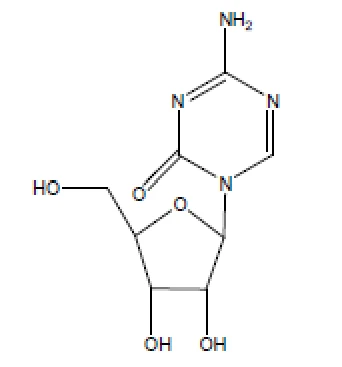
Physicochemical properties: Azacitidine is a white to off-white solid. It is insoluble in acetone, ethanol, and methyl ethyl ketone; slightly soluble in ethanol/water (50/50), propylene glycol, and polyethylene glycol; sparingly soluble in water, water saturated octanol, 5% dextrose in water, N-methyl-2- pyrrolidone, normal saline and 5% Tween 80 in water; and soluble in dimethylsulfoxide (DMSO).
14 Clinical Trials
The clinical efficacy and safety of ONUREG® were evaluated in adult patients in AML remission in the CC-486-AML-001 trial.
14.1 Clinical Trials by Indication
CC-486-AML-001 Trial:
Trial Design and Study Demographics
Table 6: Summary of Clinical Trials in Patients in AML Remission
Study # Trial Design | Dosage, route of administration and duration | Number of Subjects |
CC-486-AML-001 (QUAZAR) Phase 3, double-blind, randomized, placebo-controlled, multicenter study to compare the efficacy and safety of ONUREG® plus BSC to placebo plus BSC as maintenance therapy in subjects with AML who have achieved CR or CRi following induction therapy with or without consolidation therapy. | 300 mg ONUREG® or matching placebo QD for 14 days of each 28-day treatment cycle a. | ONUREG® arm = 238 Placebo arm = 234 |
AML=Acute Myelogenous Leukemia, BSC = best supportive care CR=Morphologic Complete Remission, CRi=Morphologic complete remission with incomplete blood count recovery, QD = once daily a Dose modification was permitted for adverse events. In the event of disease relapse (5% to 15% blasts in peripheral blood or bone marrow) dose schedule extension was permitted at investigator discretion.
Adult patients aged ≥ 55 years with de novo AML, AML secondary to prior diagnosis of myelodysplastic syndromes (MDS), or chronic myelomonocytic leukemia (CMML), who had achieved first CR /CRi within 4 months +/- 7days after intensive induction chemotherapy with or without consolidation prior to randomization, were enrolled. Patients were not eligible for transplant at the time of randomization. Ineligibility to HSCT was due to age, comorbidities, performance status, no available donor, unfavourable cytogenetics or patient choice.
Patients in both treatment arms received best supportive care as deemed necessary by the investigator. Best supportive care included but was not limited to, treatment with red blood cell (RBC) transfusions; platelet transfusions; use of erythropoiesis stimulating agent; antibiotic, antiviral and/or antifungal therapy; granulocyte colony stimulating factors; anti-emetic therapy; and nutritional support.
The median treatment duration in the CC-486-AML-001 trial was 11.6 months (range: 0.5 to 74.3 months) for ONUREG® versus 5.7 months (range: 0.7 to 68.5 months) for placebo.
Table 7 summarizes the patients baseline demographic and disease-related characteristics.
Table 7: Summary of Baseline Demographics and Disease-Related Characteristics of Patients in the Phase 3 CC-486-AML-001 trial
| Parameter | ONUREG® (N=238) | Placebo (N = 234) |
| Age (years) | ||
| Median (Min, Max) | 68.0 (55, 86) | 68.0 (55, 82) |
| Race, n (%) | ||
| White | 216 (90.8) | 197 (84.2) |
| Black or African American | 2 (0.8) | 6 (2.6) |
| Asian | 6 (2.5) | 20 (8.5) |
| Other | 12 (5.0) | 11 (4.7) |
| Not Collected or Reported | 2 (0.8) | 0 |
| Type of AML, n (%) | ||
| Primary (de novo) | 213 (89.5) | 216 (92.3) |
| Secondary | 25 (10.5) | 18 (7.7) |
| ECOG Performance Status, n (%) | ||
| Grade 0 | 116 (48.7) | 111 (47.4) |
| Grade 1 | 101 (42.4) | 106 (45.3) |
| Grade 2 | 21 (8.8) | 15 (6.4) |
| Grade 3 | 0 | 2 (0.9) |
| Cytogenetic Risk Status at Diagnosis, n (%) | ||
| Intermediate1 | 203 (85.3) | 203 (86.8) |
| Poor2 | 35 (14.7) | 31 (13.2) |
| Received Consolidation Therapy following Induction Therapy, n (%) | ||
| Yes | 186 (78.2) | 192 (82.1) |
| 1 Cycle | 110 (46.2) | 102 (43.6) |
| 2 Cycles | 70 (29.4) | 77 (32.9) |
| 3 Cycles | 6 (2.5) | 13 (5.6) |
| No | 52 (21.8) | 42 (17.9) |
| MRD Status at Randomization,3 n (%) | ||
| Negative | 133 (55.9) | 111 (47.4) |
| Positive | 103 (43.3) | 116 (49.6) |
| Missing | 2 (0.8) | 7 (3.0) |
AML=Acute Myelogenous Leukemia, ECOG=Eastern Cooperative Oncology Group, CR=Morphologic Complete Remission, CRi=Morphologic complete remission with incomplete blood count recovery
1 Intermediate risk was defined as normal cytogenetics +8, t(9;11), or Other undefined.
2 Poor risk was defined as Complex (≥ 3 abnormalities): -5; 5q-; -7; 7q-; 11q23 - non t(9;11); inv(3); t(3;3); t(6;9); or t(9;22).
3 MRD status in bone marrow was measured during screening period by flow cytometric assay at a sensitivity level of 0.1%.
Study Results
The efficacy of ONUREG® in adult patients in AML remission was established based on the primary endpoint of overall survival (OS).
The efficacy results are summarized in Table 8. The median OS was significantly longer with ONUREG® versus placebo: 24.7 months versus 14.8 months [HR 0.69 (95% CI: 0.55, 0.86); p=0.0009], indicating a 31% reduction in the risk of death for the ONUREG® arm. The Kaplan-Meier curve displays the OS (Figure 1) results.
Table 8: Efficacy Results of the CC-486-AML-001 Trial in Patients in AML Remission
| Efficacy Endpoint Statistic | ONUREG® N = 238d | Placebo N = 234d | ||||
| Overall Survival (primary endpoint) | ||||||
| Number of deaths, n (%) | 158 (66.4) | 171 (73.1) | ||||
| Median overall survival (95% CI)a months | 24.7 (18.7, 30.5) | 14.8 (11.7, 17.6) | ||||
| Hazard ratioC/P (95% CI)b | 0.69 (0.55, 0.86) | |||||
| Stratified log-rank test: p-value c | 0.0009 | |||||
| Survival Estimates | ||||||
| 1-year (95% CI) | 0.73 (0.67, 0.78) | 0.56 (0.49, 0.62) | ||||
| 2-year (95% CI) | 0.51 (0.44, 0.57) | 0.37 (0.31, 0.43) | ||||
CI = confidence interval
a Median estimate of OS is from an unstratified Kaplan-Meier analysis.
b The hazard ratio is from a Cox proportional hazards model stratified by age, cytogenetic risk category, and received consolidation therapy or not.
c The p-value is 2-sided from a log-rank test stratified by age, cytogenetic risk category, and received consolidation therapy or not. d Includes patients who had dose schedule extension due to disease relapse (5% to 15% blasts in peripheral blood or bone marrow) at investigator discretion.
Figure 1: Kaplan-Meier Plot of Overall Survival for ONUREG® (CC-486) vs. Placebo
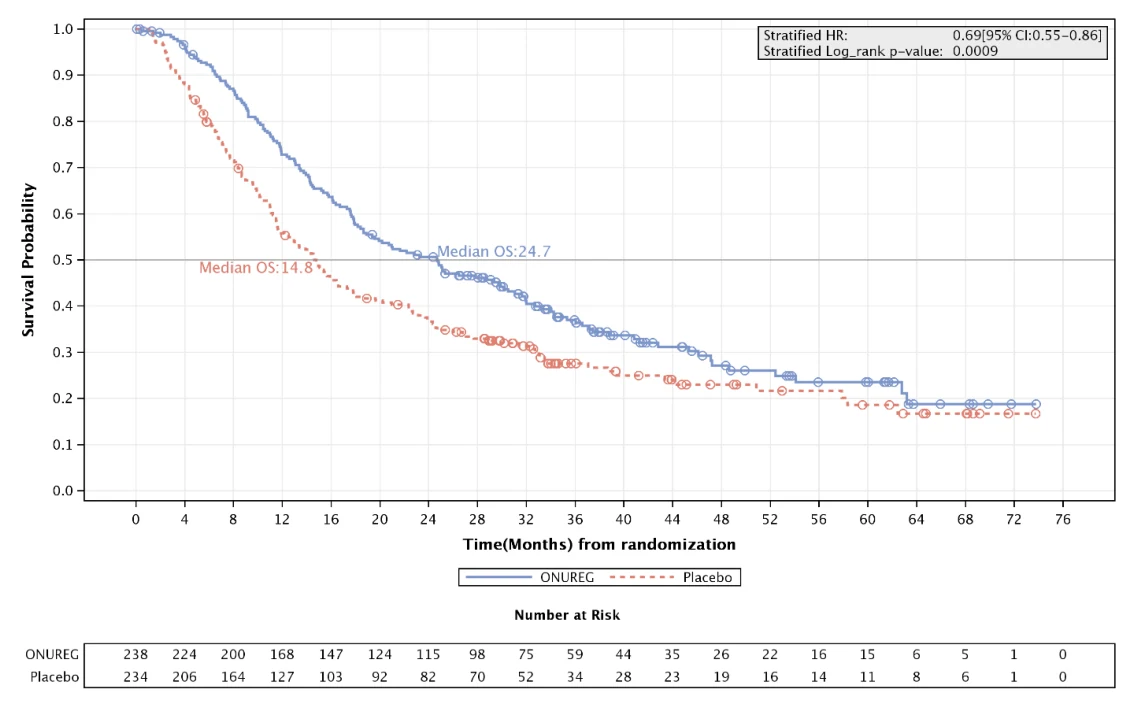
CI = confidence interval; HR = hazard ratio; OS = overall survival.
Relapse-free survival (RFS), the key secondary endpoint in the QUAZAR trial, supports the OS results. The median RFS was 10.2 months for ONUREG® versus 4.8 months for placebo [HR 0.65 (95% CI: 0.52, 0.81); p=0.0001].
Prespecified subgroup analyses of OS and RFS showed a consistent treatment effect for ONUREG® across demographic and disease-related subgroups including baseline cytogenetic risk, the number of prior consolidation cycles received, and CR/CRi status at randomization.
Using the FACIT-fatigue scale and the EQ-5D-3L health-related quality of life (HRQoL) measurements, there were no clinically meaningful differences in QoL observed between the ONUREG® + BSC and placebo + BSC treatment arms.
16 Non-Clinical Toxicology
Toxicology data were collected from in vitro studies and studies conducted in mice, rats, dogs, and rhesus monkeys. Toxicity including effects on carcinogenicity, reproductive and developmental toxicity occurred in animals at doses lower than the maximum recommended clinical dose of 300 mg of ONUREG® (equivalent to 185 mg/m2 for a 60 kg person).
General Toxicology
Carcinogenicity:
Carcinogenicity studies have shown that azacitidine is a carcinogen in mice and rats after IP administration. The interpretation of study results is compromised by high toxicity and early mortality in mice and rats at high doses. In Sprague-Dawley rats administered 2.6 mg/kg or 5.2 mg/kg (15.6 mg/m2 or 31.2 mg/m2; approximately 8 to 32% of the recommended human daily dose of ONUREG) of azacitidine for approximately 9 months (34 weeks), neoplastic lesions were noted in multiple tissues, including an increased incidence of testicular tumours compared with controls. Azacitidine induced tumors of the hematopoietic system in female mice at 2.2 mg/kg (6.6 mg/m2, approximately 4% of the recommended human daily dose of oral azacitidine on a mg/m2 basis) administered intraperitoneally 3 times per week for 52 weeks and tumours in the lymphoreticular system, lung, mammary gland, and skin in mice treated with intraperitoneal azacitidine at 2 mg/kg (6 mg/m2, approximately 3% of the recommended human daily dose of oral azacitidine on a mg/m2 basis) once a week for 50 weeks.
Genotoxicity:
Genotoxicity studies conducted in vitro have consistently shown that azacitidine is both mutagenic and clastogenic and induces chromosome aberrations in vitro. Azacitidine caused a mutagenic response in bacterial systems at 1-10 µg/plate, and induced an increased number of micronuclei in mammalian cells at 0.1 to 5 µM.
Repeat-Dose:
In a 14-day oral toxicity study in dogs, mortality occurred at doses of 0.4 and 0.8 mg/kg/day (8 and 16 mg/m2/day). Dose-related findings were present at ≥ 0.2 mg/kg/day (4 mg/m2/day), including pancytopenia correlated with bone marrow hypoplasia, lymphoid depletion in the thymus, spleen, and lymph nodes, gland/lumen dilation and single cell necrosis in mucosal crypts of small and large intestines and/or centrilobular hepatocellular vacuolation were observed. At 0.2 mg/kg/day, these findings were partially or completely resolved after 3 weeks of recovery period. Following parenteral azacitidine administrations at comparable dose ranges, mortality and similar target organ toxicities were observed in rodents, dogs and monkeys.
Reproductive and Developmental Toxicology:
In fertility studies in male rats, azacitidine treatment resulted in reduced fertility after IP administration of 5 mg/kg (30 mg/m2) 3 times per week for 11 weeks before mating. Males treated with 2.5 mg/kg (15 mg/m2) were fertile but mating with untreated females resulted in increases in preimplantation embryo loss and increases in the average number of abnormal embryos.
In mice, a 44% frequency of intrauterine embryonal death (increased absorption) were observed after a single intraperitoneal (IP) injection of 6mg/m2 azacitidine (approximately 3.2% of the recommended human daily dose of ONUREG® on a mg/m2 basis) on gestation day 10. Developmental abnormalities in the brain have been detected in mice given azacitidine on or before gestation day 15.
In rats, azacitidine was embryotoxic when given IP on gestation days 4-8 (postimplantation) at 6.0 mg/m2 (1.0 mg/kg; doses less than the recommended human daily dose of ONUREG) although treatment during the preimplantation period (on gestation days 1-3) had no adverse effect on the embryos at this dose.
Azacitidine caused an increase in fetal death and resorptions when administered as a single IP dose of 3 to 12 mg/m2 on gestation days 9 or 10; average live animals per litter was reduced to 9% of control at the highest dose on gestation day 9. Multiple-statistically significant fetal anomalies were observed in rats following IP dosing of ≥ 1.8 mg/m2 (0.3 mg/kg) on gestation day 1 to 8, or after a single IP dose of 3 to 12 mg/m2 (0.5 to 2 mg/kg, respectively) on gestation day 9, 10, 11 or 12. Findings included: CNS anomalies (exencephaly/encephalocele), limb anomalies (micromelia, club foot, syndactyly, oligodactyly) and others (microphthalmia, micrognathia, gastroschisis, oedema, and rib abnormalities). Doses in these studies ranged from 1.0 to 6.5% of the recommended human daily dose of ONUREG® on a mg/m2 basis.
Safety Pharmacology:
An in vivo safety pharmacology study in dogs receiving azacitidine at single intravenous doses of ≥ 2 mg/kg (≥ 40mg/m2) reported increased heart rate, decreased blood pressure and increased QTc interval. The interpretations of this study are limited by concurrent confounding effects associated with toxicity including severe clinical signs (e.g., vomiting, flushed skin, decreased food consumption, and decreased spontaneous locomotor activity as well as fecal changes such as watery, mucous, or loose stool) in dogs. Additionally, large excursions in heart rate, decreases in potassium, and concurrent elevated autonomic nervous system tone as indicated by a spectrum of clinical signs and tachycardia limit the interpretation of the measurements. Results from in vitro tissue studies support the conclusion that azacitidine had no direct effects on vasodilatory parameters in the isolated rat aorta, no positive chronotropic effect was observed on the pacemaker activity of the guinea pig right atria, and there was no effect on heart rate and contractility in the isolated perfused guinea pig hearts; therefore, suggesting that blood pressure and heart rate changes in the cardiovascular dog study were also due to indirect effects of azacitidine-related toxicity.
In single-dose safety pharmacology studies in rats, azacitidine affected different central nervous system (CNS)-functional parameters including decreases in locomotor activity and muscle tone as well as altered several respiratory functional parameters including reductions in respiratory rate and tidal/minute volumes at an intravenous dose range of 10 to 40 mg/kg (60 to 240 mg/m2).