


Product Monograph - Desmopressin Spray
RECENT MAJOR LABEL CHANGES
| None | N/A |
TABLE OF CONTENTS
Sections or subsections that are not applicable at the time of authorization are not listed.
RECENT MAJOR LABEL CHANGES..............................................................................................2
TABLE OF CONTENTS ................................................................................................................2
PART I: HEALTH PROFESSIONAL INFORMATION .......................................................................4
1 INDICATIONS ................................................................................................................4
1.1 Pediatrics ............................................................................................................4
1.2 Geriatrics.............................................................................................................4
2 CONTRAINDICATIONS ...................................................................................................4
3 SERIOUS WARNINGS AND PRECAUTIONS BOX ..............................................................5
4 DOSAGE AND ADMINISTRATION...................................................................................5
4.1 Dosing Considerations .........................................................................................5
4.2 Recommended Dose and Dosage Adjustment.......................................................5
4.4 Administration.....................................................................................................6
4.5 Missed Dose ........................................................................................................7
5 OVERDOSAGE ...............................................................................................................7
6 DOSAGE FORMS, STRENGTHS, COMPOSITION AND PACKAGING ...................................7
7 WARNINGS AND PRECAUTIONS ....................................................................................8
7.1 Special Populations ............................................................................................ 10
7.1.1 Pregnant Women .........................................................................................10
7.1.2 Breast-feeding..............................................................................................10
7.1.3 Pediatrics .....................................................................................................10
7.1.4 Geriatrics .....................................................................................................11
8 ADVERSE REACTIONS .................................................................................................. 11
8.1 Adverse Reaction Overview................................................................................ 11
8.2 Clinical Trial Adverse Reactions .......................................................................... 11
8.3 Less Common Clinical Trial Adverse Reactions .................................................... 11
8.5 Post-Market Adverse Reactions.......................................................................... 11
9 DRUG INTERACTIONS.................................................................................................. 12
9.2 Drug Interactions Overview................................................................................ 12
9.4 Drug-Drug Interactions ...................................................................................... 12
9.5 Drug-Food Interactions ...................................................................................... 13
9.6 Drug-Herb Interactions ...................................................................................... 13
9.7 Drug-Laboratory Test Interactions ...................................................................... 13
10 CLINICAL PHARMACOLOGY ......................................................................................... 13
10.1 Mechanism of Action.................................................................................... 13
10.2 Pharmacodynamics ...................................................................................... 14
10.3 Pharmacokinetics ......................................................................................... 14
11 STORAGE, STABILITY AND DISPOSAL ........................................................................... 15
12 SPECIAL HANDLING INSTRUCTIONS............................................................................. 15
PART II: SCIENTIFIC INFORMATION ........................................................................................ 16
13 PHARMACEUTICAL INFORMATION.............................................................................. 16
14 CLINICAL TRIALS.......................................................................................................... 16
14.1 Clinical Trials by Indication ........................................................................... 16
15 MICROBIOLOGY .......................................................................................................... 17
16 NON-CLINICAL TOXICOLOGY ....................................................................................... 17
17 SUPPORTING PRODUCT MONOGRAPHS...................................................................... 19
PATIENT MEDICATION INFORMATION ................................................................................... 20
PART I: HEALTH PROFESSIONAL INFORMATION
1 INDICATIONS
DESMOPRESSIN SPRAY (desmopressin acetate) is indicated for:
- Management of vasopressin sensitive central diabetes insipidus.
- Control of temporary polyuria and polydipsia following head trauma, hypophysectomy or surgery in the pituitary region.
1.1 Pediatrics
Pediatrics (3 months to 12 years of age): Based on the data submitted and reviewed by Health Canada, the safety and efficacy of DESMOPRESSIN SPRAY in pediatric patients has been established. Therefore, Health Canada has authorized an indication for pediatric use. See 7.1.3 Pediatrics and 7 WARNINGS AND PRECAUTIONS.
1.2 Geriatrics
Geriatrics (> 65 years of age): Evidence from clinical experience suggests that use in the geriatric population is associated with differences in safety or effectiveness. See 7.1.4 Geriatrics and 7 WARNINGS AND PRECAUTIONS.
2 CONTRAINDICATIONS
DESMOPRESSIN SPRAY is contraindicated in:
- Patients who are hypersensitive to DESMOPRESSIN or to any ingredient in the formulation, including any non-medicinal ingredient, or component of the container. For a complete listing, see 6 DOSAGE FORMS, STRENGTHS, COMPOSITION AND PACKAGING.
- Type IIB or platelet-type (pseudo) von Willebrand's disease.
- Habitual or psychogenic polydipsia.
- Cardiac insufficiency or other conditions requiring treatment with diuretics.
- Moderate or severe renal insufficiency.
- Known hyponatremia.
- Primary Nocturnal Enuresis (PNE).
- Syndrome of inappropriate ADH secretion (SIADH).
Worldwide post-marketing data indicate a higher incidence of hyponatremia in patients being treated with the desmopressin intranasal formulations compared to the oral formulations (Desmopressin Acetate Tablets and Desmopressin Acetate Oral Disintegrating Tablets). Since safer formulations are available, intranasal formulations are contraindicated for use in primary nocturnal enuresis.
3 SERIOUS WARNINGS AND PRECAUTIONS BOX
Serious Warnings and Precautions
|
4 DOSAGE AND ADMINISTRATION
4.1 Dosing Considerations
Central Diabetes Insipidus:
Central diabetes insipidus may be demonstrated by the inability to produce urine of osmolality above 175 mOsm/kg with dehydration severe enough to cause a loss of greater than 2% of body weight (see 7 WARNINGS AND PRECAUTIONS-Monitoring and Laboratory Tests).
Dosing Considerations
Dosage must be individualized but clinical experience has shown that the average daily dose for adults is 10 mcg to 40 mcg DESMOPRESSIN SPRAY and for children 3 months to 12 years of age, 5 mcg to 30 mcg. This may be given as a single dose or divided into two or three doses. About one third of patients can be treated with a single daily dose. Geriatric patients may be more sensitive to the antidiuretic effect of the usual adult dose of DESMOPRESSIN SPRAY.
Dosage in children with central diabetes insipidus up to 3 months of age has not been established.
DESMOPRESSIN SPRAY is not indicated for use in children with Primary Nocturnal Enuresis (PNE).
4.2 Recommended Dose and Dosage Adjustment
Children (3 months to 12 years)
The usual dose range is 5 mcg to 30 mcg daily either as a single dose or divided into two doses. About 1/3 of patients can be controlled by a single daily dose of DESMOPRESSIN SPRAY administered intranasally.
DESMOPRESSIN SPRAY pump can only deliver 0.1 ml (10 mcg) or multiples of 0.1 ml. In some patients, better control of polyuria is attained with smaller doses given at 6 to 8 hour intervals.
DESMOPRESSIN SPRAY should be used in children who only require a single dose of 10 mcg or more. The spray pump must be primed prior to use. To prime pump, press down four times. The bottle will now deliver 10 mcg of drug.
Administration of desmopressin acetate nasal spray or solution in children should occur under adult supervision, in order to ensure the correct dosage intake.
Adult
Average daily dose is 10 mcg to 40 mcg. Most adults require 20 mcg daily, administered in two divided doses (in the morning and the evening). Initially, therapy should be directed to control nocturia with a single evening dose. Response to therapy can be measured by the volume and frequency of urination and duration of uninterrupted sleep. The dosage of desmopressin acetate should be adjusted according to the diurnal pattern of response, with the morning and evening doses being adjusted separately. Patients being switched from parenteral to intranasal administration generally require 10 times their maintenance intravenous dose intranasally.
In order to minimize the risk of hyponatremia, the following should be considered a part of individualized dosage titration;
Desmopressin should be given with caution and the dosage adjusted as necessary during acute illness, febrile episodes, hot days and other conditions with increased water intake.
To institute therapy with DESMOPRESSIN SPRAY, patients should be withdrawn from previous medication and allowed to establish a baseline polyuria to permit determination of the magnitude and duration of the response to medication. In less severe cases, prior water loading may be desirable to establish a vigorous flow of urine. When the urine osmolality reaches a plateau at low level (in most cases, less than 100 mOsm/kg), the first dose of DESMOPRESSIN SPRAY (10 mcg) is administered intranasally. A urine sample is obtained after two hours and hourly thereafter following DESMOPRESSIN SPRAY administration. Urine volume and osmolality are measured. When the patient has reached the previous baseline urine osmolality and urine flow, the drug effect has ceased and the next dose of DESMOPRESSIN SPRAY is administered. The cycle is then repeated until the patient has reached a stable condition.
In the event of signs of water retention/hyponatremia, treatment should be interrupted and the dose should be adjusted. When restarting treatment strict fluid restriction should be enforced.
4.4 Administration
Information for the Pharmacist
Instructions for assembly of nasal spray unit
Assemble DESMOPRESSIN SPRAY (Desmopressin Nasal Spray Solution, USP) prior to dispensing to the patient, according to the following instructions:
- 1. Open the carton and remove the spray pump and solution bottle.
- 2. Assemble DESMOPRESSIN SPRAY by first unscrewing the white cap from the solution bottle and screwing the pump unit tightly onto the bottle. Make sure the protective cap is on the pump unit.
- 3. Return DESMOPRESSIN SPRAY bottle to the carton for dispensing to the patient.
4.5 Missed Dose
If the patient misses a dose, instruct the patient to take the dose as soon as they remember. If it is almost time for the next dose, inform the patient to skip the missed dose and continue the regular dosing schedule.
5 OVERDOSAGE
Overdose of desmopressin acetate nasal spray or nasal drops solution leads to a prolonged duration of action with an increased risk of water retention and hyponatraemia. Overdose symptoms include headaches, abdominal cramps, nausea, and facial flushing. There is no known antidote. However, the following general recommendations can be provided. Asymptomatic hyponatremia is treated by discontinuing the desmopressin treatment and fluid restriction. Infusion of isotonic or hypertonic sodium chloride may be added in cases with symptoms. When the water retention is severe (convulsions and unconsciousness) treatment with furosemide should be added.
| For management of a suspected drug overdose, contact your regional poison control centre. |
6 DOSAGE FORMS, STRENGTHS, COMPOSITION AND PACKAGING
Table 1 – Dosage Forms, Strengths, Composition and Packaging
DESMOPRESSIN SPRAY (Desmopressin Nasal Spray Solution, USP) 10 mcg/spray is available as a pre-compression metered dose spray pump. Each depression delivers 10 mcg of desmopressin acetate.
Each mL of DESMOPRESSIN SPRAY (Desmopressin Nasal Spray Solution, USP) contains 0.1 mg of desmopressin acetate in a buffered, isotonic, aqueous solution. Available in bottles of 2.5 mL (25 sprays) and 5.0 mL (50 sprays).
| Route of Administration | Dosage Form / Strength/Composition | Non-medicinal Ingredients |
| Intranasal | Spray 10 mcg/metered dose of desmopressin acetate | benzalkonium chloride 0.01% as a preservative, citric acid, sodium chloride, sodium phosphate dibasic and purified water. |
7 WARNINGS AND PRECAUTIONS
Please see 3 SERIOUS WARNINGS AND PRECAUTIONS BOX.
General
For intranasal use only.
Fluid intake or desmopressin dosage should be adjusted in order to reduce the possibility of water retention and hyponatremia especially in very young and elderly patients or when significant daily variables occur such as hot climate conditions, intense exercise or other situations where increased water intake can be expected (see 4 DOSAGE AND ADMINISTRATION). Particular attention should be paid to the risk of an extreme decrease in plasma osmolality and resulting seizures in young children. Should prodromal symptoms of water retention occur (e.g. headache, nausea / vomiting, weight gain and, in severe cases, convulsions), which may herald impending hyponatraemia, treatment should be discontinued immediately and the patient should seek medical assessment.
Desmopressin should not be administered to dehydrated patients until water balance has been adequately restored.
Desmopressin should be used with caution in patients with conditions associated with fluid and electrolyte imbalance such as cystic fibrosis, heart failure and renal disorders because these patients are prone to hyponatremia. Treatment should be interrupted or carefully adjusted during acute intercurrent illnesses characterised by fluid and/or electrolyte imbalance (such as systemic infections, fever, gastroenteritis). When restarting treatment strict fluid restriction should be enforced.
Children and geriatric patients should be closely observed for possible water retention due to over-ingestion of fluids. When fluid intake is not excessive, there is little danger of water intoxication and hyponatremia with the usual intranasal doses of desmopressin used to control diabetes insipidus. Fluid intake should be carefully adjusted to prevent over hydration.
There are reports of changes in response over time, usually when the drug has been administered for periods longer than 6 months. Some patients may show decreased responsiveness, others a shortened duration of effect. There is no evidence that this effect is due to the development of binding antibodies, but may be due to local inactivation of the peptide.
Cardiovascular
Desmopressin acetate at high dosage (40 mcg or more) has very occasionally produced a slight elevation of blood pressure, which disappeared with a reduction in dosage. The drug should be used with caution in patients with coronary artery insufficiency and/or hypertensive cardiovascular disease because of possible tachycardia and changes in blood pressure.
Ear/Nose/Throat
Changes in the nasal mucosa resulting from rhinitis, scarring, edema or other disease may cause erratic, unreliable absorption in which case intranasal desmopressin should not be used. In the case of temporary rhinitis, consideration should be given to using an injectable form of desmopressin, until the nasal mucosa returns to normal.
Endocrine and Metabolism
There is some evidence from post-marketing data for the occurrence of severe hyponatremia in association with the nasal spray formulation of desmopressin, when it is used in the treatment of cranial diabetes insipidus. See 8.5 Post-Market Adverse Reactions. Desmopressin acetate nasal spray should only be used in patients where orally administered formulations are not feasible.
Children, elderly and patients with serum sodium levels in the lower range of normal may have an increased risk of hyponatraemia. The hyponatraemia is reversible and in children it is often seen to occur in relation to changes in daily routines affecting fluid intake and/or perspiration.
Genitourinary
Severe bladder dysfunction and outlet obstruction should be ruled out before starting treatment.
Monitoring and Laboratory Tests
In the control of diabetes insipidus, the lowest effective dose should be used and the effective dosage, as determined by urine volume and osmolality and, in some cases, plasma osmolality, should be assessed periodically.
Diagnosis of Central Diabetes Insipidus:
Central diabetes insipidus may be demonstrated by the inability to produce urine of osmolality above 175 mOsm/kg with dehydration severe enough to cause a loss of greater than 2% of body weight.
Patients are selected for therapy by establishing a diagnosis by means of a water deprivation test, the hypertonic saline infusion test, and/or response to 5 units arginine vasopressin given s.c. after dehydration. Continued response to desmopressin acetate can be monitored by urine volume and osmolality. In cases of severe dehydration, plasma osmolality determination may be required.
Neurologic
Desmopressin should also be used with caution in patients at risk for increased intracranial pressure.
Renal
Desmopressin acetate is not effective in controlling polyuria caused by renal disease, nephrogenic diabetes insipidus, psychogenic diabetes insipidus, hypokalemia or hypercalcemia.
Respiratory
Due to the presence of benzalkonium chloride desmopressin acetate nasal spray may cause bronchospasm.
7.1 Special Populations
7.1.1 Pregnant Women
Reproductive studies performed in rats and rabbits have revealed no evidence of harm to the fetus by desmopressin. The use of desmopressin in pregnant women with no harm to the fetus has been reported. However, no controlled studies in pregnant women have been carried out.
One investigator has reported three cases of malformations in children born to mothers suffering from diabetes insipidus and receiving desmopressin during pregnancy. However, several other published reports comprising more than 120 cases showed that women treated with desmopressin during pregnancy have given birth to normal children. Furthermore, a review of a very large data set identifying 29 children who were exposed to desmopressin during the entire pregnancy showed no increase in the malformation rate in the children born. Unlike preparations containing the natural hormone, desmopressin acetate in antidiuretic doses has no uterotonic action, but the physician should weigh possible therapeutic advantages against potential risks in each case.
7.1.2 Breast-feeding
There have been no controlled studies in nursing mothers. A single study on a post-partum woman demonstrated a marked change in maternal plasma desmopressin level following an intranasal dose of 10 mcg, but little desmopressin was detectable in breast milk. Results from analysis of milk from nursing mothers receiving high doses of desmopressin (300 mcg intranasal), indicate that the amounts of desmopressin that may be transferred to the child are considerably less than the amounts required to influence diuresis.
7.1.3 Pediatrics
Pediatrics (3 months to 12 years of age): Desmopressin acetate has been used in children with diabetes insipidus. The dose must be individually adjusted to the patient with attention in the very young to the danger of an extreme decrease of plasma osmolality with resulting convulsions. Dosage in infants younger than 3 months has not been established. Dose should start at 5 mcg or less. Use of desmopressin in infants and children will require careful fluid intake restriction to prevent possible hyponatremia and water intoxication.
Administration of desmopressin acetate nasal spray or solution in children should occur under adult supervision, in order to ensure the correct dosage intake. See 4 DOSAGE AND ADMINISTRATION.
7.1.4 Geriatrics
Geriatrics (> 65 years of age): Older patients may be more sensitive to the antidiuretic effect of the usual adult dose of desmopressin acetate. Patients over the age of 65 should be closely observed for possible water retention due to over-ingestion of fluids. Fluid intake should be carefully adjusted to prevent over- hydration.
8 ADVERSE REACTIONS
8.1 Adverse Reaction Overview
The most serious adverse reaction with desmopressin is hyponatraemia/water retention, which is associated with headache, nausea, vomiting, decreased serum sodium, weight increase, malaise, muscle cramps, confusion, and in severe cases convulsions and coma.
High doses of desmopressin have produced transient headache and nausea. Nasal congestion, rhinitis, high body temperature, flushing, and mild abdominal cramps have also been reported. These symptoms disappeared with reduction in dosage.
Very rare cases of emotional disturbances (affect lability, nightmare, nervousness and aggression) in children have been reported. Isolated cases of allergic skin reactions and more serious general allergic reactions have been reported.
Other common adverse reactions were upper respiratory tract infection and gastroenteritis.
8.2 Clinical Trial Adverse Reactions
Clinical trials are conducted under very specific conditions. The adverse reaction rates observed in the clinical trials; therefore, may not reflect the rates observed in practice and should not be compared to the rates in the clinical trials of another drug. Adverse reaction information from clinical trials may be useful in identifying and approximating rates of adverse drug reactions in real-world use.
Side effects reported from controlled clinical trials involving 638 subjects included headache (2%), rhinitis (1%), nasal discomfort (1%), epistaxis (1%) and abdominal pain (1%).
8.3 Less Common Clinical Trial Adverse Reactions
Other effects, reported at a frequency of less than 1%, included dizziness, chills, wheezing, rash, edema of face and hands, nausea, constipation, anorexia, increased appetite, conjunctivitis and after taste in the mouth. These symptoms disappeared with reduction of dosage or withdrawal of drug. Adverse effects rarely necessitated discontinuance of the drug.
8.5 Post-Market Adverse Reactions
Desmopressin is a potent antidiuretic, which may lead to water intoxication and/or hyponatremia. Hyponatremia has been reported at an approximate rate of 5 cases per 10 million doses from worldwide post marketing experience in patients treated with desmopressin acetate intranasal formulations. The reported rate for desmopressin acetate oral formulations worldwide is considerably less at about 1 case per 10 million doses. Patients are recommended to take the oral formulations (e.g., Desmopressin Acetate Oral Disintegrating Tablets) which are available for children with PNE.
Unless properly diagnosed and treated, hyponatremia can be fatal. Therefore, fluid restriction is recommended and should be discussed with the patient and/or guardian. Careful medical supervision is required.
Severe general allergic reactions have been reported.
Other adverse events reported include: dehydration, somnolence, fatigue, hypertension, dyspnea, diarrhea, pruritis, muscle spasms, rash and urticaria, peripheral edema, chest pain and chills.
9 DRUG INTERACTIONS
9.2 Drug Interactions Overview
Precautions to avoid hyponatraemia, including careful attention to fluid restriction and more frequent monitoring of serum sodium, must be taken in case of concomitant treatment with drugs, which are known to induce SIADH, e.g. tricyclic antidepressants, selective serotonin reuptake inhibitors, such as chlorpromazine, and carbamazepine, and some antidiabetics of the sulfonylurea group particularly chlorpropamide, and in case of concomitant treatment with NSAIDs, since these may cause an additive antidiuretic effect leading to an increased risk of fluid water retention/ hyponatraemia.
The selective serotonin reuptake inhibitors (SSRIs, venlafaxine and citalopram), and the neuroleptic risperidone have been associated with water intoxication and hyponatremia in rare cases.
9.4 Drug-Drug Interactions
The drugs listed in this table are based on either drug interaction case reports or studies, or potential interactions due to the expected magnitude and seriousness of the interaction (i.e., those identified as contraindicated).
Table 2 - Established or Potential Drug-Drug Interactions
| Common name | Source of Evidence | Effect | Clinical comment |
|---|
| Common name | Source of Evidence | Effect | Clinical comment |
|---|---|---|---|
| Clofibrate, chlorpropamide, carbamazepine, demeclocycline, lithium and norepinephrine | T | Clofibrate, chlorpropamide and carbamazepine are known to potentiate the antidiuretic activity of desmopressin leading to an increased risk of water retention/hyponatremia, while demeclocycline, lithium and norepinephrine may decrease its activity. | |
| Indomethacin | T | Indomethacine increases the urine concentrating effect of desmopressin without influencing the duration. The effect is probably without any clinical significance. | |
| Pressor agents (anti hypotensive agents) | T | Although the pressor activity of desmopressin is very low compared with the antidiuretic activity. | Use of large doses of desmopressin with other pressor agents should be done only with careful patient monitoring. |
Legend: C = Case Study; CT = Clinical Trial; T = Theoretical
9.5 Drug-Food Interactions
Interactions with food have not been established.
9.6 Drug-Herb Interactions
Interactions with herbal products have not been established.
9.7 Drug-Laboratory Test Interactions
Interactions with laboratory tests have not been established.
10 CLINICAL PHARMACOLOGY
10.1 Mechanism of Action
Desmopressin is a synthetic structural analogue of the antidiuretic hormone, arginine vasopressin, which alters the permeability of the renal tubule to increase resorption of water. The increase in the permeability of both the distal tubules and collecting ducts appears to be mediated by a stimulation of the adenylcyclase activity in the renal tubules.
Approximately 10 to 20% of the dose of desmopressin solution administered intranasally is absorbed through the nasal mucosa. Antidiuretic effects occur within 1 hour, peak in 1 to 5 hours, persist for 8 to 20 hours and then abruptly end over a period of 60 to 90 minutes.
Duration of action varies greatly among individuals and is dependent upon the rate of absorption from the nasal mucosa, persistence in plasma, and effect on renal tubules.
10.2 Pharmacodynamics
Maximum urine concentration was studied in 10 healthy adults (24 to 37 years of age) after administration of 20, 40 and 80 mcg desmopressin acetate intranasally with one week between each administration. Maximum effect on urine osmolality occurred between 3 and 5 hours (Figure 1), and the 20 mcg dose was as effective as the higher doses. There were no side effects and mean body weight increase during the 24 hours after desmopressin acetate administration did not exceed 0.5 kg after any dose.
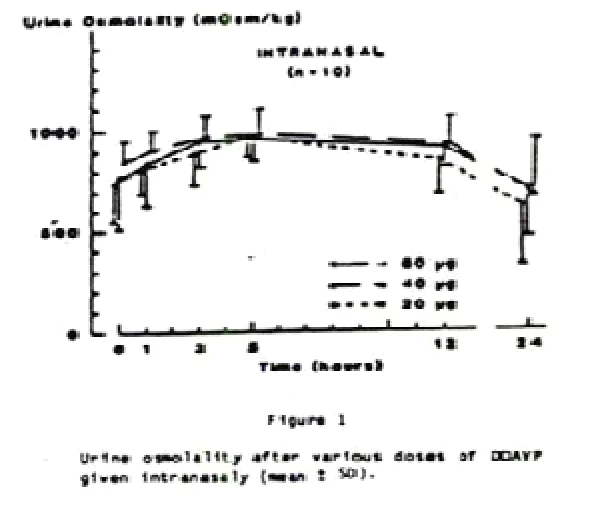
The use of desmopressin acetate in patients with an established diagnosis of central diabetes insipidus will result in a reduction in urinary output with concomitant increase in urine osmolality and decrease in plasma osmolality. This will allow the resumption of a more normal lifestyle with a decrease in urinary frequency.
Desmopressin acetate does not directly affect urinary sodium or potassium excretion, or serum sodium, potassium, or creatinine concentrations. Desmopressin acetate does not stimulate uterine contractions, adrenocorticotropic hormone release or increase plasma cortisol concentrations. In children, intranasal administration of desmopressin acetate has no effect on growth hormone, prolactin, or luteinizing hormone concentration. Intranasal doses of 20 mcg of desmopressin acetate have no effect on blood pressure or pulse rate, but mean arterial pressure may increase as much as 15 mm Hg with doses of 40 mcg or more.
10.3 Pharmacokinetics
Absorption
Following intranasal administration of desmopressin acetate, approximately 10 to 20% of a dose is absorbed through the nasal mucosa. Patients with nasal congestion may require an increased dosage. Following intranasal administration of usual doses of desmopressin acetate in patients with neurohypophyseal diabetes insipidus, antidiuretic effects occur within 1 hour, peak in 1 to 5 hours, persist for 8 to 20 hours, and then abruptly end over a period of 60 to 90 minutes. Duration of action varies among individuals with a specific dose. The relatively prolonged duration of action of desmopressin acetate may result from slower enzymatic inactivation of desmopressin than vasopressin or from sequestration of desmopressin acetate in a membrane compartment.
Distribution:
The distribution of desmopressin has not been fully characterized. It is not known if desmopressin crosses the placenta. Some of the drug may be distributed into breast milk.
Metabolism:
The metabolic fate of desmopressin is unknown.
Elimination
In contrast to the elimination of desmopressin acetate after intravenous injection, which is bi-exponential with a rapid first phase and slower second phase half-life of 7.8 minutes and 75.5 to 103 minutes, respectively, the disappearance of desmopressin acetate from plasma after intranasal administration follows an exponential time course with half-lives ranging between 0.4 to 4 hours after intranasal application.
Special Populations and Conditions
- Pregnancy and Breast-feeding: Unlike vasopressin, desmopressin apparently is not degraded by aminopeptidases or other peptidases that cleave oxytocin and endogenous vasopressin in the plasma during late pregnancy.
11 STORAGE, STABILITY AND DISPOSAL
Store at room temperature 15°C to 30°C. Protect from light. Do not freeze. Store out of the reach of children.
DESMOPRESSIN SPRAY should never be disposed of in household trash. Disposal via a pharmacy take back program is recommended.
12 SPECIAL HANDLING INSTRUCTIONS
None
PART II: SCIENTIFIC INFORMATION
13 PHARMACEUTICAL INFORMATION
Drug Substance
Proper name: Desmopressin Acetate
Chemical name: 1) Vasopressin, 1-(3-mercaptopropanoic acid)-8-D-arginine-, monoacetate (salt), trihydrate.
- 2) 1-(3-Mercaptopropionic acid)-8-D-arginine-vasopressin monoacetate (salt) trihydrate.
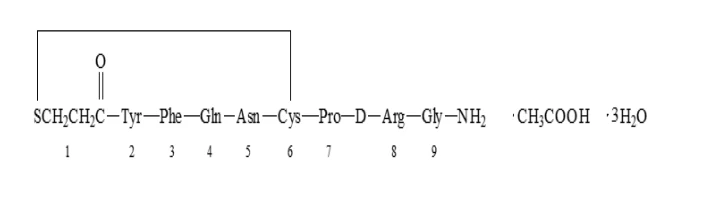
Molecular formula and molecular mass: C48H68N14O14S2 3H2O and 1183.34 g/mol
Structural formula:
Physicochemical properties:
Description: Desmopressin acetate is a white, fluffy powder. It is soluble in water, ethanol (96%) and glacial acetic acid to a level of 34 mg/mL of solvent. An aqueous solution of 1 mg/mL at 24°C has a pH of 4.8.
Melting Point: Not applicable (compound may decompose upon heating).
Specific Rotation: [α]20, C=0.2
1% acetic acid: -77º ± 5º
Pharmaceutical standard: USP
14 CLINICAL TRIALS
14.1 Clinical Trials by Indication
DIABETES INSIPIDUS
Central diabetes insipidus (CDI), characterized by polyuria and compensatory polydipsia, results from a lack of natural antidiuretic hormone (AVP). Desmopressin acetate administered to CDI patients compensates for the lack of AVP by altering kidney tubule permeability resulting in resorption of water.
Seven patients with previously untreated hereditary, hypothalamic diabetes insipidus self- administered desmopressin acetate intranasally (Table 3). Mean urine volume during desmopressin acetate therapy was 1.77 litres/24 hours, compared to a mean 7.11 litres/24 hours prior to treatment. All patients maintained normal values of Hb concentration, hematocrit, WBC, differential count, and serum concentrations of sodium, potassium, calcium and creatinine. Creatinine clearances were within normal limits, as were the morning levels of plasma cortisol. All showed a normal response to ACTH. Protein-bound iodine and I-tests were normal as were determinations of 17-keto and 17-hydroxy steroids. X-ray examination of femurs and humeri, with respect to fluorosis, revealed no abnormalities. There were no reported or observed side effects.
| Table 3: Daily Urine Volumes Before, During, and Immediately After Withdrawal of Therapy with Desmopressin Acetate Intranasally, According to Measurements Performed by the Patients at Home (Mean of Determinations on 3 Days) | ||||||
| Pat. No. | Sex | Age (Yr) | Before Treatment (1/24h) | Desmopressin Acetate Dose (mcg) | During Treatment (1/24h) | Treatment Withdrawn (1/24h) |
| 1 | M | 38 |
| 20 × 2 | 2.2 | 21.2 |
| 2 | M | 42 | 7.4 | 10 × 2 | 2.1 | 11.0 |
| 3 | M | 44 | 6.6 | 20 × 2 | 2.0 | 16.2 |
| 4 | F | 40 | 6.6 | 5 × 2 | 1.9 | 10.5 |
| 5 | M | 56 | 5.0 | 10 × 2 | 1.9 | 8.1 |
| 6 | F | 22 | 3.5 | 5 × 2 | 1.7 | 5.6 |
| 7 | F | 72 | 2.5 | No treatment | No treatment | No treatment |
| 8 | F | 6 | 3.0 | 3 × 2 | 0.6 | 4.5 |
15 MICROBIOLOGY
No microbiological information is required for this drug product.
16 NON-CLINICAL TOXICOLOGY
General Toxicology:
Acute toxicity
The acute toxicity of desmopressin acetate is very low (Table 4). Mice tolerate i.v. doses of 2 mg/kg. At i.v. doses of 30 mcg/kg in rats and 50 mcg/kg in rabbits, only transient changes in clinical behaviour were observed. Intravenous doses up to 24 mcg/kg in dogs did not produce any cardiovascular changes.
| Table 4: Acute Toxicity of Desmopressin Acetate | ||||
|---|---|---|---|---|
| Species | Number | LD50 Dose | Route | Reference |
| Mice | 10 (both sexes) | >2 mg/kg | IV | 17 |
| Rats | 12 (both sexes) | >30 mcg/kg | IV | 3 |
| Rabbits | 6 (both sexes) | >50 mcg/kg | IV | 4 |
| Dogs | 5 males | >24 mcg/kg | IV | 5 |
Subacute toxicity
Results from 14-day studies show that the drug given intravenously to rats at 18 mcg/kg/day and to rabbits at 6 mcg/kg/day caused no biologically significant changes in hematological and clinical chemistry parameters.
Rats which received 5 mg/kg/day subcutaneously for 3 weeks did not show any significant changes in weight, blood count, or organ changes.
Chronic toxicity- (subcutaneous administration)
Rat studies:
In a controlled 8-week experiment 20 rats received 2 mcg/kg/day subcutaneous desmopressin acetate. No increase in blood glucose or morphological or histological pancreatic changes occurred. Rats (20 per group) which received desmopressin acetate doses of 5, 50 or 500 ng/kg/day for 6 months did not show any significant changes in weight, blood values, or levels of transaminases. The weight of hearts, lungs, and kidneys decreased in female animals in the lower dose groups but not in the higher ones. In the male animals, a decrease in non-esterifiable fatty acids was noted.
Dog subcutaneous studies:
Dogs (3 per group) which received subcutaneous doses of 10 and 100 ng/kg/day desmopressin acetate for 6 months did not show any significant changes in comparison with control groups in blood sugar or transaminases and did not show histological or morphological organ changes.
Carcinogenicity:
No long-term animal studies have been performed to evaluate carcinogenic potential.
Genotoxicity:
No long-term animal studies have been performed to evaluate mutagenic potential.
Reproductive and Developmental Toxicology:
In teratogenicity testing in Wistar rats, no teratologic or embryotoxic effects were observed in 369 fetuses from 40 females dosed with up to 50 ng/kg/day desmopressin acetate subcutaneously on Day 1 through Day 20 of gestation.
In a study of 78 Dutch belted rabbits which received subcutaneous desmopressin acetate up to 10 mcg/kg/day on Day 6 through Day 18 of pregnancy, no teratogenic or embryotoxic effects were observed in 296 fetuses. Weaning was unaffected.
Special Toxicology:
Information is not available.
Juvenile Toxicity:
Information is not available.
17 SUPPORTING PRODUCT MONOGRAPHS
PrDDAVP Spray® Desmopressin Acetate Nasal Spray 10 µg/spray, Product Monograph, Ferring Inc. Date of Revision: APR,10, 2018.